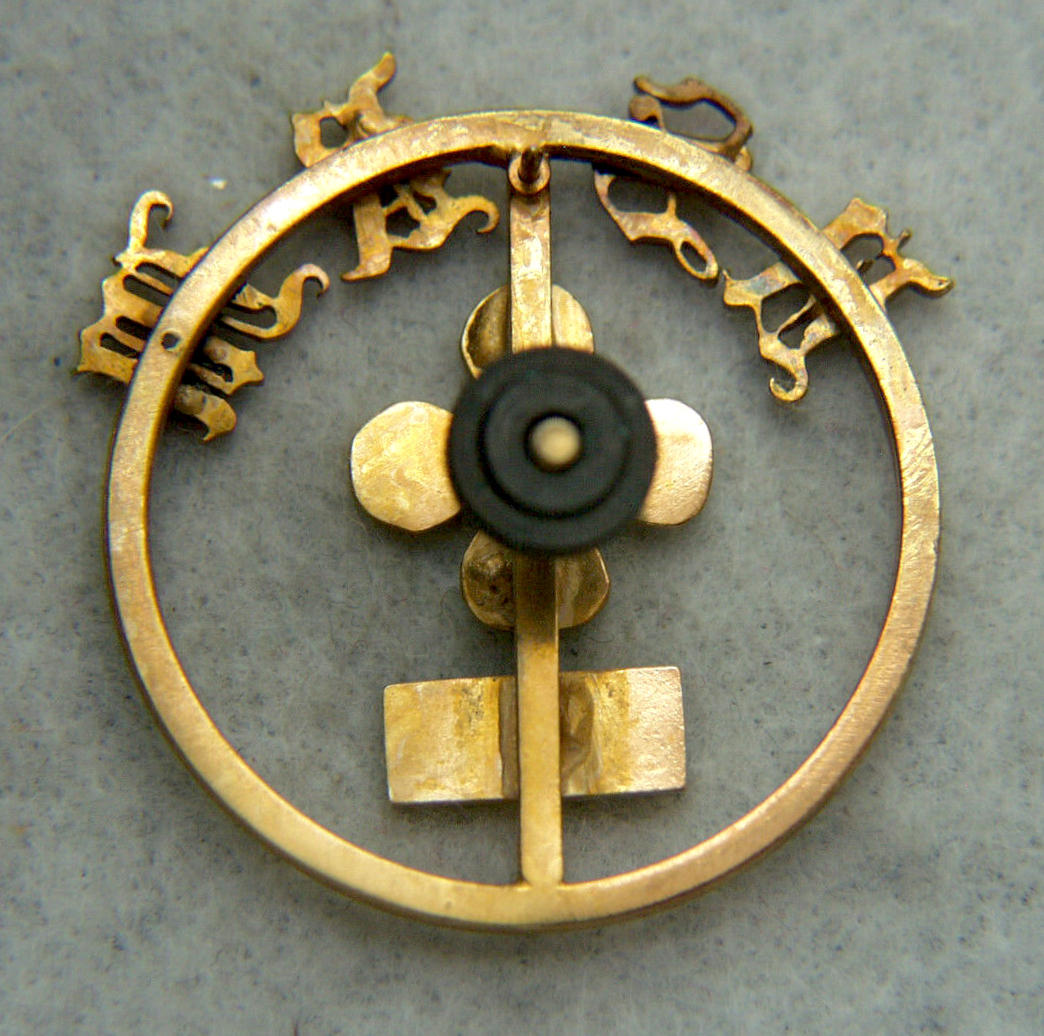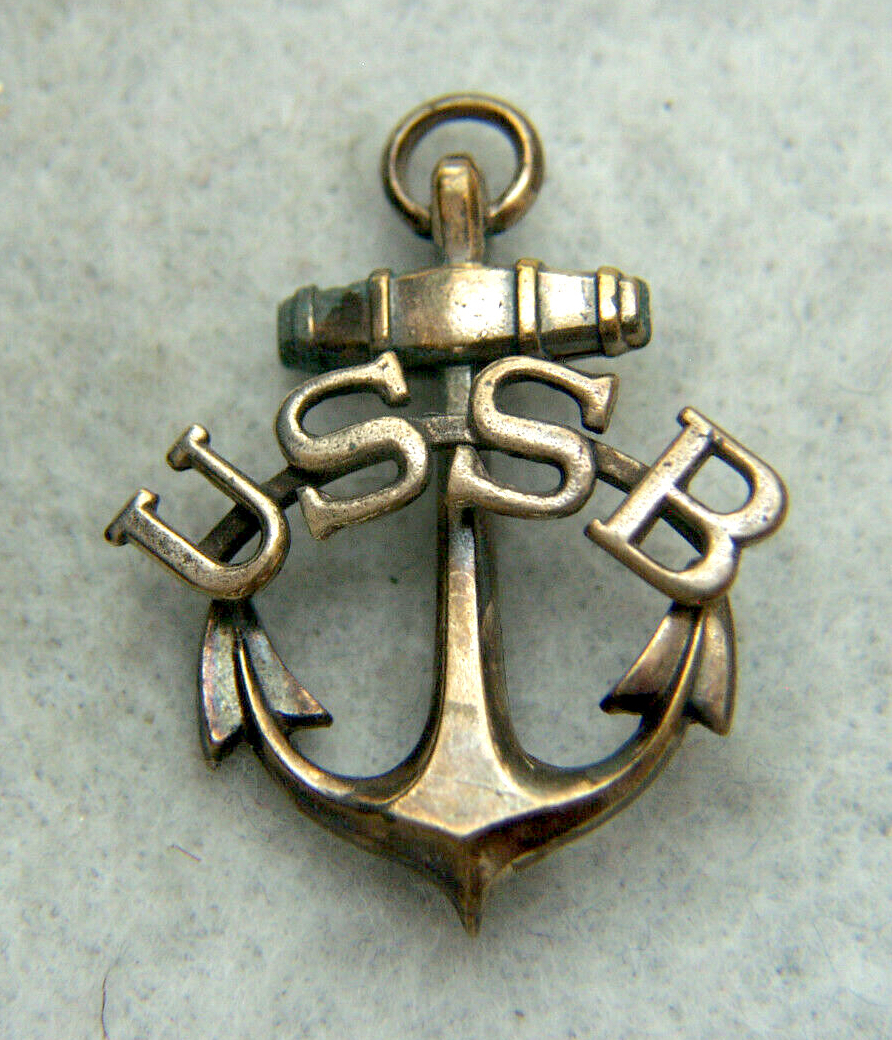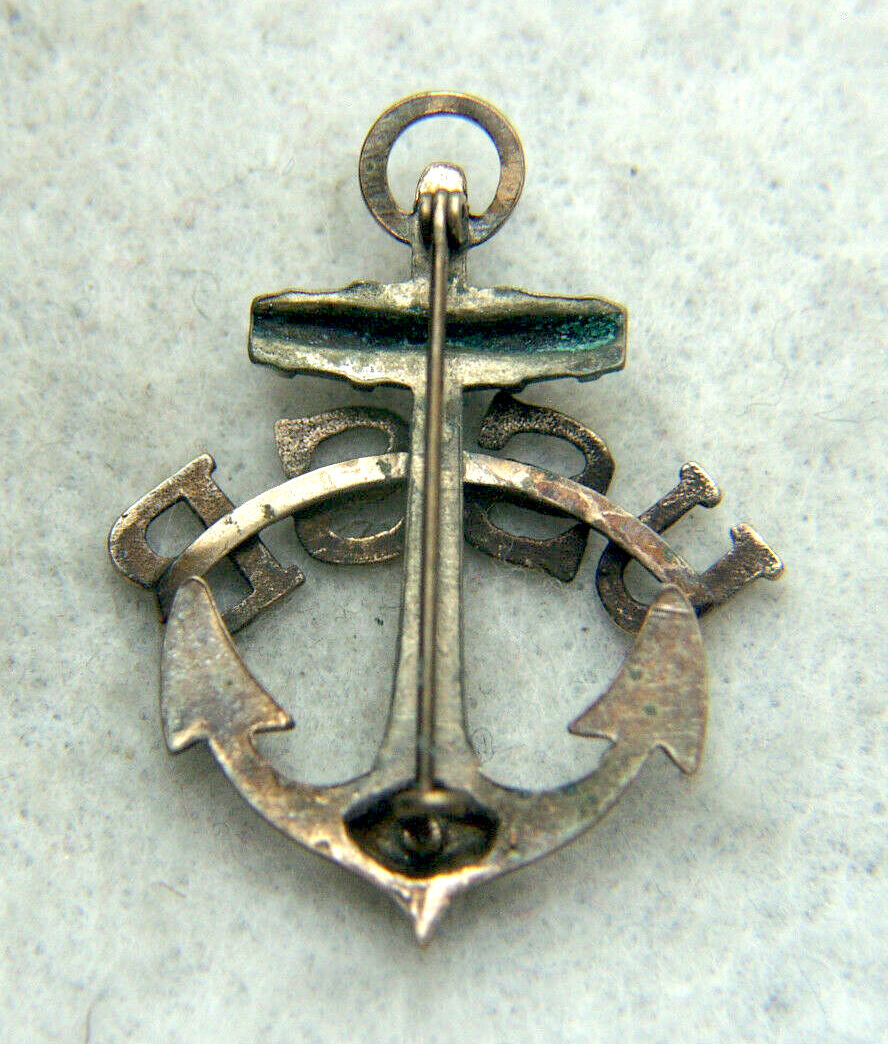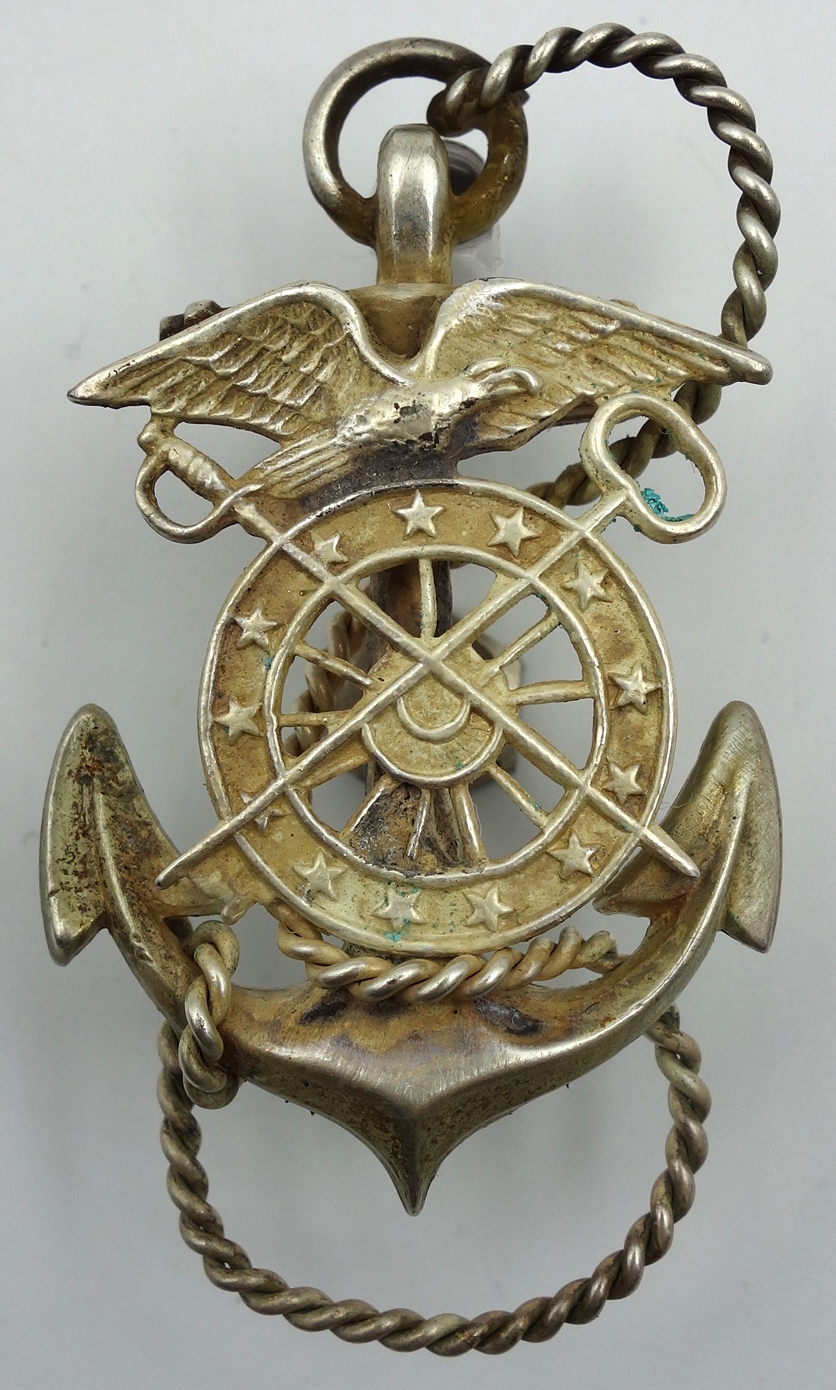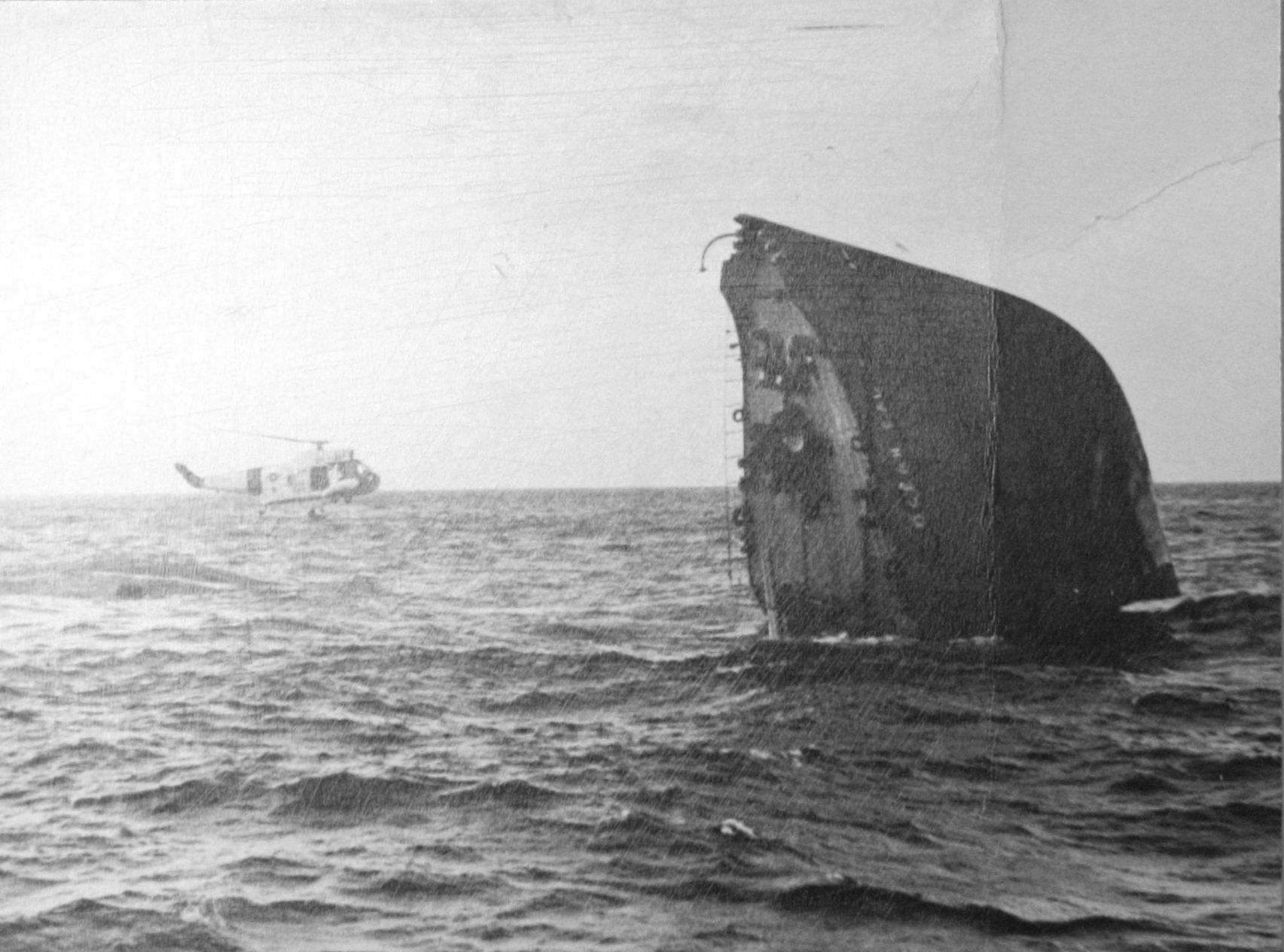
Shipboard Organization and Stewards

united states lines.The opening chapter of the fifth edition of The Blue Jacket’s Manual United States Navy (1917), devotes some 28 pages on the subject of “Discipline and Duty.” Afterward, the first section of the book meanders into opportunities of specialization, courts-martial, and customs. Only in the second and third sections are seamanship topics covered. The emphasis of the first section of the book underscores the fact that the smooth functioning of a man-of-war depends upon order, hierarchy, and the clear indication and compartmentalization of purpose; the same is also true to some extent on merchantmen.

In Navy parlance, the Commanding Officer is the head of the ship; all officers and seamen report to him. Just as a ship is compartmentalized, so is its hierarchy. Officers have rank and specialty; each carrying with it a certain grade of responsibility – sometimes mirroring ability and time in the service. In the U.S. Navy there is a small constellation officer types: line, restricted line, limited duty, corps, and warrant. Positions among sailors (Ratings in the British Royal Navy and Enlisted in the United States) are known by “pay grade” or rank; and “rate” or field of specialty. Enlisted sailors may be: recruits, seamen, petty and chief petty officers. There are also officers-in-training: midshipmen at the Naval Academy, Navy ROTC midshipmen, and individuals in Officer Candidate School (aviation or otherwise).

To some extent, merchant navies and large commercial fleets have historically mirrored these relationships among personnel, although not as elaborate or seemingly baroque. At the apogee of the U.S. shipping industry in the 1940s, most seamen found themselves licensed and arrayed in various divisions and departments. For example, a U.S. Liberty Ship during the Second World War usually held these Departments and rates:

Master: Commanding Officer and Purser (who doubled as Pharmacist)
Deck: Chief Officer, 2nd Officer, 3rd Officer, 3rd Junior Officer, Deck Cadet, Boatswain, Carpenter, Able Seaman (6), Ordinary Seaman (3)
Radio: Radio Operator, Jr. Radio Operator
Engine: Chief Engineer, 1st Asst. Engineer, 2nd Asst. Engineer, 3rd Asst. Engineer, Deck Engineer, Engine Cadet, Oiler (3), Watertender (3), Fireman/Stoker (3), Wiper (3)
Steward’s: Chief Steward, 1st Cook, 2nd Cook & Baker, Galley Utilityman, Messman (4)

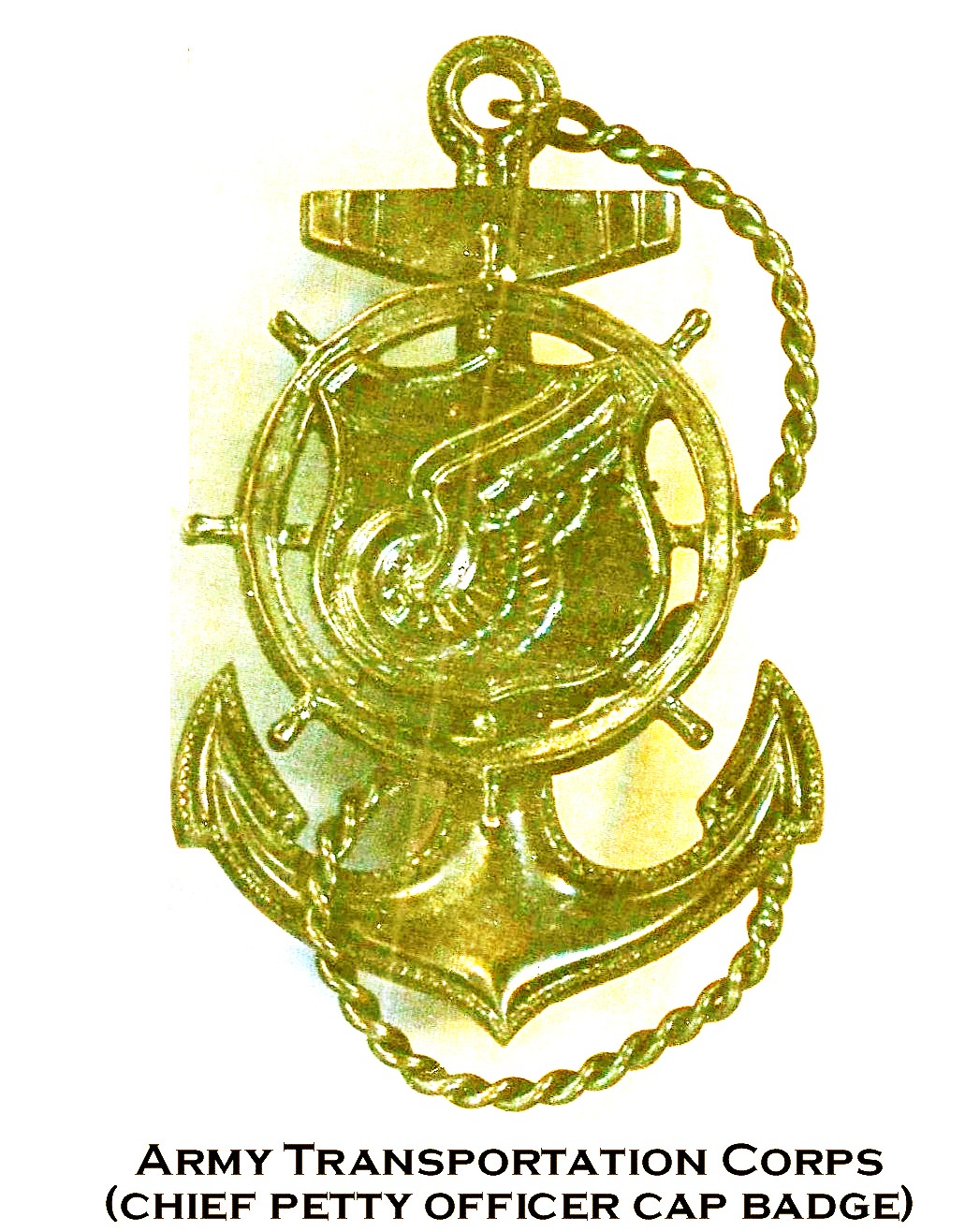
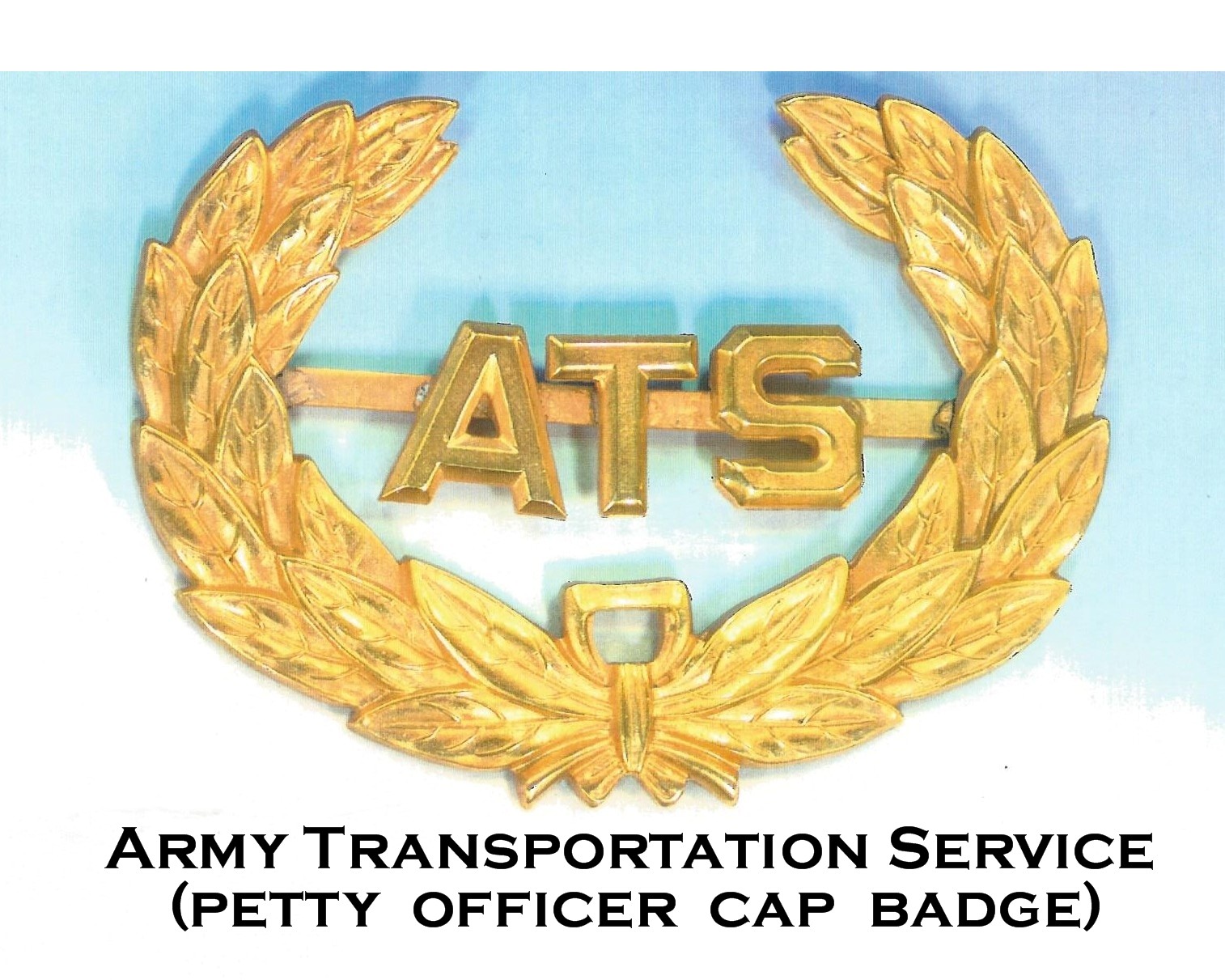
Over time, and especially during the late 19th and early 20th century, the British, German and American navies developed systematic indicators of personal shipboard position. These found manifestation in cuff lace, buttons, badges and various devices. The British led the way in defining this symbolic language and shipboard organization; the United States followed, reaching full elaboration in the period preceding the Second World War. Both the U.S. and British navies relegated rate to the arm; the U.S.ย Government marine – comprising of the Coast Guard, Coast and Geodetic Survey, Public Health Service and Maritime Service – followed the lead of the U.S. Navy.ย  Interestingly, the U.S.ย Army Transport Service, and not the U.S. Maritime Service nor the U.S. Navy provided its Petty and Chief Petty Officers with hats designating rate. In the latter two services, rate resided on sleeve or collar; it is an academic exercise for the reader to determine what is most important to the various services – shipboard trade or rank.

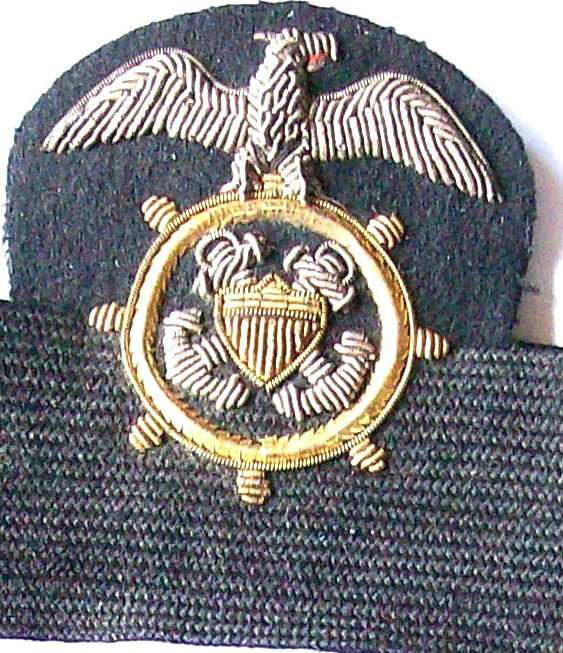
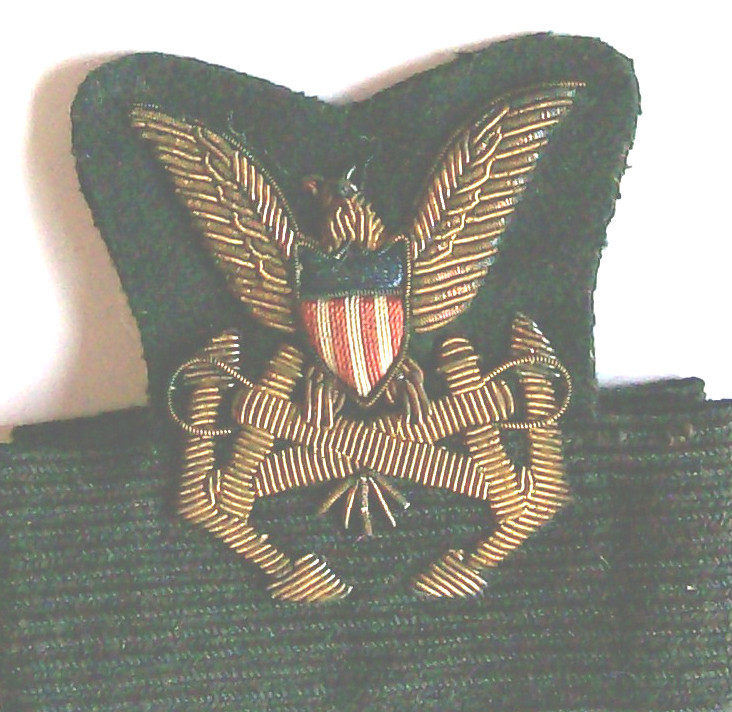
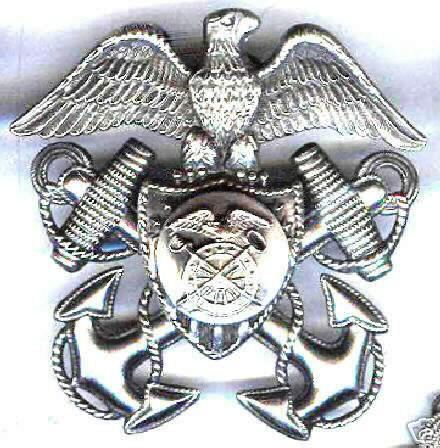
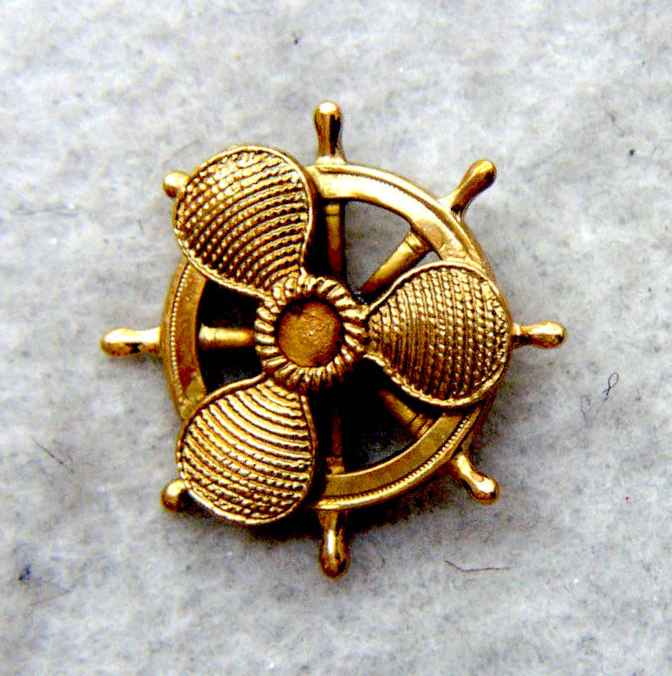
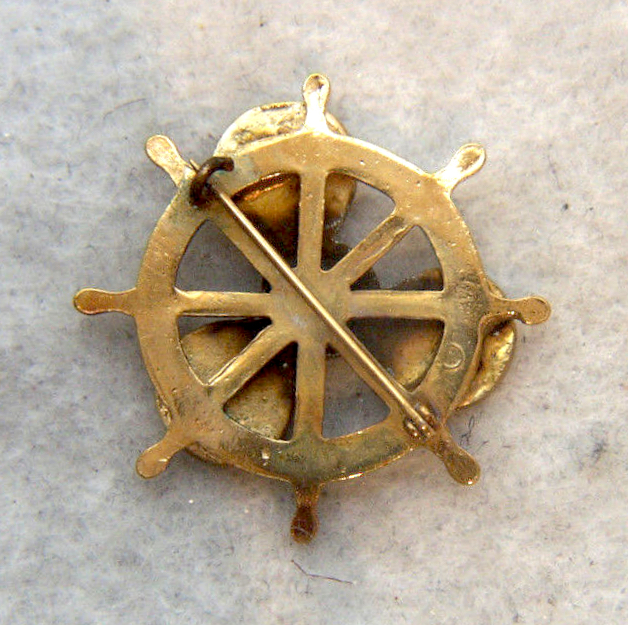
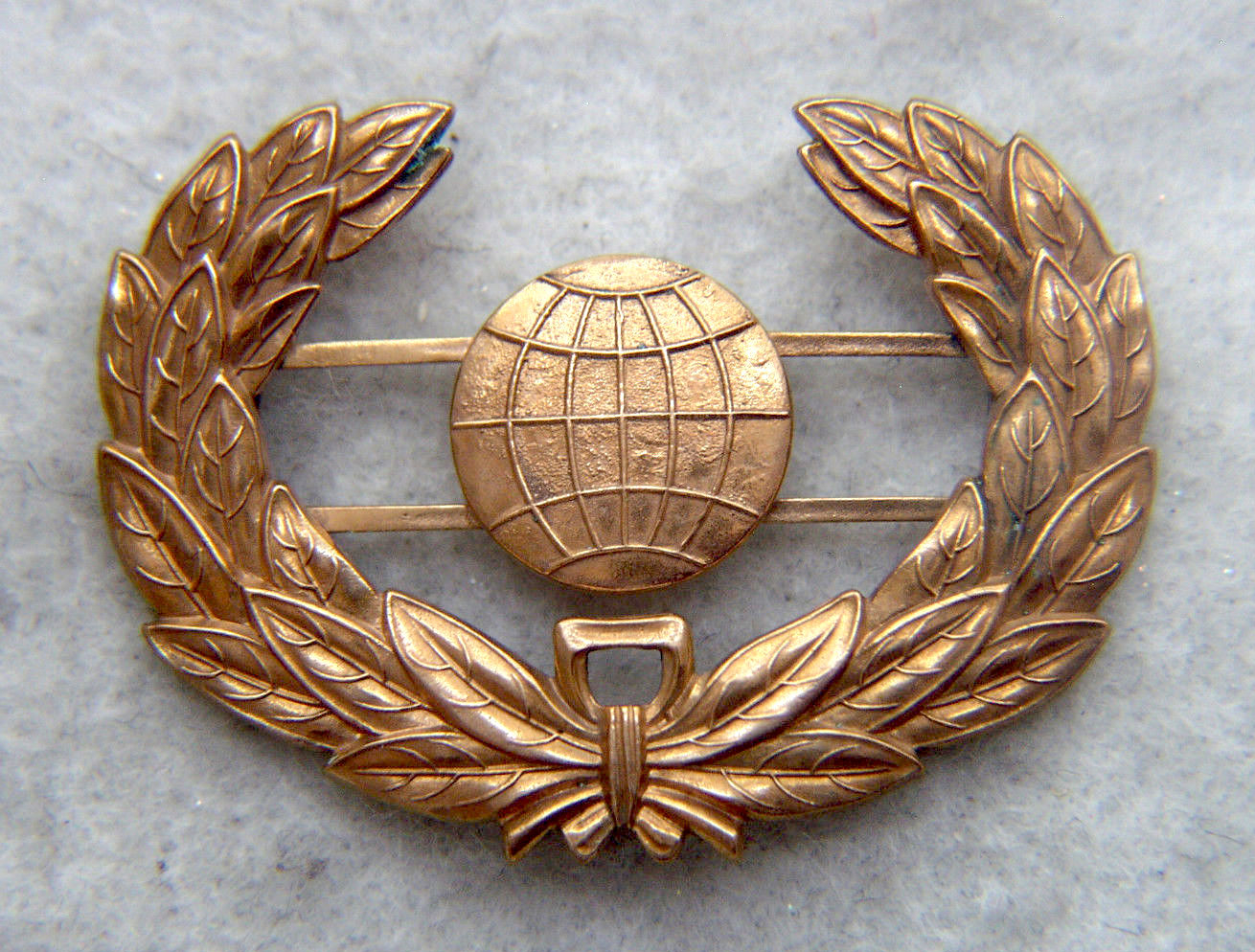
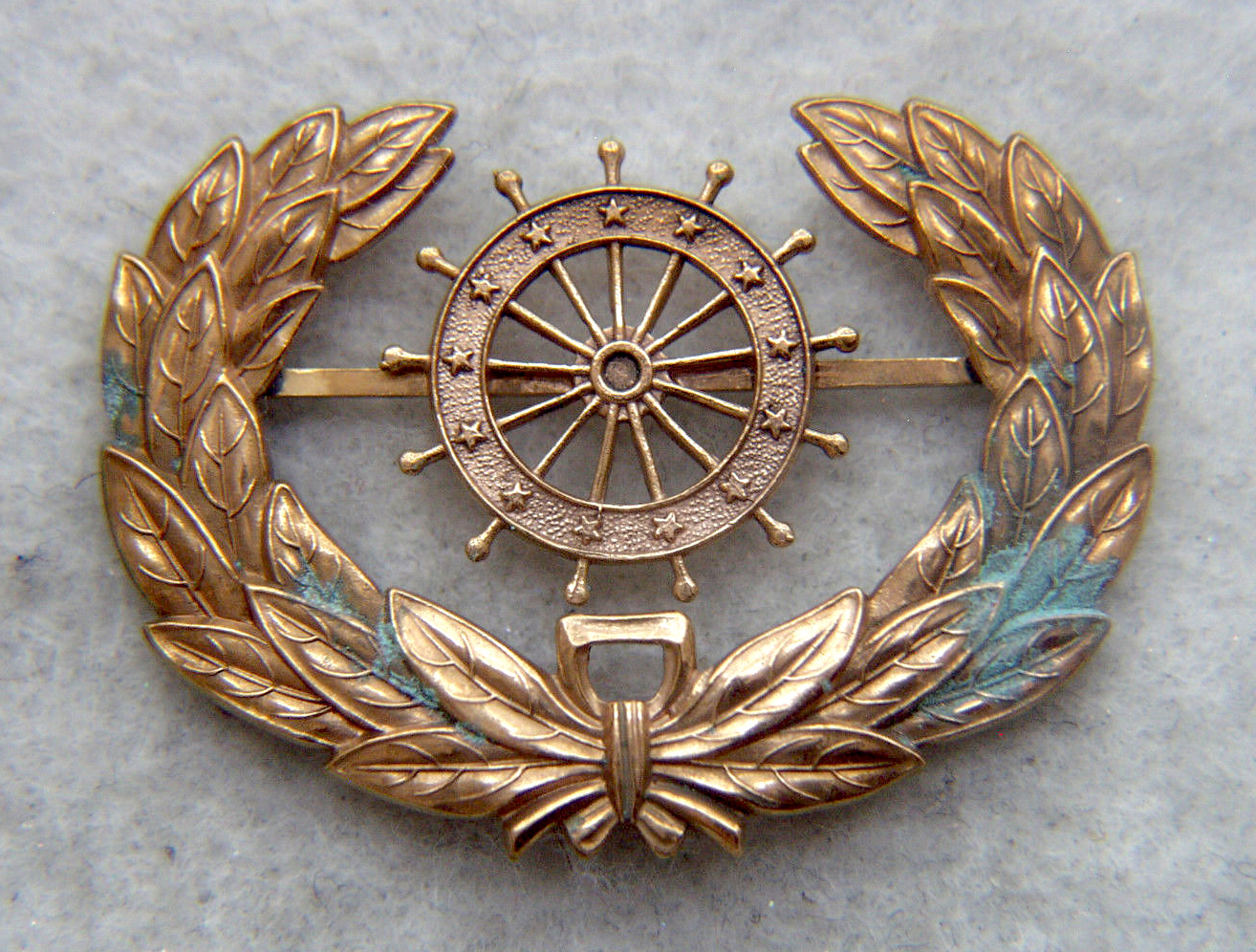
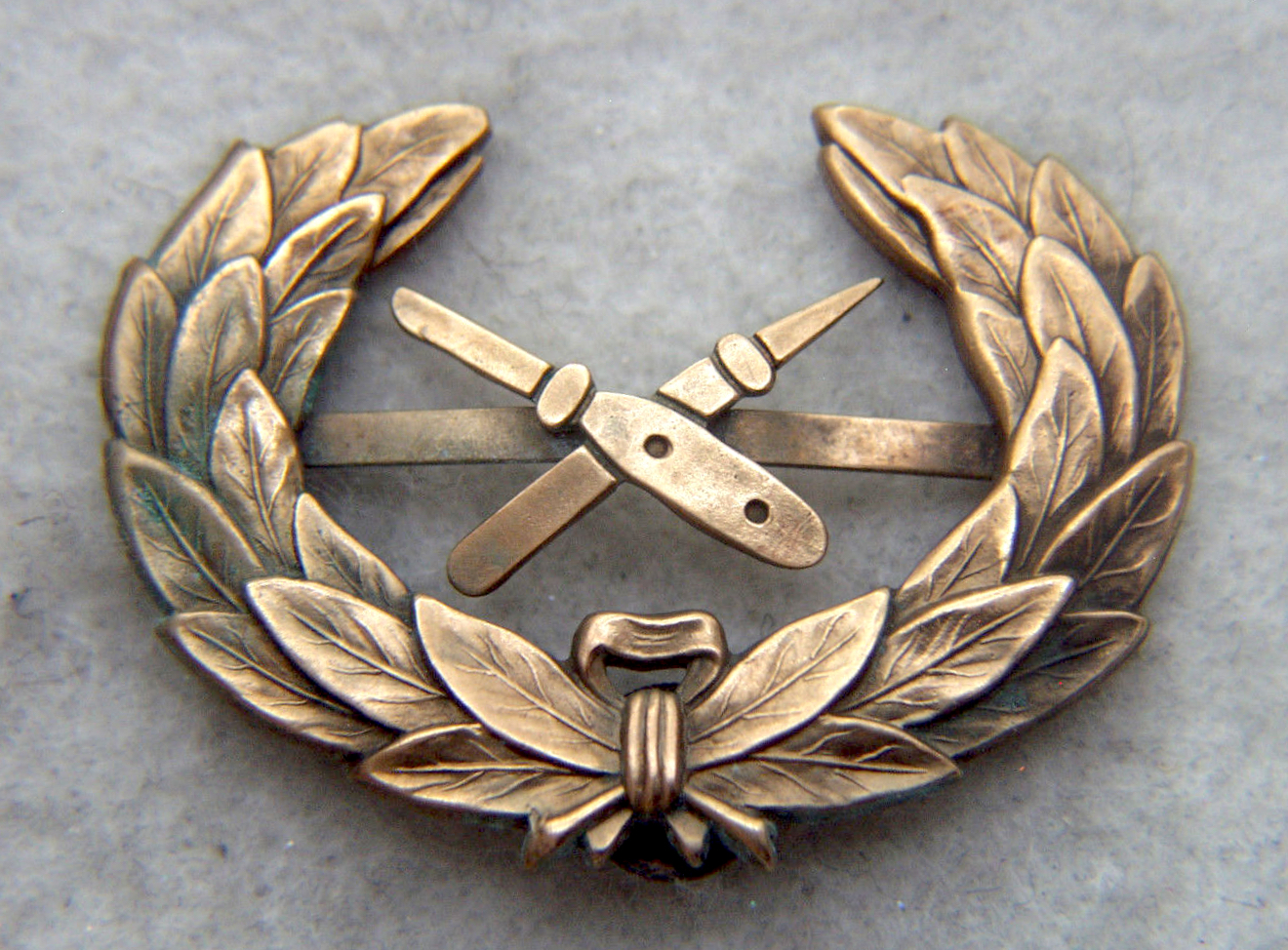
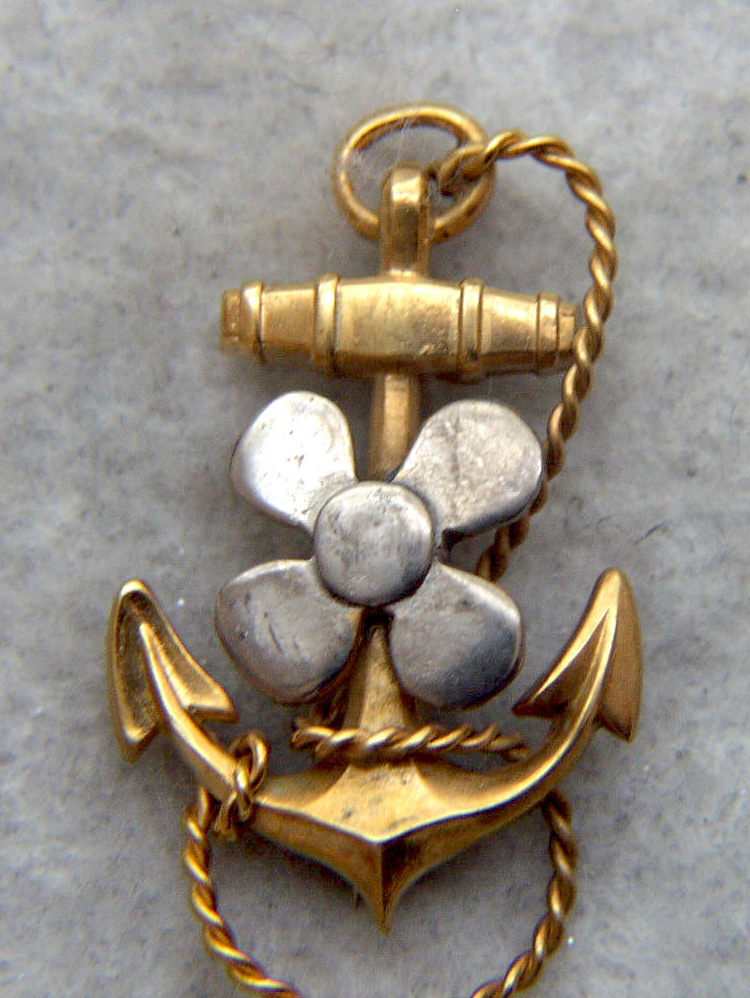
Woven or stamped, as follows is a cursory list of some common devices: stars and fouled anchors for deck officers and boatswains, carpenter’s rules and axes for ship’s carpenters, quills and keys for clerks and yeomen, globes for electricians, sparks for wireless (radio) operators, propellers or cogs for engineers and machinists, ship’s wheels for helmsmen, batons and swords for masters-at-arms, and increscent (a crescent moon with the points facing dexter) for stewards and commissary personnel. The latter insignia has the unique distinction of being silver in color for stewards in almost all foreign and merchant navies, and in the U.S.ย Army Transport Service.

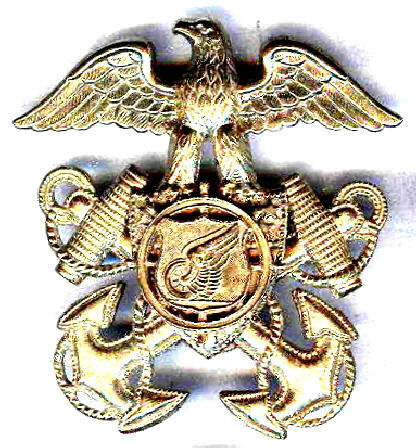
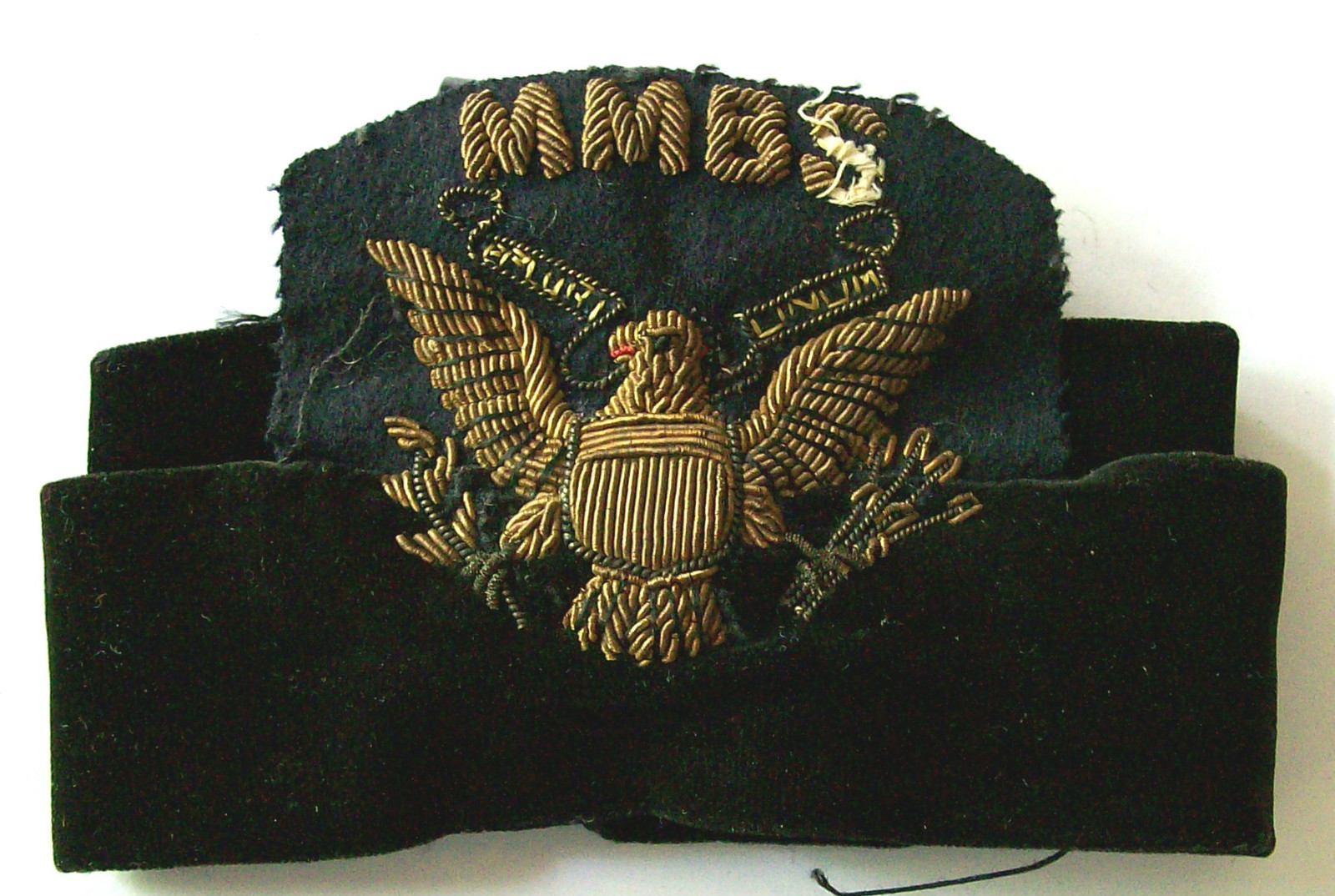
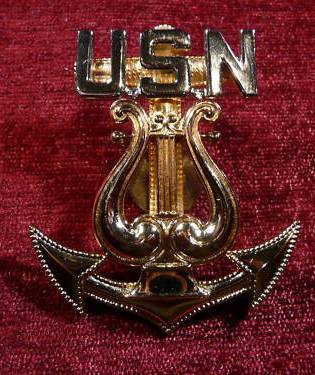
Silver and gold feature prominently in not only in maritime rank insignia but in all U.S. military services. Following U.S. military insignia lore, “gold is worth more than silver, but silver outranks gold.” This is due to the fact that the U.S. Army decreed in 1832 that infantry colonels would wear gold eagles on an epaulet of silver and all other colonels would wear silver eagles on gold. When majors and lieutenant colonels received their leaves of rank, this tradition could not continue. It came to pass that silver leaves represented lieutenant colonels and gold, majors. However, the case of lieutenants differs: first lieutenants had been wearing silver bars for 80 years before second lieutenants had any bars at all; second lieutenants were granted a single gold bar in 1917. With the standardization of U.S. military insignia in the early 20th century, these insignia revisions applied to U.S. Navy officers. On naval uniforms – rank insignia notwithstanding – in particular, gold was applied to base elements of insignia, such as anchors on the U.S. Navy hat badge; and silver to mottos and symbols of the eagle and federal shield. Gold remained the province of officers and senior positions, whereas silver and pewter were relegated to the enlisted. Curiously, the motto “U.S.N.” on the U.S. Navy Chief Petty Officer hat badge was silver, whereas the “U.S.N.” hat badge of a steward was gold. This follows the mentioned reversal of colors between officers and enlisted – with the steward belonging to a class attached to and not of officers.

In rank-based shipboard society, it is only at dinner hour that some rules
are suspended for the few – the stewards. During the Second World War, in the U.S. Navy, and the U.S. Army sea services officers and men messed separately; furthermore, on British merchantmen at the time, officers and departments messed separately (as detailed by Lowery in Ultramarine). Up until the present-day, the U.S. Navy has the further distinction of having not only separate wardrooms and mess for officers and enlisted men, but also for Chief Petty Officers. By virtue of tradition, the latter have a separate galley serving portions greater in quantity and open later than those of their fellow sailors. Given the strict hierarchy aboard ship, and the stern rules banning enlisted personnel from the officers’ wardroom and chiefs’ mess, stewards and commissarymen transcend these strictures to serve food. An unauthorized sailor found in these spaces could find himself at Captain’s Mast or at court-martial andย suffering harsh disciplinary proceedings (it also goes the opposite way; officers may not fraternize with enlisted sailors on or off duty; doing so, they face dismissal from the service). Since instant recognition is important aboard ship, a special hat with a distinct badge and often always white square-rig sailor uniform or special white blouse and duck trousers (even when the uniform of the day may be service dress blue) marks the steward apart.

The U.S. Army Transportation Service officer stewards have a tradition in their uniforms and insignia reaching to a time before even the color blue became a color associated with uniforms maritime. In pre-Enlightenment England, aristocratic lords gave their servants lead or pewter badges to sew onto their clothes to mark them as their own. From the 15th century onward, royalty in the British Isles distributed uniform suits of clothes to courtiers, as did leading bankers to all employees. In time, this became a practice of all British “great houses.” It is worth mentioning that these suits of clothes, although well made, denoted the wearer as not being a member of the aristocracy, with the visual cue of silver braid. It came to pass that a traditional livery color became silver. By the 19th century, officer stewards became a facet of shipboard life in the Royal Navy; as they were considered servants, their uniforms followed precedent. In time, stewards wore prestige items, such as coats and visor hats; albeit, with markers of their inferior status – servants although a class apart, needed to impart a pleasing image in the wardroom. Nineteenth-century British commercial liners, offering first-class passage to the monied, mirrored military fashion – which in itself was a reflection of aristocratic costume – in the clothing its officers, sailors, and stewards. The U.S. Army Transportation Service, born out of necessity during the Spanish-American War, built a fleet of ships larger than that of the U.S. Navy; some of the larger transports (considered “show boats”) ferried military personnel and U.S. diplomats to far-flung newly acquired U.S. possessions. The ships were manned by civilian personnel who wore uniforms following the fashion trends of the day: deck officers wore gold lace on their cuffs and stewards were accented in silver – as were their counterparts on the commercial liners. At the same time, the newly-imperial United States began to carry complements of Filipino nationals alongside African-American cooks as stewards onboard its ships. Taking this into consideration, ships could be construed as reproducing the “great house” tradition with colonials and second-class citizens filling menial roles.

After the Second World War, with the independence of the Philippines
and integration of the U.S. Navy, the servant status of stewards gradually faded away. In today’s U.S. Navy, the traditional steward is no more – he is a Culinary Specialist (cum Mess Managment Specialist in 2004).ย  Up until 1975, Stewards and Cooks were two separate ratings in the U.S. Navy, sharing much of the same responsibilities – with a difference.ย  At that time, the Steward’s Mate (SD) rating was abolished and combined with that of Commissary Specialist (CS) to form the Mess Management Specialist Rating. Prior, stewards served as cooks or bakers for officers’ mess; they also tidied-up officers’ quarters and in a subservient role, served meals in the wardroom. The Commissary Specialist (CS) did nothing but cook for enlisted personnel but in a more democratic fashion.

Old systems die hard, especially among those who enjoy a perceived, albeit subaltern privilege. Even with mandated rate reorganization, the older stewards did not wish to go into the crew’s galley, and by the same token the Commisarymen refused to enter the wardroom; in effect, the indoctrinated segregation held, and the two classes of men remained in their respective work areas.ย  However, in the 1960s the U.S. Navy instituted a practice of rotating seamen in and out of ships and shore stations in an effort to broaden once compartmentalized skill sets.ย  Men new to the rate shifted easily between both the wardroom and the galley – especially with the abolition of many of the steward’s servant duties; officers now shined their own shoes and made their own bunks.ย  However, despite the regulations and rate shuffling, the tradition of the “Tip system” remains; wherein an individual officer or CPO tips a “Mess Cook” to shine his shoes and tidy up his wardroom.ย  Moreover, with rate combination, the old mess cook system still applied to the wardroom with stewards merely renamed “Mess Attendants”. In the present day, with 90-day rotations, they still do menial chores such as cleaning the wardroom, running laundry to the ship’s laundry and maintaining “Officer Country.”ย  It is also worth noting that the 90-day “Mess Cook” does all the cleaning, and most of the serving in the cafeteria-style enlisted mess deck; he also hauls food from the storerooms and reefer decks to the galley.ย  These days, apparently galleymen require direction from outside the ranks – previously the province of Chief Steward – as a non-CS First Class Petty Officer – also assigned 90-days at a time – oversees the Mess Cooks; he is the Mess-Decks-Master-At-Arms. As a historical footnote, during battle, Stewards were stretcher bearers; and Commissarymen served in gun crews and firefighters; no longer.

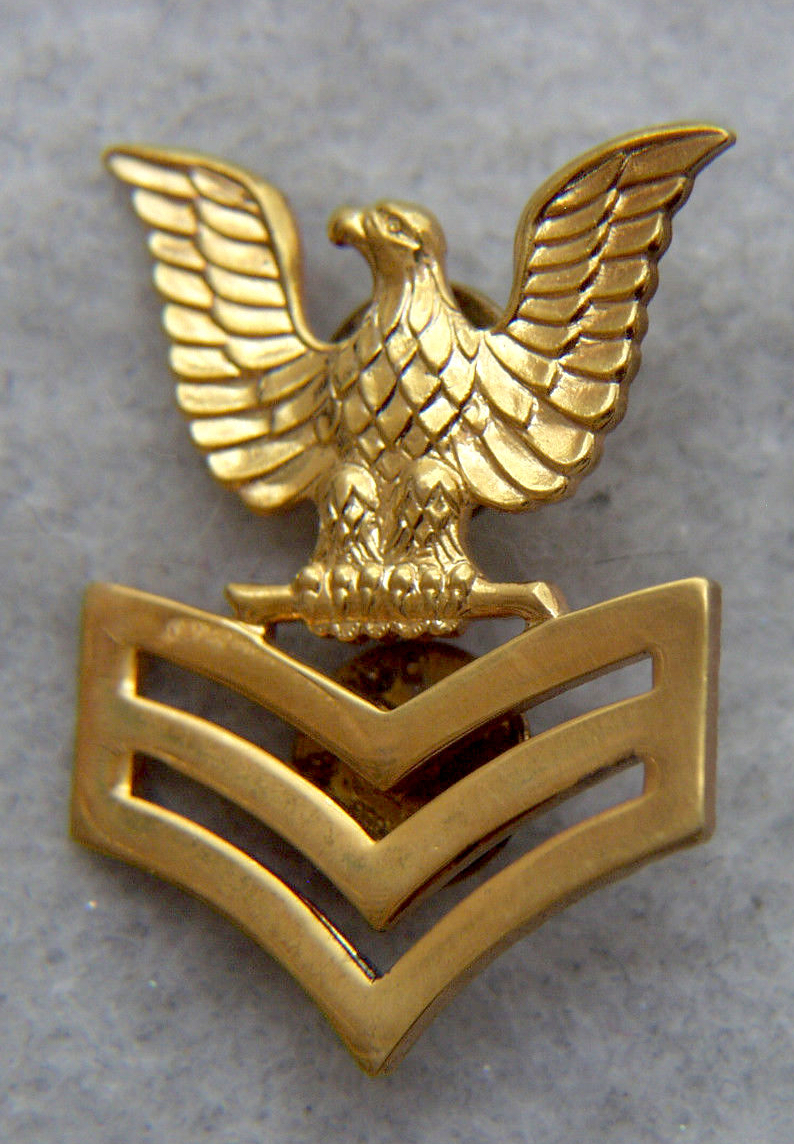
Much can be said about the symbols worn by the stewards: from the 1930s onward, they wore the crescent over horizontal bars, their cook counterparts wore rank chevrons. With the institution of the rate in 1948, Commissarymen wore keys over a quill, and then in with rate integration, both badges changed to quills and a cookbook – the symbol of stewards in 1963.ย ย  As can be divined, over the decades, the rate has been dissolved and reconstituted, with various roles removed and added; including the loss of the traditional crescent.

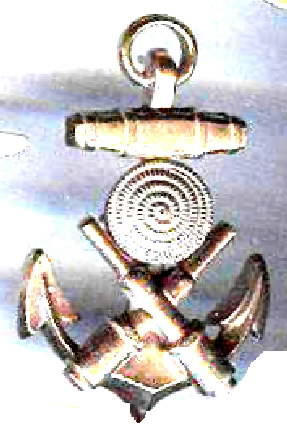
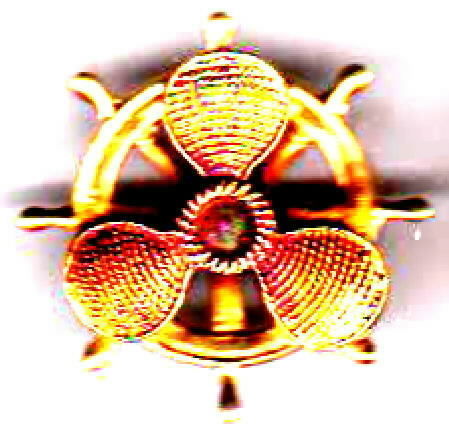
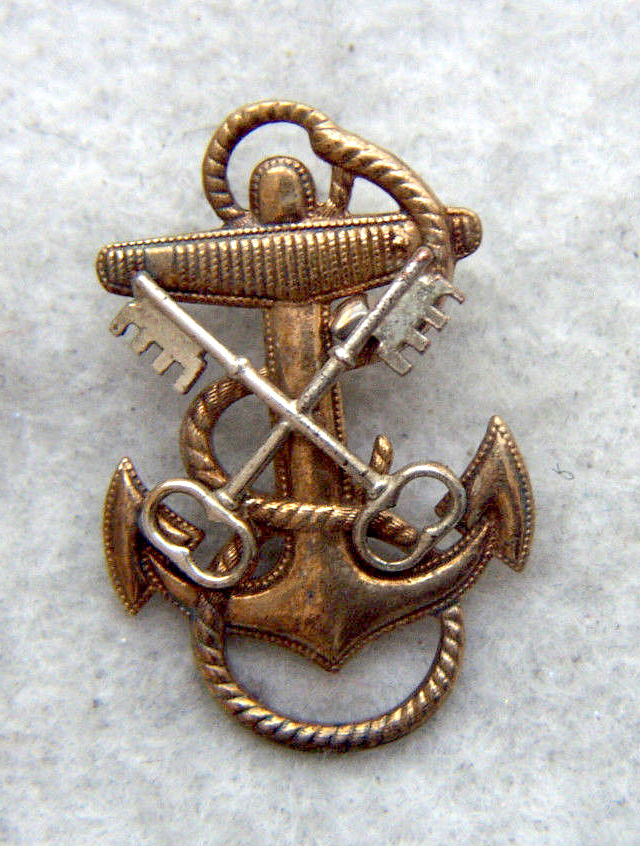
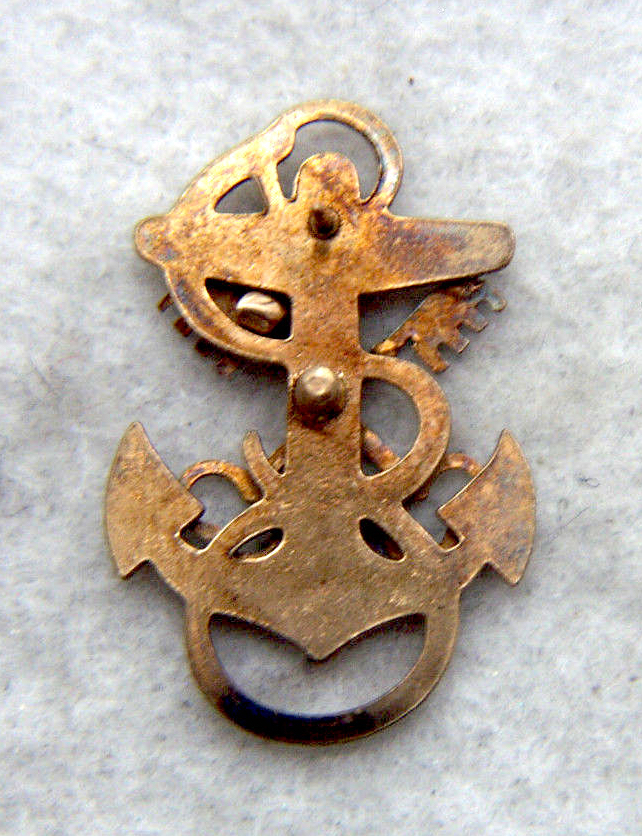
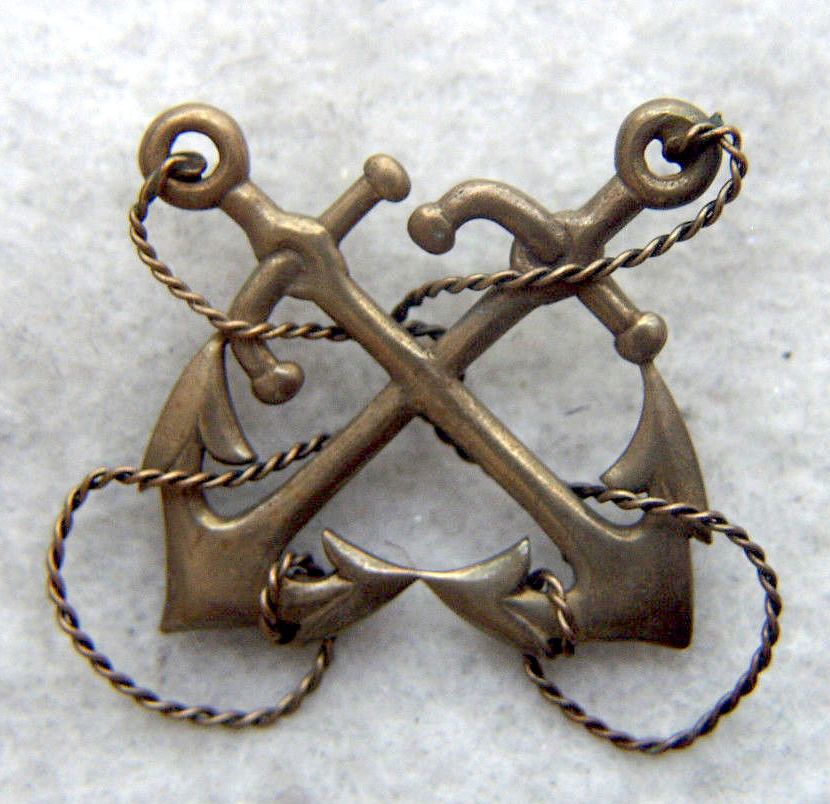
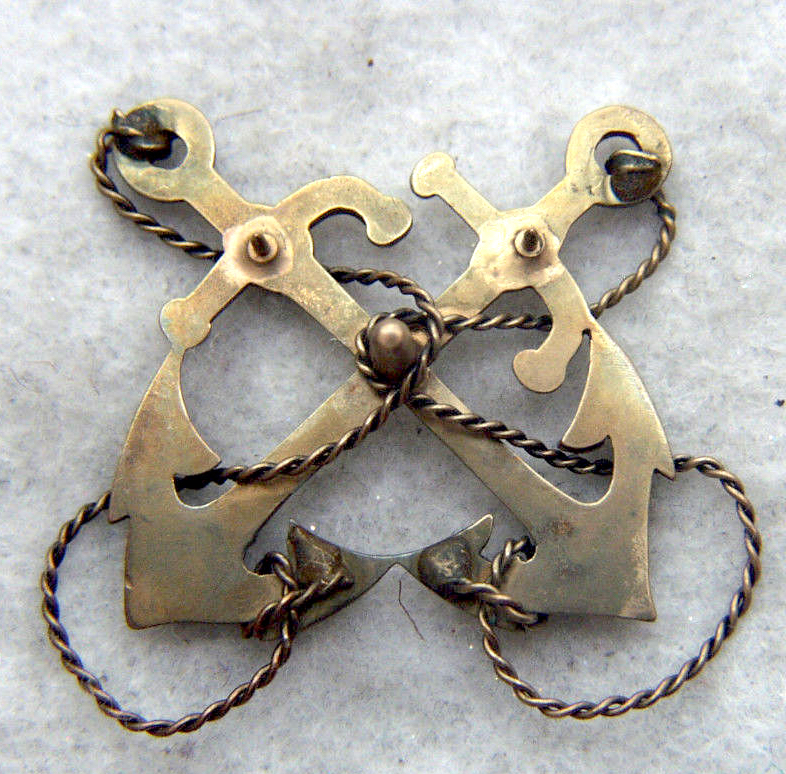
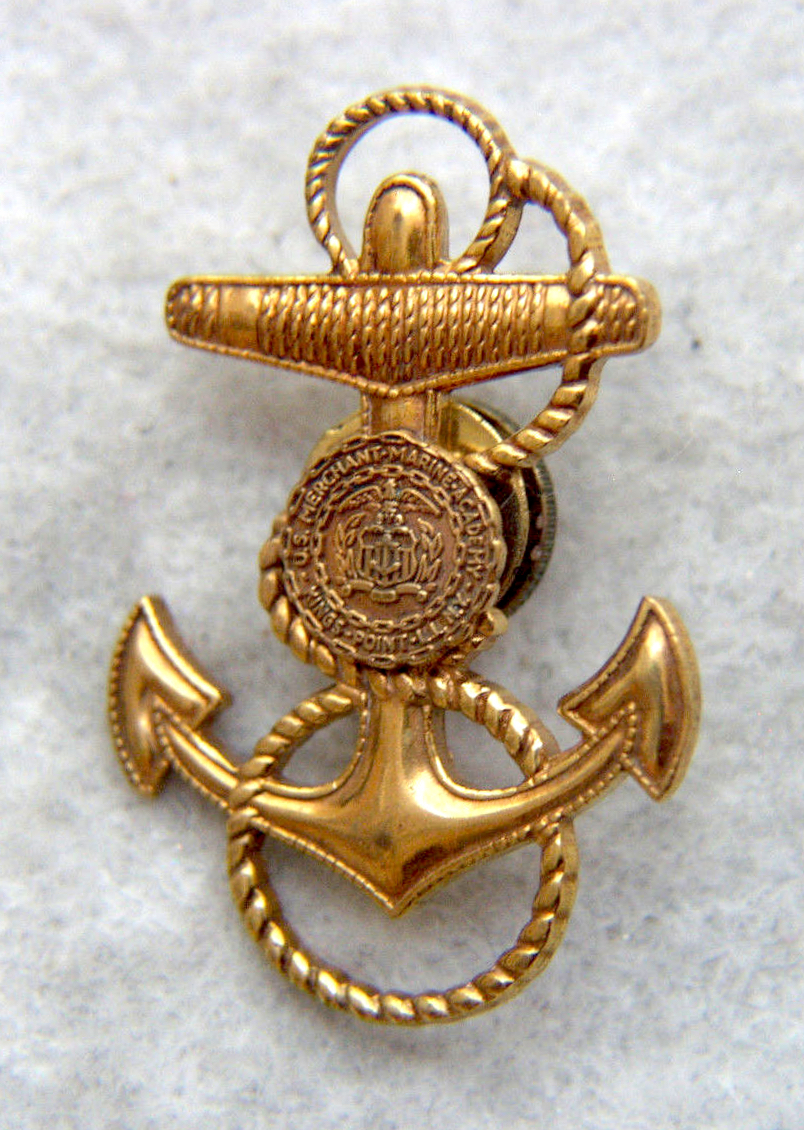
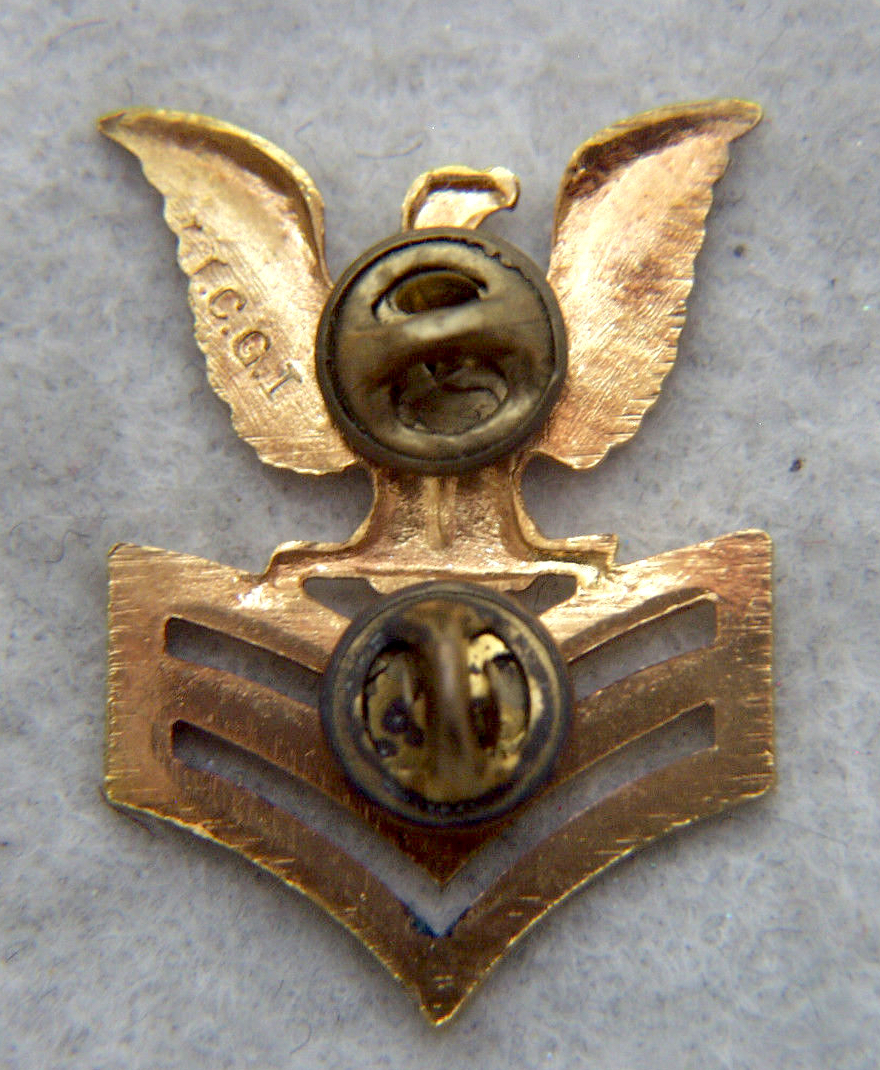
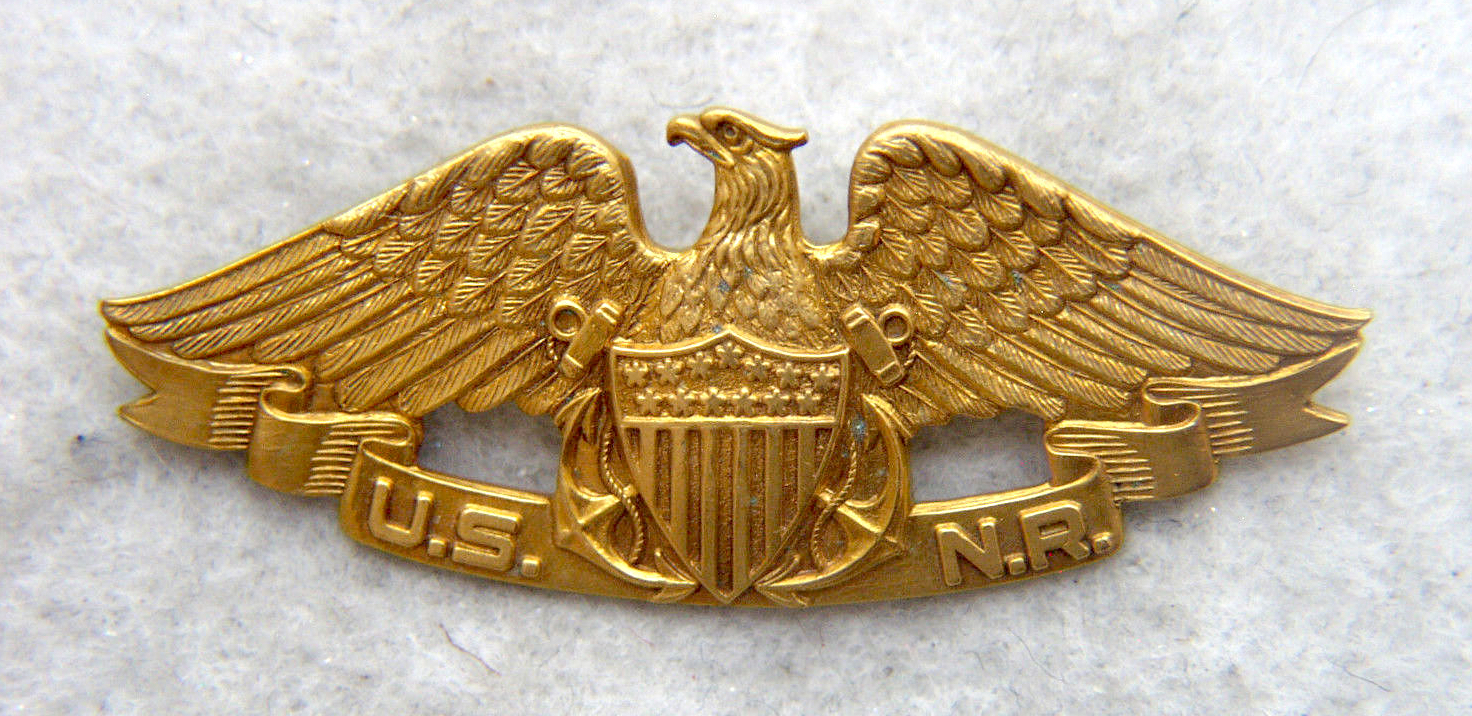
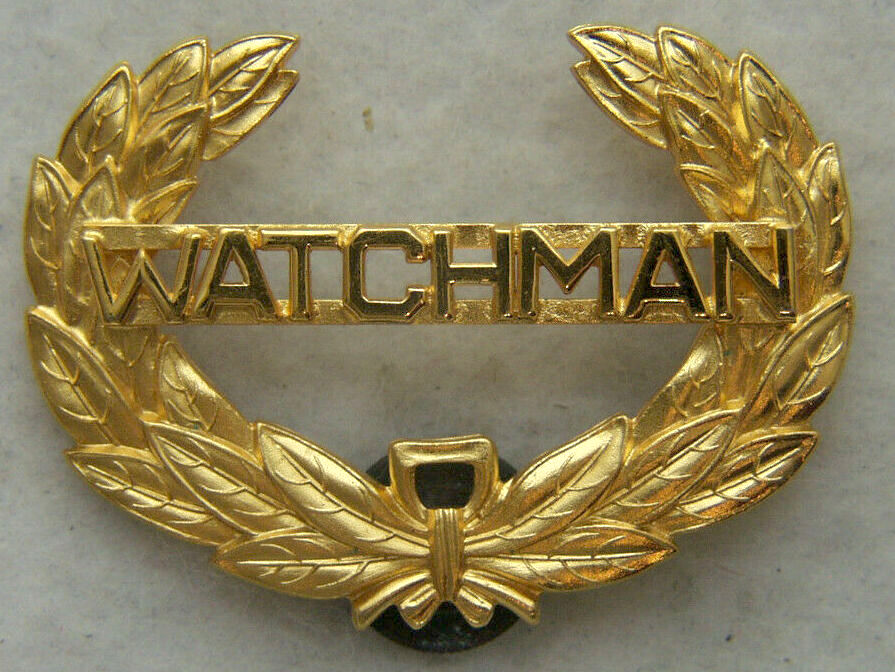
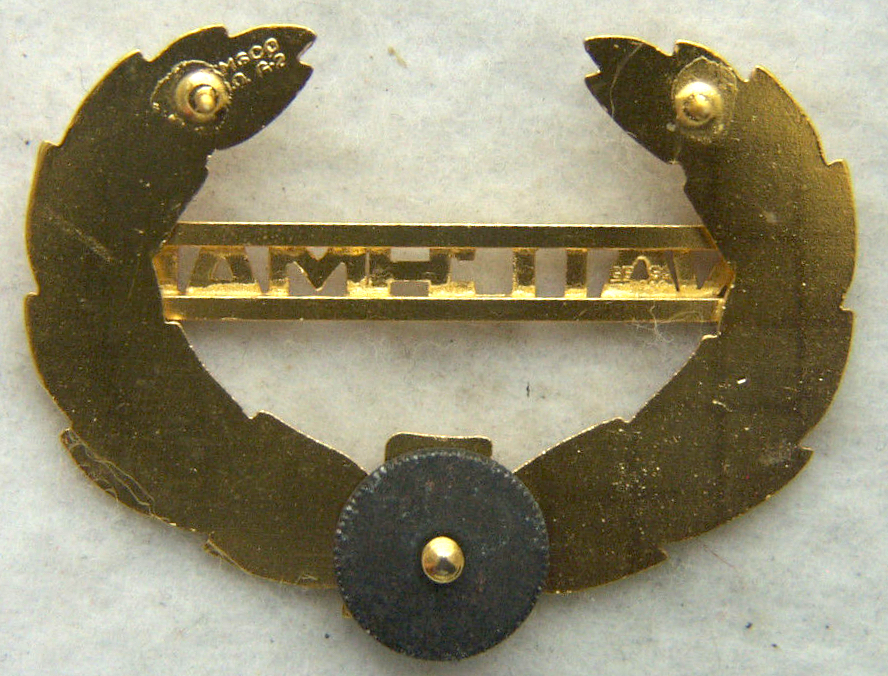
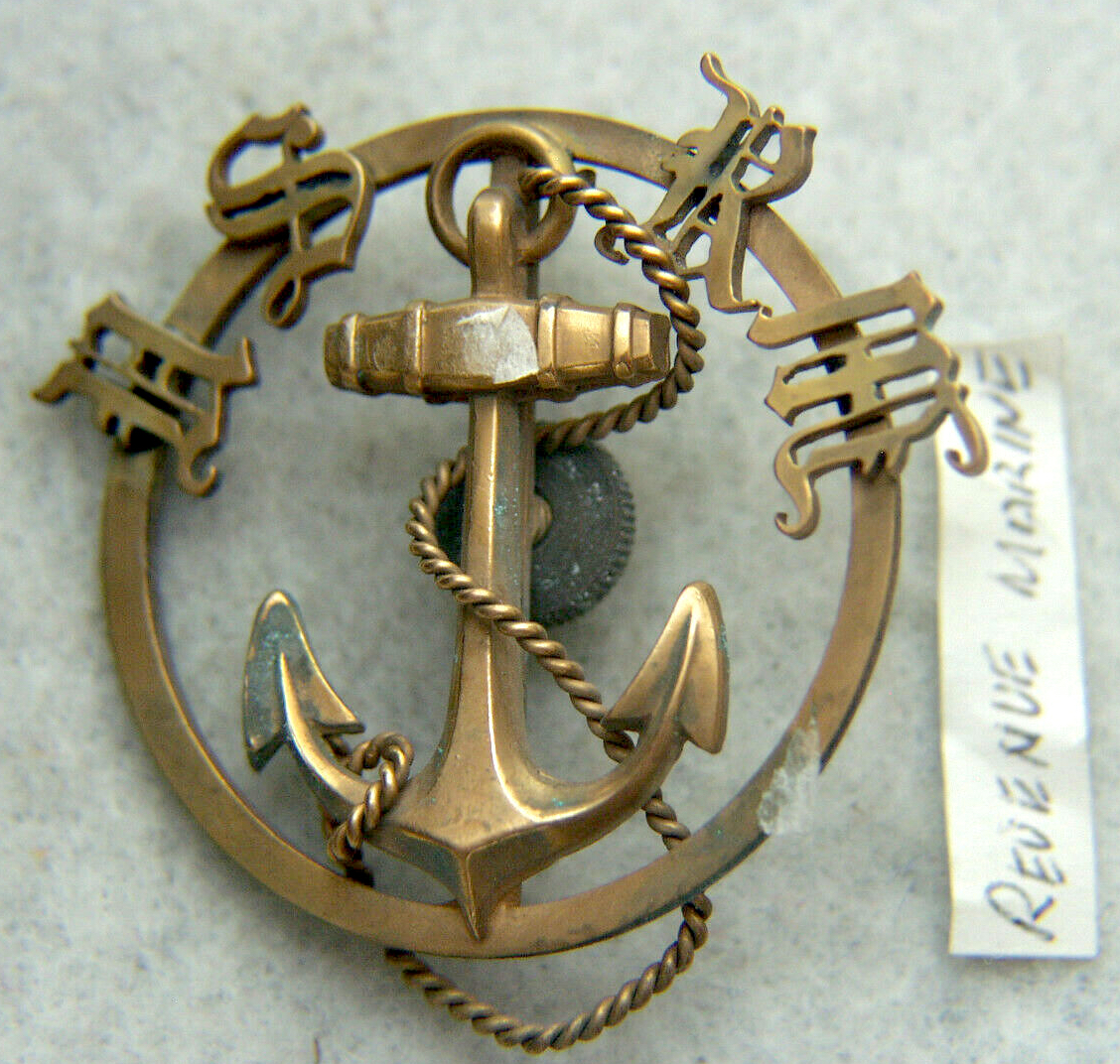
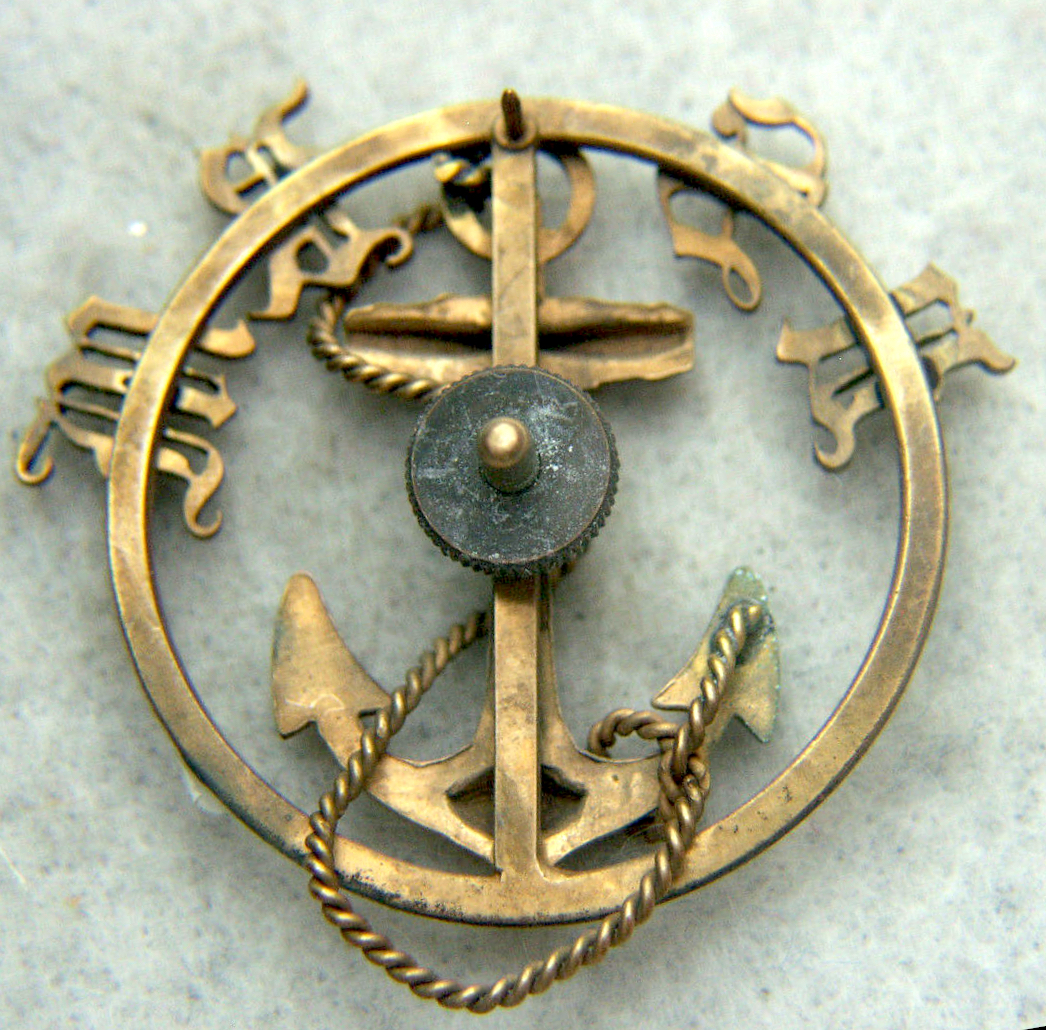
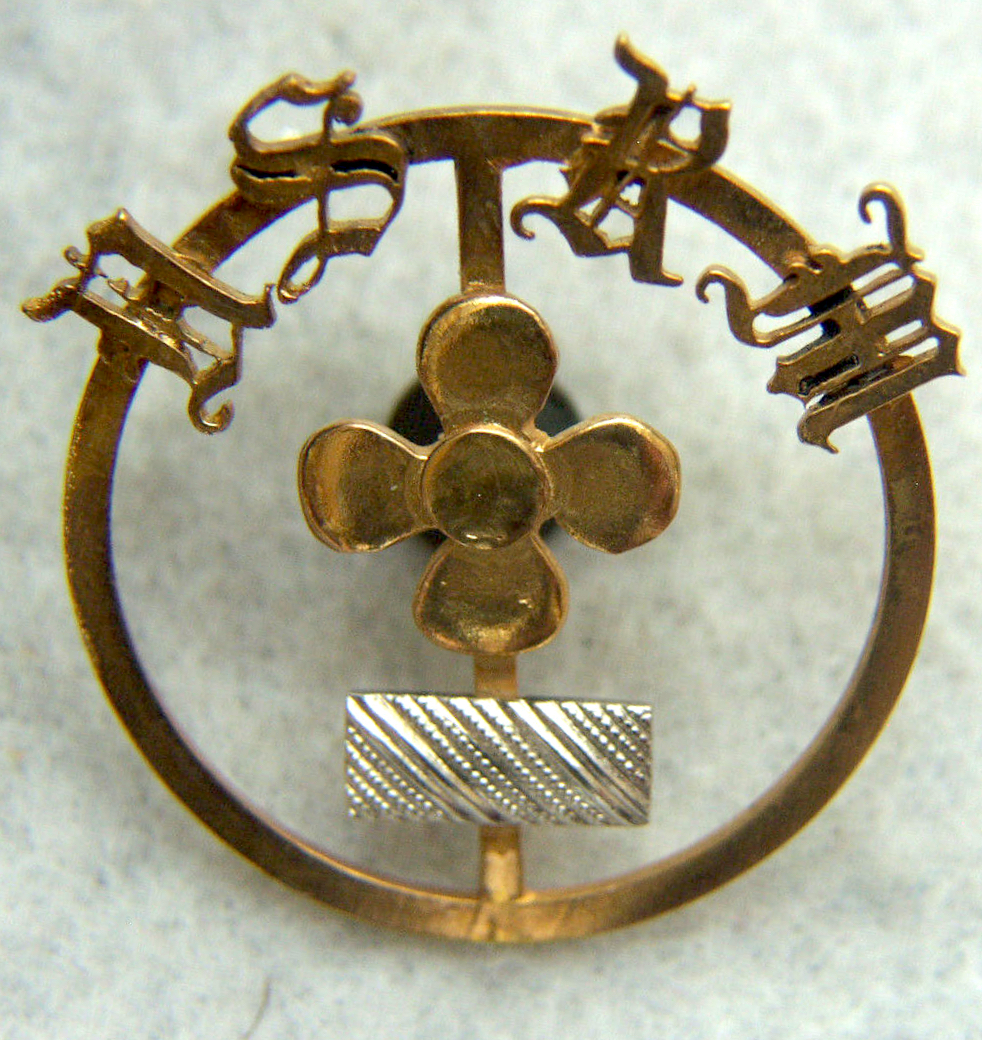
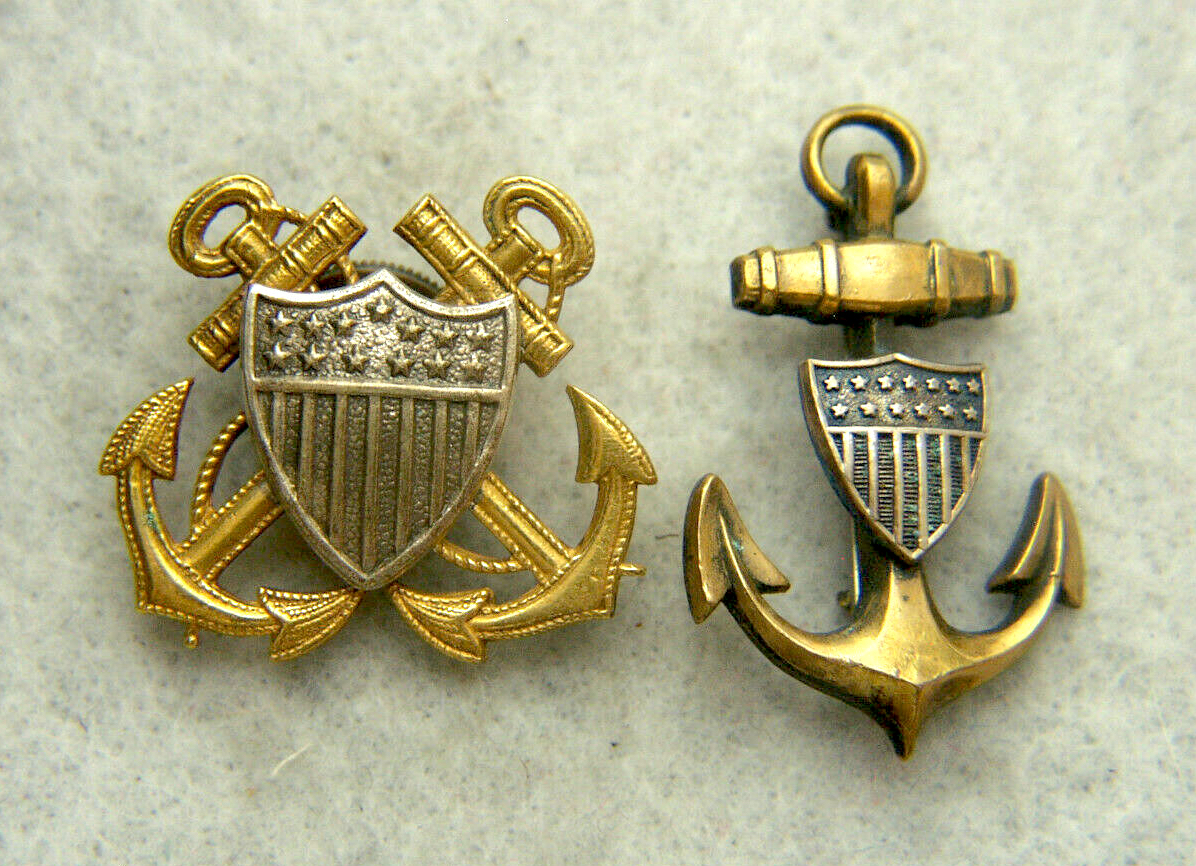
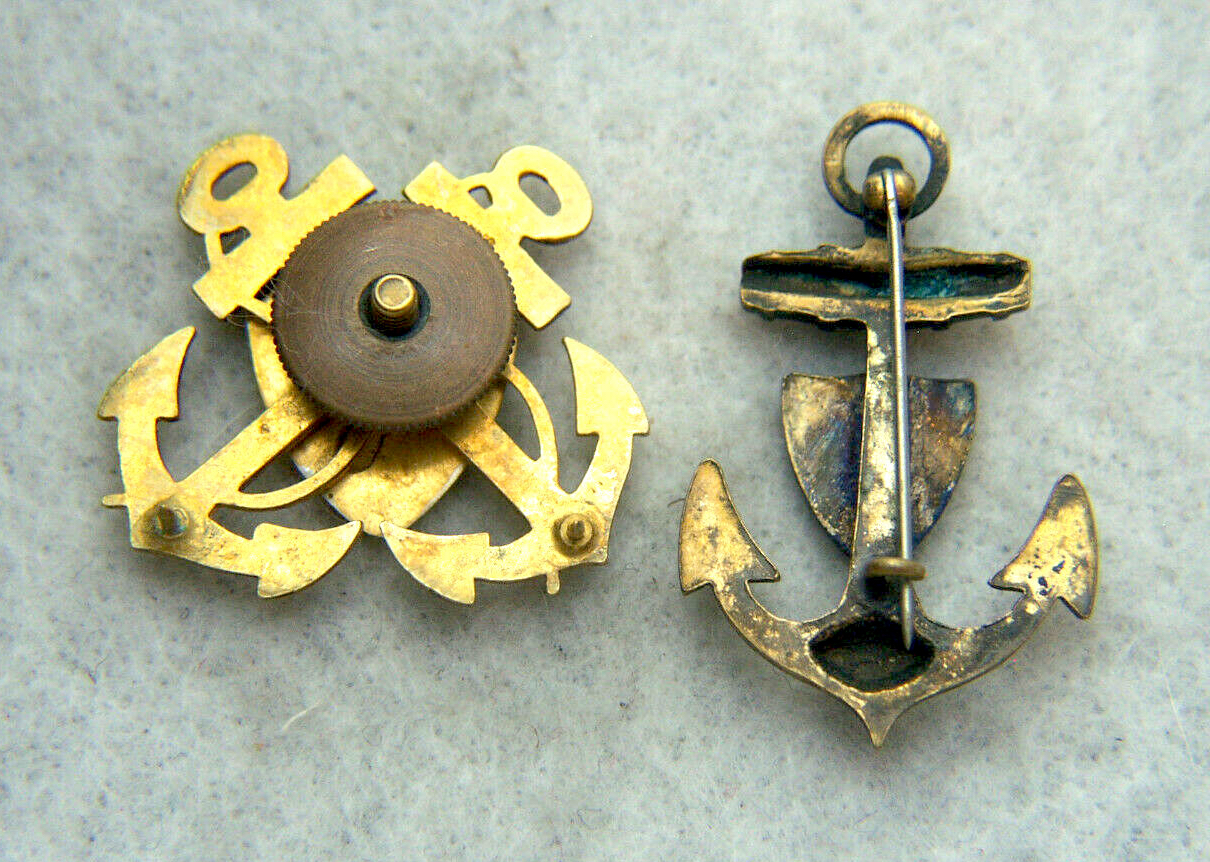
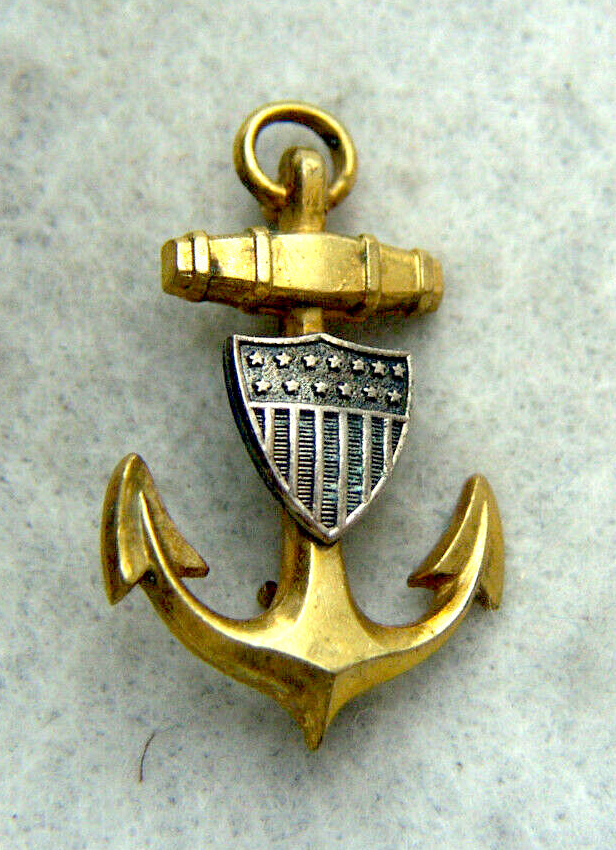
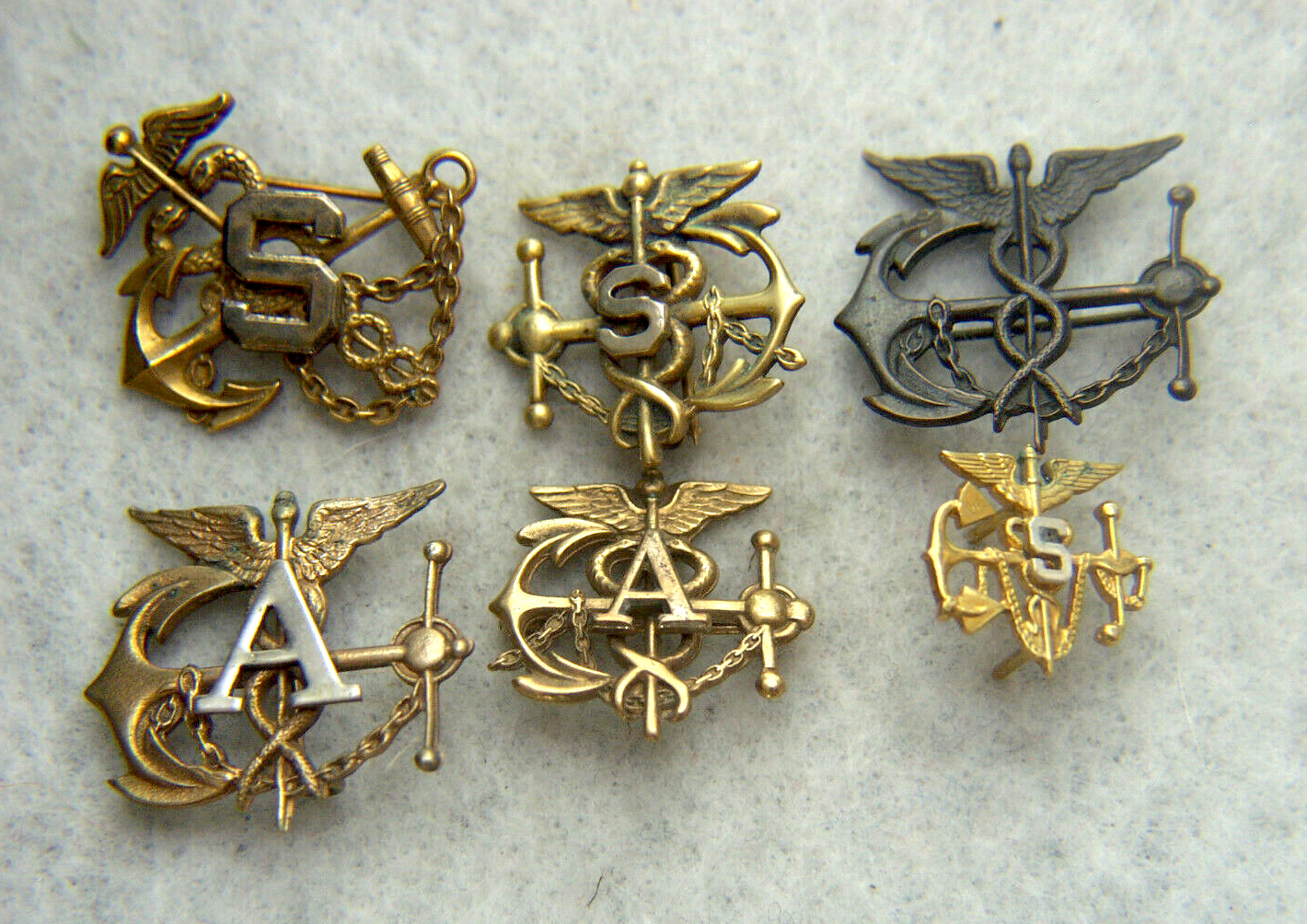
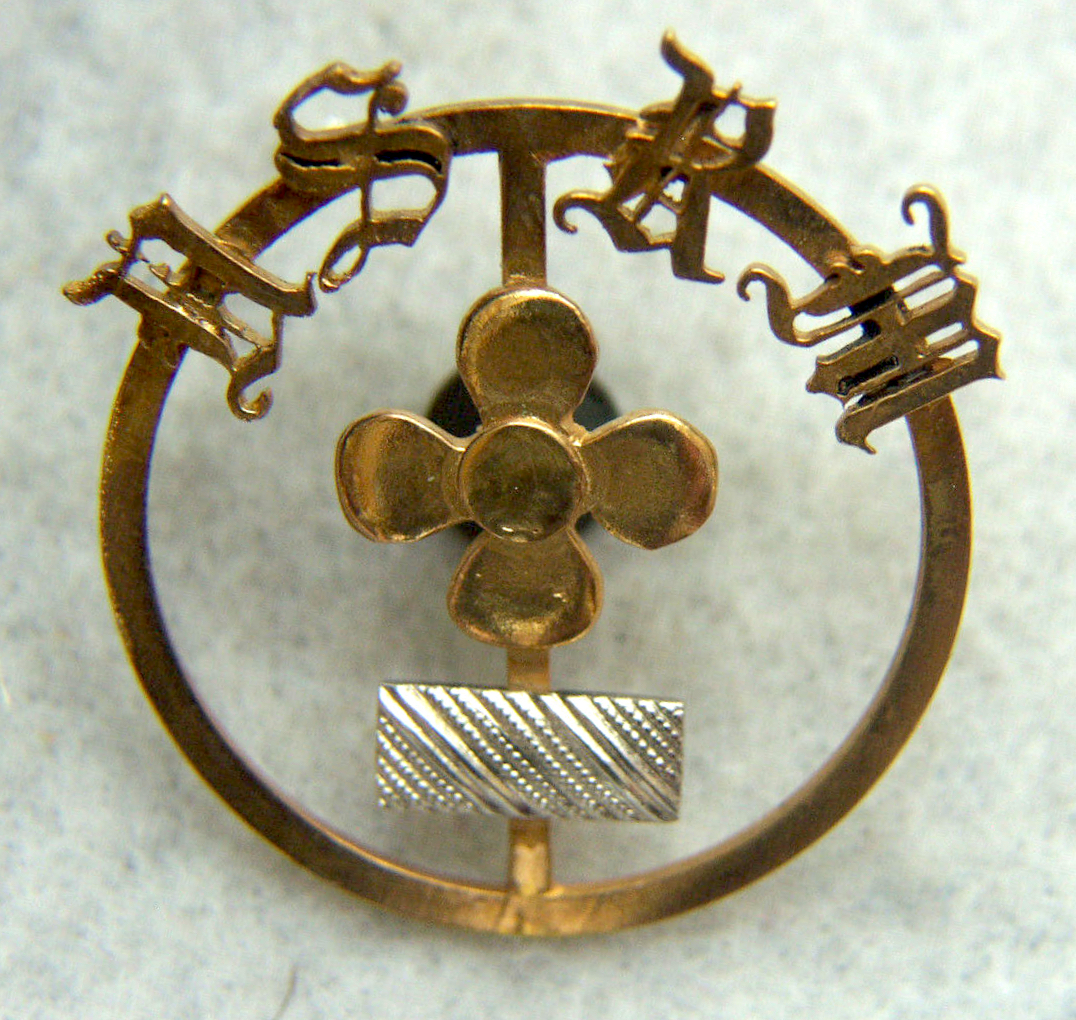
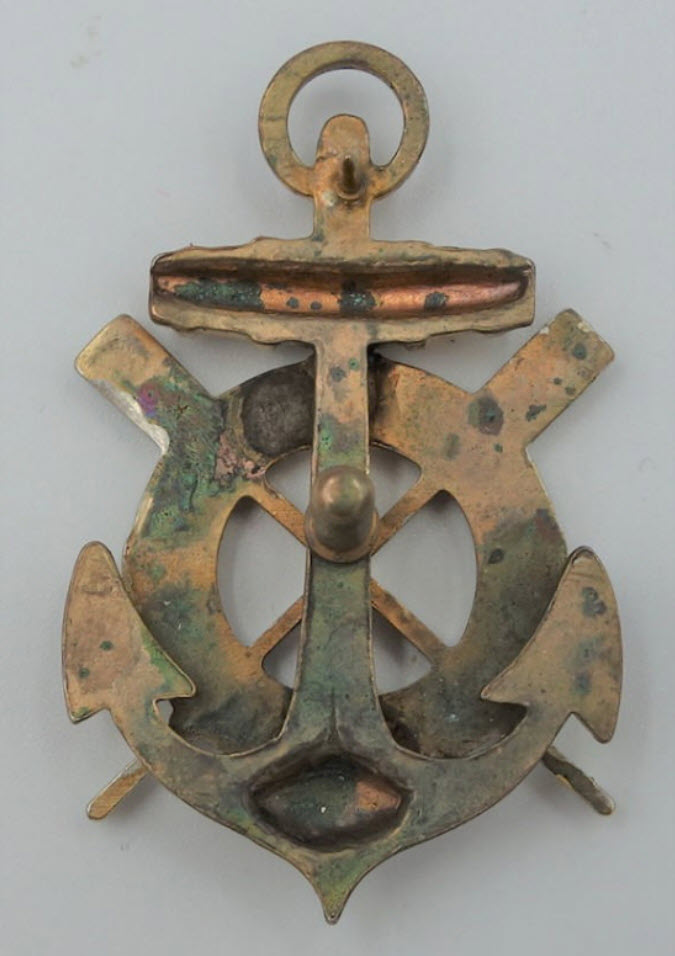
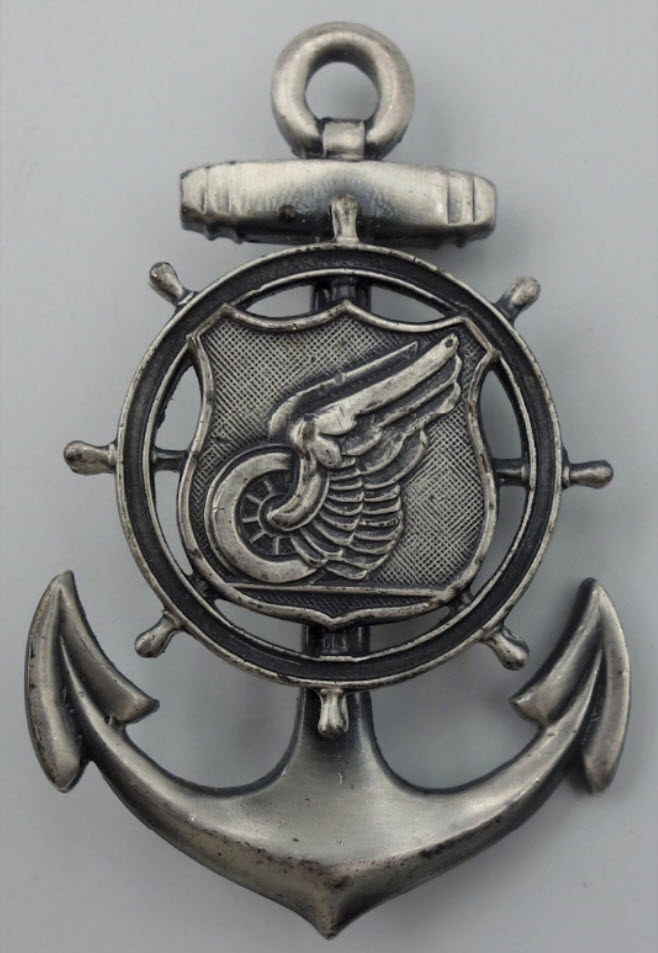
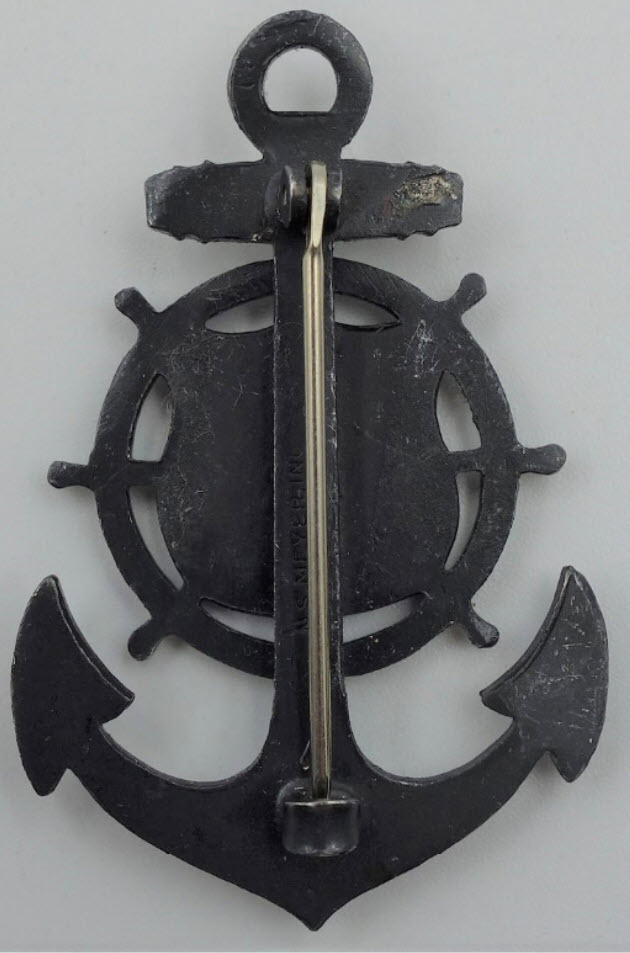
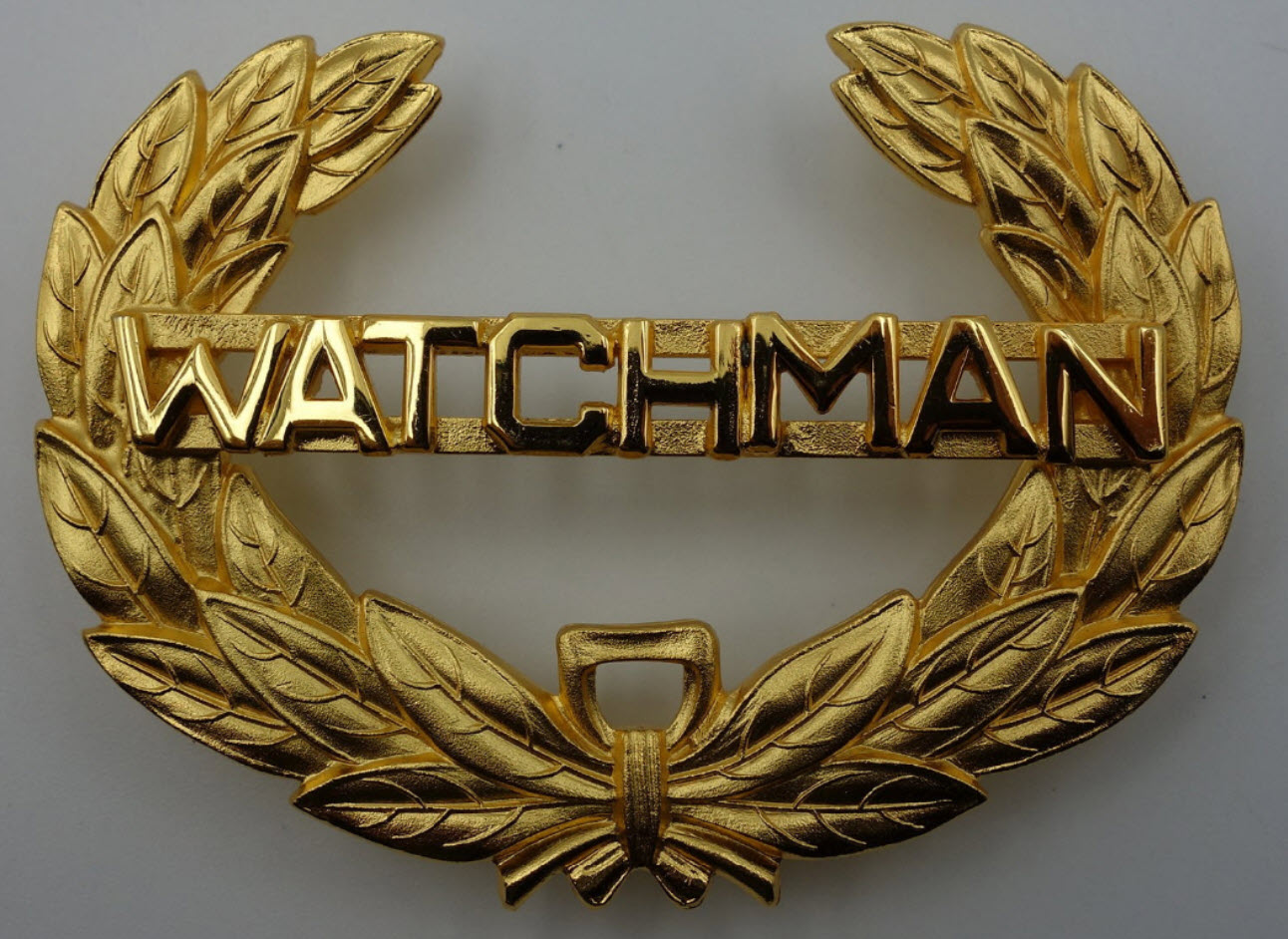
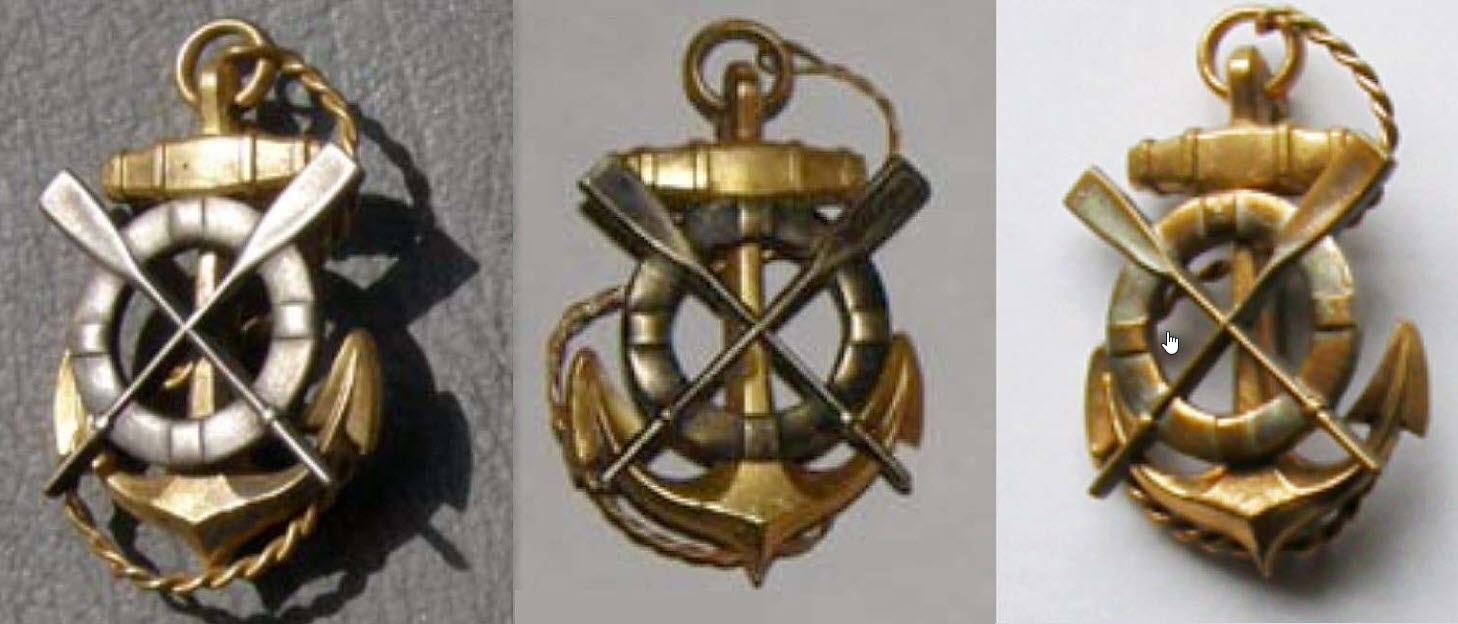
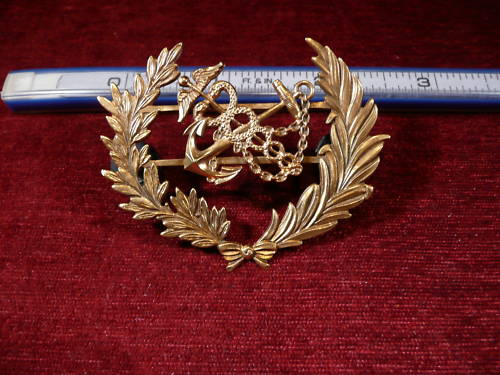
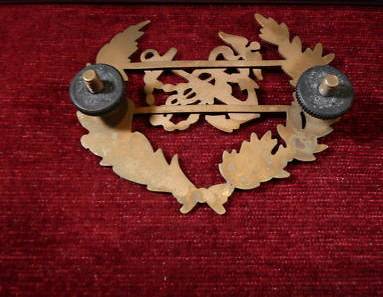
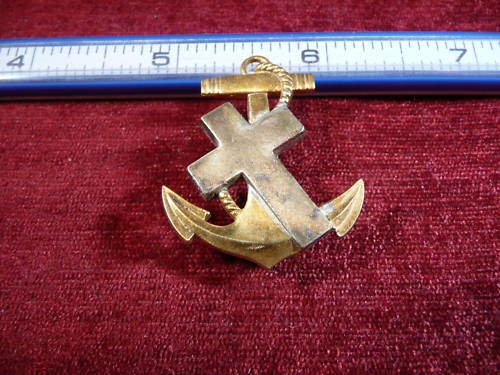
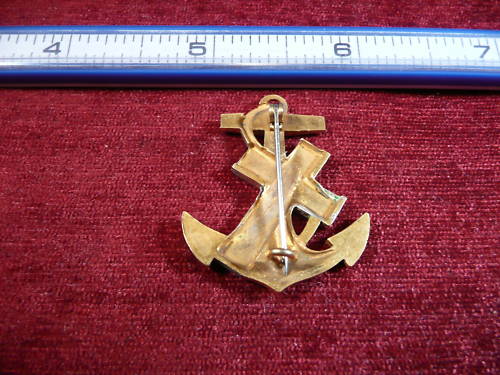
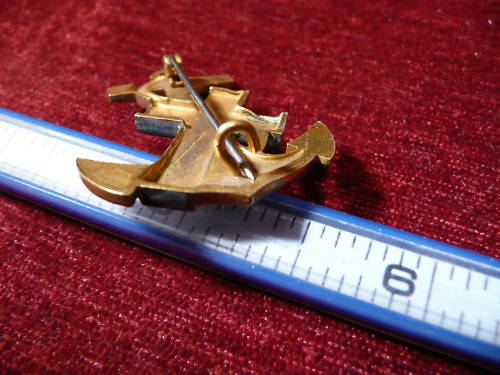
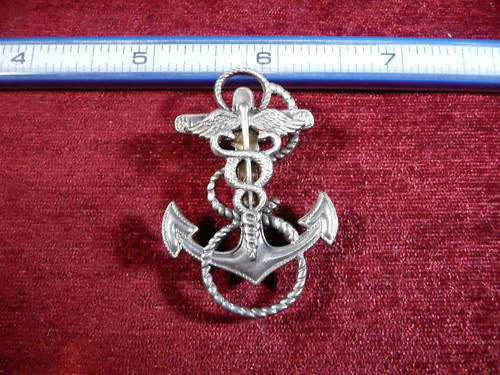
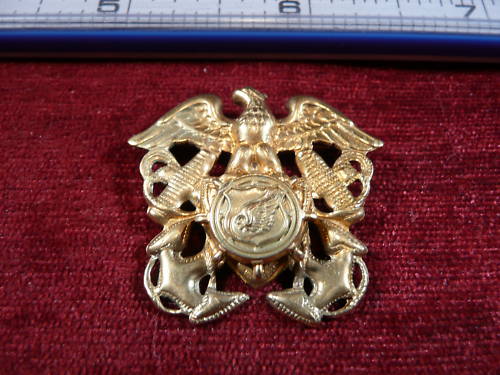
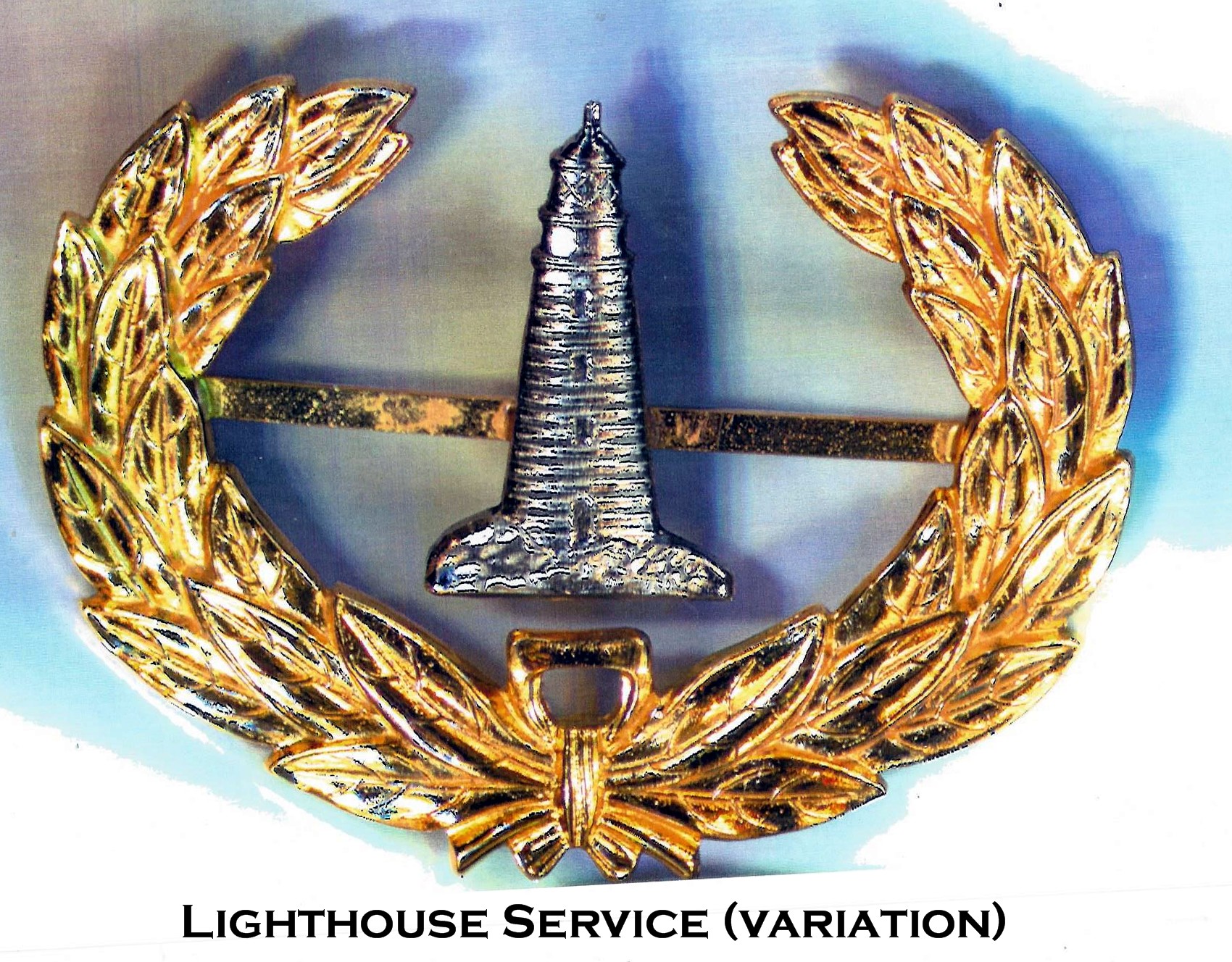
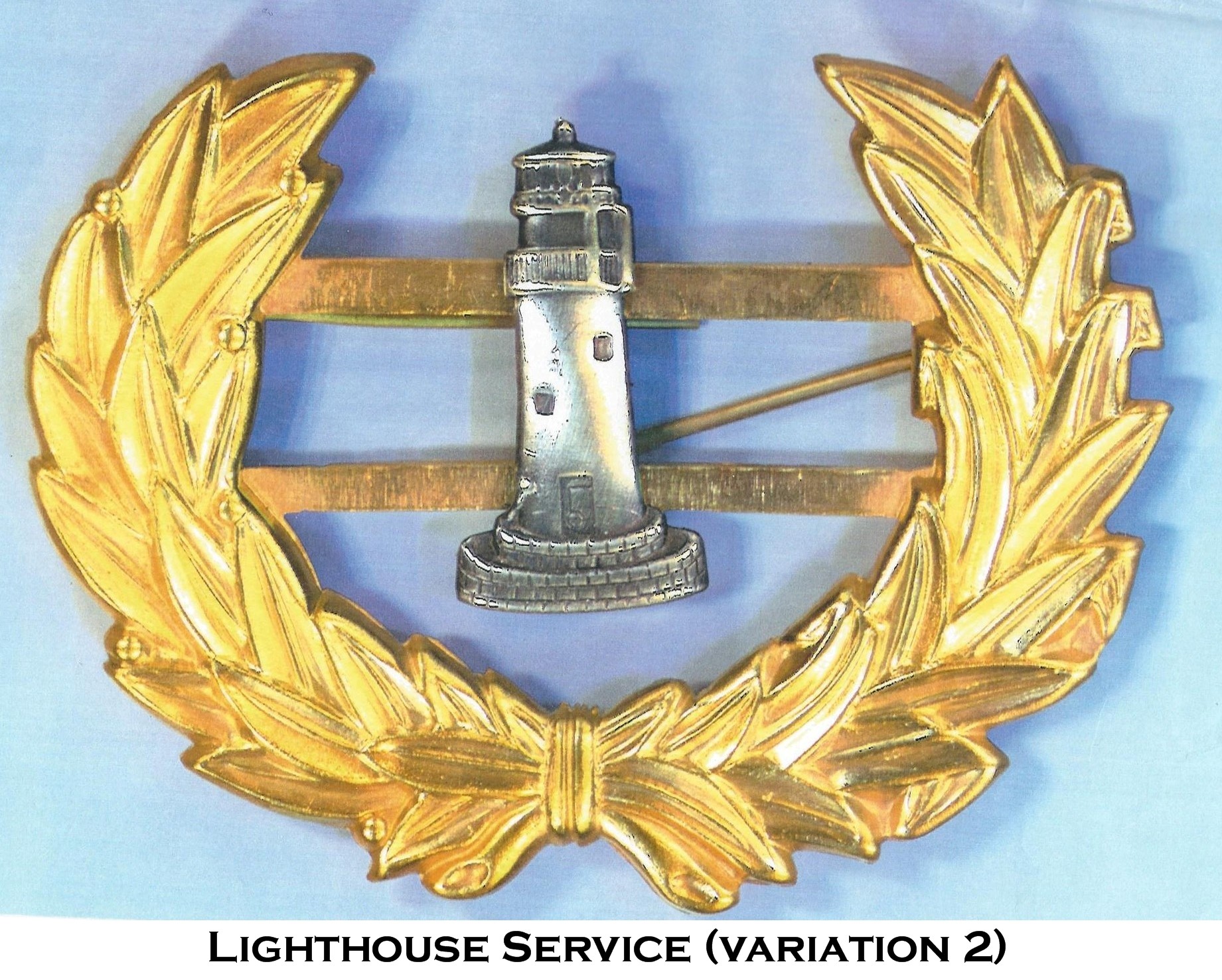
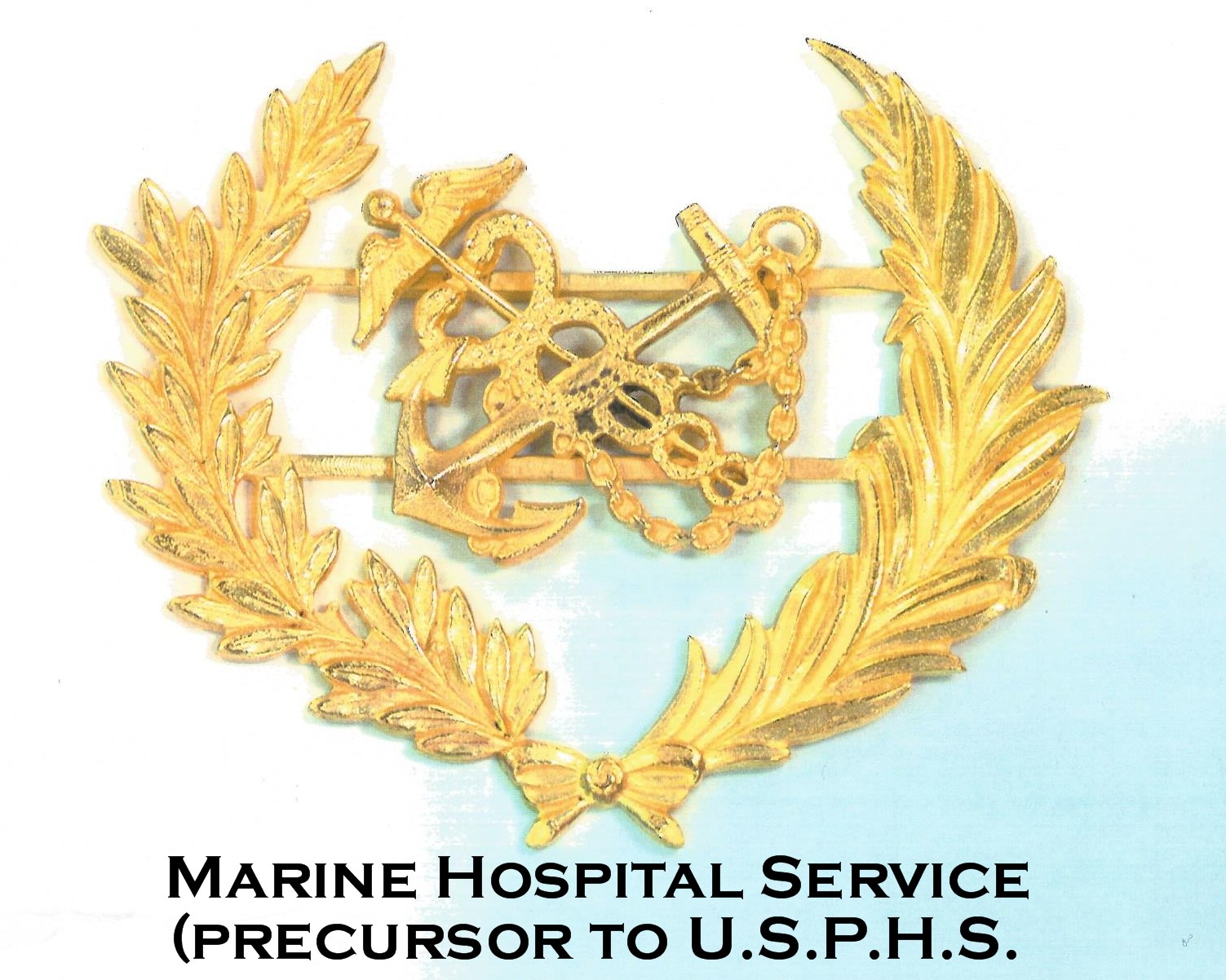
The images found with this entry illustrate different examples of insignia worn by stewards aboard various types of ships. It is worth mentioning that the crescent symbol has been used throughout the U.S. military to denote food stores and cooks (and outhouses); this symbol can be traced to either represent a camp cook’s “crescent rolls” or the traditional heraldic symbol of “increase.”

References:
Jonathan Alexander and Paul Binski (editors), Age of Chivalry, Art in Plantagenet England, 1200-1400. Royal Academy/Weidenfeld & Nicholson: London, 1987, Cat 448

Jim Garamone, “Insignia: The Way You Tell Who’s Who in the Military” in Defense Link. U.S. Department of Defense: Washington D.C., November 1999.

Bureau of Naval Personnel, “Filipinos in the United States Navy.” Department of the Navy – Naval Historical Center: Washington D.C., October 1976.


P & O Lines (The Peninsular and Oriental Steam Navigation Company)
Catering Petty Officer.
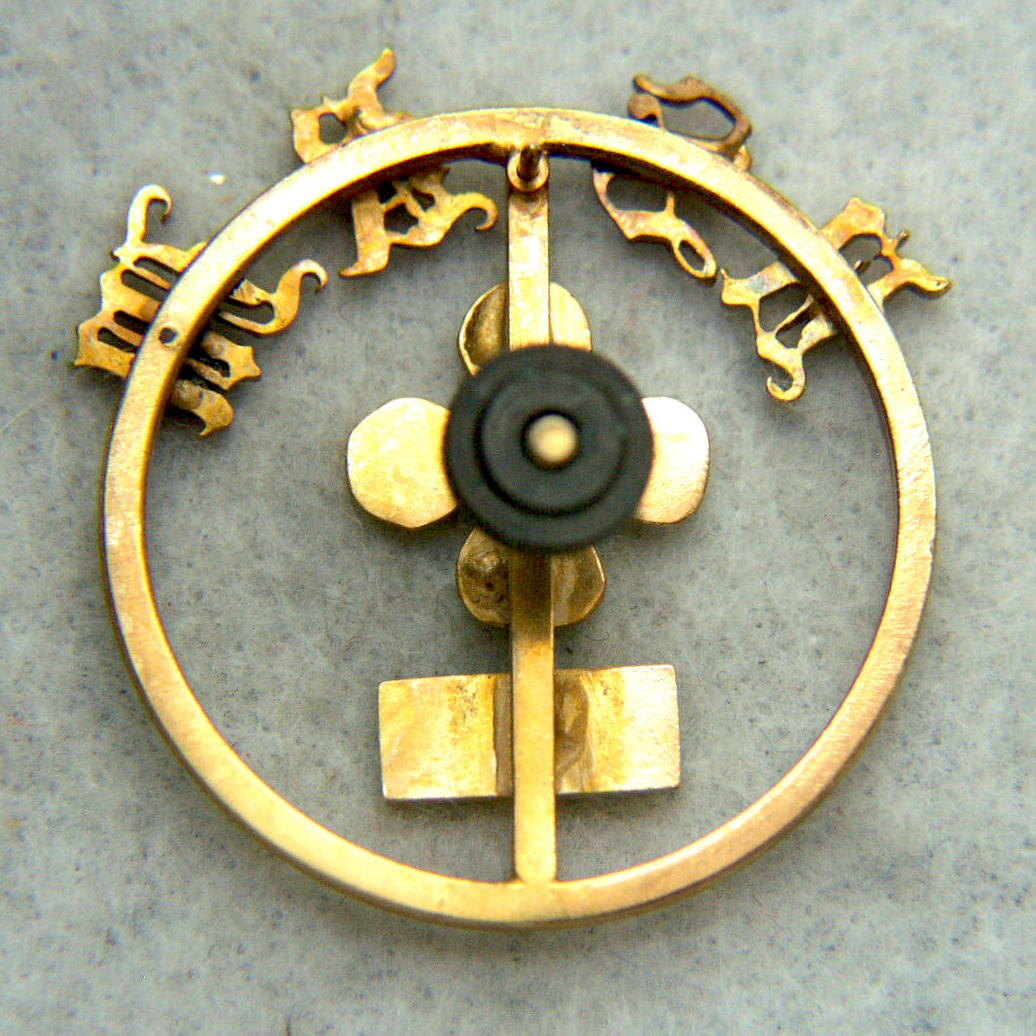
Badge, 50mm diameter. Silver wire on wool backing.
Circa 1970s.

British Royal Navy hat insignia has the following pattern:

Tally – ratings.
Fouled anchor surrounded by a gold rope, surmounted by crown – petty officers
Fouled anchor surrounded by a gold rope and small wreath, surmounted by crown – chief petty officers.
Fouled anchor on oval, surrounded by a wreath, surmounted by crown – officers.

In this specific example, this is a private company, and they have employed the Royal Navy petty officer design for their own catering petty officers. In this case, a silver sun surrounded by an alternating band of blue and silver – blue and white being the traditional heraldic symbol for waves.

The British are noted for their fine craftsmanship in regard to nautical insignia; I have been hard-pressed to find a poorly made British item of insignia from the middle of the last century.


P&O Lines (The Peninsular and Oriental Steam Navigation Company)
Catering Officer.
Badge, 65mm x 45mm. Silver wire on wool backing.
Circa 1970s.

This hat badge follows the classic British passenger liner steward badge design of taking an element of the deck officer’s hat badge, enlarging and turning it silver. In this example, the P & O deck officer’s badge is the setting sun on heraldic waves surmounted by a fouled anchor.

This particular badge was issued prior toย 1973, when P & O hat badges took on their current configuration.


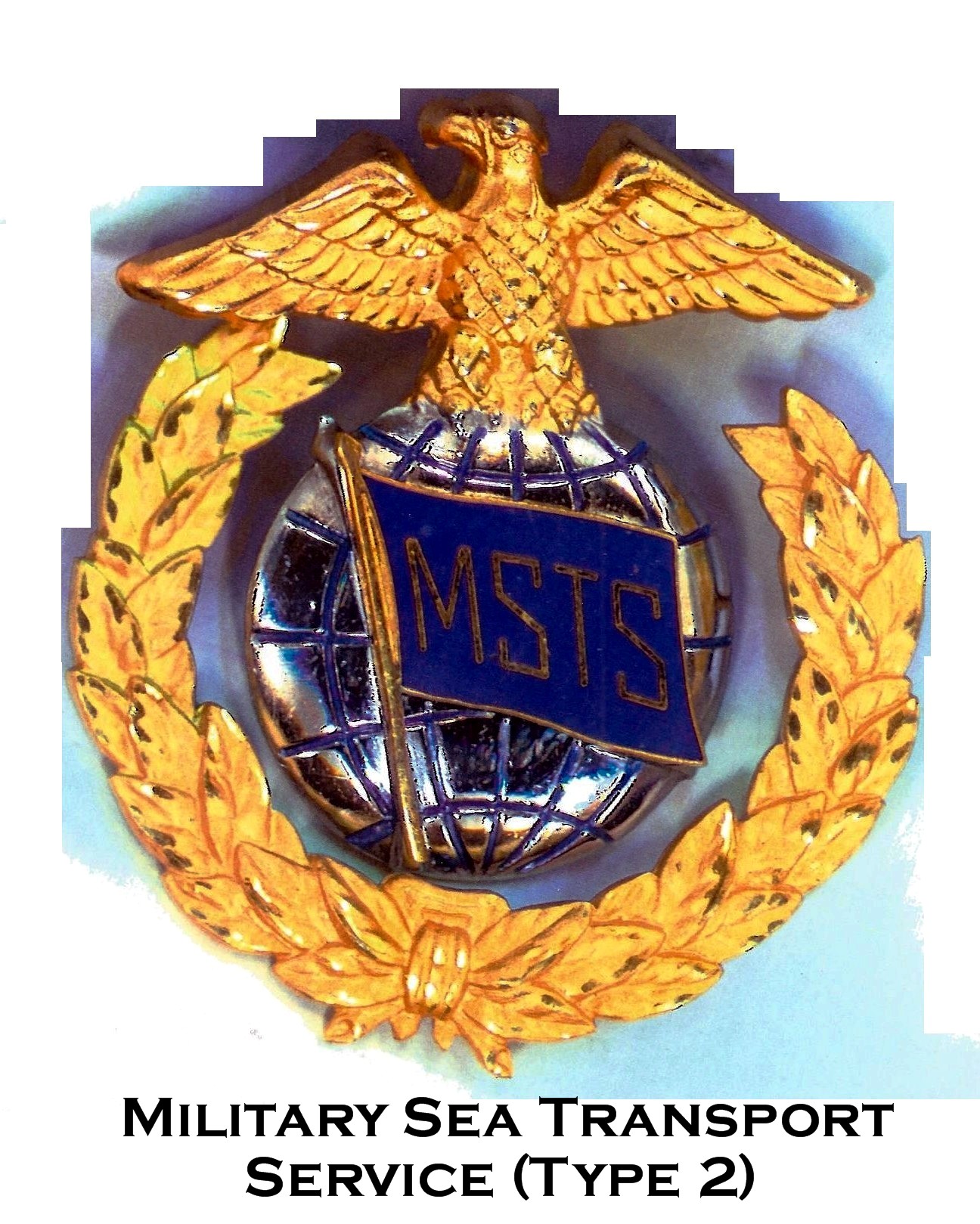
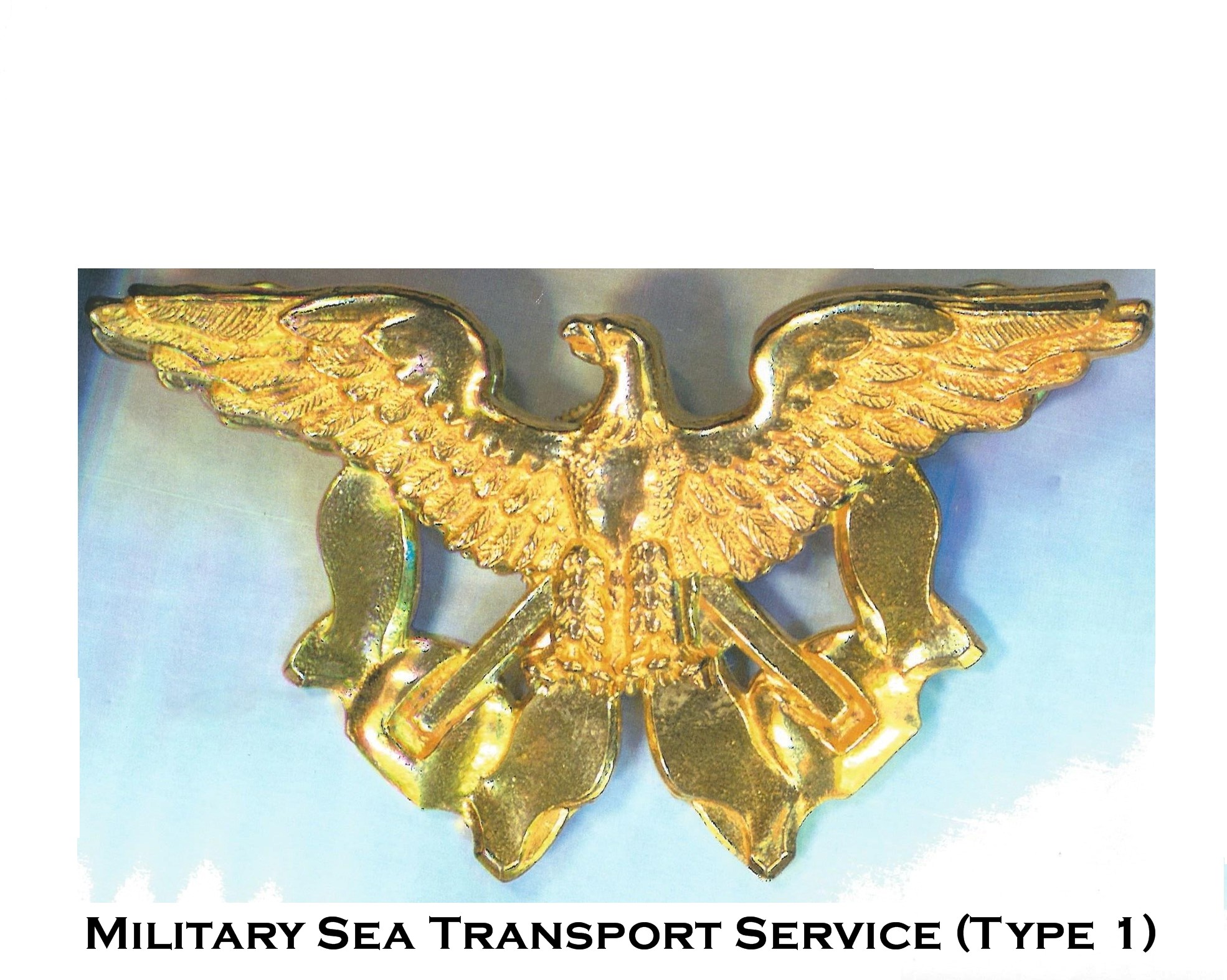
Military Sea Transport Service
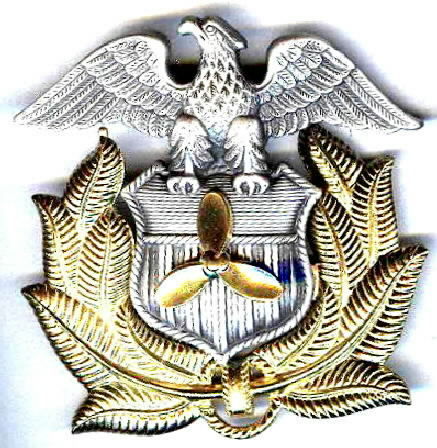
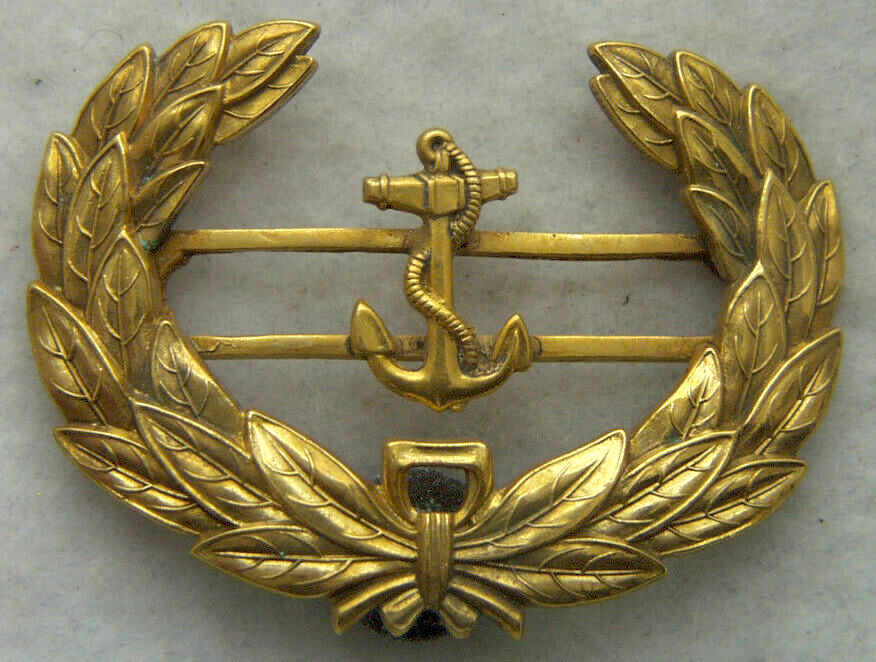
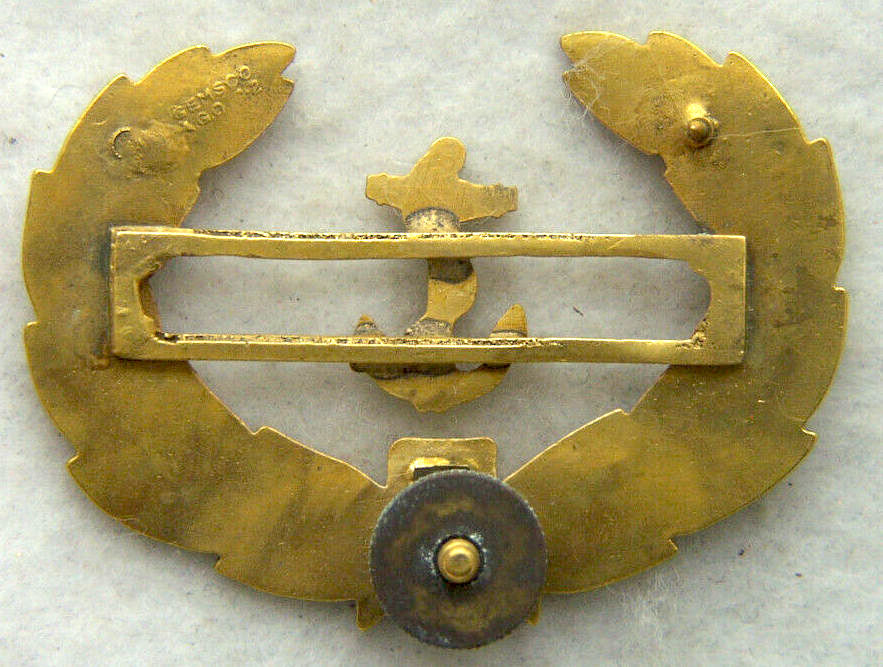
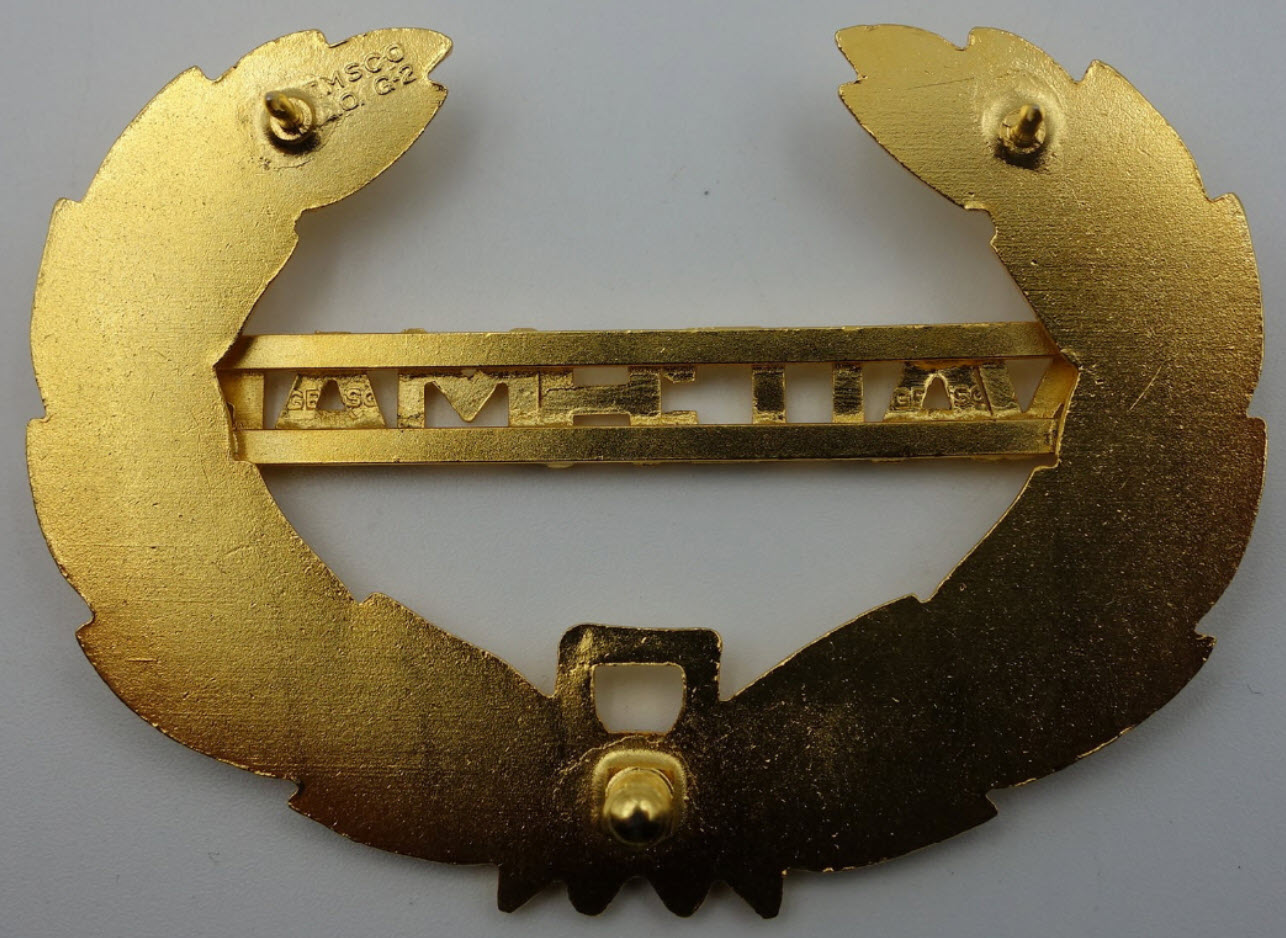
Commissary Chief Petty Officer Badge.
35mm x 24mm , Cupro-nickel.
Hallmark, Gemsco A.G.O. G-2 . Circa 1953-1963.

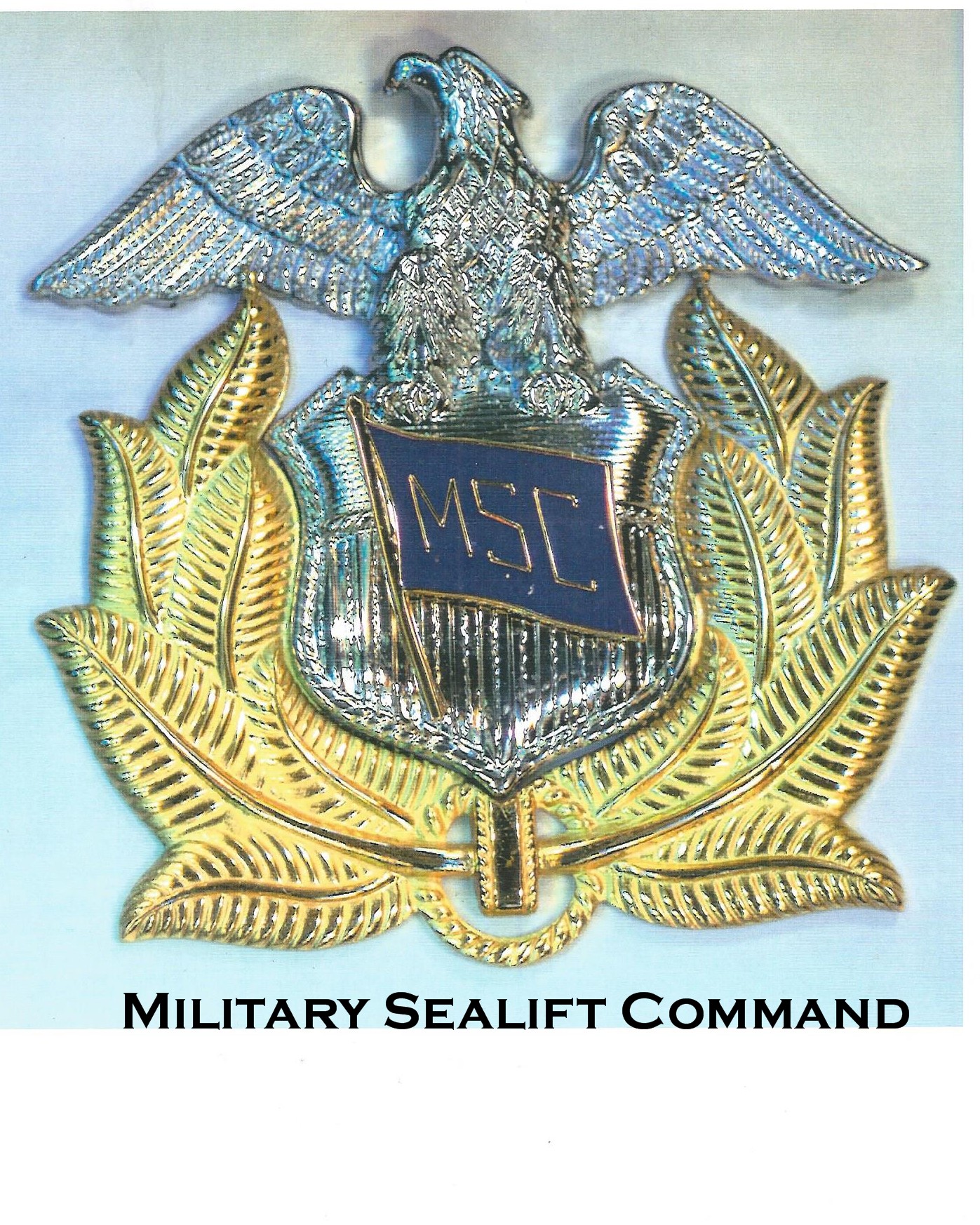
The US Army Transport Service and US Navy Transport Service merged at the end of the Second World War to form the Military Sea Transport Service. This organization came under the purvue of the US Navy. In the mid-1960s, the service changed its name to the Military Sealift Command. Throughout each of its permutations, the MSTS/MSC retained the insignia of the ATS with slight modifications. With the change of MSTS to MSC, the crescent flipped.

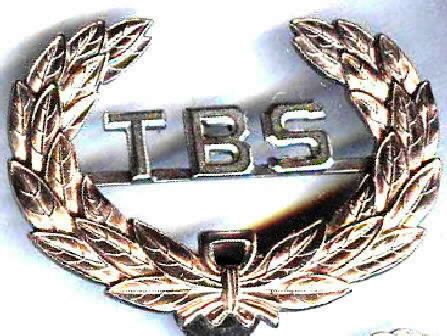
This silver crescent is worn by commissary officers as a collar device or by Chief Petty officers as within a wreath as a hat device. The old days of woven steward’s hat badges are no more. The hallmark is consistent with Institute of Heraldry (IOH) manufacturer’s numbers; in this case 1953-1963 – often a “-N” will mean that the Navy approved the insignia.


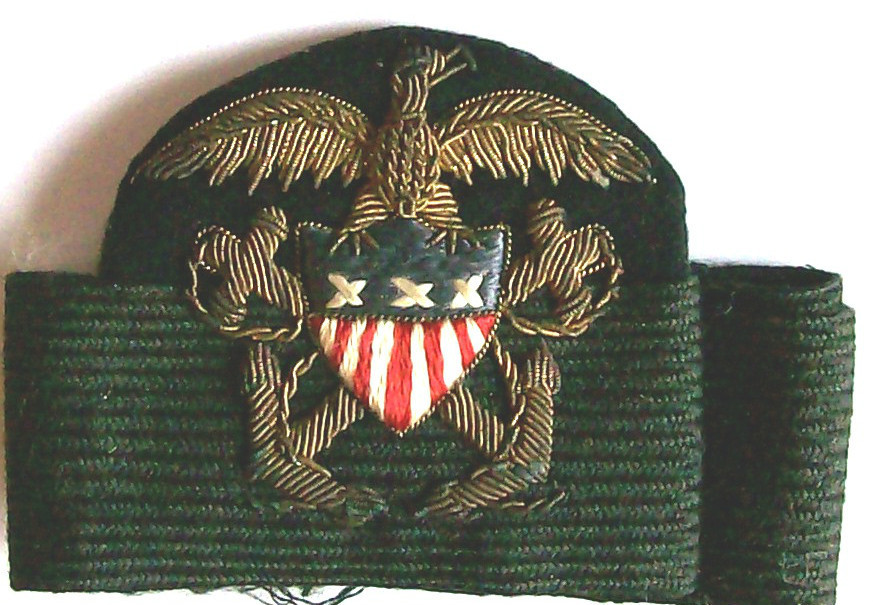
US Army Transport Service
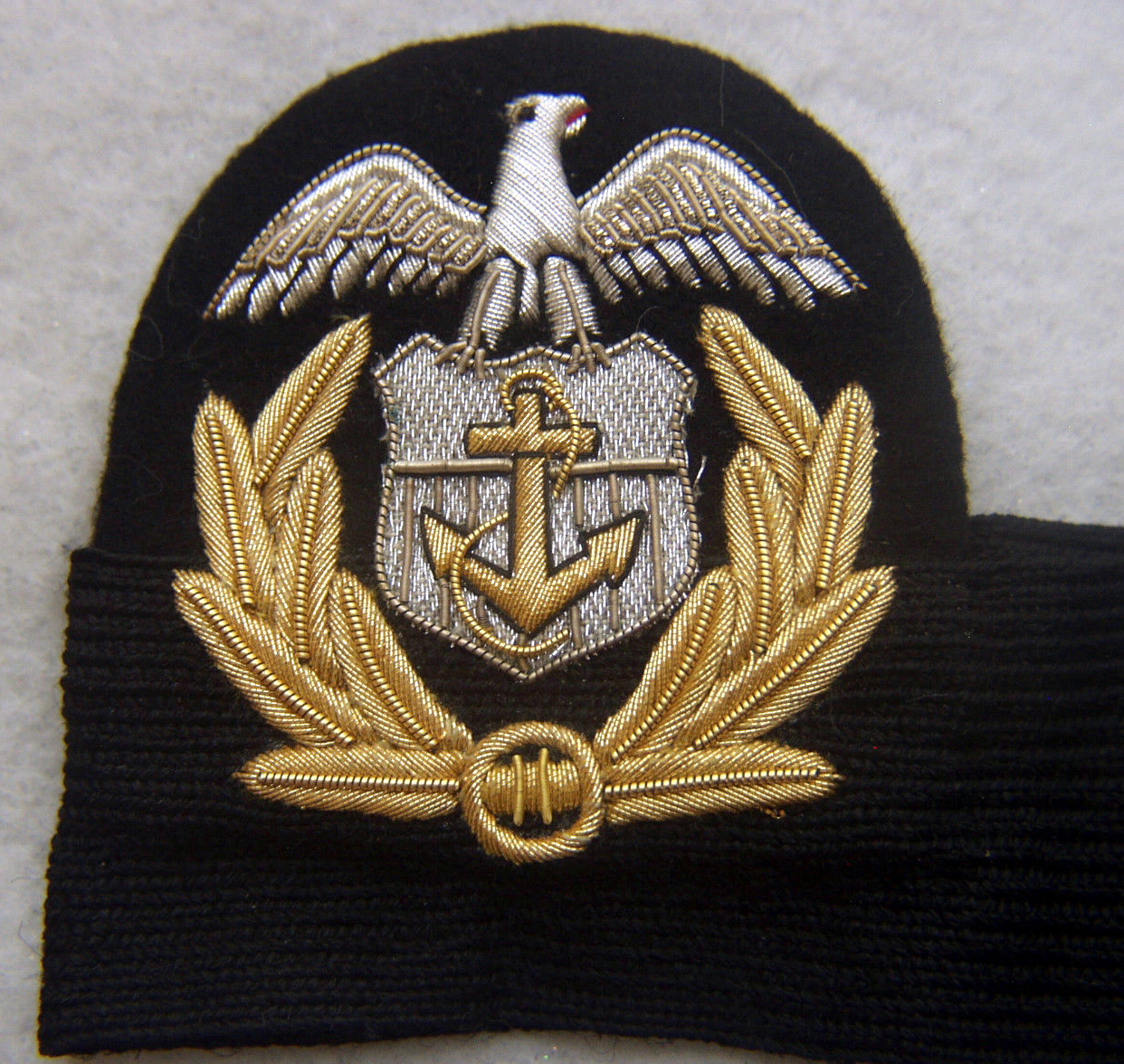
Commissary Chief Petty Officer woven hat badge.
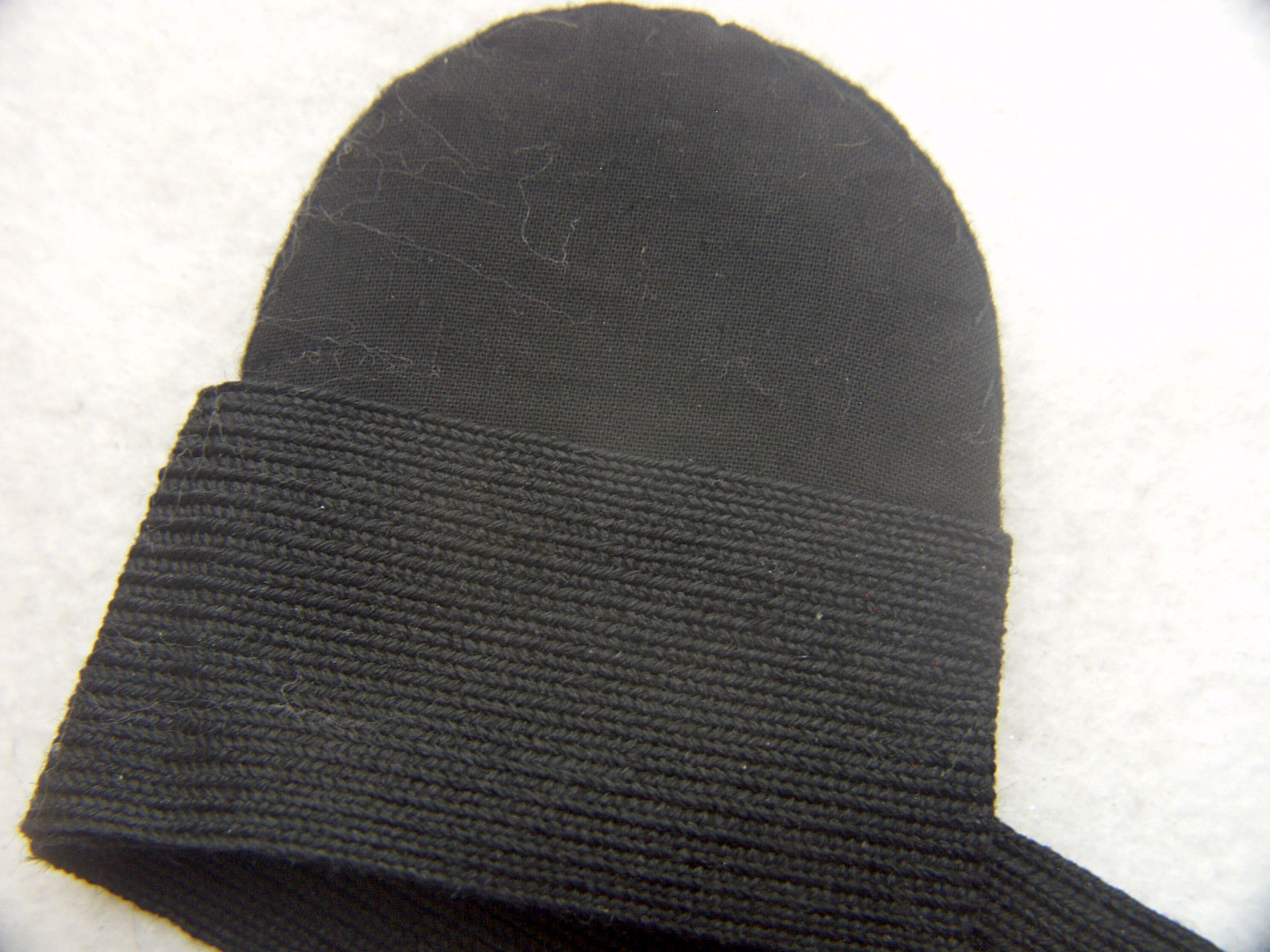
Silver thread on wool backing; attached to mohair band. No synthetics.
Device, 70mm x 40mm.
Circa Second World War.

During the Second World War, standardization was secondary to getting boots on the ground. In the specific case of the Army Transport Service/Transportation Corps – Water Division, the Mariners were civilian, therefore were not overtly compelled to adhere to uniform standards.

Men did hold rank and rate aboard ship, and the distinctions were subtle. Chief Petty Officers wore visor hats with their rate on a hat badge. Unauthorized, but worn devices were woven. Issued devices were metal. In terms of steward hat insignia, I have noted three variations: silver-aluminum thread, yellow thread with small gold foil devices and stamped metal wreaths with un-affixed silver crescents.

As a means of identification: ATS/TC-WD wore silver steward insignia; that is silver crescents and also silver metal hat badges. The U.S. Maritime Service and War Shipping Administration wore gold steward insignia – following the U.S. Navy precedent.


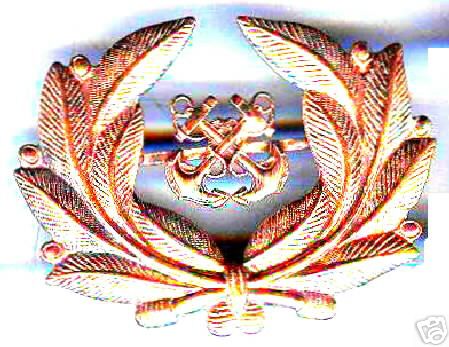
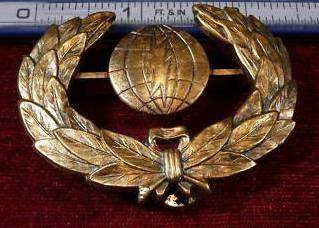
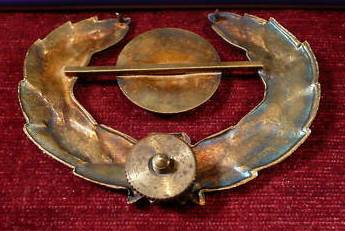
United States Lines
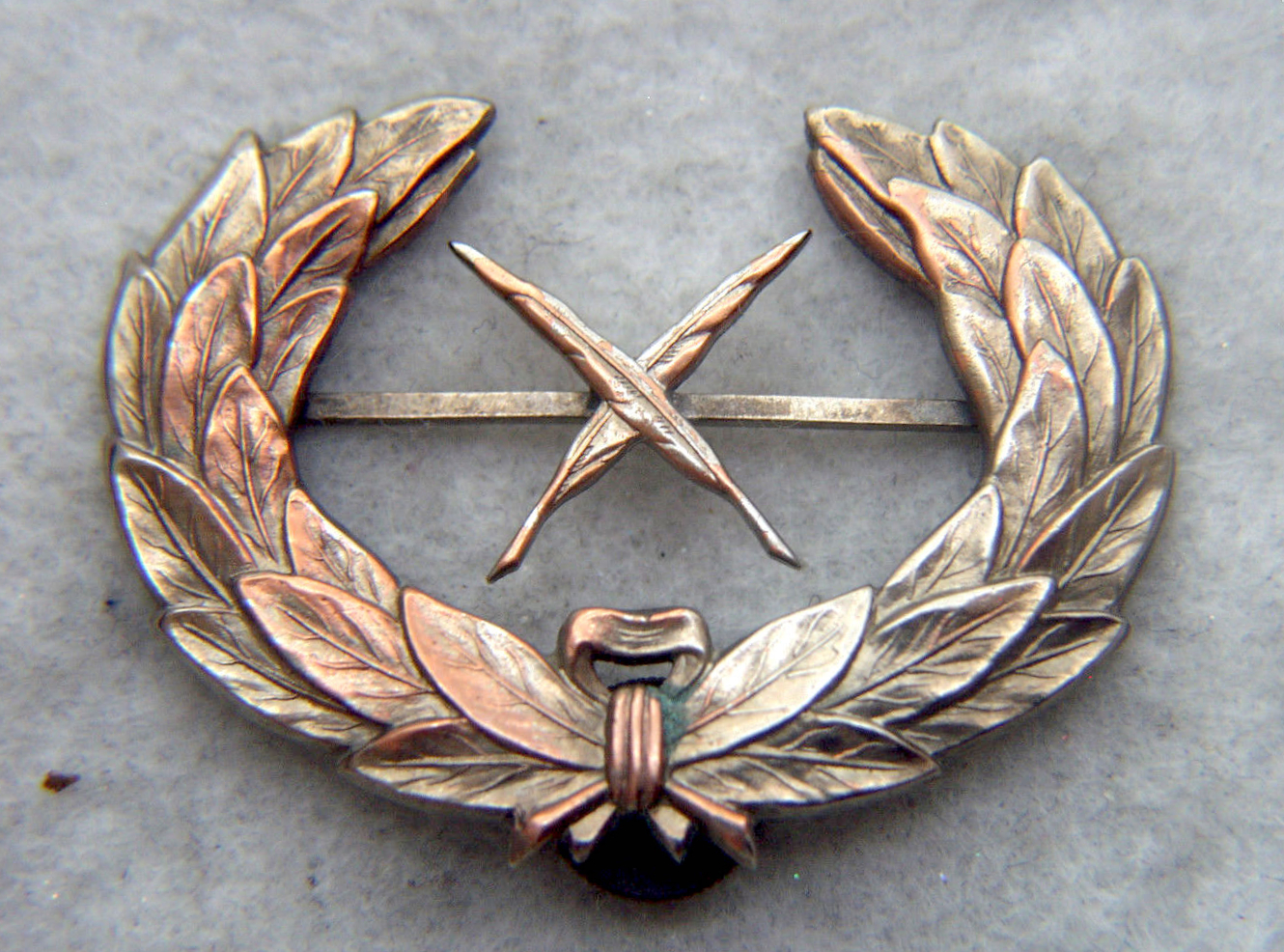
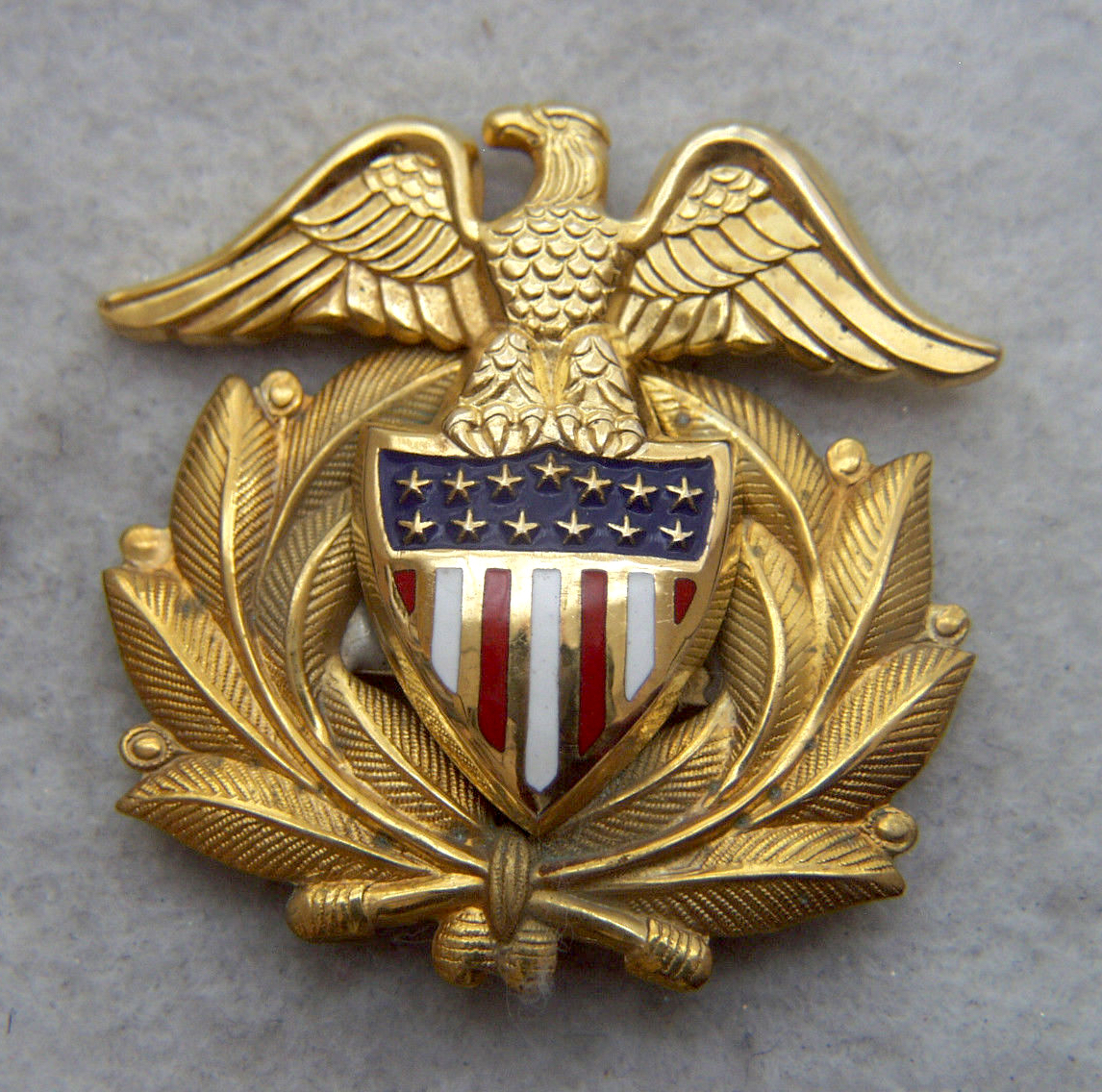
Steward Department Officer hat badge.
Wreath, 70mm x 43mm. Brass with silver wash.
Flag, 25mm by 23mm. Enamel on brass.
Manufacturer: Gemsco. Circa Second World War.

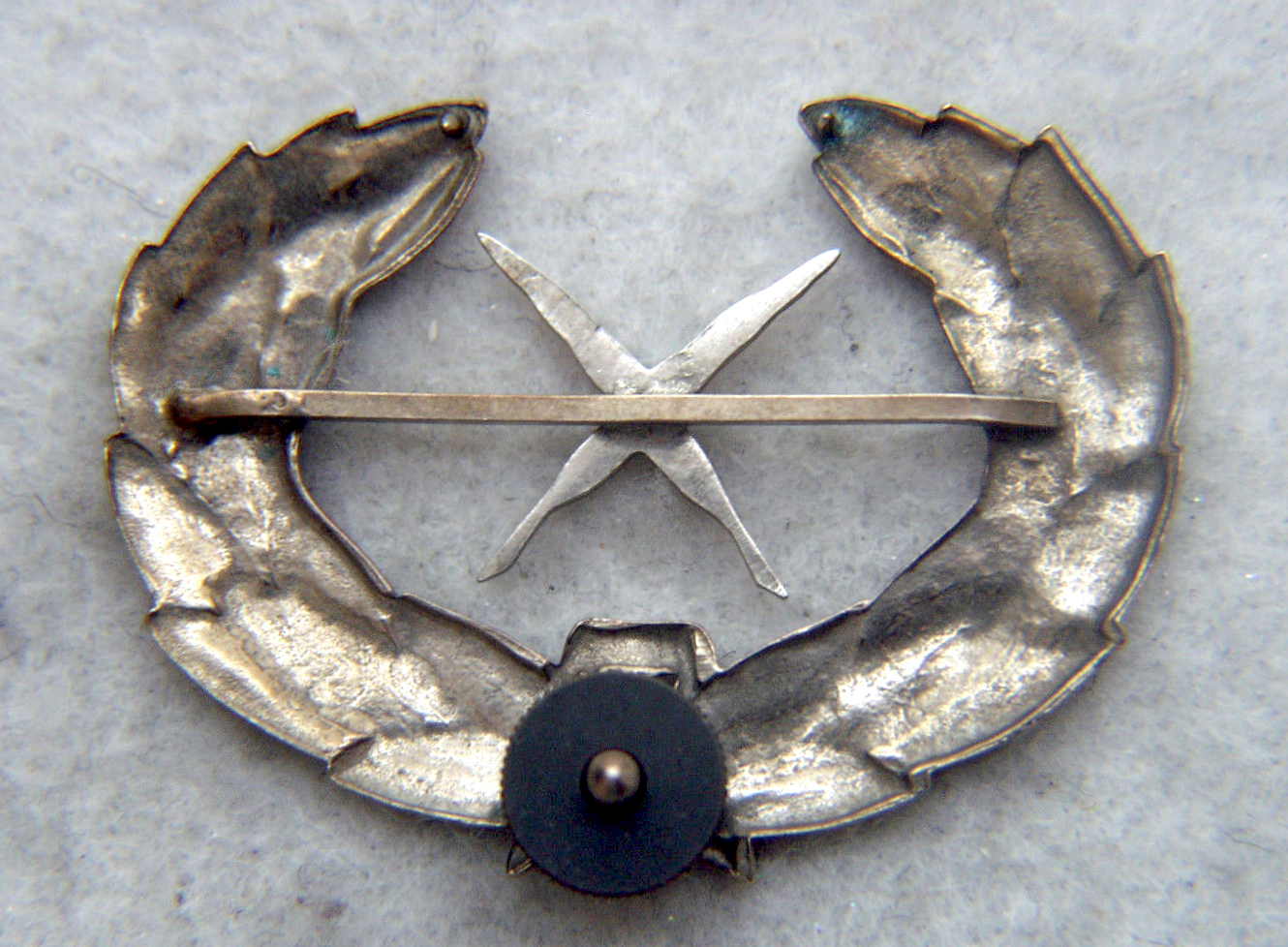
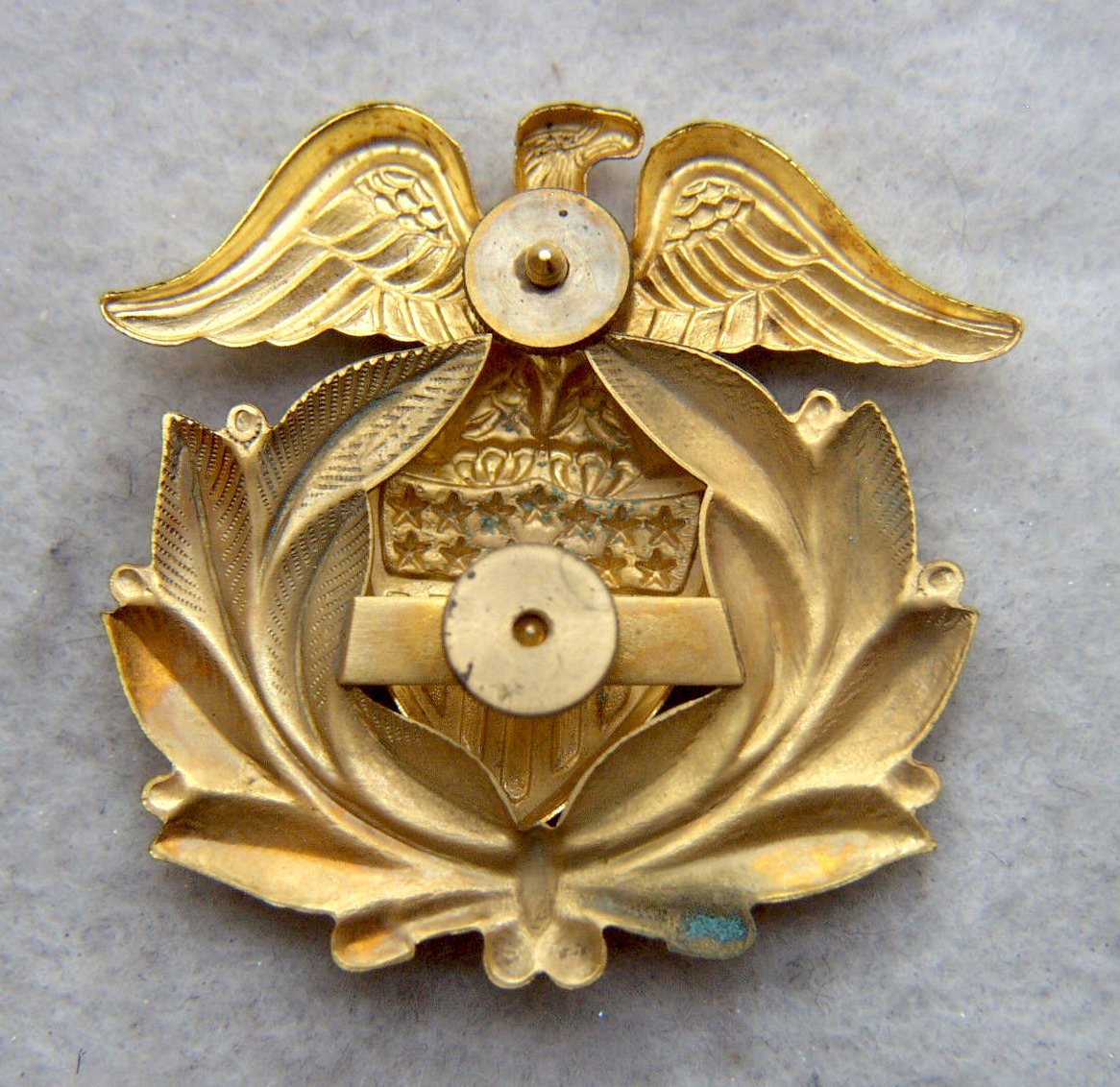
This hat badge can be definitively dated to the Second World War by the Gemsco hallmark on the reverse; the hallmark is Gemsco surrounded by a wreath. The enamel flag design is consistent with USL flags from the period. Other variations of the flag, from the l931-1938 period have the USL initials – these flags are seen on badges throughout the Second World War. A sleek eagle design debuted in the mid-1950s, around the time of the SS United States launch.

Given the high quality and crisp detail of the stamped wreath, and fine enamel work, this hat badge was worn by a Chief Steward. The silver wash has flaked from the surface of the wreath but is especially present in areas of low relief.


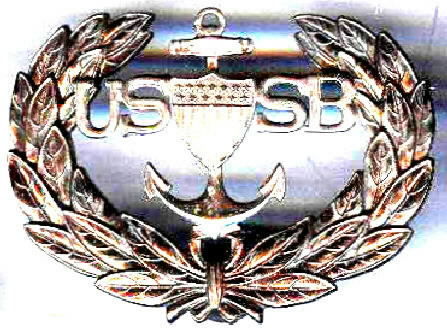
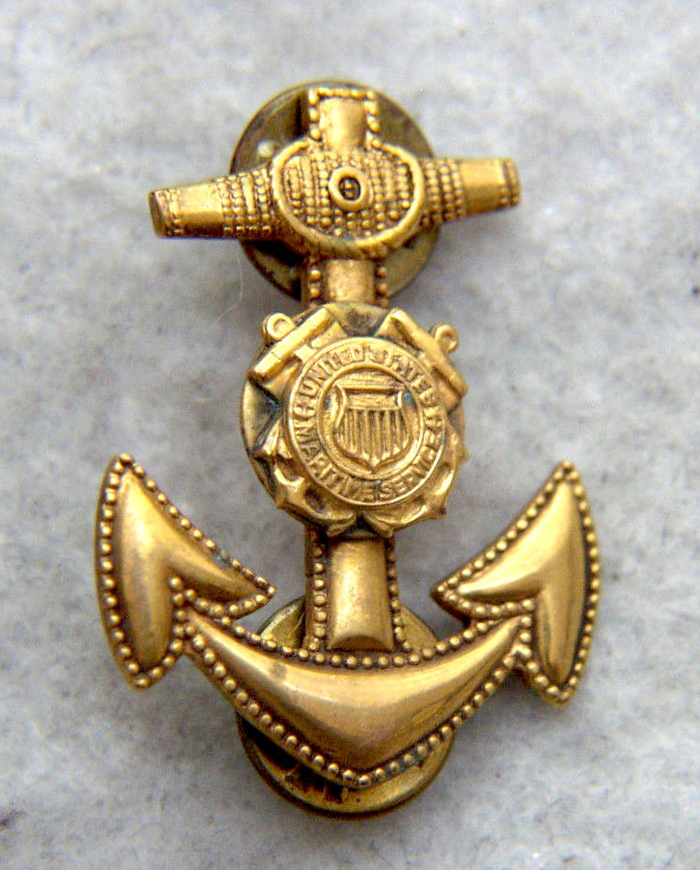
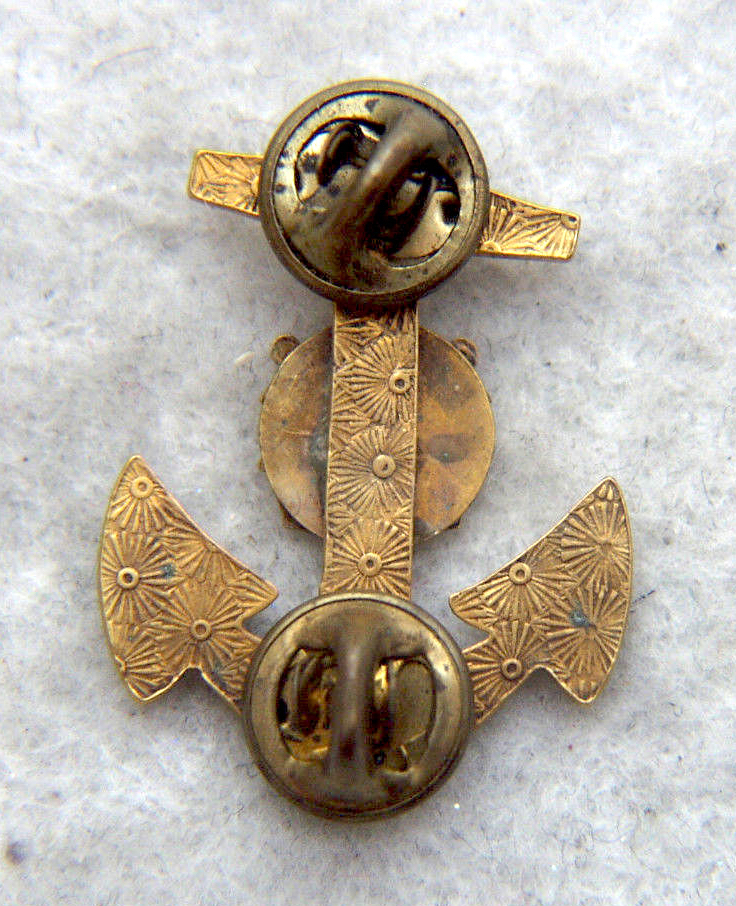
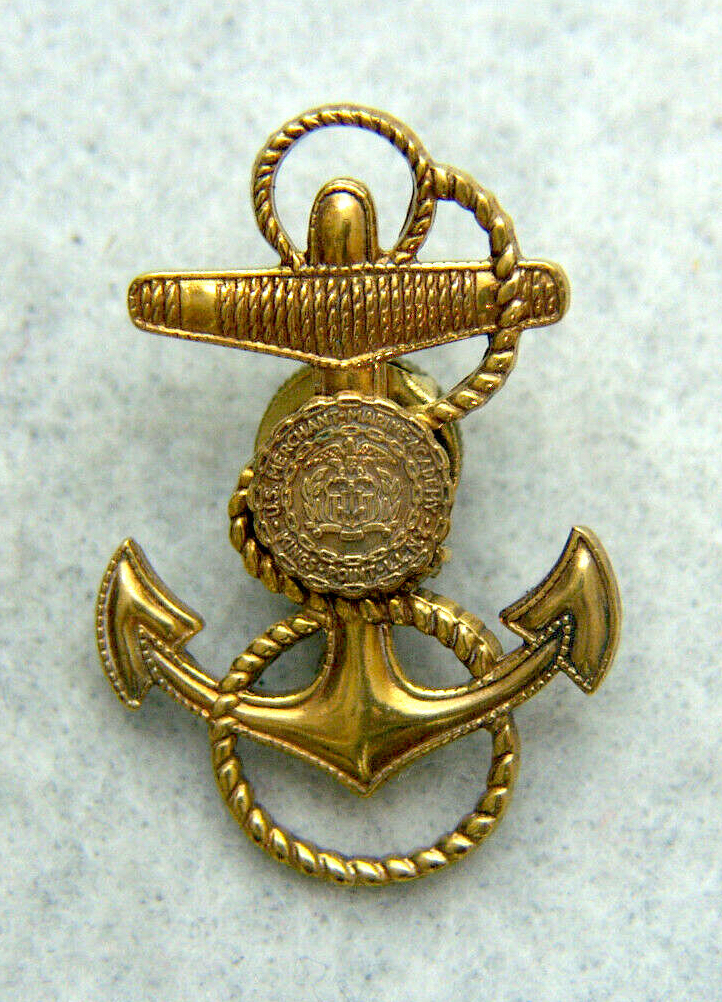
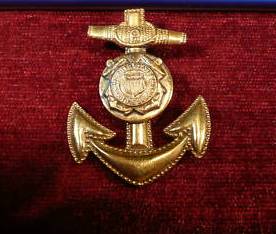
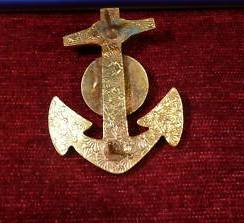
U.S. Maritime Service Chief Petty Officer

ย 

U.S. Maritime Commission Cadre /
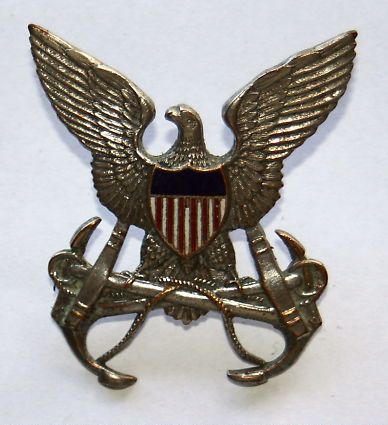
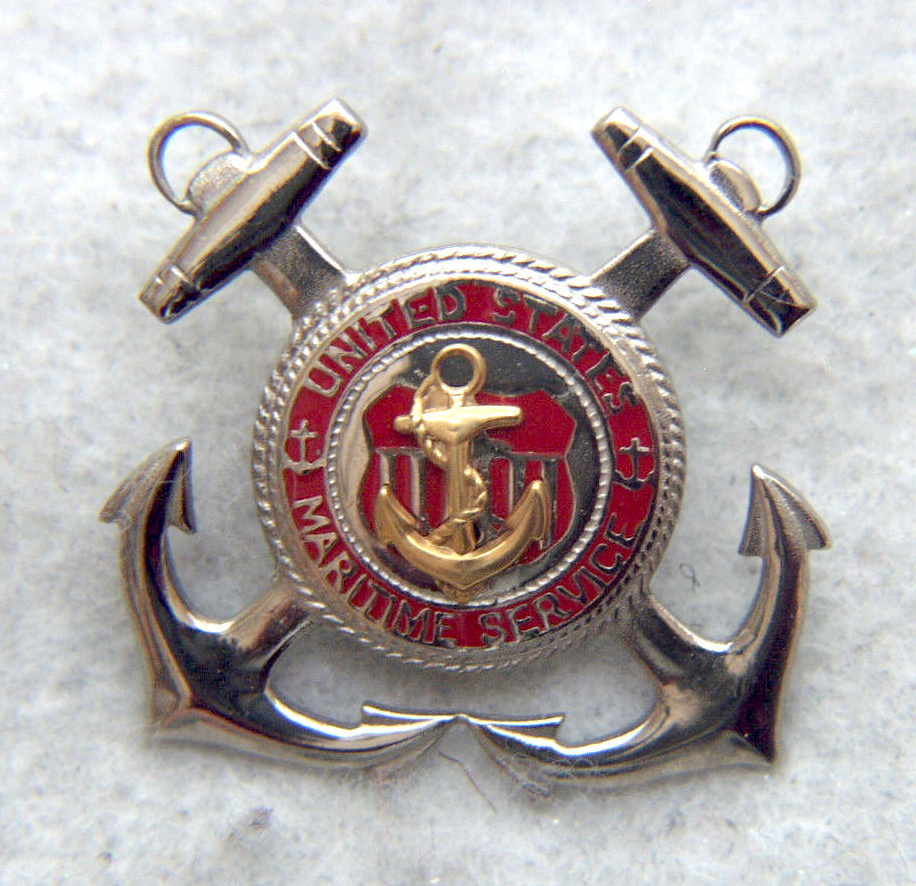
U.S. Maritime Service Chief Petty Office cap badge (Type 1)

One piece construction.ย  Seal, 25mm diameter; Anchor, 50mm length.
Obscured AE CO N.Y. hallmark (American Emblem Company)
Anchor and device stamped brass; blue enamel band and red, white & blue shield.
Early Second World War era; 1942.

This is the first design of the USMS CPO hat badge; it was worn in 1942 up until the formal transfer of the Prospective Licensed Officer training program from the USCG to the WSA/USMS in July 1942.ย  The badge itself may be found in plain brass, as well as plated silver or nickel.ย  This brass pattern was issued in 1942, followed by plated silver or nickel badges and then a new design came about in August 1942.ย  A description of the second design may be found here.ย  In practice, in the period leading up to the Second World War, USMS CPOs, more often than not wore the more handsome embroidered hat badges – which were of the same design as the stamped metal device, albeit without the band of stars – as evidenced by an image in the article “Heros of Wartime Science and Mercy” in National Geographic Magazine, December 1943 page 717, as seen here.ย  These badge were worn mostly by officer trainees – who held the rank of Chief Petty Officer.

Concurrent with WSA control of the USMS, and the stripping away of the ship-building component of the USMS,ย  came a color and design shift:ย  for the hat badge: the illustrated deco motif of a stylized Federal “classic shield” gave way to a detailed foul anchor charge on “official shield” of finer detail.ย  Whereas the first design was predominantly blue, the color changed to red – perhaps to echo the red of chevrons and other woven cloth devices found on an enlistedman’s uniform.ย  My research has alluded to that late in the war, the CPO badge further changed to match the pattern found on USMS buttons (1942-1954); I will post an image of this badge at a later date.

J. Tonelli in Visor Hats of the US Armed Forces incorrectly asserts that the illustrated hat badge was worn by USMS Warrant Officers; however, regulations of the time state that Warrant Officers wear the same devices as regular, commissioned officers.ย  This is a commonly made mistake when attempting to devise a typology of hat devices for a relatively small organization with a small array of hat insignia.

Overall, the USMS only had a handful of CPOs and these were attached to USMS enrollment offices, training stations, officer schools and the US Merchant Marine Academy; CPO insignia was not issued to regular seamen who were matriculated from or were certified by the USMS. CPOs represented unlicensed seaman hired by the USMS skilled in the maritime industry with some seniority or specialized skills not satisfying the grade of Warrant Officer; it is useful to think of USMS CPOs as experienced Able Seamen (AB).


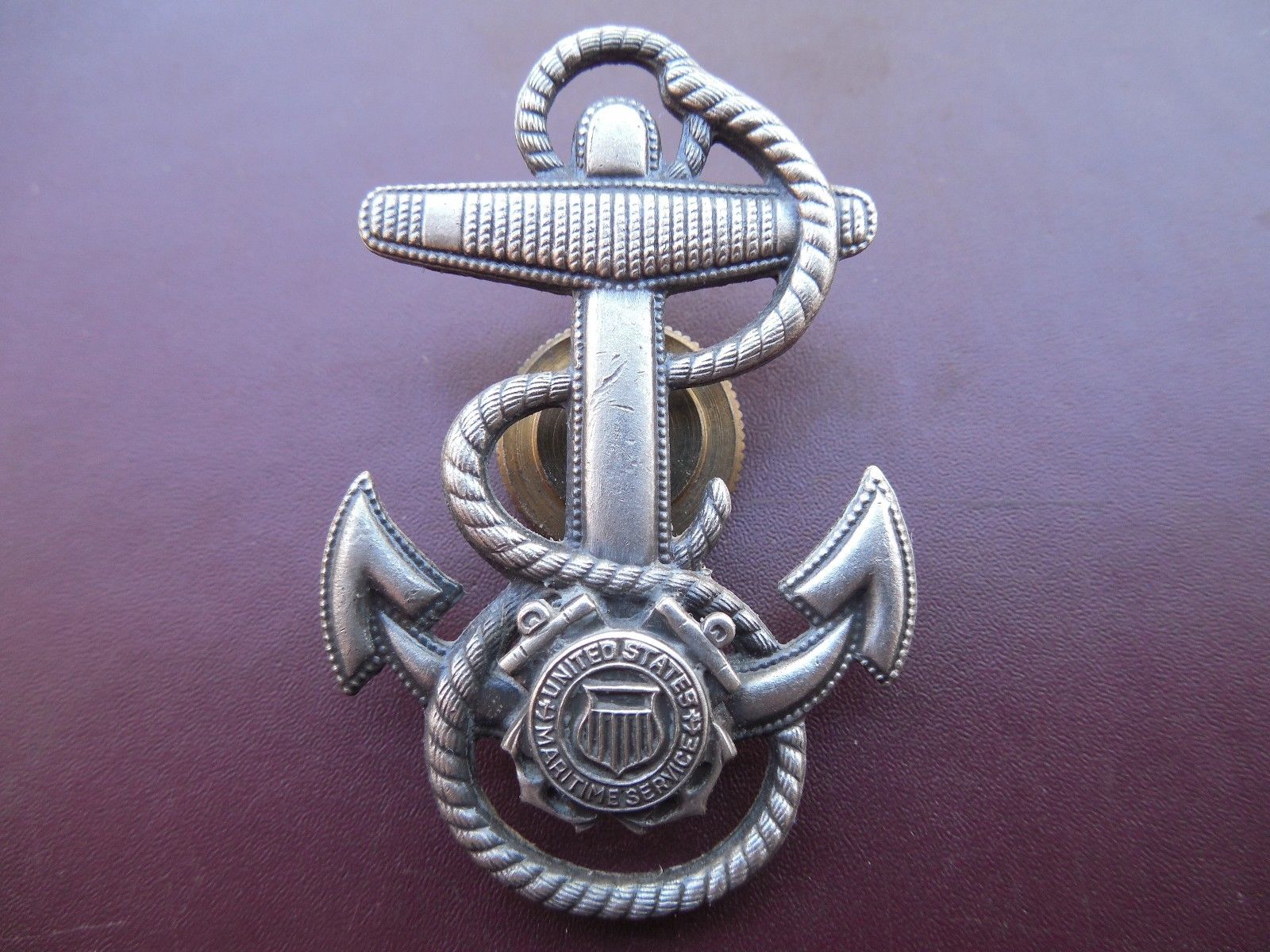
USMS CPO Hat badge, obverse.
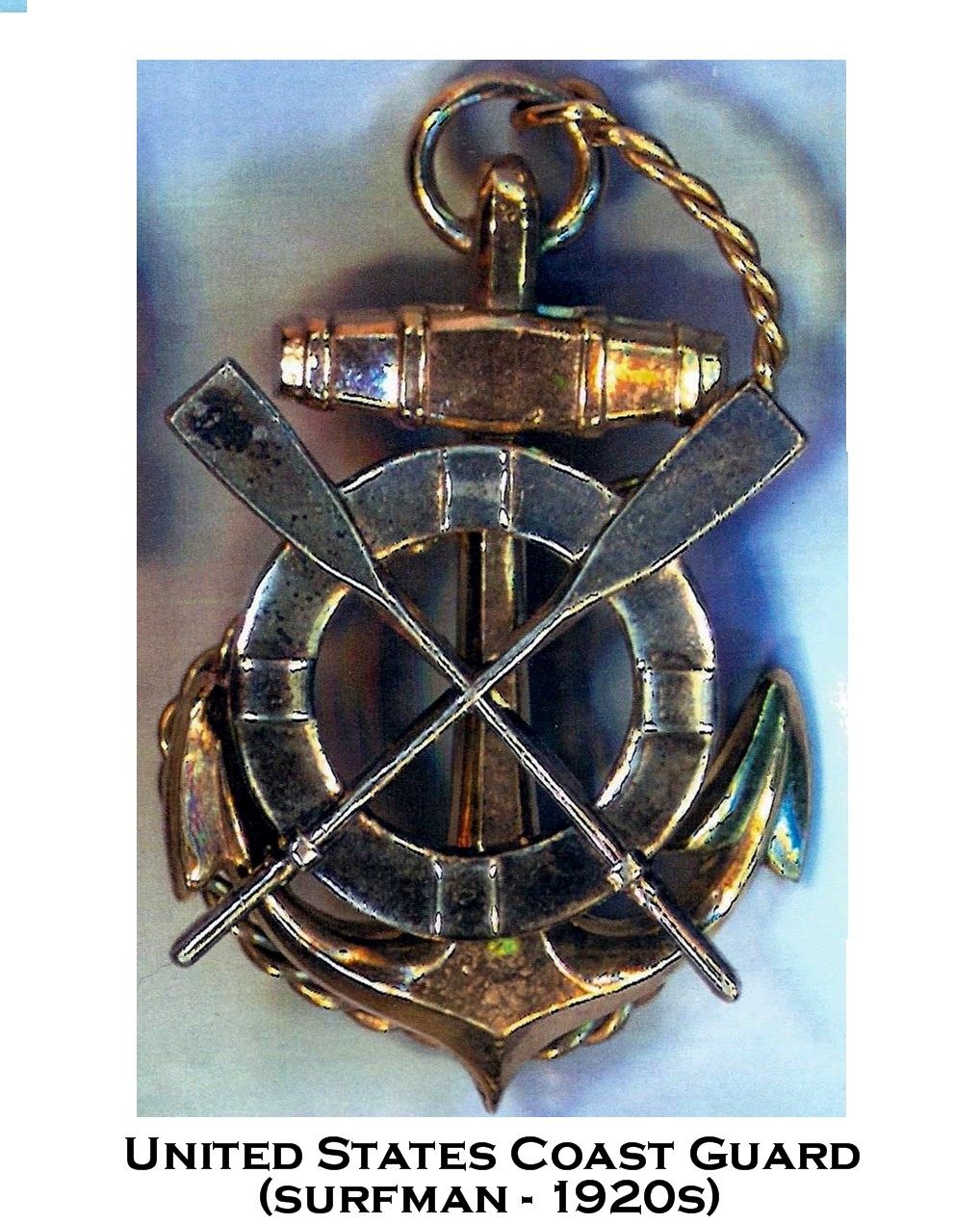
This device was worn by Merchant Mariners attached to the US Maritime Commission involved in training duties; this badge eventually found its way to be only worn by senior unlicensed personnel (CPOs).ย  This hat badge continued to be issued until stocks were depleted and eventually replaced by a badge of the same design – albeit in nickel (pre- and early war), and then replaced by the more familiar USMS CPO device.ย  There is some speculation that the USMC/USMS CPO device was modeled after the US Coast Guard enlisted hat badge; the USCG badge went into production in 1942, around the same time as the production of the USMC/USMS badge.

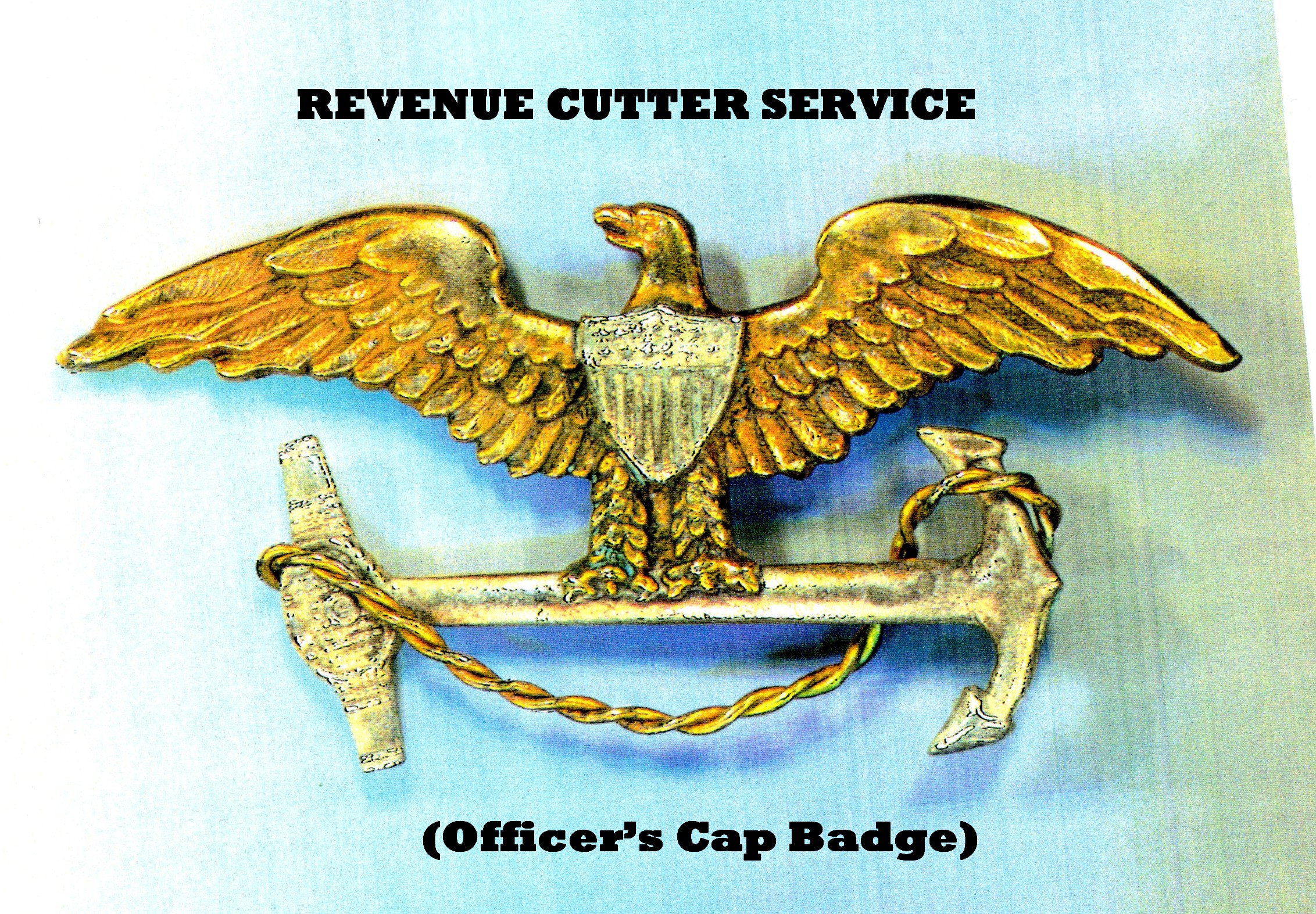
The mystery of the design lies in the double-anchor and seal motif.ย  If analyzed closely, the badge hearkens to the precursor agency of both the US Maritime Commission and US Coast Guard:ย  the US Revenue Cutter Service.ย  In this light, the anchor stock and flukes, and as well as the rope on the stock themselves echo the old seal.ย  At the time of its creation, it was not stated in USMC regulations, but the uniforms and ranks of the soon-to-be-formed USMS were eventually codified to mirror that of the US Coast Guard.ย  In time, in an effort to create an esprit de corps and the forging of an independent identity, the badge change to the second design.


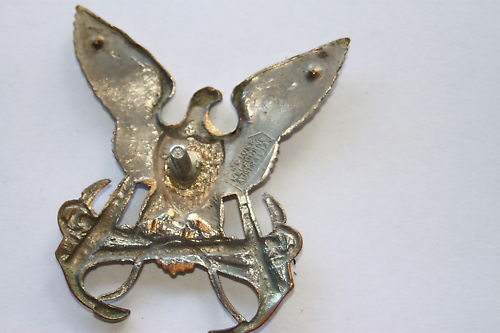
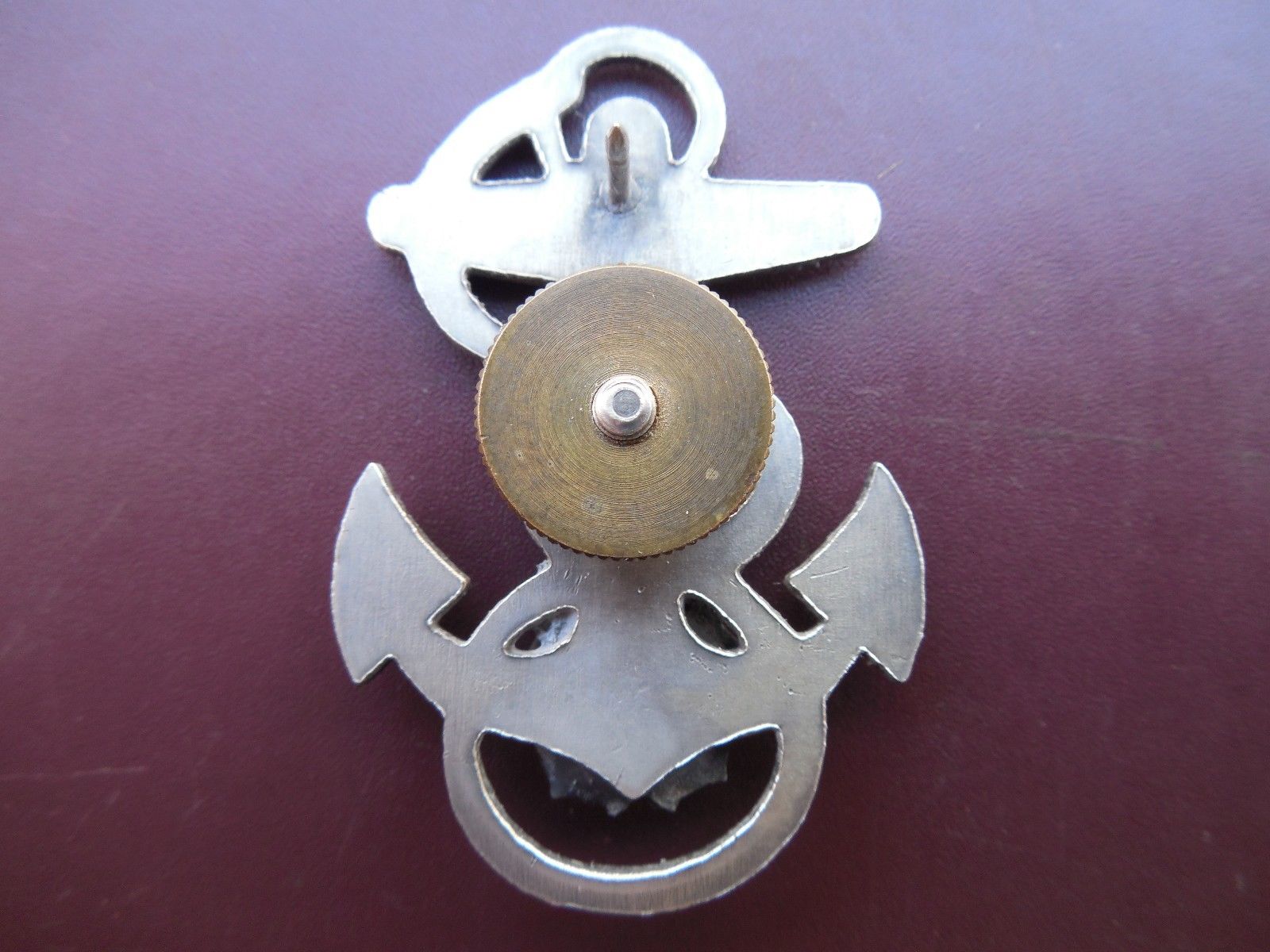
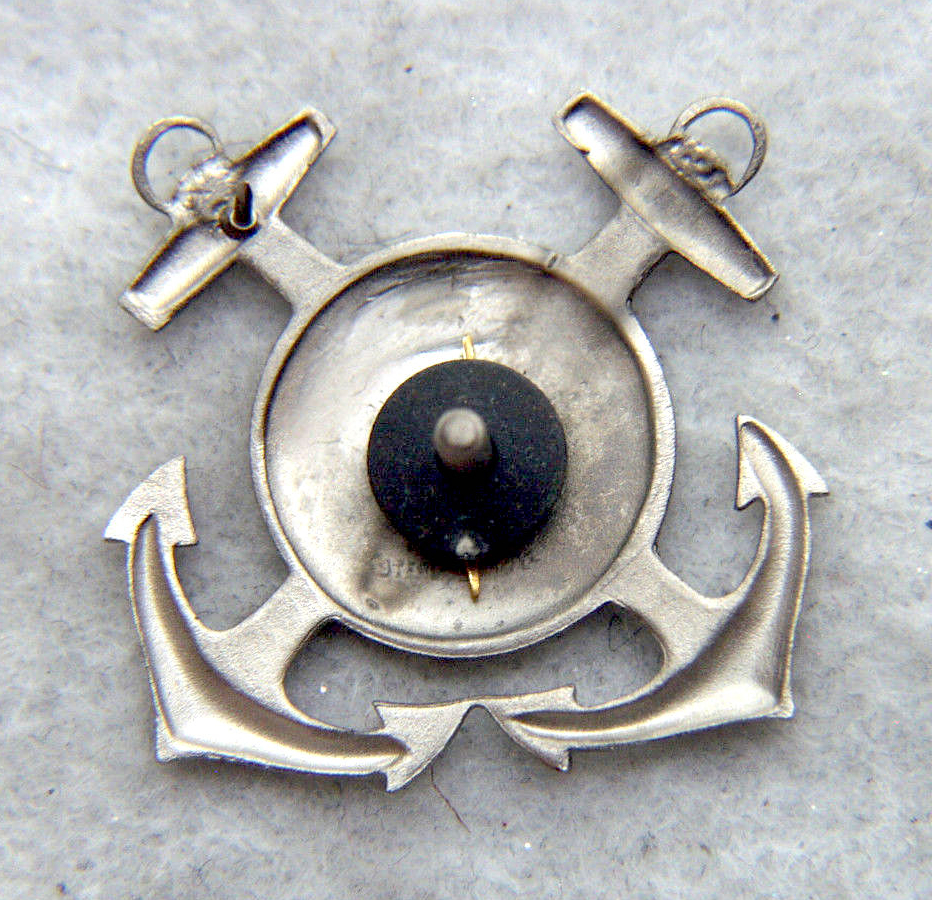
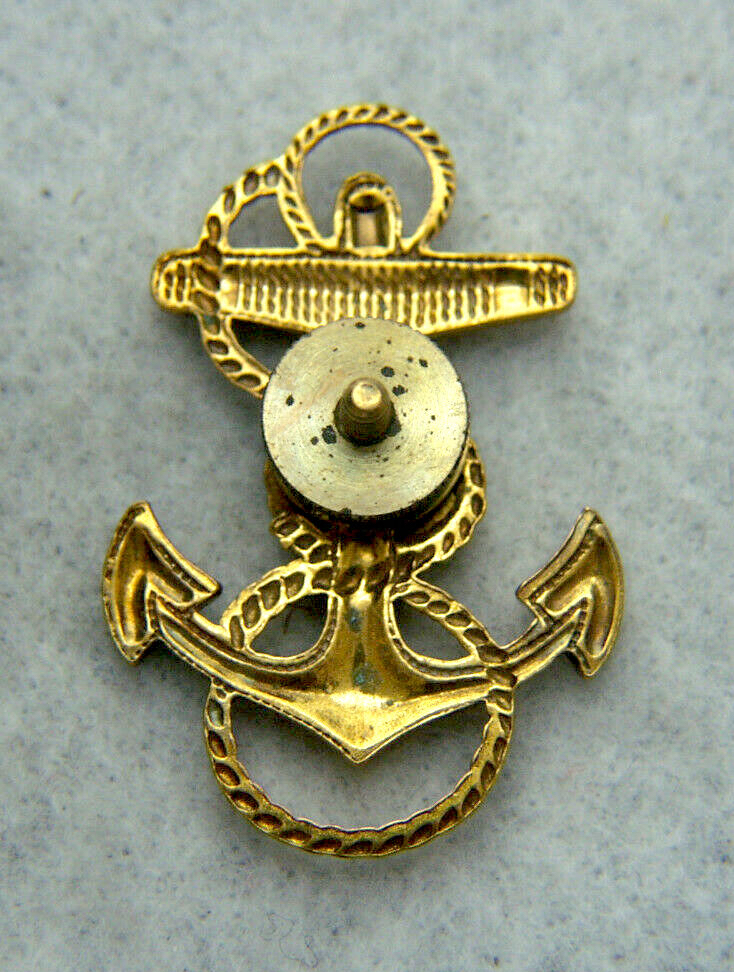
USMS CPO Hat badge, reverse.


USMS CPO Hat badge, reverse (detail).
Note the curious “CO N.Y.” hallmark – the complete “AE CO N.Y.” mark is obscured by the post – this is of the American Emblem Company of Utica, New York. This firm produced a number of Merchant Marine and Maritime Service items during the Second World War, most notably the ubiquitous Merchant Mariner pin.ย  In regard to this specific badge, NS Meyer produced a very similar insignia set for USMS officers using a similar central device. With the button and device change in 1942, AE Co. was no longer contracted to make USMS CPO badges; rather, the jobbing went to Coro.

American-Hawaiian Steamship Company

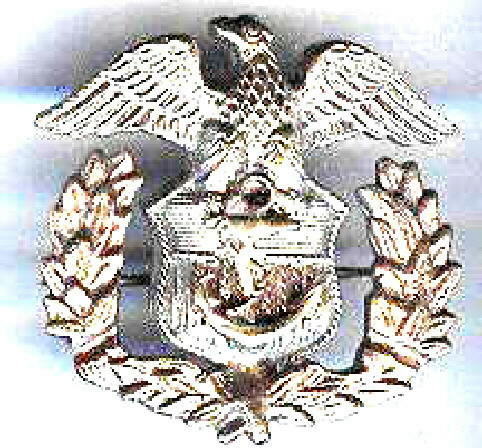
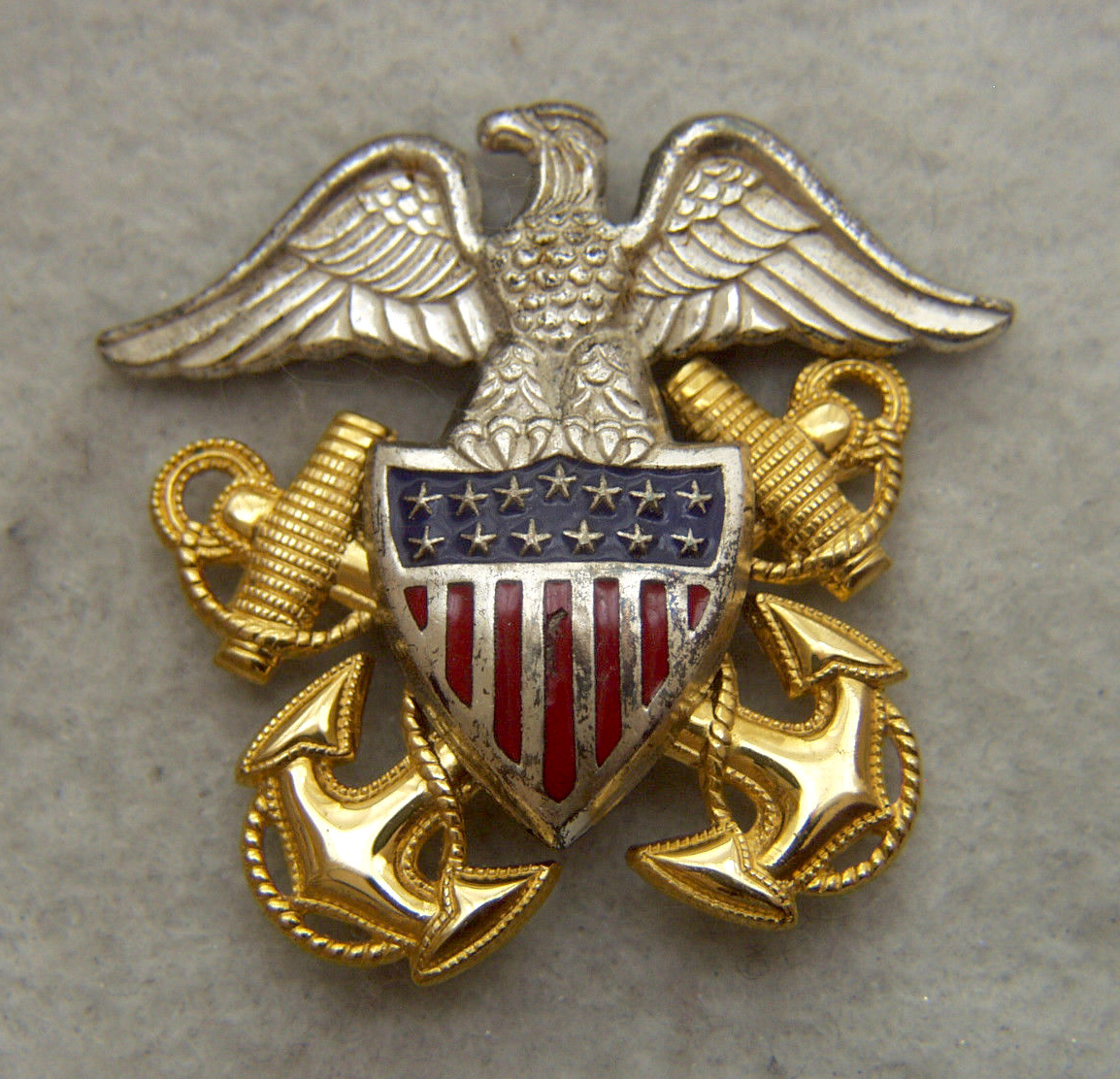
American-Hawaiian SS Co. hat badge. 

Faint H & H (Hilborn & Hamburg) hallmark on eagle wing.
Gemsco hallmark on flag.
Eagle and shield sterling plate over copper; wreath brass/gold-plate.
Second World War era. badge: 60mm x 65mm flag: 25mm x 22mm


As follows is an essay on the history of the American-Hawaiian Steamship Company. Collecting the data on this specific company is somewhat responsible for the prolonged hiatus in blog postings. I hope that the history behind the badge warrants the absence of images. More images will follow in a couple of weeks… I’m going on vacation for a spell.

American-Hawaiian Steamship Company (A-H SS Co.), 1899-1956.

The story of the American-Hawaiian Steamship Company mirrors the fates of several large steamship houses in the United States: scramble for capital, a flowering of activity, failed business models, take-over by a large conglomerate, and final dissolution. A-H SS Co. is unique in the fact that at one point it had the largest U.S.-flag merchant fleet and then dwindled to nothing.

A-H SS Co. was engaged in intercoastal (U.S. Atlantic-to-U.S. Pacific coast) and foreign trade – although, as it name implied, it originally provided the majority of the steamship freight service between the mainland United States and the Hawaiian Islands. After the annexation of the Hawaiian Islands by the United States on 7 July 1898, George S. Dearborn, who owned a fleet of sailing vessels, decided to establish a modern steamship service between New York and Hawaii. In order to finance this venture, he sold his fleet of sailing ships and raised additional capital from investors – notably his brother-in-law, Lewis Henry Lapham. Almost a year later, on 7 March 1899, Dearborn organized the American-Hawaiian Steamship Company. Dearborn served as president of the company, with Captain William D. Burnham as general manager – Dearborn was president until his death in 1920; Burnham held his appointed post until 1914.

Immediately after incorporation, A-H SS Co. ordered new steamships from the local New York and New Jersey shipyards, with Dearborn securing contracts to bring sugar to the U.S. mainland from the Big Five (the main business conglomerates in the islands). Service was to begin in 1900, however, A-H SS Co. found its ships requisitioned by the U.S. Navy for emergency duty to counter the Boxer Rebellion in China. Only in January 1901 did the promised service begin. For the next 14 years, under the protective umbrella of U.S. cabotage laws, the relationship that A-H had forged with the Big Five proved mutually beneficial and was the source of prosperity to the company’s U.S.-flag ships.

Of the of several innovations A-H SS Co. ushered into the steamship trade, starting with their first voyage, A-H SS Co. steamships used the Straits of Magellan rather than the longer route followed by sailing vessels around Cape Horn. A problem that faced steamships in the long voyage from New York to Hawaii was the logistic problem of coaling. Although Chile was a natural stop-off point for re-supply, Chilean coal was of low quality and quickly exhausted. This very problem vexed the great powers of the period, and colonial history is rife with seemingly far-flung islands annexed for the very purpose of servicing navies. A-H SS Co. did not have the luxury of arms, therefore resorted to innovation. Alternatively, A-H SS Co. supported the efforts of Valdemar Frederick Lassoe, its chief engineer, to develop an oil burner for the company’s steamships. The oil burner was first fitted in the S.S. Nebraskan, which completed its first voyage from the Pacific to New York in 1904; the results so impressed the U.S. Navy that it launched a program to convert warships from coal to oil.

In January 1907 A-H SS Co. took advantage of the opening of the Tehuantepec Railroad across Mexico to divide its ships into two fleets: one operated on the Pacific Ocean, while the other fleet handled the cargo on the Atlantic between New York and Tehuantepec. This arrangement lasted until 1914, when revolutionary turmoil in Mexico shut down the Tehuantepec Railroad; while the opening of the Panama Canal on 15 August 1914 provided an economic alternative. However, landslides closed the Panama Canal between 13 September 1915 and 15 April 1916, thus forcing A-H SS Co. to use the Straits of Magellan one last time – albeit under oil power.

The company’s heyday was in this early period. With its offices at 8 Bridge Street Maritime Building in New York, A-H SS Co. steamers sailed from the renovated Pier 56, Bush Terminal, South Brooklyn, every six days laden with freight for Pacific Coast Ports and the Hawaiian Islands. Through bills of lading, cargo was accepted for Puerto Mexico and all points along the Tehuantepec National Railway, Vera Cruz & Isthmus Railway, Pan-American Railway, and ports along the west coast of Mexico and Central America. From Hawaii and San Francisco, steamers left for New York every twelve days. The company used San Francisco and Puget Sound as a way station for freight destined for Vera Cruz and New York. Commerce was good.

The positioning of the company in the Hawaiian trade could not have been more secure, yet when the First World War began in 1914, Dearborn gradually succumbed to the temptation of chartering out most of his fleet in order to profit from the record-high freight rates in the North Atlantic. In 1916 A-H SS Co. announced that it would suspend handling the sugar crop of the Islands; not surprisingly the Big Five and the Territorial Government of Hawaii felt betrayed. As a reprisal, the Big Five vowed that A-H SS Co. would never be able to return. Henceforth, the Matson Navigation Company, enjoying the full support of the Big Five, emerged as the principal ocean carrier of the Islands. Once the wartime profits evaporated, A-H SS Co. realized it had foolishly abandoned long-term stability for the sake of short-term gains – the company did keep its original name, in the hope of returning one day to Hawaii, but more as a reminder of the prosperous days when it had been the largest U.S.-flag merchant fleet.

In 1920, after the government returned the vessels requisitioned during the war, A-H SS Co. decided to dedicate its fleet in intercoastal trade, mainly between New York and California. After Dearborn died on 28 May 1920, W. Averell Harriman became the principal stockholder of the company and assigned the management of the company to his United American Lines; all of this he affected in April 1920. The attempted merger proved more complex than expected, and soon Harriman realized that the financially troubled A-H SS Co. required its own separate organization, and to that end, he appointed Cary W. Cook as its president on 20 March 1923. As a condition for accepting the job, Cook had specified that the company’s headquarters be moved from New York City to San Francisco – not only because this was where he lived, but also because he felt the future of the company was in the Pacific. Cook put A-H SS Co. back on solid footing and also began the negotiations with the Grace Line – which was keen to sell its six vessels on the unprofitable intercoastal service. The purchase of the ships was concluded in June 1925 by Roger D. Lapham – who succeeded Cook as president that same month. The intercoastal route sailed every five days. As a further step to consolidate A-H SS Co.’s position as the leading intercoastal carrier, Lapham acquired one of its competitors, the Williams Line, in early 1929.

Unfortunately, the intercoastal trade was proving to be rather unstable and subject to sharp rate wars, so Lapham correctly concluded that the company needed to enter into other trade routes. His most important move was the creation of the Oceanic & Oriental Navigation Company in 1928 to take over a line of U.S. Shipping Board vessels (USSB); A-H SS Co. and Matson each had a 50% stake in the venture, with Matson managing the government ships on the Australia/New Zealand route, and A-H SS Co. managing those sailing to China, Indochina, Japan, and the Philippines. When the Great Depression struck, A-H SS Co. was in an especially difficult state as the intercoastal trade so closely reflected the collapse of the American economy; Lapham considered a merger with the Dollar Line in 1930, but the negotiators failed to find a satisfactory arrangement. Ever the opportunist, in 1936, did Lapham purchase four steamers from the Dollar Line for A-H SS Co. as Dollar was desperately trying to remain solvent and not slip into bankruptcy.

In 1942, the U.S. government requisitioned the ships of A-H SS Co. and of all other lines for the duration of the Second World War. The company received a War Shipping Pennant in 1944 with four stars – “4 Star Companies” were assigned anywhere from 75-100 vessels of Victory Fleet during the Second World War. Once the war was over, the company did not want the surviving ships back, which in any case were overage, and instead preferred to bareboat charter government vessels for the intercoastal trade and for service to the Far East, at least until the post-war shipping situation became clearer. After the war, these cast-off ships ended up as troopships for the MSTS or found service in the U.S. Navy. Despite not wishing to have its assets returned, A-H SS Co. did engage in litigation to recoup perceived losses at the hands of the U.S. Government. A particularly visible case was of the Alaskan, the Federal Courts upheld the Government’s payment to A-H SS Co., claiming the A-H SS Co. was attempting to profit from war.

With the ascension of Roger Lapham’s son, Lewis A. Lapham – who became the president of the company in 1947 – the company’s headquarters moved back to New York City from San Francisco; this was the younger Lapham’s first action as company president. The company was wisely keeping its options open, but the Korean War panicked A-H SS Co. into buying six surplus ships on the mistaken assumption that high freight rates would continue indefinitely (obviously lessons were not learned from previous of the same sort). The ships had barely been brought when the intercoastal service took a downward plunge, and with each voyage piling up losses, the company had no choice but to suspend the intercoastal service in March 1953. For all intents and purposes, A-H SS Co. was no longer sailing.

The question of what to do with the idle fleet vexed the stockholders, who reached the conclusion that the hope left was to shift to a foreign flag of convenience. Because the company had exclusively operated under the U.S. flag, the stockholders decided to bring in as an investor the billionaire Daniel Ludwig, whose experience with foreign-flag operations was renowned. Ludwig decided to use the company for his own plans, and in 1955, after a bitter takeover battle, he gained full control and sold off the ships and most of the assets of A-H SS Co., whose steamship career ended at this point.

Ludwig, however, for purposes of tax advantages, kept A-H SS Co. as a paper company and involved it in real estate ventures. For the next ten years the company became embroiled in sundry schemes: first to build Roll-On/Roll-Off vessels, then container ships, and finally nuclear-powered vessels. By 1968 the last of these schemes had failed, and Ludwig proceeded to liquidate A-H SS Co. as a first step toward making an extremely lucrative deal with Sea-Land.

Principal Executives
George S. Dearborn : 1899-1920
William D. Burnham : 1899-1914
Cary W. Cook : 1923-1925
Roger D. Lapham: 1925-1944
John E. Cushing : 1938-1947
Edward P. Farley : 1944-1955
Lewis A. Lapham : 1947-1953

House Flag:
The A-H SS Co. house flag first appeared in publications in 1926; the flag was simply the white initials A-H on a blue field. After the takeover, the flag was never flown again as American-Hawaiian Steamship Company became a paper company; and in the 1970s, nevermore.

Note:
In 1937 A-H SS Co. issued a double-spread page outlining its corporate history complete with ship purchases and an executive summary.

History of American-Hawaiian Steamship Company by periods 1899 to 1936 inclusive

References:
Thomas C. Cochran and Ray Ginger, “The American-Hawaiian Steamship Company, 1899-1919,” Business History Review (Boston: The President and Fellows of Harvard College) 28 (December 1954): 342-365

Rene De La Pedraja, Rise and Decline of U.S. Merchant Shipping in the Twentieth Century (Twayne’s Evolution of Modern Business Series). New York: Twayne, 1992.

Penton Publishers, Blue Book of American Shipping (17th Ed.). New York, New York: Penton Publishers, 1913. pp. 315, 324.

New York Times, 26 November 1948, 28 February 1953.

Pacific Marine Review, November 1926.

Jerry Shields, The Invisible Billionaire: Daniel Ludwig. Boston: Houghton Mifflin, 1986.

War Shipping Administration, PR 2029. 24 September 1944.

F. J. N. Wedge, Brownโ€™s Flags and Funnels. Brown, Son & Ferguson: Glasgow, 1926.

Lloyd’s, Lloyd’s House Flags and Funnels. Lloyds: London, 1912.
Facsimile edition available here:
http://www.lulu.com/content/paperback-book/lloyds-house-flags-and-funnels-1912/8504627

U.S. Navy Hydrographic Office, Merchant Marine House Flags and Stack Insignia: H.O. Pub. No. 100, Washington D.C., 1961. Facsimile edition available here:
https://amzn.to/3HroQFw

Legal cases:
American-Hawaiian Steamship Co. v. the United States. the Alaskan
United States Court of Appeals Second Circuit. – 191 F.2d 26
Argued May 8, 1951. Decided August 13, 1951

Marvyn Gould, Executor of the Estate of J. Donald Rogasner, et al., Appellants in No. 75-1338. v. American-Hawaiian Steamship Company et al., Cross-appellants
United States Court of Appeals, Third Circuit. – 535 F.2d 761
Argued Oct. 3, 1975. Decided April 8, 1976

Links:
U.S. First Day Cover Cachet Display Catalog: American-Hawaiian Steamship Company Corner Card FDC’s

War Shipping Administration Ship Pilot

War Shipping Administration Ship Pilot cap badge
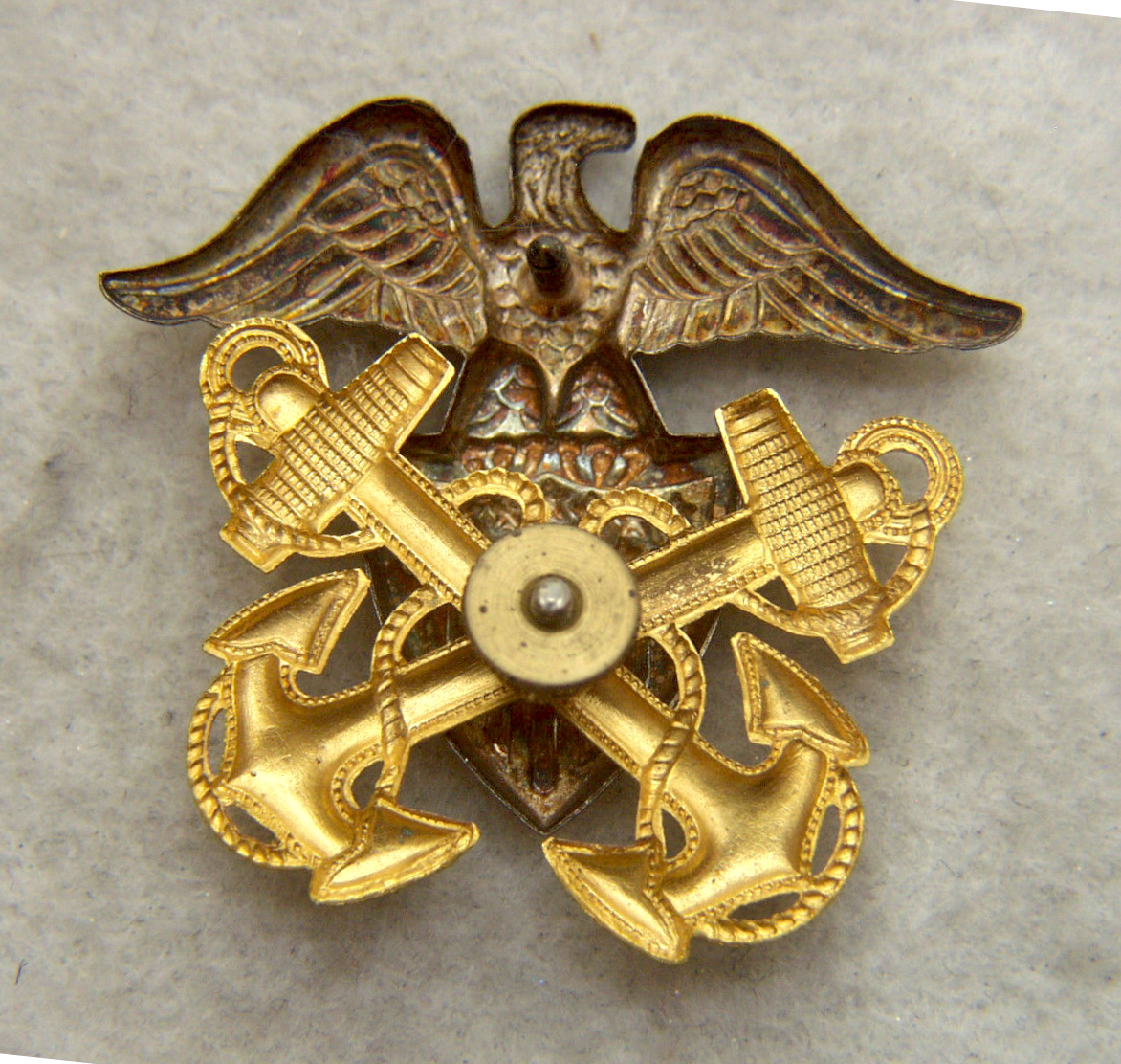
Two piece construction; 60mm (l) x 55mm (h).
No hallmarks.
Eagle and shield gold-filled; anchors gold-filled.
Circa Second World War era; 1943-45.

Logistics and control of the supply chain is a perennial thorn in the side of military planners. In the interwar period, the U.S.’s sea-borne commerce was handled by a handful of independent shipping companies and corporations. With the clouds of war looming over Europe, and with the country gripped by the Depression, the federal government created the United States Maritime Commission (USMC) so as to provide stimulus to and a regulatory framework for United States maritime commerce; this was welcomed by industrialists as a protectionist measure. Of its many roles, the USMC was responsible for the training of men for service in the United States Merchant Marine, overseeing ship construction and the militarization of the U.S.-flag fleet in the event of war.

After Pearl Harbor and in the early days of 1942, by executive order, President Roosevelt created the War Shipping Administration (WSA). In one stroke, the WSA seized all U.S.-flag merchant ships for wartime duty. Among other responsibilities, the fleet chartering functions of the USMC were transferred to the new agency; by mid-war, the WSA owned and operated or chartered 80% of all sea-going merchant vessels in the U.S., with the rest being owned or chartered by the U.S. Army and Navy. An estimated 90% of all military and essential cargo was carried in WSA ships; the Administration’s responsibilities extended to all aspects and phases of shipping. This agency worked closely with Merchant Marine unions, operators, the U.S. Army and Navy as well as with the British Ministry of War Transport to ensure logistical control of the maritime supply lines. Despite service in-fighting and other institutional setbacks, the WSA did fulfil its role in maintaining ever-important seaborne logistics control.

The National Archives provides the following timeline and other pertinent information:

Administrative History

Established: In the Office for Emergency Management by EO 9054, February 7, 1942, under authority of the First War Powers Act (55 Stat. 838), December 18, 1941.

Predecessor Agencies:

* Division of Emergency Shipping, Office of the General Director of Shipping
* U.S. Maritime Administration (Feb. 1941-Feb. 1942)

Functions: Acquired and operated U.S. ocean vessels except those of the armed services and the Office of Defense Transportation; trained merchant crews; and coordinated utilization of U.S. shipping.

Abolished: September 1, 1946, by the Naval Appropriations Act (60 Stat. 501), July 8, 1946.

Successor Agencies: U.S. Maritime Administration.

And regarding seized functions, HyperWar provides the following text culled from a WSA memorandum penned by Adm E. S. Land:

Under the Merchant Marine Act of 1936, the United States Maritime Commission was established as an independent agency to direct and control all phases of overseas shipping and shipbuilding. It became apparent immediately when this Nation entered the war that a special agency to deal with the operational problems peculiar to war was necessary to supplement the Maritime Commission. That need brought about the creation of the War Shipping Administration on February 7, 1942, which took over from the Maritime Commission virtually all of the Commission’s major statutory functions with the exception of shipbuilding. Thus WSA became the Government’s ship operating agency and the Maritime Commission its shipbuilding agency.

It is important to remember that the WSA owned, operated and chartered sea-going vessels. The personnel manning these ships could be of several classes:

  • Mariners, licensed or unlicensed, union or non-union.
  • U.S. Maritime Service trained.
  • “Old salts”, or mariners not federally but state trained.
  • Civil service, civilian mariners.
  • Maritime shipping company employees.

But, WSA did not man a majority of vessels under its jurisdiction – this was done, by and large by unions.  Yet, the WSA did contract out personnel to pilot and sometime deliver ships.  The cap badge illustrated belonged to an employee of the WSA that worked aboard WSA vessels prior to delivery to a shipping line. A bit of high-level maritime culture is required to understand how this cap badge fits into the small constellation of sea-service and federal maritime insignia…

Since the WSA was not a uniformed service (but did have a uniformed component: the United States Maritime Service), some individuals employed by the WSA proper could and did procure uniforms and insignia at their discretion – such as the illustrated cap badge. By comparison, those mariners who went to the various state maritime schools or the U.S. Merchant Marine Academy, during the war, would be inducted into the U.S. Merchant Marine as an active or a reserve officer – those individuals had the privilege of wearing U.S. Maritime Service insignia – as they still do today. However, in the early days of the war, not all officers aboard ship were graduates of said schools and would wear uniforms in the fashion of the day depending upon their status: mate, engineering officer, master, &c. (along the lines of U.S. Coast Guard licensed positions). If in the employ of a company, they would wear the company’s insignia. Or they could wear whatever struck their fancy and within reason.

WSA officer cap badges (cap devices), usually looked very similar to the U.S. Navy cap badges, albeit with “a twist” of being completely in gold plate.

These cap badges are few and far between given the relatively small number of WSA ship officers. This cap badge came from ship’s pilot working in a shipyard.  These individuals turned the newly-built ships over to crews comprising of freshly-minted officers from United States Maritime Service (USMS) schools or existing shipping company crew members. The latter usually kept their existing insignia or defaced USMS insignia with a company flag – as illustrated in previous entries.


War Shipping Administration ship pilot
Cap badge, obverse.
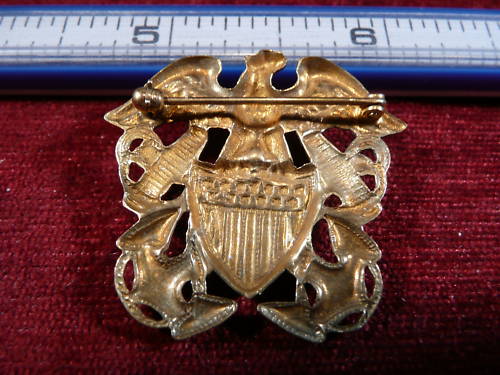
This is ostensibly composed of components from the officer cap badges of the U.S. Navy and U.S. Public Health Service (anchors and eagle-shield, respectively). One might proffer a claim of incongruity by calling attention to the fact that the eagle is without the tell-tale “cow lick” on its crown which many use to “date” some U.S.N. commissioned officer cap badges. However, through careful examination of the toning patterns of the badge itself, the overall patina is consistent with sterling and gold-plated badges from the 1940s; and this die variation was very much in use at mid-war by Vanguard. And, since the WSA was without uniform regulations, these badges were more than likely purchased by an officer eager to adorn his cap with something distinctive.


War Shipping Administration ship pilot
Cap badge, reverse.
Note the absence of any hallmarks of any sort; the eagle of the usual Vanguard variety and anchors of Viking in design.


War Shipping Administration ship pilot
Cap badge, reverse bolt detail.
The slight lozenge-shaped brass keeper bolt is of a contemporary issue.
War Shipping Administration

Fakes and Fantasies, and Merchant Marine Insignia

For a collector of period items, there is nothing more vexing than a fake offered as an original, vintage item. The higher the rarity, the greater the amount of “fakes” circulate. Although the field of collecting merchant marine insignia is small and insignia is relatively undocumented, spurious items often appear with incorrect attribution. Exploiting this lacuna, from the 1980s through the early 2000s, a single individual muddled the field and thoroughly confused collectors: Alan C. Beckman of Fox Militaria. Mr. Beckman never purported his creations to be “Official Issue” โ€“ those reselling them do now. Since education for the collector is critical, hopefully, this post will help set the record straight.

Particularly frustrating in researching and collecting Second World War Merchant Marine items is the lack of documentation. An early researcher in the field Rudy Basurto quipped in personal communication, “manufacturers be damned.” It is no wonder โ€“ the American Merchant Marine at the time was marshaled under the guidance of the War Shipping Administration to transport people and materiel in support of the war; and, with each re-alignment in Federal organization, insignia changes followed suit. Managing steamship operators did not issue handbooks or pamphlets detailing their uniforms, and government agencies โ€“ such as the United States Maritime Service โ€“ did not leave behind uniform circulars like the United States Navy. Compounding the issue, insignia houses have come and gone with their archives going the way of the wastebasket. With scant clues as to who made what insignia when and for whom, the overall lack of information has lead to speculation and guesswork.

NB.: If you wish to skip my editorial, below the text are a series of galleries of some of the items from Mr. Beckman’s stock.

Enter Alan C. Beckman

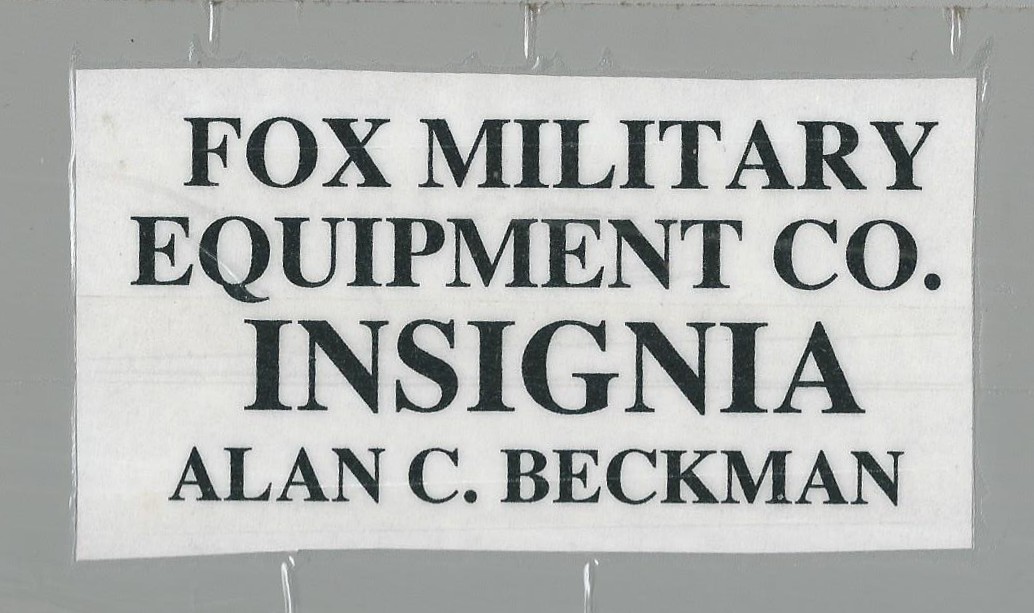
Such an unresearched and poorly documented field as Merchant Marine insignia is ripe for unscrupulous insignia dealers. No one dealer seems to be more reviled than Alan C. Beckman, the ex-proprietor of Fox Military Equipment|Fox Militaria|eBay seller usnusa. When Manion’s had a public marketplace, he set up shop there as well. Through these various channels, Mr. Beckman was a distributor and manufacturer of many restrikes, fantasies, and cinderellas. Once collectors found him peddling bad wares, they branded him as a persona non grata. Since he never gave full provenance or a complete description of the stock he sold, it enabled him to feign innocence when an angry customer confronted him.

Before he passed away, I occasionally corresponded with Mr. Beckman and learned of how he was able to offer such a broad array of items. He began manufacturing items in earnest in the early 1990s through the mid-aughts. Through a fluke of luck, I discovered he placed a large order for NOAA wings with International Insignia in Rhode Island. After a conversation with International Insignia, I learned most of Mr. Beckman’s items were not period, but restrikes. It is worth mentioning International Insignia is a supplier to Vanguard Industries and holds the archive of N.S. Meyer dies; the proprietor of International Insignia is the son of the last president of N.S. Meyer, Robert Raeburn. Through his contract with International Insignia, Mr. Beckman was able to offer many high-quality items and cinderellas (which may be collectible in their own right if one is into fantasies). Mr. Beckman’s spray-painted casts were his own experiments and came as a result of him trying to mass-produce items for market.

It is useful to offer some definitions; a leader in the field of Phaleristics – Alexander J. Laslo – provided an important terminology in his Interallied Medals of World War I. Coming from the world of numismatics, I find they offer a useful framework when considering merchant marine insignia and cap badges in particular:

Official Issue: produced for general distribution by a government or commercial firm under contract, license, or sanction of the issuing authority.  Collectors will most often want to acquire these items.  These may be found either unissued or used.  Depending upon one’s collecting interests, one or the other is valued.  For the latter, provenance is often a key determiner of value.

Reissue: A later strike of an official issue.  This may involve die or finish variations.  I would also include far later official issues of items; items such as the Merchant Marine discharge button currently issued by Vanguard fall into this category – same die, different bronze alloy, but given to veterans by MARAD.

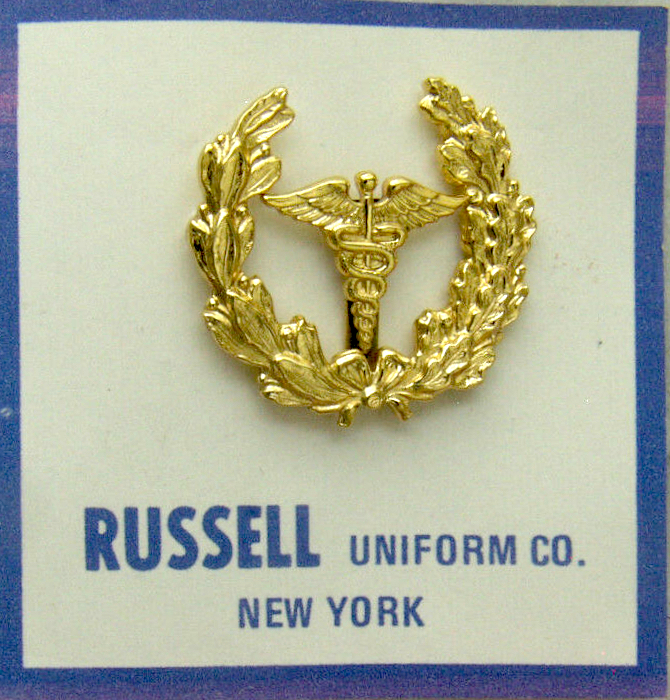
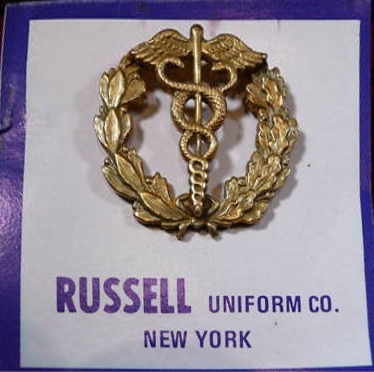
Unofficial Issue: An item produced by a commercial firm and available from the firm or a vendor for the purpose of providing seamen a replacement of the official issue or an interim item to wear until the distribution of the official issue.  These are “theatre manufactured” items and include sand casts of cap badges as found in collections as picked up by seamen in foreign ports as far afield as Alexandria or Sydney.  I would also include items manufactured under license for general distribution, but not released (see Russell Uniform Co. below).

Reproduction: An item produced by a commercial firm for the purpose of satisfying the needs of collectors.  These are sometimes referred to as “fakes.” These are only fakes if they purport to be official, vintage issues.  And like reissues, they will have die and finish variations; such as lack of hallmarks or stoning of enamels. They fill gaps in a collection.

Fantasy: An item produced by a commercial firm that has no official status.  These may be created to create the idea of an official issue. These may also be called “cinderellas”; cinderellas are collectible in their own right.

When it comes to Merchant Marine insignia, it is often difficult for the untrained to determine what is truly an “Official Issue” or “Fantasy” given the paucity of information and the relative sophistication of the modern manufacturing process. Coupled with the aforementioned, insignia were often altered, defaced or invented by bored mariners. Provenance and determination of “genuineness” are at times problematic. Fortunately, a small number of references devoted to the subject do exist: a self-published book by Rudy Basurto acts as a general catalog and starting point for anyone interested in the subject โ€“ it is not an academic treatment of insignia, rather is more a collection of images and pithy descriptions with some of the depicted insignia existing only in long-lost regulations; a smattering of articles published in the American Society of Military Insignia Collectors Trading Post by Dave Collar and Bill Emerson have depth to their descriptions and illustrate insignia quite well; a more specialized treatment of U.S. Maritime Service and Army Transport Service (in its various guises) is found in a self-published work by Steve Soto and Cynthia Soto; ATS-only topics are treated by Bill Emerson in his encyclopedia survey of U.S. Army Insignia; perusing Herbert Hillary “Sarge” Booker’s newsletter “Crow’s Nest” details some of Basurto’s material and offers variations of maritime insignia; Joseph Tonelli, in his Visor hats of the United States Armed Forces presents some handsome examples of many common and not-so-common head wear of the sea services, with the Maritime Service and Merchant Marine included. Readily accessible, Collar and Emerson are indispensable; and take care in consulting Basurto’s book โ€“ although it is a good starting point. I have a running list of references here.

There is always the question of what is or is not genuine. Considering Alexander J. Laslo’s and my definitions, the terms fake and reproduction are subjective; as are fantasies and test patterns. The coin-collecting world is less kind, terms used are “forgeries” and “replicas”; the former is meant to deceive and the later to collect. Objectively, Alan C. Beckman was a businessman, and he sold insignia; the onus of knowing what one purchased from him lies solely with the purchaser. The purchaser was always free to ask questions of him, and more often than not, Mr. Beckman would respond; if the purchaser was unhappy with the product he offered, they could always return it to him, no questions asked. Collectors, though, often have an acquisitiveness about them and will purchase items no questions asked. This is dangerous and where collectors in search of first-strike, original period oftentimes get “burnt.”

There are two schools of thought when it comes to cap badges. One school will not entertain re-strikes or copies. […] Under normal circumstances not only are original badges difficult to come by but they will be very expensive.

When an original metal cap badge is made the manufacturer is supplied with the metal die from which to produce them. Sometimes the manufacturer produces more than requested so that he has a few spares left over in case of any rejects and if there are no rejects then the spares are no good to him.

When the contract is finished the die should be returned to the customer and it has been known for these to end up on rubbish skips. So a restrike is one that is made to the original customer and manufacturer’s specifications using an old die but was never actually authorized.

From Lighthouse Keeper’s Cap Badges: Buttons and other items

Mr. Beckman got his start in buying and selling militaria during his time in the U.S. Army while stationed in Europe. Using West Germany as his base, he went on collecting trips where he bought up stock and sent it back home to the United States. Since he was active in the 1960s, militaria was relatively plentiful and inexpensive in Europe; this formed the core for his business – Fox Militaria operating out of Clarendon Hills, Illinois. Over the years, he was fortunate in his ability to cultivate relationships with individuals in the insignia manufacturing business; he had contacts in Rhode Island โ€“ which was a major insignia manufacturing center โ€“ and was able to purchase unsold or incomplete stock as well as old dies and tools. From these old, worn-out dies, he made his earliest items, but they were of the poor pot-metal type of reproductions. A friend taught him the art of casting, but his efforts often ended up with all the tell-tale signs of a poor cast: bubbles, wavy lines, parting lines (and file marks), &c. In time, he was able to acquire some bits and bobs from places going under such as Pasquale and Wolf-Brown, but his most valuable connection was that with International Insignia.

Mr. Beckman fabricated an amazing story to capture the imagination of his customers and to appear he had struck a collector’s dream: the coup of a personal invitation to purchase N.S. Meyer’s unsold stock at the company’s liquidation. He asserted from that sale in Manhattan he acquired many of their submarine and aviator “wings” as well as a significant amount of their old dies and unsold stock. There is a ring of truth to his story; N.S. Meyer was acquired by Vanguard in 2000, and some assets were sold – but not dies and not insignia lying in boxes on warehouse shelves. The truth is far more interesting. Mr. Beckman had a close relationship with N.S. Meyer and did buy much of their unsold stock – but not wings, rather the small notions soldered on other pieces of insignia to make up MSTS rank pins. It was through this contact that in the late 1990s – right after N.S. Meyer suffered a flood in one of their die-sheds in Rhode Island at their International Insignia subsidiary – that he was brought in to re-catalog their dies and tools. The flood completely decimated the cardboard wrappers around the dies, and the company was left wondering what they had. Since he was an avid collector of insignia and a veteran of militaria shows, he offered his services to identify their assets. In that die-shed, he discovered a trove of tools and dies used from the outset of N.S. Meyer’s creation. Armed with expert knowledge and a dash of educated guesses, he labeled and inventoried the dies and tools.

Knowing what International Insignia had on hand enabled Mr. Beckman to order rare items from them to sell to the militaria collecting community. He often jobbed out lots of one hundred pieces at a time and sold them at a trickle careful not to saturate the market. Early on, he placed his orders with International Insignia using what he surmised were original materials: a base metal plated in silver or gold; however, when precious metal prices made their use cost-prohibitive, he began placing orders for pieces in bronze, brass, and gunmetal. The later pieces of insignia, Mr. Beckman described as the rarest of rare items. Using International Insignia as a manufacturer gave him the sort of quality control over high-demand items he did not have in his own workshop. The light-chocolate bronze N.S. Meyer wings as produced by Internation Insignia were “works of art” and truly well-crafted and as the manufacturer claimed โ€“ they were complete down to the 45-degree angle catches.

Alan C. Beckman claimed many of the cinderella designs that came out of his N.S. Meyer stock were trials or leavings from small batch jobs. He explained that often a client would approach N.S. Meyer and ask if they could produce something. N.S. Meyer would make trial strikes and either make a sale or not. In fact, in the insignia business, tools are considered assets and if they were kept around, they were taxed; most, if not all of these hubs for trials went the way of the scrapyard. Mr. Beckman never owned an N.S. Meyer die, despite what he intimated to me. In regard to the dies themselves, he speculated correctly on some โ€“ and others not so. Since Mr. Beckman was a United States Navy veteran, he had a particular fondness for offering submarine badges and maritime-related insignia badges. And, being a friend of Rudy Basurto, Mr. Basurto’s work informed Mr. Beckman, and Mr. Beckman offered Mr. Basurto examples of his work and Herbert Hillary “Sarge” Booker drafted line drawings for Mr. Basurto’s monographs lending legitimacy to the fakes; it was a self-feeding circle. The cinderella pieces were Mr. Beckman’s own imaginative creations. In propping up his legend, he wrote me when I asked where does one find all of his merchant marine insignia:

As far as other information the only thing I can offer is “keep your eyes peeled”! You will learn information about the Merchant Marine from the most unlikely sources. Before Russell Uniform Co. closed their doors I was able to buy a lot of Merchant Marine insignia from them-a most unexpected source! If you can make a trip to the Merchant Marine Academy at King’s Point it might be well for you to do so.

Private correspondence with Alan C. Beckman, July 10, 2009.

Mr. Beckman encouraged me to seek out insignia at estate sales. He told me trips to Florida netted him a trove of Pennsylvania Nautical School cap badges he was about to sell (N.B. P.N.S. never used stamped metal cap badges – a belt buckle, yes). I followed his advice and started to look around and was confused about what I saw and what he offered. At one point, I asked Mr. Beckman about the incongruity I noticed between the insignia I found in estate sales versus his offerings – all the old salts were selling sterling or gold. He slipped up told me the reason why the insignia he offered were in strategic materials โ€“ and not in silver plate โ€“ was due to collectors not wanting silver items. In a later sale, I mentioned to him I had done a scratch-test on one of his items; he told me gold substitute (e.g., Rust-oleum) is easier to procure than real gold. He then did a quick followup, writing, “Good eye.” He refunded my money, and told me the cap badge was mine for free.

It is interesting how Alan C. Beckman both challenged and in a sense educated me to learn more about merchant marine insignia and their production. It is almost as though he wanted me to unravel his business model.


Galleries

Fox Militaria | eBay Seller: usnusa

These images were gathered between September 2010 and August 2012. Alan C. Beckman as the eBay seller usnusa would sell stock often in batches of 15-20 items every few weeks among them would be Merchant Marine or Maritime insignia. After 2012, I left eBay and no longer watched his auctions. Each piece of insignia had an average sale price of $40-50.


Fox Militaria II

After a couple of years of inactivity, I learned Mr. Beckman’s stock was appearing once again on eBay. I was astounded, and then learned Mr. Beckman was not well. Images of his stock as sent me are below; most I already knew from the fliers he sent me years prior. One thing that always stands out about Mr. Beckman’s cap badges is how he consistently re-used the anchor from the N.S. Meyer U.S. Marine Corps Eagle/Globe/Anchor cap badge construction.

Some collectors through the years have come to recognize their purchases as items having a provenance leading to Mr. Beckman. Below find a gallery of some of those pieces.


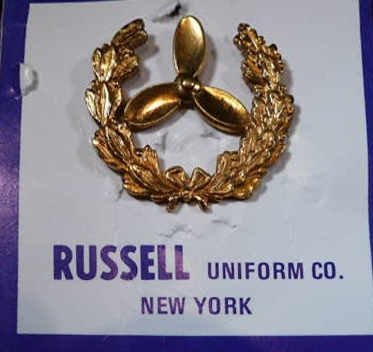
Fox Militaria | Russell Uniform Co.

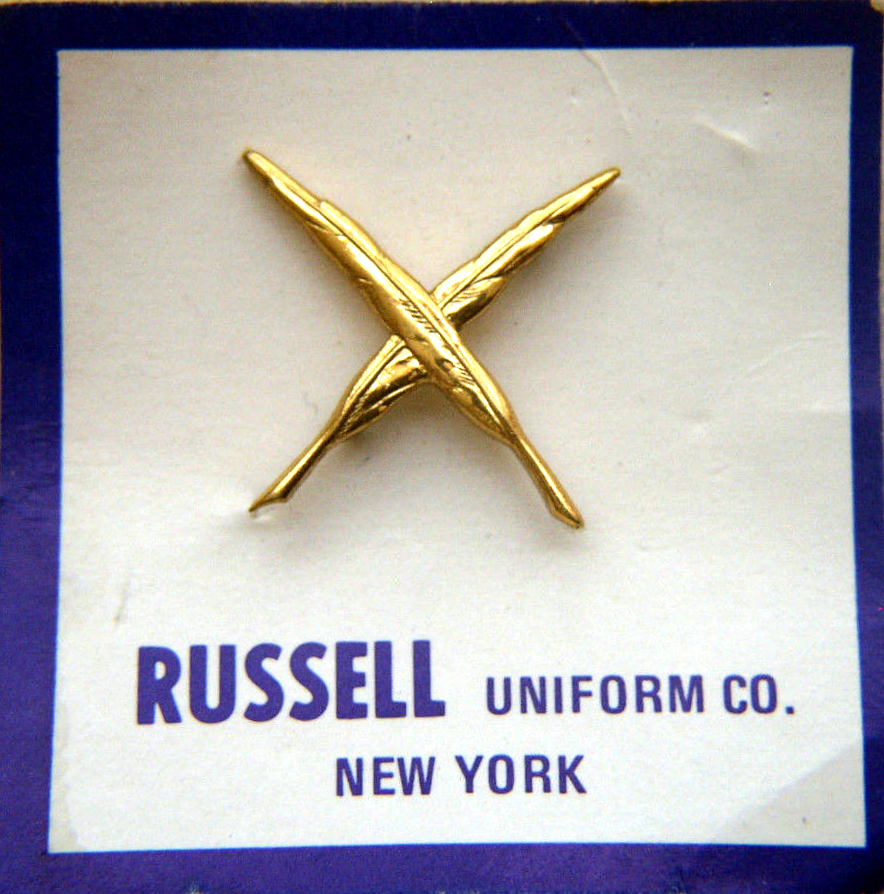
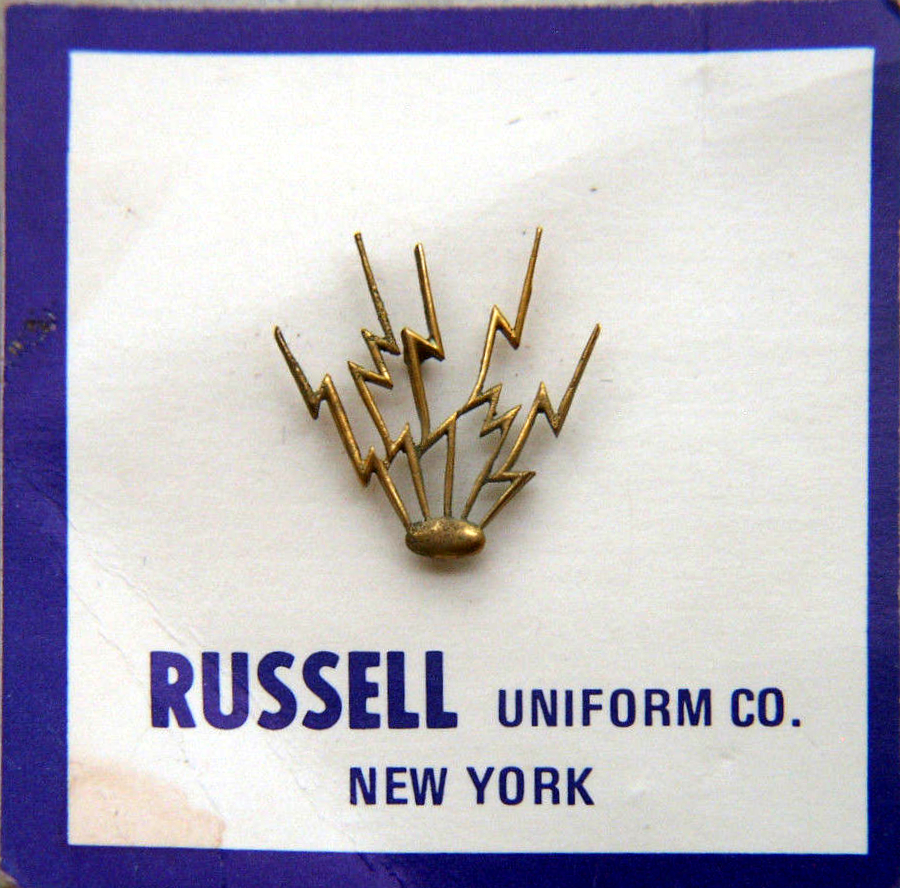
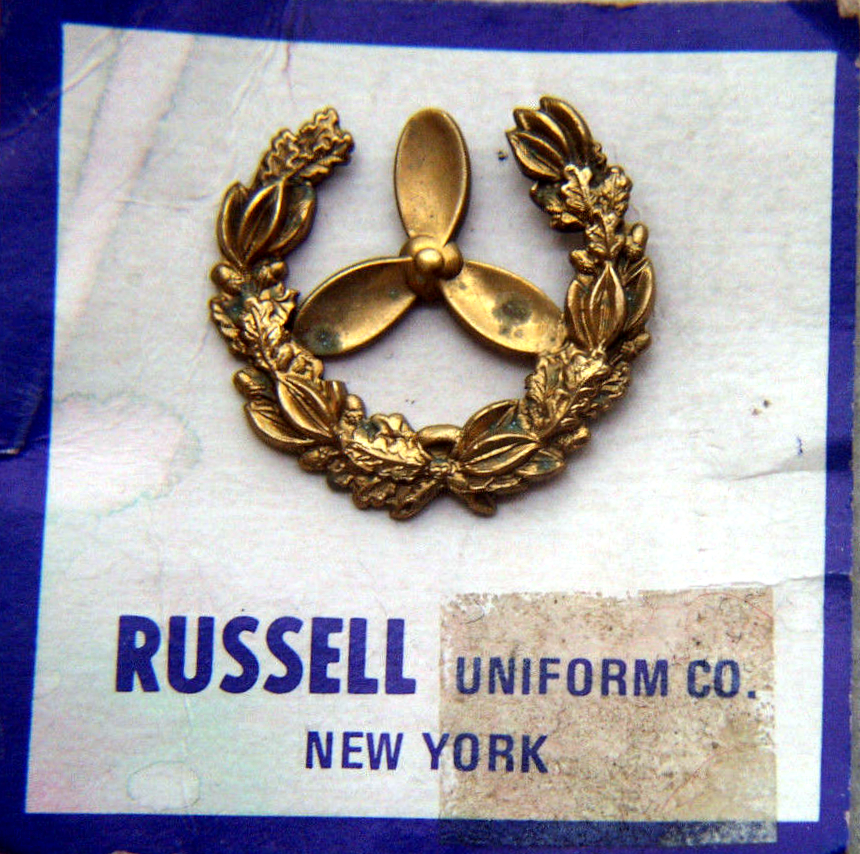
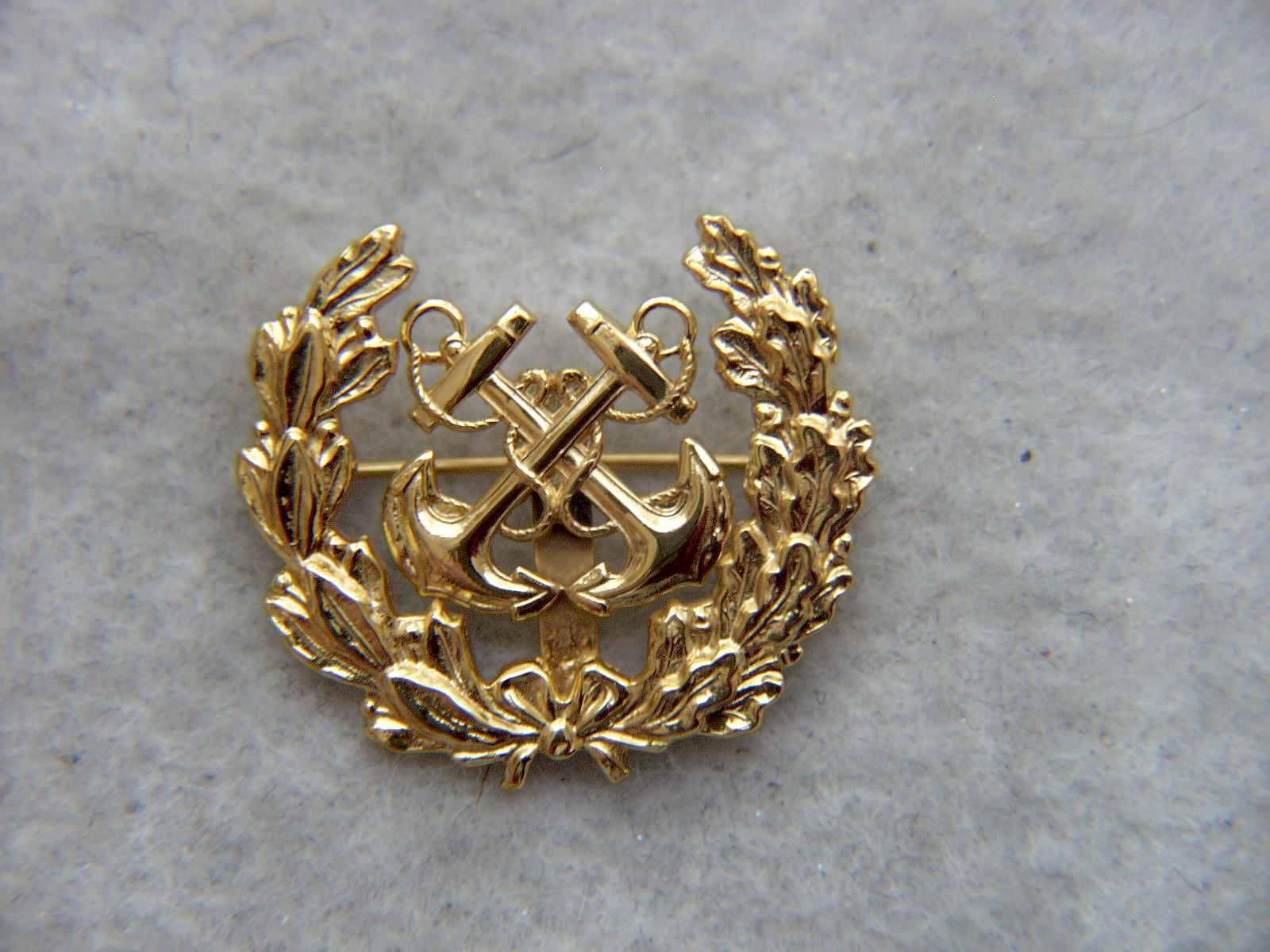
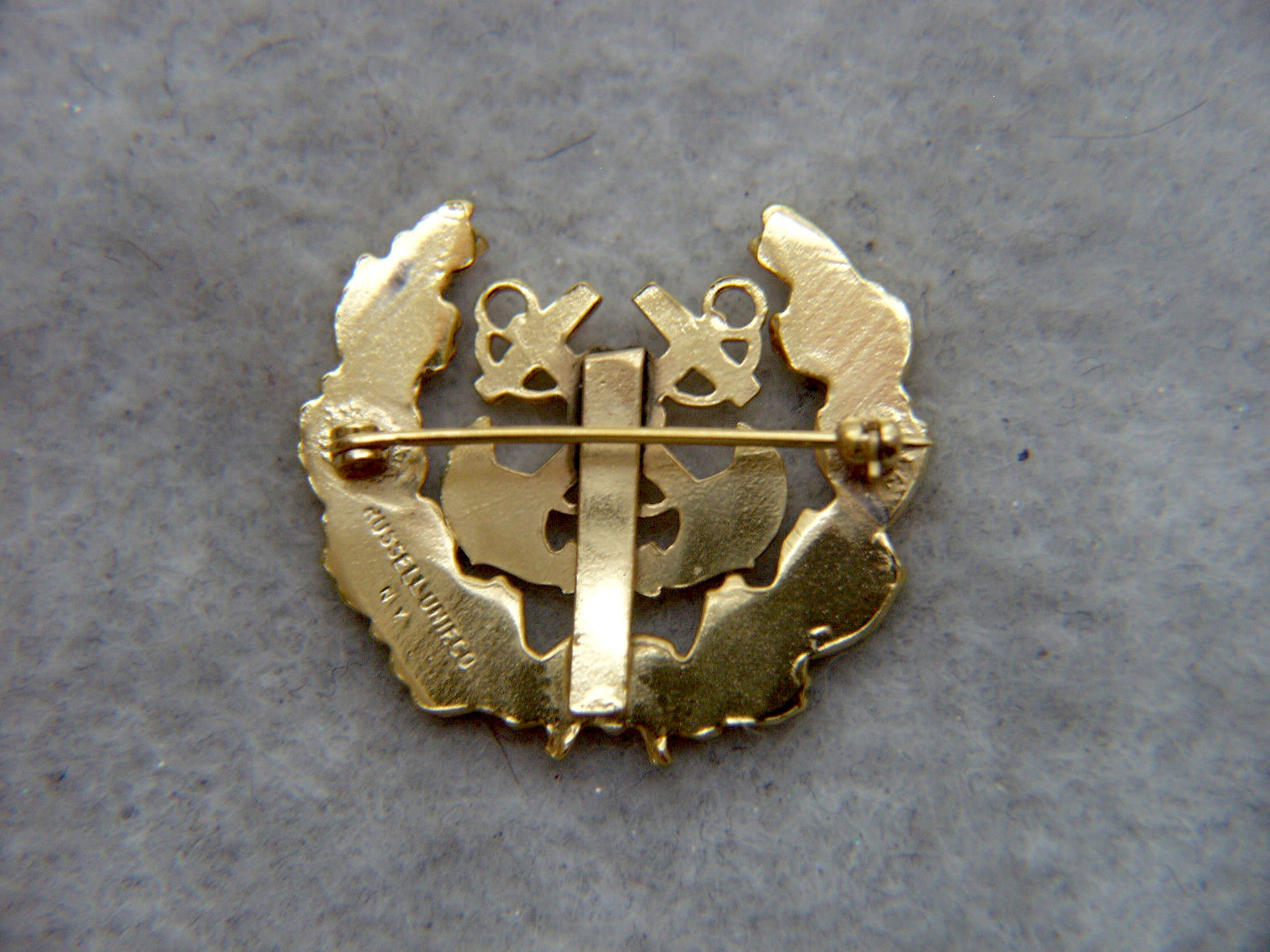
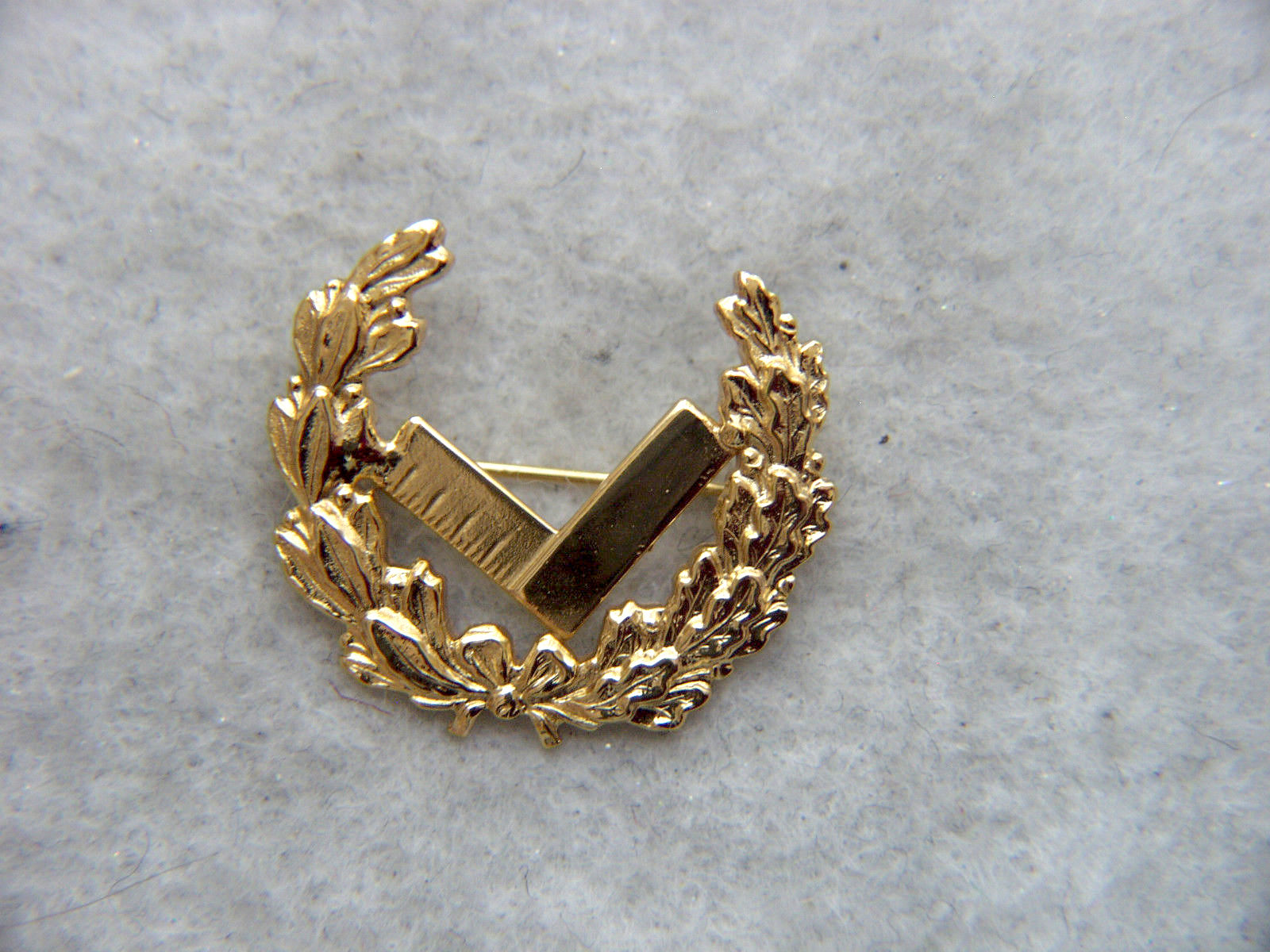
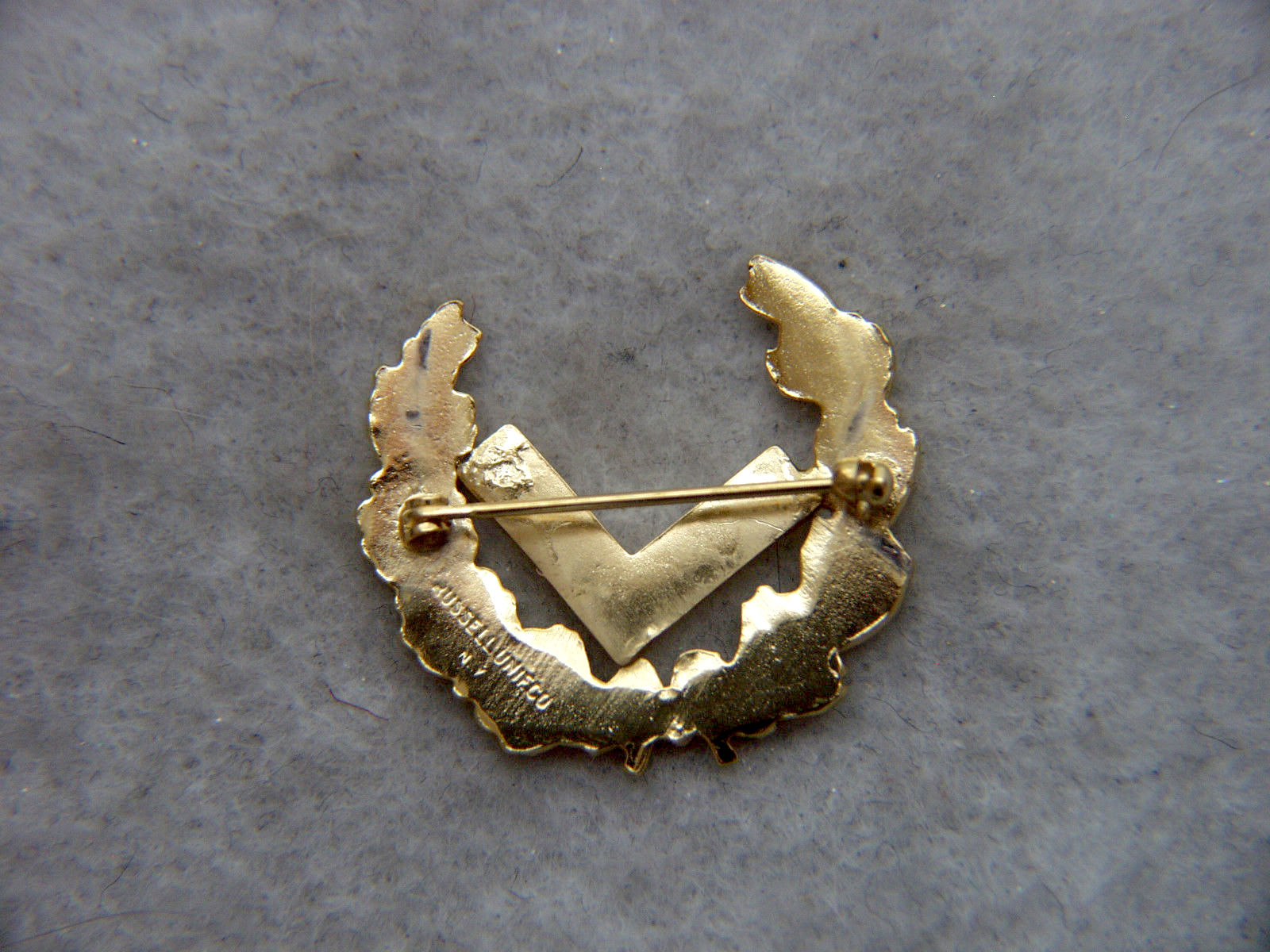
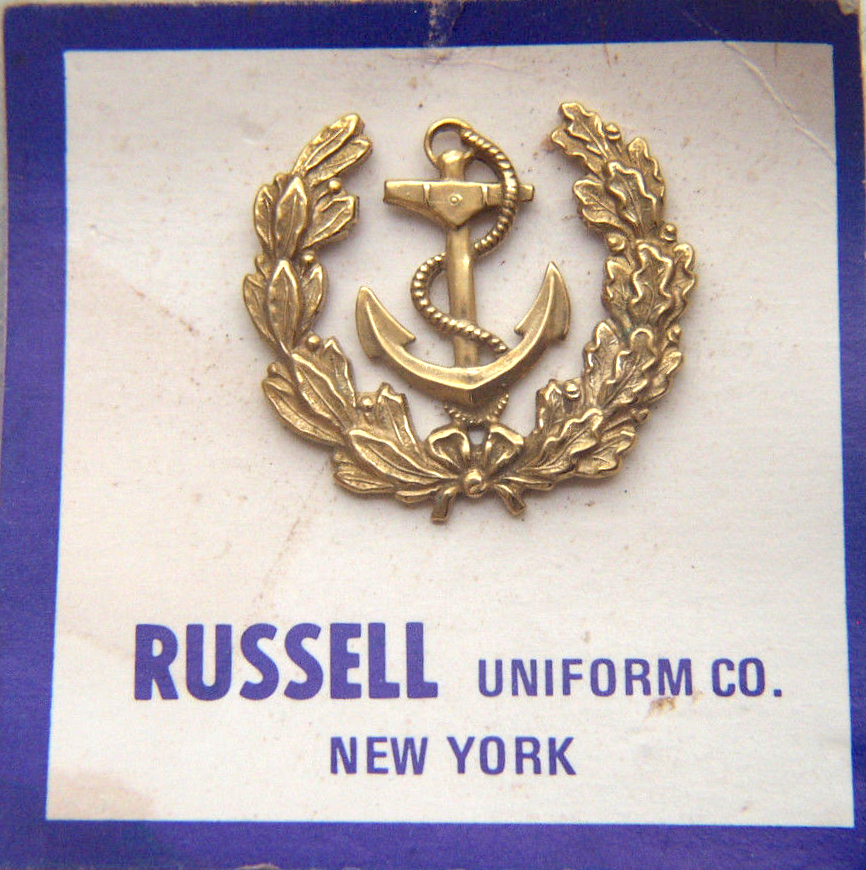
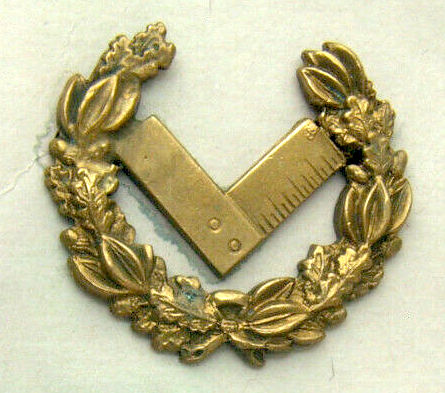
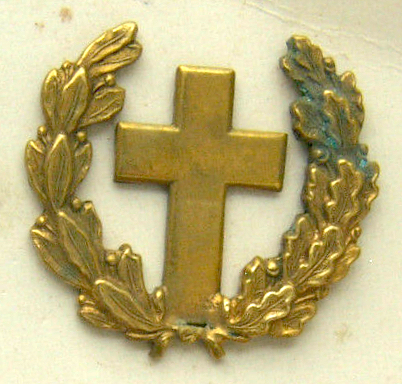
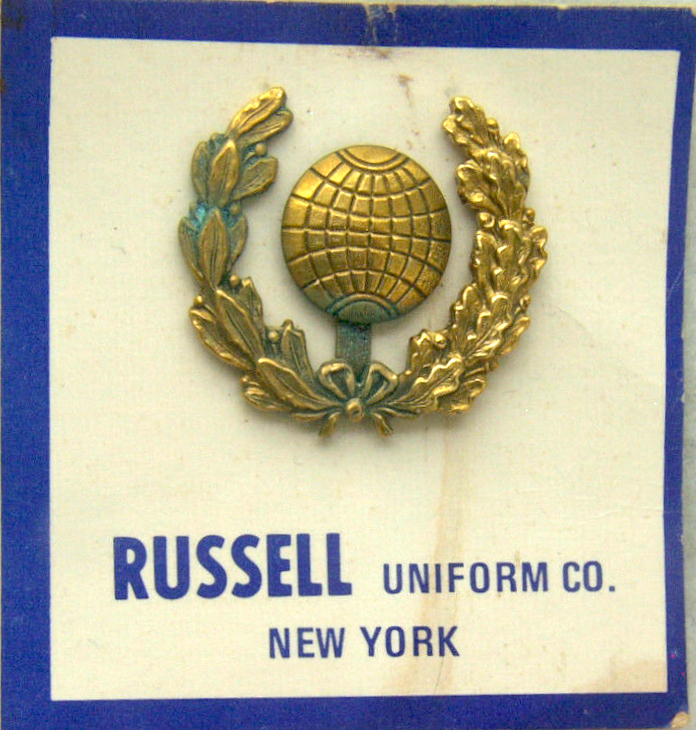
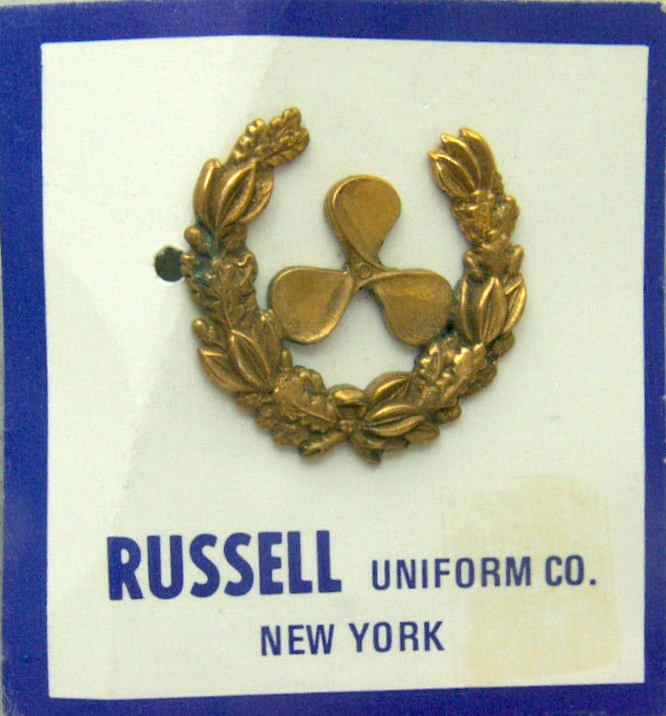
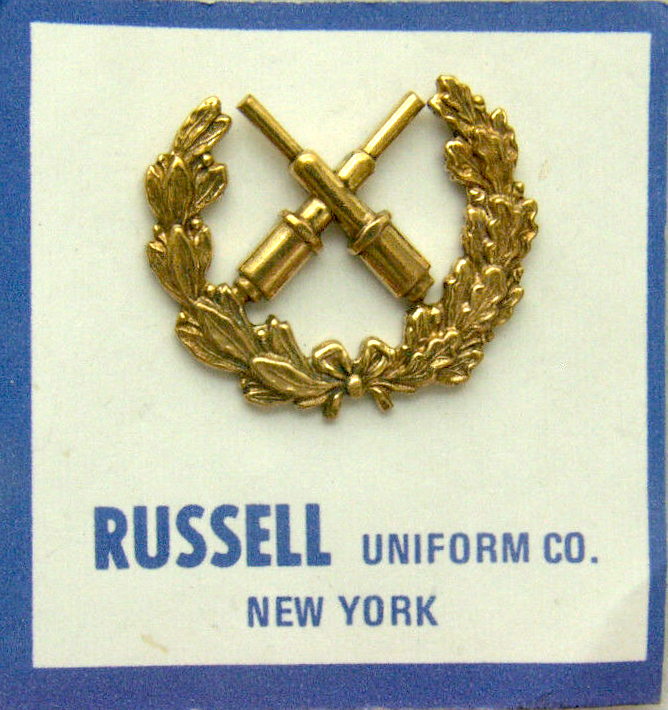
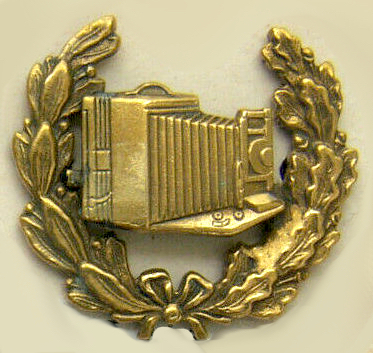
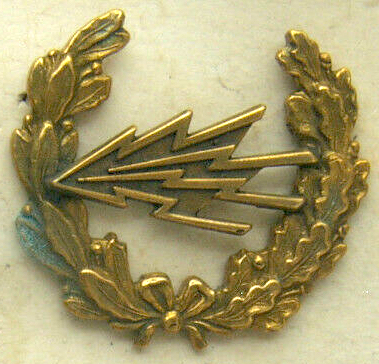
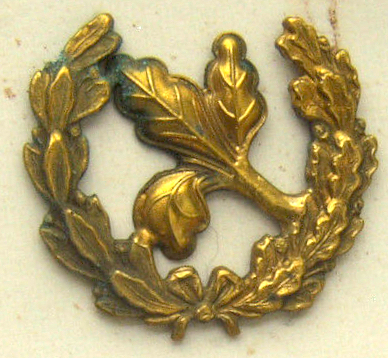
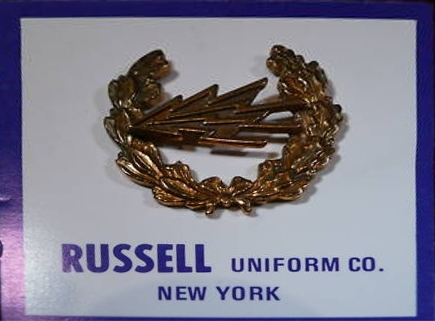
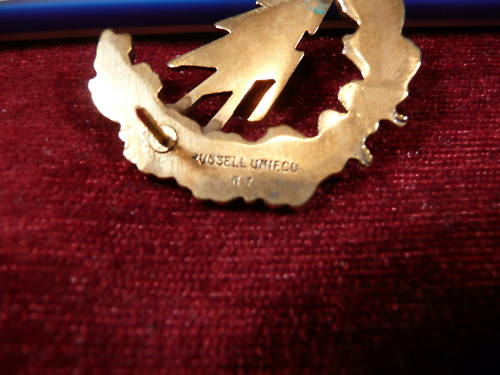
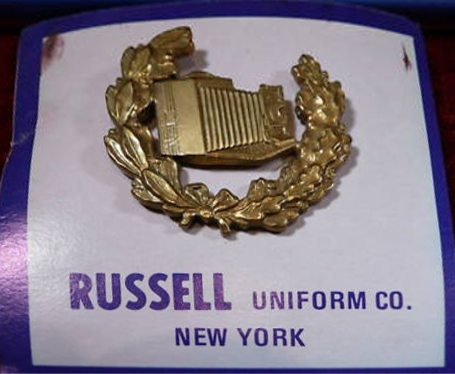
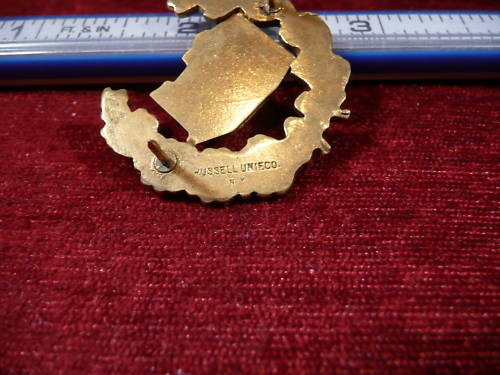
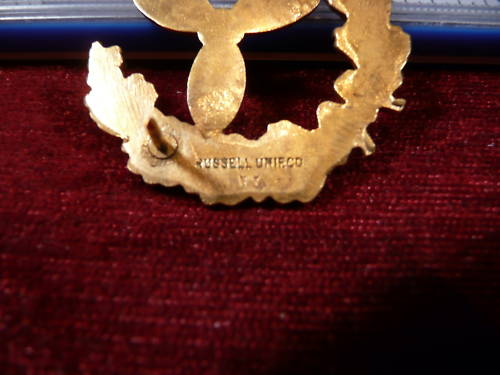
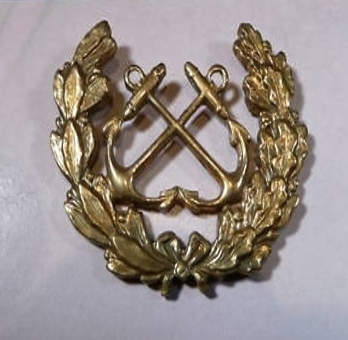
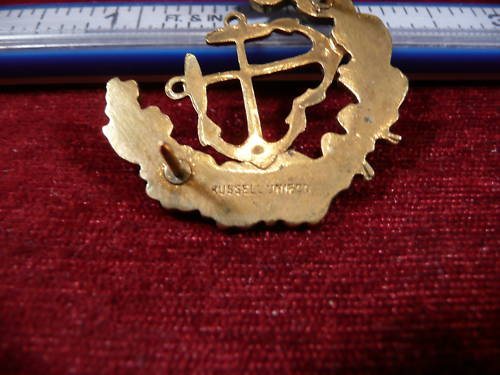
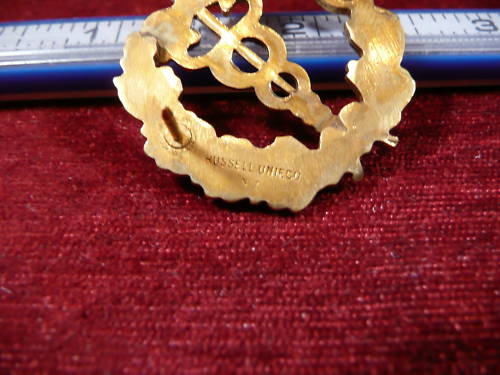
In late November 2018, I was approached and asked if I knew anything about insignia marked as coming from Russell Uniform Company. I spoke with Alan C. Beckman about his offerings a decade prior and he told me he was invited to the company’s offices in New York to take their existing stock when they were going out of business. With this amazing piece of information, I had purchased (and later returned a piece of Russell Uniform Co. insignia) from Mr. Beckman. Upon closer inspection, I found the insignia was a spray-painted cast. He congratulated me for my good eye and later told me that he had the cardboard privately printed (Tektronix printer) and he based the insignia on “unpublished” warrant officer regulations – he later told me he did not have the regulations:

Rudy has them in his book.

There was no going-out-of-business sale, and the unpublished regulations were made up. The United States Maritime Service used U.S. Navy warrant officer devices on collars and garrison hats; the only wreathed insignia were found on cuffs devices and shoulder boards. Russell Uniform Company did exist, it was a seller of police insignia and once the official uniform providers to the New York Police Department and New York State Police. Particularly problematic regarding much of the insignia is its corrosion – wartime insignia was not made of brass; especially when these items were purported to have come out: 1944-1945.


“Rudy Basurto” Collection

When I first posted this page, I received an anonymous comment with the images created below. Apparently, between August 2010 and February 2011, a number of merchant marine insignia flooded eBay. I dubb these “Rudy Basurto” Collection since they all looked very similar to items depicted in Rudy Basurto’s privately-printed book, Insignia of America’s Little Known Seafarers. To an item, each appeared at one time or another in usnusa eBay auctions. These images are important as they depict the reverses of many of the pieces of insignia, and they show detail otherwise absent from the scans above.


Fox Militaria Mailer | Sarge Booker

In the early aughts, Mr. Beckman contacted all of his previous customers and sent them direct mailers with items that may interest them given past purchases. These images were scanned and provided to me by Sarge Booker. Although not in this flier, Sarge intimated that Mr. Beckman has woven badges jobbed out all his woven badges to a firm in Pakistan. All of the items, with the exception of the “Maritime Service Midshipman 1942-1945,” “MSTS,” and “MSC” items are not official issues. Apparently, the USMS Midshipman badge was an actual trial struck for use at Kings Point; the Administration declined.

One day, I asked Sarge how Mr. Basurto and Mr. Beckman got in contact – they were both subscribers to a zine Sarge put out called “Crow’s Nest.” Mr. Basurto was had the idea of writing a monograph called “Insignia of America’s Little Known Seafarers” and the three collaborated to add content; some pieces actual and some speculative.


Commentary

This post has seen many revisions since it was first drafted; in its first iteration, it was merely a commentary on my opinion regarding what is problematic about a particular insignia item. That commentary is as follows.


ATS Chief Petty Officer
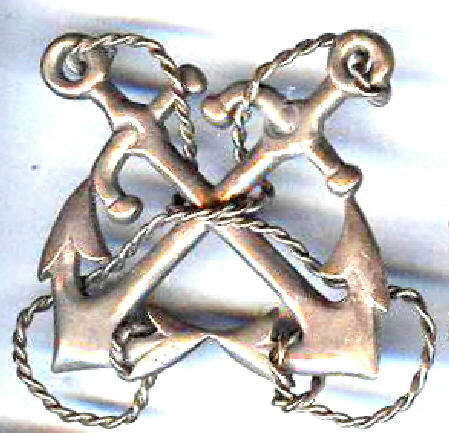
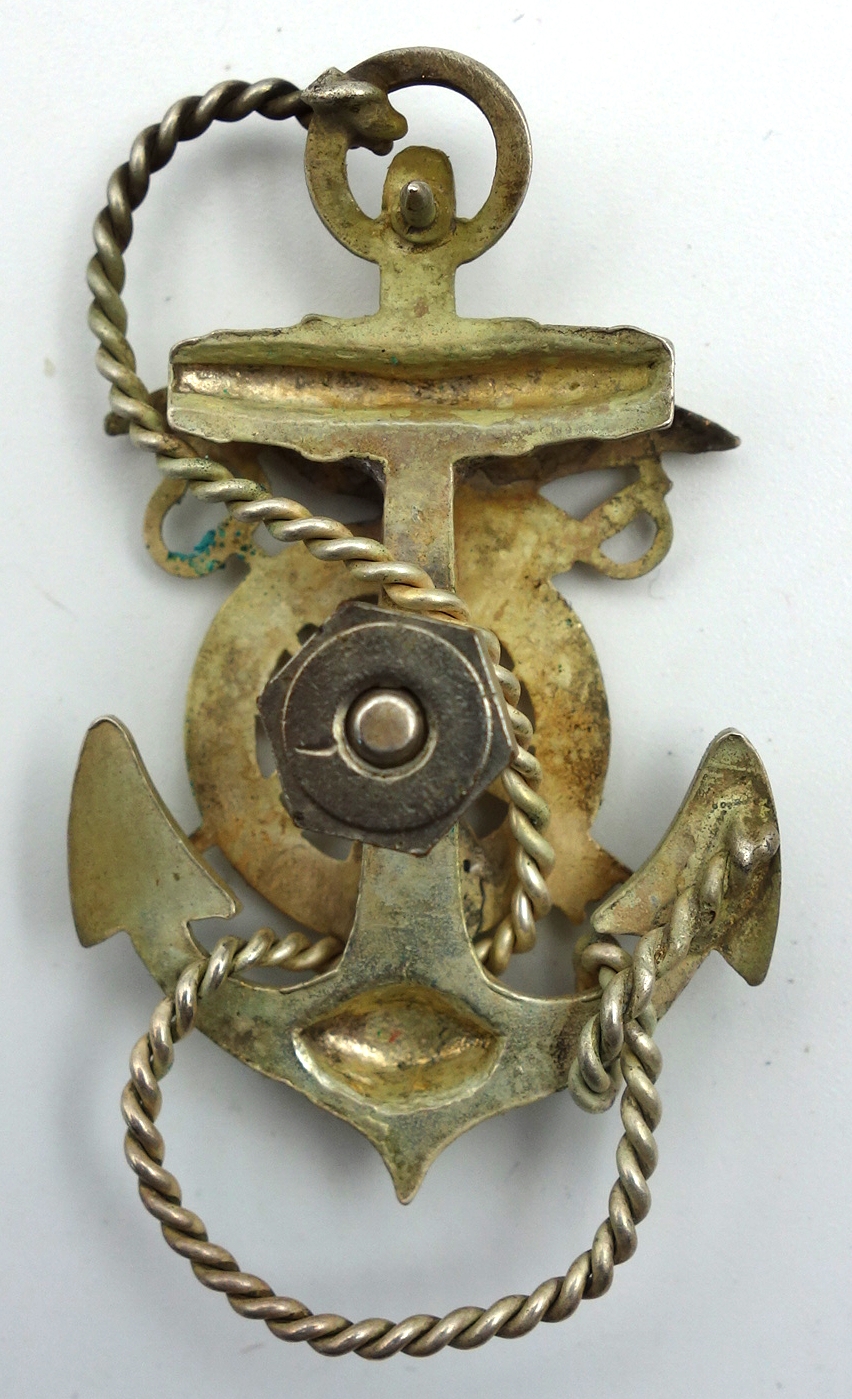
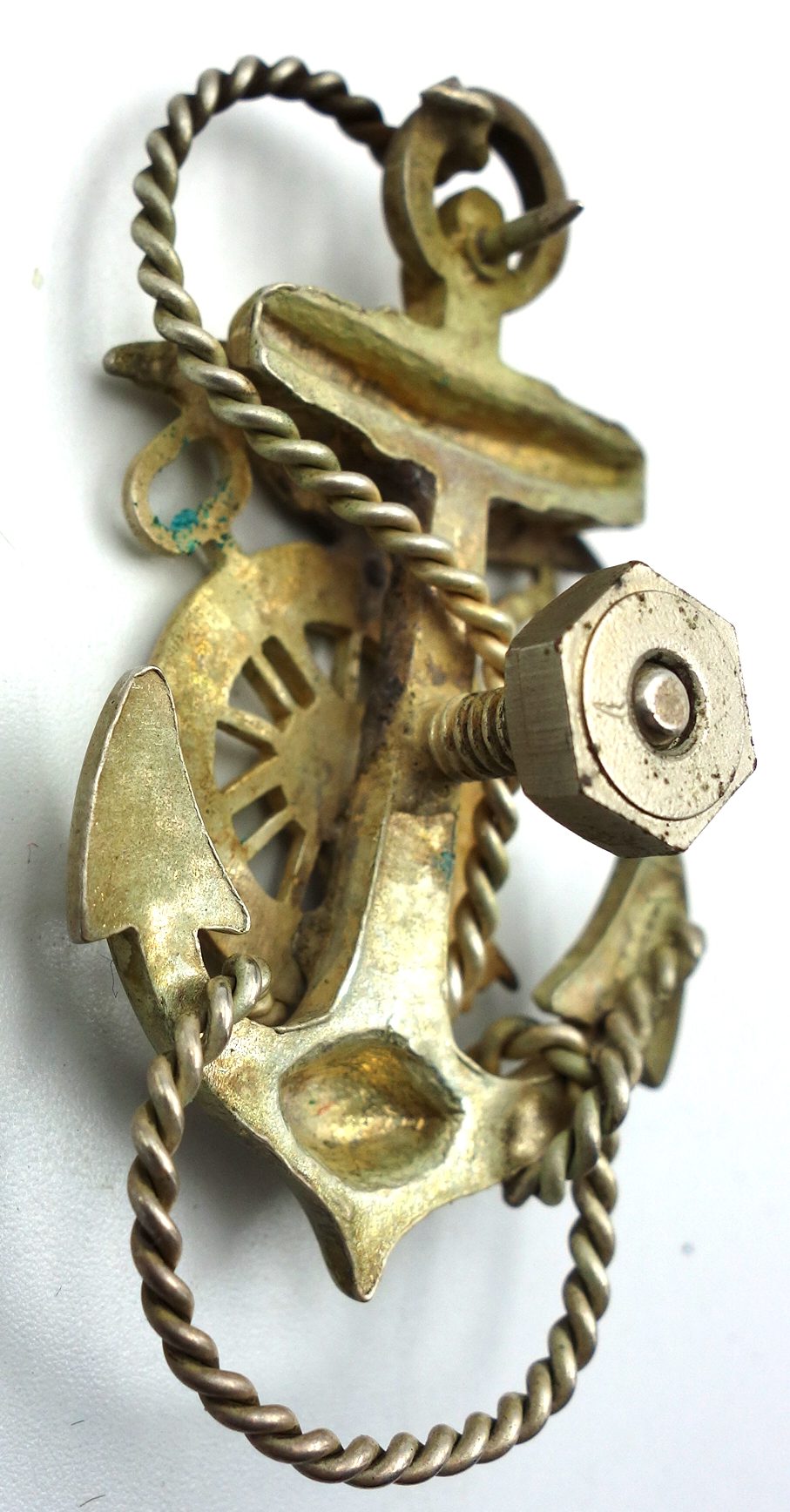
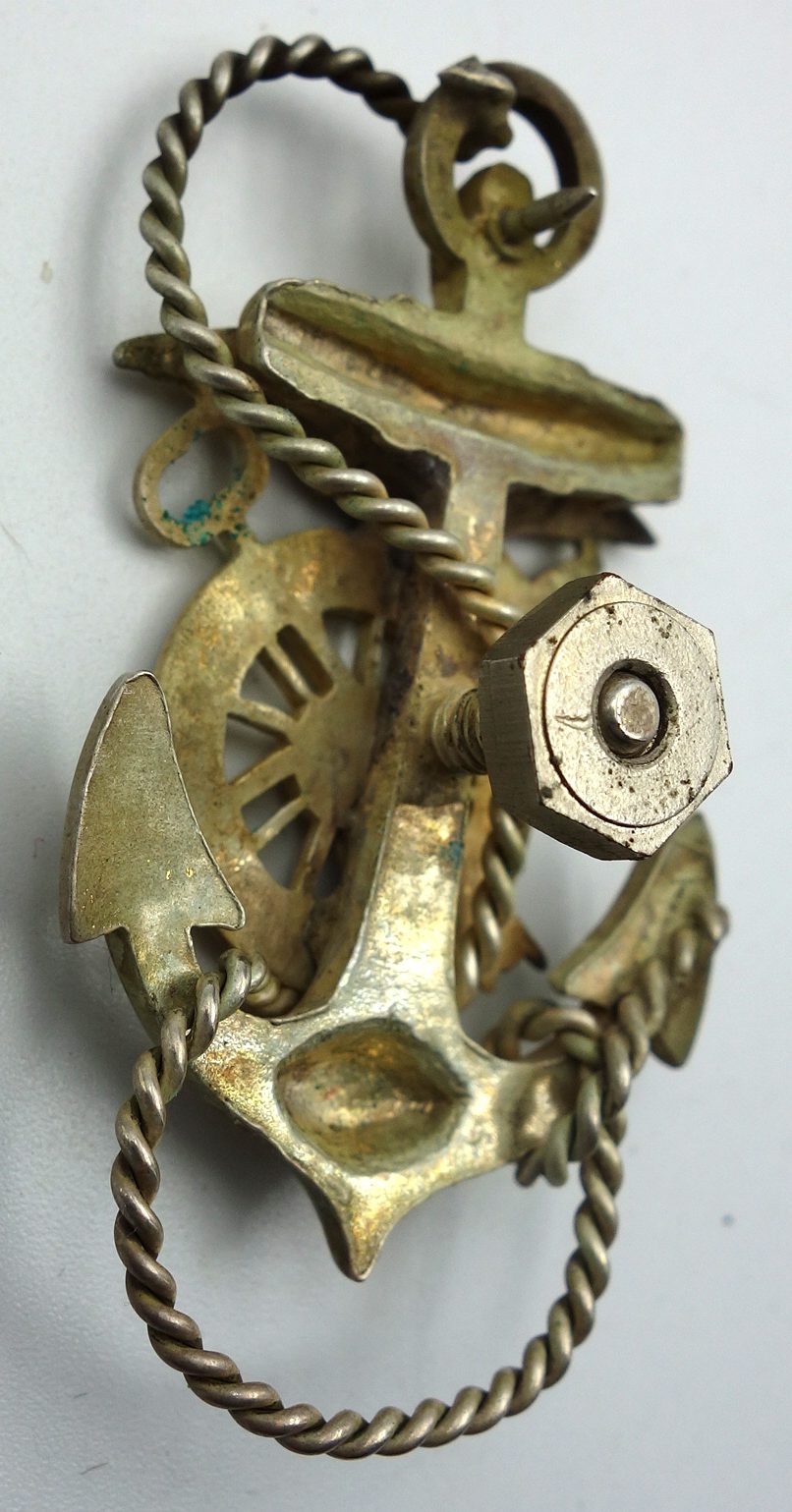
This device comes up in online auctions from time-to-time with examples in bronze. Alan’s signature is the hand-applied and soldered “rope.” The wire is loose, and the reverse solder is sometimes blotchy. His pieces have  N.S. Meyer hallmarks – this is due to the fact he purchased many unfinished pieces and dies were sold at auction in the 1990s when the N.S. Meyer plant closed – every year about 3-4 of these badges find their way to sale.


USMS Chief Petty Officer
The applied anchor is a dead giveaway. No USMS CPO devices were ever manufactured that have said application.  Alan offered the same device with silver applied anchors.  In regard to the anchors themselves, these are actually old N.S. Meyer appurtenances struck in the late 1930s for use with U.S. Maritime Commission Cadet Corps Scholastic Award Ribbon.

 .


US Coast & Geodetic Survey Officer

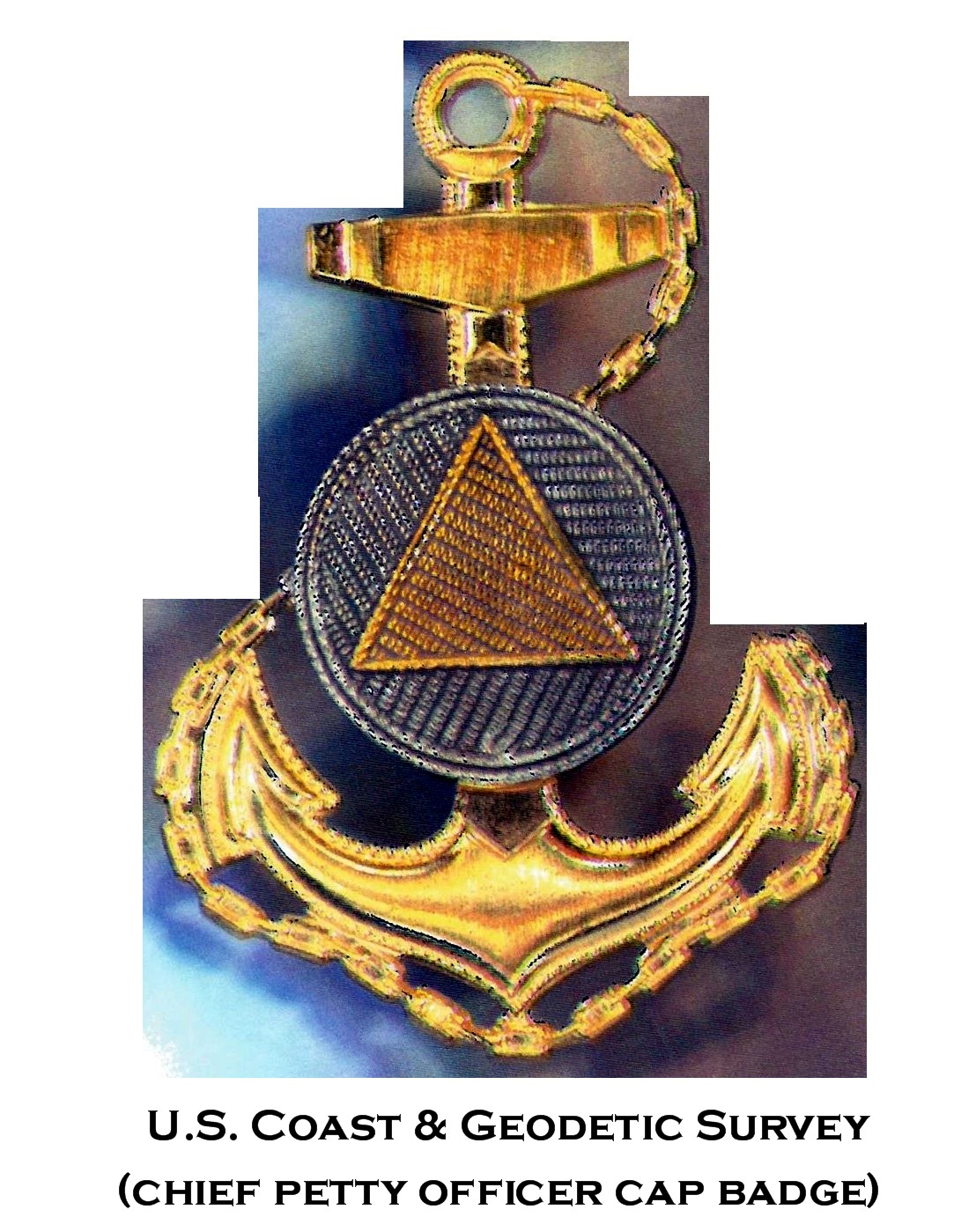
This is a fun badge. The eagle is actually a MSTS eagle with a USCG shield and USN anchors. US C&GS hat badges from the time of the Second World War are exclusively woven. Only postwar did metal hat badges come to be manufactured; with those matching NOAA examples from the present day.


US Coast & Geodetic Survey Senior Chief Petty Officer

This badge is a mash-up of ideas. It was not until 1968 that the US Navy Uniform Board approved a Master and Senior Chief Petty Officer cap insignia – similar to their collar devices, with one or two silver stars superimposed on the anchor, inverted and centered on the stock. The US Coast Guard soon followed the US Navy’s lead in 1970, as did the regulations for US C&GS/NOAA. The US C&GS had a small core of Chief Petty Officers up until the 1950s, afterward they converted to unlicensed, un-uniformed Federal, civil-service employees. Proposed insignia tables were published in 1965 without examples being produced. With the transfer of the agency to the Environmental Science Services Administration, all non-commissioned officer positions were removed and finally ceased to be with the 1970 reorganization into the National Oceanic and Atmospheric Administration.

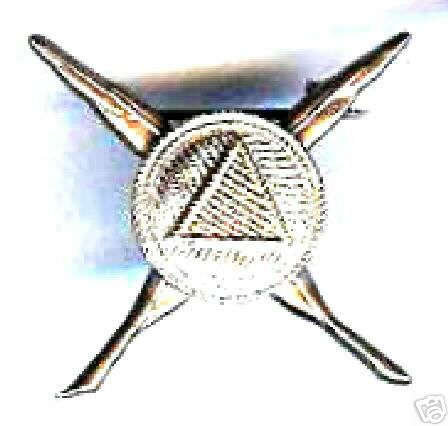
Students of naval insignia will note that on this particular hat badge is the fact that the star is not of the type used by any of the licensed manufacturers of US Military establishment insignia, and and the anchor itself is that of a US Navy ROTC/Annapolis midshipman. The only US CG&S true device is the triangle within the circle.


USMS Supply Officer

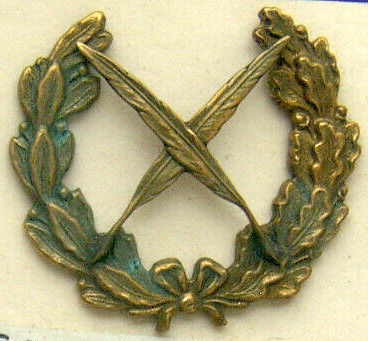
Russell Uniform Company had a cache of badges they created as patterns for the United States Maritime Service, but they were never is sued. These badges were simply too large to be worn on the collar; what the USMS did instead was to wear USN warrant officer badges. When Russell Uniform Company closed shop (formerly of 1600 Broadway & 192 Lexington Ave., New York City and the original uniform shop for NY State Troopers), Alan purchased their stock; thus these badges fall in the gray area of Official and Unofficial issues.

After I wrote the above, I contacted Alan, and he mentioned the cards he provided with the insignia were sometimes privately printed. He did admit to combining some USN warrant officer pins with Russell Uniform Company wreaths – just look for the sheared-off posts. If there is pitting, the wreaths were cast by him.


US Navy Commissioned Officer

This is not quite a restrike.  The die was designed, yet the badges never went into production. I have an actual, issued US Navy Commissioned Officer hat badge of the “pre-1940s” type in another post.   Alan also had this badge as what he called a WSA cap badge. The WSA badge had bronze anchors and three stars on the shield; this would have been a fantasy issue since the WSA never issued such a badge; the three stars were a misunderstanding/attribution of MMP cap badges with the thought of what a USSB cap badge would have looked like.


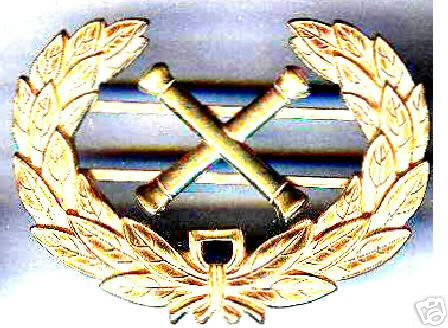
USMS Gunner
Although the USMS had a gunner rate, these gunners only served at training stations. It is a nice thought, though. Thoroughly unofficial ATS examples use the same central device within a wreath and are woven and not struck.


ATS Radioman

This is sometimes advertised as either an ATS Electrician or Radioman. See above.


ATS Craftsman
See above.


ATS Clerk

See above.


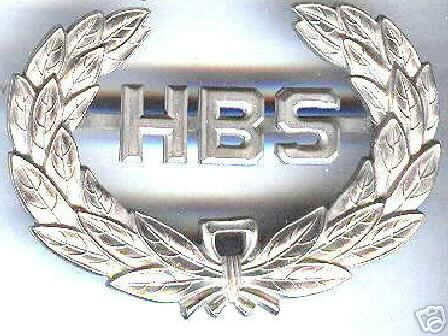
US Army Harbor Boat Service – Tug Boat Service

The US Army Quartermaster Corps operated the Harbor Boat Service; the individuals would wear an anchor with a Quartermaster Corps device soldered on the anchor.  The HBS included launches, tugboats, and other utility boats in support of ATS vessels and US Army waterfront bases.  Thus, TBS never existed; once again this a fantasy filling in a perceived gap in Army insignia.


Harbor Boat Service Officer

This is a fantasy, and a fun one, at that. Following the interwar US Army penchant for identifying units by placing small devices on other pieces of insignia – numbers and Corps devices (for example), this places a miniature Quartermaster Corps device on the shield of a US Navy Commissioned Officer’s hat badge.

U.S. Maritime Service Chief Petty Officer

War Shipping Administration, U.S. Maritime Service training cadre CPO/trainee. 1942.

U.S. Maritime Service Chief Petty Office cap badge (Type 2a – Variant 1)
One-piece construction. Seal, 25mm diameter; Anchor, 50mm length.
A. E. Co. (American Emblem Company, Utica, New York) hallmark.
Anchor and device stamped nickel; red enamel band and shield.
Circa 1942.

This is the first example of the second design of the USMS CPO hat badge; the first design was worn briefly from 1941, up until WSA control of the USMS in July 1942 with the illustrated badge appearing in August 1942. The former badge may be found in plain brass as well as in nickel – as is the case of this badge. This badge, appearing in nickel is a bridge between the more common second design manufactured by Coro in silver plate.

It is unknown at this time whether or not American Emblem Company manufactured a miniature of this device. It is also unknown if there are collar dogs made by American Emblem Company; thus far, only Coro hallmarked examples are known.


USMS CPO Hat badge, obverse.

This image has an empty alt attribute; its file name is 1942-usms-cpo-type2a-obv-1024x1008.jpg

USMS CPO Hat badge, reverse.
A close-up of the reverse details the A. E. Co (American Emblem Company) hallmark as well as the relative thinness of the badge. This variant, most likely due to the preponderance of Coro badges may be of a short, limited run. Coro, it is noted, did not produce the first variant of the CPO badge. Either A. E. Co. nor Coro produced the USMS commissioned officer cap badge patterns from 1942 onward.

U.S. Maritime Service Chief Petty Officer

U.S. Maritime Service Chief Petty Office hat badge (1st design, 2nd pattern)
One piece construction.ย  Seal, 25mm diameter; Anchor, 50mm length.
Obscured AE CO N.Y. hallmark (American Emblem Company).
Anchor and device stamped nickel; blue enamel band and red, white & blue shield.

This is the second pattern of the first design of the USMS CPO hat badge; it was worn from 1942 untilย  the dissolution of formal Coast Guard management of training program and its transfer to the War Shipping Administration in July 1942.ย  The summer of 1942 saw a re-design of U.S. Maritime service insignia, and with it, the USMS CPO hat badge.ย  Both the first pattern of the first design and second design have been respectively treated before, here and here.

This specific badge is often misidentified as a USMS Warrant Officer device; this is an understandable error, as mid-war, individuals who trained at USMS Radio Officer schools were issued USMS CPO hat badges and collar disks, and upon graduation held the appointed rank of Warrant Officer within the U.S. Maritime Service. Compounding some of confusion is that by war’s end, USMS Regulations published in 1944 stated that officers in the Radio Department, depending upon vessel tonnage and class, and certificate status could rank anywhere from Lieutenant to Ensign, vid.: U.S. Maritime Service Officers’ Handbook, 1944 p5.


USMS CPO Hat badge, obverse.
USMS CPO


USMS CPO Hat badge, obverse detail.


USMS CPO Hat badge, reverse.
Note that the screw post and pins have been sheared off and replaced by a flat pin.

U.S. Maritime Service Chief Petty Officer

Maritime Service CPO Hat Badge

U.S. Maritime Service Chief Petty Office cap badge (Type 2 – Variant 2)
One piece construction. Seal, 25mm diameter; Anchor, 50mm length.
Coro (Cohn & Rosenberger) hallmark.
Anchor and device stamped brass, sterling plated (marked); red enamel band and shield.
Mid-to-post Second World War era; 1942-1947.

This is the second design of the USMS CPO hat badge; the first was worn briefly from 1941,  up until WSA control of the USMS in July 1942 with the illustrated badge appearing in August 1942. The former badge may be found in plain brass as well as in plated silver – as is the case of this badge. The second design is almost always found in silver plate or less common brass; any others are patterns or reproductions. Enterprising merchant seaman have been known to buff the plate off, showing yellow medal underneath. The illustrated badge is of the second type and variant two – it differs from the first with a few stylistic differences – a difference in shield configuration and the inclusion of a motto, and punctured anchor ring. The first employs blue enamel as opposed to red. Interestingly enough, the changed design did not stylistically match that of the contemporary uniform coat, cap and shoulder board buttons and snaps which were altered at the same time as the hat badge.

A miniature of this device was authorized and manufactured for wear on overseas caps.


USMS CPO Hat badge, obverse.


USMS CPO Hat badge, reverse.
A close-up of the reverse details the Coro (Cohn & Rosenberger) hallmark as well as the Sterling denotation. Coro, as a corporate name came to be in 1943; however, the incuse hallmark “Coro” with a distinct curly-queue C in serif font dates to 1940 and underwent minor variations until 1945. Moreover, due to wartime metal shortages, Coro produced Sterling insignia items under Government contract from 1942-1947. With the aforementioned in mind, this hallmark adequately dates the device to the early-to-mid 1940s, contemporaneous with USMS insignia change.


USMS CPO Hat badge, production hub.
This hub is composed of hardened steel; of interest are the alignment pins used in the creation of dies. I have already written about production methods specifically outlining the purpose of a hub, here. If you visit the image’s page on Flickr, and select “All Sizes”, the original size can give you a better idea of the intricacy of design and even the parts of the hub that have been buffed and chiseled.

One reason that dies do not show up often in collections is that as dies wear out, they are taken out of production, defaced and melted down; hubs survive due to the fact that more than one master is required for die production. In terms of USMS hat insignia, hubs are few and far between as there were not a whole lot of insignia houses producing USMS devices.

This specific die was sourced from an estate in Rhode Island; which corresponds to the fact that this is perhaps indeed a Coro hub (see above). Prior to, during and following the Second World War, Coro had a large jewelry factory in Providence, Rhode Island. Thus far, I have only seen period USMS CPO (Type 2 – Variant 1 & Variant 2) badges with Coro hallmarks.

British Antarctic Survey

For my son’s completion of his first week of Second Grade, I gave him a small gift: a legal tender coin from the British Antarctic Territory (BAT). He asked me where this place was, and we searched for it in his world atlas and flag gazetteer. Since the international community does not recognize BAT, his atlas did not have the Territory outlined. I drew an imaginary wedge for him over a wide swath of Antarctica. “It’s such a far way away, on the bottom of the world!” he said. I explained to him the Territory has no permanent residents and is dotted with a few research stations. “People get there by plane or ship,” I mentioned and then told him the story of the British Antarctic Survey. I showed him a British Antarctic Survey cap badge from the 1970s, and its predecessor’s the Falkland Islands Dependencies Survey from the late 1940s. He asked me if either were rare. I said the FIDS cap badge is rarest in my collection. He was more interested in the coin with penguins, a whale, and the Queen.

The British Antarctic Survey’s (BAS) history, due to its mission and unique circumstance, mirrors that of the United Kingdom’s polar adventures. It may trace its immediate lineage to the halcyon days of heroic exploration by Shackleton and Scott, and Second World War secret Royal Naval expeditions of Operation Tabarin I and II. The present organization, first as he Falkland Islands Dependencies Survey (FIDS) answered to the Colonial Office, and then later as British Antarctic Survey to the National Environment Research Council (NERC). Through these organizational permutations, the ships themselves remained Royal Research Vessels, and mariners civilian. This essay will briefly sketch the history of BAS and then concentrate on the organization of a BAS ship with a discussion of BAS Officer insignia.

British scientific interest and exploration of the South Pole began in earnest during the early 1830s with the charting expeditions of John Biscoe. Following him, the Royal Society and Admiralty, through private donation and public subscription, brought a small, but steady stream of explorers to the Antarctic. These heroic men-of-science, experiencing the extremes of human endurance, ventured to the continent and its surrounding seas questioning everything from geologic history to ionosphere behavior and photo-plankton life-cycles. Ships of the period were whalers, borrowed naval ships, and the rare purposefully refitted vessel. Each carried men and materiรจl to the great ice-shelf and battered polar islands, and sometimes purposefully (or not) acted as an ice-bound wintering-over base. Once the explorers came to understand the landscape and how to endure the elements, did survey work and dashes to the interior give way to the foundation of research camps. At the turn of the last century, Antarctica played host to scores of international researchers during this heady time – with Great Britain leading the pack. Then came the Great War momentarily halting Antarctic exploration. The death of Ernest Shackleton in 1922 heralded the end of the Heroic Age of Polar Exploration. After Shakleton came a new generation of British explorers – for them, scientific curiosity tempered by national prestige became the new face of exploration. In this era, the independent amateur adventurer bowed-out to the Royally-warranted researcher. It is at this juncture when the Royal Research Ship or Vessel – with alternate prefixes RRS, RRV or RARV – took the stage.

King Edward VII visit to RRS Discovery, 5 August 1901
National Antarctic Expedition envelope stamp, 1901

The Royal Charter of research vessels began with the 1923 Crown purchase of the Discovery for the Royally-warranted 1925 Discovery Expedition. This ship was the same three-master which carried Robert Falcon Scott and Ernest Shackleton on their 1901-1904 expeditions. With the refitting of the Discovery, the Colonial Office and Admiralty did not create a unique flag nor for the ship; however, as a Royal Research Ship (RRS), the Discovery wore an undefaced Blue Ensign, following the custom at the time of ships in the employ of the government. In a later expedition, in addition to the Blue Ensign, RRS Discovery wore a white flag; this was flown from the foremast as a courtesy flag for the continent, which lacked a flag.

White Flag of Antarctica. Col.: Royal Museums Greenwich [AAA0895]

Beginning with the success of RRS Discovery and her crew, the Crown continued its patronage and has warranted research vessels for work in the Antarctic region through the present day.  The purpose of the RRS Discovery and those that followed was to provide a support platform for scientific endeavors in and around the Antarctic.  And as state property, this rated the ship to fly the Blue Ensign. With the Admiralty chartering the RRS Discovery to scientific expeditions, a precedent began where RRS vessels in turn were manned by individuals under contract by the organizations which used the vessels; this is akin to a classic bare-boat charter. After the Second World War, the face of Antarctic exploration became two-prong: doing scientific research and asserting territorial claims (albeit tempered by treaty obligations). In this period, the Colonial Office tasked the newly-created Falkland Islands Dependencies Survey (FIDS) to provide continuous Antarctic exploration support for Commonwealth nations, but the primary mission for FIDS was survey work. In 1962, following the success of the 1958 International Geophysical Year, Britain’s emphasis on activities in Antarctica became oriented toward scientific research rather than survey. This saw the dual creation of the National Environmental Research Council (NERC) with its subordinate organization of the British Antarctic Survey (BAS). BAS saw to the support of the British scientific mission in Antarctica.

2 February 1950.  A relief party from the RRS John Biscoe is rescuing two British Scientists who have been on Stonington Island. Col.: IW

Shipboard organization & insignia

In its various guises the BAS fleet was never very large, and ships’ crew few.  These individuals were (and are) members of the British Merchant Navy and as such are British or British nationals of one sort or another.  Until the mid-1970s, the Master of a BAS ship employed and paid all Petty Officers and Ratings. All Officers were and still are recruited through BAS Headquarters in London and later Cambridge. During the period when the fleet was operated by FIDS, many a ship’s crew member was a Falkland Islander. These days, with off-season dry-docking in the British Isles, this is no longer the case. BAS continues to maintain a very close link with the Falkland Islands, and despite not being primarily crewed by Falkland Islanders, BAS ships arrange many official and social functions.

They are also used by the UK Government for official functions such as Royal Reviews, Open Days and London Visits, coupled with their close links with HMS Endurance/Protector and the United Kingdom Hydrographic Office.

Personal correspondence, Stuart Lawrence, 2011.

At this writing (2011), there are two Royal Research Vessels chartered for use by BAS, the RRS James Clark Ross and RRS Ernest Shackleton.  Their respective compliment is 80 (11 Officers, 15 Crew, 1 Doctor, and 52 Scientific Personnel) and 72 (22 Officers/Crew and 50 Scientific Personnel).  They are run as standard British Merchant Navy vessels with their organization an outgrowth of a century-old tradition of a division of ship navigation and cargo handling, propulsion, and victualing.  As such, each member of the crew has a highly circumscribed role with no overlap in responsibilities among them.  All members of the crew work as a team within their group; however, if holding a specific trade, a crewman works within that trade in conjunction with their Department – in other words, a motorman would not find himself in catering. This classic departmental division is also found on Royal Navy vessels, but that is where the similarity both begins and ends – BAS ships, despite being subject to Admiralty rules, have  no connection with the Royal Navy; although, in theory a reserve Royal Navy officer may serve onboard, but not in the capacity of a warrior. 

The RRS James Clark Ross and the RRS Ernest Shackleton operate in different ways, hence the difference in compliment.  Both will move scientists around and act as supply vessels, delivering all the equipment that is required to run an Antarctic Base.  The RRS James Clark Ross tends to the small island of Signy (summer only), Bird Island, and South Georgia, as well as the serving as the main relief for Rothera Research Station.  The RRS Ernest Shackleton does the relief of Halley Research Station each year and then visits the smaller BAS bases.  Both ships take waste and mail as and when required.

Using the RRS James Clark Ross as our model (the RRS Ernest Shackleton has a different manning level due to the type of vessel),  the onboard organization is comprised of  Deck, Engineering, and Catering Departments; respectively, each has its province in the superstructure, amidships and the galley.

The Master of the ship has command of the vessel and is the overall commanding officer.  On the RRS James Clark Ross, he is dubbed the traditional “Old Man.” He is not a member of any one department since all report to him. Each of the Departments’ compliment with responsibilities is as follows:

Deck

A BAS ship’s Deck Department run by a Chief Officer, with a Second, Third, and Fourth Officers. It has a Boatswain, Bosun’s Mate, Launchman as Petty Officers, and four Able Seamen and four Deck Boys as Ratings. In 2011, the RRS James Clark Ross had the following:

  • Chief Officer – The executive officer of the ship.  Involved in the quotidian concerns of the Deck Department.  He is also responsible for the stability of the ship, loading and discharging cargo, and feeder boat operations.
  • Second Officer – Responsible for the passage planning and maintaining the chart portfolio, including navigational corrections.
  • Third Officer – The most junior Deck Officer is responsible for maintaining much of the Life Saving Equipment.
  • Boatswain (Bosun) – In charge of the Deck Crew.  His is not a licensed officer’s position (likewise as are his subordinates); for Americans readers, an approximate US Navy relative position would be that of Chief Petty Officer.
  • Bosun’s Mate – This position is subaltern to that of the Boatswain.  With the absence of a “Chippy” (Ship’s Carpenter) and a “Lampie” (Lamptrimmer), in addition managing the deck crew in the absence of the Bosun, his responsibilities involve sounding the all the freshwater and ballast tanks.
  • AB’s (Able Seamen) – On the RRS James Clark Ross, they are the general deckhands.  The ship carries five.

Engine

The Engine Department run by a Chief Engineer, with a Second, Third and
Fourth Engineers, Electrical, and Radio Officers (now Electro Technical
Officers), a Donkeyman as a Petty Officer, and three Greasers (Motormen) as Ratings.

  • Chief Engineer – His responsibilities include overseeing all aspects of the ship’s propulsion and internal mechanics.
  • 2nd Engineer – Responsible for the day to day running of the Engine Room.
  • 3rd and 4th Engineer – Assist the 2nd as required and directed.
  • Deck Engineer.  Responsible for scientific and supporting equipment, such as winches and gantries.
  • Radio Officer – Operates the communications equipment. He is known colloquially aboard the RRS James Clark Ross as the “Comms man” – the common nickname for the position is “Sparks.” He is located in the Radio room, and not the Navigational bridge; he is in the organizational purview of the Engineering Department, yet reports to the ship’s Master.
  • ETO(L) – Electrician.  Responsible for all the electrical equipment onboard.
  • ETO(C) – Communications (Radioman).  Maintains all communications and navigational equipment.  The two ETO’s work in tandem with some jobs being covered by both.
  • Donkeyman – Is the Petty Officer in charge of the Motormen. He manages and performs engineering tasks allowing the licensed Engineer Officers to execute more difficult jobs.
  • Motormen – They are highly skilled unlicensed crewmembers; in terms of position, are crucial to the function of the Engine Department. They are called “Greasers.”  Prior to the advent of modern training, they were the “old hands” who would undo the mistakes of younger or less experienced engineers as well as serving in the traditional role of providing extra hands.  On the RRS James Clark Ross there are two.

Catering

Catering Department run by a Chief Steward (now a Purser Catering
Officer). Under him are a 2nd Steward (now a Chief Steward), and Chief Cook, as Petty Officers. The 2nd Cook/Baker, and four Stewards are Ratings. This hierarchal structure has had its position names changed over the decades but has remained the same since FIDS days.

  • Purser – In charge of the Catering Department.  He is also responsible for storing the vessel with victuals and the office of keeping ship’s accommodations clean and tidy.  He also acts in the role as a “hotel manager” and looks after the needs of visiting scientists and passengers. In the past, this individual was called Chief Steward in Merchant Navy parlance – the Chief Steward is now what previously would be called a Steward.
  • Chief Cook – In charge of the Galley; he rates a Petty Officer.
  • Assistant Cook – Second in charge of the Galley.  He is responsible for baking the bread each day.
  • Chief Steward – Responsible for looking after the accommodations.
  • Stewards – Two work for the Chief Steward and one who assists in the Galley.

Medical

  • Doctor – The ship has a sick berth and when working in Southern waters or “down south” it carries a single doctor. Historically, the Doctor joined the ship in Southampton and sailed for the entire season; however, as of late, he joins the ship in the Falkland Islands.  The rationale for this change is that in terms of economics; there has not been a need for one on the Atlantic passage.  When the RRS James Clark Ross is in Arctic waters, likewise a Doctor is not berthed.

BAS ships follow a standard Merchant Navy and Royal Navy watch system.  The Chief,  2nd and 3rd Officer are on watches when at sea.  The Chief does 4-8, 3rd 8-12, and 2nd 12-4.  Also on watch are one of the five ABs who rotate, with two on day work for a week and the other three on watches. The only change in Deck compliment is that from time to time, an additional Deck Officer might join the ship to work with the scientists in the deployment and recovery of equipment.  At times, like most British-flag vessels, the crew may be augmented by a singular cadet. For the Officers and Crew, the periods of work is four months on and four months off.
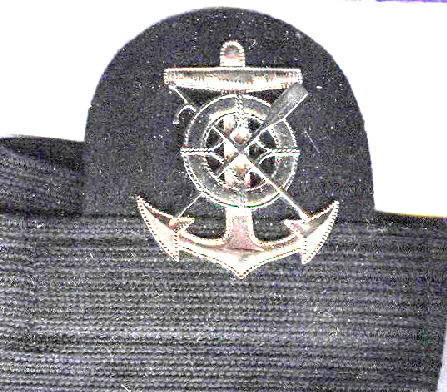
Like the original Royal Research vessels, The RRS James Clark Ross acts as a floating scientific platform.  Scientists will join the ship, bringing specialist equipment with them.  The ship will give them accommodation and computing facilities, and then interface their equipment to the ship.  Equipment is as varied as low/high-pressure hydraulics, and electricity in the many forms that it can be turned into interacting with hot/cold water and saltwater.  The vessel travels to locations specified by the scientists and deploys the equipment as required.  A typical science cruise on the RRS James Clark Ross will last six or seven weeks.   On average, the RRS James Clark Ross will carry out about ten or eleven science cruises, with some cruises dedicated for a singular purpose, while others are fitted into other work and may only take a few days or weeks.
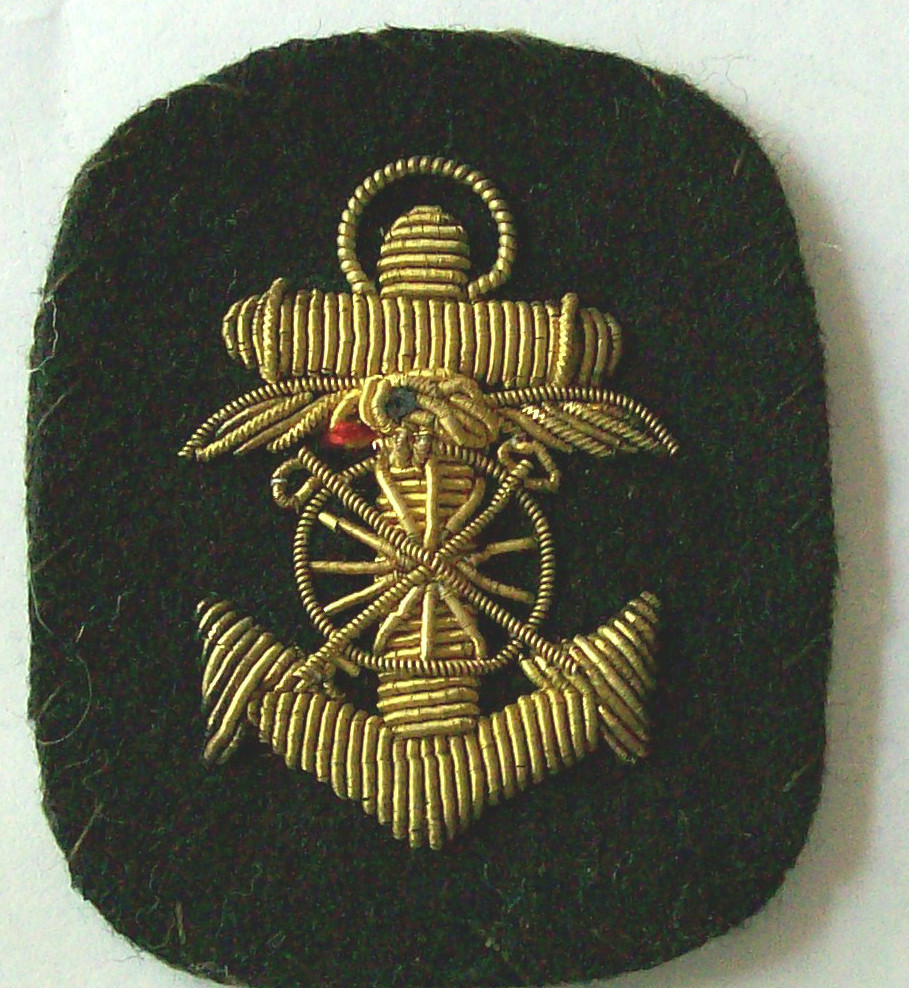
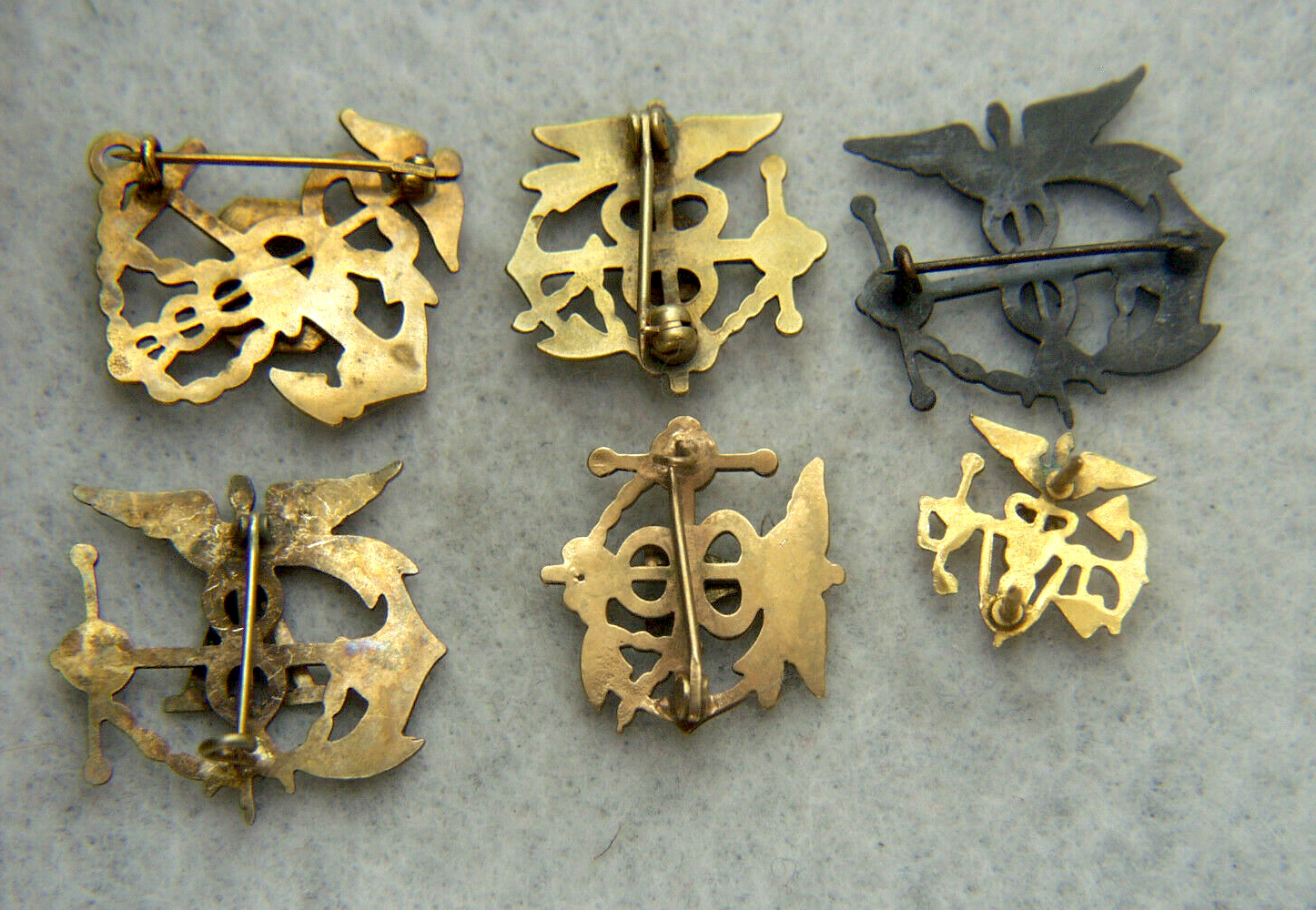
An early group photograph of officers on the RRS William Scoresby show them in Merchant Navy garb, with a few unique embellishments.  These uniforms were recently new innovations for the British Mercantile Marine quum Merchant Navy.   In the years that followed the Great War, King George V honored the British Mercantile Marine for its valiant service rendered to the Empire in the face of battle by giving it the official moniker of Merchant Navy with the Prince of Wales as its Master.  This title underscored the fact that British merchantmen were Royal Navy auxiliaries and could be pressed into service in the event of a national emergency. As a sanctioned and militarized government marine,  Merchant Navy officers were licensed, and at an individual’s and company’s prerogative, uniformed with distinctive cap devices and special cuff lace (alternately known as braid, distinction lace or rank stripes).  The Merchant Navy cap device is comprised of a Tudor Naval Crown surmounting a maroon-cushioned oval on which rests a silver anchor without cable.  The cushion is surrounded by a double border of tightly looped gold wire or purl, and framed by gold oak leaves and acorns.  The stylized Tudor Naval Crown is of particular interest as it is found on official British ship crests – for King Henry is credited with circumnavigating the British Isles.  Cuff lace, also authorized for Merchant Navy officers, followed the pattern set by the Royal Navy with the noted exception of the executive curl, which as opposed to being curvilinear and resting on the uppermost rank stripe was moved between the stripes and made a lozenge.  As may be discerned from the photograph, officers aboard a Royal Auxilliary Research Vessel wore insignia quite similar to that of period Merchant Navy (at the time also called interchangeably the Mercantile Marine or Mercantile Navy) and Royal Navy.  This is a not at all uncommon occurrence, as Shipping Lines and the Government Marine wore very similar rank identifiers and uniform components; what is striking is the fact that RRS/RARV officers have crowns above their rank stripes and modified Merchant Navy cap badges. This use of crowns above cuff lace is a uniform element used by officers aboard all BAS ships.

Aboard BAS ships of today, only the officers have undress uniforms.  An undress would be the classic blue reefer with cuff lace and two rows of gilt buttons, blue trousers, and a peaked white cap (the badge of which is the page’s header image). Practically, it is only worn on special occasions. Engineer officers spend their day in working gear or boiler suits and tend to only get changed into a uniform shirt, trousers, and a tie for dinner in the evening.  In the 1950s, Petty Officers wore a rig similar to their Royal Navy counterparts. The same was true for Ratings. This was usually only worn upon arrival and departure from Southampton and Stanley up until the early 1970s; after this point, Health and Safety Regulations specified the wear of hardhats and boiler suits on deck.

Circa 1955. Example of traditional rig worn by rating aboard RRS John Biscoe. Note the jersey with the embroidered ship’s name and the sailor hat with tally. Col.: IW

Unlike the Royal Navy and like the Merchant Navy, British Antarctic Survey Officers continue to have branch colors between the rank rings on reefer cuffs and epaulets. The practice for distinguishing non-executive office by such means was abolished in 1955 by the Royal Navy, except for those who must be clearly recognizable as non-combatants serving with the Royal Navy as stipulated under the Geneva Convention. A relevant thought to consider is that since the same tailoring shops provided both shipping lines and the Royal Navy with livery and uniforms, influence of the latter can be discerned in the former, and now former acts as a remembrance of a passed tradition; interestingly, formal military costume these days is thought to retain conservative fashion and embellishments, this example is quite the opposite.

FIDS Officer insignia was closely modeled on that of the Royal Navy (RN equivalent rank in brackets) – although FIDS Officers were not of the Royal Navy:

  • Master: three stripes (Commander)
  • Chief Engineer and Chief Officer: 2 and a half stripes (Lieutenant Commander)
  • 2nd Officer, Engineer, Radio Officer, and Electrician: 2 stripes (Lieutenant)
  • 3rd Officer and Engineer: 1 stripe (Sub Lieutenant)
  • 4th officer and Engineer half stripe:
  • Chief Steward: tree buttons on the cuff (Petty Officer)

The FIDS system was retained up until the early 1970s by BAS.

Present BAS Officer insignia, in some aspects, mirrors that of the present Merchant Navy; this is quite visible in the insignia of rank.  At present, on either cuff braid on coats or slip-on epaulets for shirts, the lace of distinction is thus:

  • Master and Chief Engineer: four stripes
  • Chief Officer and 2nd Engineer: three stripes
  • 2nd Officer and 3rd Engineer: two stripes
  • 3rd Officer and 4th Engineer: one stripe
  • Electricians or Electric Technical Officers (ETO) including the Radio Officer, and the Purser: two and one-half stripes.

Branch colors, found between the rank stripes for FIDS and BAS Officers are:

  • Black: Executive or Deck
  • Purple: Engineers
  • Green: Electricians (ETO)
  • White: Pursers and Catering

Returning to the cap badge itself, of interest and what makes the BAS badge unique is the heterogeneous use of apparently Royal Navy and Merchant Navy symbolic elements.  The cap badge is comprised of a St. Edward Crown surmounting a white leather cushioned oval on which rests a black anchor.  The cushion is surrounded by a double border of tightly looped gold purl, and is framed by tightly-grouped gold laurel leaves.  The St. Edward crown on the BAS cap badge is such because BAS ships are Royally-warranted Royal Research Ships – prior to Queen Elizabeth II’s ascension, the crown was the post-1901 crown (Tudor Crown).  The white oval is a symbolic reminder of the BAS ships being involved in Polar region exploration.  And the black anchor is in somber respect for the Antarctic explorer, Robert Falcon Scott who died on his last venture to the ice-bound continent.  Thus, a Royal Navy element is not present, and the badge follows a decidedly Merchant Navy pattern.

RRS Shackleton wardroom plaque. Shackleton served with FIDS and BAS from 1955 through 1992. The central device is comprised of three buckles – a play on the Shackleton family name, “shackles” which are a form of a buckle. Col.: IW.

Messing arrangments on BAS ships have reflected the changing nature of intra-ship dynamics. Prior to 1999, ships maintained three messes: Officers Wardroom, FIDS Mess, and Crews Mess. For late watchstanders, there was also a small duty mess. After 1999, with the RRS Ernest Shackleton joining BAS, the individual messes combined and everyone was served cafeteria-style. This new messing style promoted a bit of conviviality among all aboard despite the three somewhat disparate groups: Officers, Crew, and Scientists. However, some of the old traditions remain as RRS James Clark Ross has an Officers and Scientists Saloon.

Robert Falcon Scott birthday, 6 June 1911.

Like his Royal Navy and Merchant Navy counterpart, the Master of a BAS ship dictates what style of uniform will be worn for the ship’s Officers and Crew. The uniform of the day, as it were, would be for arrivals and departures, and official entertainment occasions, and are often wool pullovers or tropical white rig dependant upon the ship’s area of operation. As alluded to before, the crew onboard BAS ships of the second millennium are not found working in formal uniforms, as may be the case on Royal Navy ships. However, being a Royal Research vessel, all are uniformed in some fashion and officers do wear insignia.

The uniform culture that once marked Britain has long passed. Culturally, uniforms were touted in the maritime community as markers of professionalism; however, as the example of replacing deckhands’ work uniforms with boiler suits and hardhats attest, uniforms are perfectly fine in ceremonial functions. Insignia, if worn in such a manner to not hinder shipboard functions such as are rank slides worn by BAS Officers, are important to denote position and rank. As artifacts of an older, formal culture, reefers – once an item for almost daily wear in temperate climates and formal occasions – rarely find their way from the locker.  And, the Master may don his cap on official duties, such as taking on a pilot or a visit from a dignitary; otherwise, he is uncovered on the Navigation bridge.  The hard work and inclement weather experienced by the crew outside of the forecastle forces a spirit of pragmatism; the crew are not in a dress rehearsal for battle, and outward examples of individual discipline as manifest by gleaming brass buckles, eternally pressed shirts, and polished shoes have given way to work boots and heavy foul-weather gear.  By and large, BAS personnel have not traditionally worn uniforms and caps simply because there are few opportunities to wear them: their work milieu and Antarctic environment are not conducive to fancy dress.


Many thanks are due to Ellen A. Bazeley-White, of British Antarctic Survey – Archives Service; Stuart Lawrence, past Master of the RRS Bransfield and RRS Ernest Shackleton; and Lyle Halkett, a past Crew member of Falkland Islands Dependency Survey.

References and further reading

British Antarctic Survey. British Antarctic Survey. British Antarctic Survey, December 1977.

Sir Vivian Fuchs. Of Ice and Men: the story of the British Antarctic Survey 1943-73. Anthony Nelson Ltd., 1982.

Ernest Henry Shackleton. The Heart of the Antarctic: The Story of the British Antarctic Expedition 1907-1909. Birlin Publishers, 2002.


FIDS Petty Officer cap badge, ca. 1946-1953

FIDS is the precursor to BAS and was in operation between 1947-1962. This cap badge is a particularly rare Tudor Crown issue; it was worn by a crew member who held a position akin to a Petty Officer (Senior Able Seaman). the period of wear was up until 1953. At the time of this cap badge’s wear, FIDS had a single ship – with about five Petty Officers.

In terms of construction, this cap badge is stamped metal with enamels for the jewels, red felt for the crown cap. The black anchor is affixed to a white field of duck cloth with black thread.


BAS Officer cap badge, ca. 1950s

BAS cap badge, 1950s

This cap badge is described in the text above. It is affixed to a mohair cap band, which would be found on an officer’s peaked cap.

7 November 1957. The ill-fated Captain Norman Brown, master of the RRS Ernest Shackleton of the Falkland Islands Dependencies Survey. Captain Brown took issue with the then Governor of the Falklands and his handling of the Royal Research Shipโ€™s problems and promptly resigned. Col.: IW

BAS Officer cap badge, ca. 2000s

The images of the current British Antarctic Survey cap badge and cap are courtesy of Mike Gloistein. Mr. Gloistein is a long-time Radio Officer aboard BAS ships; he patiently and with good-humor provided many important notes regarding BAS shipboard organization. It is worth mentioning he is a recipient of the Polar Medal – thus a member of the very exclusive Polar Club. His award reads:

Her Majesty the Queen has been graciously pleased to award you the Polar Medal in recognition of your outstanding service to the British Antarctic Survey and to Polar Research.

London Gazette, 17 December 2004

It is from Mr. Gloistein’s uniform that I was able to determine the absence of Elliot’s Eye (the executive curl) on BAS uniforms.

BAS cap and cap badge, 2000s. Col.: Mike Gloistein.
BAS cap badge, 2000s. Col.: Mike Gloistein.

BAS Officer cap badge, reproduction

There do exist fake BAS cap badges, and they are quite dodgy in their composition.ย  One found in the wild was described as 1950s Queen’s crown British Antarctic Survey badge.ย  It is quite simply a Royal Navy Officer’s cap badge with a piece of white linen placed beneath a black-painted anchor.ย  The badge is suspect on every account. As is known in cap badge circles, even “economy issue” badges produced at the end of the Second World War are deftly executed – a poorly affixed oval of cloth would never be found on the forward face of a badge.ย  The wreath is altogether incorrect and the anchor is incongruous in both pattern and period.ย  If anything, we might suspect a period BAS officer wearing a Royal Auxilliary Fleet badge, and not a poorly defaced RN one.ย  As always, caveat emptor; this was sold at online auction for some ยฃ32 – only because the seller misspelled “Antarctic” as “Antartic.”

U.S. Navy V-7 program insignia at Columbia and Ft. Schuyler

U.S. Navy V-7 midshipman cap badge.
Single piece construction.
Fouled anchor; gold-filled.
Late Second World War era.


Herman Wouk, August 1942.

Almost twenty years ago I read Herman Woukโ€™s 1951 Pulitzer Prize-winning novel, The Caine Mutiny.  Recalling Captain Queeg, ball bearings, and strawberries, I recently decided to re-read the novel.  The work fashions a re-creation of the culture of urgency that both defined and circumscribed midshipman life during the Second World War.  It accomplishes this by detailing the career of a U.S. Navy midshipman at Columbia University.  Soon after completing this reading, I learned that Wouk not only took part in the V-7 midshipman program but he both attended and graduated from the U.S. Naval Reserve Midshipmenโ€™s School at Columbia University.

Following this lead, I consulted a series of the programโ€™s yearbooks โ€“ The Sideboy โ€“ and found Wouk in the August 1942 class.  His company barracked at Furnald Hall, as did the protagonist of The Caine Mutiny: Willie Keith.  Woukโ€™s descriptions of the place and the program match both Columbia and the photos in The Sideboy.  Thus, despite his novel being a work of historical fiction, it offers a rare insight and serves as a good primary source as to the functions of a little-studied midshipman organization.

The V-7 program was one of four Reserve officer-intake programs inaugurated by the U.S. Navy in February 1942 (V-1, V-5, V-7, and V-12). V-7 was one in which recent college graduates or men about to complete their college training, were accepted by the U.S. Navy as apprentice seamen and sent to one of the seven Reserve Midshipmenโ€™s Schools:ย  Columbia, Cornell, Naval Academy at Annapolis, Northwestern, Notre Dame, Plattsburg, and Fort Schuyler.ย  At the programโ€™s outset, candidates served an initial month as seamen followed by four as an appointed midshipman; by warโ€™s end, this was compressed to three. After this period of intense naval indoctrination, they were granted commissions as ensigns and went directly to the Fleet or to one of the numerous special advanced schools for final training; e.g. Wouk attended one of such at Harvard for Communications.ย  Of his sojourn at the Midshipmenโ€™s school and time with the Fleet, Wouk admitted that it figured as a major part of his education: โ€œI learned about machinery, I learned how men behaved under pressure, and I learned about Americans.โ€

Columbia University Midshipmen’s Training Marker

At Columbia University there is a plaque commemorating the Midshipmenโ€™s School, which operated on its campus during the Second World War. It was presented to the University at the cessation of schoolโ€™s activities.  It may be viewed on the south side of campus at Butler Library and is located on the east balustrade of the short staircase approaching Butler Library, just below waist level.  It reads:

To Columbia University

In appreciation of its generous assistance
and unceasing cooperation in the training
of 23,000 officers who went from the
U.S. Naval Reserve Midshipmenโ€™s School
New York
to Active Duty in World War II
to defend the principals which this
University has always upheld
 
Commodore John K. Richards, U.S. Navy
Commanding Officer
April 20, 1942 November 2, 1945
 
Seal of U.S. Naval Reserve Midshipmenโ€™s School

The U.S. Navy eventually used twelve Columbia buildings, including Furnald and John Jay Halls, to house the Midshipmenโ€™s school; classes were held on Columbiaโ€™s Morningside campus and in a ship docked at Riverside and West 136th Street on the Hudson River.  At one point, Columbia Universityโ€™s USNR Midshipmenโ€™s School rivaled the United States Naval Academy in size.  In all, it trained more than 20,000 officers; most of whom served in the Pacific Theatre of Operations.

The following narrative of the Columbia USNR Midshipmenโ€™s School is based upon two consecutive classes; the 7th of August 1942 and the 8th of October 1942.  Within that three-month period, vast changes occurred in the fabric of the program.

Program candidates began their initial training at Notre Dame in April 1942. After two weeks of apprenticeship training, they traveled to Columbia for a continuation of their indoctrination.  They were divided into two groups:  Engineering and Deck.  By graduation from the program, only 429 of the 500 of the former remained, and 284 of 350 of the latter. The instructional staff guiding the training of the midshipmen was divided into the following departments:
 
Administration
Drill
Navigation
Seamanship
Ordnance
Construction and Main Engines
Boilers and Auxiliaries
Deck for Engineering
Engineering for Deck
Medical Corps
Supply
 
Some senior officers were regular Navy. However, the majority of the staff were young USNR ensigns assisted by Chief Petty Officers and a few Warrant Officers.

Following the model as set at Annapolis, USNR Midshipmen followed a regimental and battalion structure.  There were two battalions; the 1st at the USS Prairie State (a barracks ship known as โ€œThe Arkโ€ or โ€œBlack Hole of Calcuttaโ€) and the 2nd at Furnald Hall (the USS Furnald, the only ship with 10 decks โ€“ the lower deck was on top and vice versa).  Each Battalion was comprised of four and three companies, respectively.  Midshipmen stood watch, served in โ€œblack gangs,โ€ drilled, and attended class from morning until night for each day of the week โ€“ unless granted weekend liberty or attending divine worship services.
 
The Regimental staff was comprised of a Staff and Color Guard component. The noted stripe count represents the number of stripes on the midshipman’s sleeve:

Regimental Staff
Regimental Staff Commander โ€“ 4 stripes
Adjutant โ€“ 3 stripes
Signalman โ€“ 2 stripes
Regimental Chief Petty Officer โ€“ 1 stripe
Bugler โ€“ 1 stripe

Regimental Color Guard**
National Colors
Regimental Colors
Color Guard (2 midshipmen)

Battalions and Companies and had their own respective staffs that reported up the chain of command:
 
Battalion Staff
Commander โ€“ 4 stripes
Adjutant โ€“ 3 stripes
Signalman โ€“ 2 stripes
Battalion Chief Petty Officer โ€“ 1 stripe
 
Company Staff
Commander โ€“ 3 stripes
Sub-Commander โ€“ 2 stripes
1st Platoon Commander โ€“ 1 stripe
2nd Platoon Commander โ€“ 1 stripe
Battalion Chief Petty Officer โ€“ no stripes

* relative rank vis Annapolis as noted by stripe count:
 
4 stripes โ€“ Midshipman Lt. Commander
3 stripes โ€“ Midshipman Lieutenant
2 stripes โ€“ Midshipman Lieutenant Junior Grade
1 stripe โ€“ Midshipman Ensign
 
** no stripes
 
Company strengths by August 1945, were as follows:
 
1 โ€“ 109
2 โ€“ 107
3 โ€“ 108
4 โ€“ 105
5 โ€“ 97
6 โ€“ 93
7 โ€“ 94
 
In August 1942, V-7 midshipmen at Columbia wore uniforms almost exactly like those of their counterparts at Annapolis, with some distinct changes. Since theirs was a four-month program with the classes compressed and joining year-round, their โ€œplebeโ€ period saw midshipmen wearing the appropriate uniform for the season. For instance, the October 1942 class started out wearing US Navy enlisted undress blues for their initial period at Notre Dame, then switched to the familiar usual plebe whites. These were USN enlisted undress white jumpers with stenciled U.S.N.R. at mid-chest on the blouse; the midshipmen-to-be were not issued black silk scarfs. Both uniforms shared the blue-rimmed white hat โ€“ at the time called a Bob Evans hat, and now colloquially called a Dixie-cup hat. Those apprentices holding a Company and above leadership, position wore a white covered combination cap, and not the white hat with their undress whites or blues.
 
Those passing basic indoctrination period โ€“ not being โ€œbilgedโ€ โ€“ rated full USNR Midshipman status.  They, in turn, gained the privilege of donning the six-button midshipman reefer, with the classic midshipman gold anchors on the upper coat collars. On the right cuff, they wore a three-prop propeller for Engineering or a nautical navigation triangle (also known as a Portland Navigational Triangle) for Deck as program markers. There were no โ€œclassโ€ indicators of the vertical gold stripes on the coat sleeve like those at Annapolis; however, regimental officers wore horizontal rank stripes on both sleeves (with program indicator above, no stars). There were four, three, two, and one stripers as indicated above. Midshipmen petty officers and buglers, during this period, did not have crows and chevrons, nor bugle patches.

Depending upon the program, midshipmen wore dungarees, undress whites and blues (crackerjacks without tape or silk ties), khakis, and dress blues. Both programs wore dungarees were worn in machine spaces; Engineering midshipmen wore undress blues or whites depending on season in classrooms; and Deck midshipman wore undress khakis (without jackets) in classrooms.  For Friday drill and inspection, all midshipmen wore service dress blues and combination caps with white covers. Regarding the khaki uniforms, midshipmen wore combination caps with khaki covers with a 1/8in-width gold chinstrap and on both collars, wore anchor devices on both collars. The anchor shank was horizontal in relation to the top of the wearerโ€™s collar, with flukes inboard toward the neck, and stock outboard.

By September 1942, the USNR program at Columbia University contracted to four companies and comprised only of the Engineering program; the unique insigne for Deck become obsolete; yet, the midshipmen continued to wear the propellor insigne.

Columbia University, V-7 Engineering program. First Batallion officers, August 1942.

By comparison, at warโ€™s end, Fort Schuyler’s V-7 program yearbook Gangway (published in October 1945) shows an altogether different organization of USNR Midshipmen.  Their program was also for a period of four months.  Images and texts suggest a need for expediency.  Teaching methods and means of turning out newly minted Naval Officers was honed to a science; anything not tantamount to the ultimate purpose of producing officers was cut. 
 
In uniform matters, from the laconic description of the program and presentation of collective memories, there is no indication of a plebe period where program inductees wore jumpers and Dixie-cup hats. These Atlantic Coast midshipmen wore working grays and were provided with service dress blues. They were not issued khaki uniforms. On their garrison hats was the midshipman anchor. They wore sets of horizontal midshipmen class anchors on their shirt collars. The service dress blues was the classic six-button USN officer uniform โ€“ except the coat collar had the midshipman anchor like those found on period Annapolis midshipman caps. These anchors were mirror images of each other, and are pin-back, and not with cap-screws (tabs). I see no indication of midshipman leadership positions; this program appears to be more of a boot-camp style organization. Midshipmen lacked chevrons, hashes, and shoulder boards on all uniforms โ€“ including the grays.

References

Herman Wouk. The Caine Mutiny. New York, Back Bay Books, 1992.

Leon Rogow (foreword). The Sideboy August 1942. New York, NY U.S. Naval Reserve, 1942

N/A. The Sideboy September 1942. New York, NY U.S. Naval Reserve, 1942.


Late war V-7 cap badge. 10K G.F. (Gold-Filled). Note: It is of the same design and size as the coat collar anchors.


Early V-7 coat anchor, 10K G.F. (Gold-Filled), H-H.


Late war V-7 coat anchor pair, 10K G.F. (Gold-Filled).


Late War V-7 collar anchor pair, 10K. It looks like they’ve been polished down to brass, as they’ve not the luster of the other insignia.