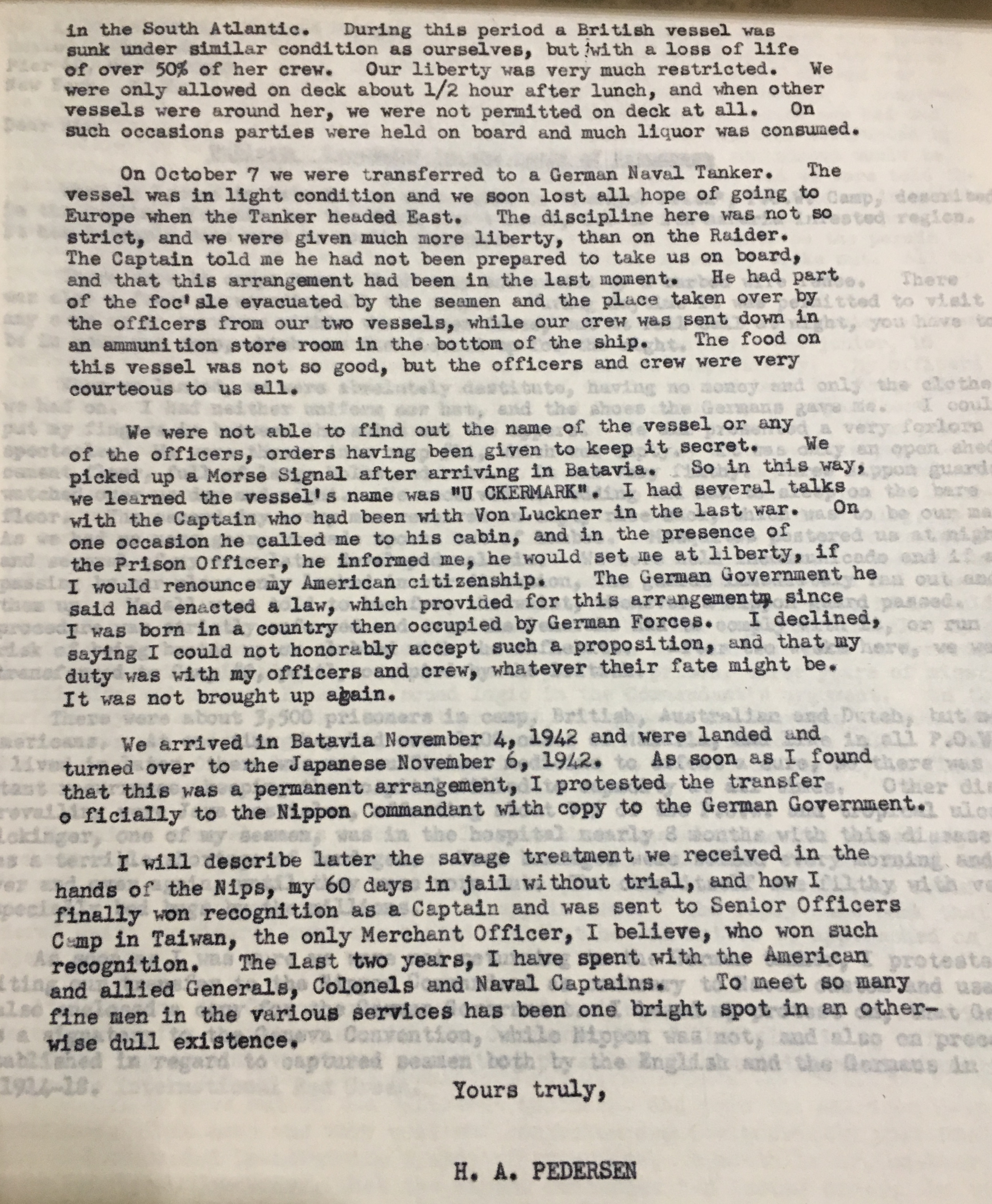
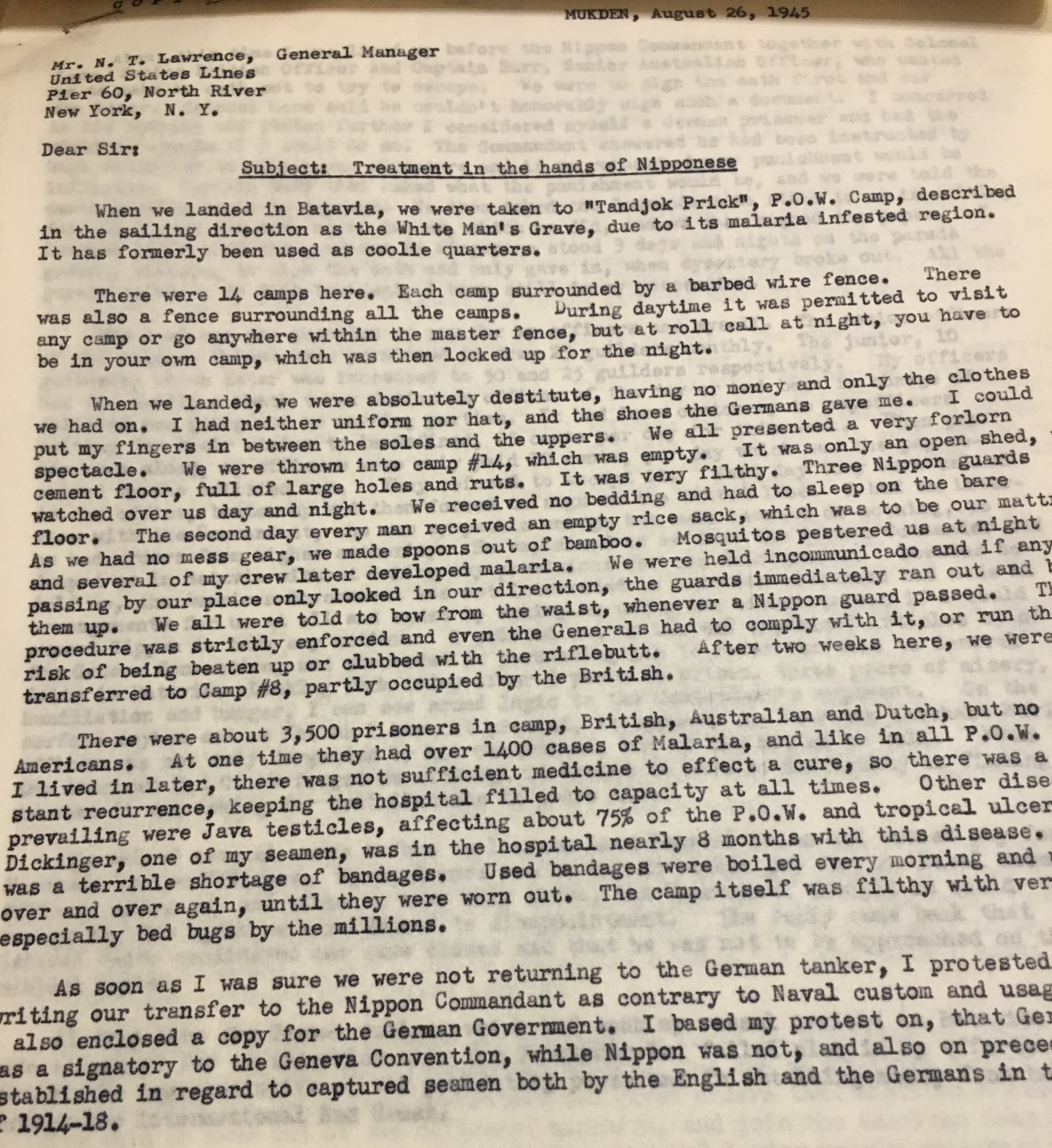
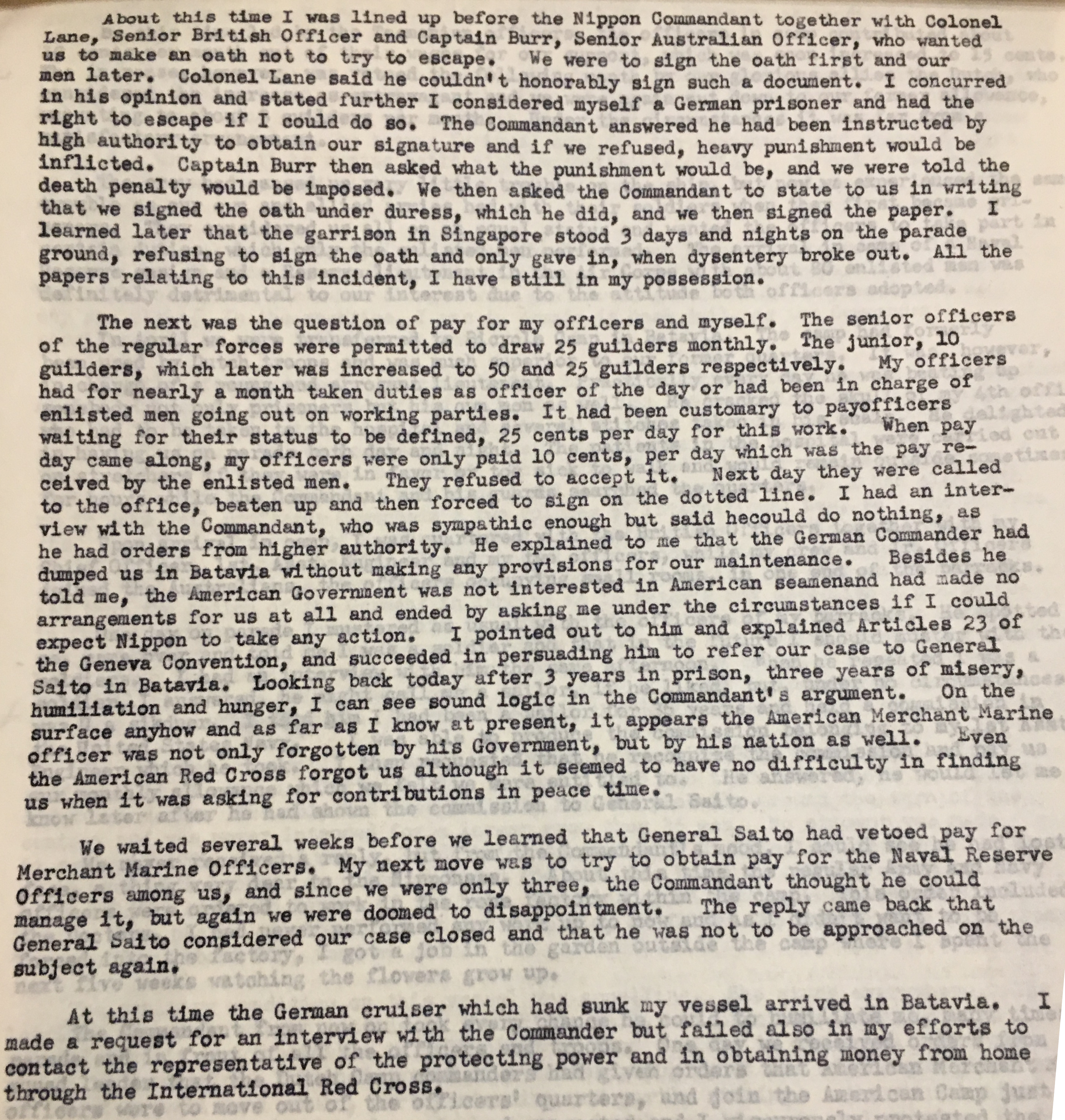
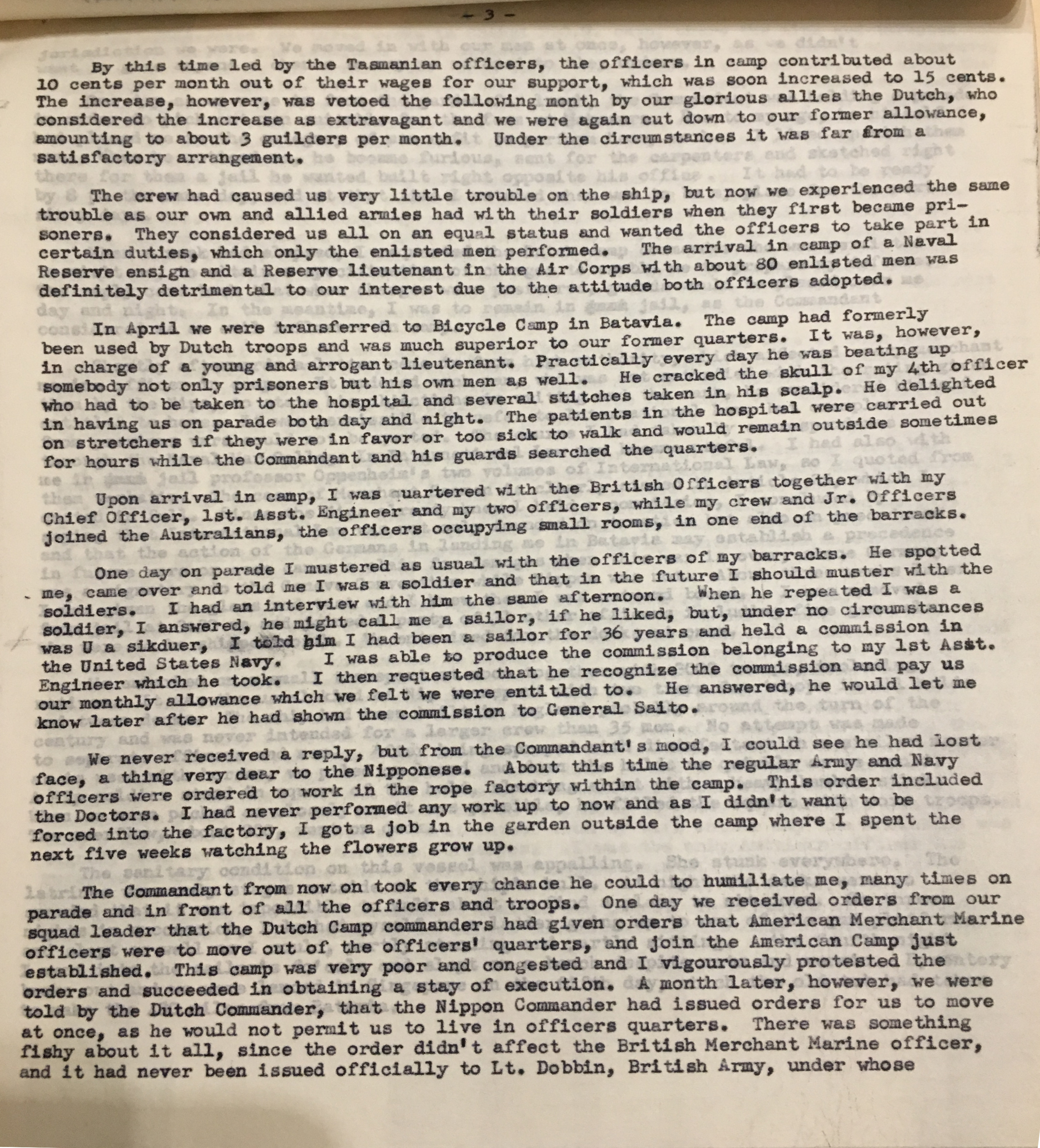
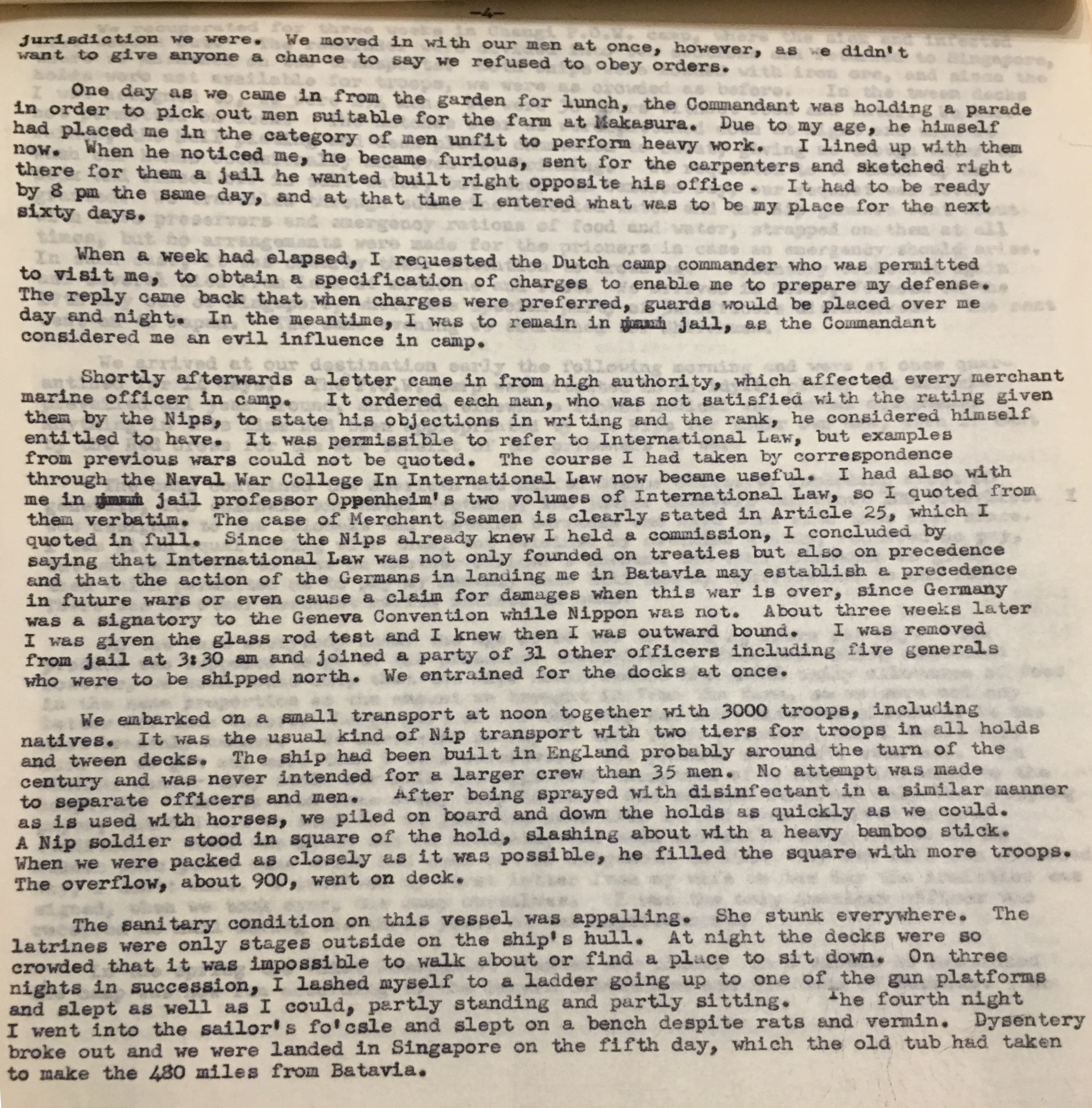
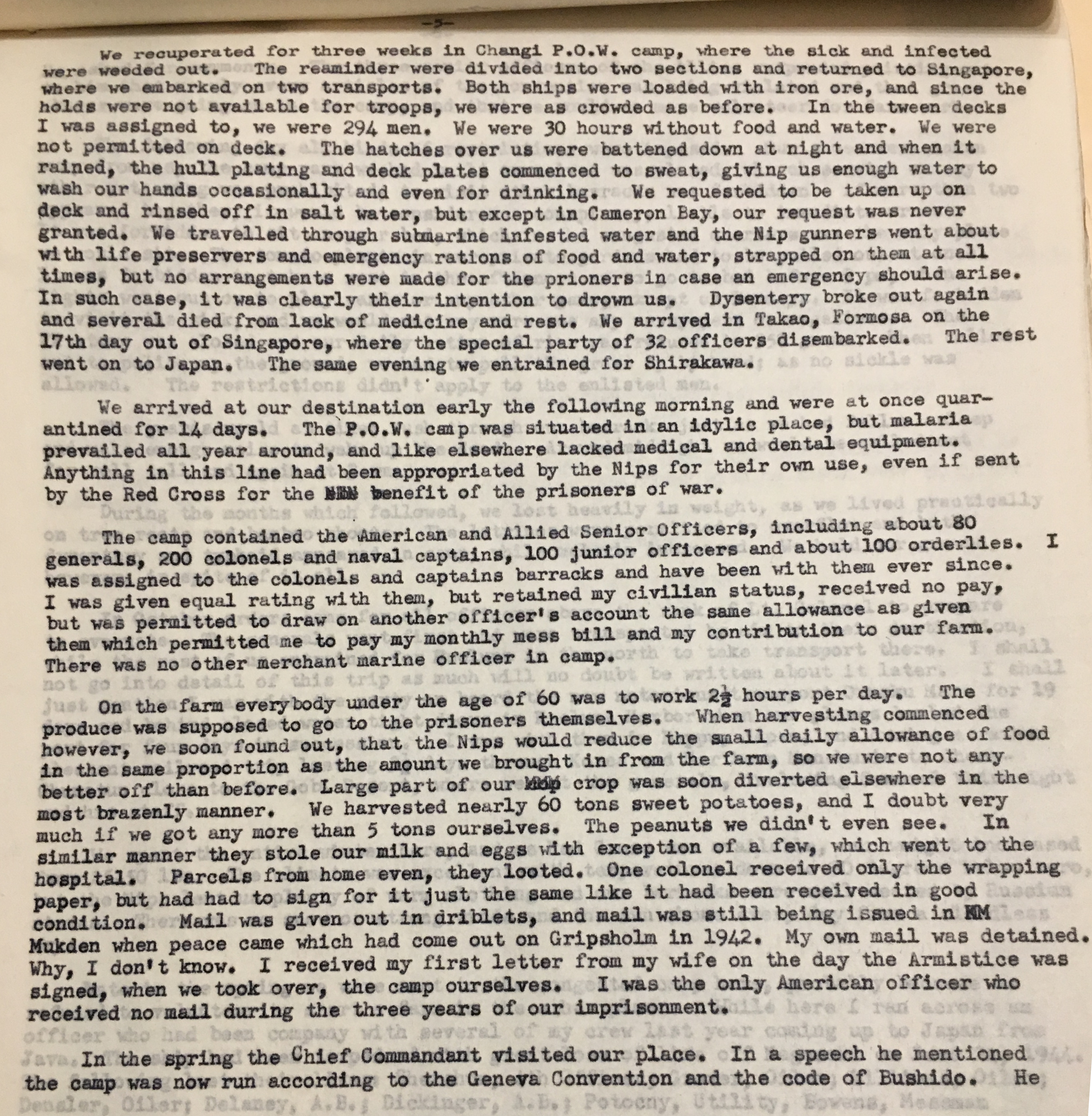
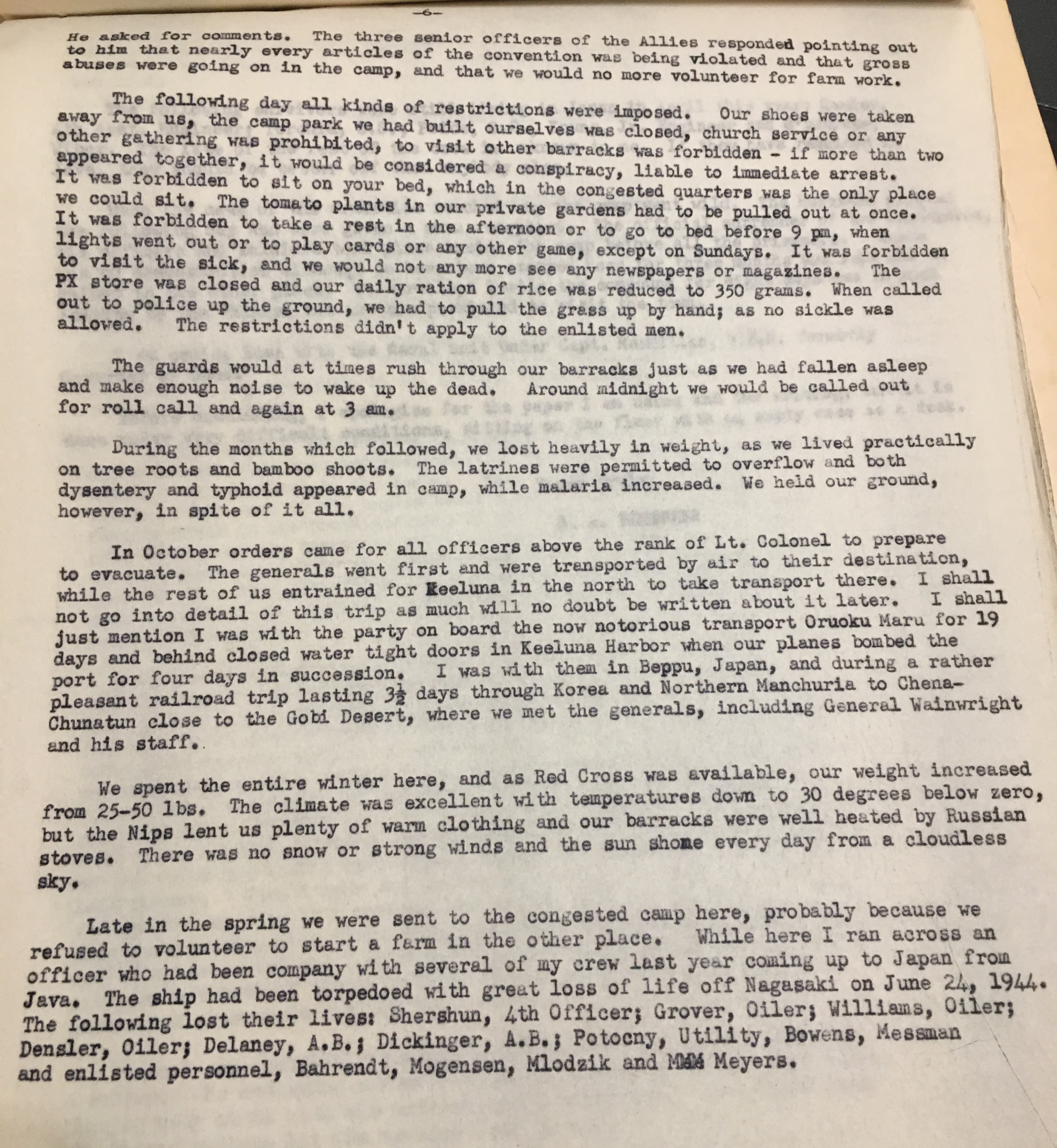
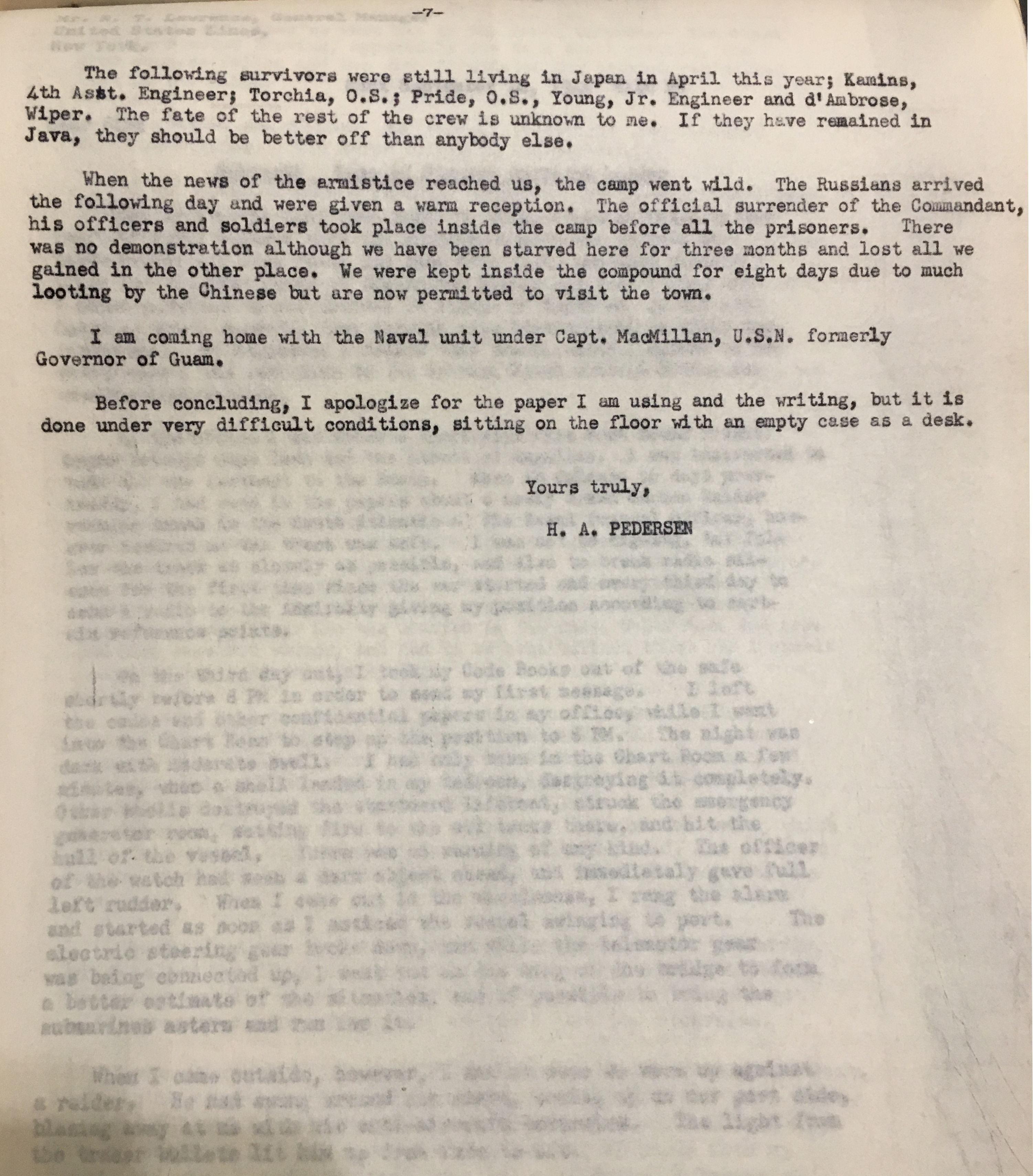
After his ship did not appear at its scheduled port of call in six months, the United States government declared Captain Haakon A. Pedersen and the crew of his ship, the SS American Leader, as lost at sea. “Lost” indicated they may be found, but are most probably dead. In the spring of 1943, a curious radio listener picked up a transmission from Tokyo and learned Captain Pedersen was not only alive but interned in a Japanese prison camp. The news was relayed to the United States and reported publicly by early May. Of the 58 mariners originally aboard the SS American Leader, only 28 survived the war – Captain Pedersen among them.
Captain Haakon Anderson Pedersen ca. 1949. Col.: U.S. Lines papers, AMMM
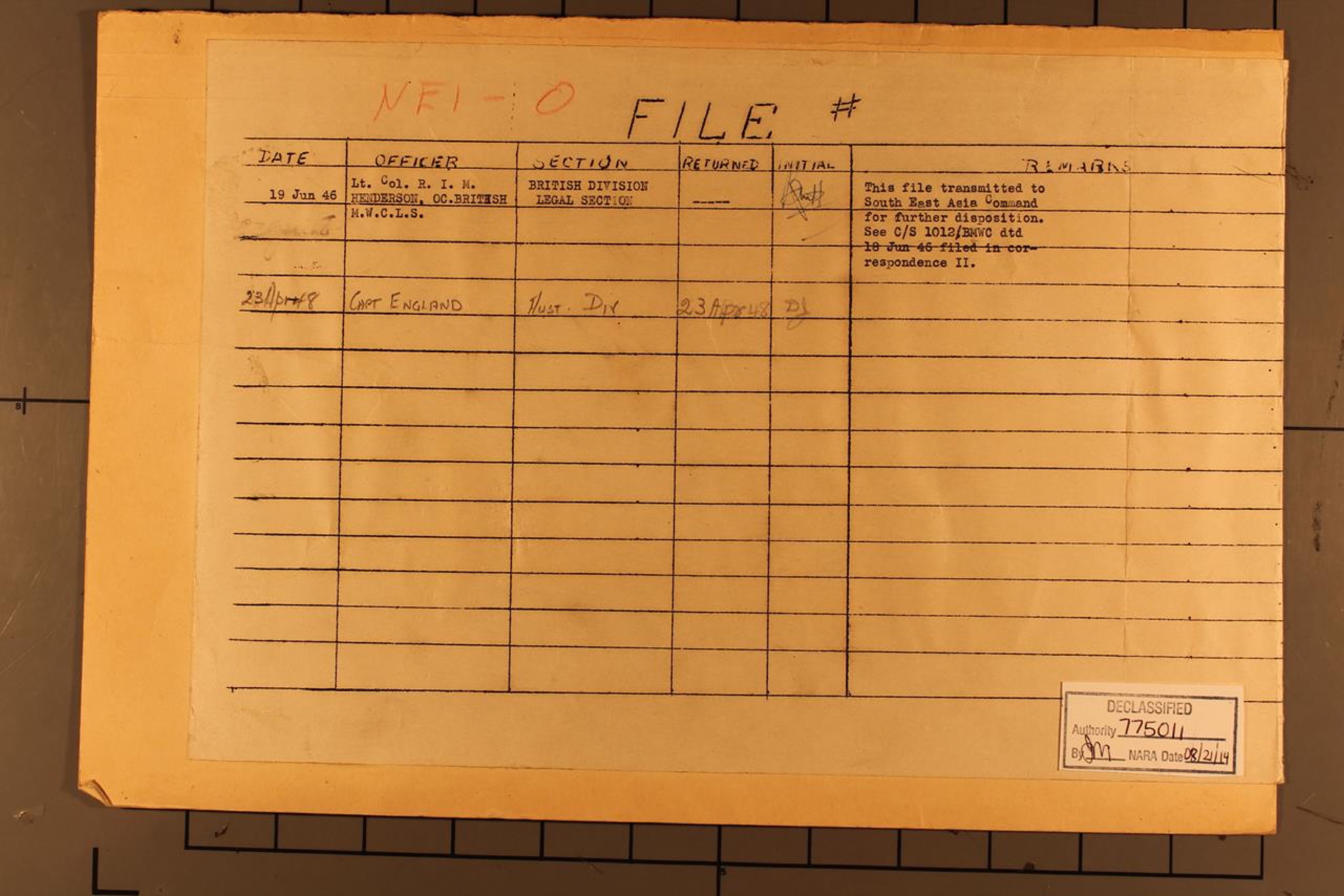
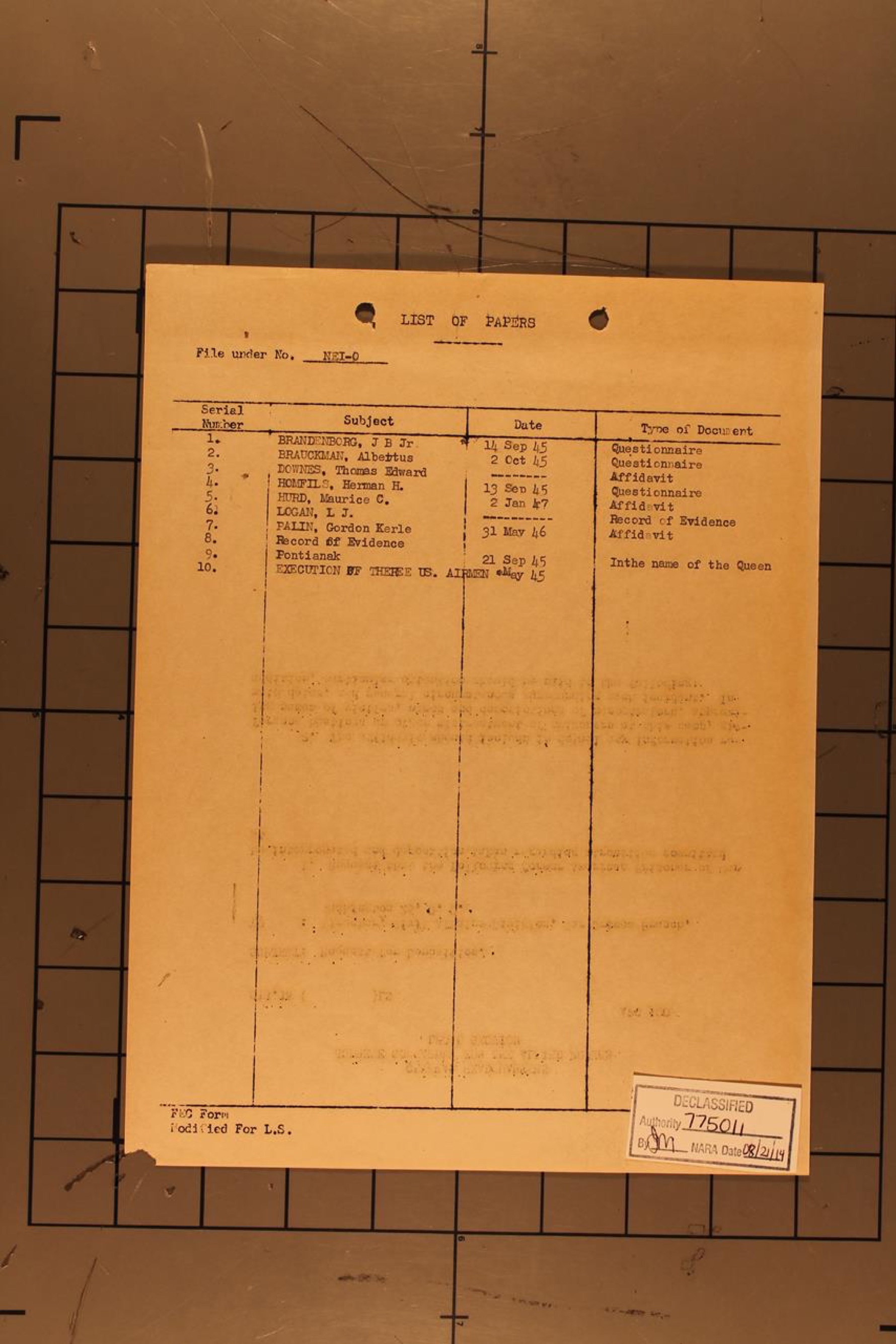
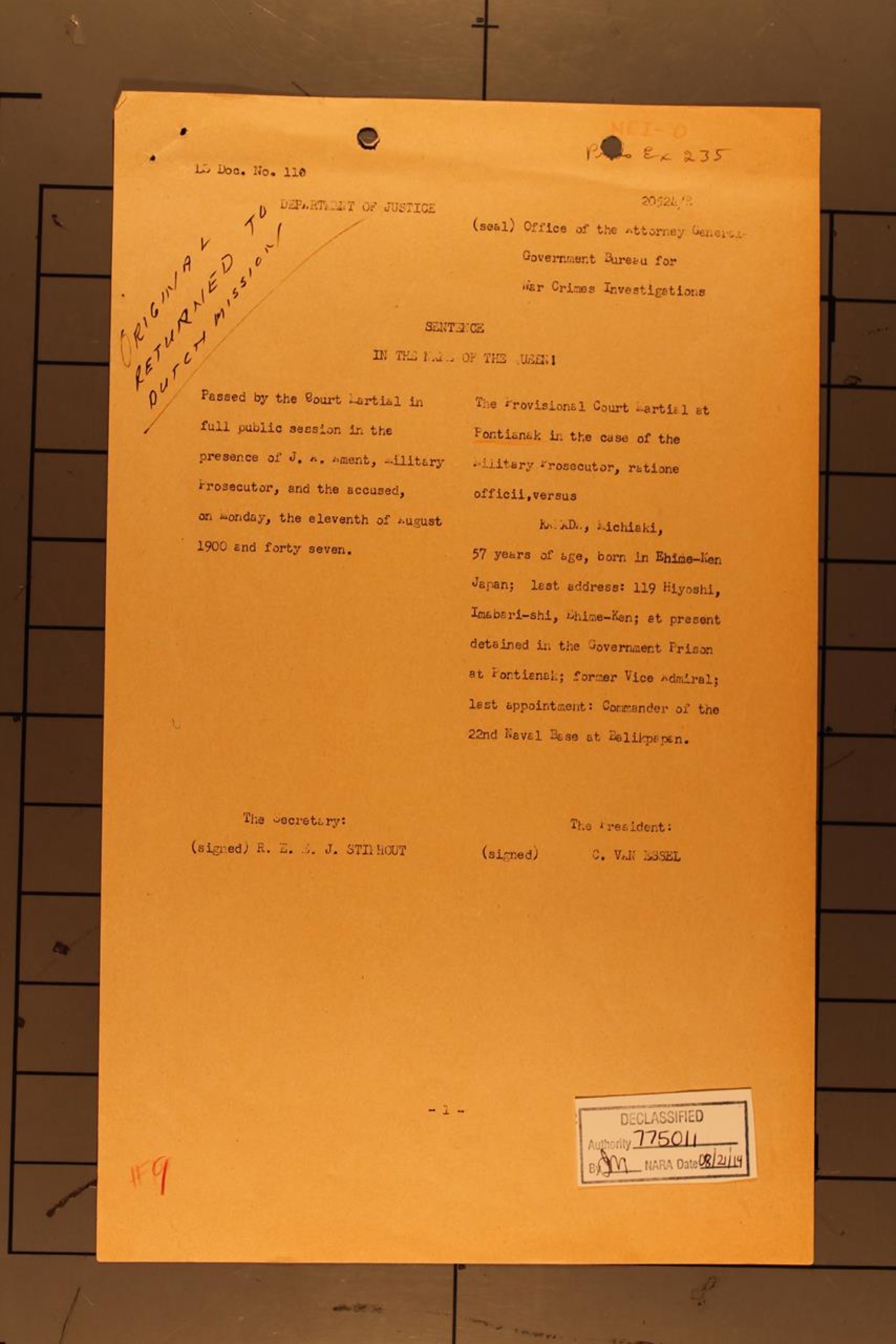
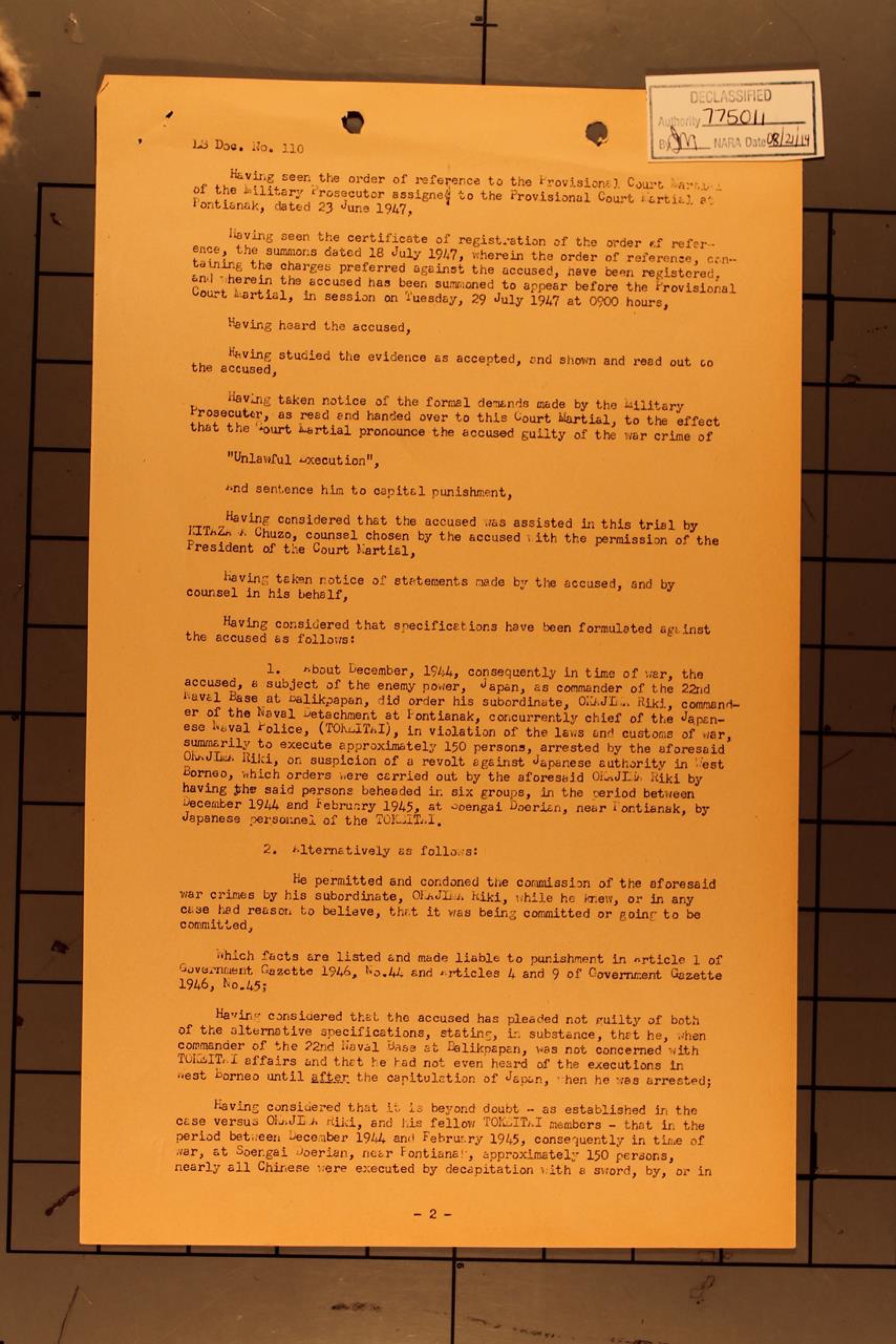
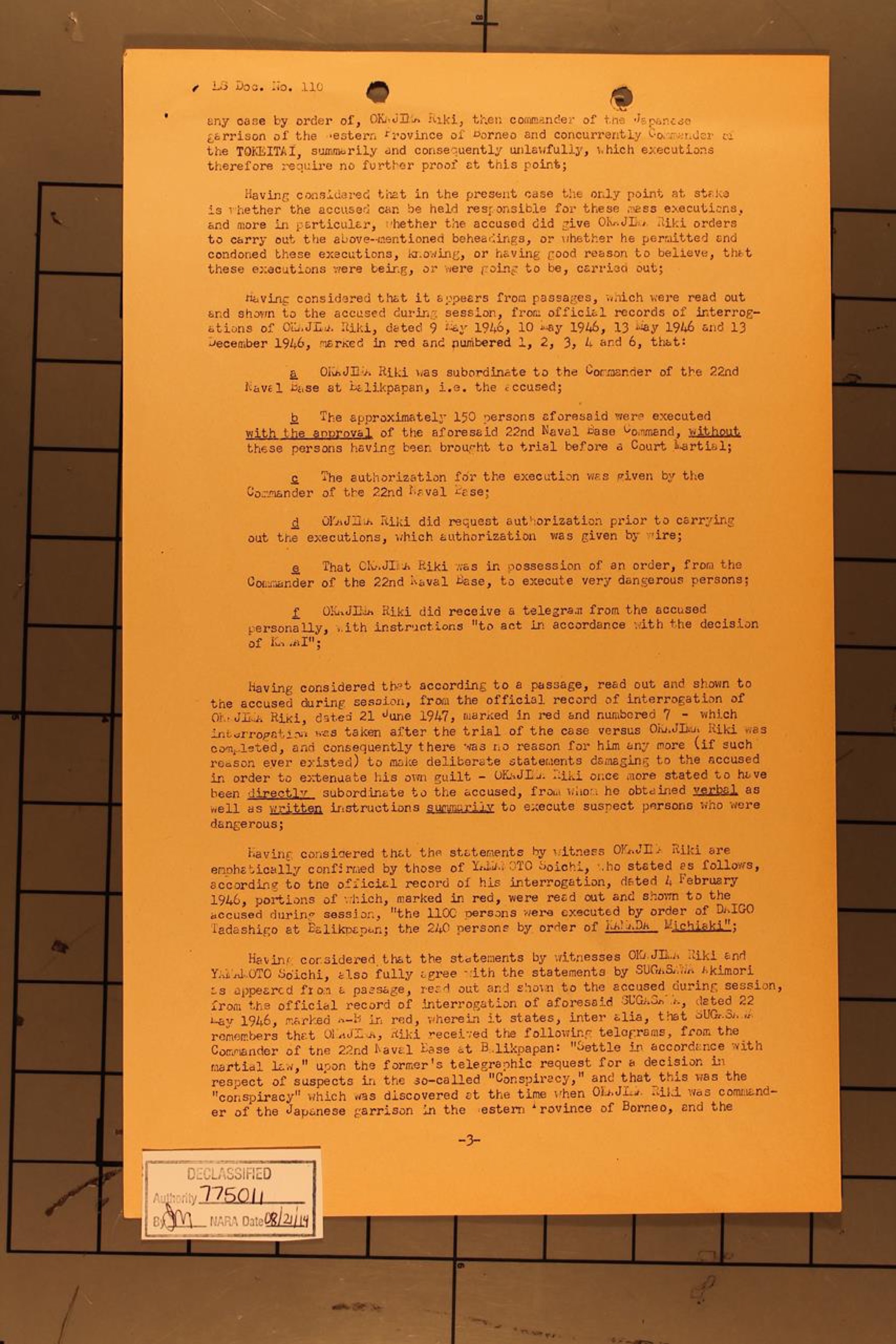
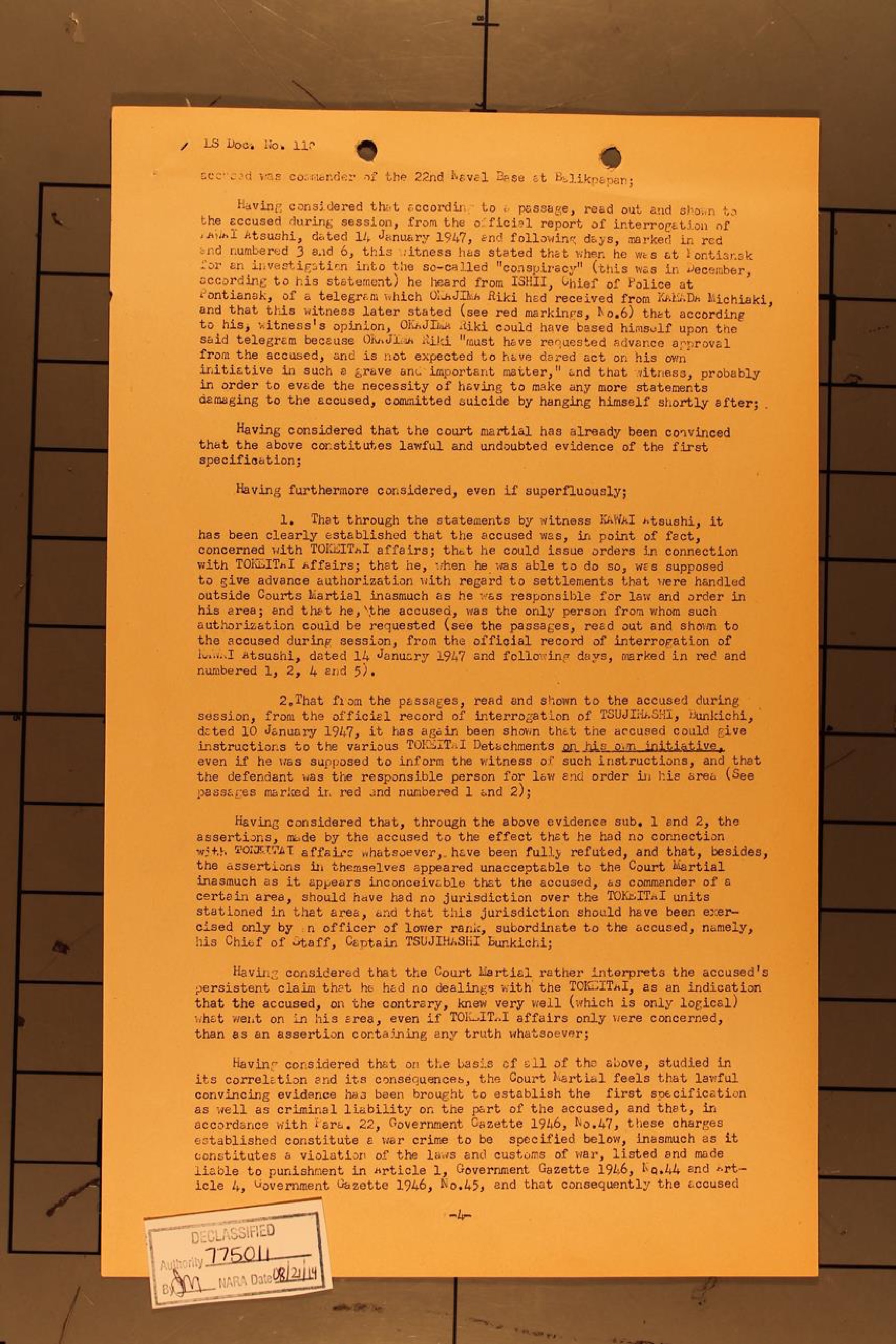
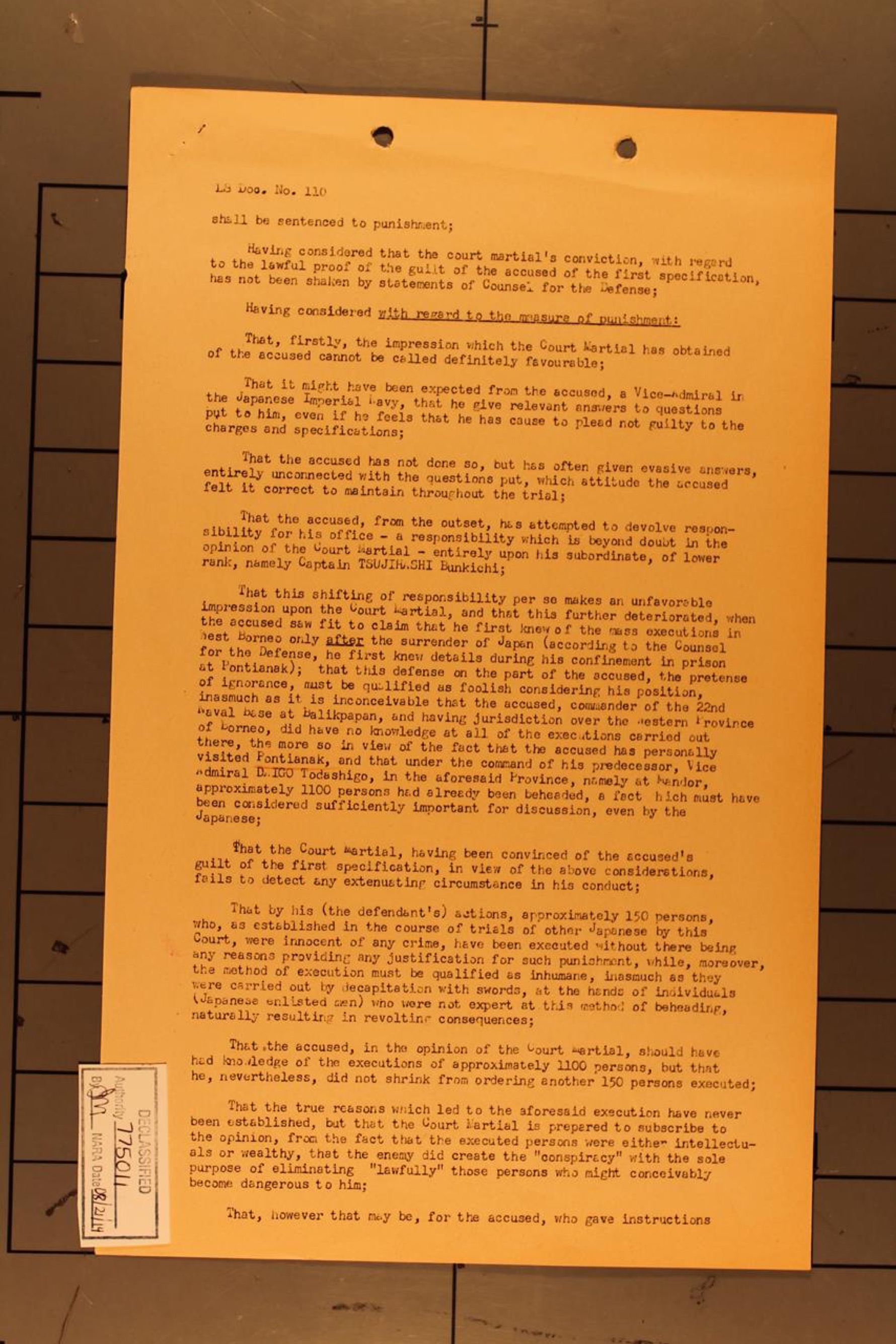
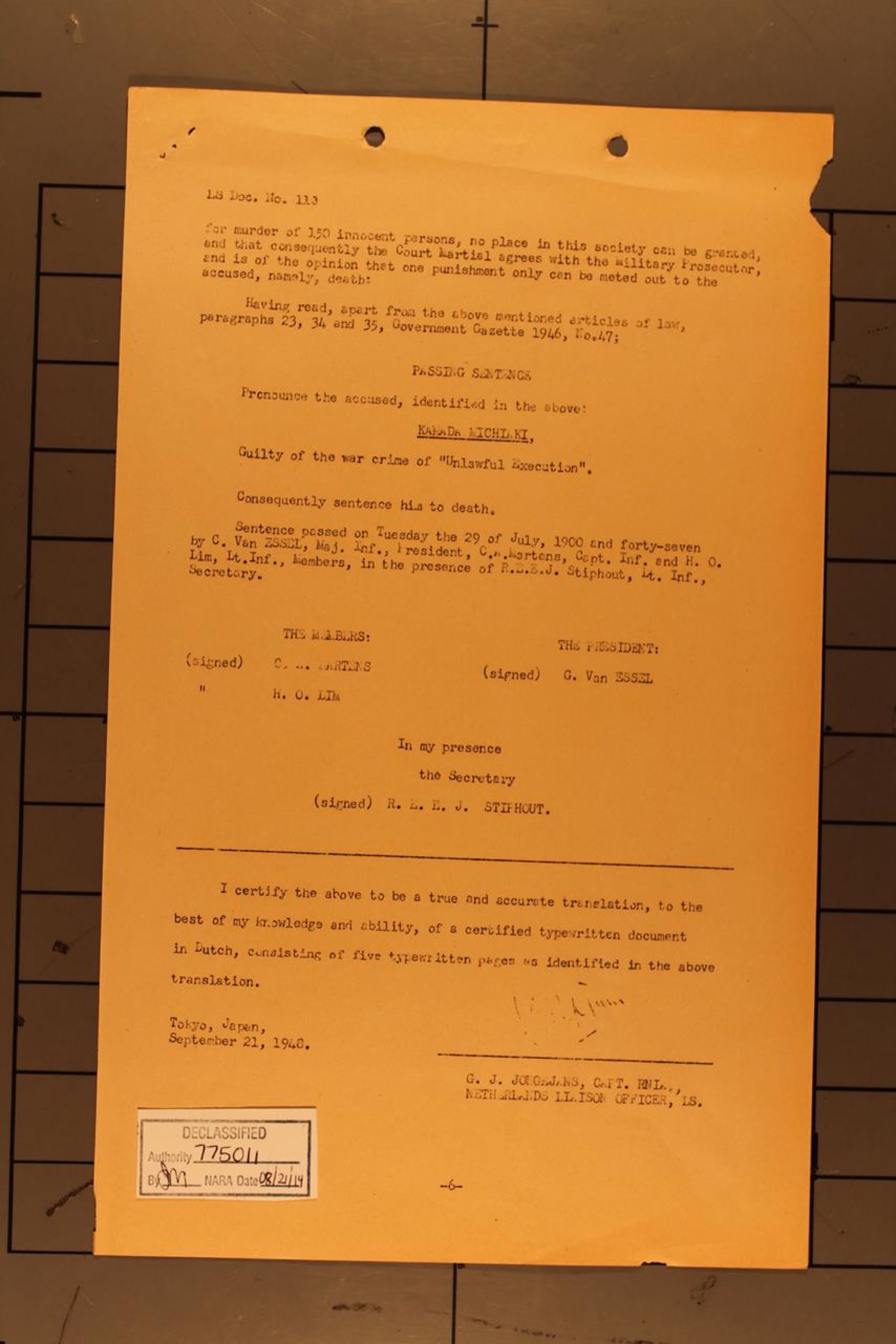
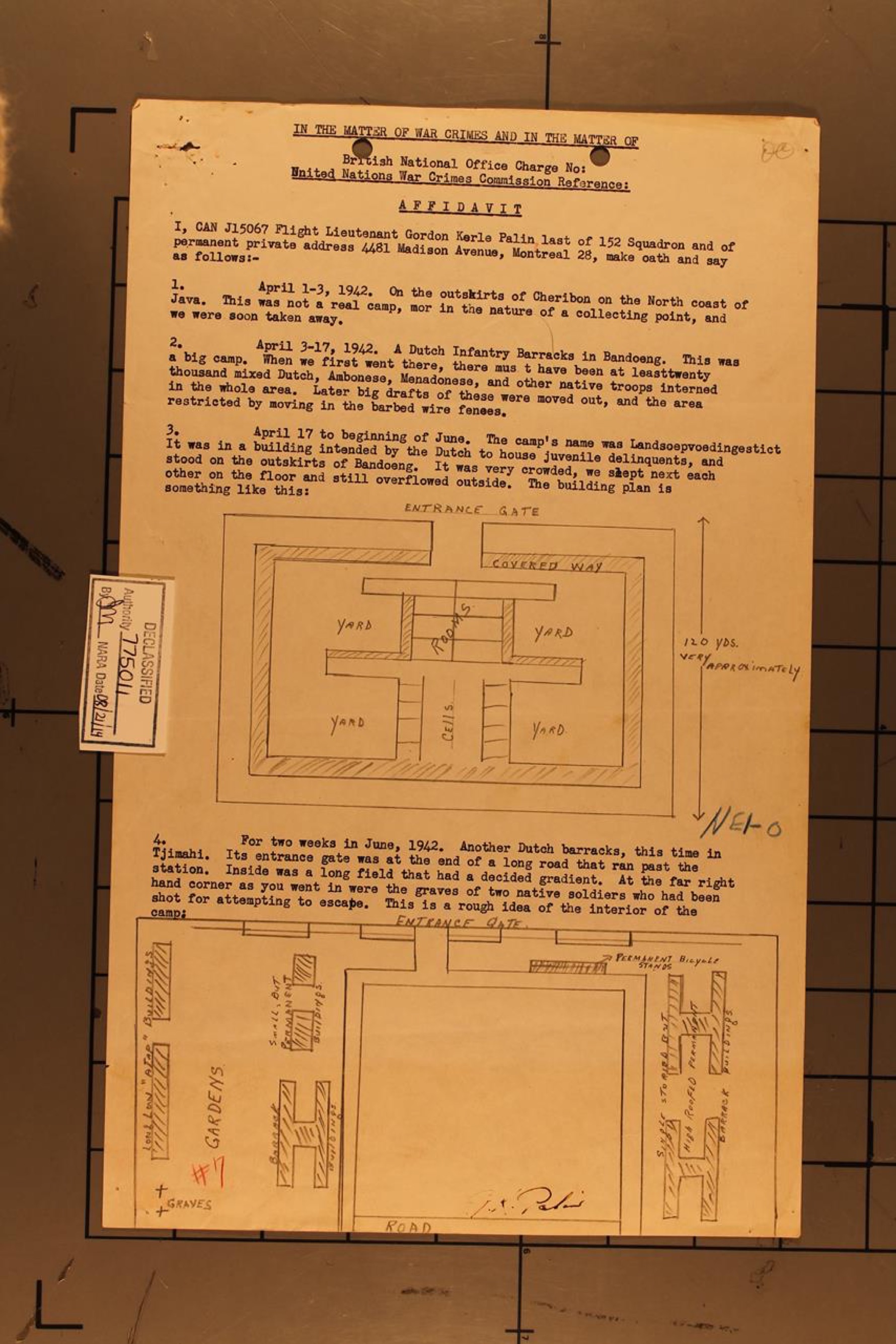
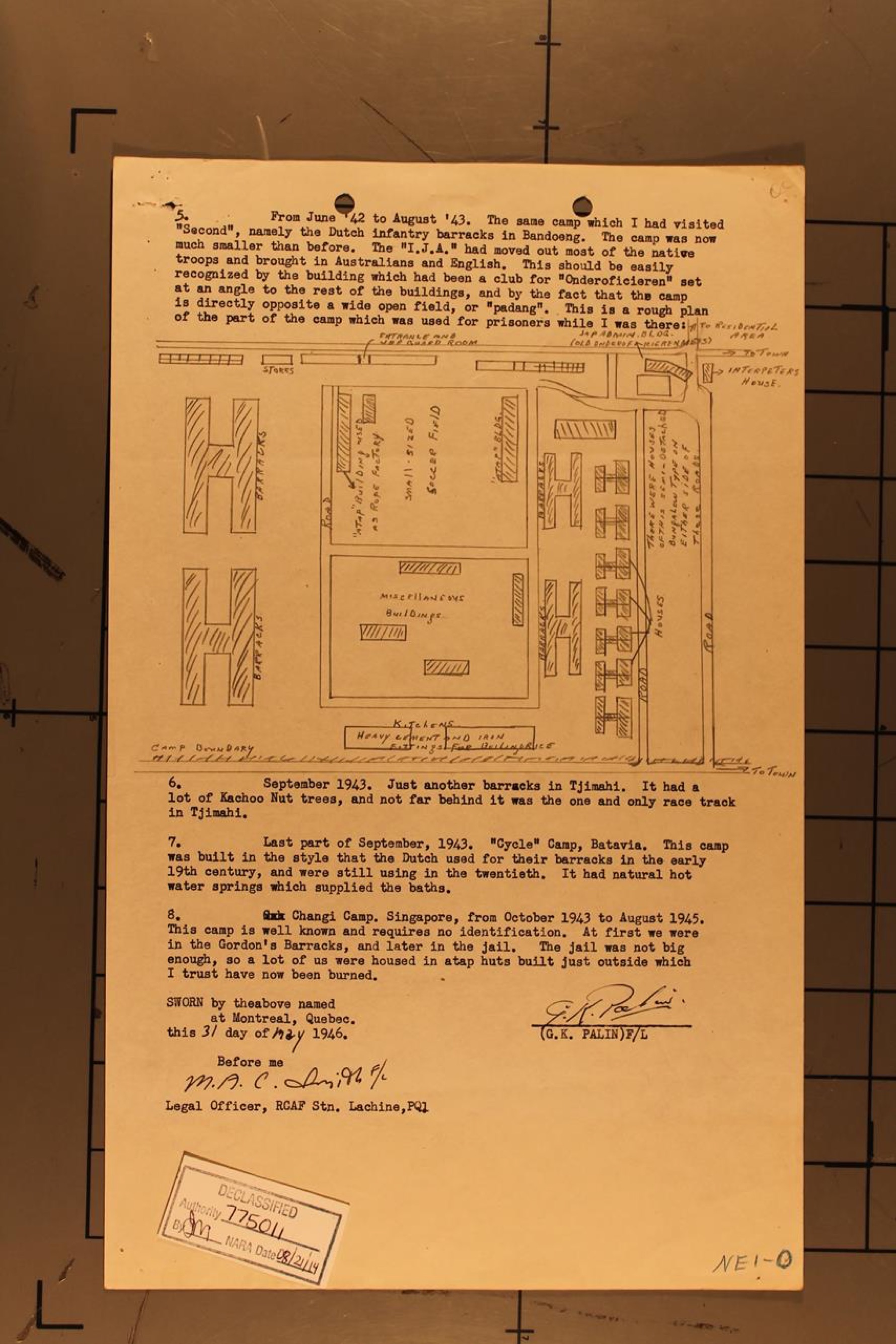
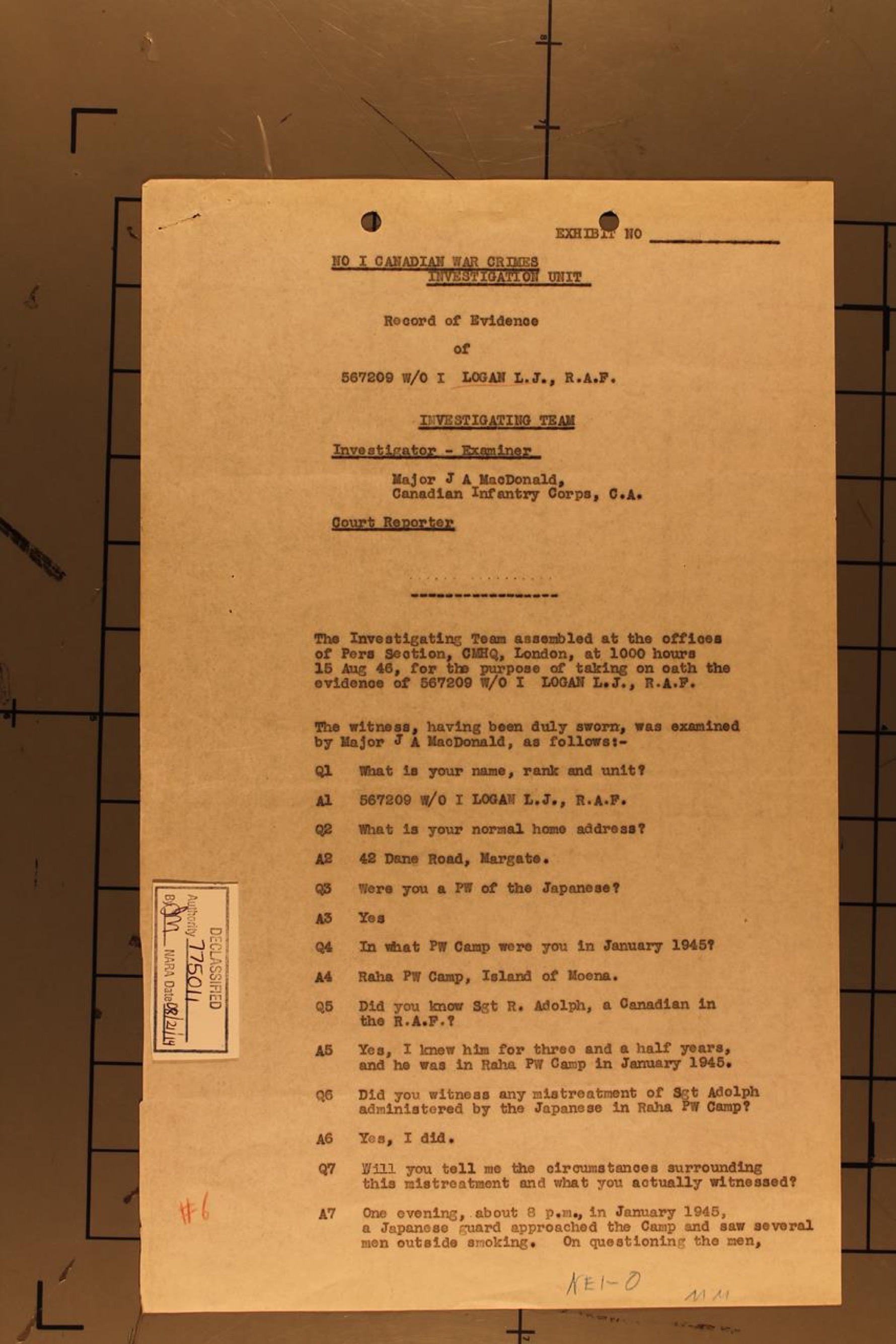
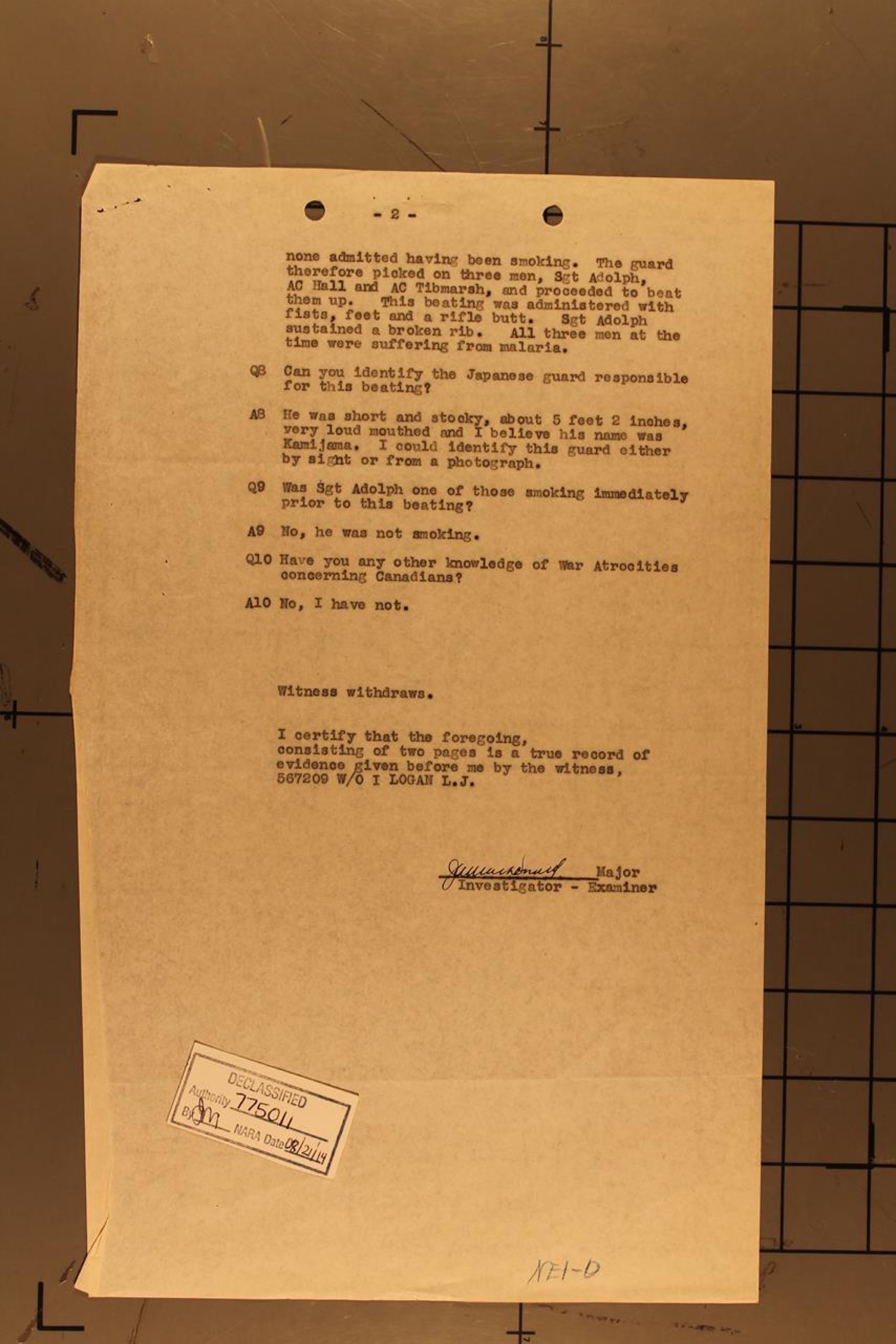
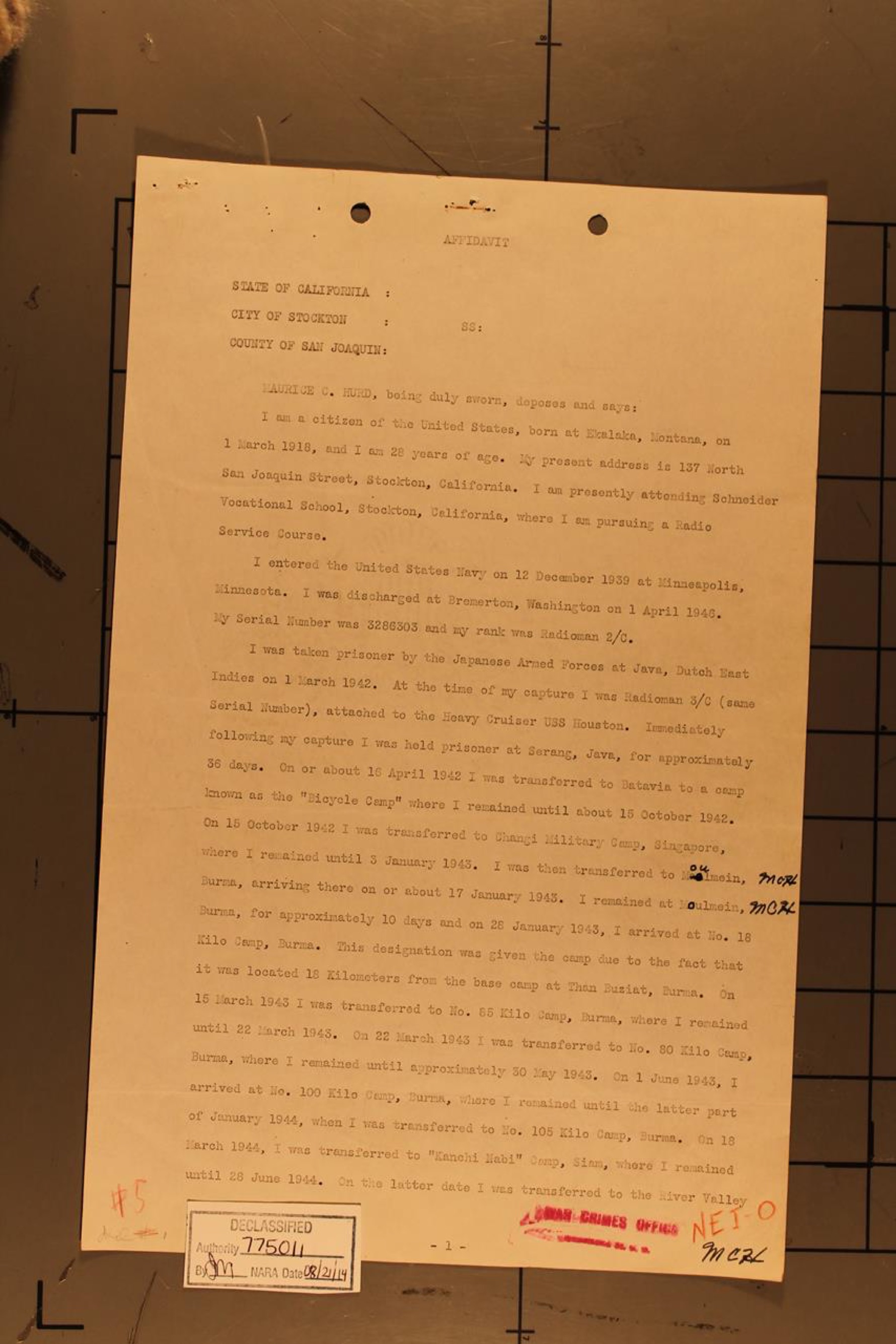
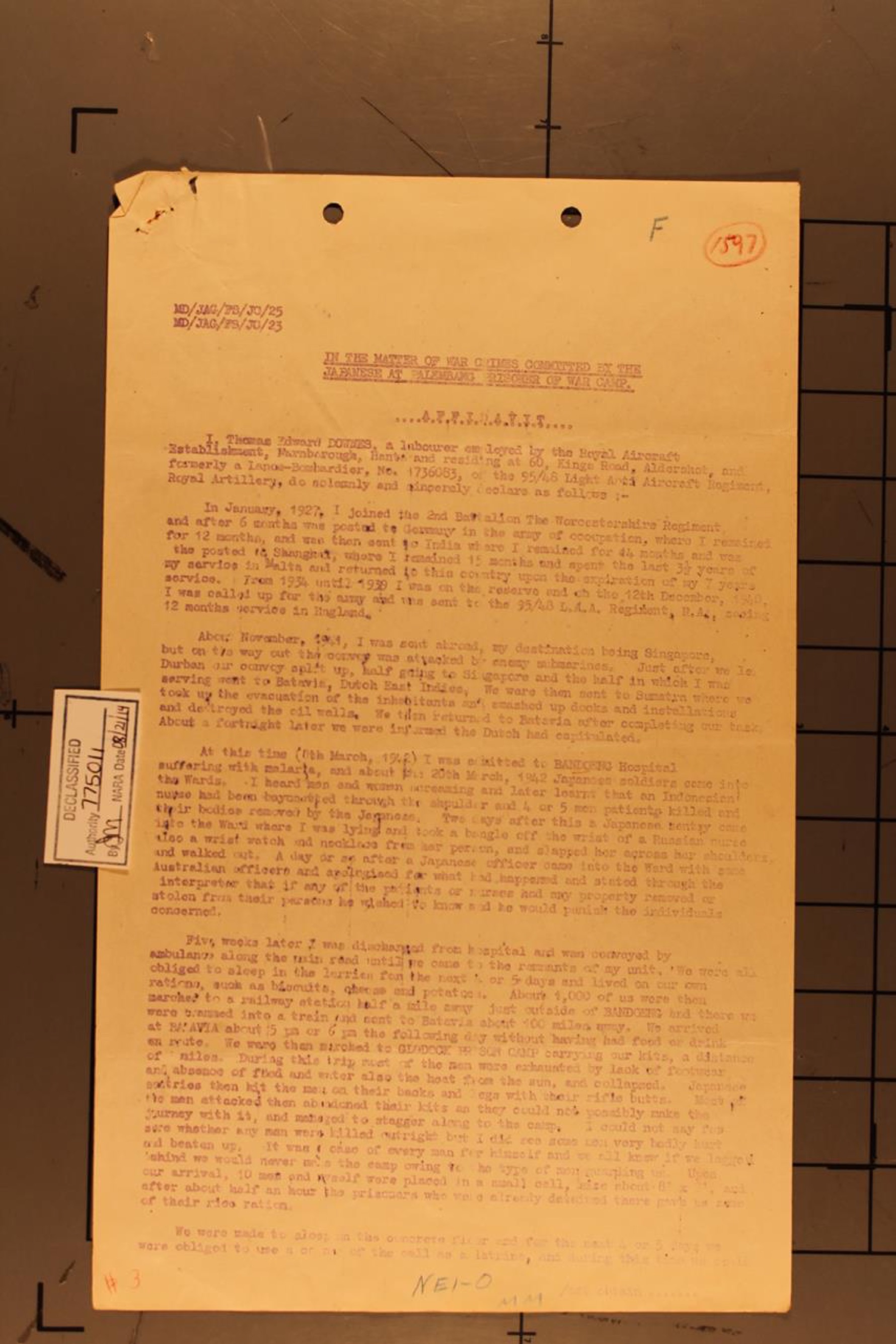
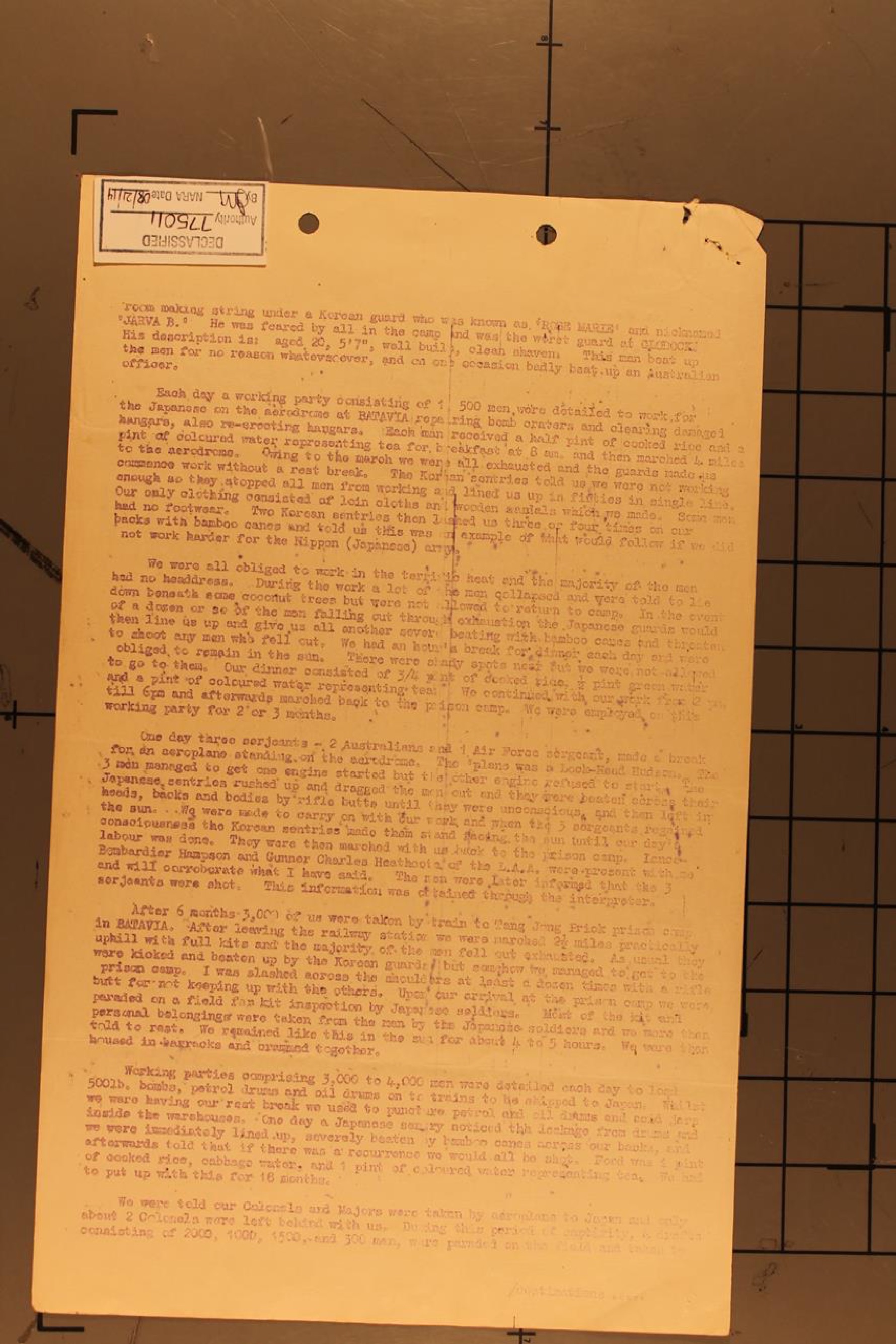
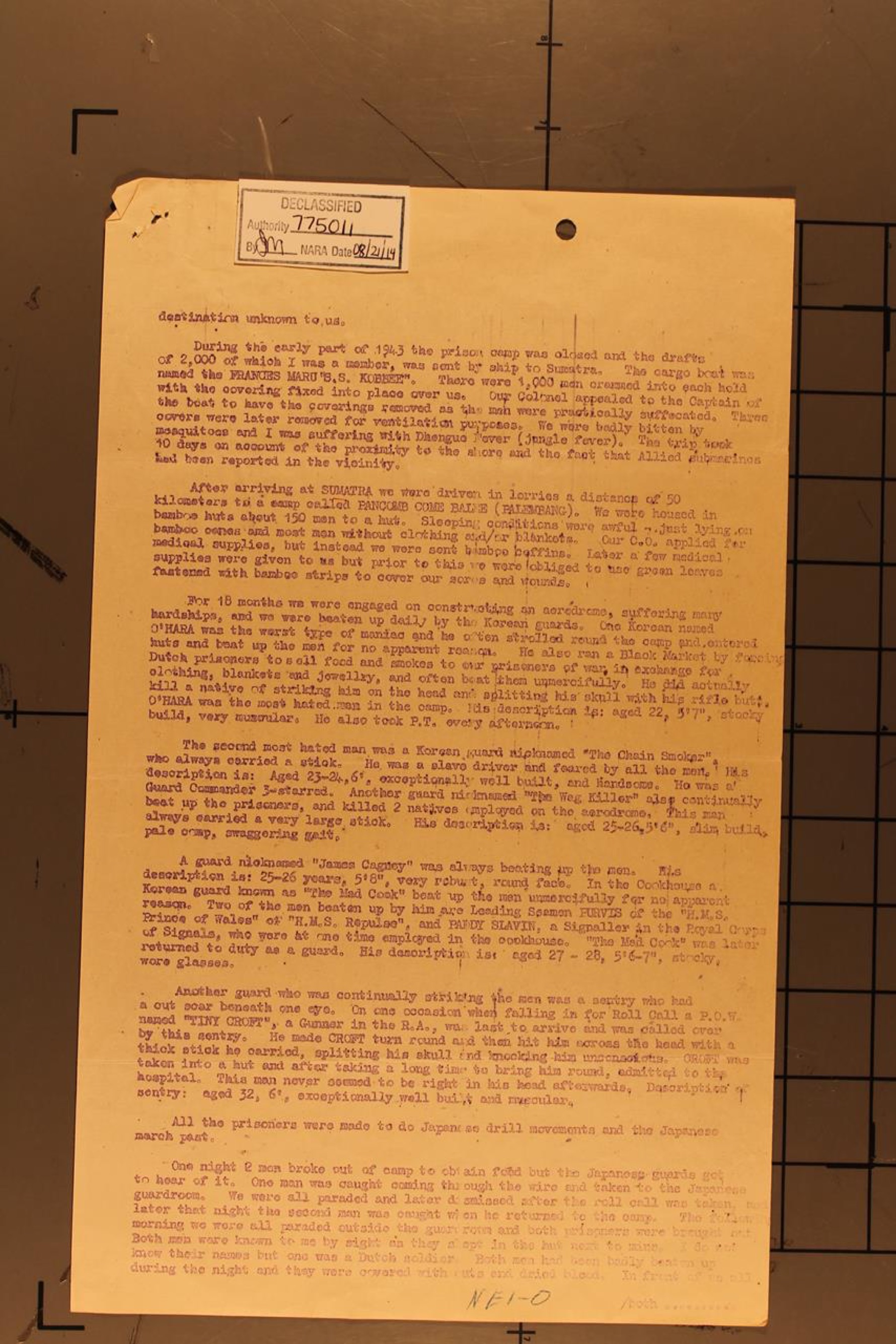
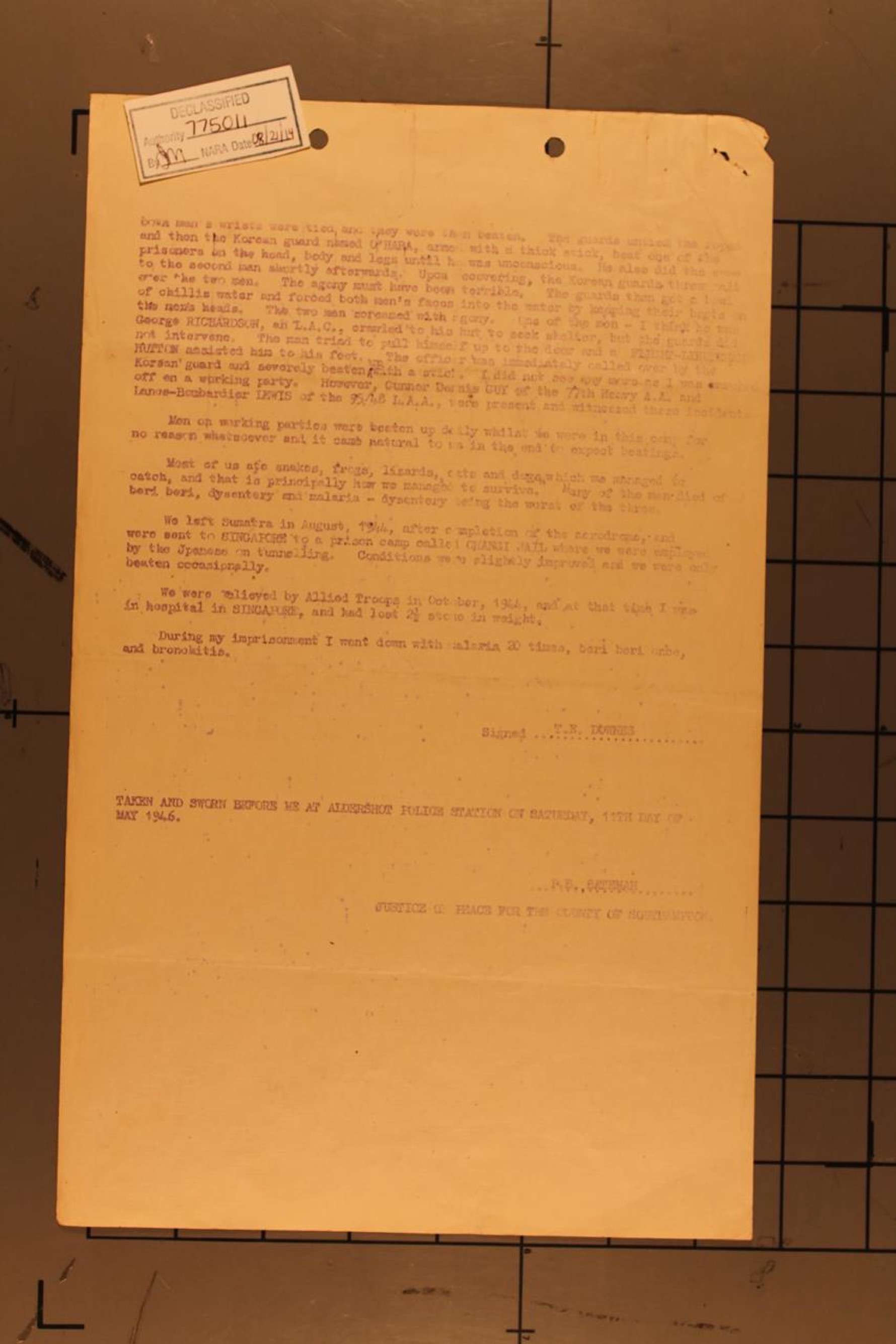
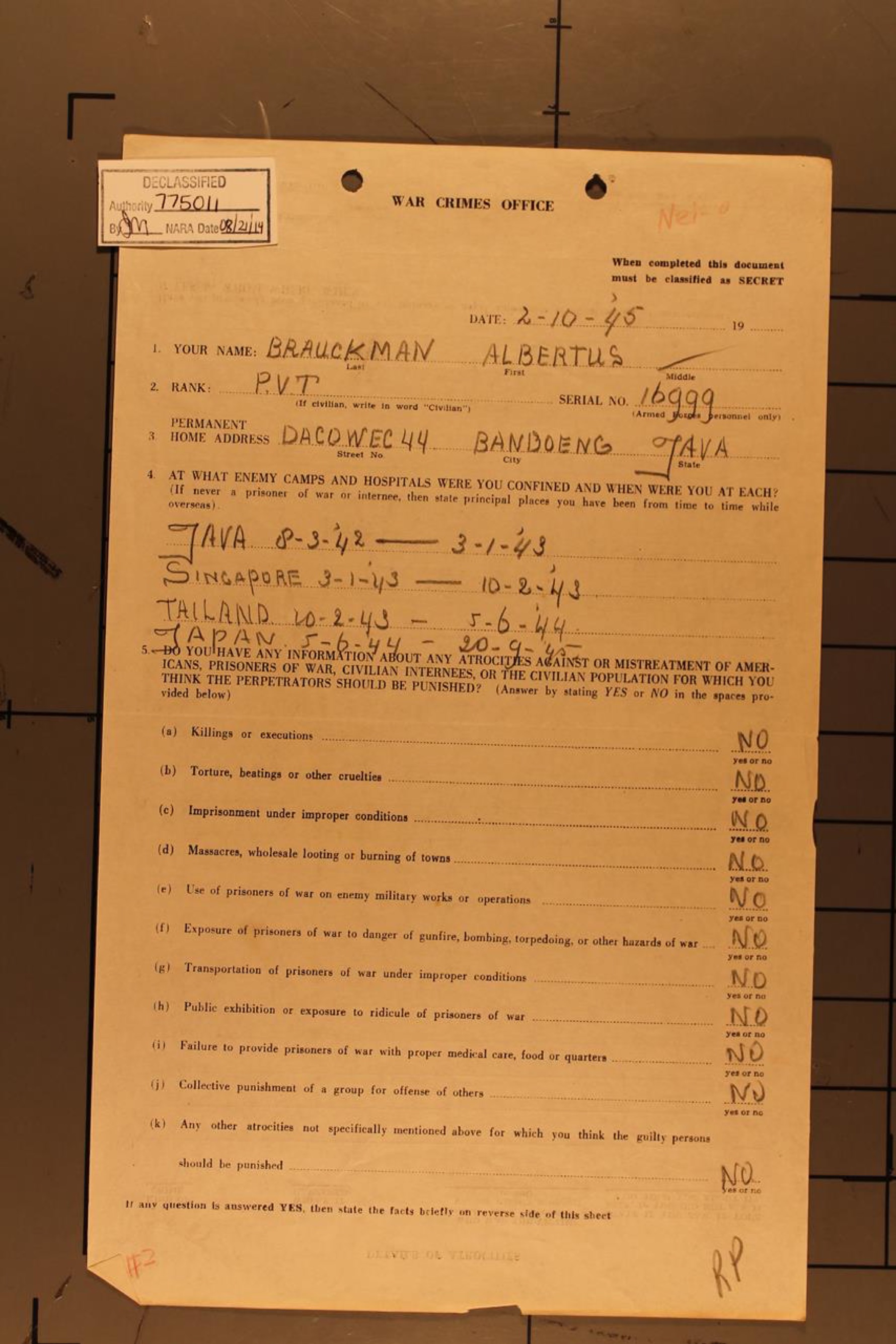
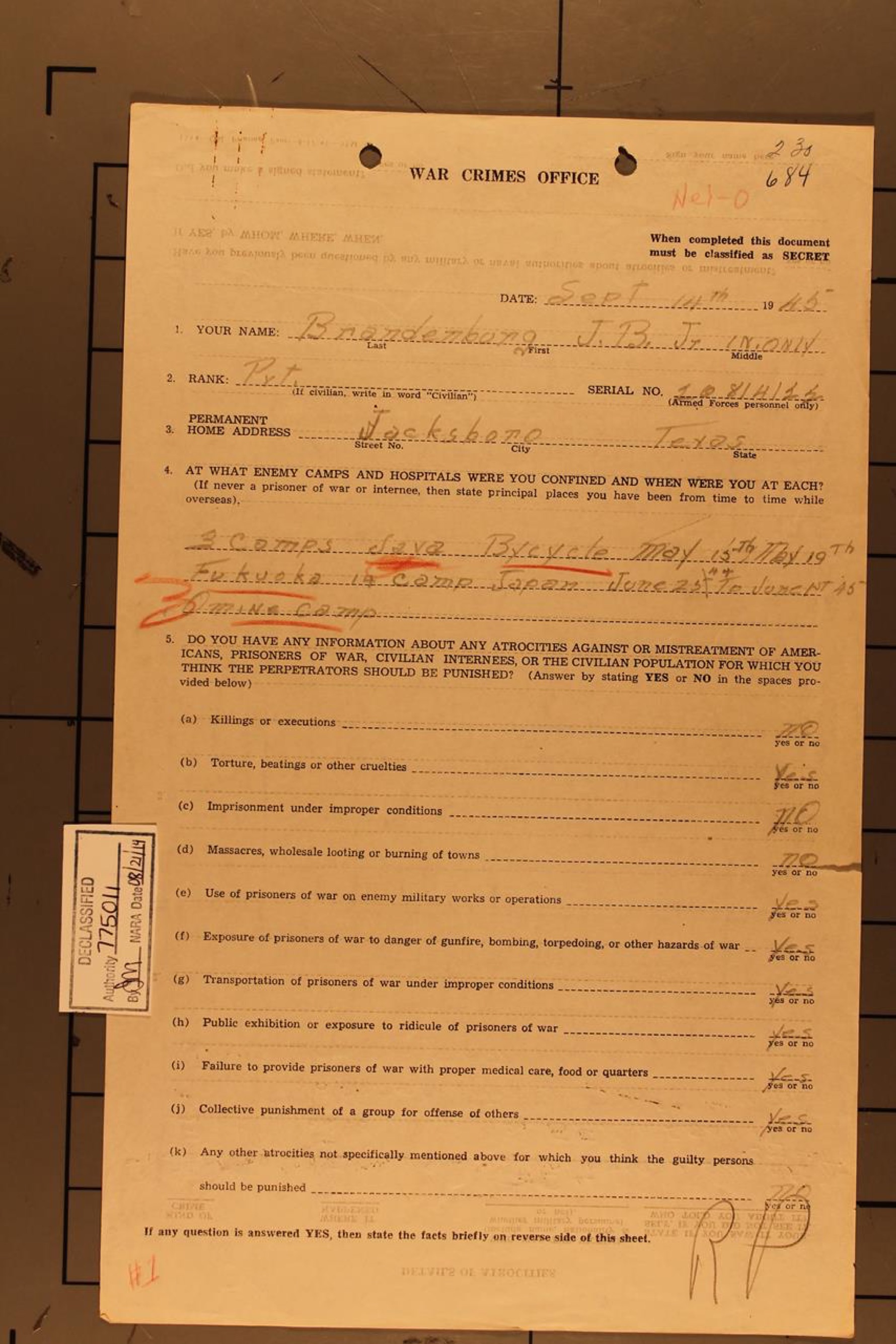
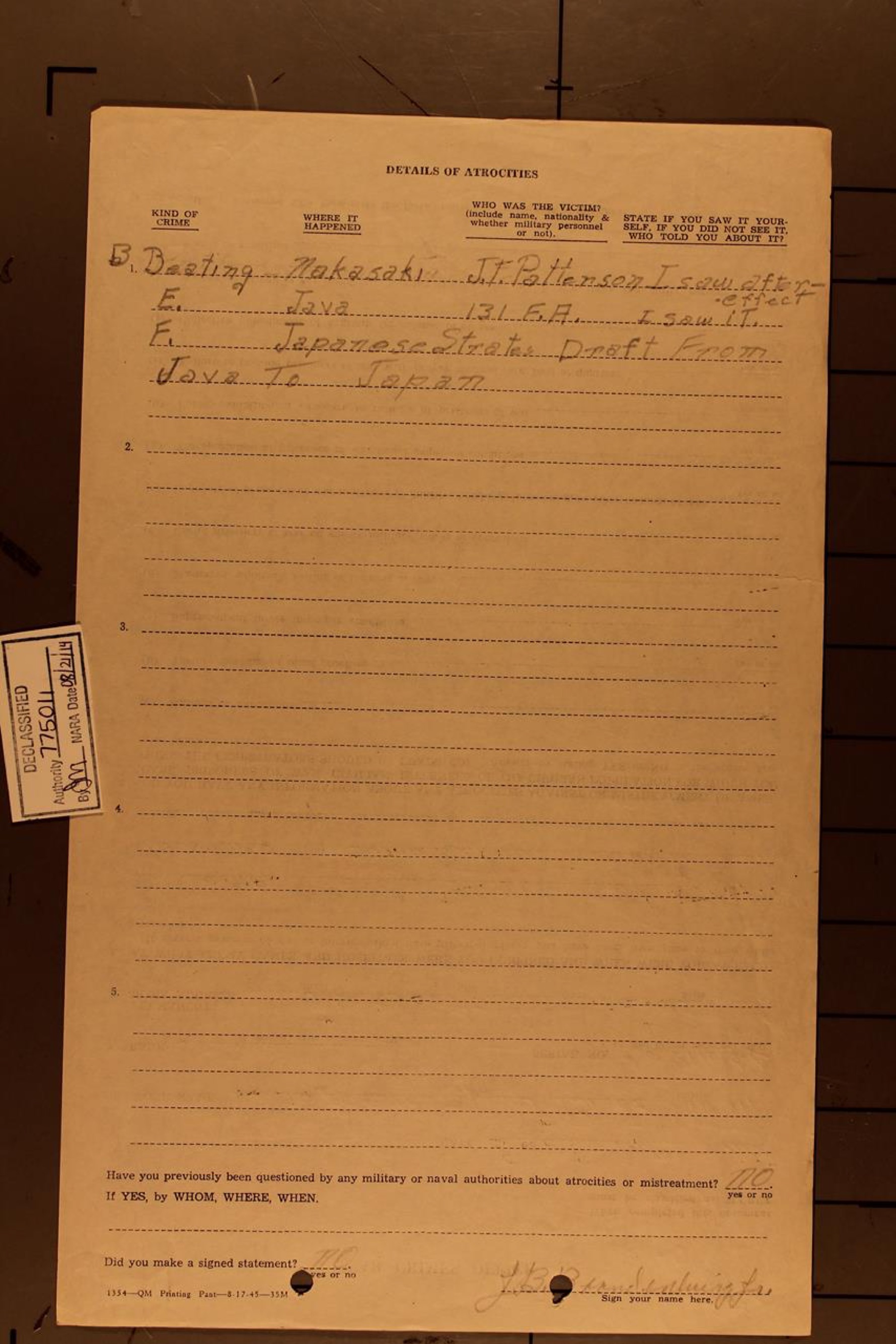
In a NARA-released packet titled NEI-0 “Assorted Netherlands East Indies camps” is the document “LS Doc. No. 110.” It records the Dutch Provisional Court Martial at Pontianak, July 29, 1947, at 9:00 am sentencing of Michiaki Kamada (鎌田 道章). He was the Commander of 22nd Naval Base Balikpapan in occupied Dutch Borneo, and as such was the de-facto military governor of the territory. He directed the committed mass executions of ove one-thousand prisoners and civilians, and the willful mistreatment of prisoners of war in direct contravention of international law. Given his overall arbitrary orders for executions and punishment without cause, the Court pronounced the verdict:
[For the accused] no place in this society can be granted, and then consequently the Court Martial agrees with the military Prosecutor and is of the opinion that one punishment only can be meted out to the accused, namely, death.
NEI-0, Serial No. 9 “Pontianak” (LS Doc. 110) p 6.
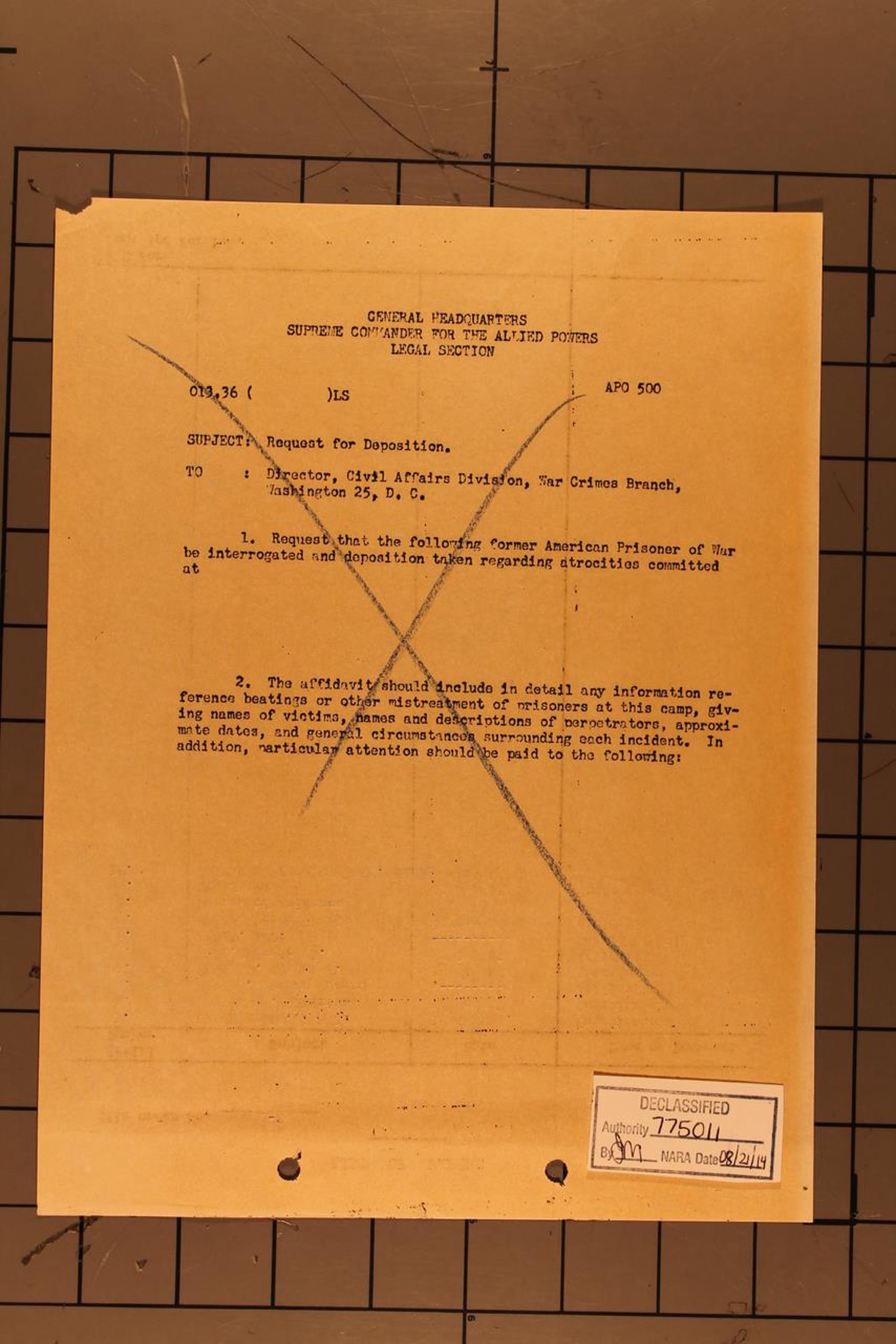
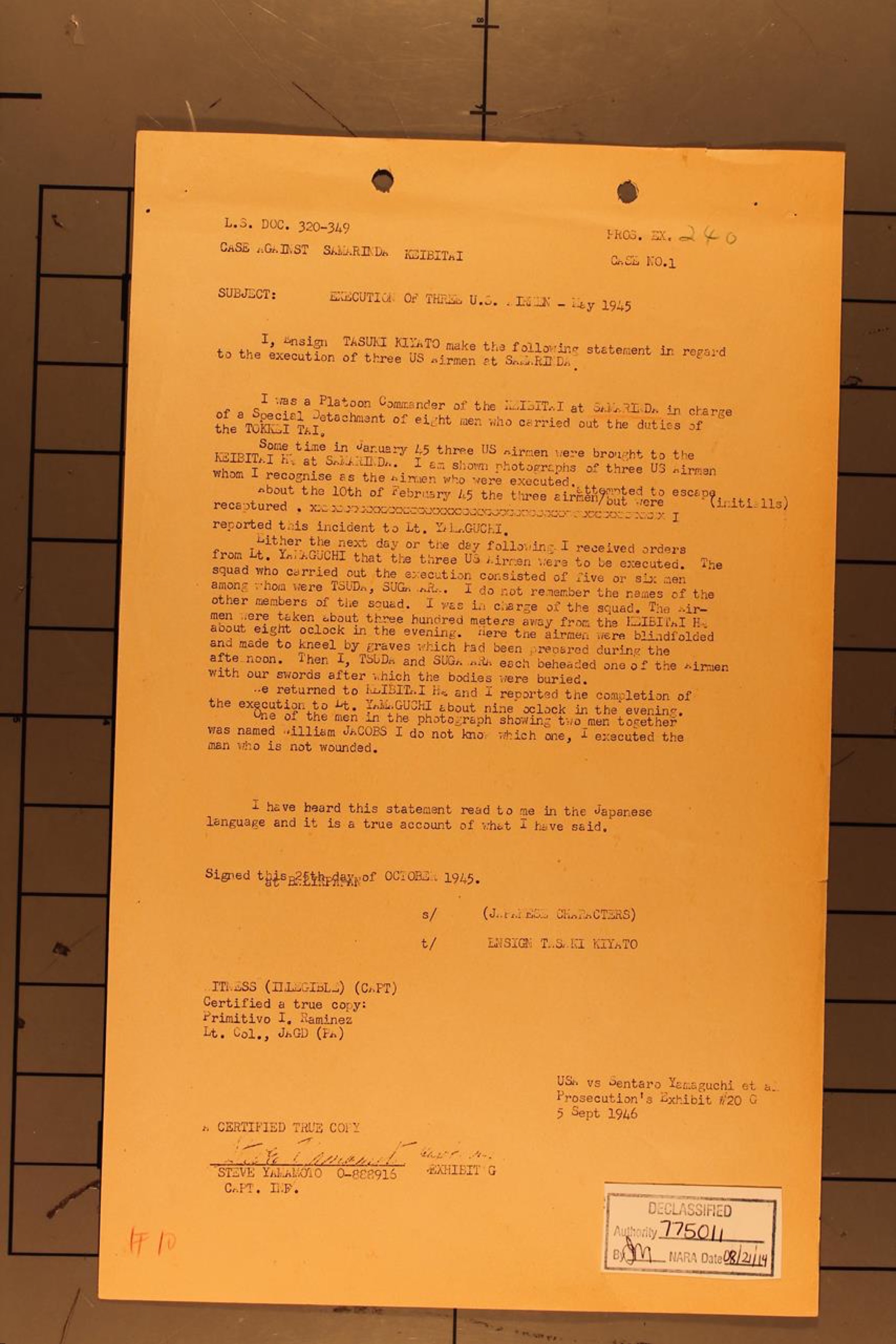
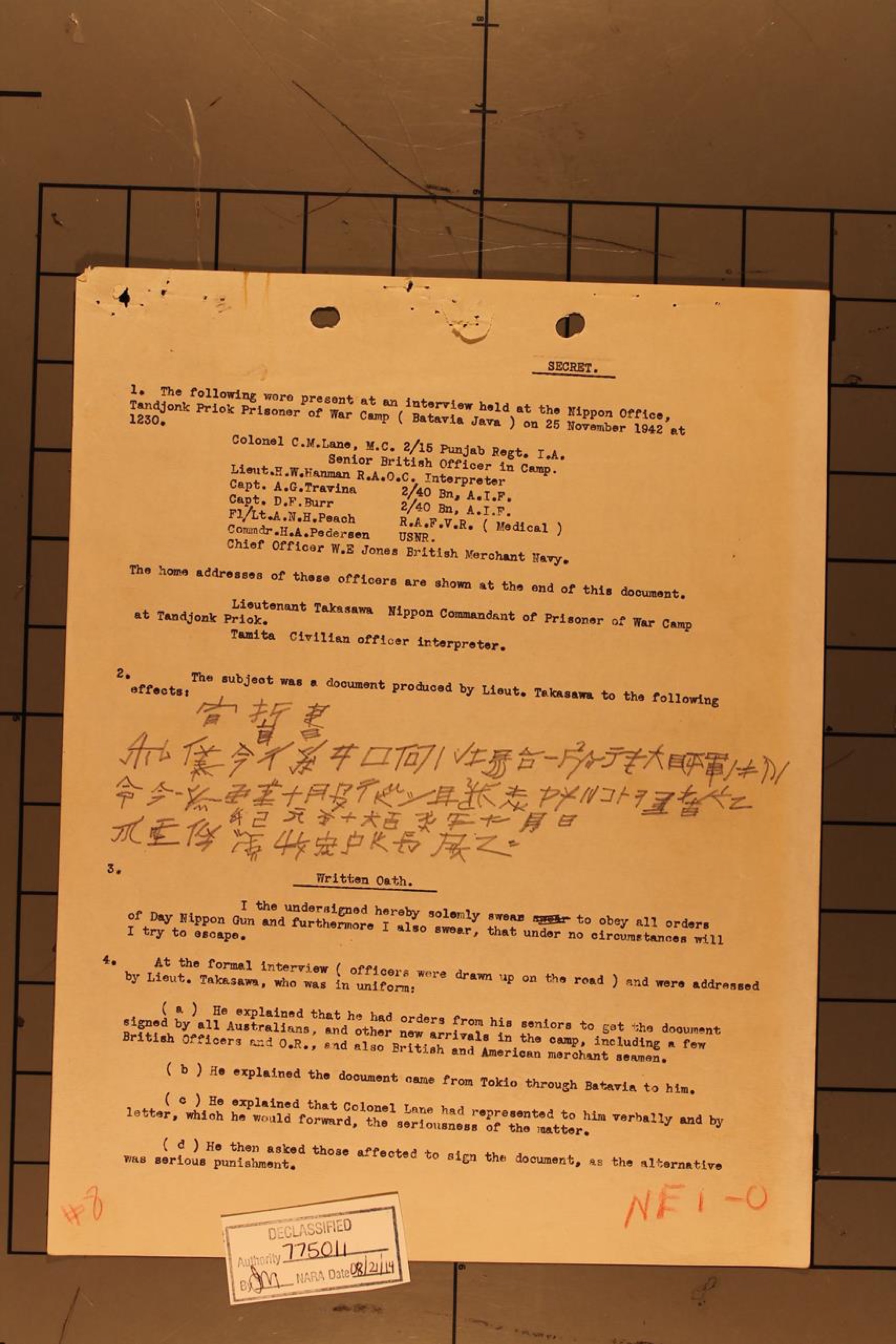
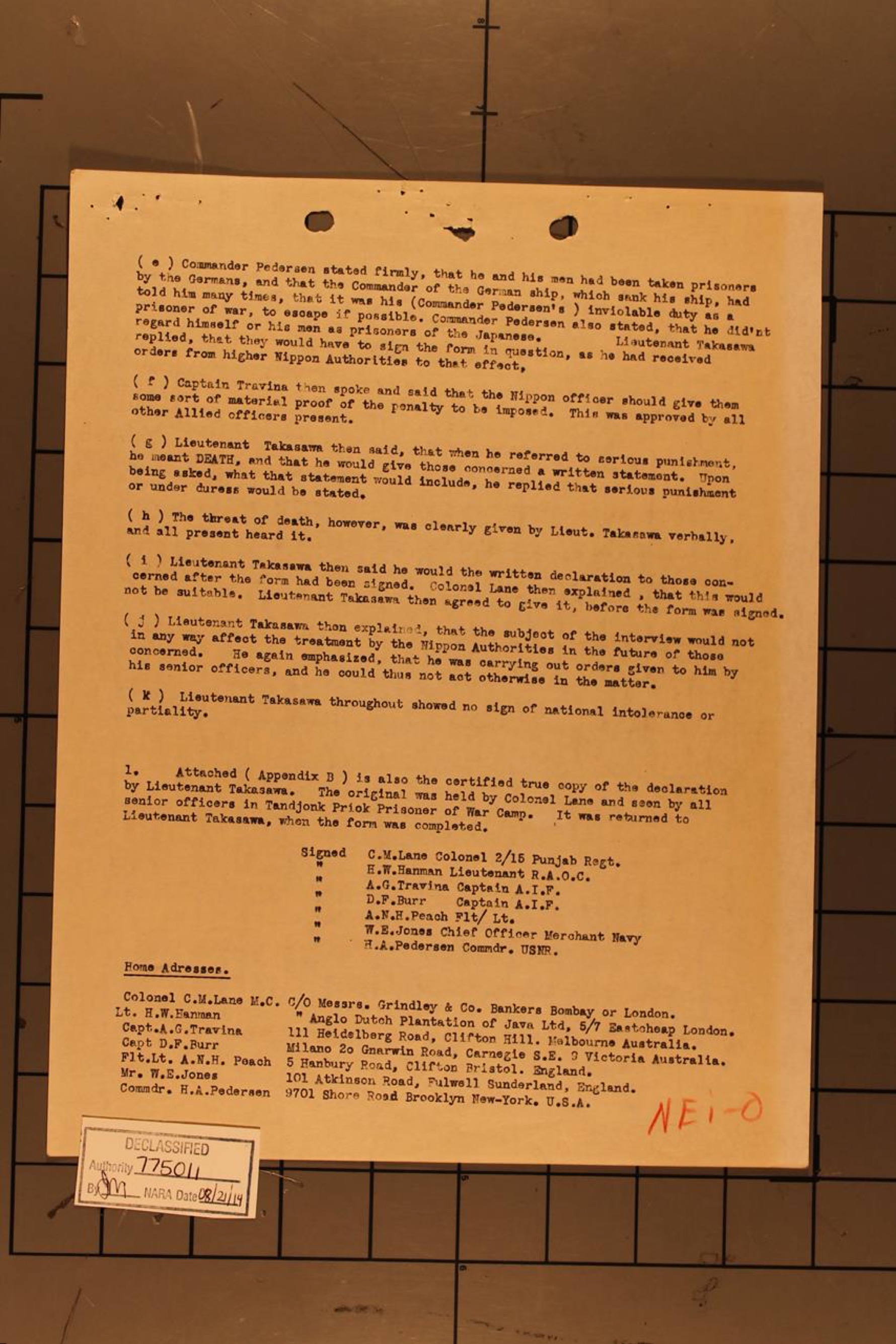
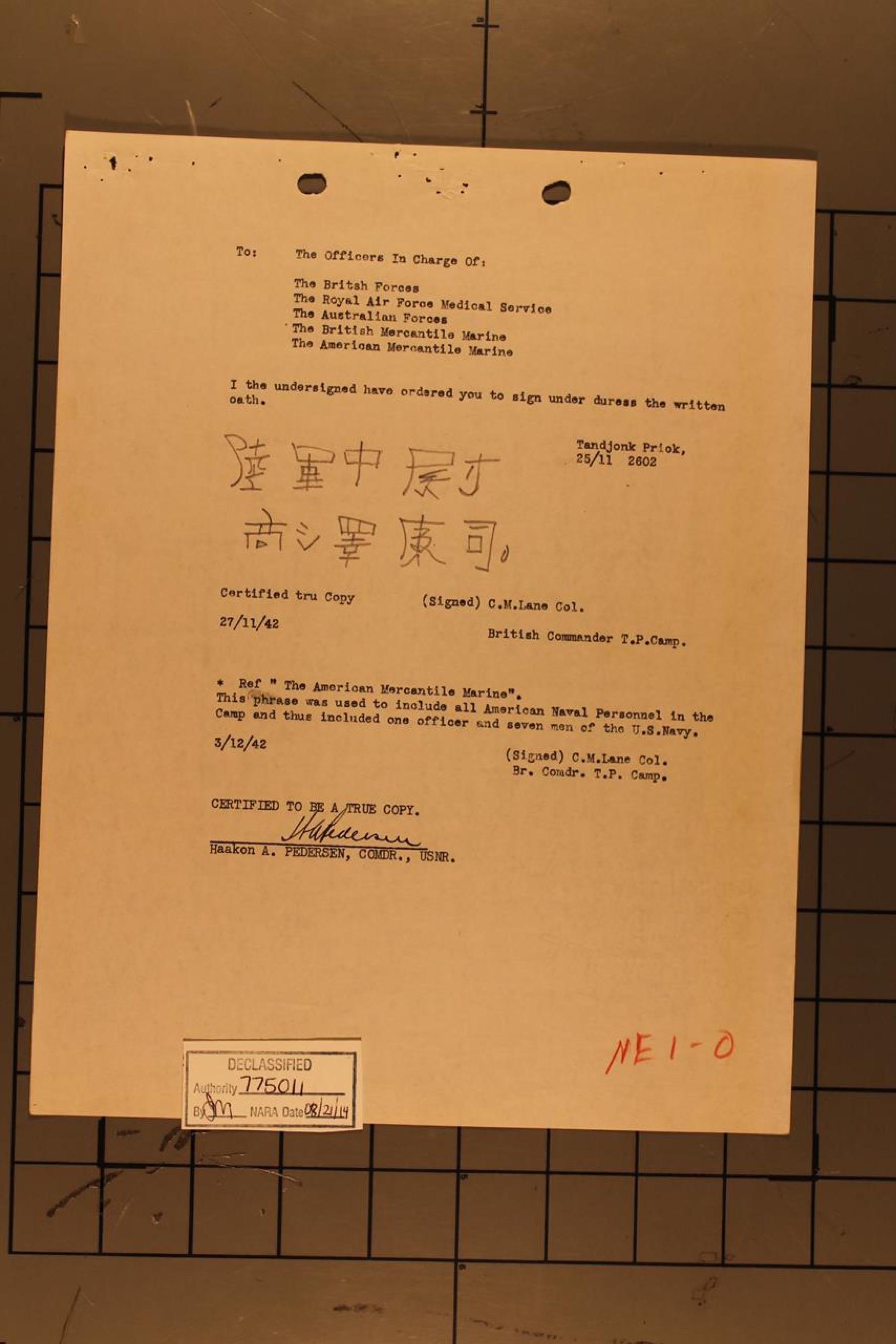
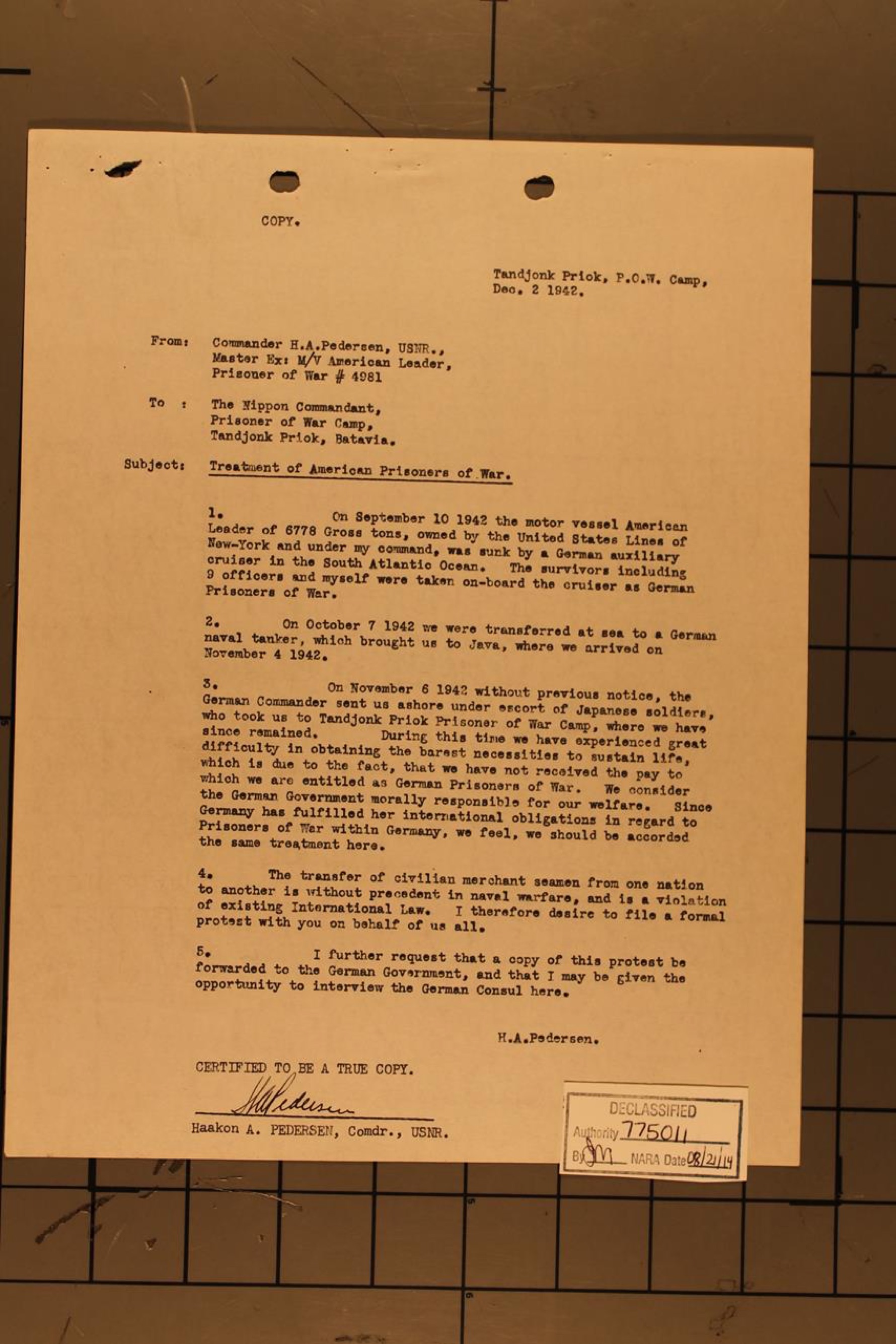
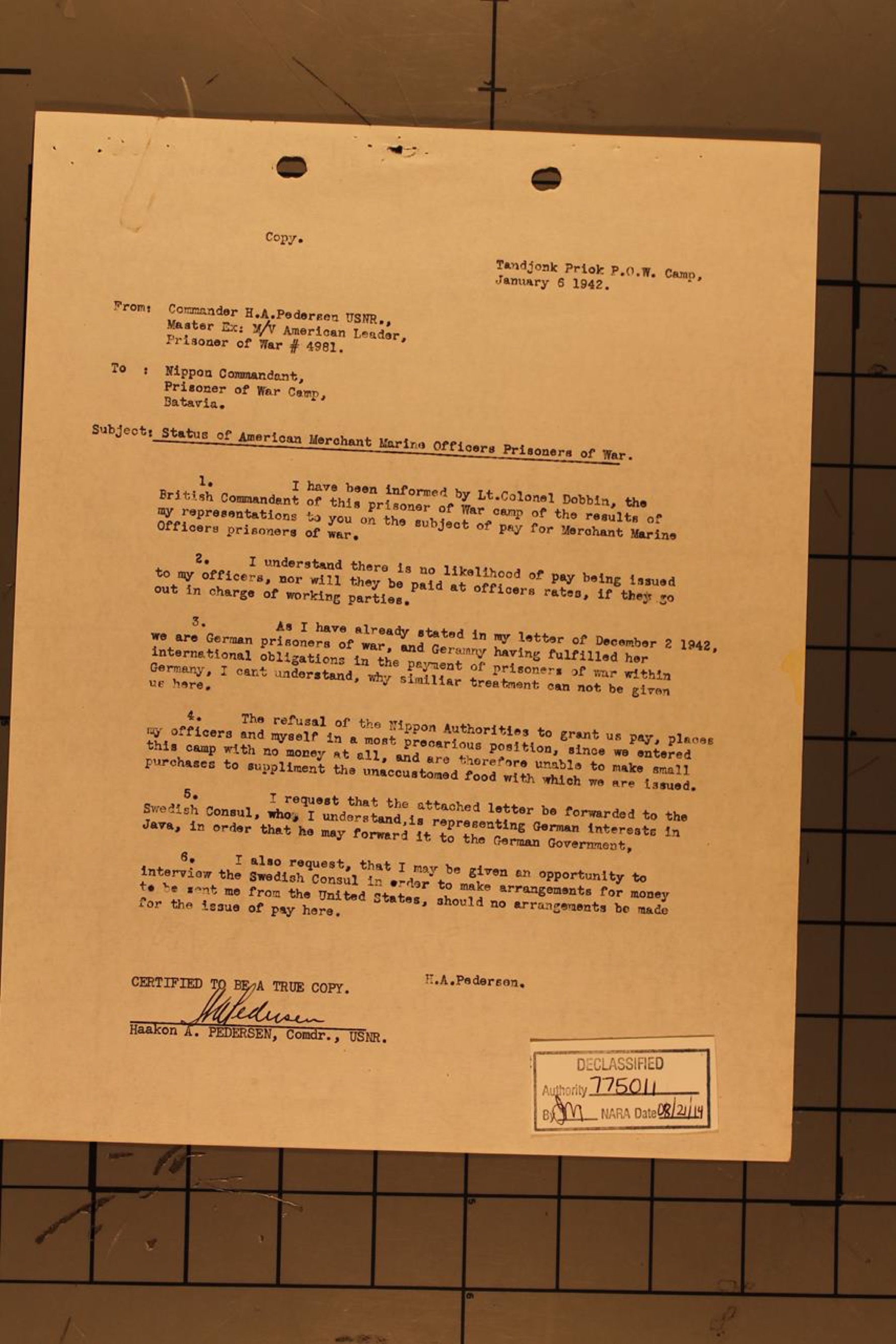
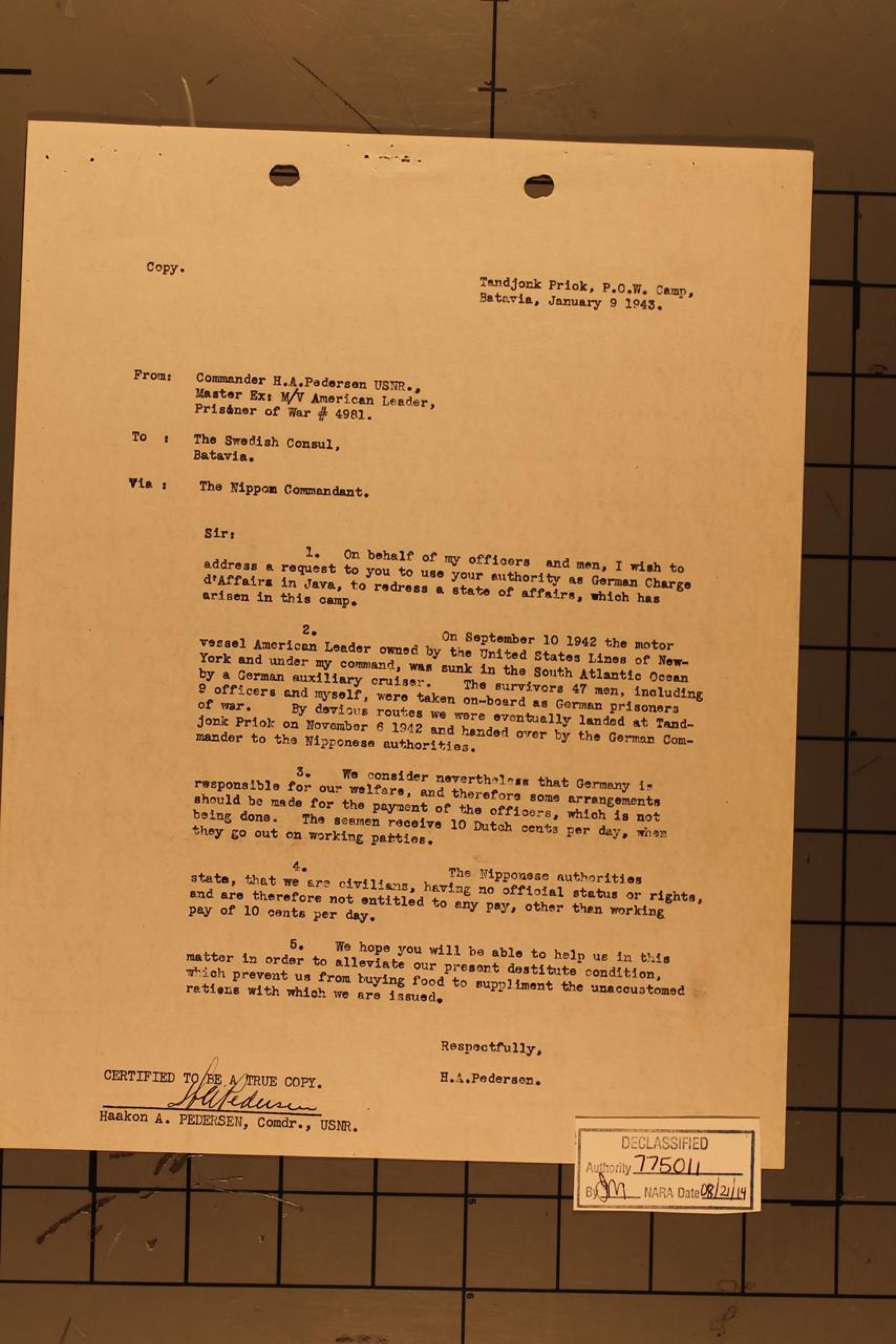
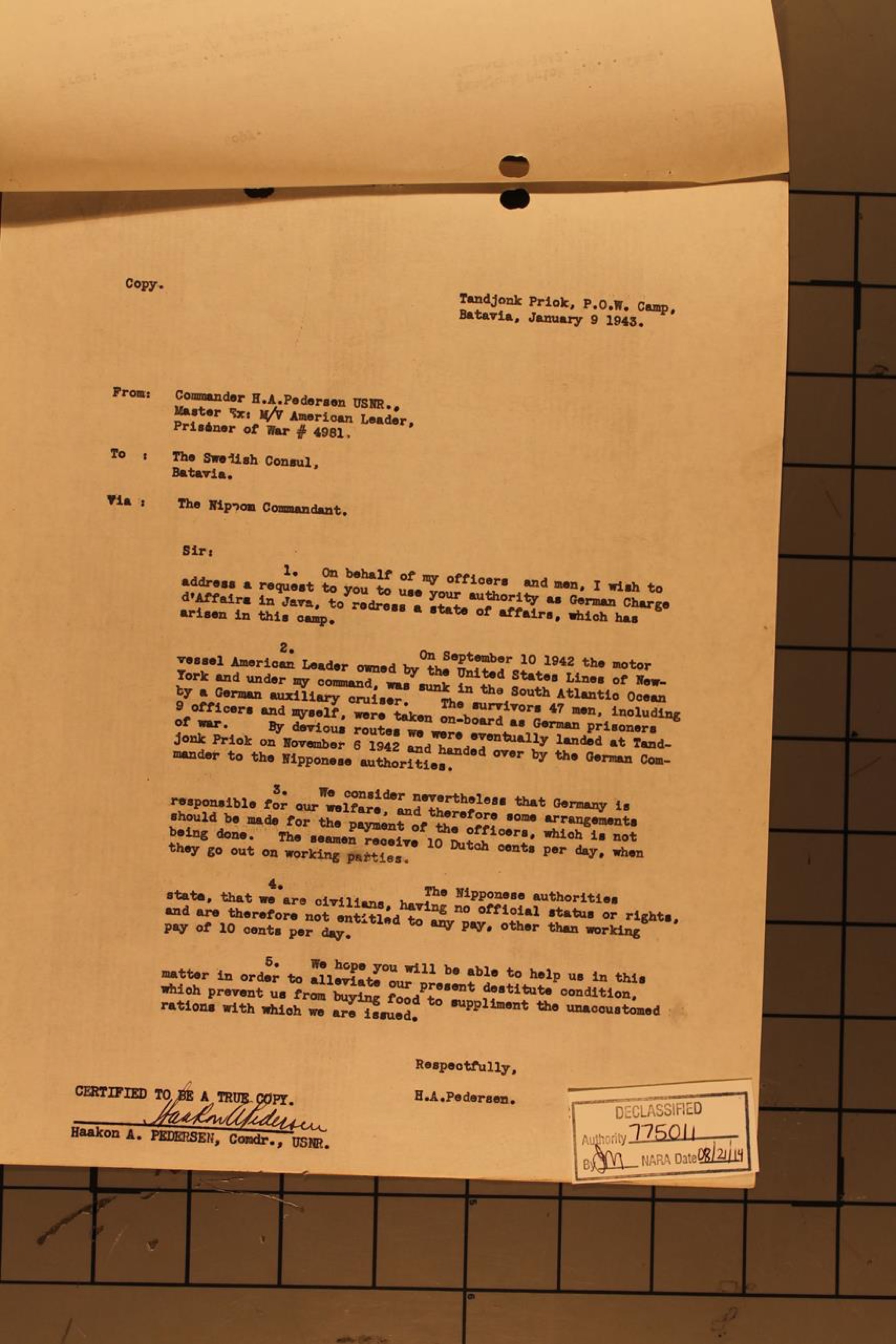
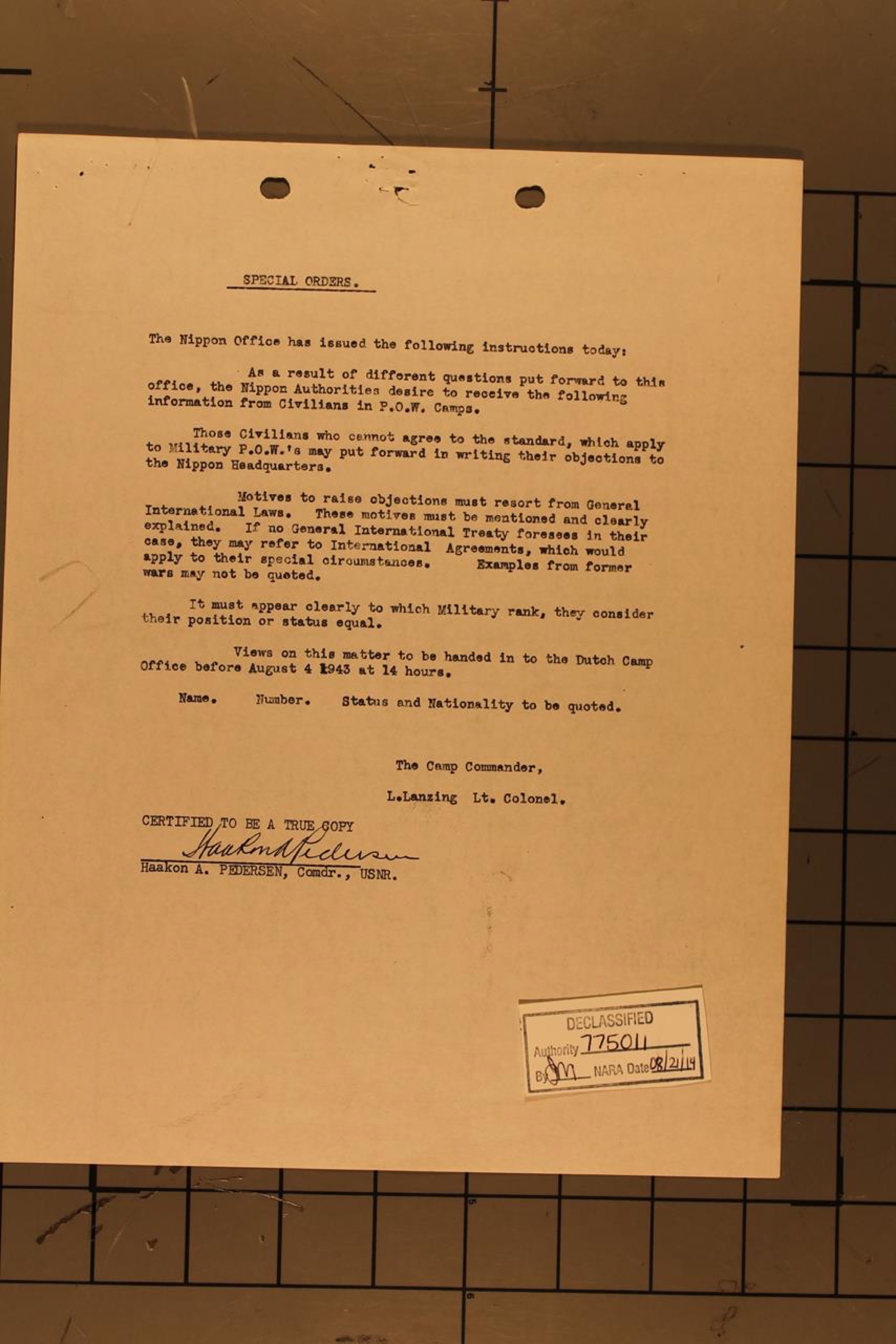
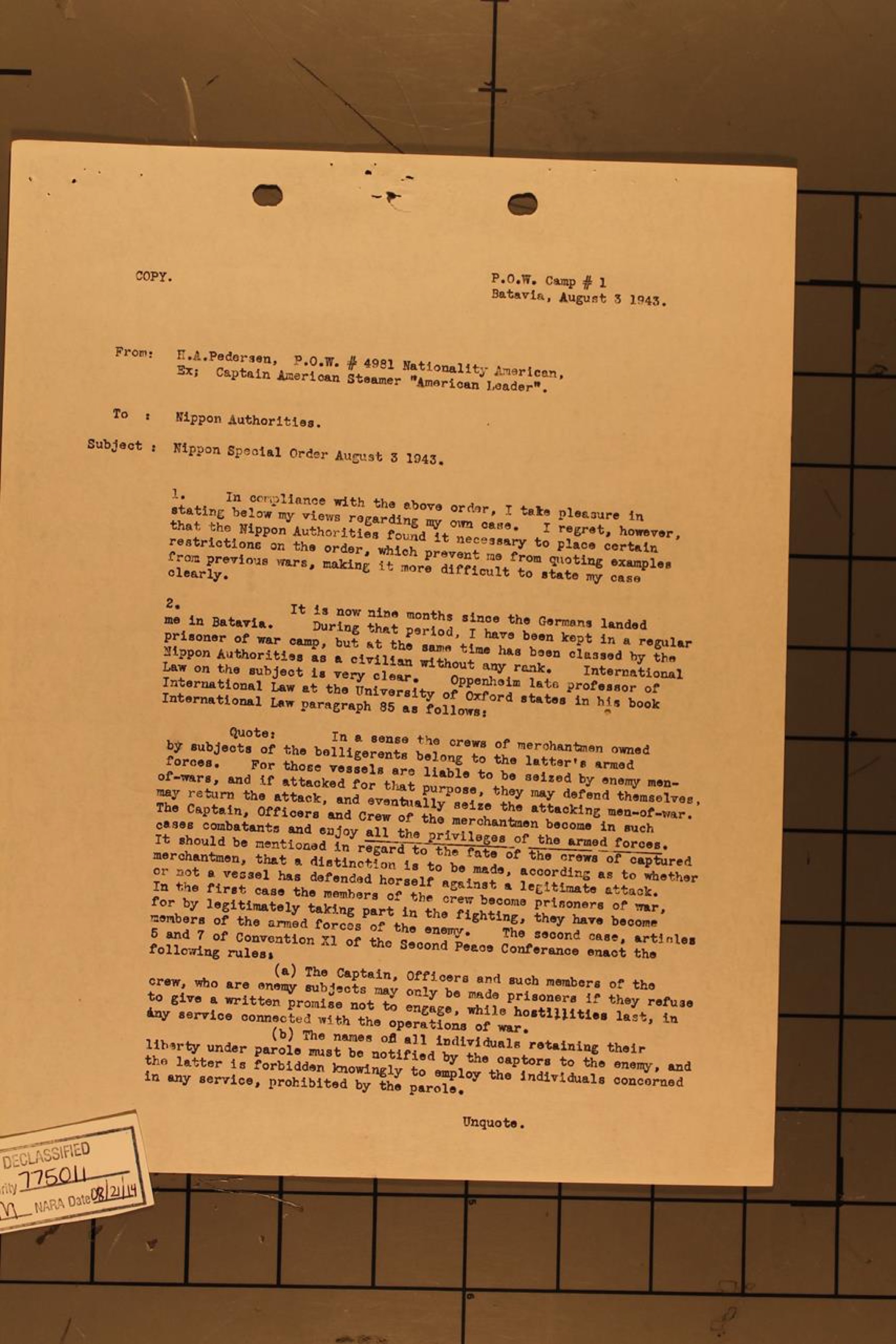
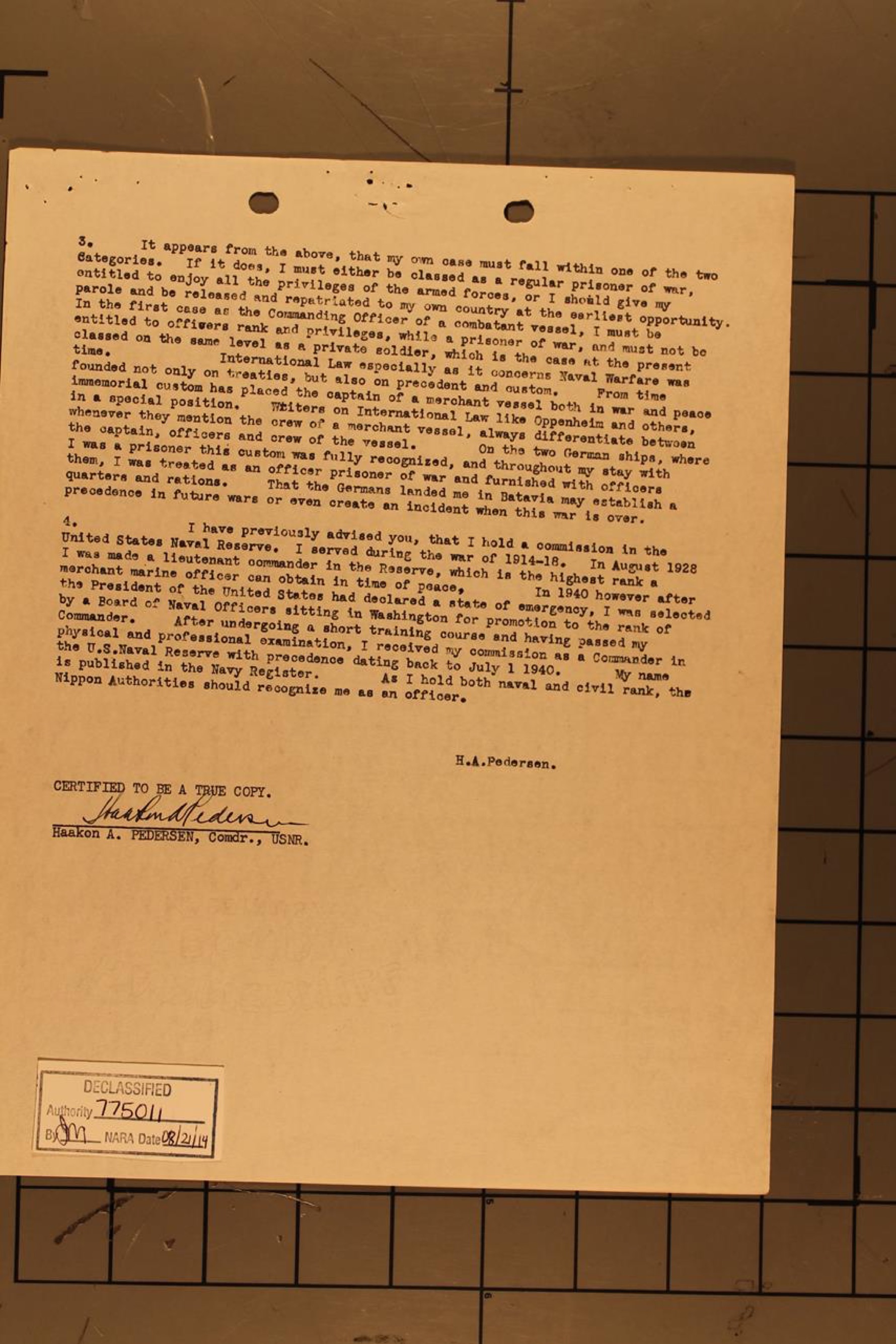
Following Kamada’s sentencing is a number of affidavits and interviews. Tucked among them is a “Record of Evidence” marked as “Secret”; it holds copies of several letters Commander Pedersen, USNR submitted while interned at Tandjonk Prick Prisoner of War Camp to either the camp commandant or Swedish Consul in Batavia. He protested the treatment of both himself and the men under his care, non-recognition of their military status, and in each communication, he steadfastly maintained:
NEI-0, Serial No. 8 “Record of Evidence” p 2 .
Captain Pedersen was adamant that both he and his officers were commissioned officers in the United States Naval Reserve. He recounted his training, his elevated rank, and war service. His Japanese captors ignored his protests and singled him out for individual humiliation and punishment; they had gone as far as building a solitary cage for him outside the camp commandant’s quarters. It is worth noting that Captain Pedersen was not only concerned with the lot of the licensed officers from his ship – their U.S.N.R. status was easier to explain or justify than that of his unlicensed crew. He did, however, cite international law in one of his letters, stating his was a belligerent ship and his entire crew should be afforded military privileges – the most important was pay. It is a curious thought that Prisoners of War needed to be concerned with money, but the few extra cents given to officers enabled them to purchase additional food from the Japanese – or a meager buffer against starvation.
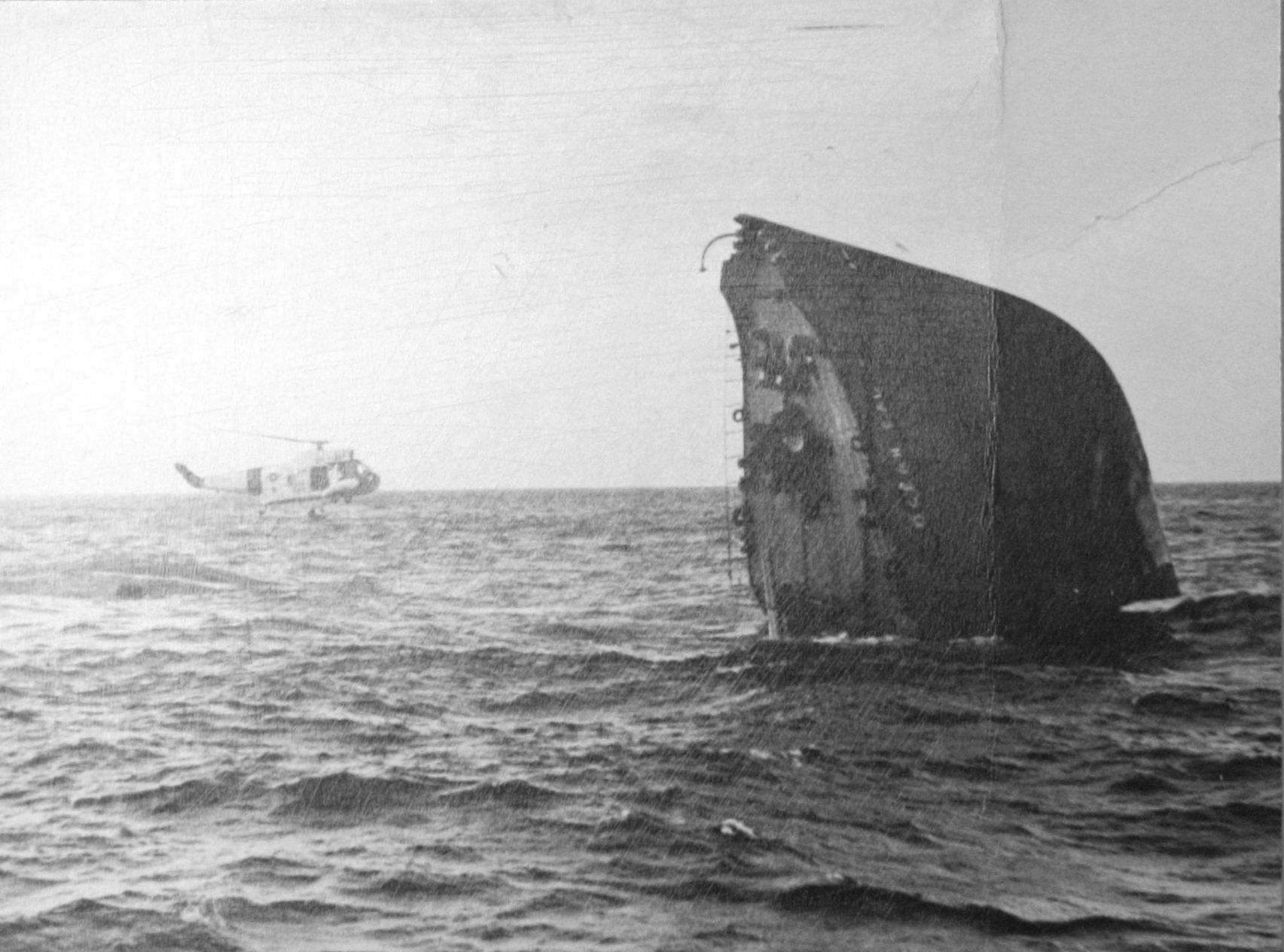
SS American Leader, n.d. Col.: IW
Haakon Anderson Pedersen was born in Arendal, Norway on April 12, 1891. He first went to sea in September 1907 at age sixteen as a “deck boy” aboard the Norwegian Bark Formica – a windjammer involved in the lumber trade.
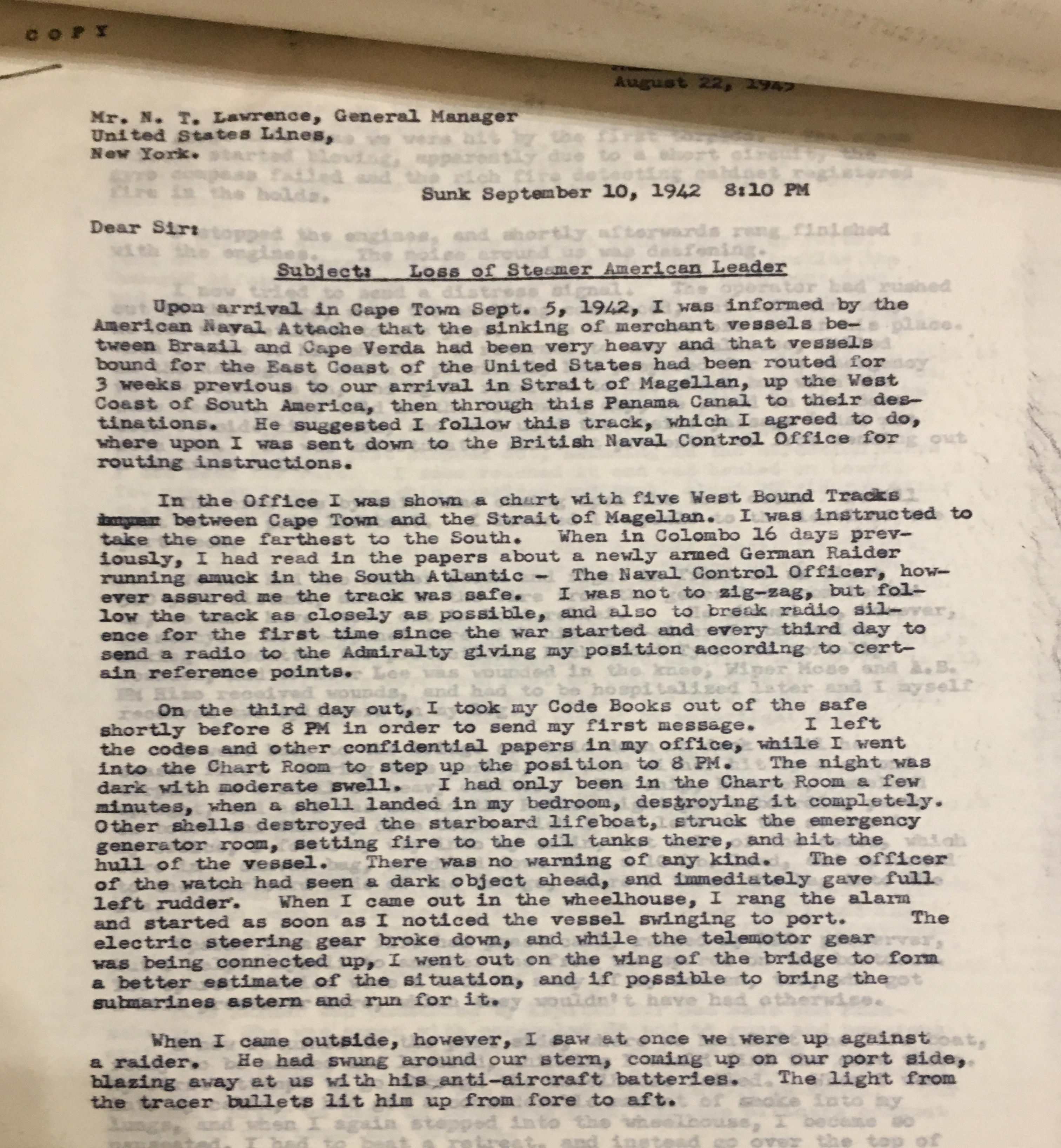
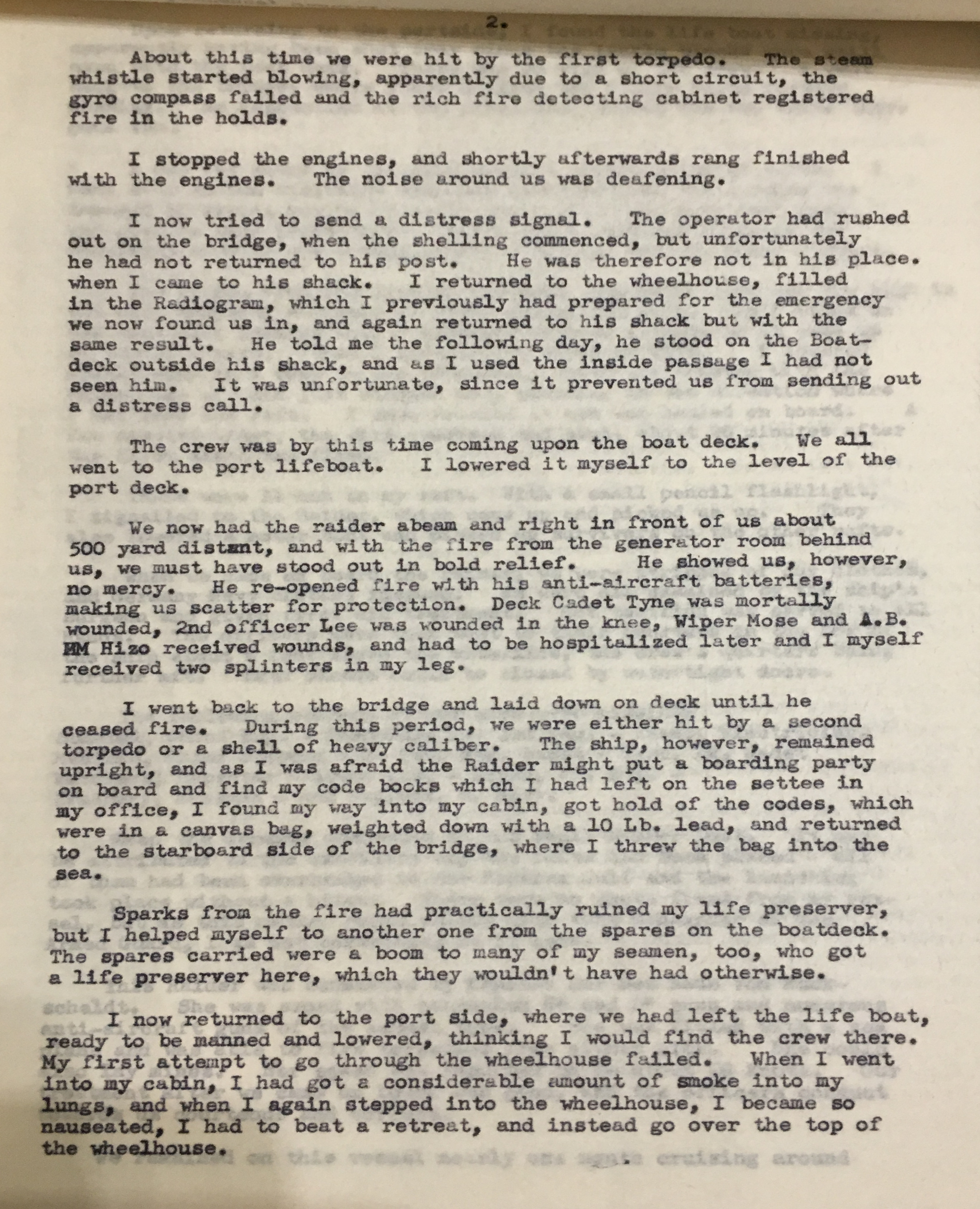
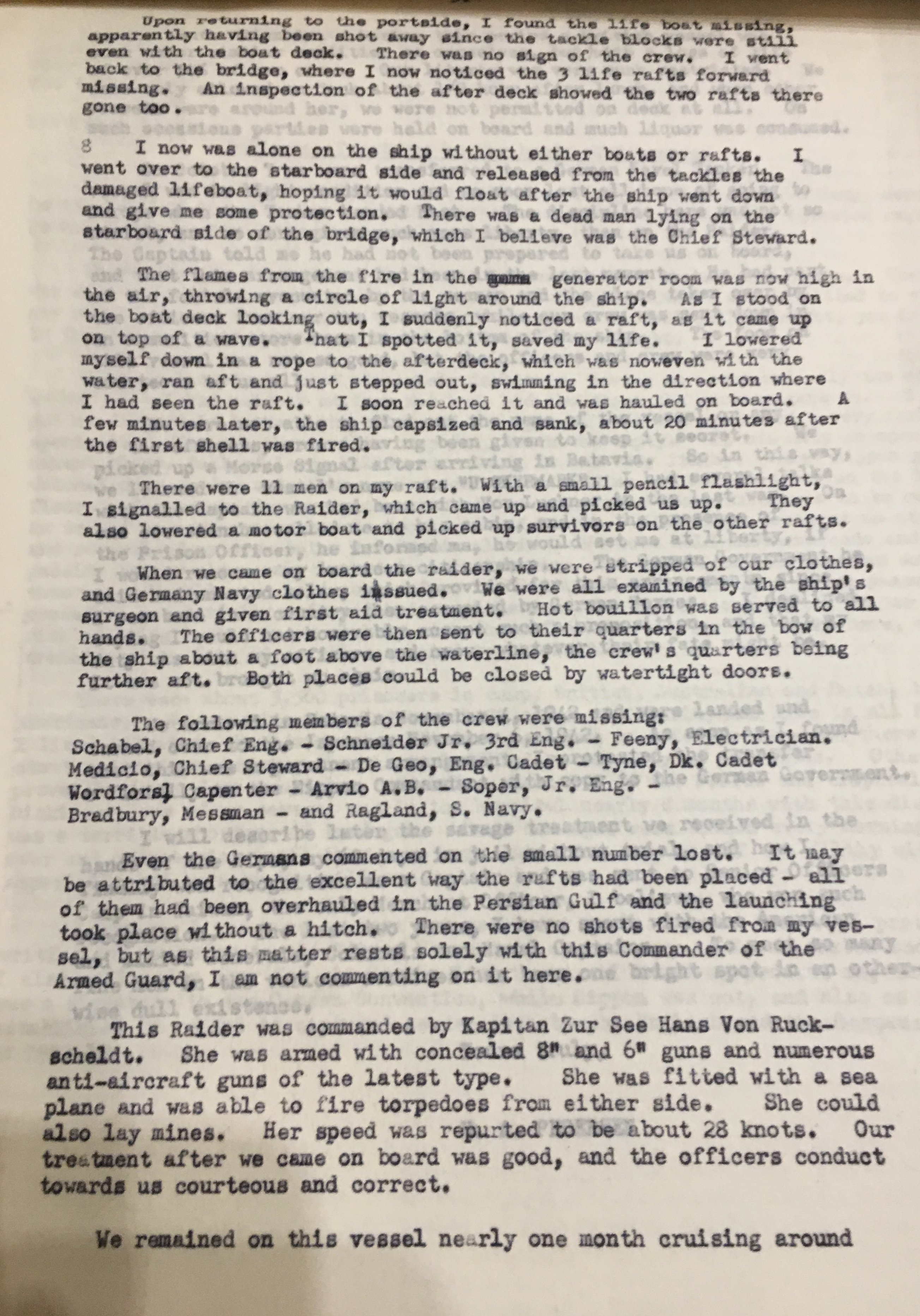
H. A. Pedersen Report: Loss of SS American Leader & Imprisonment
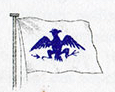
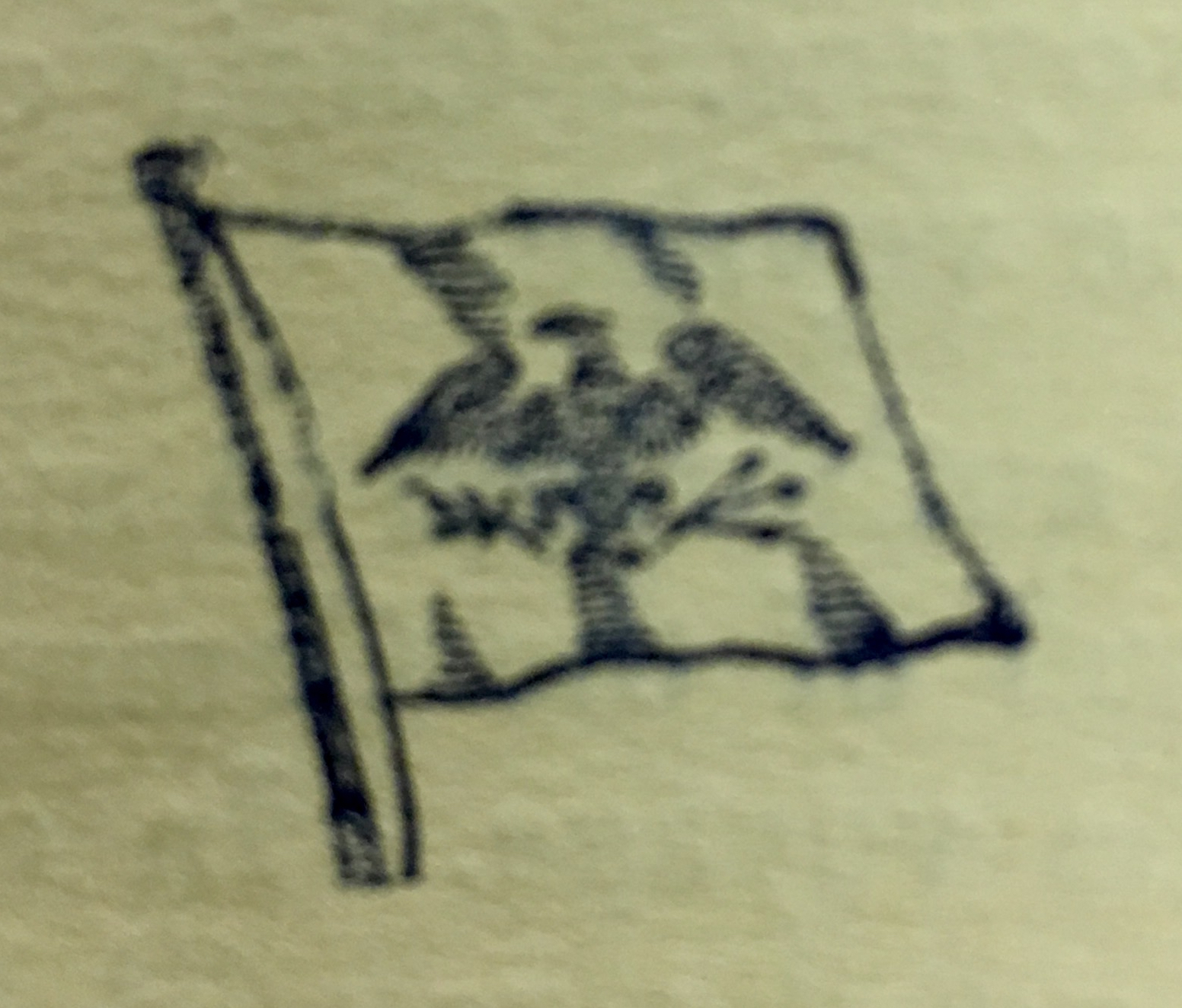
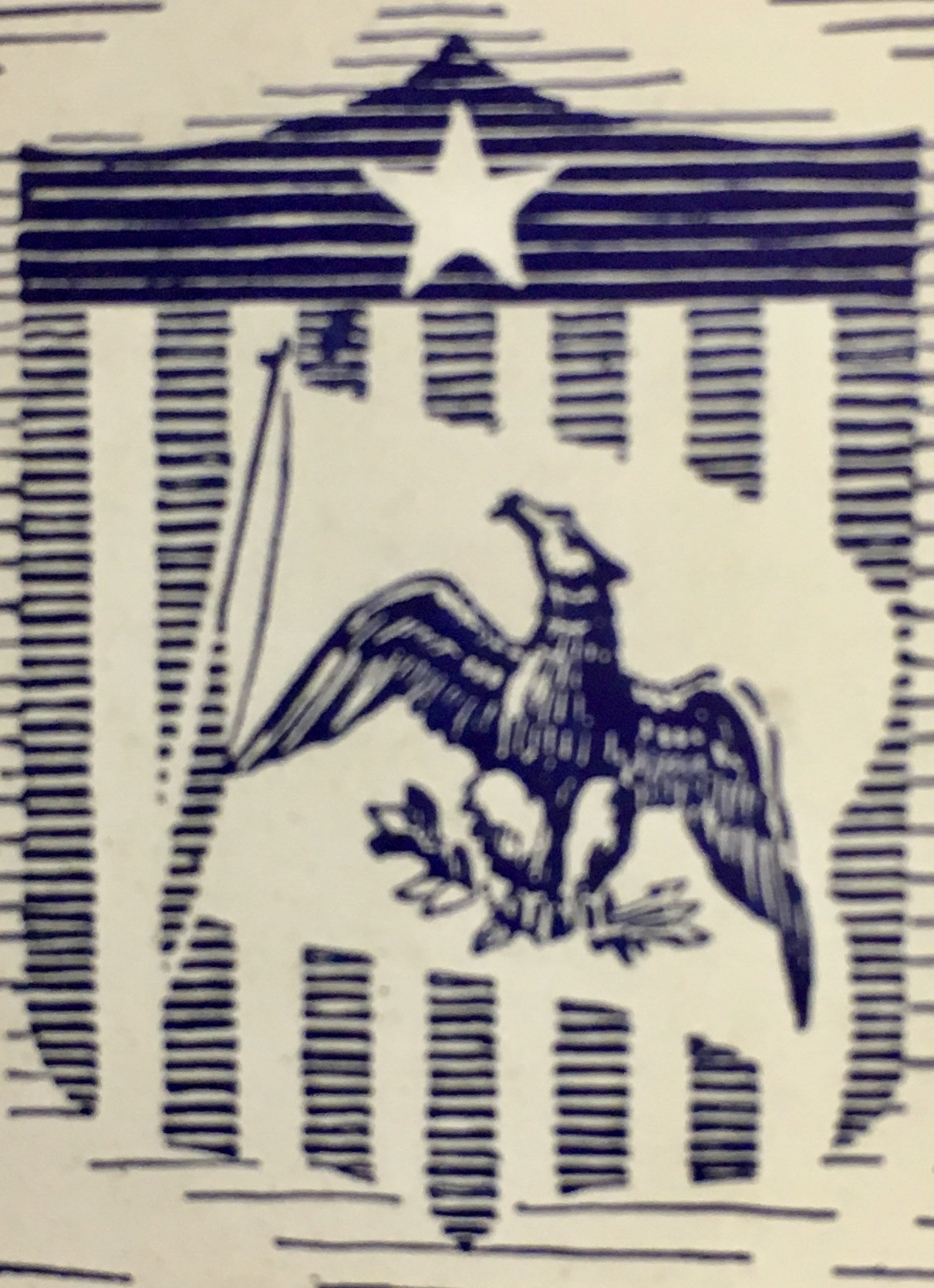
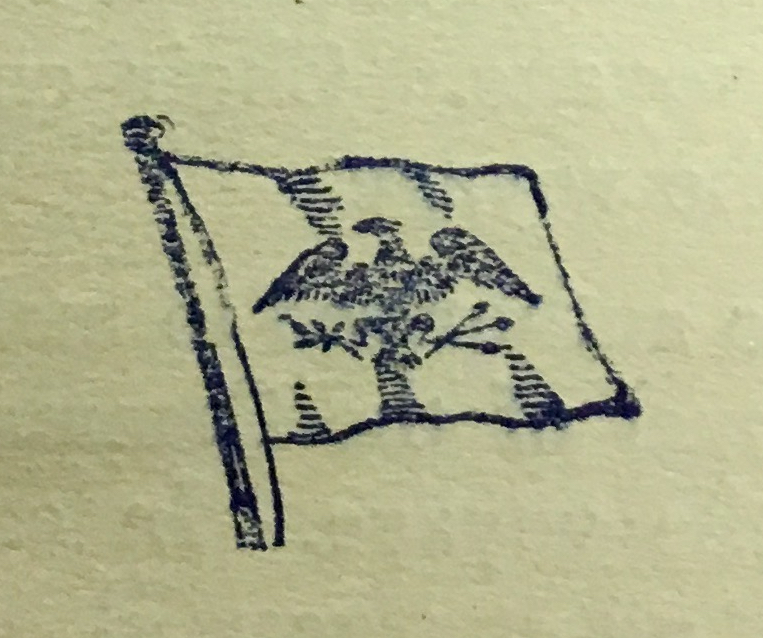
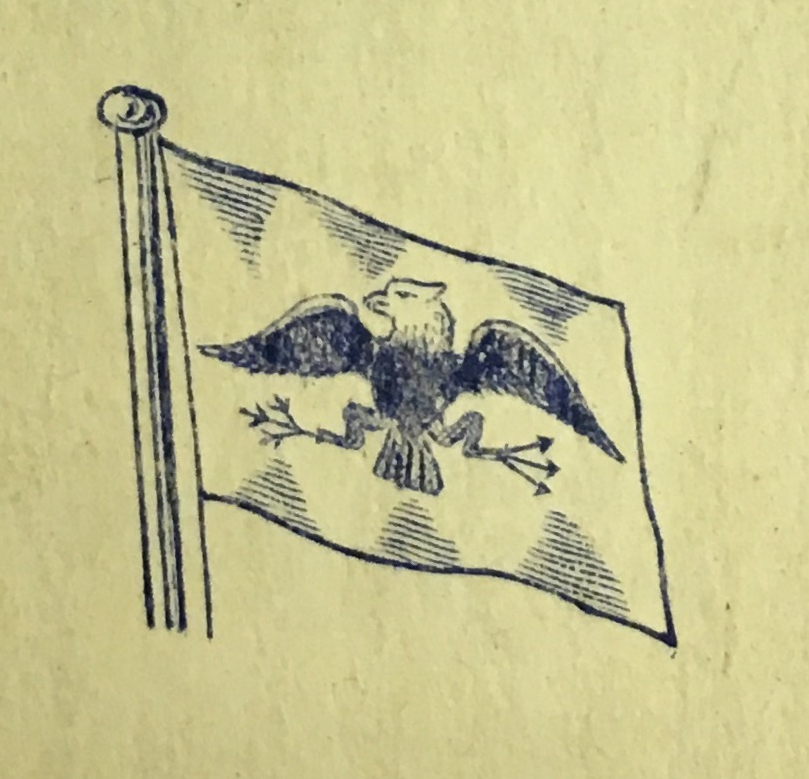
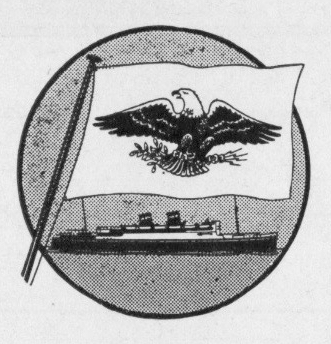
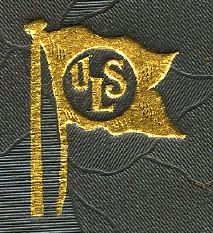
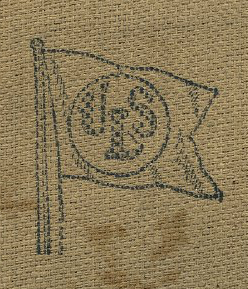
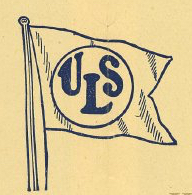
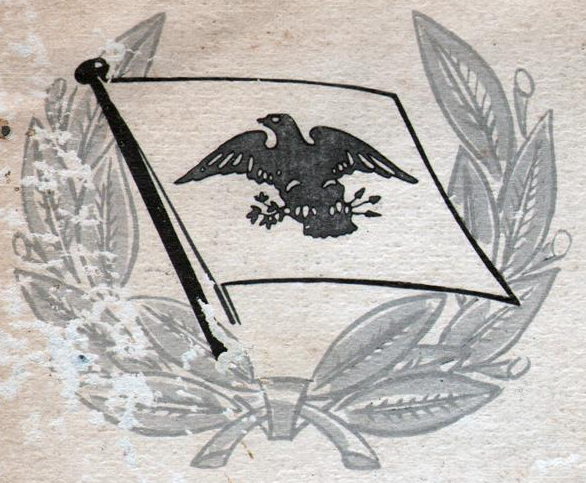
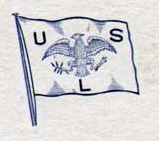
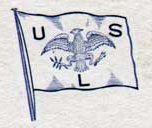
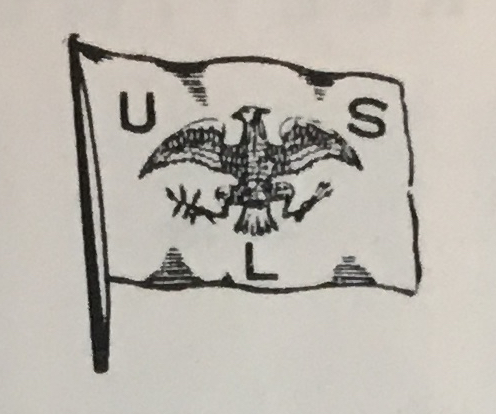
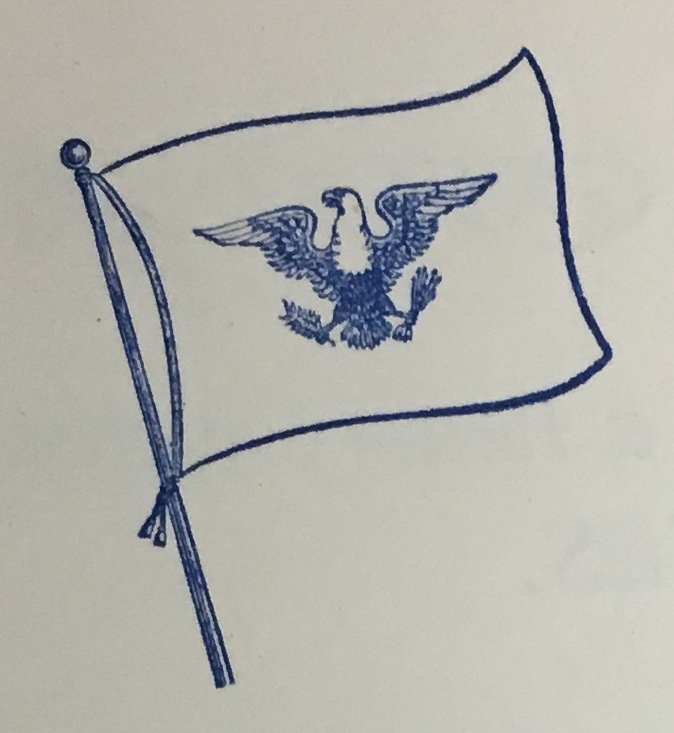
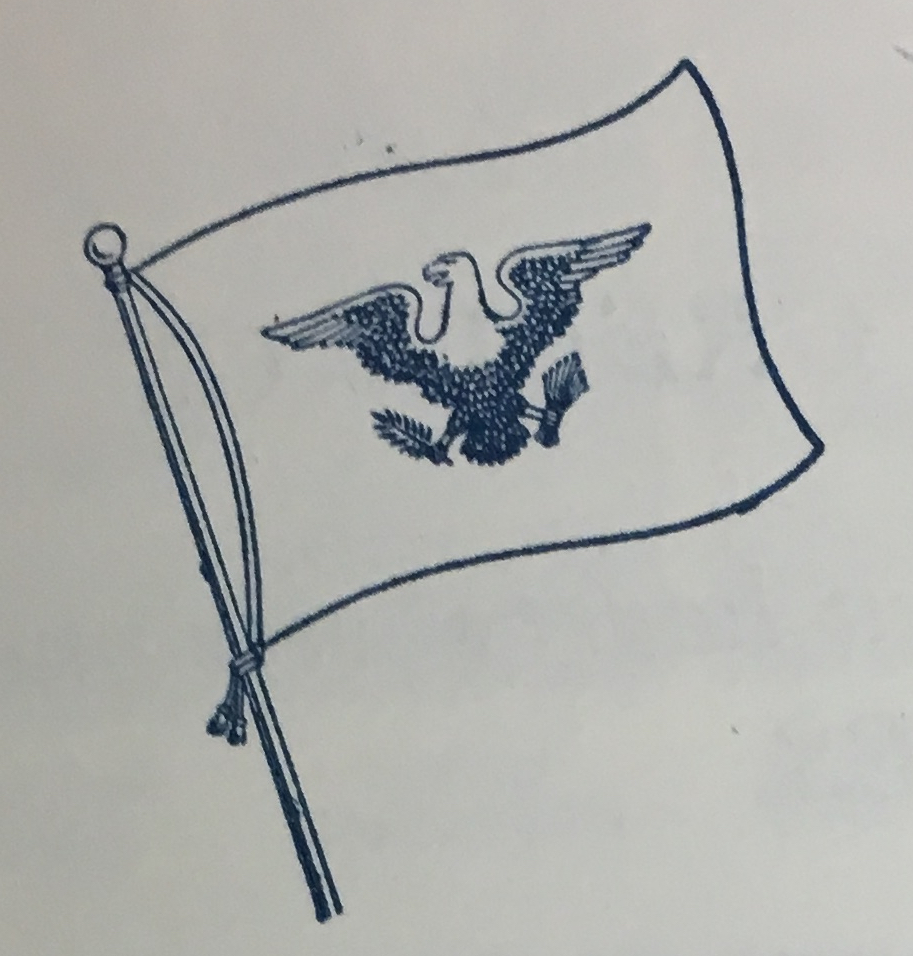
From its inception to its dissolution, United States Lines (USL) tinkered with the most visible element of its corporate identity: its house flag. Among merchant seamen, a steamship company’s house flag was colloquially known as the “Bread and Butter flag,” yet among United States Lines employees, it was first called the “Blue Goose” through the 1930s and 1940s, and later the “Screaming Eagle” during the company’s halcyon SS United States period. Yet, a bird did not always grace the USL flag.
Painting USL corporate logo and house flag changes with broad strokes:
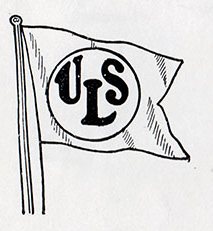
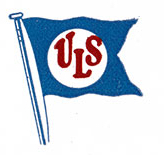
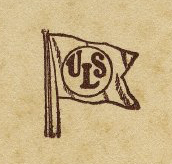
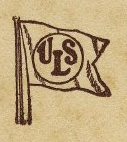
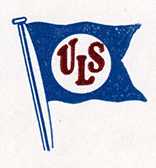
1921-29 USL was a post-World War I United States Shipping Board (Federal emergency agency created by the “Shipping Act” (39 Stat. 729), September 7, 1916) company; its agents were Roosevelt Lines among others. In 1921 the USL house flag was flown for the first time; the company was identified by a blue swallowtail flag with the Deco letters USL in red on a white disc:
One of the largest of Saturday afternoon armadas, consisting of ten ships, bound for eight European countries, got away yesterday [September 3, 1921]. The most interesting ship to Americans was the George Washington, which left Hoboken flying the new house flag of the United States Lines, consisting of a white circle on a blue field, within which are the letters U. S. L. in red. This is the first time the liner has flown these colors, as on her maiden voyage under the American flag last month she was a United States Mail liner.
“30 of 52 liners at sea are bound for Europe.” New York Herald (New York, New York), (Sunday) September 4, 1921, p 26.
In 1924, at least, the stacks of USL ships had the familiar red, white, and blue bands at the top – but also the United States Shipping Board (USSB) shield (see February 1923 for a modified logo).
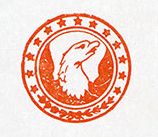
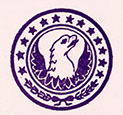
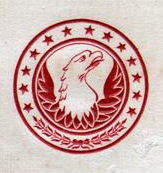
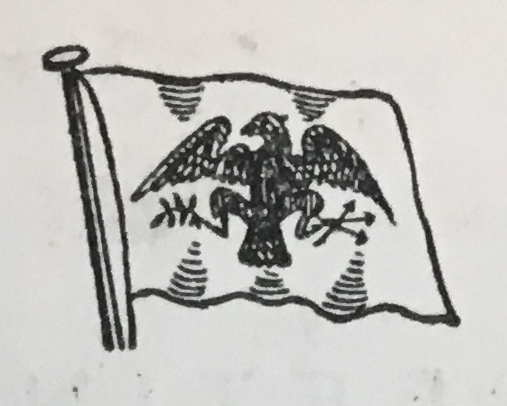
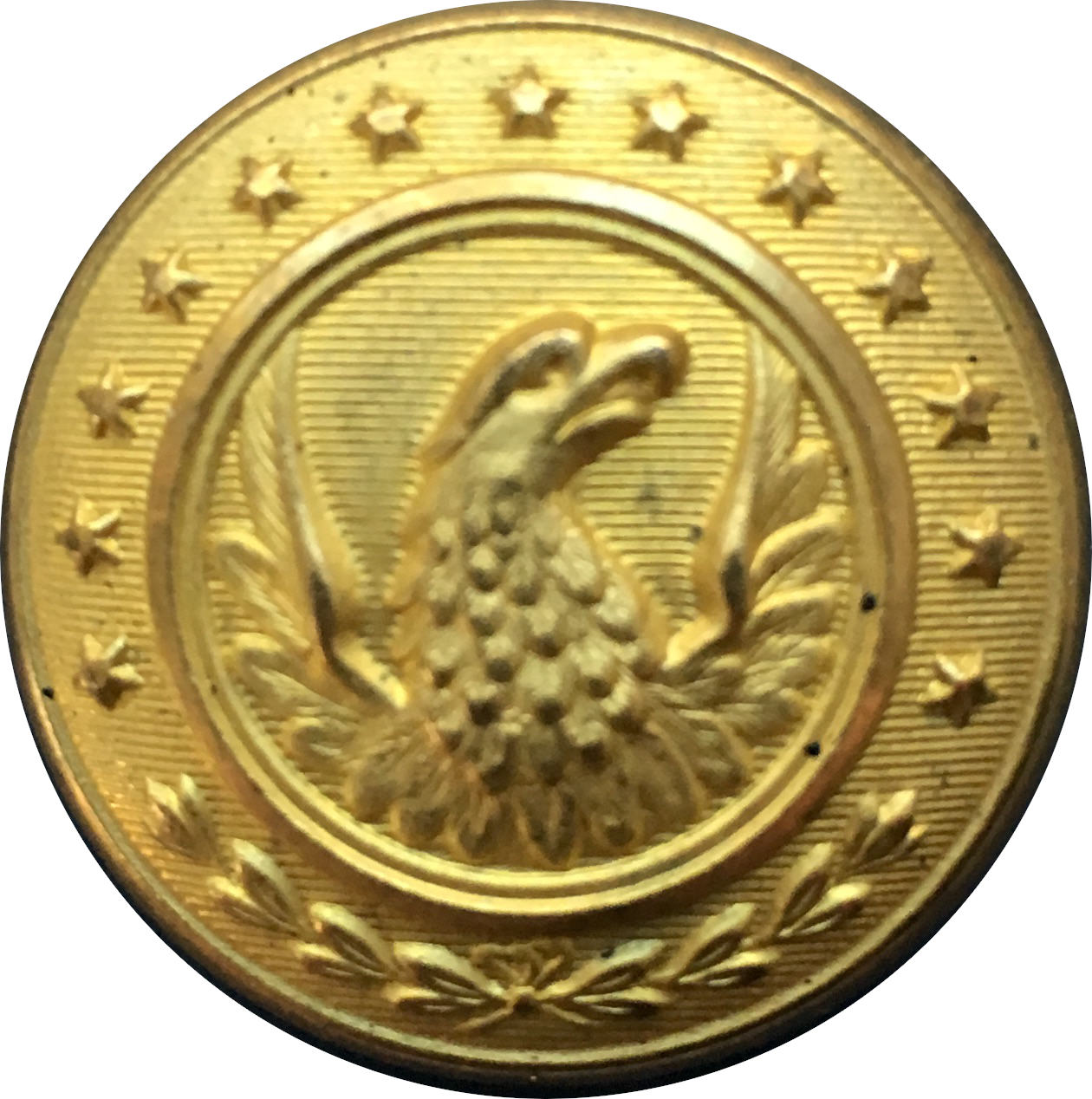
1923-29 For the brief career of the SS Leviathan under the command of Commodore Herbert Hartley, she flew the USL house flag, yet had a distinct logo used on cap badges, buttons, and for the ship’s visual identification: an eagle’s bust ringed by thirteen stars, with two crossed laurel branches at the base of the ring. Under Chapman (see below) and through 1934, the ship’s company no longer wore distinctive uniforms, but the logo remained on onboard ship publications.
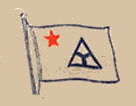
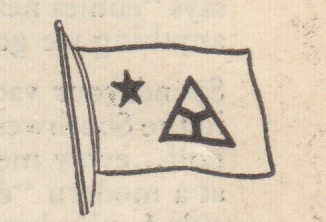
1929-31 Paul W. Chapman & Co. purchased both USL and American Merchant Lines (AML) from USSB on 14 February 1929 and merged them as United States Lines (Inc.); he proceeded to nearly sink the company. Thus far there are two flags identified as flown during the Chapman era. The first was hoisted above the SS Leviathan on the morning of 8 April 1929 by Joanna Chapman, the daughter of Paul W. Chapman. This flag was described by the press as a “white field, red star, and blue triangle.” The blue triangle – speculated in some circles as a stylized propeller – was reportedly a Chapman family crest and the propeller is the letter “Y.”
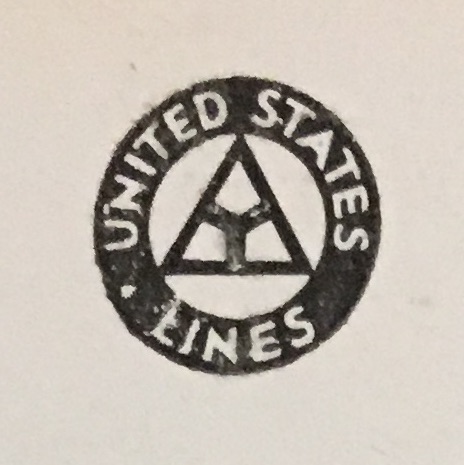
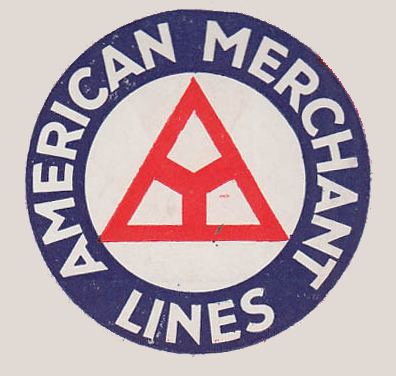
In October 1930, a second flag appeared on USL and AML ships: one that uses the Chapman crest in red and circumscribed by a blue band with the USL name in white block letters. The logo is on a white field without a red field. This same flag and logo were also used by the American Merchant Line (AML).
1931 The U.S. Government re-took control of the company. The USL house flag became the red triangle with a blue circle device on a white field – absent the red star.
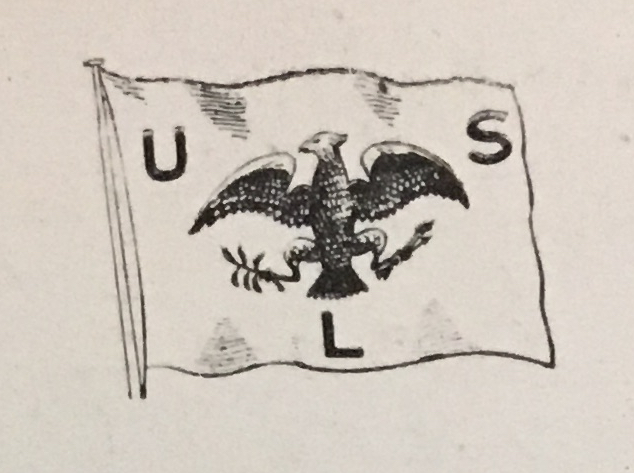
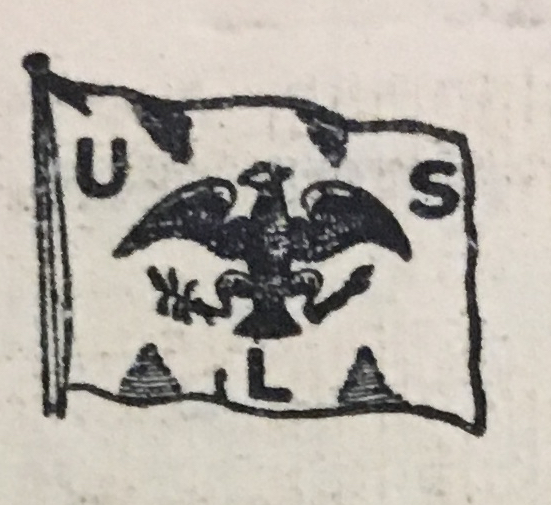
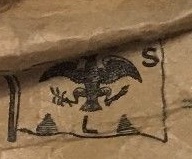
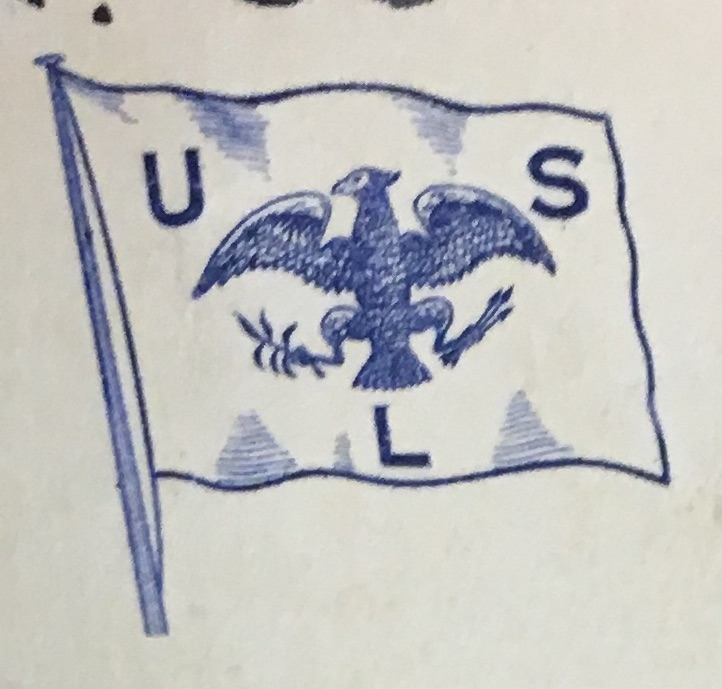
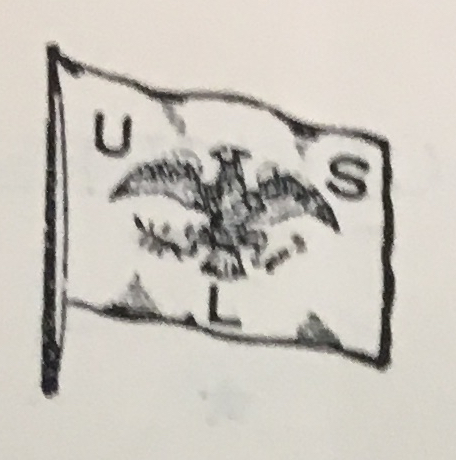
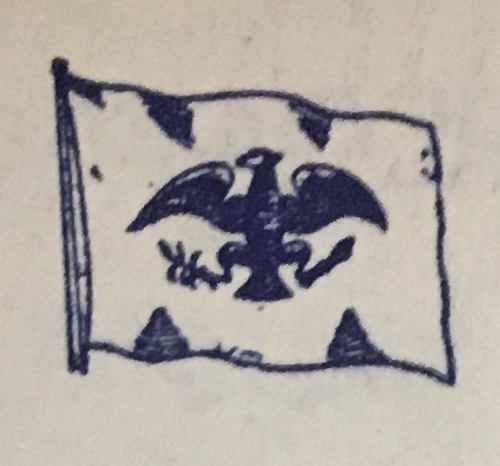
1932-1939 Under International Mercantile Marine ownership, USL and AML had the same house flag as the very successful Panama Pacific Line (PPL) – the yet-to-be-dubbed screaming eagle – albeit with the letters USL and AML – respectively – flanking the central eagle. The eagle was dark blue.
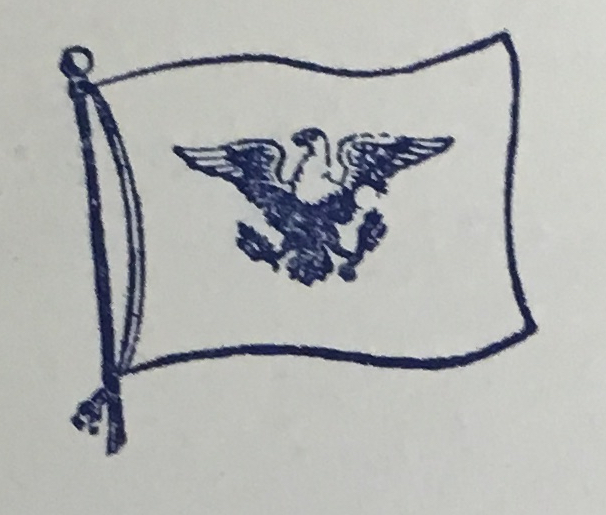
1939-1969 PPL dissolved with USL taking PPL’s flag. The house flag was tinkered with one last time in 1947: the eagle’s dipping wings changed to straight, streamlined wings, and it got a haircut. The sometimes scrawny and disheveled goose (vid.: August 1939) was a “Screaming Eagle” at last.
American Line flags
American Line was the steamship line from which IMM took the most enduring image of its corporate identity: the blue eagle. It was formed in 1871 and merged with several others to form IMM. By 1932, the Line faltered and the core of its remaining assets and livery went to PPL.
October 1899
SS St. Paul
June 1923
SS Manchuria
Panama Pacific Line flags & logos
Just as PPL took the insignia of the older IMM subsidiary, American Line when it dissolved in 1932, so did USL take PPL’s upon its demise six years later. Faced with insurmountable financial and labor set-backs, the Line shuttered in May 1938. As can be seen in the gallery, the changeover for the USL fleet to the new house flag was not completed until mid-1939; the sister ships SS America and SS Washington took the new house flag first. What assets remained of PPL were transferred to Moore-McCormack Lines.
December 1923
Panama Pacific Line
December 1923
Panama Pacific Line Passenger List
February 1925
SS Kroonland Panama Pacific Menu
December 1926
SS Finland Panama Pacific Line
December 1926
SS Finland Panama Pacific Line
January 1932
SS Pennsylvania Panama Pacifc Line
November 1938
Panama Pacific Line advert, Ocean Ferry
USL flags & logos
The below gallery details USL logos and flags found on various pamphlets, documents, passenger lists, and other ephemera from both the AMMM and my collections. Unless indicated otherwise, the images are from passenger lists from various USL ships.
July 1922
SS America
July 1922
SS President Monroe Music Program
1922
SS George Washingon
February 1923
USL
February 1923
USL
October 1923
SS President Arthur Menu
May 1924
USL
1924
SS Republic Flag
1924
USL Timetable Brochure
June 1925
SS Leviathan
August 1925
SS Leviathan
1925
SS America Diary
July 1926
SS Republic Ticket
1926
USL Malmo Office Passport sleeve
December 1927
USL
May 1926
SS George Washington
June 1928
SS Leviathan Menu
June 1928
SS Leviathan Music Program
August 1928
SS America
August 1928
SS America
August 1928
SS America
March 1929
SS Leviathan
August 1929
SS Leviathan
December 1929
USL-AML Letterhead
January 11. 1930
Advertisement
July 1931
SS George Washington Farewell Dinner
1931
USL Postcard
January 1932
SS President Roosevelt
February 1932
SS President Roosevelt
March 1932
SS President Harding
March 1932
SS President Roosevelt
March 1932
SS President Roosevelt
October 1932
SS Manhattan
January 1933
SS Manhattan
May 1934
SS Washington
August 1934
SS Manhattan
December 1934
USL-AML Letter
1934
SS Manhattan
1934
SS Leviathan Stationary
January 1936
SS Manhattan
January 1936
SS Manhattan
October 1936
SS Manhattan
January 1937
SS Washington
June 1937
SS Washington
May 1938
SS Washington & SS Manhattan
August 1938
SS President Roosevelt
August 1938
SS Washington
July 1939
SS President Roosevelt
August 1939
SS Washington
August 1939
SS Manhattan
October 1939
SS President Harding
January 1940
SS Washington
September 1946
SS America II
September 1947
SS America II
October 1947
SS America II
July 1958
SS United States
August 1969
SS United States
American Merchant Lines flags & logos
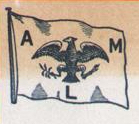
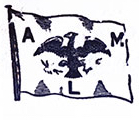
Although American Merchant Lines is not directly connected to the “genealogy” of the development of USL flags, it operated in parallel with USL. After the general failure of Dollar Line to manage its ships, USSB seized its ships and organized a number of them into American Merchant Lines in 1923. J. H. Winchester & Co. was tapped as the U.S. Government’s agent. The Line was later sold to Paul W. Chapman & Co. in 1929 along with USL. Despite AML generating a profit, the overall balance was not in Chapman’s favor, and the USSB sold both to IMM in 1932. AML was a favored “one class” line by budget-minded travelers, but it too failed and was merged with USL in 1937. On the eve of the Second World War, USL sold the old AML ships to a Belgian shipping concern as part of USL subterfuge to circumvent the United States Neutrality Act. Note the change in company livery in going from J.H Winchester & Co, management to that of IMM. IMM used the old American Line flag albeit with AML surrounding the blue eagle – just as it had with USL.
April 1924
SS American Trader Menu
April 1929
SS American Trader Farewell Dinner
May 1929
SS American Shipper Menu
December 1929
USL-AML Letterhead
1931
June 1932
SS American Banker Farewell Dinner
June 1934
SS American Farmer Menu
June 1934
SS American Farmer Menu
June 1936
SS American Trader
In “Journal of Commerce” February 23, 1943. Col.: U.S. Lines papers, AMMM
References
“Chapman Take Over Leviathan for $4,000,000.” Daily News (New York), April 9, 1929, p. 50.
“30 of 52 liners at sea are bound for Europe.” New York Herald (New York, New York), September 4, 1921, p 26.
Many thanks are due to Dr. Joshua Smith of the American Merchant Marine Museum for granting me access to the PPL and USL passenger lists, and Robert Sturm at the United States Lines Archive for his sage insights on USL culture.
The header image is a circa 1963-1967 flag in the United States Lines Room at the AMMM (accession number 1981.225.0001).
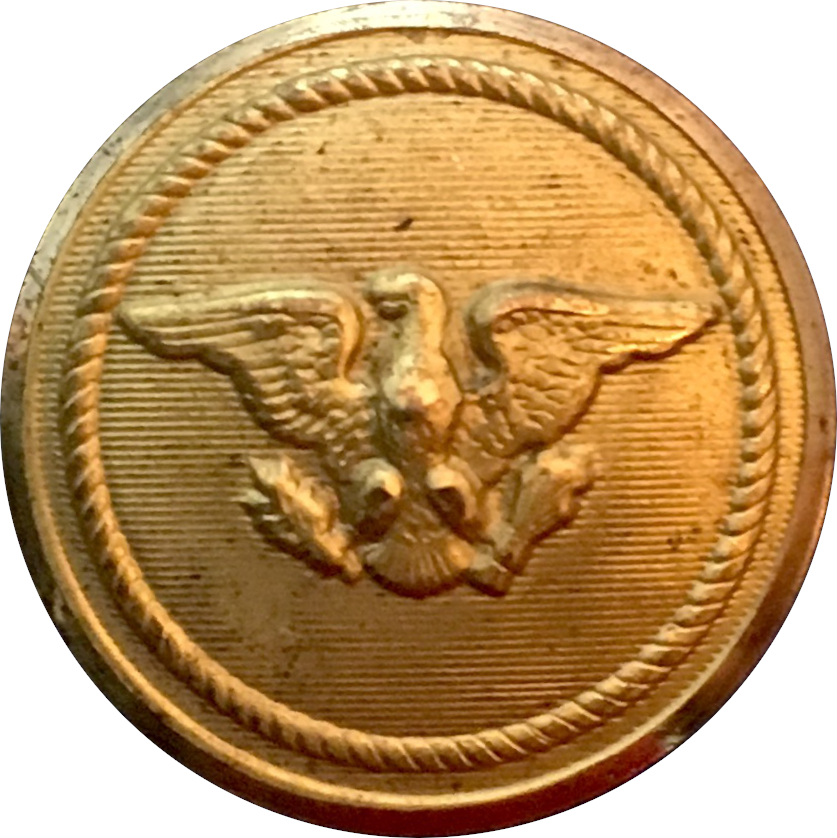
Usually, when a steamship company of any gravitas incorporates itself, it assumes all the trappings of a maritime organization. It usually invests in stock certificates depicting sea-borne commerce, a house flag flown from the masts of its vessels, cap devices for its officers and stewards, and buttons to adorn its uniform coats. United States Lines (USL) throughout its history was no different. Below, please find an array of buttons made expressly for United States Lines.
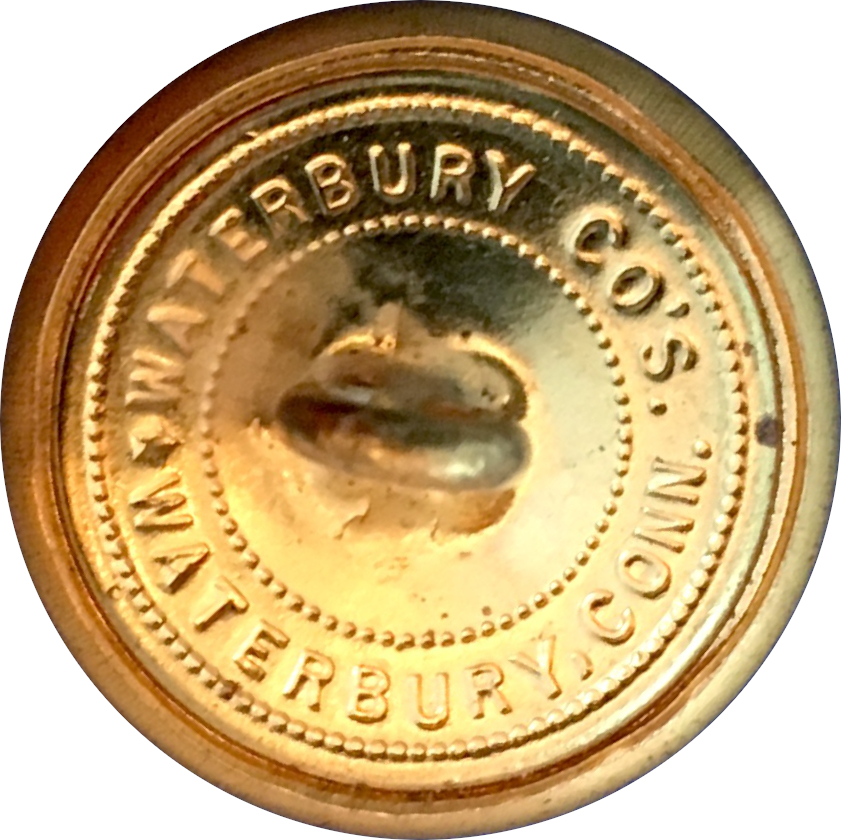
A discussion point especially worth considering is button backs are often excellent aides to determine the period of button manufacture, but not necessarily wear. Large steamship companies with several corporate incarnations like United States lines buck the trend. Buttons, like cap badges, were bought from uniform shops or disbursed by pursers – and they continued to be disbursed until their stock was depleted. And uniform items were often recycled either out of goodwill or for practical reasons. For instance, aboard United States Lines ships in the 1950s corporate policy and tradition encouraged licensed officers to dine together in the ship’s informal dining room – the saloon. Dress requirements of the era dictated the wear of khaki coats in the saloon; ever-practical, officers loaned each other coats between watches or sold them amongst themselves when they paid off – an engineer might be wearing a predecessor of two or more voyages ago’s coat to appear properly attired for dinner! Regarding buttons, this meant a coat could have older-style buttons for quite some time with no one the wiser. Moreover, the Second World War confused the once-staid field of button wear; whereas the United States Navy and steamship companies once exercised tight control over the supply of buttons, wartime exigencies introduced substitutions and ersatz designs – thus, once established button designs fell away, leaving United States Navy or “yacht club” buttons as the only options for seamen – the latter being United States Merchant Marine Academy Cadet buttons (!).
United States Lines Uniform Buttons gallery
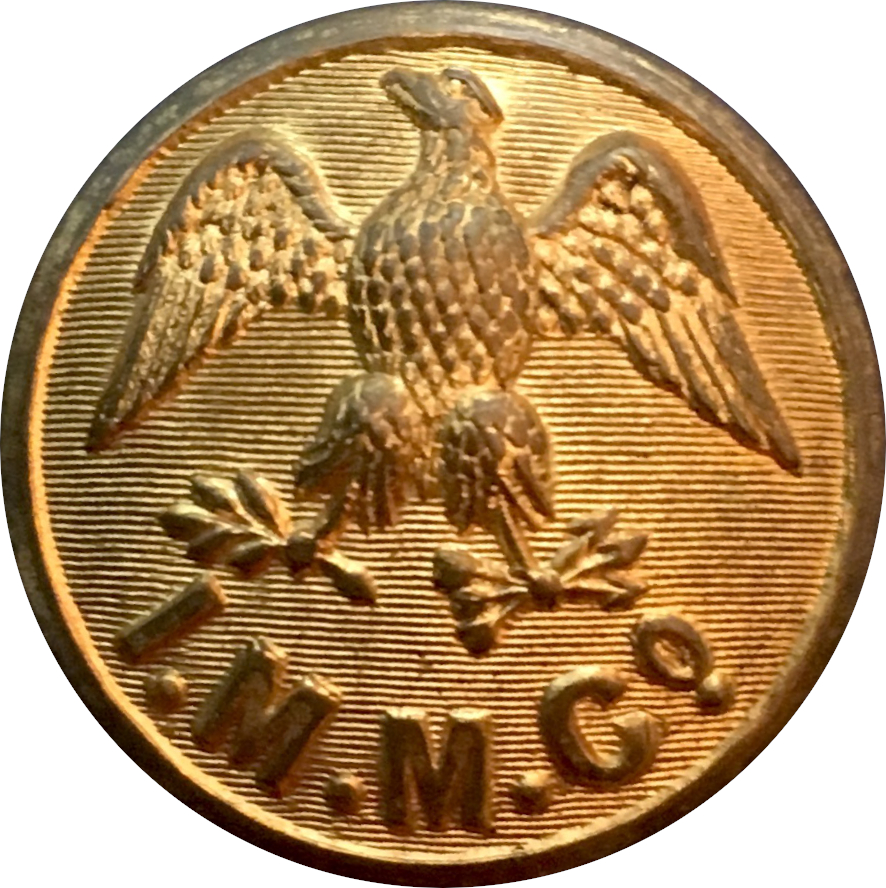
IMM Co. 1920s, obverse
VC-84-12
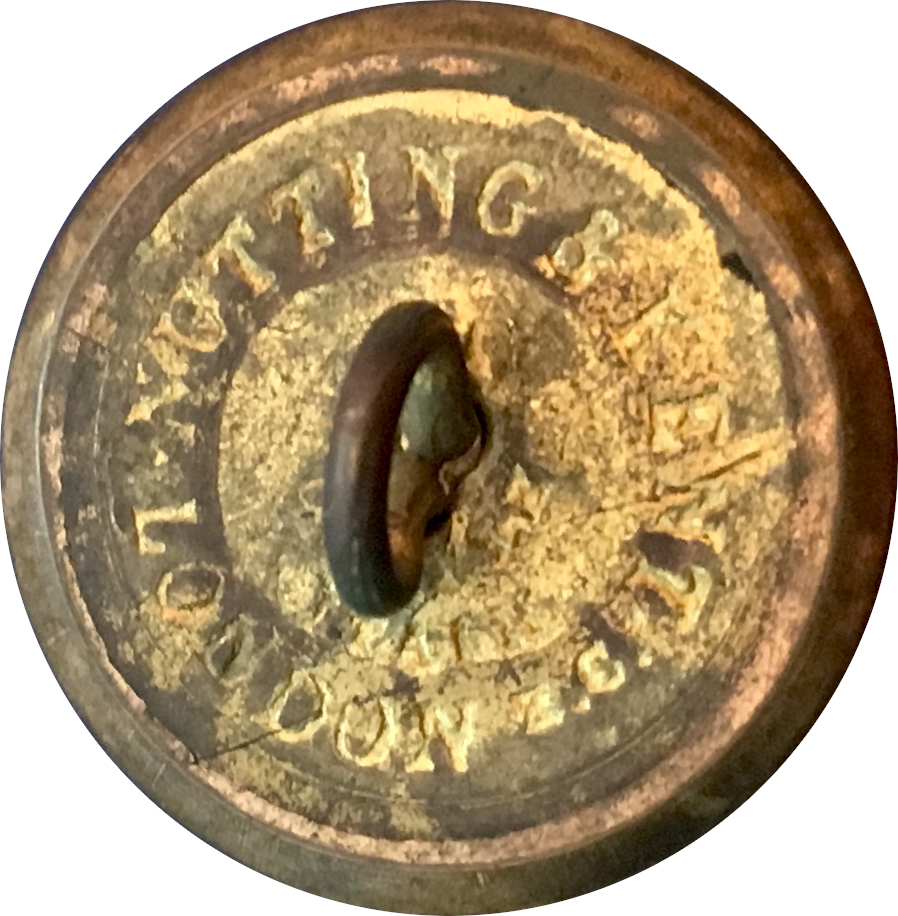
IMM Co. 1920s, reverse
VC-84-12
USL 1920s, SS Leviathan, obverse
VC-88-27
USL 1920s, SS Leviathan, reverse
VC-88-27
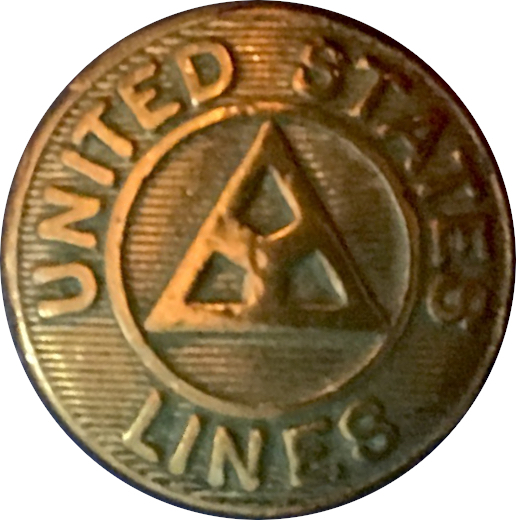
USL 1929-1931, obverse
VC-88-26
USL 1929-1931, reverse
VC-88-26
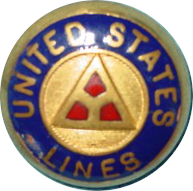
USL 1929-1931. obverse
VC-88-26 (enamels)
Col.: Anon
USL-AML 1929-1931 "Chapman Era," obverse
no catalog number
Col.: Anon
USL late 1940s, obverse
VC-88-28
USL late 1940s, reverse
VC-88-28
In looking at United States Lines buttons, the timeline admittedly appears choppy. This has as much to due with corporate history as with currents within merchant marine attire.
NB.: Please click on the bold text for a large-size image of the cited button.
USSB years 1923-1929
[VC-88/27] begins the collection of United States Lines buttons; it was originally the button for officers serving on SS Leviathan in 1923 continued to be seen up until the 1930s; its wear continued after the scrapping of SS Leviathan since its personnel transferred primarily to Panama Pacific Line ships – as uniforms wore out, this button disappeared.
Chapman era 1929-1931
[VC-88/26] inaugurates the short Chapman era (1929-1931) that began when the United States Shipping Board (USSB) sold USL to Paul W. Chapman & Co. and ended when the lack of profits practically sank the company. The button employed a relatively simple Deco logo and its design was reproduced on flags, ephemera, medals, and buttons – and it stood out since it resembled a stylized ship’s propeller. These buttons came in gilt and nickel for Deck/Engineering and Steward’s Departments, respectively; First Class stewards were nattily uniformed and they sported buttons with enamels – the design was mirrored their cap badges. Some of [Chapman era] buttons have an added star to the USL logo – these were worn by employees aboard USL-American Merchant Lines ships (USL and AML were bought together and merged under Chapman).
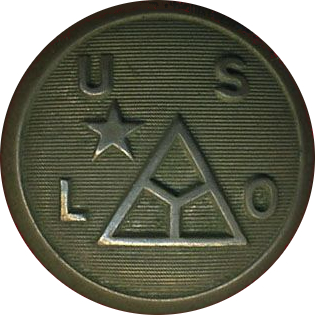
The USLO button was created in 1929, immediately after Paul Chapman took control of USL, and was in use until 1930. The letters are an abbreviation for “United States Lines Operations, Inc.” This company was separate from but related to USL and was under the same corporate umbrella as USL. The firm was concerned with running the assets – boats and utility craft around the docks – and various dockside facilities and warehouses used by the USL fleet. Thus far, I have not come across any definitive photographs of its wear.
After Paul W. Chapman & Co. had both USL and AML taken from it by USSB, the Federal government handed AML to J. H. Winchester & Co. and managed USL alone. During this brief period, I am unaware of any new button patterns coming about; in fact, USL ships continued to wear a version of Paul W. Chapman & Co. flag.
IMM holding 1932-1952
[VC-84/12] wear by USL personnel is debatable since USL did not fall directly under the International Merchantile Marine Company (IMM) corporate umbrella until 1932 – this button pattern is ten years older than the acquisition. After the acquisition, a more generic IMM Co. button, [VC-84/11] was worn on USL uniform whites during the 1930s. In analyzing period photographs, this specific button was not always worn; with USL officers joining the ranks of the United States Naval Reserve (USNR), USL officers often wore USN or USNR buttons when appropriate. With most officers enrolling in the United States Maritime Service in the 1940s for wartime service, they wore that service’s buttons. With the War Shipping Administration’s return of the fleet to USL control in March 1946, USL took a proud view of its wartime service and redesigned both its house flag and introduced a new button design ( [VC-88/28] ) with a re-imagined “Blue Goose”; this button held through the launching of the SS United States, afterward of which United States Navy buttons were exclusively worn.
Harry Manning, 1930s. Col.: U.S. Lines papers, AMMMButton detail; U.S. Navy pre-May 15, 1941 design. Curses!
References
McGuinn, William and Bazelow, Bruce S. (2006). American Military Button Makers and Dealers; Their Backmarks & Dates. McLean, Virginia: William McGuin & Brice S. Bazelow. A catalog of backmarks along with brief histories of manufacturers.
Sturm, Robert C. (2017). SS United States: The View From Down Below. Medford, New York: Robert C. Sturm. Although a description of the Big U from a past Engineer’s perspective, it has many photographs of crew members.
VanCourt, Don. (1998). Transporation Uniform Buttons, Vol. III: Maritime and Aviation. Madison, New Jersey: Don VanCourt. The only reference on maritime uniform buttons; the author uses McGuinn and Bazelow to assist in cross-referencing button dates.
On September 3, 1943, coinciding with the Allied invasion of continental Italy, Mussolini’s government capitulated. Soon thereafter, the Germans disarmed the Italian Army and took control of the northern part of the country. The British and Americans advanced relatively unopposed, and in their march north, took the Adriatic port of Bari on September 11. They soon used its deep-water port as a transshipment point for war matériel bound for Africa and Europe.
On December 2, 1943 the port was packed with Allied ships unloading cargo. German reconnaissance early in the day noted an absence of anti-aircraft artillery in the area or defensive aircraft despite Air Marshal Sir Arthur Coningham stating at a news conference that afternoon: “I would regard it as a personal affortand insult if the Luftwaffe should attempt any significant action in this area.” That evening, the Luftwaffe scrambled 105 planes and proceeded to bomb the “closely packed harbor” at 19:25. The attack took the Allies by surprise and the air raid sunk seventeen ships and damaged an additional twenty-three. The losses were so great, the press at the time called it the “Little Pearl Harbor.”
What was damning about the attack was the hypocrisy of President Franklin D. Roosevelt. He actively condemned the use of poison gas during the war and stated that if the Germans used poison gas, the United States would respond in kind. One of the ships blown up at Bari was the SS John Harvey. She held a secret cargo of 2,000 bombs filled with liquid mustard gas. The explosions mixed the chemical agent in the water and aerosolized with oil in the air. Since the smell of the gas was diluted, medical staff on hand did not know to treat those affected by the gas for mustard gas exposure. After the attack, of the in addition to the estimated 1,000 casualties, 628 Allied seamen and service members exhibited symptoms consistent with mustard gas poisoning: burns and blindness. By December 17, 69 died of mustard gas exposure. It is unknown how many of the local population were affected.
The report from the master of the SS Louis Hennepin to the United States Lines Marine Superintendant below whispers not a word about mustard gas poisoning. The Allied Supreme Command demanded silence on the matter. Only in February 1944, the United States admitted to mustard gas being at Bari.
Col.: U.S. Lines papers, AMMM
As a footnote:
The Louis Hennepin was the only ship carrying Armed Guards which escaped without material damage. But two bombs landed about 100 yards from the ship and two Armed Guards were wounded. Her Armed Guard officer reported that lights along the dock stayed on for 13 minutes after the first bomb dropped, and [he] declared that port facilities were inadequate and that there was a lack of coordination. This ship fired some 6,000 rounds of 20mm ammunition during the attack..
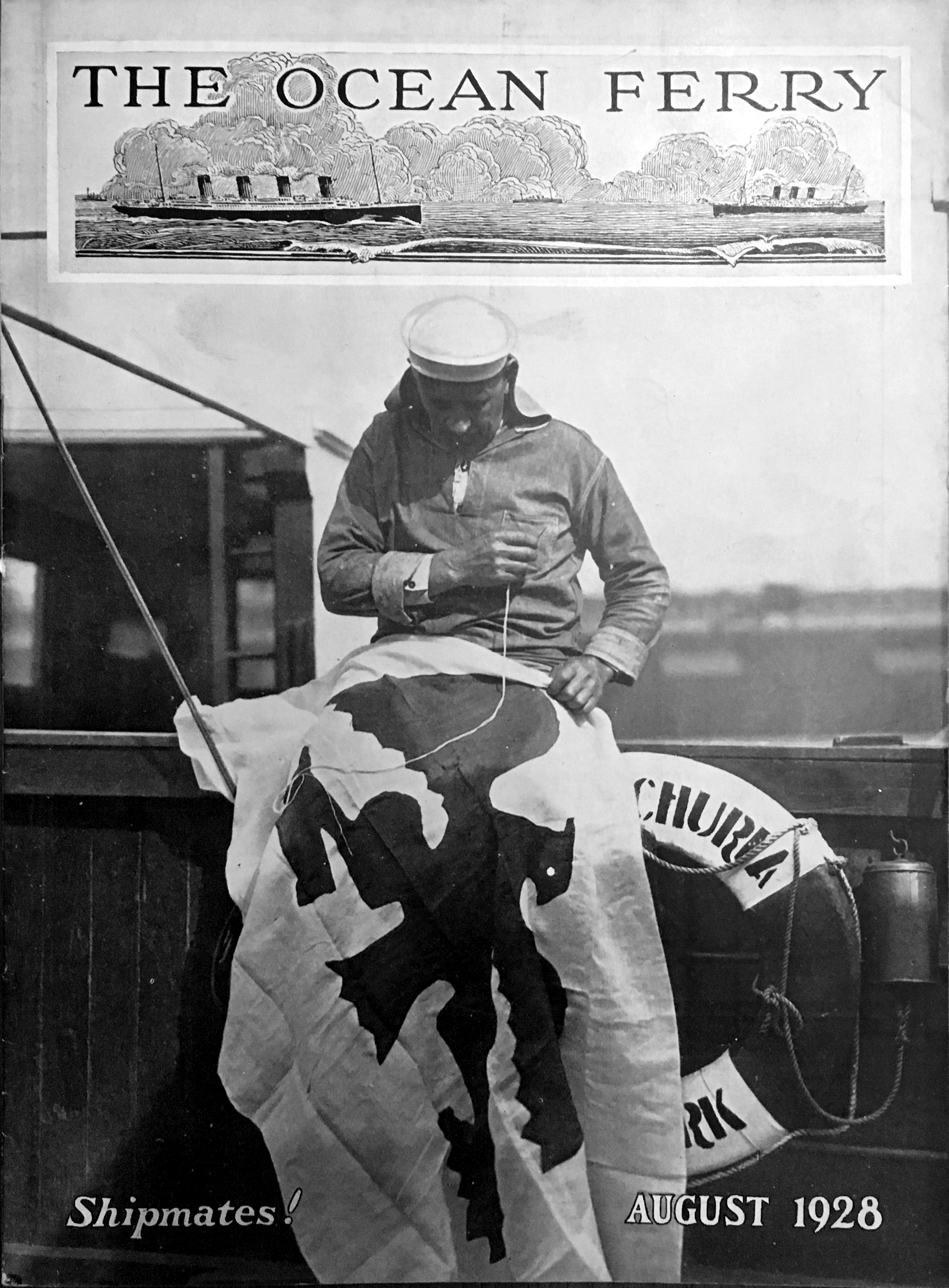
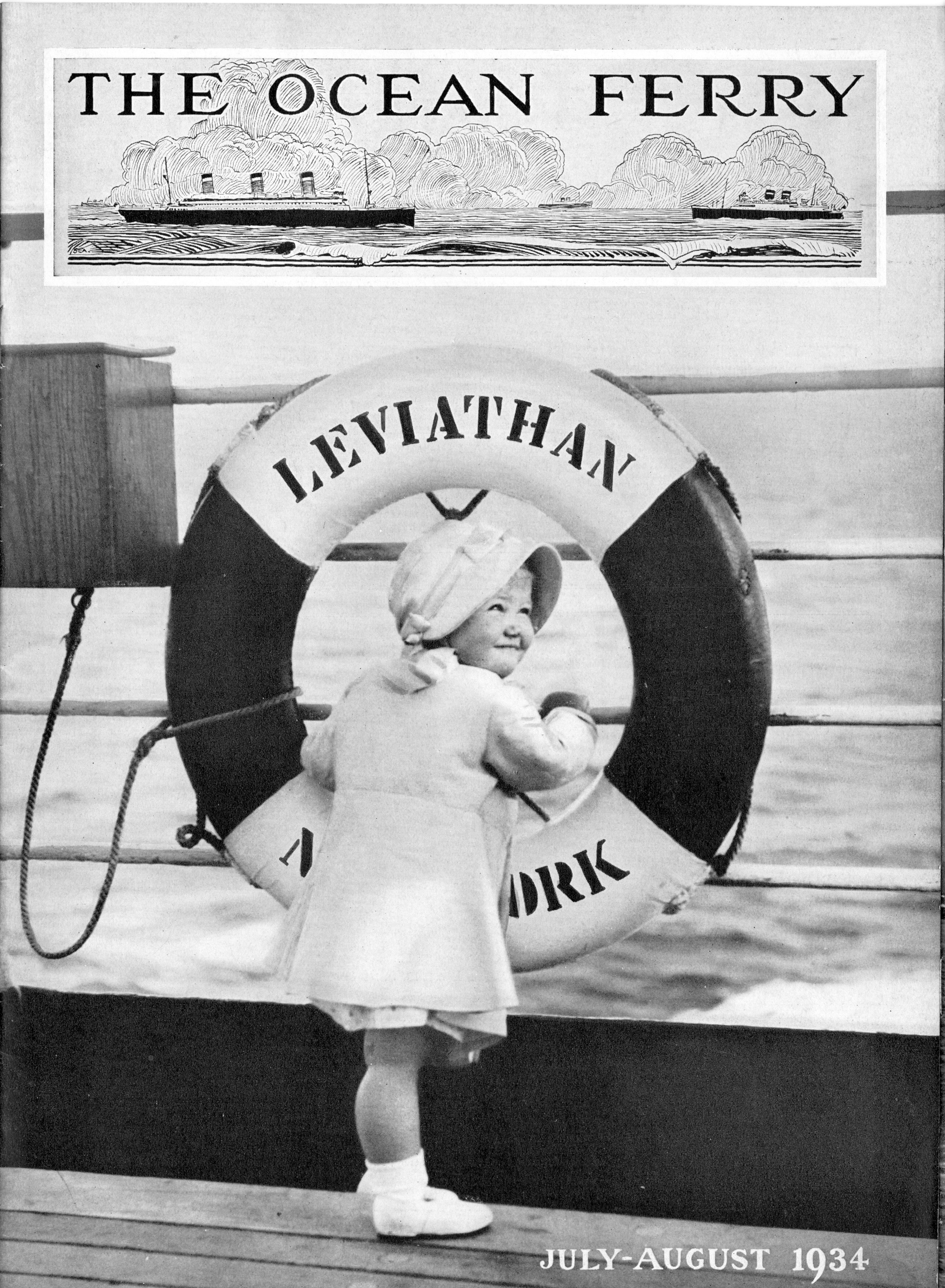
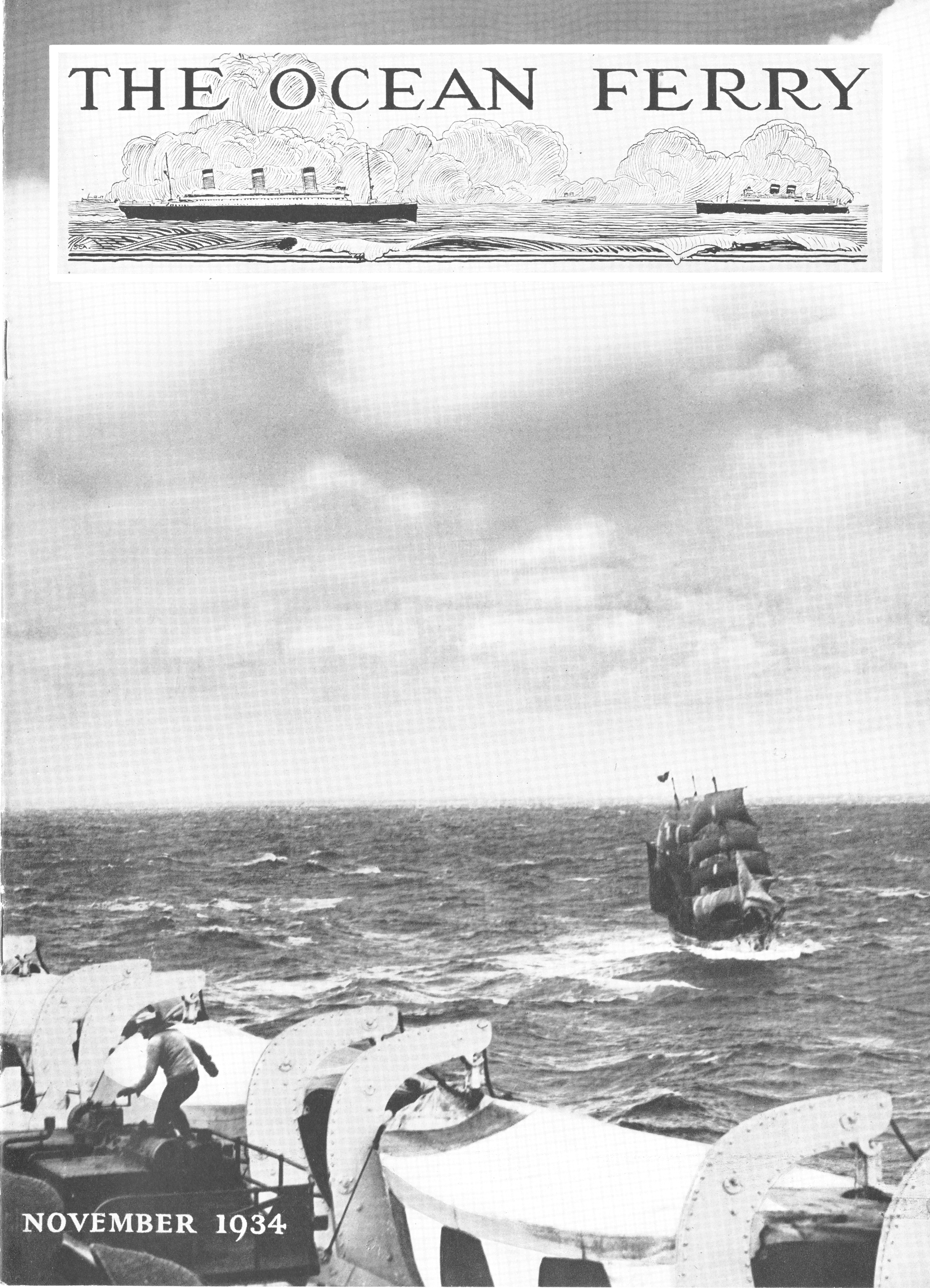
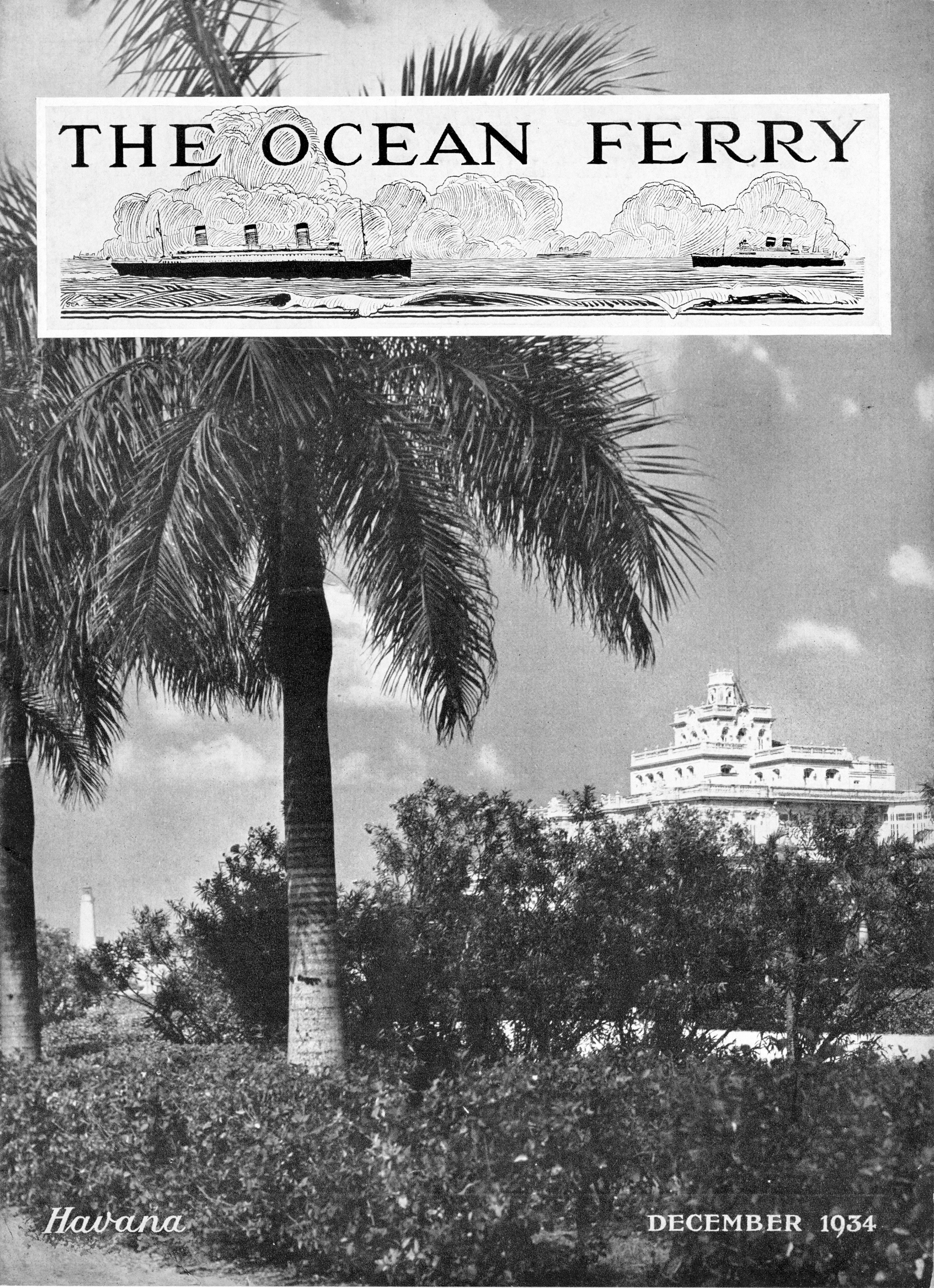
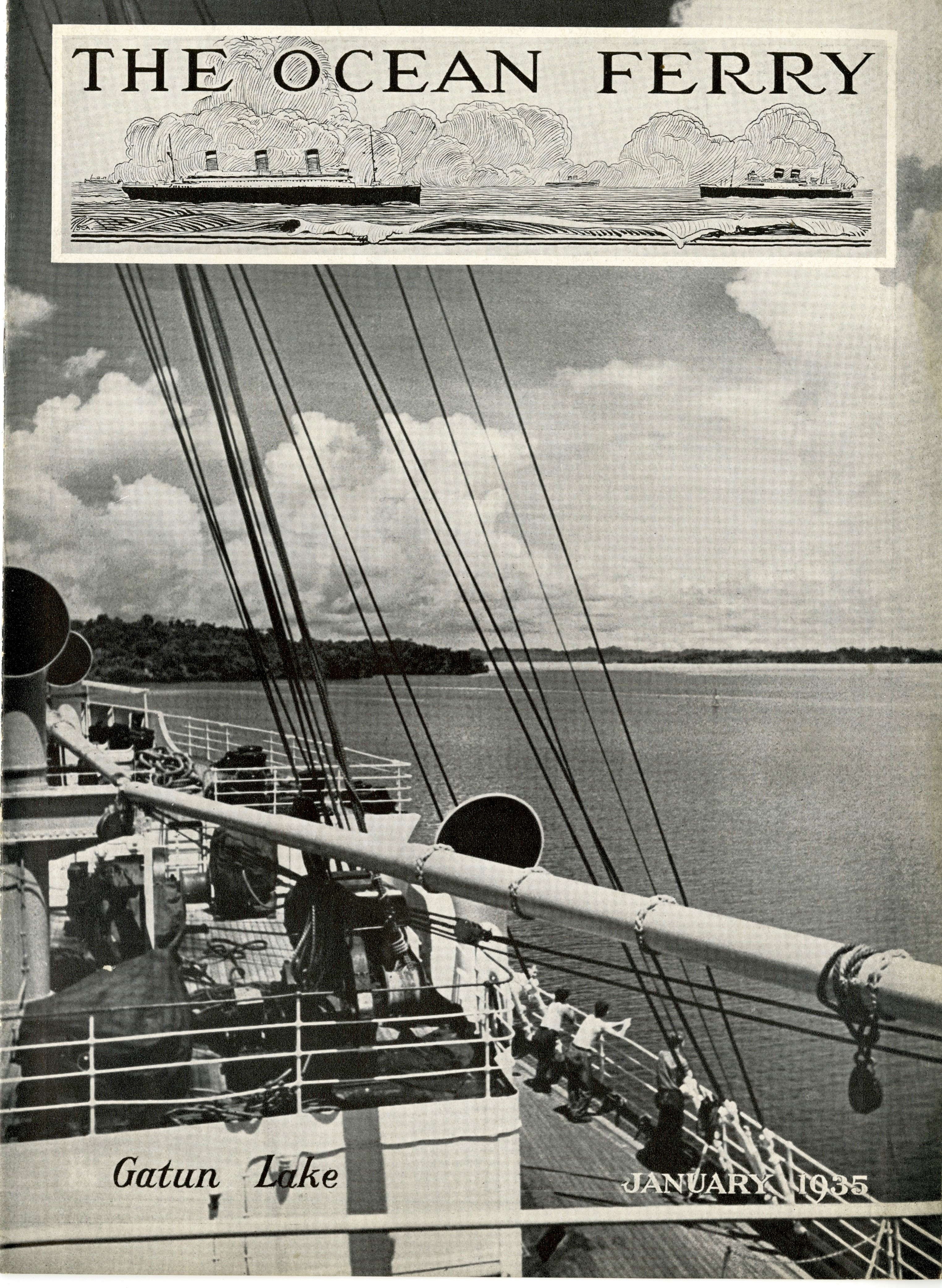
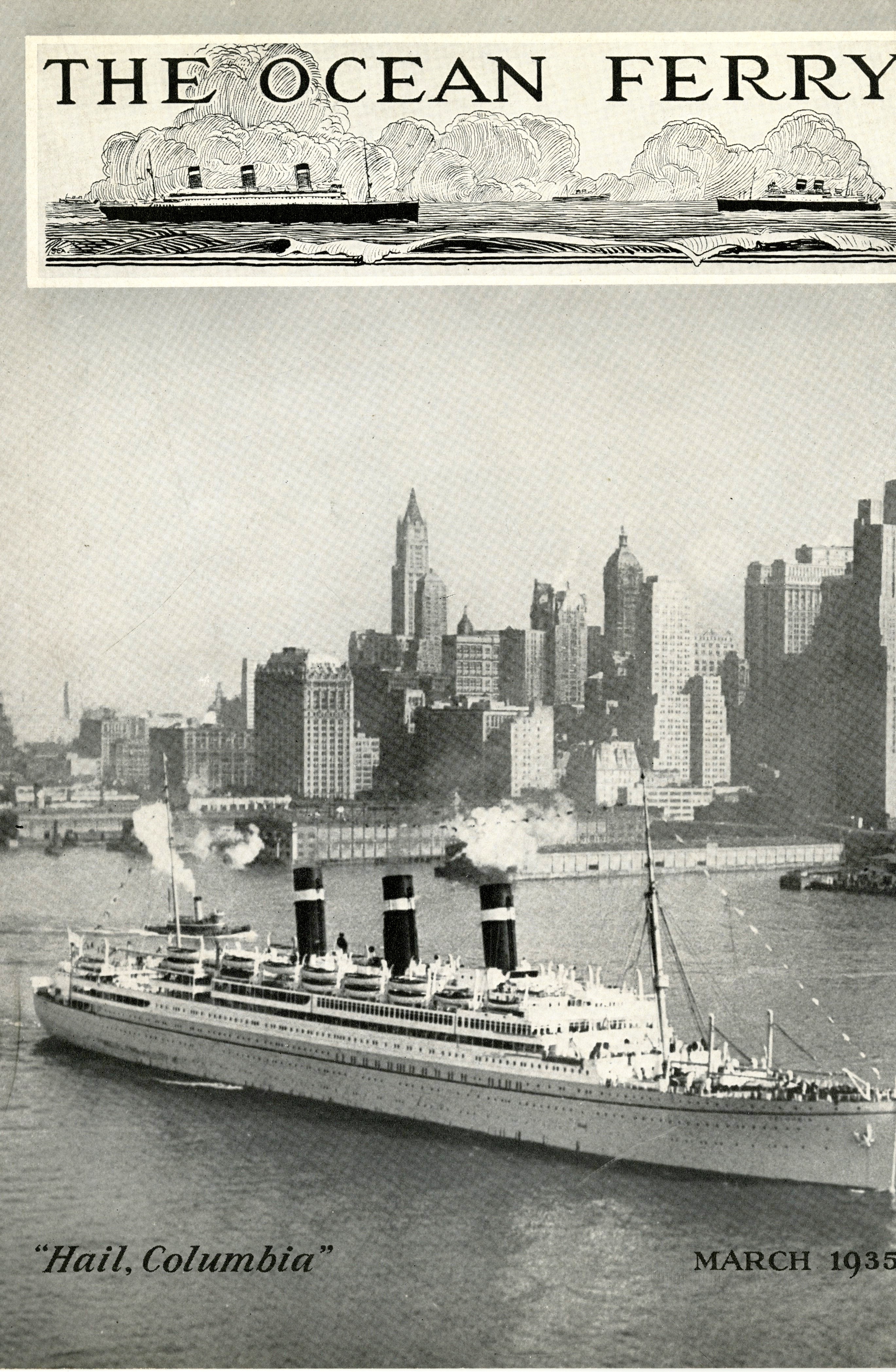
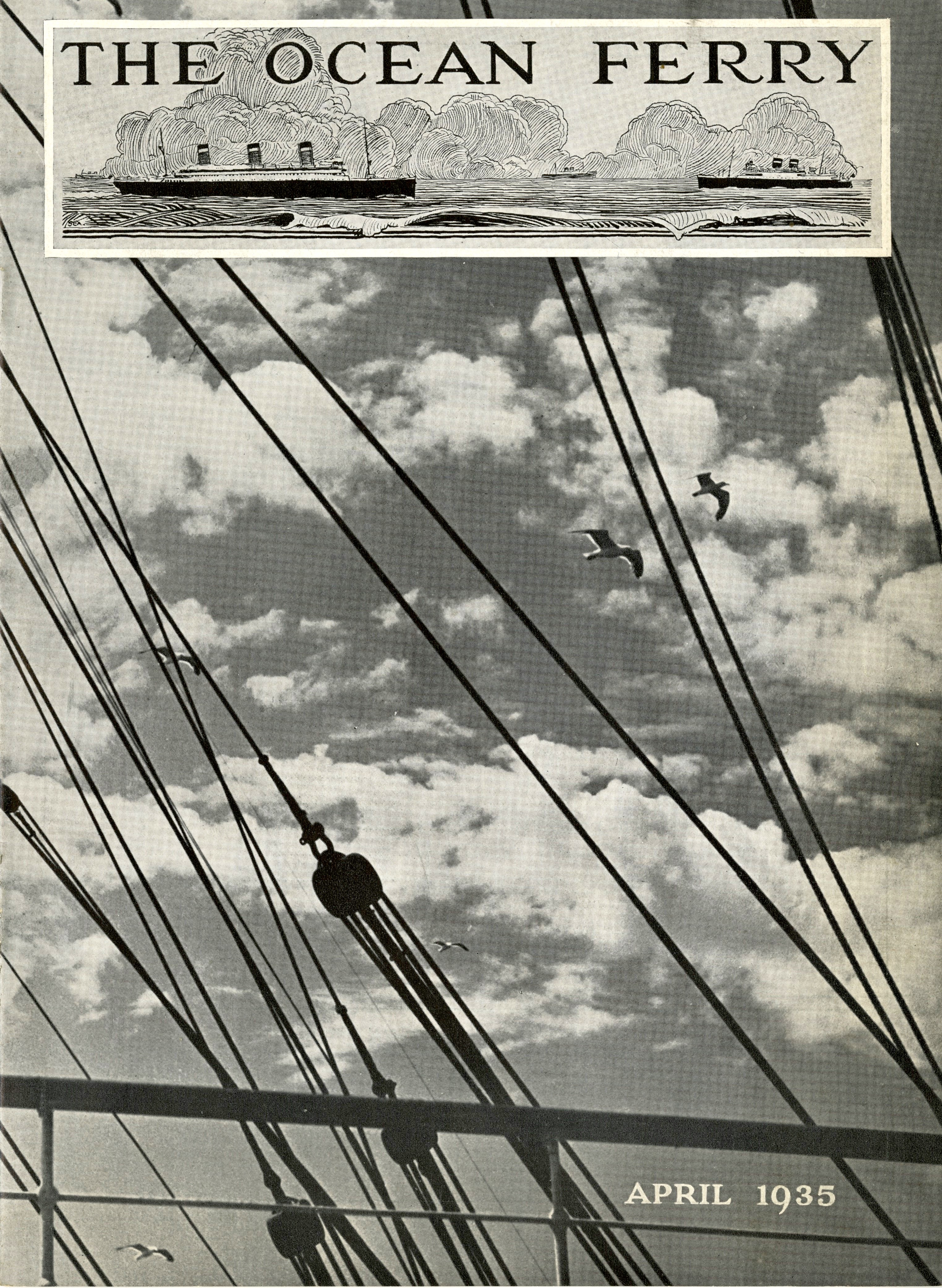
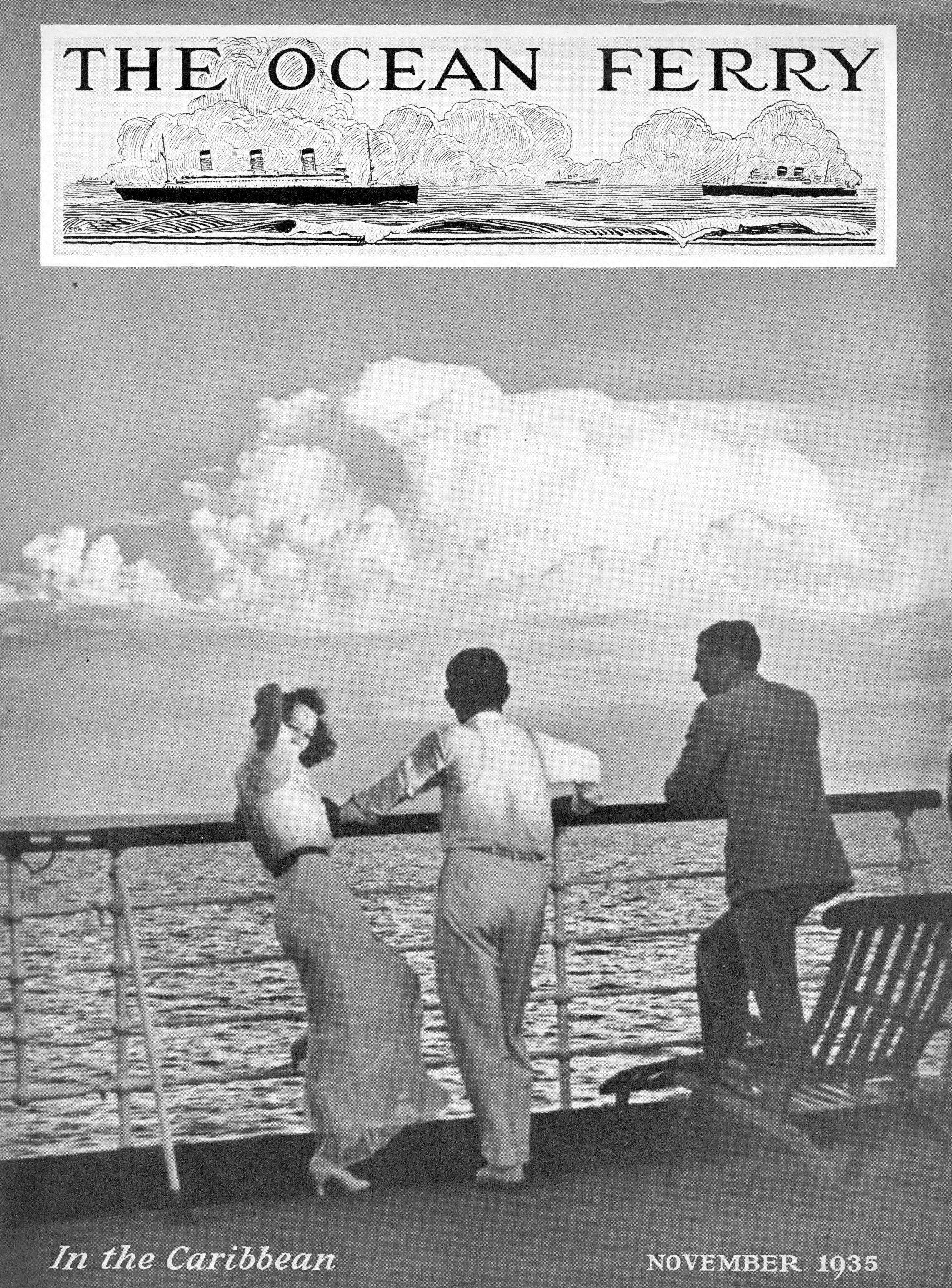
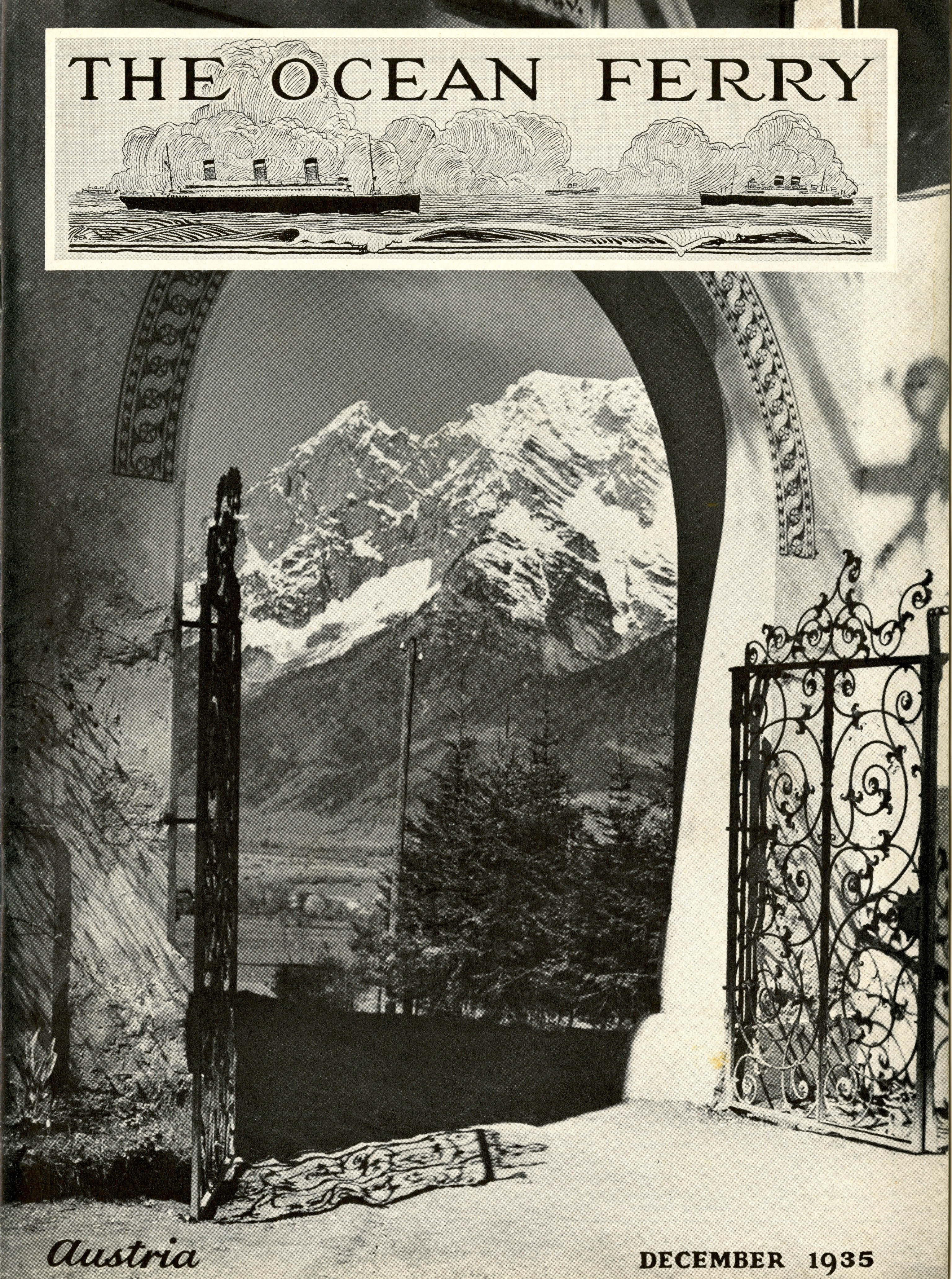
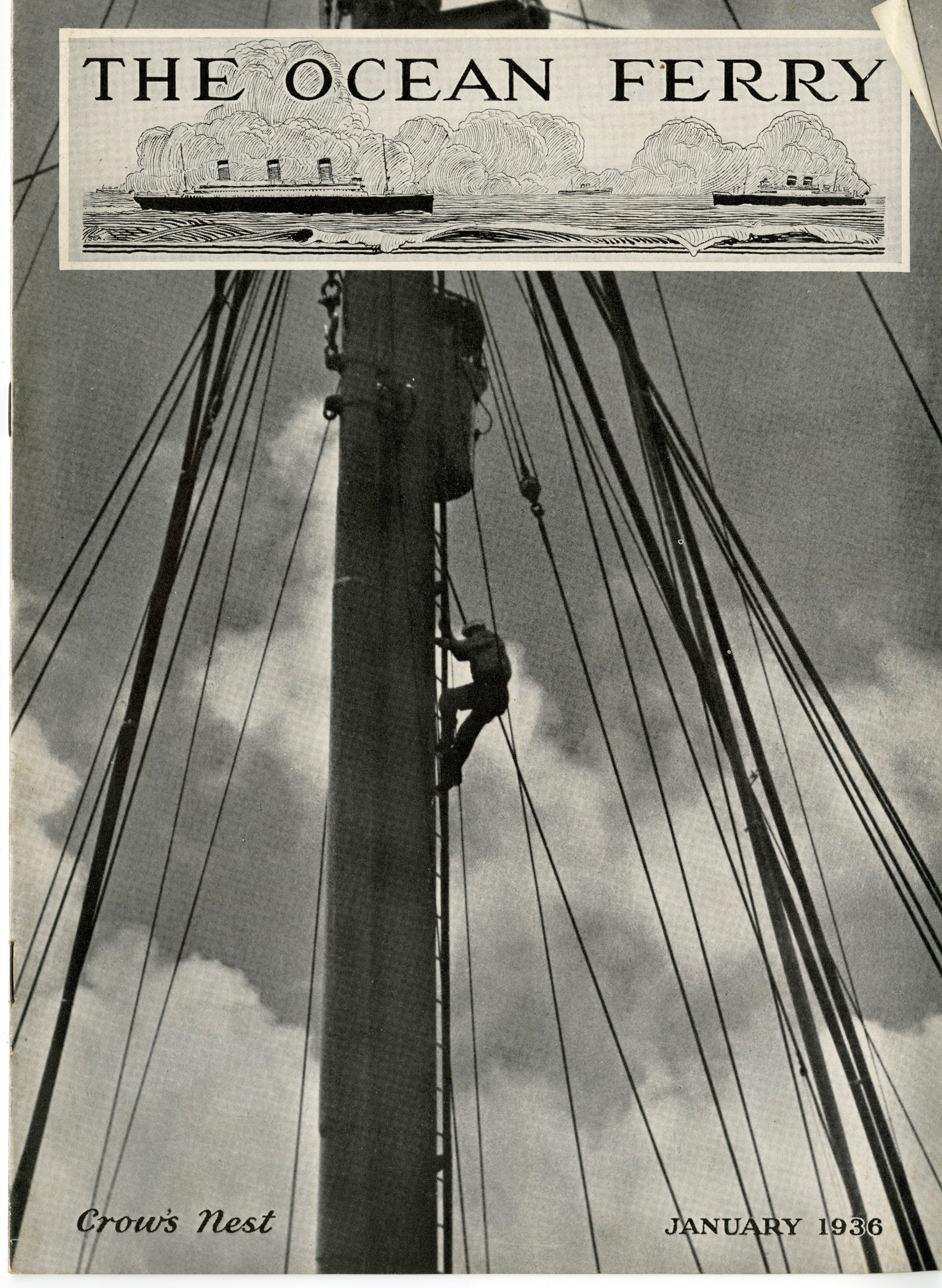
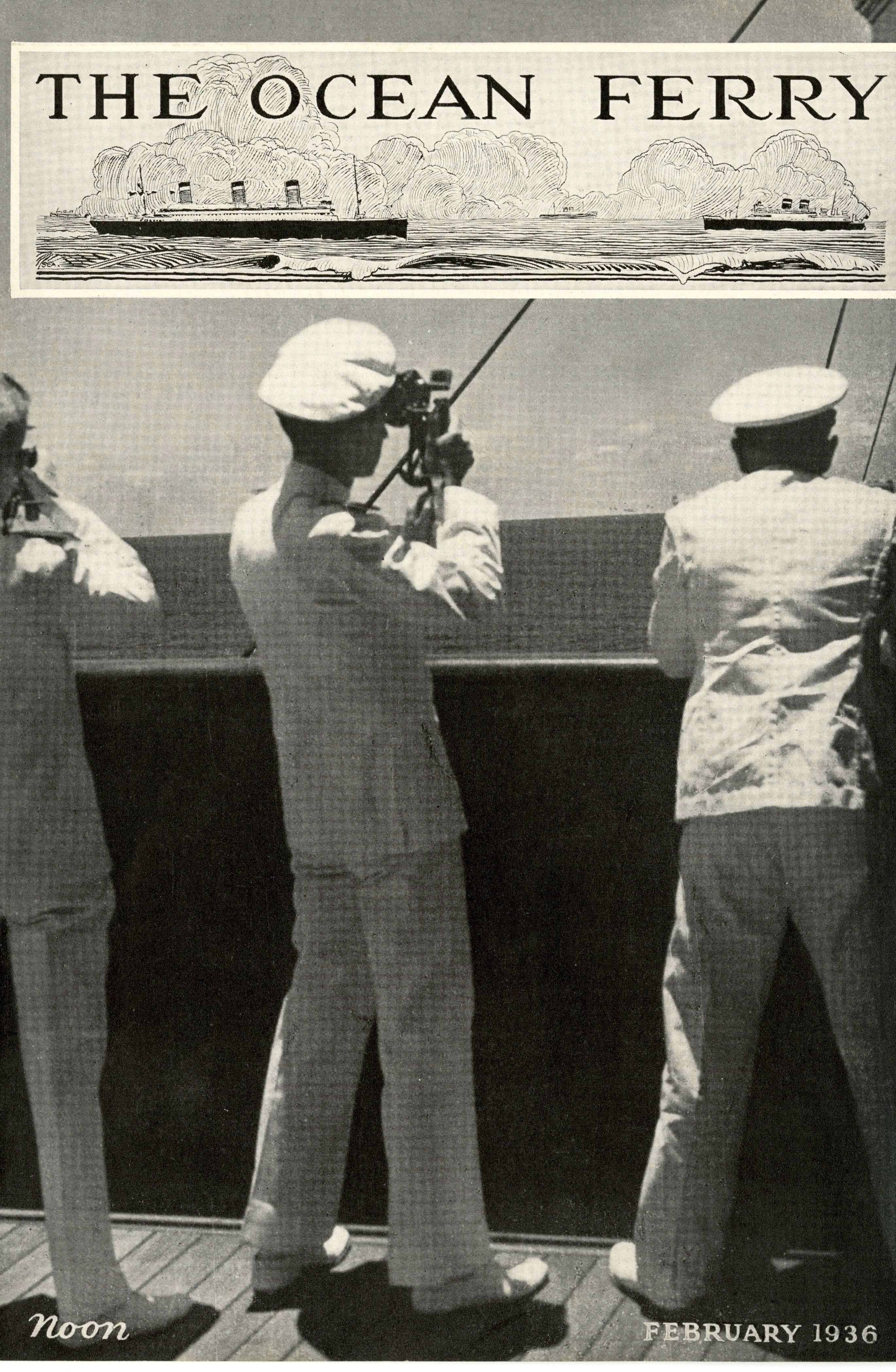
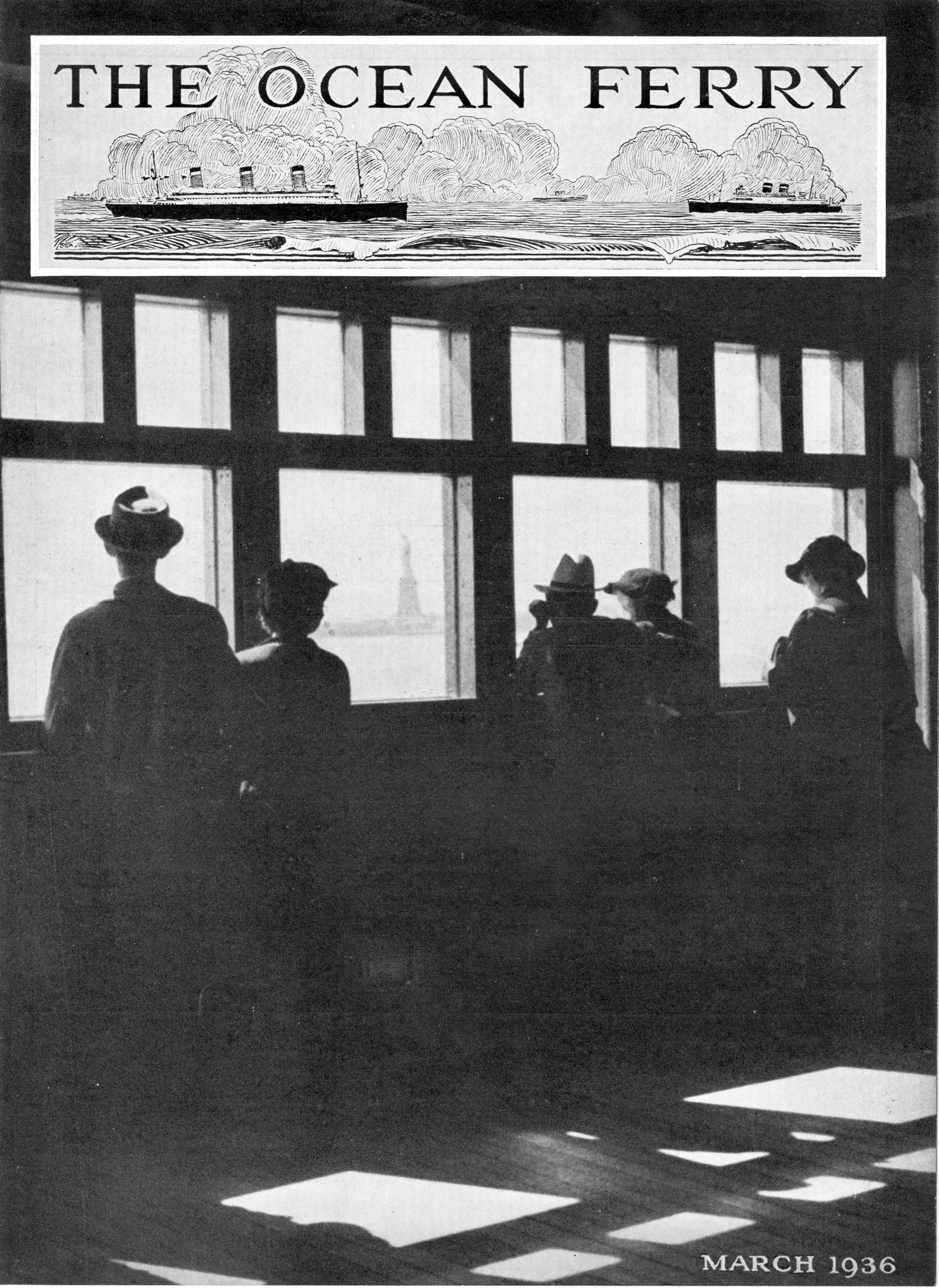
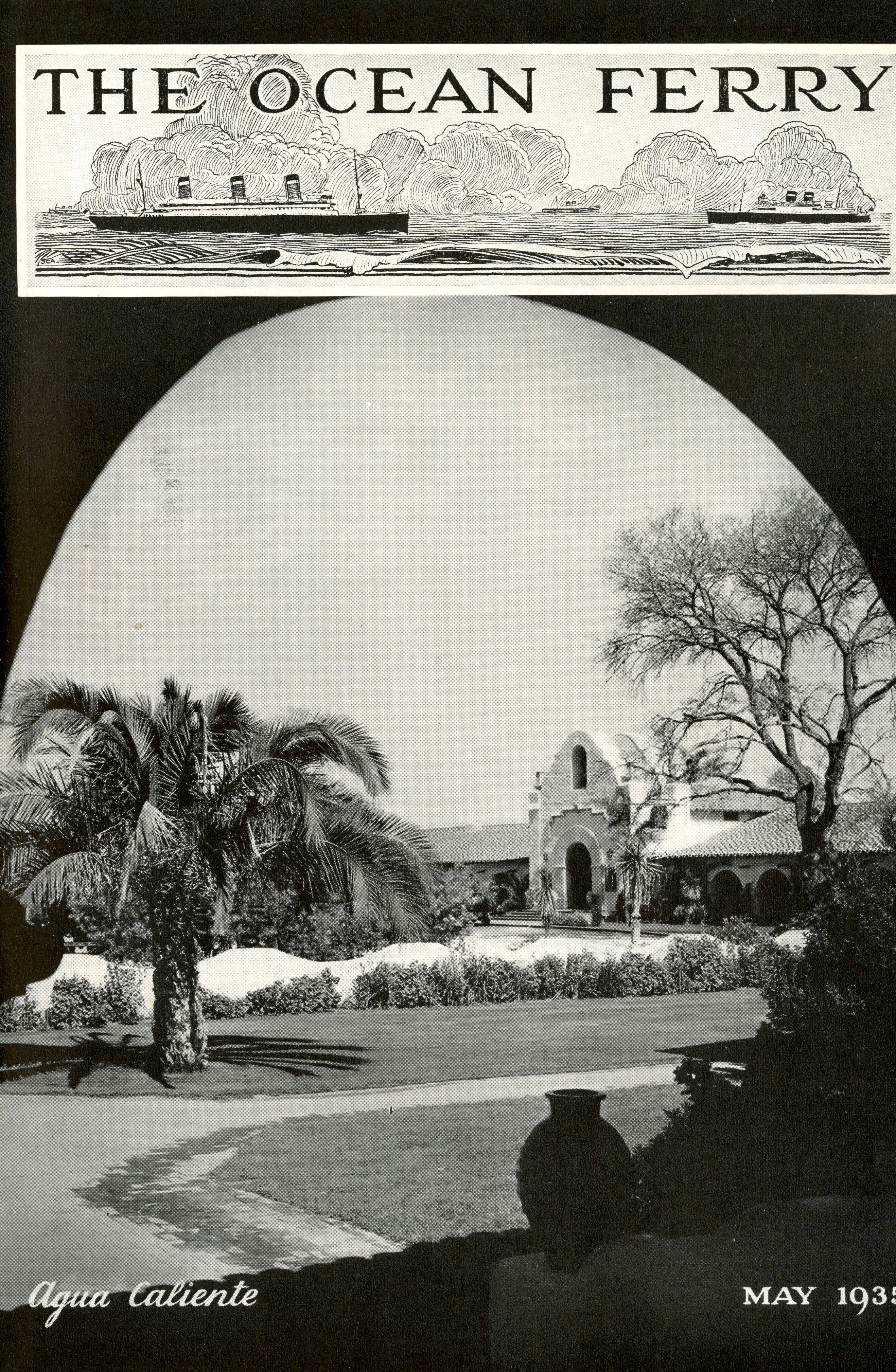
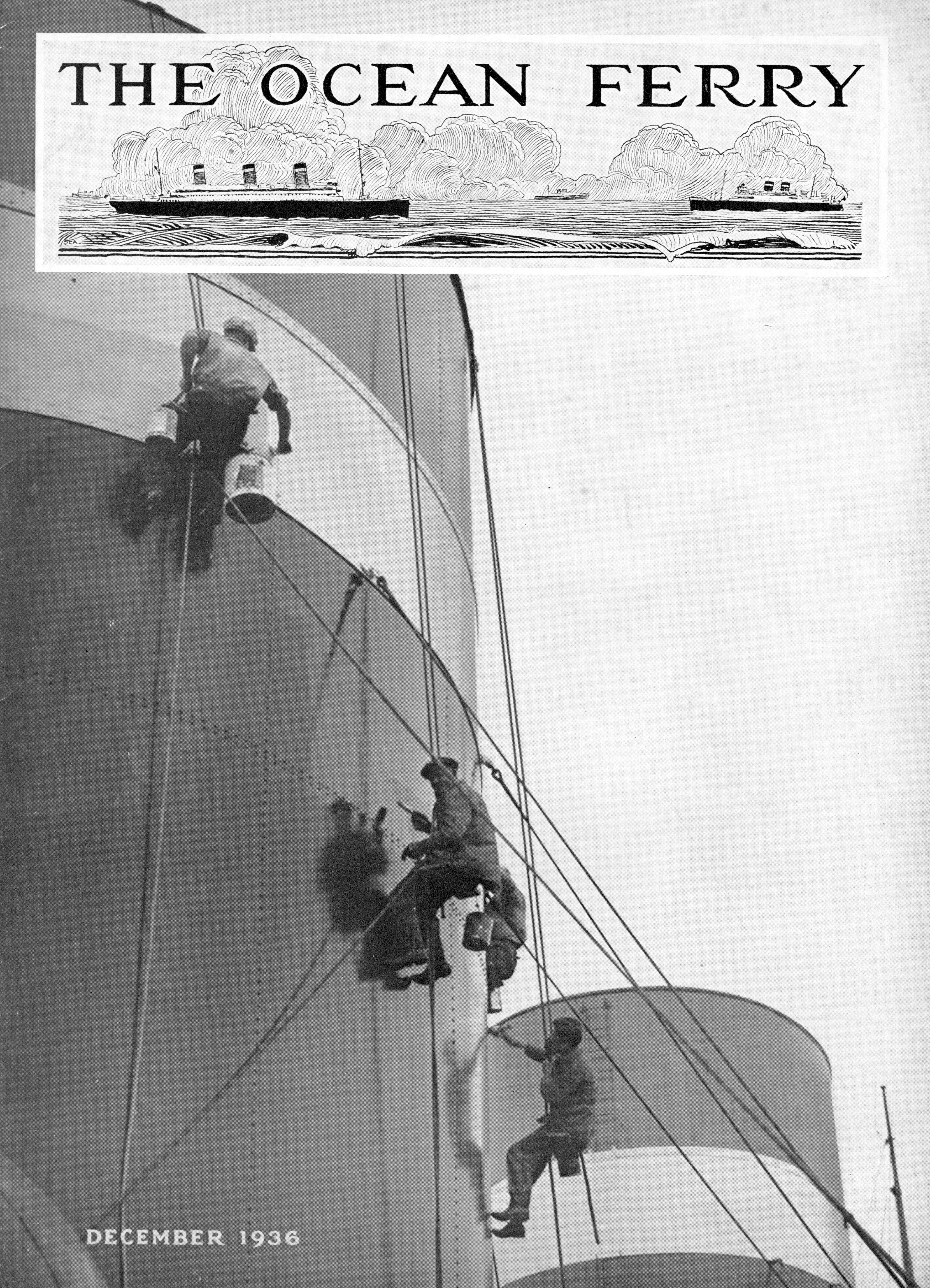
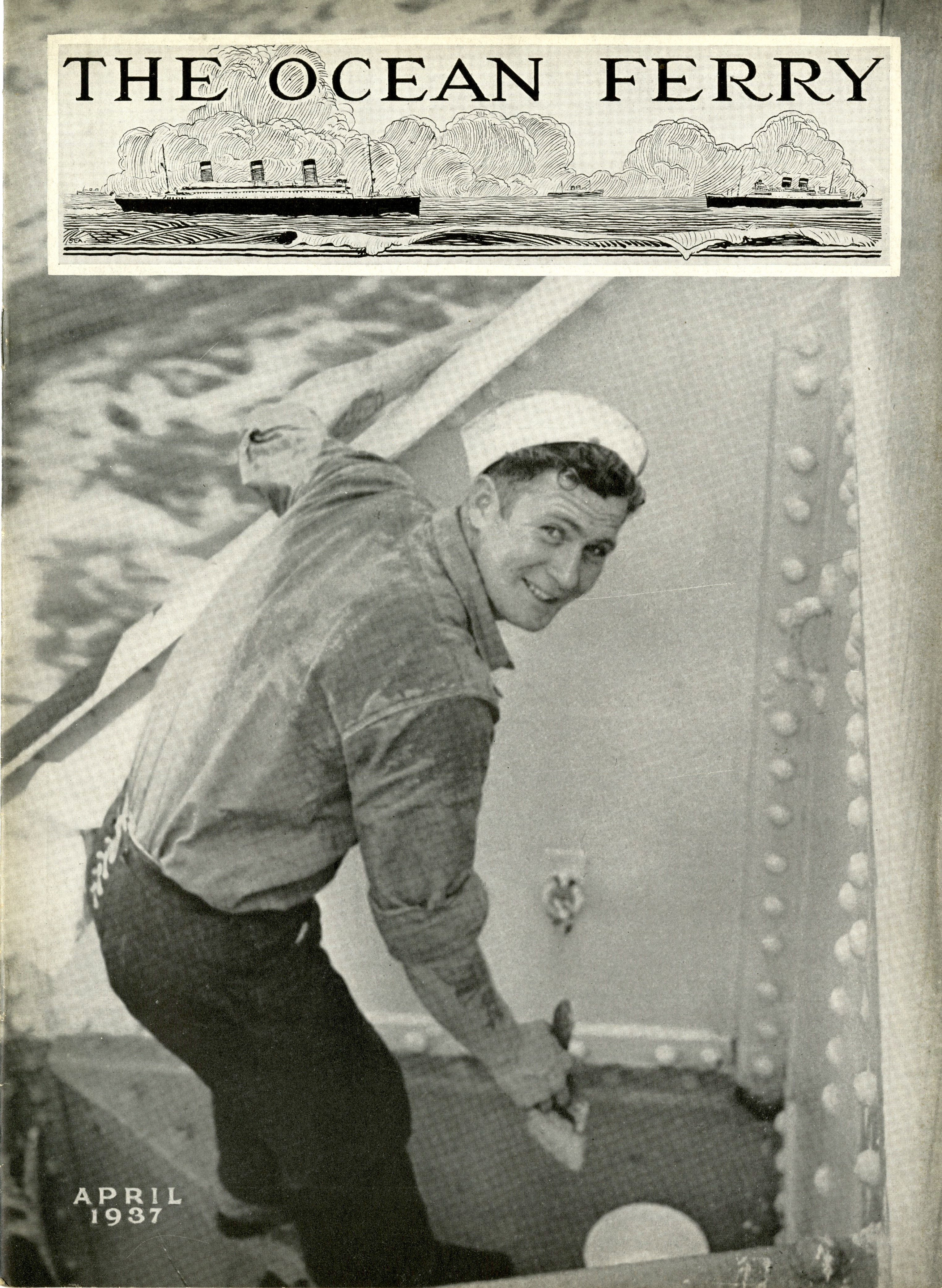
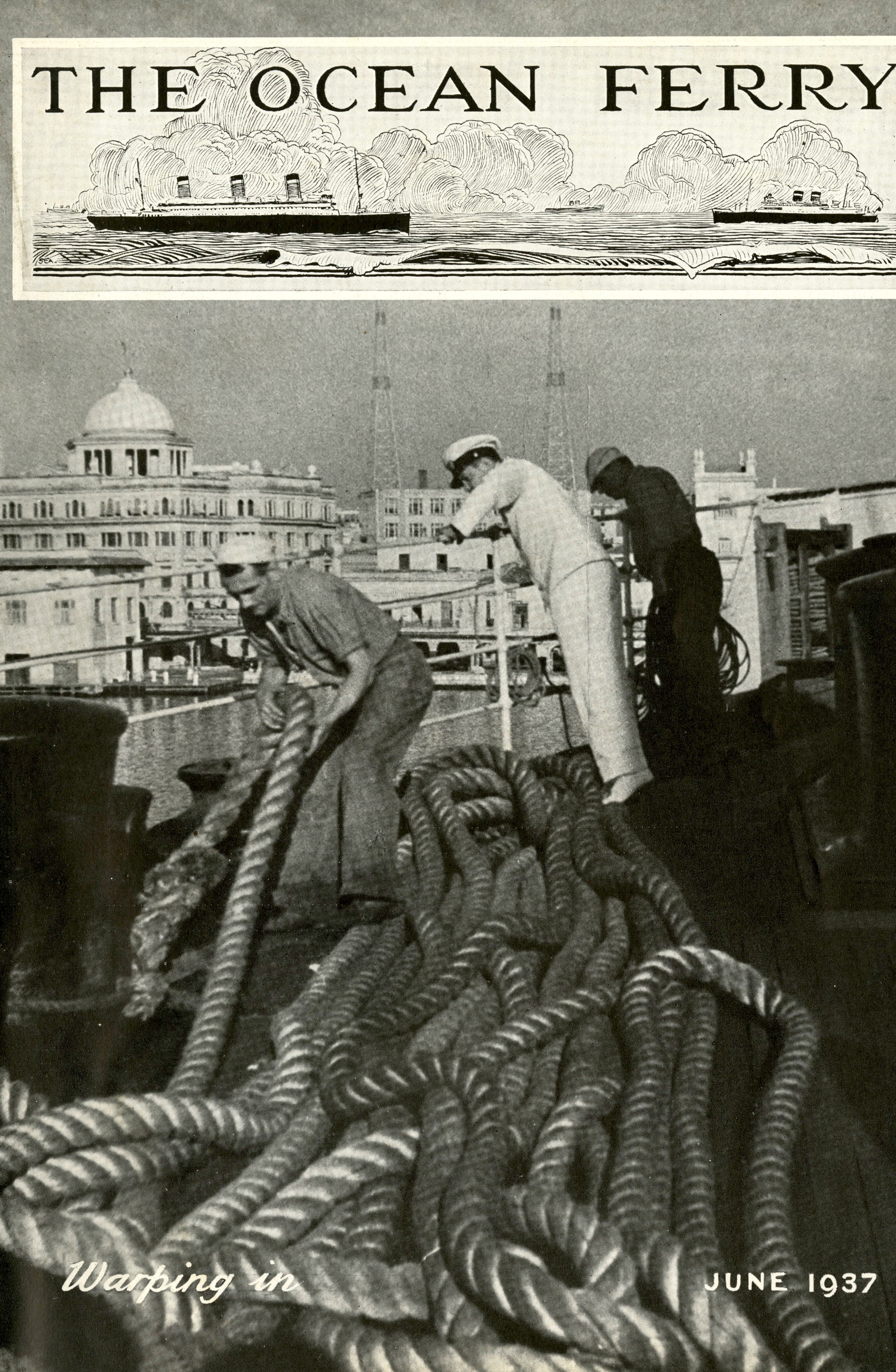
The American Merchant Marine Museum has stacks of Ocean Ferry magazines – some in quadruplicate or more. This publication was the internal communication organ of International Mercantile Marine Company for all shipping lines under its corporate umbrella. It was issued monthly from 1921 through 1938, often with a combined number in the summer months. The magazine’s interiors have photographs of ships and employees as well as promotional copy mixed with items of interest to IMM personnel: retirements, awards, ship’s cat antics, and owner’s pronouncements. By the late 1930s, the steamship lines most represented in the text are Panama Pacific Line and United States Lines; it was eventually supplanted by Afloat and Ashore in 1939 – when the two lines merged under the flag of USL.
The magazine’s masthead shows it edited by Carla Dietz and a revolving coterie of managing editors. Many of the issues are undoubtedly from the personal collection of Frank O. Braynard from when he was a curator at the Museum from 1980 until 2000, or from United States Lines itself – Mr. Braynard rescued a number of file cabinets from the archives ofOne Broadway when the company went bust.
Most of the magazine copy for Ocean Ferry was written by Ms. Dietz. She was in an exclusive club of one – being the only woman steamship line publicist at the time when the field was dominated by men. She was born in 1888 in Brownview, just over New York’s border with Canada. Brought up the daughter of a butcher in a hardscrabble part of Manhattan that was eventually razed to make way for Rockefeller Center, she landed a job with International Mercantile Marine as a press aide. After rising through the ranks, she became the voice of USL – eventually tasked with writing the wartime narrative of the company, and later promoting SS United States in newsy, direct prose. She retired in 1959 and passed away in 1967.
The following is a gallery of some Ocean Ferry covers I located at the United States Lines Archive. It is a stunning publication in slick magazine format, but despite the glossy pages, it was produced using newspaper halftones – hence the dithering and moiré effect in some of my scans.