25 August 1943.
CONFIDENTIAL
From: Cadet-Midshipman Raffarle Alano, Second Class, (D-1), USMMCC
To: Supervisor, U.S. Merchant Marine Cadet Corps
Via: District Cadet Supervisor, New York.
Subject: Loss of vessel SS RICHARD CASWELL; Report on
- The writer was assigned to the SS RICHARD CASWELL, South Atlantic Steamship Company, on January 22, 1943 and signed articles on the same day. The vessel sailed from New York on 28 January in a convoy consisting of about 20 ships escorted by 6 American vessels. The cargo was comprised of 30 and 50 caliber ammunition, food, machinery and tires and a deck cargo of trucks, trailers and jeeps destined for the Army Air Force. The ship arrived in Port of Spain, Trinidad, refueled and received orders, then left that port on February 13 in a convoy of about 16 merchant ships and 6 escort vessels. The convoy broke up off Pernambuco and the subject vessel travelled alone, following a zig-zag course at a top speed of 11.5 knots arriving at Saldanha Bay, South Africa, about 3 weeks later. At this port of call, the Captain received orders, and three days later the ship sailed for Capetown where again she joined a convoy of 8 ships, this time escorted by one vessel. The convoy dispersed about three days later and the subject vessel again traveled alone to Suez, where most of the cargo was discharged. 12 days later the ship sailed alone to the Mombasa where the remainder of the cargo was unloaded. Following this, the ship sailed to Durban where she again joined a convoy of about 16 ships escorted by seven vessels.
- After one day at sea, the ship ran into the first bad weather of the entire trip. Rough seas and heavy swells forced her to fall behind the rest of the convoy. As the ship was light, the screw was out of the water most of the time and this prevented her from making headway. The Captain was forced to head her into the storm which was the opposite direction from our destination. The seas moderated three days later and the ship proceeded to Capetown for repairs. During the deep rolling of the ship in the rough weather, #3 life boat was severely damaged, and oil cans secured to the deck and ventilators broke loose and were damaged. Repairs were made in Capetown and the ship left there about the first of June in a convoy consisting of about 12 vessels and 4 escort vessels. The convoy broke up near St. Helena Bay the subject vessel traveled alone, following a zig-zag course, to Buenos Aires, arriving there about the last of June.
- The ship was fully loaded again in Buenos Aires with a cargo consisting of cow-hides, tanned and raw, fertilizer, canned corned beef and bags of crystal-like glass used to make asbestos. The vessel left the Argentine on 12 July and sailed on a straight course until two days later when orders were received changing the course and bringing the ship closer to shore.
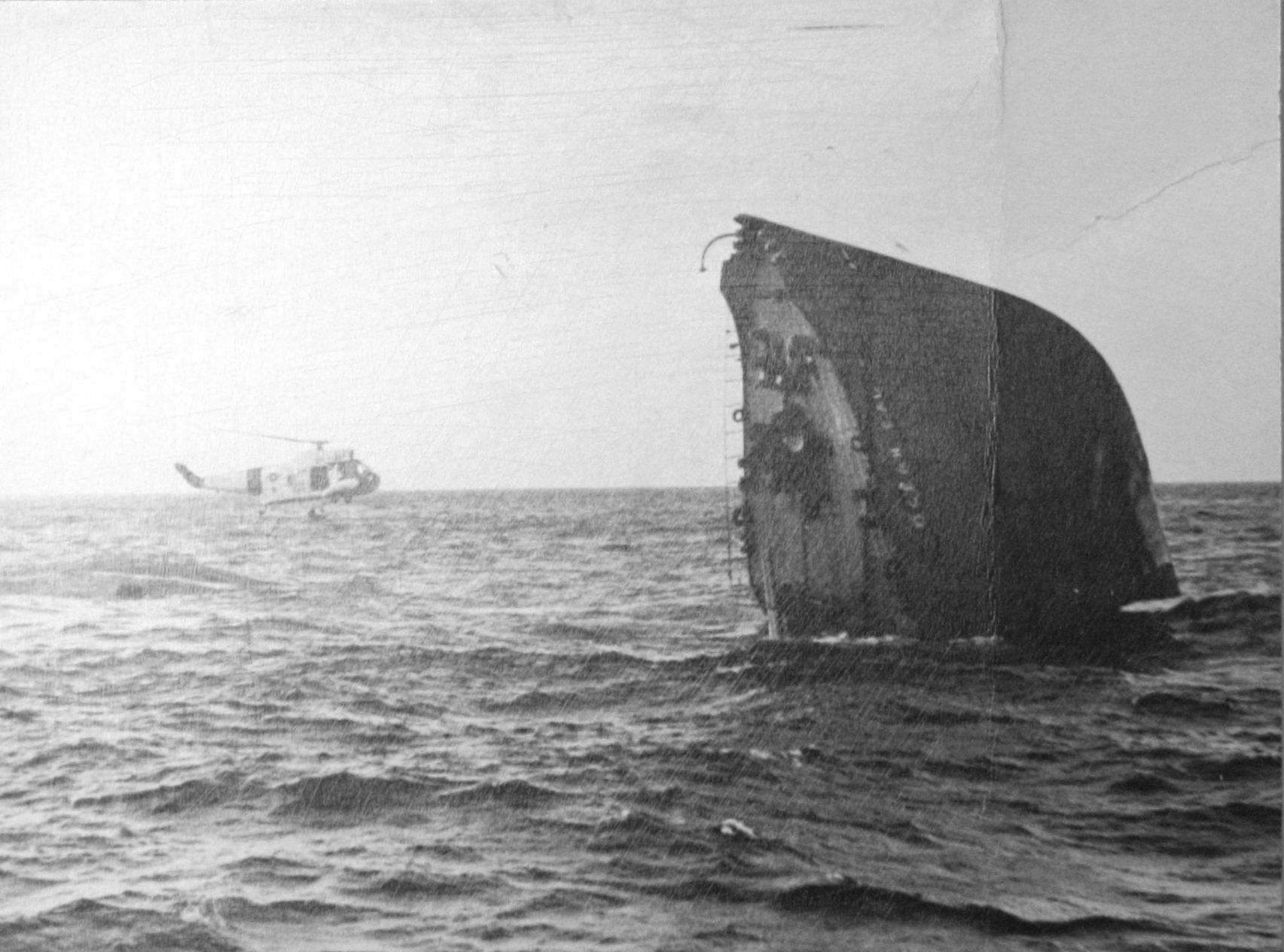
- On 16 July, 1943, at 1630, the first torpedo struck the ship directly in the engine room destroying the engine, steering control and fuel tanks. The three men on watch in the engine room were killed instantly by the force of the explosion. The writer was working on the fan-tail at the time the torpedo hit and was naturally knocked off his feet. Quickly recovering himself, the writer ran to his quarters for a life jacket and then proceeded to his boat station. Upon arriving at his station, he found that the boat had already been launched and swamped. Due to the headway of the ship, the boat was well aft of the stern of the ship. #3 boat had been destroyed by the explosion so the writer ran over to the port side. The writer saw a life raft that had been cut loose and jumping over the side he swam to it and climbed aboard. About a minute later, the ship was hit by another torpedo, this time in the #4 hold. The ship broke in two and sank about a minute later.
- Immediately after the ship sank, the submarine surfaced and pulled alongside one of the rafts, flying the German flag. An officer, speaking perfect English asked the men on the raft the name of the vessel, her tonnage, type of cargo, destination, port of embarkation, name of the Captain and where he was. On the sub’s port bow was written WILHELMSHAVEN, and below it Z26. It carried a 40 MM anti-aircraft gun aft, one in the conning tower and a 4 or 5 inch gun forward. Her paint appeared to be new and she had been identified from the photographs to be a heavy long range sub. The crew consisted of young men. After cruising around the boats and rafts for about 5 minutes, keeping a sharp lookout for planes and ships, it submerged.
- We gathered all the boats and rafts together and attempted to secure them together with lines but the rough sea caused two of the boats to break away. Impossible to reach them, they drifted away. The following day, it was decided to try and row for land, which was about 140 miles away, as the ship was due in Rio de Janeiro the following afternoon.
- On 22 July, a plane spotted the rafts and at about 1800 the same day a plane tender picked the survivors up and took them to Rio de Janiero, arriving there on 25July. From Rio the survivors were flown to Miami from where the writer entrained for New York, reporting to the office of the District Cadet Supervisor on 17 August 1943.
- To the best of the writer’s knowledge Cadet-Midshipman Paul Williams is in Rio de Janeiro and Cadet-Midshipman Robert W. Barton is in Santos. Cadet-Midshipman Howard Muhlenbruck arrived in New York together with the writer. All are in good health despite the experience.
RAFFARLE ALANO
FIRST ENDORSEMENT.
To: S-CC
Forwarded. P. BRENNAN
G. F. FELTUS,
By direction
Cadet File No. [unknown]
USNR Files No. 211844
24 August, 1943
To: Supervisor, O, 5. U.S. Merchant Marine Cadet Corps
From: Cadet-Midshipman Raffarle Alano, Second Class, (D-1), USMMCC
Via: District Cadet Supervisor, New York.
Subject: SS RCHARD CASWELL – Loss of
- The writer was assigned to the SS RICHARD CASWELL, South Atlantic Steamship Company, on January 22, 1943 and signed articles on the same day. The vessel sailed from New York on 28 January, 1943, in a convoy consisting of about 20 ships with 6 U.S. Navy escorts. The cargo was comprised of 30 and 50 caliber ammunition, food, machinery, tires, and a deck cargo of trucks, trailers and jeeps destined for the Army Air Force. The ship arrived in Port of Spain, Trinidad, refueled and received orders, then left that port on February 13, 1943, in a convoy of about 16 merchant ships and 6 escorts. The convoy dispersed off Pernambuco, Brazil, and the subject vessel travelled alone, following a zig-zag course at a top speed of 11.5 knots, arriving at Saldanha Bay, South Africa, about 3 weeks later. At this port of call, the Captain received further orders, and three days later the ship sailed for Capetown and joined a convoy of 8 ships, this time escorted by one vessel. The convoy dispersed about three days later and the subject vessel again traveled alone to Suez, Egypt, where most of the cargo was discharged. 12 days later the ship sailed alone to the Mombasa, Africa, where the remainder of the cargo was unloaded. Following this, the ship sailed to Durban where it again joined a convoy of about 16 ships escorted by seven vessels.
- After one day at sea, the ship ran into the first bad weather of the entire trip. Rough seas and heavy swells forced her to fall behind the rest of the convoy. As the ship was light, the screw was out of the water most of the time and this prevented her from making headway. The Captain was forced to come about and head into the storm. The seas moderated three days later and the ship proceeded to Capetown for repairs. During the deep rolling of the ship in the rough weather, #3 life boat was severely damaged. Oil cans, which had been secured to the deck, and ventilators, broke loose and were damaged. Repairs were made in Capetown and the ship left there about 1 June, 1943, in a convoy consisting of about 12 vessels and 4 escort vessels. The convoy dispersed near St. Helena Bay the subject vessel traveled alone, following a zig-zag course, to Buenos Aires, Argentina, arriving there the last of June.
- The ship was fully loaded again in Buenos Aires with a cargo consisting of cow-hides, tanned and raw, fertilizer, canned corned beef and bags of crystal-like glass used to make asbestos. The vessel left the Argentine on 12 July and sailed on a straight course until two days later when orders were received changing the course and bringing the ship closer to shore.
- On 16 July, 1943, at 1630, the first torpedo struck the ship directly in the engine room damaging the engine, steering control and fuel tanks. The three men on watch in the engine room were killed instantly by the force of the explosion. The writer was working near the stern at the time the torpedo struck and was knocked off his feet. Quickly recovering, the writer ran to his quarters for a life jacket and then proceeded to his boat station. Upon arriving at his station. Upon arriving at this station, he found that the boat had already been launched and swamped. Due to the headway of the ship, the boat was well astern. No. 3 boat had been destroyed by the explosion so the writer ran over to the port side. The writer saw a life raft that had been cut loose and, jumping over the side, he swam to it and climbed aboard. About
(continued)
a minute later, the ship was hit by another torpedo, this time in the #4 hold. The ship broke in two and sank a minute later.
- Immediately after the ship sank, the submarine surfaced and flying the German flag, pulled alongside one of the rafts. An officer, speaking perfect English asked the men on the raft the name of the vessel, her tonnage, type of cargo, destination, port of embarkation, name of the Captain and where he was. On the sub’s port bow was written WILHELMSHAVEN, and below it Z26. It carried a 40 MM anti-aircraft gun aft, one in the conning tower and a 4 or 5 inch gun forward. Her paint appeared to be new and she had been identified from photographs to be a heavy, long range sub. The crew consisted of young men. After cruising around the boats and rafts for about 5 minutes, keeping a sharp lookout for planes and ships, it submerged.
- All the boats and rafts were together and attempted made to secure them together with lines, but the rough sea caused two of the boats to break away. Impossible to reach, they drifted away. The following day, it was decided to try and row for land, which was about 140 miles away, as the ship had been due in Rio de Janiero the following afternoon.
- On 22 July, 1943, a plane spotted the rafts and at about 1800 the same day a plane tender picked the survivors up and took them to Rio de Janiero, arriving there on 25July. From Rio the survivors were flown to Miami, where the writer entrained for New York, reporting to the office of the District Cadet Supervisor on 17 August, 1943.
- To the best of the writer’s knowledge Cadet-Midshipman Paul WILLIAMS is in Rio de Janiero, Brazil, and Cadet-Midshipman Robert W. BARTON is in Santos, Brazil. Cadet-Midshipman Howard MUHLENBRUCK arrived in New York together with the writer. All are in good health despite the experience.
Signed (Raffarla ALANO)
Cadet-Midshipman Raffarla ALANO, Second Class, (D-1), USMMCC
FIRST ENDORSEMENT
Forwarded. P. BRENNAN
To: Supervisor, U. S. Merchant Marine Cadet Corps
Signed (G. F. Feltus)
G. F. FELTUS
By Direction