Confidential
5 October 1943.
From: Cadet-Midshipman Frank H. CAIN, Second Class, (B-1), USMMCC
To: Supervisor, U.S. Merchant Marine Cadet Corps
Via: District Cadet-Midshipman Supervisor, New York.
Subject: Loss of vessel SS THEODORE DWIGHT WELD; Report on
- The subject vessel left Liverpool,
England, in ballast, in a convoy of about 50 ships, escorted by six corvettes.
While travelling westward, the escort vessels dropped many depth charges at
various times.
- At 0400, on the morning of 20 September
1943, the writer reported on watch, and at 0530, the First Assistant Engineer
send the writer up to open an inspection on the de-Gaussinssystem. Just as the
writer reached the inspection plate, he heard a series of short rings on the
general alarm. The urgency of the ringing caused the writer to rush up to his
quarters on the bridge deck. Arriving there, he found Cadet-Midshipman Alan
Atchinson putting on his life jacket. Immediately upon Cadet-Midshipman
Atchinson leaving the room, the vessel was hit by a torpedo.
- The writer was blown into the air by the
force of the explosion and nearly fell through a big hold torn in the deck by
the explosion. The writer picked himself up, put on his life jacket and went
over to the flying bridge. The ship was listing heavily to starboard and was
breaking up between the #3 hold and the midships house. The torpedo had hit in
the port side of the engine room. By the time the writer has reached the
starboard boat deck, the First Mate, Cadet-Midshipman Atchinson and several
other persons had lowered the #3 boat into the water. The sea was already
breaking over the ship, and the Captain came down behind the writer without his
life jacket. A heavy sea took him over but he clung to the edge of the deck.
The writer grabbed someone’s hand as he held the rail and reached for the
Captain, but the next instant a heavy sea broke the writer’s hold and took him
over.
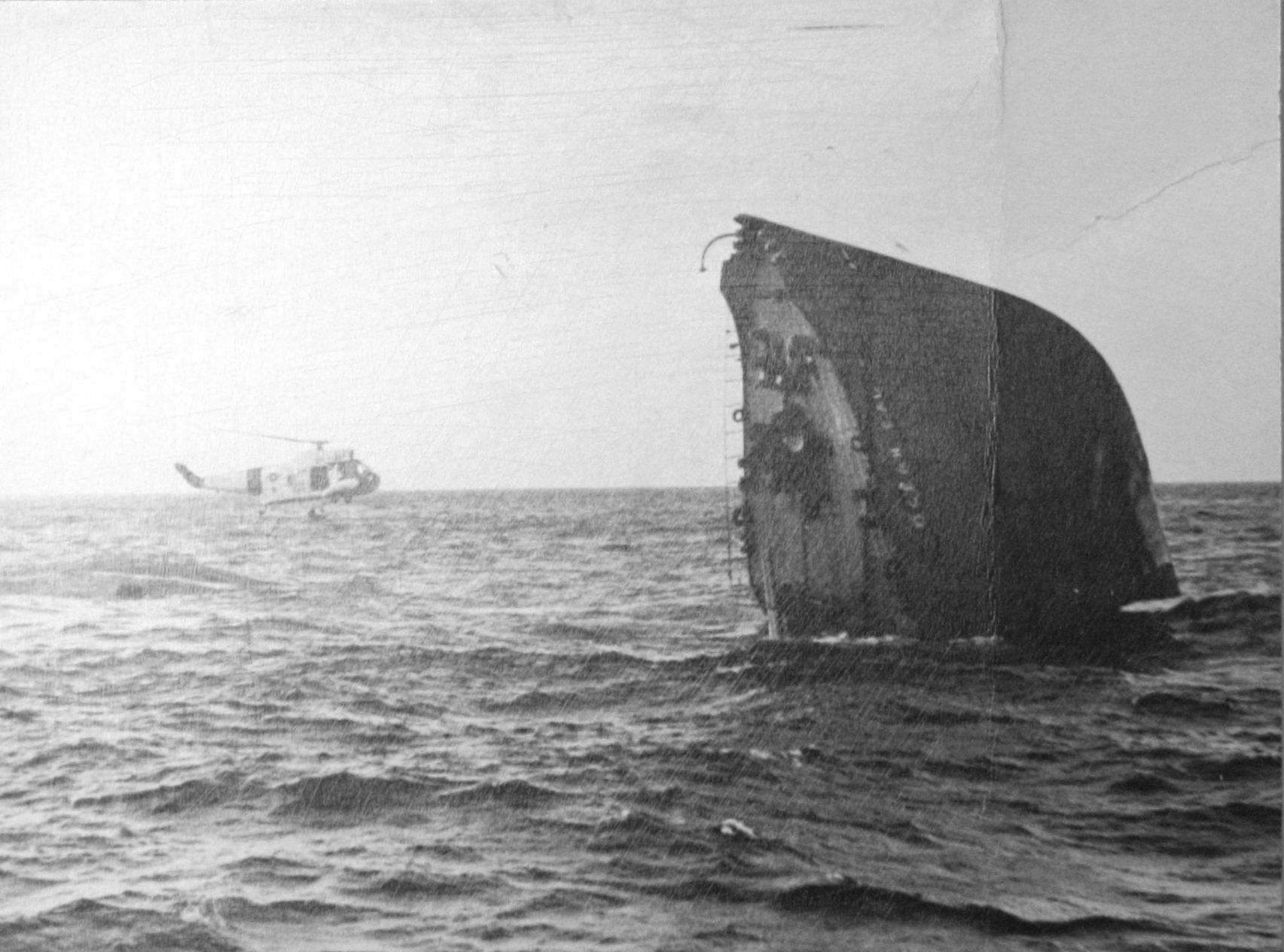
- The writer became tangled in the after
falls and was dragged under. When he reached the surface, the after gun mount
of the ship was just going under, while the forward section of the ship
remained afloat. A member of the armed guard crew and the writer clung to a
piece of one of the lifeboats which had been broken during the sinking. We were
picked up out of the cold water about two hours later by a rescue boat from the
RS RATHLIN.
- The ship sank very rapidly, and from accurate information, the writer learned that she had sunk in 2 ½ minutes from the ringing of the alarm bell. The writer did not see Cadet-Midshipman Atchinson after he was on the boat deck, but it is assumed that he was washed overboard by the heavy seas, as he was never seen again.
Frank H. Cain