May 14, 1943
CONFIDENTIAL
From: Cadet-Midshipman Paul C. EWING, Second Class, D-2, USMMCC
To: Supervisor, U.S. Merchant Marine Cadet Corps
Via: District Cadet Supervisor, New York
Subject: Loss of the SS SANTA CATALINA, Report on
- On April 21, 11943, we completed loading explosives at Hog Island, Pa., and proceeded to sea the same day, operating singly and without escort. The weather was fair and we made good speed until the following two days.
- On April 23, at 2050, zone plus 4, shortly after darkness had set in, we were struck by two torpedoes, one following the other, on the starboard side in the after end of No. 1.
- The writer having watched below was turned in at the time of the torpedoing but was not asleep, dressing immediately and detaining a life jacket, he proceeded to the boat deck.
- The boats and rafts were all placed in the water except the two boats on the port side which could not be cleared because of a heavy starboard list. All hands got into the boats and on to the rafts without much delay except two U.S. Navy radio men, who had remained in the shack in spite of the abandon ship order. The ships regularly assigned civilian operator, Mr. Arnold Seltz, took a portable transmitter from the shack and deposited it in No. 1-A lifeboat, returned to the shack and made the two Navy operators leave. One of these Navy operators could not swim, so, therefore, Mr. Seltz, the ship’s operator, had to pick him up and throw him into the water, from where he was pulled into the lifeboat.
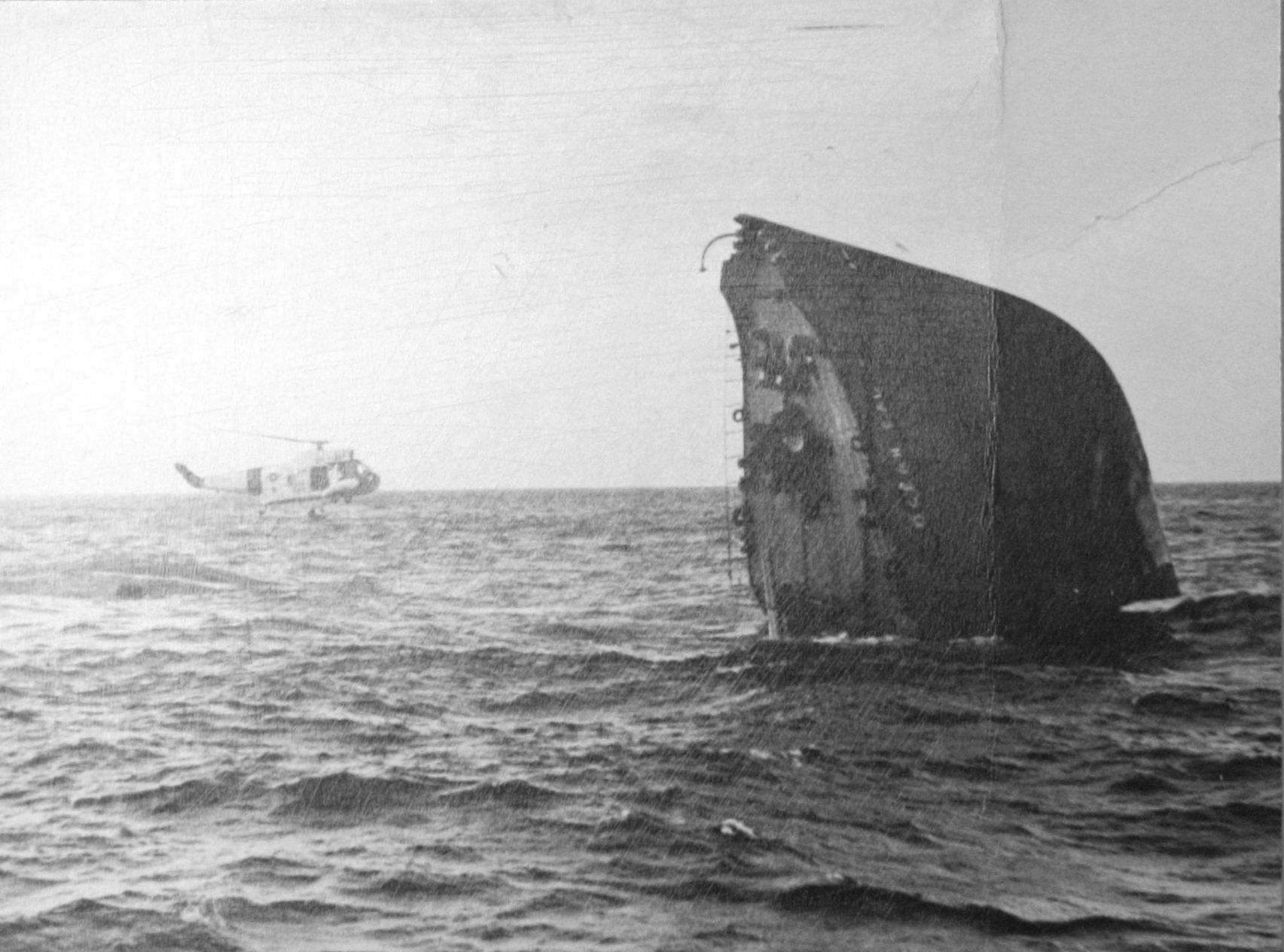
- Shortly after all hands had gotten away from the ship, a third torpedo was sent into her. It struck amidship on the port side and caused the ship to right itself, and then sink vertically, bow first. A moment after it had disappeared below the surface, a violent explosion occurred, and although it shook the boats considerably, it did not cause any damage to them. The explosion also caused the fuel oil, which had accumulated on the surface, to ignite and illuminate the area for many miles around.
- We were spotted by a plane about midnight, and this plane directed a Swedish vessel, the SS VENSSIA to our rescue. We were picked up about 0900, and taken to Puerto Rico, and while on route, we received excellent treatment.
- We arrived in San Juan, P.R., on April 27, and on May 6, we left by plane for Miami, and thence to New York, where we have now finally been paid off, and are ready to go home on a short leave before being assigned to another ship.
Cadet-Midshipman Paul C. Ewing
Cadet File No: 43-2900
USNR File No: 181641
From: Cadet-Midshipman Paul C. EWING, Second Class, D-2, USMMCC
To: Supervisor, U.S. Merchant Marine Cadet Corps
Via: District Cadet Supervisor, New York
Subject: Loss of the SS SANTA CATALINA, Report on
1. On April 21, 11943, we completed loading explosives at Hog Island, Pa., and proceeded to sea the same day, operating singly and without escort. The weather was fair and we made good speed until the following two days.
2. On April 23, at 2050, zone plus 4, shortly after darkness had set in, we were struck by two torpedoes, one following the other, on the starboard side in the after end of No. 1.
3. The writer having watched below was turned in at the time of the torpedoing but was not asleep, dressing immediately and detaining a life jacket, he proceeded to the boat deck.
4. The boats and rafts were all placed in the water except the two boats on the port side which could not be cleared because of a heavy starboard list. All hands got into the boats and on to the rafts without much delay except two U.S. Navy radio men, who had remained in the shack in spite of the abandon ship order. The ships regularly assigned civilian operator, Mr. Arnold Seltz, took a portable transmitter from the shack and deposited it in No. 1-A lifeboat, returned to the shack and made the two Navy operators leave. One of these Navy operators could not swim, so, therefore, Mr. Seltz, the ship’s operator, had to pick him up and throw him into the water, from where he was pulled into the lifeboat.
5. Shortly after all hands had gotten away from the ship, a third torpedo was sent into her. It struck amidship on the port side and caused the ship to right itself, and then sink vertically, bow first. A moment after it had disappeared below the surface, a violent explosion occurred, and although it shook the boats considerably, it did not cause any damage to them. The explosion also caused the fuel oil, which had accumulated on the surface, to ignite and illuminate the area for many miles around.
6. We were spotted by a plan about midnight, and this plane directed a Swedish vessel, the SS VENSSIA to our rescue. We were picked up about 0900, and taken to Puerto Rico, and while on route, we received excellent treatment.
7. We arrived in San Juan, P.R., on April 27, and on May 6, we left by plane for Miami, and thence to New York, where we have now finally been paid off, and are ready to go home on a short leave before being assigned to another ship.
Cadet-Midshipman Paul C. Ewing