30 July 1943
CONFIDENTIAL
To: Supervisor, U. S. Merchant Marine Cadet Corps
Via: District Cadet Supervisor, New York
Subject: Loss of vessel SS WILLIAM KING; Report on
The subject vessel sailed from New York in a convoy of about 25 ships with four or five escort ships. The ship was loaded with tricks, ammunition, food, blankets, medical supplies and rail axles bound for Russia, the port of discharge being Bushire, Persia. The convoy disbanded at Panama, and the subject vessel proceeded to her destination unescorted at a speed of about ten knots. The weather was ideal except for one rain storm which lasted for three days while in the vicinity of Madagascar.
The cargo was unloaded at Bushire and the ship the proceeded to Durban, South Africa. While on the way to that port, on June 6, 1943, at 0345, ship’s time, the vessel was struck by a torpedo on the port side and in the settling tanks. The writer was studying in the Third Assistance Engineer’s room when the explosion occurred. Instantly all the lights went out, and the engines stopped. The writer groped his way through the darkness to the Boat deck. Arriving there, the Chief Officer had already given orders to lower the boats, so the writer then went down to the main deck and released a forward life raft.
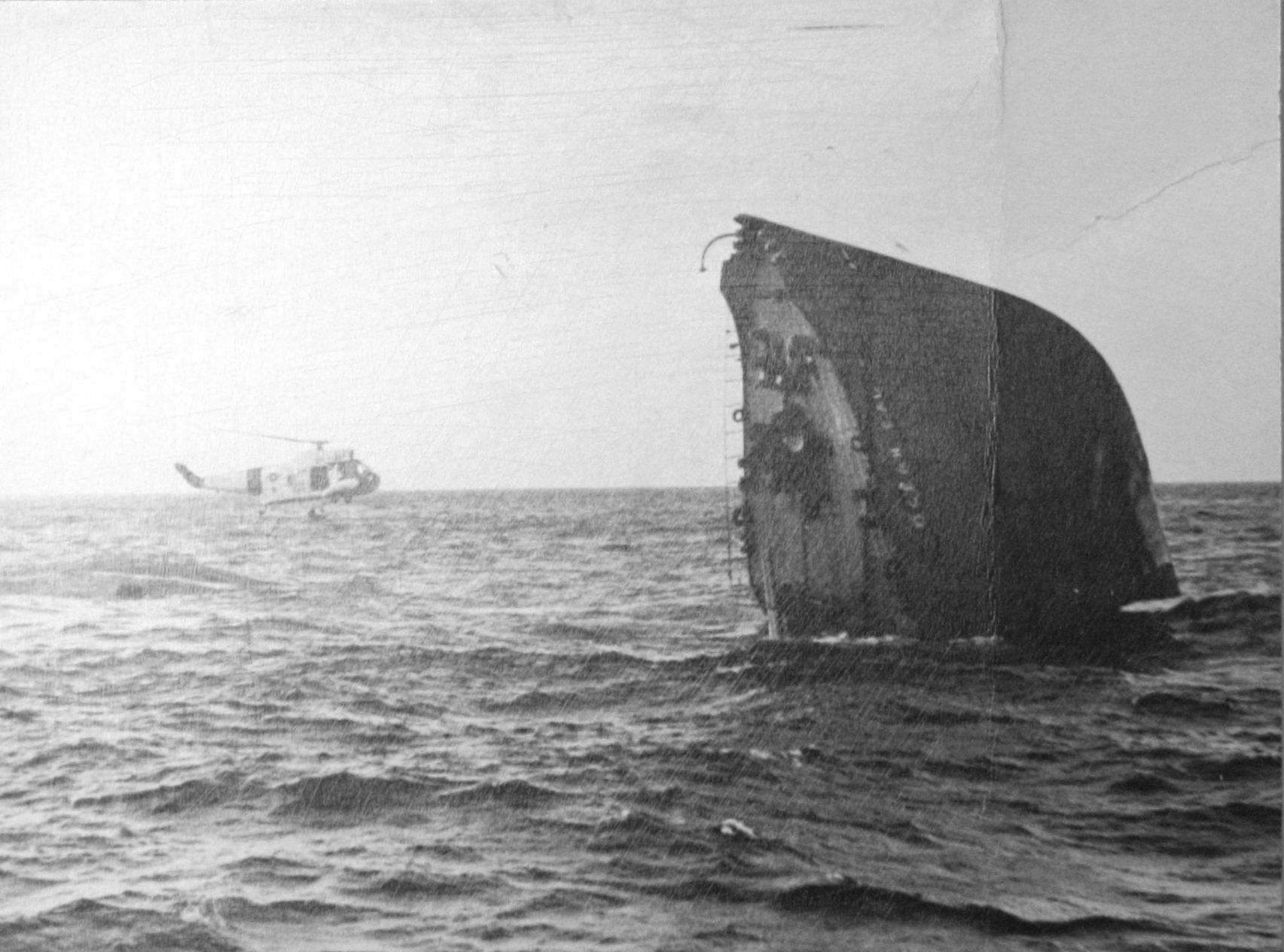
The ship was sinking very slowly. A second torpedo had missed the ship passing by the stern by about two feet, but 25 minutes after the first torpedo struck, the ship was hit by another, striking amidships on the starboard side. The ship then went down in about two minutes, but all hands had abandoned ship by that time. There were six casualties, all killed by the exploding torpedoes.
The survivors spent the next six days in the boats and under the skillful guidance of Mr. Milliken, An A.B. and Mr. McGrath, Bos’n sailed to within 14 miles of land. The boats travelled 360 miles, at an average speed of three knots.
Immediately after the ship went down, the submarine surfaced. It appeared to the writer to be new, as a brass plate on the bow was untarnished. It was a German submarine and carried two deck guns. It appeared to be about 300 feet long. The submarine came alongside the boats, asked the name, tonnage, port of destination etc., and when these questions were answered, they took the Captain prisoner. The submarine then disappeared.
Subject: Loss of vessel SS WILLIAM KING; Report on
On June 12th, the survivors were sighted by a patrol bomber, and about one and a half hours later were rescued by the HMS RELENTLESS, a British destroyer. The survivors were landed in Durban about 1800 the same day. The writer was given first class passage back to the United States and landed in New York in July 26, 1943.
Cadet-Midshipman Henry BOGARDUS, Second Class, (E-1), USMMCC was on duty in the engine room at the time the first torpedo struck the ship, and he was among the five or six men killed at that time. The writer has not been able to contact anyone who saw this Cadet-Midshipman die, but all were of the opinion that he was killed by the explosion of the torpedo. Cadet-Midshipman Lueddecke and Canavan, together with the writer, got off the ship safely and all are now in New York.
[Signed]
Cadet- Midshipman Joseph A. GAGLIANO, Second Class, (E-1), USMMCC
FIRST ENDORSEMENT.
30 July 1943
To: S-CO
Forwarded. Attention invented to last paragraph above concerning the loss of Cadet-Midshipman Henry Bogardus.
P. BRENNAN
G. F. FELTUS
By direction