From: Cadet-Midshipman John A. HARLEY, First Class, (D-1), USMMCC
To: Supervisor, U.S. Merchant Marine Cadet Corps
Via: District Merchant Marine Cadet Supervisor, New York
Subject: SS NATHANAEL GREENE- loss of
- The SS NATHANAEL GREENE sailed from New York on April 1, 1942 with a full cargo bound for Russia. Although departure was taken for Russia, the ship did not start the northward journey until September 2, 1942, as part of the cargo was discharged in Sunderland, England and other cargo was loaded in Middlesborough. Subject vessel finally sailed for northern Russia on September 2, 1942 from Lock Eve, Scotland.
- Subject vessel proceeded northward past Iceland and when off Spitsbergen, proceeding through the passage between Iceland and Bear Island the vessel was subjected to attacks by submarines and aircraft almost all the way from there on in to Archangel. The first attack same on came on September 13, when the convoy lost two ships through torpedoing. This happened at 0900 and shortly thereafter all Hell broke loose. A wave of German torpedo bombers, Heinkel III’s came up on the starboard beam and in the space of five minutes ten ships were sunk. It happened so quickly that one can’t realize how it happened. The aircraft carrier AVENGER was acting as escort and her planes were all on deck during the attack. The crew on subject ship was pretty down hearted after the attack as the two outside columns were gone and it was thought that tomorrow the next column would bear the brunt of the attack.
- The next day was clear with a clear sea and good visibility. There was no action during the morning but it turned out to be the lull before the storm. The storm broke at 1237 when, from dead ahead, 17 planed made for the carrier escorting us but fortunately they all missed their mar. During the attack the carrier was running up and down the column, her AA shells exploding overhead. Then the attack to finish off the convoy came, and the writer personally counted 27 planed coming in. stopping his work, he made his peace with the Lord and started to load the3-inch 50 gun as fast as possible. On the morning of the 15th, the Commodore signaled the following message to the NATHANAEL GREENE: “Reverence to your gunners, you are at the top of the class”. Credit was received for shooting down five planes. Following this attack, during which the NATHANAEL GREENE was hit several times by aerial bombs, course was resumed for the discharge port The compass was destroyed during the attack, and it was necessary to steer by a boat compass loaned by an escort destroyer. This was a date to be long remembered, September 14, 1942. It shows the type of men merchant mariners really are and the ability they have to survive action of this kind.
- Arriving in Russia the cargo was discharged and temporary repairs made, subject vessel left Russia on November 17 bound for the United Kingdom. After leaving the White Sea, convoy broke up and for the next ten days the NATHANAEL GREENE proceeded alone. Course was set for the ice field, to the north, proceeded to 76 24’ north and thence southward along the east coast of Greenland to Iceland. Leaving the coast of Iceland the course was se tfor Lock Eve and from there to Glasgow to discharge cargo. At Glasgow a full cargo was loaded for North Africa and the vessel sailed on January 21, 1943. The voyage to Africa was uneventful, arriving at Mostaganem, Algeria, on February 5, 1943.
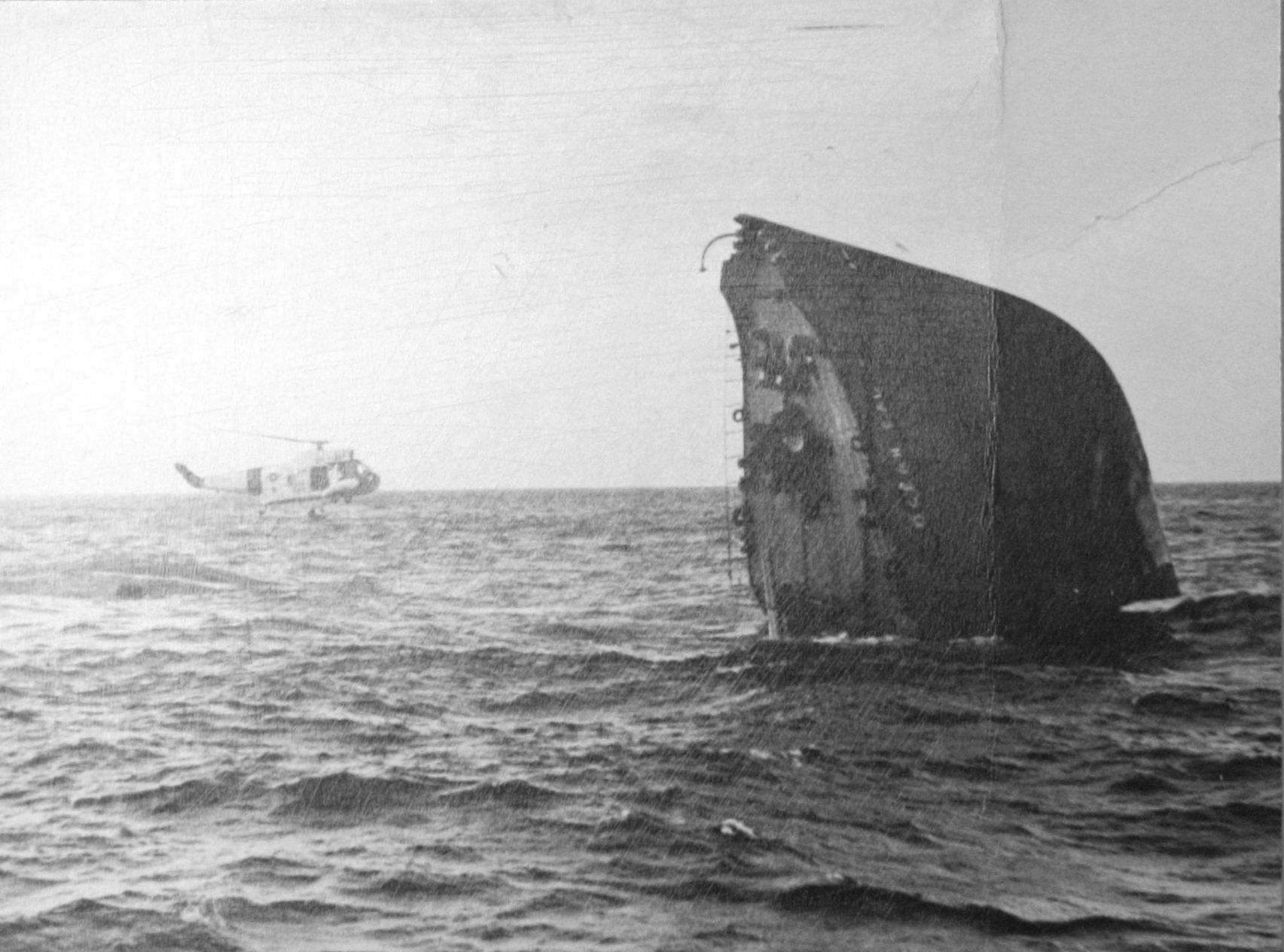
- At Mostaganem all cargo except about 800 tons of food stuff destined for other ports in Algeria was discharged. The NATHANAEL GREENE left Mostaganem at 1200 on February 24, 1943 escorted by a mine sweeper. Proceeded on various courses to sea and fire and boat drills were held while steaming slowly. On the horizon was seen the convoy which the NATHANAEL GREENE was scheduled to join at 1345 at 1351 two torpedoes suddenly struck, one at the forward bulkhead of #2 hold and the other amidships. The ship settled by the head quickly as enemy planes came towards her. HMS SCHYLLA steamed out to meet them and like a volcano she brought down five planes while two Hurricane fighters dove at the oncoming HEINKELS, split up the formation, distributing the planes along the port and starboard sides of the convoy. A shell form the NATHANAEL GREENE’s guns hit the wail of the plane, and it fell but finally a plane let go three torpedoes, two together and one singly that headed straight for the bow of the ship, the ship was slowly turning away from them when they hit. Shrapnel was raining form the sky. The SS MARY BUCKENSACK had been hit and she exploded 500 feet off the port bow. The midship section of the NATHANAEL GREENE was the engulfed in a cloud of smoke and could not be seen. The deck cargo of canerod crates was littered with debris. In the excitement the two forward life rafts had been cast adrift, their painters parted and they drifted astern, when the torpedo struck, the writer was standing on the port wing of the bridge and he was knocked down. Picking himself up he heard the Master say “Stop the engines”. He rang “Stop” on the telegraph, but it was never answered. Central alarm was sounded and the writer went to his boat station taking his sextant with him. All hands stood by the boats and the Master asked the Chief Engineer how the ship was below. The Chief Officer was taking soundings to see if the vessel was tight. Out of a clear sky someone yelled “Let’s take this damn thing to Russia”. International “II” was hoisted and a destroyer came alongside and took off the wounded. Further inspection was then made to determine the extent of the damage. Down below the bulkheads had been ripped out, midship deck house smashed, all doors and blackout equipment was destroyed. In the Cadet-Midshipman’s room the bunks were moved approximately 8 inches from the bulkheads, sinks and radiators were blown from the bulkheads. Hasty repairs were made to blackout he ship. The vessel was carrying 700 tons of ballast in #1 and #2 deep tanks and the ship had now settled with the bow just awash. The fore and aft tween deck beam was pushed up at the #2 hold by the Foremast housing piercing the deck. No. 3 lifeboat was smashed. Pipes were broken and water was in the rooms.
- Nos. 2 and 4 boats were lowered and later picked up by the Minesweeper BRICHAM which put a line on the NATHANAEL GREENE and towed her into the beach. Survivors went aboard the following morning to salvage what personal gear could be found, and it was learned that the ship was beached at Salamanda, five miles west of Mostaganem. Salvage work was started and survivors were transported to Cran and thence given transportation back to the United States.
- The writer desires to report that his shipmate, Cadet-Midshipman John R. GORDON, Jr., who was lost while on the engine room was last seen working by the grease extractors, one of his assigned duties.
Signed (John A. Harley)
Cadet-Midshipman John A. HARLEY, First Class, (D-1), USMMCC