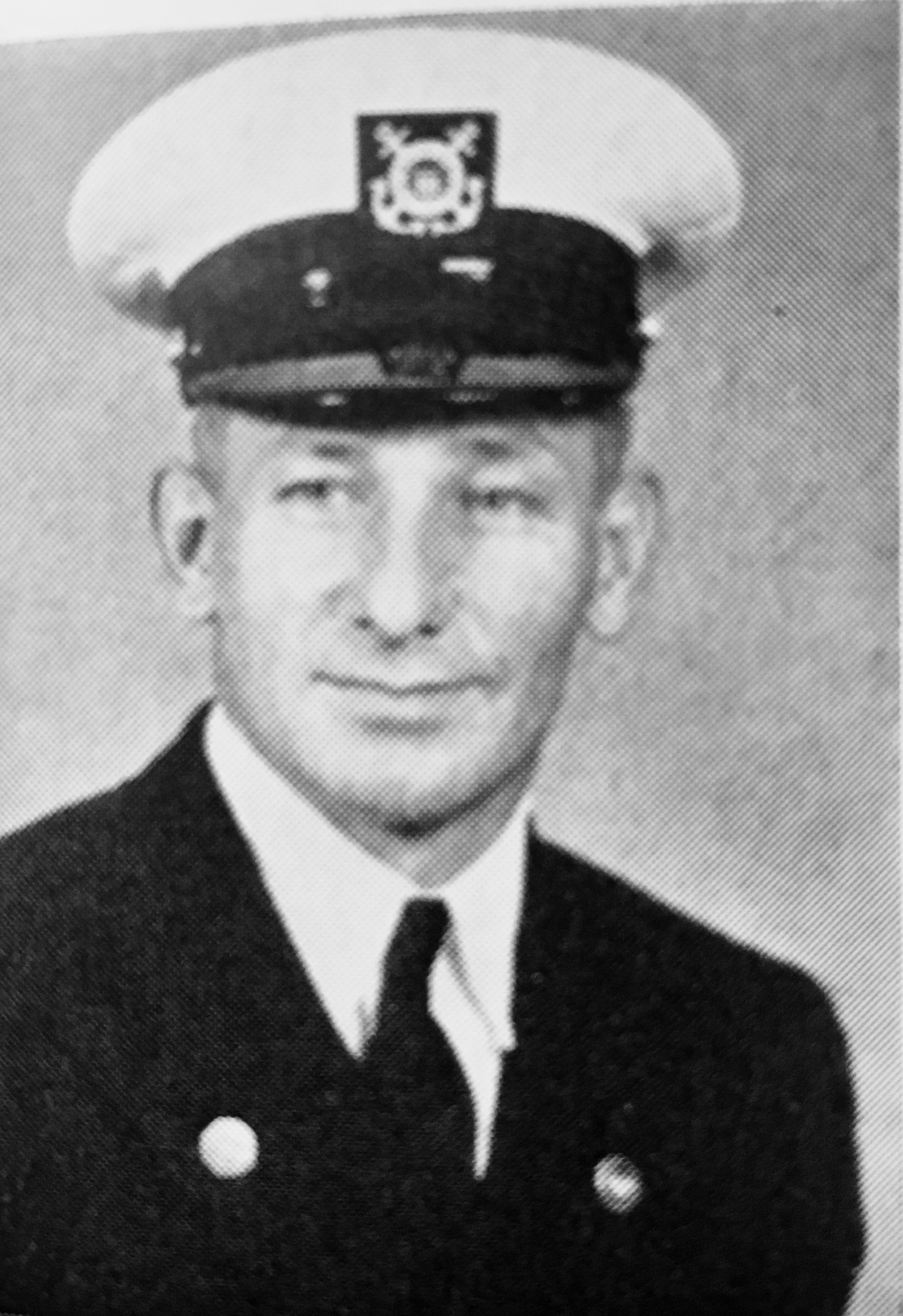
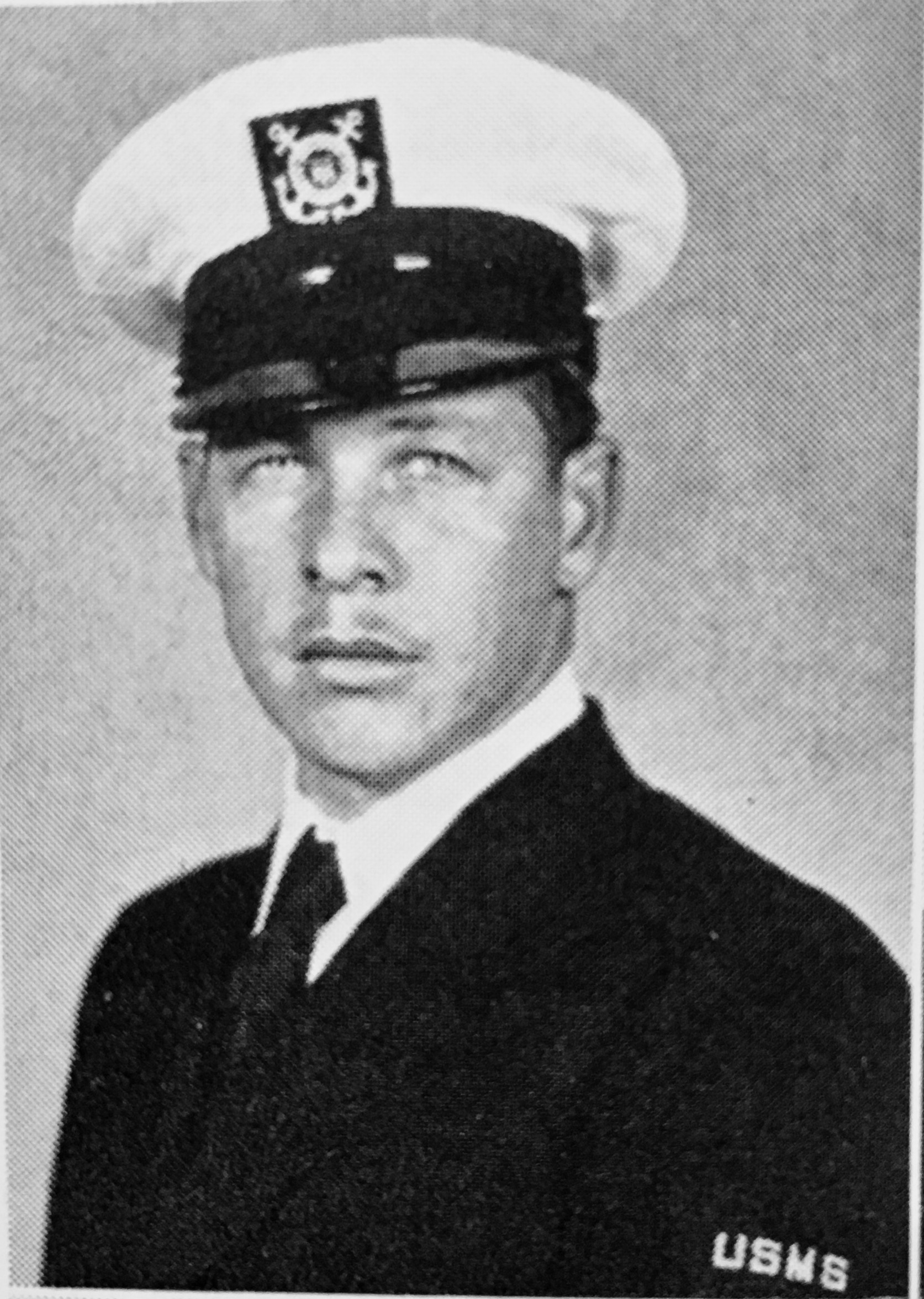
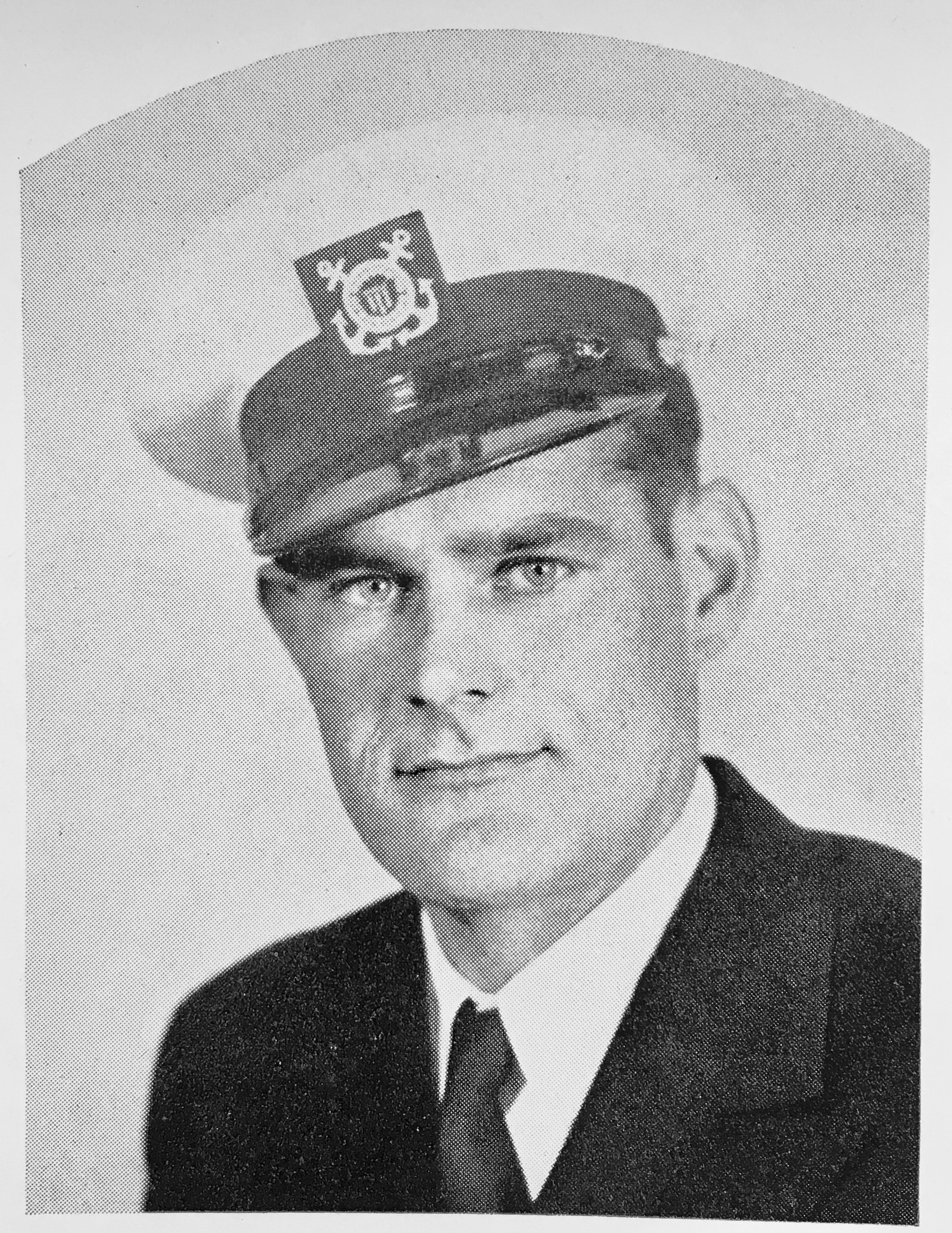
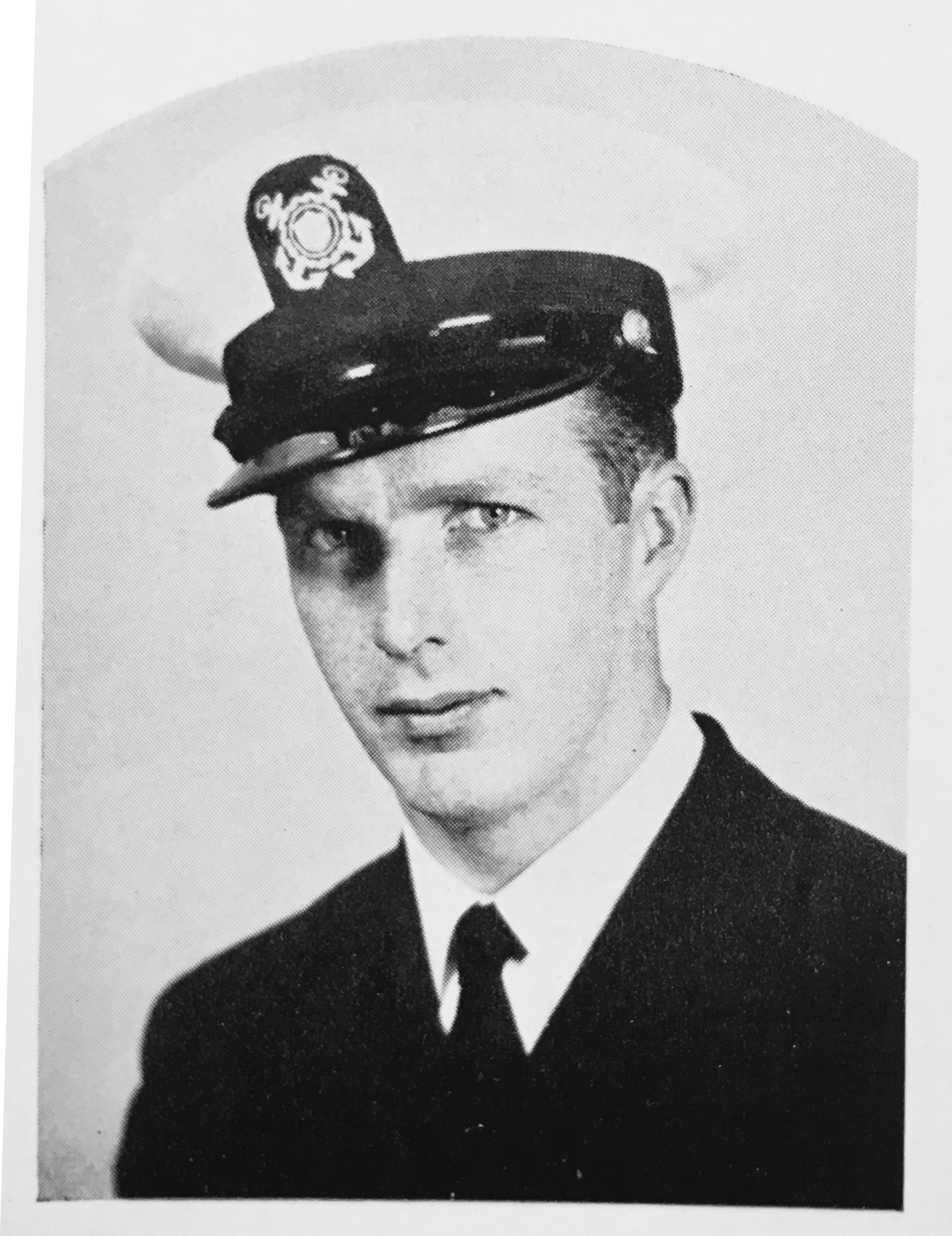
The United States Merchant Marine is not an armed service and has a relatively recent history of federally-issued medals and decorations. American merchant seamen and their ships have had a long history of being militarized without due recognition; before the Second World War, medals, awards, and decorations came from civic groups and managing operators. The wartime Roosevelt Administration started a new precedent: merchant seamen were to be honored just the same as their brothers-in-arms. And like sailors, merchant seamen received ribbons that were to become medals after the cessation of the war. Unfortunately, as momentum was building for placing seamen on an equal footing with the “battleship sailor” regarding benefits and medals, Roosevelt died; mariners had to wait to replace their hard-earned federally-issued ribbons with medals. Almost forty years after the close of hostilities, merchant seamen were granted veteran’s status – something far more valuable.
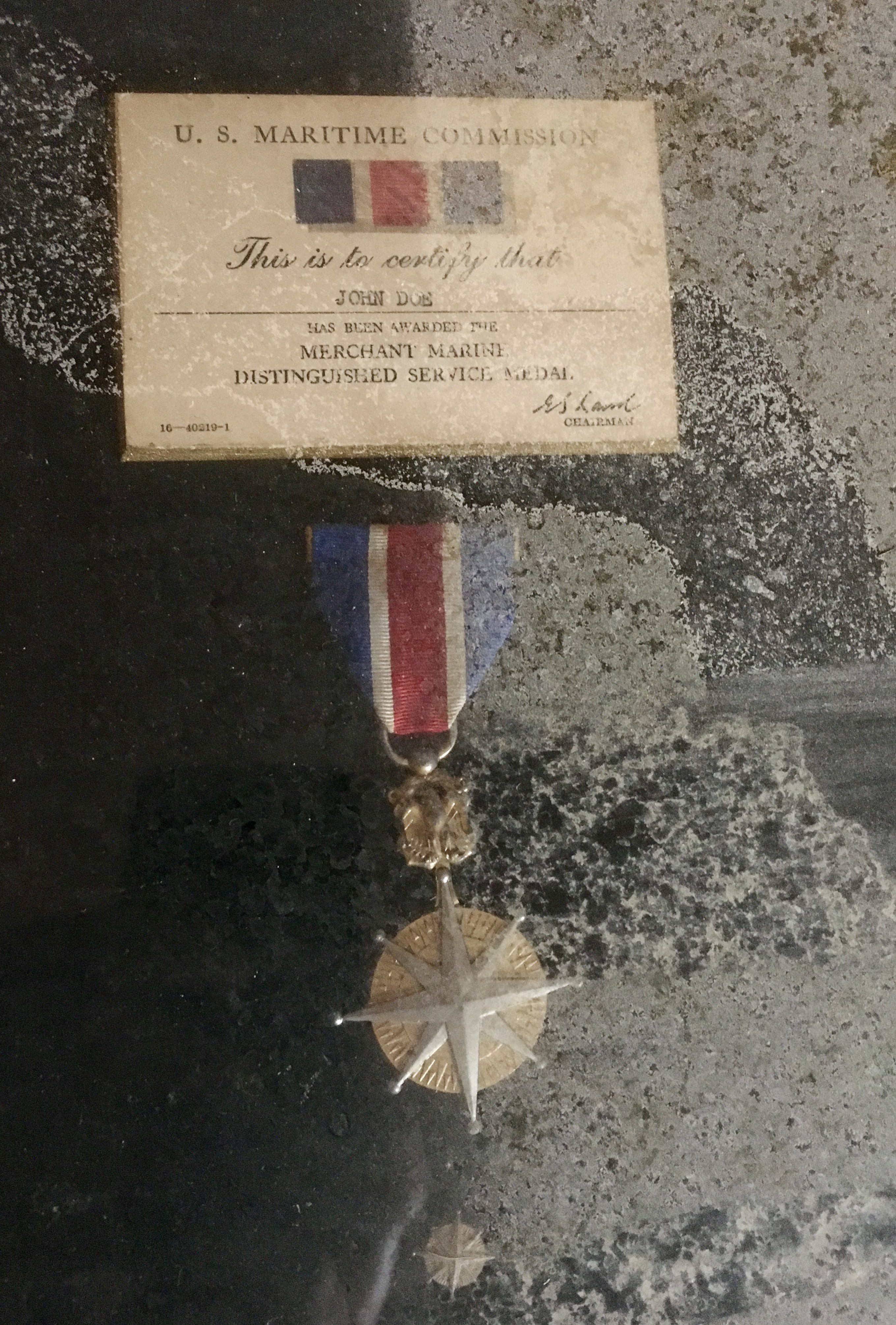
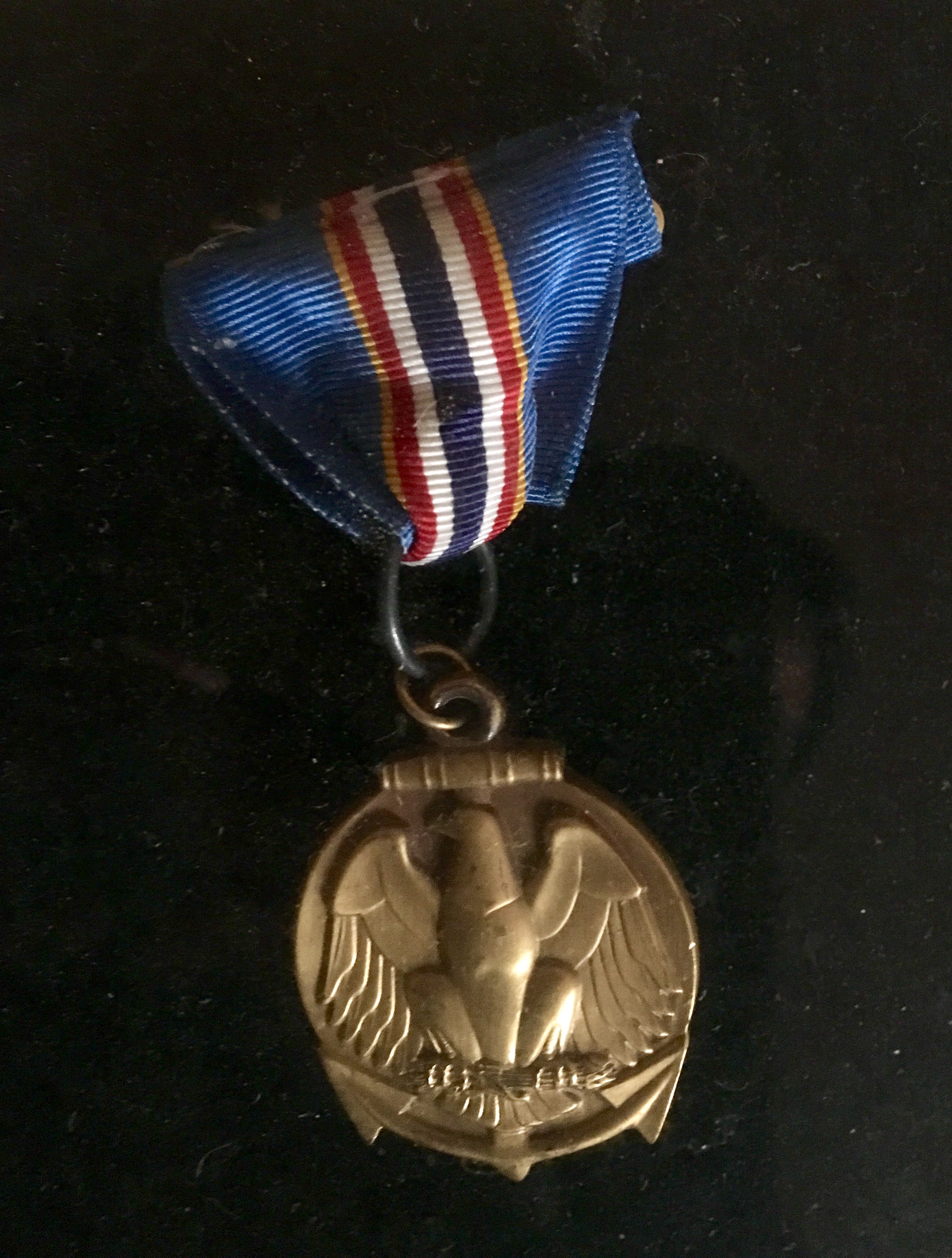
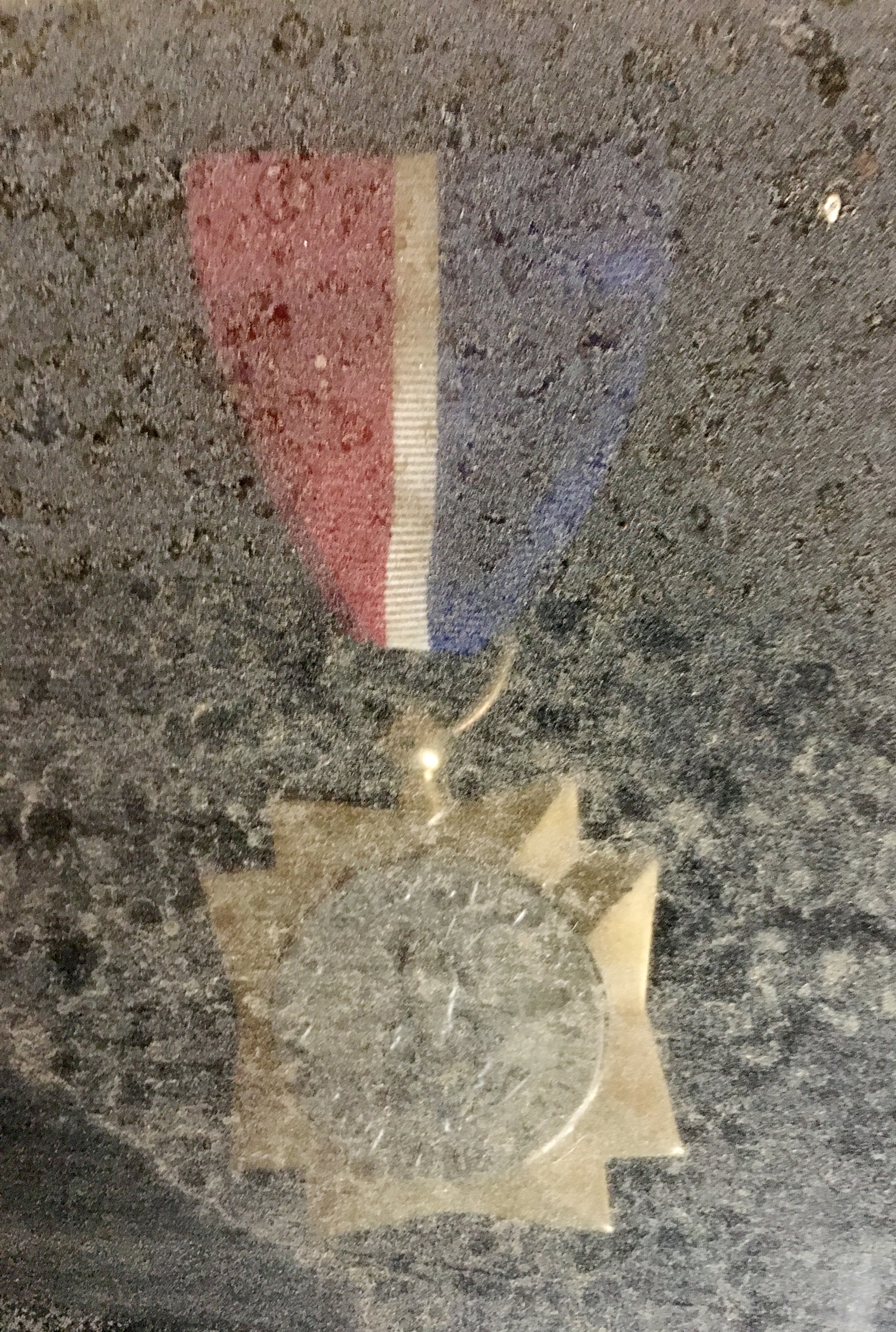
Below are some rarely-seen items from various entities: an award document for the highest wartime decoration to a United States Lines Master, a solid gold United States Lines award, and photographs of the collection of wartime medals at the American Merchant Marine Museum.
United States Maritime Commission Award Citation
Copy of Capt. George A. Vickers Merchant Marine Distinguished Service Medal citation sent to his employer, United States Lines. ca. 1945. He was presented his medal by a member of the War Shipping Administration – the government agency which assumed shipping management for the duration of the war from the U.S. Maritime Commission.
col.: AMMMcol.: AMMM
United States Lines Distinguished Service Medal & Award
With the retirement of Capt. George Fried from the United States Lines, the company’s Board of Directors instituted the “United States Lines’ medal for distinguished service.” Following the precedent of other Orders and Awards, there were two classes: Medal and Award. The former was awarded to ship masters and the latter to crew members and officers. November 20, 1934, marked its first award.
col.: AMMM. from Ocean Ferry, December 1934.
United States Lines Distinguished Service Award
Award medal presented to Philip Westerly Babcock, Jr. for his participation as lifeboat crew during the rescue of the fishing schooner Fieldwood by the SS American Farmer on December 19, 1938.
col.: IW
American Merchant Marine Museum collection
Merchant Marine Distinguished Service Medal and Award Card.
col. AMMM
Merchant Marine Meritorious Service Medal (obverse).
col. AMMM
Merchant Marine Mariner's Medal (reverse).
col. AMMM
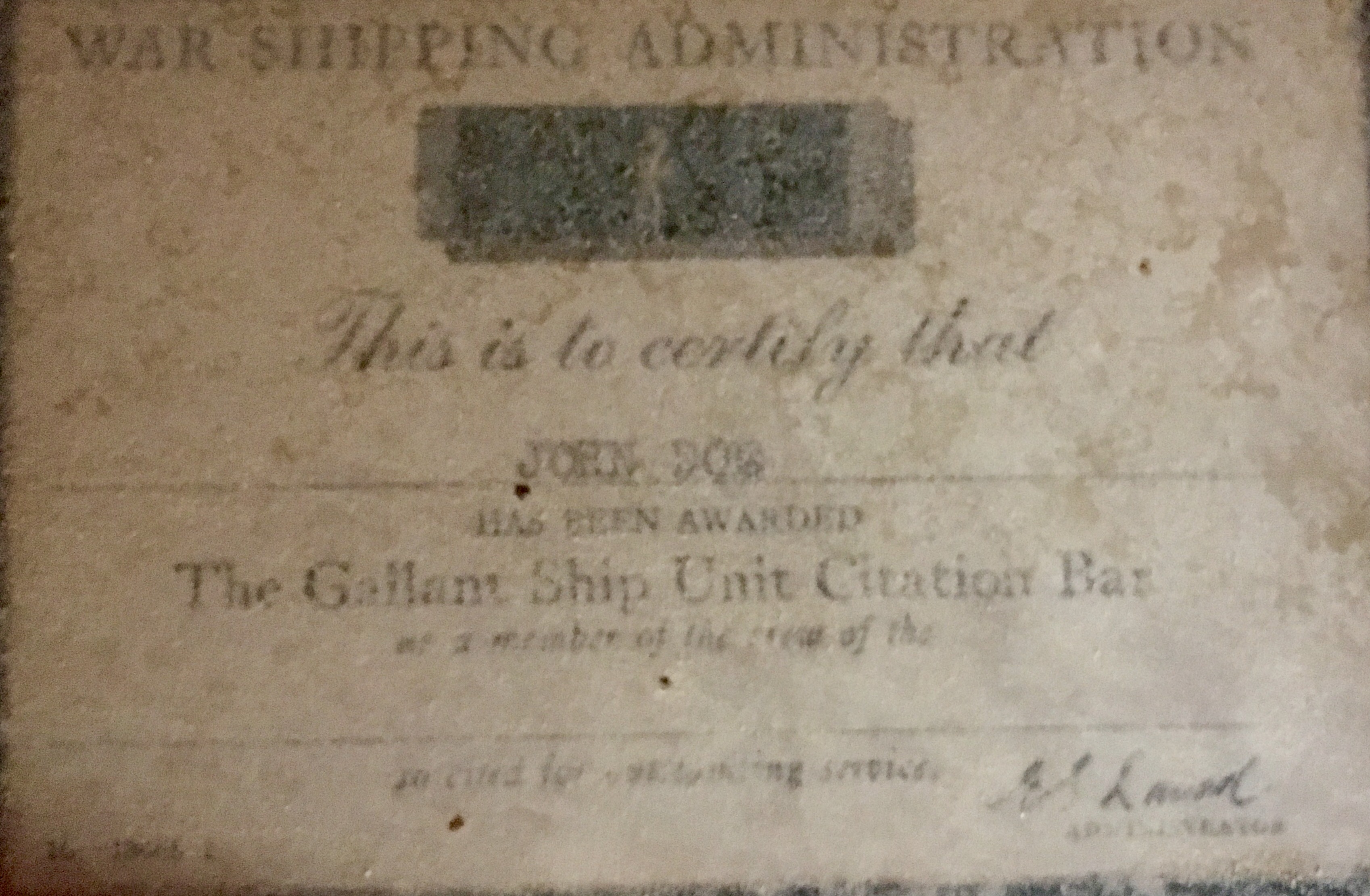
War Shipping Administration Gallant Ship Unit Citation Bar Award Card.
col. AMMM
War Shipping Administration Merchant Marine Combat Bar Award Card.
col. AMMM
War Shipping Administration Merchant Marine Defense Bar Award Card.
col. AMMM
War Shipping Administration Atlantic War Zone Bar Award Card.
col. AMMM
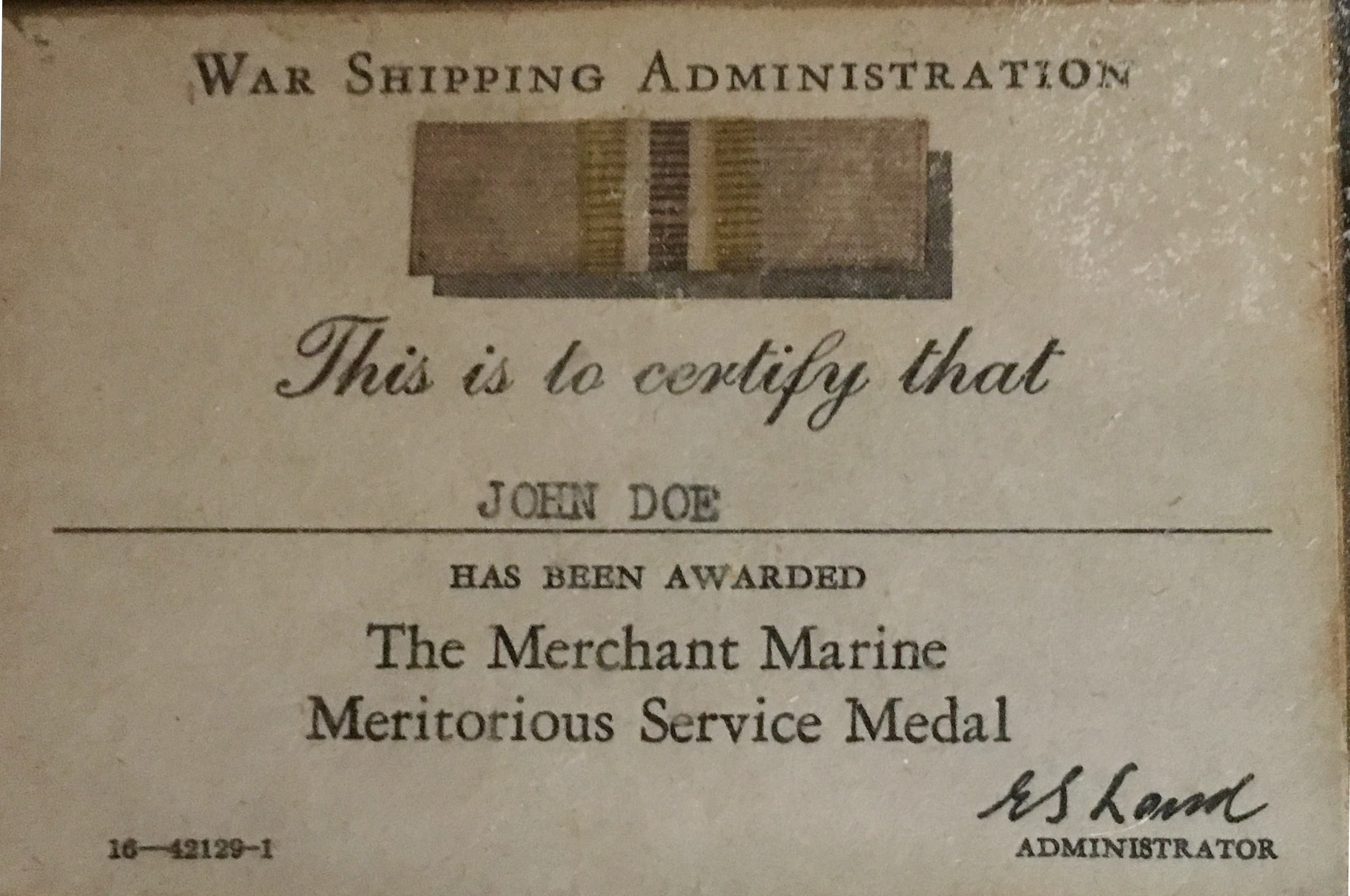
War Shipping Administration Merchant Marine Meritorious Service Medal Award Card.
col. AMMM
Among the many treasures found at the American Merchant Marine Museum located at the United States Merchant Marine Academy is the chapeau of the first Superintendent of the Academy, Captain James Harvey Tomb (U.S.N., Retired). Often, naval officers had their funeral viewings in full regalia, with their dress hats laid on their chests; it is possible this hat was on Captain Tomb’s body while he laid in state at the Academy prior to his burial. The hat’s accession number suggests its donation to the Academy around the time of Captain Tomb’s funeral service in 1946. The hat was later transferred to the Museum at its institution at has been in storage ever since. I had the privileged opportunity to examine it.
The chapeau – also known as a “bicorne,” “cocked hat,” or “fore and aft hat” – was once worn by commissioned officers in the United States Navy. Captain Tomb’s hat, model (M1886), was authorized for full dress and special dress in 1886. In less than a century, full dress ceremonial uniforms – along with the chapeau – were suspended per a directive on October 12, 1940. The hat was written out of U.S. Navy uniform regulations in 1947, and the once undress cap (the familiar naval officer combination visor cap) became headwear for all official and ceremonial functions, with the garrison hat, in turn, taking its place in the naval officer’s wardrobe.
Chapeau, Captain James Harvey Tomb. Col.: AMMM [1946.051.0002]
Captain Harvey S. Tomb’s chapeau is constructed of silky, black beaver fur with a gold tassel at the aft end of the hat. Of note: chapeaux have a set of two tassels and this hat is missing one. The brim of the hat is bound by a strip of black silk lace; this lace is present on both sides of the brim. By contrast, a flag officer would have gold braid stitched along the brim. Over the fan is a loop formed by two parts of an inch and three quarters-wide bullion braid – a width accorded to officers below flag ranks. The braid covers the remnants of a black silk cockade and is secured to the hat body with a pre-May 1941 gilt dome-button. The fans are secured together with two ribbons tied together in bows just above the tassels; a variation found with other hats have the fans held fast with a bolt of black thread. Since the hat was conserved with tissue paper, I did not remove the paper to inspect the inside to determine the manufacturer. Overall, the chapeau is well-worn and a bit frayed; but it remains a stunning object from a uniform tradition of a time long past.
N.B.: Often, chapeaux are stored with dress epaulets and sword belts in steel or tin carrying cases; this hat was stored apart.
Chapeau, Captain Harvey S. Tomb – tassel detail.Chapeau, Captain Harvey S. Tomb – braid, lace, and button detail.
The image below should be titled “Parts of Captain Tomb’s Chapeau M1886.”
Here is a visual aid to the parts of Captain Tomb’s chapeau with commentary; the cockade – a ruffled circular notion – would be centered and located underneath D. with its edges barely visible. Why Captain Tomb’s cockade is missing has been lost to history, as has the second tassel. The braid should not have a gap in the middle of the loop, rather relatively flush with a hint of the cockade between the two. In terms of wear, D. would have the leading edge point forward. The side of the hat not shown is free from any ornamentation excepting lace along the edge of the fan. As for the lace, black lace 1-inch in width would be worn by ensigns to lieutenant commanders; commanders and captains would have 1.5-inch lace; admirals would have gold lace all around the edges instead of the black silk.
Almost every April or March since 1985, the outgoing class of the United States Merchant Marine Academy hosts a gathering of First Classmen, alumni, and distinguished guests called the “Battle Standard Dinner.” Before a packed crowd in Delano Hall, the keynote speaker – invariably a high-ranking military officer or an official in the Federal government – gives a speech apropos to the audience. The dinner affirms the strong link the Academy shares with the armed forces and how the crucible of war fashioned the Regiment’s identity. The dinner both celebrates the Regiment and honors its roots.
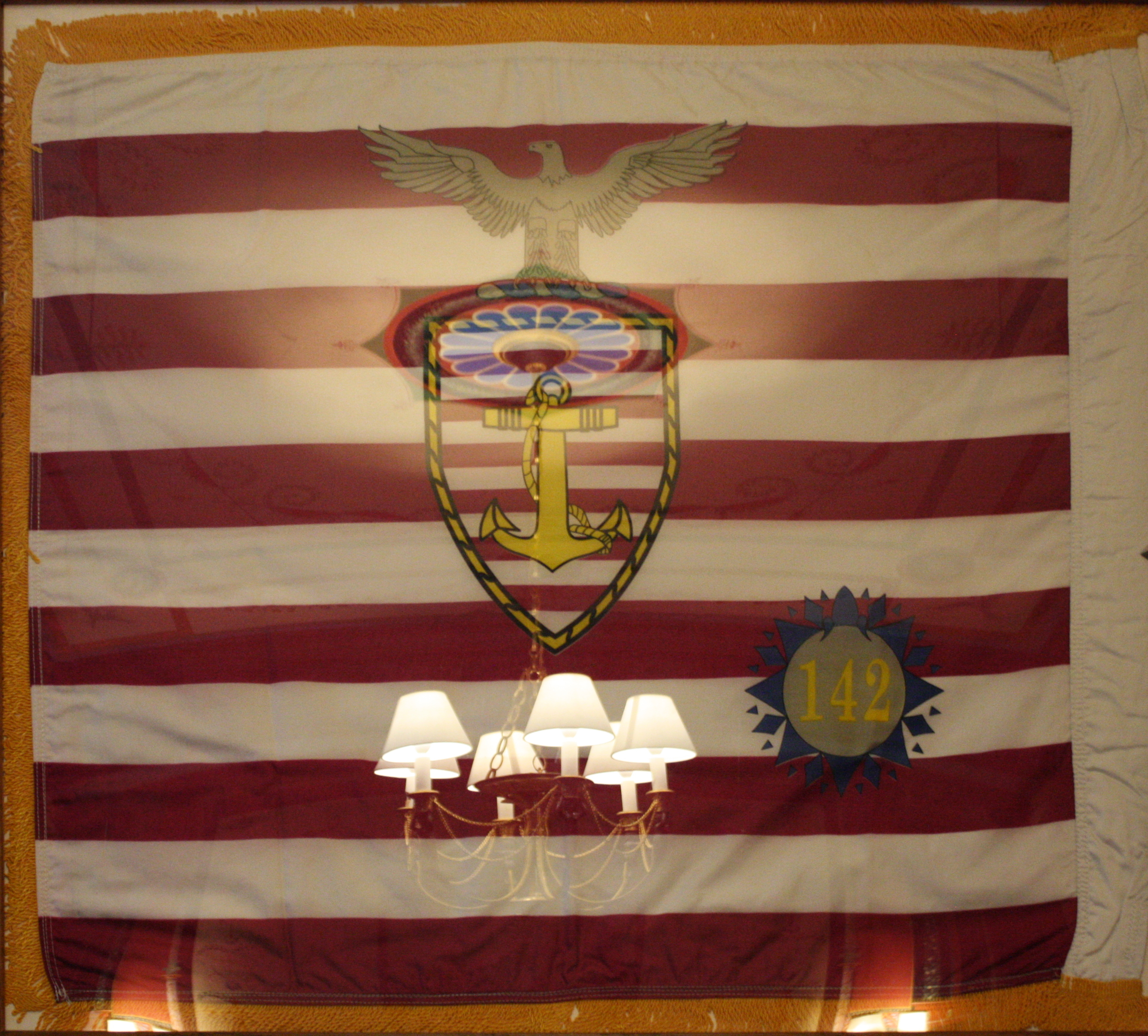
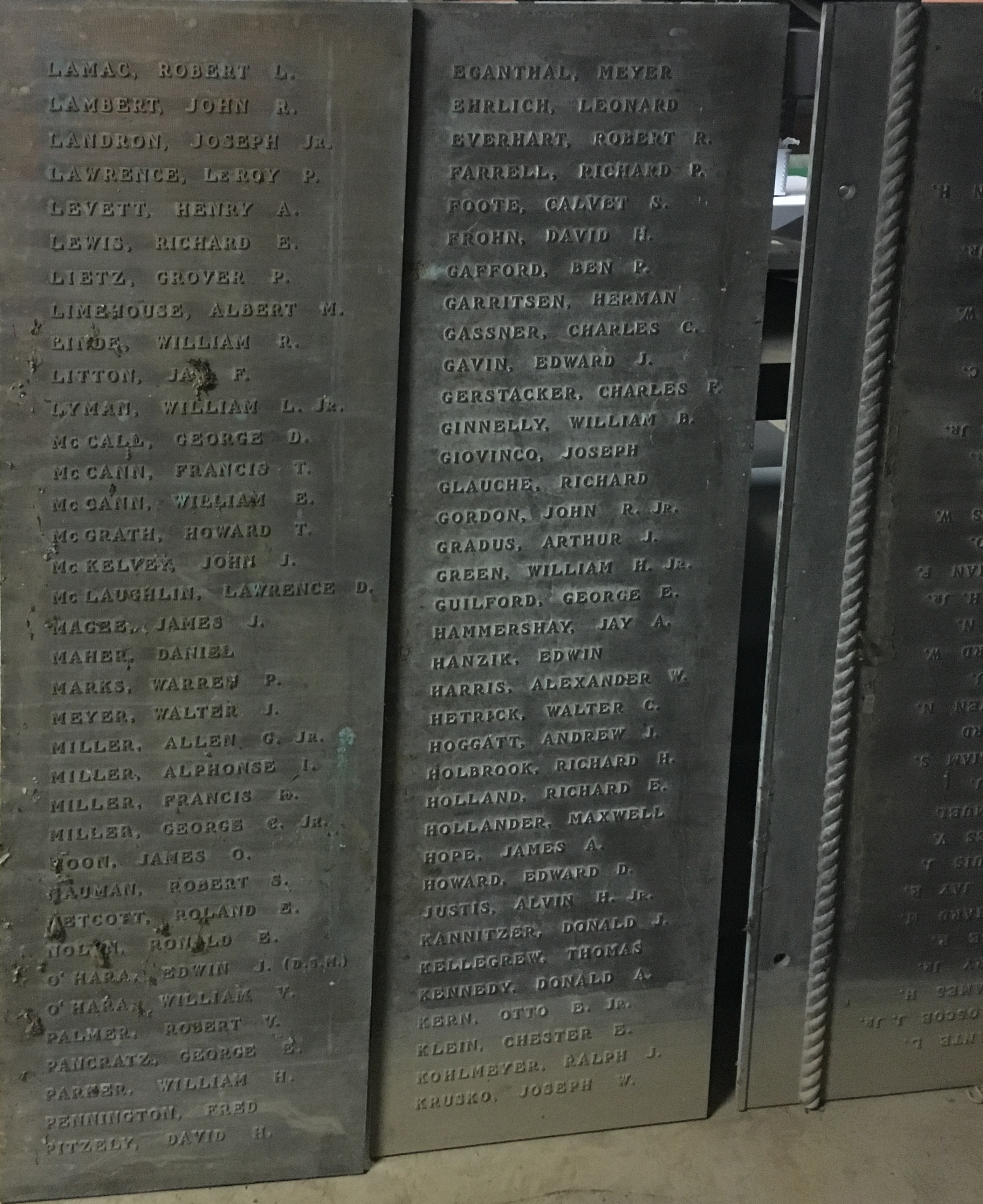
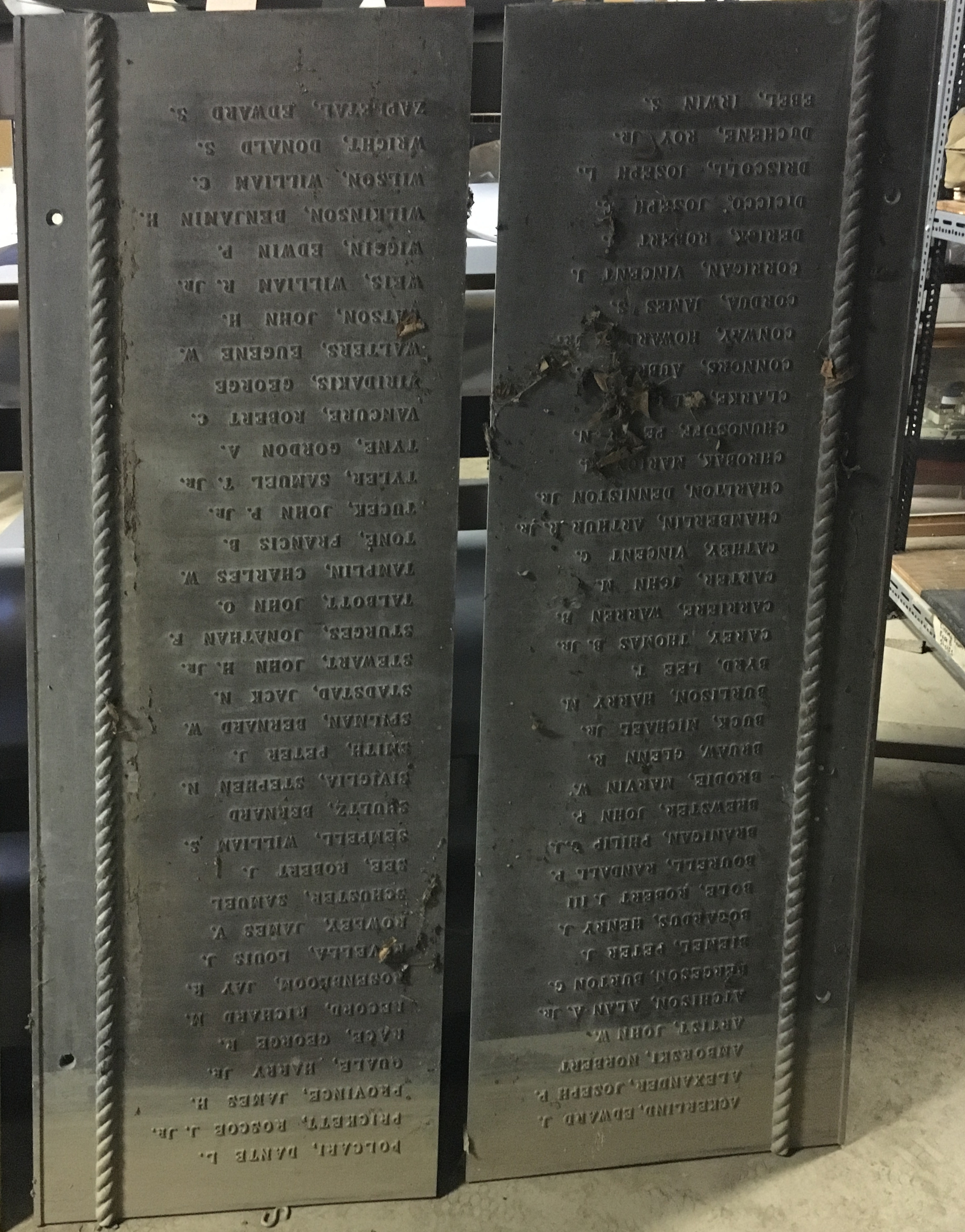
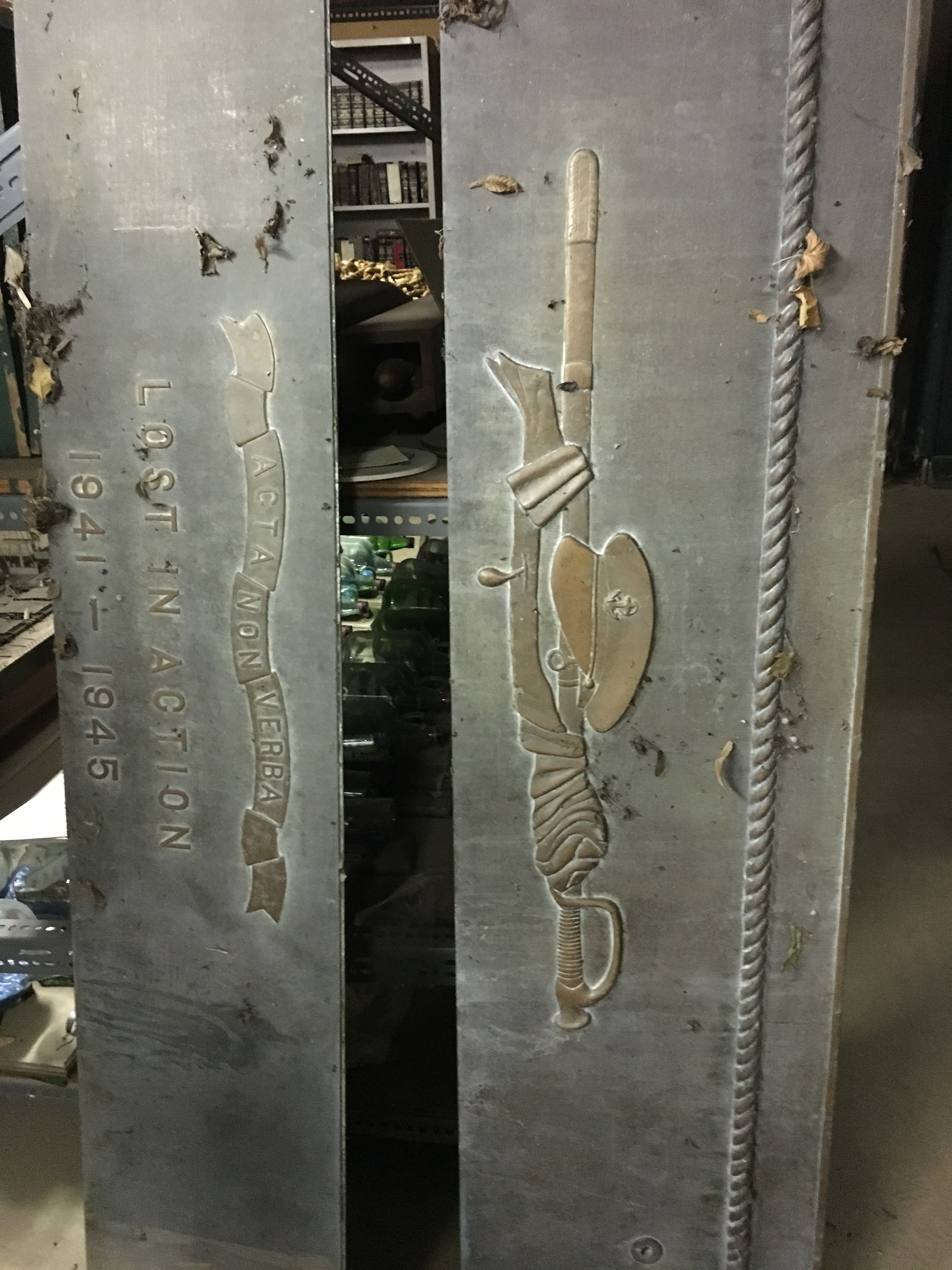
The gathering’s name evokes the flag that the United States Merchant Marine Academy alone holds among its five sister service academies; The Battle Standard. A battle standard – or battle flag – is a type of ceremonial heraldic flag used by military units as a rallying point in war. The Academy has one since it is the only academy that has sent its students into war zones. A part of the Academy’s curriculum during the Second World War was for its students to enter a Sea Year after their indoctrination period; while these cadets under instruction shipped out to learn the ropes of their new vocation, all went directly to a raging war. Many were injured, and many died – either by direct enemy action, shipboard accident, or illness. These individuals are memorialized by the Academy and are known as the 142.
At the Battle Standard Dinner, the 142 are often mentioned, and their link to the present Academy and is emphasized, reminding students they are not only remembering those earlier generations of Kings Pointers but are part of a continuum. In 2014, noted maritime author and researcher Commander Thomas F. McAffey, USNR (ret.), gave an address at the Battle Standard Dinner in which he spoke of Kings Point students’ courage as they headed off to wartime seas. He further linked those who survived and died during the Second World War to current Kings Pointers through the shared ritual of the Sea Year. He emphasized the Battle Standard was a remembrance of King Point’s participation in the war.
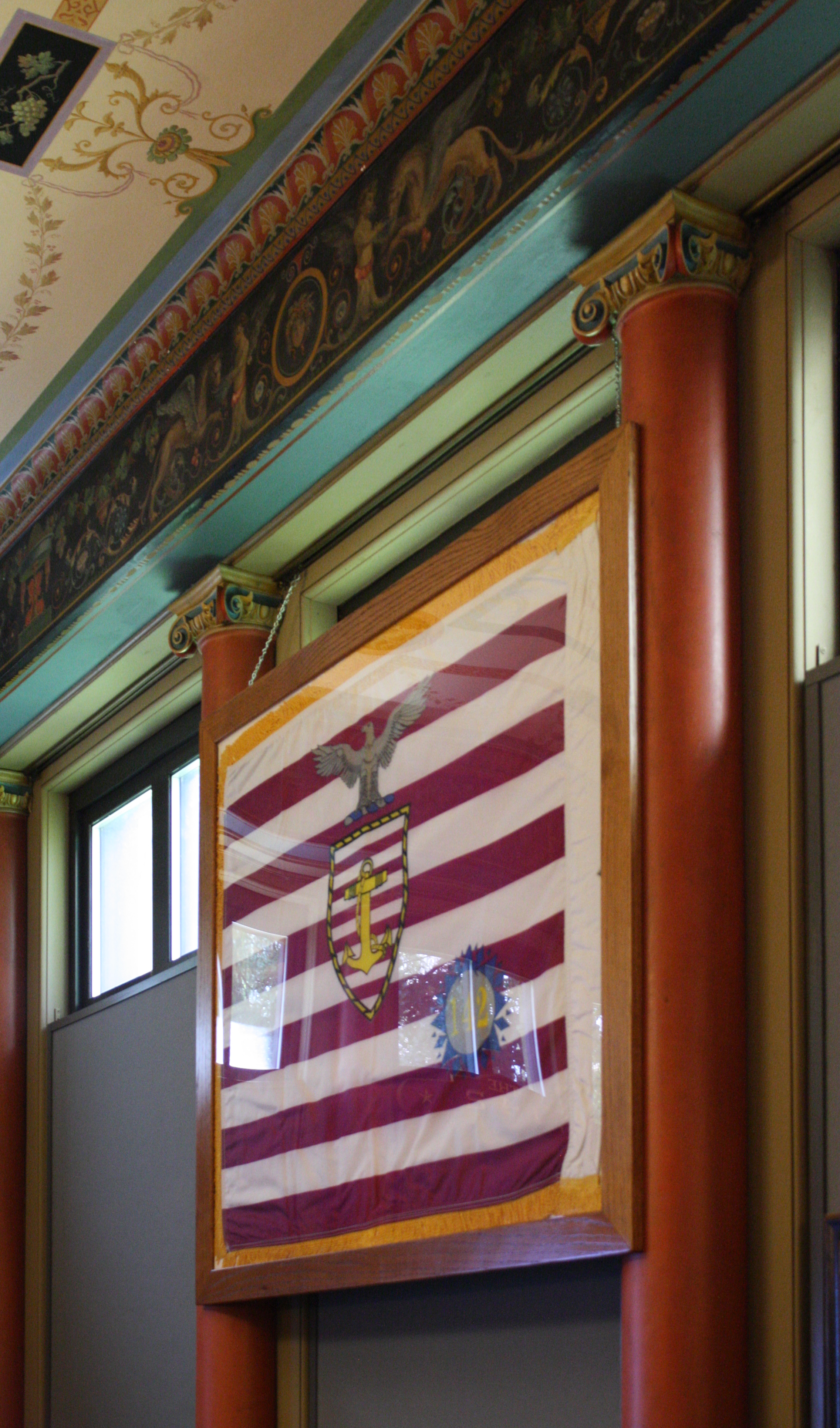
The Battle Standard at Wiley Hall, United States Merchant Marine Academy.
War flags often hold elements of the national flag or national symbols; the Battle Standard is laden with such, but none is more specific to the Academy than the number 142 emblazoned on a compass card. Admiral Mark Buzby, both a United States Maritime Administrator and Kings Pointer, described the number’s meaning succinctly in a message celebrating the Academy’s seventy-fifth year:
142 is a special number. It’s the number of USMMA midshipmen who lost their lives in combat during WWII while embarked onboard transport and resupply vessels supporting our Nation’s Armed Forces. […] In memory of the 142, the battle standard bears the number “142” on its field of red, white and blue. In its center is the eagle of the Academy’s seal in blue and gray, the school colors, and the anchor of the merchant marine in gold. From its top hang the ribbons which represent the various combat zones in which the Academy’s cadet-midshipmen served.
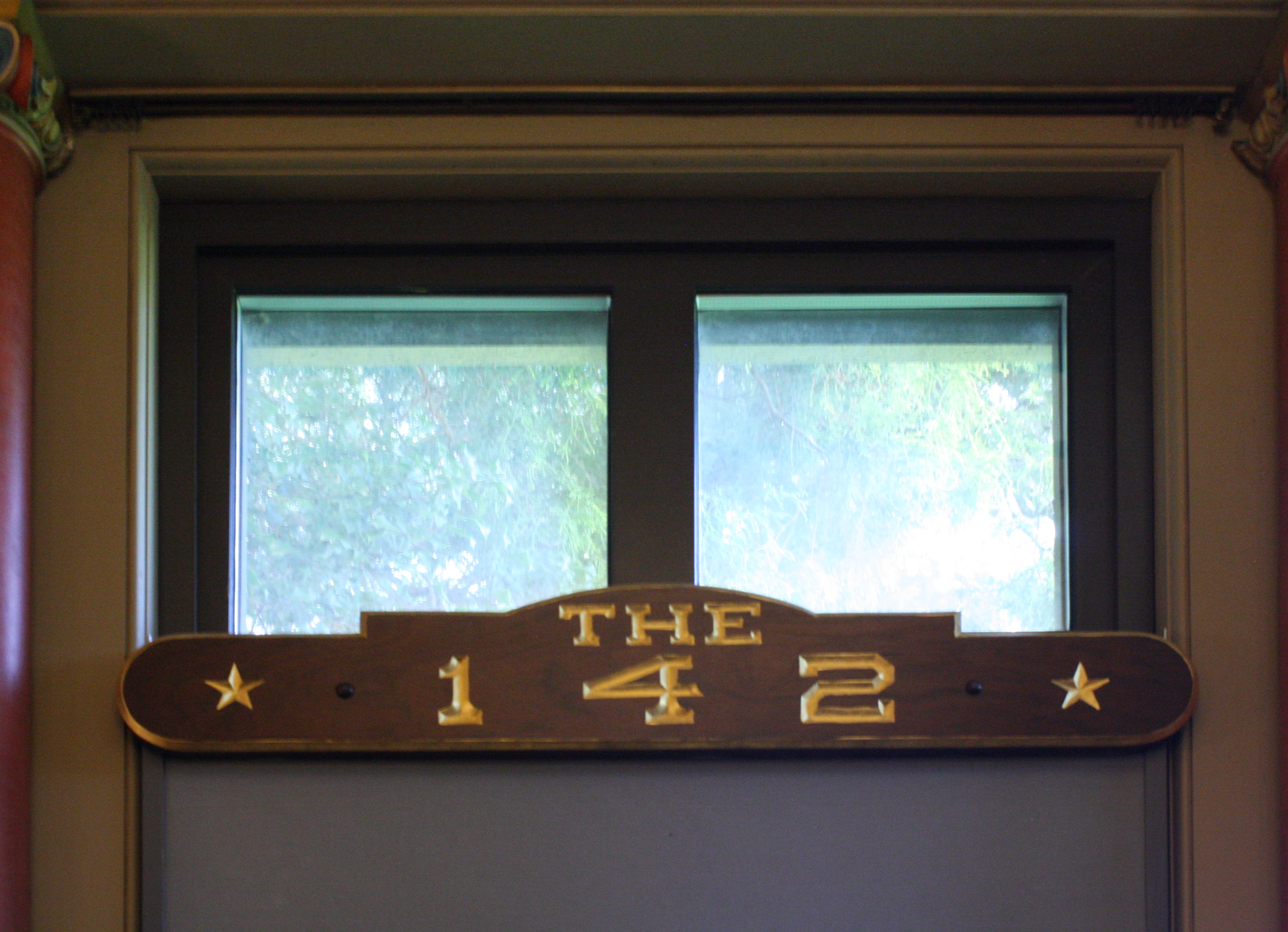
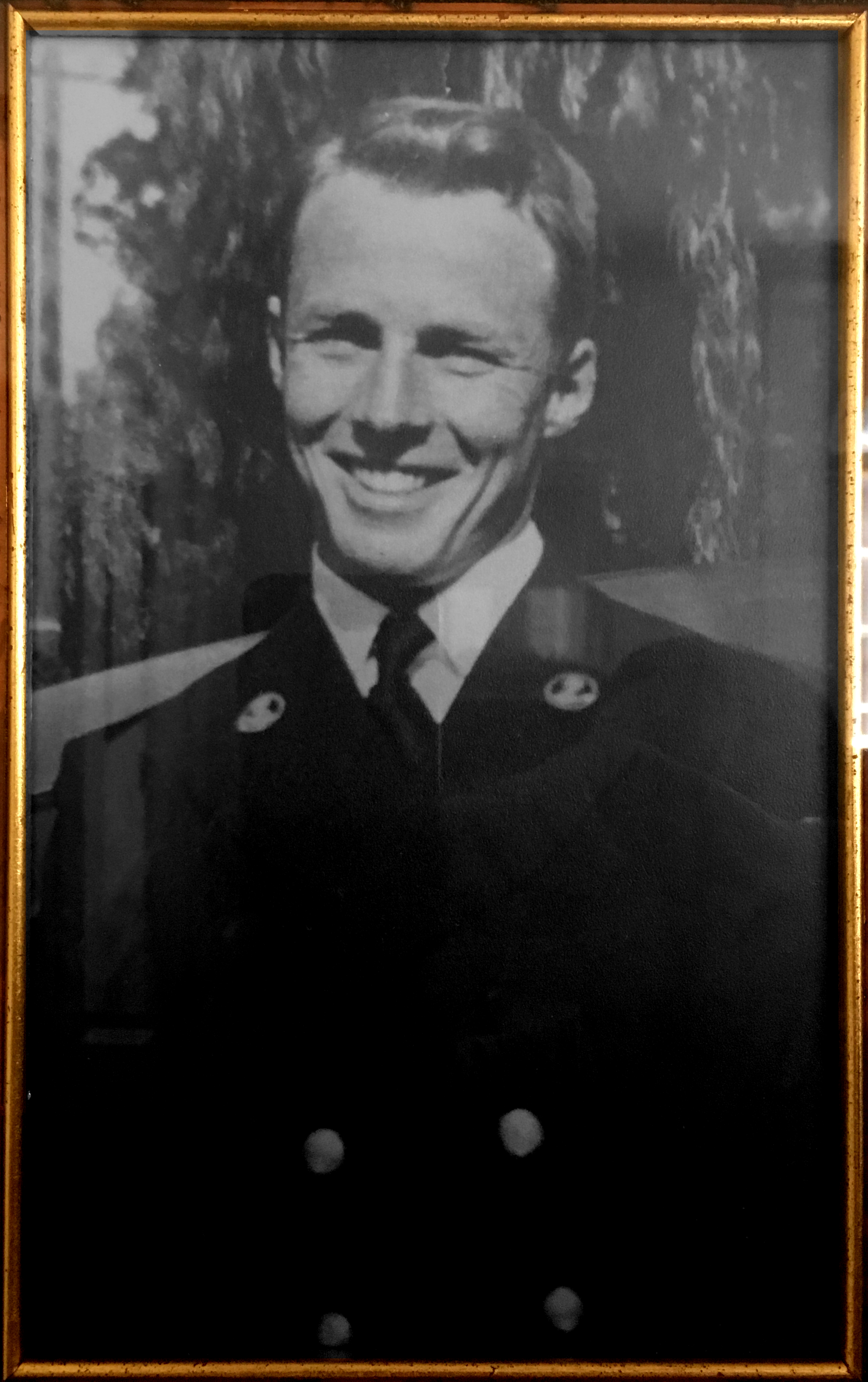
Plaque commemorating the 142. The image is reprinted with the approval of the United States Merchant Marine Academy Alumni Association and Foundation. Col.: USMMAAAF.
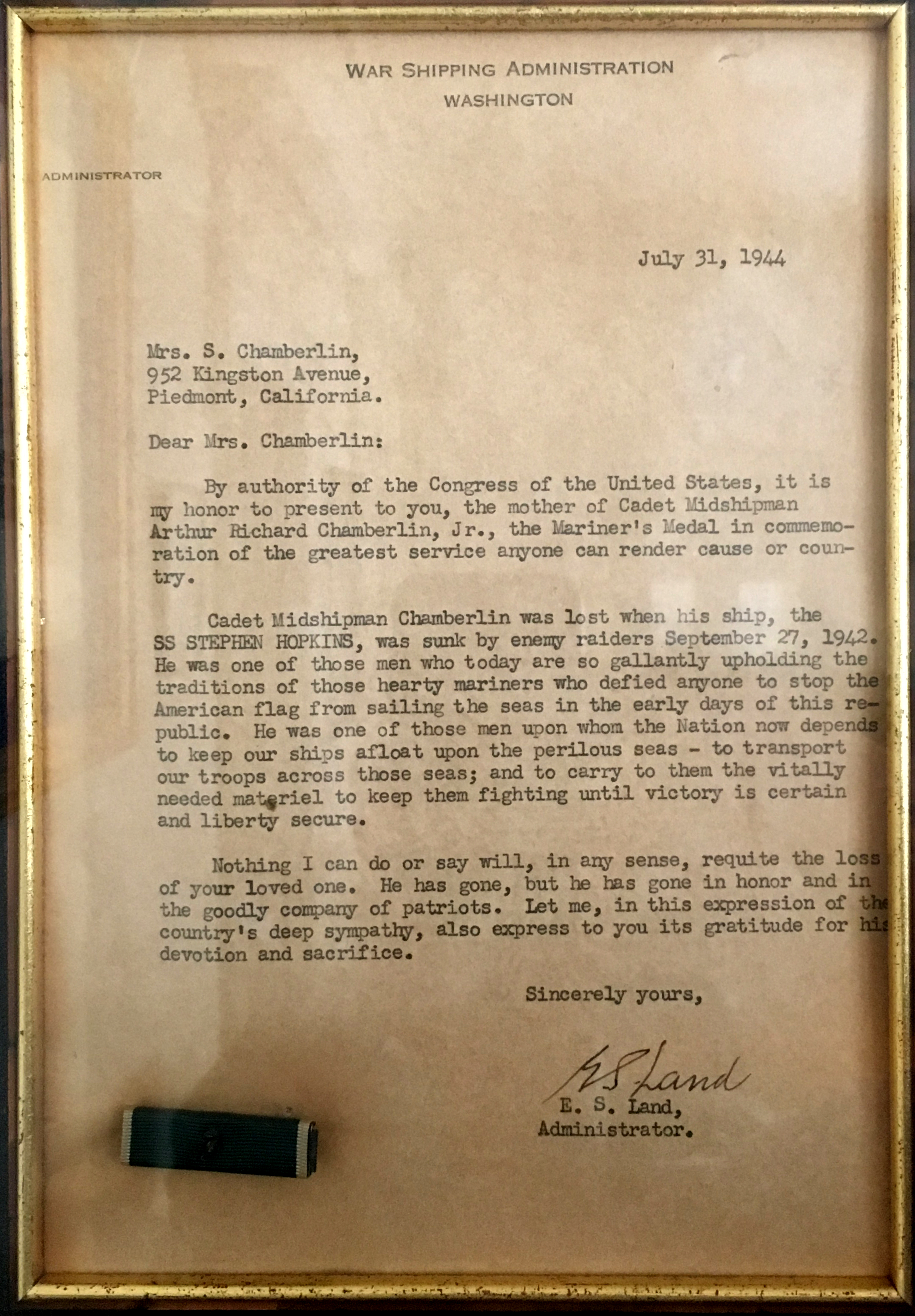
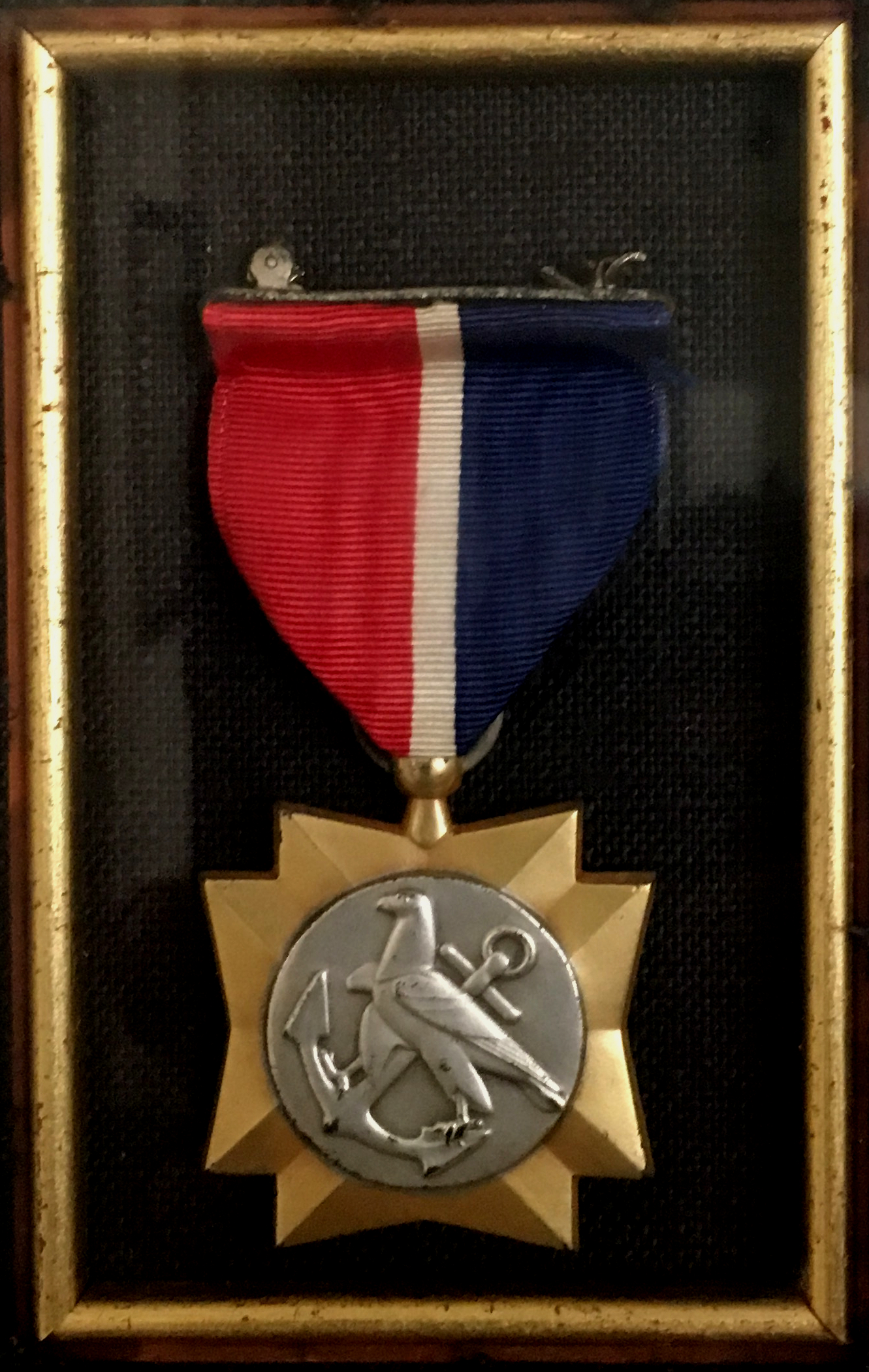
An example of the Battle Standard may be found in the center of Wiley Hall, the veritable heart of the Academy (above), and another behind glass at the nearby American Merchant Marine Museum (see below). The latter is installed in a beautiful space called the “142 Gallery” along with a permanent exhibit, “Remembering the 142.” In the same room are a framed citation, a medal, a ribbon, and a photo of their posthumous recipient. It truly is a place of quiet contemplation, where the distance of time almost makes the sacrifices of the 142 feel like a foreign country.
July 31, 1944
Dear Mrs. Chamberlin:
By the authority of the Congress of the United States, it is my honor to present to you, the mother of Cadet Midshipman Arthur Richard Chamberlin, Jr., the Mariner’s Medal in commemoration of the greatest service anyone can render cause or country.
Cadet Midshipman Chamberlin was lost when his ship, the SS STEPHEN HOPKINS, was sunk by enemy raiders September 27, 1942. He was one of those men who today are so gallantly upholding the traditions of those hearty mariners who defied anyone to stop the American flag from sailing the seas in the early days of this republic. He was one of those men upon whom the Nation now depends to keep our ships afloat upon the perilous seas – to transport our troops across the sea; and to carry the vitally needed material to keep them fighting until victory is certain and liberty secure.
Nothing I can do or say will, in any sense, requite the loss of your loved one. He has gone, but he has gone in honor and in the goodly company of patriots. Let me, in this expression of the country’s deep sympathy, also express to you its gratitude of his devotion and sacrifice.
Sincerely yours, E.S. Land, Administrator.
E.S. Land letter to S. Chamberlin, July 31, 1944. Col.: AMMM 1984.028.0002
I decided to honor the memory of the 142 by charting – where known – the places of their death. A list of individuals, their photographs, and dates do move the conscience, but to see how some were so very close to home when they died and how some lost their lives in such faraway seas is particularly sobering. In comparing this chart, and the maps below, the 142 died in every war zone, with the heaviest concentration of losses between Fall of 1942 and the Winter of 1943. Edwin O’Hara, the only of the 142 to receive a posthumous award of the Merchant Marine Distinguished Service Medal, lost his life at the cusp of mounting casualties in September 1942; his award came just before a turning point in the War of the Atlantic, where the tide began to turn toward the Allies.
In-depth and detailed maps of the 142 from year to year may be found here.
Many thanks are due to the USMMAAAF for permission to reprint their materials and Dr. Joshua Smith of the American Merchant Marine Museum for access to the “142 Gallery” and for showing me the amazing plaques in the Museum’s storage.
Recently I came across a news item where the United States Navy once again redesigned its working uniform. Over the past decade, sailors complained they did not like the blue and purple or kelp green digital camouflage uniforms issued them by the fleet, nor did they appreciate having to change uniforms to and from work – Navy regulations forbade work uniforms being seen off-base although this directive has since loosened. The Navy cited the uniform’s unpopularity as a factor for the redesign, but the real impetus was that the uniform’s nylon-cotton blend in a fire “will burn robustly until completely consumed” – in other words: it melts into the skin. The new uniform is fire retardant and has the innovation that instead of buttons, it uses only velcro and zippers. The selling point of the latter is it is perfect for the flight deck since the uniform would not be a vector for the introduction of debris into aircraft engines. Buttons no more?
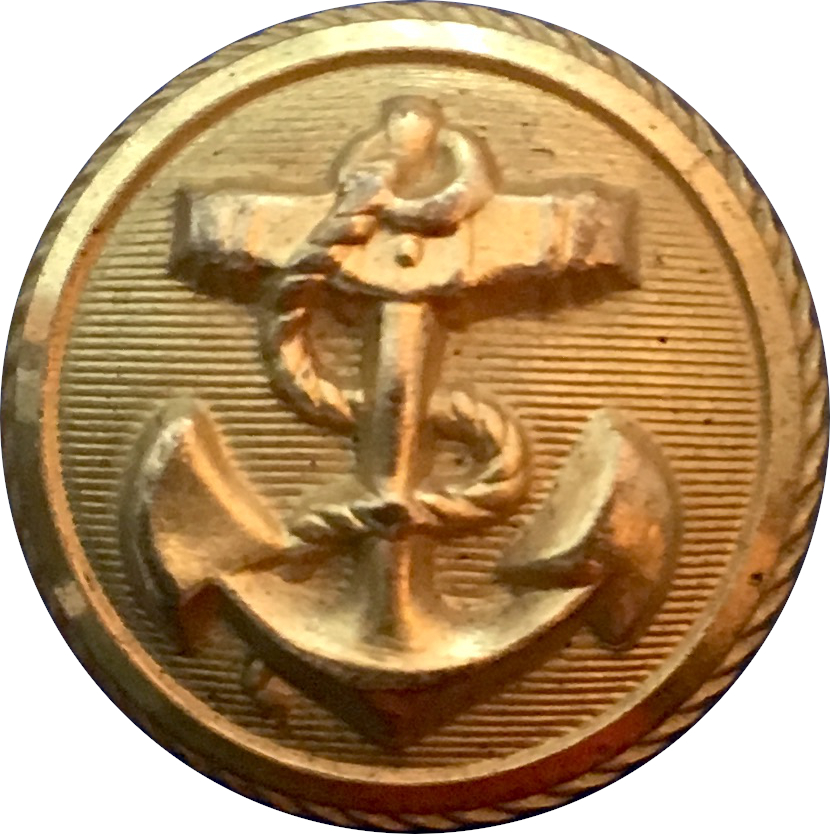
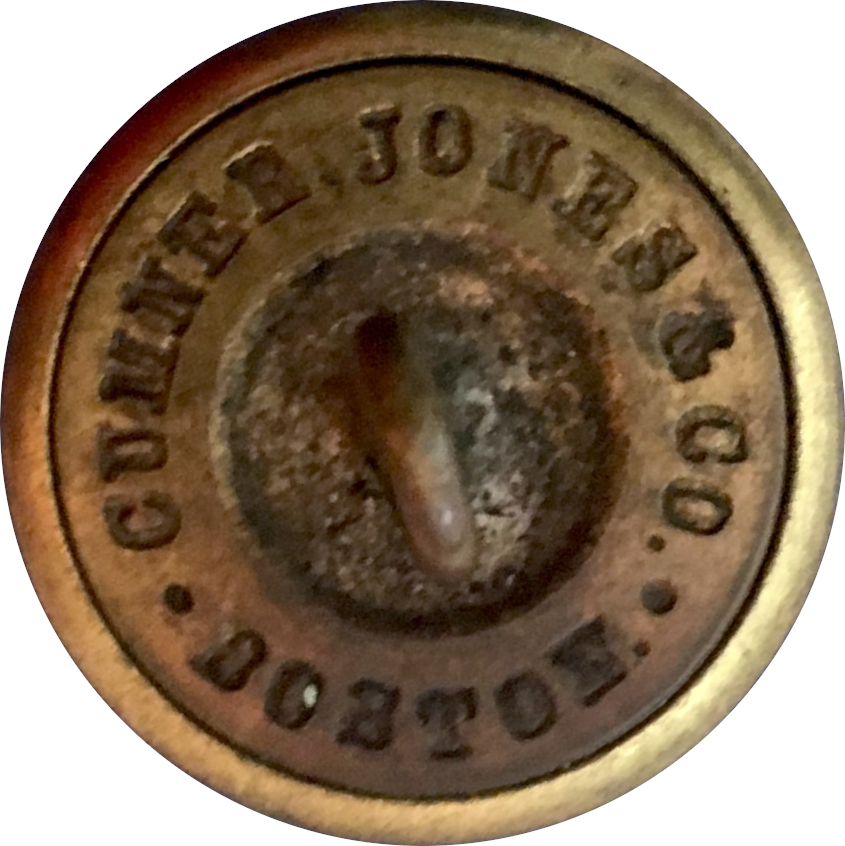
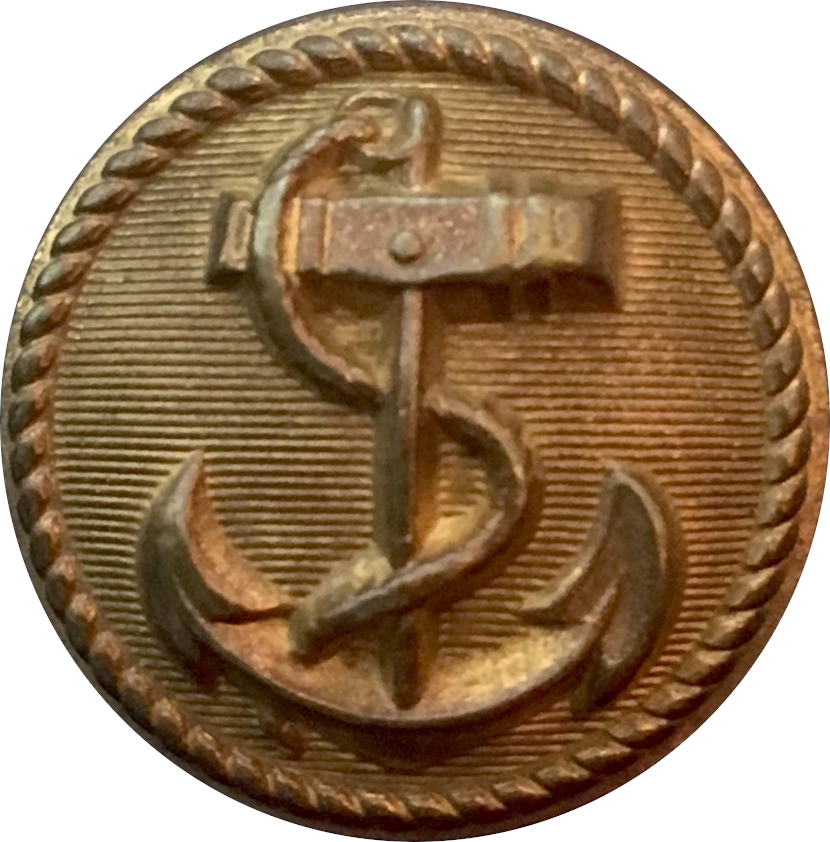
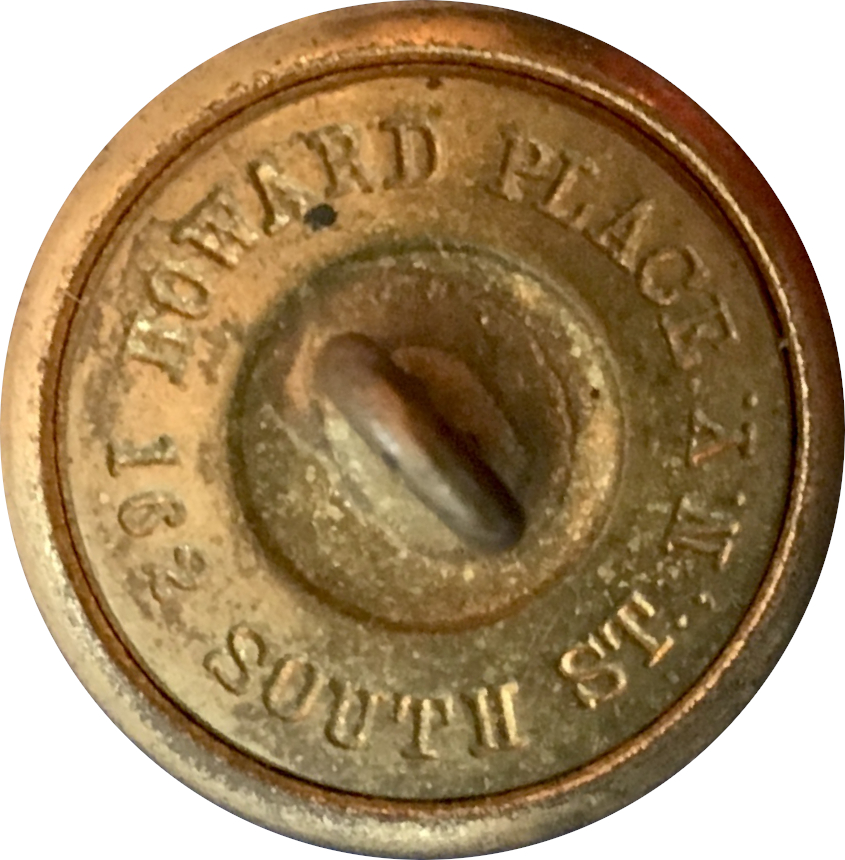
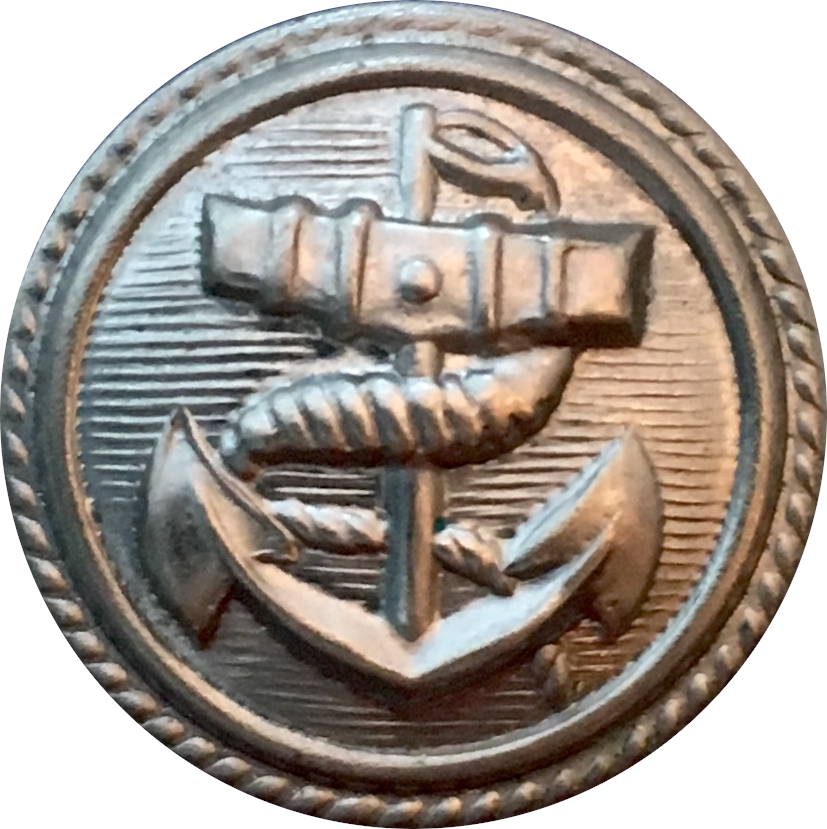
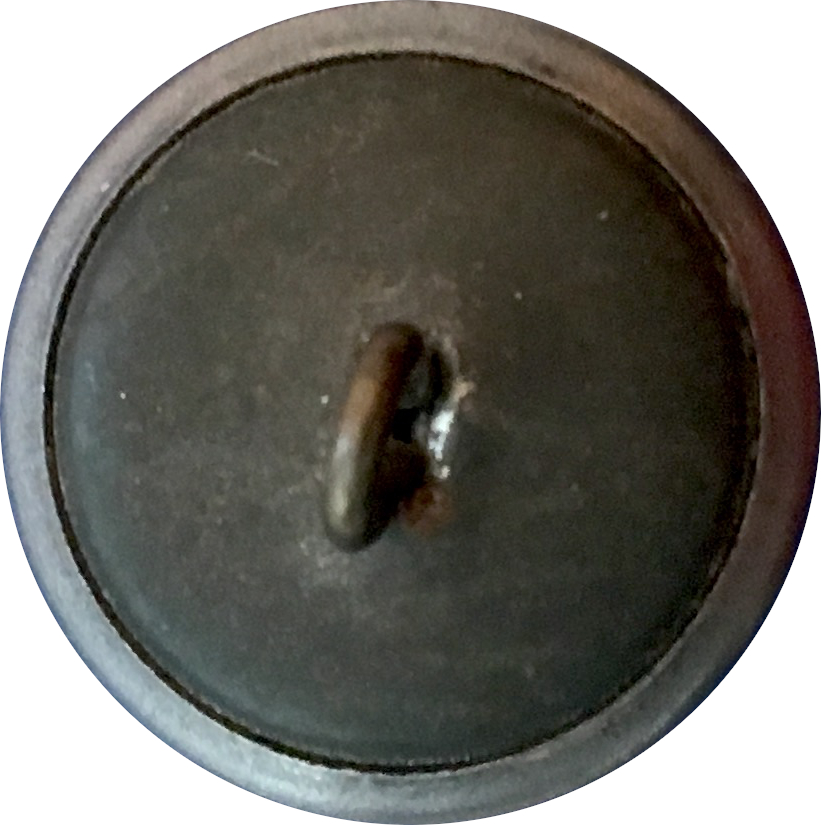
USN Black Anchor Button (gutta purcha), 1930s. Col.: IW.
The button is such a commonplace item that it is taken for granted and paid not much attention. A button on a coat, shirt, or trousers is an ever-present – simple molded affair or complex construction. And yet despite being so small, the uniform button is often laden with symbolism endemic to the organization that wears it. In the American maritime profession, British traditions hold sway and along with them British forms and configuration of a uniform with the placement and design of buttons. Fortuitously. coupled with fabric and insignia construction, buttons offer an excellent means of identifying the context of uniforms and their period of manufacture. and in the context of this project, where a seaman figured within a ship’s hierarchy.
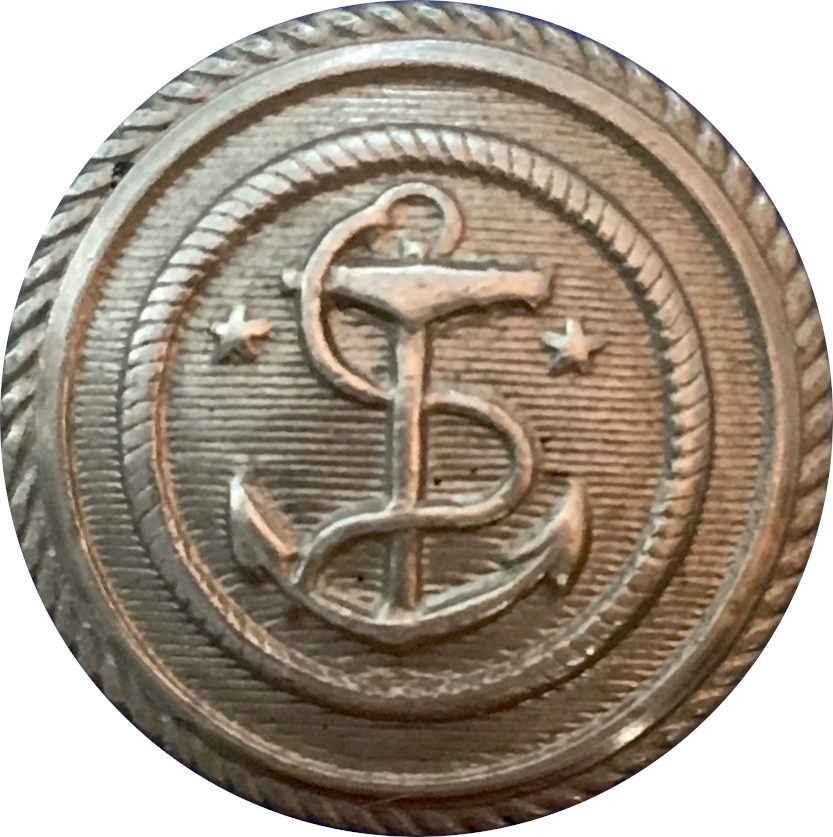
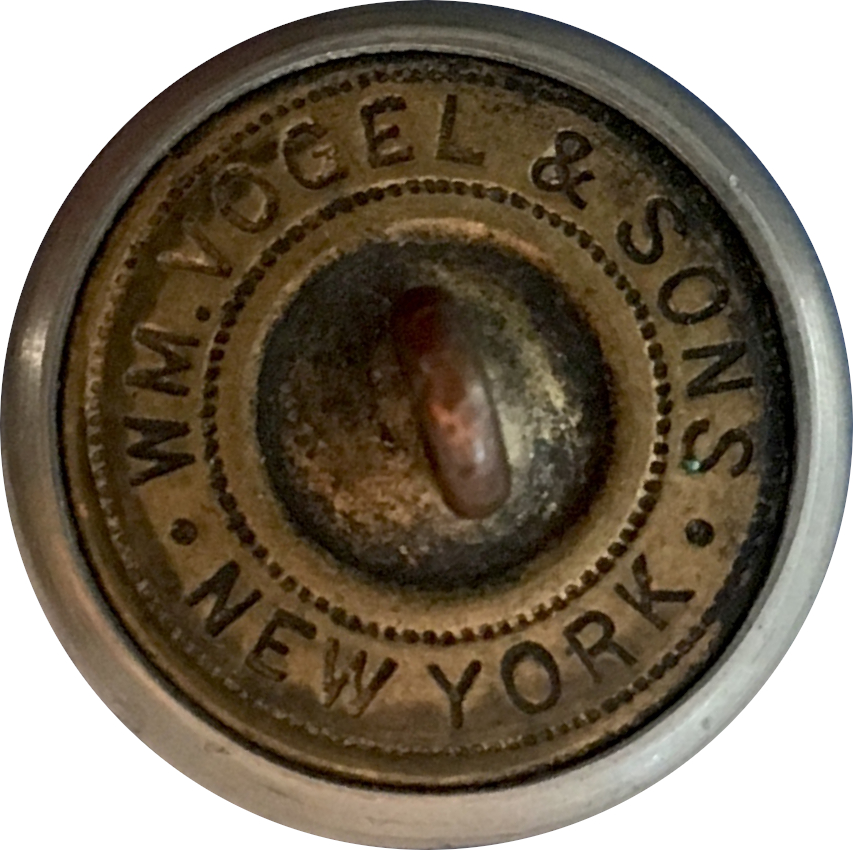
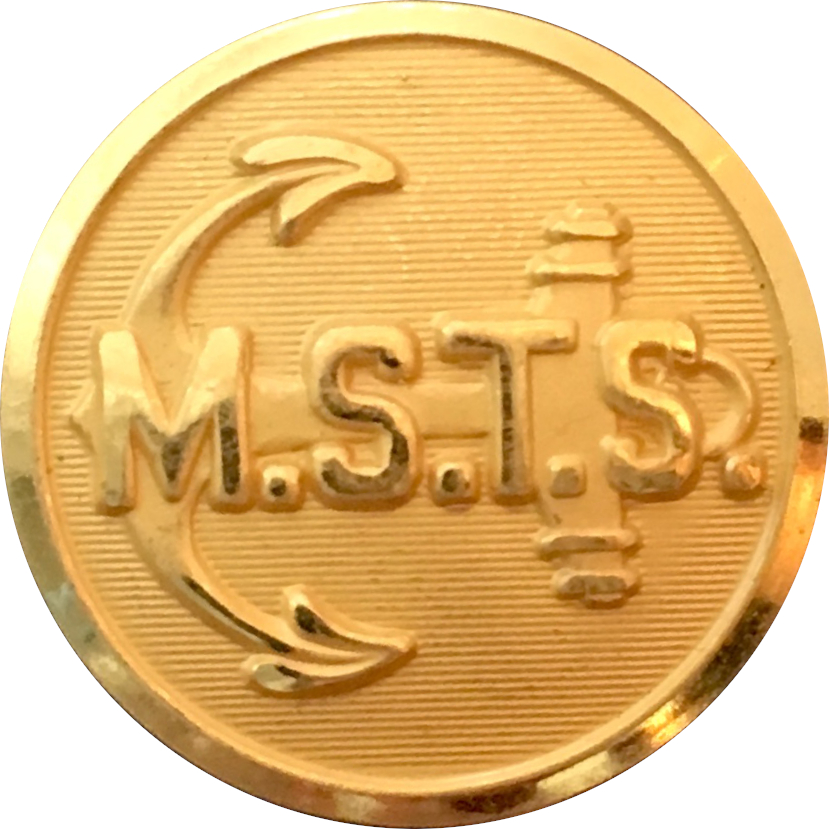
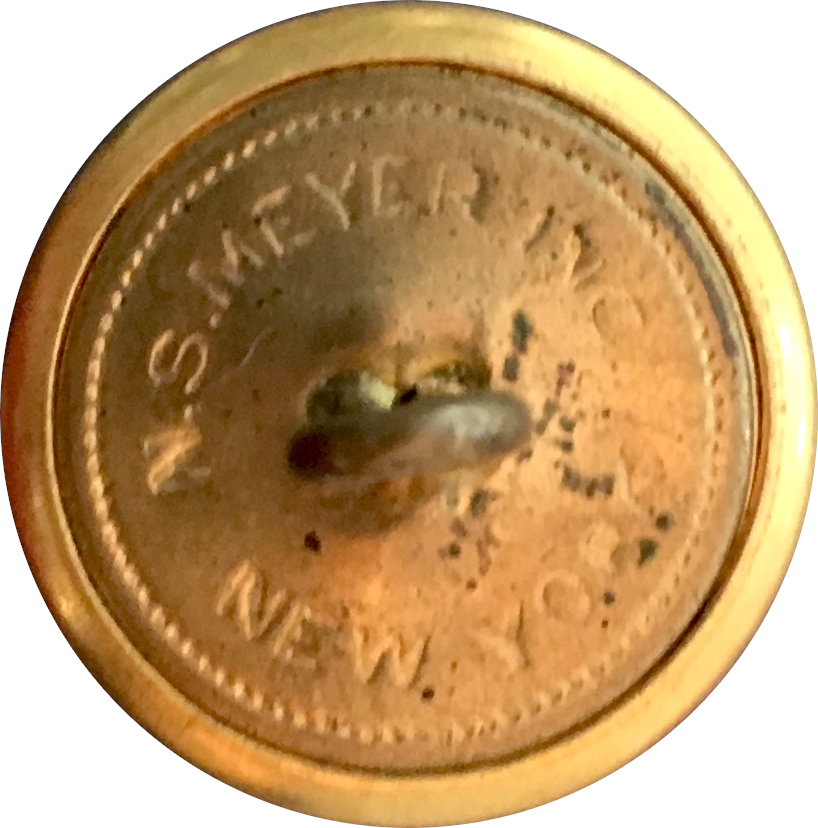
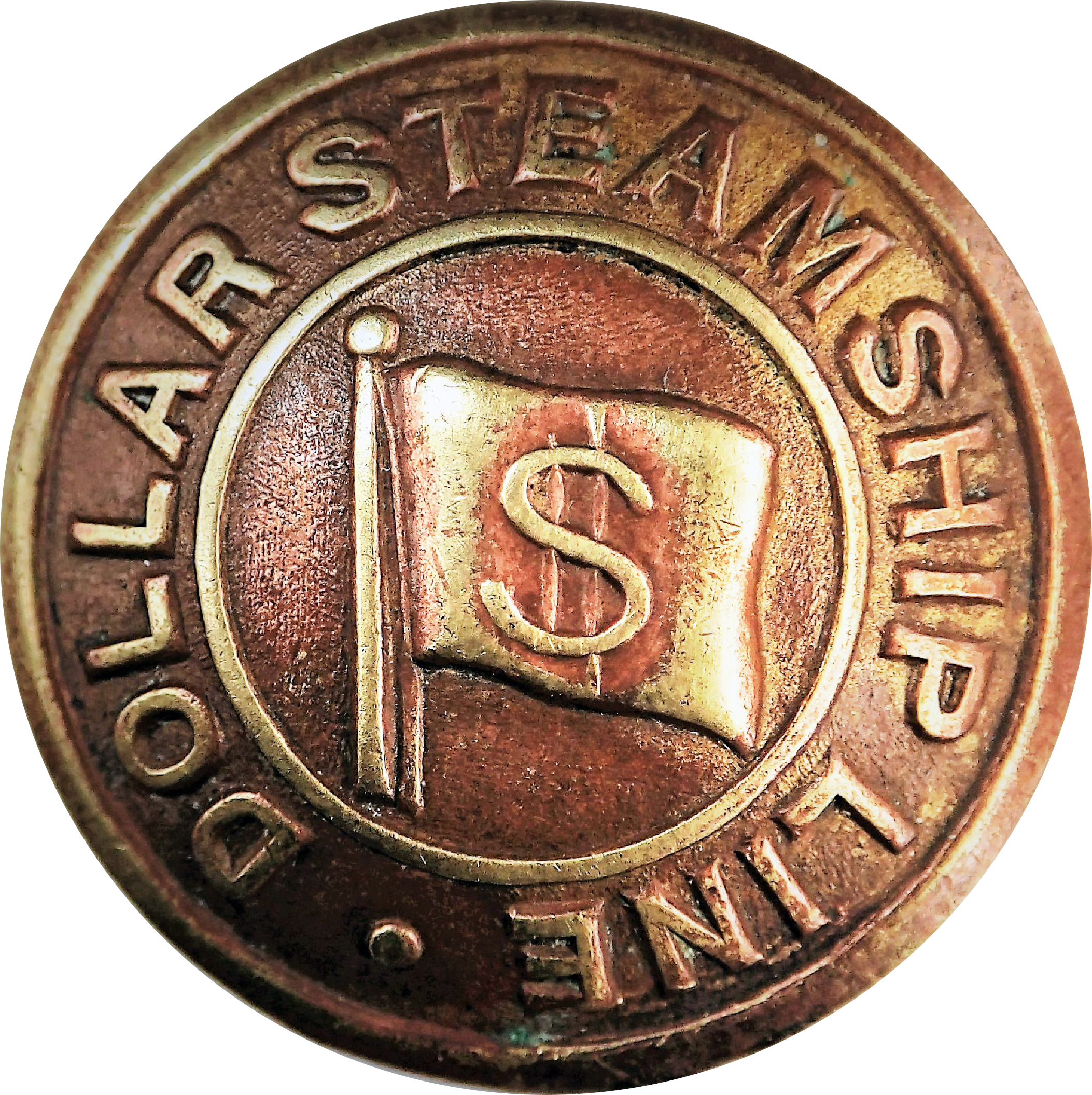
Below, please find my reference collection, as well as an interesting button collection at the American Merchant Marine Museum – the Dollar Lines button, is amazing. I have another page devoted to the buttons of United States Lines, here.
Do note: I am not a button collector by any stretch of the imagination, but I keep a collection of buttons to assist with identifying and dating uniforms and uniform items. Buttons are one of those items easily overlooked, yet understanding them provides a wealth of information.
united states navy
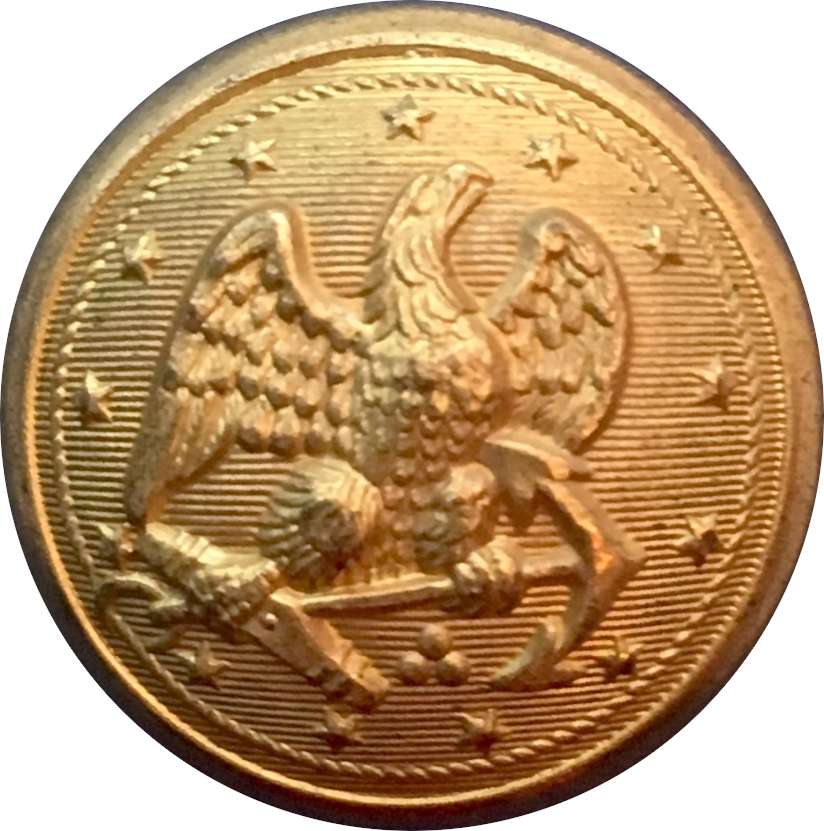
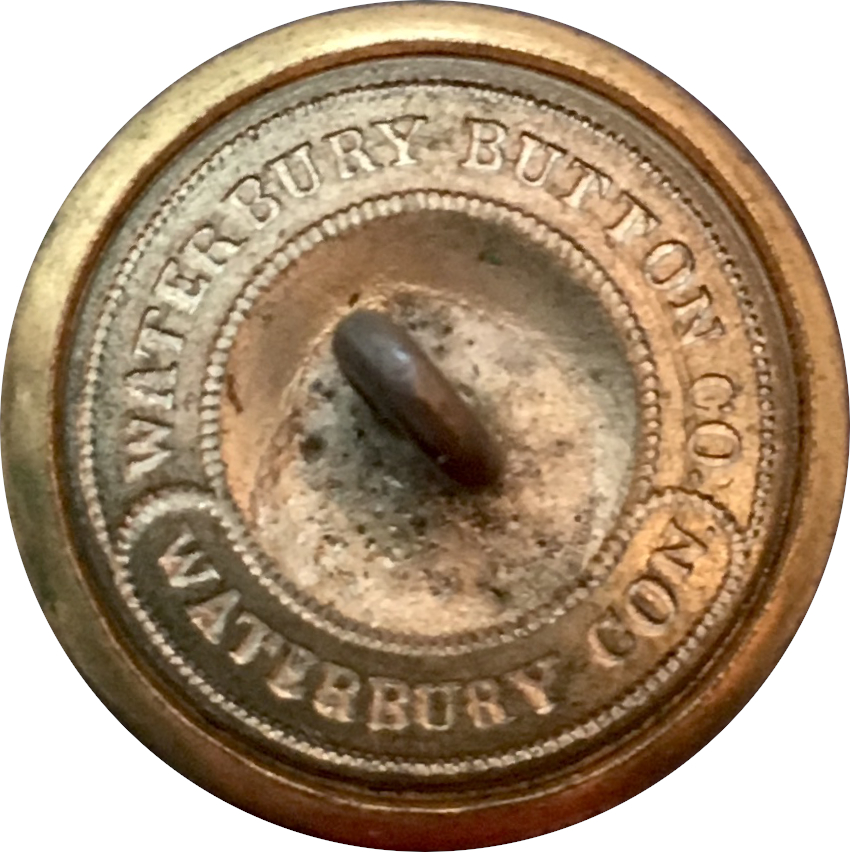
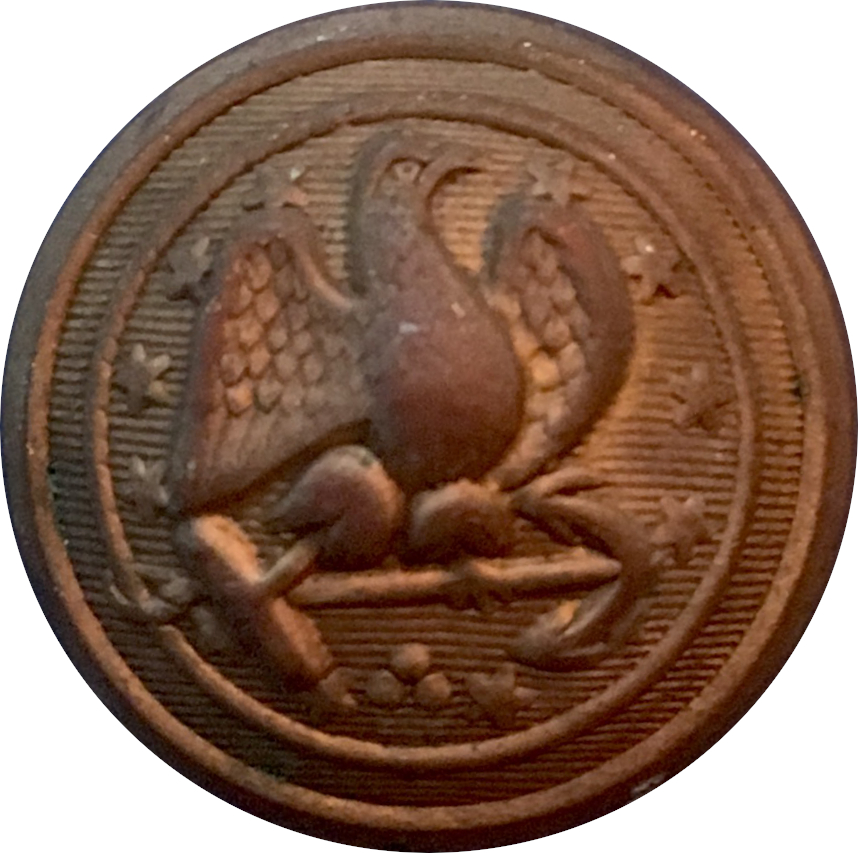
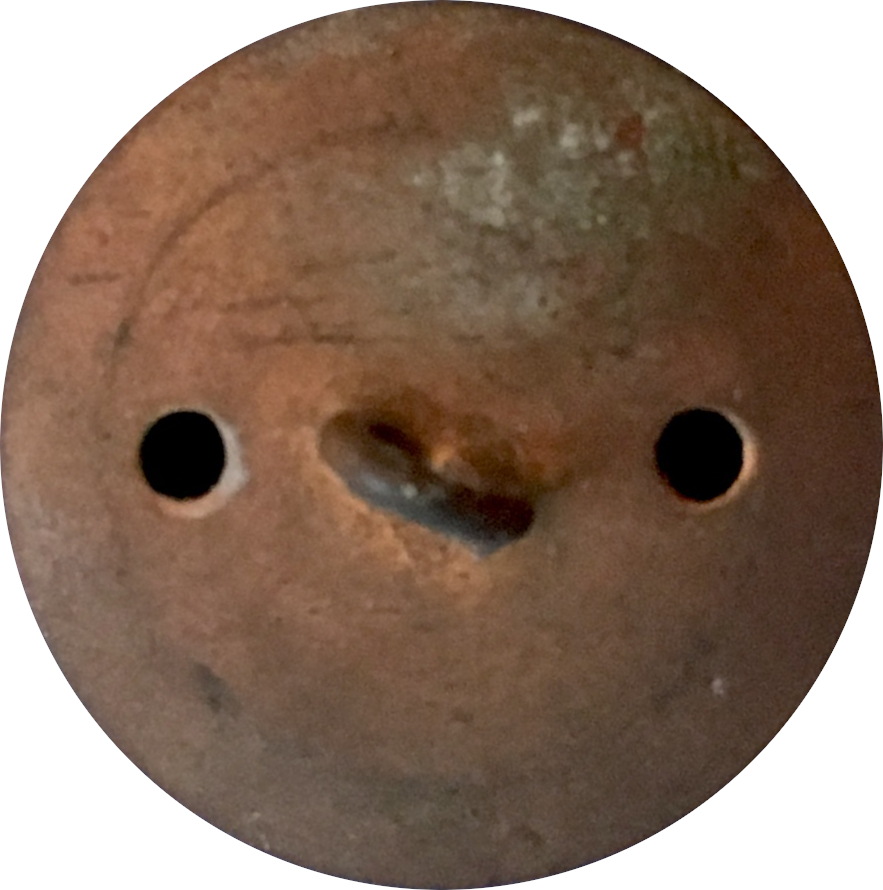
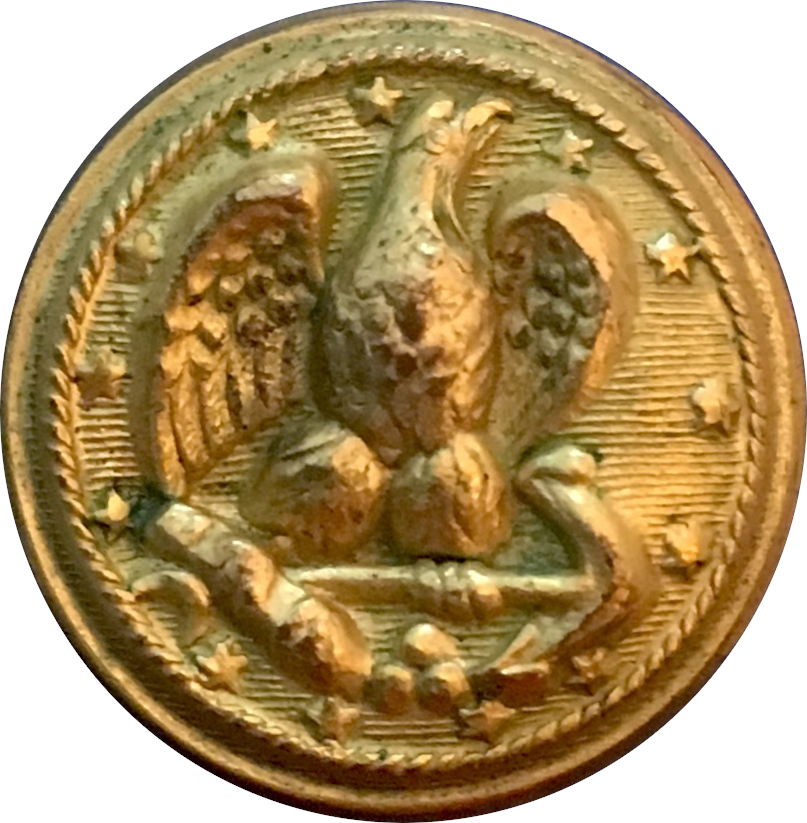
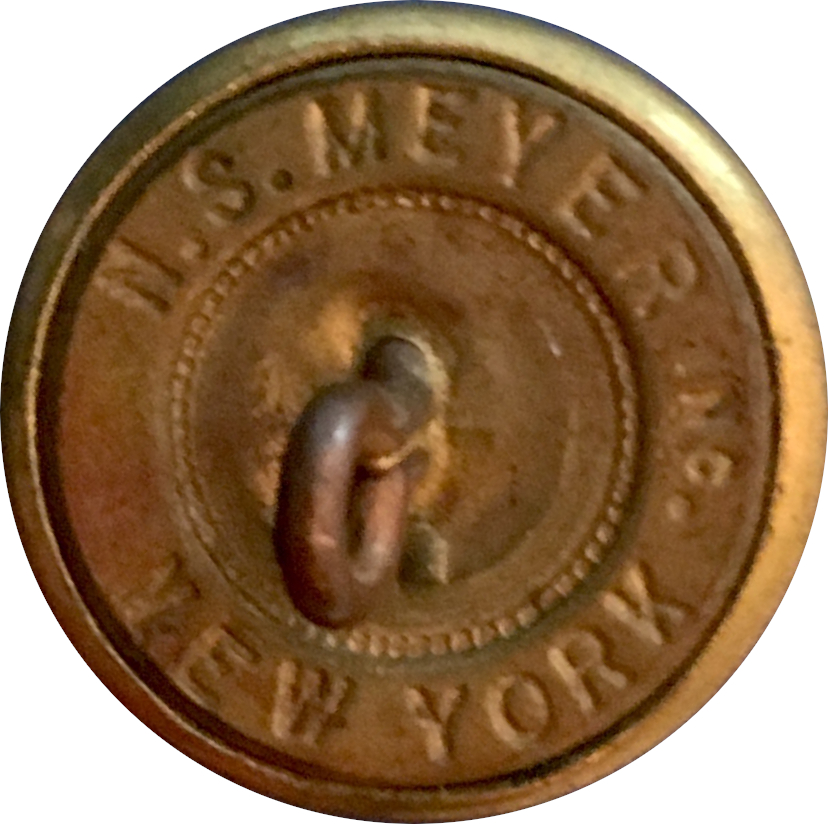
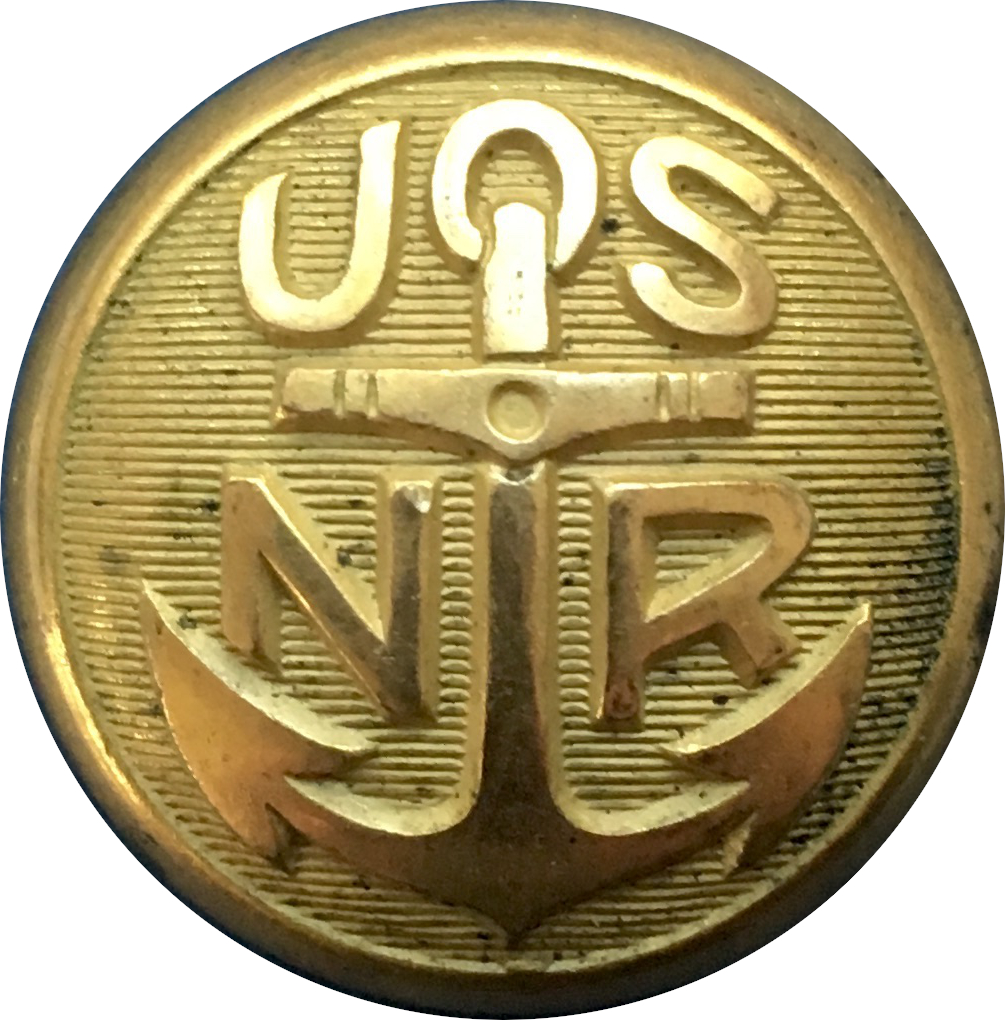
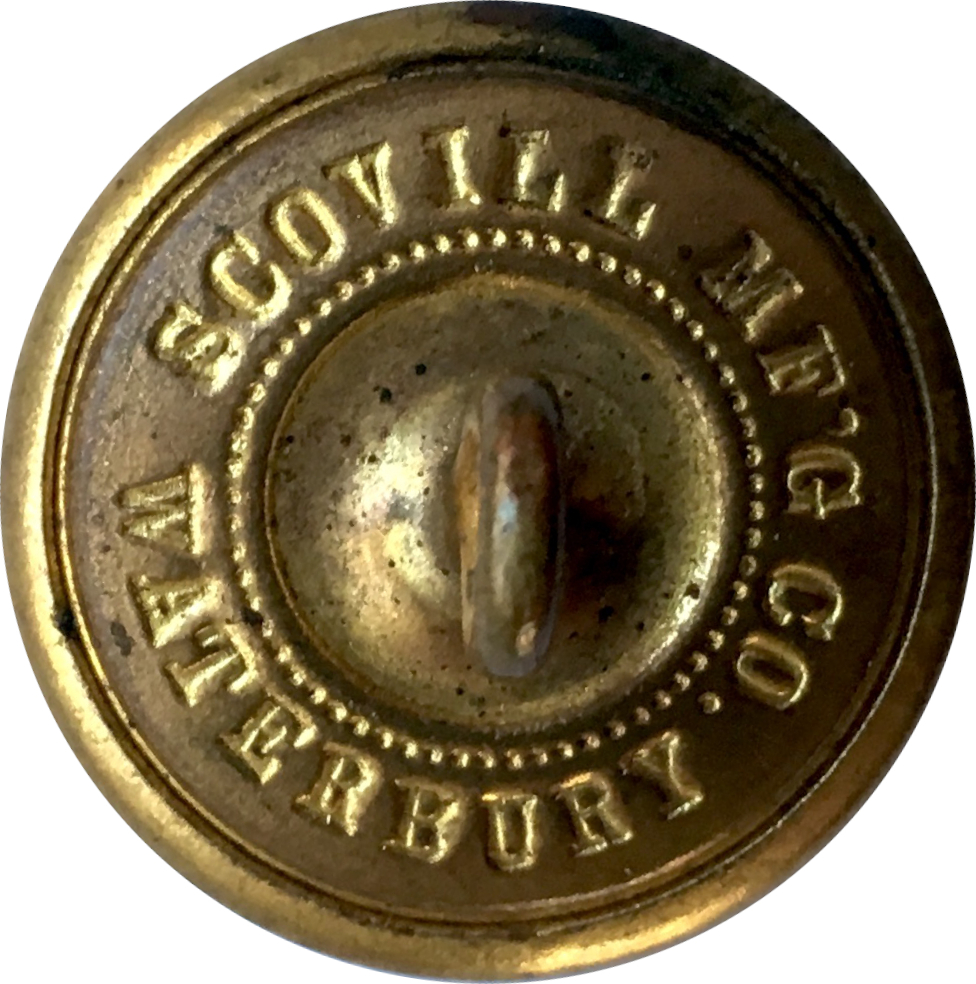
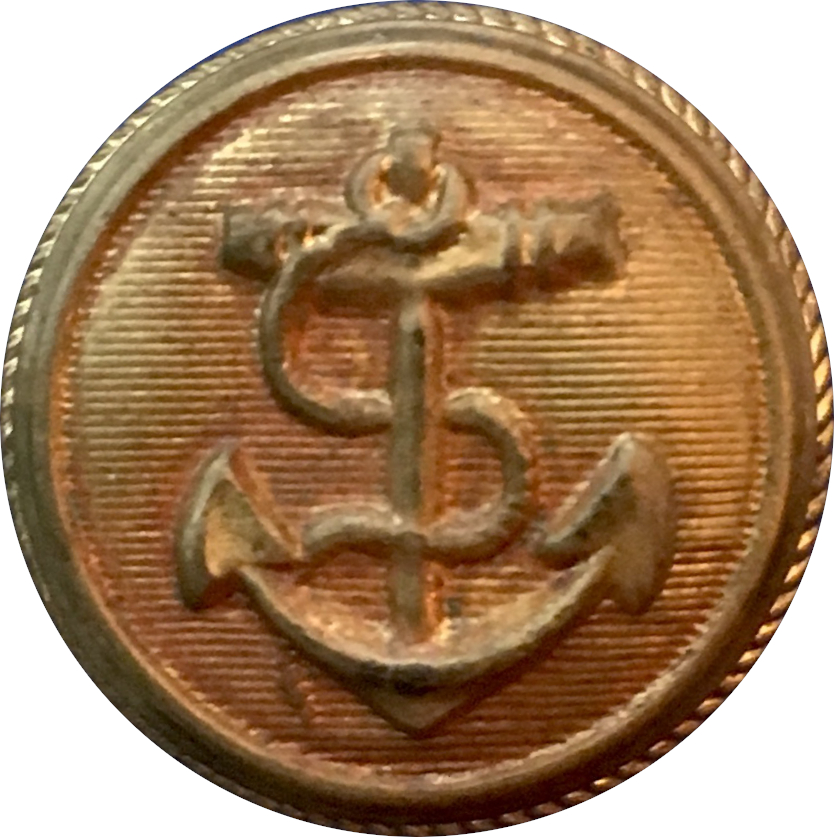
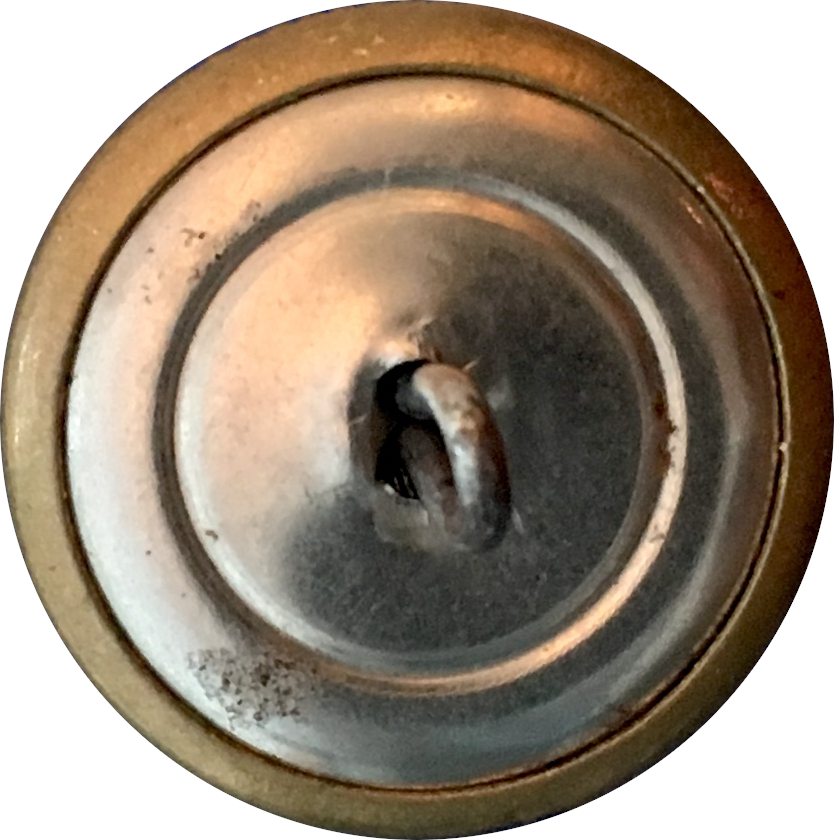
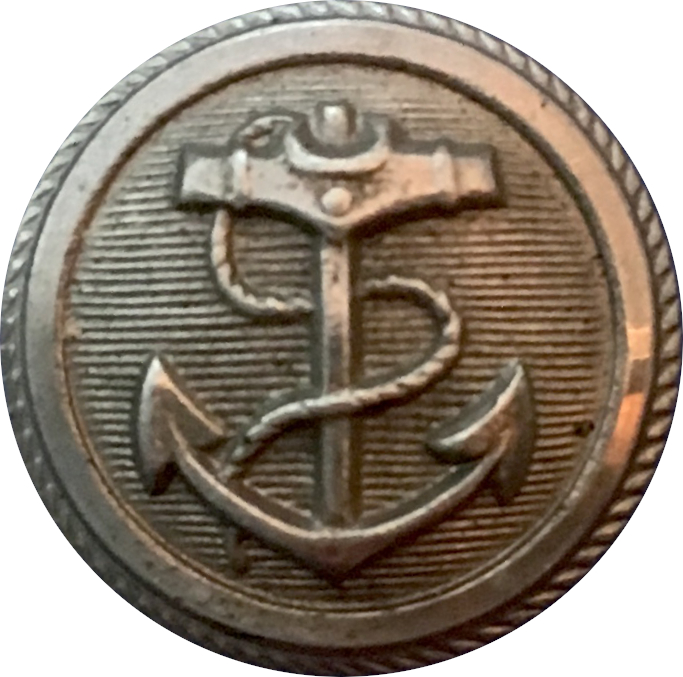
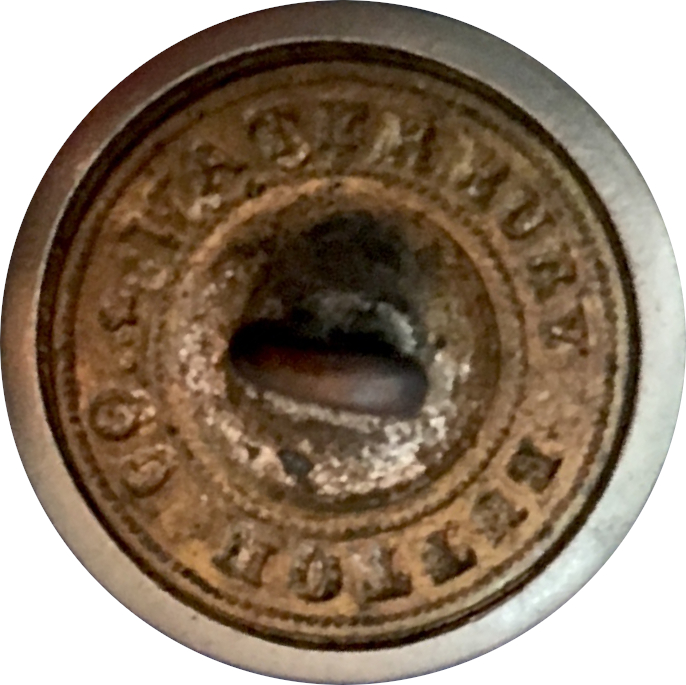
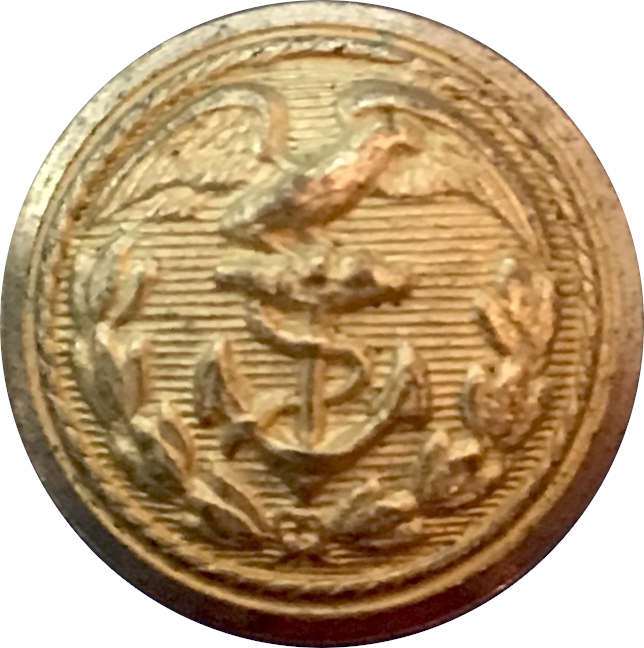
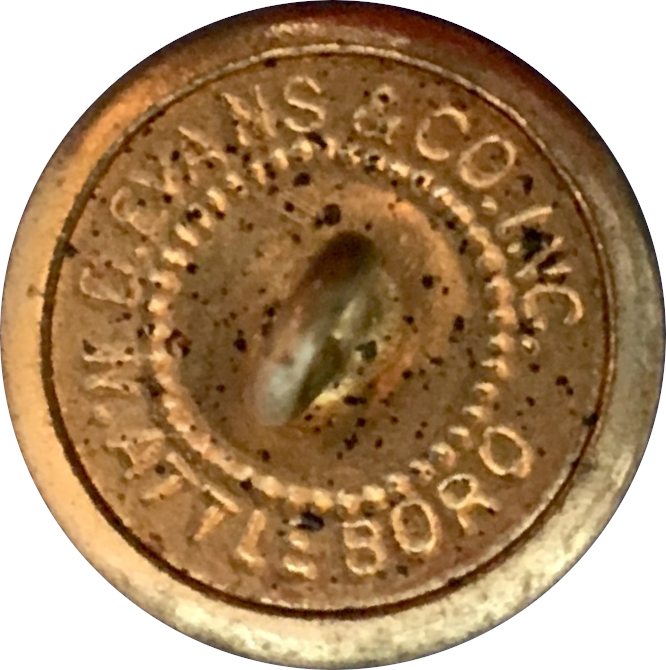
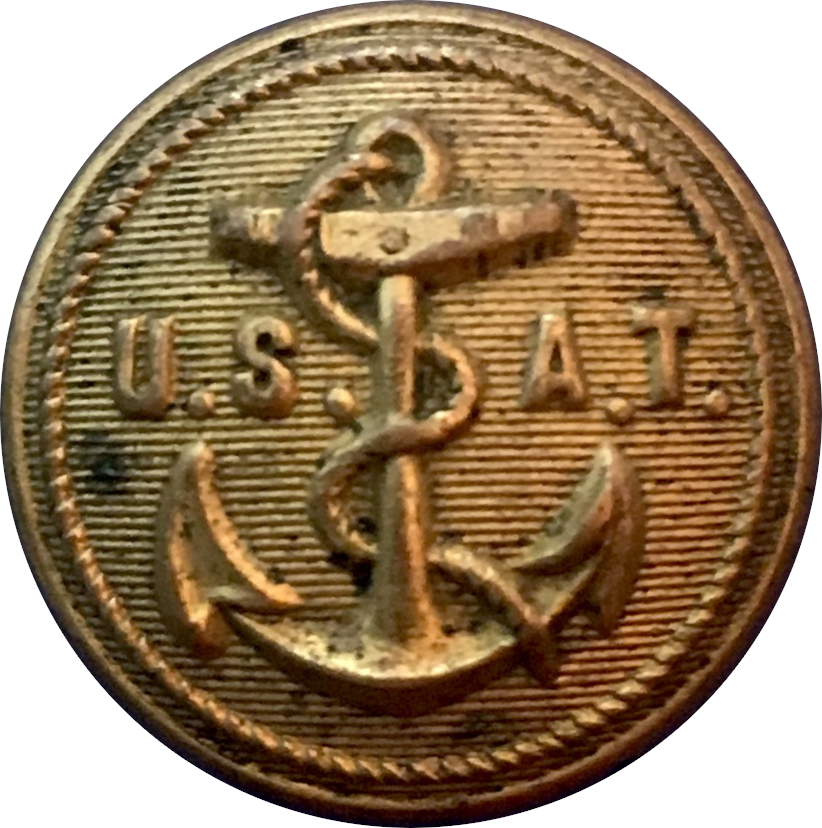
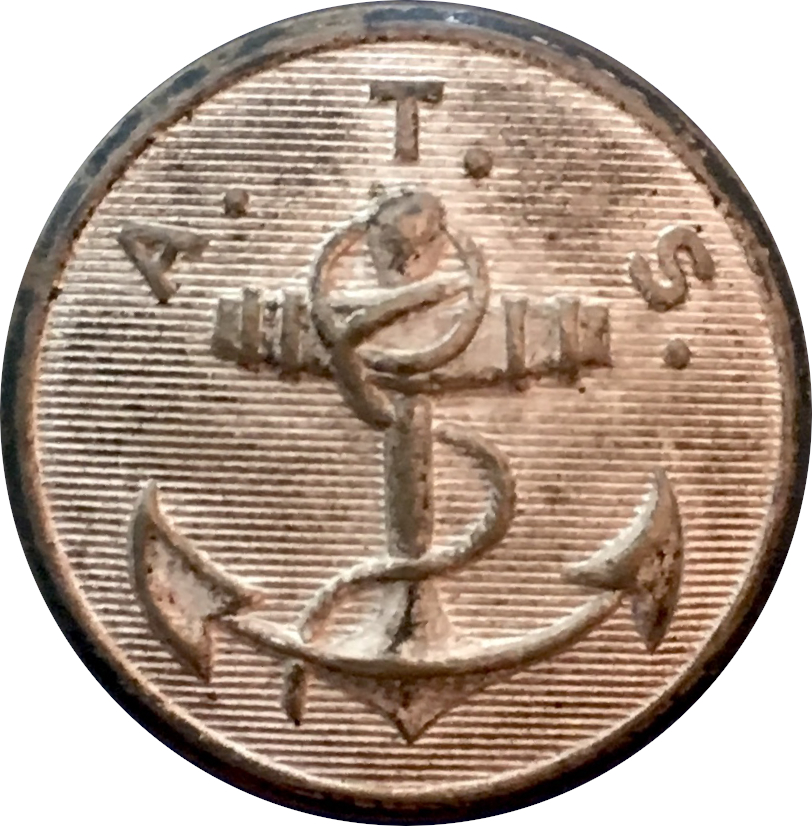
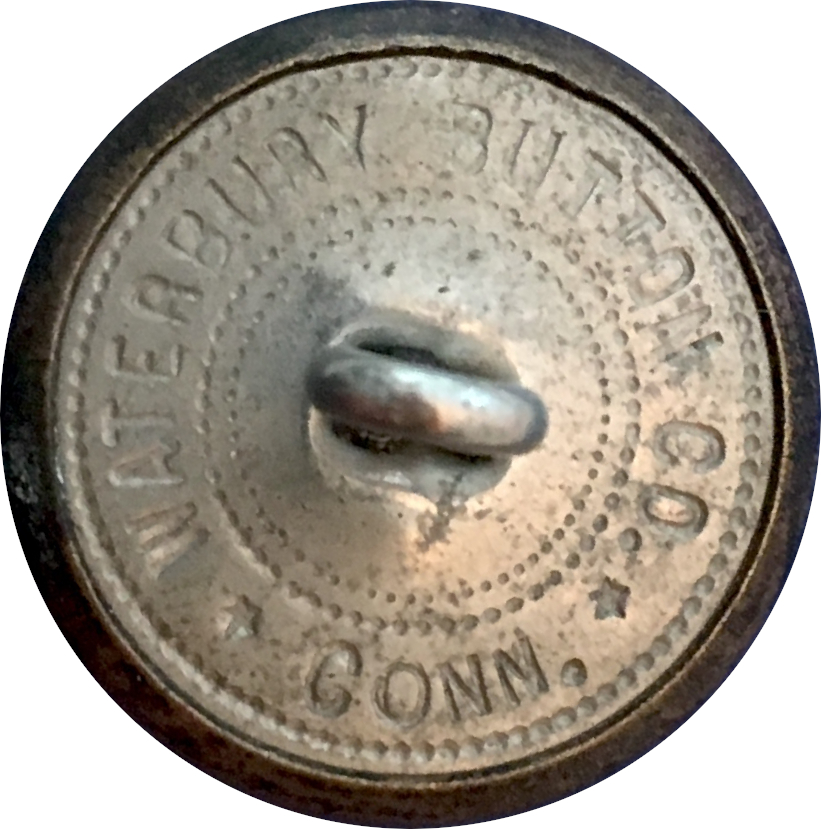
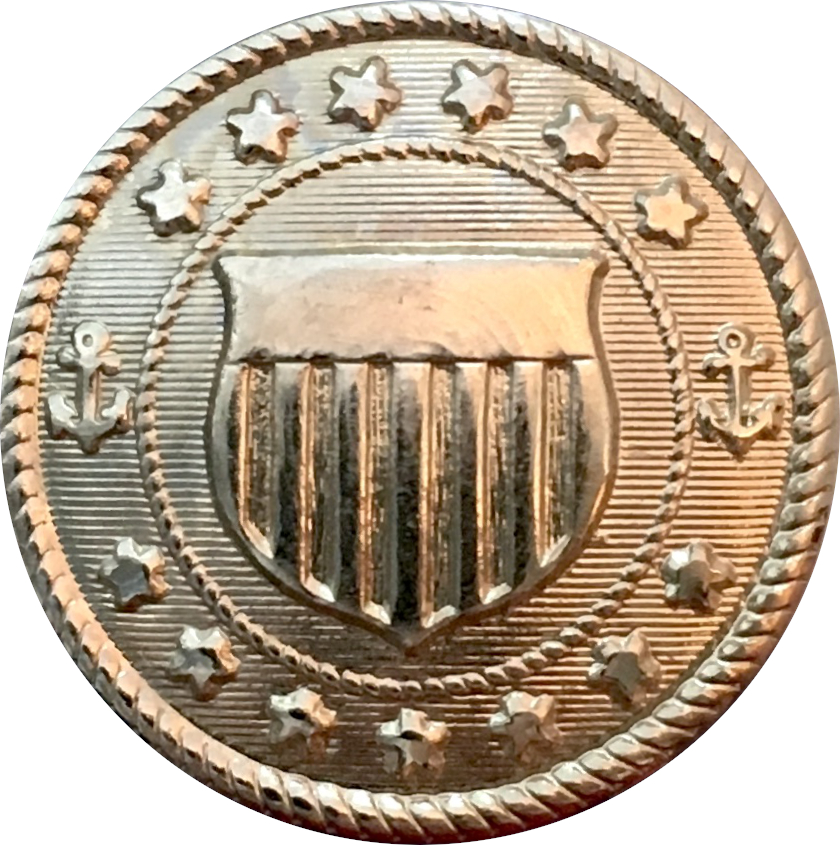
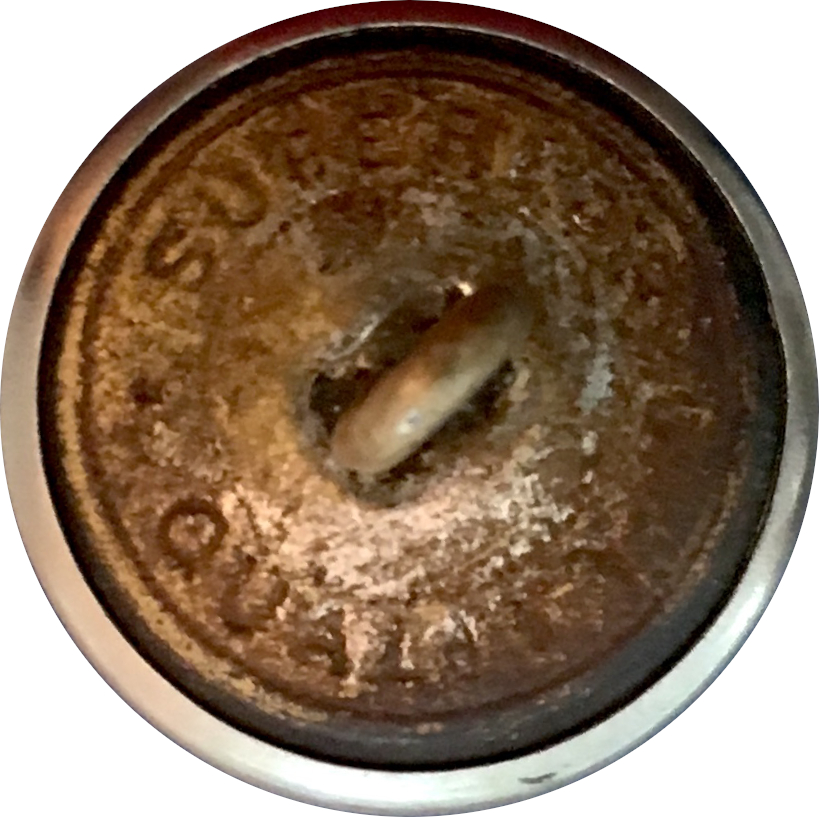
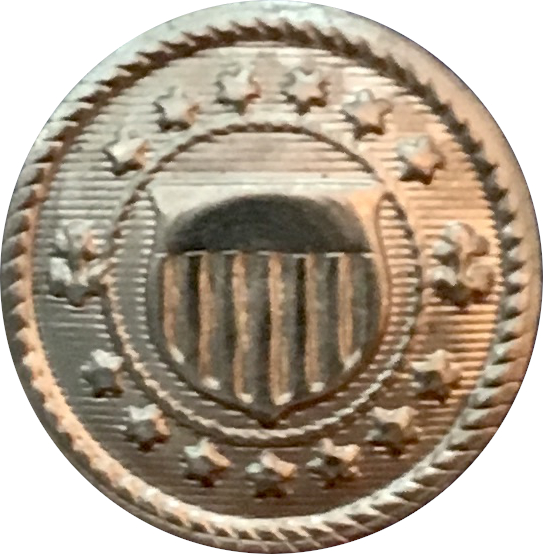
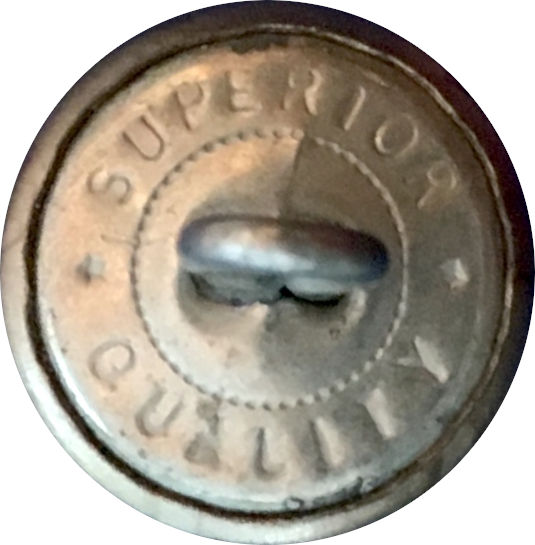
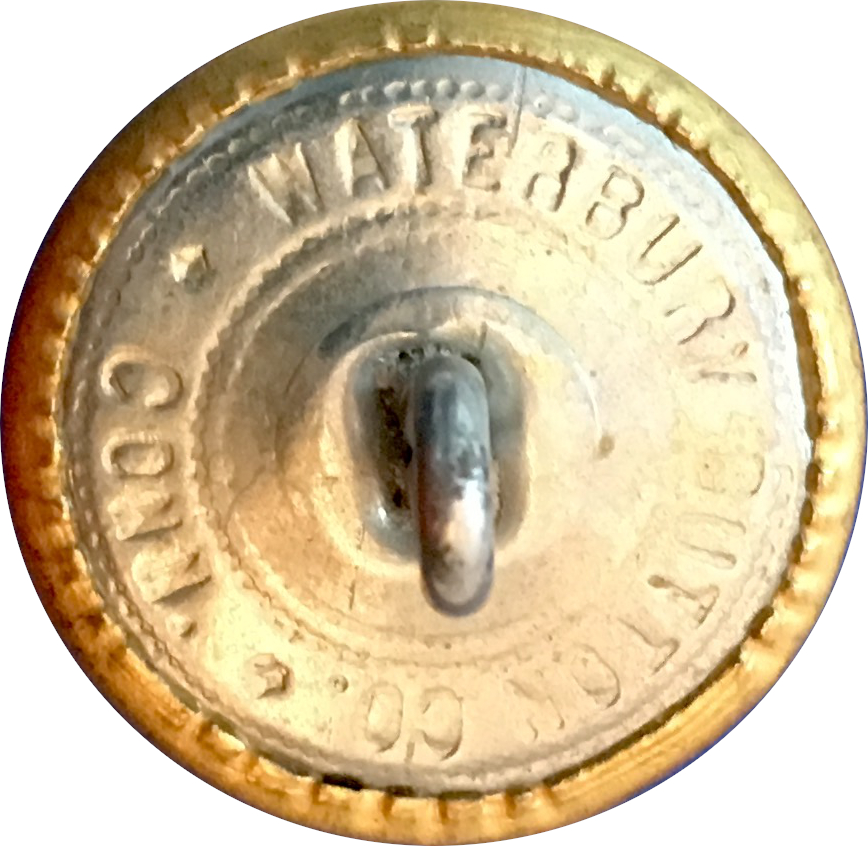
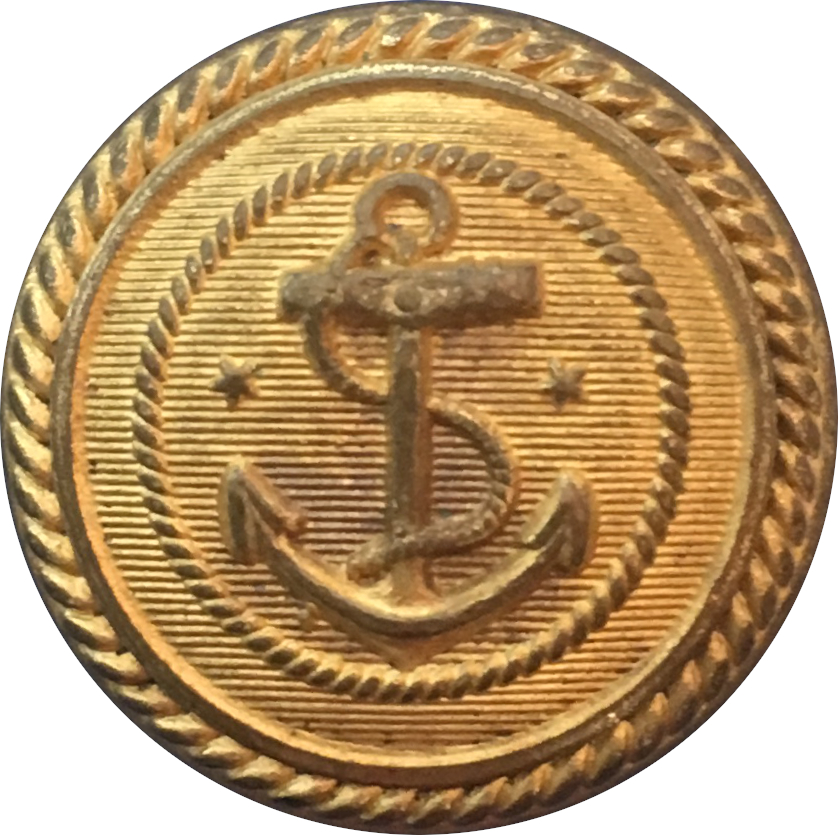
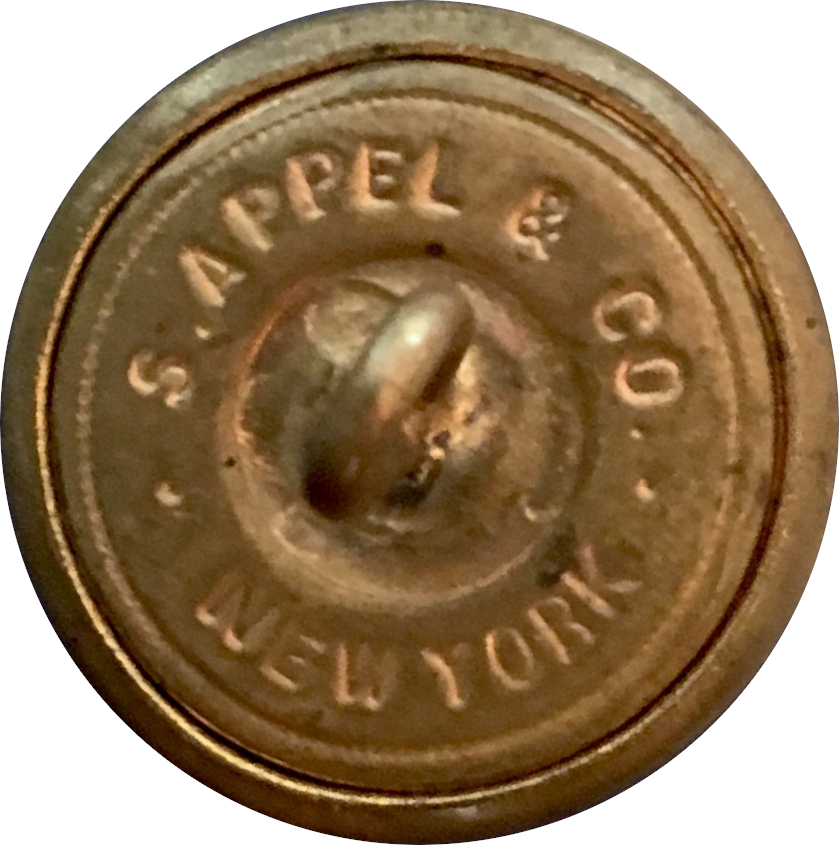
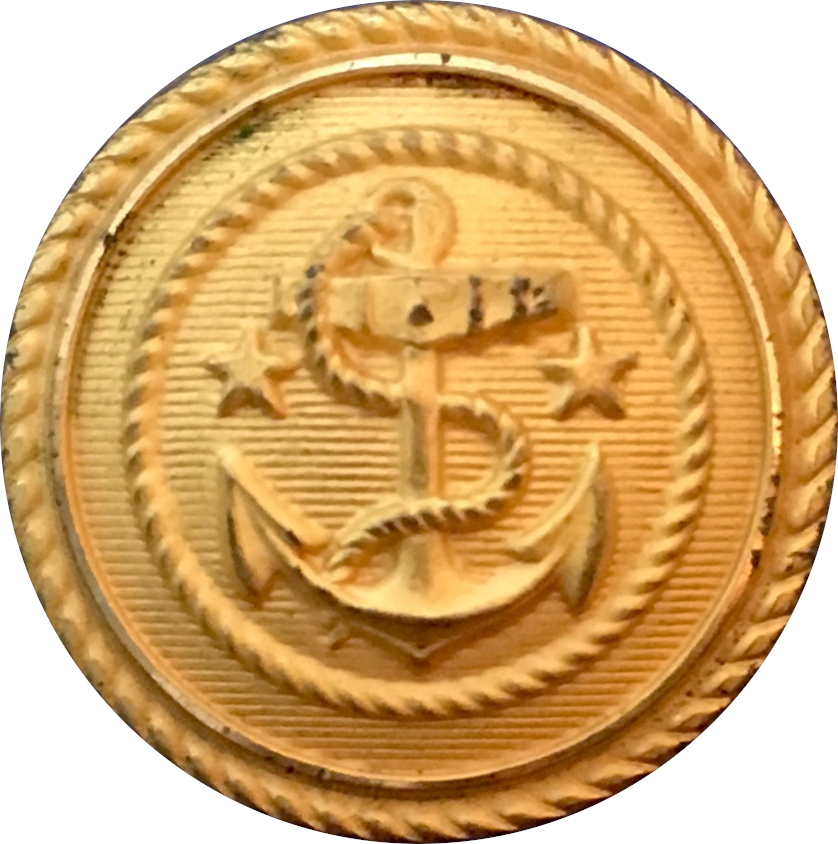
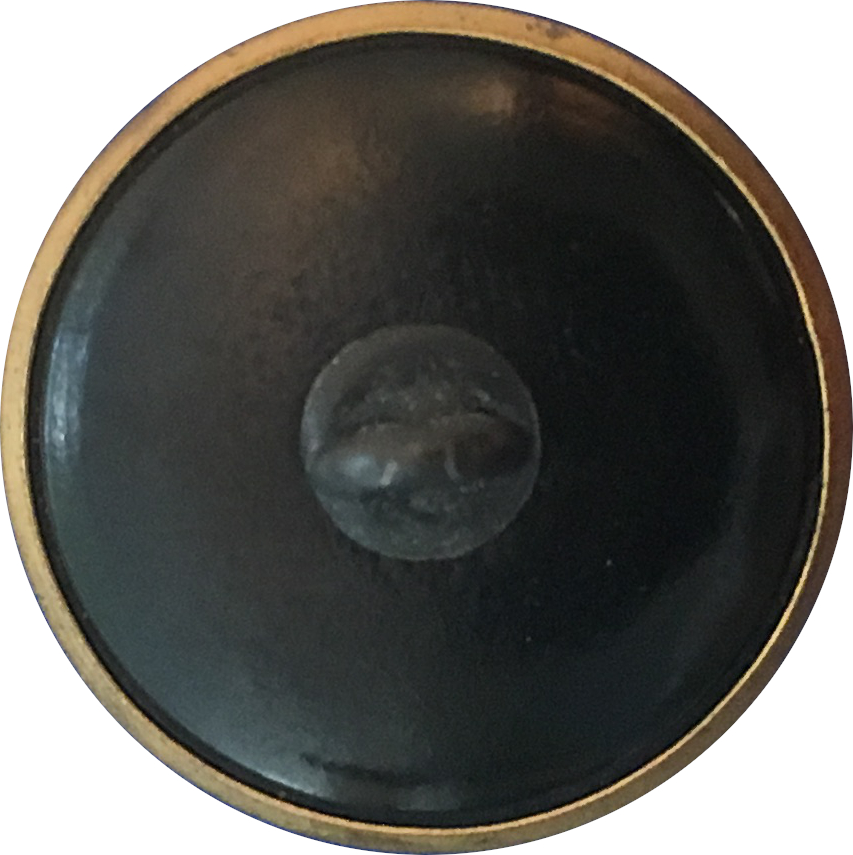
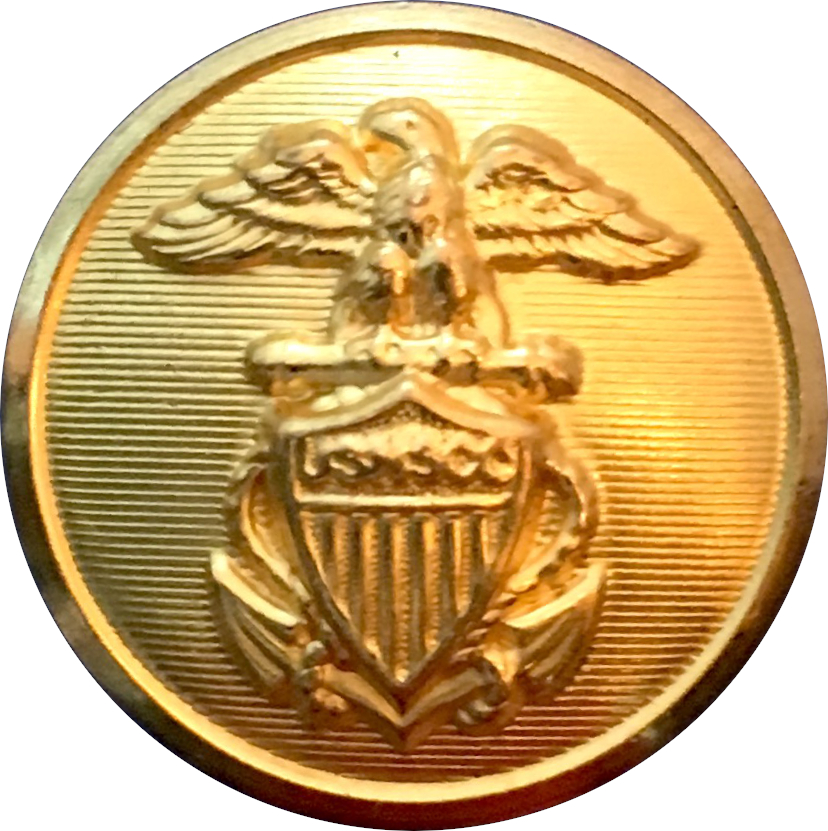
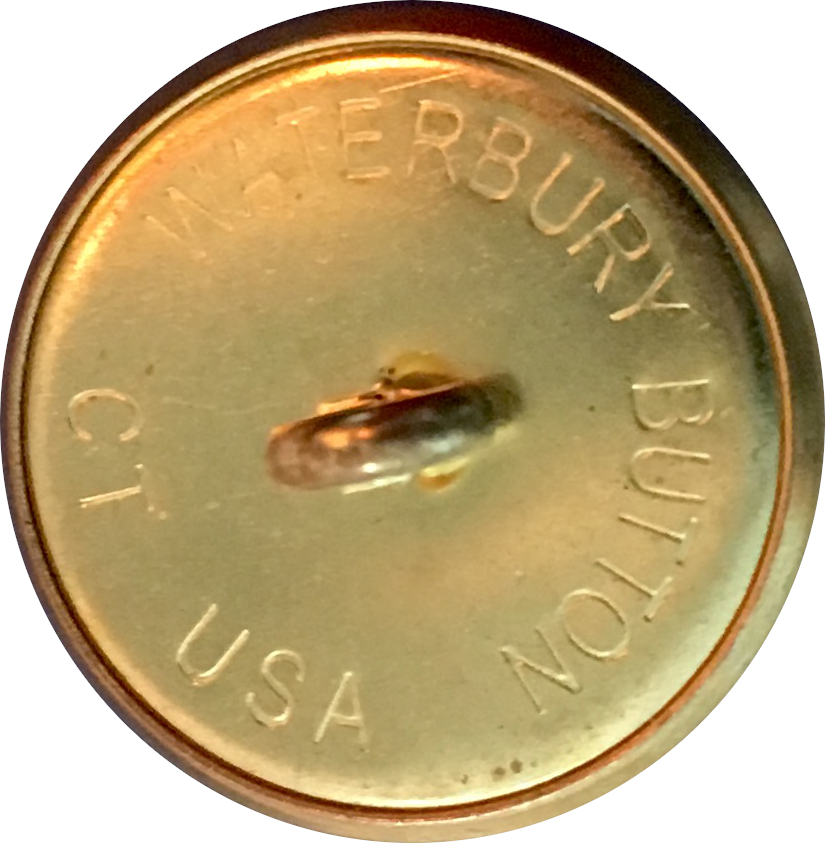
Many United States Navy buttons were manufactured in England; however, with the emigration of British artisans to New England, a button industry sprang up in Connecticut. Many of these early buttons were of sophisticated composition and had fine detail. The Waterbury button (NA-113) is a good example of this craftsmanship; some contracts were better than others, and for mass-market buttons, items such as NA-115 could be had (this came from the estate of an ex-American Mail Lines quartermaster). The plain anchor button of the Chief Petty Officer is often confused with that of a general nautical button; however, each of the examples presented shows the variation on a theme. With the re-design of the CPO reefer from eight to six buttons, buttons once exclusively worn by officers became standard for CPOs. The buttons marked a CPO and in nickel were worn by officer wardroom stewards; by the 1940s, the nickel buttons came to be replaced by white plastic buttons.
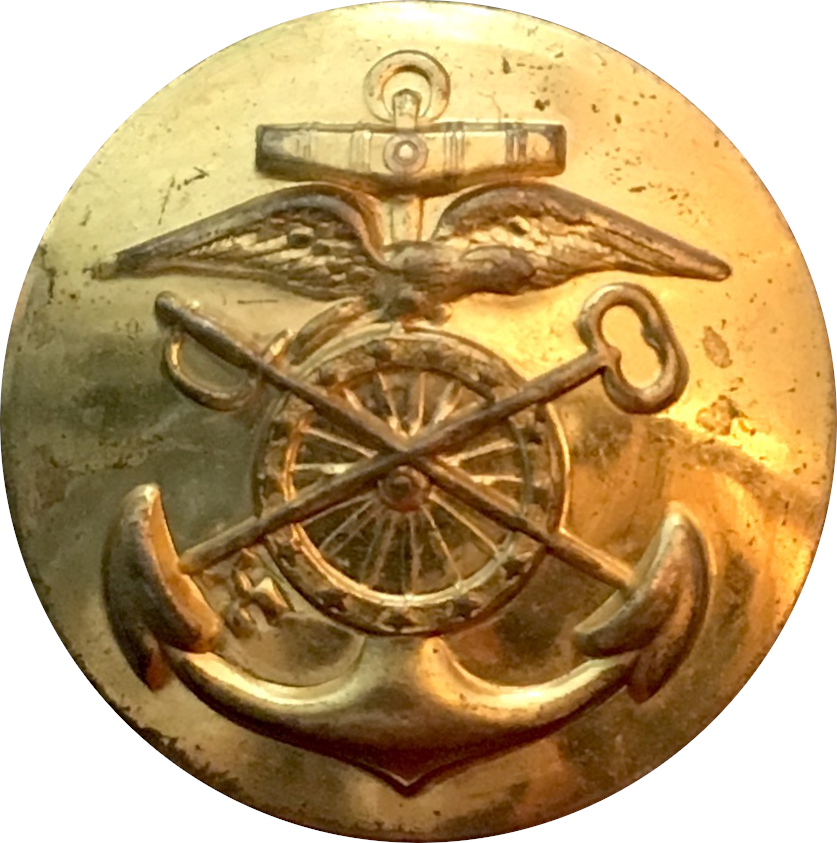
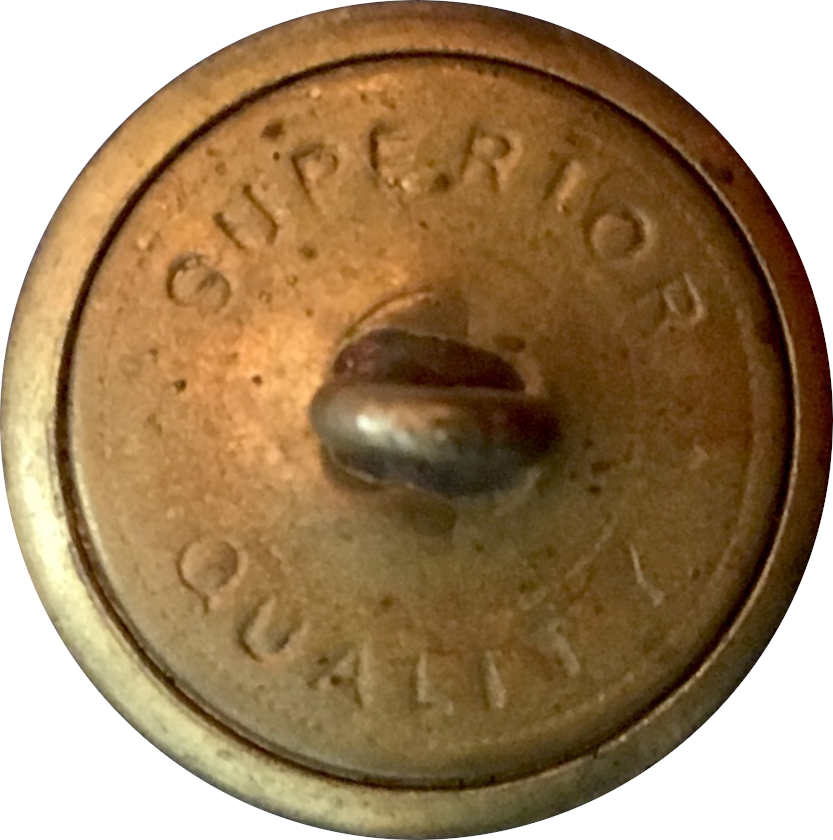
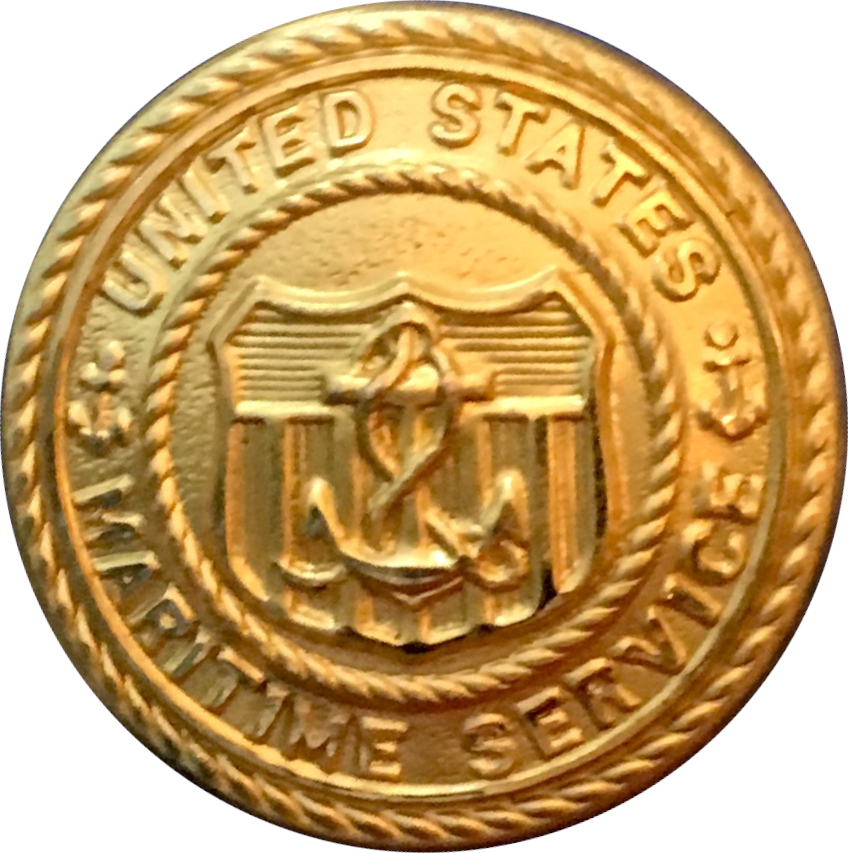
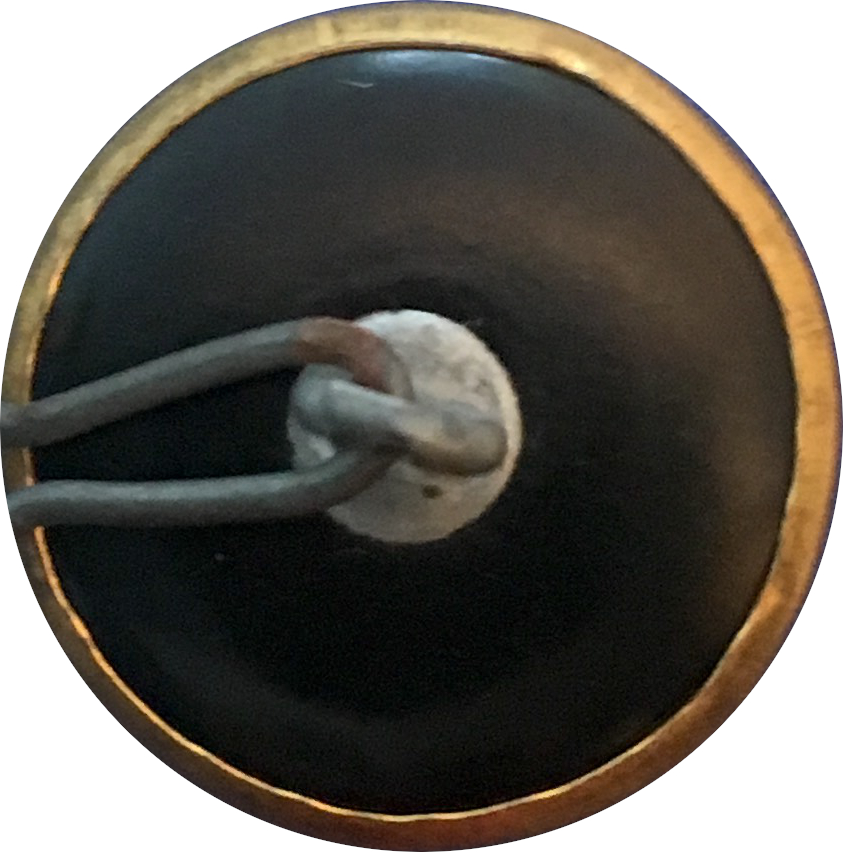
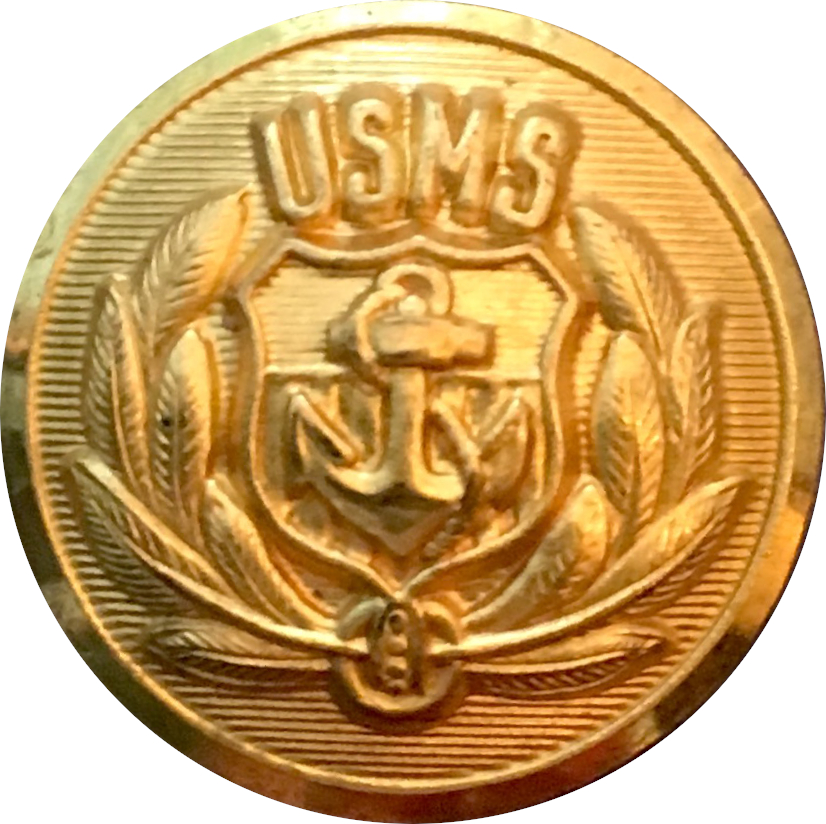
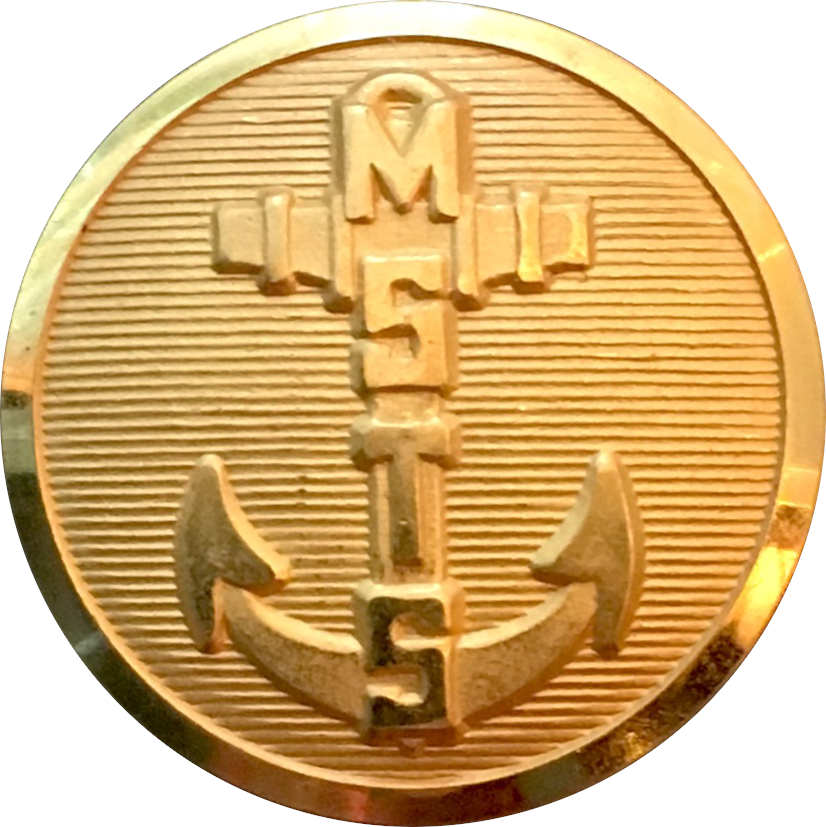
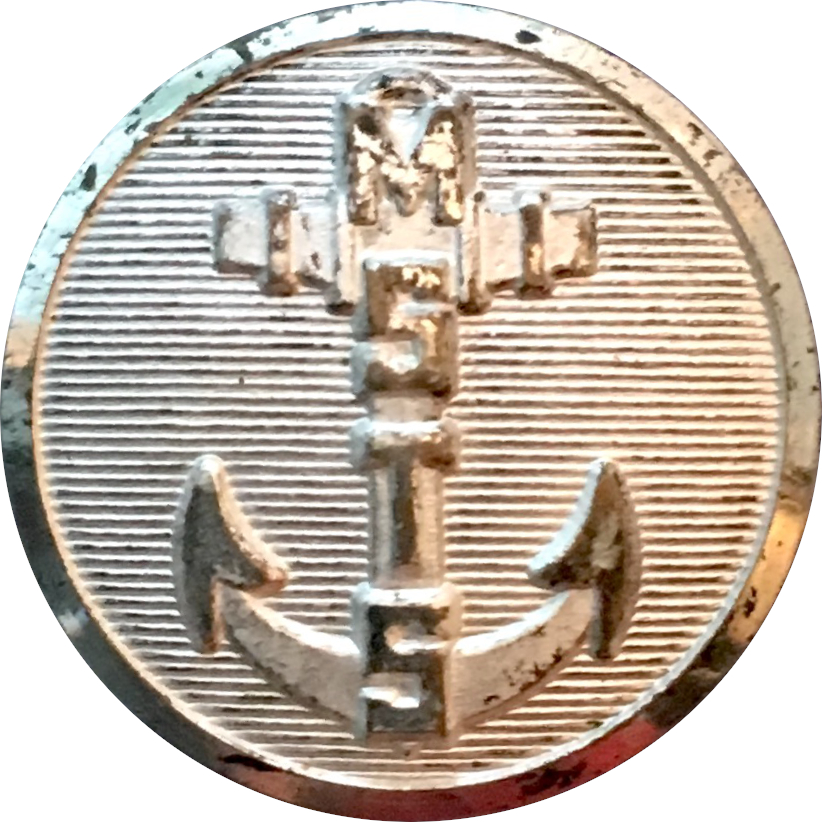
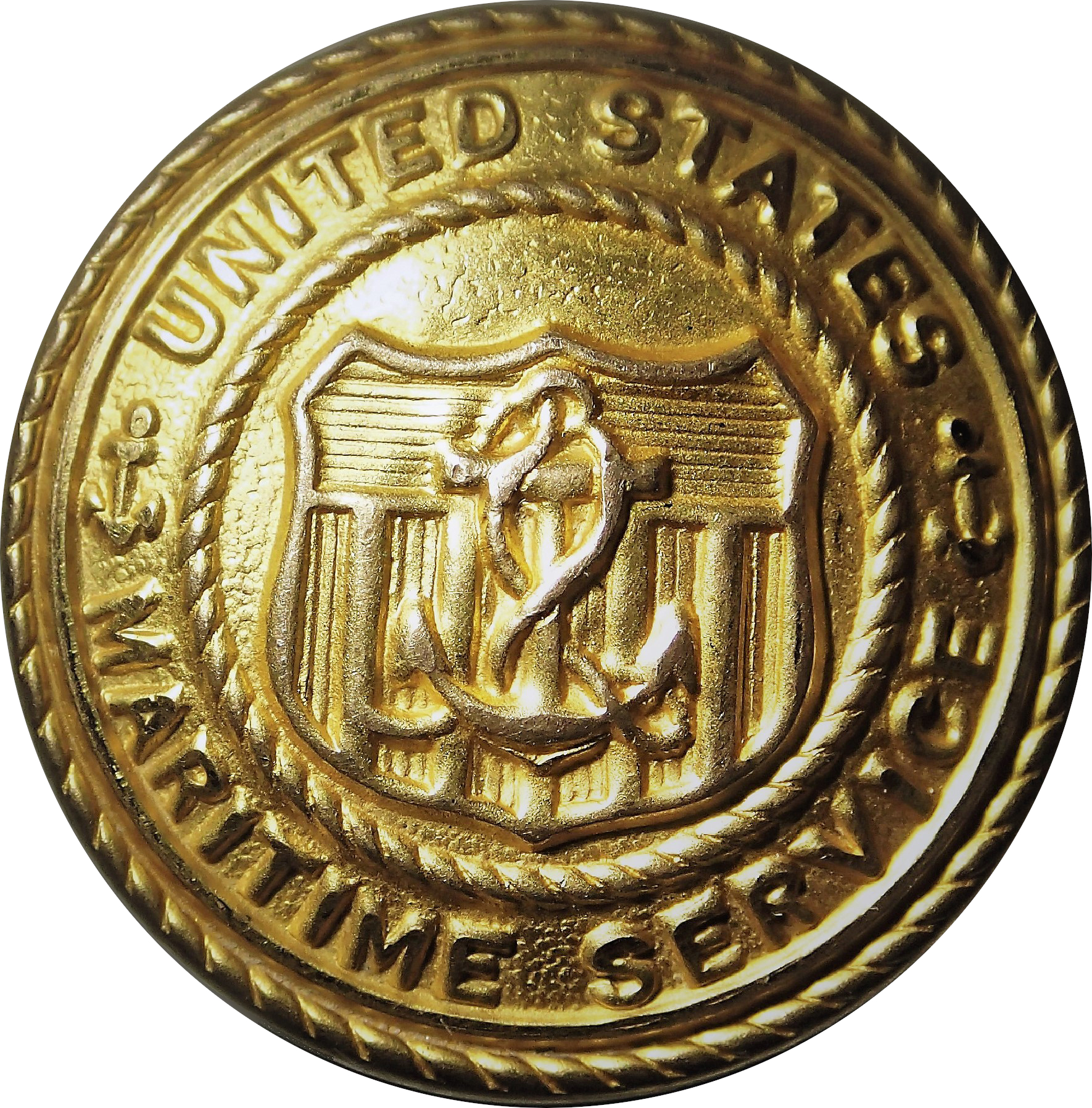
Included in the “Government Marine” section of my button collection is a U.S. Army Corps of Engineers button. This button came from a reefer worn by a member of the U.S. Army Corps of Engineers Dredge Fleet – these individuals were (and are) civilians in the employ of the Army who keep U.S. waterways passable. Among these buttons is the seldom-seen U.S. Maritime Commission (U.S. Maritime Service) button for both ship’s officers and stewards; this button has been all but forgotten, but reflects the close affinity of the nascent U.S. Maritime Service (USMS) with the U.S. Coast Guard (USCG). In 1941, the training mission of USMS was removed from the USCG and placed under the jurisdiction of the War Shipping Administration (WSA); I discuss the changes in USMS insignia here. The button of the United States Merchant Marine Academy (USMMA GO-26 and GO26-B) is a bit less straightforward and I will write about it at length at another date; suffice to say, the USMMA button became a “catch-all” maritime button, despite the existence of a such a button for that explicit use (see “Merchant Marine Generic, obverse” below). The USMMA “steward” button is a prime example of this shift.
U.S. Army Corps of Engineers, obverse EG-8
U.S. Army Corps of Engineers, reverse EG-8
U.S. Coast Guard, obverse FD-14
U.S. Coast Guard, obverse FD-14
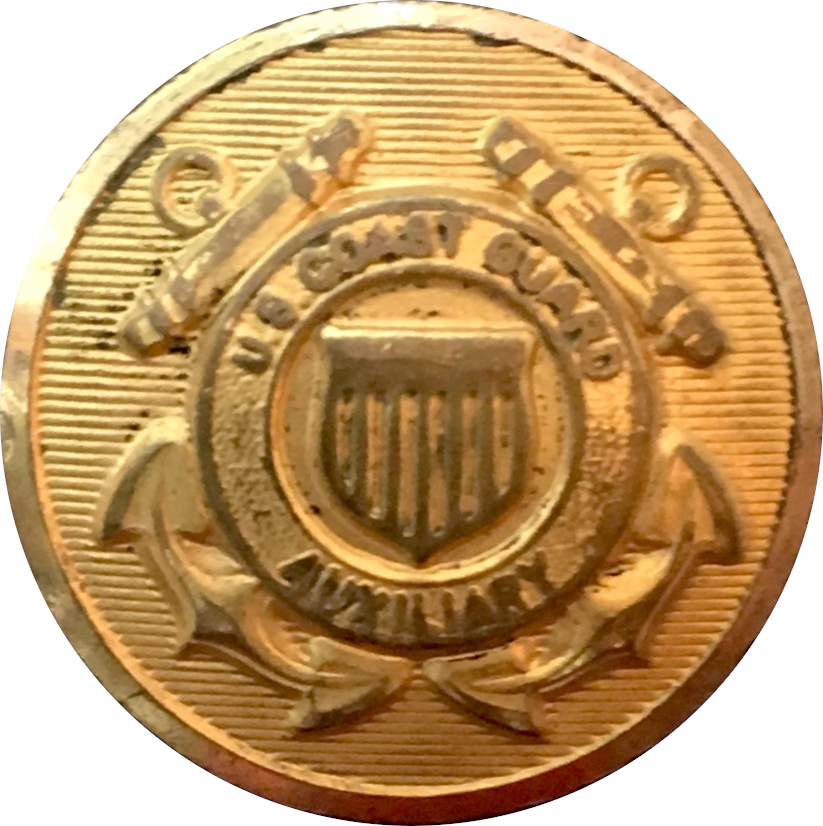
U.S. Coast Guard Auxiliary, obverse FD-16-A
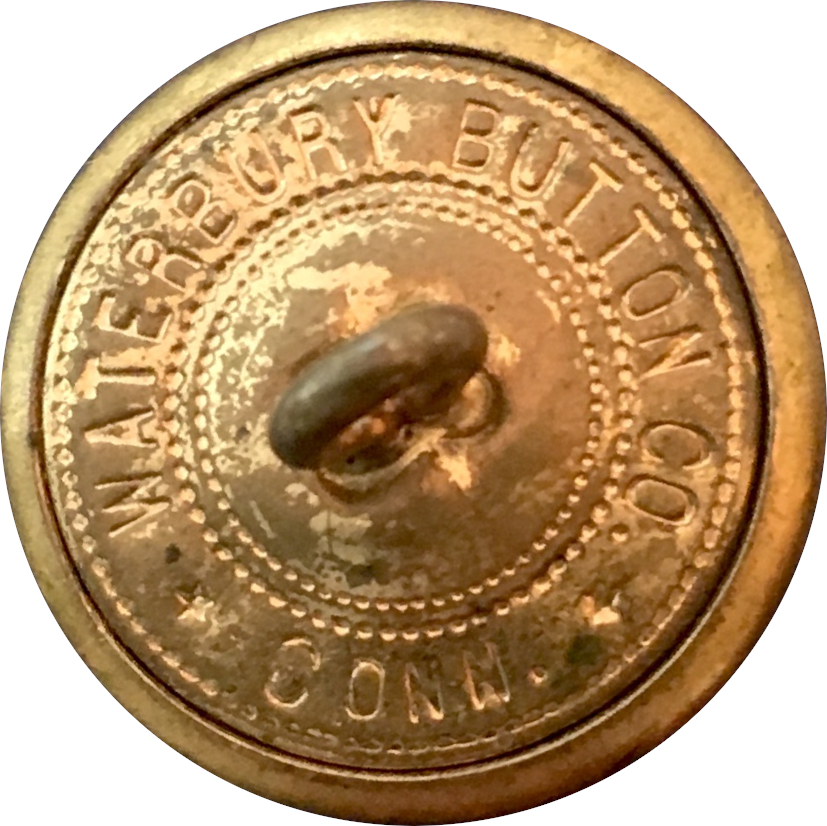
U.S. Coast Guard Auxiliary, reverse FD-16-A
U.S. Army Transport Service (1st pattern), obverse GO-6
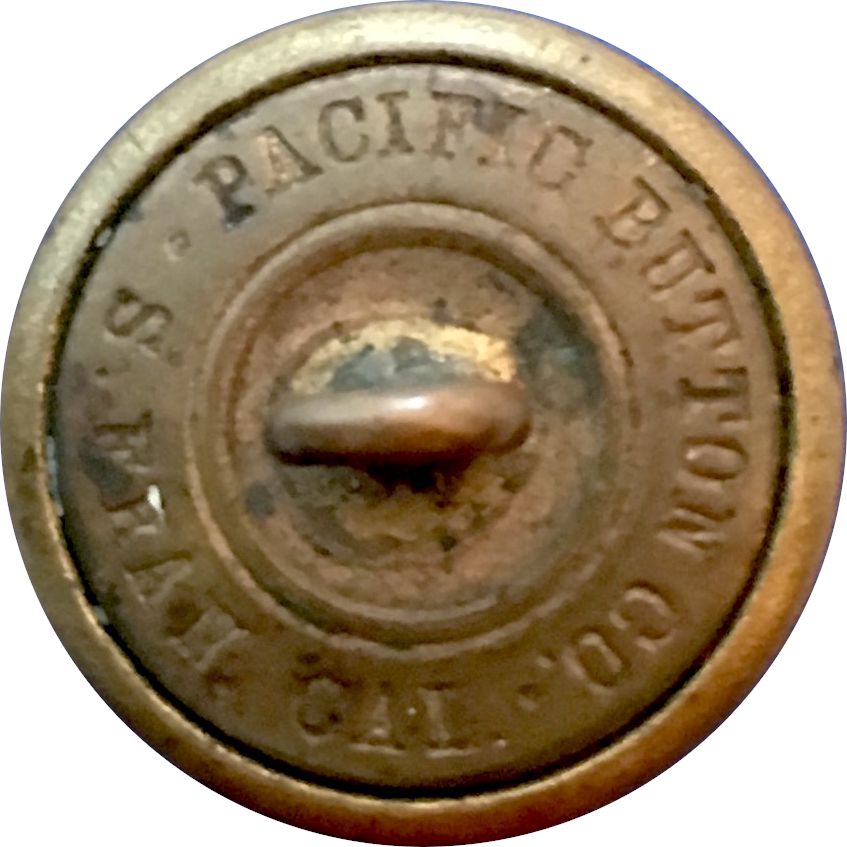
U.S. Army Transport Service (1st pattern), reverse GO-6
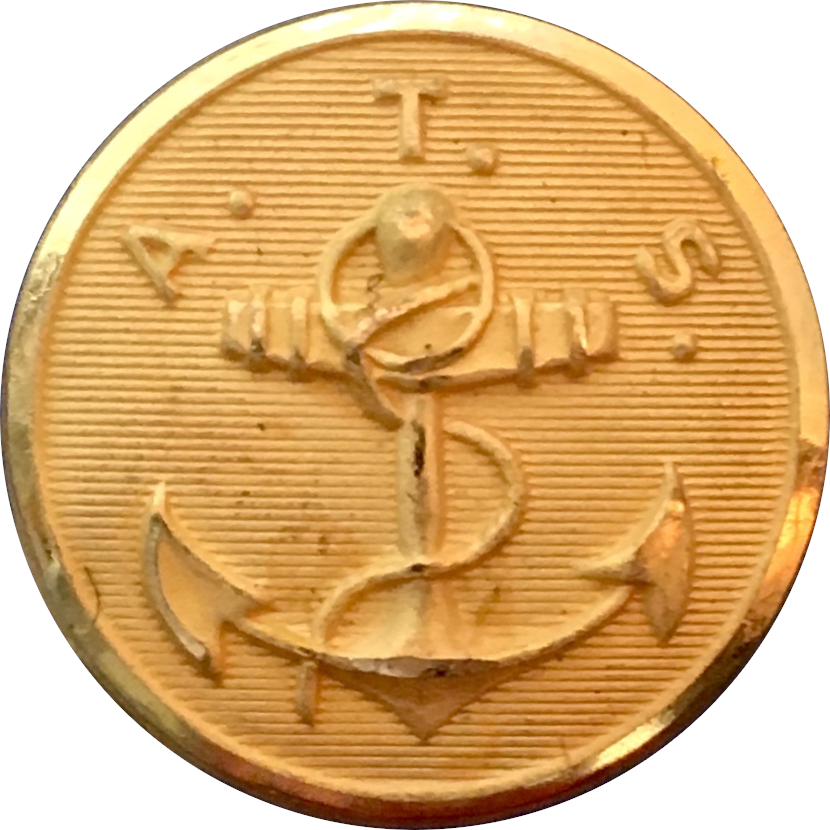
U.S. Army Transport Service (2nd pattern), obverse GO-6
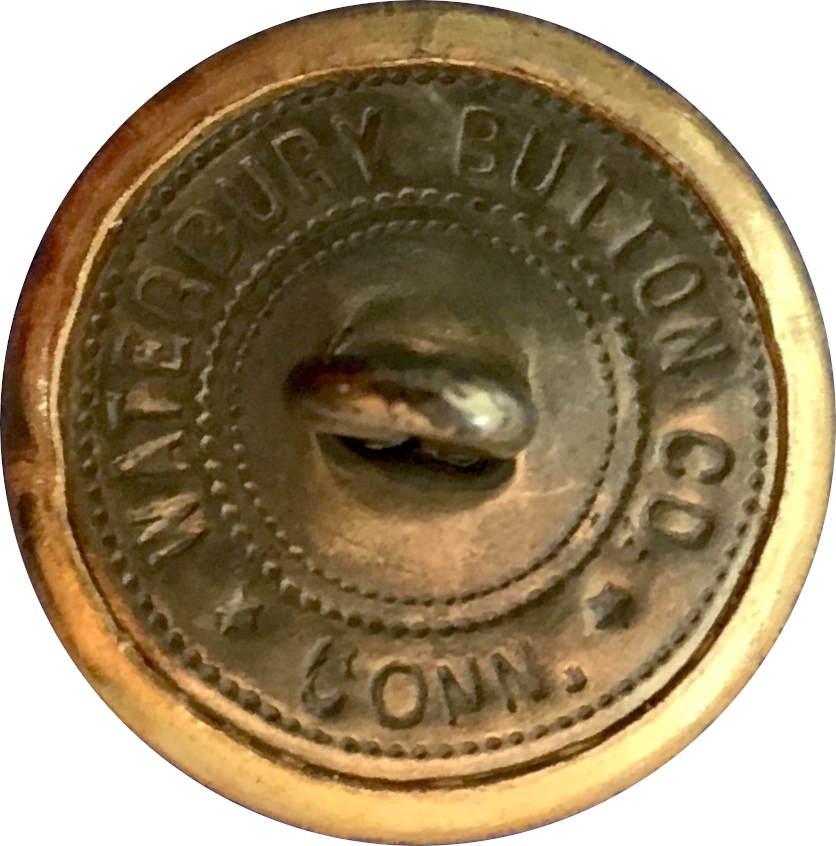
U.S. Army Transport Service (2nd pattern), obverse GO-6
U.S. Army Transport Service (2nd pattern) steward, obverse GO-6 (a)
U.S. Army Transport Service (2nd pattern) steward, reverse GO-6 (a)
U.S. Army Harbor Boat Service, obverse GO-16
U.S. Army Harbor Boat Service, reverse GO-16
U.S. Maritime Service (1st pattern), obverse GO-25
U.S. Maritime Service (1st pattern), reverse GO-25
U.S. Maritime Service (1st pattern), obverse GO-25 (15mm)
U.S. Maritime Service (1st pattern), reverse GO-25 (15mm)
U.S. Maritime Service (1st pattern) steward, obverse GO-25
U.S. Maritime Service (1st pattern) steward, reverse GO-25
U.S. Maritime Service (1st pattern) steward, obverse GO-25 (15mm)
U.S. Maritime Service (1st pattern) steward, reverse GO-25 (15mm)
U.S. Maritime Service (2nd pattern), obverse GO-24-A
U.S. Maritime Service (2nd pattern), reverse (plastic) GO-24-A
U.S. Maritime Service (3rd pattern), obverse GO-24-B
U.S. Maritime Service (3rd pattern), reverse GO-24-B
U.S. Merchant Marine Academy, obverse GO-26
U.S. Merchant Marine Academy, reverse GO-26
U.S. Merchant Marine Academy, obverse GO-26
U.S. Merchant Marine Academy, reverse (plastic) GO-26
U.S. Merchant Marine Academy "steward," obverse GO-26-B
U.S. Merchant Marine Academy "steward," reverse GO-26-B
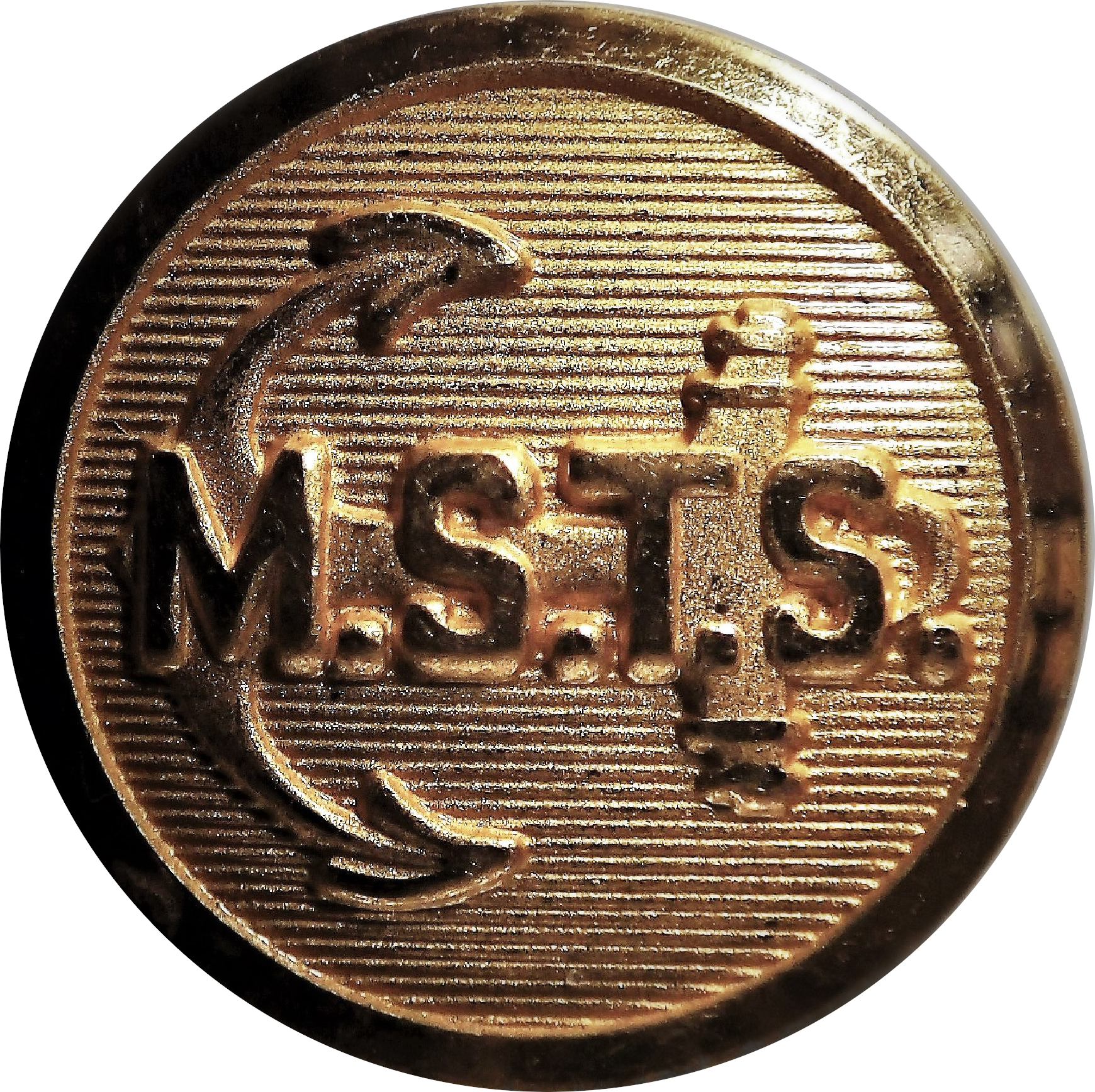
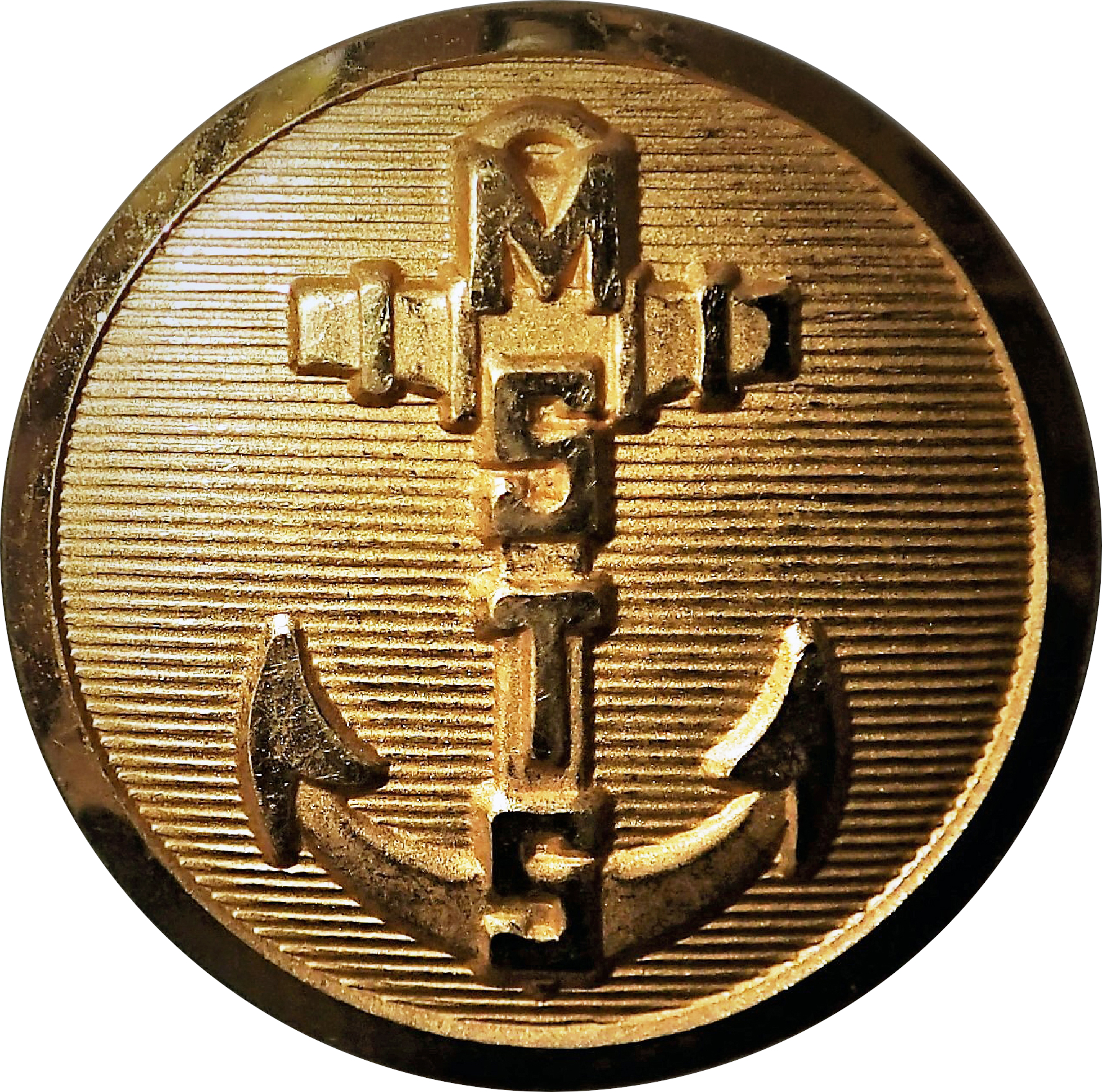
Military Sea Transportation Service (1st pattern), obverse GO-27
Military Sea Transportation Service (1st pattern), reverse GO-27
Military Sea Transportation Service (2nd pattern), obverse GO-28
Military Sea Transportation Service (2nd pattern), reverse GO-27
Military Sea Transportation Service (2nd pattern) steward, obverse GO-28
Military Sea Transportation Service (2nd pattern) steward, reverse GO-28
united states merchant marine, schools, and organizations
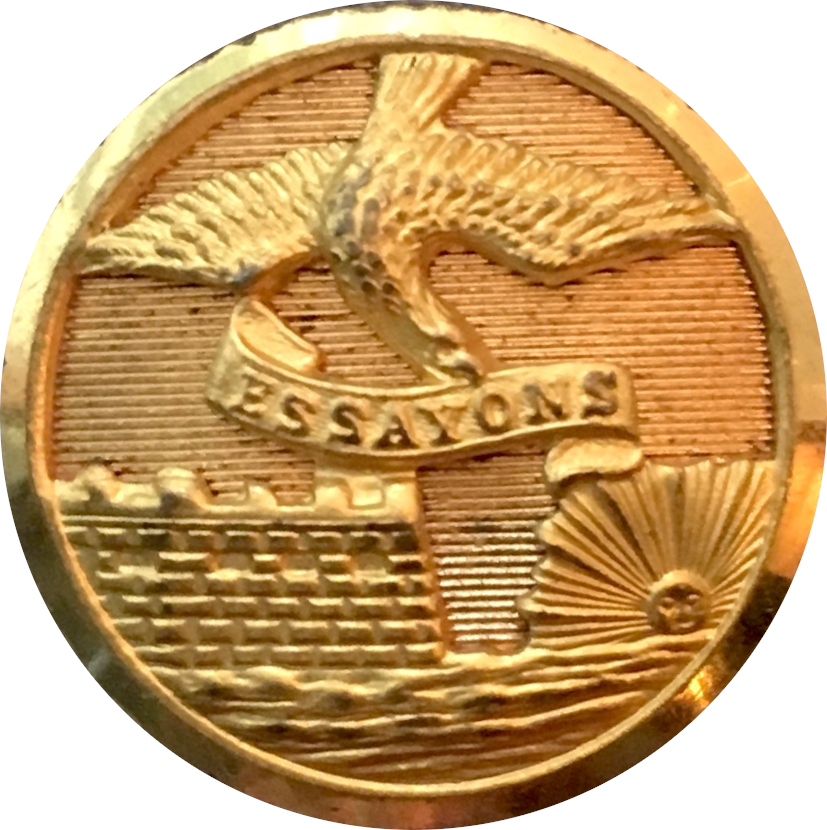
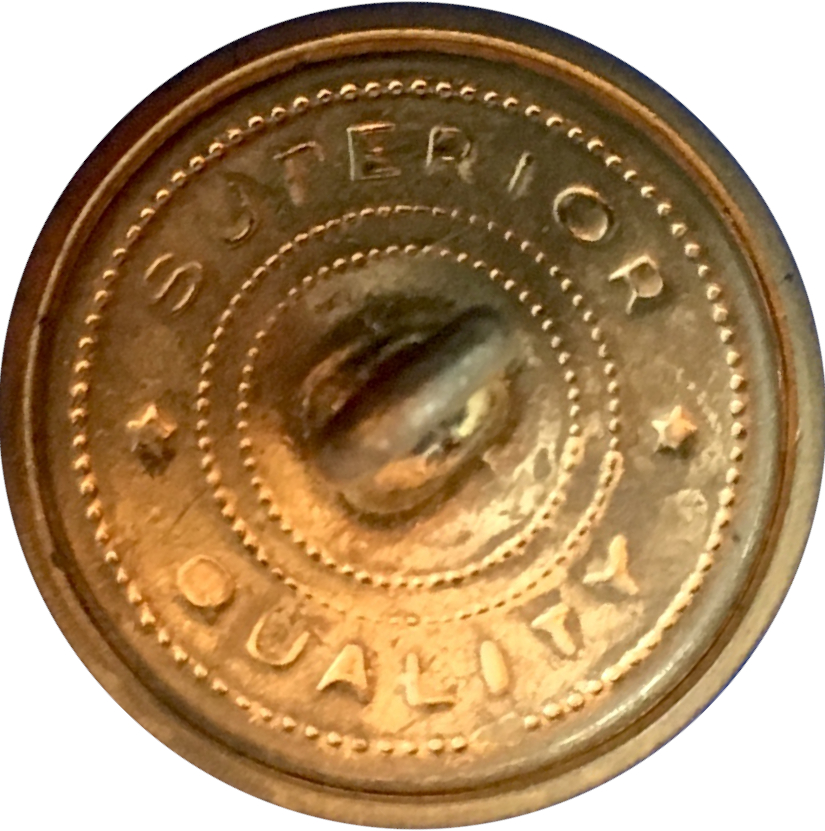
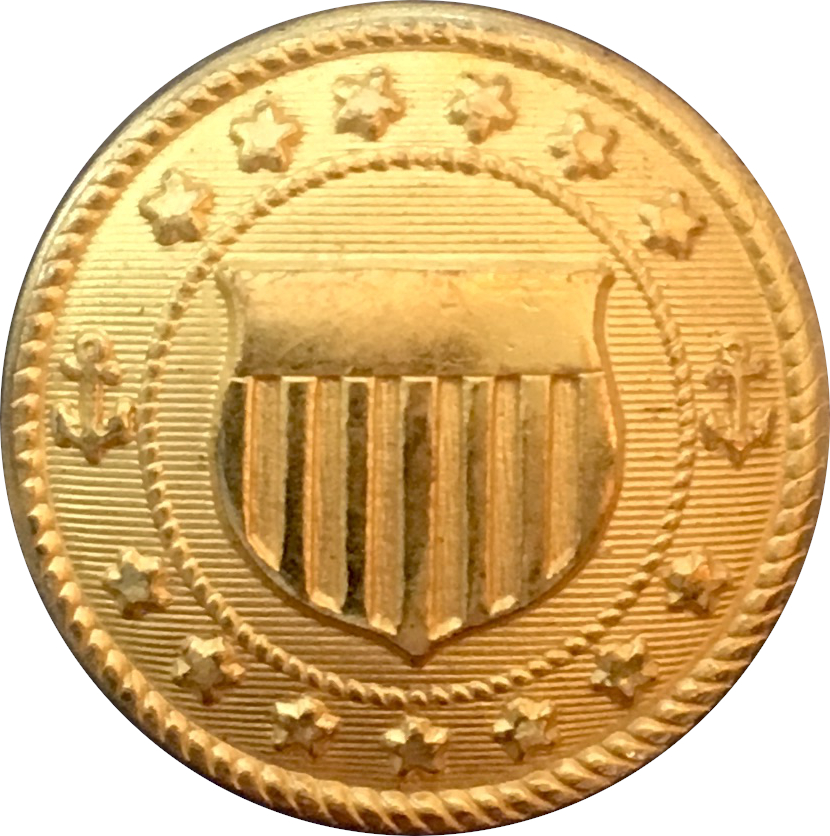
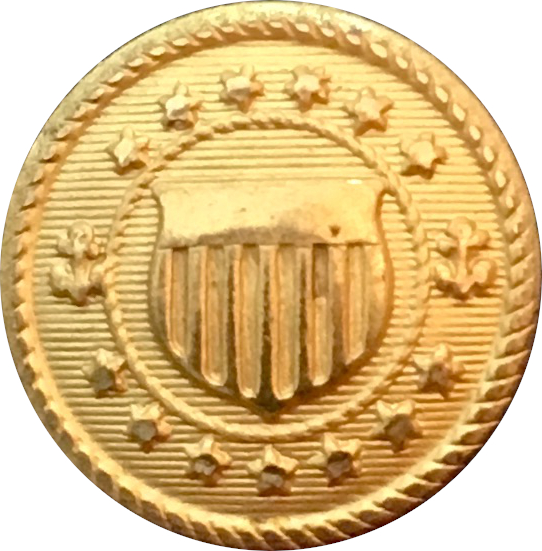
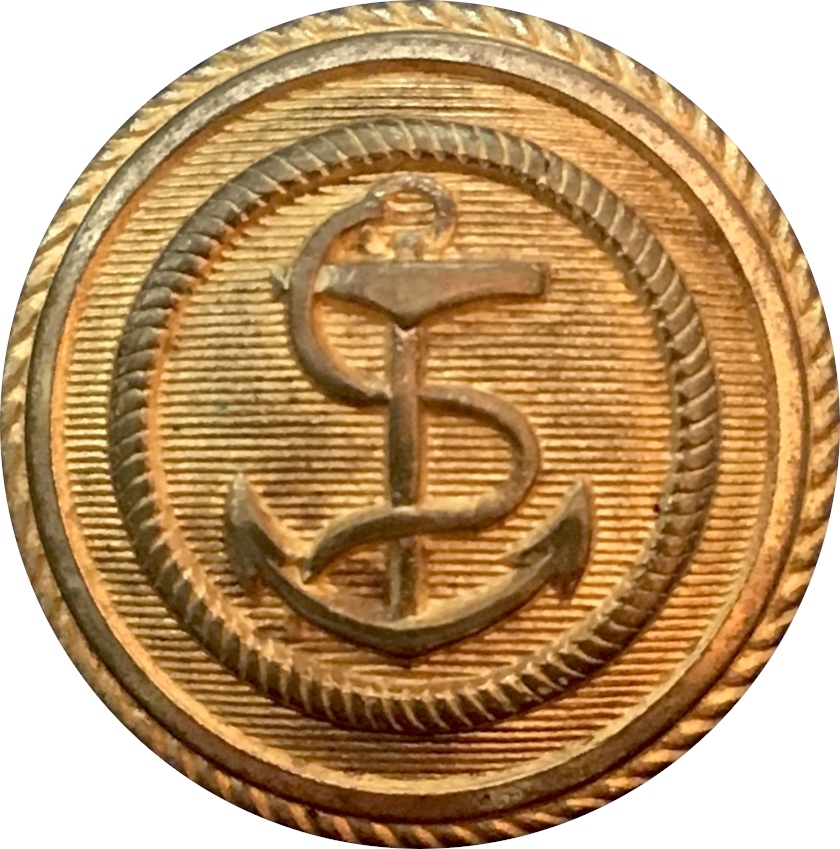
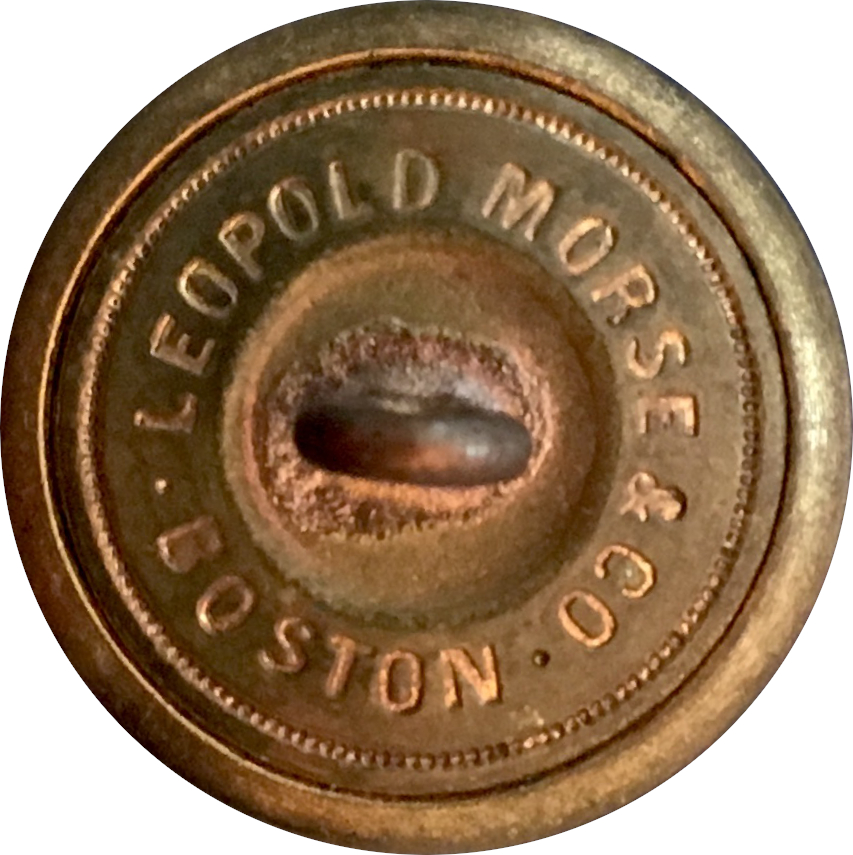
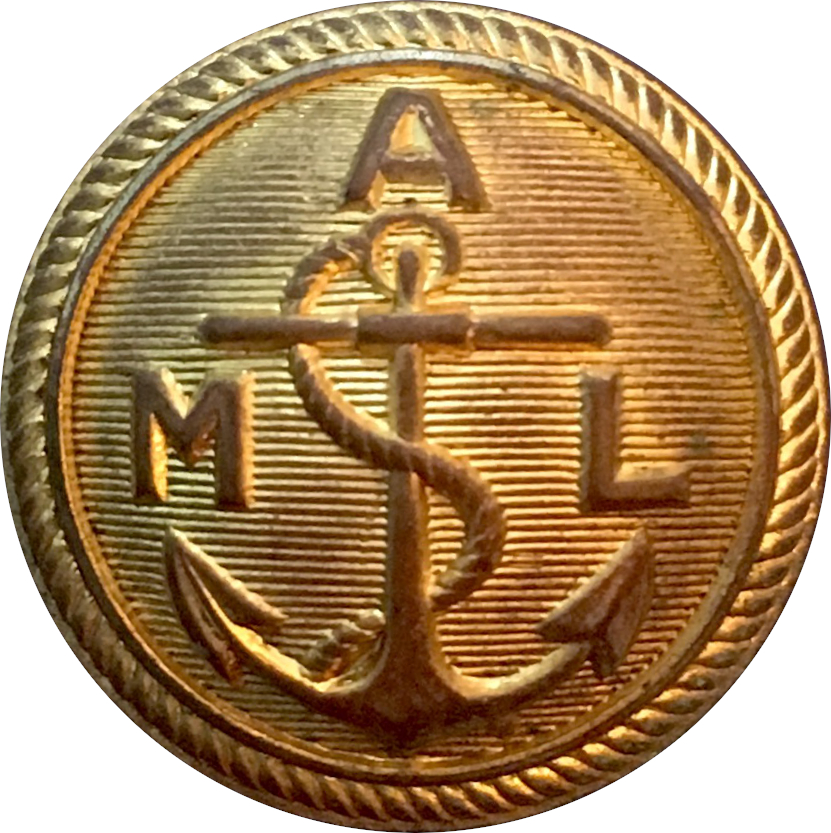
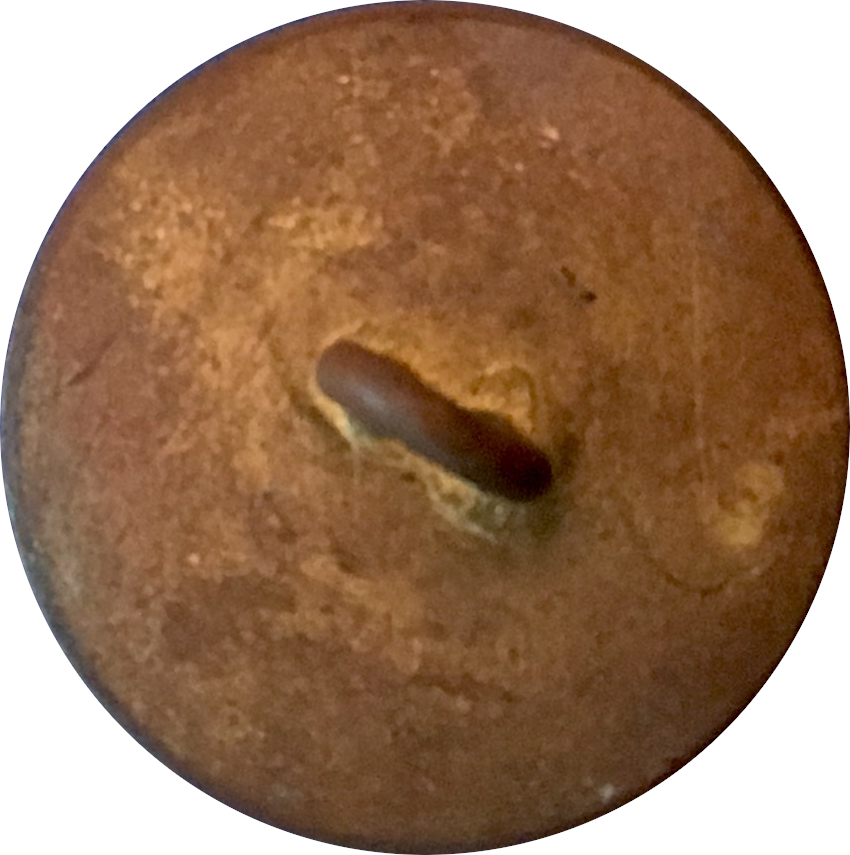
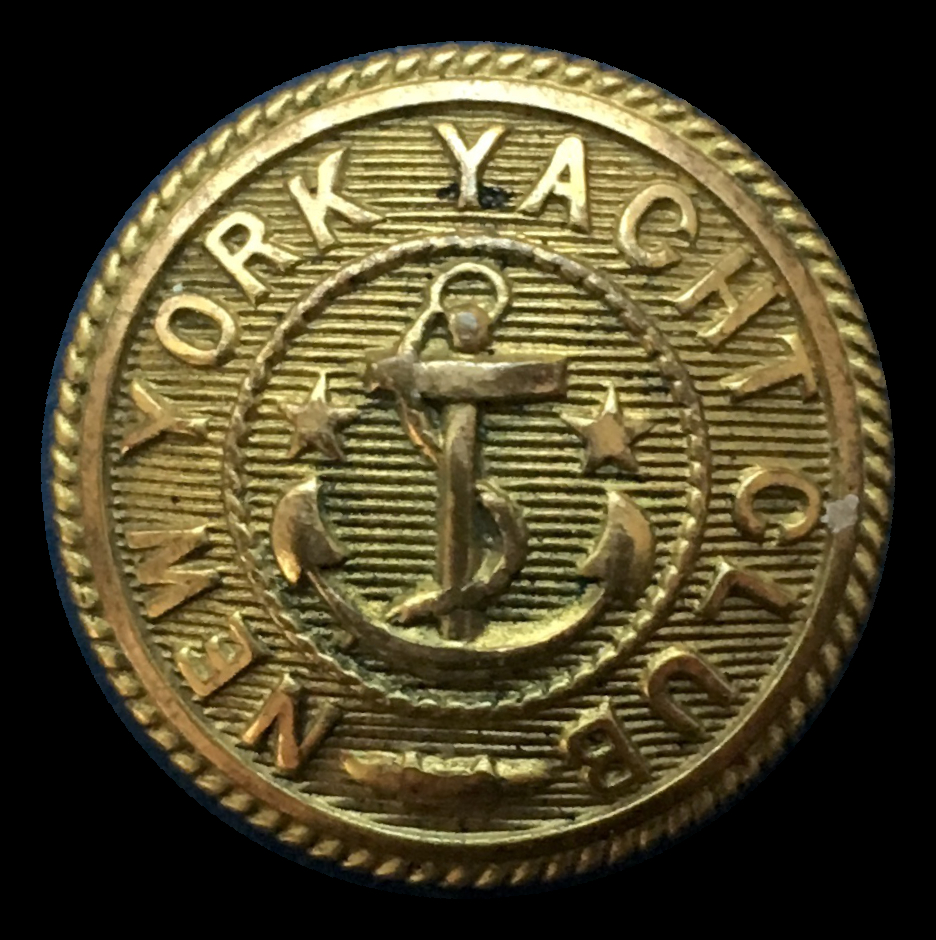
Of interest is the “generic” Merchant Marine button; it was sold by Leopold Morse, Company which was an upscale Boston clothier that had also dabbled in uniforming Union officers during the United States Civil War. This button is fascinating as it illustrates the NOMMP button, which is a derivation of one of the oldest American nautical buttons – the New York Yacht Club. I have a selection of United States Lines (USL) button detailed here. Unlike this page, I analyze the timeline of USL button adoption and wear.
Merchant Marine Generic, obverse
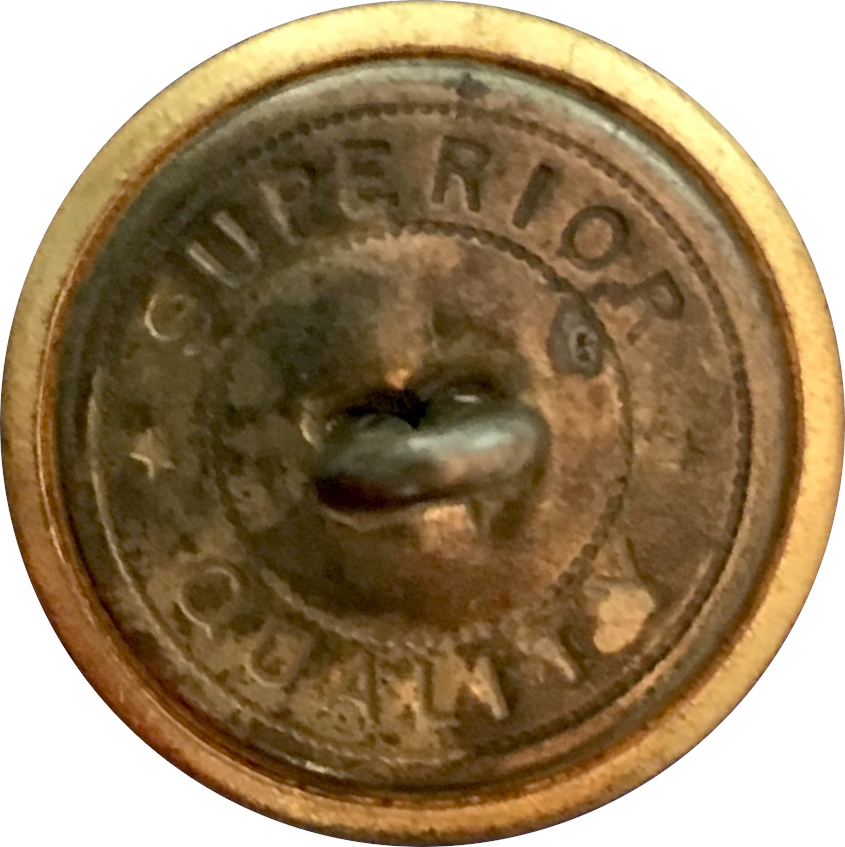
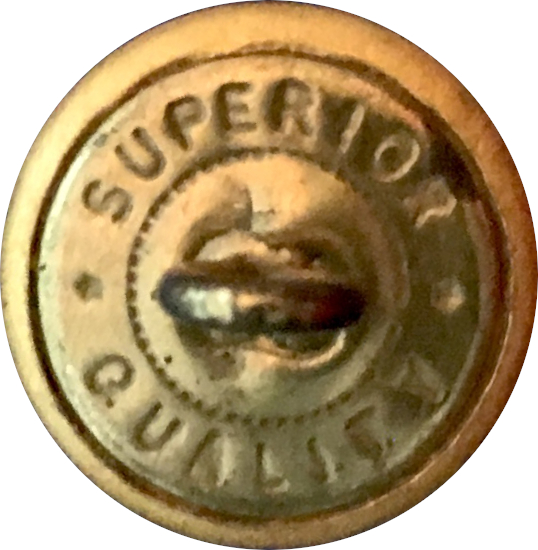
Merchant Marine Generic, reverse
American Mail Line, obverse VC-81-6
American Mail Line, reverse VC-81-6
New York Yacht Club, obverse
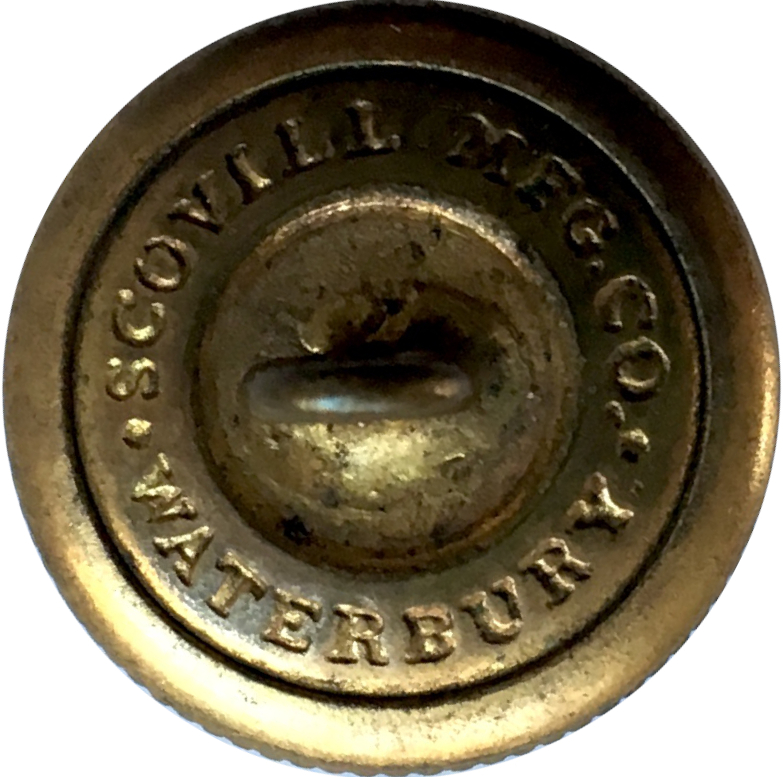
New York Yacht Club, obverse
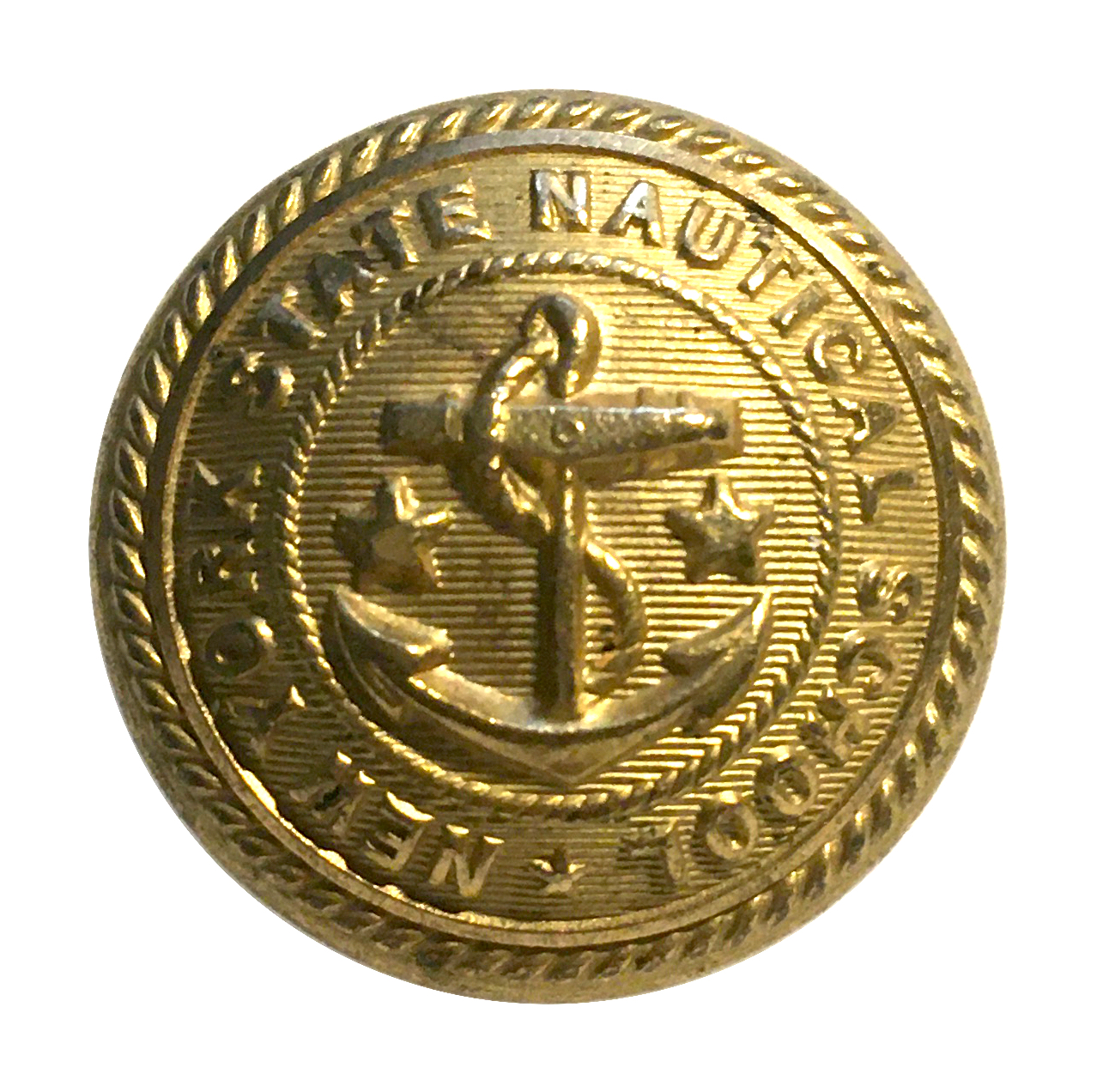
New York State Nautical School. obverse
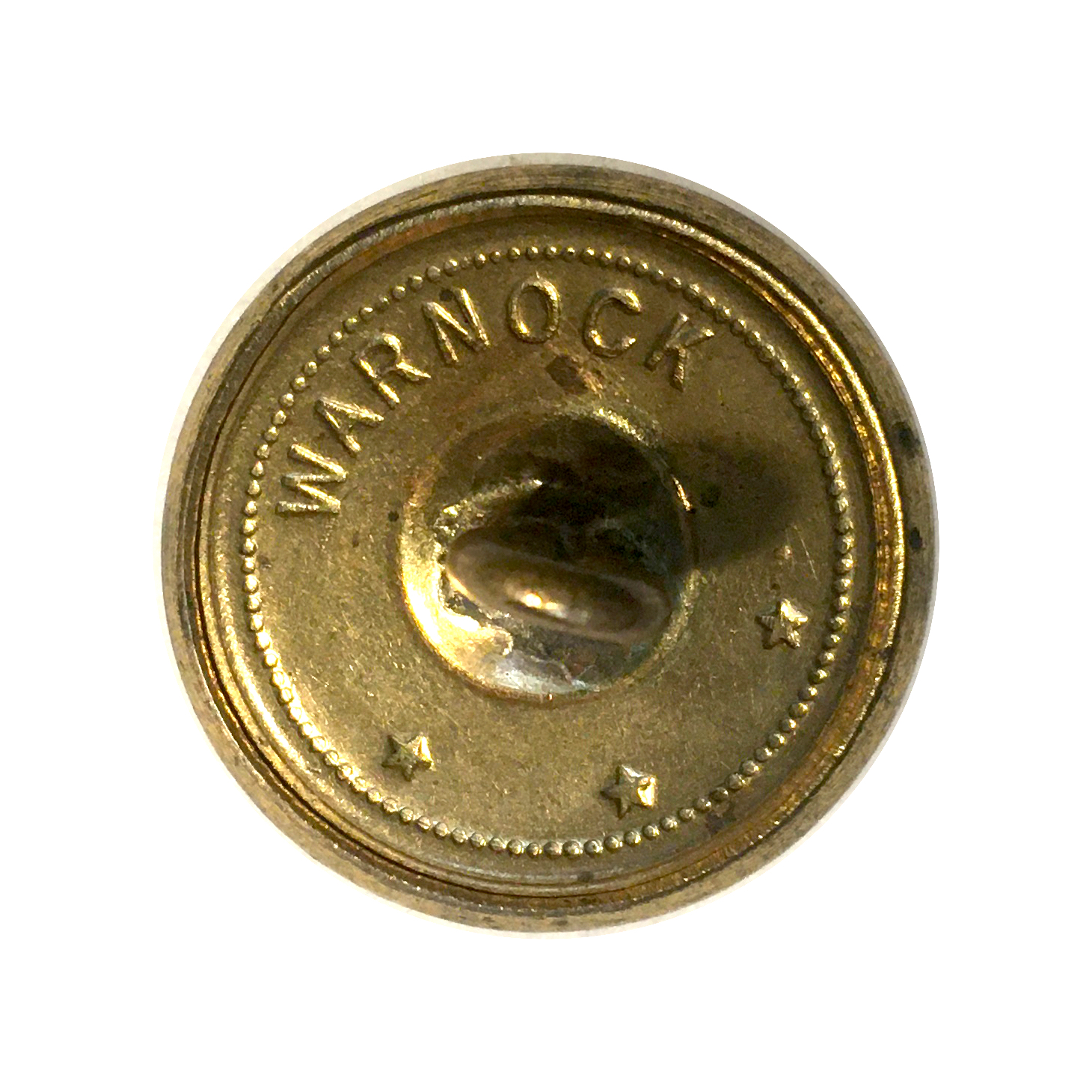
New York State Nautical School. reverse
New York State Nautical School (25 Ligne), obverse
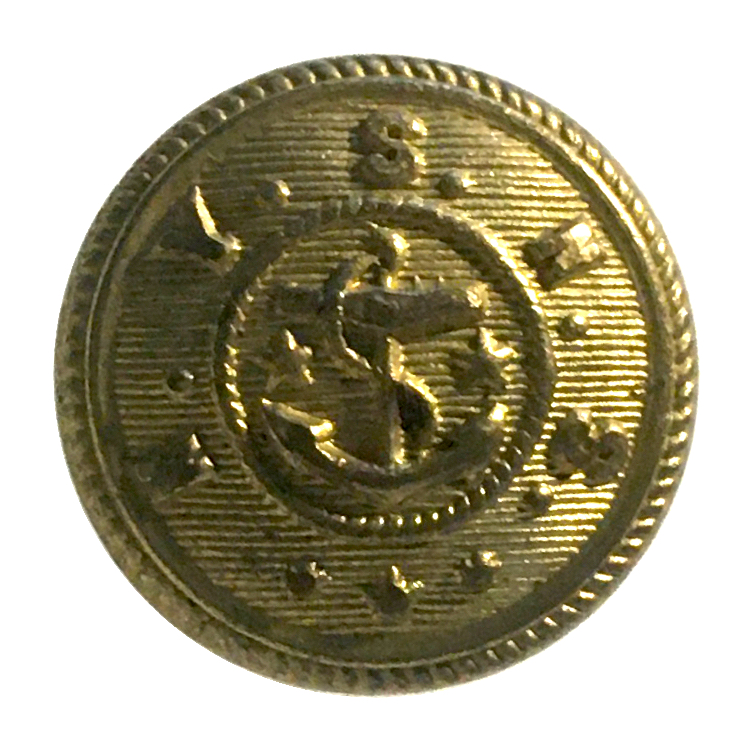
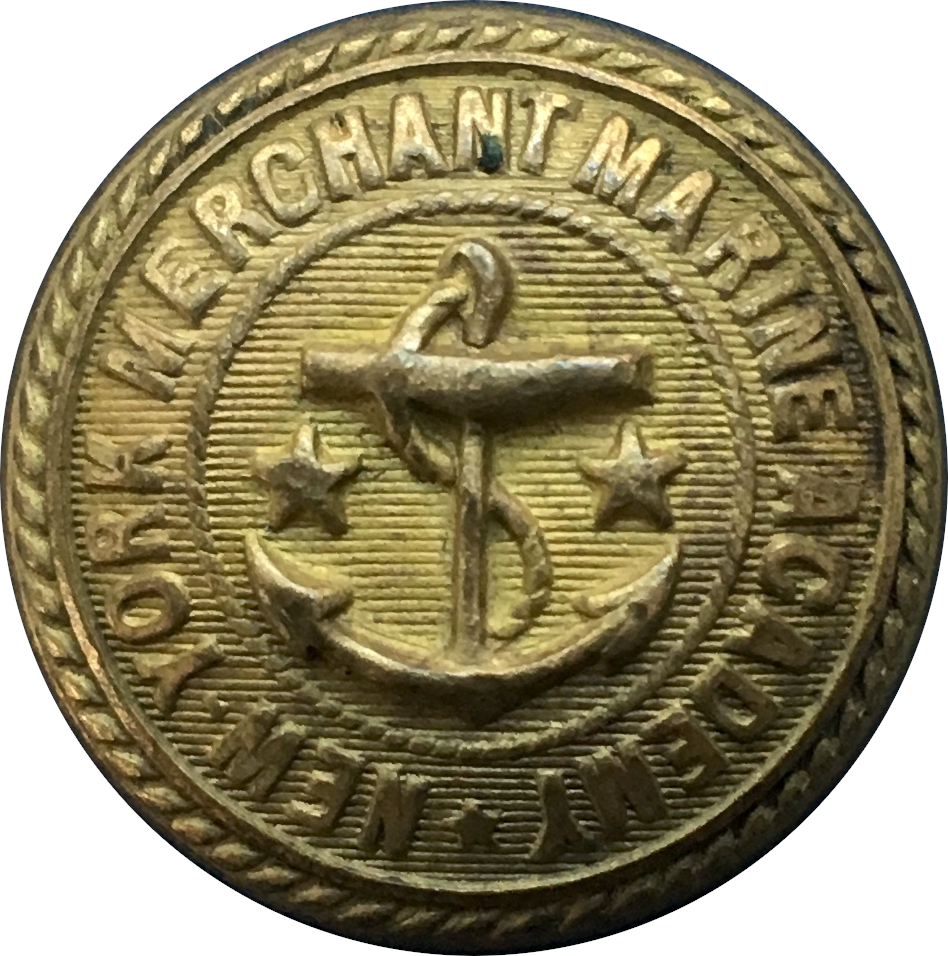
New York Merchant Marine Academy, obverse SU-258
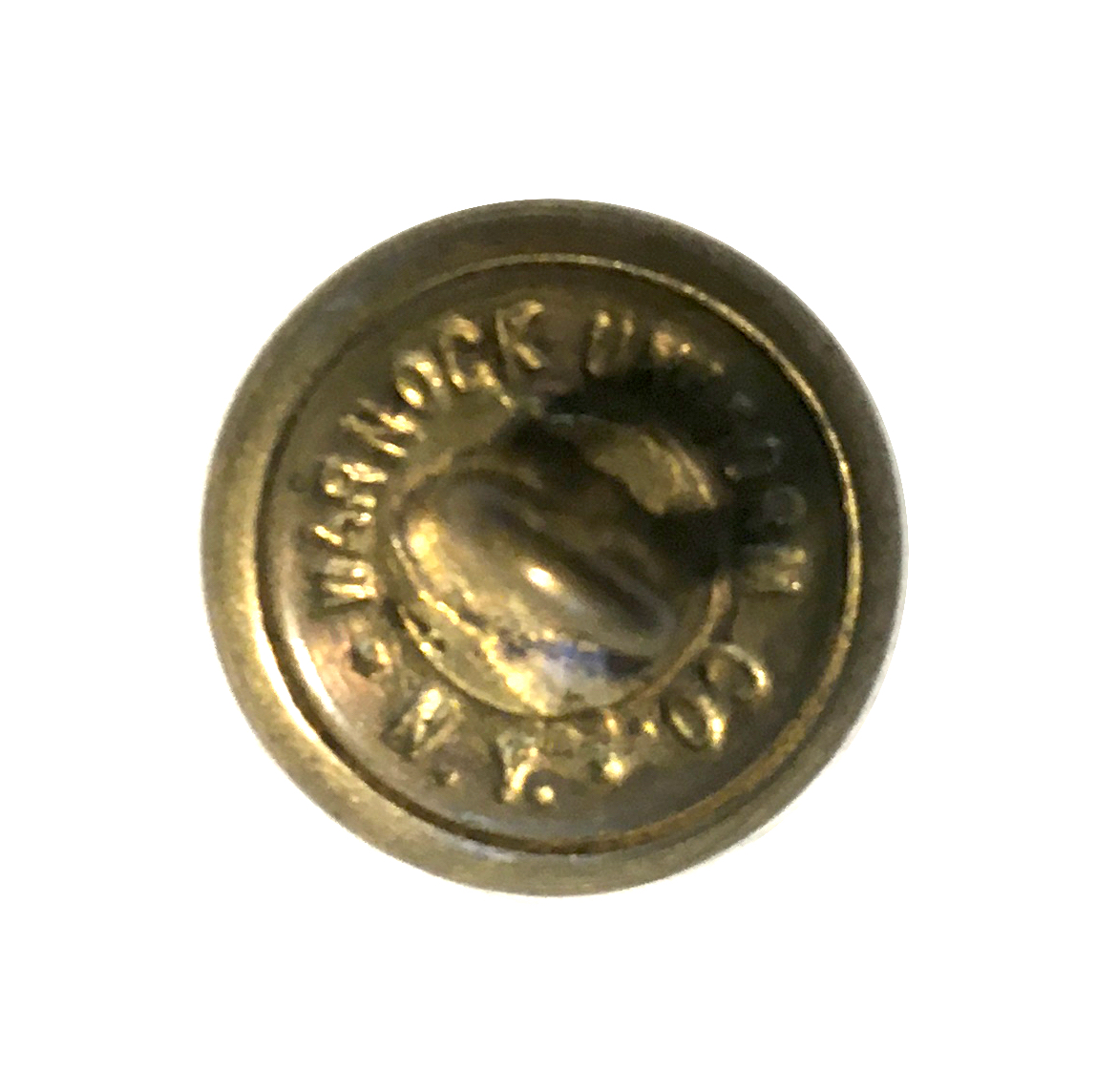
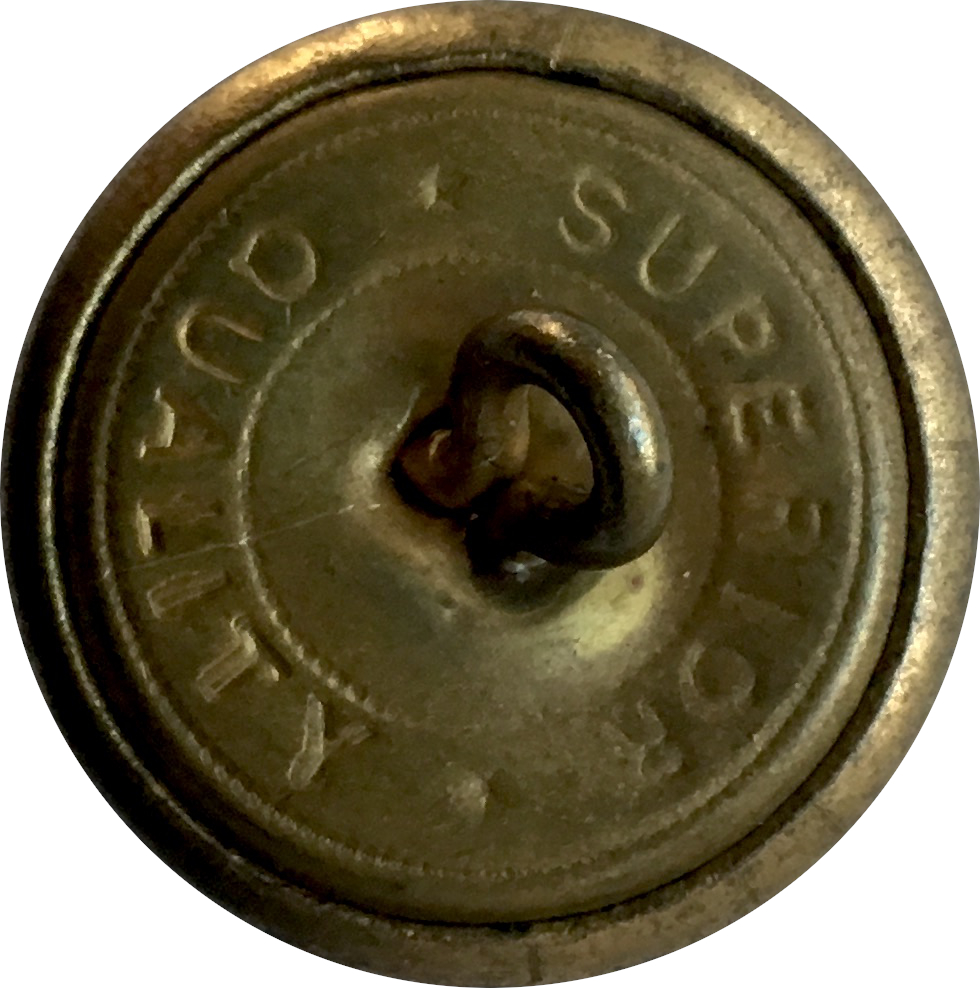
New York Merchant Marine Academy, reverse SU-258
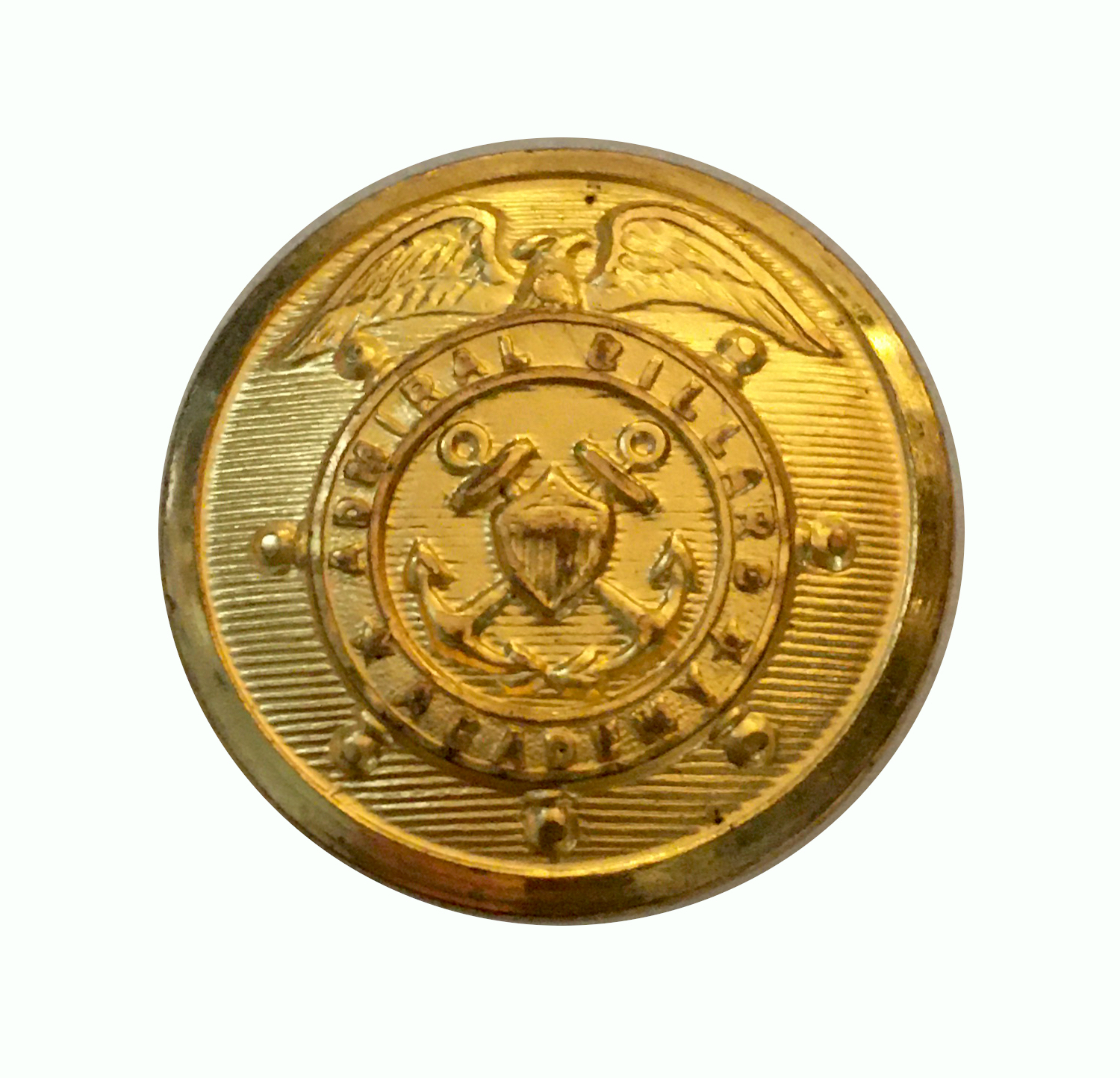
Admiral Billard Academy, obverse
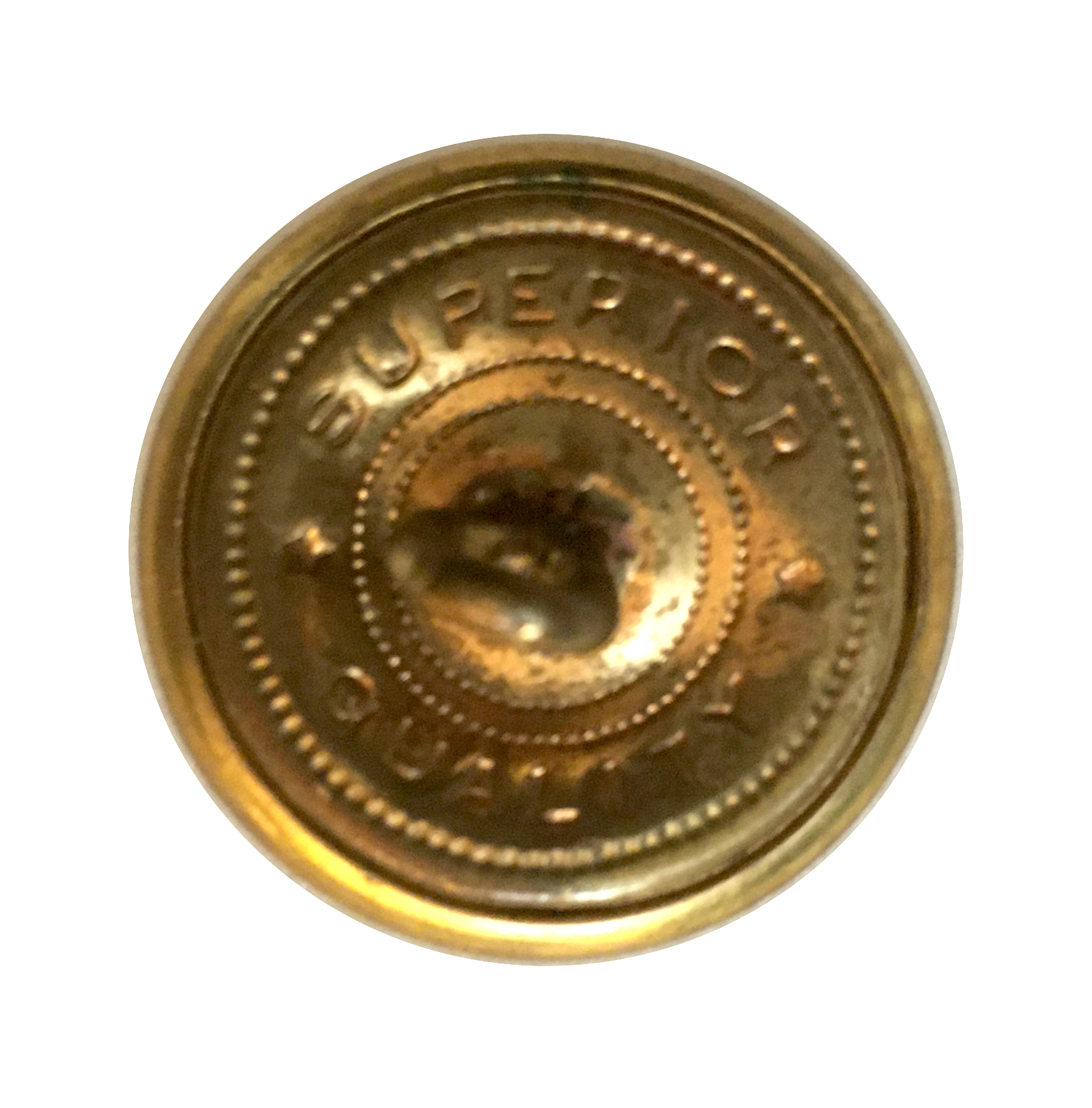
Admiral Billard Ac
U.S. Naval Sea Cadet Corps, obverse
U.S. Naval Sea Cadet Corps, reverse
american merchant marine museum collection
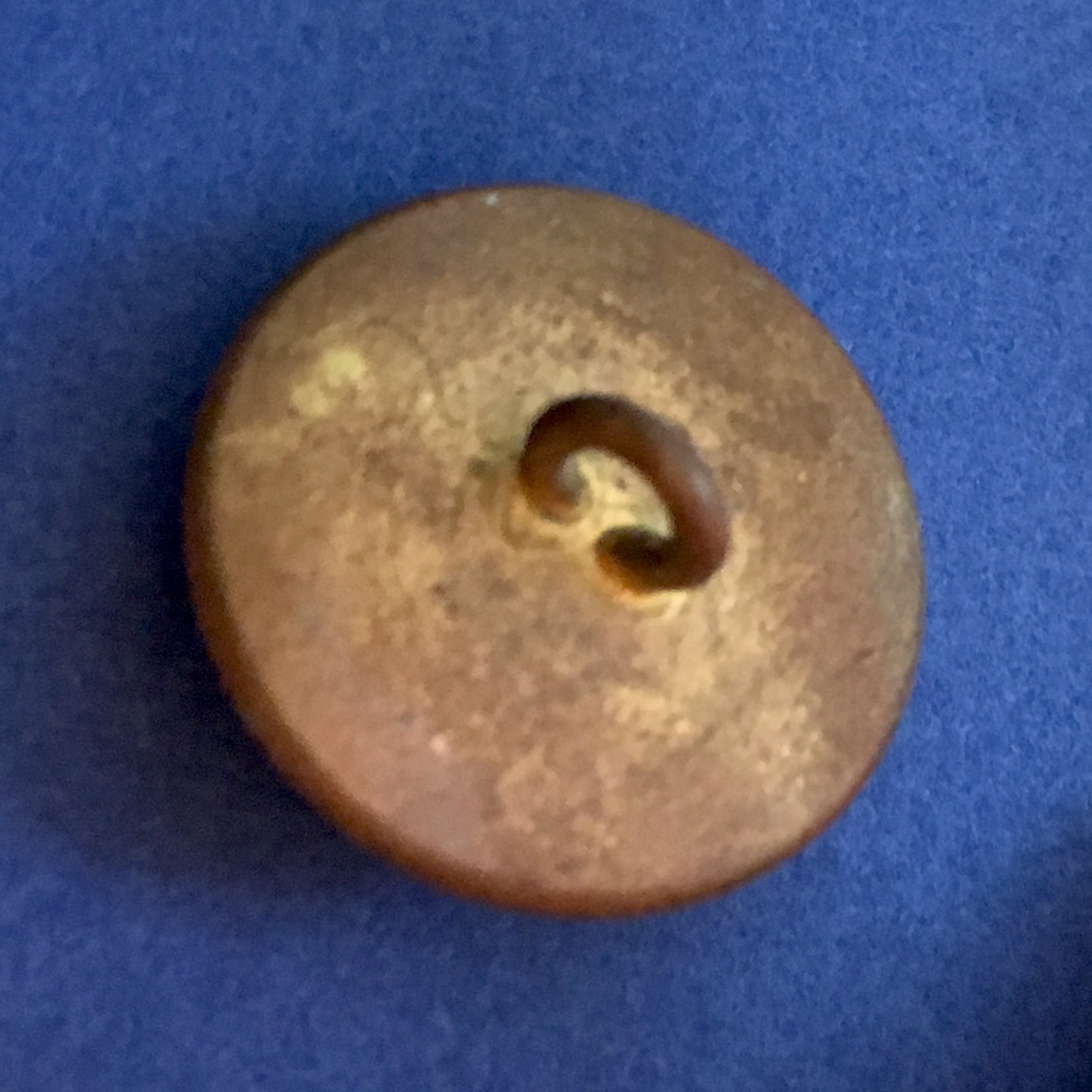
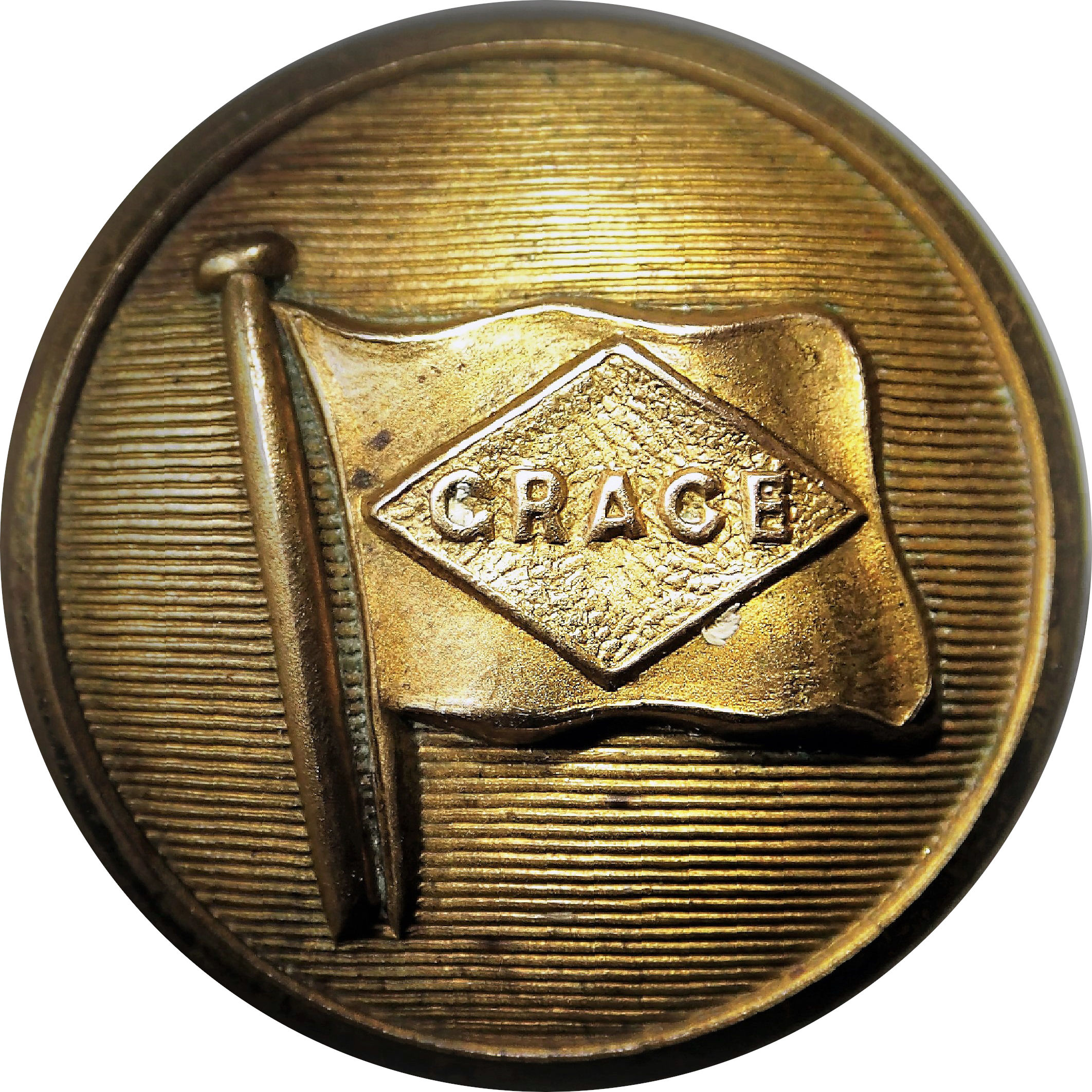
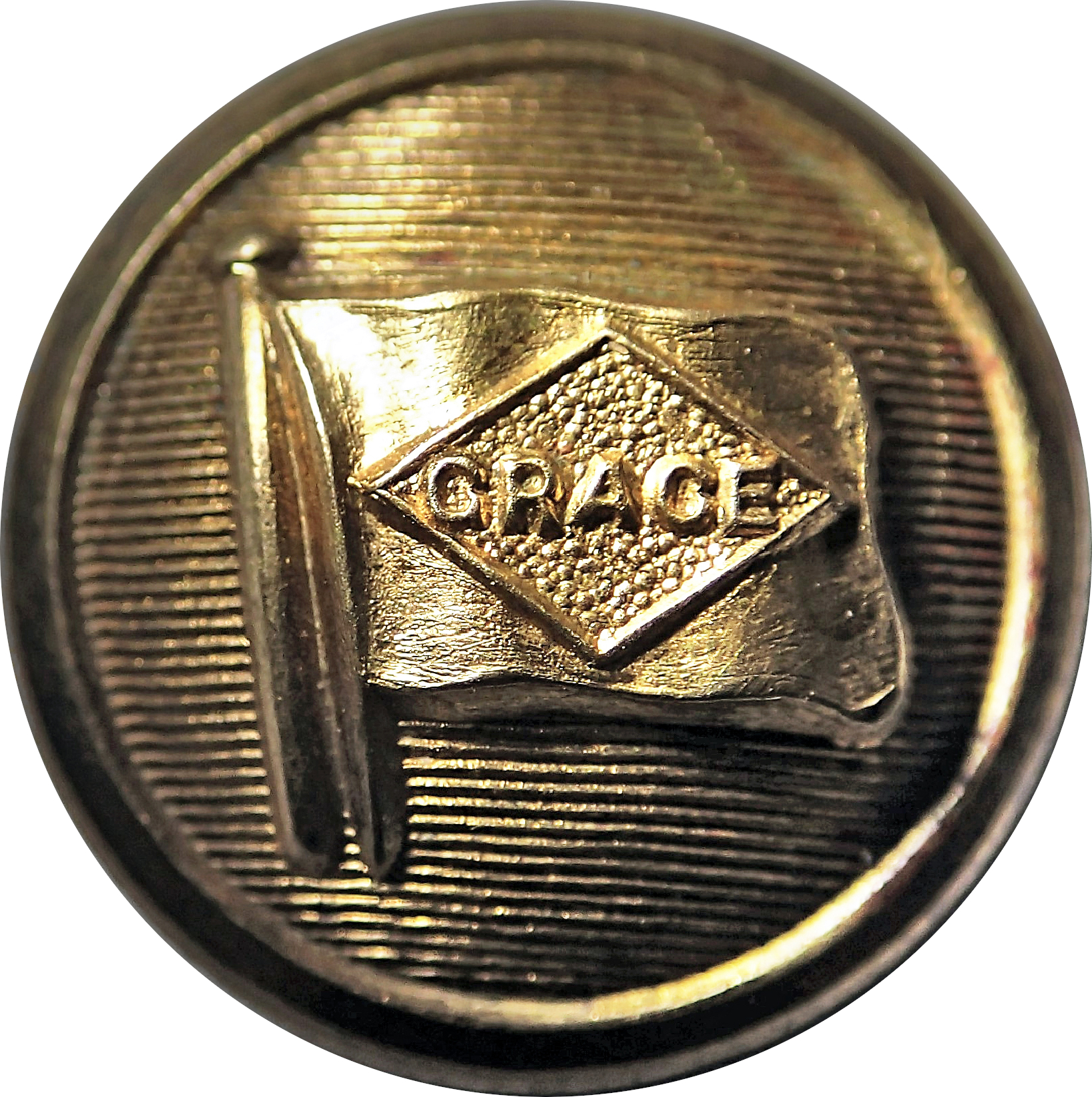
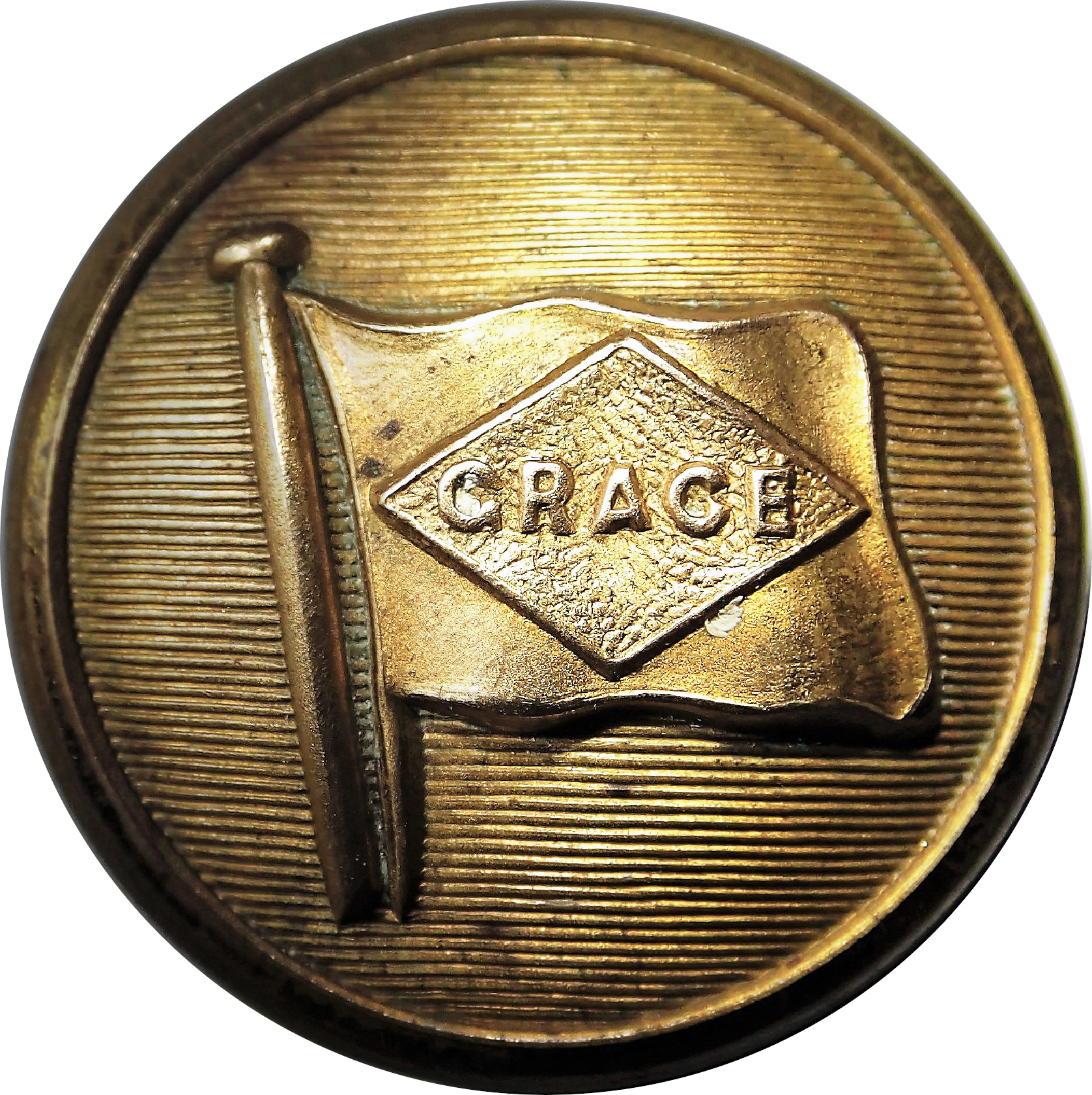
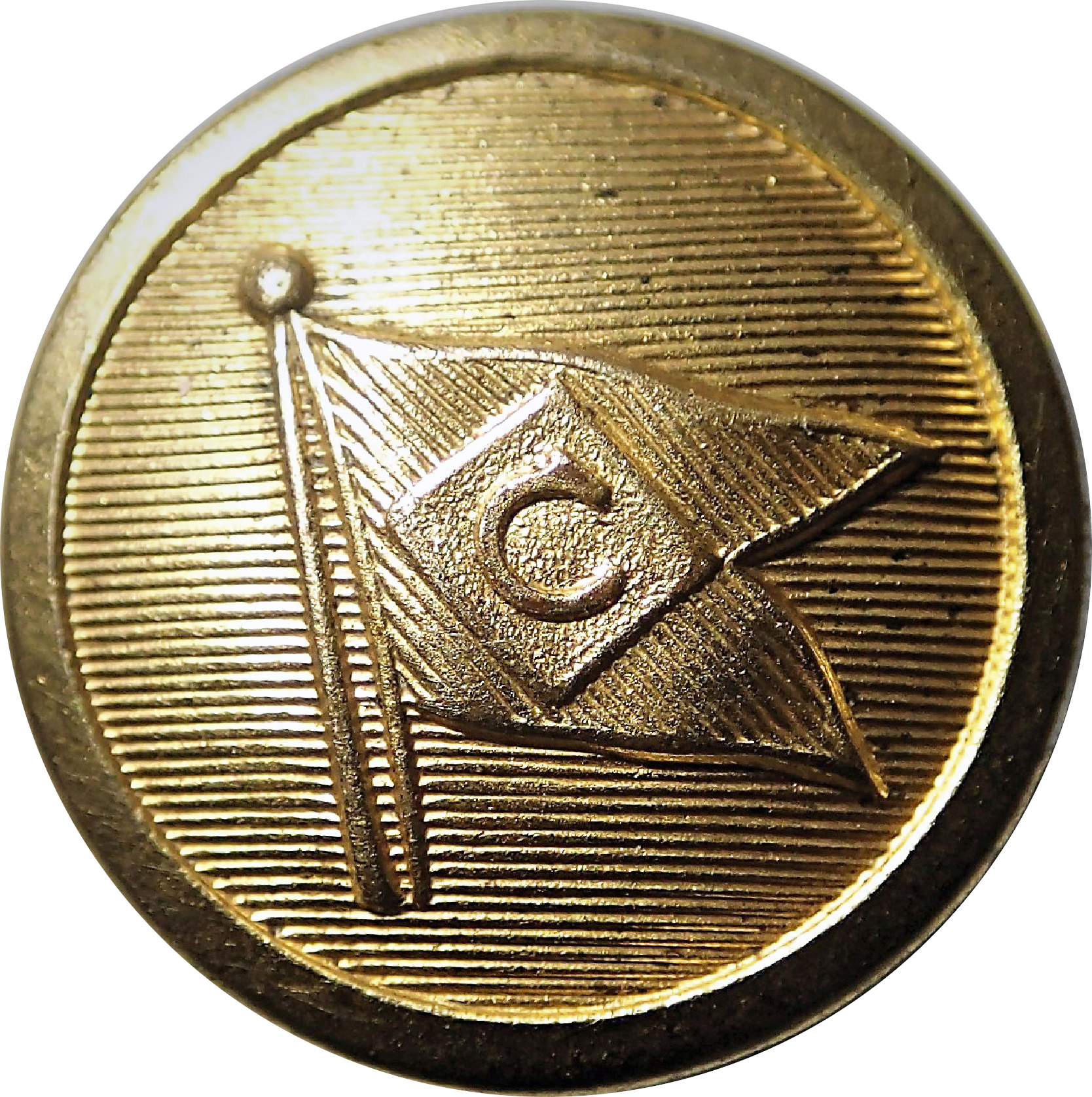
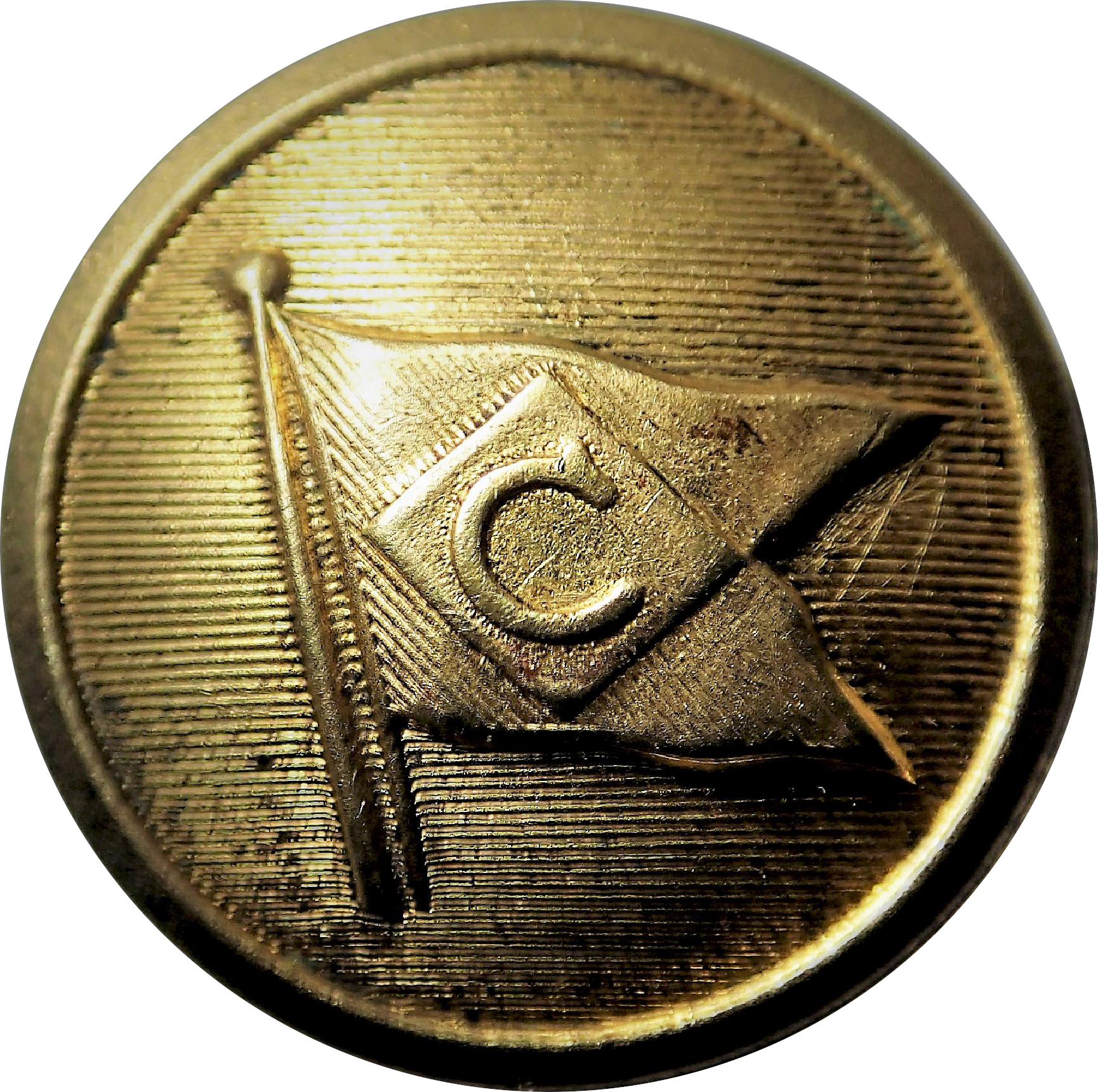
The AMMM collection of maritime buttons has an absolute jewel in the form of the Dollar Steamship Line button. This entity was in existence from 1929 through 1938, and was ultimately seized by the United States Maritime Commission. What makes this button of particular interest is how a previous owner had made an effort to both pick out and file down the two pillars in the dollar symbol, thereby making it an S. Another button of interest is the C on a swallowtail. What makes this button interesting is how the designer (presumably) followed traditional heraldic tincture rules – the flag field would be green and the C would be on a white lozenge. If the rules were followed, it would not be the flag of W.R. Chamberlin.
Dollar Line, obverse
Col.: AMMM
Grace Lines, obverse
Col.: AMMM
Grace Lines, obverse
Col.: AMMM
Grace Lines, obverse
Col.: AMMM
Col.: AMMM
Col.: AMMM
U.S. Maritime Service (2nd pattern), obverse
Col.: AMMM
Military Sea Transportation Service (1st pattern), obverse
Col.: AMMM
Military Sea Transportation Service (2nd pattern), obverse
This is the classic button reference. It shows most of the Armed Services. Government, and Merchant Marine issues. It is incorrect in attribution for many merchant marine buttons and lacks dates – but, at least it shows the major varieties (something is better than nothing).
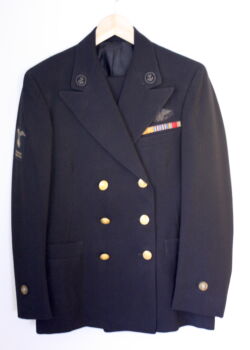
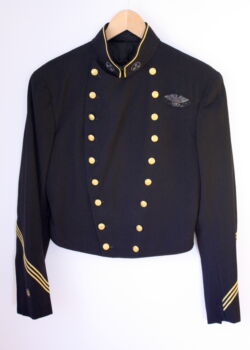
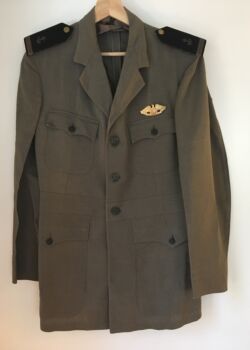
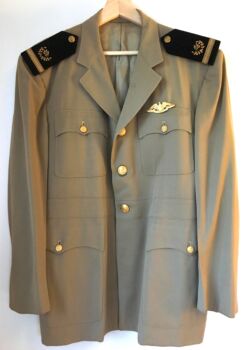
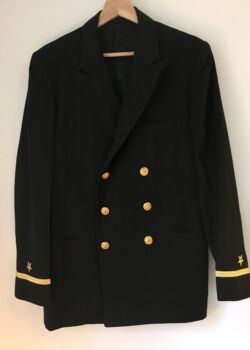
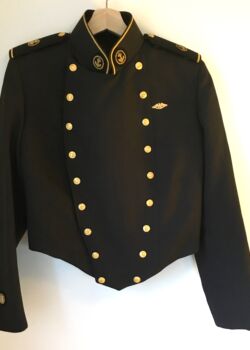
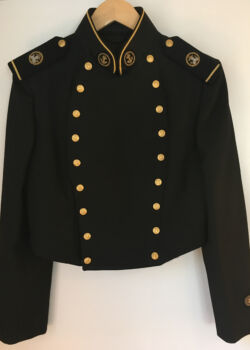
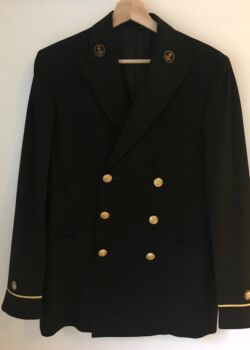
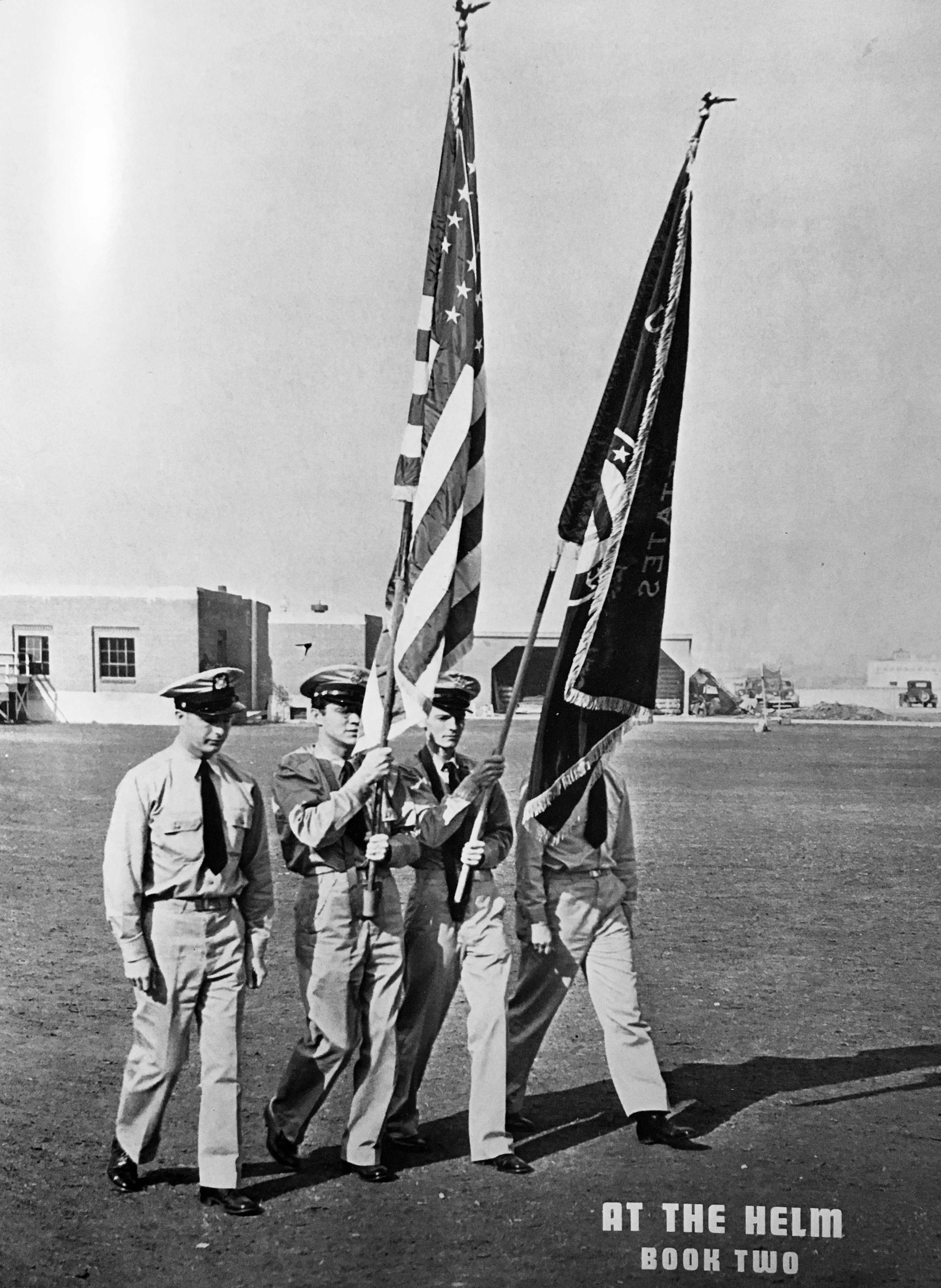
The dress and service dress blue uniforms of today’s Kings Pointer are in essence the same as those worn by their antecedents in the late 1940s. And, these uniforms themselves were identical to those worn by midshipmen at Annapolis. This was not a coincidence, rather a move on the part of the U.S. War Shipping Administration and Maritime Service have cadet-midshipmen at the United States Merchant Marine Academy look like their naval peers, and thus encourage professionalism among the cadet-midshipmen and to garner the public’s respect.
Studying period U.S. Merchant Marine Academy uniforms is oftentimes difficult. Day-to-day uniforms are few and far between. What often survives the vicissitudes of time intact are ceremonial uniforms; other uniforms are often recycled or worn by graduates in the early days of their careers. Rare are Service Blue coats with underclass rank stripes; each year stripes are added with the progression of Kings Pointers from class to class. The same is true for shoulder boards. Among officers, tradition held that there was a passing of Battalion or Regiment staff officer rank boards from incumbents to their successors.
Below please find examples and discussions of Cadet Corps uniforms from the 1940s through the 1980s.
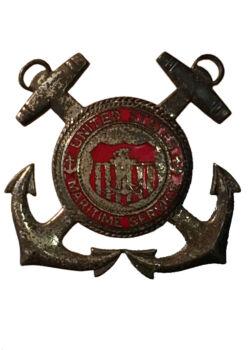
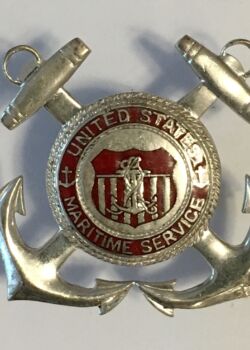
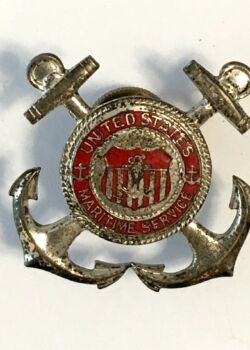
Evolution of United States Maritime Service Cap Badges
A cap badge serves as a visual marker of a maritime organization’s corporate identity; in this regard, the United States Maritime Service (USMS) is no different. What was different was the amount of experimentation in design from 1938 through 1942; this is both vexing and interesting for study. For USMS insignia, in general, there are several circulars from the war years detailing how the Administration tinkered with insignia, yet scant remains from the years prior to 1943. I have had to infer the existence or not of insignia by looking at extant regulations, deciphering U.S. Code, analyzing photographs, and mining collections. As alluded to in the page on United States Maritime Service shoulder boards, the Service’s insignia evolved and changed over time with each organizational change.
1938-42
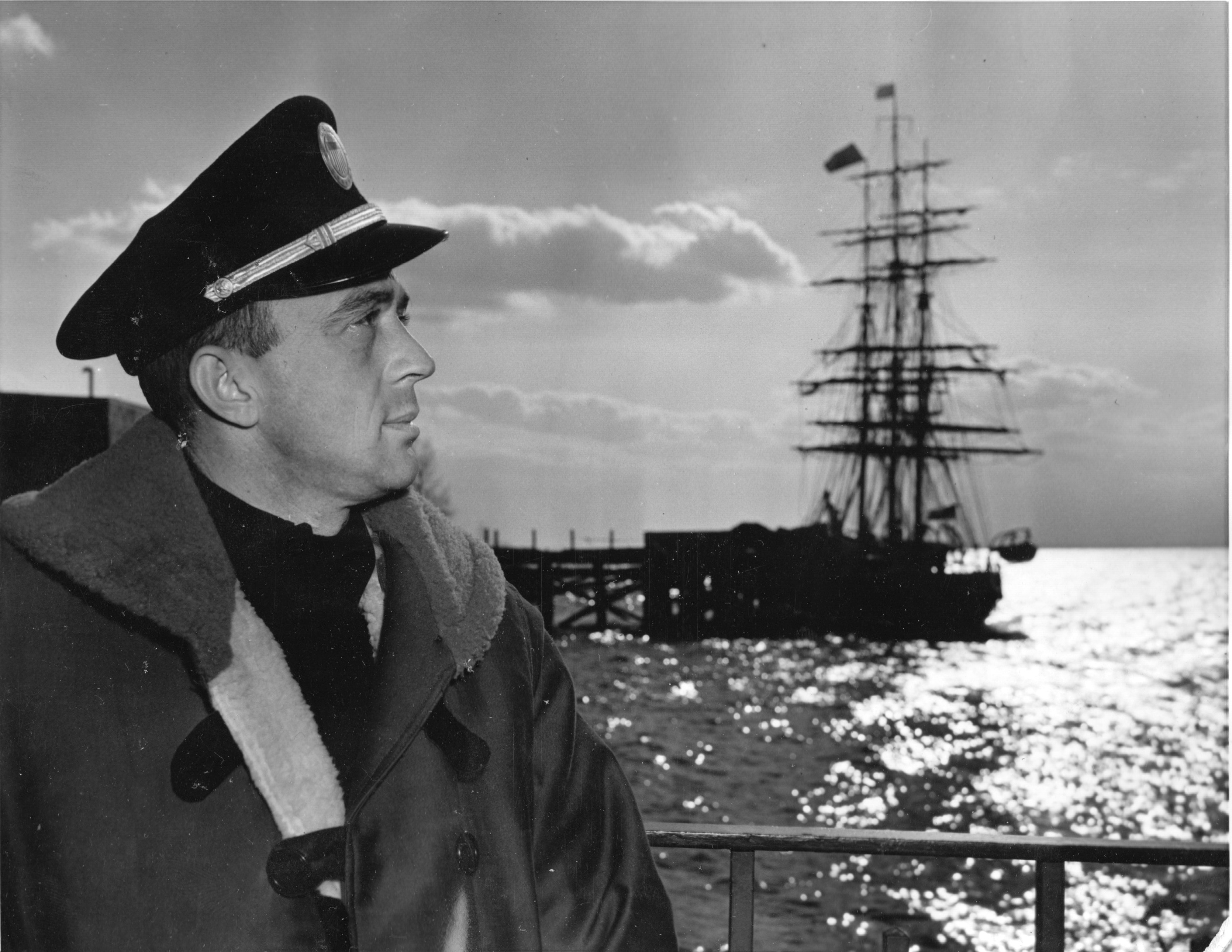
USMS licensed officer enrollees at Hoffman Island, 1939-1940. Note sleeve braid of a junior officer. Enrollee in this context means someone enrolled in the USMS – USMS training cadre included – not necessarily a trainee.
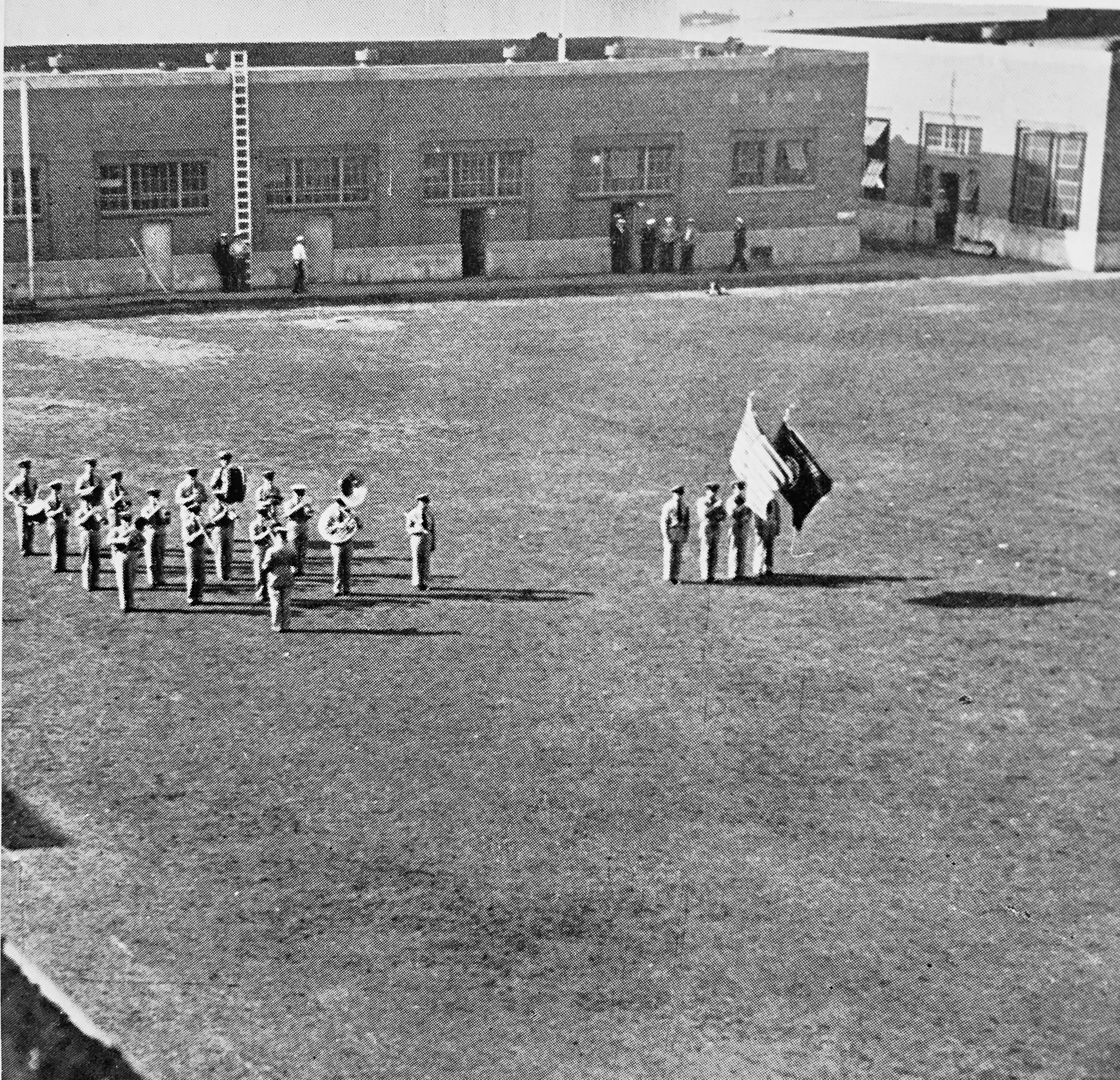
The Merchant Marine Act of 1936 called for the training of American merchant seamen without much in the way of precedent. The nation had a handful of nautical schools to train young men to become ship officers, but there was nothing for the ordinary sailor. The last mass training of merchant seamen was for crewing Federally-built cargo ships during the First World War; but as the program reached fruition, the war ended. One of the first items of business of the new United States Maritime Commission was to convene a panel and embark upon a fact-finding mission on how to create a structure and program that worked. After several months, the Commission’s suggestions reached Congress. In 1938 began the germ of a training program that reached critical importance in a few years. The failed federal government program of cadetships where young men were placed on ships of companies that held government subsidies was scrapped; it was replaced by the United States Maritime Commission Cadet Corps. The United States Maritime Service was an ex nihilo creation. The Commission called on the U.S. Coast Guard to have oversight of the training program. It was a modest affair with a handful of U.S. Maritime Service training cadre; with the opening of general training centers on Hoffman Island in New York Harbor, and on Government Island in Alameda, California – both in 1938. Later came an additional training station on Gallops Island in Boston Harbor (also known as Gallups Is.); it was in operation for a few months in 1939 only to reopen in June 1940 as a radio school. Narratives from Gallops Island note that while the training program was undertaken by the U.S. Coast Guard, the school was not subject to rigid military regimentation – students were permitted liberal liberty to go about their own affairs. With the entry of the United States as an active belligerent in the Second World War, the training program for all merchant seamen came under the War Shipping Administration Training Division: licensed and unlicensed, and federal and state cadets. The USMS became the body responsible for training – and not under the guidance of the U.S. Coast Guard. However, U.S. Navy and U.S. Coast Guard lent the USMS USCG cadre to help keep the training mission on a steady course. These administrators and instructors, along with USMS counterparts formed the core of USMS training schools. The Cadet Corps and its training cadre – once an independent body within the U.S. Maritime Commission – were also placed under the jurisdiction of the USMS. Nautical students suddenly found themselves subject to military discipline; New York State Maritime Academy cadets, exclaimed, “We’re all sailors, now!”
USMS "Enrolled Officer at the Hoffman Island Station", March 2, 1939.
M/V Joseph Conrad is in the distance.
USMS Enrolled Officer cap badge detail. 1939.
U.S. Maritime Commission, U.S. Maritime Service training cadre. 1938-1939 (40-42?).
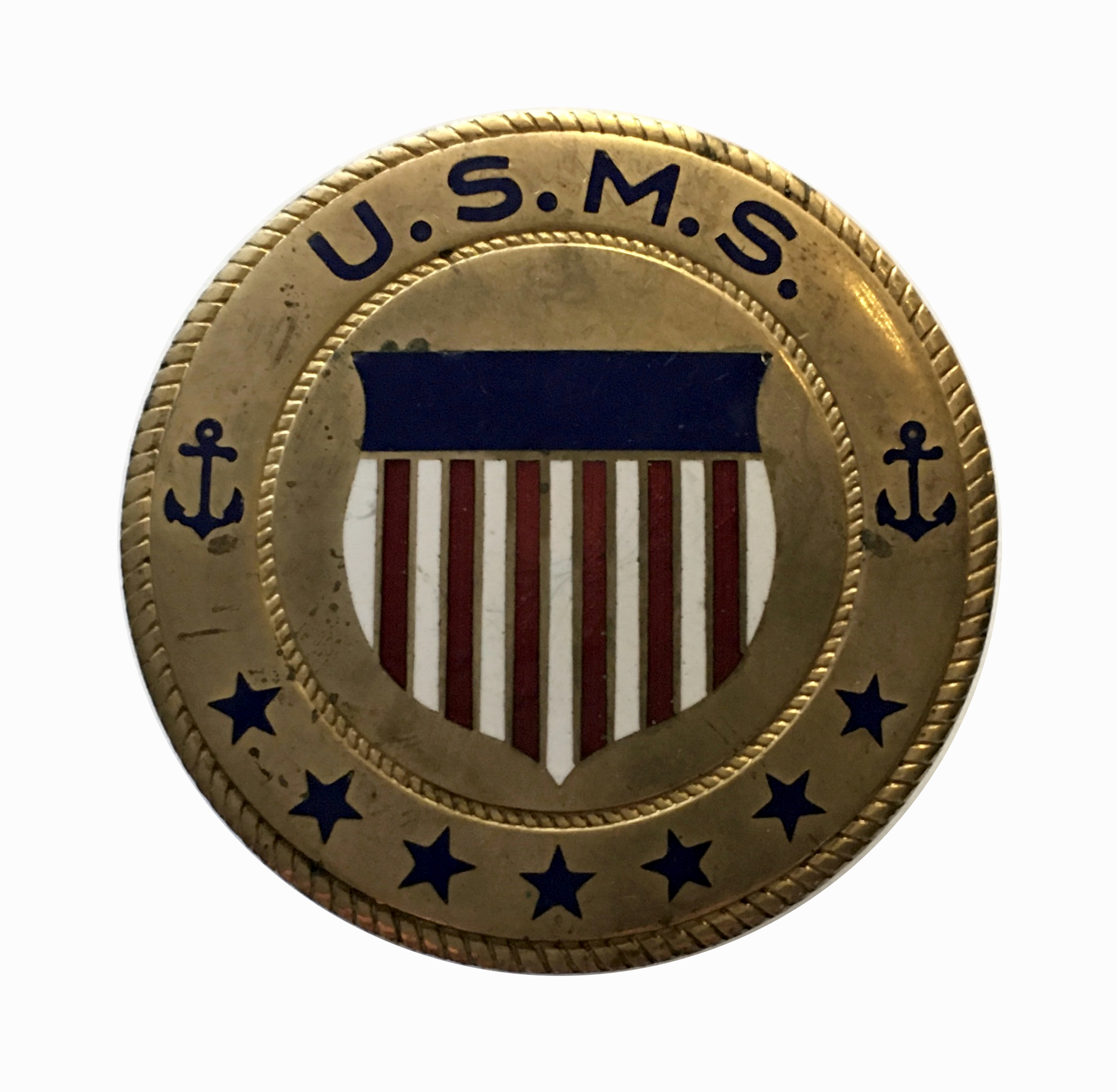
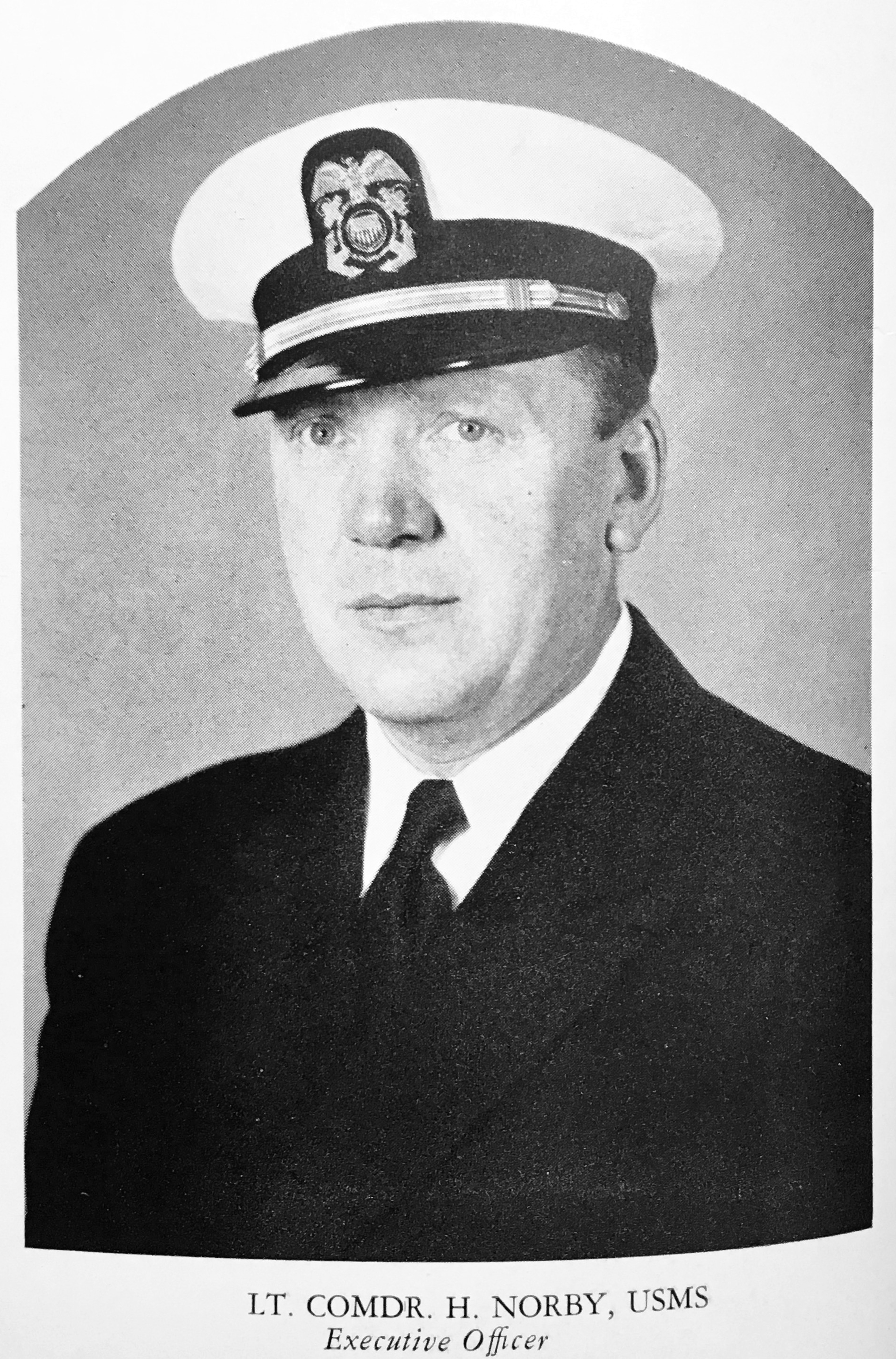
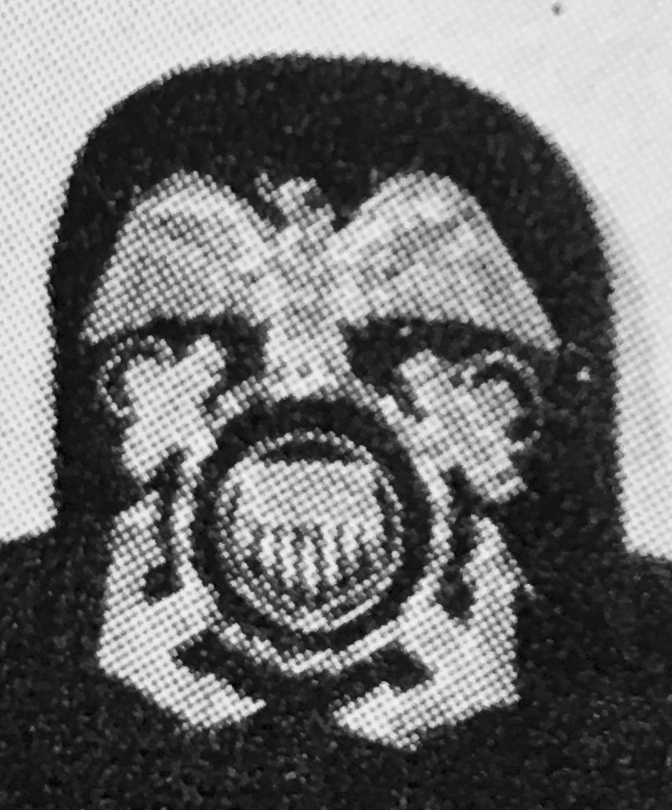
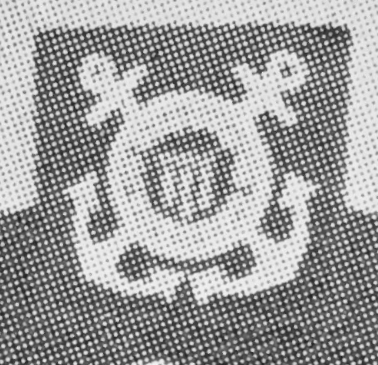
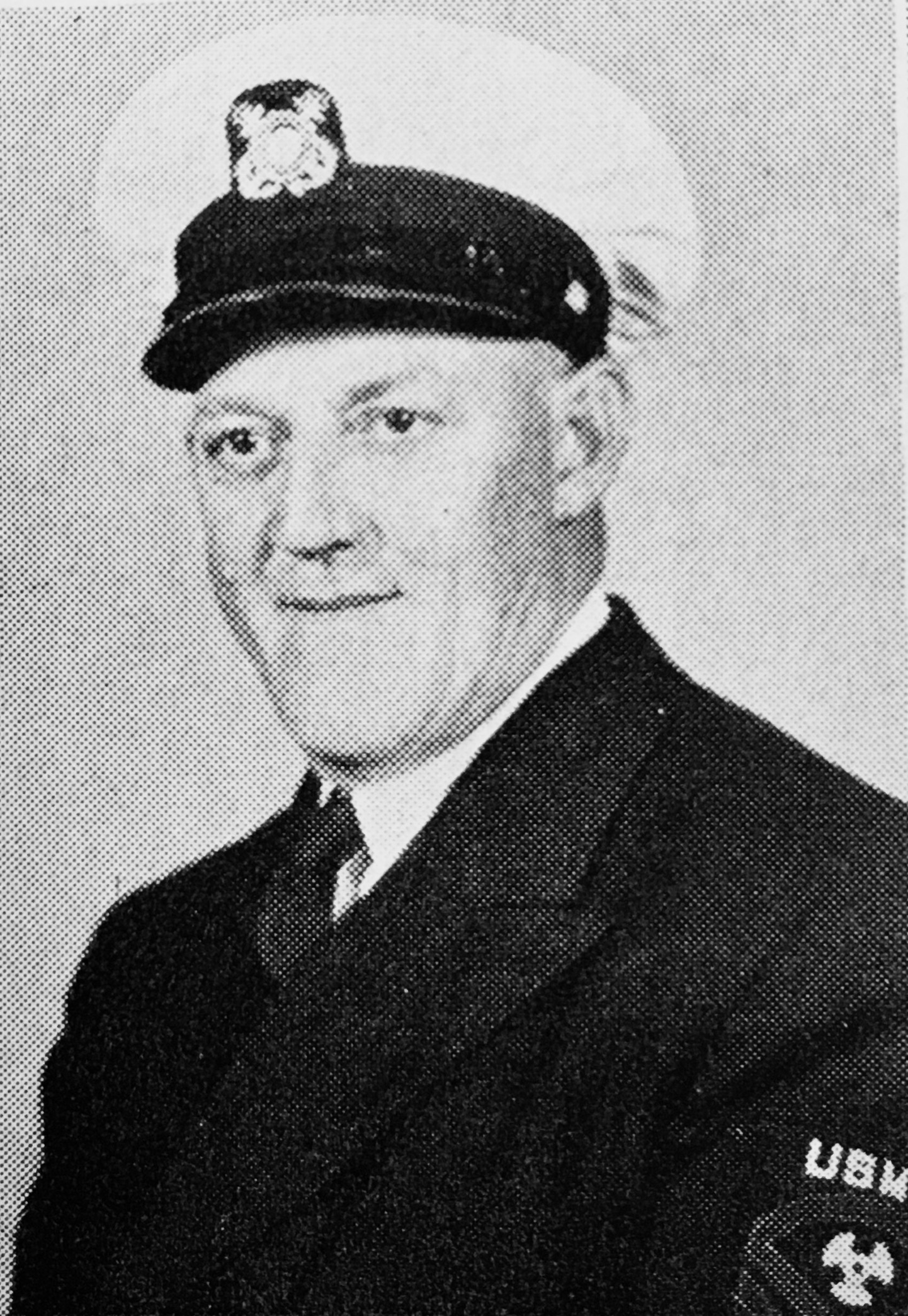
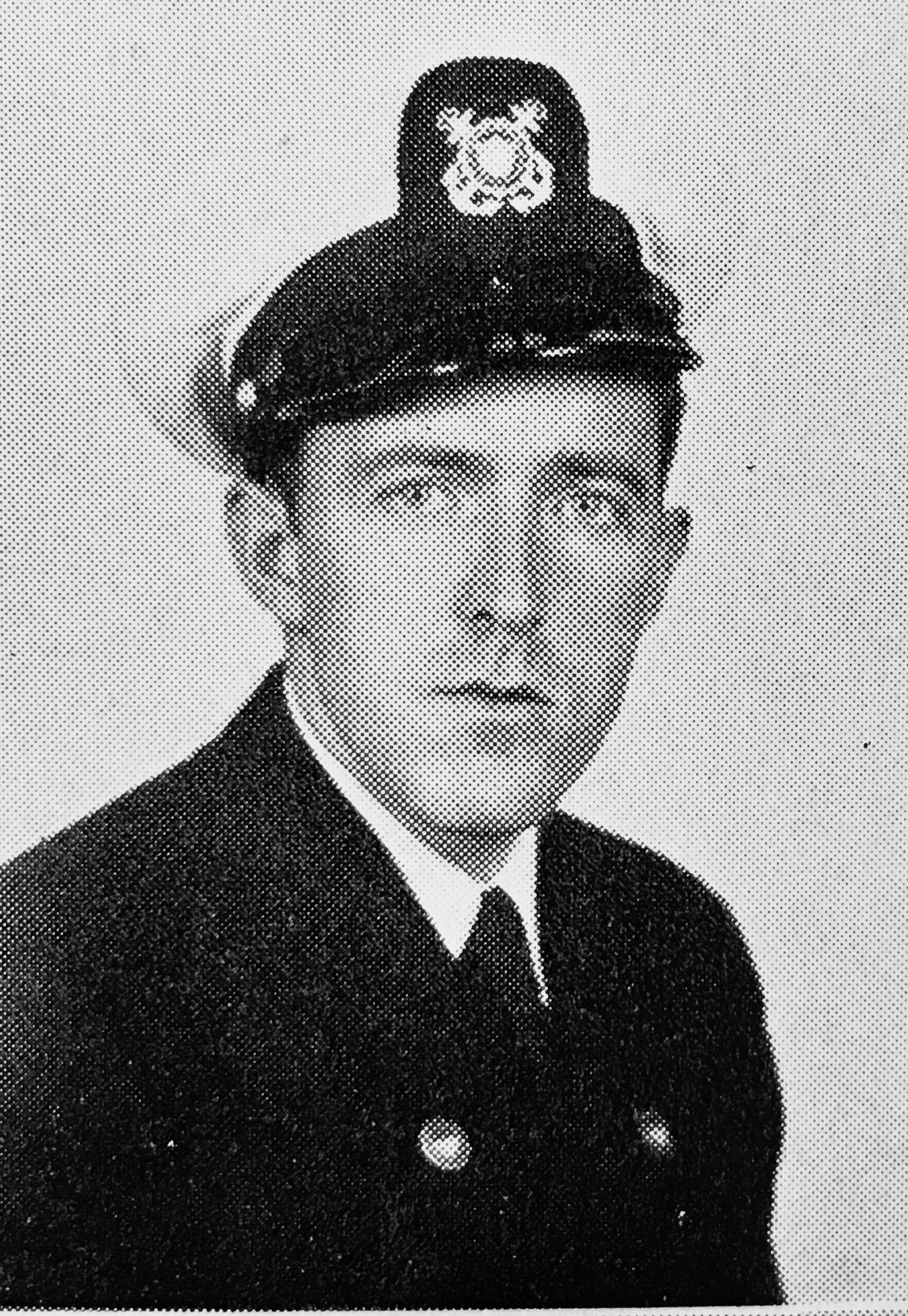
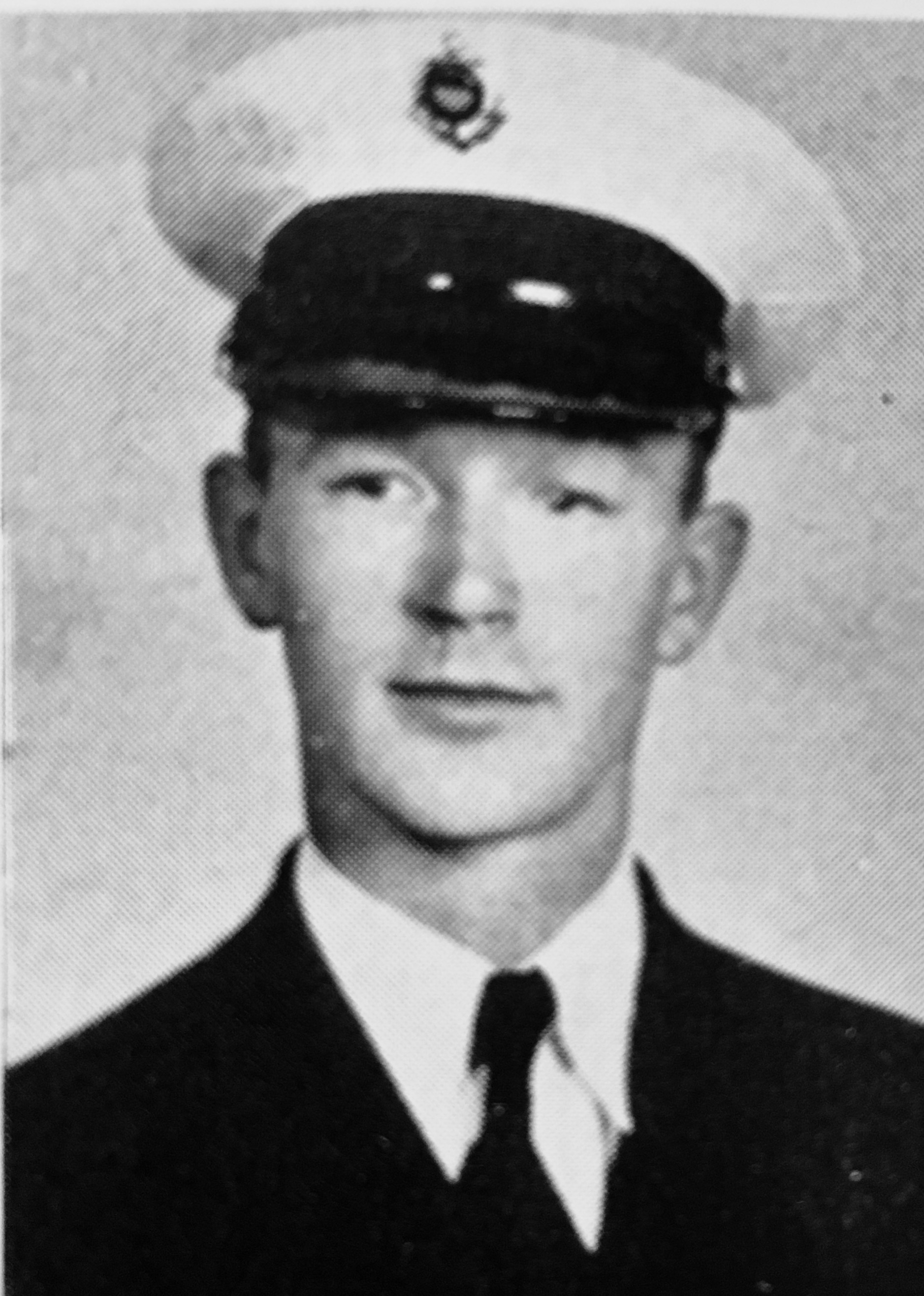
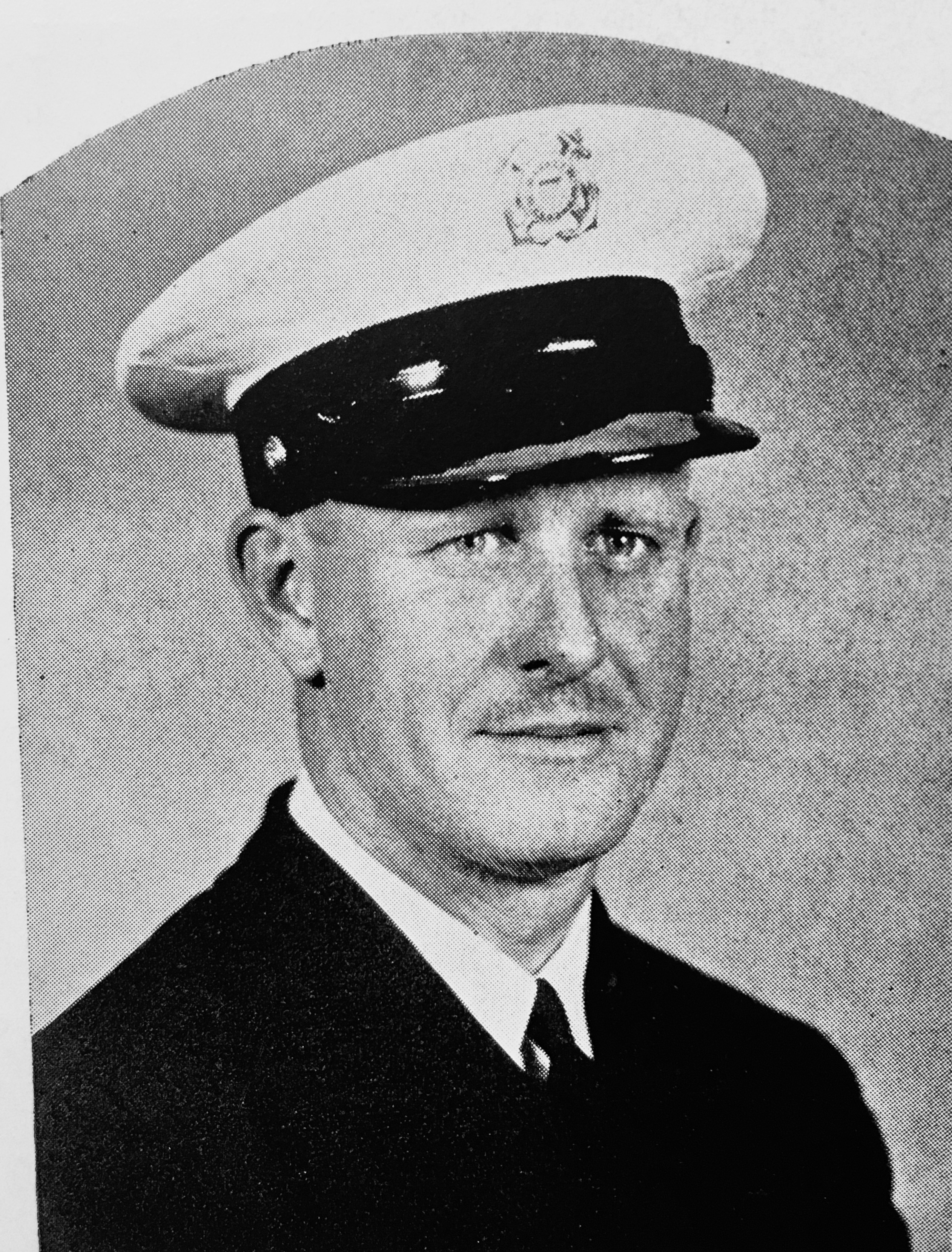
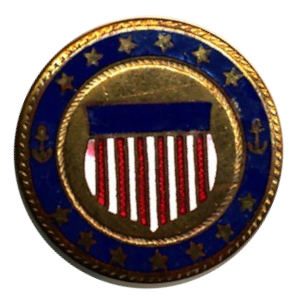
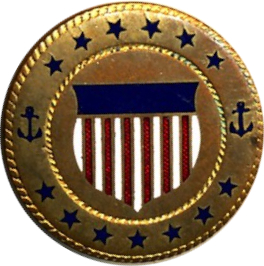
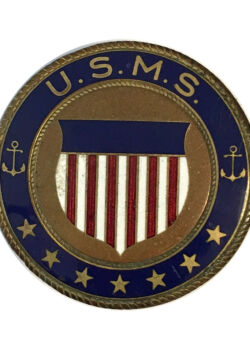
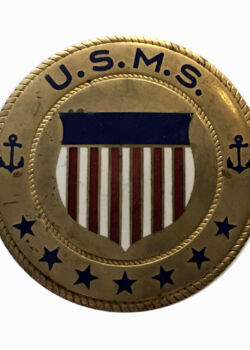
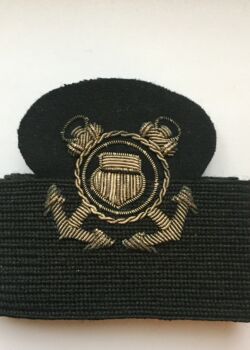
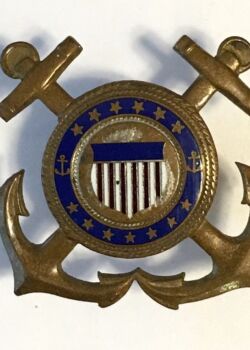
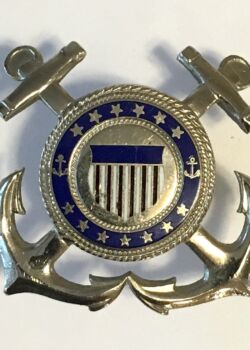
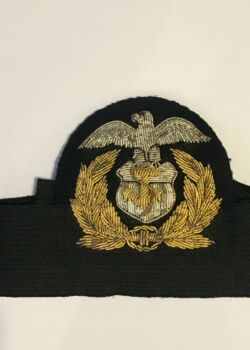
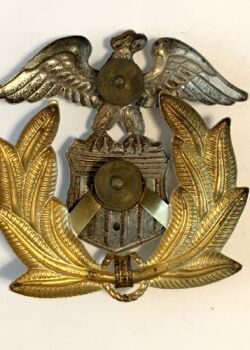
Cap badges, to some extent, matched the changes in ethos and connections of the USMS with other Federal bodies. The first cap badges worn by members of the USMS took their design cues from the U.S. Coast Guard. The 1938 cap badge (see above and gallery below) was the first cap badge worn by USMS officers (at the time called enrollees) and was first used by training cadre at Hoffman Island. It does not look too dissimilar to a U.S. Coast Guard cap badge. At this point in the Service’s history, it was concerned with remedying the failings in basic training as made evident by the SS Morro Castle Disaster in 1934. Lifeboat drills and a fleet of monomoys were common sights at the stations. The initial USMS cap badge was bureaucratic in design and was shared between the training cadre and the officer trainees. A brass cap badge with the shield ringed in blue was worn by trainees, and a brass badge with the lettering, anchors, and stars in blue was worn by enrolled individuals or licensed officers acting as training cadre. The similarity in badge suggests both groups were driven by a sense of egalitarian community. By Fall 1942, there was more hierarchy in terms of cap badges; the goal of the program was to produce regimented and disciplined seamen. Training cadre cap badges had a decidedly Naval look to them – replete with an eagle with spread wings. By this point, hierarchy within USMS became established: cadre officers became known as “commissioned United Stated Maritime Service officers;” all others, “Ship’s Company men” and along with the change in title, so too uniforms and accouterments. Although as late as 1945, the term “enrolled” was used to denote members of the USMS.
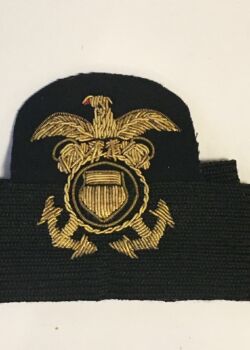
In 1942, USMS enrolled (later commissioned) officers – ensign and above – wore a cap badge with a stylized U.S. Maritime Commission shield with an eagle perched atop it. These were instructors, administrators, and station physicians; regarding the latter, they were denoted as USMS – in later years they were all commissioned officers in the U.S. Public Health Service (PHS).
USMS cadre, type 2.
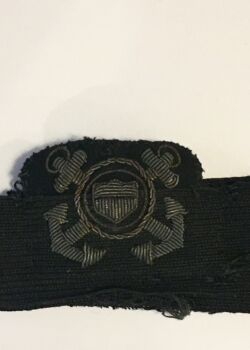
Lower-ranking instructors who taught the basics of seamanship – most probably AB seamen from the industry – held the grade of USMS warrant officers. They wore the same embroidered cap badges as the other instructors; theirs was the same as the Executive officer’s as seen above.
There was a large contingent of U.S. Navy instructors who taught alongside the USMS cadre. The majority of them were Warrant Officers; their cap badges were embroidered crossed anchors.
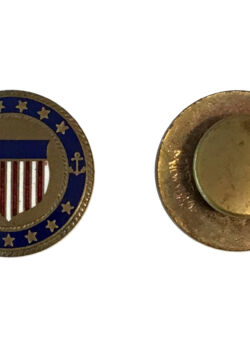
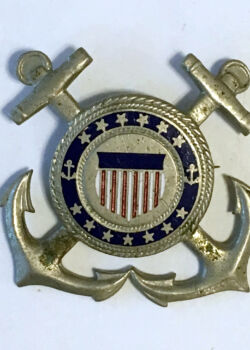
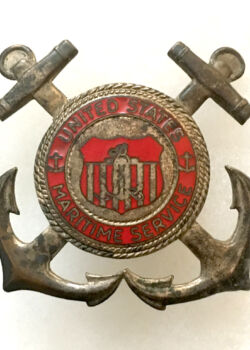
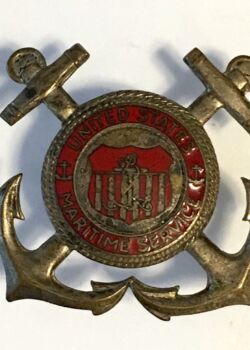
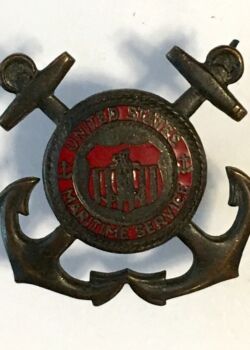
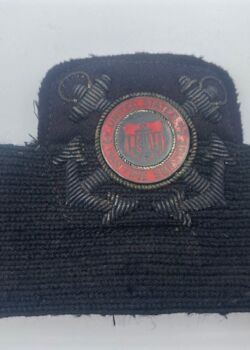
“Prospective Licensed Officers” were rated and paid at the rate of Chief Petty Officers. A glimpse of the uniforms worn by trainees at Government Island Training Station, Alameda in San Francisco Bay – as seen below – shows they did wear rank insignia similar to U.S. Coast Guard on their dress jacket sleeves. However, there was no consistency in the overall cap insignia design nor was there the wear of lapel devices. Collar dogs, as the discs on the lapels are called, were a hold-over from the initial uniform of the USMS training cadre. By 1942, Faculty and instructors did not wear these devices; they were retained for trainee uniforms. The pattern on the discs matches the central device on the large USMS cap badge of 1938 – I am aware of a single example of a collar dog with the blue band removed with the lettering and devices in blue as opposed to brass. Of the cap badges worn by the students, they wore embroidered badges of two variations – the first looking similar to a yacht club cap badge and the second the more common embroidered CPO badge of 1942. The former was found on an applied square badge, and the latter was sewn onto a “tombstone” cap band. There were two stamped-metal cap badges: an anchor with a soldered-on USMS disc, and a USMS disc placed over two crossed anchors. This last design was identified in USMS publications as late as 1944 as being “old-style” CPO. My best guess is the embroidered badges were manufactured prior to the metal; and of the metal devices, the crossed anchor was the last. Its design was continued after the re-design of USMS insignia; as was the practice of wearing collar dogs with the USMS device on trainee uniforms.
USMS trainee, type 1.
USMS trainee, type 2.
USMS trainee, type 3.
USMS trainee, type 4.
At Government Island, USMS training cadre Chief Petty Officers exclusively wore metal cap badges. It appears from position descriptions that USMS CPOs took on more station management roles than teaching. Thus, they would be considered more in line as staff as opposed to holding a faculty position. The cap badge, being metal followed the general trend of Chief Petty Officers wearing mass-produced badges, whereas officers wore embroidered cap badges. USMS training cadre CPO cap badges were of the metal USMS disc placed over crossed-anchors variety. In all probability the CPO badge was made of silver since brass – an alloy comprised of strategically important copper and zinc – was reserved for war material.
U.S. Maritime Service, officer trainee brass collar dog. 1938-42.
Col.: Dave Collar
U.S. Maritime Service, training cadre brass collar dog. 1938-42.
Col.: Dave Collar
Late 1942
As evident in the cap badges of the Government Island trainees, there was an overlap in insignia styles. This was most probably due to the Service attempting to find its own style – the training program was officially handed to the USMS in July 1942 from the U.S. Coast Guard by Executive Order (E.O. 9198 July 11, 1942). By the time the photos of the trainees were taken in September 1942 upon their matriculation into the program, a redesign of insignia was already underway. The most noted change was the use of the U.S. Maritime Commission shield as seen in the USMS trainee cap badge type 4 and USMS CPO badge Type 1. Unlike all other insignia, the shield in type 4 is a pronounced federal shield. I have marked this as type 4, since all other cap badges and collar dogs are in the Art Deco-style; it is most probably the precursor to stamped-metal USMS CPO badge Type 2.
1943
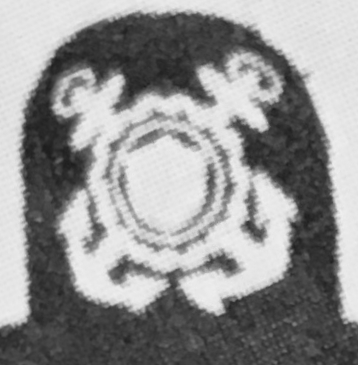
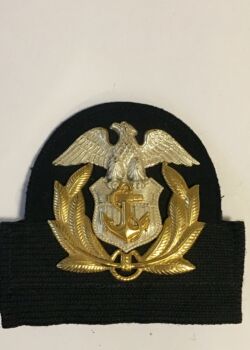
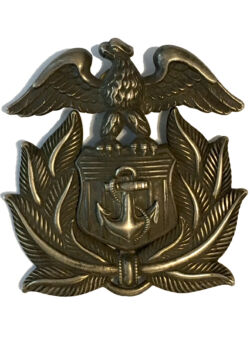
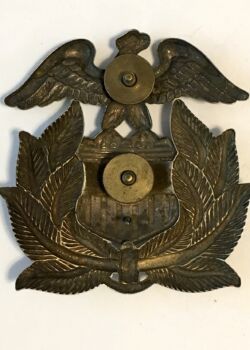
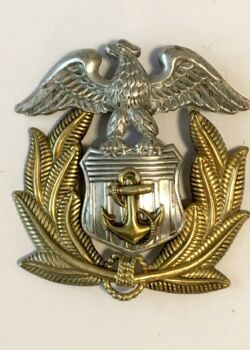
The handsome cap badge most associated with the United States Maritime Service and American Merchant Marine was originally worn by both the training cadre and Cadet Officers of the U.S. Maritime Commission Cadet Corps. Cadet Officers were a class of students who already held a license but – for one reason or another – could not find a berth and were enrolled in the Cadet Corps program for additional courses and experience. This badge was first noted in Uniform Regulations of United States Maritime Commission Cadet Corps (January 9, 1942). On January 7, 1943, the War Shipping Administration opened up the appointment of officers in the USMS to all interested and credentialled American merchant seamen per General Order 23, Supp. 1 (8 FR 1943, p 377). The cap badge once reserved for Cadet Officers became the symbol of the officer corps of the Service. All other cap badges worn by officers and training cadre officers were no longer worn after this point.
Detail of Cadet Officer cap badge figure in Uniform Regulations of United States Maritime Commission Cadet Corps (1942). Col.: AMMM.
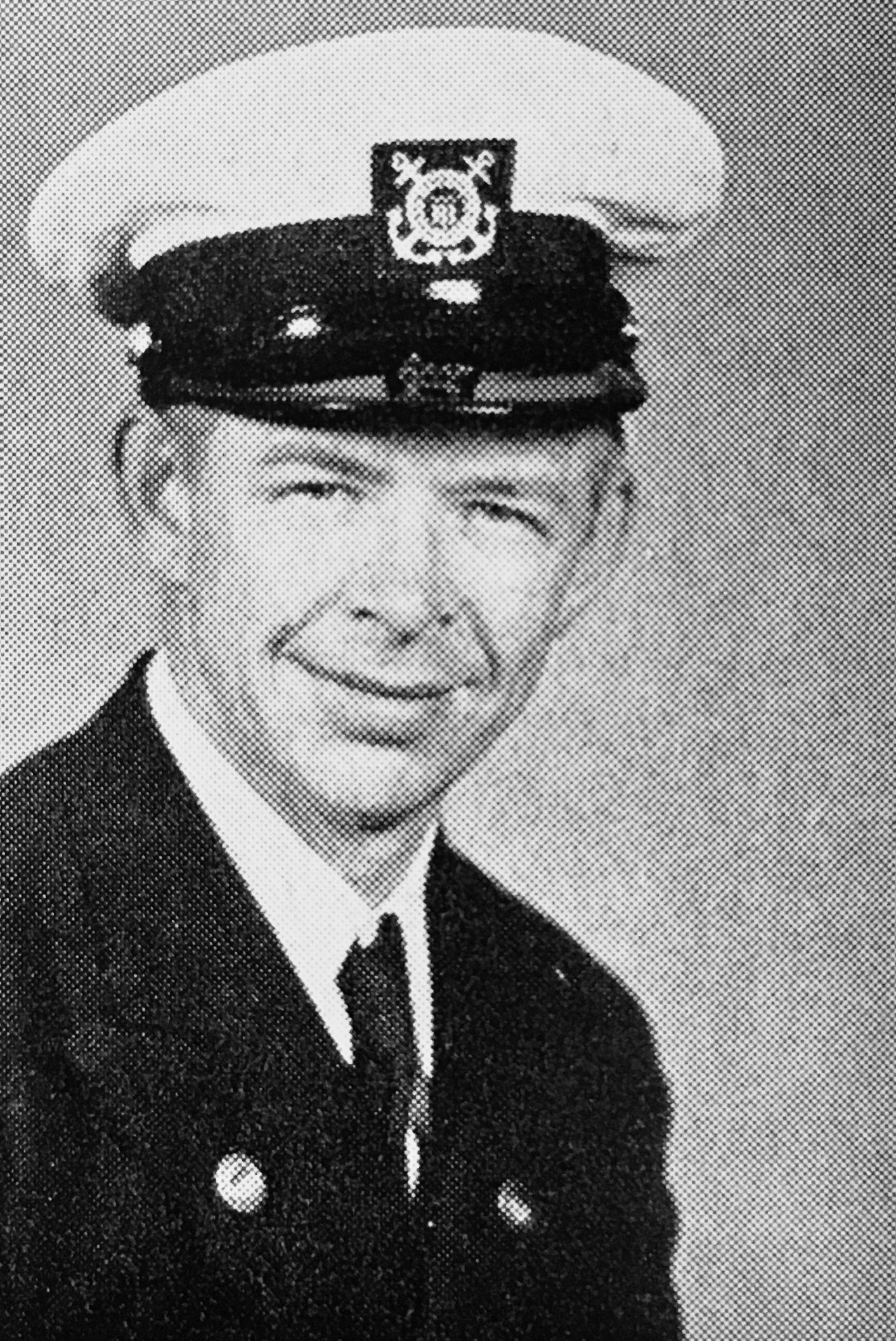
Cap badges for Officer trainees continued to be USMS CPO badge Type 2 for the duration of the war; albeit in nickel with silver plating. Trainees continued to wear collar dogs whereas administrative CPOs within the USMS did not. Unlike the U.S. Navy and U.S. Coast Guard, there was no intermediate cap badge for warrant officers with the USMS. This lack of cap badge could have been for a variety of reasons. In the fleet, given the fact that the practicality and fluidity of leadership positions aboard a merchantman did not mirror that of a man-of-war, there was no need for yet another cap badge. And, the USMS training organization itself was small – of the 164 USMS training and administrative officers on staff at USMS Officers School at Fort Trumbull, New London, Connecticut in Fall 1944, only six were warrant officers – thus sleeve, shoulder, and collar insignia achieved the goal of rank identification.
Captain Alfred G, Ford, USMS 1944.
1944-1945
United States Maritime Service Training Station Sheepshead Bay, although it was the nation’s poster child for regimented USMS training, some of the USMS Chief Petty Officers pushed the envelope with their cap badges. While a majority wore USMS CPO badge Type 2, a couple wore cap badges that had woven anchors with an insigne similar to the USMS Officer Trainee collar dog in the center – in essence combining the traditional woven CPO/cadre badge with that metal badge (noted as Composite. below). The insigne lacks the outer loop of twined rope; this instead is substituted by wire that is affixed to the cap badge pad and circumscribes the insigne. A trainee collar dog is, therefore, not simply placed in the middle of an old woven CPO cap badge, therefore this composite cap badge was purpose-made. Moreover, another CPO is found in 1944 wearing a CPO cap badge with the anchor ring cut out on a backing pad, thus mimicking the feel of the older woven cap badge.
CPO Cap Badge Type 2 Variant 2
CPO Cap Badge Composite
Gallery
U.S. Maritime Commission, U.S. Maritime Service officer trainee. 1938-1939 (40?).
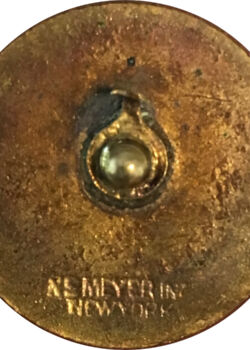
Unmarked. N.S. Meyer
U.S. Maritime Commission, U.S. Maritime Service officer trainee, collar dogs. 1938-1939 (40?).
N.S. Meyer.
U.S. Maritime Commission, U.S. Maritime Service officer trainee, collar dogs. 1938-1939 (40?).
detail
U.S. Maritime Commission, U.S. Maritime Service training cadre. 1938-1939 (40-42?).
U.S. Maritime Commission - U.S. Maritime Service, training cadre/officer cap badge. circa 1938-1942.
U.S. Maritime Commission - U.S. Maritime Service, training cadre/chief petty officer cap badge. circa 1939-42.
U.S. Maritime Commission, U.S. Maritime Service training cadre CPO/trainee. 1938-1942.
Type 1. American Emblem Company. Brass.
U.S. Maritime Commission, U.S. Maritime Service training cadre CPO/trainee. 1938-1942.
Type 1. American Emblem Company. Nickel/base metal.
U.S. Maritime Commission, U.S. Maritime Service training cadre CPO/trainee. 1938-1942.
Type 1. American Emblem Company.
U.S. Maritime Commission, U.S. Maritime Service training cadre CPO/trainee. 1938-1942.
Type 1. American Emblem Company. Reverse.
U.S. Maritime Commission - U.S. Maritime Service, training cadre/chief petty officer cap badge. circa 1942-45.
War Shipping Administration, U.S. Maritime Service training cadre CPO/trainee. 1942.
War Shipping Administration, U.S. Maritime Service training cadre CPO/trainee. 1942-1947.
Type 2, Variant 1.
War Shipping Administration, U.S. Maritime Service training cadre CPO/trainee. Garrison hat badge. 1942-1947.
Type 2. Variant 2.
War Shipping Administration, U.S. Maritime Service training cadre CPO/trainee. 1942-1947.
Type 2, Variant 2.
War Shipping Administration, U.S. Maritime Service training cadre CPO/trainee. 1942-1947.
Type 2, Variant 2.
War Shipping Administration, U.S. Maritime Service training cadre CPO/trainee. 1942-1947.
Type 2, Variant 1.
U.S. Maritime Service, officer/cadet officer cap badge. circa 1942-1945.
U.S. Maritime Service, officer cap badge. circa 1942-1945.
Gemsco.
War Shipping Administration, U.S. Maritime Service officer. 1942-1945.
Type 1. Vanguard.
War Shipping Administration, U.S. Maritime Service officer. 1942-1945.
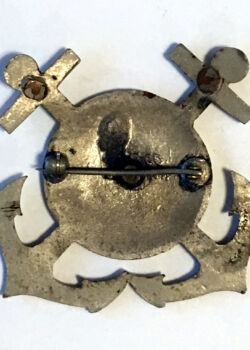
Type 1. Vanguard. Reverse.
War Shipping Administration, U.S. Maritime Service officer. 1942-1945.
Type 2. Vanguard.
War Shipping Administration, U.S. Maritime Service officer. 1942-1945.
Type 2. Vanguard. Reverse.
CPO Composite. Col.: Joseph Tonelli
References
United States. Federal Register, January 9, 1942 (8 FR 1943). GPO, Washington D.C., 1943 p. 377.
United States, Maritime Commission. Uniform Regulations of United States Maritime Commission Cadet Corps (January 9, 1942). Washington, D.C., 1942.
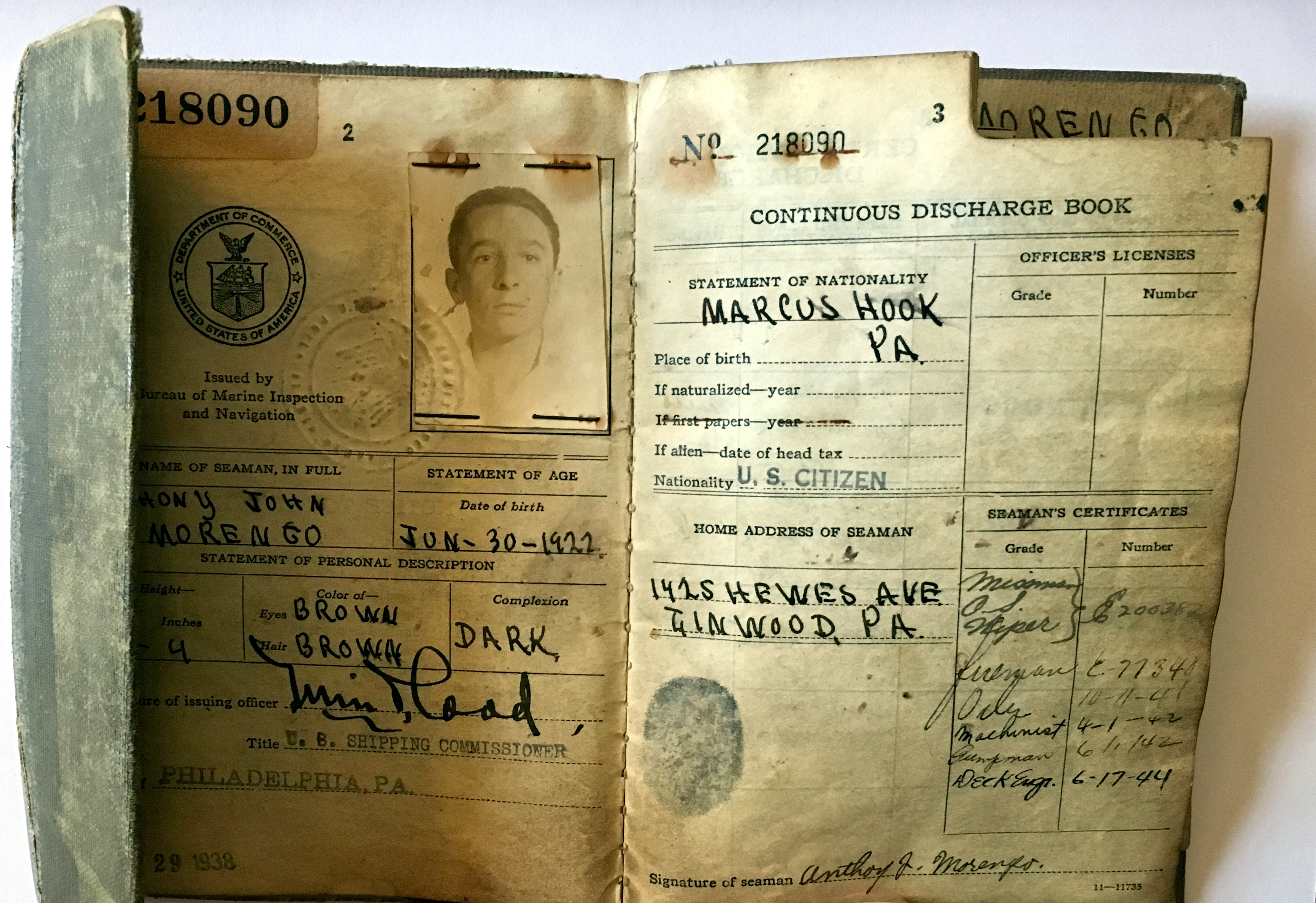
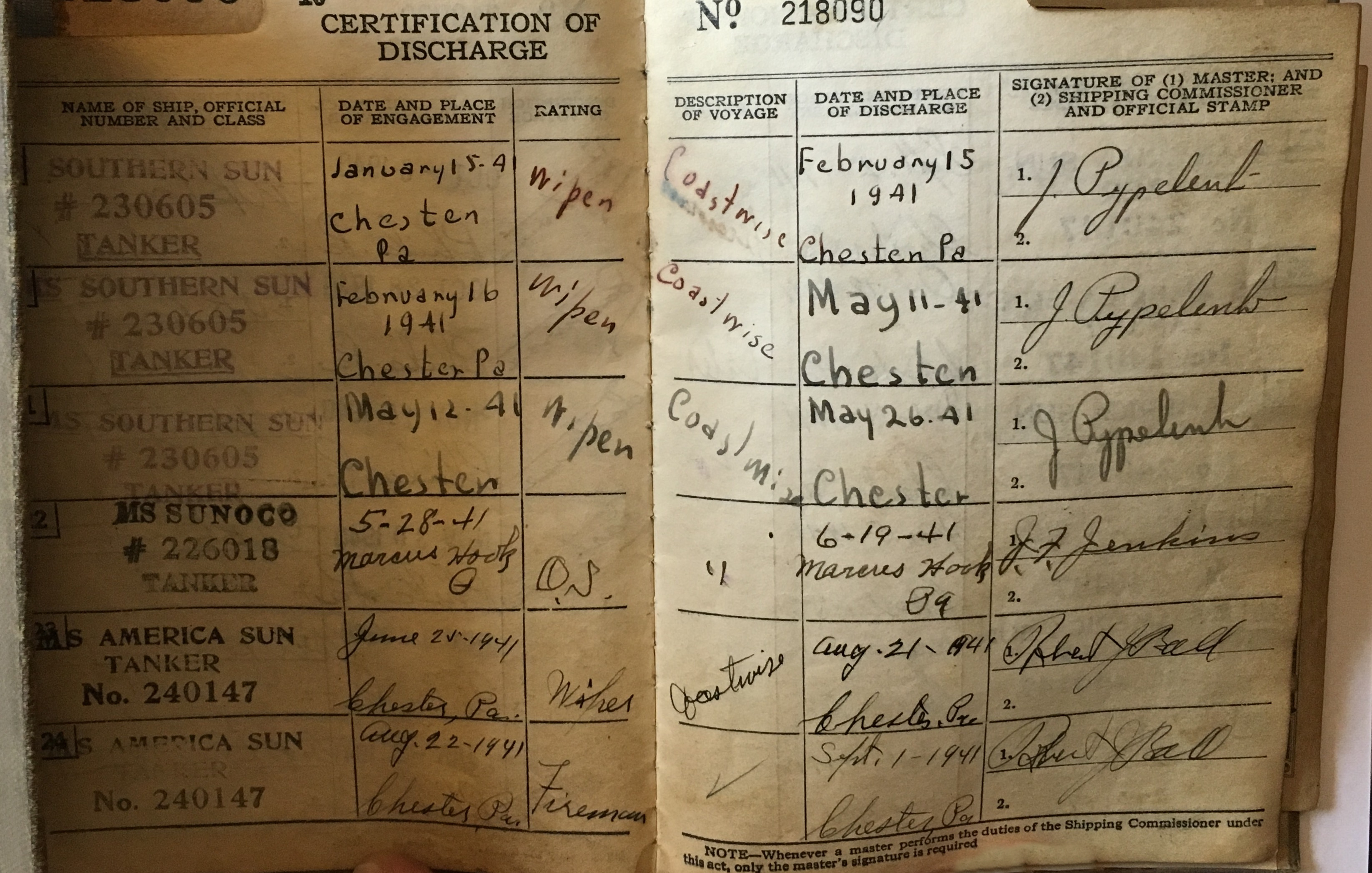
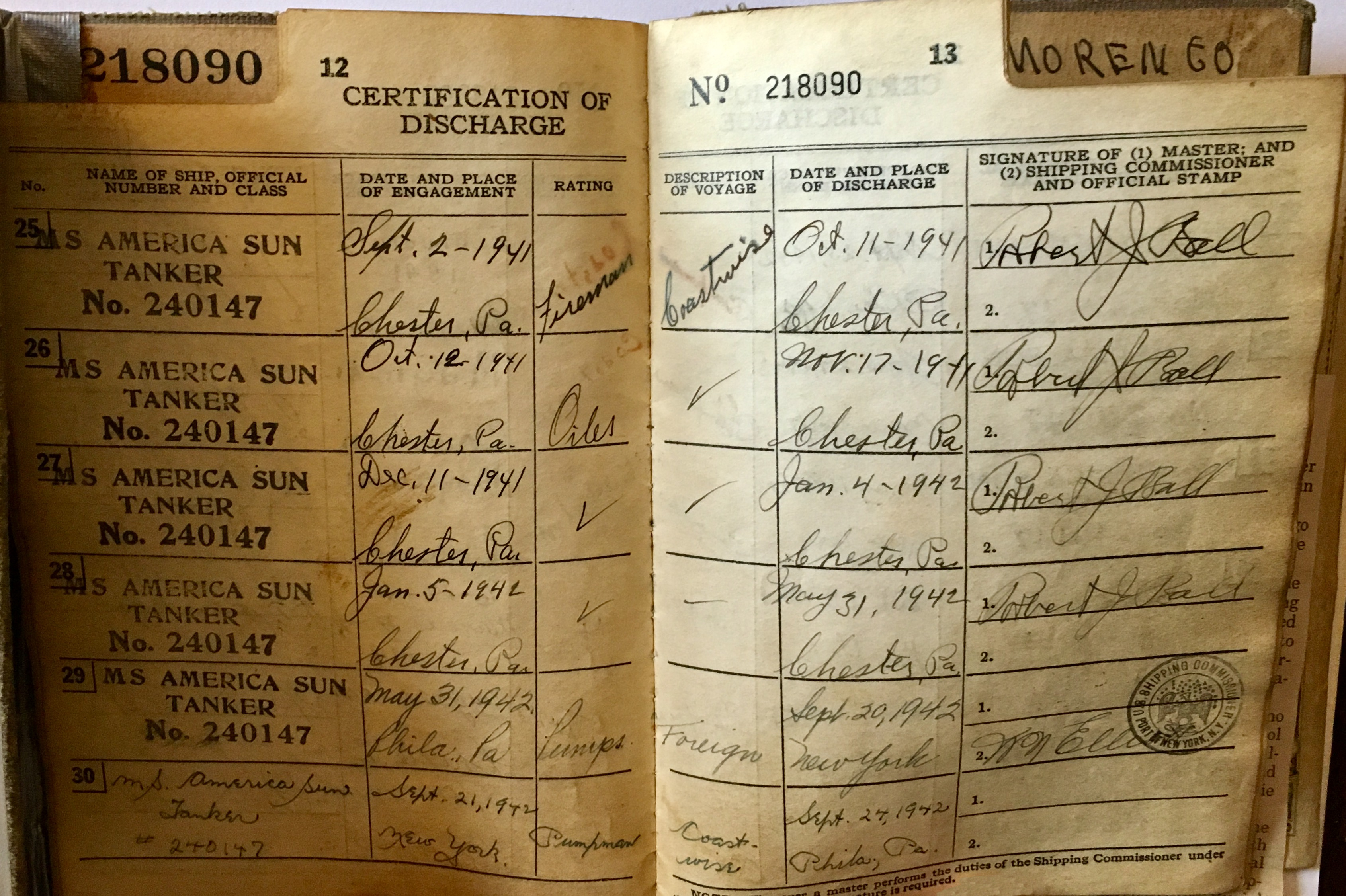
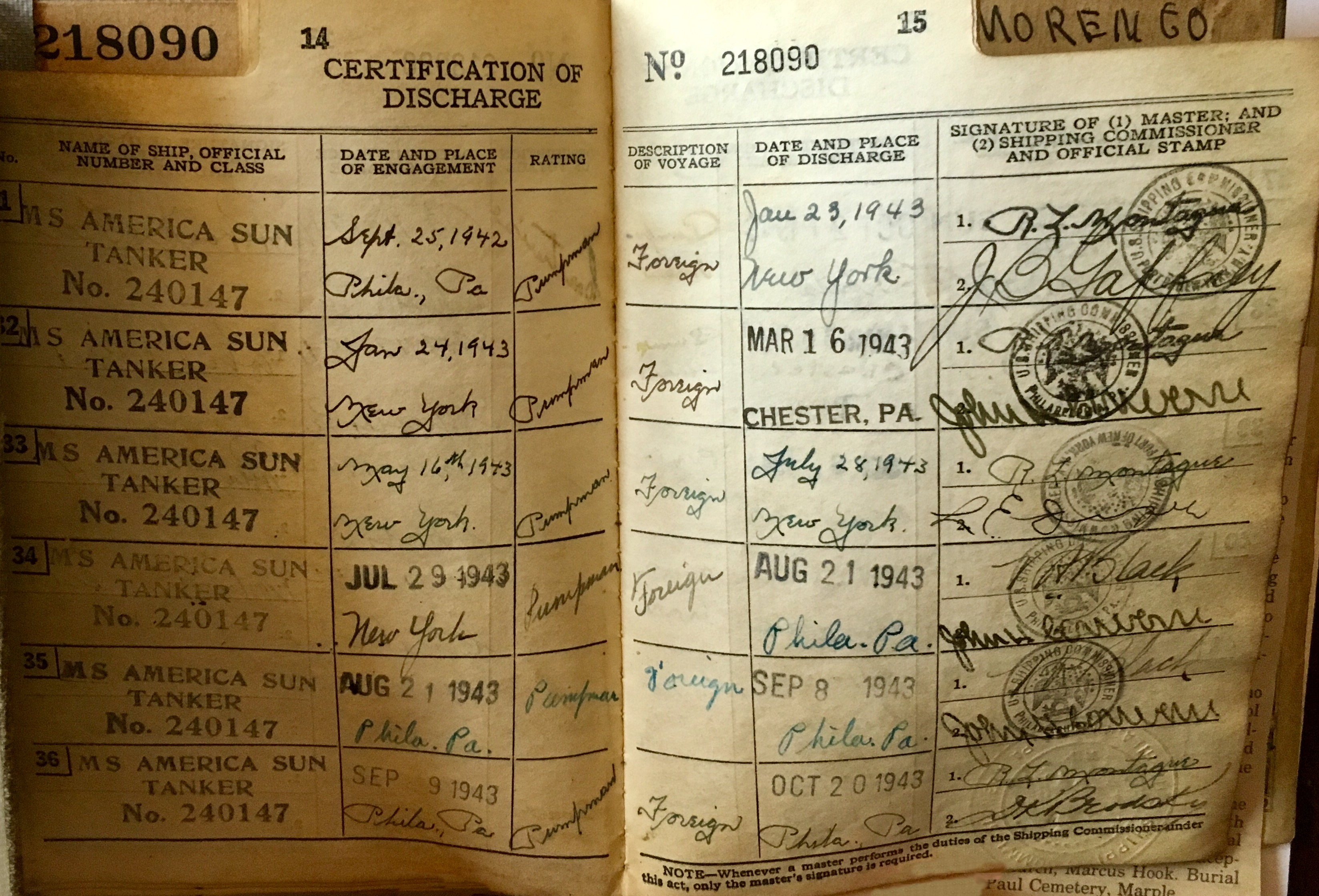
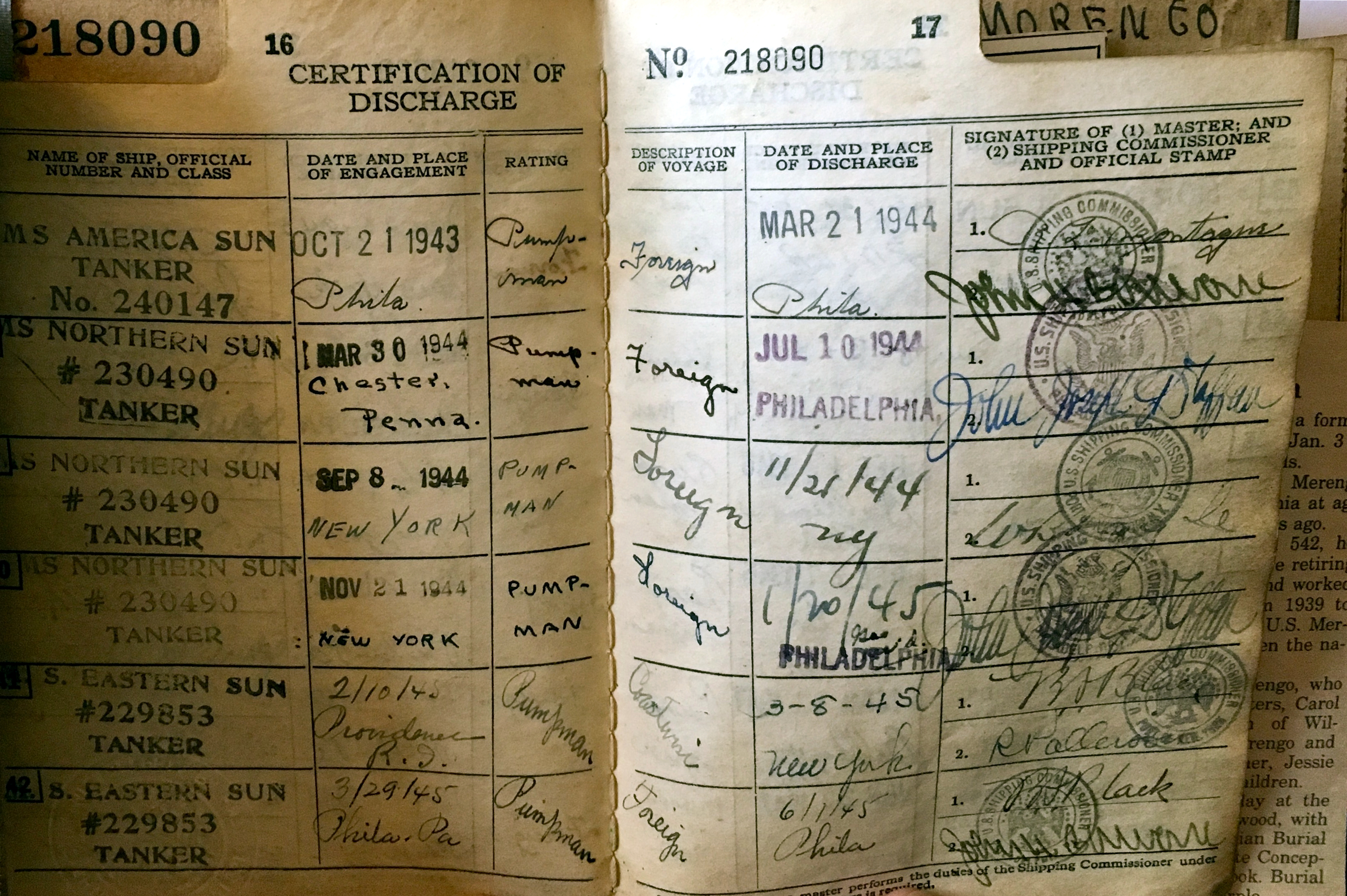
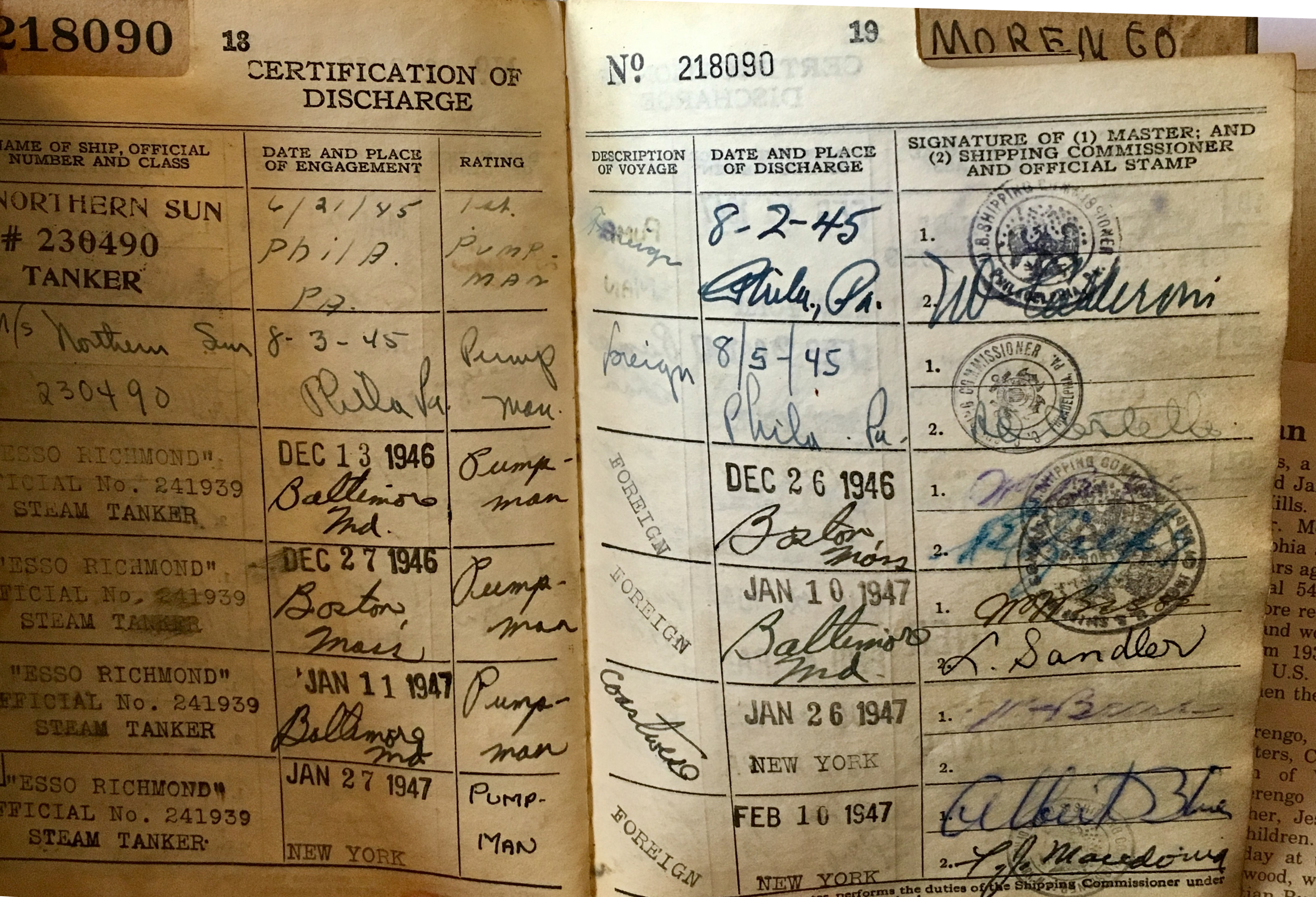
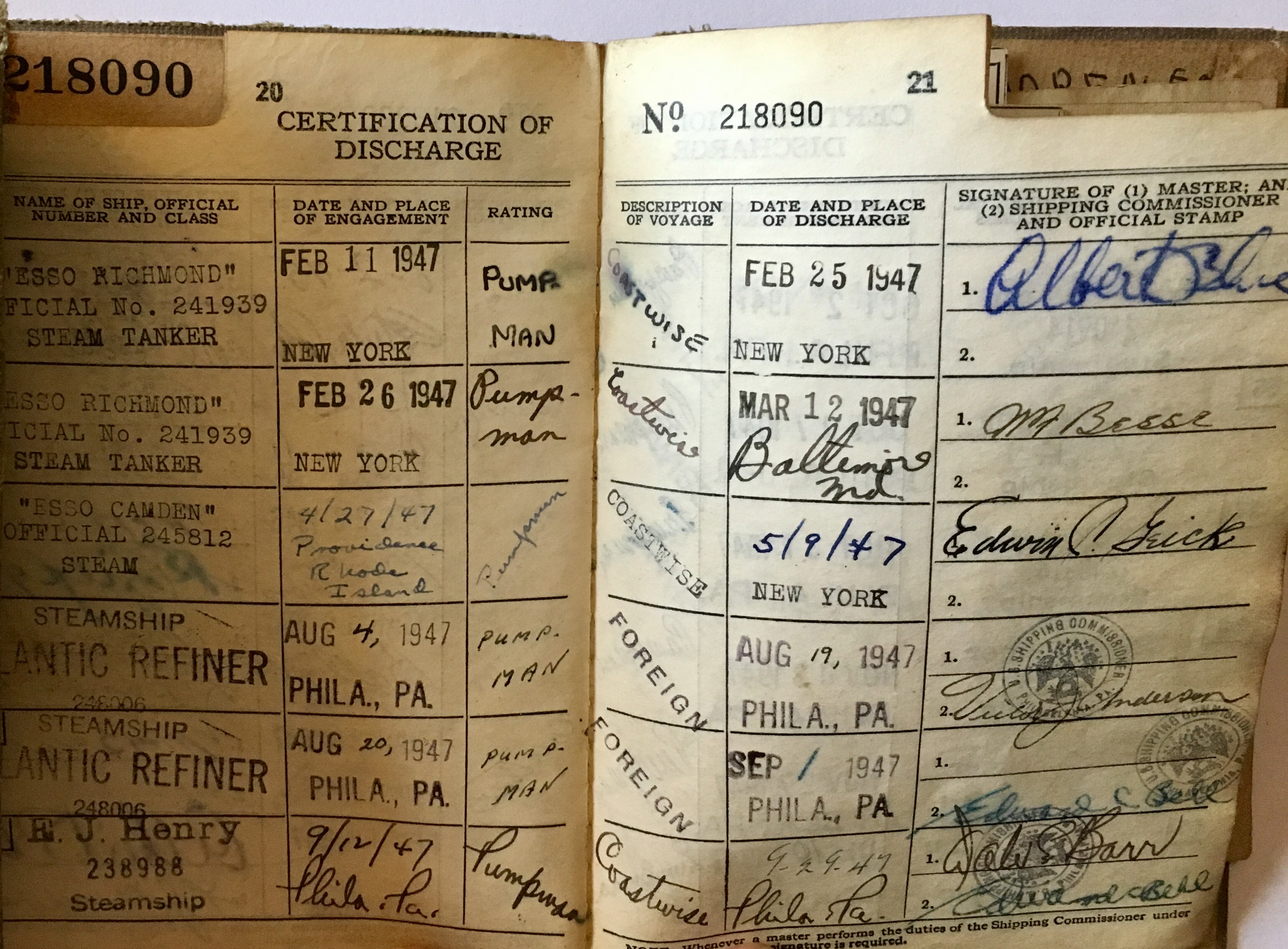
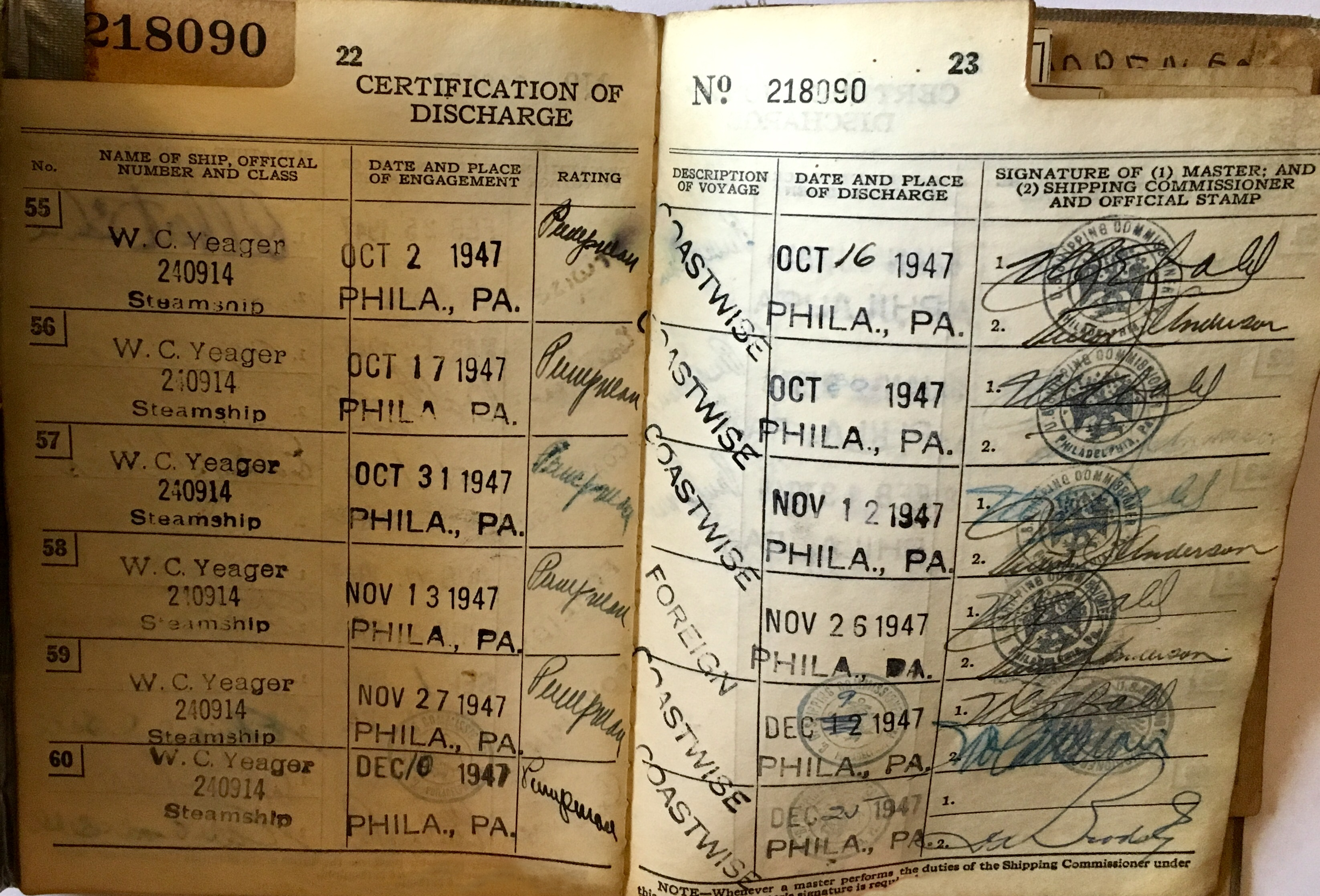
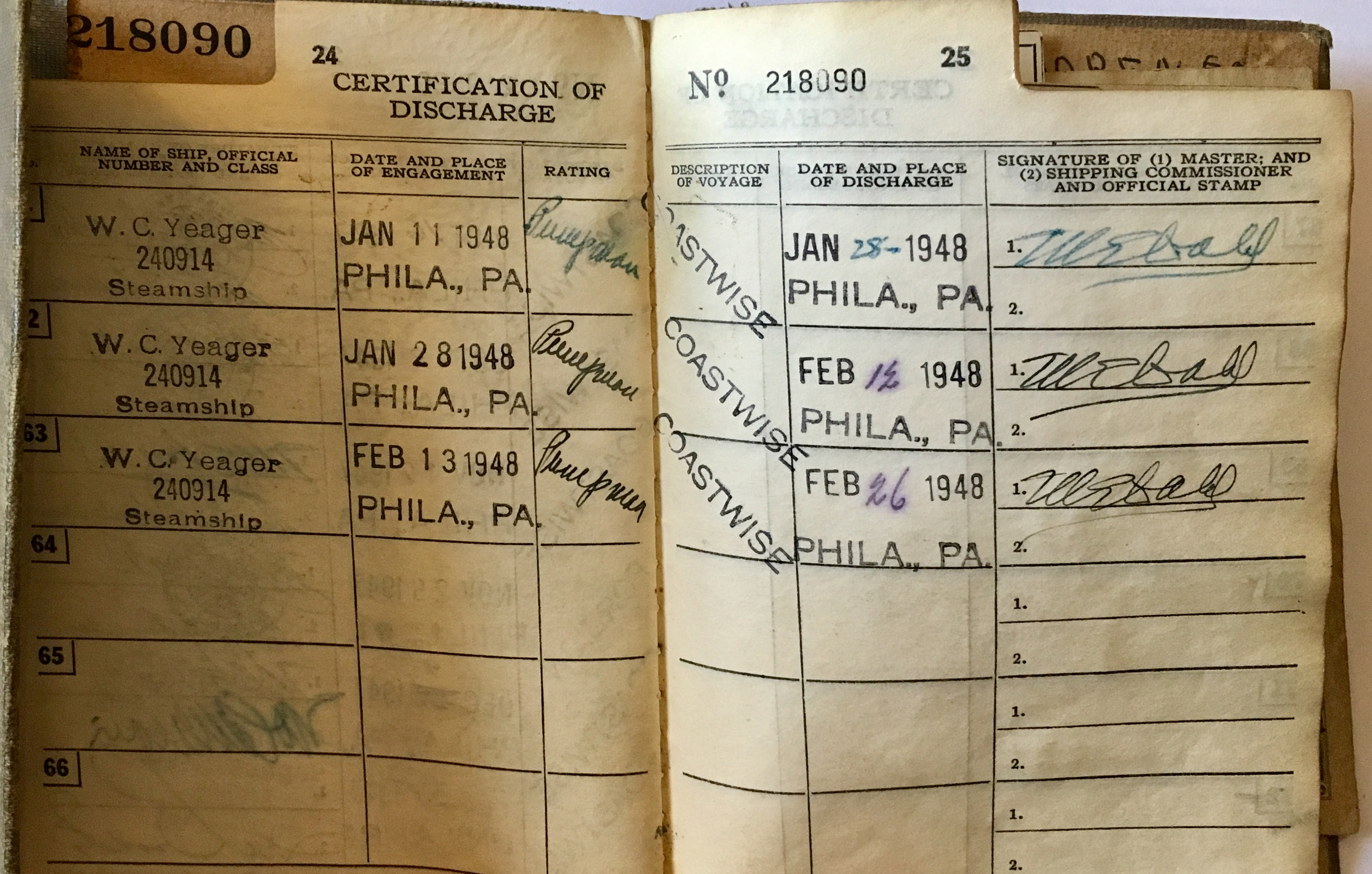
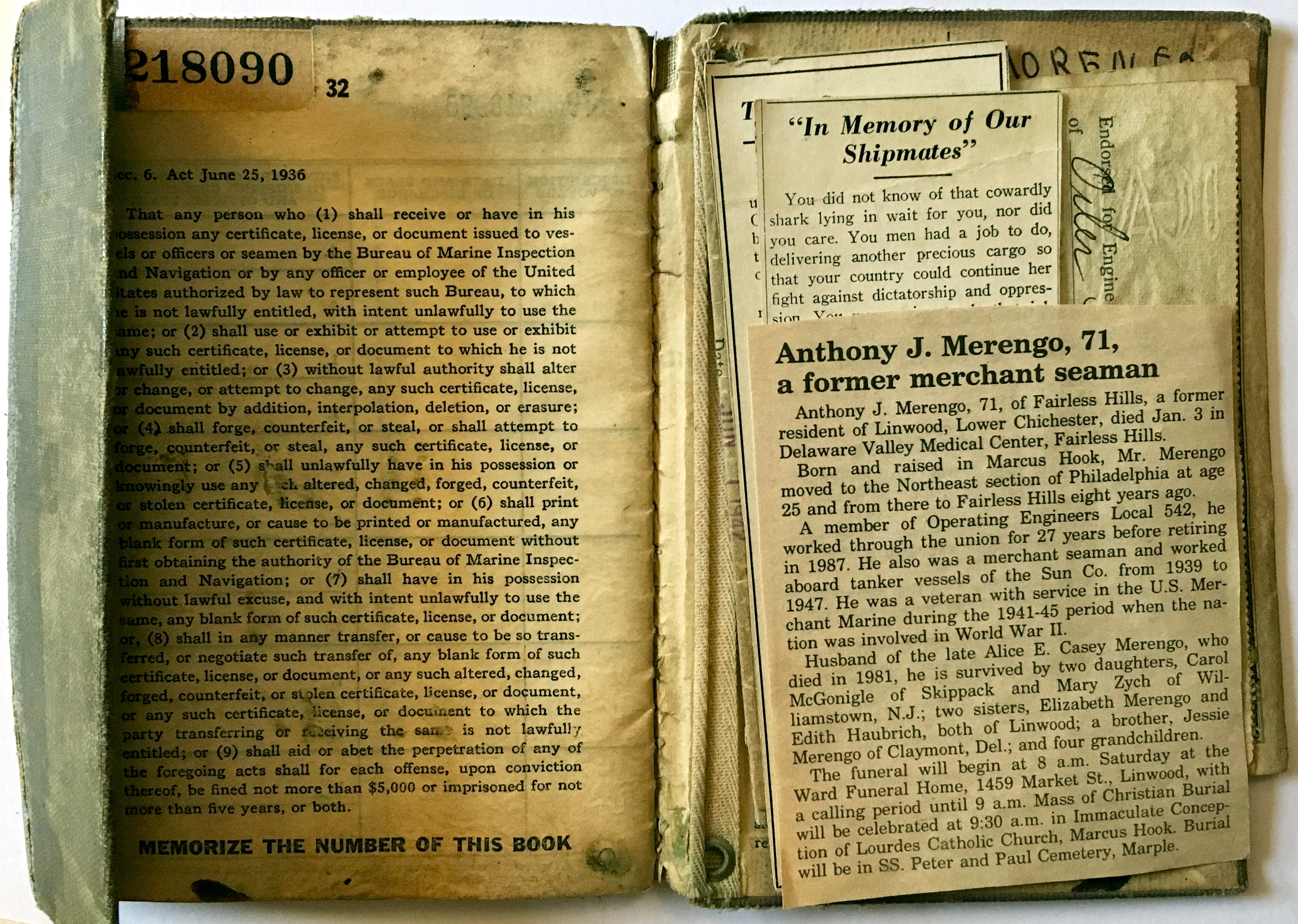
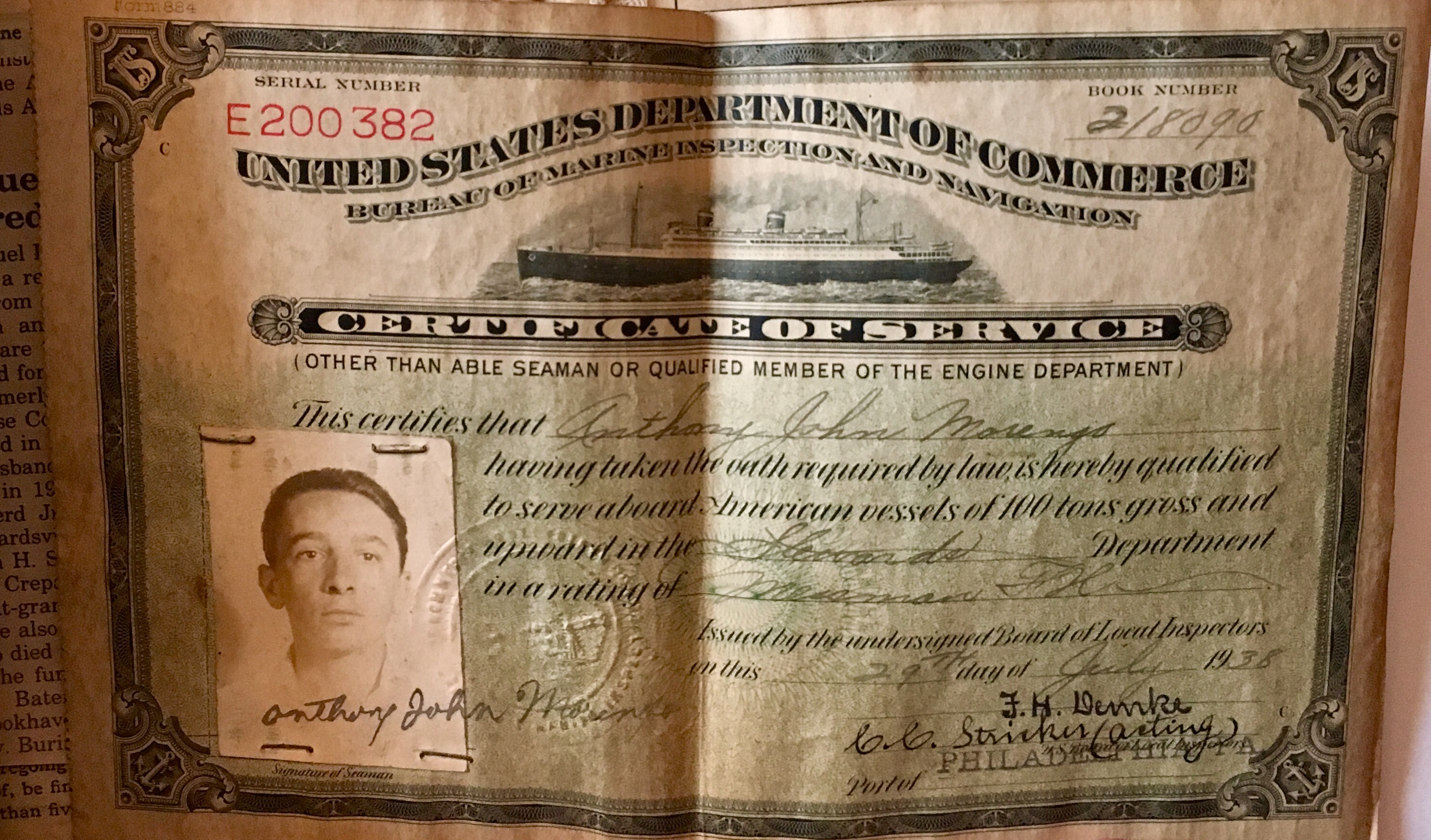
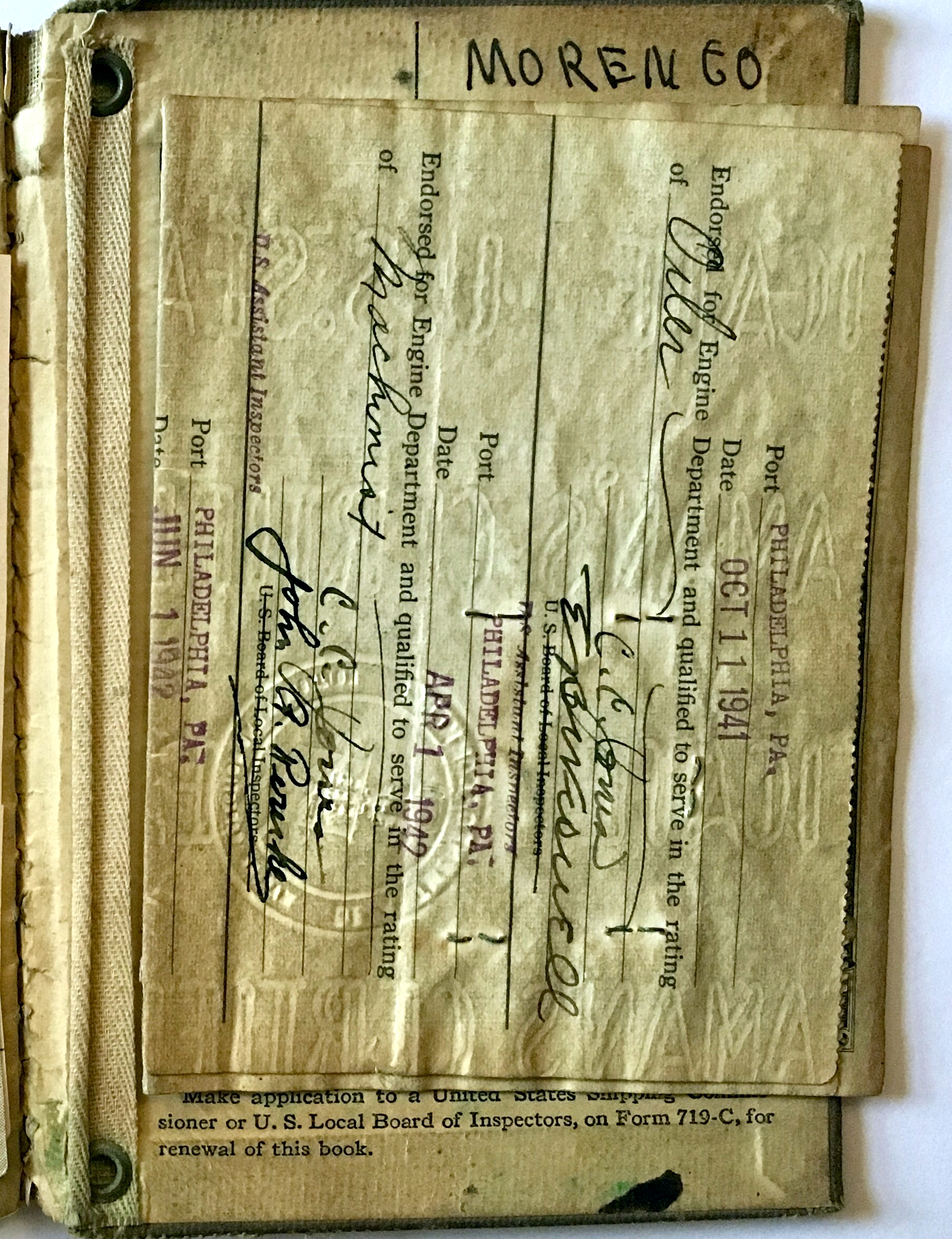
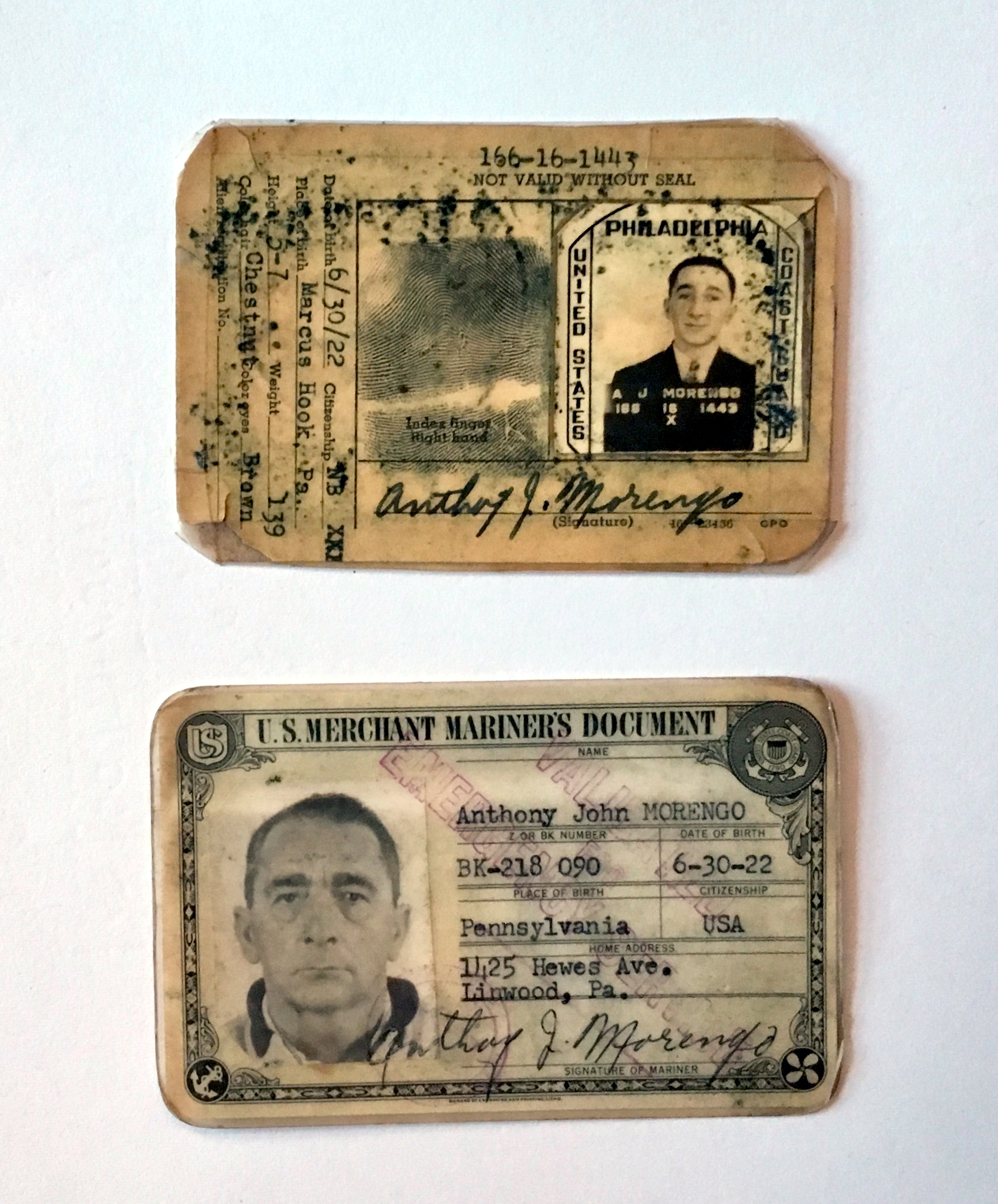
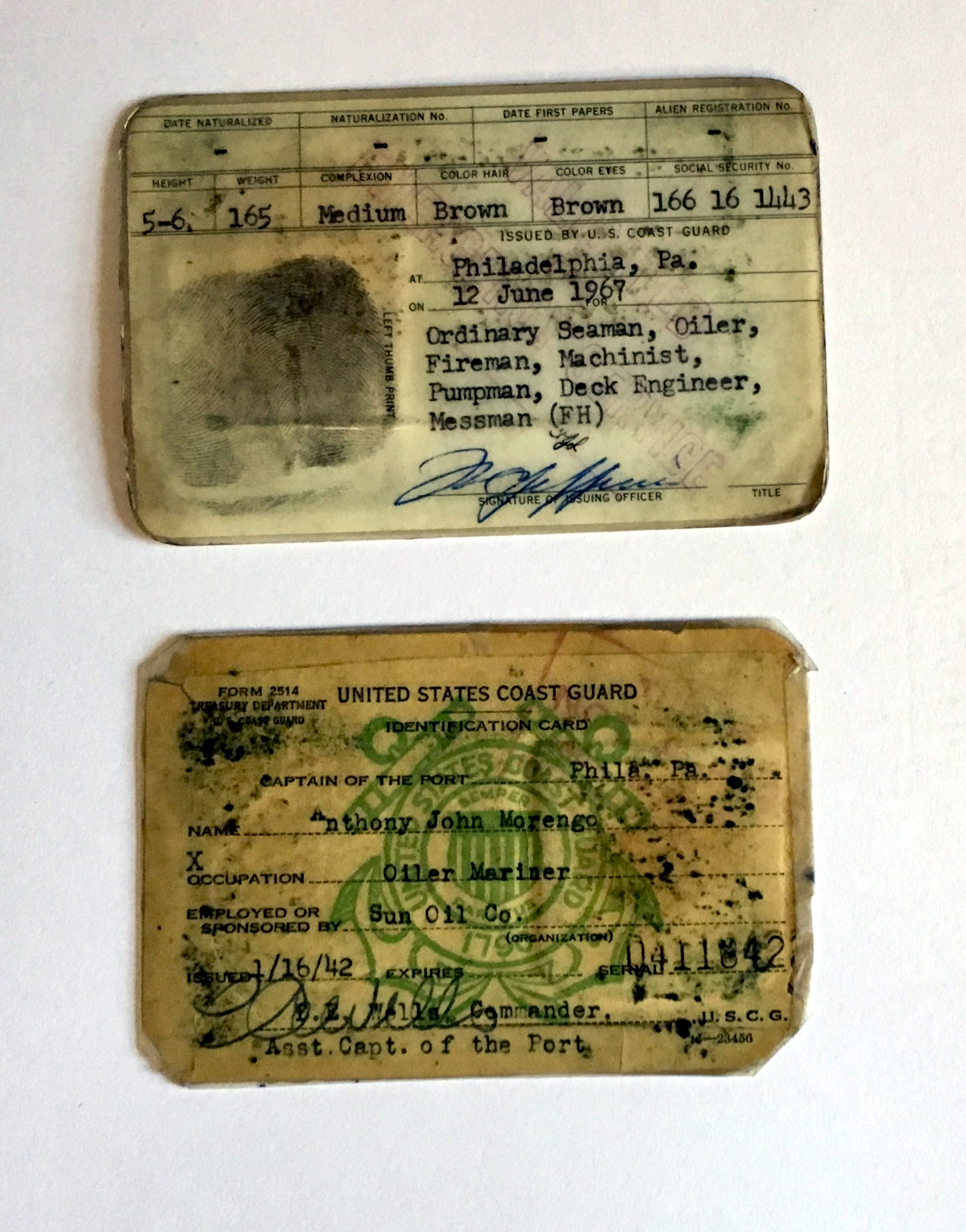
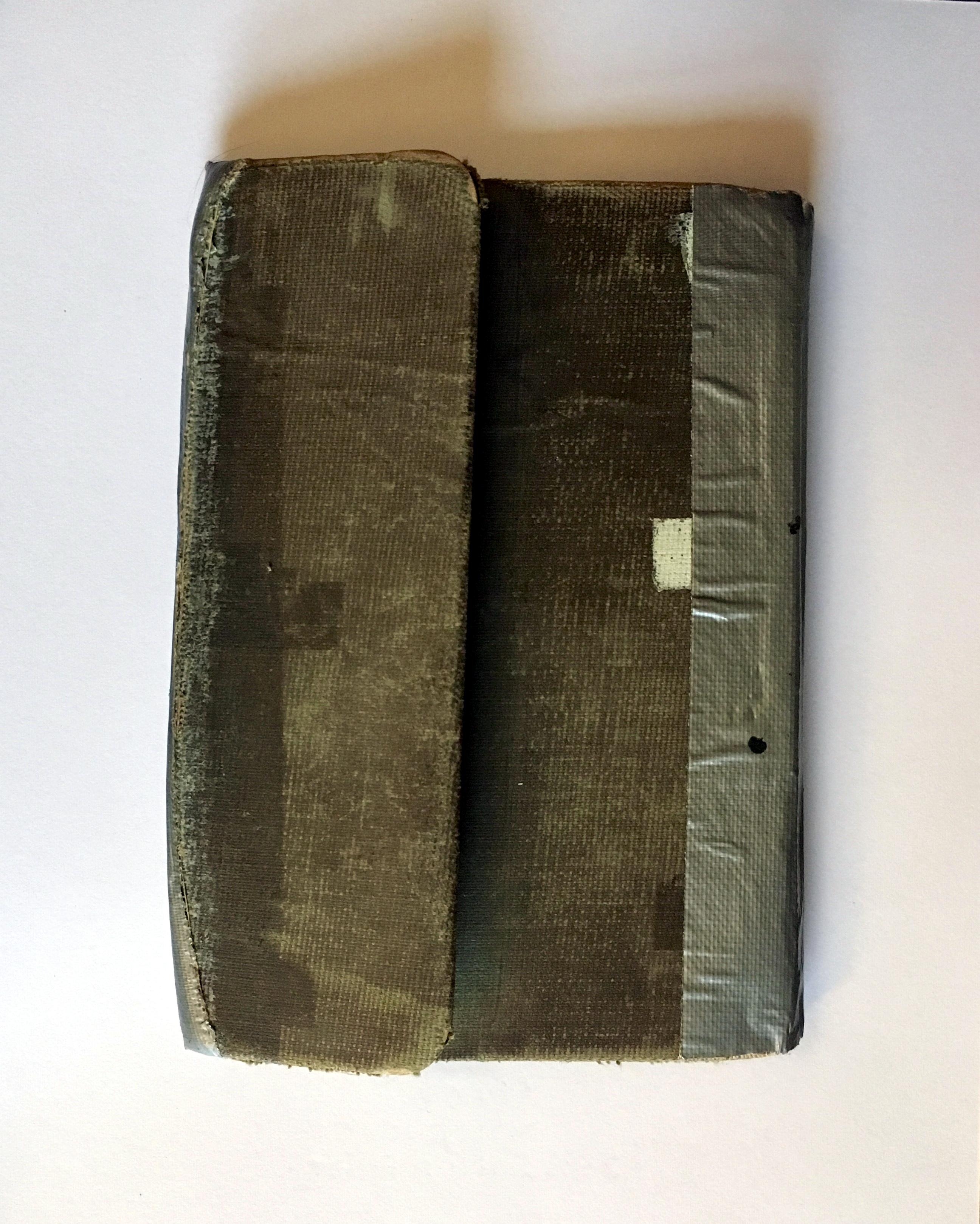
More often than not, when the dust settled merchant seamen tended not to speak about The War, leaving their children and grandchildren to wonder about their service to the country. Oftentimes, tucked away in an old trunk or in a box they left behind clues, such as a U.S. Department of Commerce “Seaman’s Identification Wallet.” These thick black oilskin wallets embossed with a twin-stacked steamship or a four funnel liner held a seamen’s work history and identity documents – from their discharge slips, Seaman’s passport, to award cards. Sometimes they might have a prayer or a photo of a loved one inside. These wallets had a chain on them to be linked to a seaman’s belt loop – that way, if the owner was blown overboard, their documents would go with them.
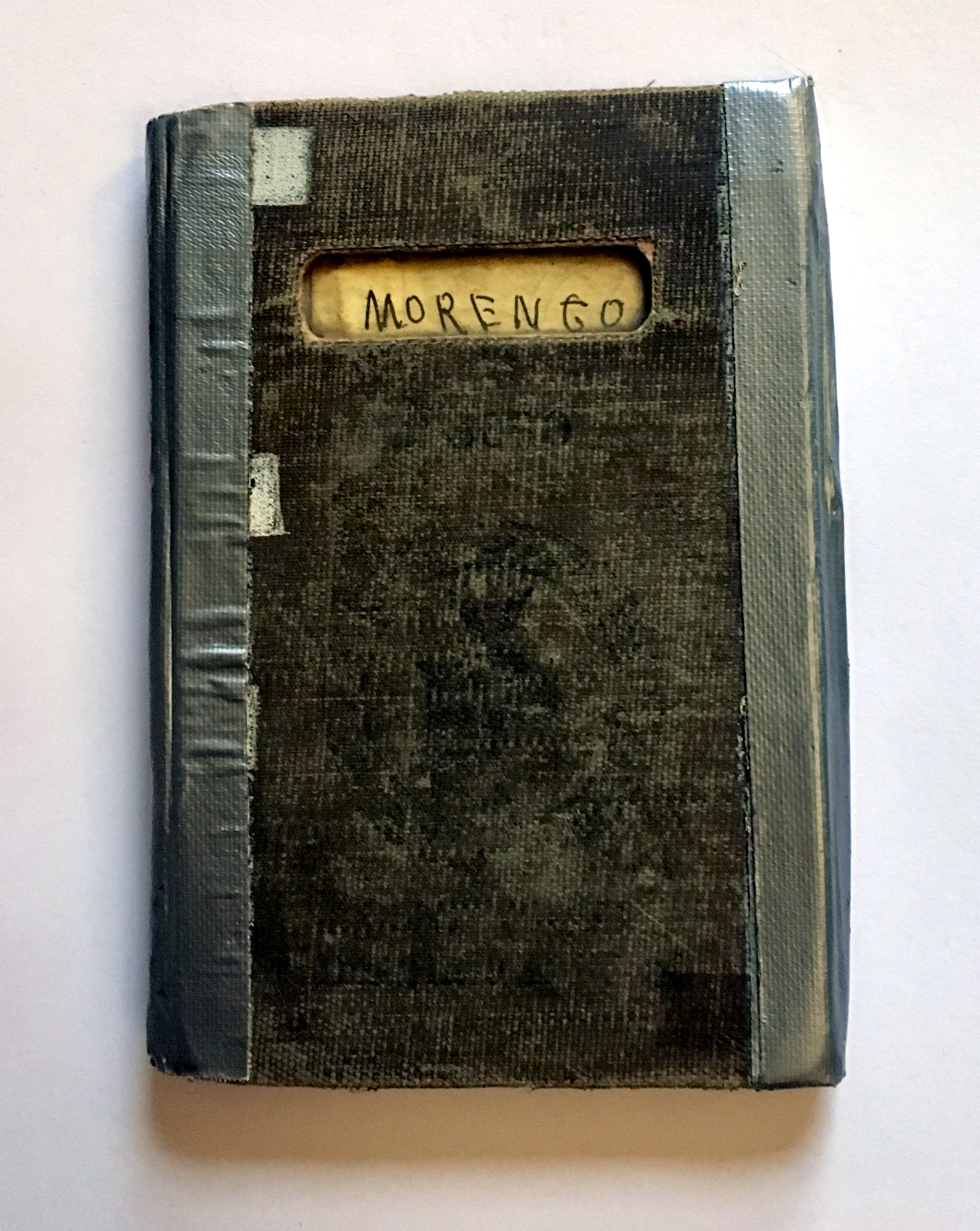
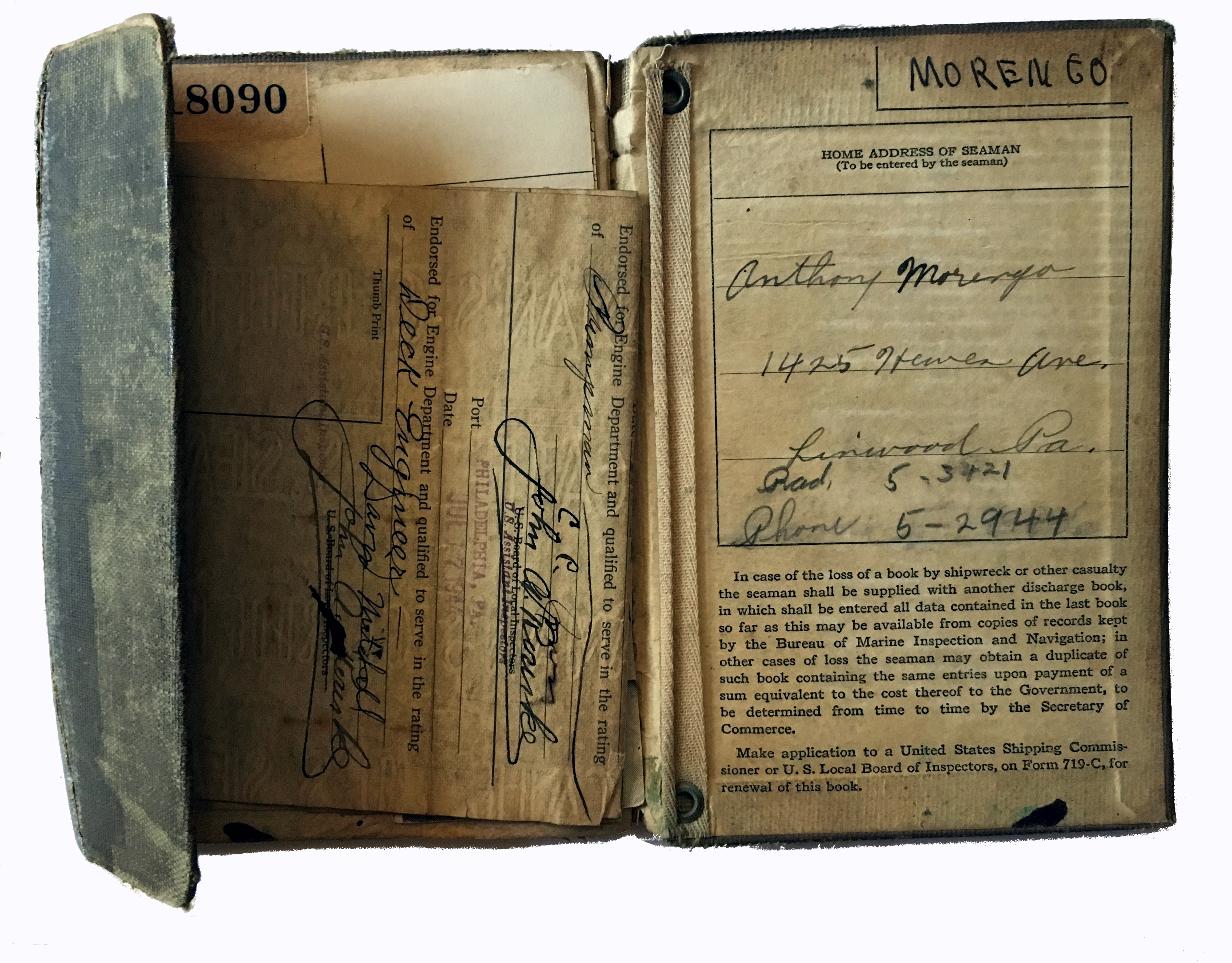
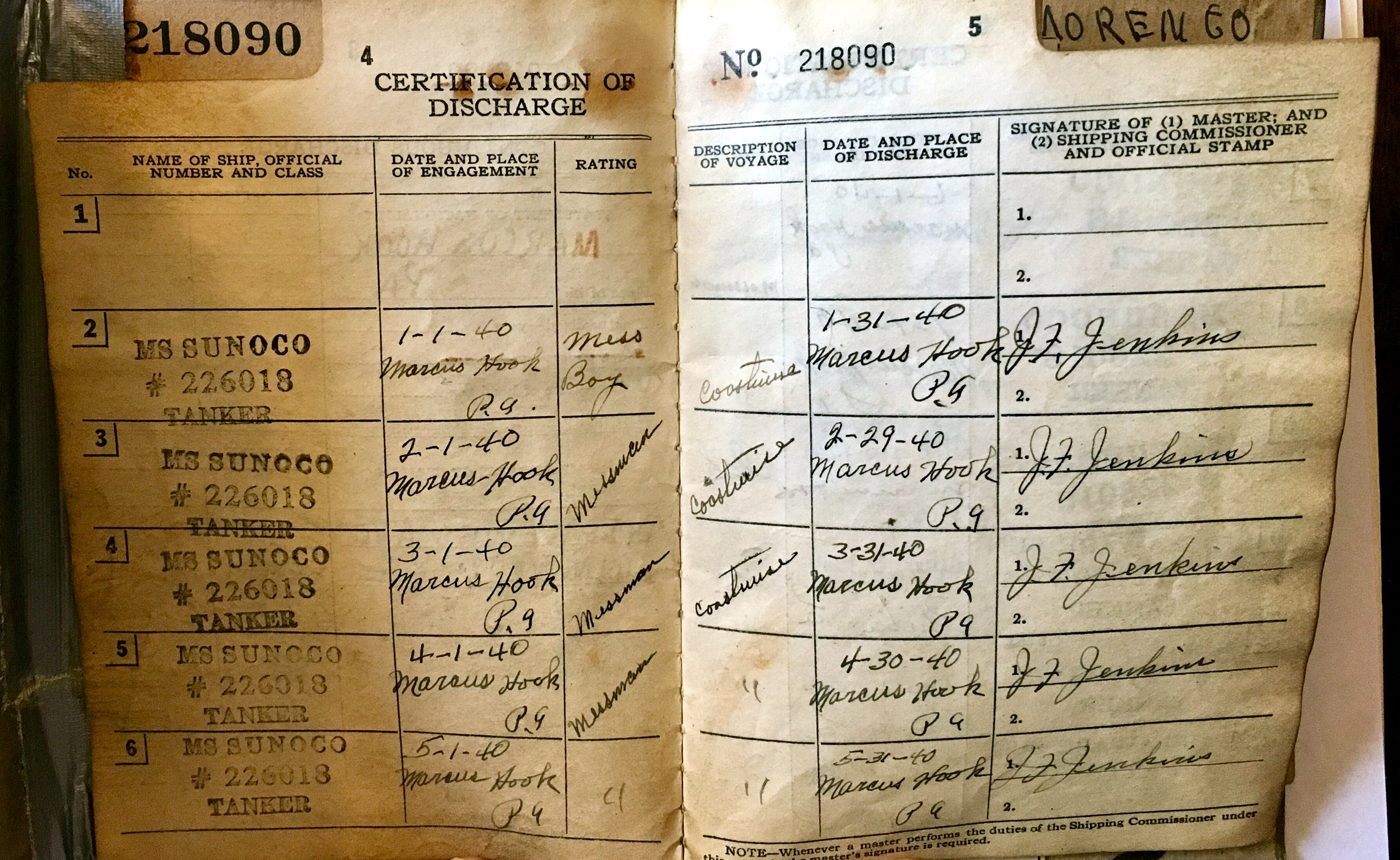
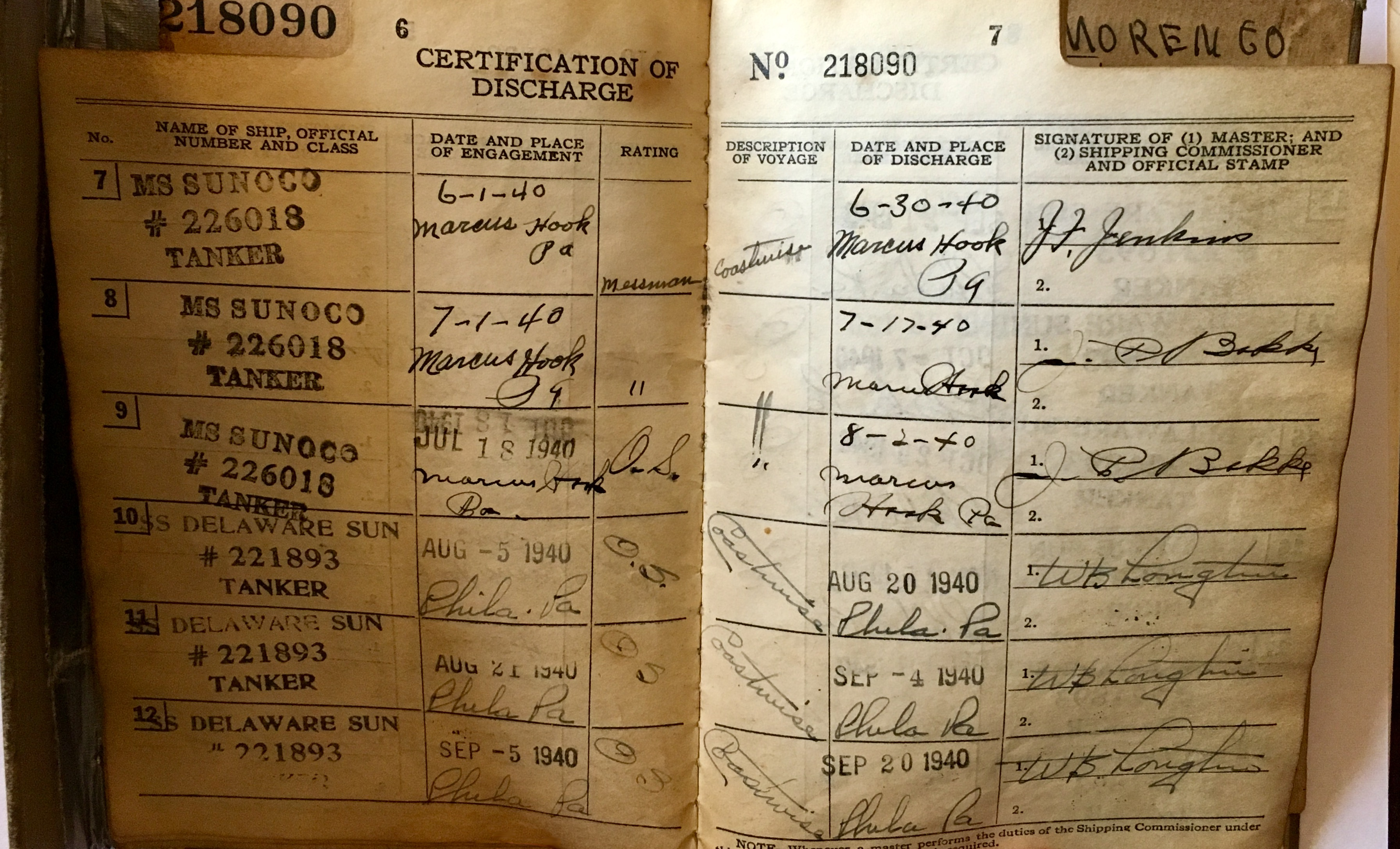
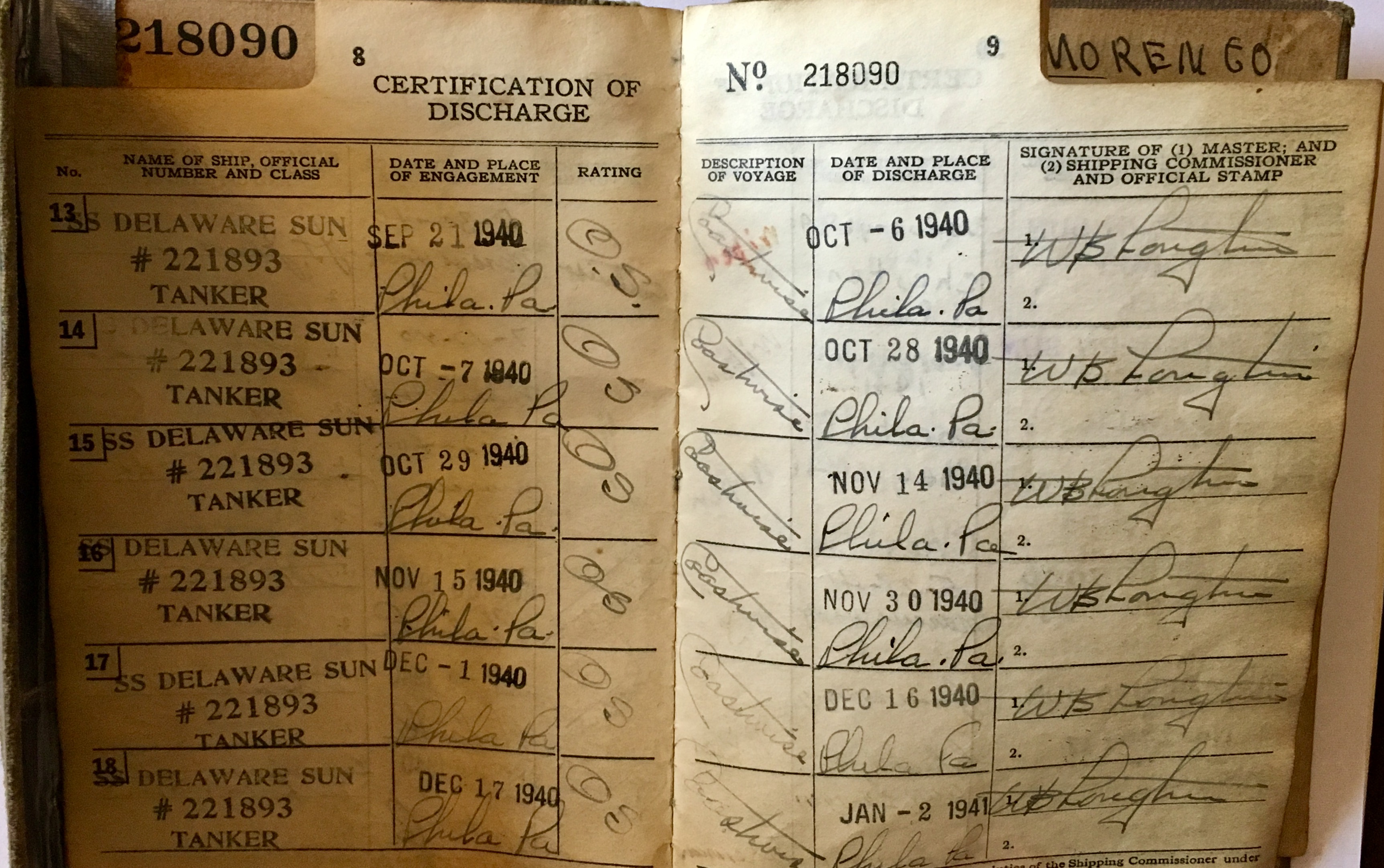
Other indicators of a life on the sea were union books and the once-hated Continuous Discharge Book. The latter was derisively called a “fink book” by the more militant union rank and file. Fink books could hold secret markings by masters upon pay off stating whether or not a seaman was a troublemaker, thus affecting future impartial employment and the use of the rotary system of ship assignment. Or at least that was the fear. Many books may have had a single entry during the course of the war – some mariners signed on to a single ship and it sailed to and fro for the duration. After that, short-timers left the industry, leaving this singular record for others to ponder.
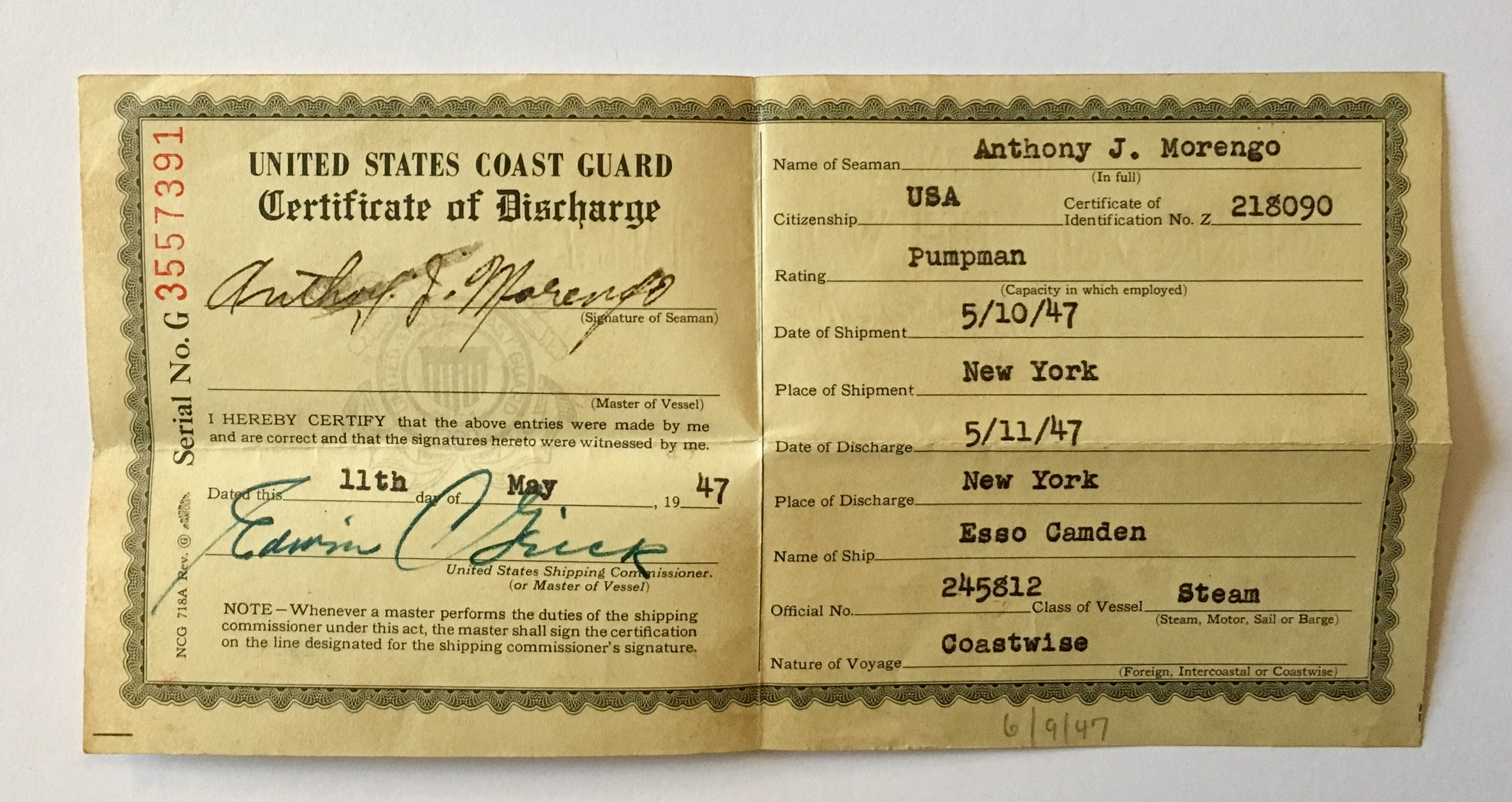
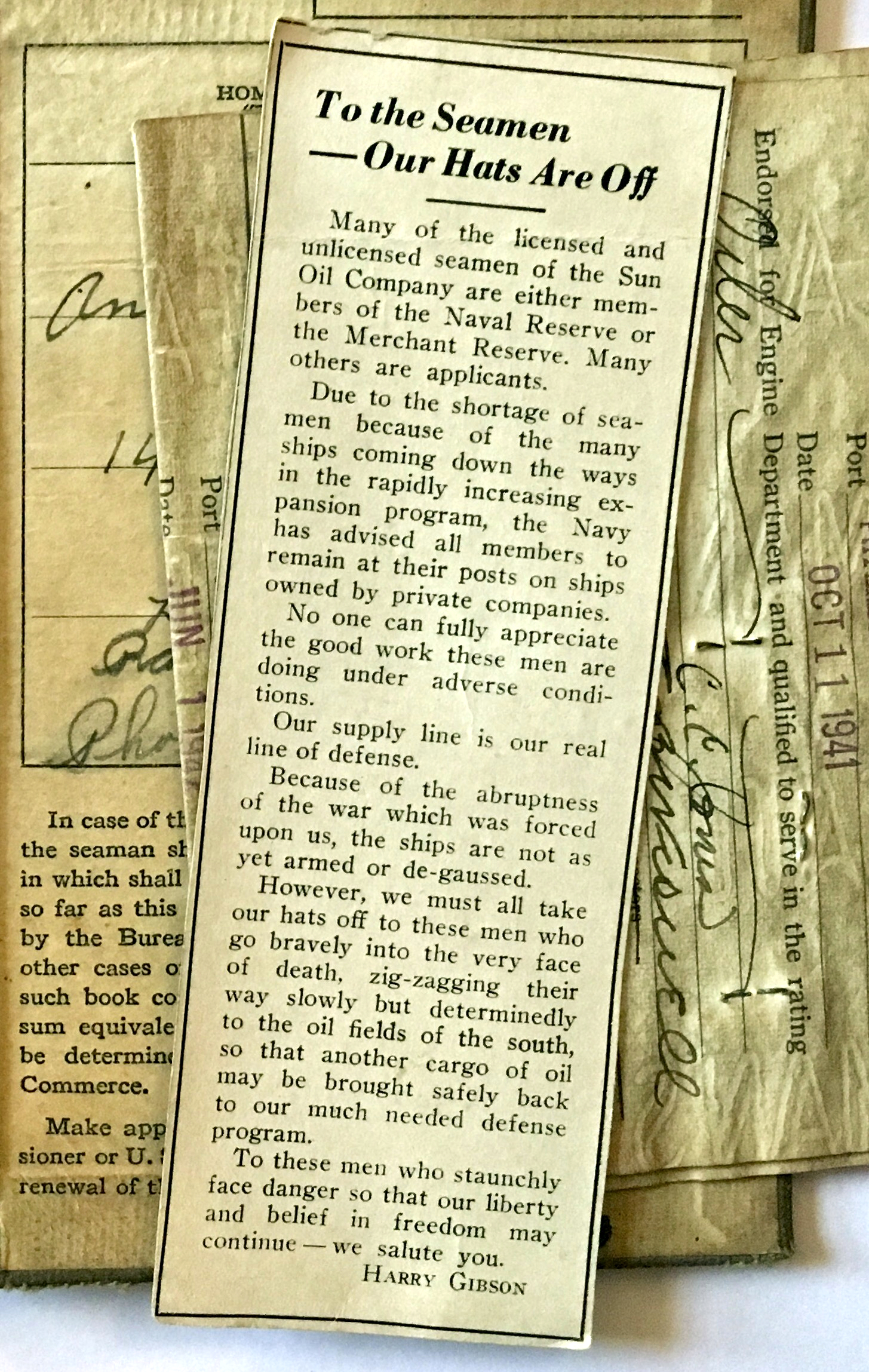
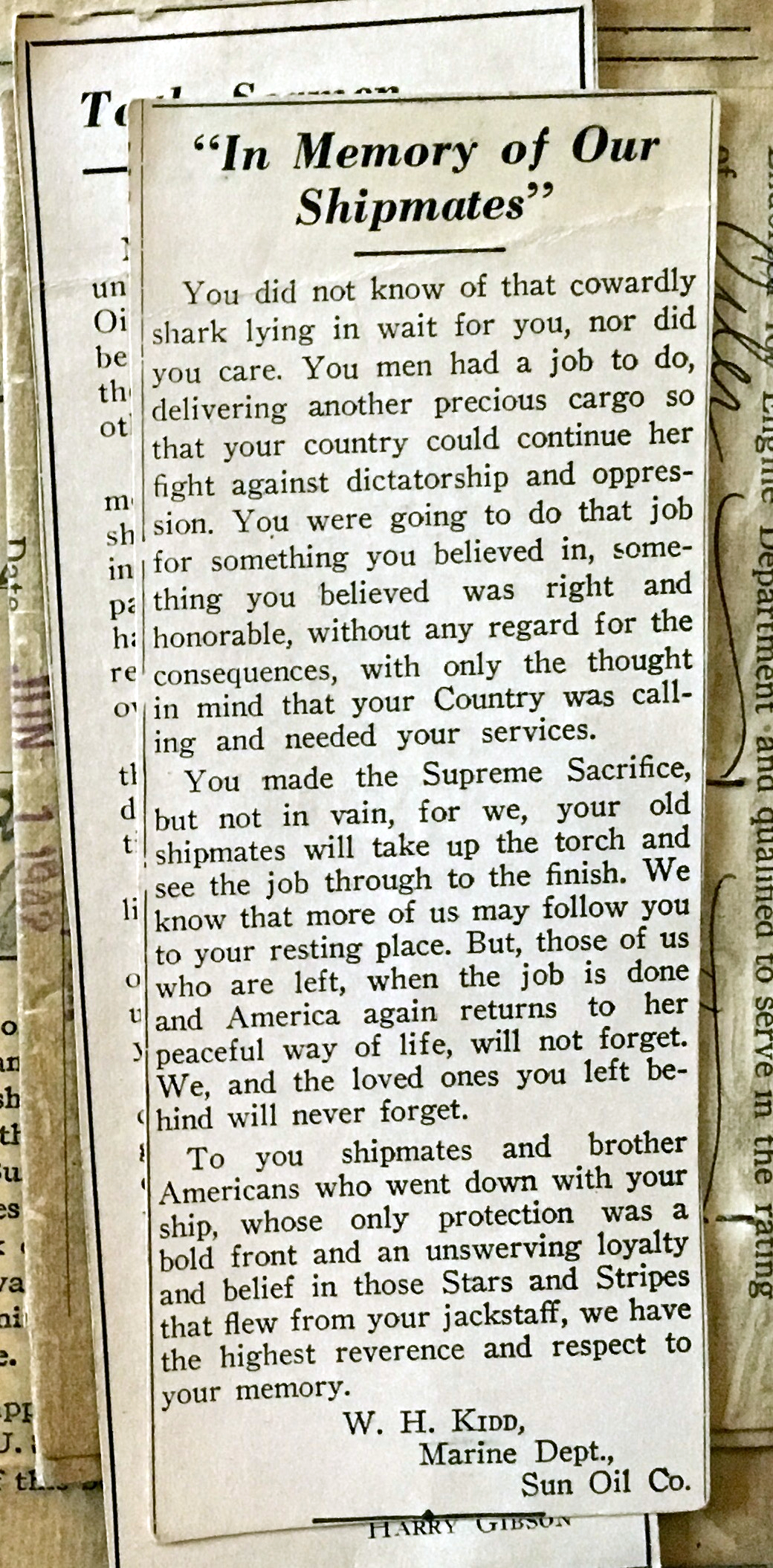
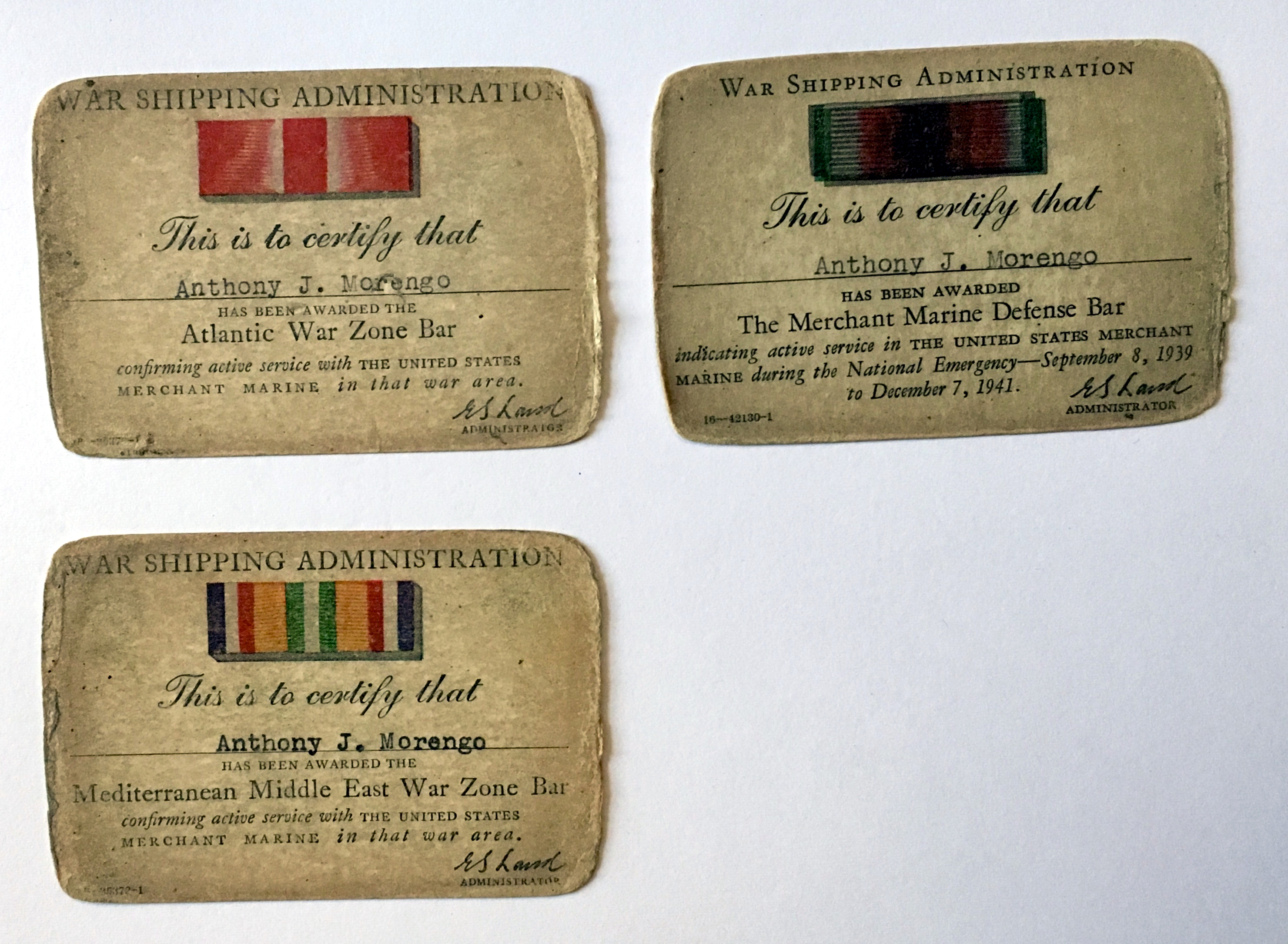
Mr. Morengo’s wallet was missing, but all the paperwork that might be inside was carefully folded into his Continuous Discharge Book – known in some circles as a Fink Book. He was a tankerman and detailed in his papers are the monotonous coastwise round-trips he took from oil terminals and his six-month tour overseas. Particularly touching is his obituary, laying on top of a piece by W. H. Kidd – of the Sun Oil Marine Department.
Fink Book
(please click the images for their larger, uncropped versions)
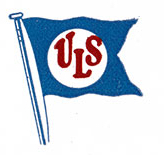
From its inception to its dissolution, United States Lines (USL) tinkered with the most visible element of its corporate identity: its house flag. Among merchant seamen, a steamship company’s house flag was colloquially known as the “Bread and Butter flag,” yet among United States Lines employees, it was first called the “Blue Goose” through the 1930s and 1940s, and later the “Screaming Eagle” during the company’s halcyon SS United States period. Yet, a bird did not always grace the USL flag.
Painting USL corporate logo and house flag changes with broad strokes:
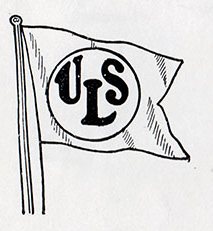
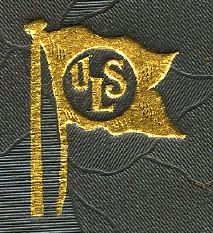
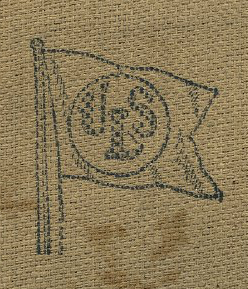
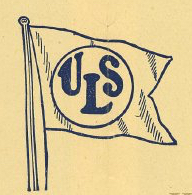
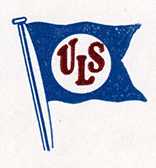
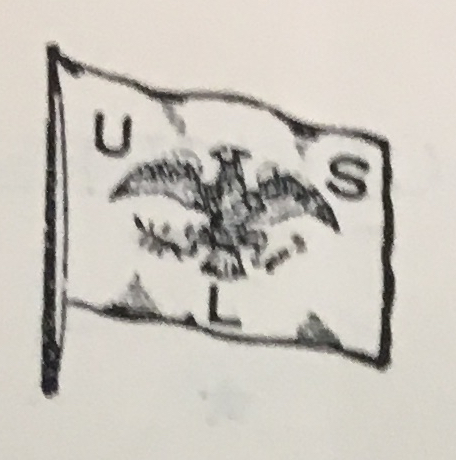
1921-29 USL was a post-World War I United States Shipping Board (Federal emergency agency created by the “Shipping Act” (39 Stat. 729), September 7, 1916) company; its agents were Roosevelt Lines among others. In 1921 the USL house flag was flown for the first time; the company was identified by a blue swallowtail flag with the Deco letters USL in red on a white disc:
One of the largest of Saturday afternoon armadas, consisting of ten ships, bound for eight European countries, got away yesterday [September 3, 1921]. The most interesting ship to Americans was the George Washington, which left Hoboken flying the new house flag of the United States Lines, consisting of a white circle on a blue field, within which are the letters U. S. L. in red. This is the first time the liner has flown these colors, as on her maiden voyage under the American flag last month she was a United States Mail liner.
“30 of 52 liners at sea are bound for Europe.” New York Herald (New York, New York), (Sunday) September 4, 1921, p 26.
In 1924, at least, the stacks of USL ships had the familiar red, white, and blue bands at the top – but also the United States Shipping Board (USSB) shield (see February 1923 for a modified logo).
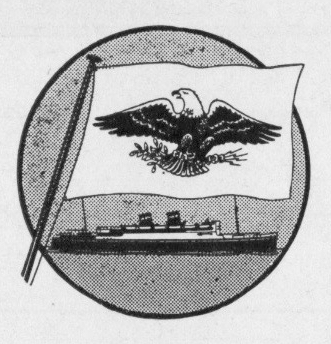
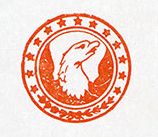
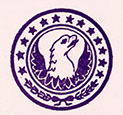
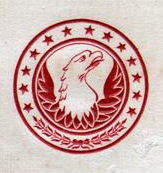
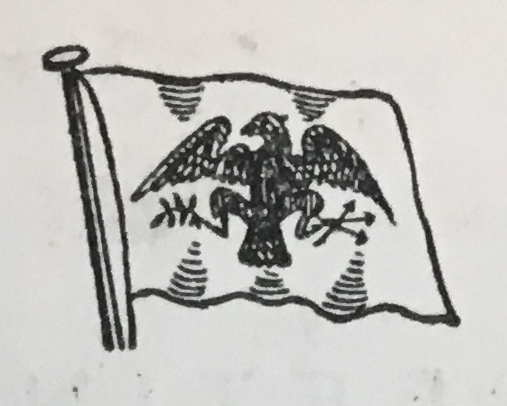
1923-29 For the brief career of the SS Leviathan under the command of Commodore Herbert Hartley, she flew the USL house flag, yet had a distinct logo used on cap badges, buttons, and for the ship’s visual identification: an eagle’s bust ringed by thirteen stars, with two crossed laurel branches at the base of the ring. Under Chapman (see below) and through 1934, the ship’s company no longer wore distinctive uniforms, but the logo remained on onboard ship publications.
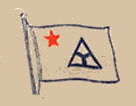
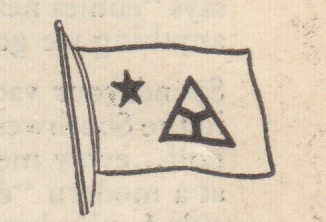
1929-31 Paul W. Chapman & Co. purchased both USL and American Merchant Lines (AML) from USSB on 14 February 1929 and merged them as United States Lines (Inc.); he proceeded to nearly sink the company. Thus far there are two flags identified as flown during the Chapman era. The first was hoisted above the SS Leviathan on the morning of 8 April 1929 by Joanna Chapman, the daughter of Paul W. Chapman. This flag was described by the press as a “white field, red star, and blue triangle.” The blue triangle – speculated in some circles as a stylized propeller – was reportedly a Chapman family crest and the propeller is the letter “Y.”
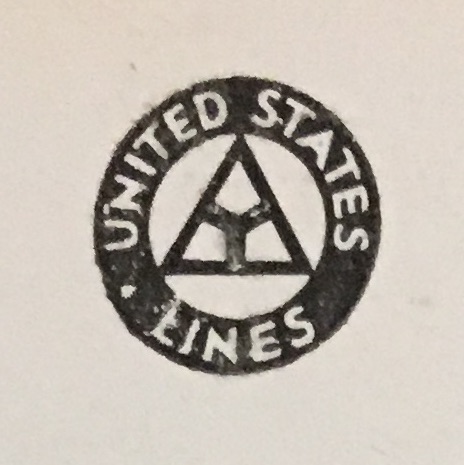
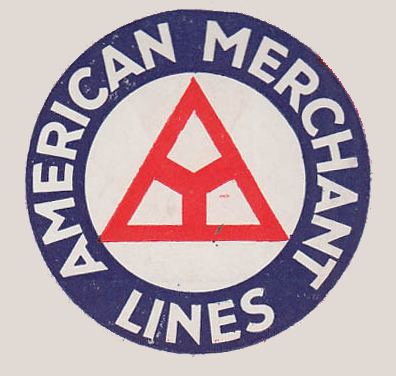
In October 1930, a second flag appeared on USL and AML ships: one that uses the Chapman crest in red and circumscribed by a blue band with the USL name in white block letters. The logo is on a white field without a red field. This same flag and logo were also used by the American Merchant Line (AML).
1931 The U.S. Government re-took control of the company. The USL house flag became the red triangle with a blue circle device on a white field – absent the red star.
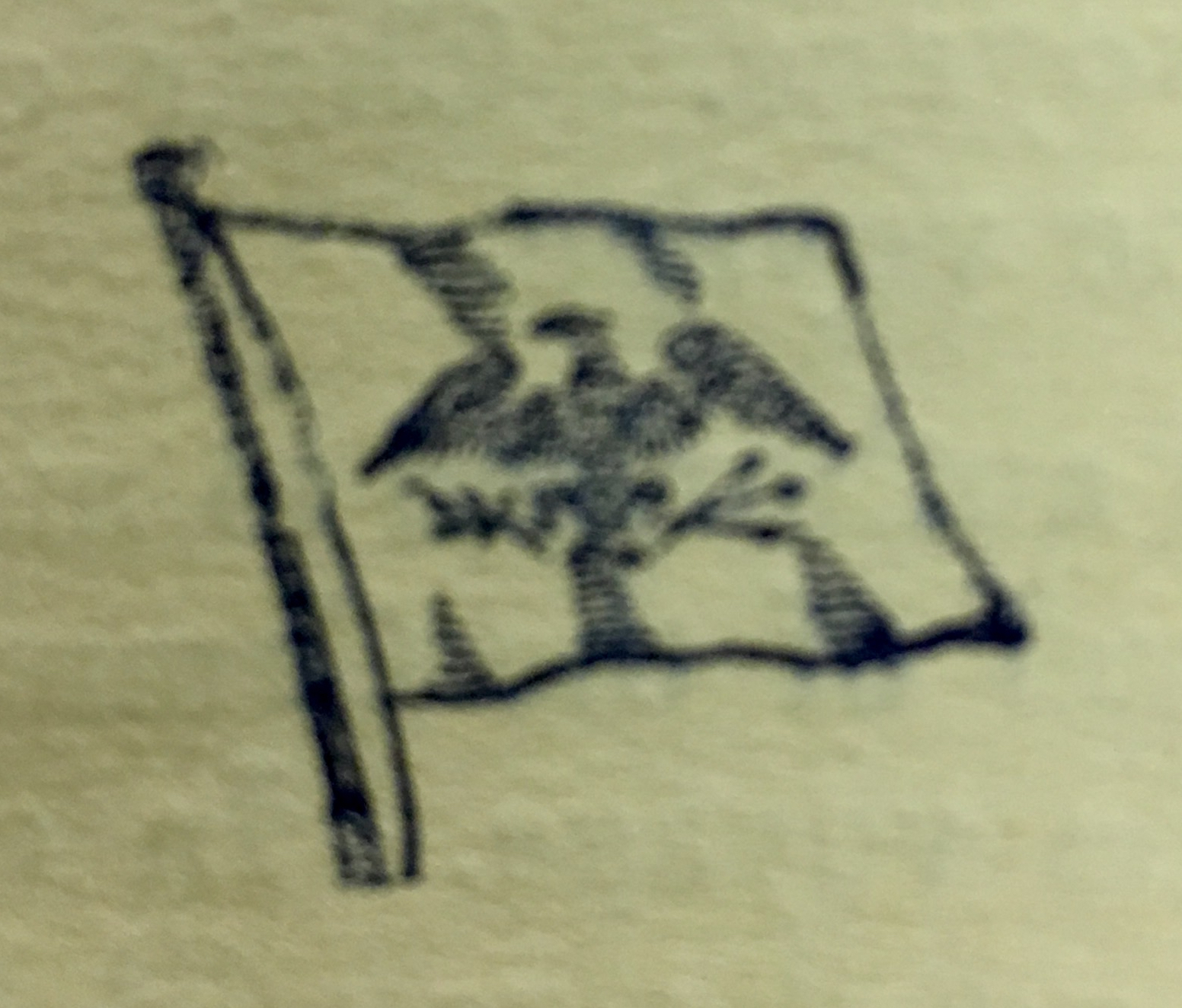
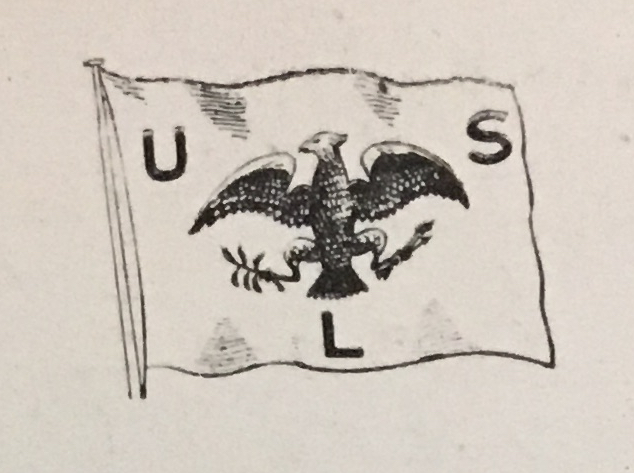
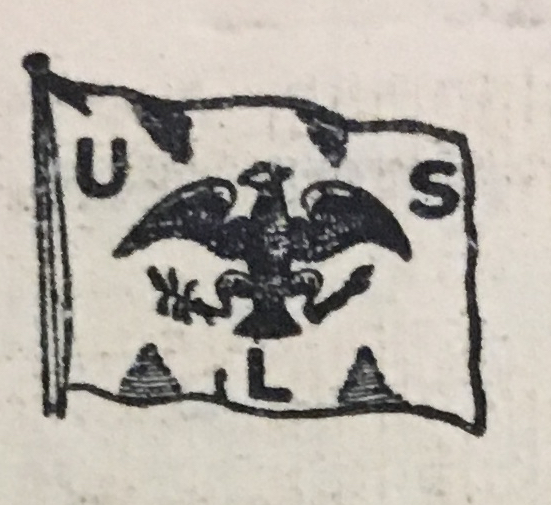
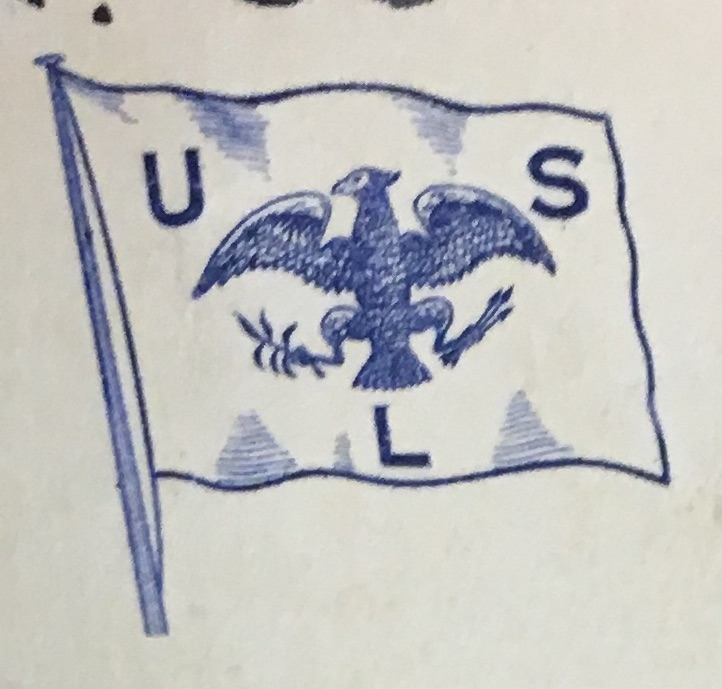
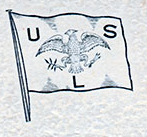
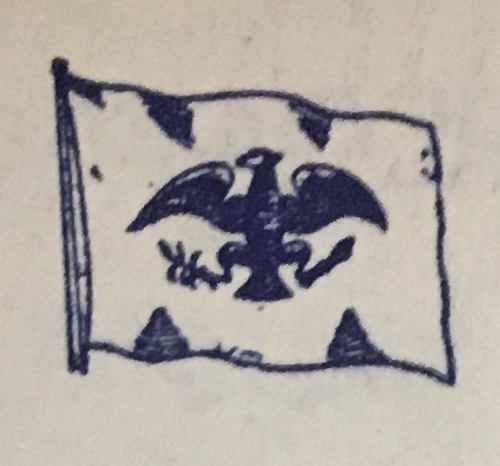
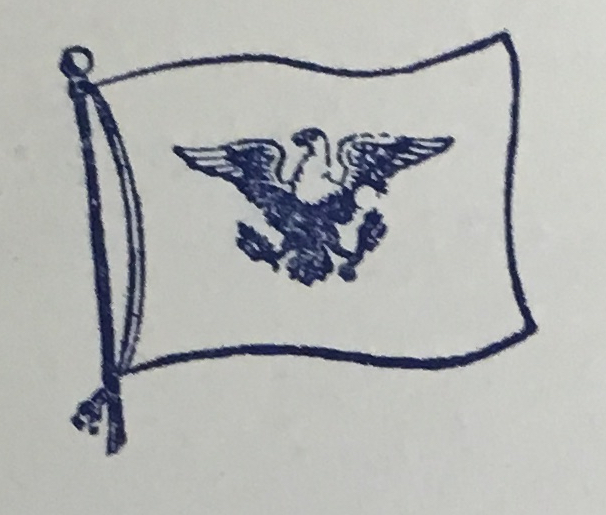
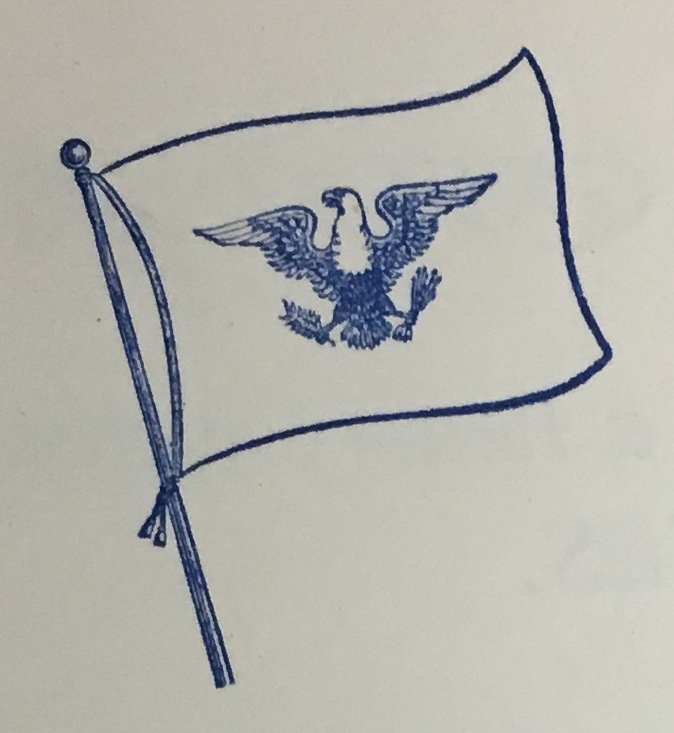
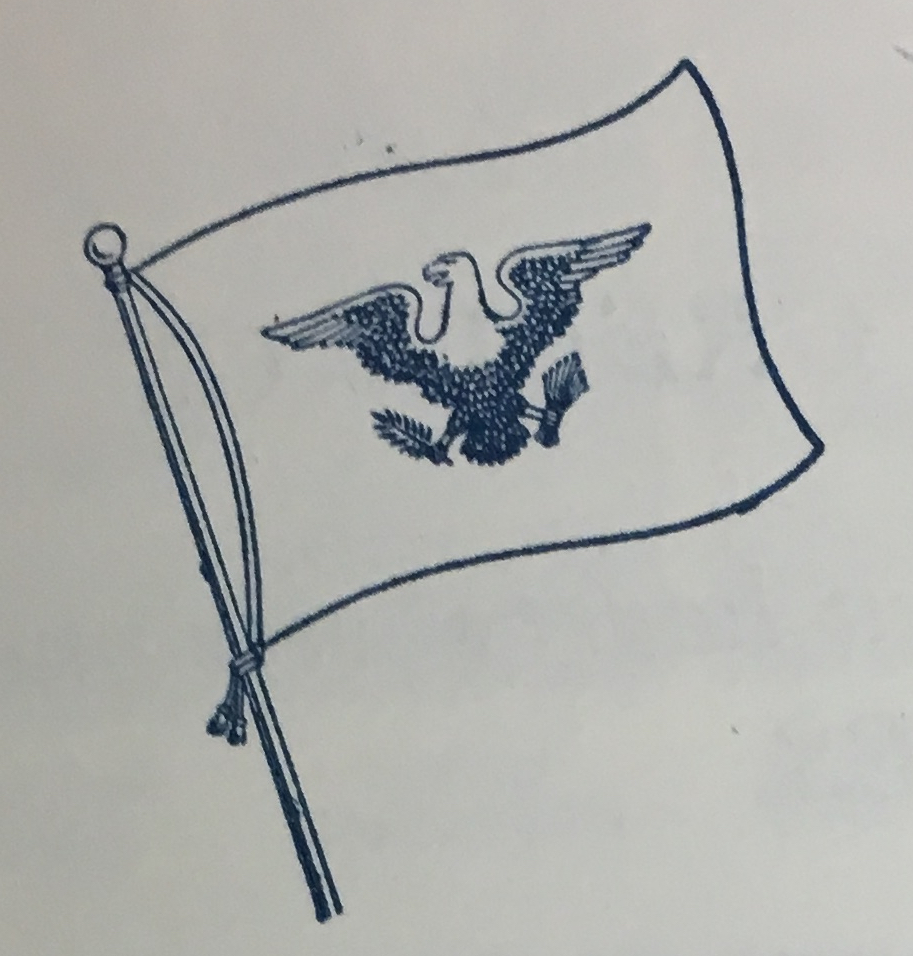
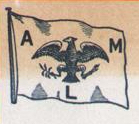
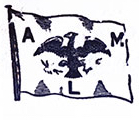
1932-1939 Under International Mercantile Marine ownership, USL and AML had the same house flag as the very successful Panama Pacific Line (PPL) – the yet-to-be-dubbed screaming eagle – albeit with the letters USL and AML – respectively – flanking the central eagle. The eagle was dark blue.
1939-1969 PPL dissolved with USL taking PPL’s flag. The house flag was tinkered with one last time in 1947: the eagle’s dipping wings changed to straight, streamlined wings, and it got a haircut. The sometimes scrawny and disheveled goose (vid.: August 1939) was a “Screaming Eagle” at last.
American Line flags
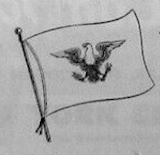
American Line was the steamship line from which IMM took the most enduring image of its corporate identity: the blue eagle. It was formed in 1871 and merged with several others to form IMM. By 1932, the Line faltered and the core of its remaining assets and livery went to PPL.
October 1899
SS St. Paul
June 1923
SS Manchuria
Panama Pacific Line flags & logos
Just as PPL took the insignia of the older IMM subsidiary, American Line when it dissolved in 1932, so did USL take PPL’s upon its demise six years later. Faced with insurmountable financial and labor set-backs, the Line shuttered in May 1938. As can be seen in the gallery, the changeover for the USL fleet to the new house flag was not completed until mid-1939; the sister ships SS America and SS Washington took the new house flag first. What assets remained of PPL were transferred to Moore-McCormack Lines.
December 1923
Panama Pacific Line
December 1923
Panama Pacific Line Passenger List
February 1925
SS Kroonland Panama Pacific Menu
December 1926
SS Finland Panama Pacific Line
December 1926
SS Finland Panama Pacific Line
January 1932
SS Pennsylvania Panama Pacifc Line
November 1938
Panama Pacific Line advert, Ocean Ferry
USL flags & logos
The below gallery details USL logos and flags found on various pamphlets, documents, passenger lists, and other ephemera from both the AMMM and my collections. Unless indicated otherwise, the images are from passenger lists from various USL ships.
July 1922
SS America
July 1922
SS President Monroe Music Program
1922
SS George Washingon
February 1923
USL
February 1923
USL
October 1923
SS President Arthur Menu
May 1924
USL
1924
SS Republic Flag
1924
USL Timetable Brochure
June 1925
SS Leviathan
August 1925
SS Leviathan
1925
SS America Diary
July 1926
SS Republic Ticket
1926
USL Malmo Office Passport sleeve
December 1927
USL
May 1926
SS George Washington
June 1928
SS Leviathan Menu
June 1928
SS Leviathan Music Program
August 1928
SS America
August 1928
SS America
August 1928
SS America
March 1929
SS Leviathan
August 1929
SS Leviathan
December 1929
USL-AML Letterhead
January 11. 1930
Advertisement
July 1931
SS George Washington Farewell Dinner
1931
USL Postcard
January 1932
SS President Roosevelt
February 1932
SS President Roosevelt
March 1932
SS President Harding
March 1932
SS President Roosevelt
March 1932
SS President Roosevelt
October 1932
SS Manhattan
January 1933
SS Manhattan
May 1934
SS Washington
August 1934
SS Manhattan
December 1934
USL-AML Letter
1934
SS Manhattan
1934
SS Leviathan Stationary
January 1936
SS Manhattan
January 1936
SS Manhattan
October 1936
SS Manhattan
January 1937
SS Washington
June 1937
SS Washington
May 1938
SS Washington & SS Manhattan
August 1938
SS President Roosevelt
August 1938
SS Washington
July 1939
SS President Roosevelt
August 1939
SS Washington
August 1939
SS Manhattan
October 1939
SS President Harding
January 1940
SS Washington
September 1946
SS America II
September 1947
SS America II
October 1947
SS America II
July 1958
SS United States
August 1969
SS United States
American Merchant Lines flags & logos
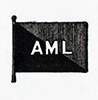
Although American Merchant Lines is not directly connected to the “genealogy” of the development of USL flags, it operated in parallel with USL. After the general failure of Dollar Line to manage its ships, USSB seized its ships and organized a number of them into American Merchant Lines in 1923. J. H. Winchester & Co. was tapped as the U.S. Government’s agent. The Line was later sold to Paul W. Chapman & Co. in 1929 along with USL. Despite AML generating a profit, the overall balance was not in Chapman’s favor, and the USSB sold both to IMM in 1932. AML was a favored “one class” line by budget-minded travelers, but it too failed and was merged with USL in 1937. On the eve of the Second World War, USL sold the old AML ships to a Belgian shipping concern as part of USL subterfuge to circumvent the United States Neutrality Act. Note the change in company livery in going from J.H Winchester & Co, management to that of IMM. IMM used the old American Line flag albeit with AML surrounding the blue eagle – just as it had with USL.
April 1924
SS American Trader Menu
April 1929
SS American Trader Farewell Dinner
May 1929
SS American Shipper Menu
December 1929
USL-AML Letterhead
1931
June 1932
SS American Banker Farewell Dinner
June 1934
SS American Farmer Menu
June 1934
SS American Farmer Menu
June 1936
SS American Trader
In “Journal of Commerce” February 23, 1943. Col.: U.S. Lines papers, AMMM
References
“Chapman Take Over Leviathan for $4,000,000.” Daily News (New York), April 9, 1929, p. 50.
“30 of 52 liners at sea are bound for Europe.” New York Herald (New York, New York), September 4, 1921, p 26.
Many thanks are due to Dr. Joshua Smith of the American Merchant Marine Museum for granting me access to the PPL and USL passenger lists, and Robert Sturm at the United States Lines Archive for his sage insights on USL culture.
The header image is a circa 1963-1967 flag in the United States Lines Room at the AMMM (accession number 1981.225.0001).
In December 1943, SS CEDAR MILLS and her French destroyer escort were caught in a violent cyclone and became widely separated. The destroyer, short of fuel and unable to maneuver, was in a sinking condition with a forty-five degree list when the CEDAR MILLS picked up her distress call. Against strong winds and mountainous seas, she fought through to the other ship’s assistance, succeeded in transferring most of her crew, and towed the destroyer for five days until rendezvous was made with a British man-of-war which relieved her.
The stark courage of her gallant crew in this heroic rescue caused her name to be perpetuated as a Gallant Ship.
from The Victory Fleet, Vol. IV, No. 17, October 22, 1945, p.2