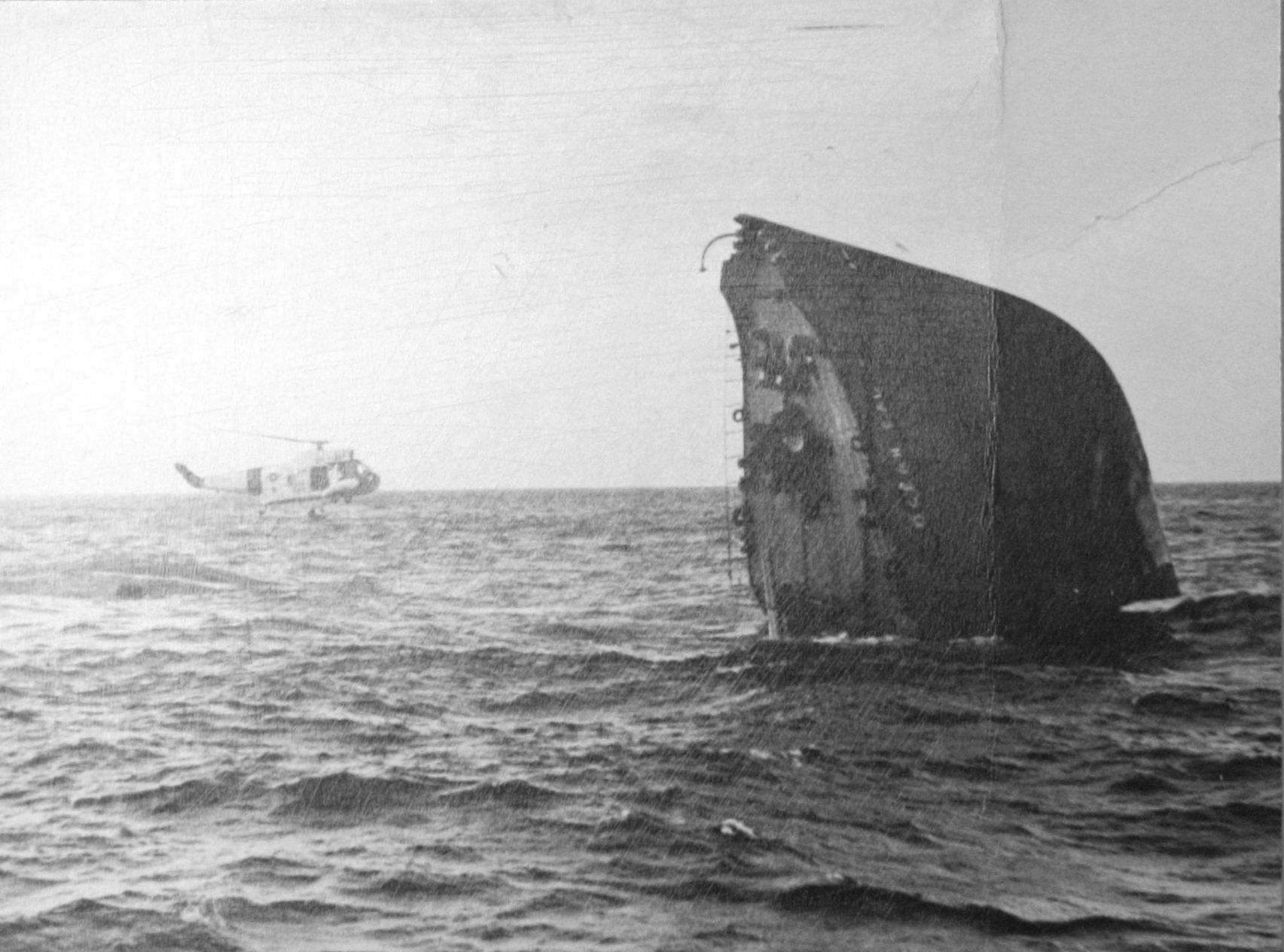
Emerging victoriously from an extremely battered convoy, numbering many sunken ships, SS WILLIAM MOULTRIE arrived at the scheduled north Russian Port and discharged her vitally needed cargo. Expert maneuvering and coordinated gun control during the highly concentrated submarine and bombing attacks over a period of one week prevented crew casualties and brought the series of actions to a successful conclusion.
The stark courage of her heroic crew in defeating a relentless enemy caused her name to be perpetuated as a Gallant Ship.
There are two original Citation and Medallion plaques known: one at Land Hall at the United States Merchant Marine Academy and another at the Harry Lundeberg School of Seamanship Museum. Judging by the construction of both, both plaques are not affixed to the original boards.
Photo courtesy of American Merchant Marine Museum
The Harry Lundeberg School of Seamanship Museum has a meaningful display of the SS William Moultrie Gallant Ship Citation and Plaque including a painting of the Gallant as well as ship articles – with all the merchant seamen who signed on the ship at the time of her qualifying action. All below photos are courtesy Seafarers International Union
Many thanks are due to Dr. Joshua Smith and Mr. Clayton Harper at AMMM for locating and photographing the example at Land Hall; and Mr. Jordan P. Biscardo at the Harry Lundeberg School of Seamanship for the same.
For six months, beginning in February 1943, SS SAMUEL PARKER was in continuous service in the Mediterranean transporting troops and material which contributed immeasurably to the successes of the North African campaign and the invasion of Sicily. Throughout this period she was subjected to numerous enemy attacks and, though badly battered, in every case she emerged victorious.
The stark courage of her gallant crew–in battle and in heroic rescues–caused her name to be perpetuated as a Gallant Ship.
SS Samuel Parker was a Liberty ship built by Oregon Shipbuilding Corporation at Portland, Oregon. Delivered on November 17, 1942, the War Shipping Administration immediately placed the vessel under a general agency agreement with American Mail Line.
When it arrived in the Mediterranean, Samuel Parker was placed under the operational control of the British Ministry of War Transport, shuttling troops and supplies between Alexandria, Egypt, and Tripoli, Libya. While on these supply runs, Samuel Parker and other ships in the convoy were constantly harassed by Axis air attacks, even while in port.
On March 19, 1943, while moored in Tripoli, a crashing bomber nearly struck Samuel Parker‘s mast before slamming into SS Ocean Voyager, a British cargo vessel berthed nearby and loaded with fuel and ammunition. As Ocean Voyager burned and other nearby vessels fled, five crew members from Samuel Parker used a motorboat to rescue six British merchant mariners who had jumped overboard. A short time later, the vessel exploded.
Samuel Parker also supported the Allied invasion of Sicily in July 1943, unloading aviation gasoline and high explosives while under air attack and often within the sound of the front line. On one occasion, the vessel was strafed with incendiary bullets, setting fire to its explosive cargo, which was only extinguished by crew members descending into the burning holds with fire hoses.
At the end of its mission in the Mediterranean, the U.S. Maritime Commission reported that Samuel Parker‘s hull and superstructure bore more than 140 holes.
After the war, Samuel Parker was briefly chartered to Eastern Steamship Lines, but was laid up in the Wilmington, North Carolina anchorage of the National Defense Reserve Fleet on October 12, 1947. The vessel was sold to Union Minerals and Alloys Corporation in April 1967. It was scrapped on April 7, 1969.
Photo courtesy of American Merchant Marine Museum
Many thanks are due to Dr. Joshua Smith and Mr. Clayton Harper at AMMM for locating and photographing the example at Land Hall
On September 3, 1943, coinciding with the Allied invasion of continental Italy, Mussolini’s government capitulated. Soon thereafter, the Germans disarmed the Italian Army and took control of the northern part of the country. The British and Americans advanced relatively unopposed, and in their march north, took the Adriatic port of Bari on September 11. They soon used its deep-water port as a transshipment point for war matériel bound for Africa and Europe.
On December 2, 1943 the port was packed with Allied ships unloading cargo. German reconnaissance early in the day noted an absence of anti-aircraft artillery in the area or defensive aircraft despite Air Marshal Sir Arthur Coningham stating at a news conference that afternoon: “I would regard it as a personal affortand insult if the Luftwaffe should attempt any significant action in this area.” That evening, the Luftwaffe scrambled 105 planes and proceeded to bomb the “closely packed harbor” at 19:25. The attack took the Allies by surprise and the air raid sunk seventeen ships and damaged an additional twenty-three. The losses were so great, the press at the time called it the “Little Pearl Harbor.”
What was damning about the attack was the hypocrisy of President Franklin D. Roosevelt. He actively condemned the use of poison gas during the war and stated that if the Germans used poison gas, the United States would respond in kind. One of the ships blown up at Bari was the SS John Harvey. She held a secret cargo of 2,000 bombs filled with liquid mustard gas. The explosions mixed the chemical agent in the water and aerosolized with oil in the air. Since the smell of the gas was diluted, medical staff on hand did not know to treat those affected by the gas for mustard gas exposure. After the attack, of the in addition to the estimated 1,000 casualties, 628 Allied seamen and service members exhibited symptoms consistent with mustard gas poisoning: burns and blindness. By December 17, 69 died of mustard gas exposure. It is unknown how many of the local population were affected.
The report from the master of the SS Louis Hennepin to the United States Lines Marine Superintendant below whispers not a word about mustard gas poisoning. The Allied Supreme Command demanded silence on the matter. Only in February 1944, the United States admitted to mustard gas being at Bari.
Col.: U.S. Lines papers, AMMM
As a footnote:
The Louis Hennepin was the only ship carrying Armed Guards which escaped without material damage. But two bombs landed about 100 yards from the ship and two Armed Guards were wounded. Her Armed Guard officer reported that lights along the dock stayed on for 13 minutes after the first bomb dropped, and [he] declared that port facilities were inadequate and that there was a lack of coordination. This ship fired some 6,000 rounds of 20mm ammunition during the attack..
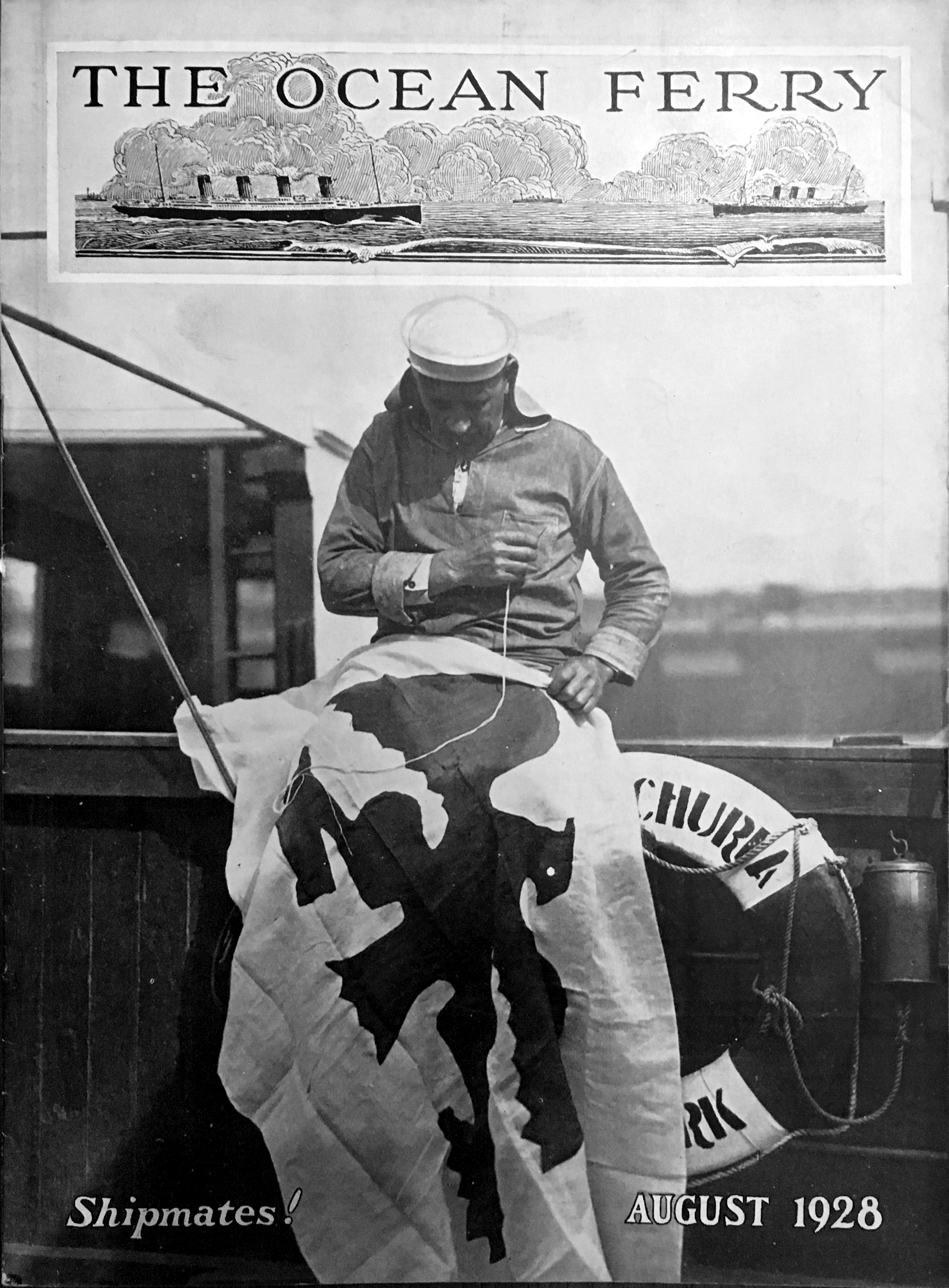
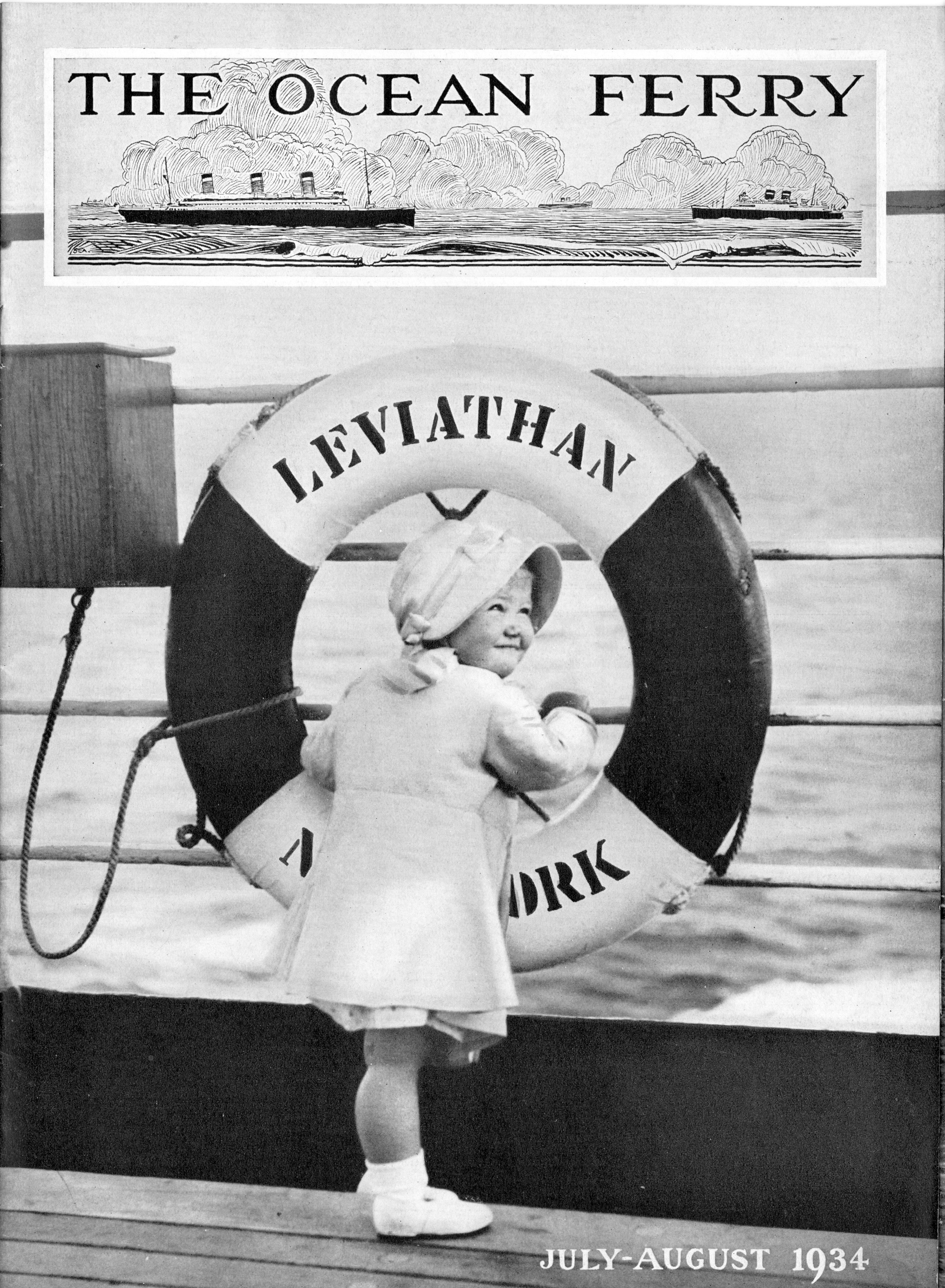
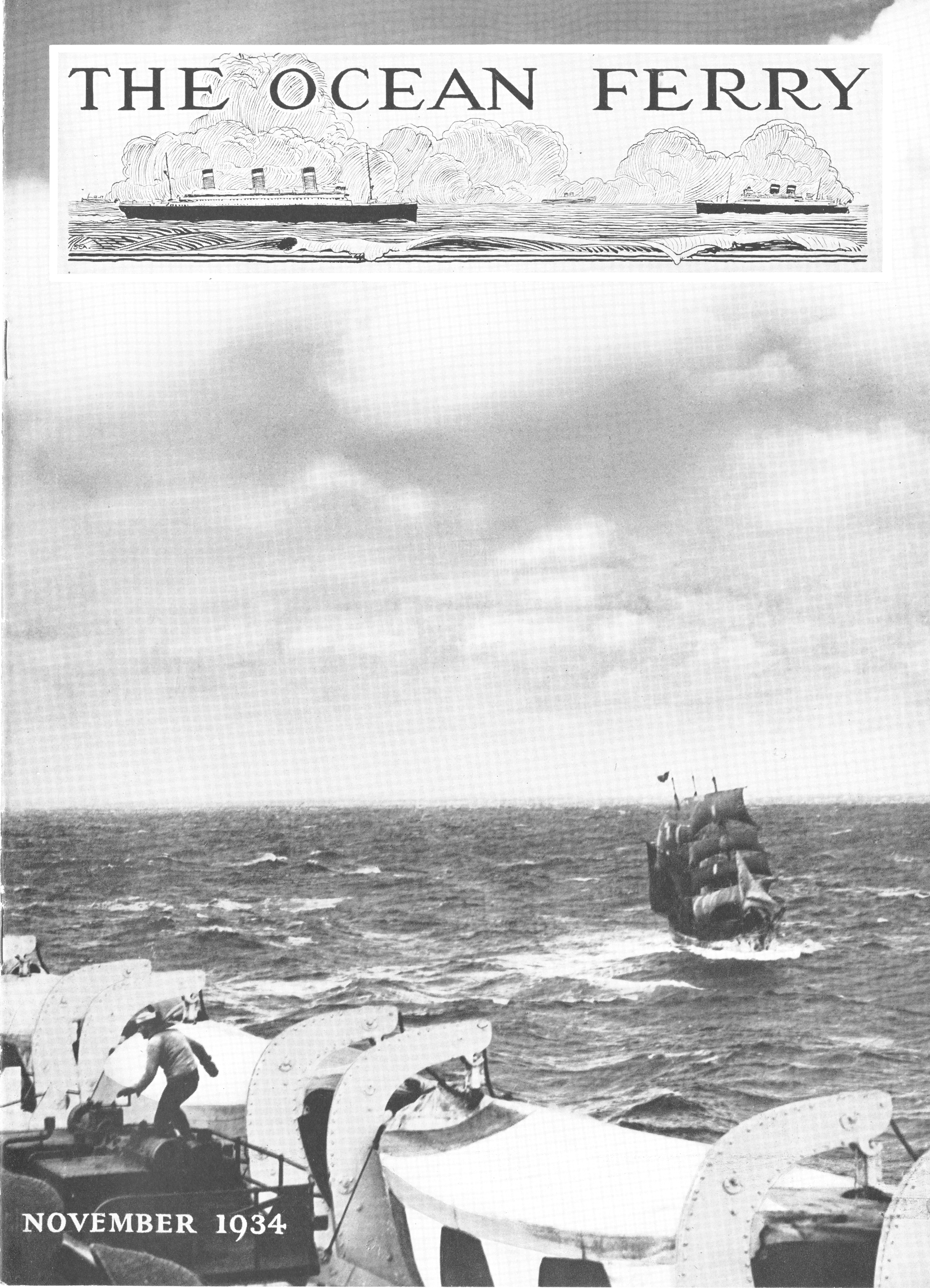
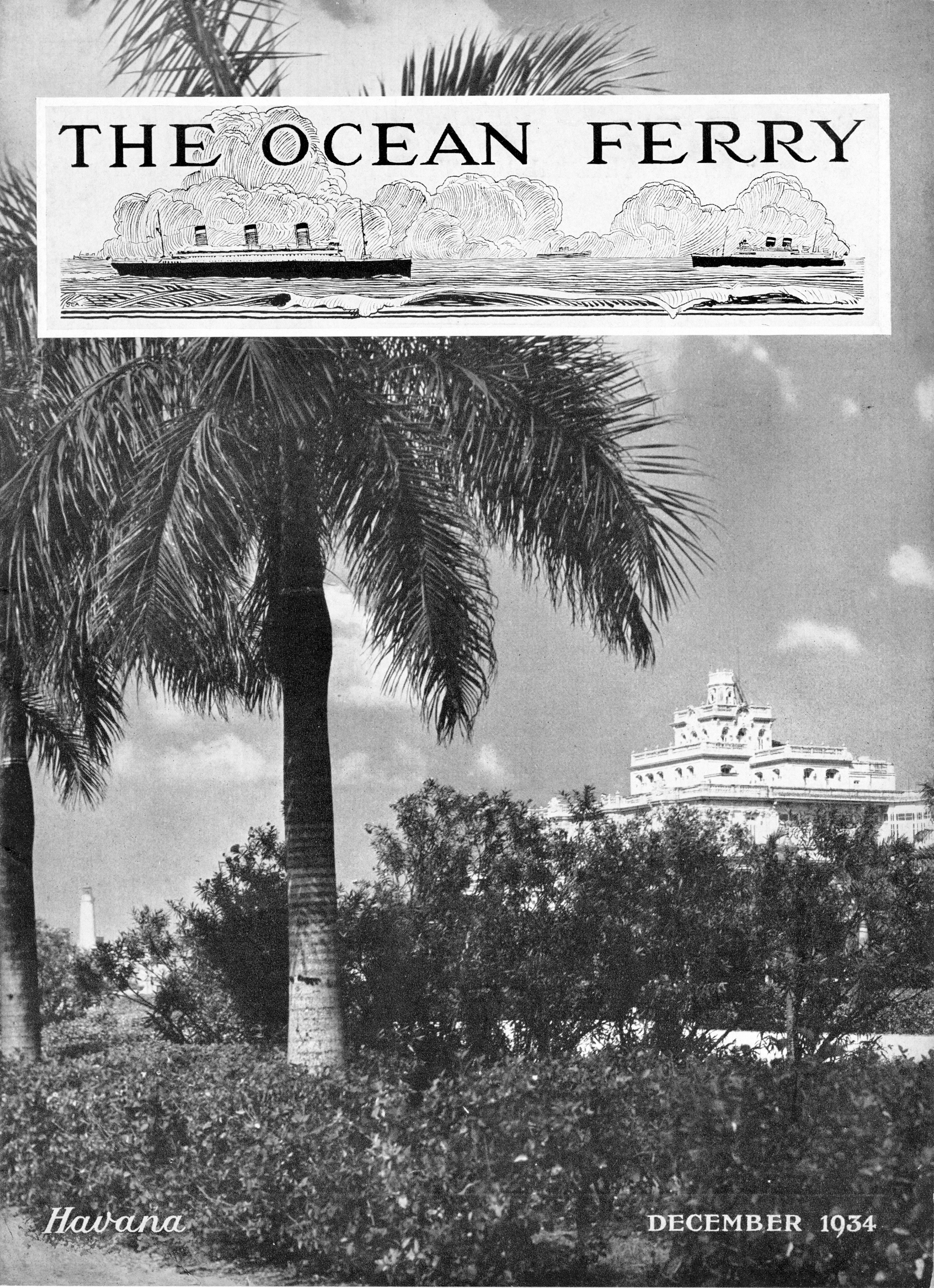
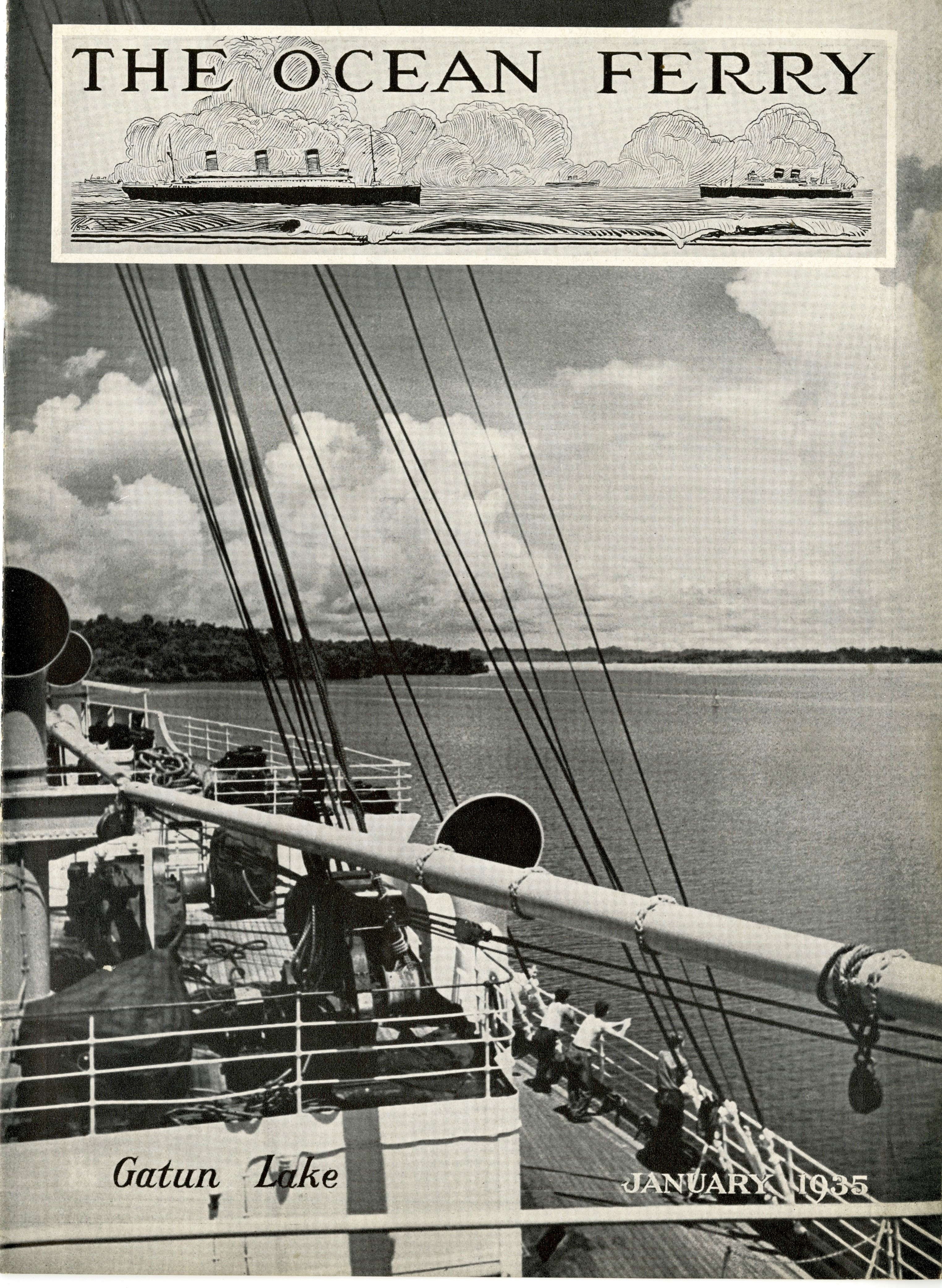
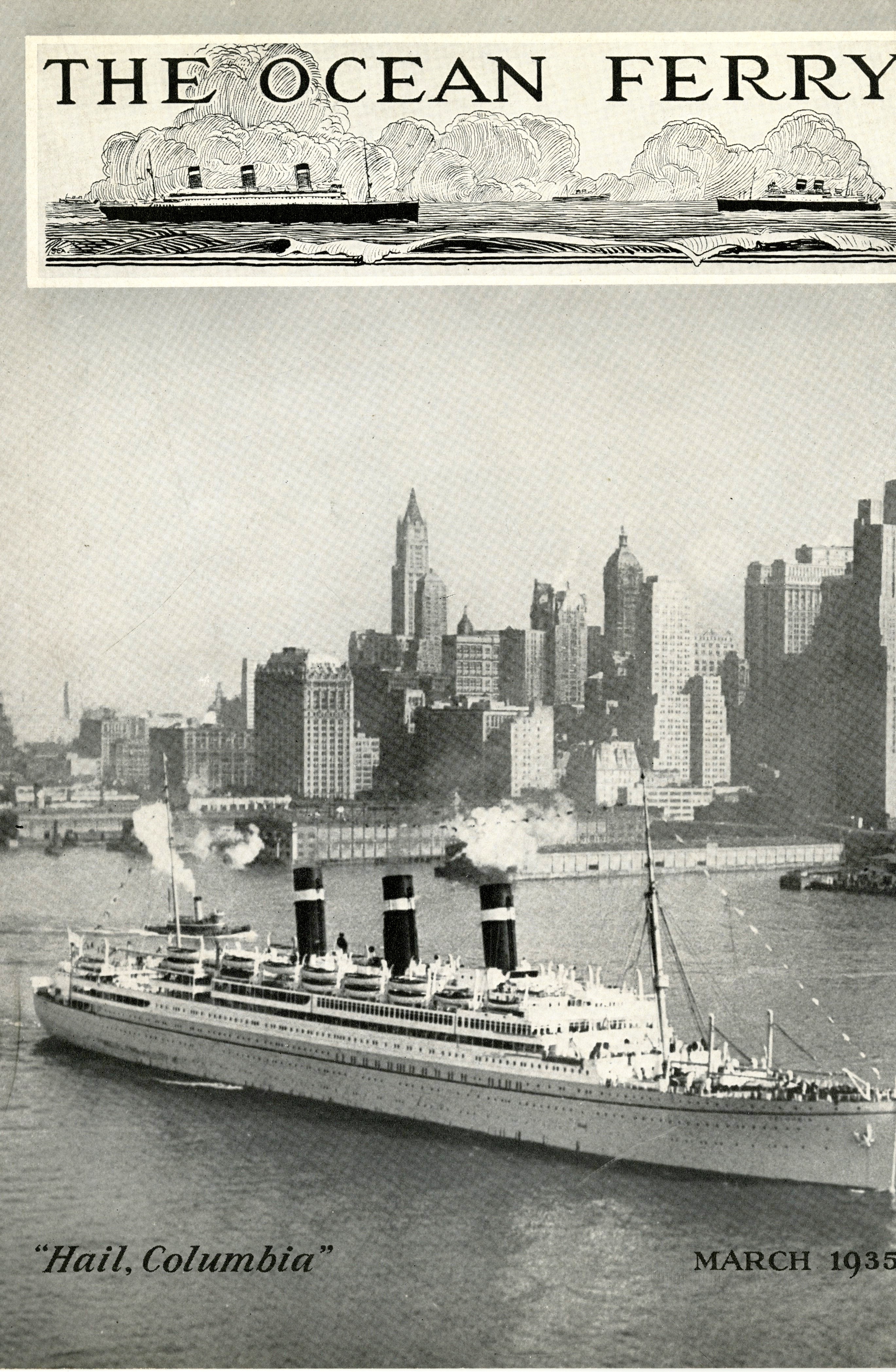
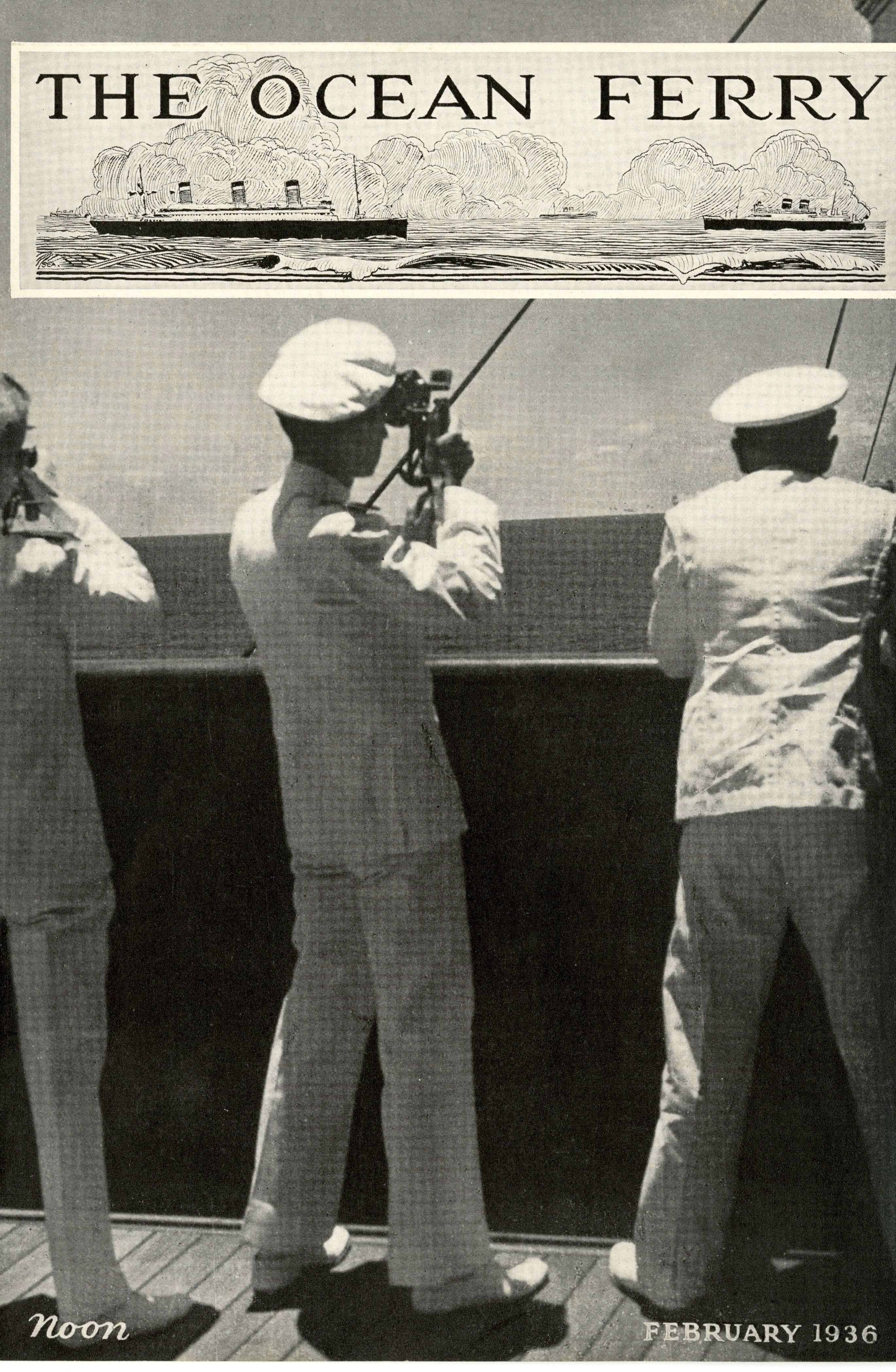
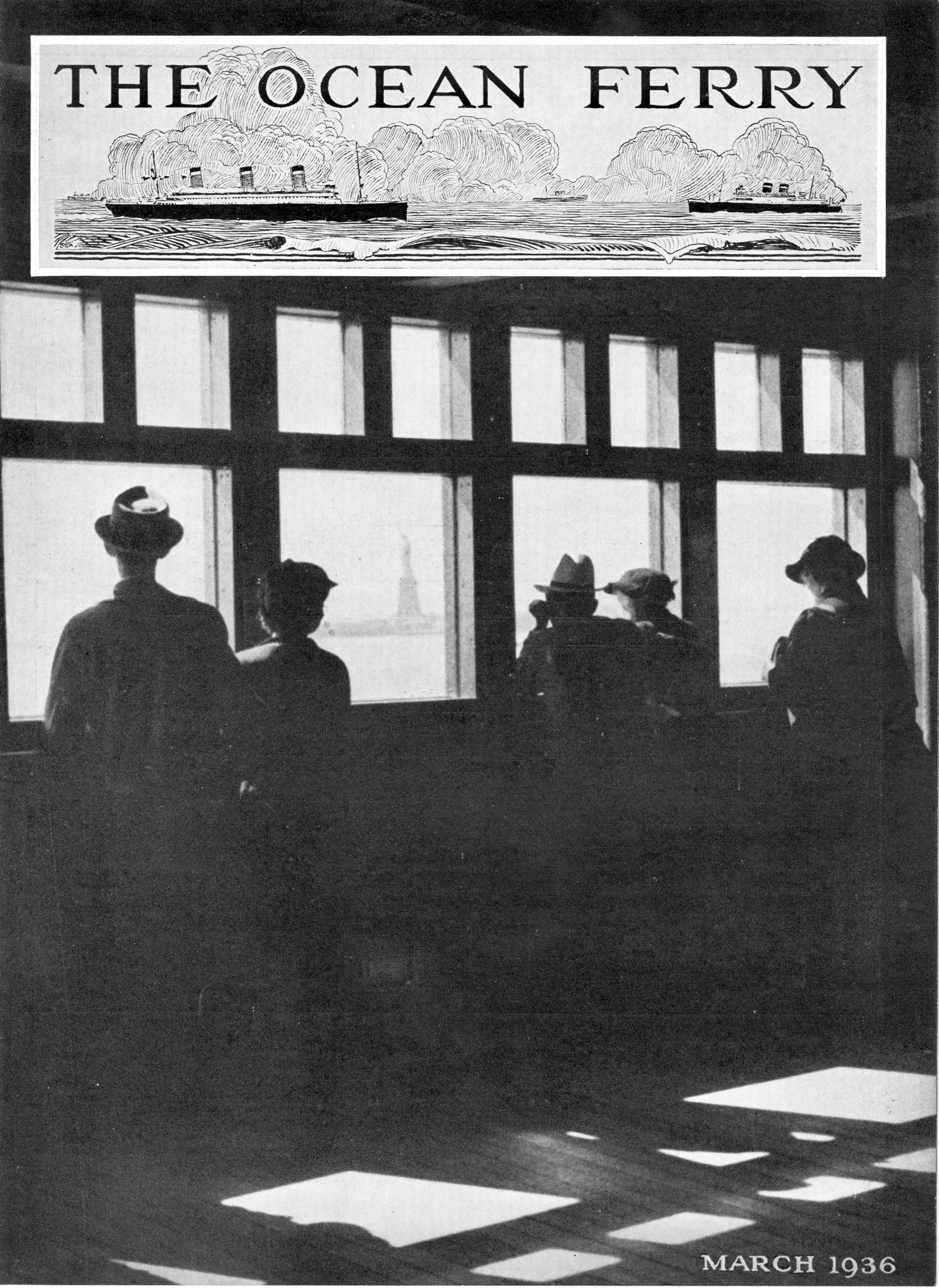
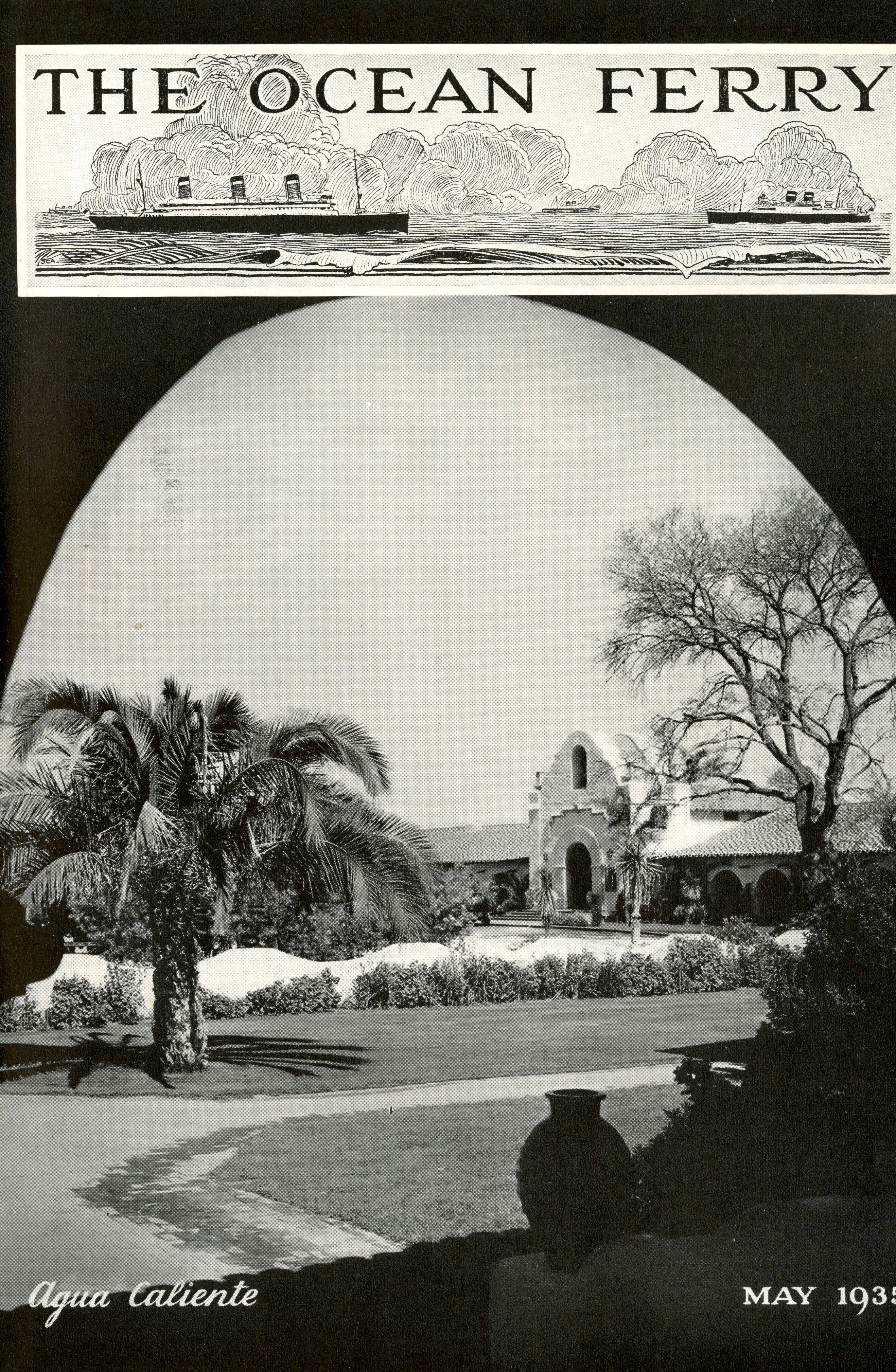
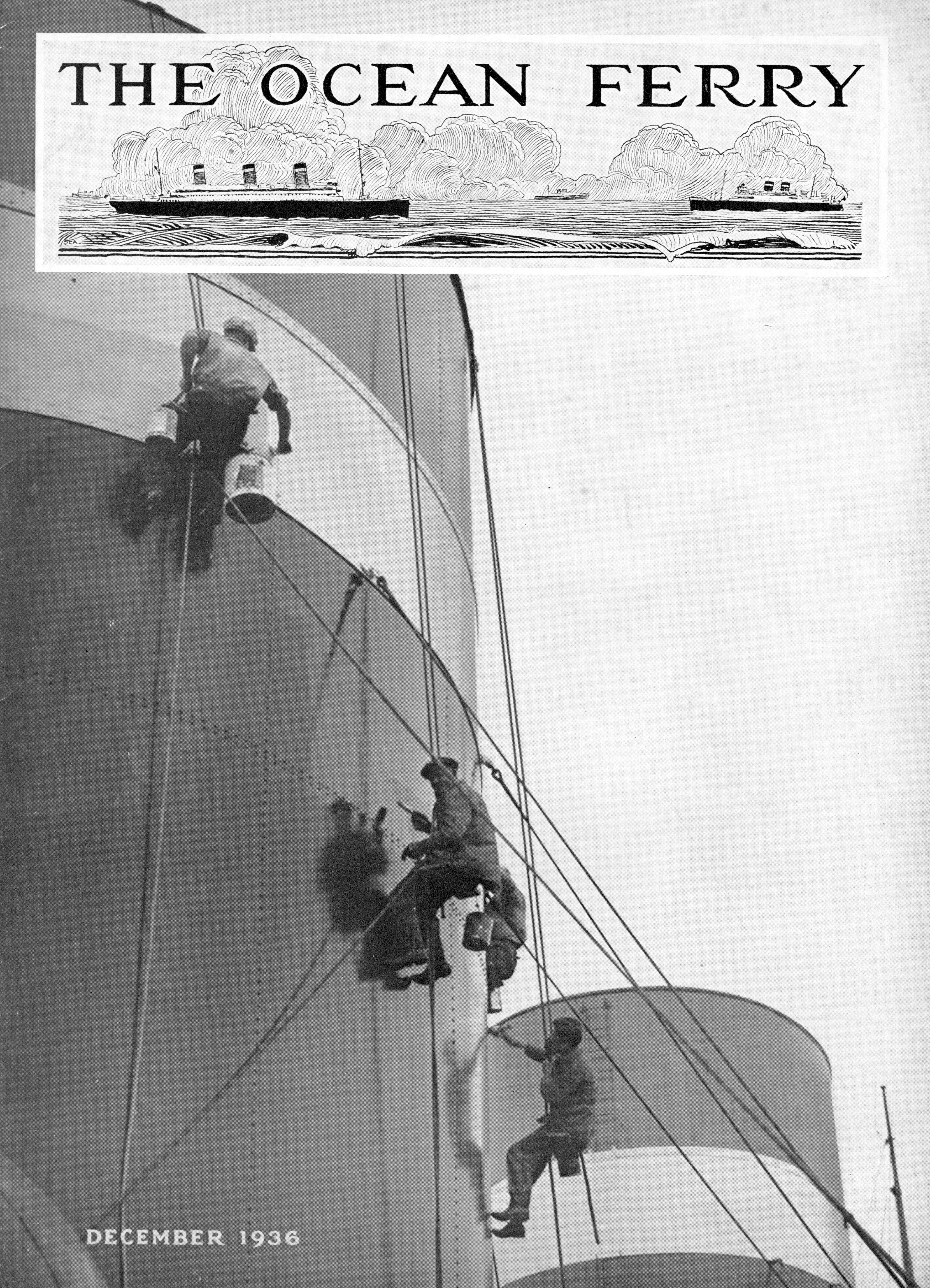
The American Merchant Marine Museum has stacks of Ocean Ferry magazines – some in quadruplicate or more. This publication was the internal communication organ of International Mercantile Marine Company for all shipping lines under its corporate umbrella. It was issued monthly from 1921 through 1938, often with a combined number in the summer months. The magazine’s interiors have photographs of ships and employees as well as promotional copy mixed with items of interest to IMM personnel: retirements, awards, ship’s cat antics, and owner’s pronouncements. By the late 1930s, the steamship lines most represented in the text are Panama Pacific Line and United States Lines; it was eventually supplanted by Afloat and Ashore in 1939 – when the two lines merged under the flag of USL.
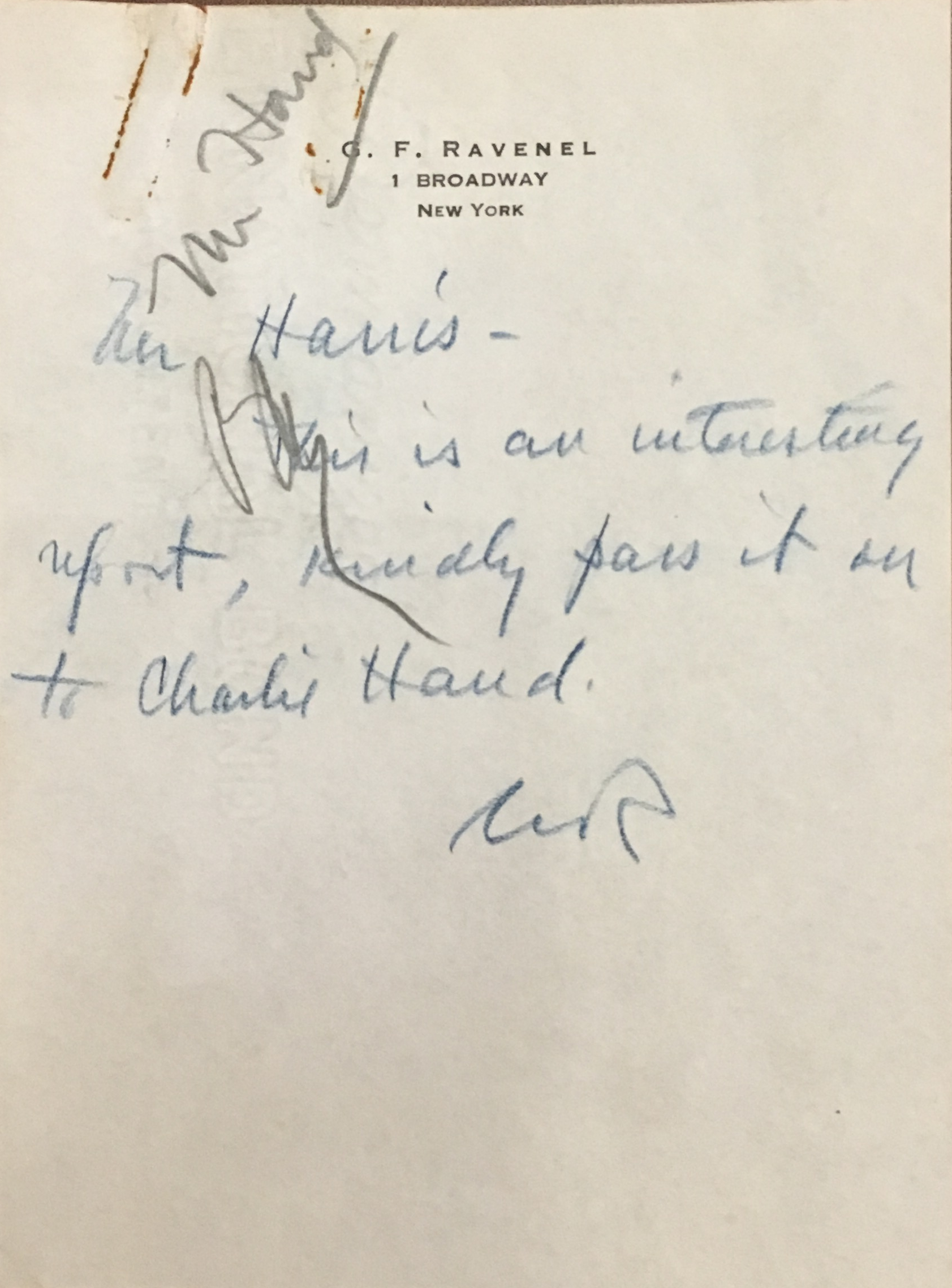
The magazine’s masthead shows it edited by Carla Dietz and a revolving coterie of managing editors. Many of the issues are undoubtedly from the personal collection of Frank O. Braynard from when he was a curator at the Museum from 1980 until 2000, or from United States Lines itself – Mr. Braynard rescued a number of file cabinets from the archives ofOne Broadway when the company went bust.
Most of the magazine copy for Ocean Ferry was written by Ms. Dietz. She was in an exclusive club of one – being the only woman steamship line publicist at the time when the field was dominated by men. She was born in 1888 in Brownview, just over New York’s border with Canada. Brought up the daughter of a butcher in a hardscrabble part of Manhattan that was eventually razed to make way for Rockefeller Center, she landed a job with International Mercantile Marine as a press aide. After rising through the ranks, she became the voice of USL – eventually tasked with writing the wartime narrative of the company, and later promoting SS United States in newsy, direct prose. She retired in 1959 and passed away in 1967.
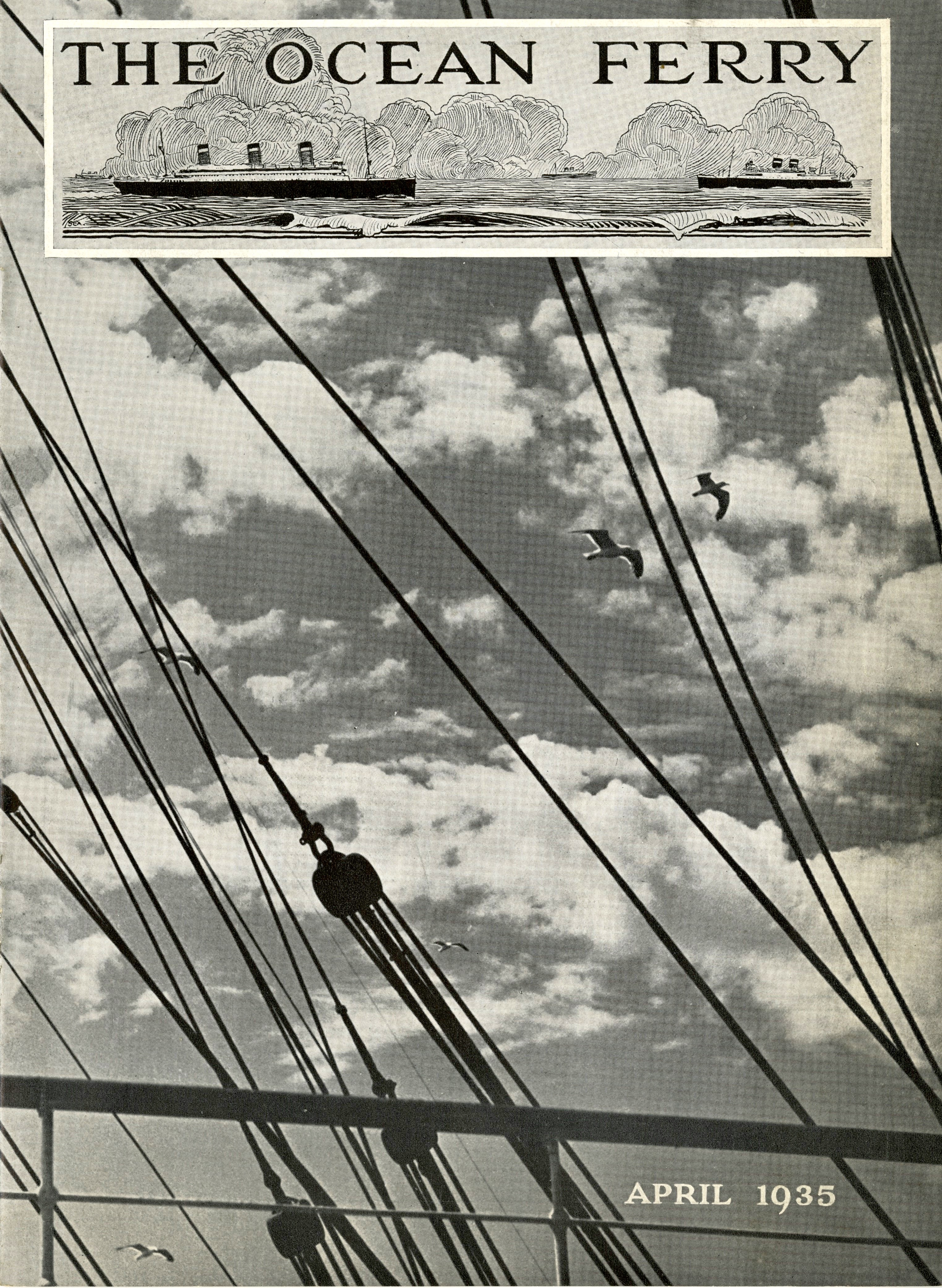
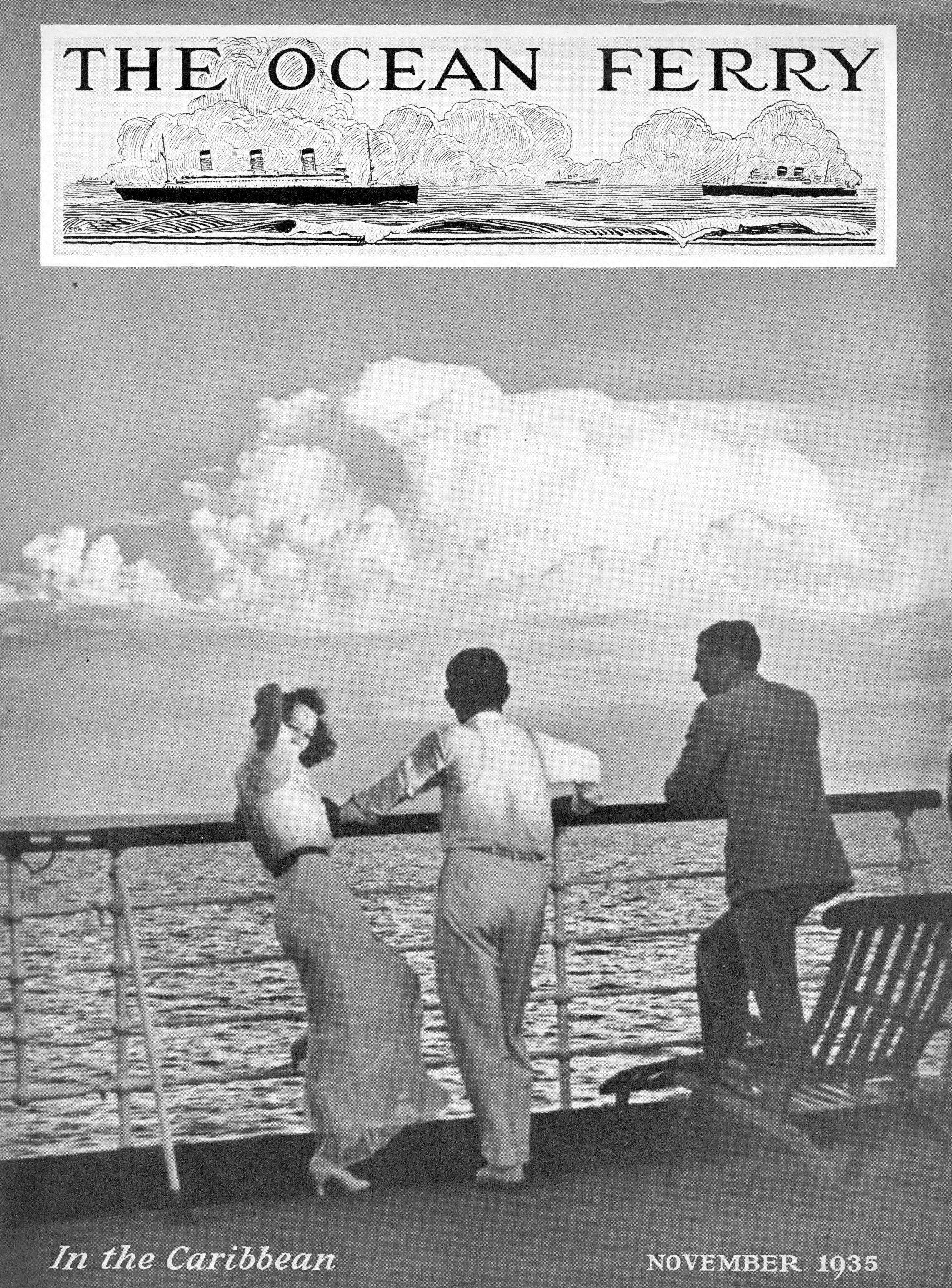
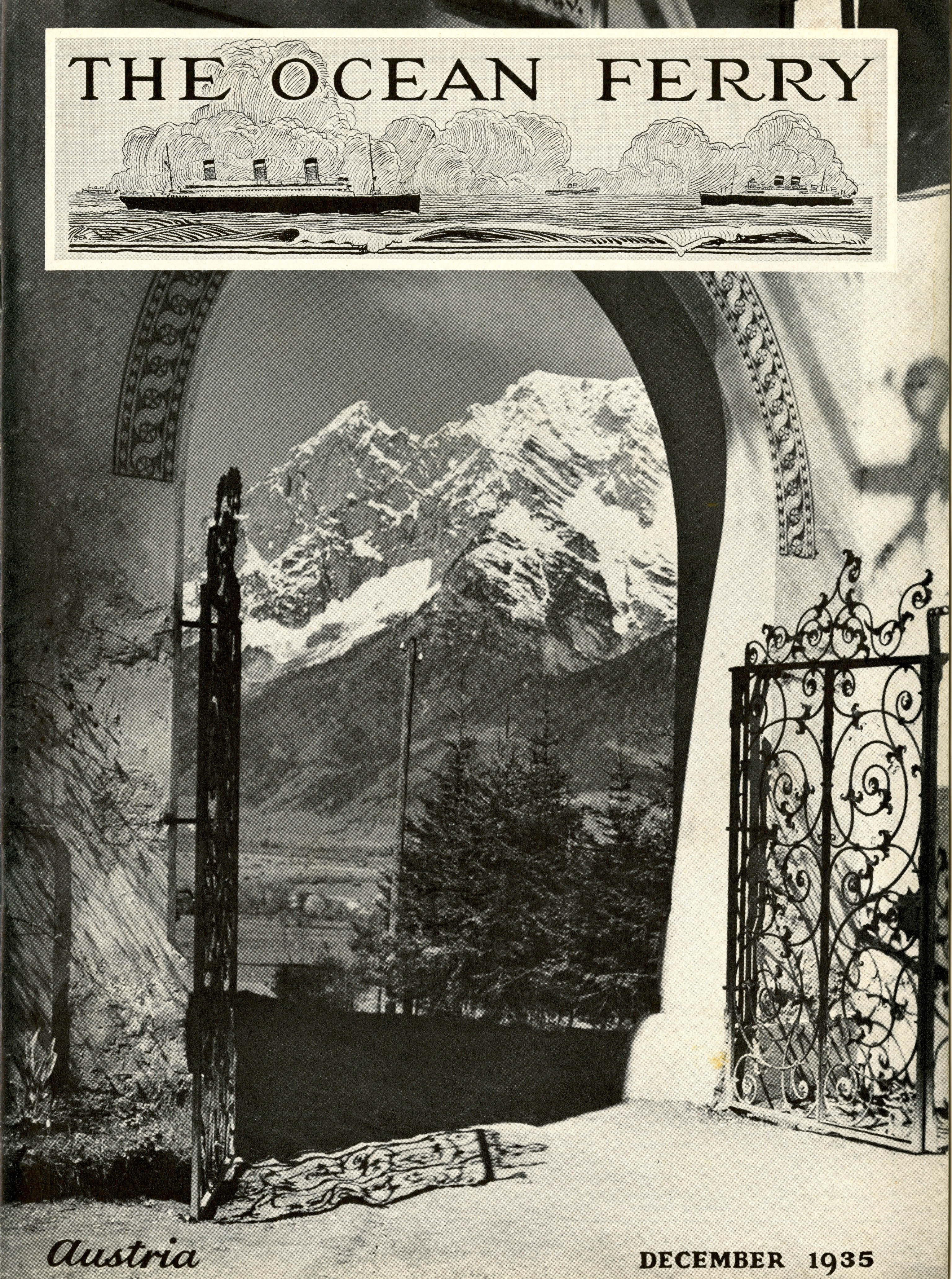
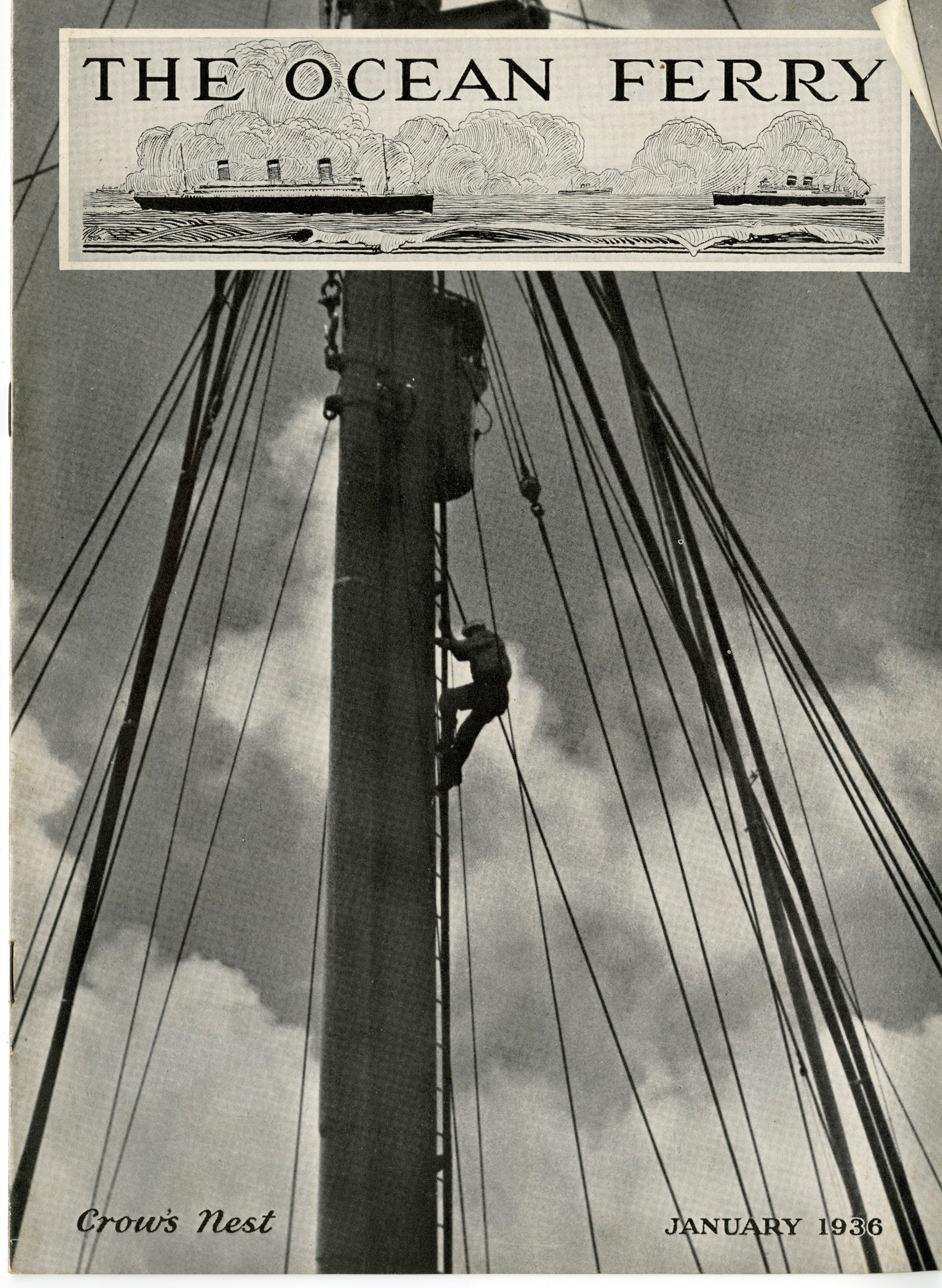
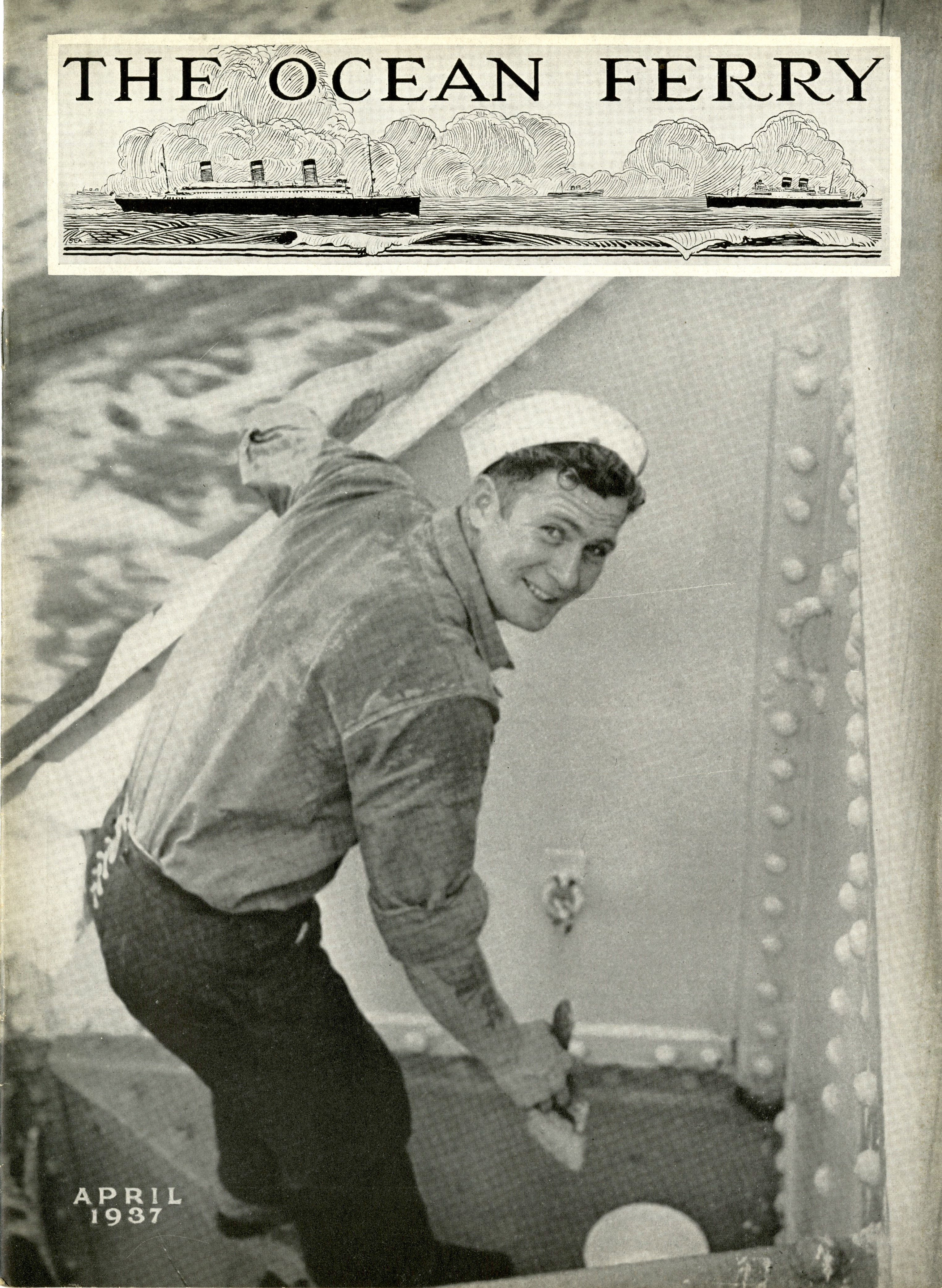
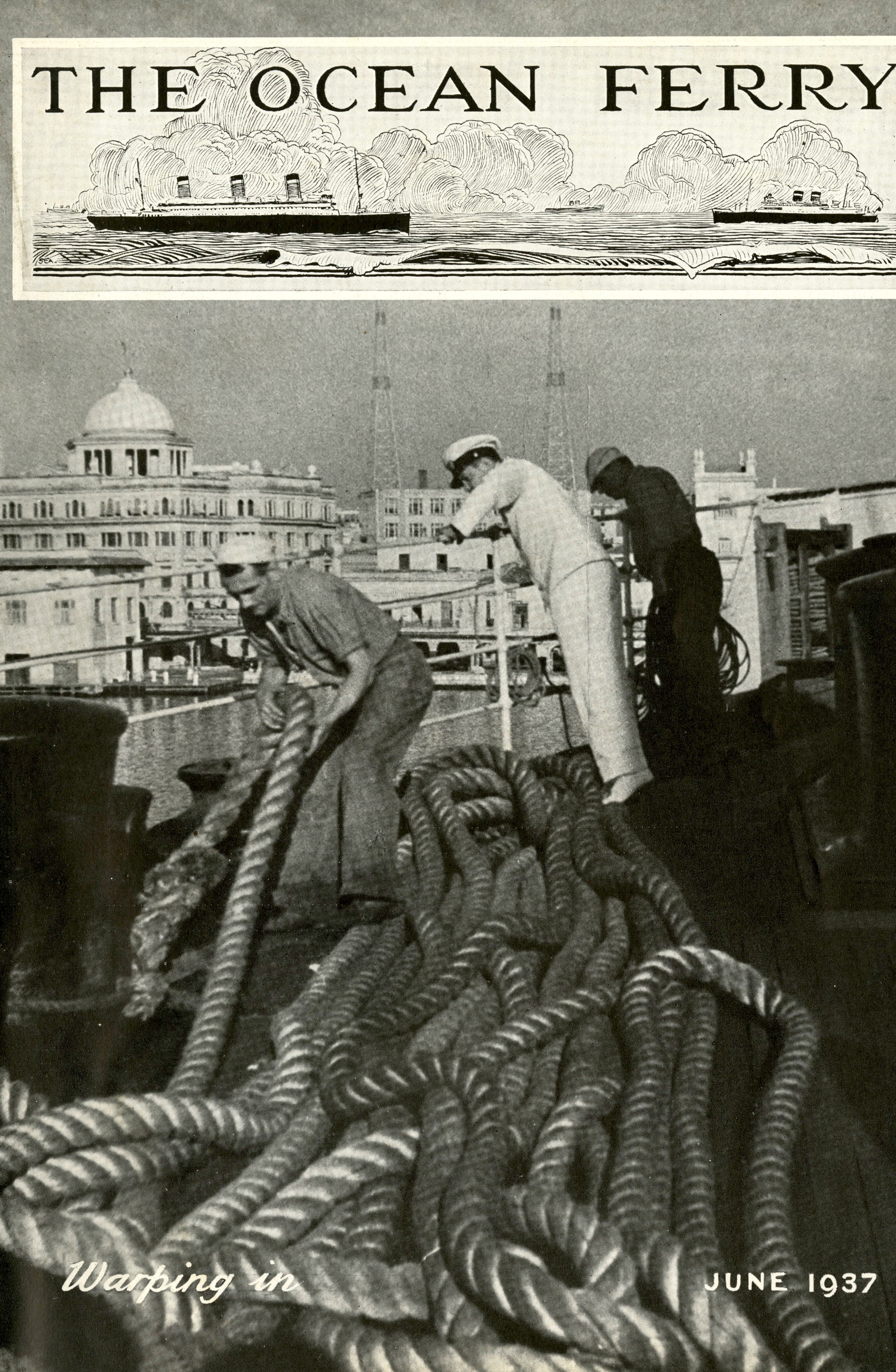
The following is a gallery of some Ocean Ferry covers I located at the United States Lines Archive. It is a stunning publication in slick magazine format, but despite the glossy pages, it was produced using newspaper halftones – hence the dithering and moiré effect in some of my scans.
Below are maps of the 142 by year; each month is indicated by pins of different colors – the colors are constant between years. Select [] on each map to view details; e.g. individuals, months, &c.
The 142 locations of casualties: 1940-1945
The 142 locations by year: 1940 The 142 locations by year: 1942
The 142 locations by year: 1943
The 142 locations by year: 1944
The 142 locations by year: 1945
Below is a map of where actions that earned the Merchant Marine Distinguished Service Medal took place along with locations of the 142 casualties.
War or not, Kings Pointers sail where their ships take them: they sailed convoy routes during the Second World War and were hunted by submarines, surface raiders, and long-range bombers, a generation later, they were involved in military sealift to South Vietnam, and today they can be found in pirate-infested waters off the Horn of Africa and in the war zones declared in the War on Terror. The United States Merchant Marine Academy was and continues to be the only Federal service academy to send its students into active war zones. This policy is not a conscious choice on the part of the Academy administration, rather an unintentional facet of the hands-on training required of midshipmen for them to earn their Coast Guard licenses. A ship sails where a ship sails.
The Second World War reports of cadet-midshipmen are not encouraging. Their words relay the naked face of war and the struggle of young men to comprehend the horrors around them. The ribbons they were awarded after the fact acted as mementos for those harrowing days. Mr. Thomas F. McCaffery’s speech delivered at the United States Merchant Marine Academy Battle Standard Dinner on April 7, 2014 spoke about the courage of all those cadet-midshipmen who shipped out:
Thomas F. McCaffery, United States Merchant Marine Academy Battle Standard Dinner on April 7, 2014.
Please find all extant “Enemy Action Reports” below. Not to be skipped is the “Preliminary Note” from Volume 1 A-B, and which I have provided in full.
Detail of painting at the American Merchant Marine Museum. Col.: AMMM.
Preliminary Note
From early 1942 to early 1946, every cadet-midshipman in what was then the U. S. Merchant Marine Cadet Corps was required, under standing orders of Corps Supervisor Richard R. McNulty (later Vice Admiral, USMS), to submit a letter reporting each casualty, whether by enemy action or marine peril, befalling any ship to which he was assigned for sea training in preparation for his advanced course at the then newly established U. S. Merchant Marine Academy, Kings Point, N. Y. His letter was to describe the casualty as he experienced it, detailing times and places, fatalities (especially to other cadet-midshipmen), damage to the writer’s ship or its attacker, acts of bravery or incompetence, and even personal observations on how the emergency arose and was handled.
In the war’s early months, the letters tended to be informal, often in longhand; but, as their volume increased and processing was systematized, they came generally to take one or both of two forms: (a) the typewritten letter to Corps Headquarters prepared at the district or other office to which the cadet-midshipman reported on coming ashore; (b) a blue-ink multiple copy, usually slightly edited to conform to security or style regulations, for circulation to an official distribution list. Little outright censorship is apparent, since the letters were classified “Confidential,” and so remained until the blanket postwar declassification. Each man was required to make his own report on any casualty in which he was involved, and any copying or textual collaboration was forbidden and punishable — at least to the extent of complete rewriting.
The collection here presented cannot be certified complete — in fact, is very probably incomplete. It comprises the contents of six thick, somewhat dilapidated file folders which came to light in the basement of Wiley Hall, the Academy Headquarters, in the mid-seventies, during preparation of the book We’ll Deliver, the early history of Kings Point. It is evidently a set of copies formerly maintained in some office on campus. The master set of originals which must have been maintained at Corps Headquarters in Washington has not been found, and may well have ceased to exist during the Rothschild cutbacks of the early fifties. No other duplicate files are known.
As found, the Wiley basement files were almost completely without organization, aside from a very loose chronological sequence between entire folders. While made up chiefly of cadet-midshipman casualty letters, they also included official correspondence pertaining to the shipboard phase of individuals’ training, all seemingly inserted with no other order or sequence than that in which they dropped into the basket after circulation. As a result, the “a” and “b” versions of the same cadet-midshipman letter might be widely separated — even appearing in different folders. In addition, such collateral matter as official commendations, background reports on special achievements , news correspondents’ dispatches, masters’ and chief engineers’ performance reports, and cadet-midshipmen’s requests for ribbons and “stars” were consigned to the same file, evidently at random.
The bulk of the collection, and of course that which gives it its principal historic value, consists of the letters written by shipboard students to report the destruction or damaging of their ships, and the deaths of fellow Cadet Corpsmen. However, it is believed that, rather than attempt to draw a line between more important and less important, the contents of these exhumed files should be presented in their entirety, but sorted and rearranged in alphabetical order of the cadet-midshipman names involved.
Thus, under each man’s name will be found the casualty letters he submitted (both “a” and “b” versions, plus the relatively small number of longhand “first drafts” that were preserved) as well as any other official correspondence concerning his service, or death, at sea. In cases where, for such reasons, an individual cadet-midshipman is mentioned in another individual ‘s letter, a facsimile of that letter is inserted in his own alphabetical position, to obviate cross- referencing.
As a further aid in using the collection, it has been supplied with two indexes: one of cadet-midshipmen and one of the ships to which they were assigned for training. The first shows, for each man, a serial number (having no significance outside the collection), his name, whether he was lost in action, the types of correspondence pertaining to him, and the ship in which he served at the time of that correspondence. The second is an alphabetical listing of such ships, in which the serial numbers from the first are used to show which cadet-midshipmen were assigned to each.
The first impact of these almost-lost records of an already distant era of American hazard and heroism at sea is to impart new emphasis and illumination to the Academy motto Acta non Verba. But they also testify how clearly the men who planned Kings Point and molded its first student generations perceived the indispensability of the Verba in building and perpetuating its tradition.
“Action in which Cadet-Midshipman Edwin O’Hara Lost His Life.” By W.N. Wilson. Oil painting of a man firing a deck gun, casualties on the deck; the scene is from the sinking of SS Stephen Hopkins, for which the vessel earned a Gallant Ship award. Col.: AMMM (1943.004.0001/1954.005).
Cadet-Midshipman Frederick “Fred” M. Steingress (E), survivor of the SS Cornelia P. Spencer attack. Col.: Dennis Charles.
Enemy Action Reports Charts & Analysis
This (very busy) scatter-plot graph of Enemy Action Reports (note: I have normalized the data by including only one report per vessel) by month and year is quite telling – even though the data are incomplete – as it shows the devastation of United States fleets by the Axis during the initial years of the war, and how the tide was turned by 1944. Although correlation does not translate into causation, the additional layers of the dates of Merchant Marine Distinguished Service Medal & Meritorious Service Medal awards to cadet-midshipmen along with “the 142” casualties, suggests awards came during periods of low Cadet Corps morale; by the same token, Cadet-Midshipman Edwin O’Hara’s posthumous award came at the height of cadet-midshipmen engagement with the enemy.
Above is a cleaner chart only showing “the 142” (casualties of the Cadet Corps) and the months of Merchant Marine Distinguished Service and Meritorious Service Medal award to cadet-midshipmen. Award of all gallantry medals to the Cadet Corps ended in December 1946.
The spreadsheet below provides the raw data for the charts. It is a complete and corrected list of all cadet-midshipmen post-action reports; these actions include enemy engagement and collisions. Where the reports note a fellow cadet-midshipman was lost or became a casualty, these individuals are noted in the “Casualties” column; their respective pages on the Kings Pointers in World War II site may be reached by clicking on their entry. Transcribed reports done by midshipmen on the behalf of the American Merchant Marine Museum are linked off select vessels.
Special thanks are owed to Dr. Joshua Smith at the American Merchant Marine Museum for granting me access to the reports.
To: Supervisor, U.S. Merchant Marine Cadet Corps Via: District Cadet Supervisor, New York Subject: SS William King – loss of
The subject vessel left Philadelphia with a cargo of Army
trucks, ammunition, and food and blankets, joining a convoy of about 26 ships
in New York. The vessel sailed from New York during the latter part of November
and arrived in Guantanamo Bay, Cuba. Part of the convoy proceeded ahead through
the Canal to the Pacific, but the writer’s ship did not proceed through the
Canal for two days, then sailed down the coast of South America through and
around the Horn to Capetown, S.A., then to Karachi, India and then to Bushire
and Basia in Persia. All the cargo was unloaded at Dushire except some
ammunition, and after taking on fuel oil in Arabia, the ship proceeded down the
coast of Africa toward the port of Durban.
On June 6, 1943, at about 1340, ship’s time, without
warning, the vessel was hit by a torpedo in #3 hold and because the ship was
empty, the torpedo went right into the fireroom. The writer had come off watch
at 1200 and at the time the torpedo struck, he was in his quarters reading.
Immediately upon being hit, the engines stopped and the lights went out. The
writer’s quarters filled with smoke, so groping his way out, the writer
proceeded to the bridge. Reaching the bridge, the Third Mate handed the writer
a radio and ordered the writer to the life boat.
Because the port life boats had been smashed by the force of
the exploding torpedo, the survivors were able to use only the starboard boats
and two of the life rafts. All the men on duty in the engine room were killed
and a seaman on watch on deck was blown into the water and drowned. The
Captain, Second Mate and gun crew remained on board and manned the guns.
A second torpedo was fired, but missed the ship, passing by
the stern. The Captain gave orders to abandon ship and after all the survivors
were in the boats and rafts, a third torpedo was fired and hit the vessel
amidships. The ship blew up and sank almost immediately, only a few planks
coming to the surface after she disappeared.
The submarine now surfaced and the captain of the enemy
craft ordered us to come alongside his vessel. It was a German submarine, light
gray in color about 250 feet in length. She carried no markings and the Captain
spoke in broken English. He ordered the Captain of our ship to come aboard, and
after bidding us goodbye, our skipper climbed onto the submarine. Beside the
Captain of the submarine, two other officers were on deck with glasses looking
for planes, and two sailors stood there with sub-machine guns. One of these men
tired a burst towards our boat in order to make us row faster towards the
submarine. The other sailor was taking pictures of us and the ship going down.
After three days and nights in the life boats, the survivors
were picked up by a British trawler and taken to Durban. The writer’s rescue
ship also picked up the rafts the day before, and the other life boat was
picked up three days later by a destroyer. The survivors stayed in Durban for
15 days, then left on an American troop ship for Casablanca. They were then
transferred to a British ship and landed in Newport News, Va. on July 25, 1943.
All the Cadet-Midshipman aboard the subject vessel were rescued except Engine Cadet-Midshipman Henry Bogardus who was on duty in the engine room at the time the first torpedo struck the ship. All hands in the engine room were killed by the force of the blast, and it is assumed that this Cadet-Midshipman was killed instantly. The three surviving Cadet-Midshipmen all stayed together, and all arrived in New York at the same time, reporting to the District Cadet Supervisor for further orders.
From:
Cadet-Midshipman James G. Fuqua, Fourth Class, (D-2), USMMCC
To: Supervisor, U.S. Merchant Marine
Cadet Corps
Via: District Cadet Supervisor, New
York
Subject: SS BLOODY MARSH – loss of
1. The subject
vessel left Houston, Texas at 1530, June 27, 1943 with a full cargo of special
Navy fuel oil. She traveled alone and without escort through the Gulf of Mexico
into the Atlantic and northward to New York where we were due to arrive on July
3rd. The weather conditions for the trip were normal. During the day
of July 1st, a Navy blimp escorted us, but the blimp left us again
at about 1930 the same night.
2. At 2308, the
night of July 1st, our ship was hit by a torpedo while in position
32 45 N-Lat., 79 45 W Long., about 100 miles off the coast of Georgia. At the
time of the attack the writer was in his quarters, but upon hearing the explosion
immediately went to his station to attend the falls, when the abandon ship
signal was sounded. The writer’s lifeboat was the second boat to get away from
the ship. All hands did his work quietly and efficiently and everything went
off smoothly. In all, four boats got away from the ship, one having jammed and
the other being smashed by the explosion of the torpedo.
3. When all the
boats were a safe distance from the ship the submarine surfaced and fired
another torpedo into the ship. This one hit amidships and the tanker sank
immediately, time, about 2330. The sky was overcast and very dark, without
moonlight and consequently we were unable to see the submarine very clearly.
However, it appeared to the writer to be about 350 feet in length, and after
firing the second torpedo at our ship it disappeared from sight, traveling in a
northwesterly direction.
4. During the
night, a complete black-out was observed on the boats, and at about 0600 a Navy
blimp was sighted. He flew over our position and found us at once. He signaled
to us that we would be picked up about 0900. A Navy sub-chaser hove into view
at about that time and picked up all the survivors in the boats. Seventy-five
men were rescued and only two were lost. These were on duty in the engine room
at the time the torpedo hit.
5. All the
survivors were taken to Charleston, S.C. for questioning and after Naval Intelligence was through with us, we
entrained for New York. All the Cadet-Midshipman aboard were rescued, and all
returned to New York together, reporting to the District Cadet Supervision on
July 6th.
Signed
(James G. Fuqua)
Cadet-Midshipman James
G. FUQUA, Fourth Class, (D-2), USMMCC
From: Cade-Midshipman Patrick C. FALLONE, Third
Class, D-2, USMCC
To: Supervisor, U.S. Merchant Marine Cadet
Corps
Via: District Cadet Supervisor, New York
Subject: SS MATT W. RANSOM – torpedoing of
The SS MATT W. RANSOM sailed from New York on
March 19, 1943, bound from Bermuda to join a convoy at that port. Forming there, the convoy sailed for
Casablanca, North Africa on March 23, 1943.
Arriving in Gibraltar on April 11, 1943, the convoy split up, and the
vessel to which the writer was assigned departed for Casablanca together with
six other ships.
At about 1545, on April 11, 1943, the writer’s
vessel was struck by a torpedo. The crew
assembled on the boat deck and waited for the Captain to give the orders to
abandon the ship. The ship did not
appear to be sinking. Nevertheless, the
crew took to the lifeboats and floated around in the vicinity of the vessel for
some time.
Later, after ascertaining that the ship would
not sink, the Captain and six other members of the crew returned to the vessel
and the rest of the crew were picked up by U.S. Navy patrol boats. The SS MATT W. RANSOM was then taken in tow
by the Navy tugs and safely towed to the harbor in Casablanca.
The entire crew of the ship then boarded the
ship and proceeded to discharge the cargo.
All hands went right on with the regular duties.
The writer remained in Casablanca for almost
three months living aboard the ship until it was finally determined that the
ship was not in fit condition to return to the United States. The crew was then given transportation back
to the United States on the SS MARIPOSA departing from Casablanca on June 27,
1943, and arriving in Boston, Mass. on July 4, 1943.
No lives were lost in the action. The three Cadet-Midshipmen, shipmates of the
writer, were all repatriated at the same time, and all were in good health,
none the worse off for the experience.
All the Cadet-Midshipman entrained for New York and reported July 6, 1943
to the District Cadet Supervisor for further orders.
Signed (Patrick
C. Fallone)
Cadet-Midshipman
Patrick C. FALLONE, Third Class, D-2, USMMCC
TRAINING ORGANIZATION
U.S.
MERCHANT MARINE CADET CORPS
39
BROADWAY, NEW YORK, 6, N.Y.
July
7, 1943.
CONFIDENTIAL
From: Cadet-Midshipman Patrick C. FALLONE, Third
Class, D-2, USMMCC
To: Supervisor, U.S. Merchant Marine Cadet
Corps
Via: District Cadet Supervisor, New York.
Subject: Loss of vessel SS MATT W. RANSOM;
Report on
The MATT W. RANSOM left New York on March 19,
1943 bound for Bermuda in order to join a convoy at that port. Forming there, the convoy departed for
Casablanca on March 28th.
Arriving in Gibraltar on April 11th, the convoy split up, and
the vessel to which the writer was assigned departed for Casablanca together
with six other ships.
At about 1535, on April 11th, the
writer’s vessel was struck by a torpedo.
The crew assembled on the boat deck and waited for the Captain to give
the orders to abandon the ship. The ship
did not appear to be sinking, nevertheless the crew took to the life boats and
floated around in the vicinity for some time.
A little while later, after ascertaining that
the ship would not sink, the Captain and six other members of the crew returned
to her, and the rest of the crew was picked up by U.S. Navy patrol boats. The MATT W. RANSOM was then taken in tow by
Navy tugs and towed to the harbor of Casablanca safely.
The entire crew of the ship then boarded her and
proceeded to discharge the cargo. All
hands went right on with their regular duties.
The writer remained in Casablanca for almost
three months living aboard the ship until it was finally determined that the
ship was not in condition to be sent back to the United States. The crew was then given transportation back
to the U.S. on the SS MARIPOSA departing from Casablanca on June 27th,
and arriving in Boston, Mass on July 4th
No lives were lost in the action encountered,
and the three Cadet-Midshipmen who were shipmates of the writer were all
repatriated at the same time and all were in good health, none the worse off
for the experience. All the
Cadet-Midshipman entrained for New York and reported to the District Cadet
Supervisor for further orders.
TRAINING ORGANIZATION U.S. MERCHANT MARINE CADET CORPS 39 BROADWAY, NEW YORK, N.Y.
April 22, 1943
CONFIDENTIAL
From: Cadet-Midshipman Wayne Douglas FAJANS, Fourth Class, E-2 USMMCC To: Supervisor, U.S. Merchant Marine Cadet Corps Via: District Merchant Marine Cadet Instructor, New York. Subject: Loss of the SS JAMES OGLETHORPE, Report on
We sailed from New York, on
March 8, 1943, in a convoy composed of more than 40 ships and an escort
consisting of only two 4 stack destroyers and three Canadian corvettes. The
weather was the usual kind experienced during this time of year in the North
Atlantic, i.e., dirty and sloppy seas.
During the evening of March
16, several ships in the convoy were sunk by enemy torpedoes. The writer
returned to the crew at the aft four inch gun, and while at this station
noticed the conning tower of a submarine on the starboard side. This fact was
reported to the Gunnery Officer but as far as the writer knows, no action was
taken and this was the only time any enemy craft was observed.
At 2133, zone plus 2, of the
same evening and while a heavy sea was kicking up, our ship was hit by a
torpedo on the starboard side, abreast of No. 2 hatch. Our ship began to settle
but it turned out that it did not sink, however, the conditions appeared much
against us, and we were given permission by the Master to abandon the ship at
our own discretion and the major part of the crew proceeded to do so at once.
The writer’s station was in No. 5 boat and while it was being lowered, the forward
fall carried away, causing about 30 men to be spilled into the water. This
incident naturally created considerable confusion and several men lost their
lives.
About fifteen men managed to
keep afloat by hanging on to loose boxes, lumber and other articles floating in
the water. At about midnight, the H.M.S. BEVERLY, a destroyer, hove to and
picked up four men floating in the water, including the writer.
We were well taken care of
while aboard the destroyer, and it continued its escort duty until arrival at
the Irish Coast when it proceeded to Londonderry, Ireland, where we were landed
and eventually repatriated.
April 22, 1943
C O N F I
D E N T I A L
Cadet File No: 43-2547 USNR File No: 181985
From: Cadet-Midshipman Wayne Douglas FAJANS, Third Class, (E-2) USMMCC To: Supervisor, U. S. Merchant Marine Cadet Corps Via: District Cadet Supervisor, New York Subject: SS JAMES OGLETHORPE – loss of
Subject Vessel sailed from New York,
on March 8, 1943, in a convoy composed of more than 40 ships and an escort
consisting of only two 4 stack destroyers and three Canadian corvettes. The
weather was the usual kind experienced during this time of year in the North
Atlantic, i.e., dirty and sloppy seas.
During the evening of March 16,
several ships in the convoy were sunk by enemy torpedoes. The writer reported
to the crew at the aft four inch gun, and while at this station noticed the
conning tower of a submarine on the starboard side. This fact was reported to
the Gunnery Officer but as far as the writer knows, no action was taken and
this was the only time any enemy craft was observed.
(continued)
————————————————————————————–
Copies made 32 Distribution only as follows:
Rear Admiral E. S. Land, USN
(Ret.) 17. Lt. J. Kelly, USMS
Capt. Edward Macauley, USN
(Ret.) 18.
Lt. Comdr. H. A. Burch, USNR
Mr. Telfair Knight 19. Rear Admiral A. B. Randall, USNR
Capt. J. H. Tomb, USN (Ret.) 20. Mr. J. C. Cutler, VISA
Comdr. R. N. Sheaf, USNR 21.
Mr. Bruk Rusk, VISA
Comdr. Patrick Brennan, USNR 22. Mr. S. B. Schall, VISA
Comdr. A. C. Brady, USNR 23.
Lt. Stanton H. Delaplane, USMS
Lt. Comdr. H. R. McPhee, USNR 24. Lt. Stephen Wanning, USMA
Comdr. B. H. Dodson, USNR 25.
Lt. M Breeco, USNR
Capt. Giles C. Stedman, USNR 26. Rear Admiral H. A. Wiley, USN (Ret.)
Lt. Comdr. E. S. Hochull,
USNR 27. Capt. R. R. McNulty,
USN (Ret.)
Lt. Comdr. Powers, USNR 28.
Comdr. W. B. Tucker, USNR
Capt. Felix Johnson, USN 29.
Comdr. G. E. Lindley, USNR
Comdr. J. J. Tunney, USNR 30.
Lt. Comdr. W. F. Thornton, USNR
Lt. F. Riosenberg, Jr., USMS 31. J. R. Sandera, USNR
Comdr. Paul S Maguire, USNR 32. Lt. Comdr. E Waters, USNR
At 2133, zone plus 2, of the same evening and while a heavy sea was kicking up, subject vessel was hit by a torpedo on the starboard side, abreast of No. 2 hatch. The ship began to settle but did not sink. Conditions appeared so adverse, however, that, permission was given by the Master to abandon the ship at discretion and the major part of the crew proceeded to do so at once. The writer’s station was in No. 5 boat and while it was being lowered, the forward fall carried away, causing about 30 men to be spilled into the water. This incident naturally created considerable confusion and several men lost their lives.
About fifteen men managed to keep
afloat by hanging on to loose boxes, lumber and other articles floating in the
water. At about midnight, the HMS BEVERLY, a destroyer, hove to and picked up
four men floating in the water, including the writer.
Survivors were well taken care of while aboard the destroyer, which continued its escort duty until arrival at the Irish Coast when she proceeded to Londonderry, Ireland, and landed survivors. Repatriation followed.
Signed (Wayne Douglas Fajans)
Cadet-Midshipman Wayne Douglas FAJANS, Third Class, (E-2),
USMMCC
—————————————————————————————
FIRST
ENDORSEMENT April 22, 1943
From: District Cadet Supervisor, New York To: Supervisor, U. S. Merchant Marine Cadet Corps