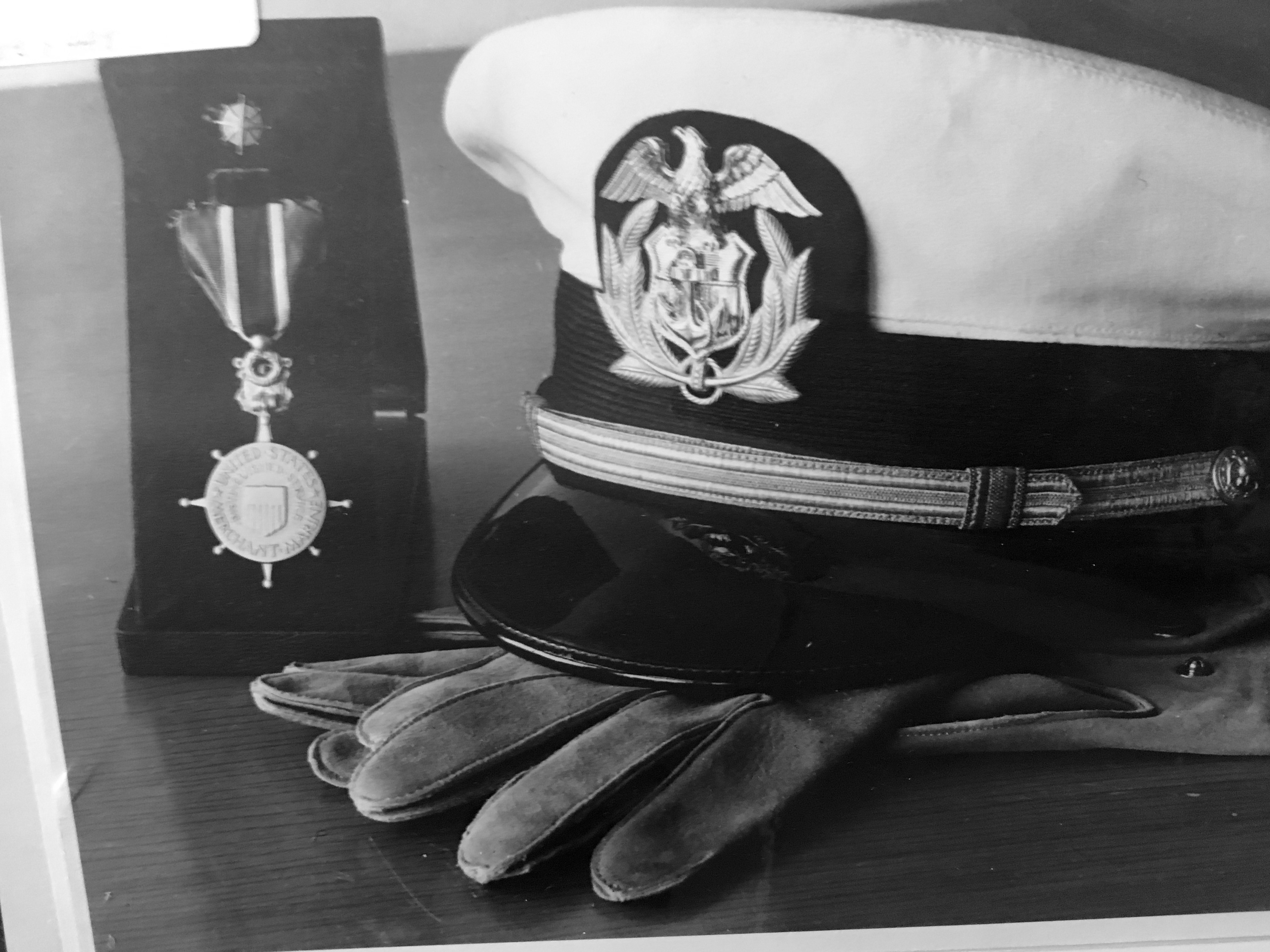
Throughout the history of the American Merchant Marine, awards and decorations were not unknown to seamen, but their blanket award specific to the Merchant Marine in particular as begun by the Federal government during the Second World War was novel. When considering Federal awards and decorations for the American Merchant Marine, their classification often falls along the lines of placement in a “Pyramid of Honor” – that is, a hierarchy of military decorations awarded for combat valor and meritorious service. This was done not only under the auspices of the War Shipping Administration, but continued by post-war authors making sense of the awards. At the pinnacle of the United States armed services’ pyramid is the Medal of Honor, followed by various Distinguished Service crosses particular to the armed service in question, Distinguished Service medals, valor and service awards, and finally the Purple Heart at the base. Something of the same was true for the American merchant seaman. Although ostensibly having their own system of precedence and hierarchy, it is far more useful to consider Merchant Marine awards and decorations in the context of their establishment.
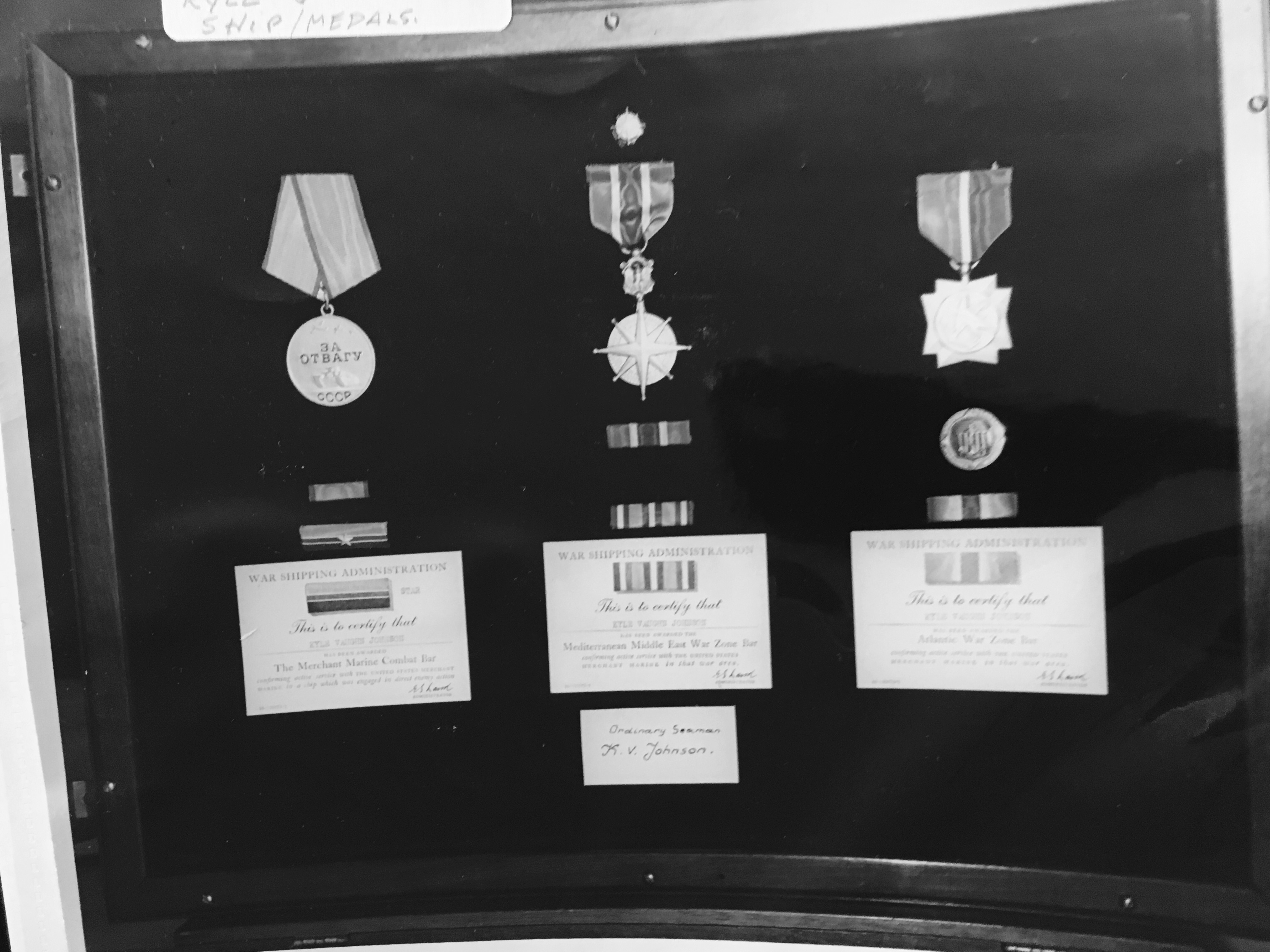
Postwar, the rôle of the American Merchant Mariner in the Second World War and as an auxiliary to the military was either relatively forgotten or taken for granted by the United States. Other nations, notably France and Russia, awarded Americans with medals thanking them for their service to their nations.
The following pages display and analyze some of the arrays of awards and decorations that were and are available to American Merchant Mariners, midshipmen at the United States Merchant Marine Academy, and commissioned officers with the United States Maritime Service at Kings Point.
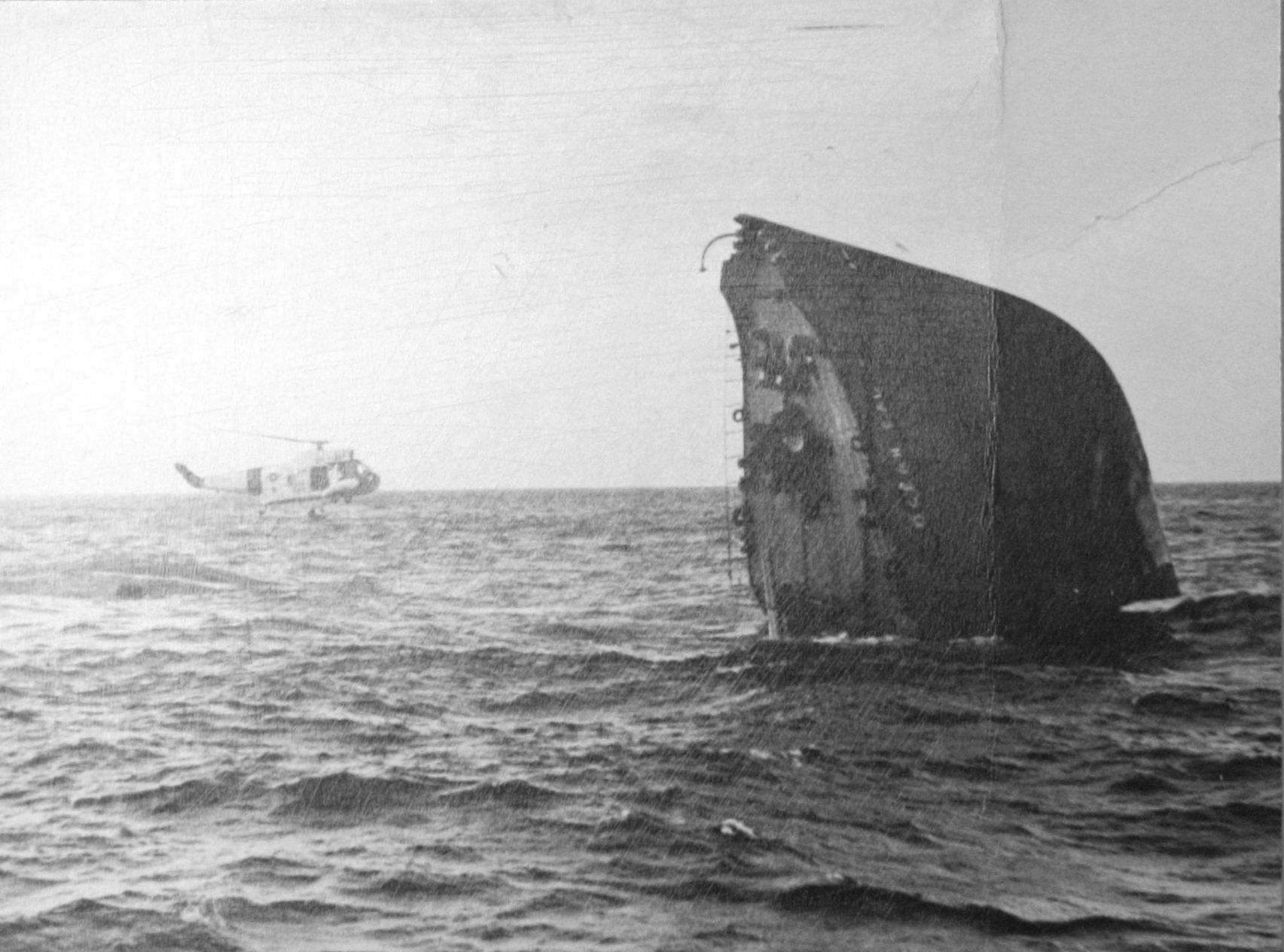
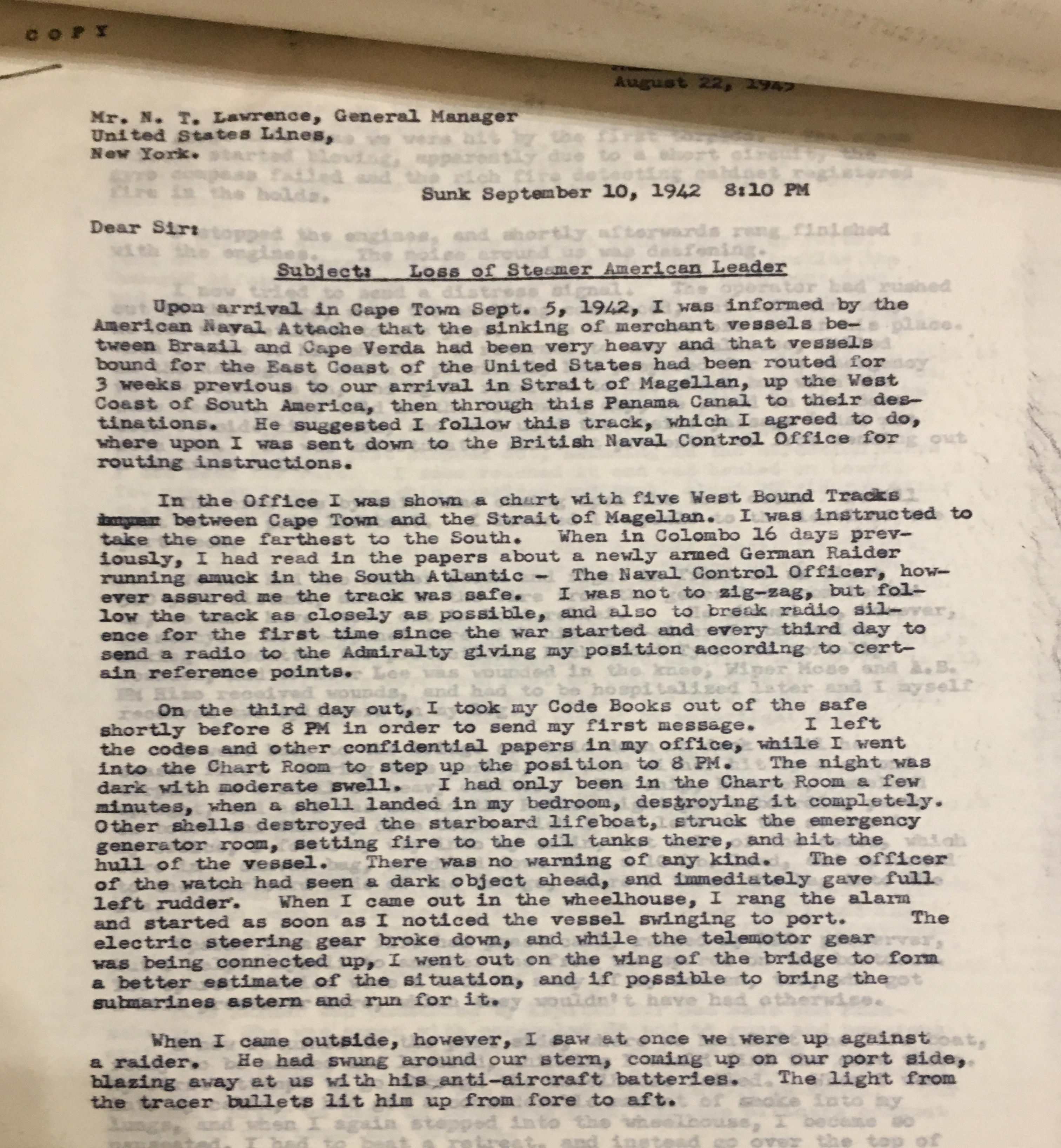
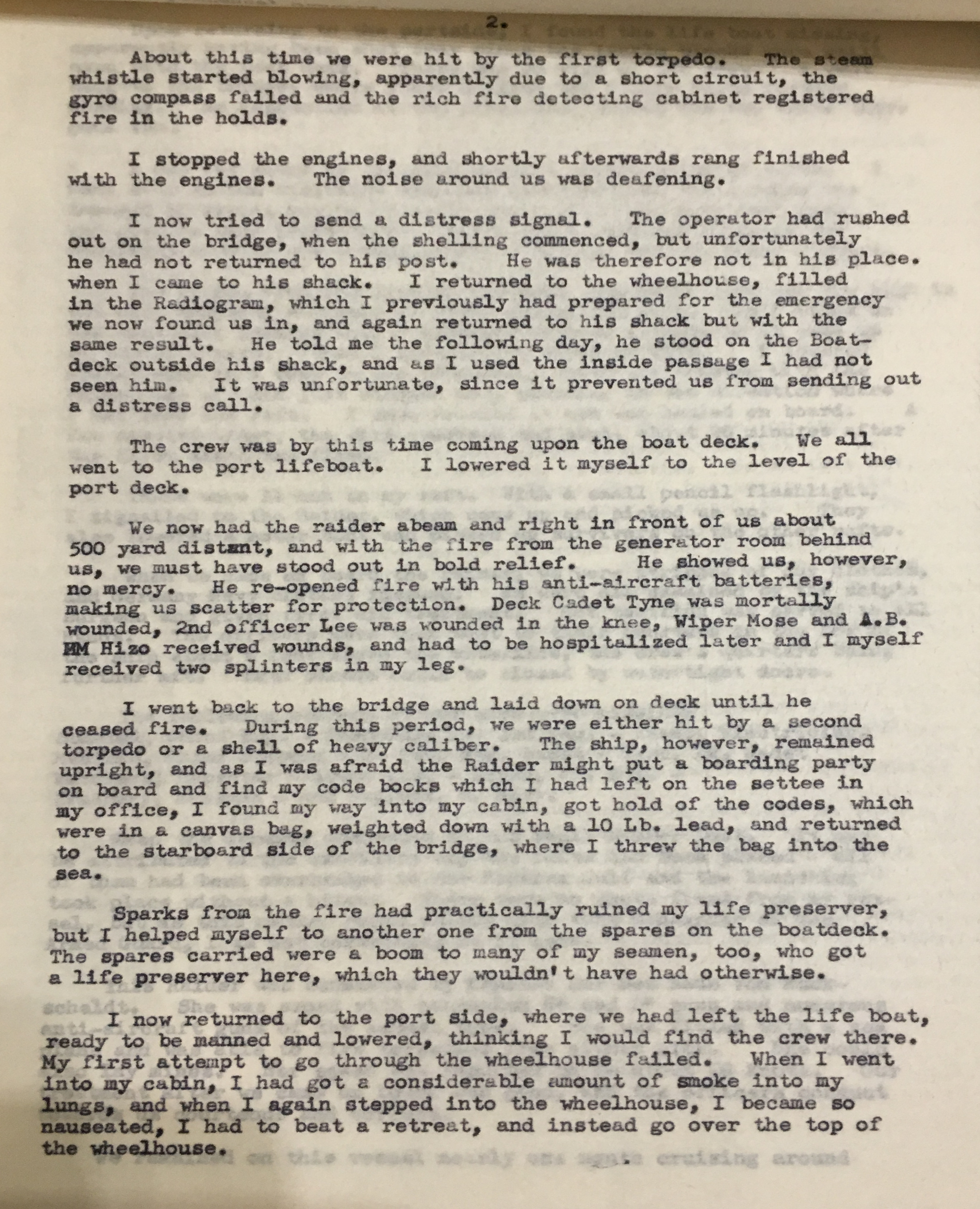
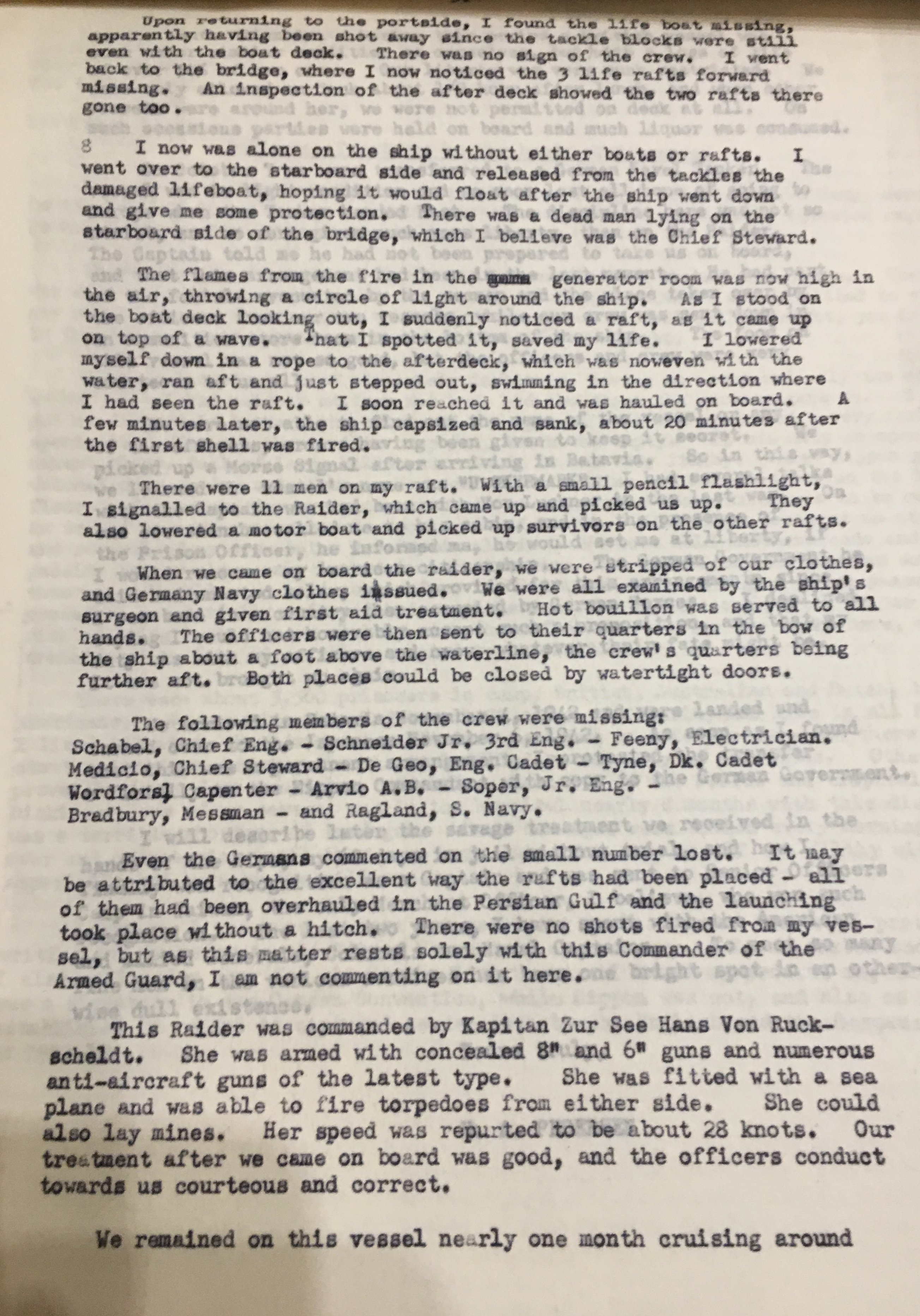
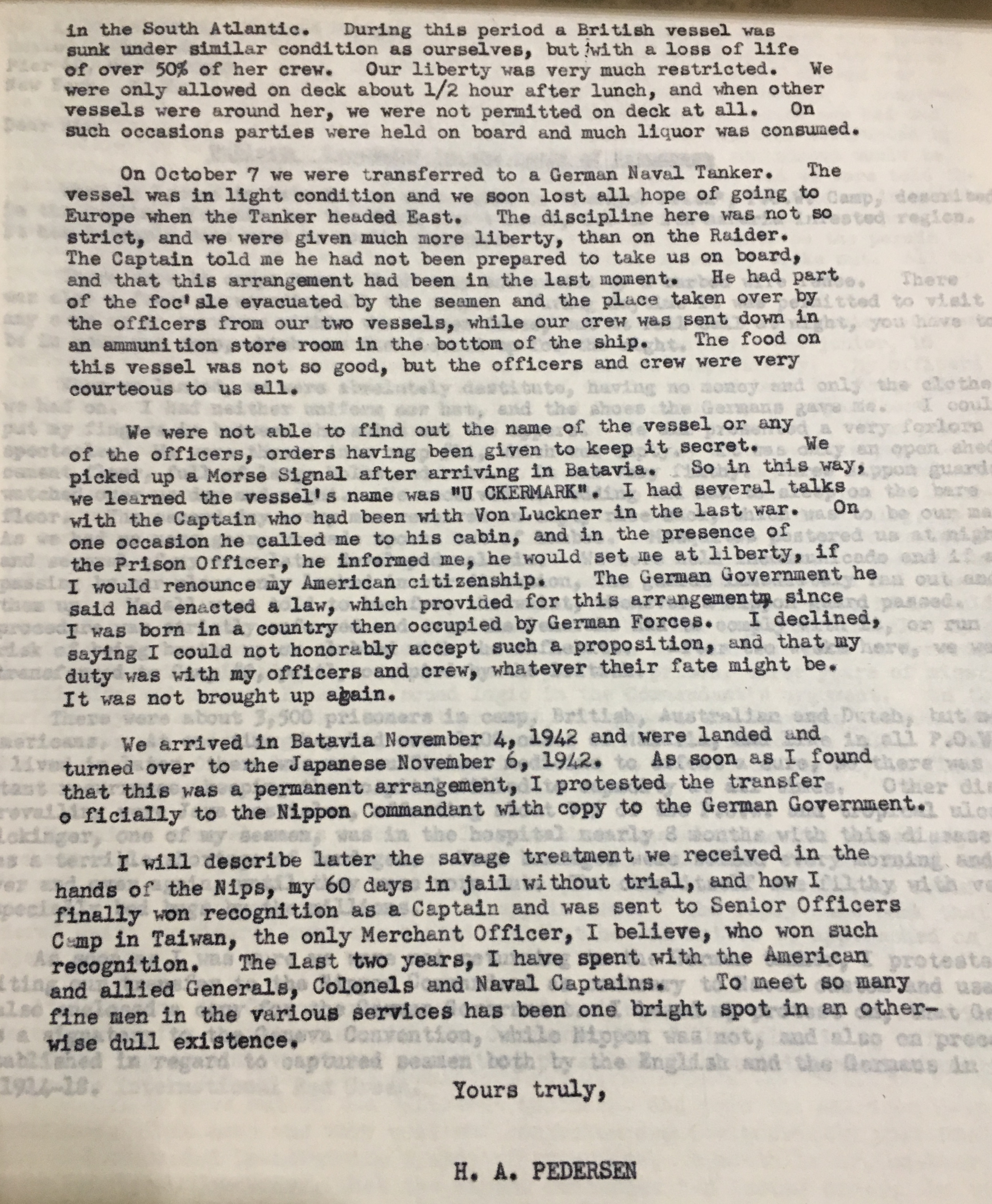
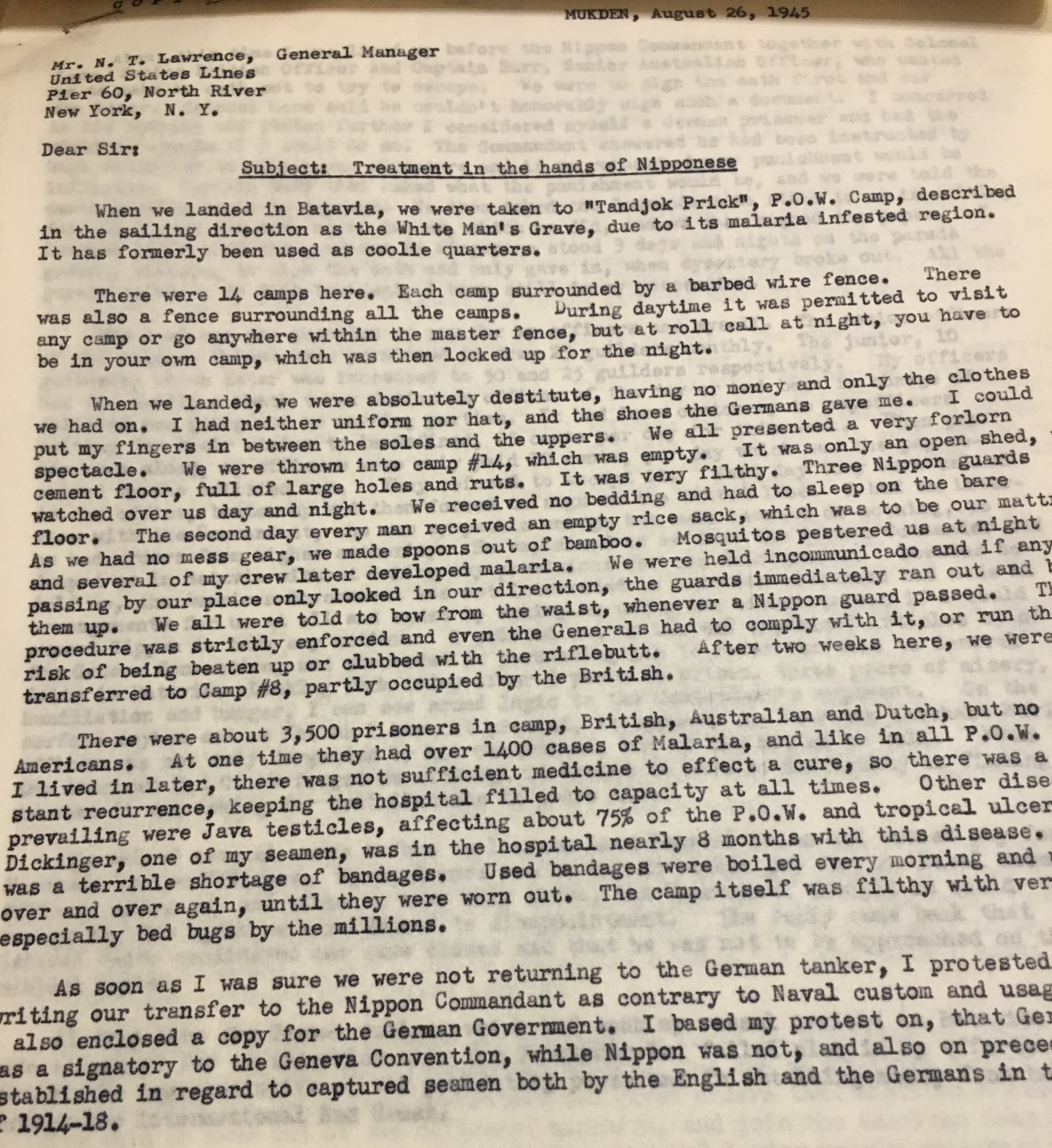
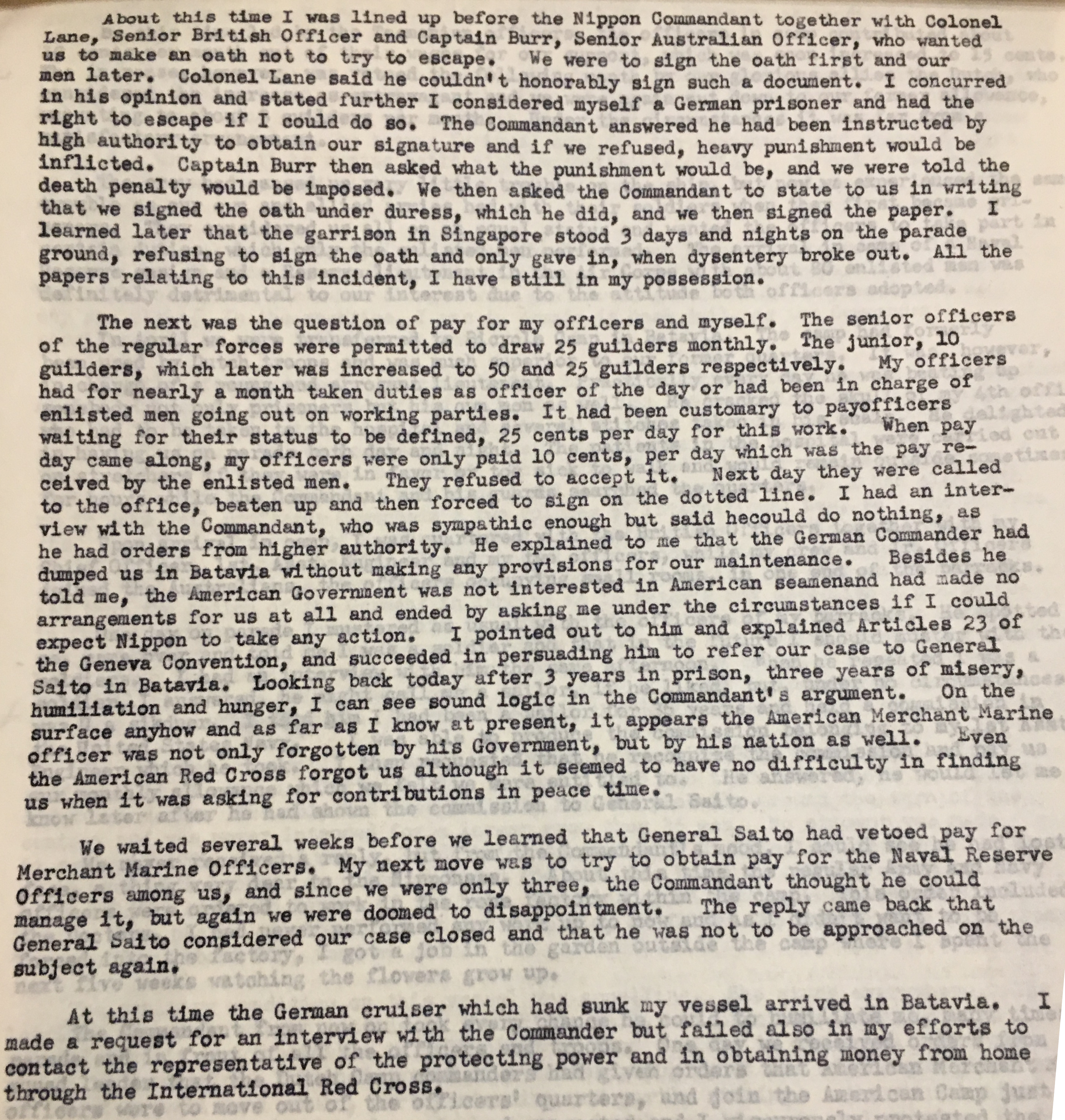
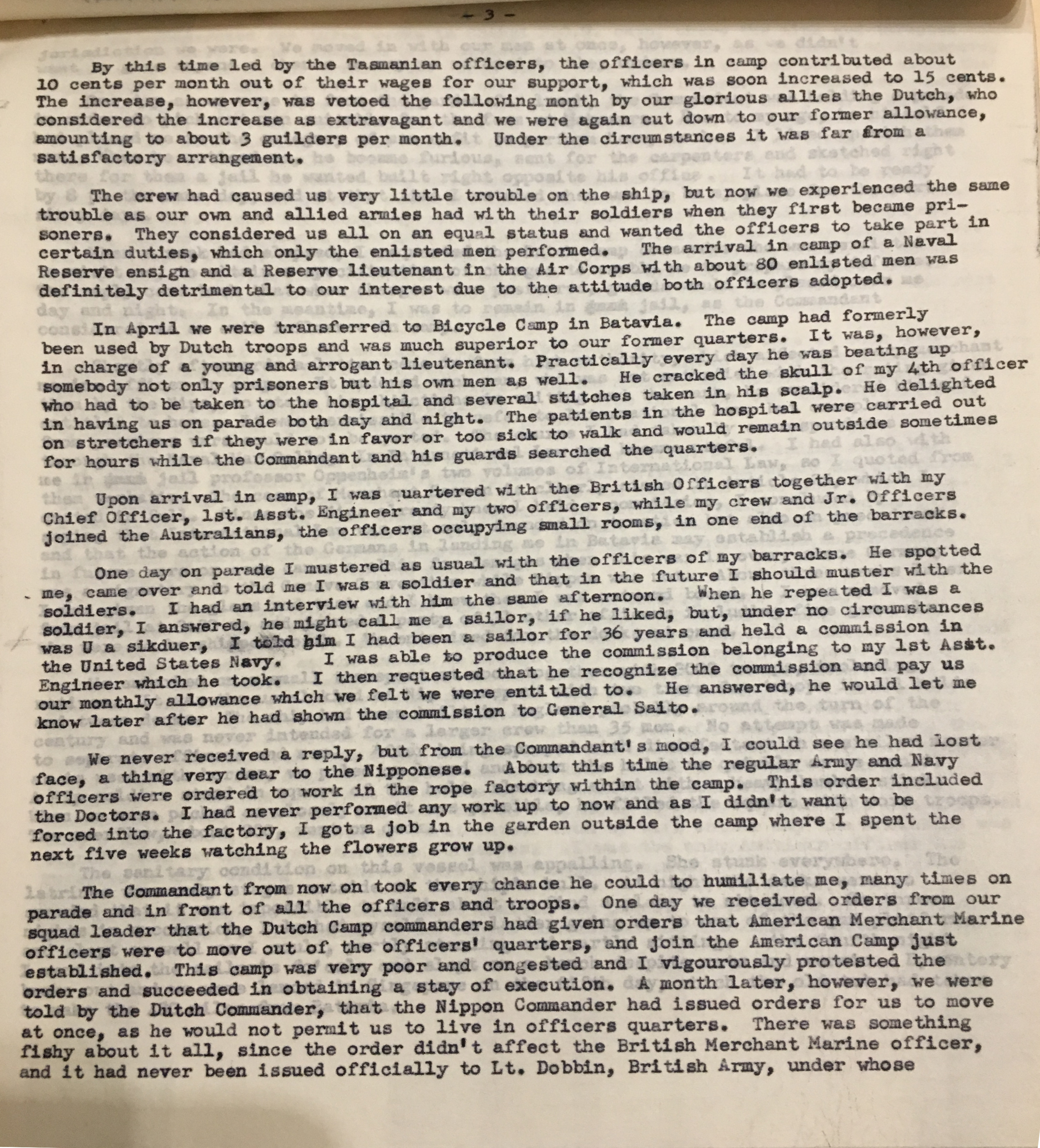
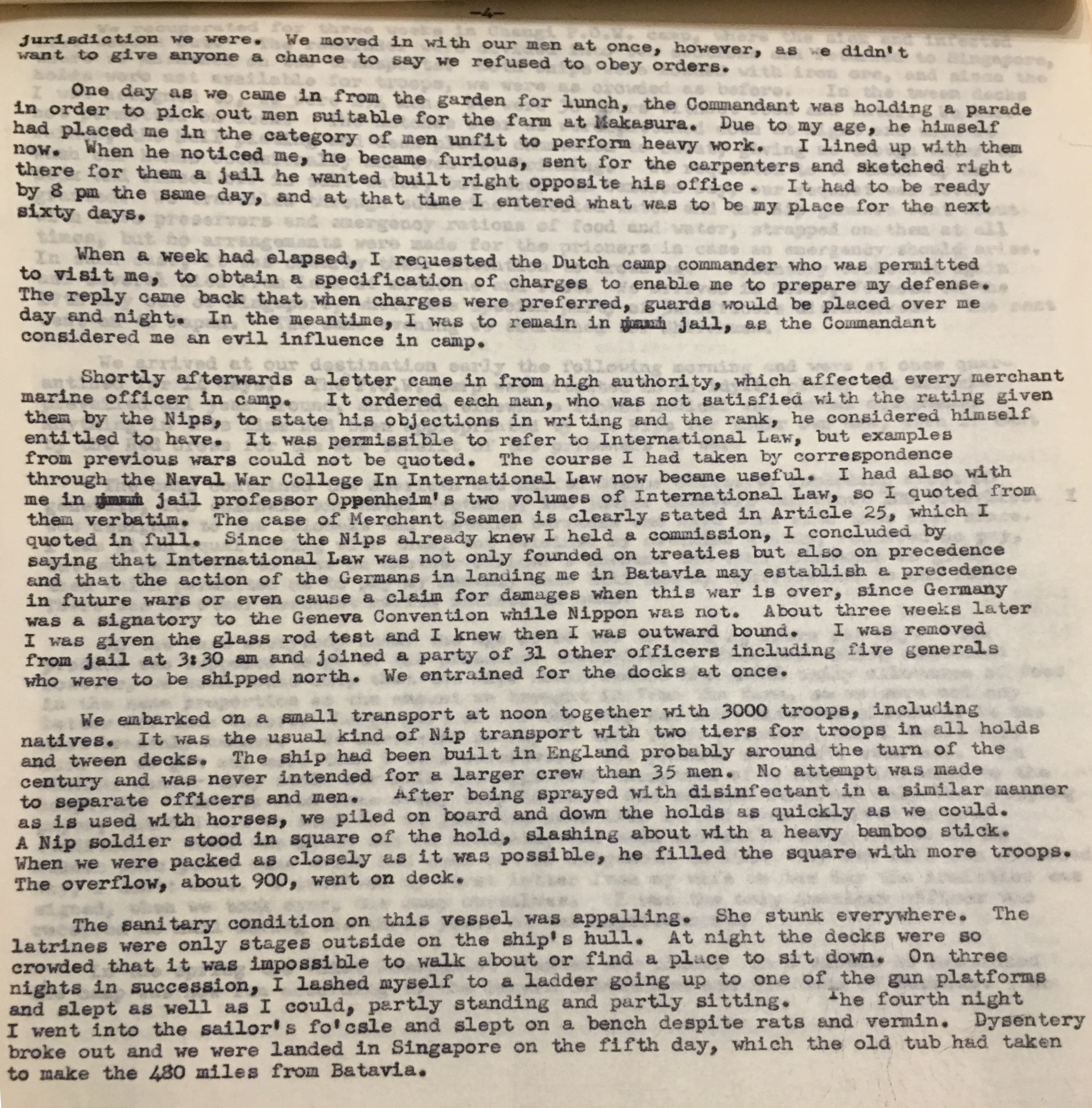
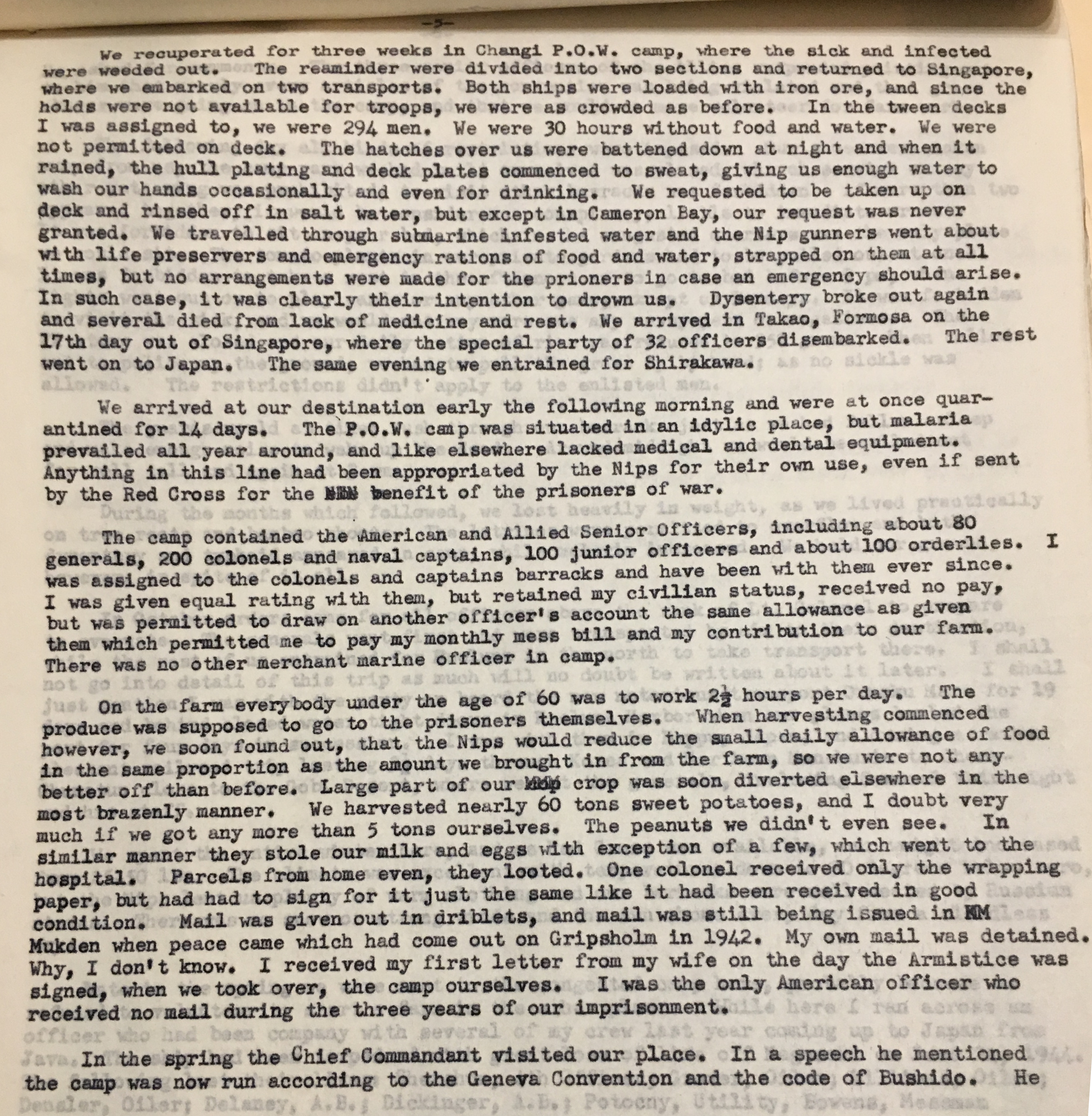
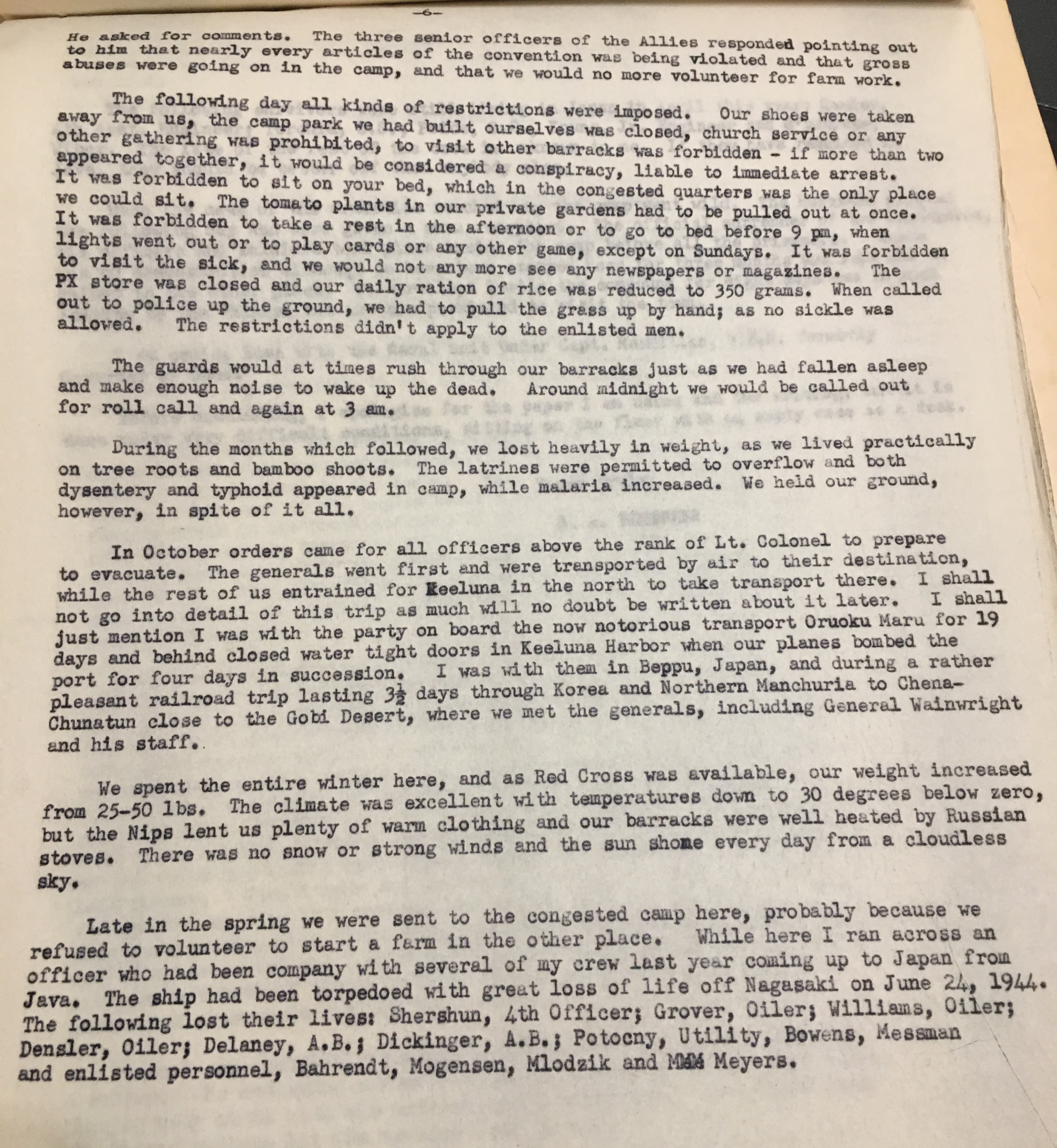
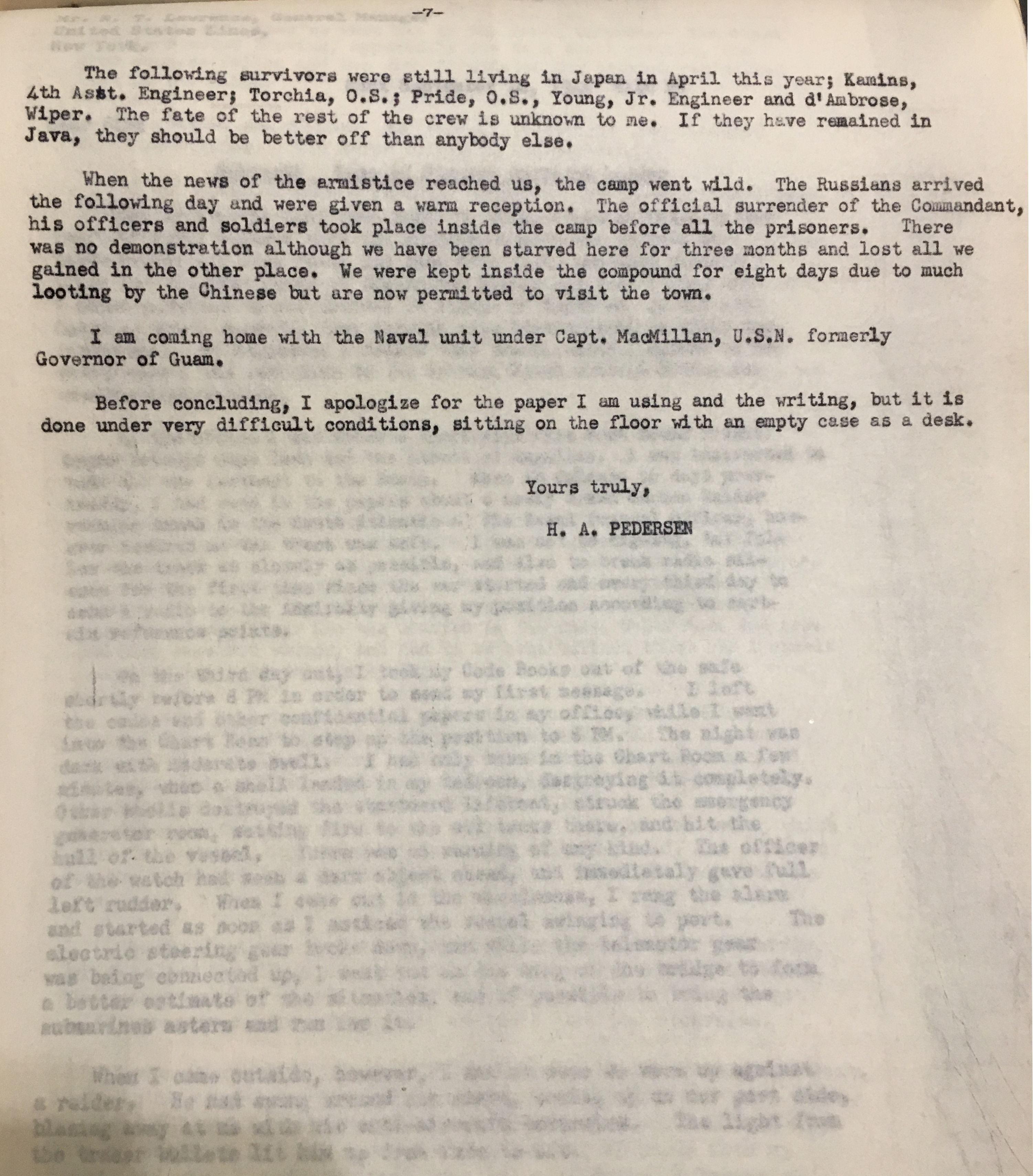
After his ship did not appear at its scheduled port of call in six months, the United States government declared Captain Haakon A. Pedersen and the crew of his ship, the SS American Leader, as lost at sea. “Lost” indicated they may be found, but are most probably dead. In the spring of 1943, a curious radio listener picked up a transmission from Tokyo and learned Captain Pedersen was not only alive but interned in a Japanese prison camp. The news was relayed to the United States and reported publicly by early May. Of the 58 mariners originally aboard the SS American Leader, only 28 survived the war – Captain Pedersen among them.
Captain Haakon Anderson Pedersen ca. 1949. Col.: U.S. Lines papers, AMMM
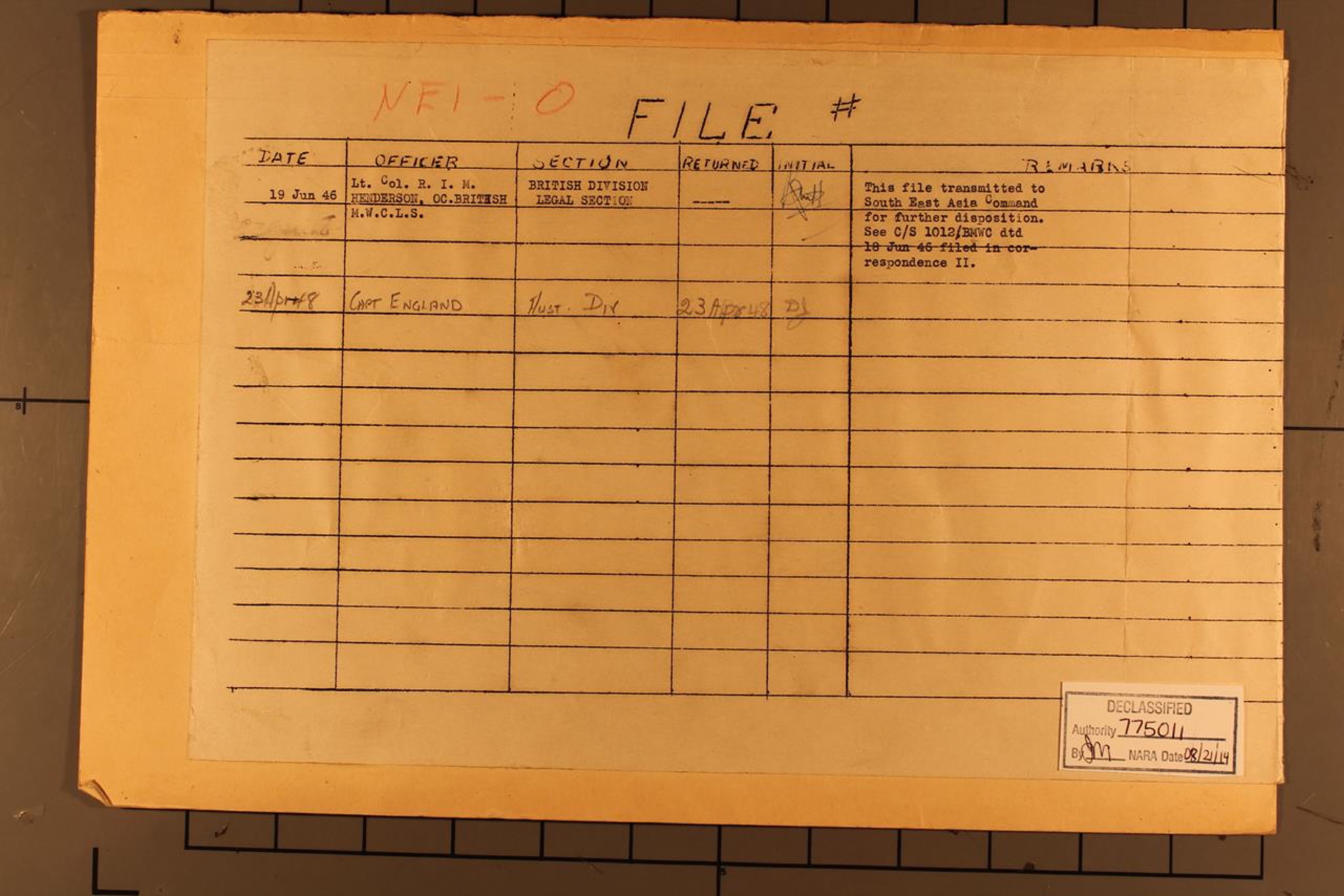
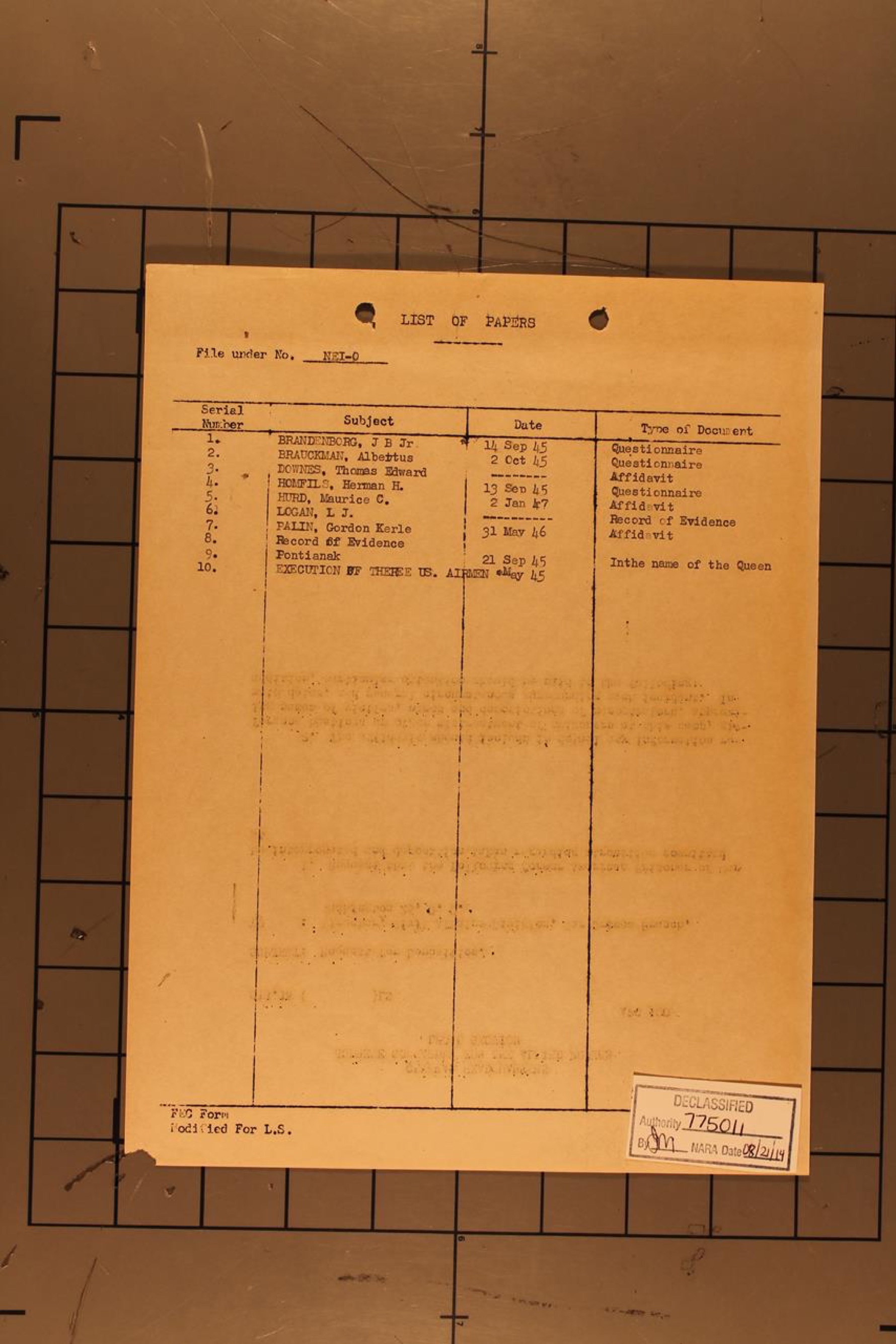
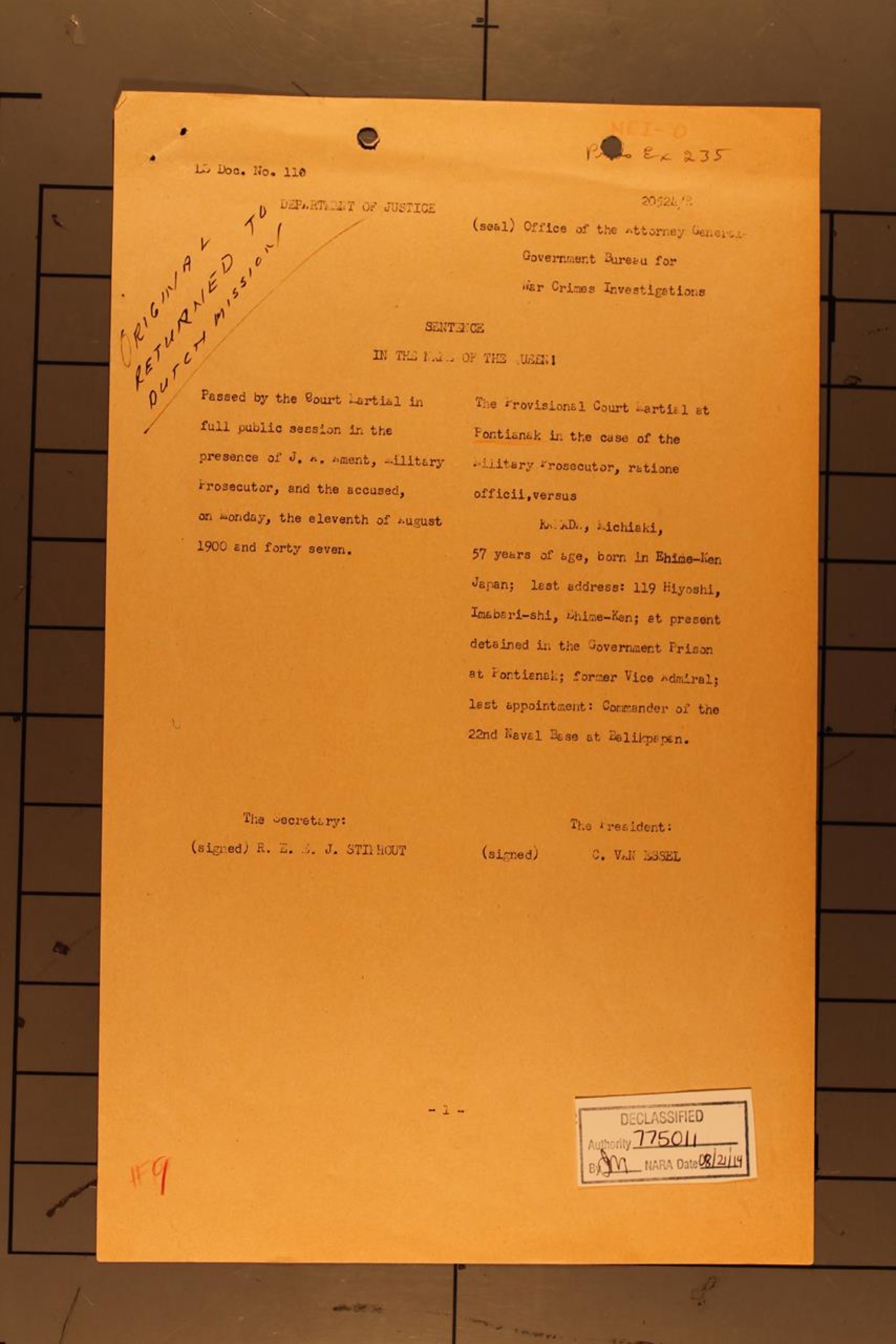
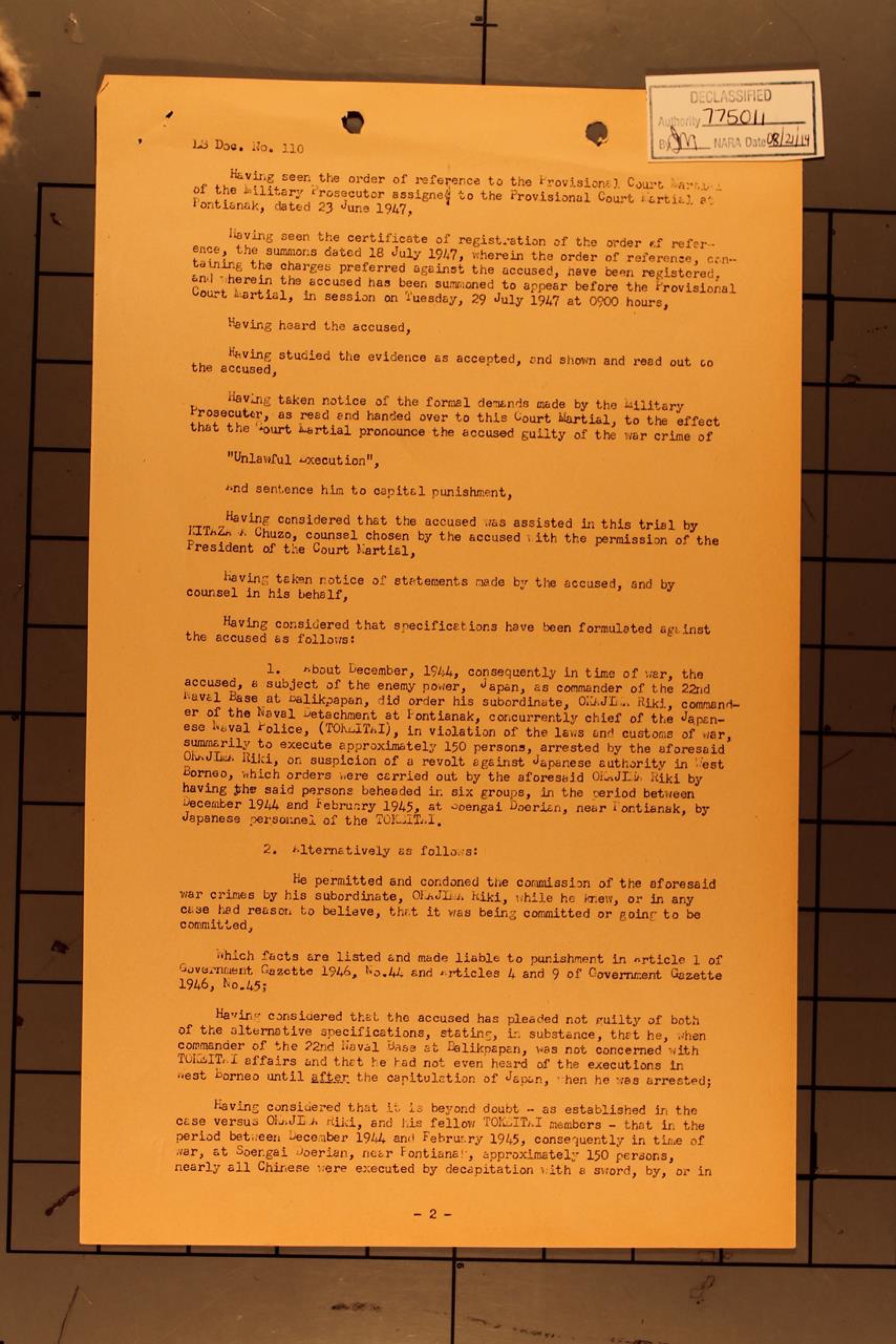
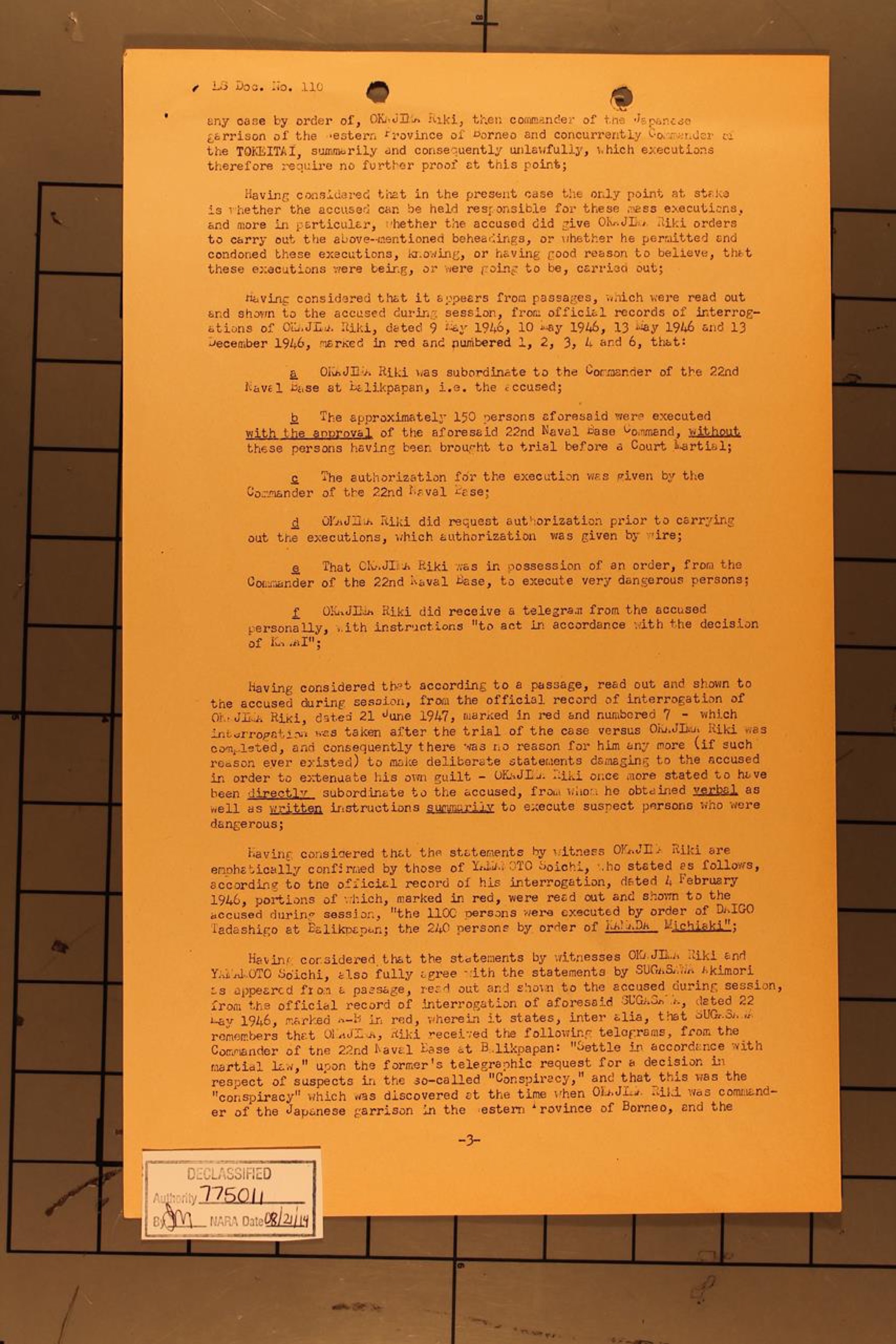
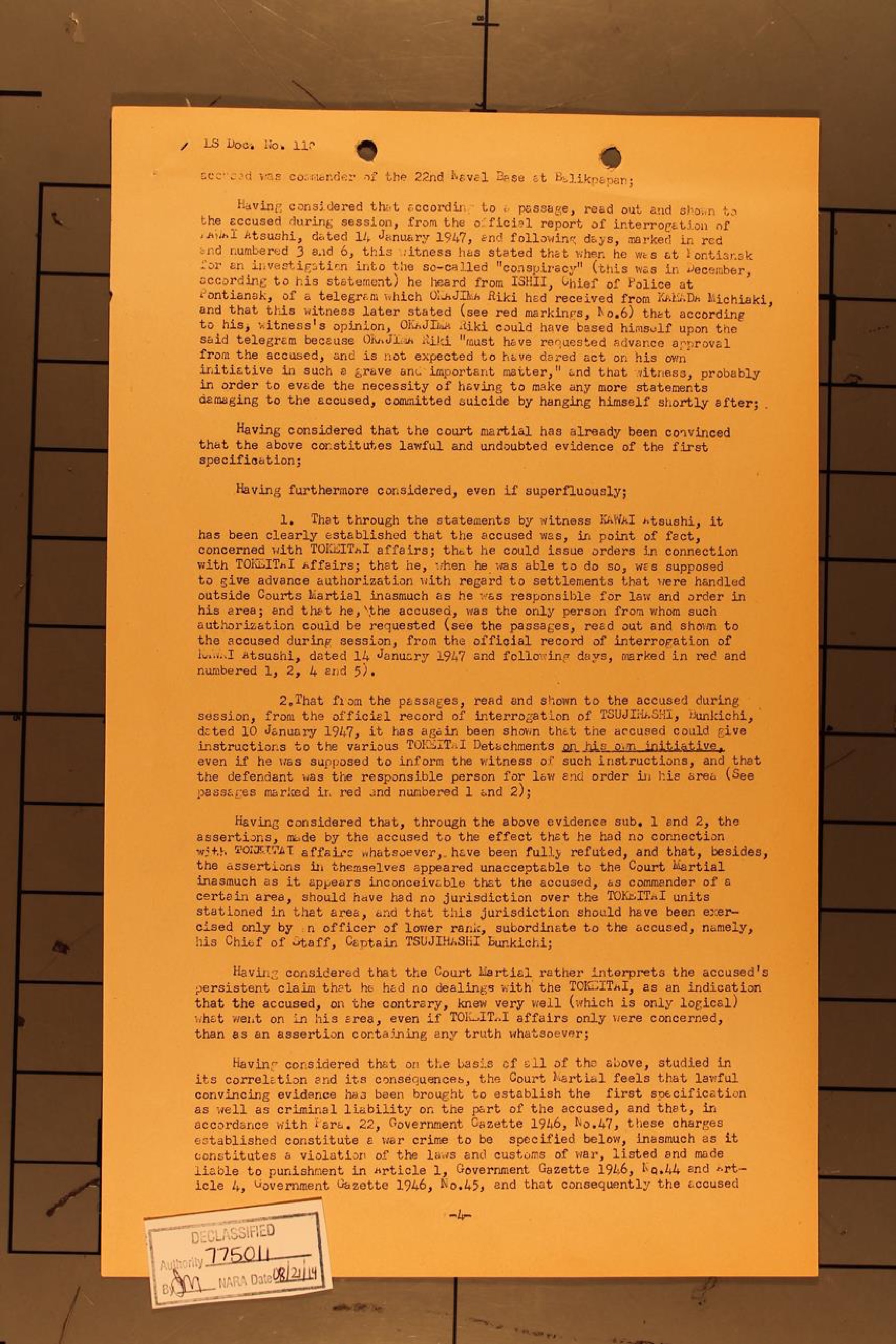
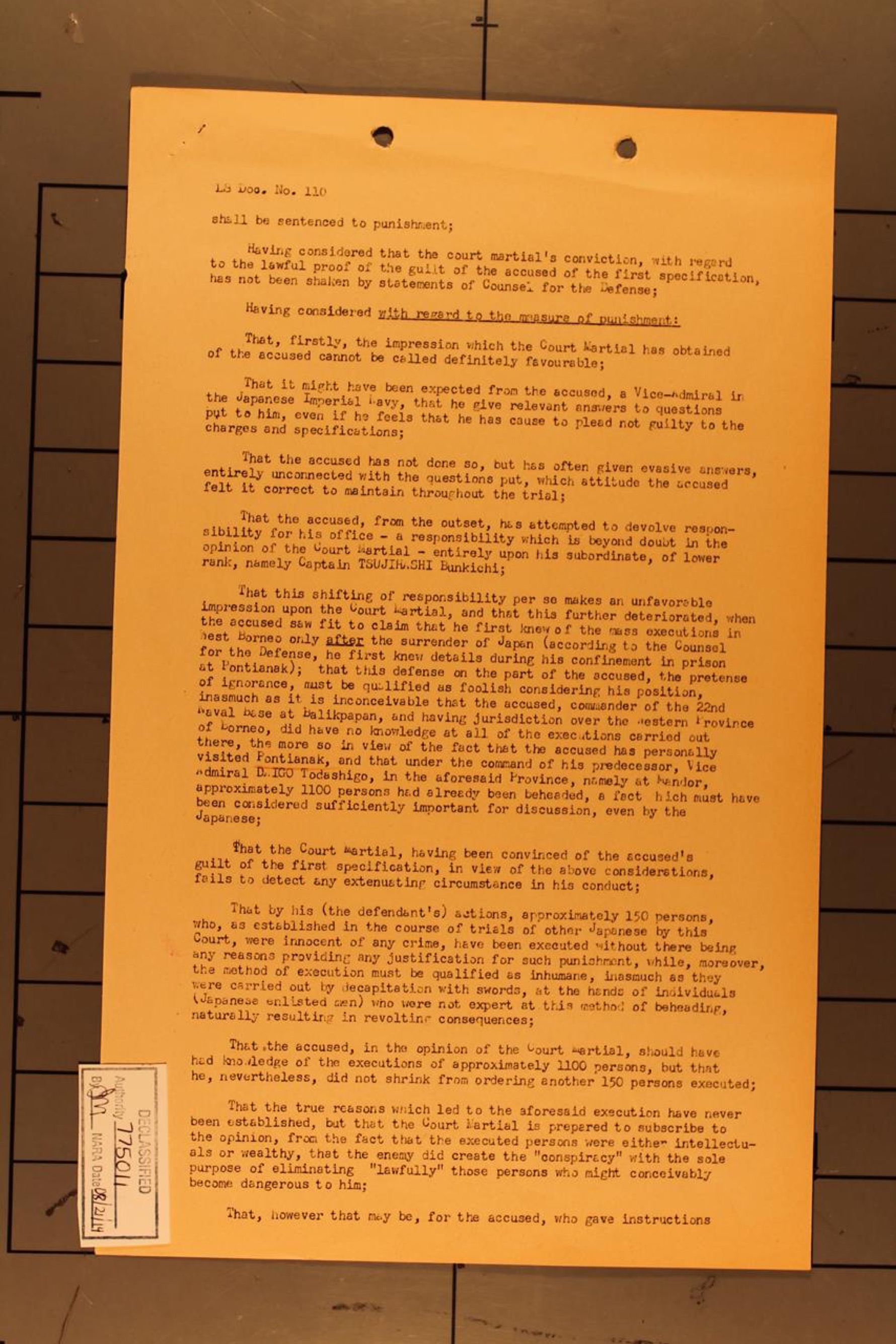
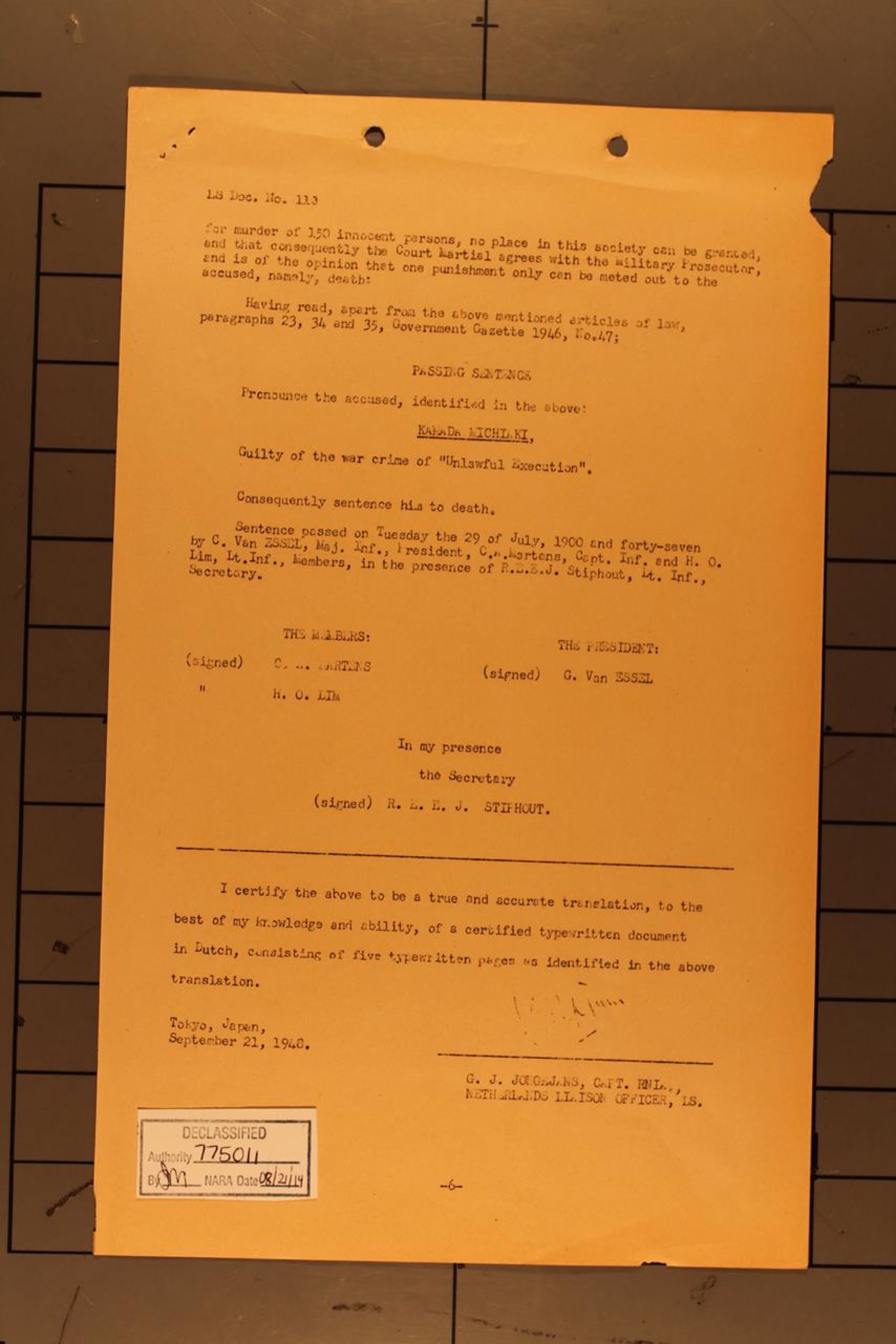
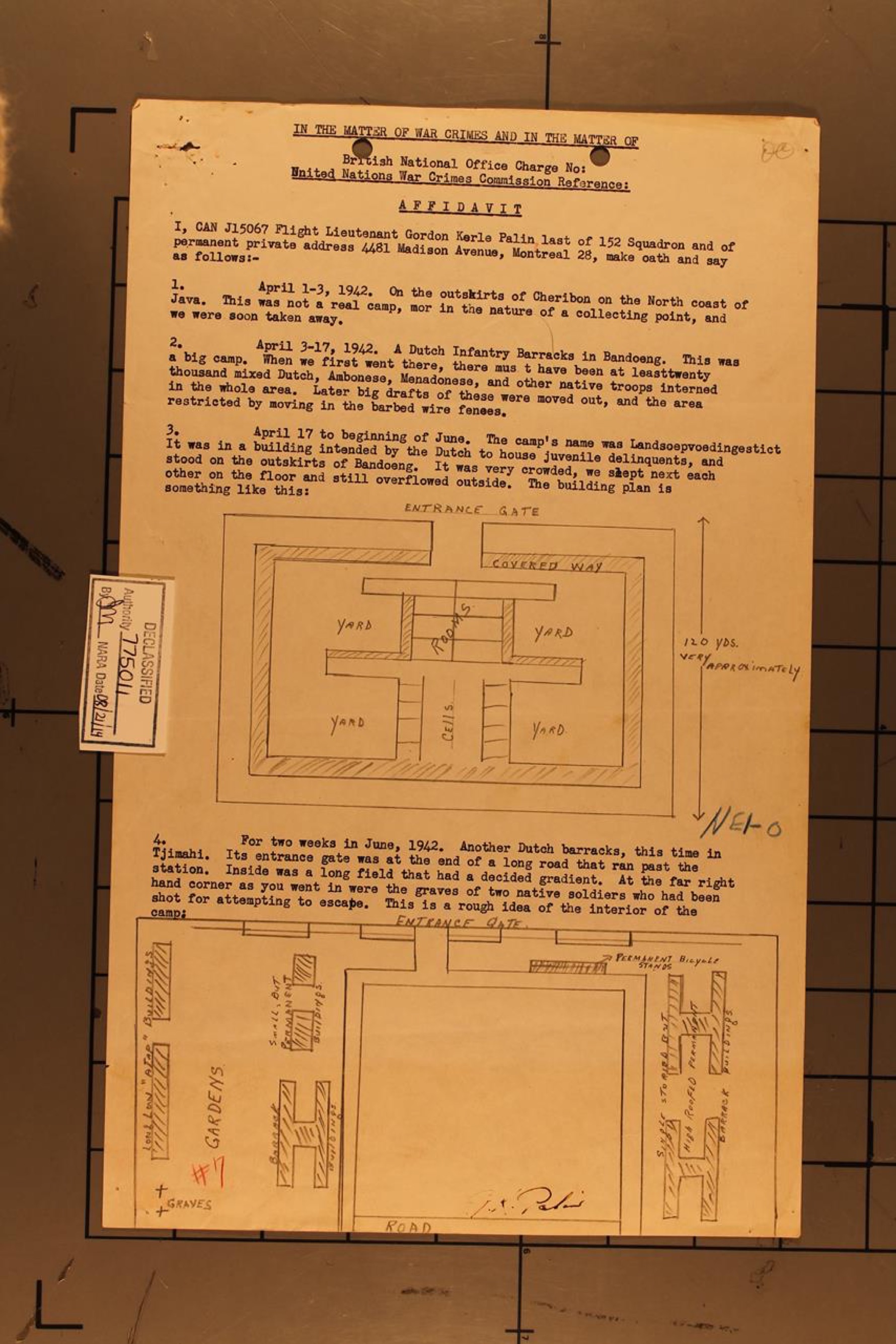
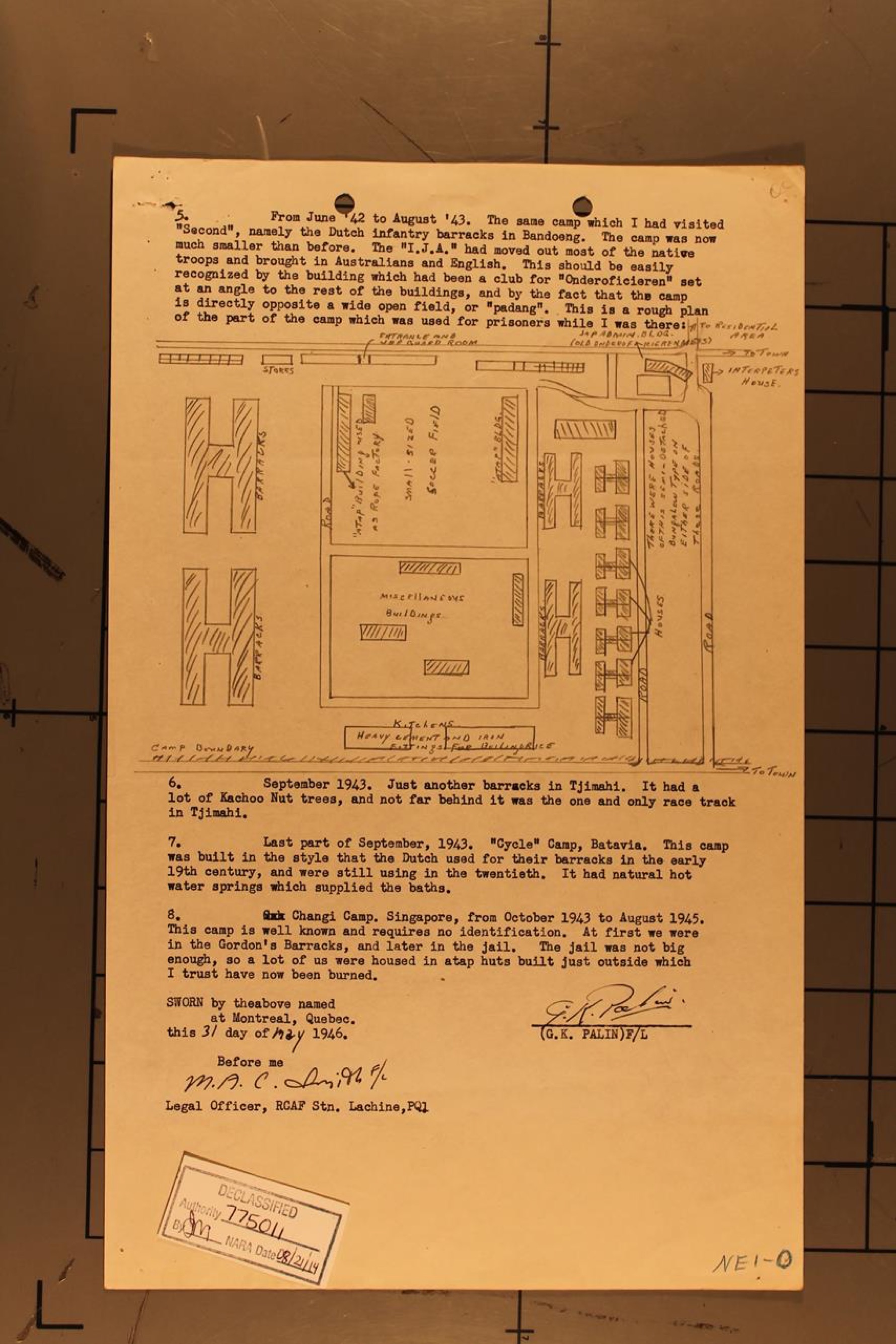
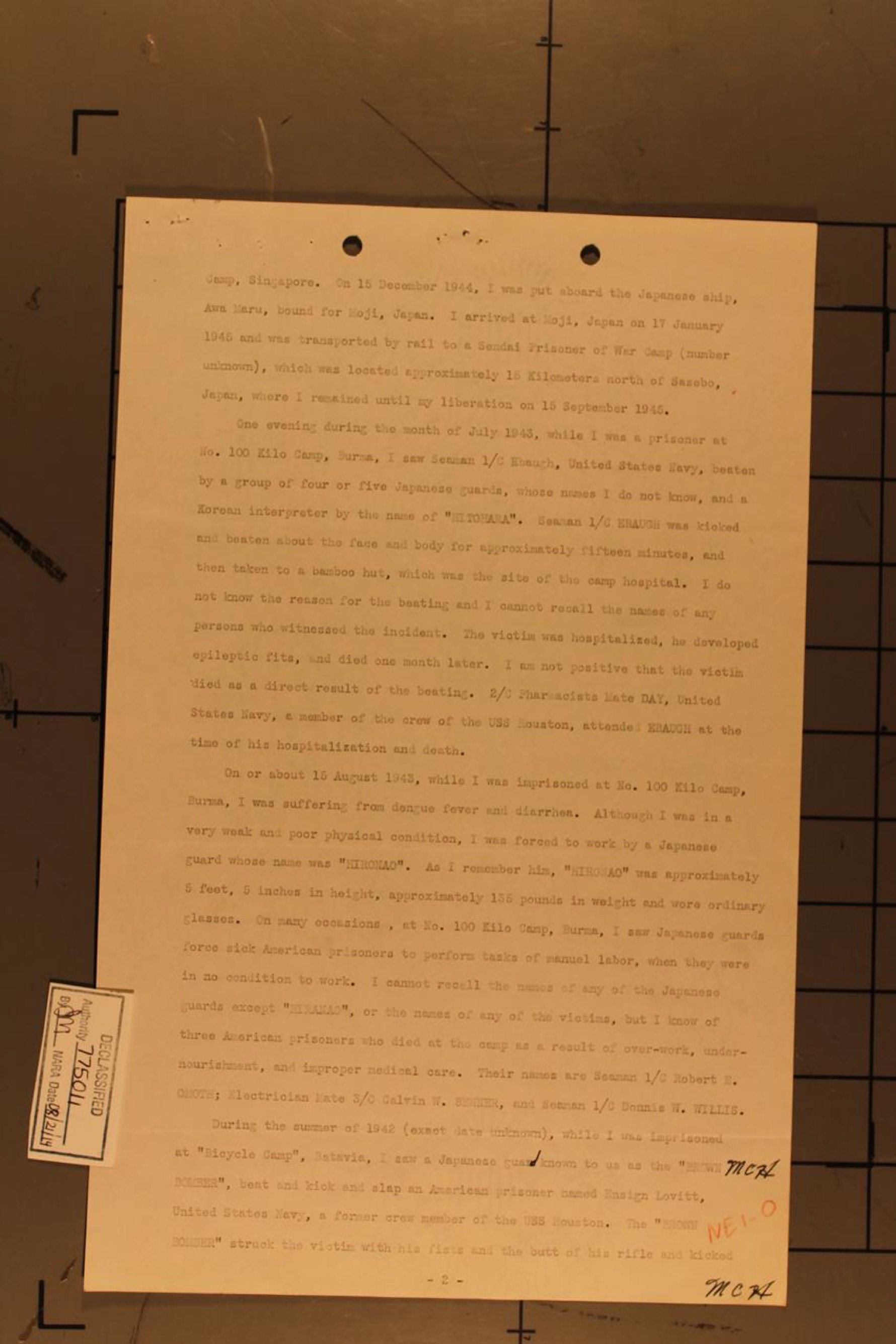
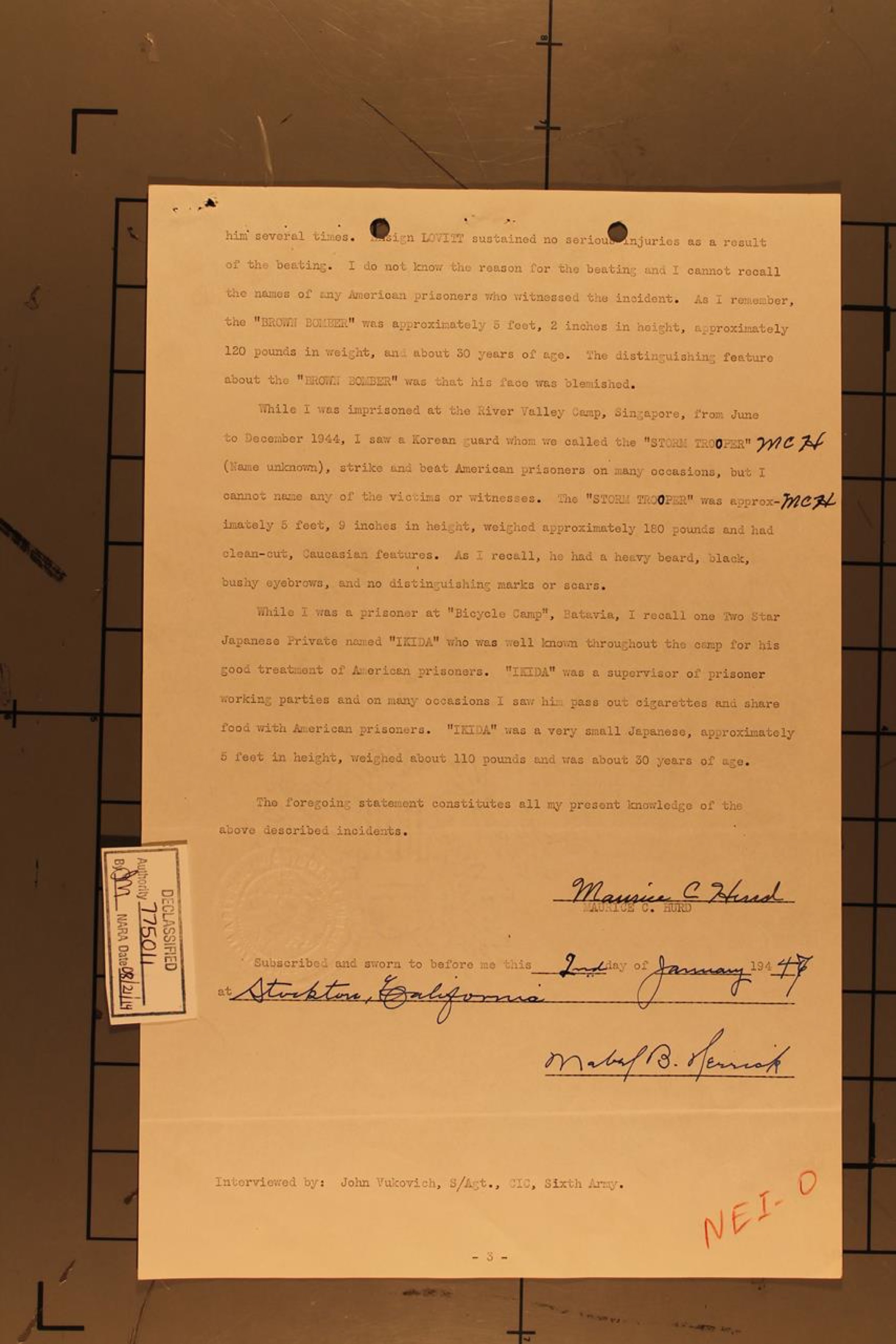
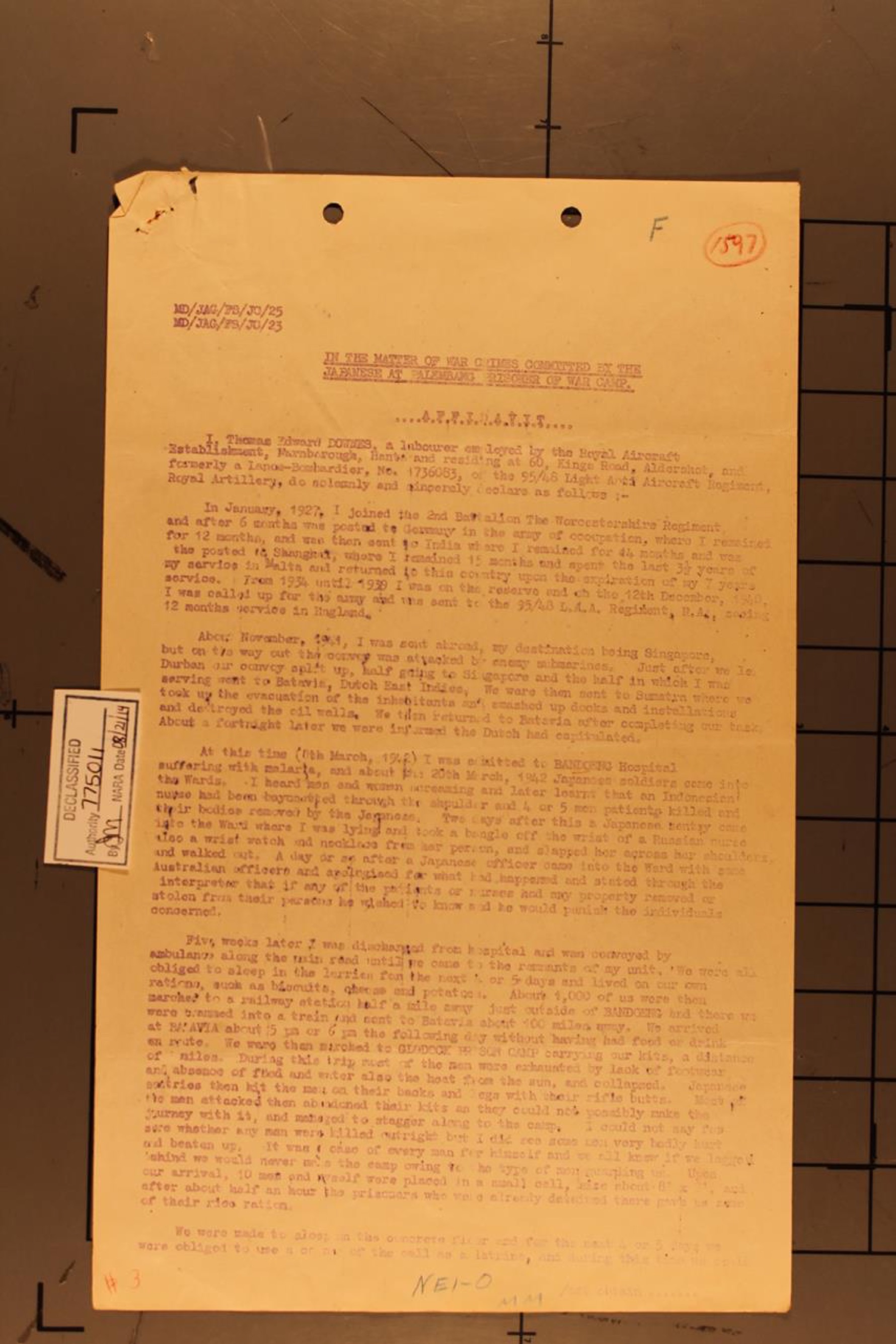
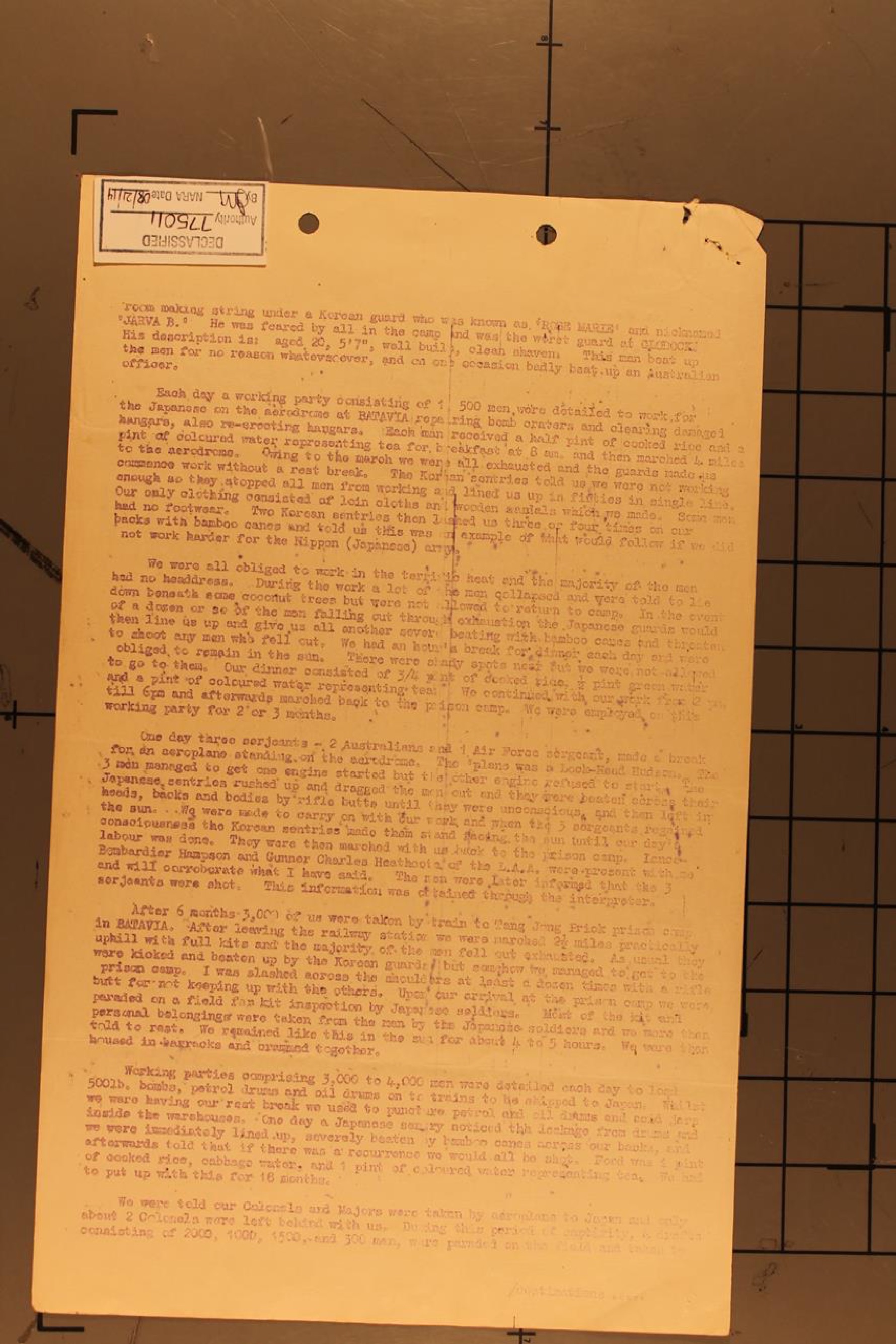
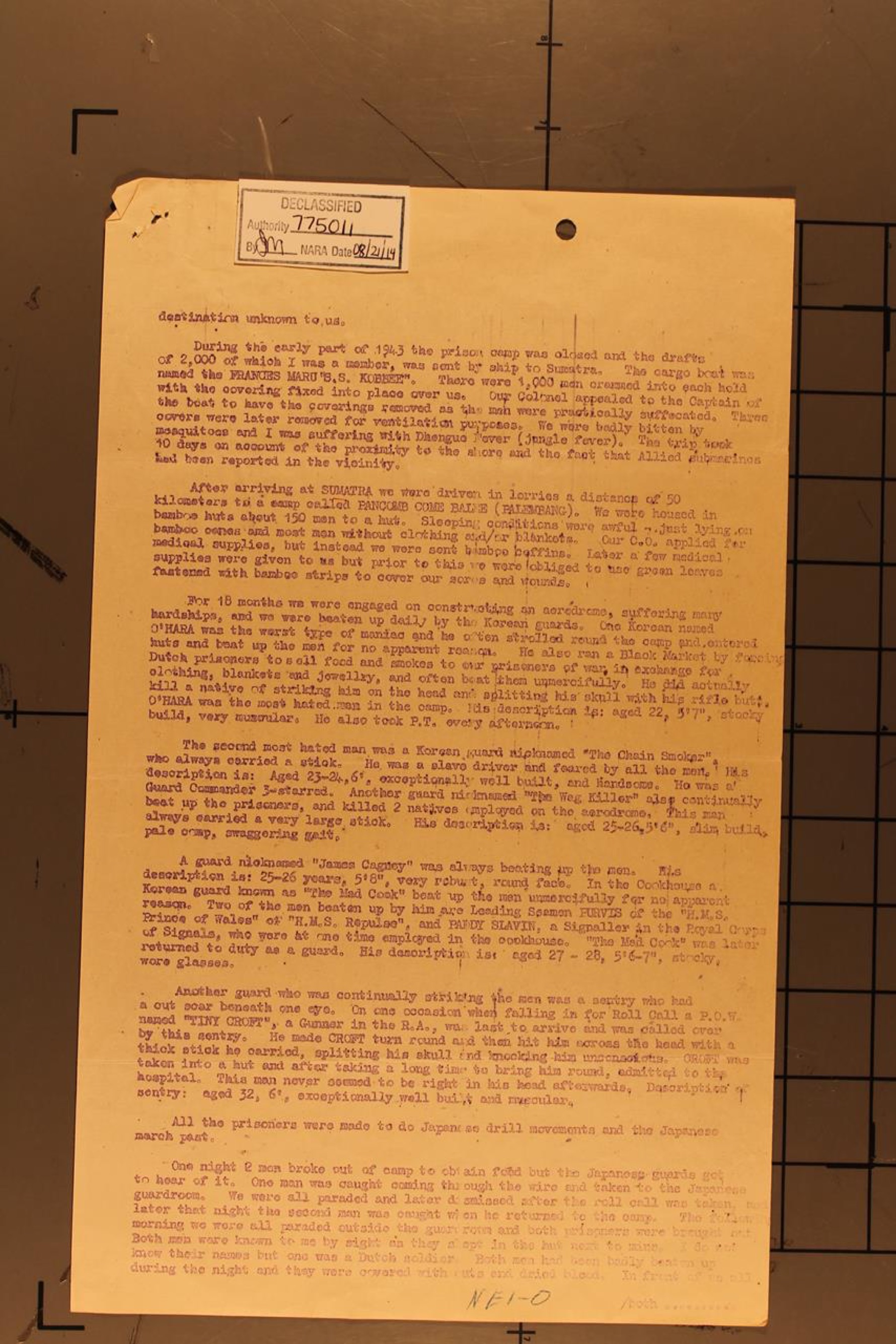
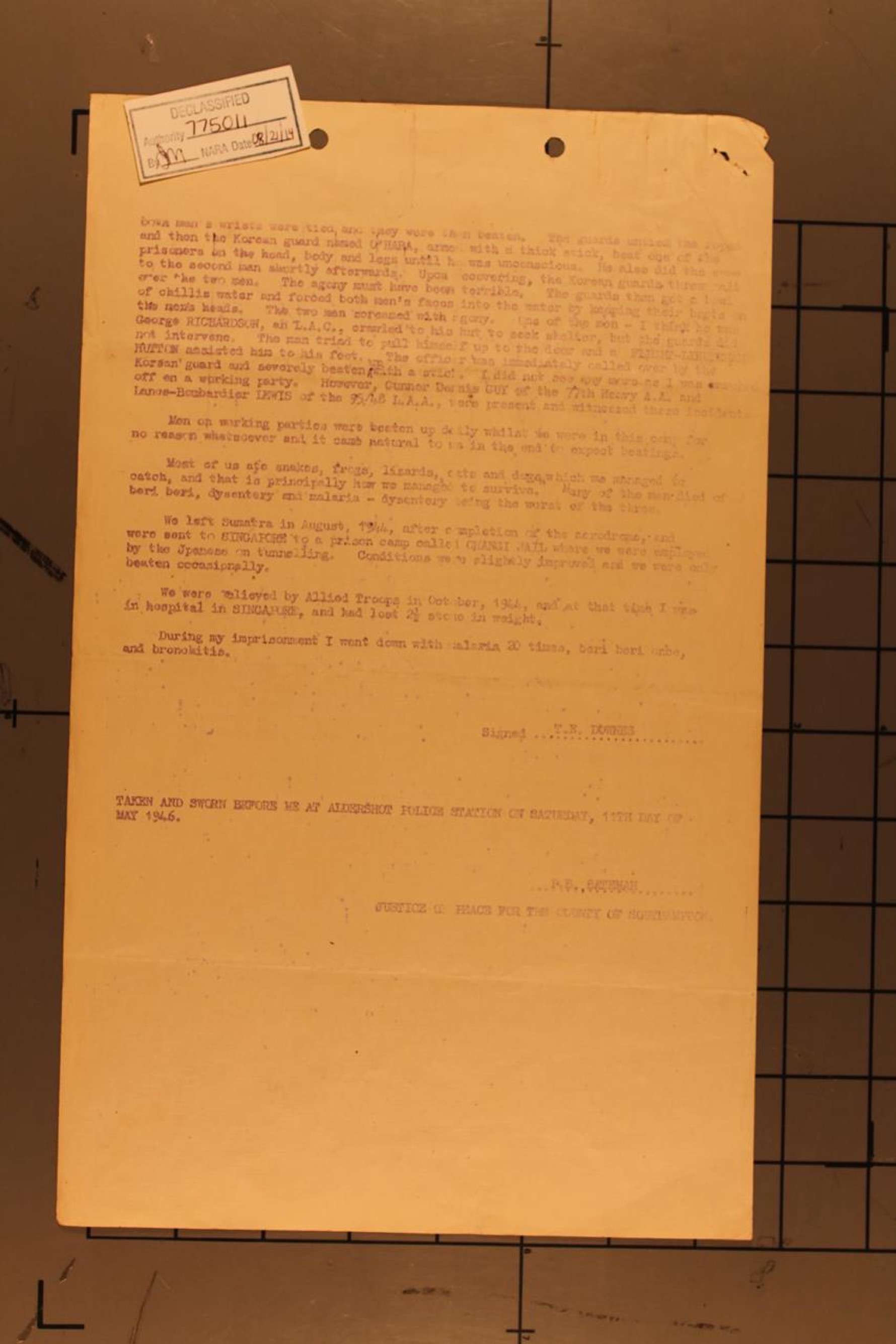
In a NARA-released packet titled NEI-0 “Assorted Netherlands East Indies camps” is the document “LS Doc. No. 110.” It records the Dutch Provisional Court Martial at Pontianak, July 29, 1947, at 9:00 am sentencing of Michiaki Kamada (鎌田 道章). He was the Commander of 22nd Naval Base Balikpapan in occupied Dutch Borneo, and as such was the de-facto military governor of the territory. He directed the committed mass executions of ove one-thousand prisoners and civilians, and the willful mistreatment of prisoners of war in direct contravention of international law. Given his overall arbitrary orders for executions and punishment without cause, the Court pronounced the verdict:
[For the accused] no place in this society can be granted, and then consequently the Court Martial agrees with the military Prosecutor and is of the opinion that one punishment only can be meted out to the accused, namely, death.
NEI-0, Serial No. 9 “Pontianak” (LS Doc. 110) p 6.
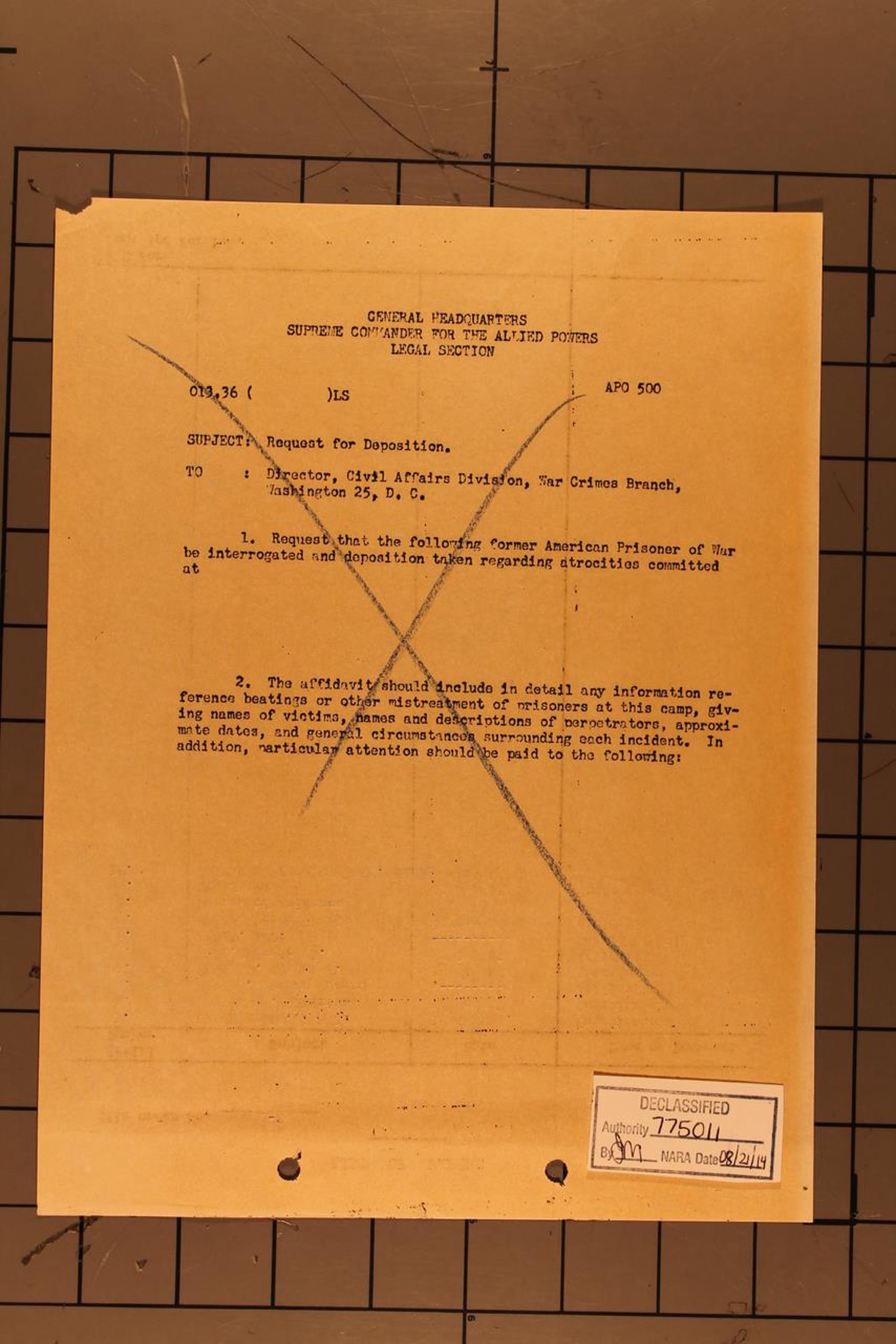
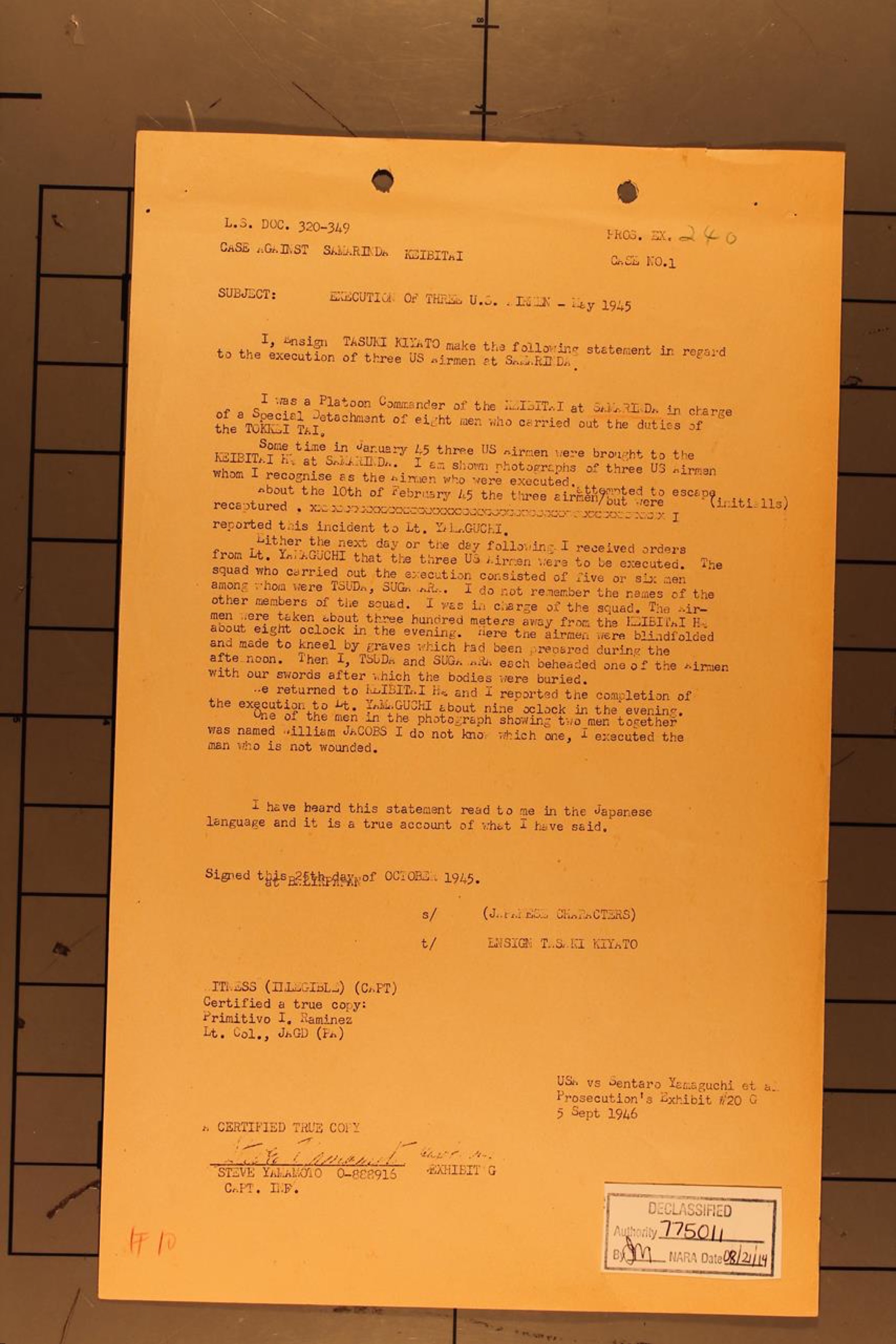
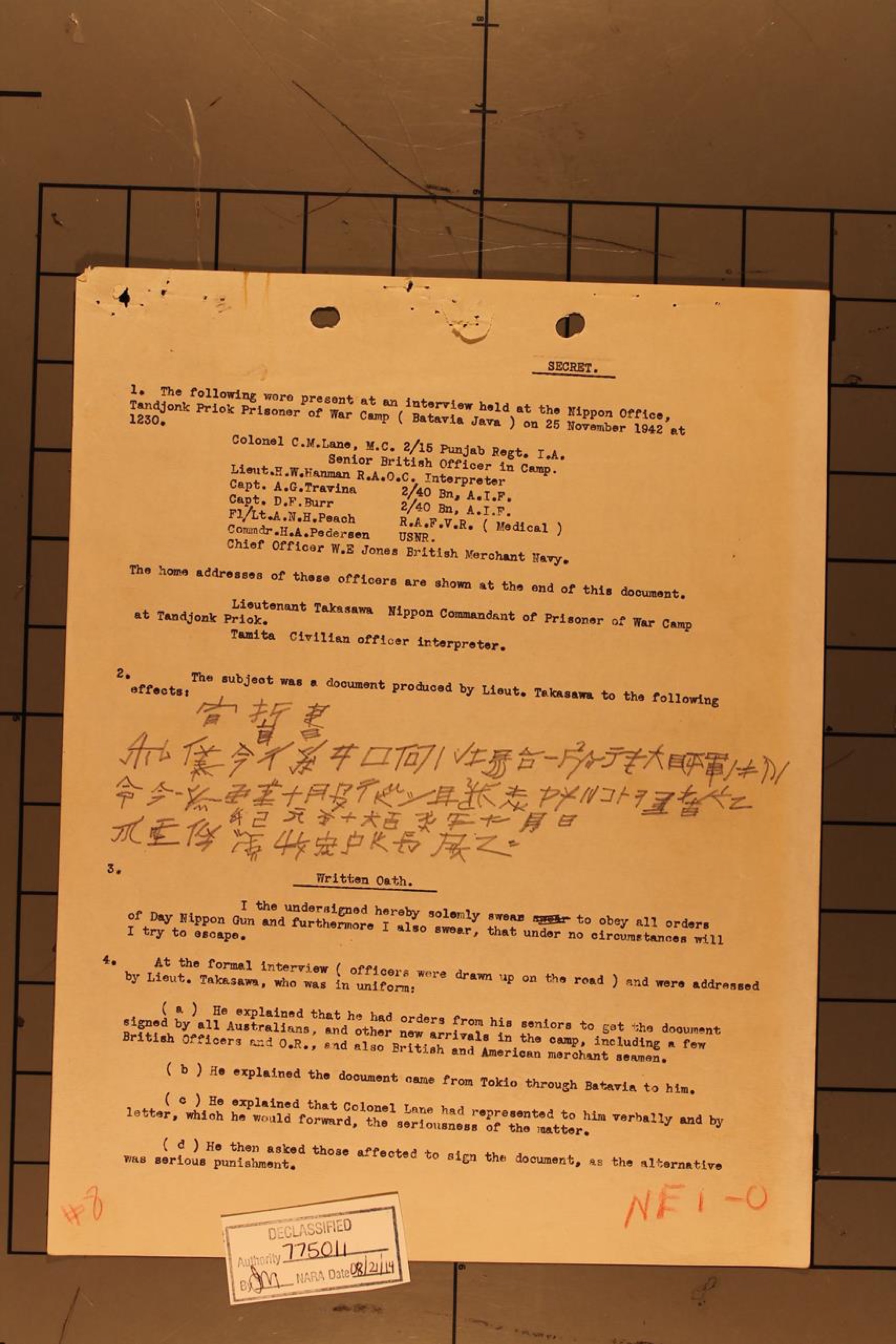
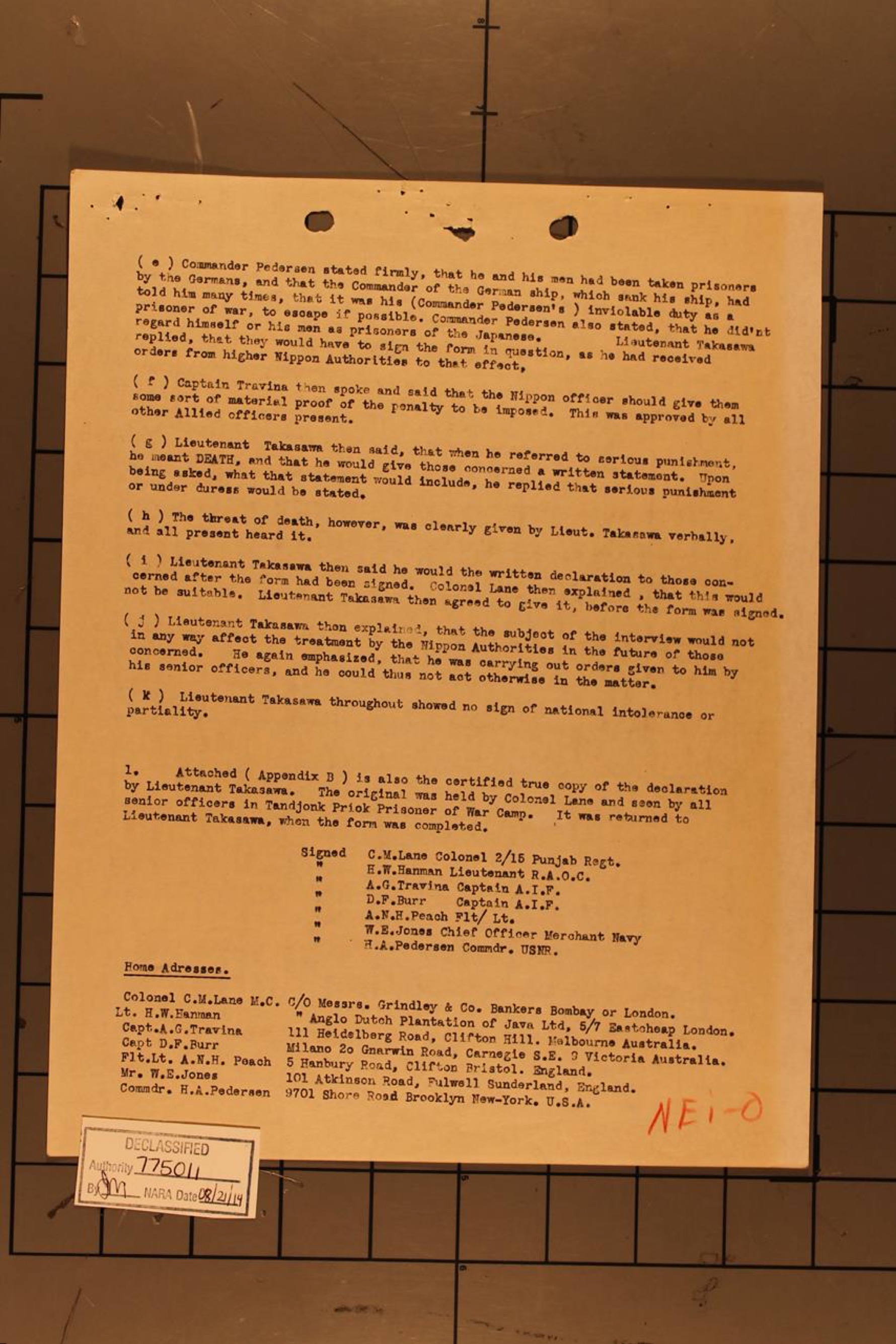
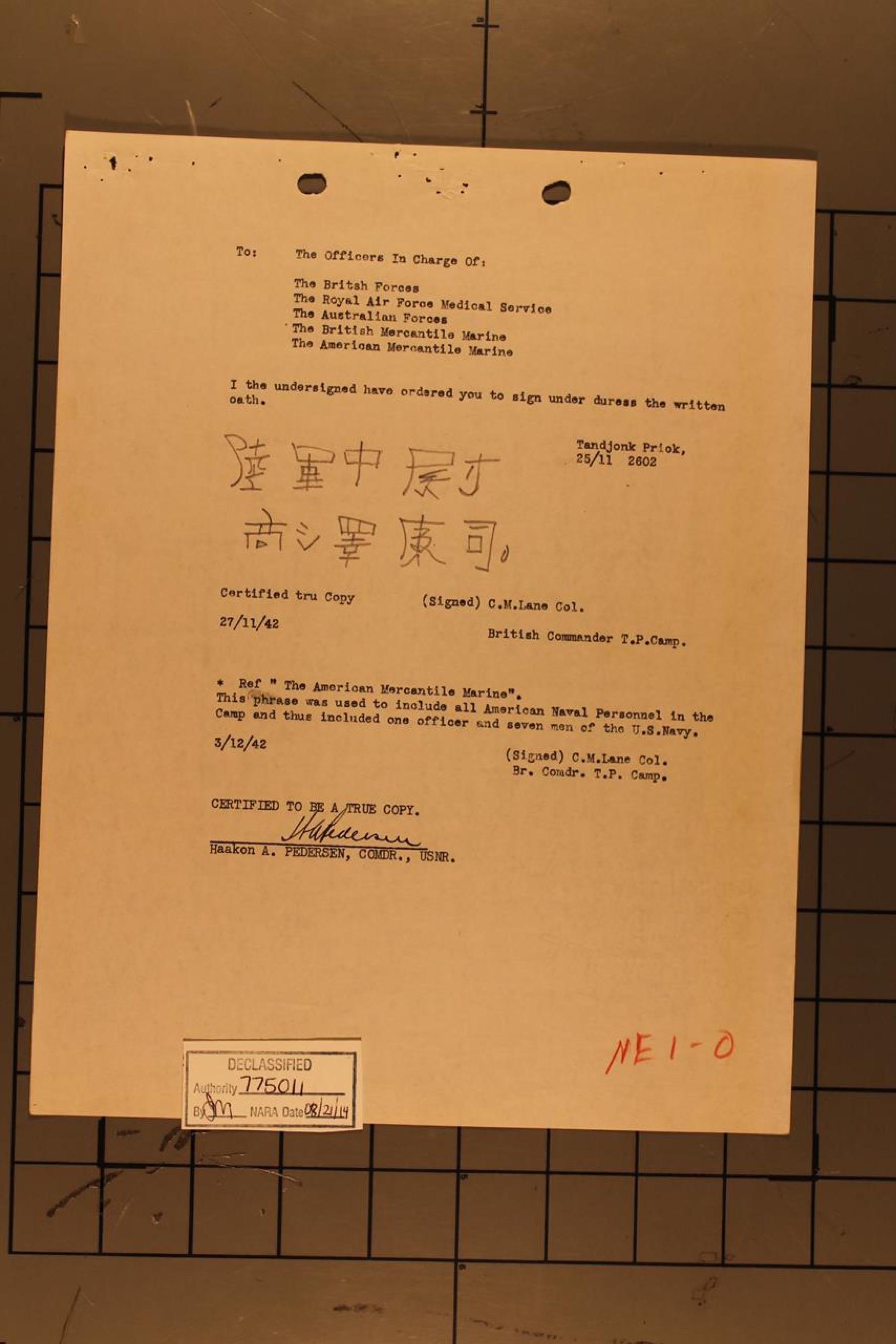
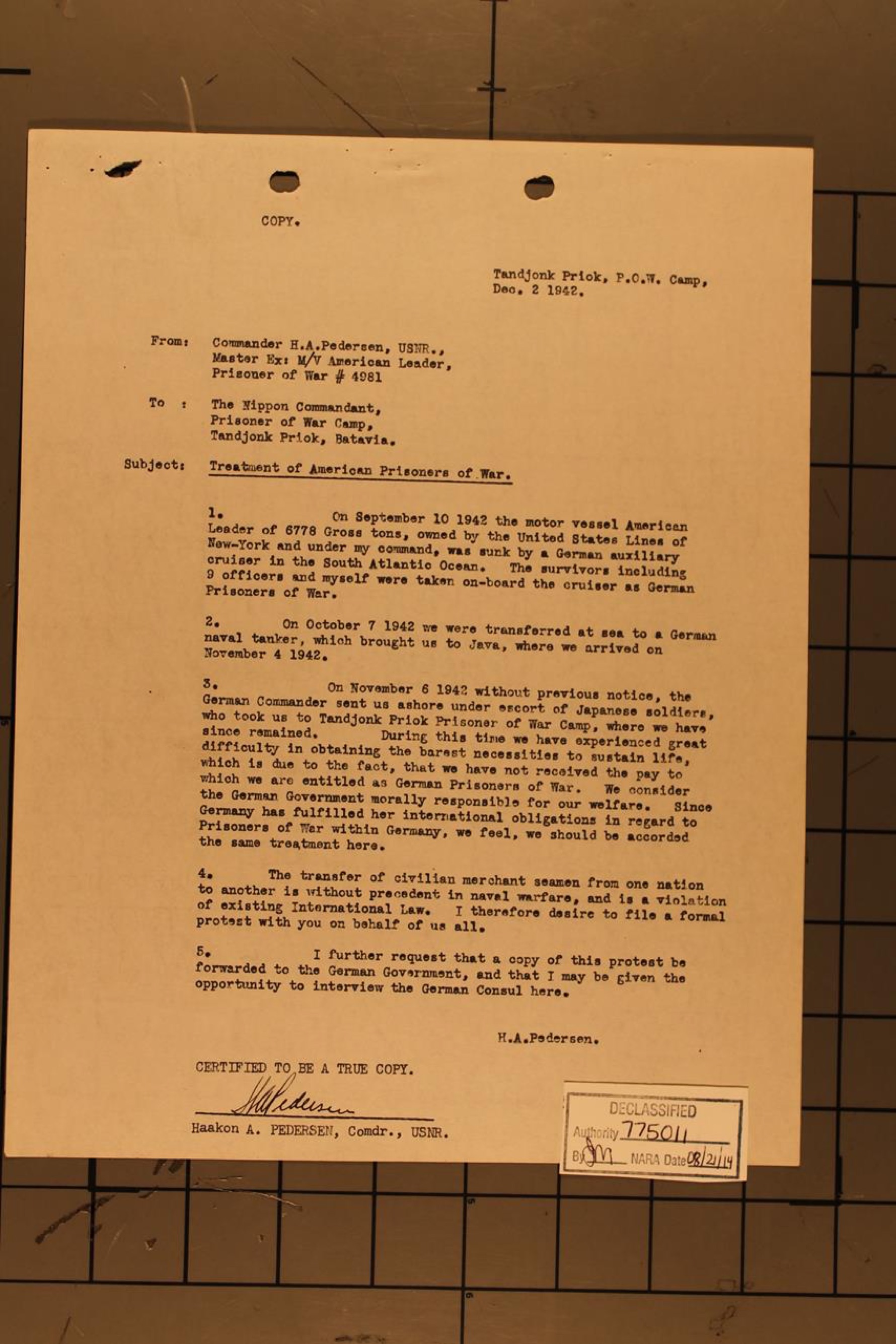
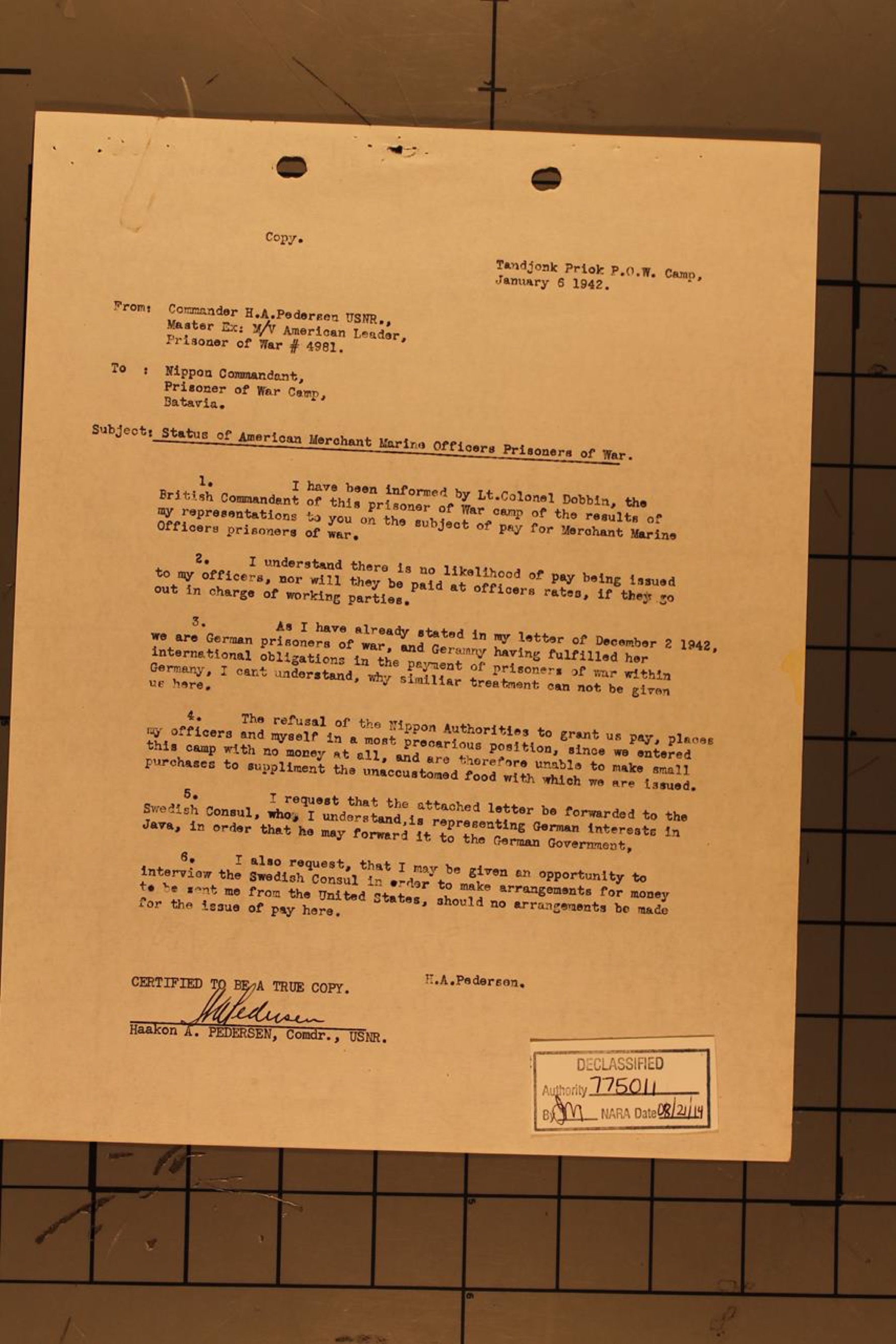
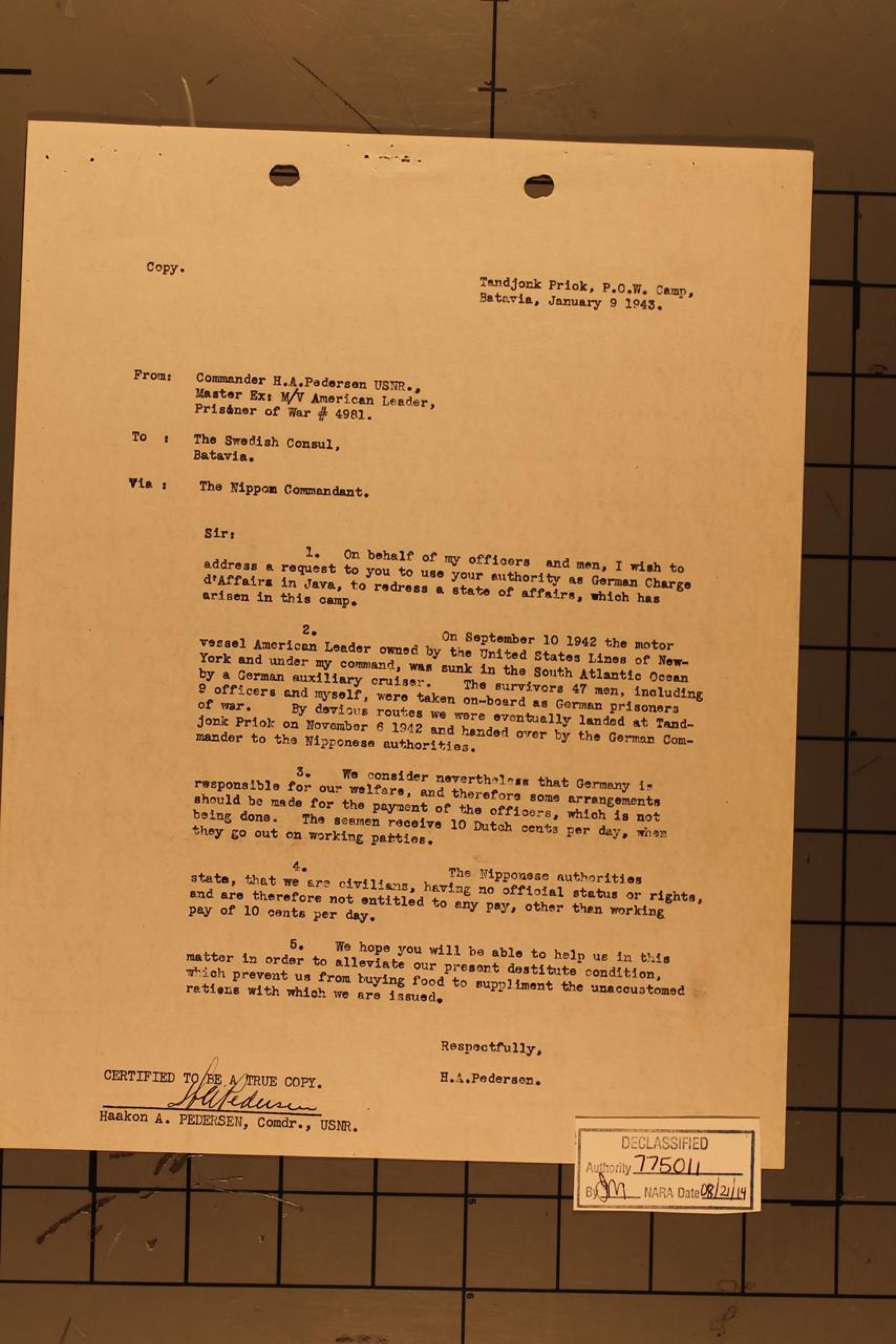
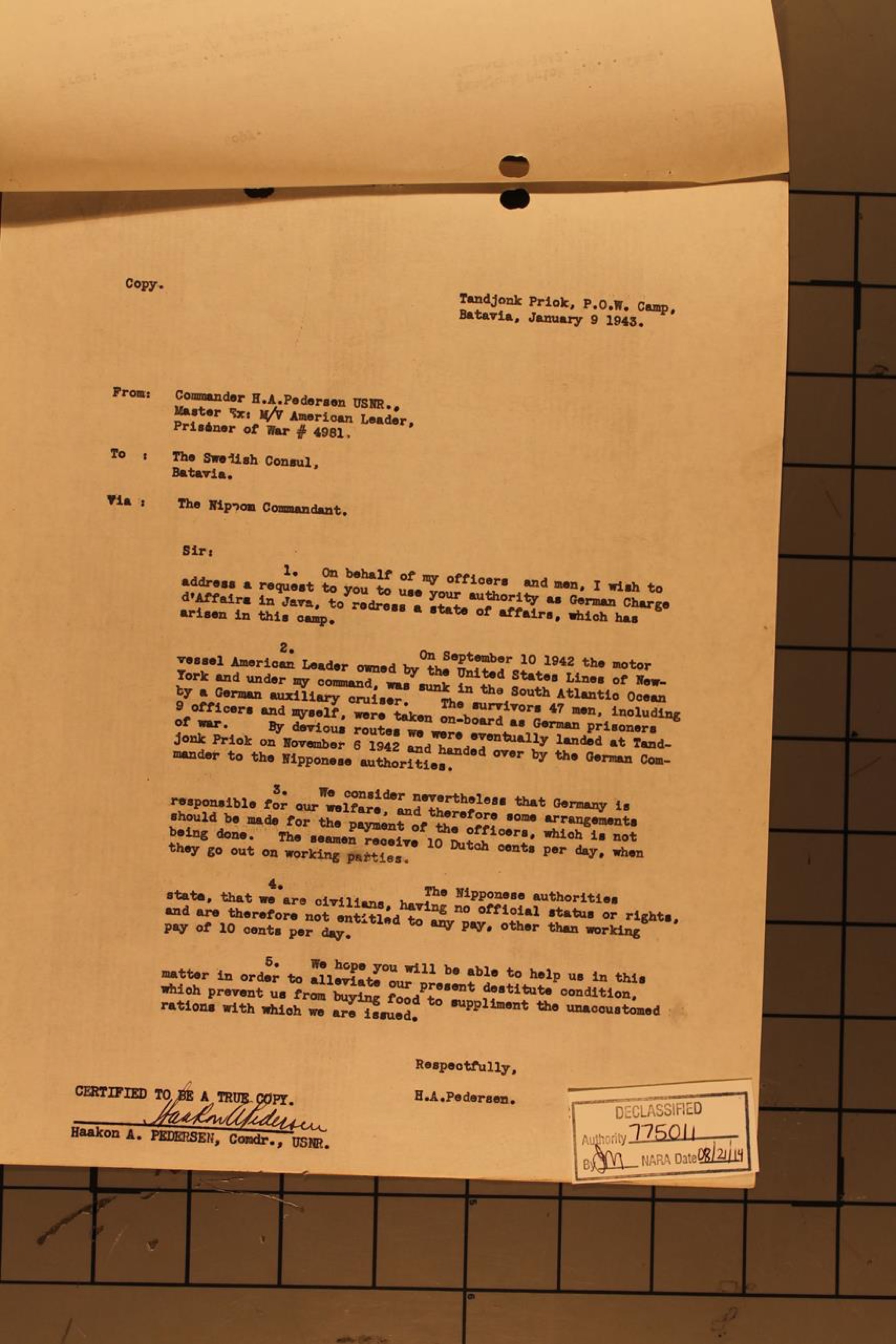
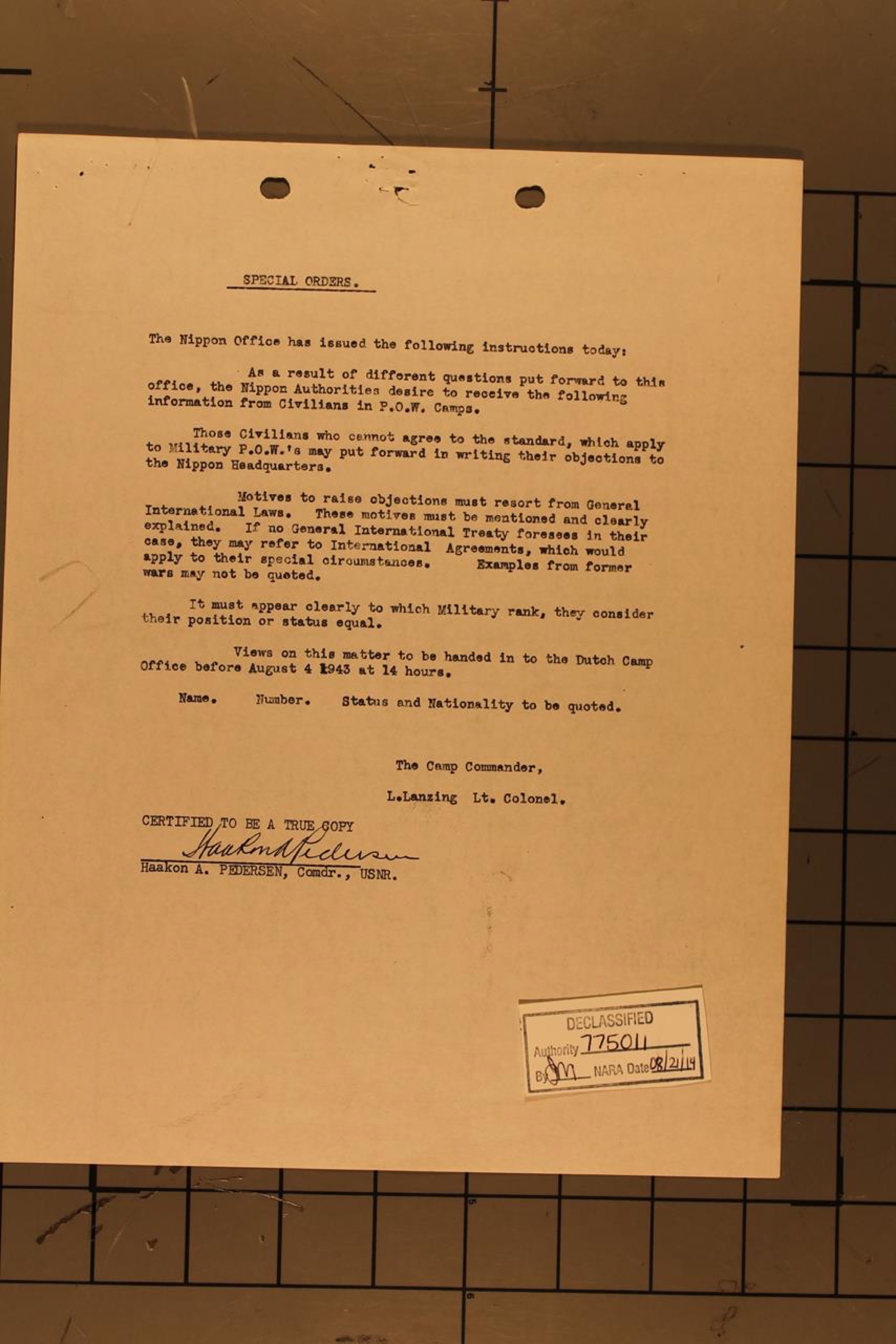
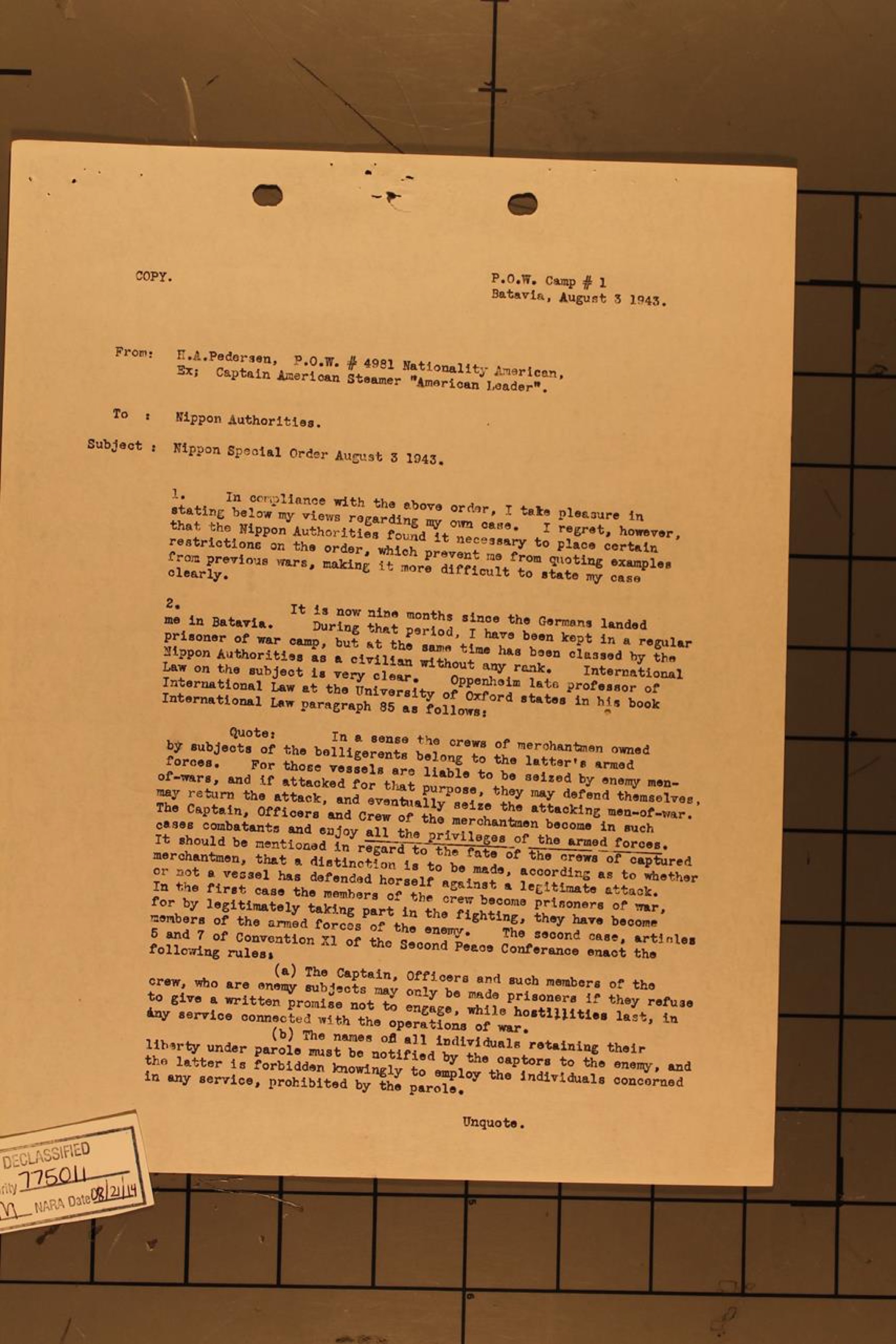
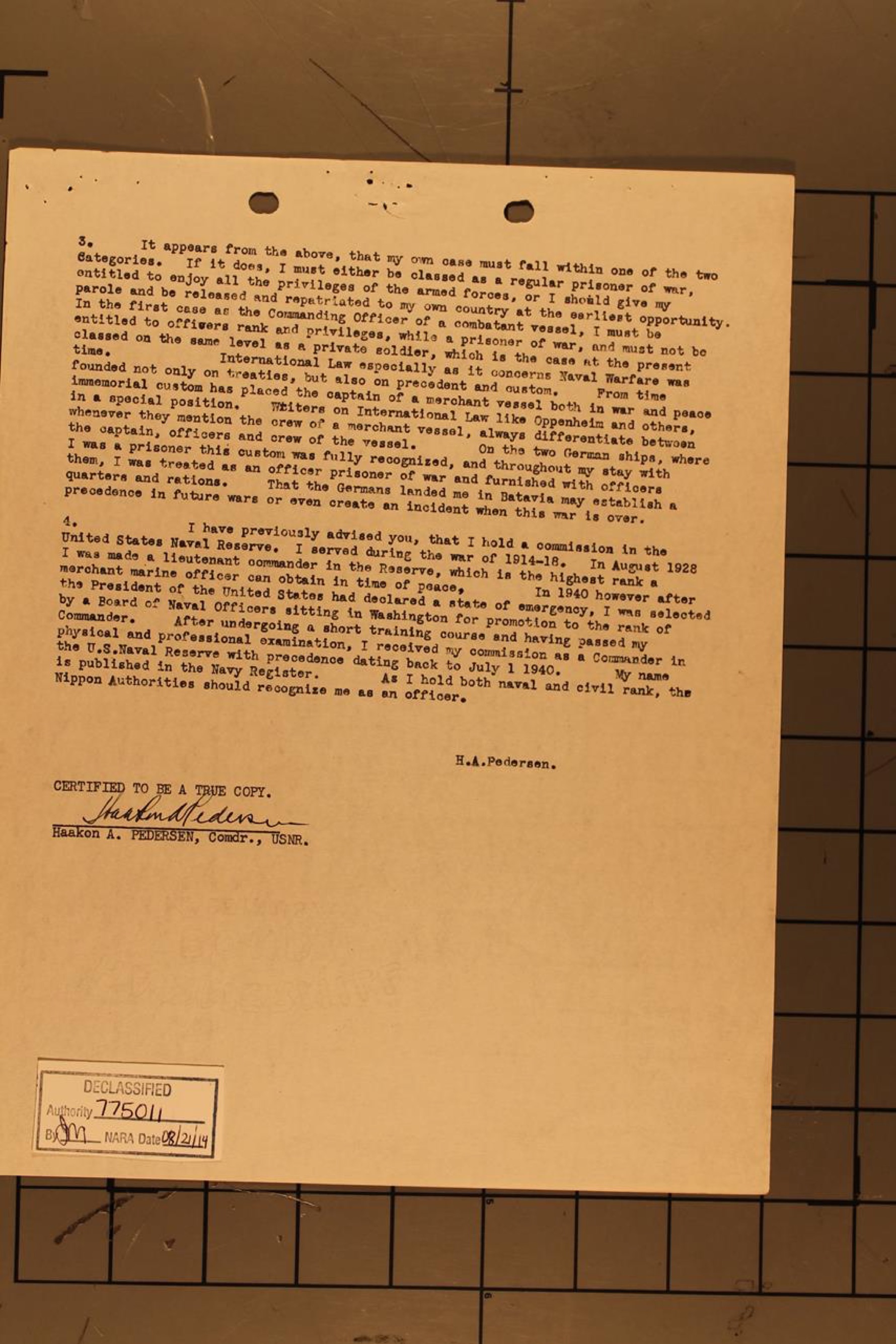
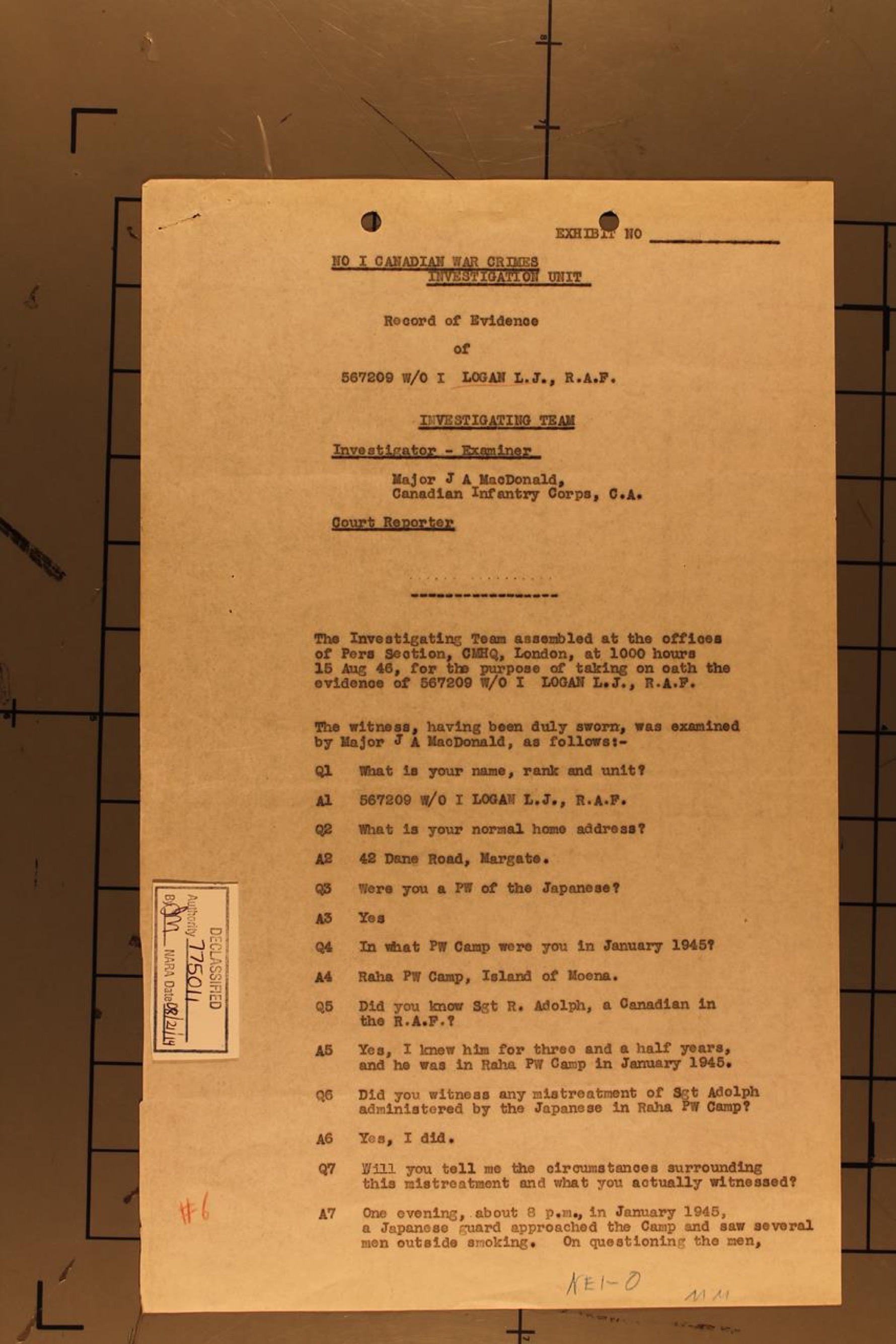
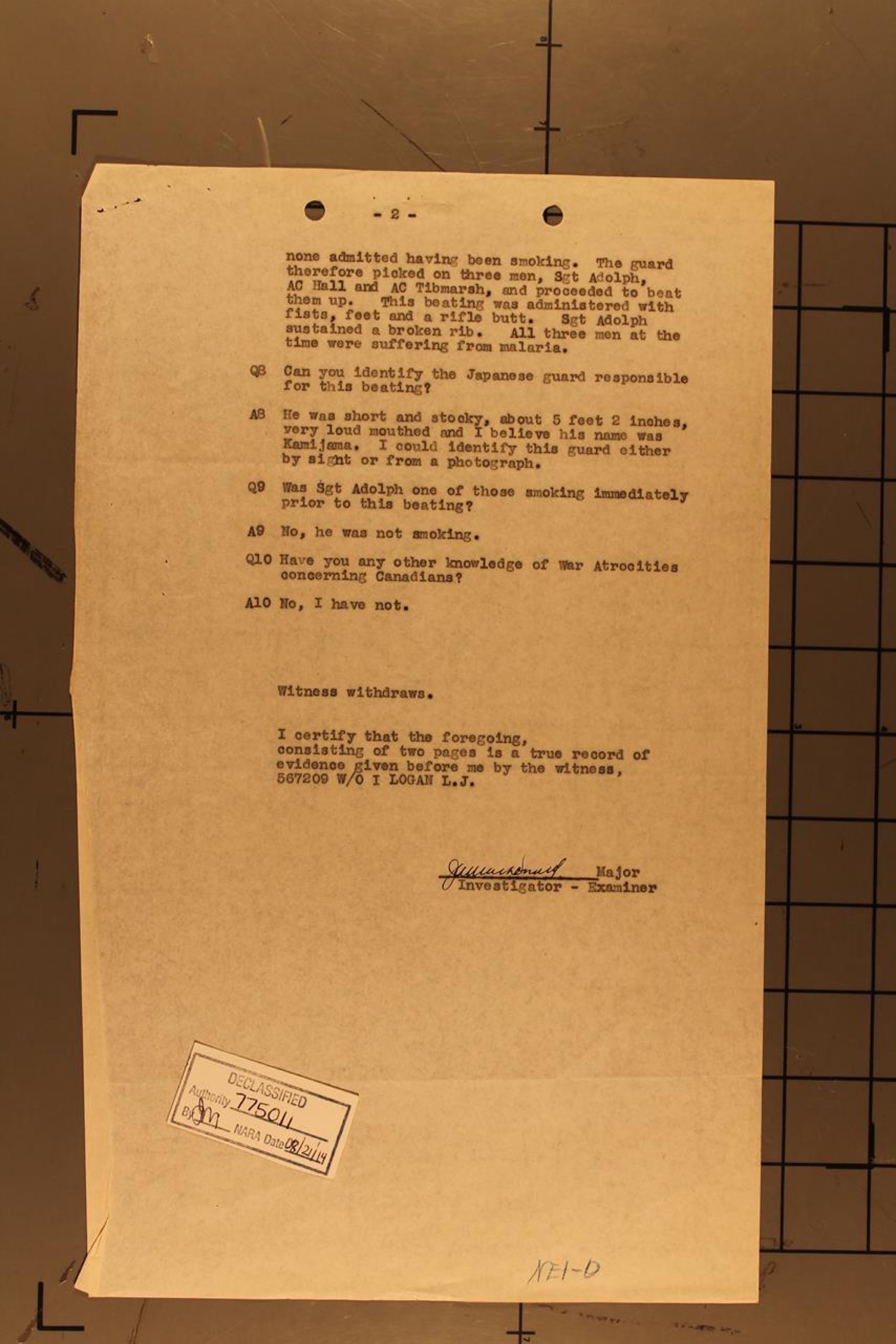
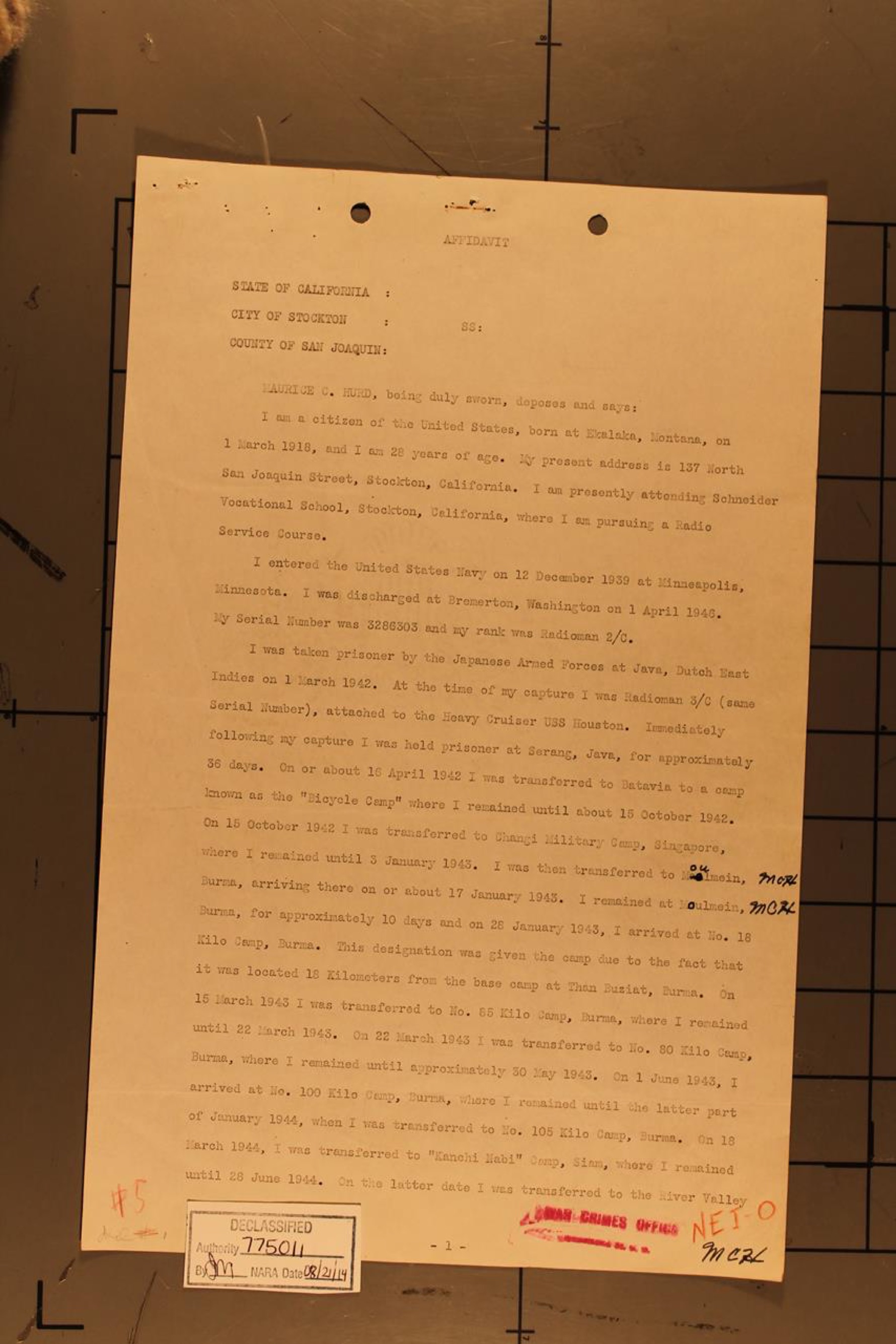
Following Kamada’s sentencing is a number of affidavits and interviews. Tucked among them is a “Record of Evidence” marked as “Secret”; it holds copies of several letters Commander Pedersen, USNR submitted while interned at Tandjonk Prick Prisoner of War Camp to either the camp commandant or Swedish Consul in Batavia. He protested the treatment of both himself and the men under his care, non-recognition of their military status, and in each communication, he steadfastly maintained:
NEI-0, Serial No. 8 “Record of Evidence” p 2 .
Captain Pedersen was adamant that both he and his officers were commissioned officers in the United States Naval Reserve. He recounted his training, his elevated rank, and war service. His Japanese captors ignored his protests and singled him out for individual humiliation and punishment; they had gone as far as building a solitary cage for him outside the camp commandant’s quarters. It is worth noting that Captain Pedersen was not only concerned with the lot of the licensed officers from his ship – their U.S.N.R. status was easier to explain or justify than that of his unlicensed crew. He did, however, cite international law in one of his letters, stating his was a belligerent ship and his entire crew should be afforded military privileges – the most important was pay. It is a curious thought that Prisoners of War needed to be concerned with money, but the few extra cents given to officers enabled them to purchase additional food from the Japanese – or a meager buffer against starvation.
SS American Leader, n.d. Col.: IW
Haakon Anderson Pedersen was born in Arendal, Norway on April 12, 1891. He first went to sea in September 1907 at age sixteen as a “deck boy” aboard the Norwegian Bark Formica – a windjammer involved in the lumber trade.
H. A. Pedersen Report: Loss of SS American Leader & Imprisonment
Off the main gallery space at the American Merchant Marine Museum is a small room easily mistaken for a chapel. This is understandable since upon entering, the visitor finds a Deco stained-glass window above an altar-like desk arrayed with newspaper clippings under a vitrine. The room is called, “Gallant Ship Room,” and like a chapel, it is a place of quiet reflection.
In the “Gallant Ship Room” rest eighteen brass plaques. Inscribed on each is the motto “Unit Citation For” followed by a ship name and a short paragraph. Mounted above two of the plaques are large 19-inch bronze medallions. Most of these plaques are awards that graced the wheelhouses of ships that earned a curious citation called the “Gallant Ship citation” and others were granted to sunken ships. These citations relay the bravery and often superhuman efforts of an entire ship’s crew facing and overcoming seemingly insurmountable adversity: be it a relentless enemy attack or the capricious ocean.
A couple of months after the two and half-year anniversary of United States’ involvement in the Second World War – with no end to the war in sight – President Franklin D. Roosevelt issued Executive Order 9472 on August 29, 1944. The Order established a series of decorations and awards for the United States Merchant Marine; among them was the Gallant Ship citation. It is significant the award came before all others in the proclamation as it indicated the President understood the collaborative nature of a merchant seaman’s work and his wish to honor the ship’s complement.
EO 9472 in Federal Register. Vol. 9, No. 174, August 31, 1944, p. 10613.
Immediately thereafter, the Seaman’s Service Awards Committee received petitions from various managing operators on behalf of ships and crews which exemplified the spirit of the law. The first award came on April 17, 1945 to the SS Samuel Parker. This ship’s award was significant since it provided a touchstone for the “fighting Merchant Marine.” Other ships soon followed and to the shipping companies, the War Shipping Administration issued wood plaques with a bronze medallion and brass plaque with the text of the citation affixed. If the ships were in service, the awards were placed in the wheelhouse for all to see; with the War Shipping Administration keeping replicas of the citation plaques for the historical record. In time, the depository eventually changed to the United States Merchant Marine Academy at Kings Point, followed by the American Merchant Marine Museum.
Following permutations of administrative re-organizations resulting in today’s Maritime Administration, the law governing the award followed suit. The Secretary of Transportation now has the latitude to award the Gallant Ship citation; this is usually done following the suggestion of the Maritime Administrator :
46 USC § 51902: Gallant Ship Award, 2019
To date, the United States has honored forty-three ships with the title “Gallant Ship.”
U.S. Merchant Marine Academy at Kings Point Regiment of Midshipmen
Kings Point is a compact campus founded in 1943 on Long Island, New York. It is devoted to training future maritime leaders of the United States Merchant Marine. The Academy has about one thousand students altogether comprising of the Regiment of Midshipmen. These pages offer some primary source material for the study of the Regiment, and its culture and history.
When asked about how he heard about the U. S. Merchant Marine Academy, a Cadet replied:
“I was an ordinary seaman with the U. S. Lines, and the director of unlicensed personnel told me about the Cadet Corps and he encouraged me to join the Corps. I always thought Cadets were sissies, but I learned different when I joined.”
U.S. Maritime Commission Cadet Corps Awards & Decorations 1939-1944
The Regiment of Midshipmen has a long, understated tradition of awards and decorations specific to the Regiment itself. The first awards were ribbon awards – an innovation in an era when medals suspended by ribbands were the rule. At the Cadet Corp’s outset, cadets holding advanced academic placement were awarded a ribbon, and cadets who earned the commendation of the shipping companies to which they were assigned also wore a ribbon. In a discrete sense, the later was akin to a citation star. As the Cadet Corps coalesced into a Navy-style regiment, many of its members were in the thick of combat; some who returned stateside rated the Enemy Action Ribbon decoration. As the war dragged on, and the United States Maritime Commission established a pyramid of honor for the United States Merchant Marine establishment, the Regiment stopped awarding its specific combat-related ribbons and cadet-midshipmen wore awards and decorations of either its parent organization or the military. At the same time, U.S. Naval Academy-inspired embroidered Academic Stars supplanted academic honor ribbon awards. For almost decade, the Academy’s autochtonous decorations faded from view.
Before diving into the specifics of the awards and decorations, a couple definitions are worth presenting. In the context of military and paramilitary groups such as the Cadet Corps: a decoration is a ribbon or a medal given for personal achievement or bravery; an award is a ribbon or a medal earned for service or an act at a particular time or place. In an educational setting, awards are granted for academic excellence. Depending upon the environment, decorations often take precedence over awards.
Cadets Corps Scholastic & Company Award Ribbon
In 1939, the U.S. Maritime Commission instituted Scholastic and Company-presented awards for outstanding cadets in the Deck and Engine programs. The awards were commemorated in the form of silk (not moiré) ribbons with appurtenances for either program of study. The regulations for the ribbons remained in force through at least August 1942; yet, extant period photographs do not record them after this date – it is highly likely they were redesigned as a different ribbon prior to becoming patch stars and placed on cadet-midshipmen cuffs and shoulder boards (see note at end of the page).
from: Cadetships in the Merchant Marine of the United States, October 17, 1939.
Regulations denoted the ribbon to be ½in wide and 2in long; however, period photographs show they were ½in wide and 1¾in long – following the common ribbon bar size used by the United States Navy at the time.
Scholastic Award Ribbon
Company Award Ribbon
from: Uniform Regulations for United States Maritime Commission Cadet Corps, January 1, 1942.
Scholastic Award Ribbon – Engine program
Scholastic Award Ribbon – Deck program
Awardee of U.S. Maritime Commission Scholastic Award Ribbon – Deck. Col.: IW
1939 Clarence D. Wells awardee of U.S. Maritime Commission Scholastic and Company Ribbon – Deck. Col. IW.Gordon W. Lyons awardee of the U.S. Maritime Commission Scholastic and Company Ribbon – Deck. The photograph is prior to being lost at sea in 1944; the Company ribbon is circa 1941. The image is reprinted with the approval of the United States Merchant Marine Academy Alumni Association and Foundation. Col.: USMMAAAF.
Cadet Corps Cadet Stars for Survival of Enemy Torpedoing
Prior to the creation of the Merchant Marine Combat Bar ribbon and the Merchant Marine Mariner’s Medal in May 1943, the War Shipping Administration announced the formation of a “Torpedoed Seamen’s Club” in the Summer of 1942. The Club’s insignia was the Combat Bar ribbon with silver stars – each star representing a ship sunk by a torpedo; the ribbon was first awarded on October 9, 1942. Some months after the announcement of the new club, Commander Richard R. McNulty, supervisor of the United States Maritime Commission Merchant Marine Cadet Corps, authorized cadet-midshipmen who survived a torpedoing or were wounded by the enemy to wear a Cadet Corps-specific ribbon on their uniforms in December 1942. The ribbon awards were alternately known as “Cadet Stars for Survival of Enemy Torpedoing” or “Enemy Action Ribbons.” Cadet-midshipmen wore the award well after May 1943, into January 1944. Commander McNulty also required cadet-midshipmen to write Enemy Action reports which detailed the circumstances of vessel attacks, the corpus of which is accessible on the Enemy Action Reports page.
Enemy Action Ribbons came in two classes: torpedoed, and wounded. The former was a grey ribbon with a blue star, and the latter a green ribbon with an aluminum star. Each star on the ribbons represented a unique act. Cadet-midshipmen were eligible for either award only after a petition to their training organization. In practice, if a cadet-midshipman was authorized for both awards, the wounded ribbon took precedence over the torpedoed ribbon. If the ribbons and stars were not available at the United States Merchant Marine Academy or Basic Schools, cadet-midshipmen were authorized to procure their own lengths of ribbon, stars, and blank pins from any uniform supplier, and manufacture their own ribbons. Each ribbon held a maximum of three stars; the torpedoed ribbon’s stars had two rays of the stars pointing upward; the wounded ribbon’s stars had a single ray pointing upward.
In January 1943, Polaris – the Cadet Corps student magazine – published the first list of cadet-midshipmen authorized to wear either ribbon. At the time of publication, only one cadet was wounded during their “sea year.” After this initial notice, no subsequent mention was made in Polaris of additional awards; although, section graduation photographs and articles show the ribbons’ wear through January 1944 – often in conjunction with the Merchant Marine Combat Bar ribbon.
Enemy Action – torpedoed ribbon
Enemy Action – wounded ribbon
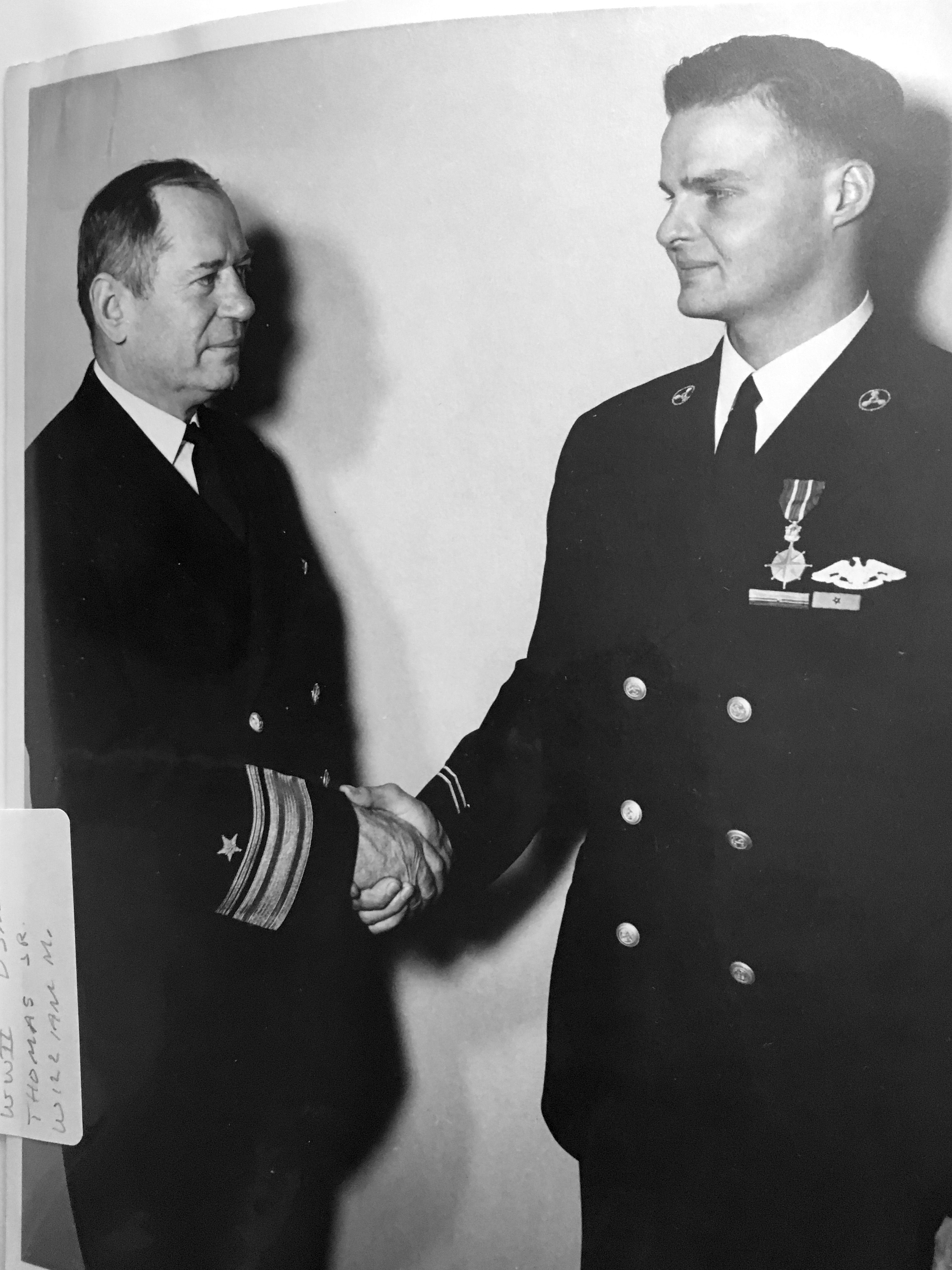
Cadet-Midshipman William M. Thomas, Jr. at the award ceremony of his Merchant Marine Distinguished Service Medal (June 1943). Note the Enemy Action – torpedoed ribbon to the right of the Merchant Marine Combat Bar with one silver star. There is the distinct possibility that the former is a “Torpedoed Seamen’s Club” ribbon. Col.: AMMM
In an effort to record all known recipients of either class of Enemy Action Ribbon, I created the table below. I only placed names of cadet-midshipmen with positively identifiable ribbons; in June 1943 some cadet-midshipmen appear to be wearing a solid ribbon broken by two thin stripes and a star – this may be a hitherto unknown academic honor ribbon.
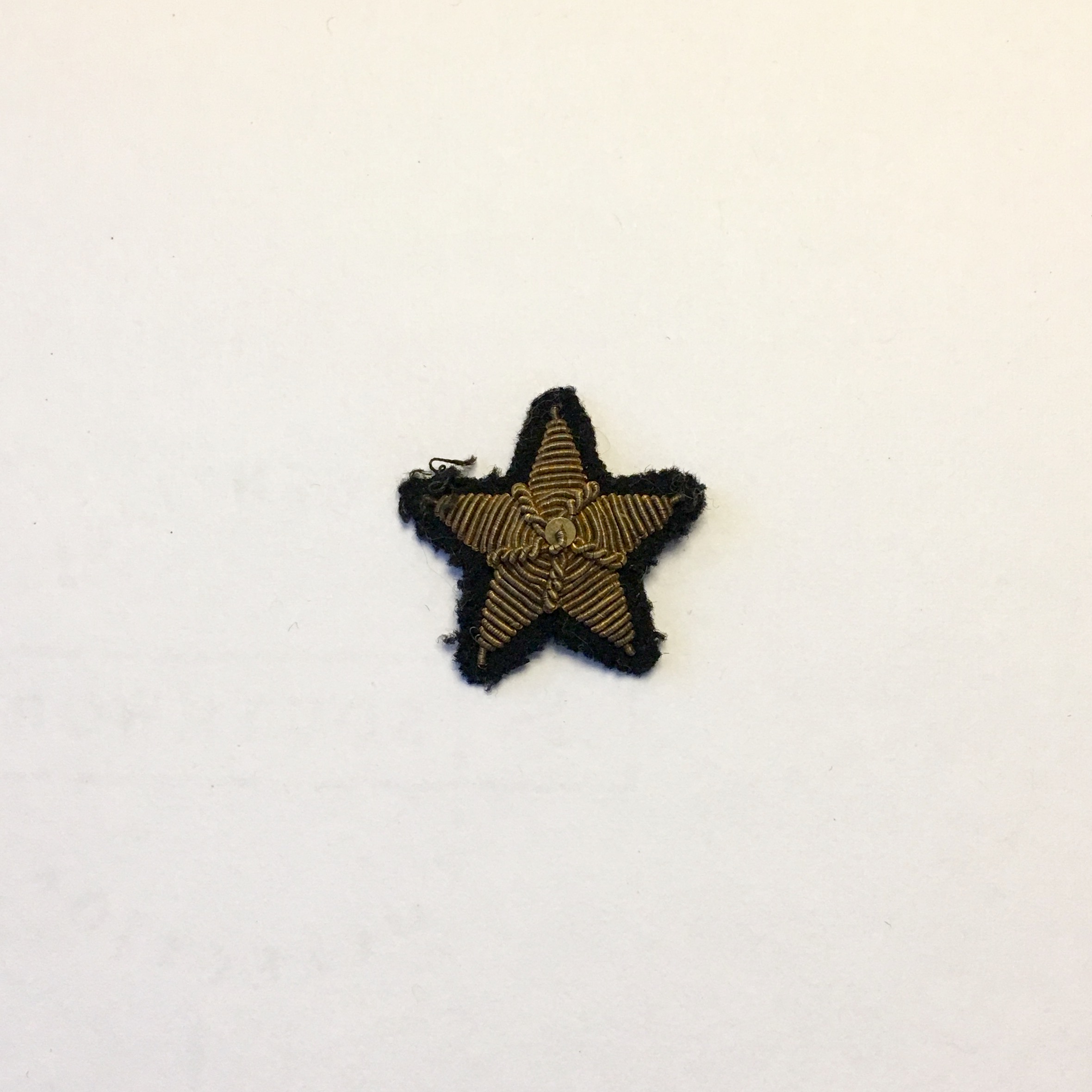
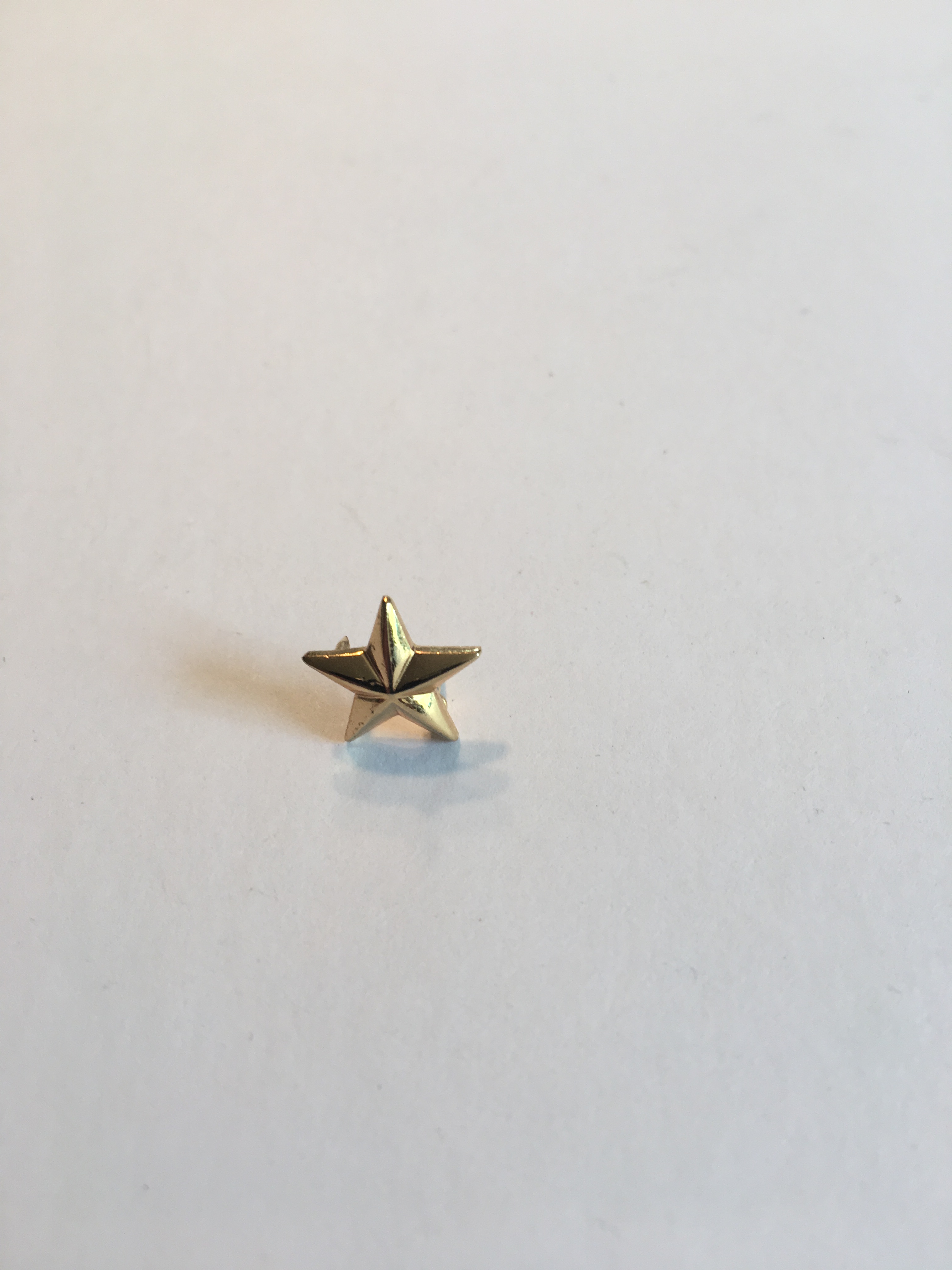
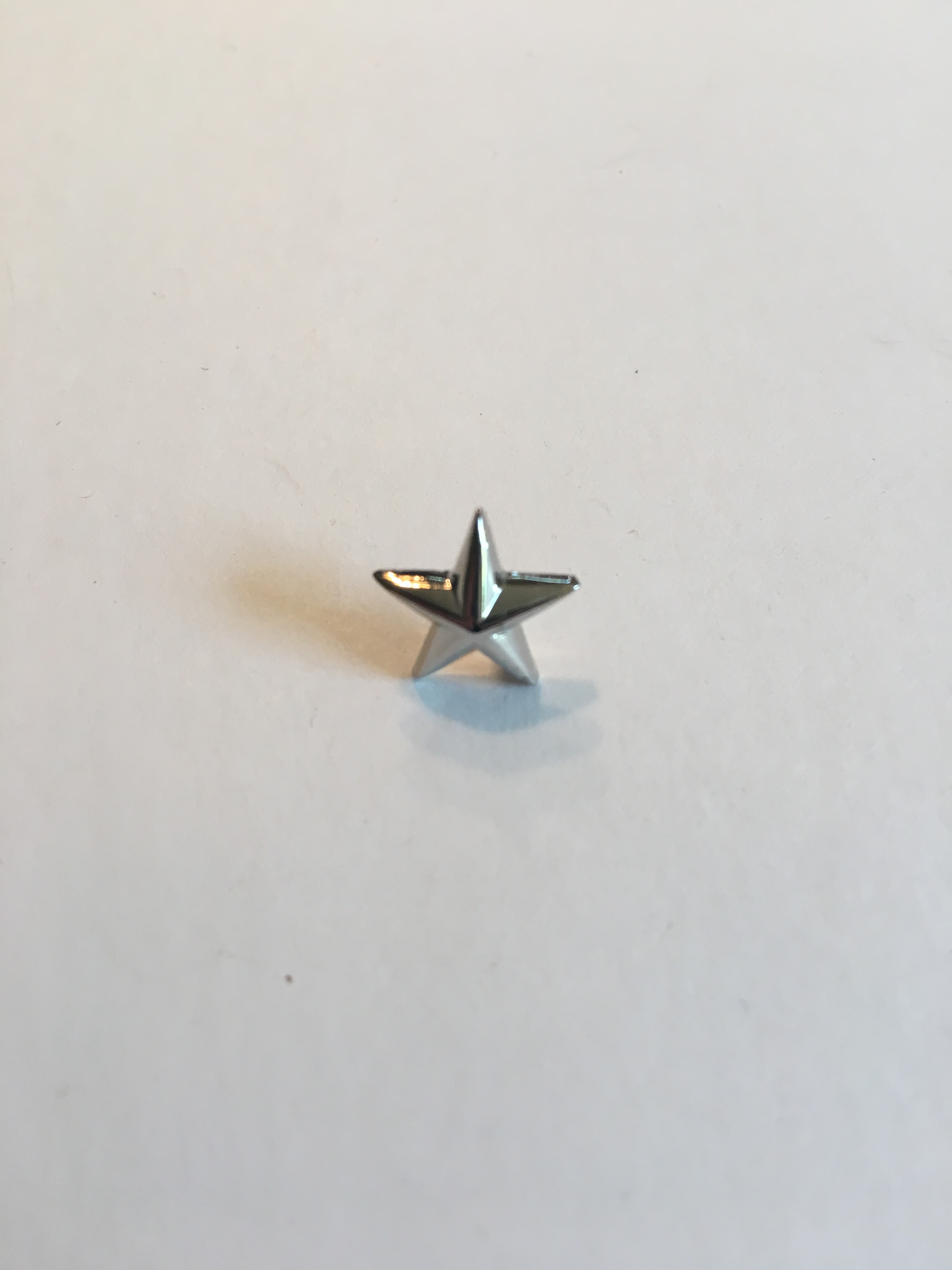
After the reorganization of the education program and alignment of the Cadet Corps into a Naval-style Regiment in January 1943, the U.S. Maritime Commission ribbons denoting academic honors fell by the wayside and cadet-midshipmen began adopting uniform notions from the U.S. Naval Academy. After the Second World War, the Academy became the recipient of a legacy of Admiral Emory S. Land – ex-chairman of the U.S. Maritime Commission and War Shipping Administration – a champion and supporter of both the Academy and a strong United States Merchant Marine in the form of an academic medal. Academic Stars and the Admiral Land Medal are markers of the long importance the Academy has held academics in its dual program of training learned and skilled merchant marine and military officers.
In 2017, Midshipmen are awarded Academic Stars on the following basis:
Gold Star: a QPA of at least 3.50 with no course failures in the term. (left) Silver Star: a QPA of at least 3.25 up to and including 3.49 with no course failures in the term. (right)
They are awarded on a term basis; for Term 1, the award ceremony takes place in February.
If a midshipman falls below the requisite QPA, the Academic Star is removed from the midshipman’s uniform. It is worn below the U.S.N.R. badge (known as the “Eagle Pin”) and above the left breast pocket; if the midshipman is wearing a ribbon rack (“Glory bars”), the star is placed above the ribbons.
Since Academic Stars were awarded each term, midshipmen once had the option of wearing each awarded Star on their uniform; I note the most worn was eight in 1971. Unlike their counterparts across the Long Island Sound at SUNY Maritime, Kings Pointers only now wear one Academic Star at a time; they abandoned this practice at the close of the 1970s.
Is worn for two academic quarters after the quarter for which it is awarded. This is irrespective of when the star is actually physically awarded. Only one star may be worn either a Silver Star for a GPA of 3.25 to 3.49 or a Gold Star for GPA of 3.5 and above. This device is worn above the left pocket, but below the eagle. The Regimental Academic Officer (RAO) is recognized to be the recommending official for this award. (USMMA MIDSHIPMAN UNIFORM REGULATIONS, 11 August 2017)
The first published Regulations Governing Appointments to Cadetships in the Merchant Marine of the United States in 1939 has a short section on Awards; it notes:
16. (a) Cadets receiving average grades of 85 percent or higher in annual examinations shall be permitted to wear a blue and white ribboned pin with a small gold anchor or propeller, as appropriate, in the white center. If a cadet receives a grade of 85 percent or higher in subsequent annual examinations additional small gold anchors or propellers shall be place on the pin.
(b) Steamship company employers may select one cadet (D) and one cadet (E) on January 1st of each year, as outstanding cadets in their service. The reports of the District Cadet Training Instructor may be consulted for the purpose of comparison or the employers may make awards based in their own records. Cadets selected by employer shall be permitted to wear a gold and blue ribboned pin with gold anchors or propellers, as appropriate, on the blue center. This pin shall not be awarded more than once to any cadet. If an outstanding cadet also has won a pin for high scholastic grades such pin shall be work as a continuation of the other.
However, with the issuance of Executive Order 9083 dated February 28, 1942 “Redistribution of Maritime Function” per “Section 5. Transfer of Training Functions from Maritime Commission,” the training of cadet-midshipmen came under the purview of the Coast Guard. With this change, previous awards to cadet-midshipmen ceased. Shortly thereafter, when the U.S. Merchant Marine Academy recruited Captain James H. Tomb as Superintendent in April 1942, the award structure re-visited. By 1943 came the “Scholastic Star.” Due to the nature of the instruction at the Academy, during the Second World War, the Star was only found on the uniforms of Second and First-Class Midshipmen. Unlike the present QPA qualifications determining which star could be worn, the Scholastic Star was awarded by the Academy’s Academic Board to midshipmen in the top 10% of their class. So as long as a midshipman remained in the top 10%, they rated the wear of the Star. It was available to midshipmen beginning the second quarter of their first year.
It took another twenty years before the “Outstanding Cadet” pin was re-introduced as the “Sea Year” ribbon.
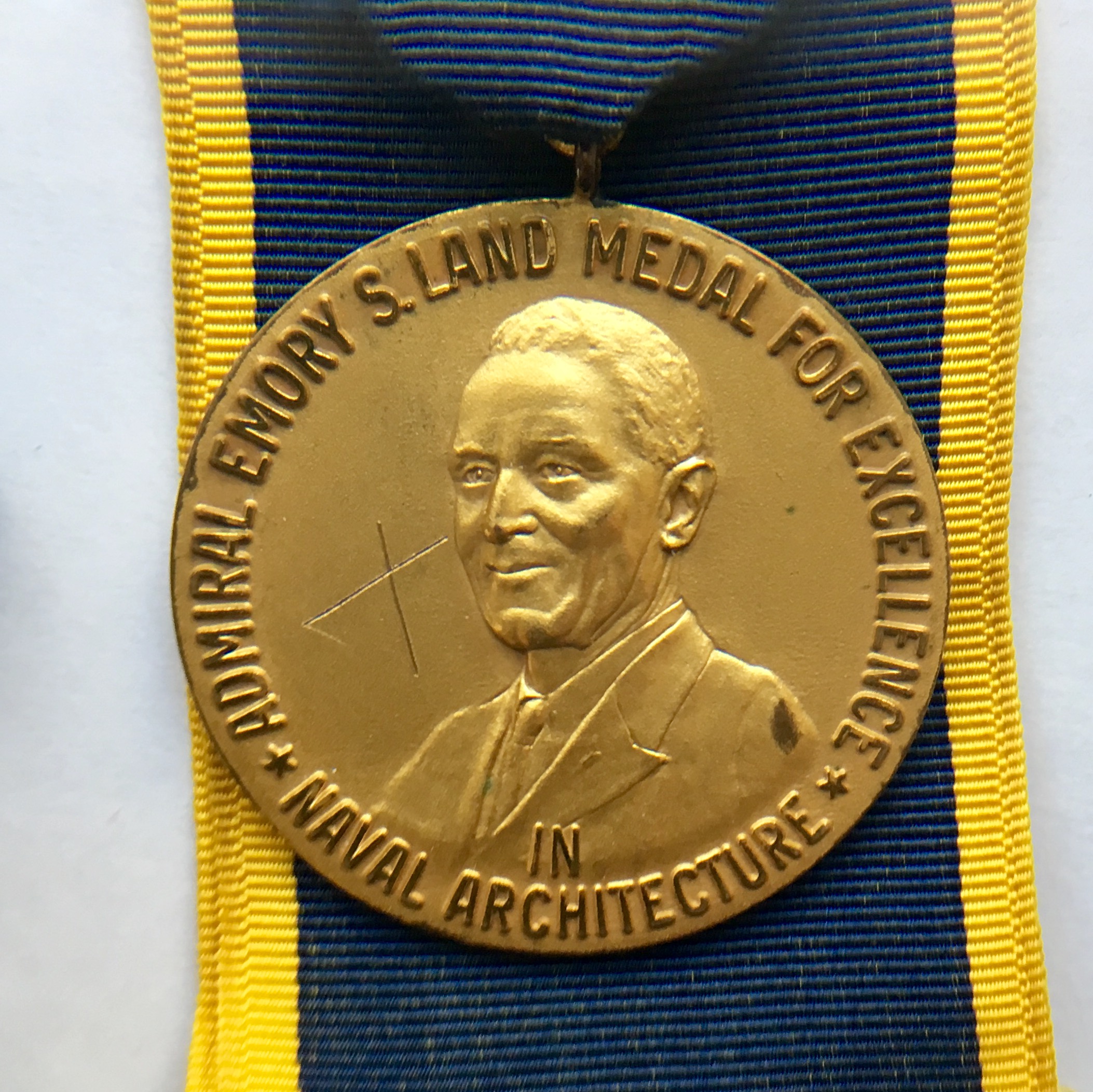
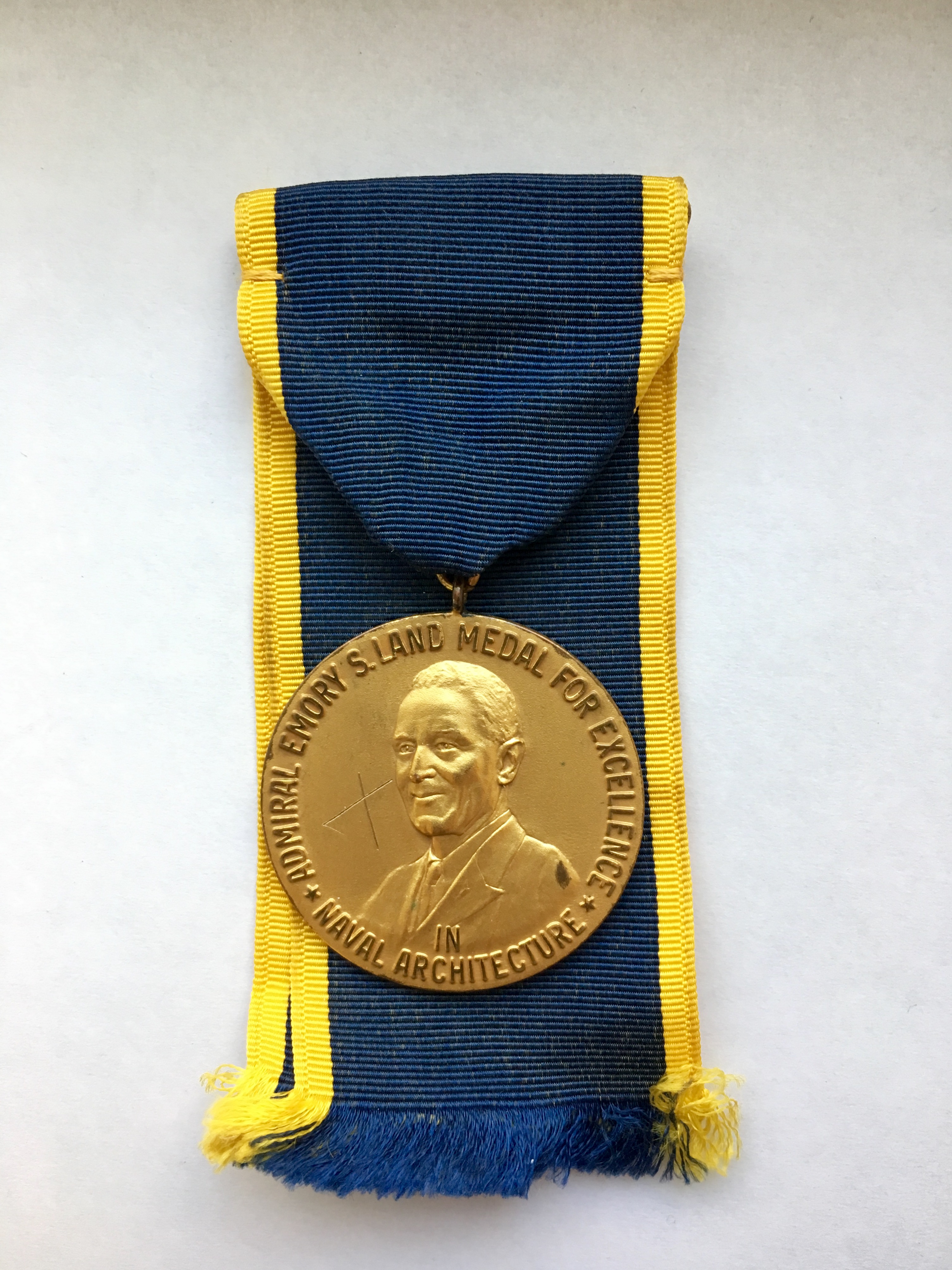
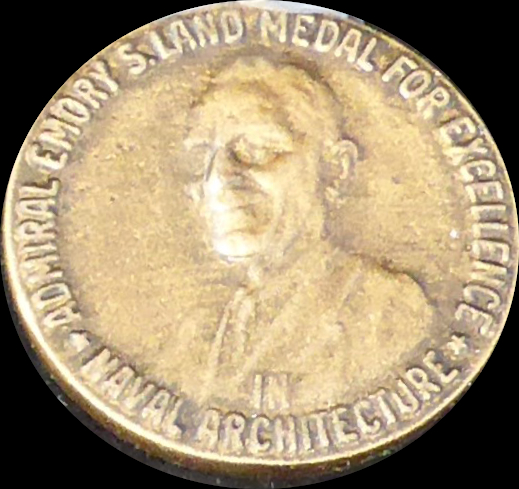
Admiral Emory S. Land Medal for Excellence in Naval Architecture
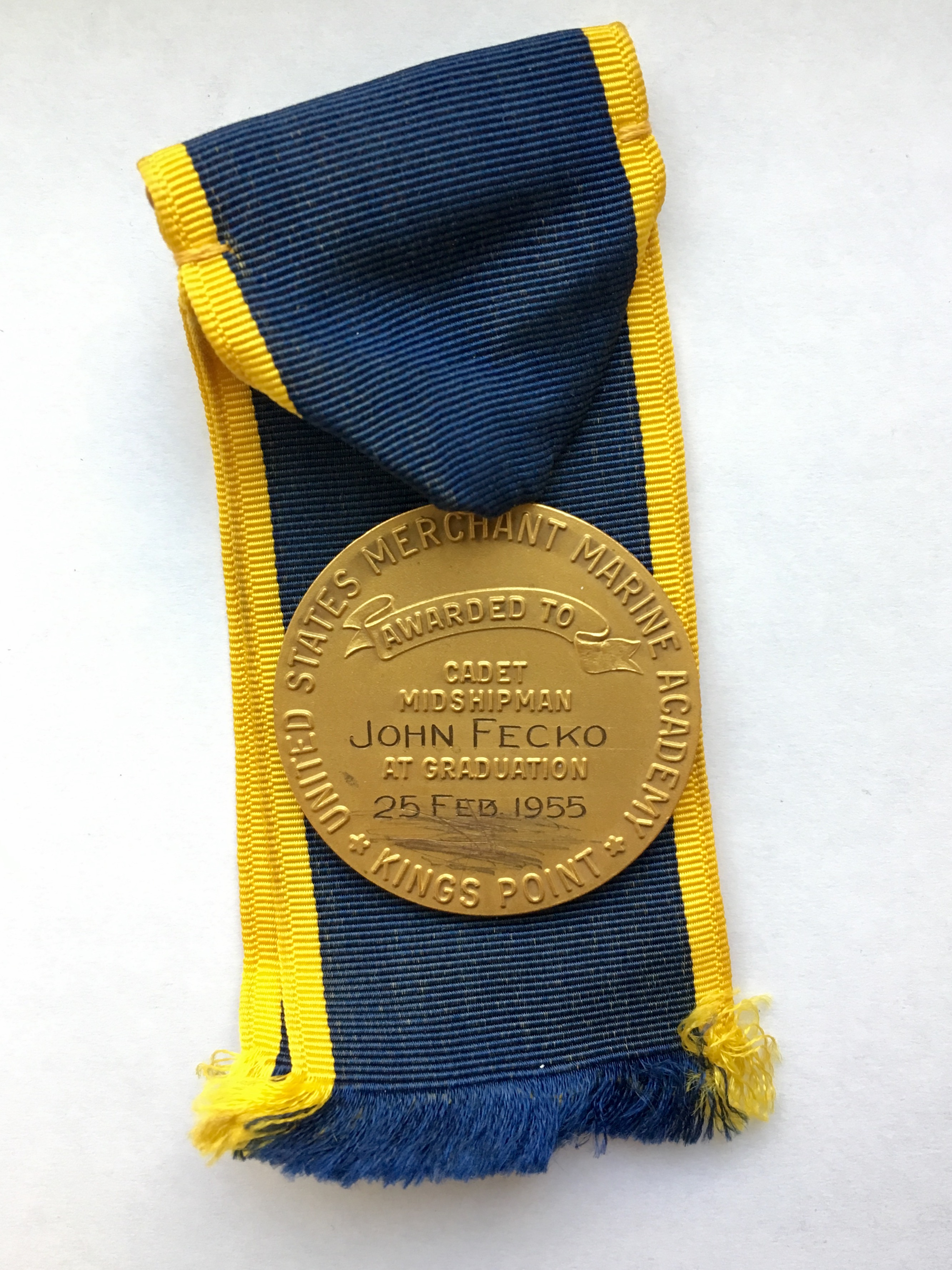
The Academy has awarded midshipmen the Admiral Emory S. Land Medal for Excellence in Naval Architecture (also known as the abbreviated “The Admiral Land Medal”) at graduation since the class of 1950 up until the present day. At its outset, the medal was only one of ten awards available at graduation, The original qualifications are hazy; however, its past recipients often graduated Cum Laude. Its existence first appeared in print in the June 1950 issue of Polaris:
in “Editor’s Review.” Polaris, June 1950, p 15.
Unlike the other awards and decorations granted to midshipmen, this medal was only worn by the recipient in their last moments as a member of the Cadet Corps. In less than a couple of hours after the award’s announcement, the midshipman became a Kings Point alumnus. This has changed in recent decades as the number of awards granted to midshipmen at graduation has increased.
Today, the medal is awarded a day prior to final exercises at a two-hour-long ceremony called “Awards Convocation” during the Academy’s “June Week.” The medal is one among 91 academic and service-oriented and 10 athletic awards granted to graduating midshipmen; and, it is one of the two medals sponsored by the Superintendent’s office. Along with the engraved medal comes a cash prize of $500 and the placement of one’s name on a perpetual plaque outside the Academy’s main space for public events, Ackerman Auditorium. The criteria for the medal are simply for a midshipman “outstanding in Naval Architecture” as selected by faculty who teach Naval Architecture. A noted change in the past decade is the medal is now known as “The Admiral Land Medal and Award.”
Despite the close similarity in name with the Society of Naval Architects and Marine Engineers (SNAME), “The Vice Admiral Emory S. ‘Jerry’ Land Medal for Outstanding Accomplishment in the Marine Field,” the similarity is in name only. The Academy’s medal it is not sponsored by SNAME; in fact, the United States Merchant Marine Academy medal predates the 1952 creation date of the SNAME medal by two years. It is one of three decorations named in the honor of Admiral E. S. Land; the other two are the SNAME award as noted above, and the “Admiral Emory S. Land Trophy” – awarded since 1952 for leadership in athletics by the University of Wyoming to select undergraduate students; Admiral E. S. Land was an alumnus of the University of Wyoming.
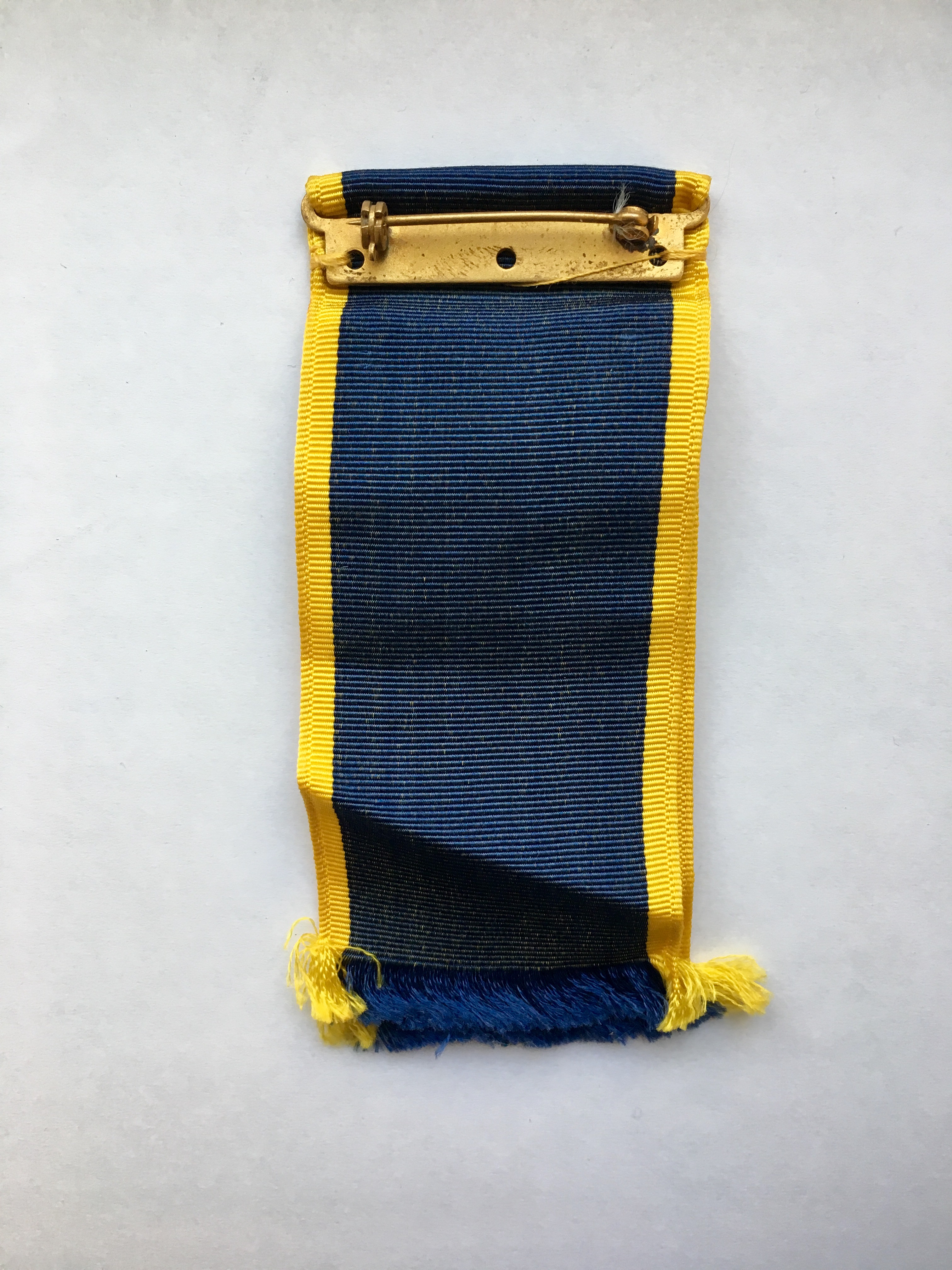
Below, please find the sixth awarded Admiral Land Medal and an example of the current medal. The original medal was gilded bronze. As a design note, Admiral E. S. Land has a Maritime Commission “V” pin on his coat lapel. The present medal appears to be a cast in a base metal. (click on images for higher resolution examples)
1955
Col.: IW
2018
Col.: USMMA
Many thanks are due to the tireless efforts of Dr. Joshua Smith at the American Merchant Marine Museum to locate an example of the present medal and to verify the medal is still awarded.
above: a 1943 South African Shilling fashioned into a ring; a souvenir from Mr. Rogers’ travels as a Mate during the Second World War.
henry charles rogers, jr. collection
After Henry Charles Rogers, Jr. passed away, his family offered the American Merchant Marine Museum a trove of striking documents. The collection spans Mr. Roger’s tenure at the Academy from 1942 until his graduation in 1943 and through his career as an officer in the United States Merchant Marine, ending in 1946. The collection’s wartime highlights include the rarely-seen 1942 Uniform Regulations of the Cadet Corps, the form he submitted as his application with endorsements, and his U.S. Department of Commerce Continuous Discharge Book; the latter details all the ships on which he sailed and positions he held. The post-war documents are no less compelling; of particular interest are the newsletters from the newly-formed United States Naval Reserve (Merchant Marine Reserve), and SS Norway Victory broadsheets published by soldiers homeward bound for demobilization. Included among the documents are poignant letters sent to Mr. Rogers from past shipmates and Academy colleagues detailing memories and current affairs.
Cadet-Midshipman Henry C. Rogers at Kings Point. Col.: AMMM
Henry C. Rogers, Jr. was born in Detroit and raised in Dearborn, Michigan in a house his father built. This home – figuring largely in the film “1940 HCR home from Kings Point visiting Mother” – was one of the first his father built in the boom days of the community; Dearborn was a Ford Motor Company town and the demand for housing for local worker outstripped supply. In 1938, Mr. Rogers graduated from Fordson High School as Class President and Eagle Scout; he later enrolled at Wayne State University as a Drama Major. None of this his father saw, as he died on the job when Mr. Rogers was five years of age. Having completed a year of college, and while he was into his second, the Second World War broke out.
Instead of heading directly for the U.S. Navy or U.S. Army like his peers, when his draft number came up, Mr. Rogers decided to join the Merchant Marine. Informed about the marine profession by his experience as a Sea Scout, officer’s training to serve on the newly-constructed fleet of Liberty Ships piqued his interest. He filled out an application at the end of January 1942, was interviewed by a retired Naval officer – who recommended him for an appointment in March of the same year – and off he went to Basic School at Kings Point. After an abbreviated training period for about a month, he shipped out on the SS Francis Marion from 15 May 1942 through January 1943; he then returned to Kings Point. In a scant nine months – after a crash course in the Deck Program and seeing the Academy’s Dedication – he graduated from Kings Point in September 1943 and went to sea. His career as a licensed Merchant Marine officer saw him rise from Third Mate to Chief Mate in the space of two years. When Mr. Rogers left the industry, he held the rank of Lieutenant Commander in the United States Maritime Service.
“Photo of Lt. Cmdr. Henry C. Rogers” Col. AMMM
Below please find documents and films at the American Merchant Marine Museum donated by Mr. Rogers’ family. Clicking on the images to the left will take you to the document itself; a brief description of the document and (approximate) date of its creation is to the right.
documents
content (click to access document)
description
1942-01-09 Uniform Regulations for US Maritime Commission Cadet Corps
1942-01-22 Application for Appointment as Cadet, Merchant Marine Reserve
Of note are the endorsements; the men who interviewed Mr. Rogers were not mere functionaries. The first endorsement came from the interviewing officer, Lieutenant Edmond DeLavy; he was awarded the Navy Cross for his work mine-sweeping. The second endorsement is by Schuyler F. Cumings; he is known for being the last staff commander aboard the once jewel of the U.S. Merchant Marine, SS Leviathan.
1942-04-10 USCG Informative Letter 3-42 Death of Lt. Cmdr. J.P. Hillyard USNR at New Orleans
1942-05 U.S. Department of Commerce Continious Discharge Book (#027731)
1942-05-15 Certificate of Service, Deck Cadet
1942-05-16 Sketch of Cadet Room and Location – SS Francis Marion Voyage I
1942-05-16 to 1943-01-11 Log Book of Cadet Henry C. Rogers, SS Francis Marion Voyage 1
Pursuant to the letter that follows this entry, Cadet Rogers’ Log Book details his days from waking to sleeping and all the tasks, travels, and activities aboard ship. Henry Rogers had a trial by fire in terms of mediating shipboard life – he was often forced, out of necessity, to take on riles outside of the purview of a cadet. And at others, experienced trying circumstances:
“Aug.16, 42 0400 Rudely awakened by drunken officers. One brandished fire ax[e], didn’t like the idea so I told him.”
1943-01-12 Cadet Rogers letter to Lt. King re first sea voyage and failure to complete Seaman’s test
1943-06-03 Shipyard Report – Ship Name Unknown
1943-07-15 Certificate of Efficiency to Lifeboat Man
1943-09-07 Naval Procurement letter Re: Officer’s Commission, Merchant Marine license
1943-09-15 Sperry Gyroscope Certificate of Graduation
1943-09-16 First Aid to the Injured Certificate
1943-09-18 Seaman’s Passport (#130908)
1943-09-28 US Maritime Service, Designation of Grade – Ensign-Deck
1943-10-27 Designation of Beneficiary Form to Mrs. L. Rogers (mother)
1944-12 Dr. Clair Wilcox, “Merchant Marine I” in Fortune Magazine
1944 US Maritime Service, Officers’ Handbook re:
Beyond a few pages in MAST magazine, USMS did not have any published uniform regulations; this pamphlet is the only official publication from USMS detailing its uniforms and insignia
1944-07-06 US Maritime Service, Designation of Grade – Lieutenant (Junior Grade)
1945-02-23 US Maritime Service, Designation of Grade – Lieutenant
1945-03-03 Certificate of Proficiency Wartime Communications
1945-03-22 Chief Mate of “Any Ocean” License Certificate
1945-07-16 H.E. Harris letter to fellow Academy graduates Re: War Shipping Administration posting
1945-08-15 Honorable Discharge
1945-11-01 to 11-09 SS Norway Victory News
1945-11-08 The Demobilizer No. 23, SS Norway Victory
1945-11-26 to 12-01 The Crow’s Nest, SS Norway Victory
1945-12-20 to 12-26 The Crow’s Nest, SS Norway Victory
1945-12-24 The Crow’s Nest, SS Norway Victory Duplicate from within above series.
1945-12-25 The Crow’s Nest, SS Norway Victory Duplicate from within above series.
1945-12-25 Mackay Radio Radiogram Re: Harry Truman Christmas Message
1945-12-25 SS Norway Victory Crew Menu Christmas Dinner Menu and Fun Show Program
1946 Date Unknown SS Norway Victory Protestant Worship Pamphlet
1946-01-31 to 02-15 SS Norway Victory Victory News
1946-02-05 Capt. Arnold H. Beeken letter to Henry Rogers
Captain Beeken sends warm wishes having received Mr. Rogers’ wedding announcement and Christmas card.
Captain Beeken was the Master of the SS Norway Victory under whom Henry Rogers served as a Chief Mate. A year prior to taking command of the SS Norway Victory in October 1945, Captain Beeken survived of the torpedoing of the SS John A. Johnson on 30 October 1944 by the Japanese submarine, I-12 about 400 miles northeast of Hawaii. The submarine later rammed and machine-gunned the lifeboats – killing 10 of the crew.
1946-03-21 to 03-29 Home Run SS Norway Victory
1946-04-14 to 04-21 SS Norway Victory News
1946-04-15 USNR Memoranda on Availability of Naval Reserve Insigne for Naval Officers in Inactive Reserve status (USNR-MMR, Inactive); Regulations for wear; Application for Active duty.
1946-04-26 to 05-06 SS Norway Victory Welcome Foam News
1946-05 Merchant Marine Naval Reserve Bulletin, May 1946, No. 1.
Merchant Marine officers are resigning their commissions in droves, and the Navy gives a mealy-mouthed plea to remain on the (unpaid) rolls.
1946-05-20 Sporl letter to Henry Rogers Re: prospective employment after the war
Mr. Rogers is passed over for employment with an insurance company as men who left for the war have since returned; hence no vacancies were available for Mr. Rogers.
1946-05-23 to 05-30 SS Norway Victory News
1946-07 Merchant Marine Naval Reserve Bulletin, July 1946, No. 2
1946-07-03 Pinky letter to Henry Rogers
1946-07-11 US Maritime Service, Appointment (provisional) as Lieutenant Commander (Deck)
1946-07-23 USNR Inactive Merchant Marine Change of Residence Registration letter
1946-10-23 Notice to Candidate of Failure in Exam
1946-11 Merchant Marine Naval Reserve Bulletin, November 1946, No. 4
1946-11 The Reservist, November-December 1946
1946-11-22 Liedts letter to Henry Rogers
Liedts, a past shipmate from the SS Francis Marion, congratulates Henry Rogers on his recent marriage (5 October 1946), appointment as a Lieutenant Commander, and urges him to call on him and his wife in Antwerp, Belgium.
1946-12-16 Capt. Dudley Q. Boyd letter to Henry Rogers
1947-01 Merchant Marine Naval Reserve Bulletin, January 1947, No. 5.
Essay on “The Need for a Navy and a Merchant Marine” in the Atomic Age.
1947-01-03 Pinkie letter to Henry Rogers
Pinkie sends thanks for correspondence and a humorous letter announcing the birth of his daughter.
1948-02-12 Harry Truman Letter of Gratitude of Service
1948-10-30 Virginia Polytechnical Institute Magazine cover
1949-01-31 Capt. Arnold H. Beeken letter to Henry Rogers
Mr. Rogers’ friend relates to him the trials of working in the merchant service and responsibilities of being a ship’s master – the impossibility of pleasing the owners and the difficulty of working with unionized crew. He writes the American Merchant Marine is in the doldrums, meaning: the shipping industry is doing poorly.
1958-05-26 “The Crack, World War II – 1941, Ammunition Ship 342-B”
Henry “Buck” Rogers “story of Henry Rogers’ “Cracked Ammo Ship”
1965-06-25 Report of Reaffirmation of Accreditation – Cover Only
1978 Henry Rogers’ Kings Point Fund Appreciation plague
1994-06-05 François Mitterand Letter of Gratitude Request
1994-06-27 François Mitterand Letter of Gratitude
2013-01-23 “My World War II Experiences as a Merchant Marine: A Memoir by Lt. Comm., USMS Henry C. Rogers, Ret.”
Henry Rogers Memoir of WWII Service at Sea.
Date Unknown Building of Liberty Ships
Date Unknown Henry Rogers Induction to Kings Point Scratch Note
Ephemera Henry Rogers Identification Cards
Award Cards Henry Rogers War Zone Bars (top to bottom): Pacific, Mediterranean-Middle East, Atlantic
Ephemera Identification of Uniforms and Insignia of USM Service
This most probably came from an issue of Esquire, October 1944, p 133.
Award Certificate Henry Rogers Merchant Maritime Certificate of Service WWII
films
content
description
1942 Home from Kings Point visiting Mother (4m28s 112MB)
The Leader Staff (2016). “Henry Rogers: Community builder of first form,” [via archive.org https://web.archive.org/web/20190920005821/https://www.ptleader.com/stories/henry-rogers-community-builder-of-first-form,26066] The Leader, Tuesday, January 26, 2016
Many thanks are due to Dr. Joshua Smith – the Director of the American Merchant Marine Museum – and the family of Mr. Henry C. Rogers for making this outstanding collection available.
These pages serve as a repository for writing, images, and supporting documents related to my exploration of topics related to the American Merchant Marine. Please click on the icons below to access their respective jump pages.
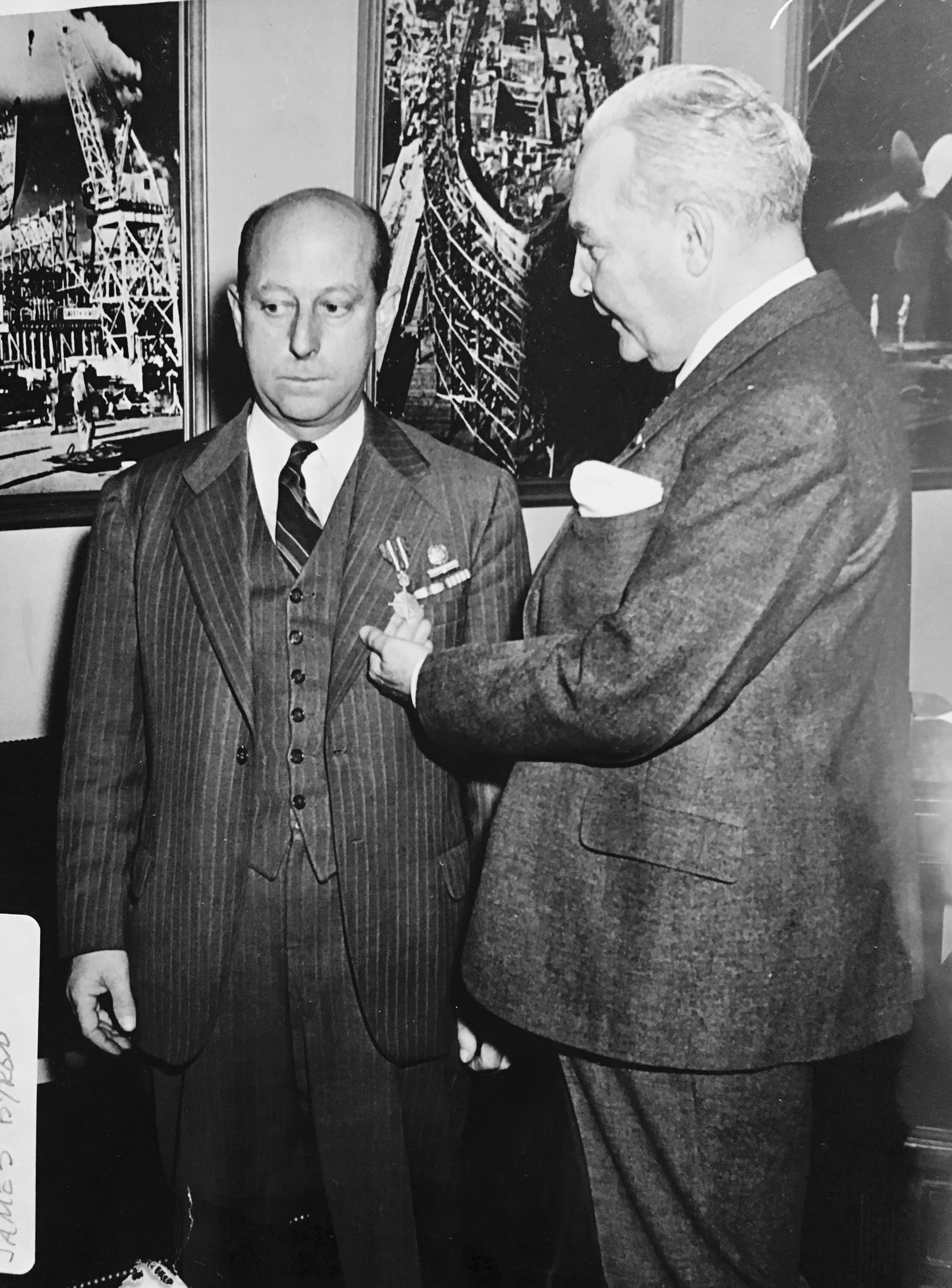
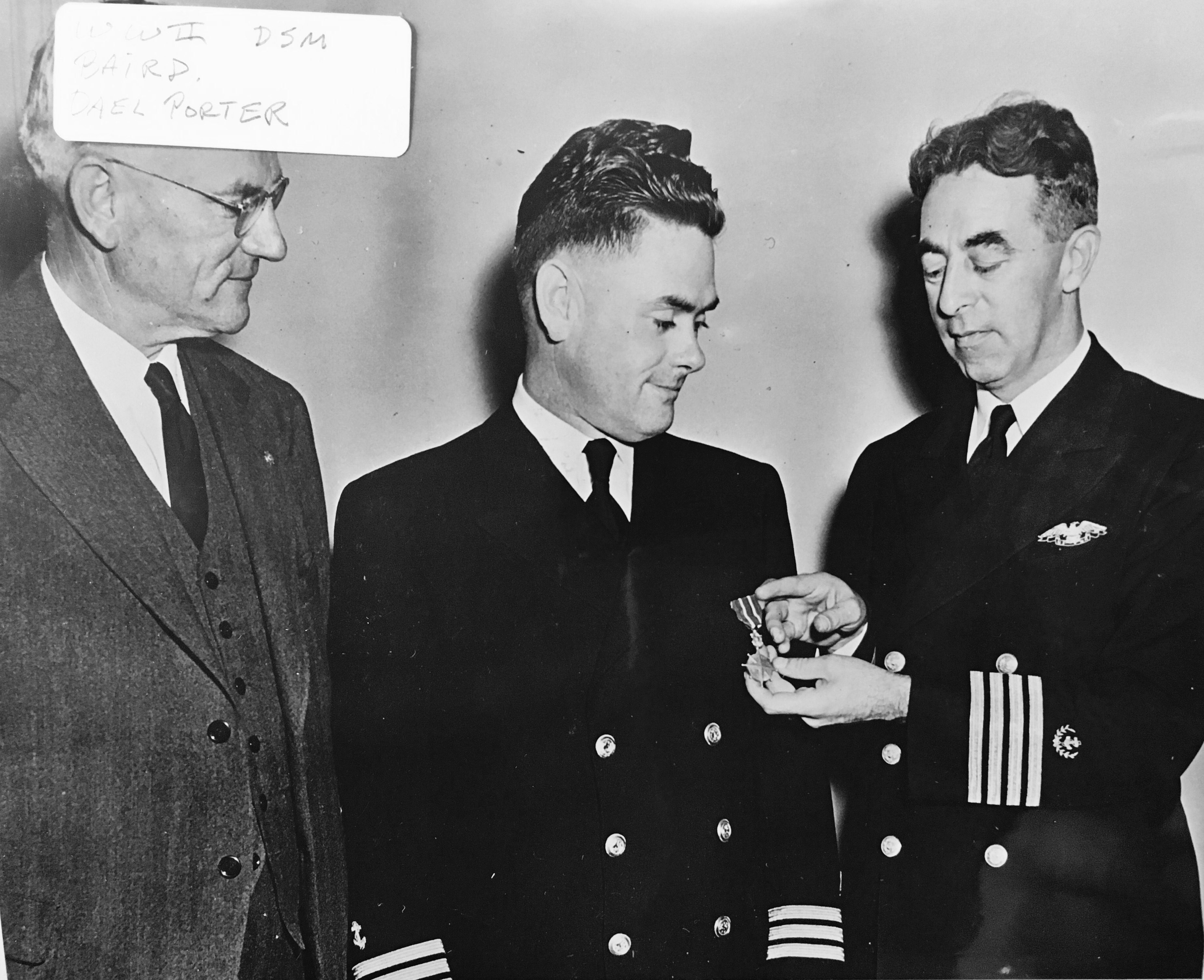
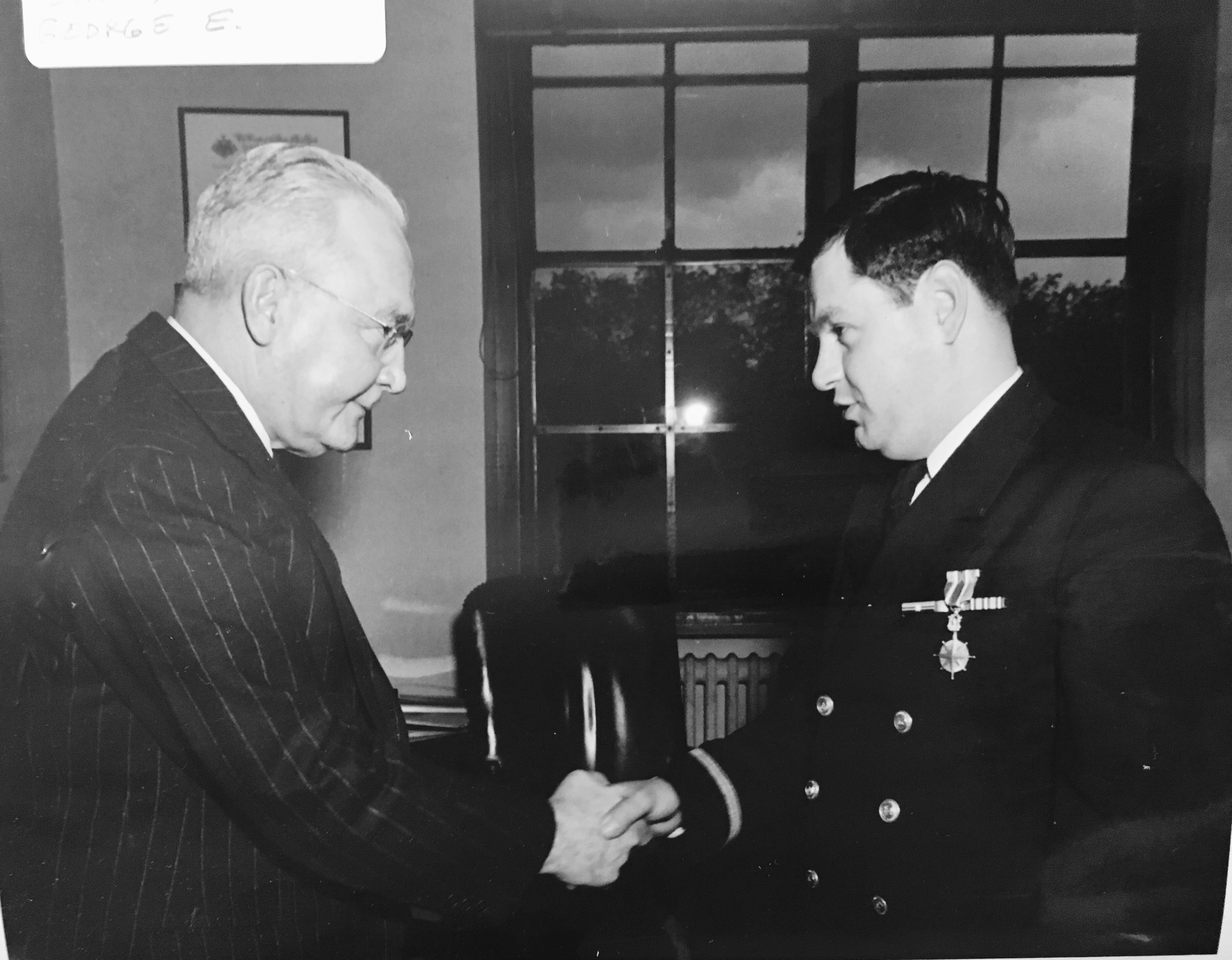
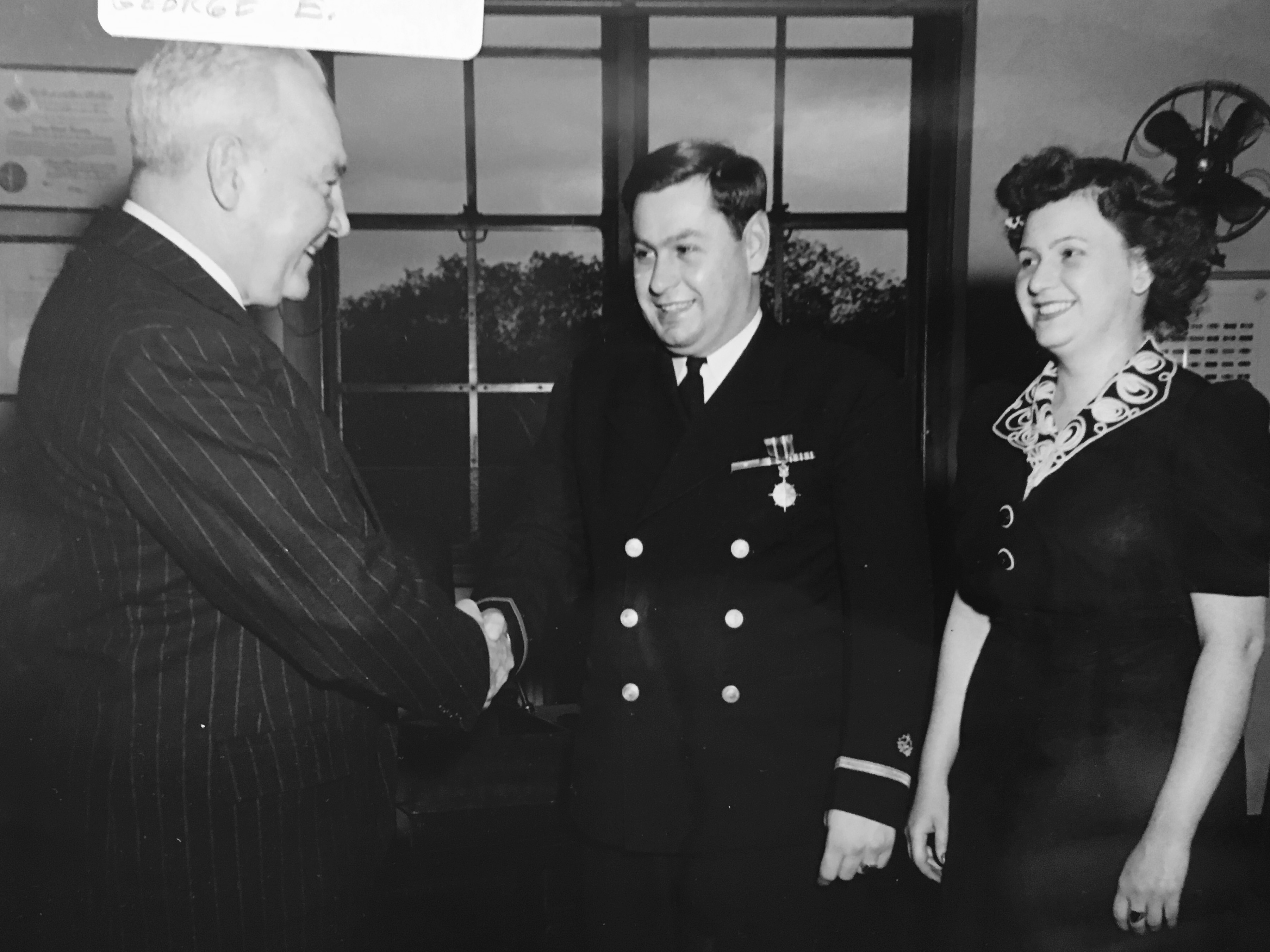
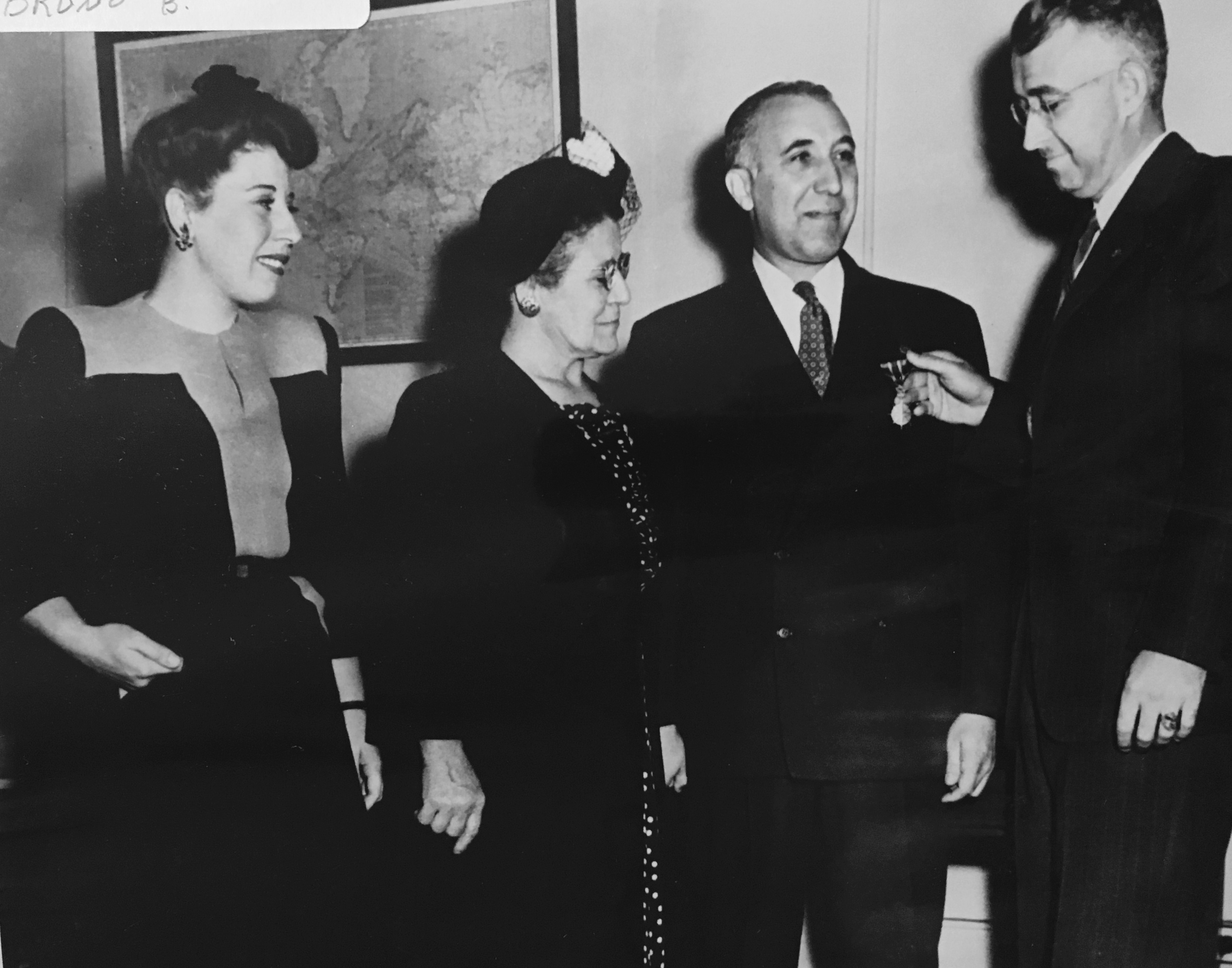
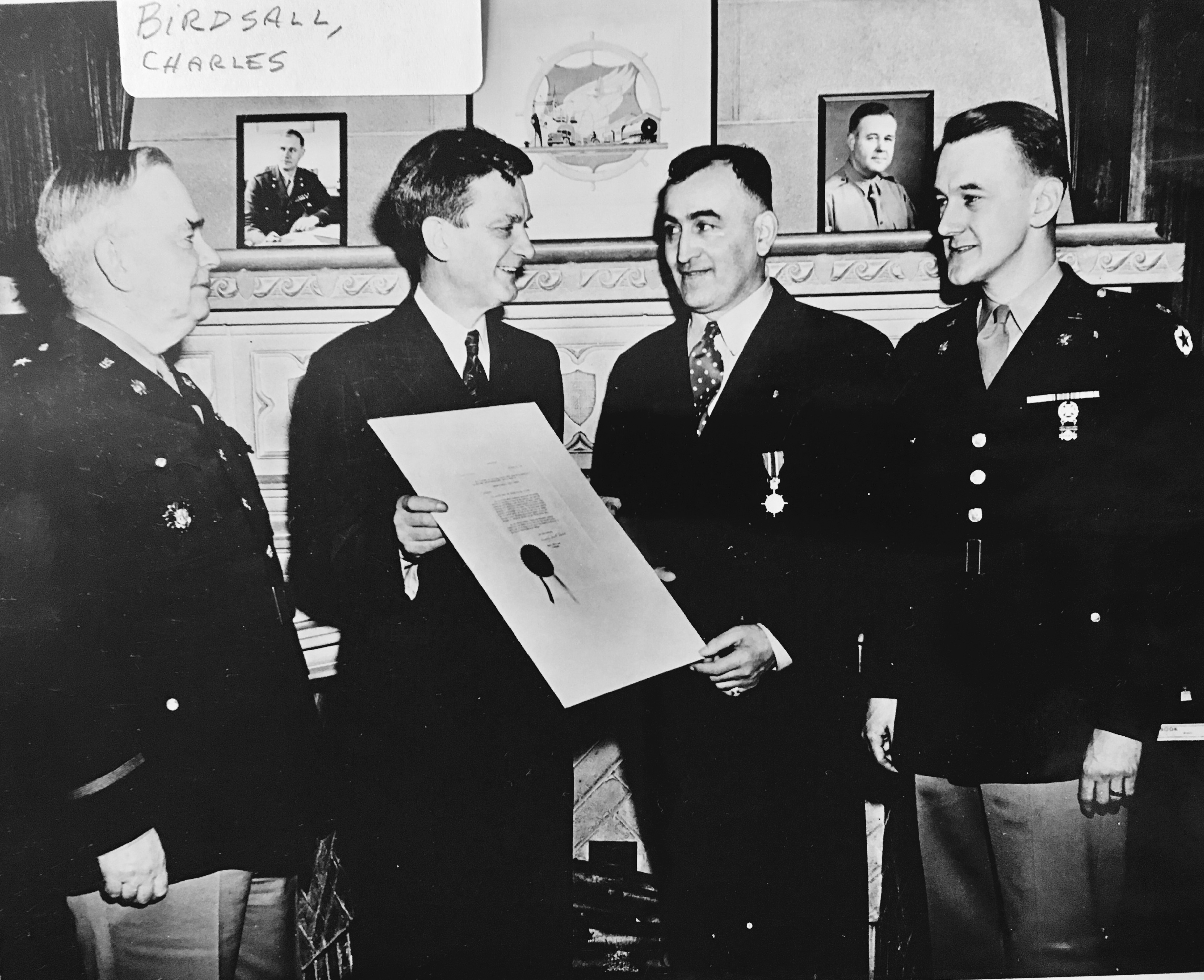
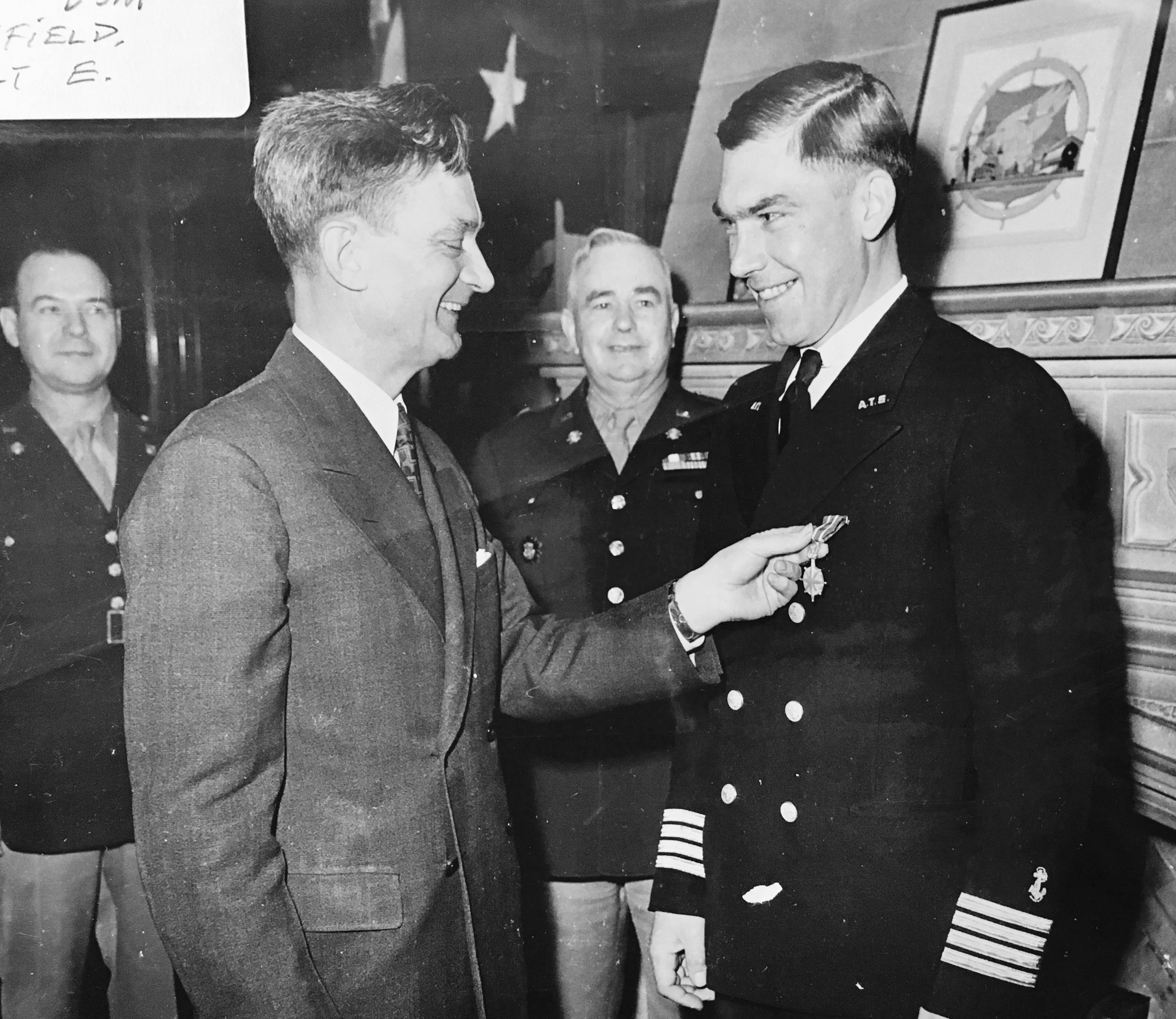
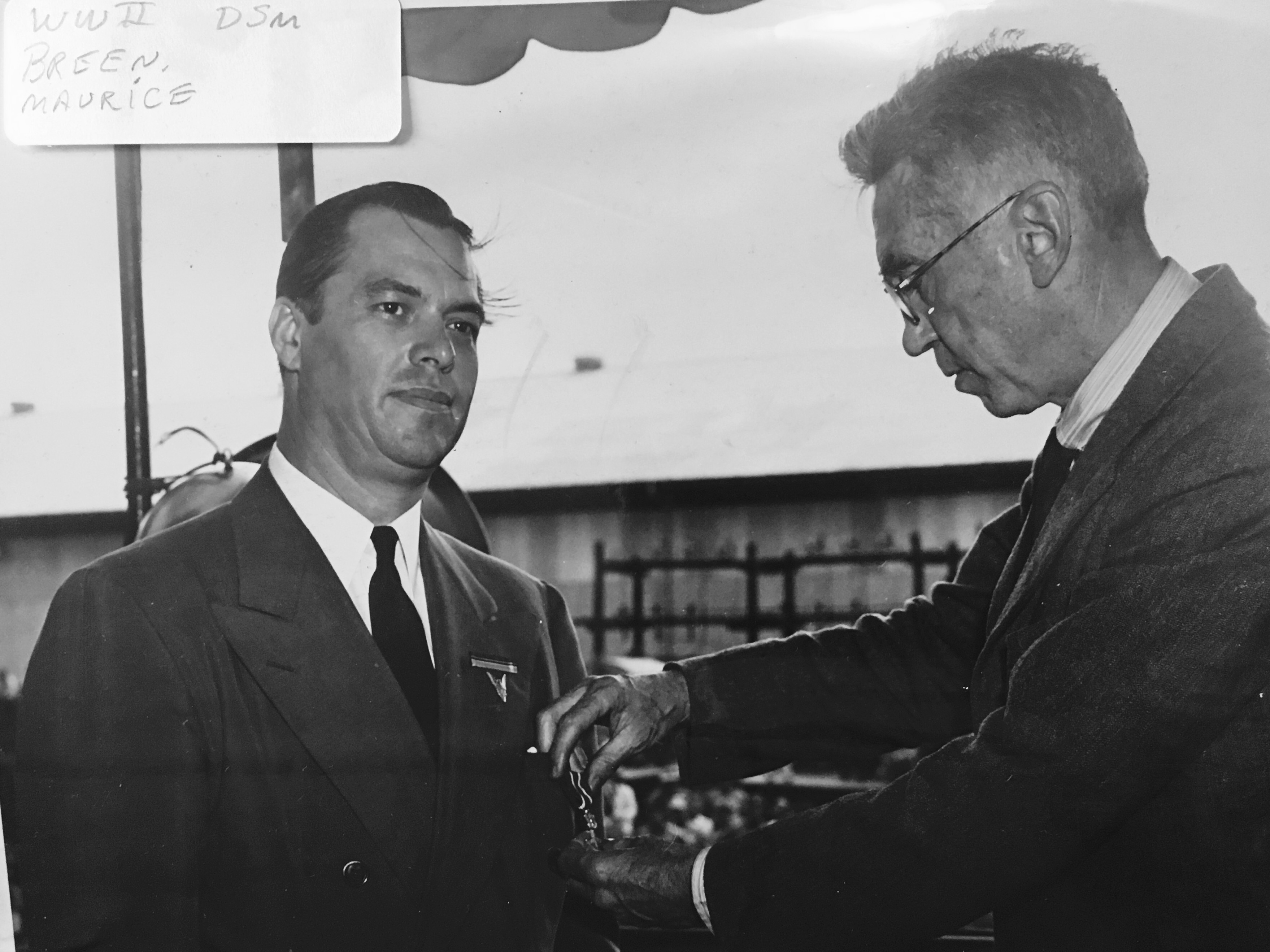
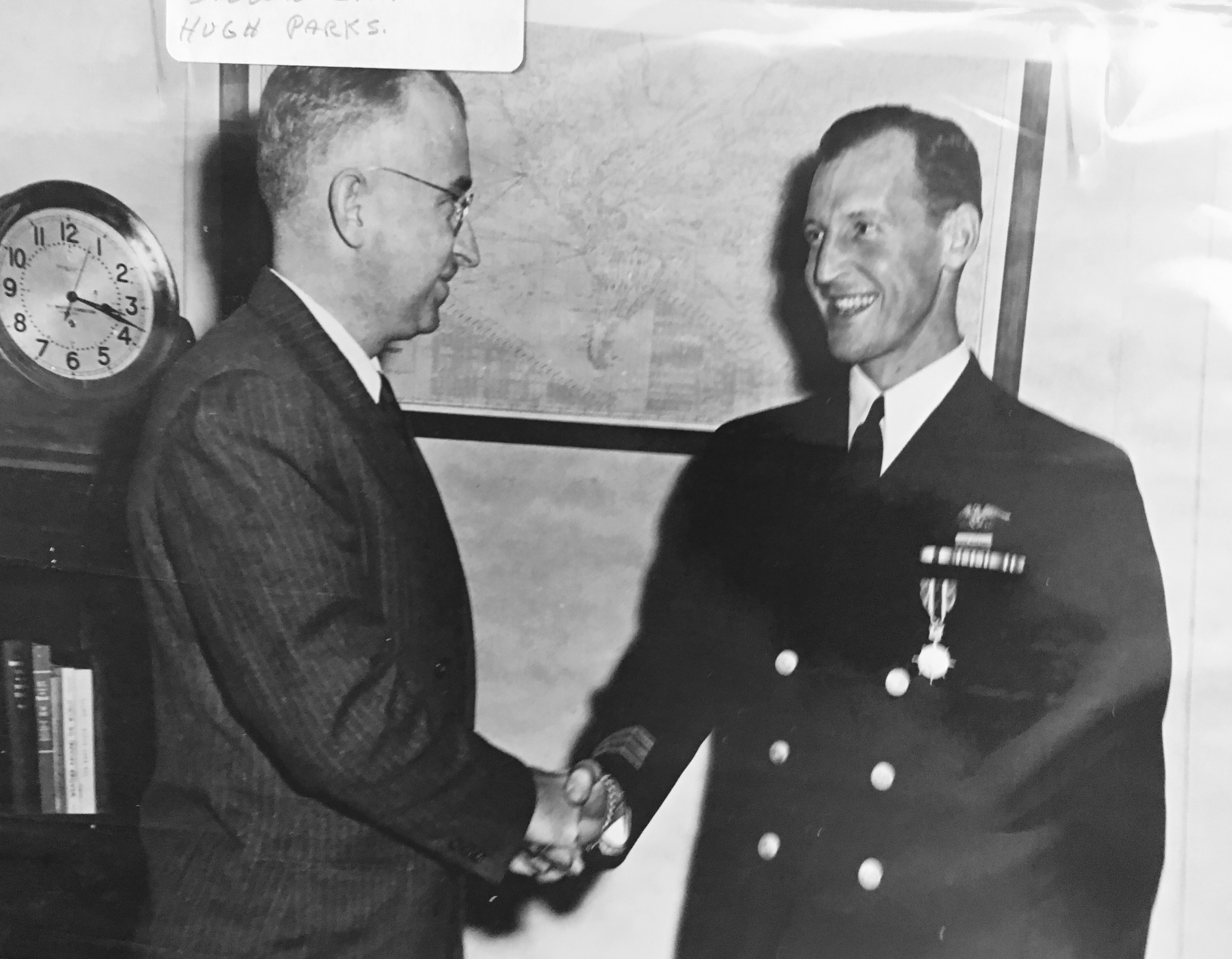
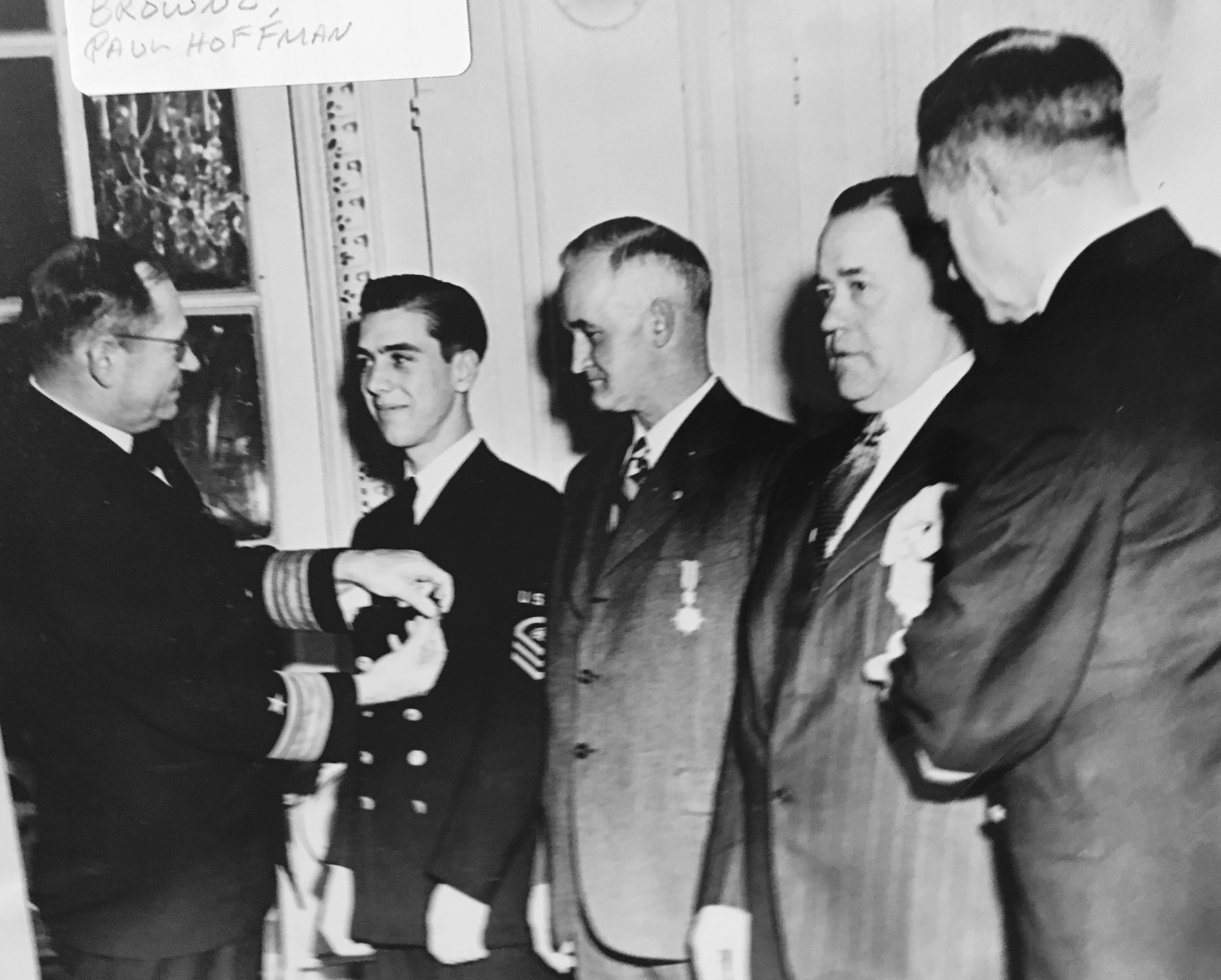
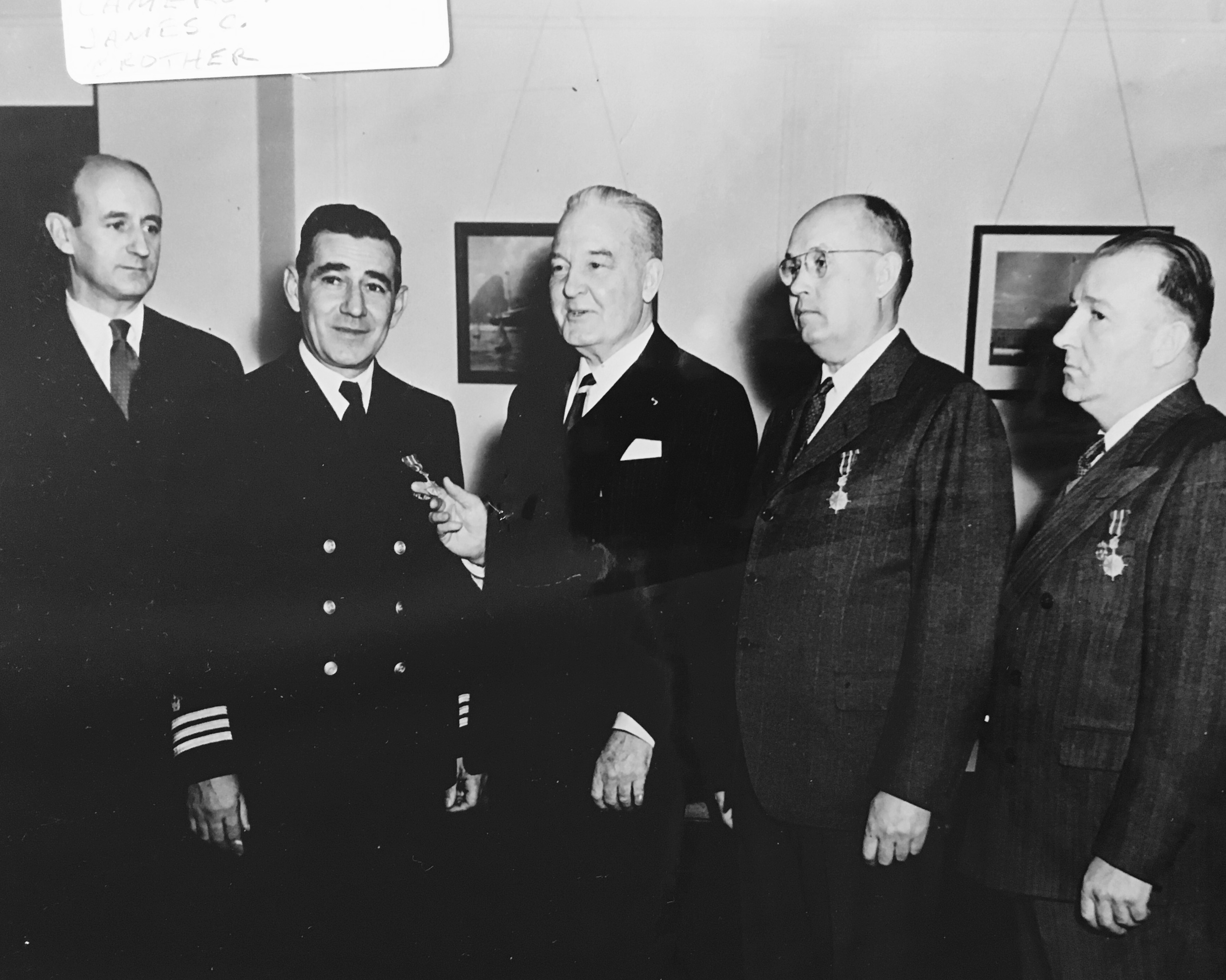
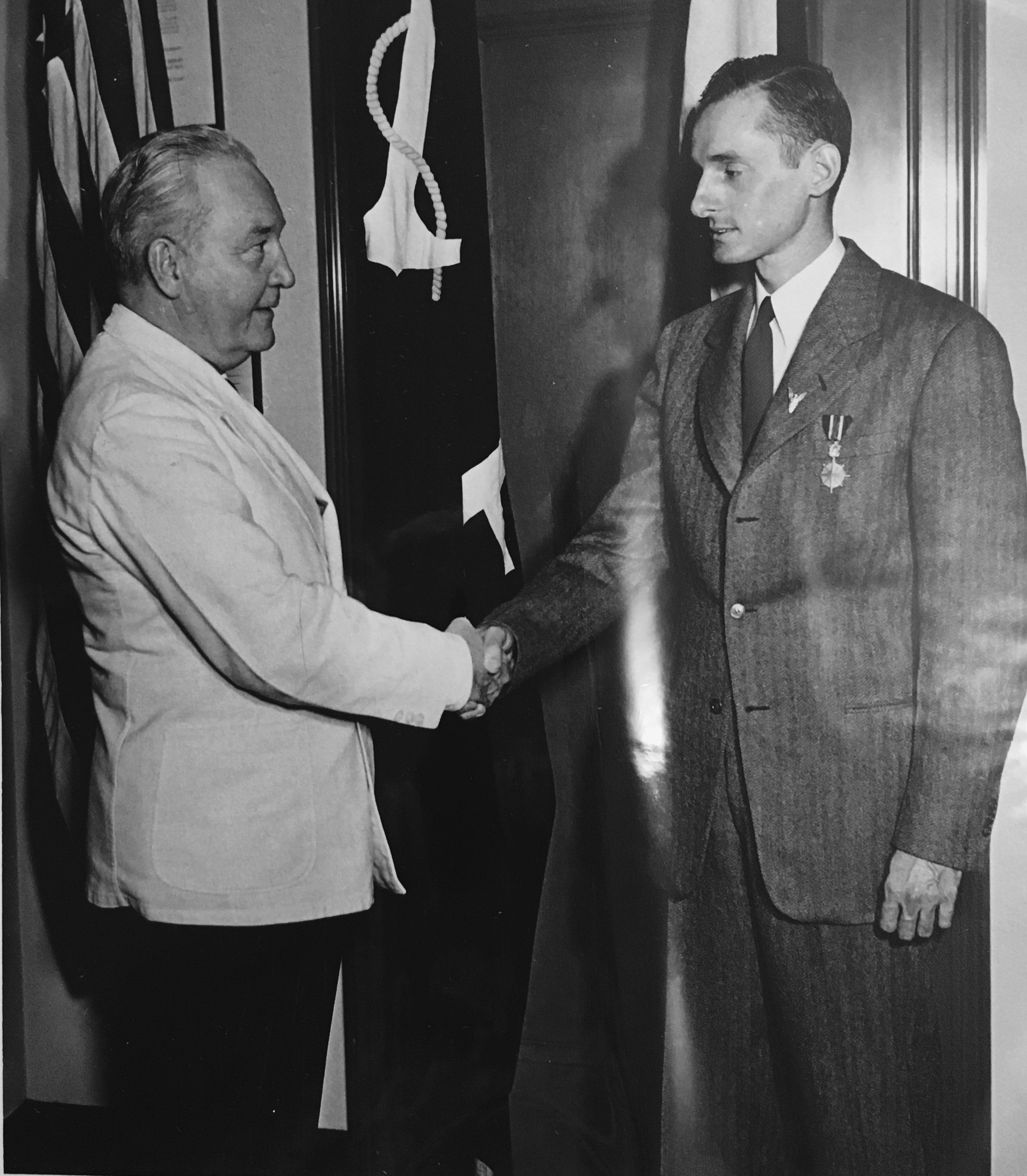
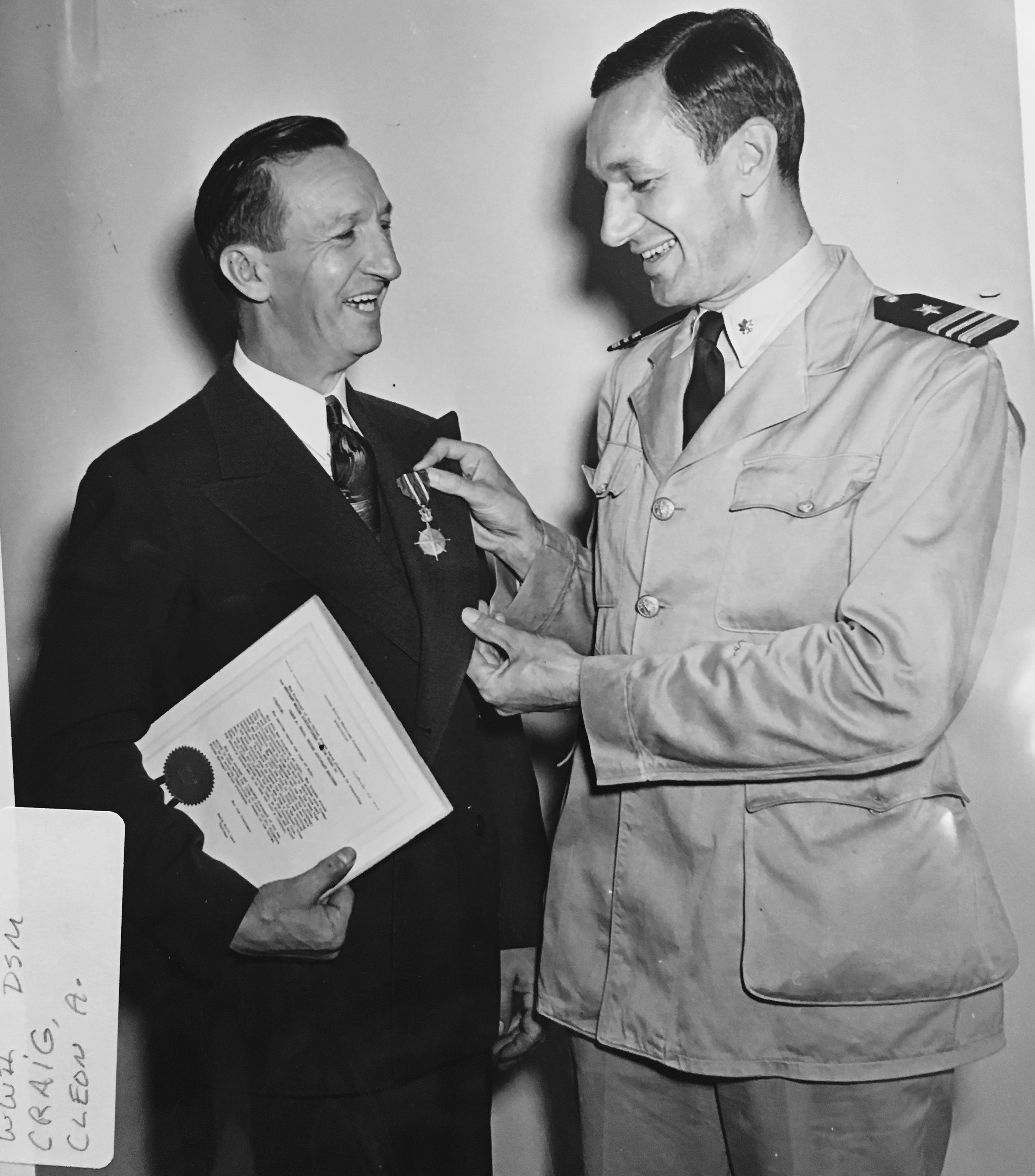
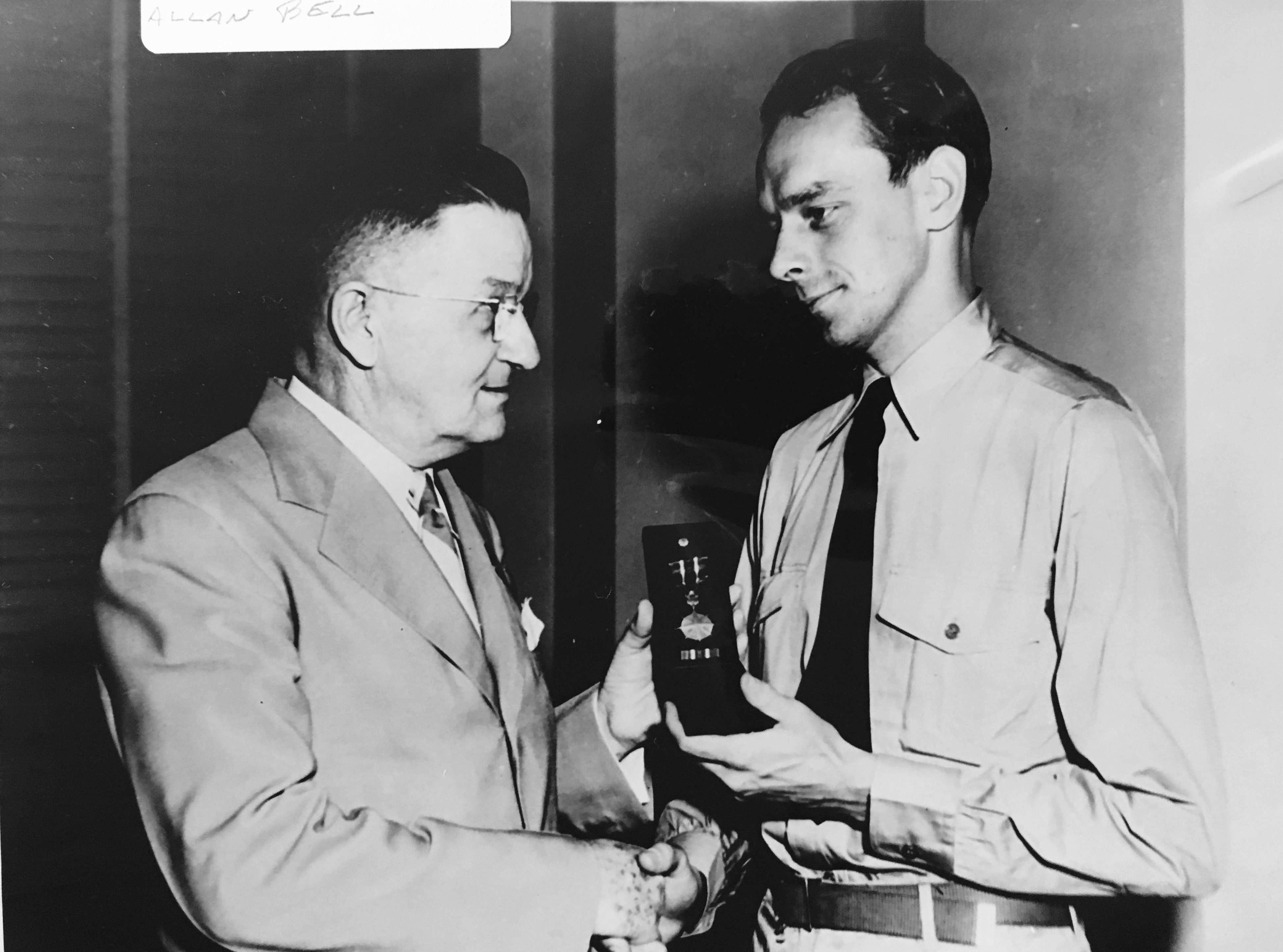
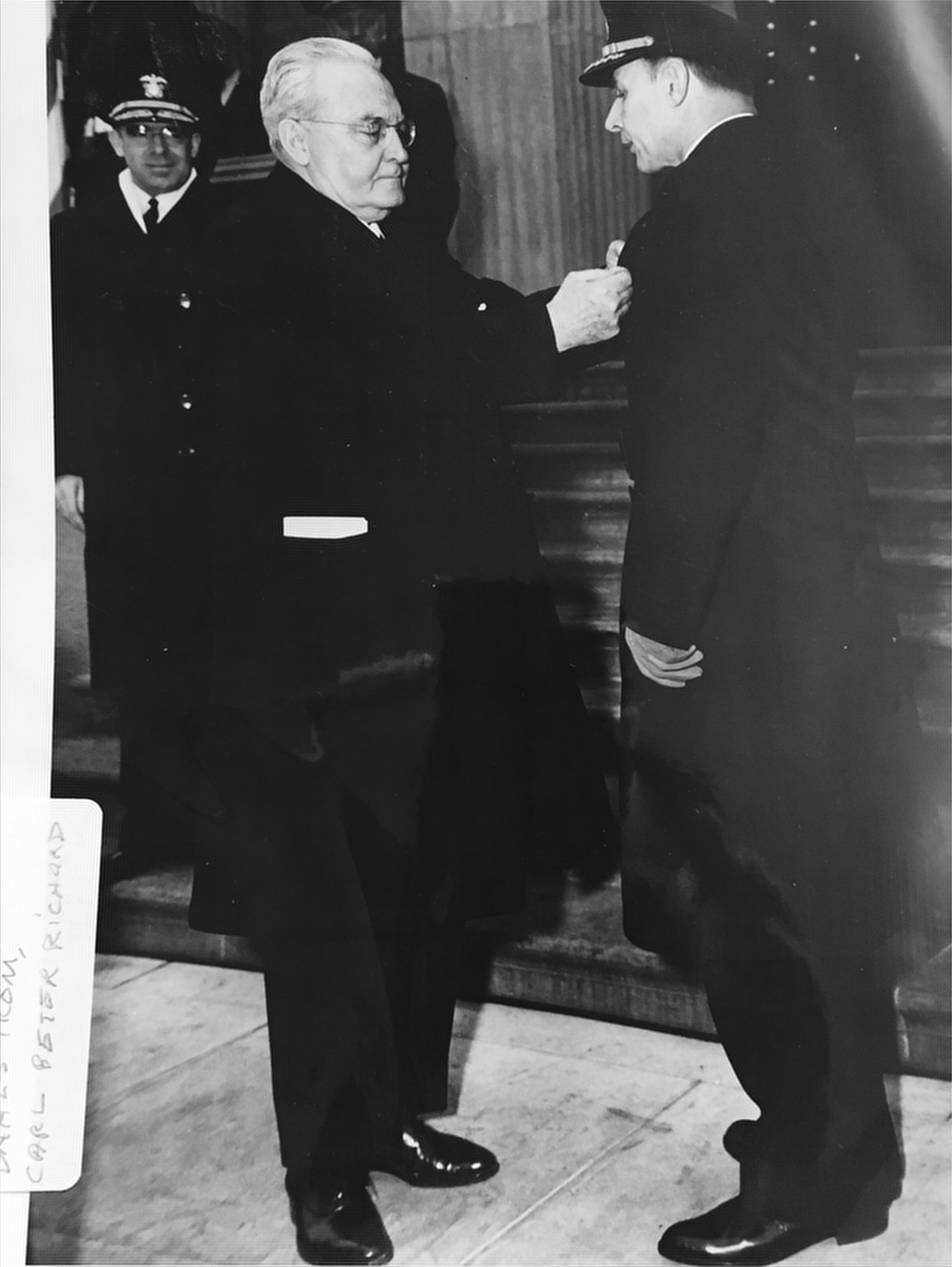
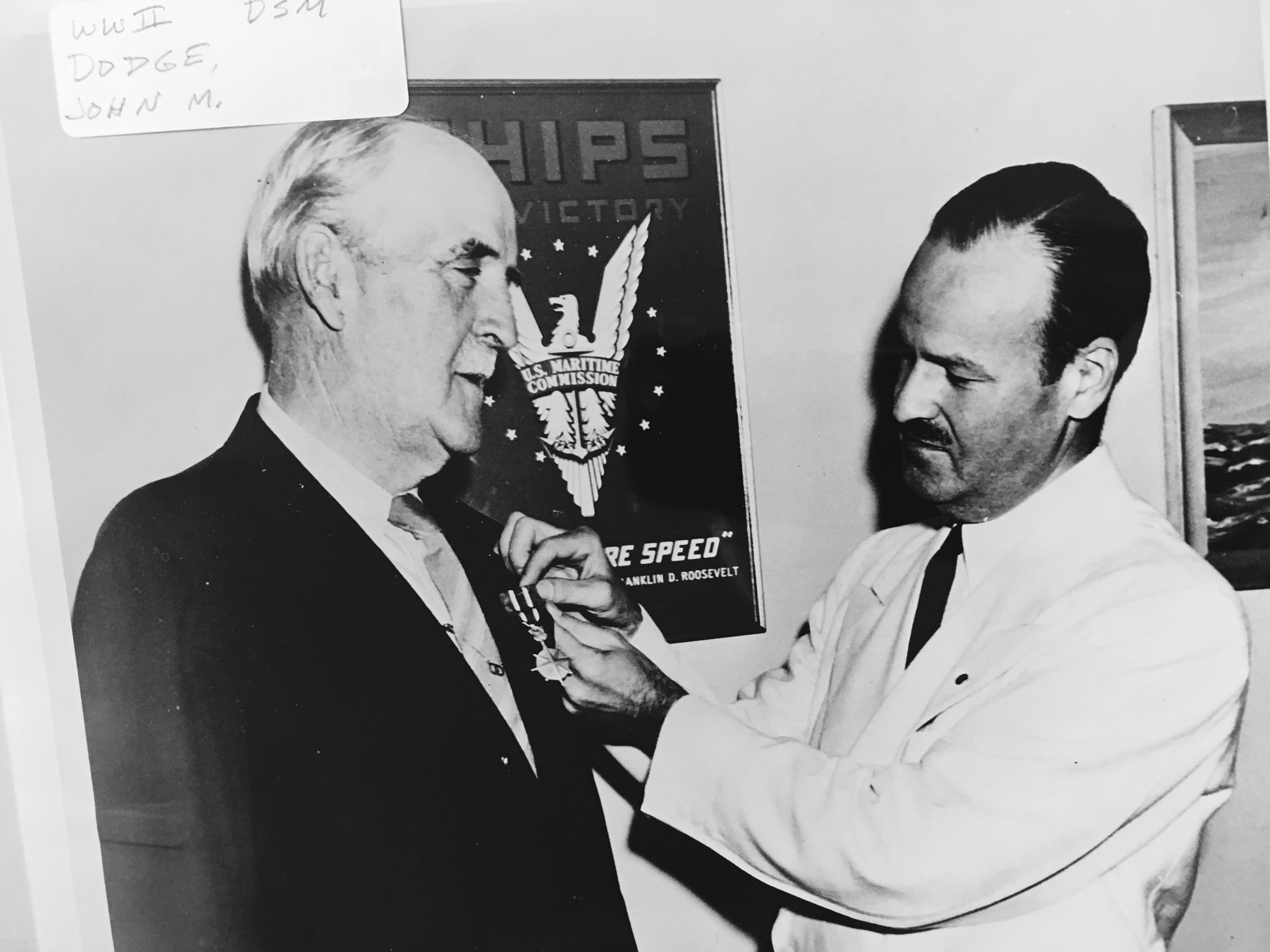
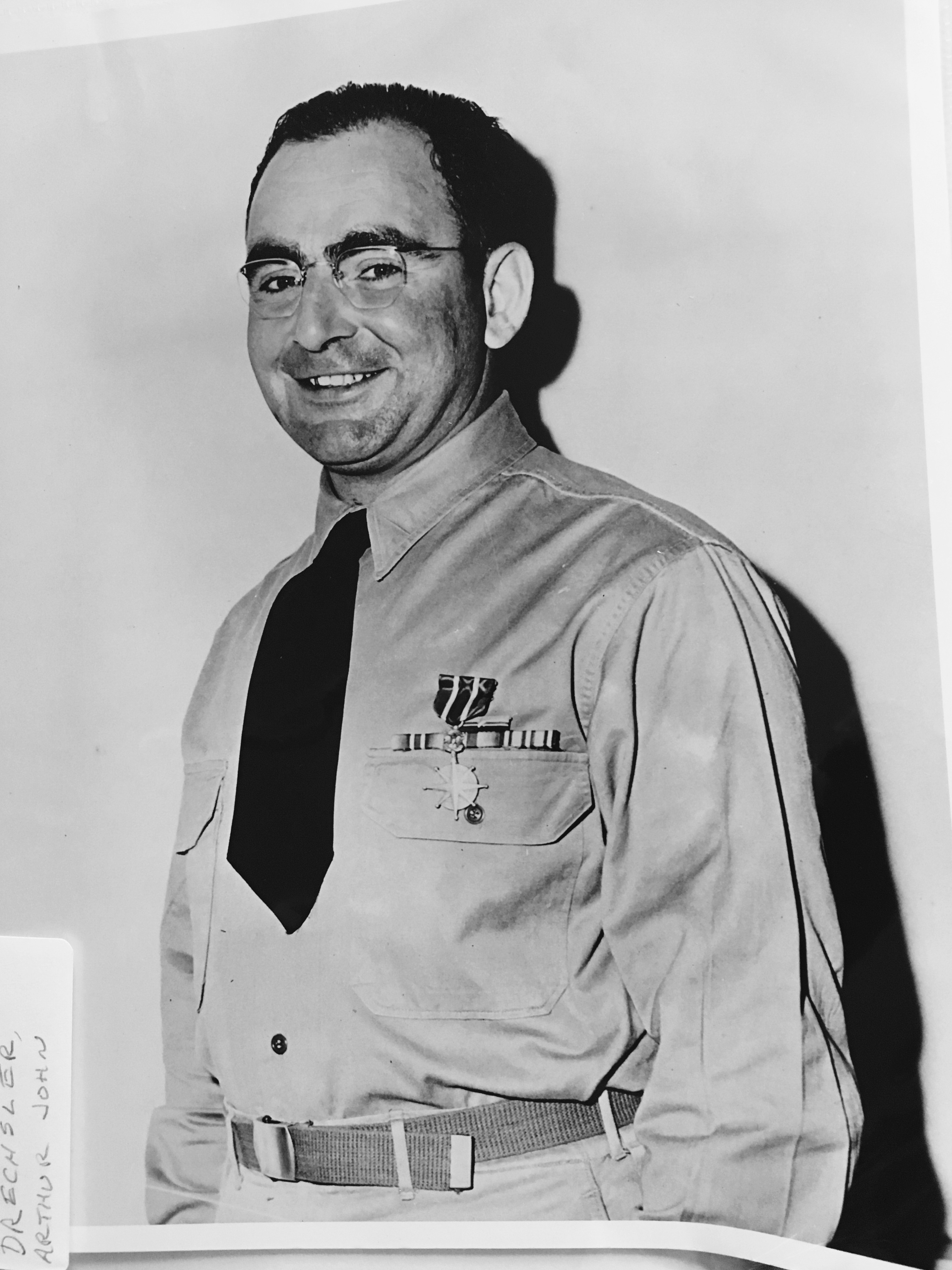
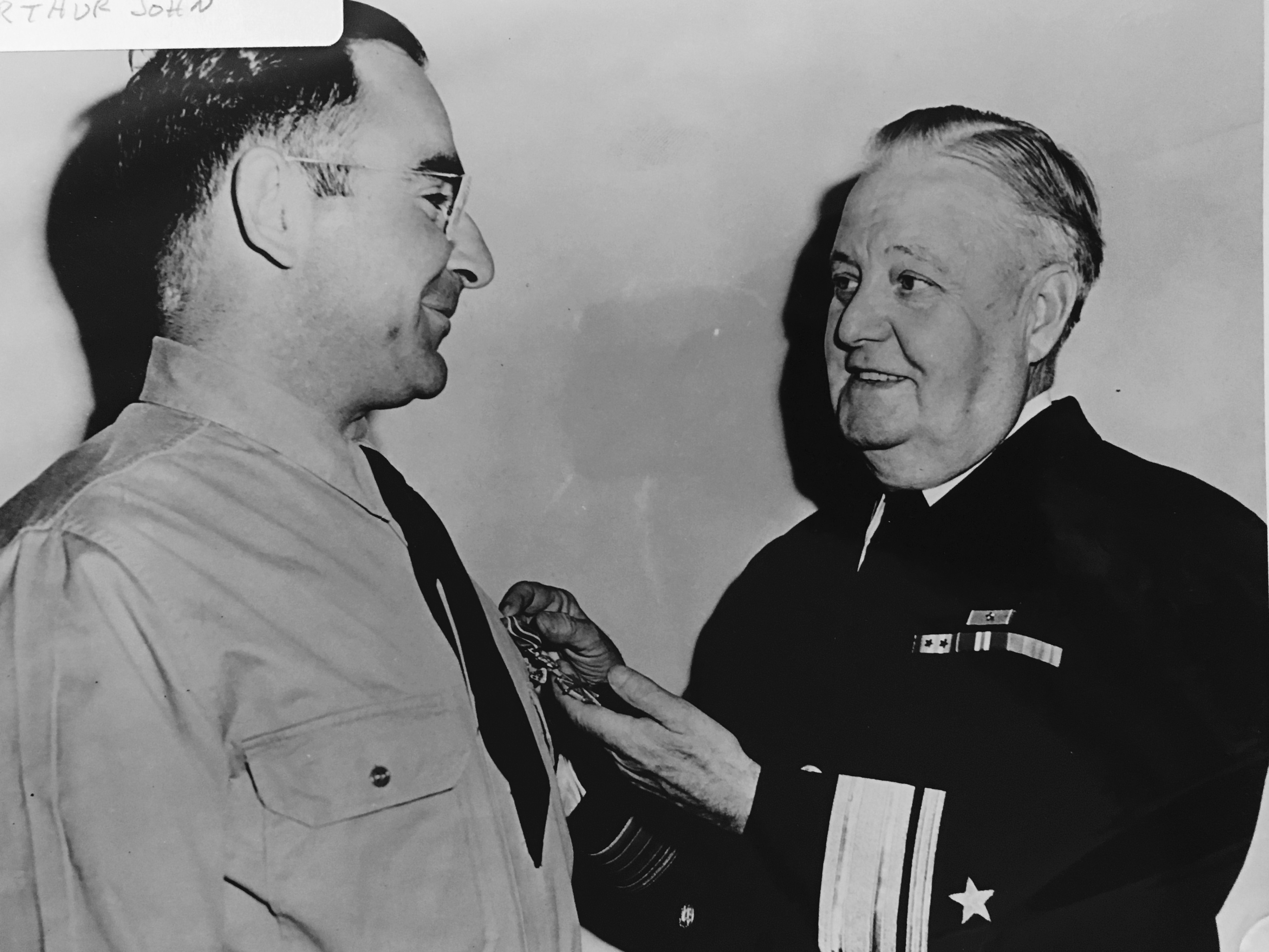
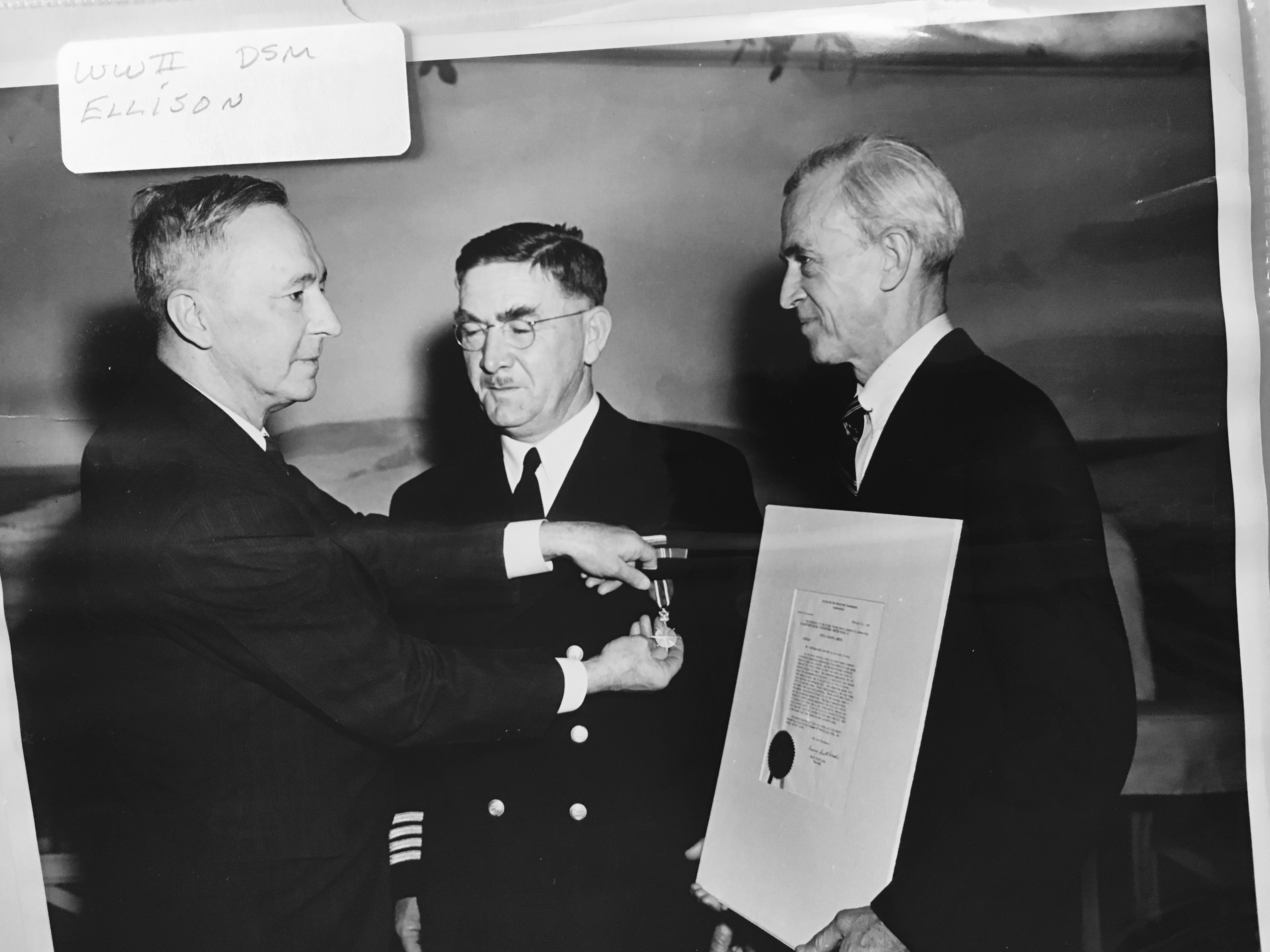
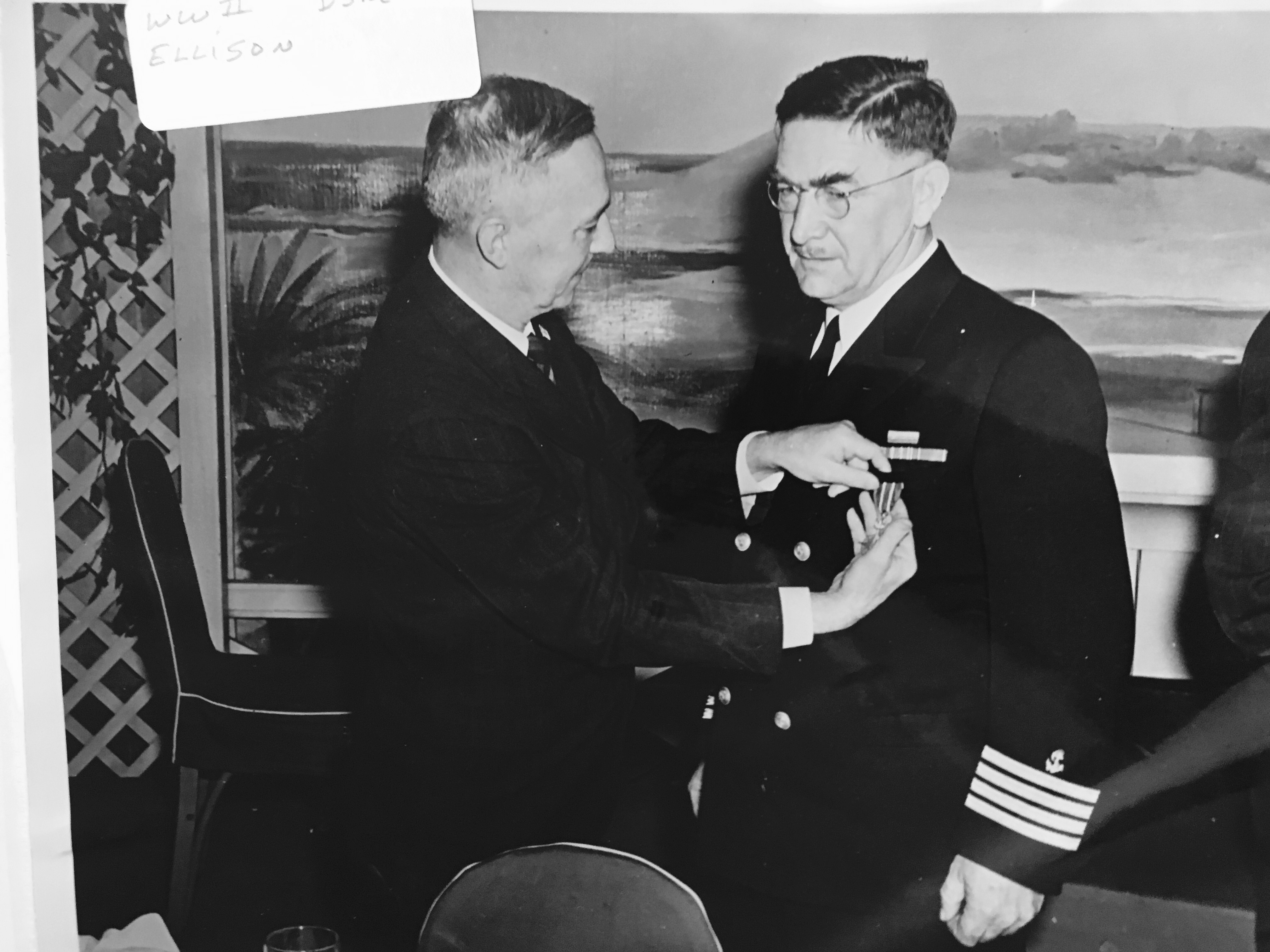
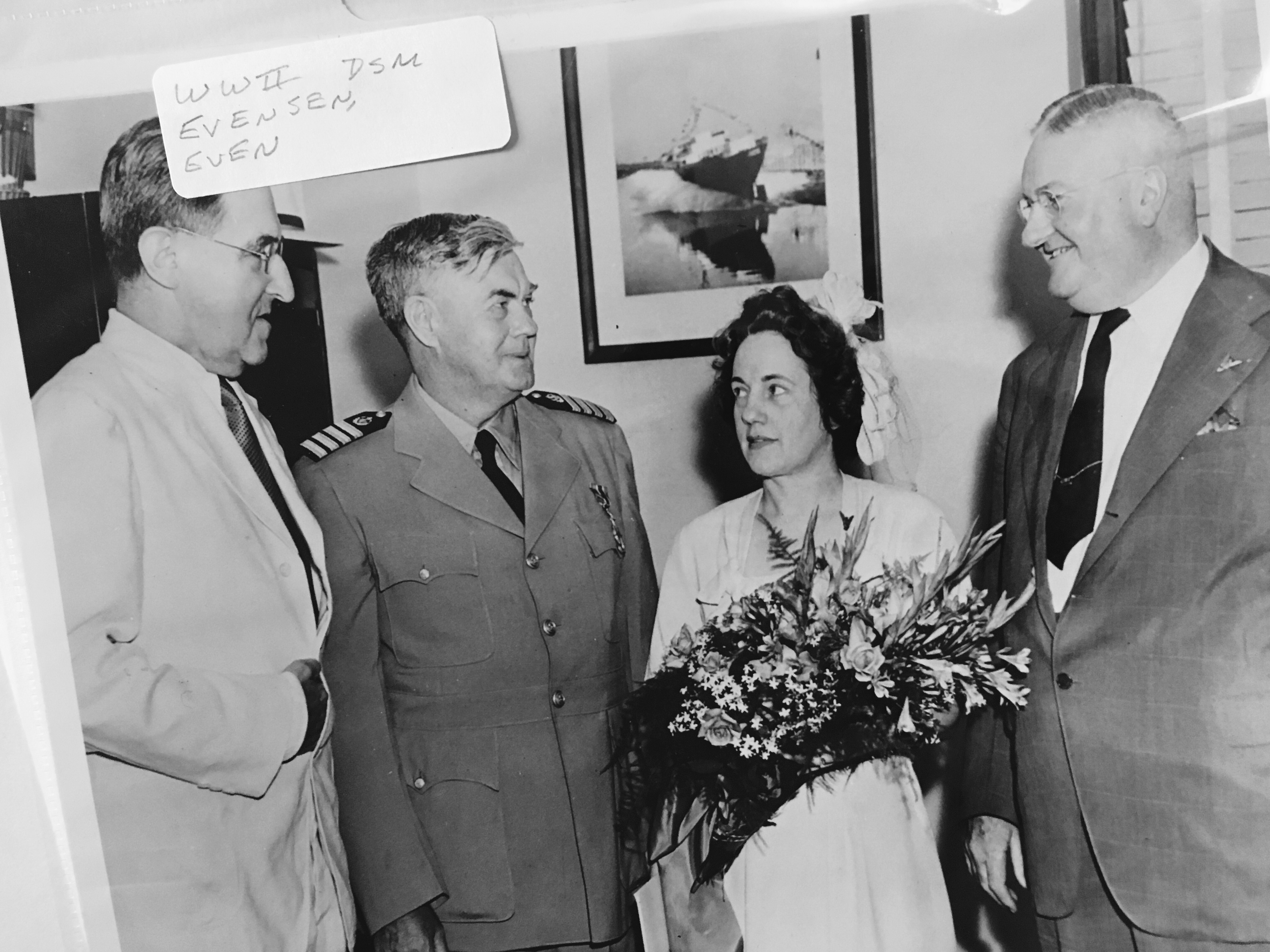
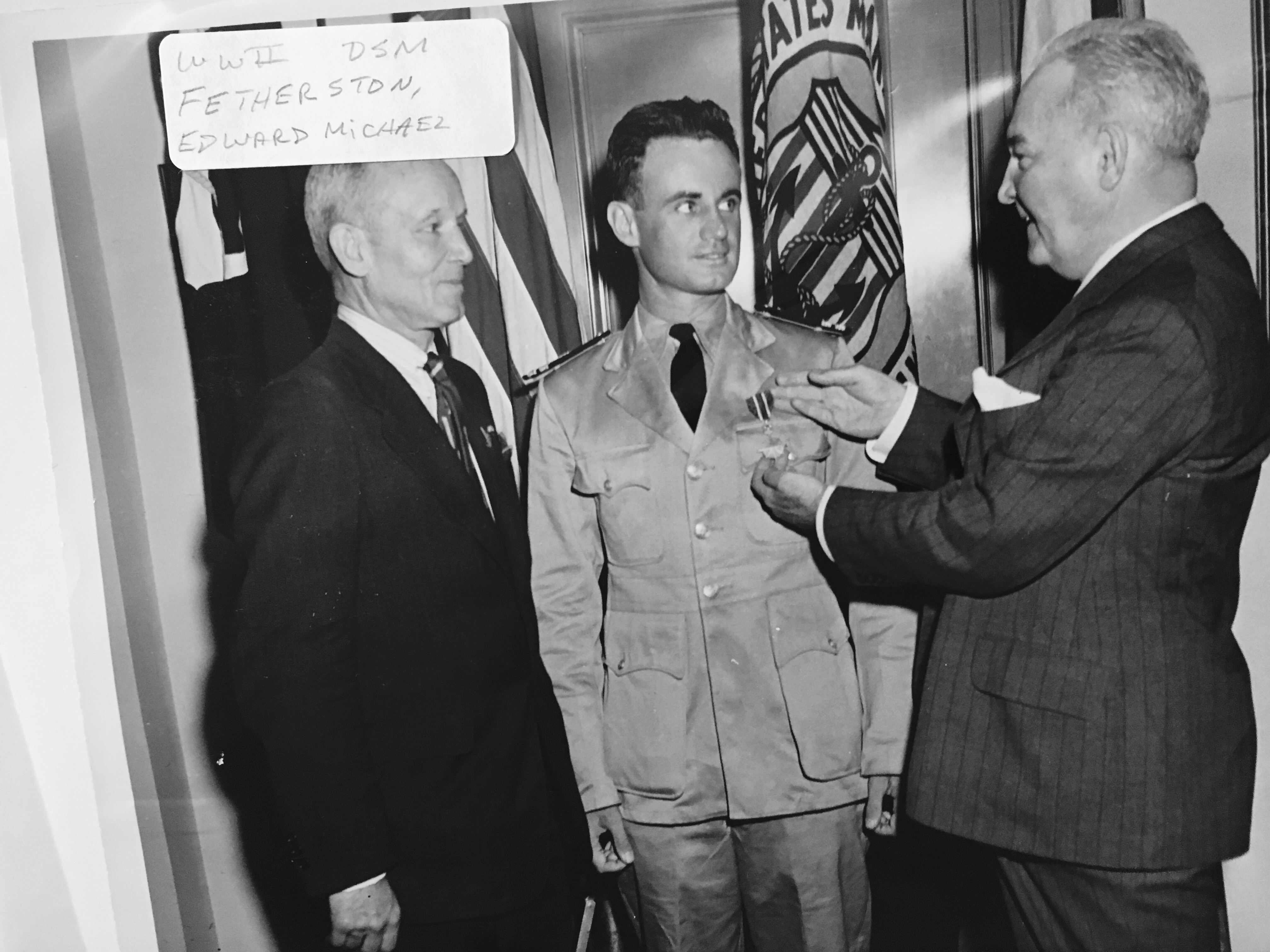
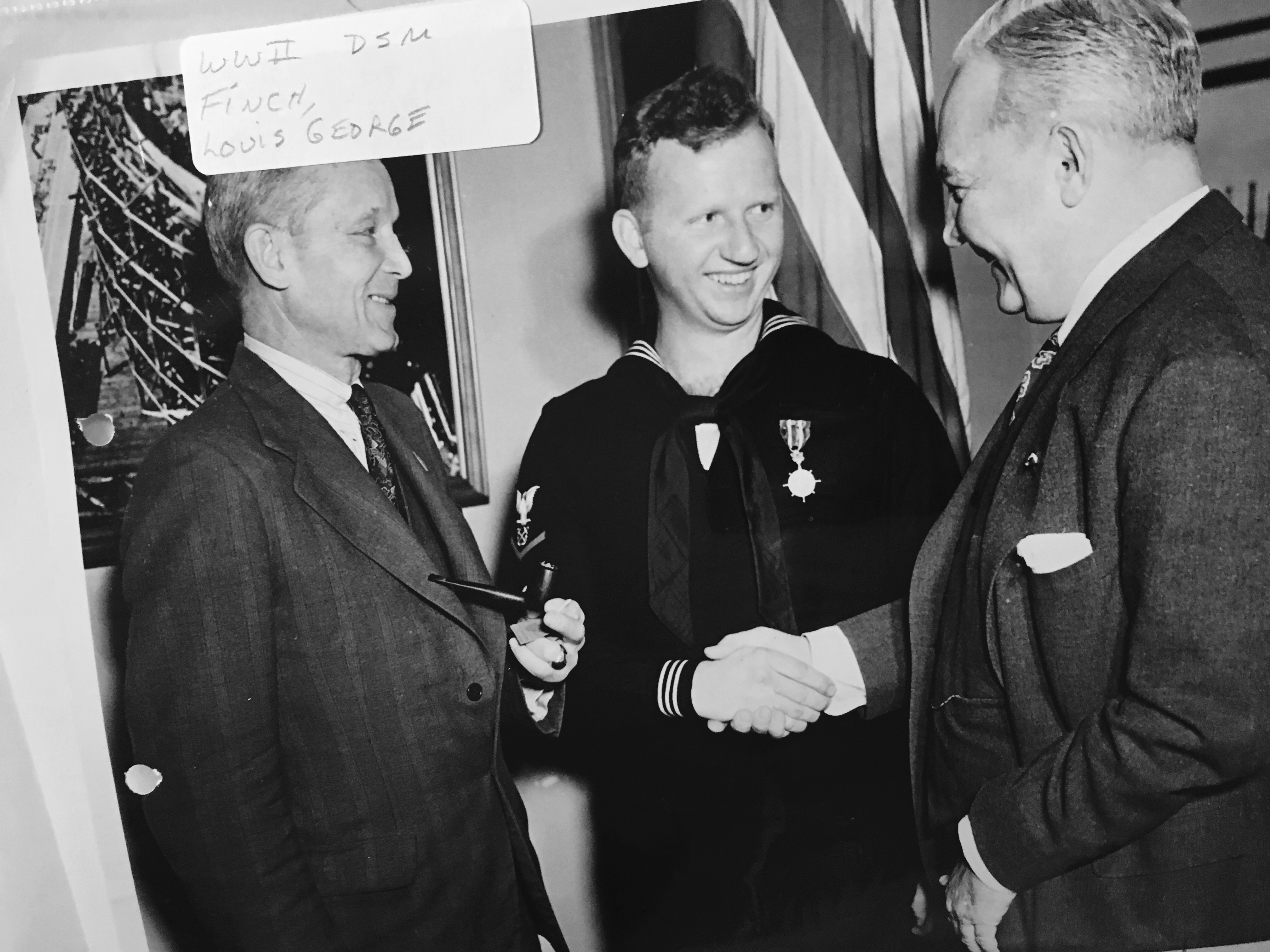
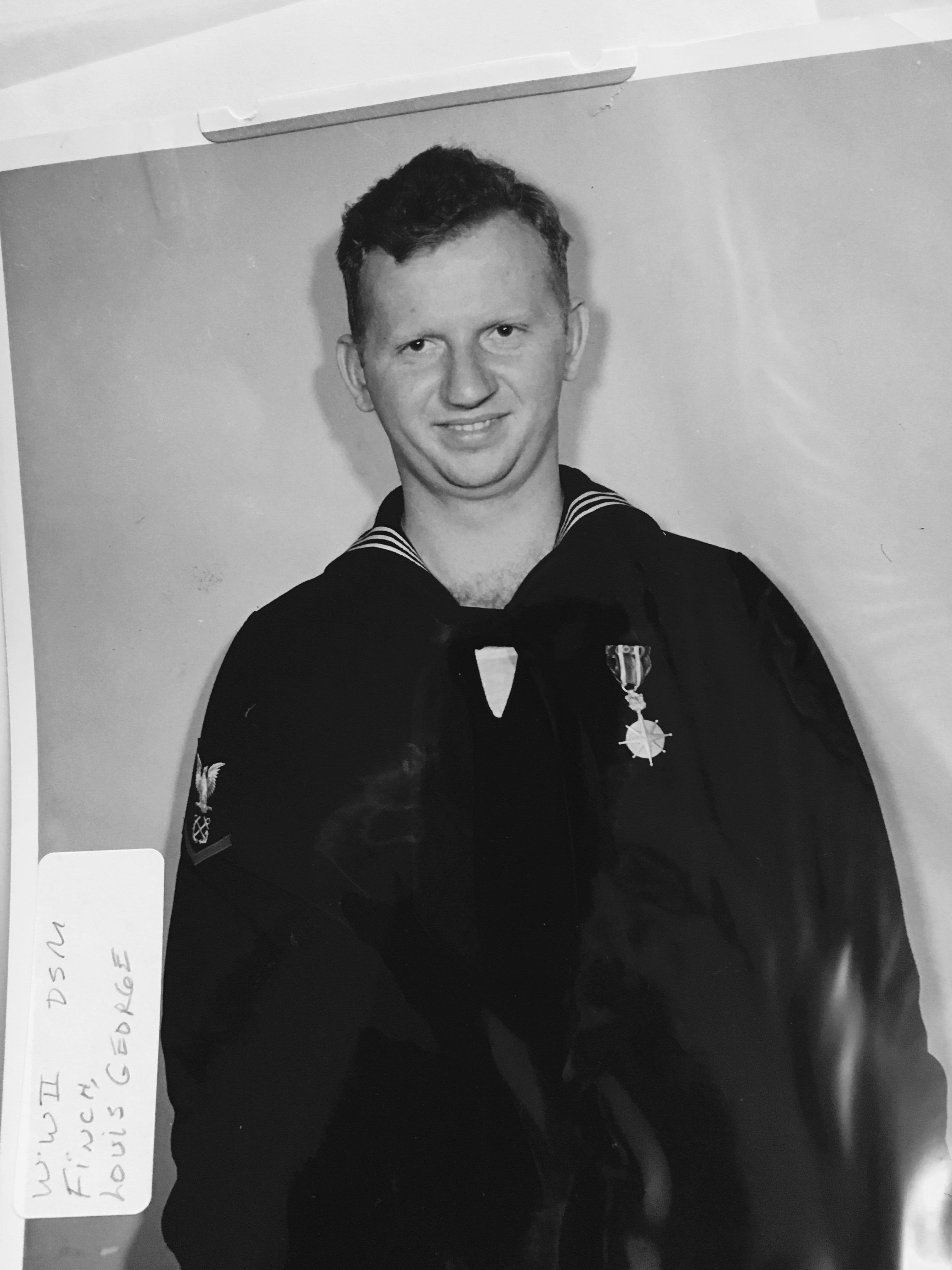
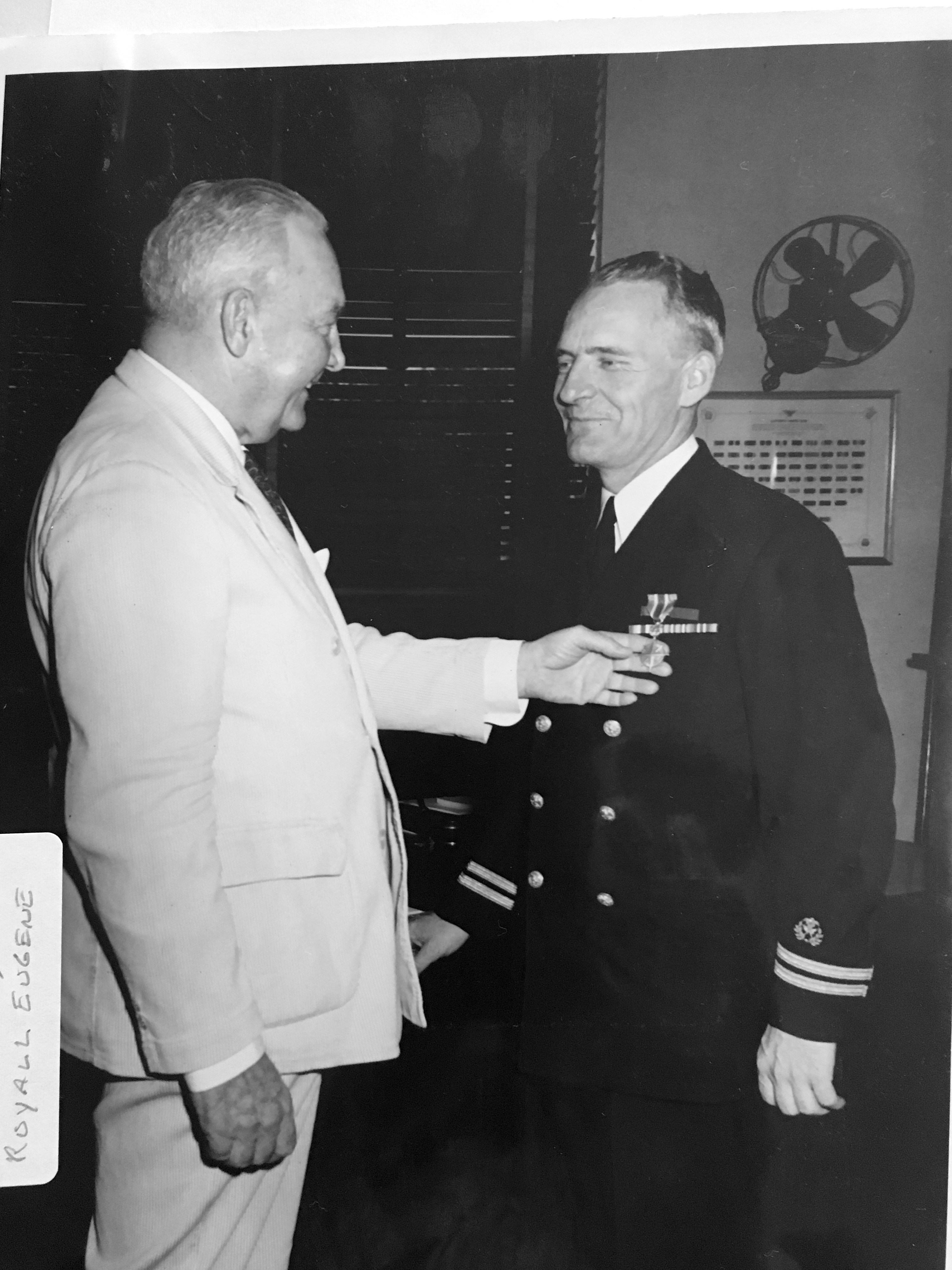
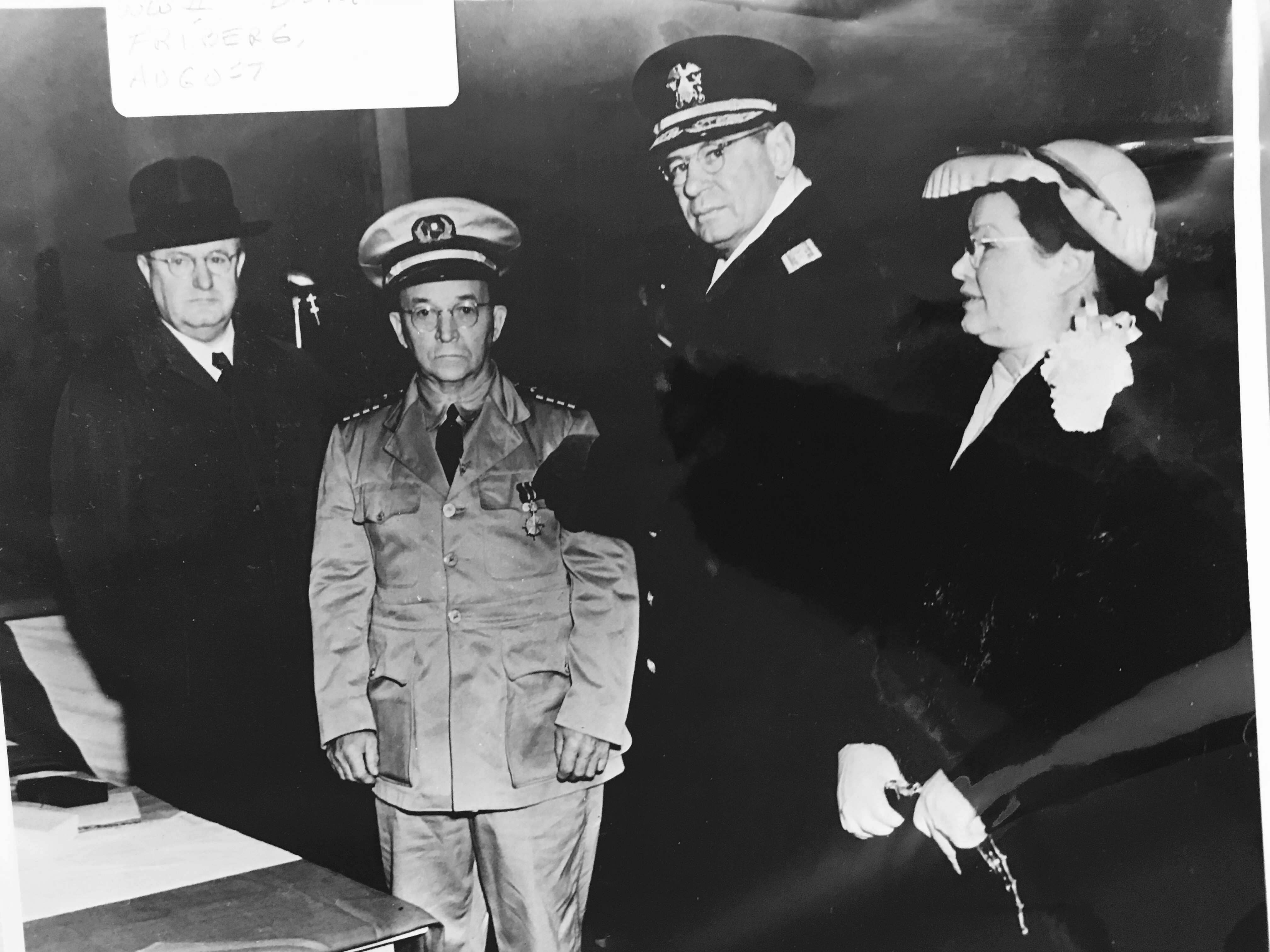
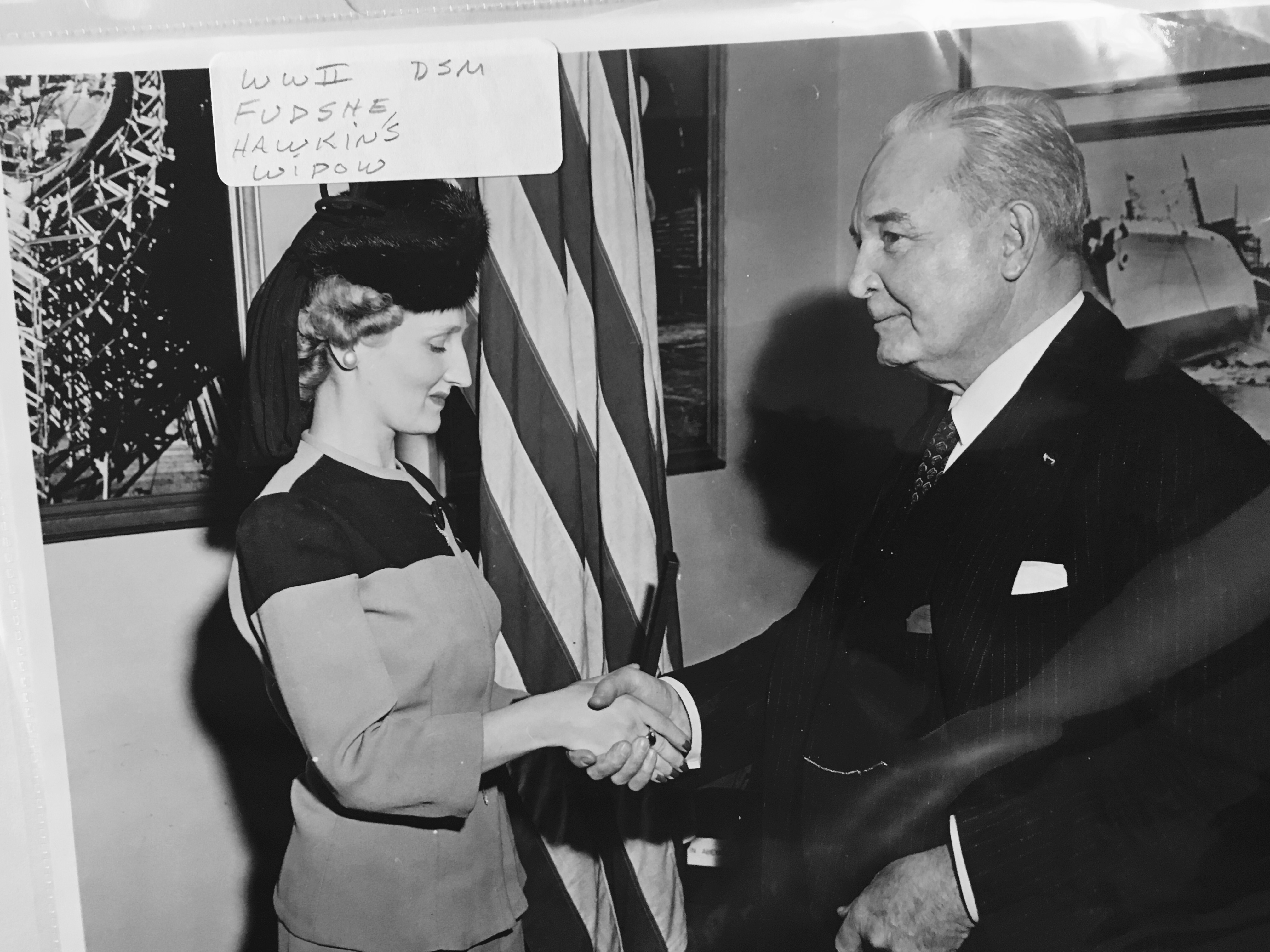
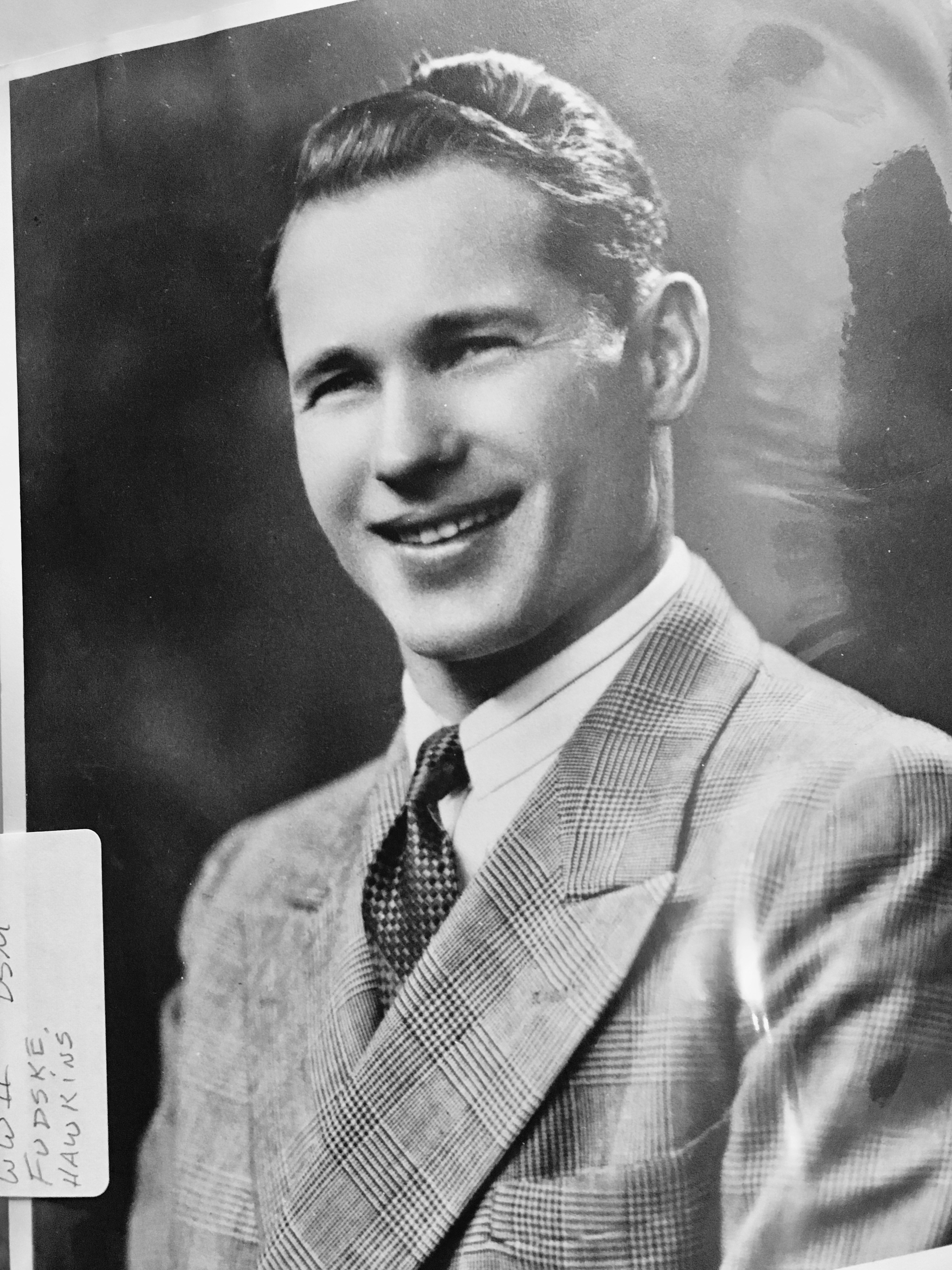
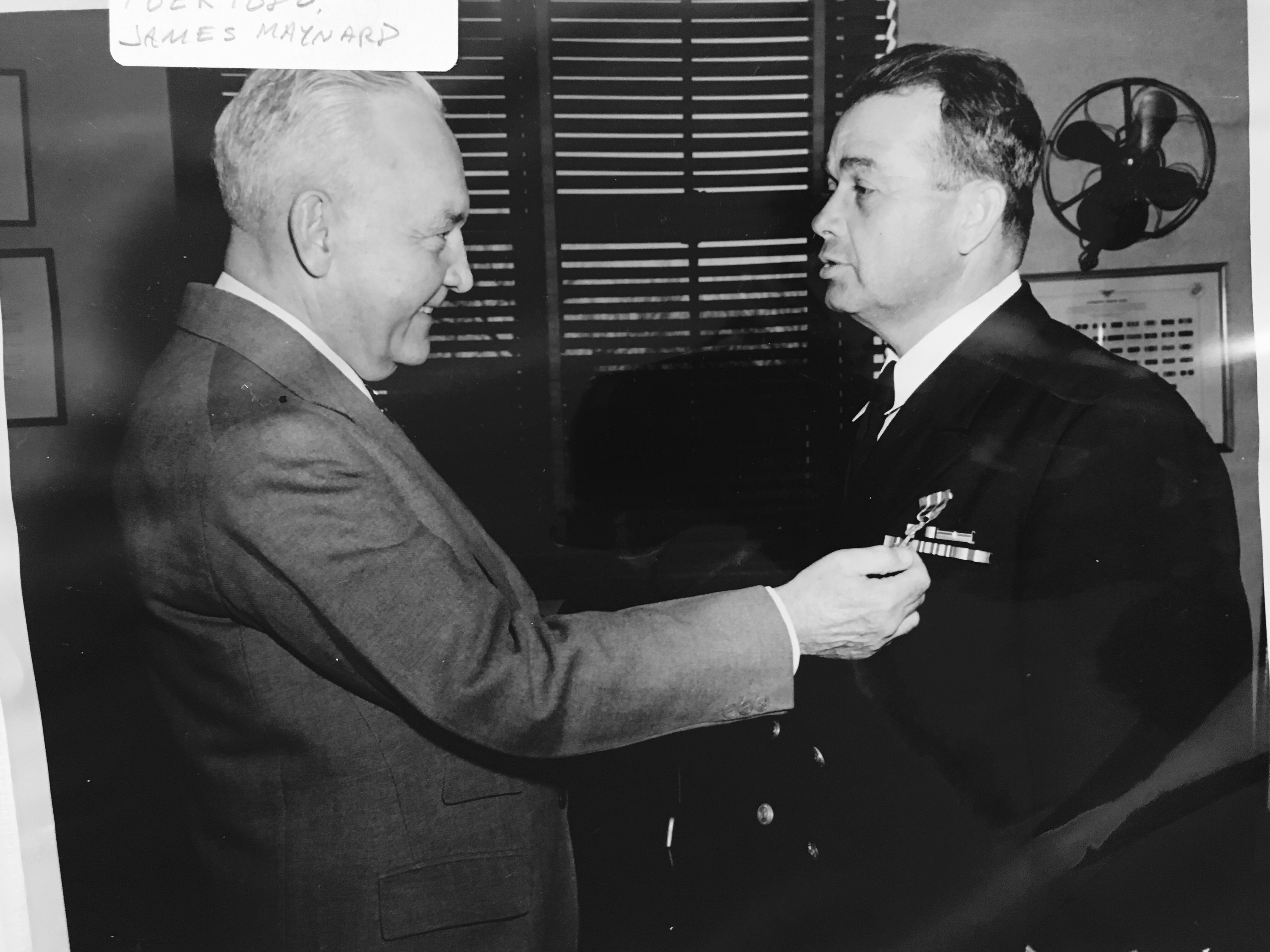
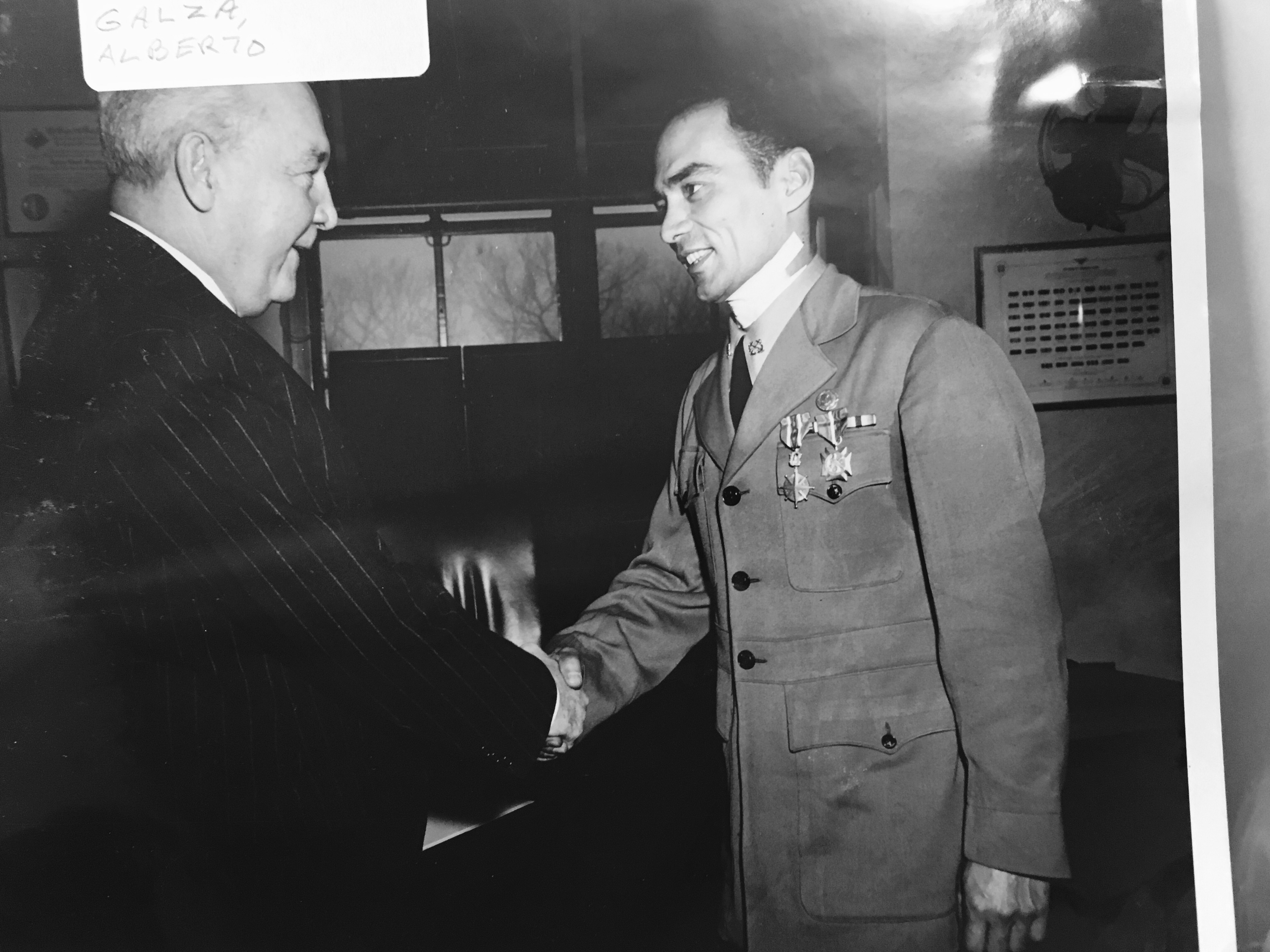
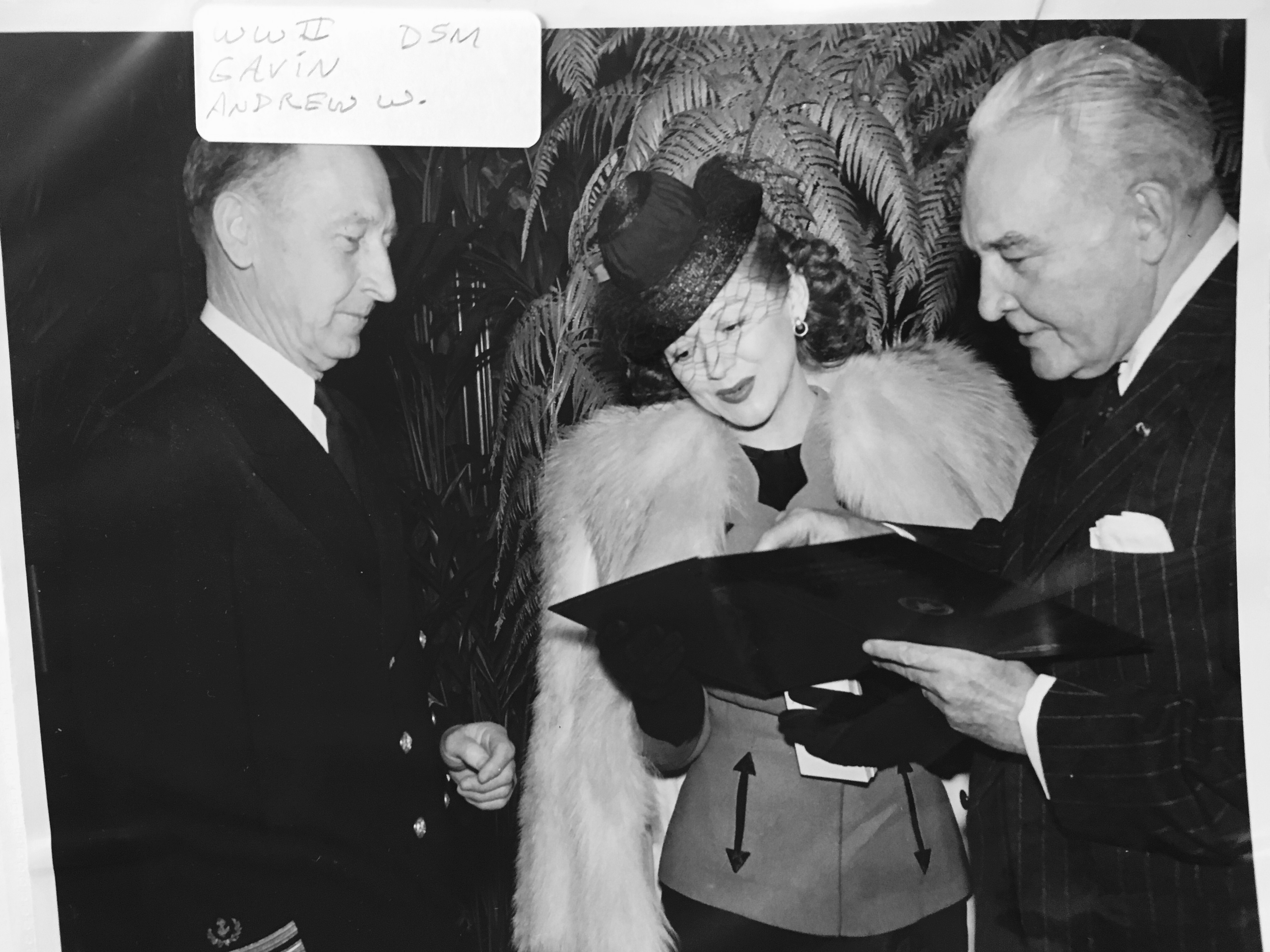
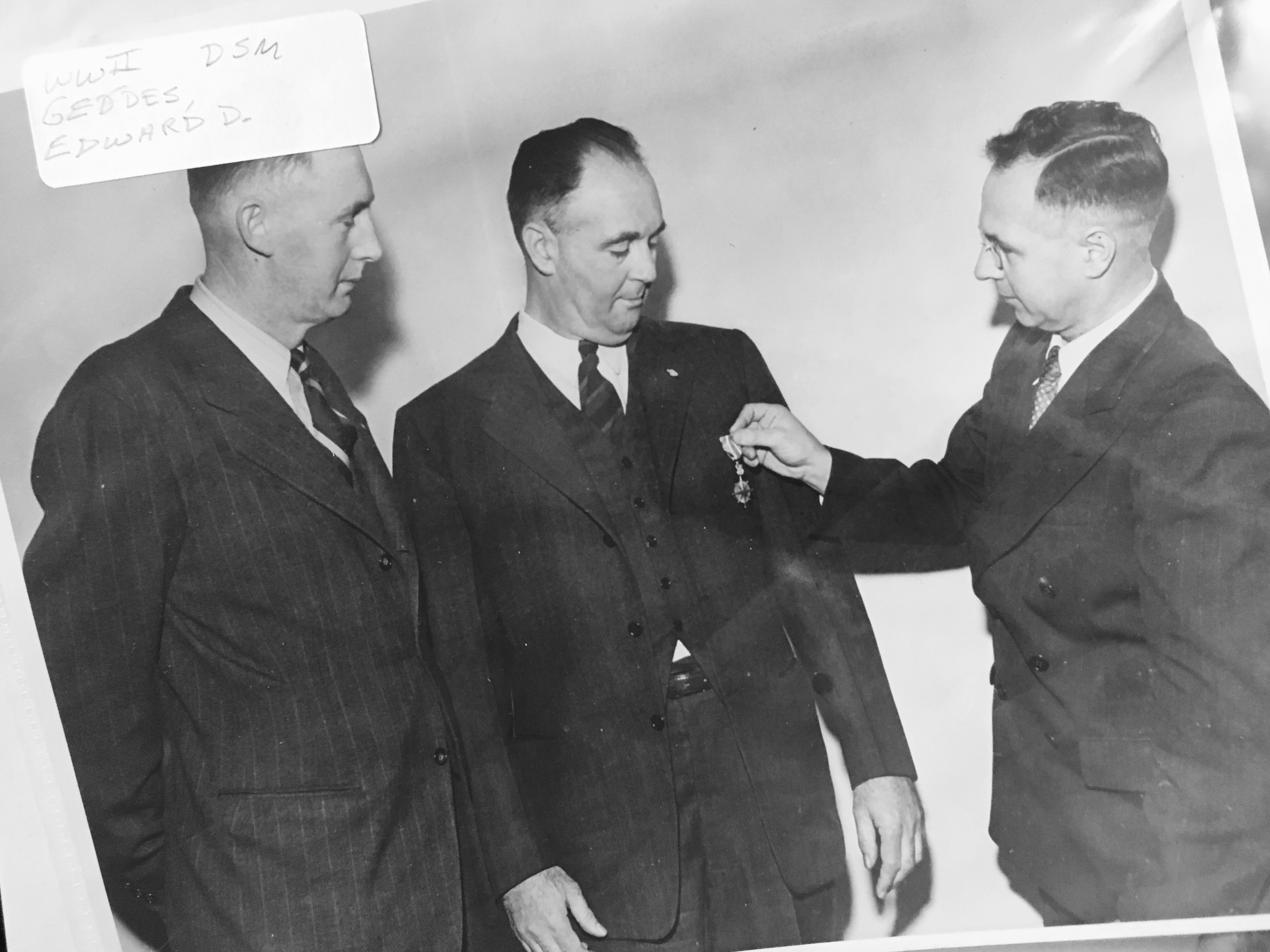
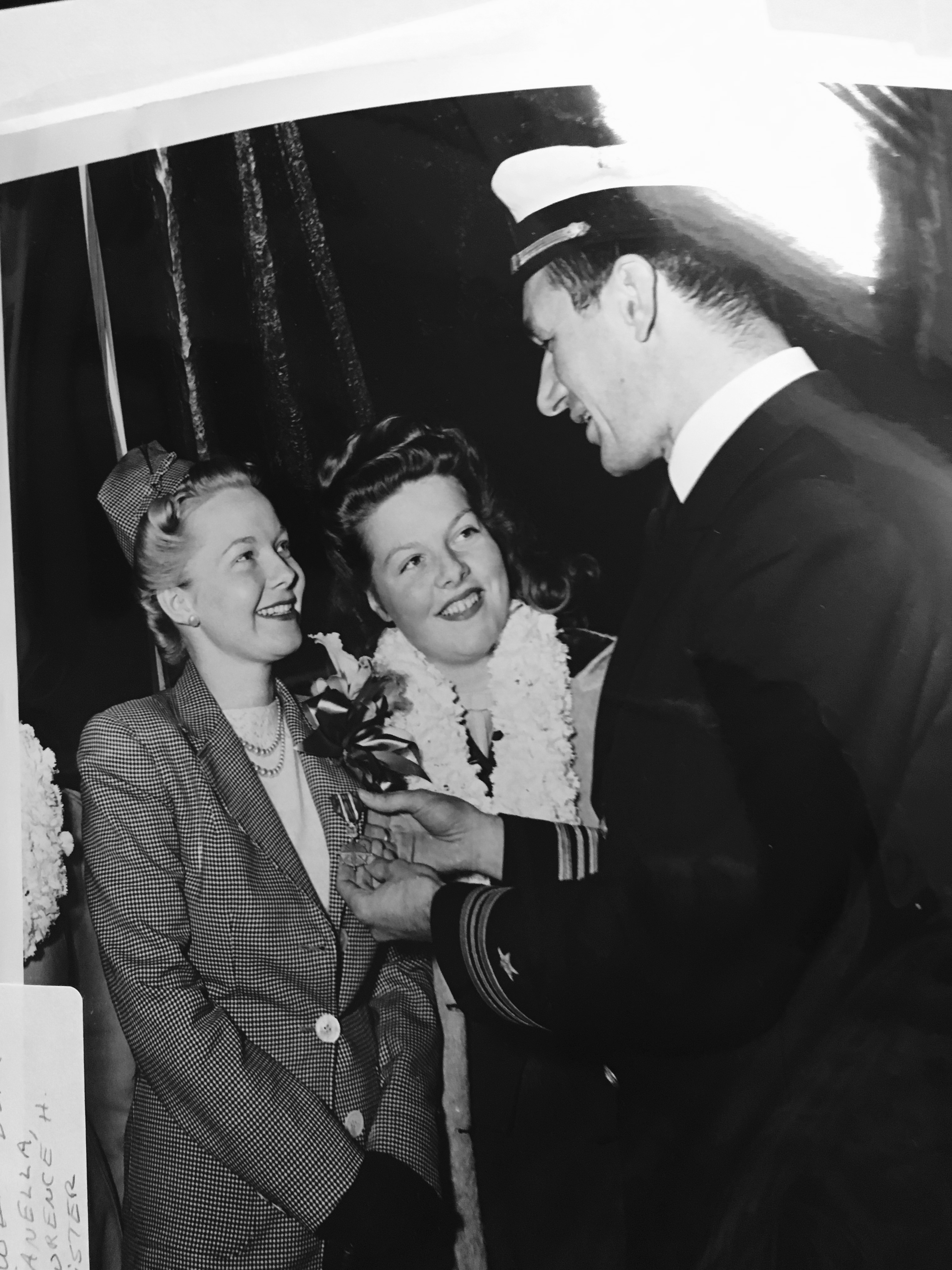
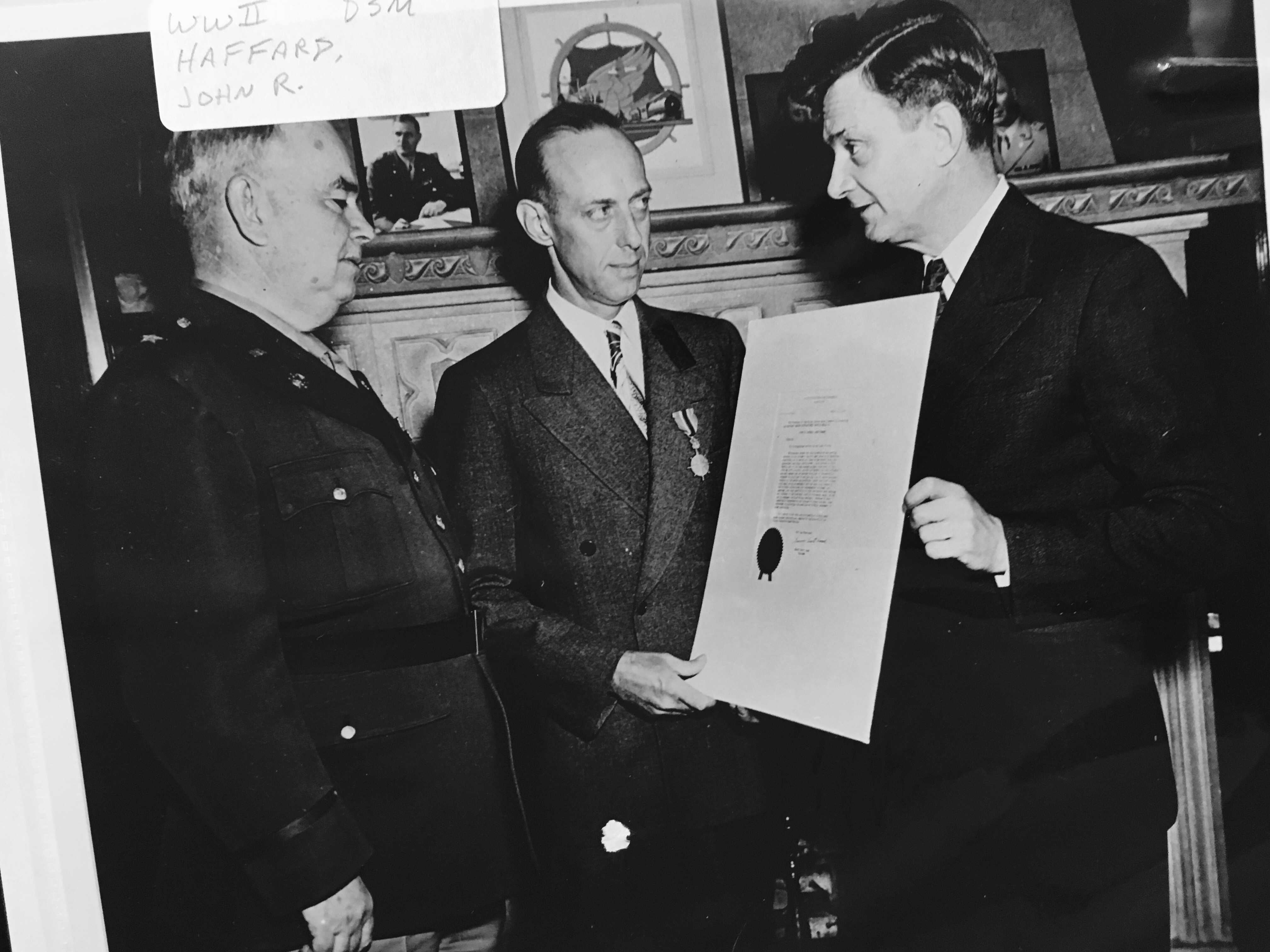
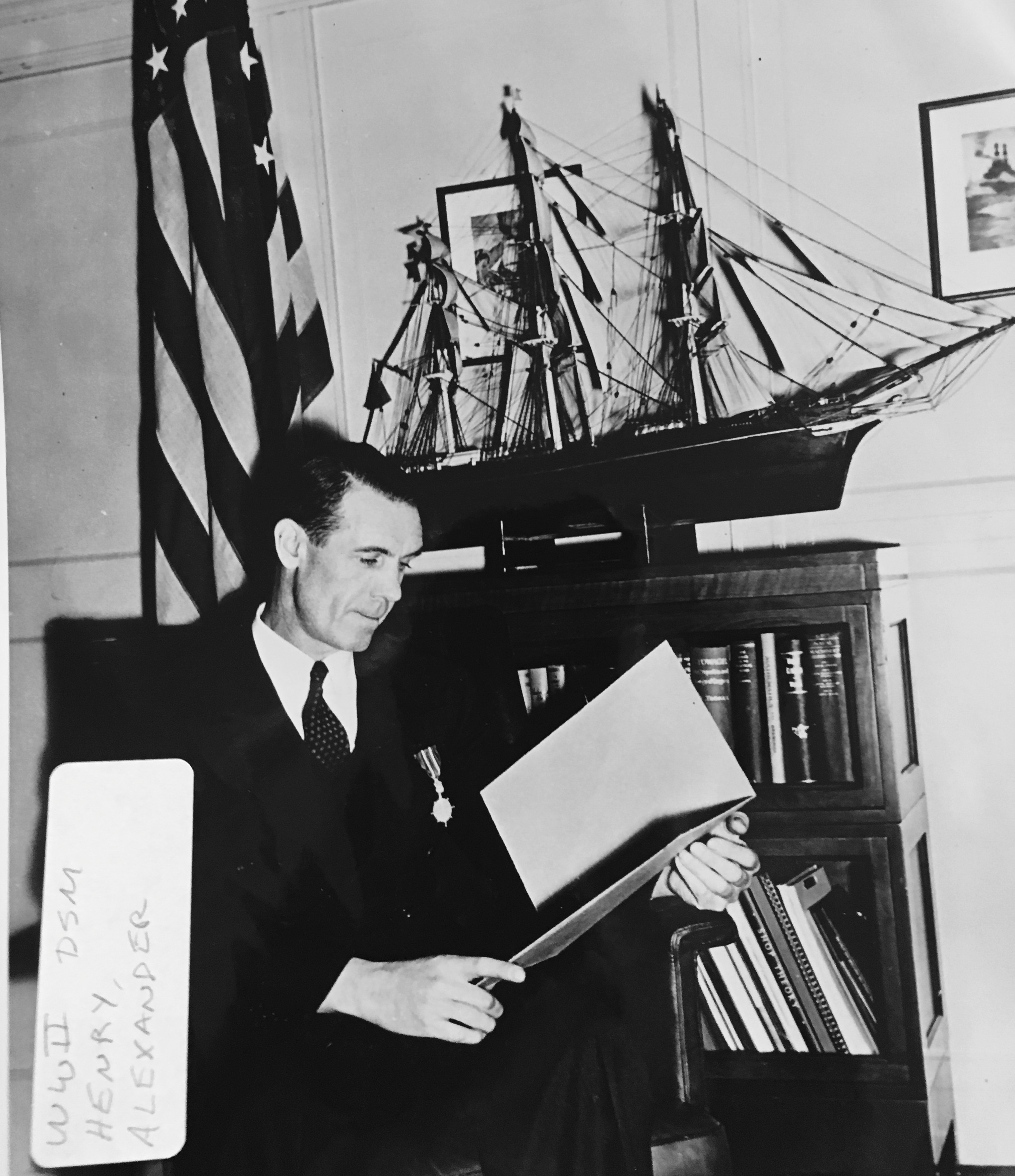
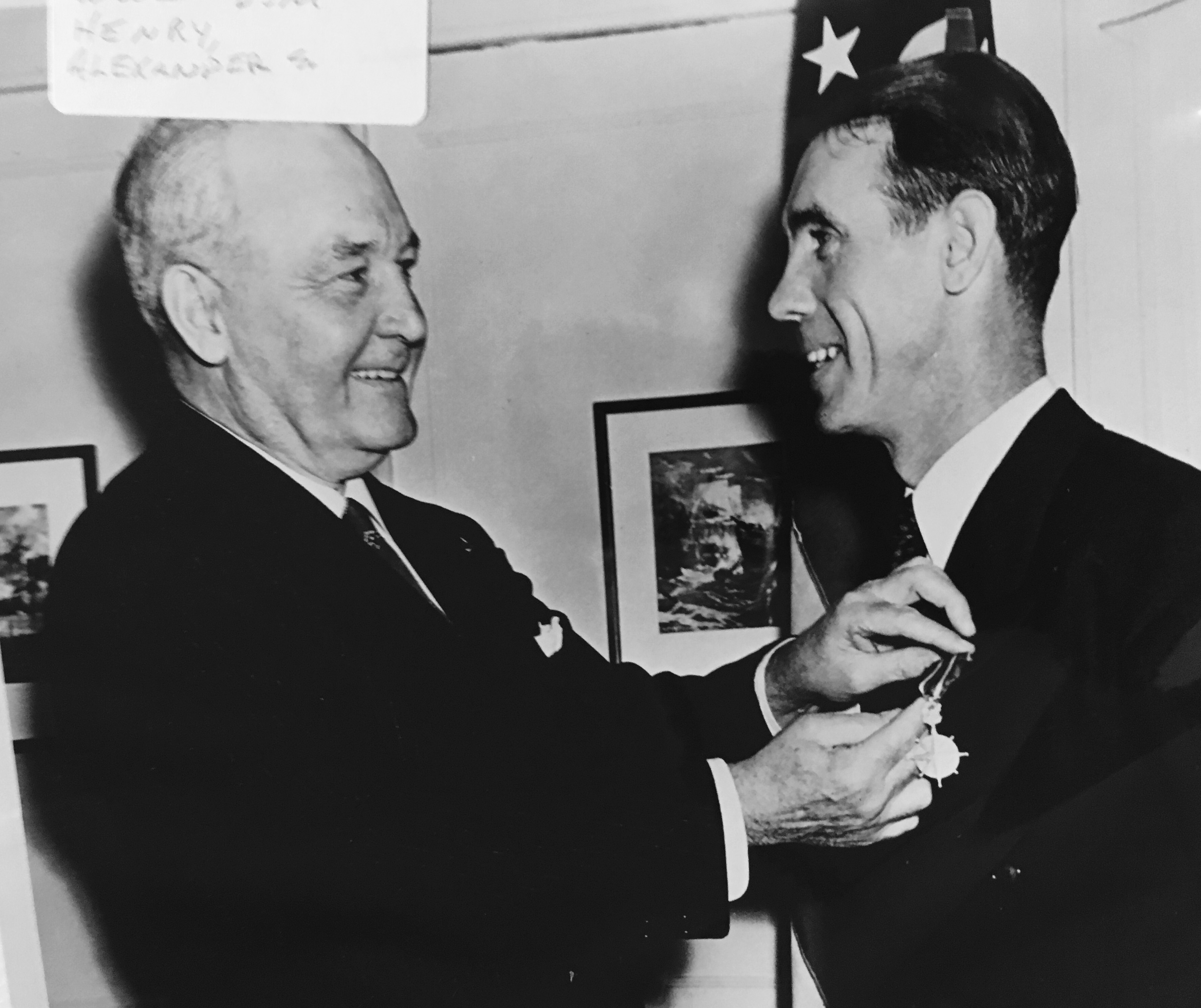
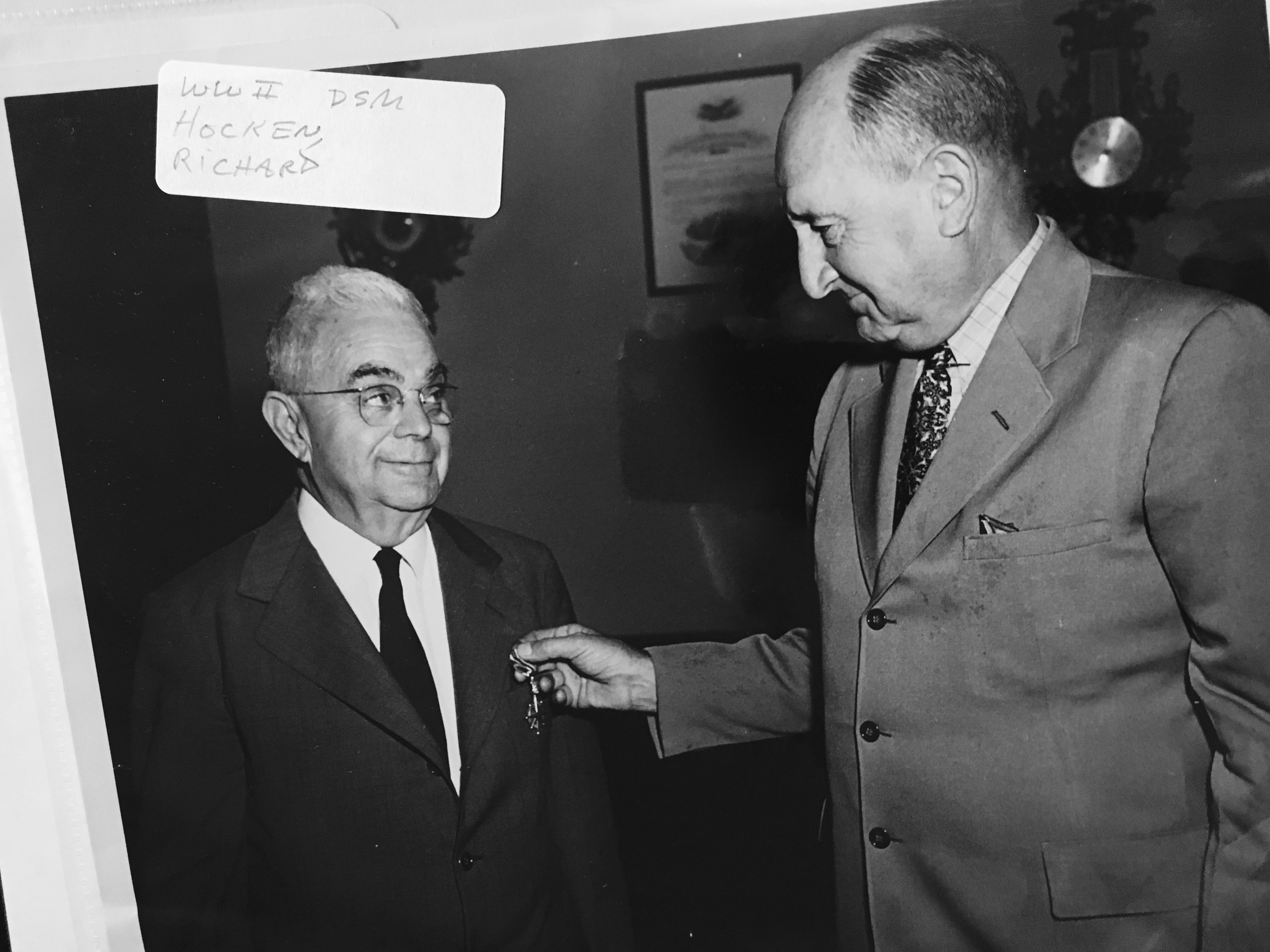
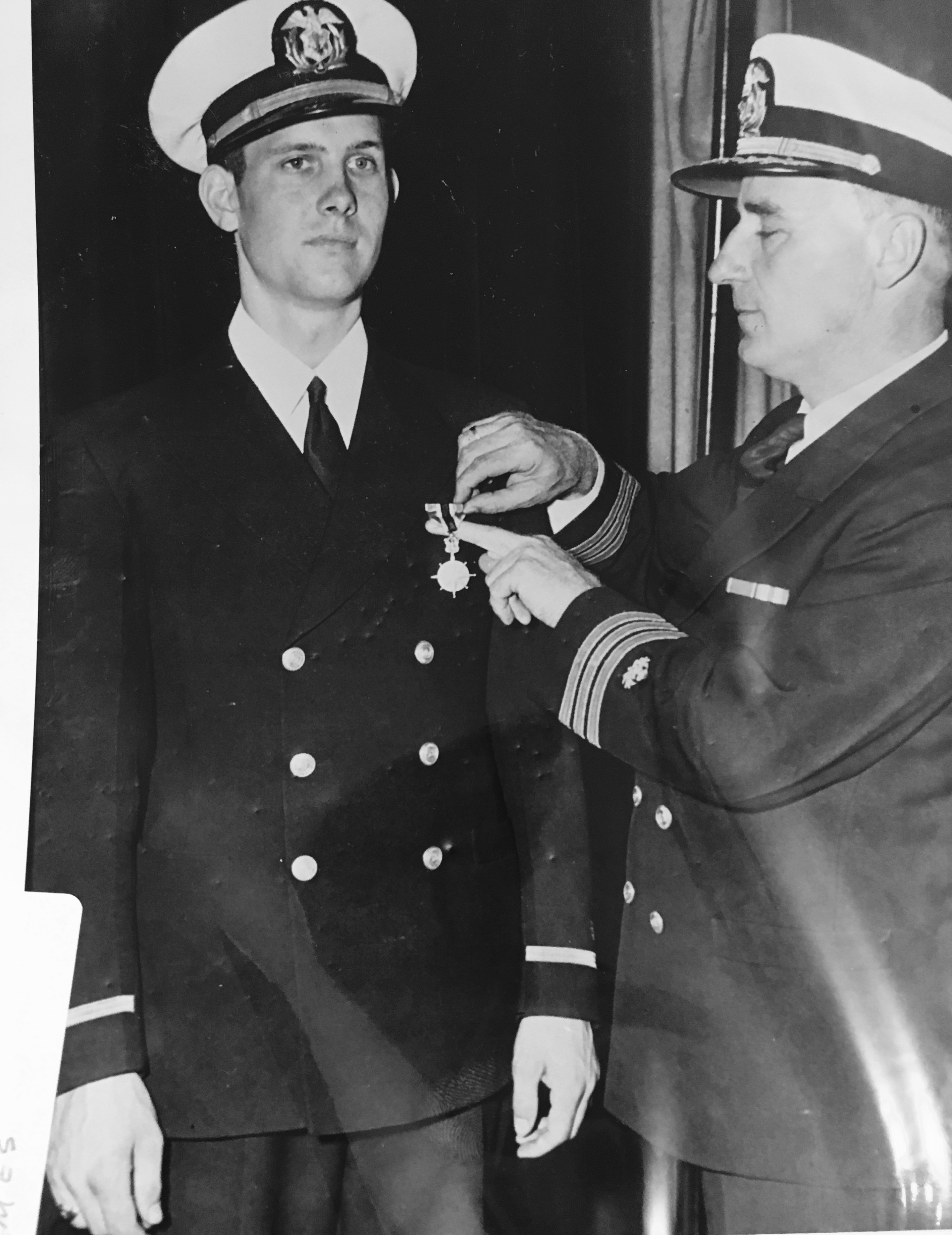
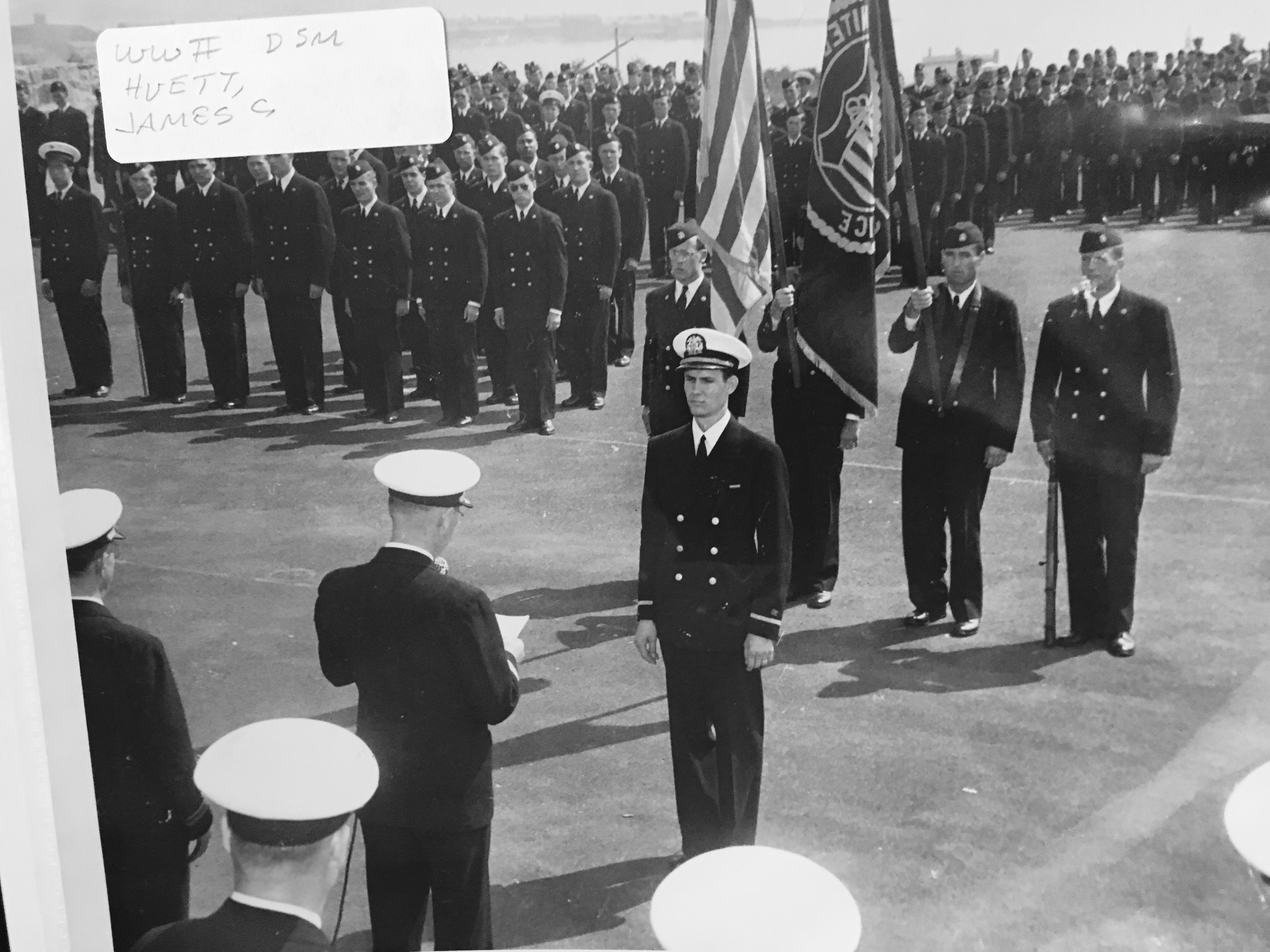
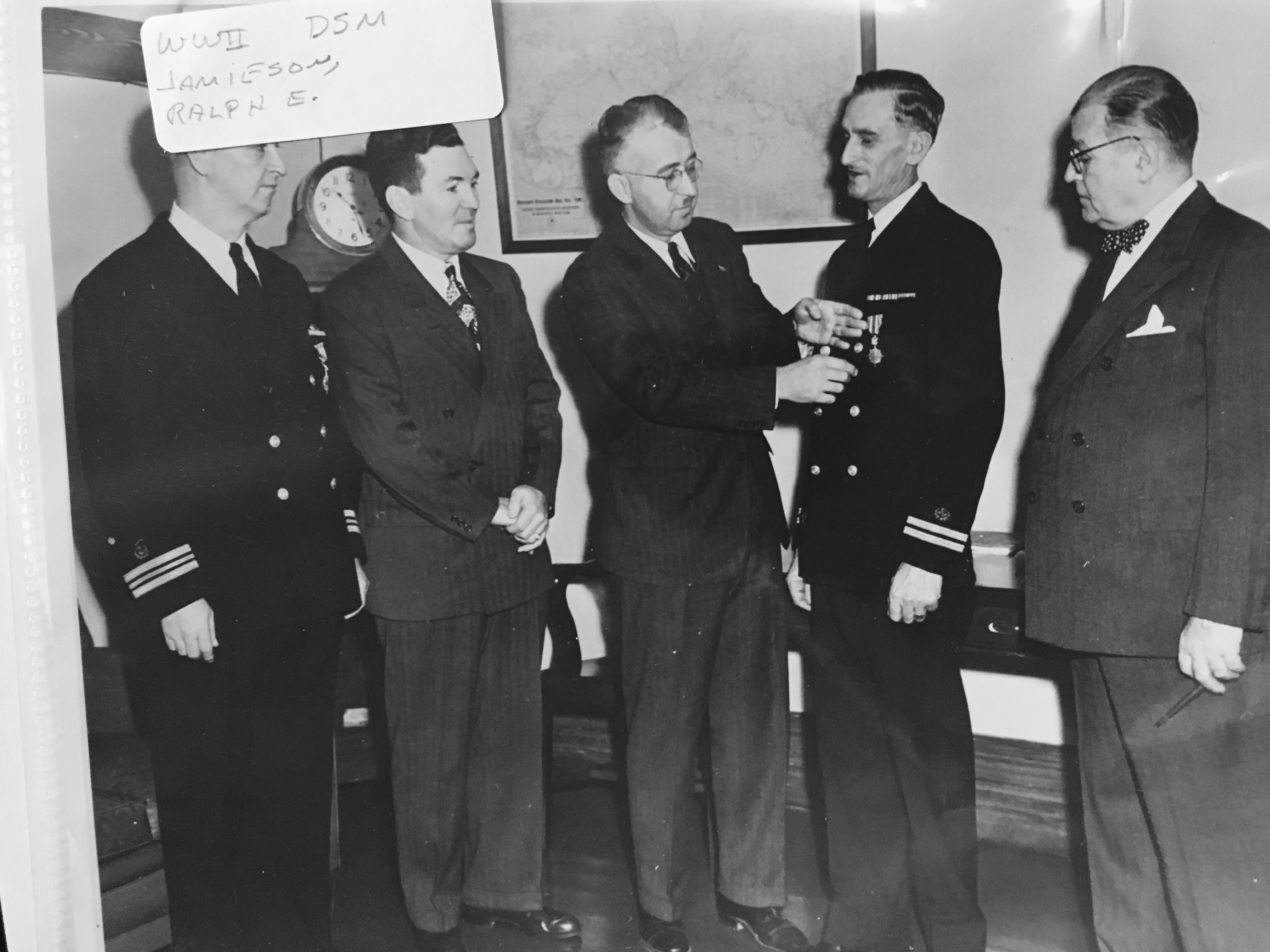
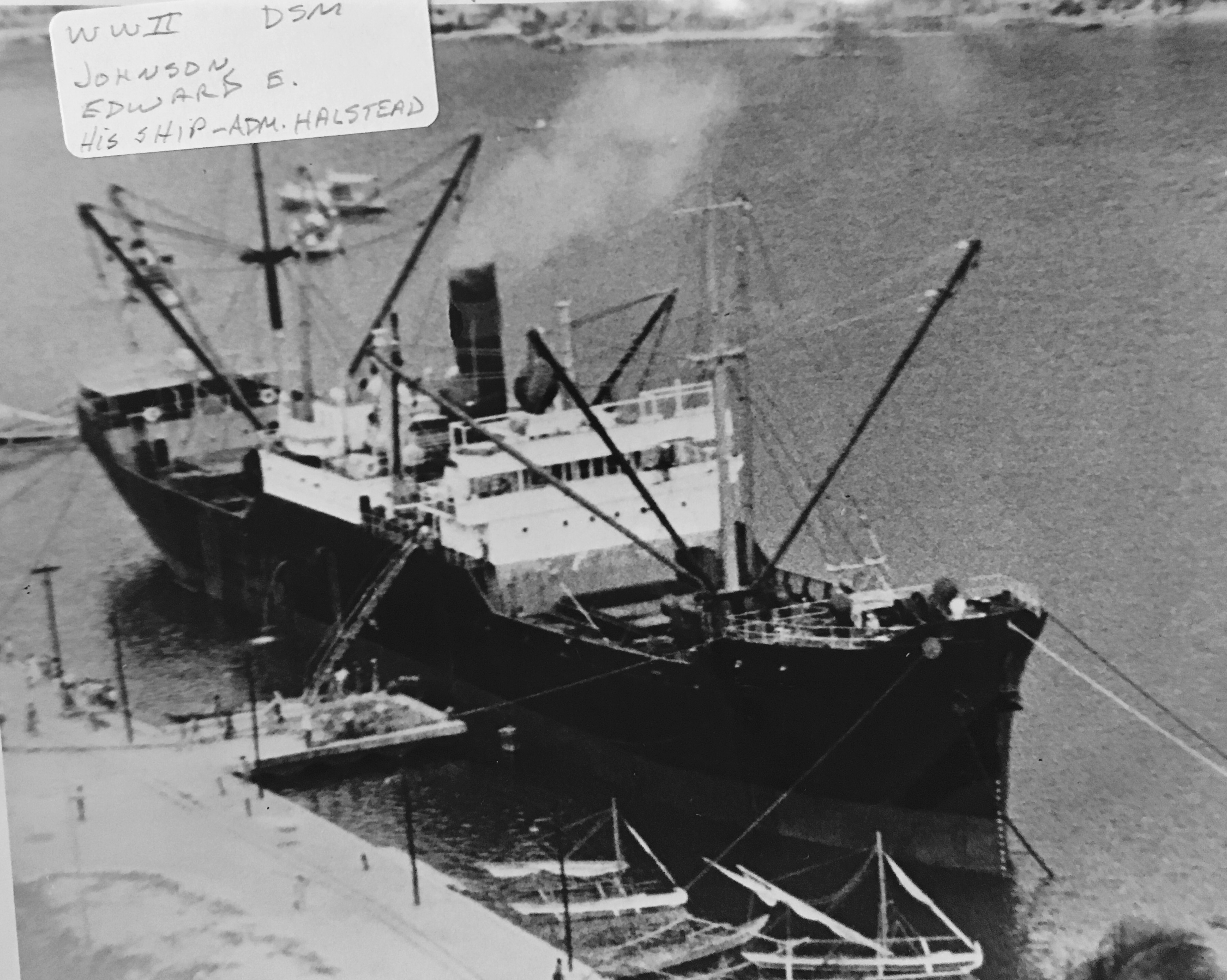
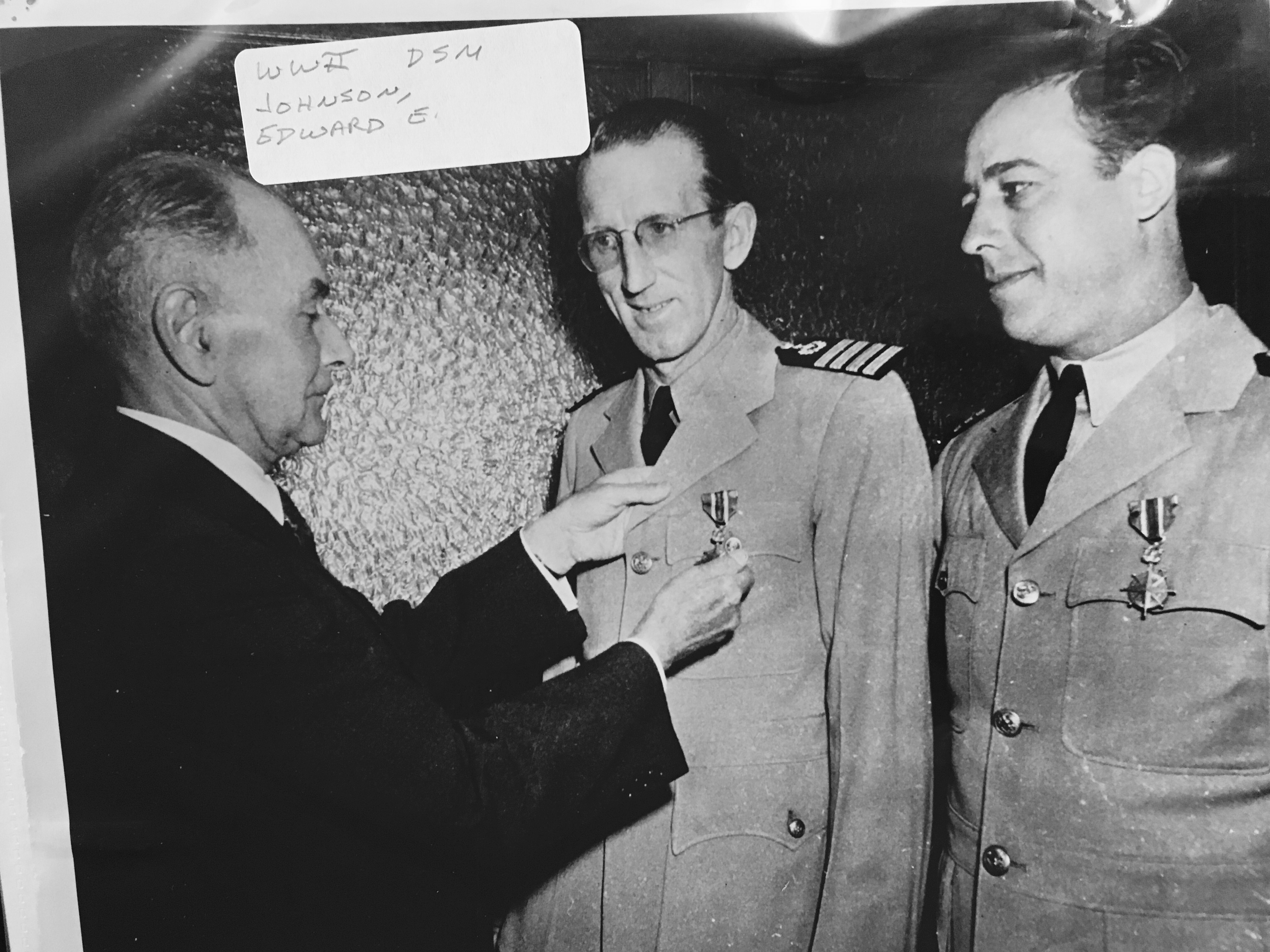
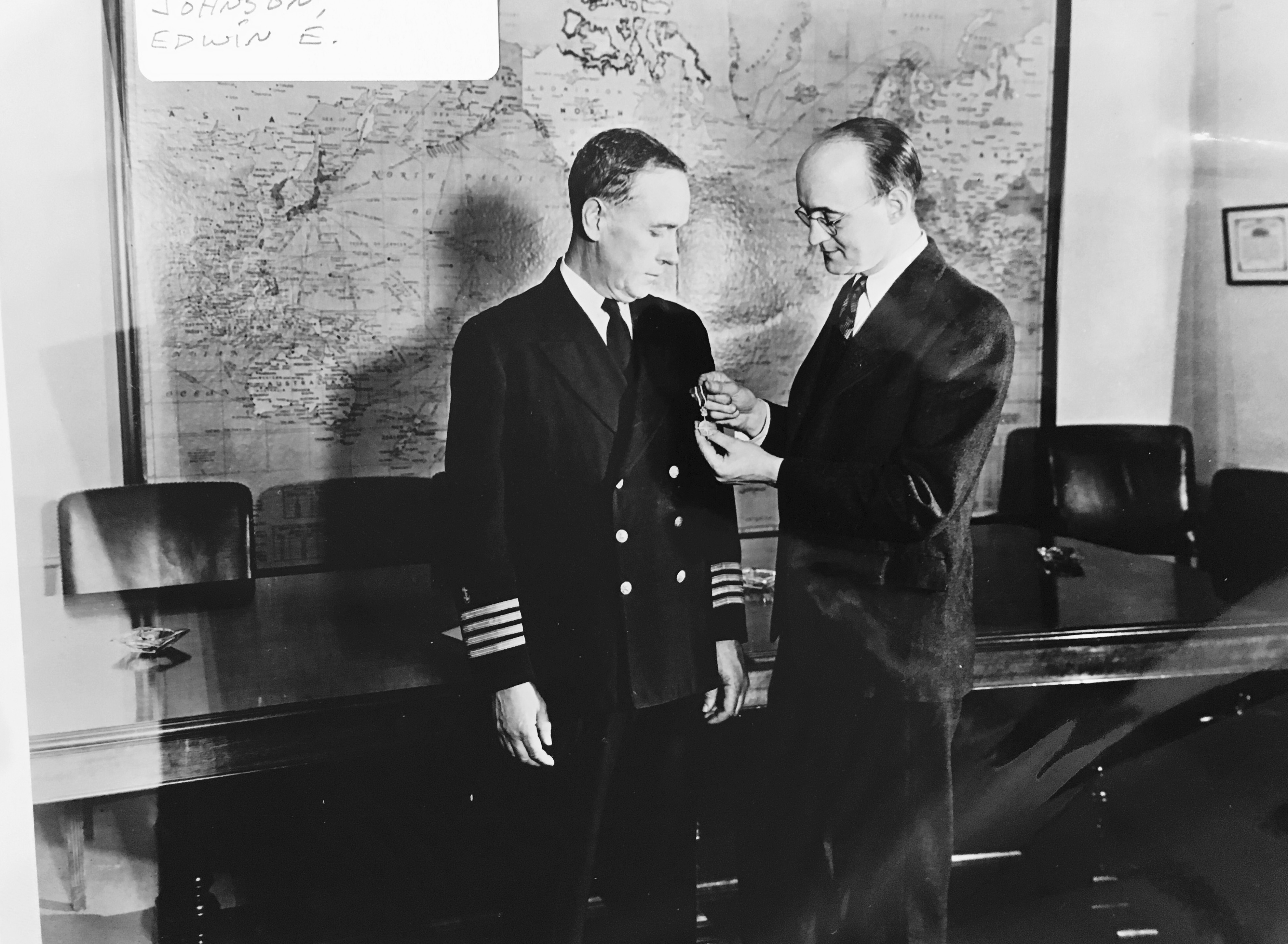
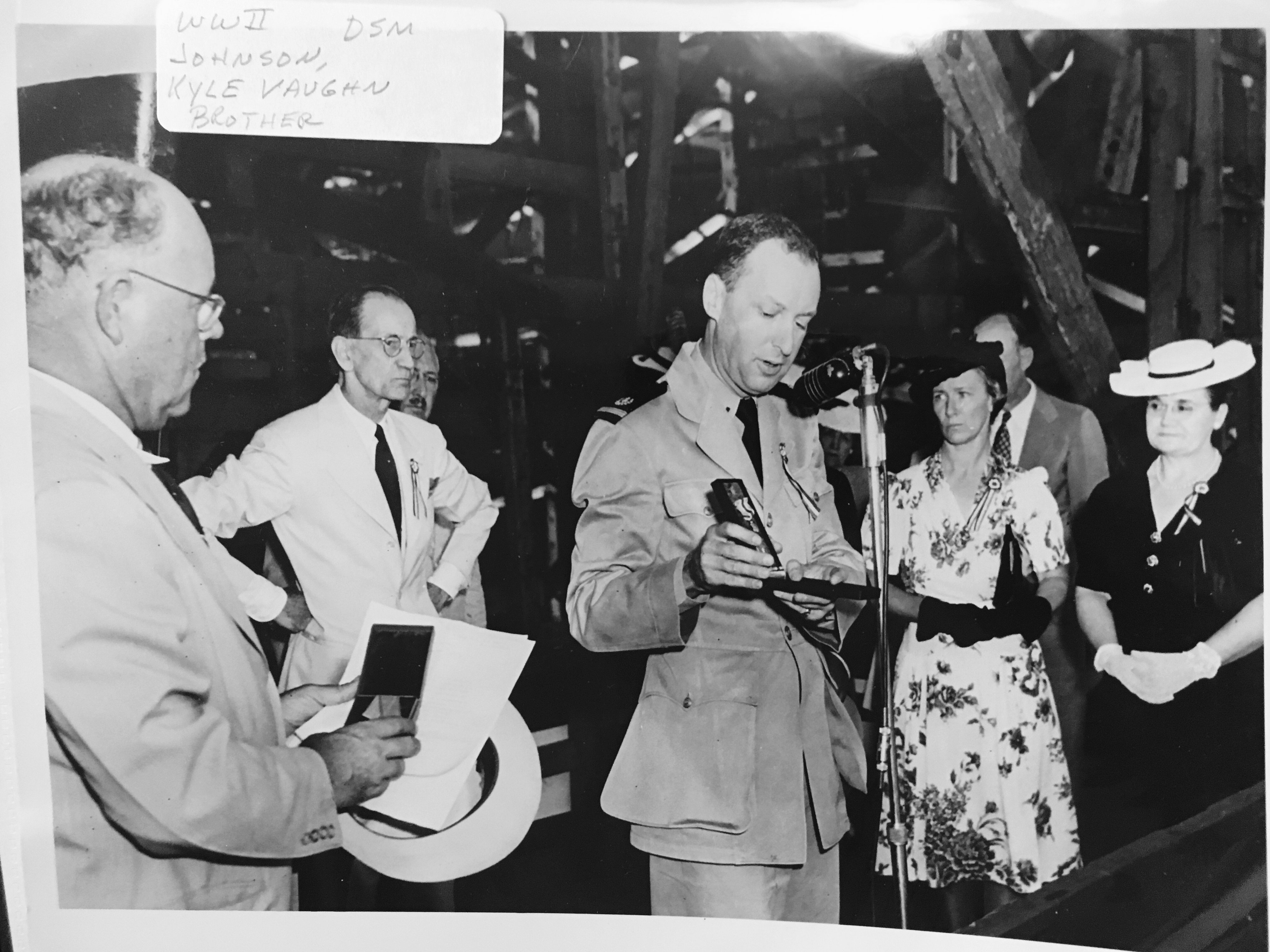
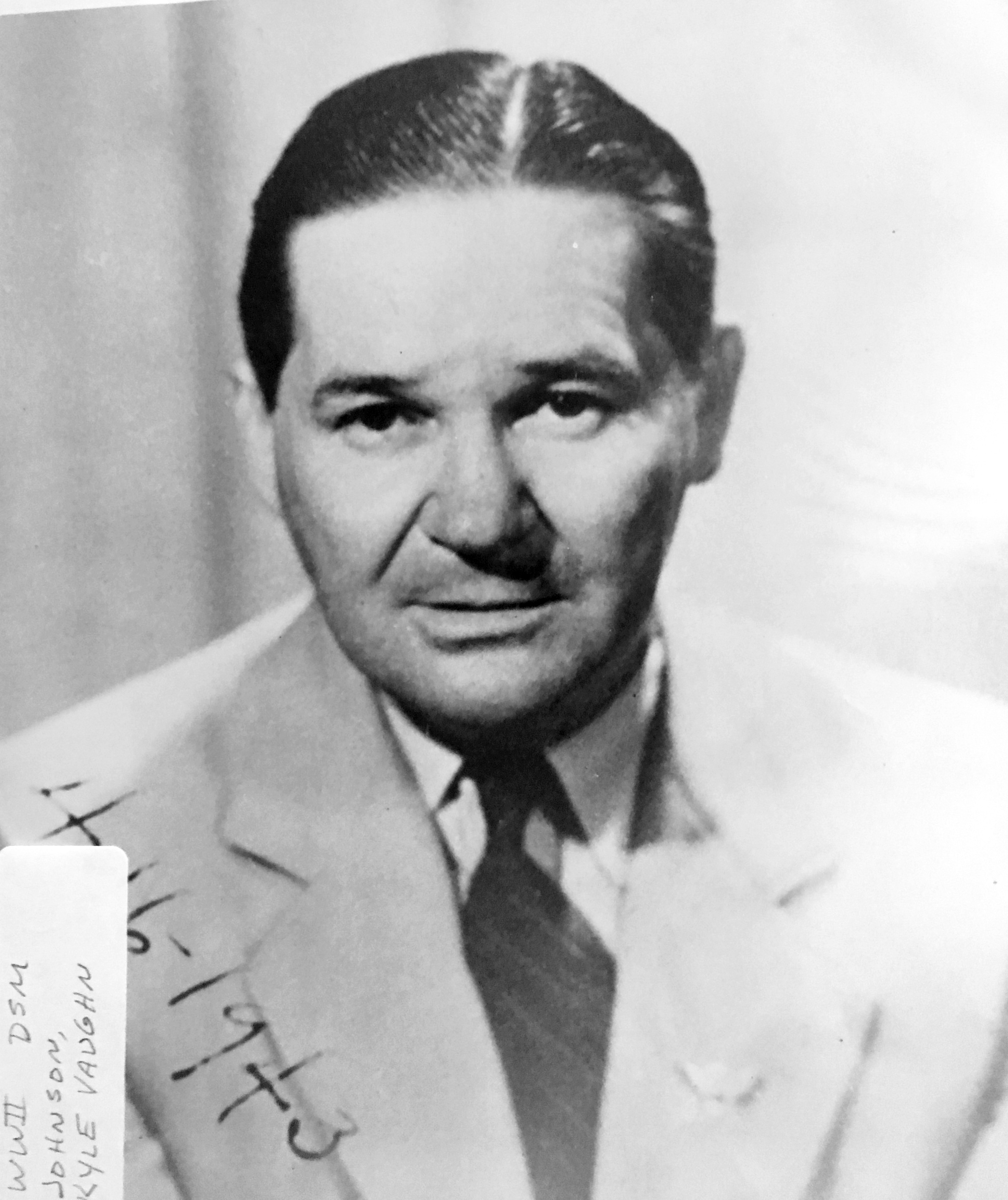
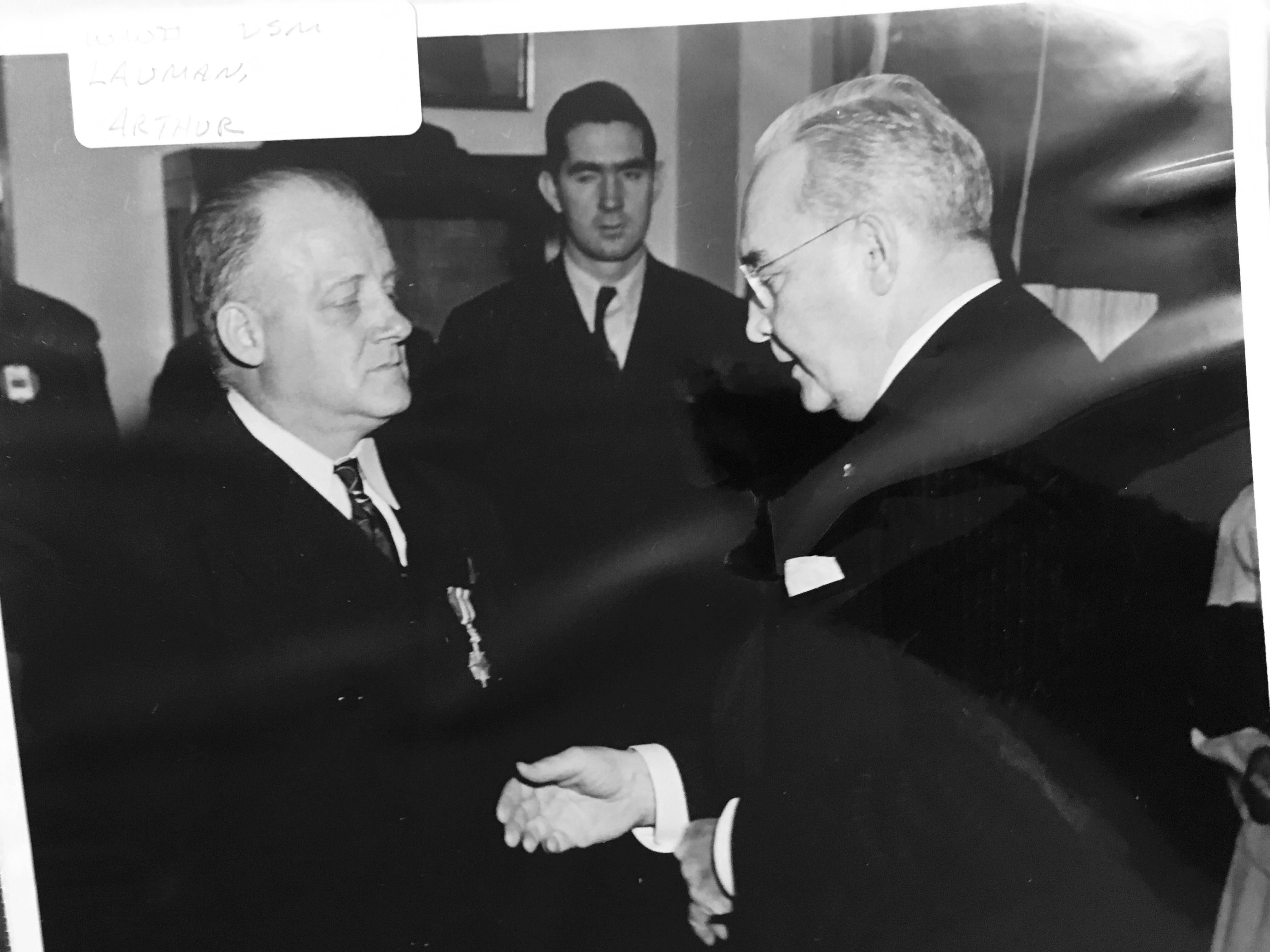
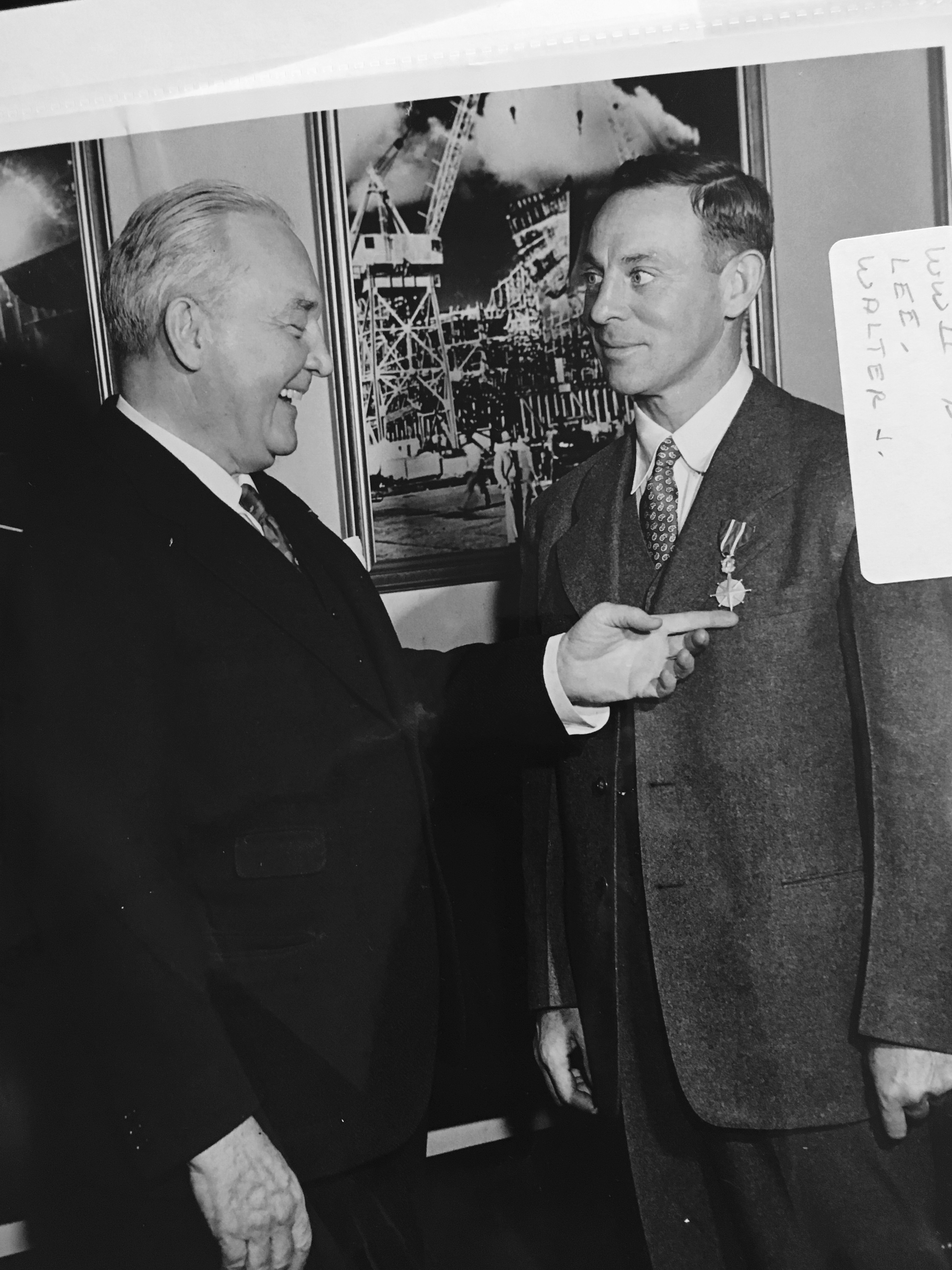
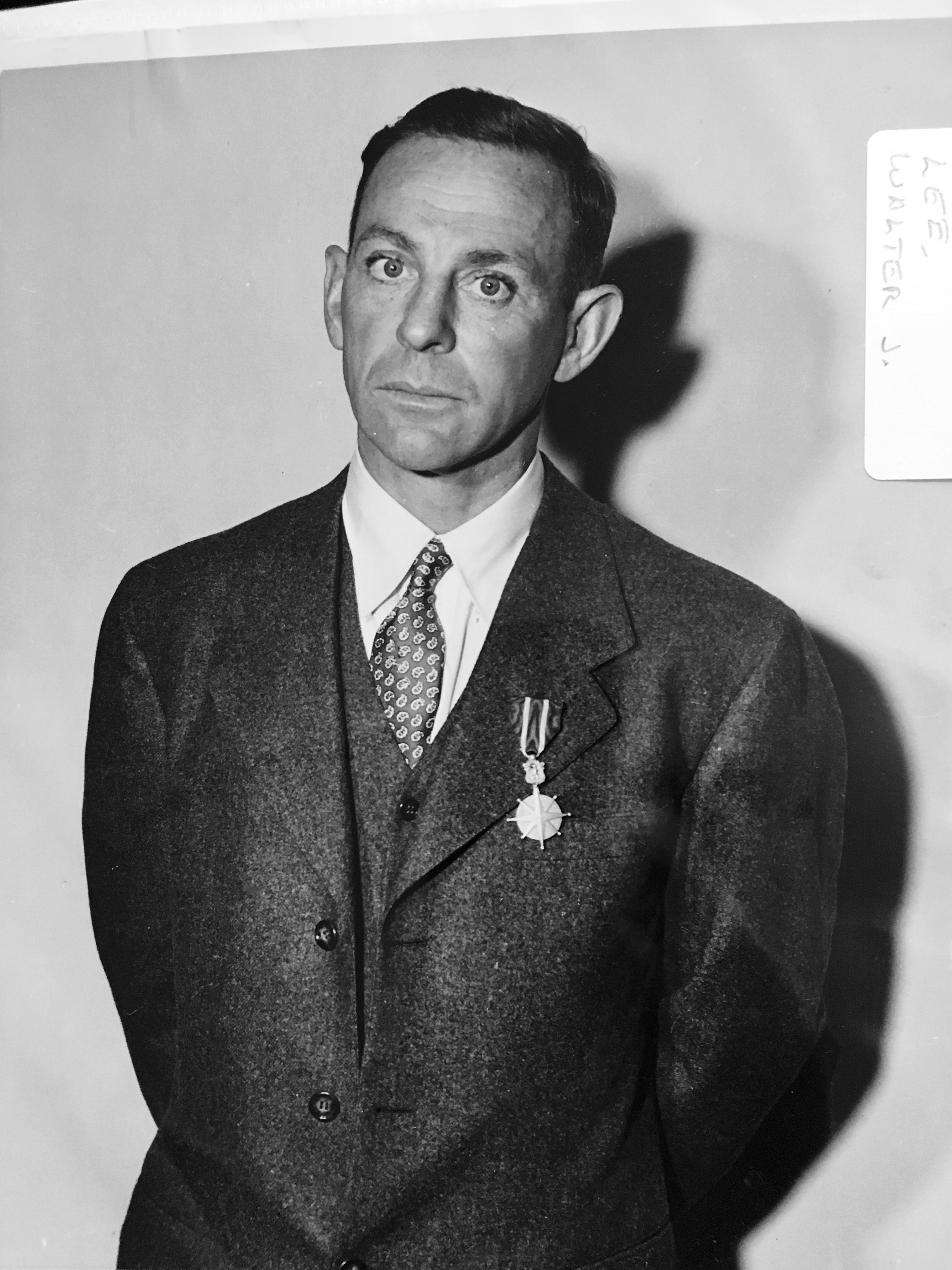
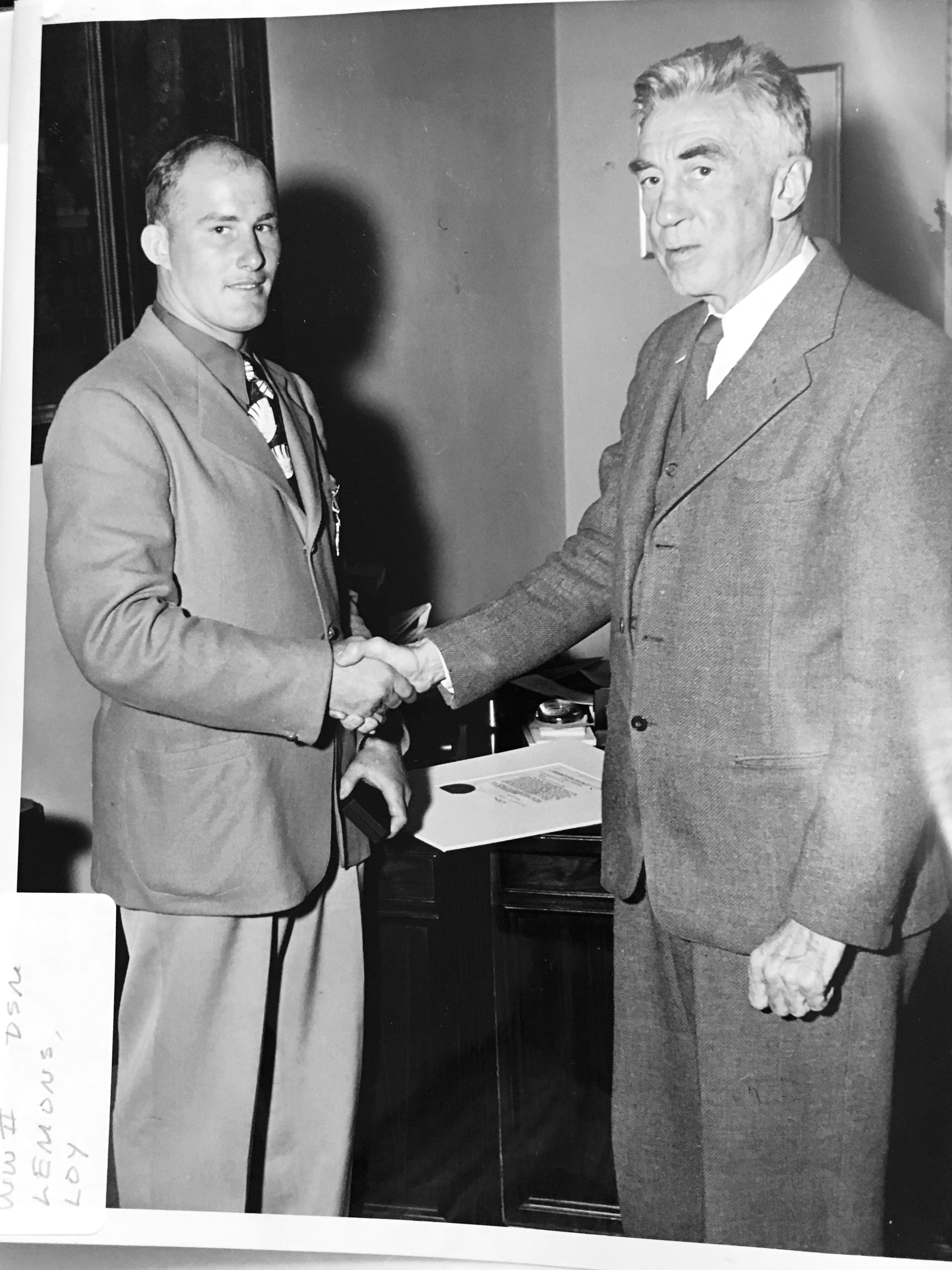
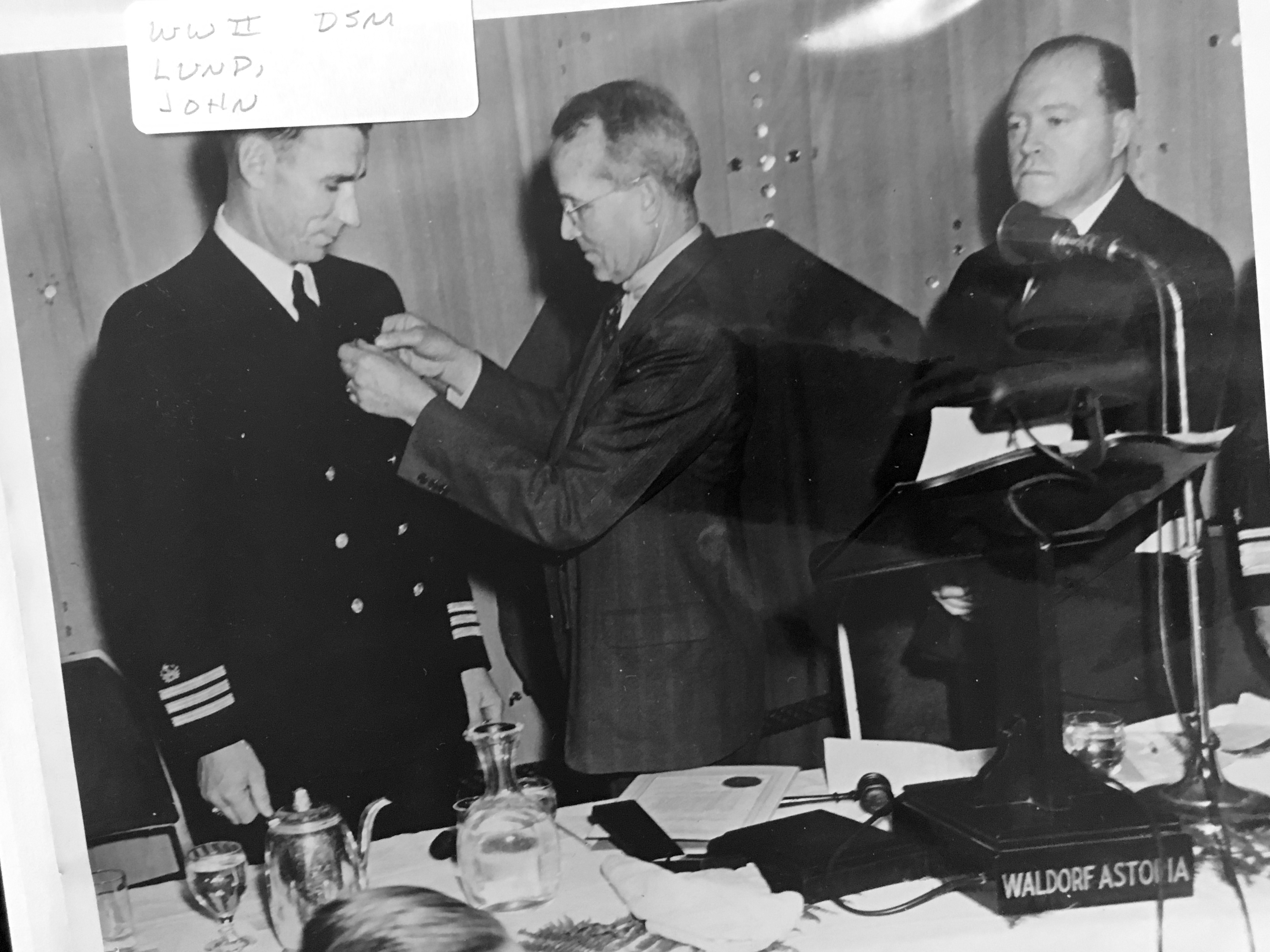
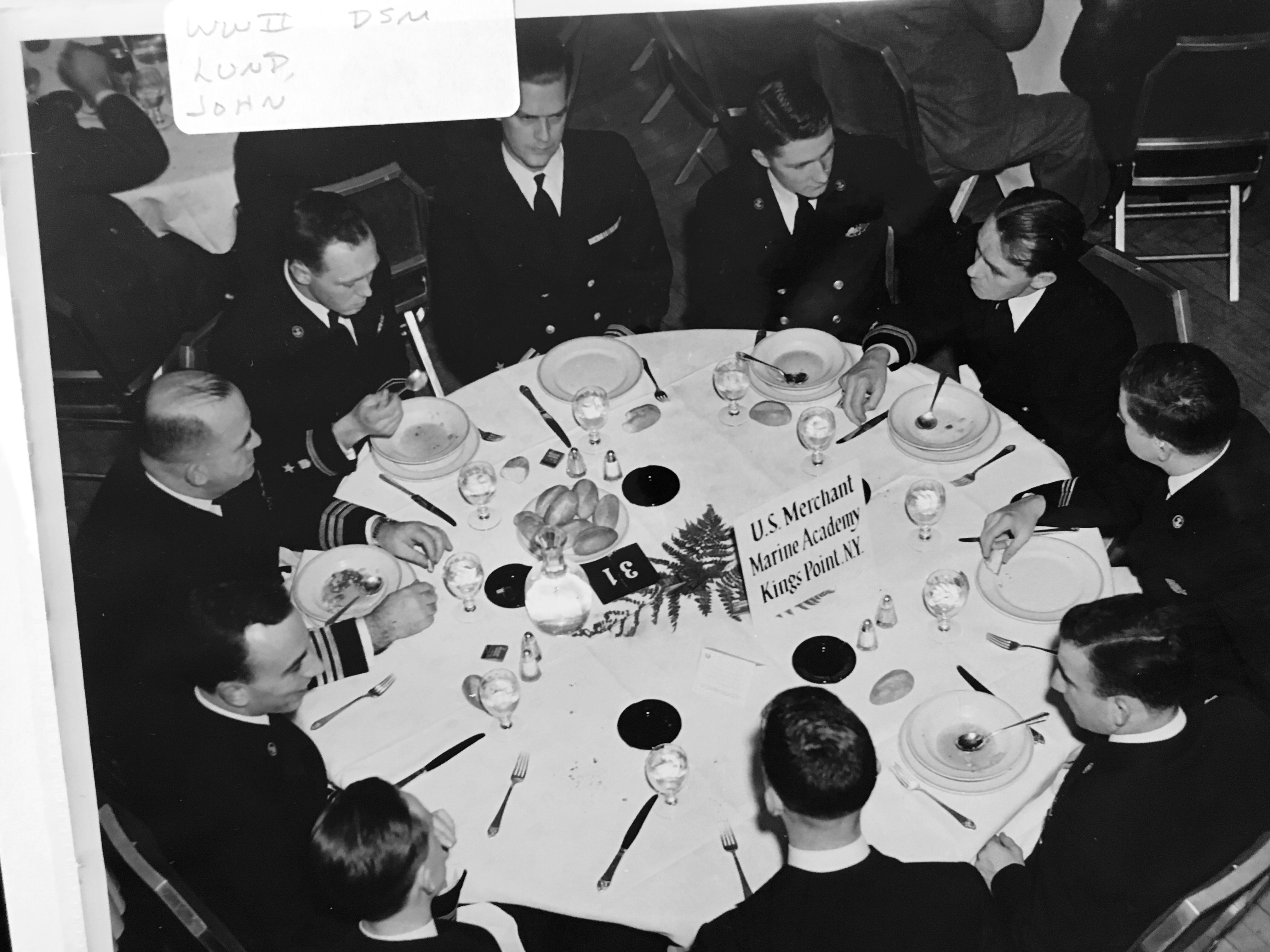
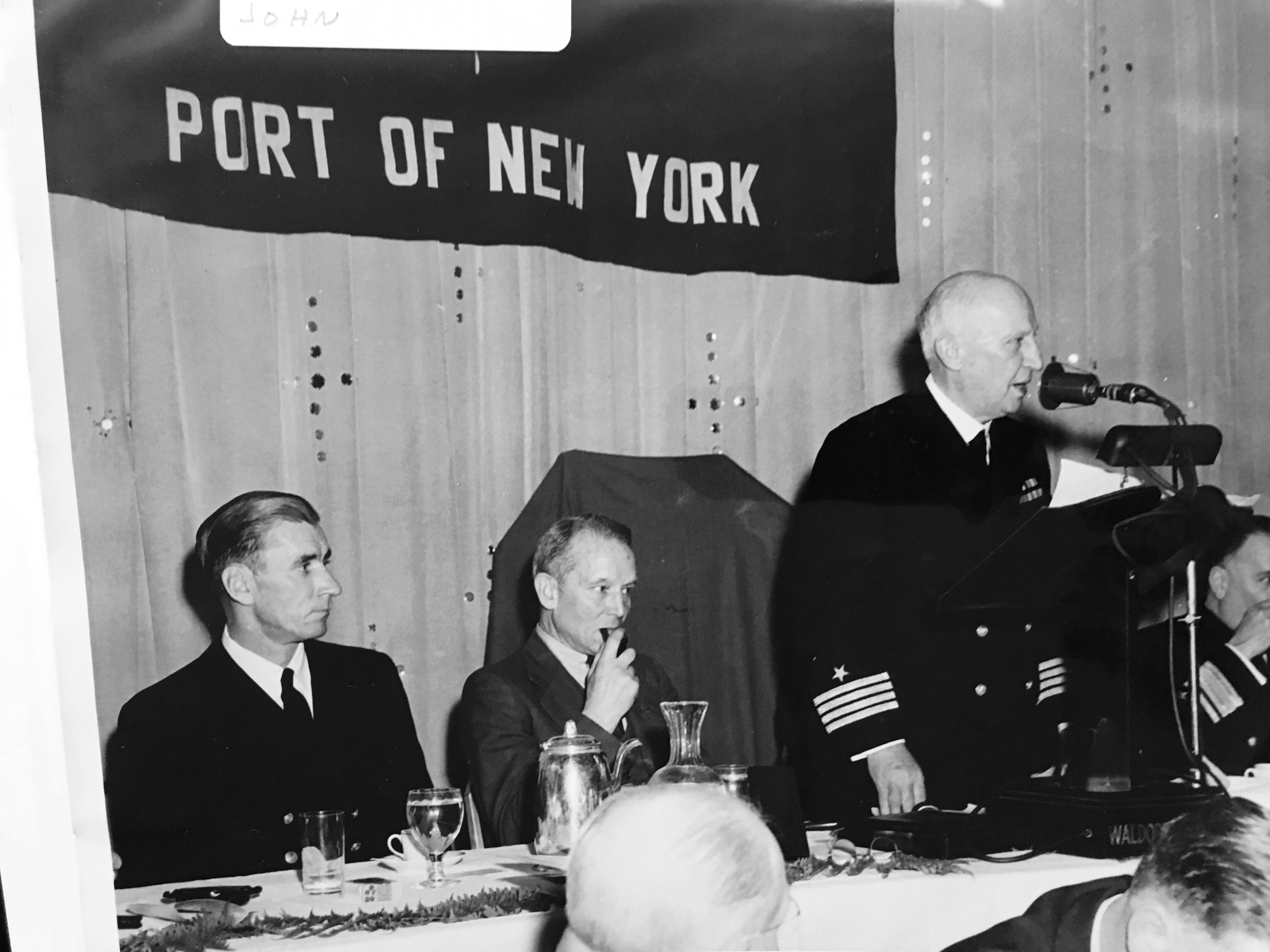
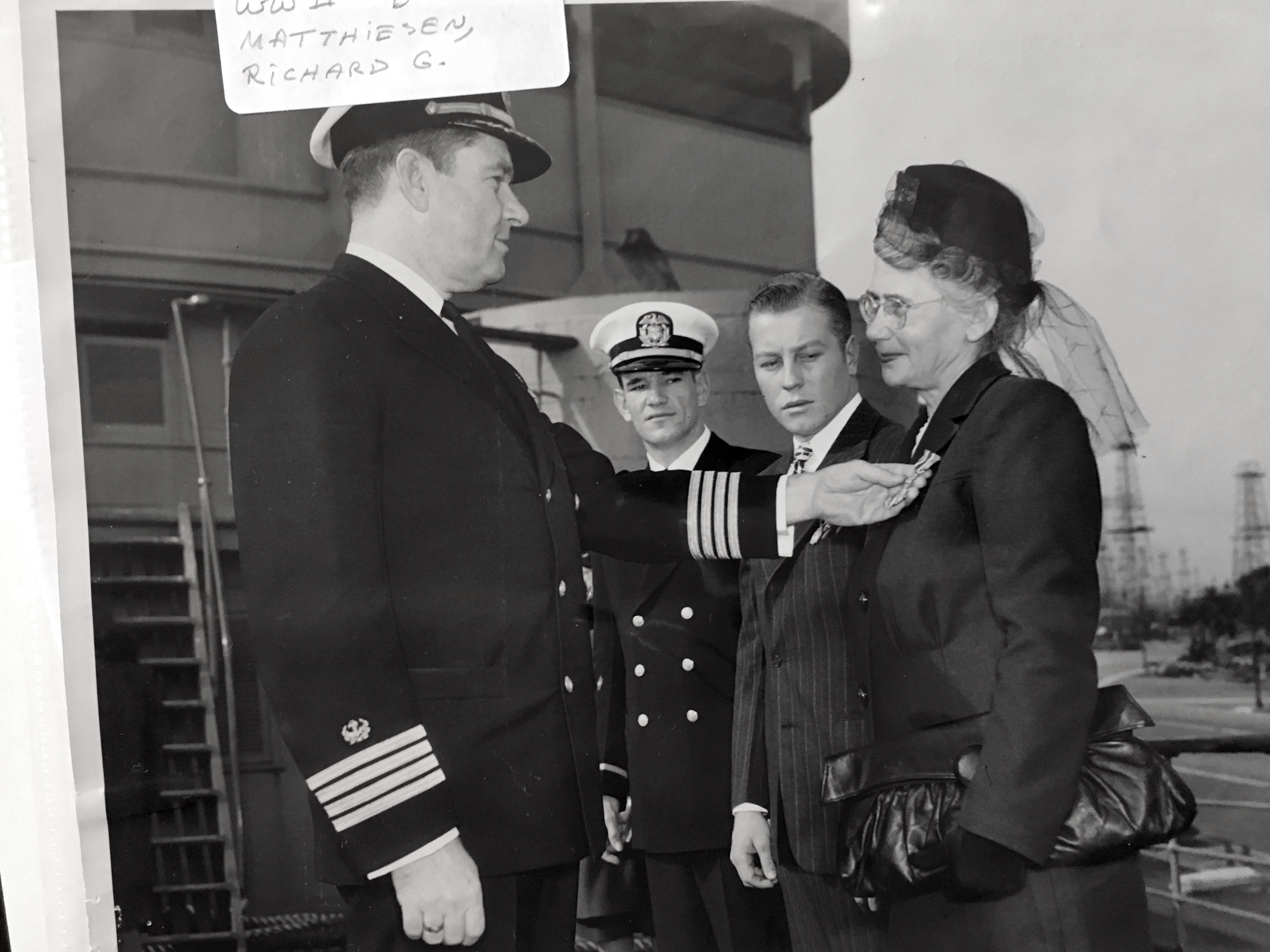
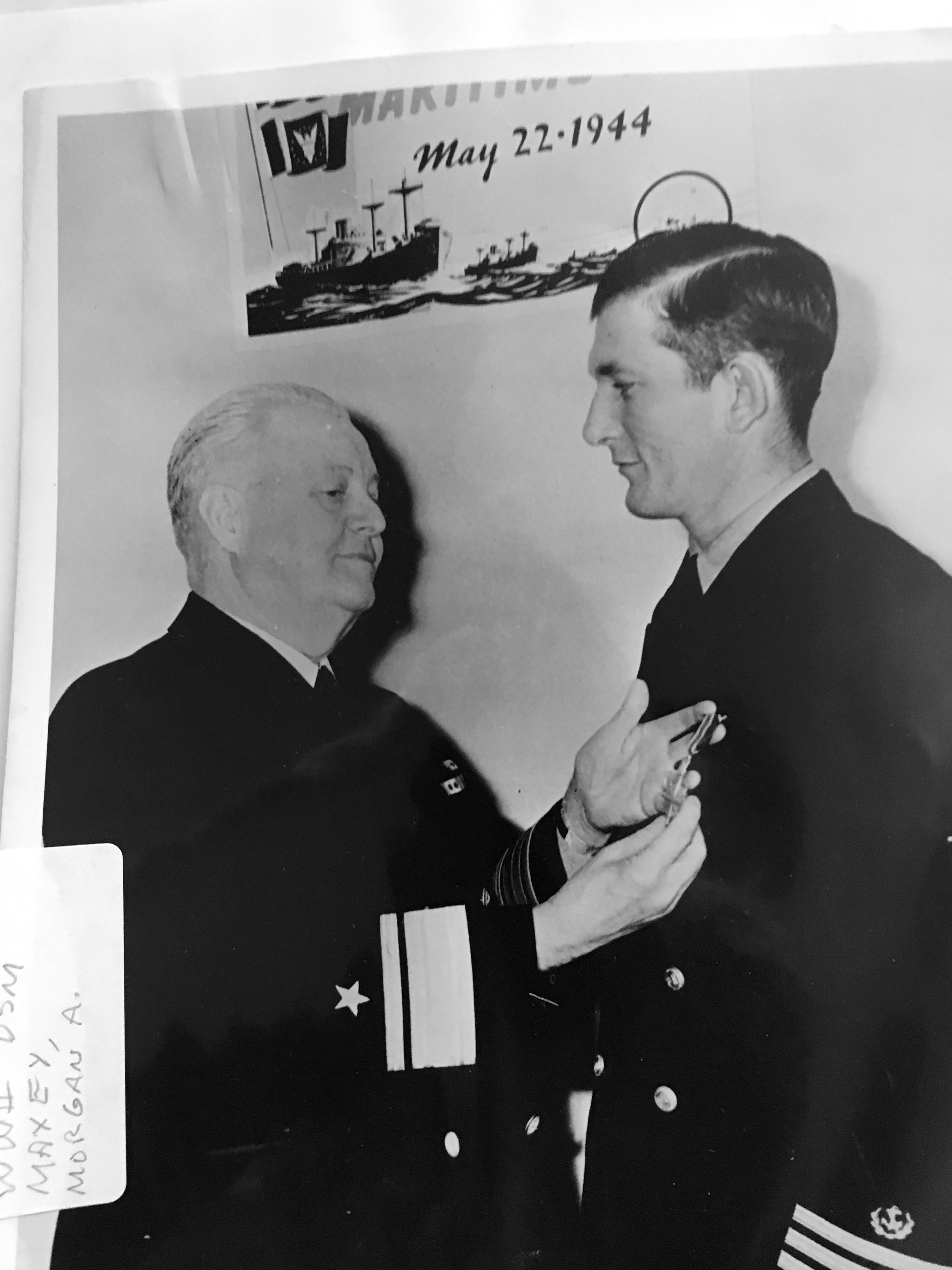
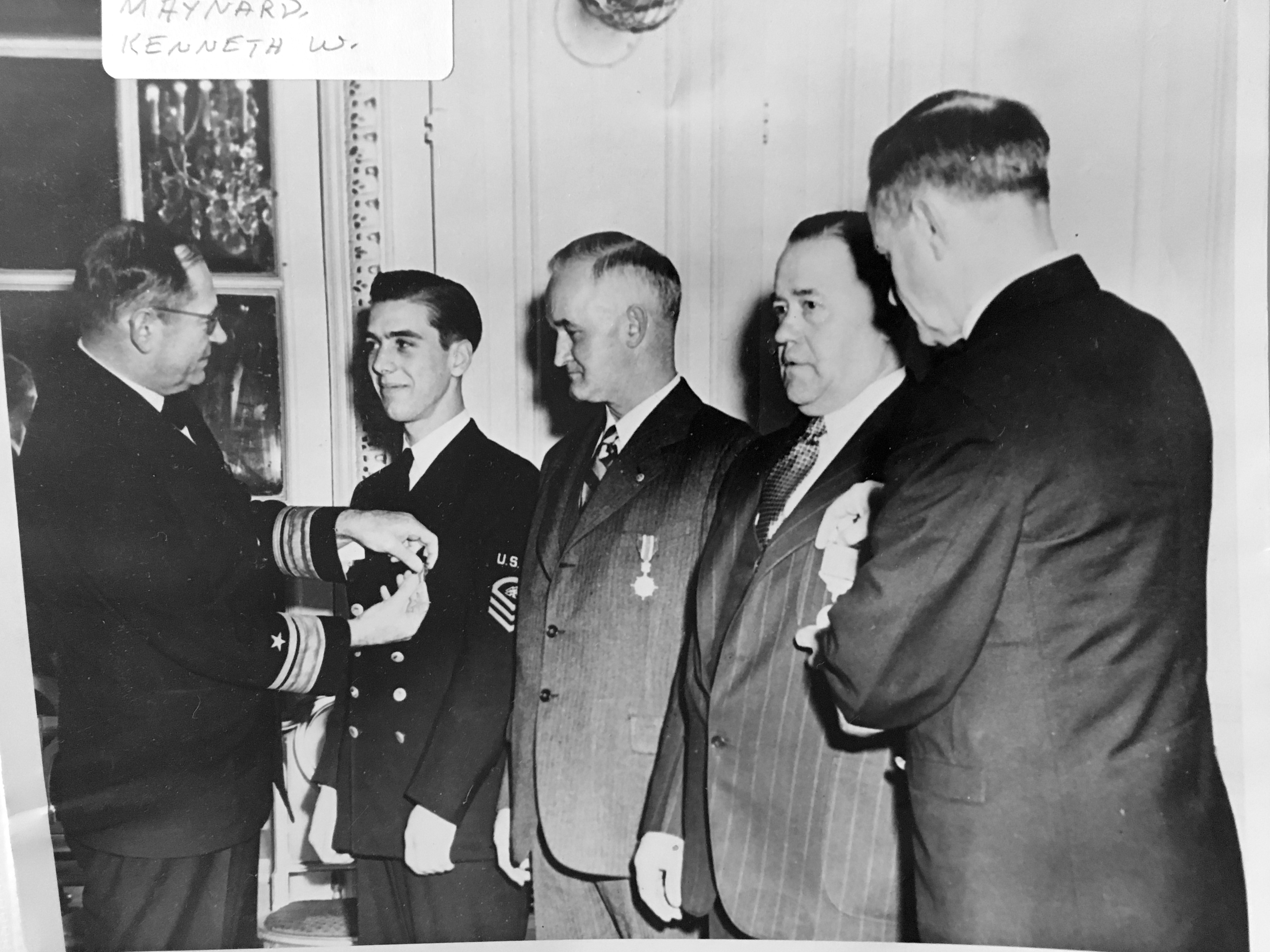
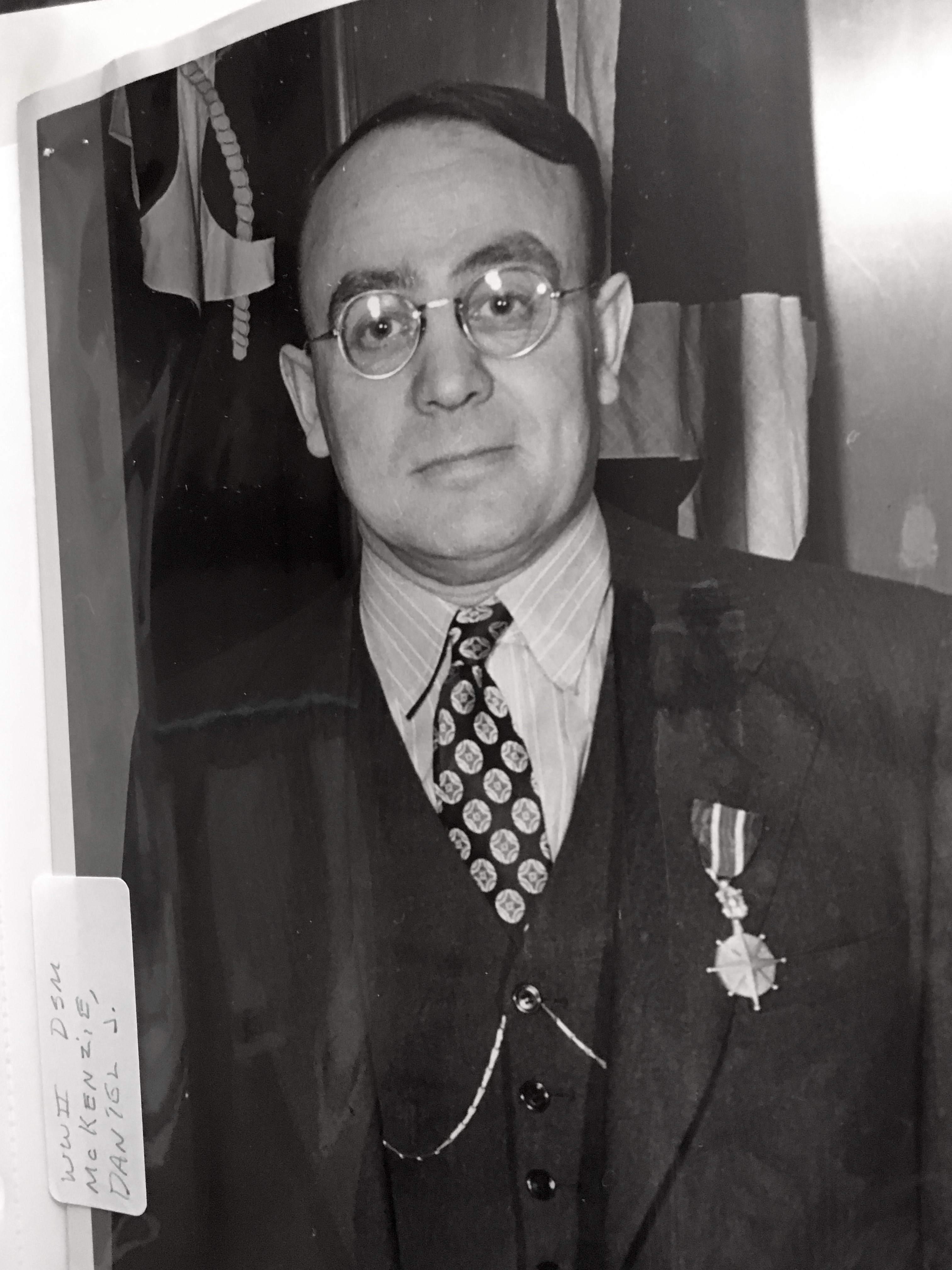
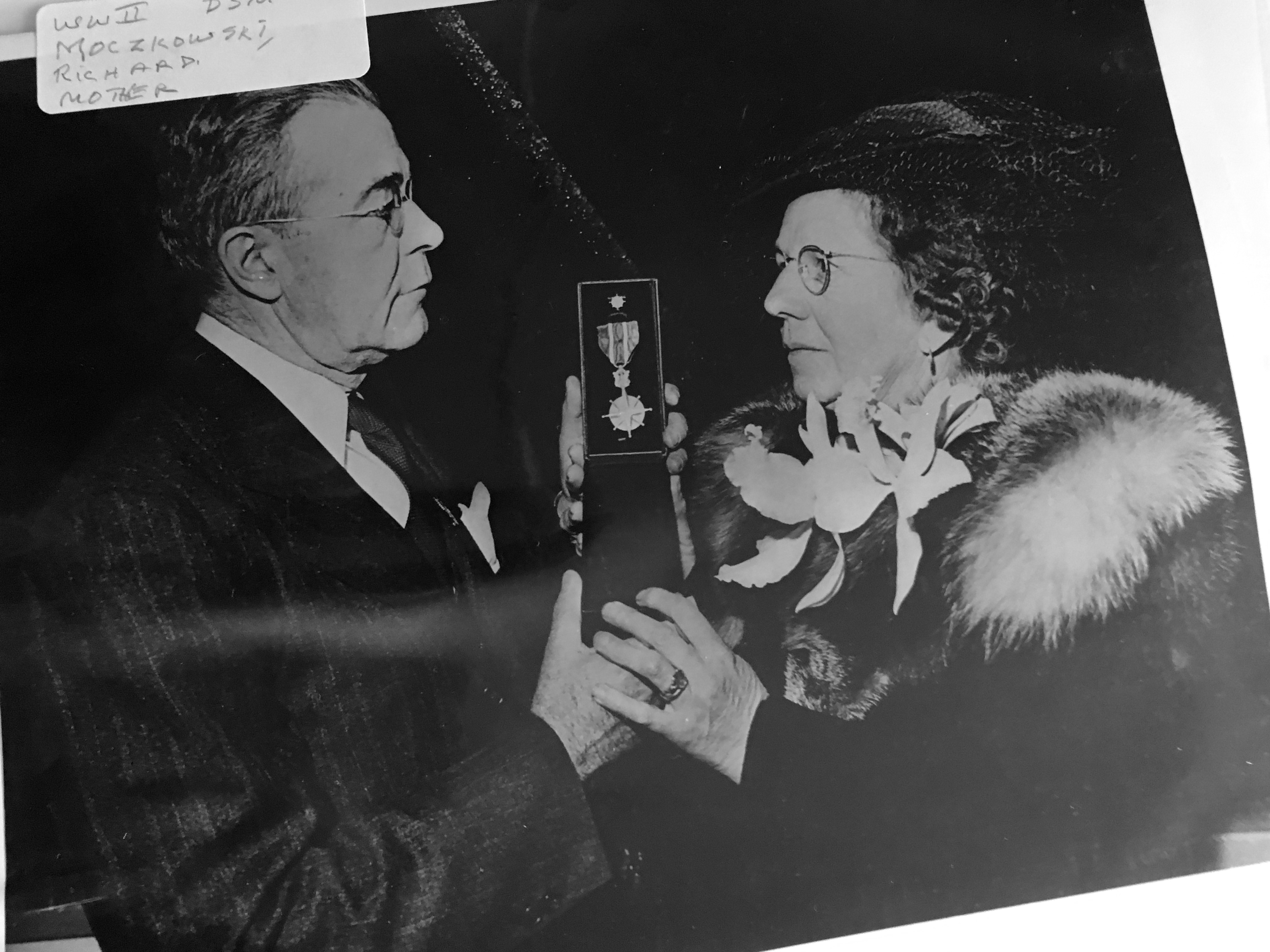
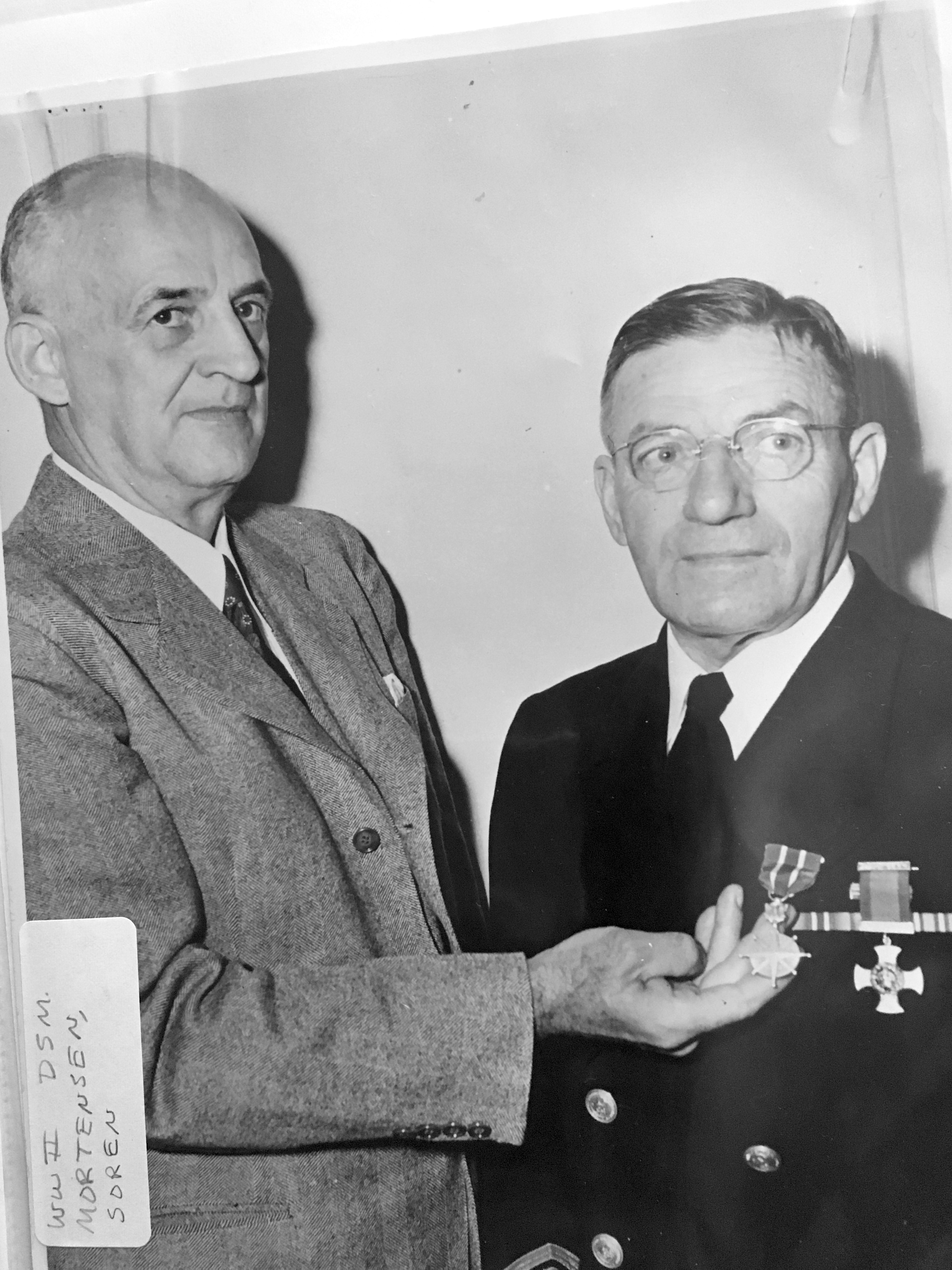
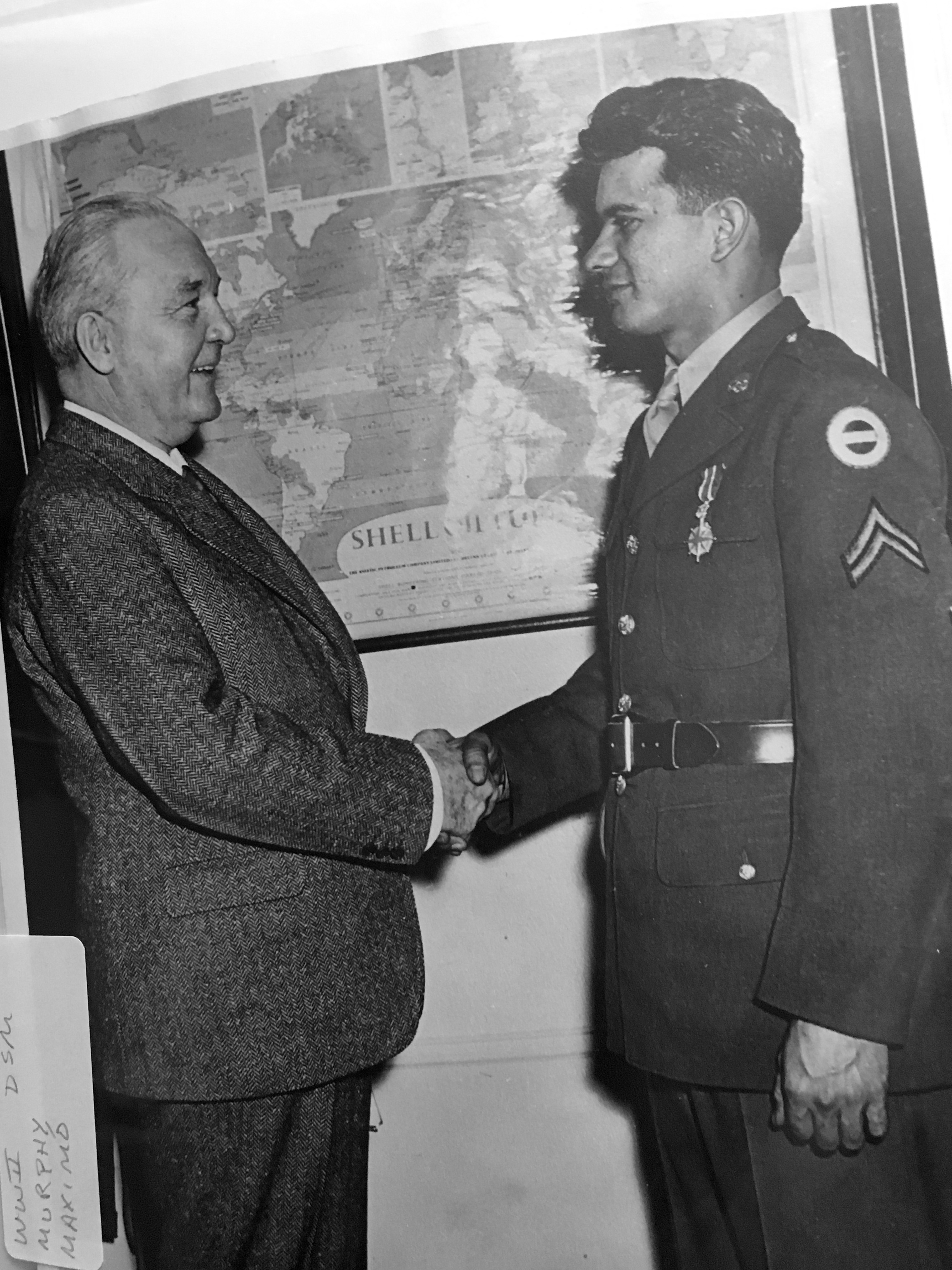
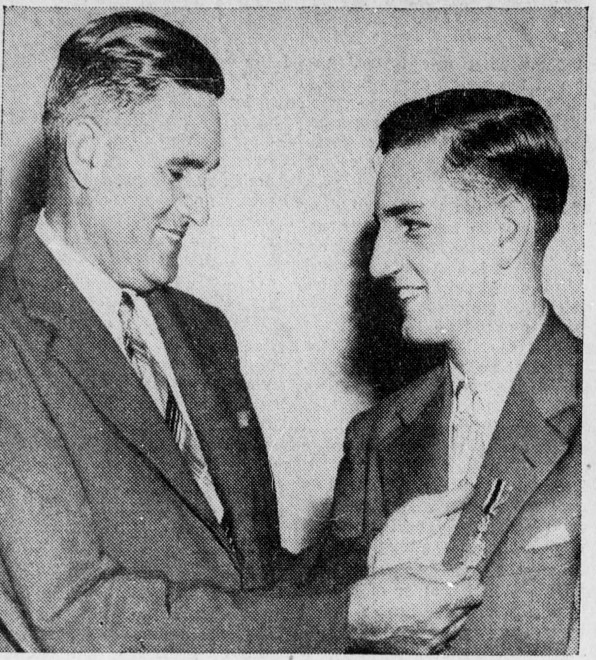
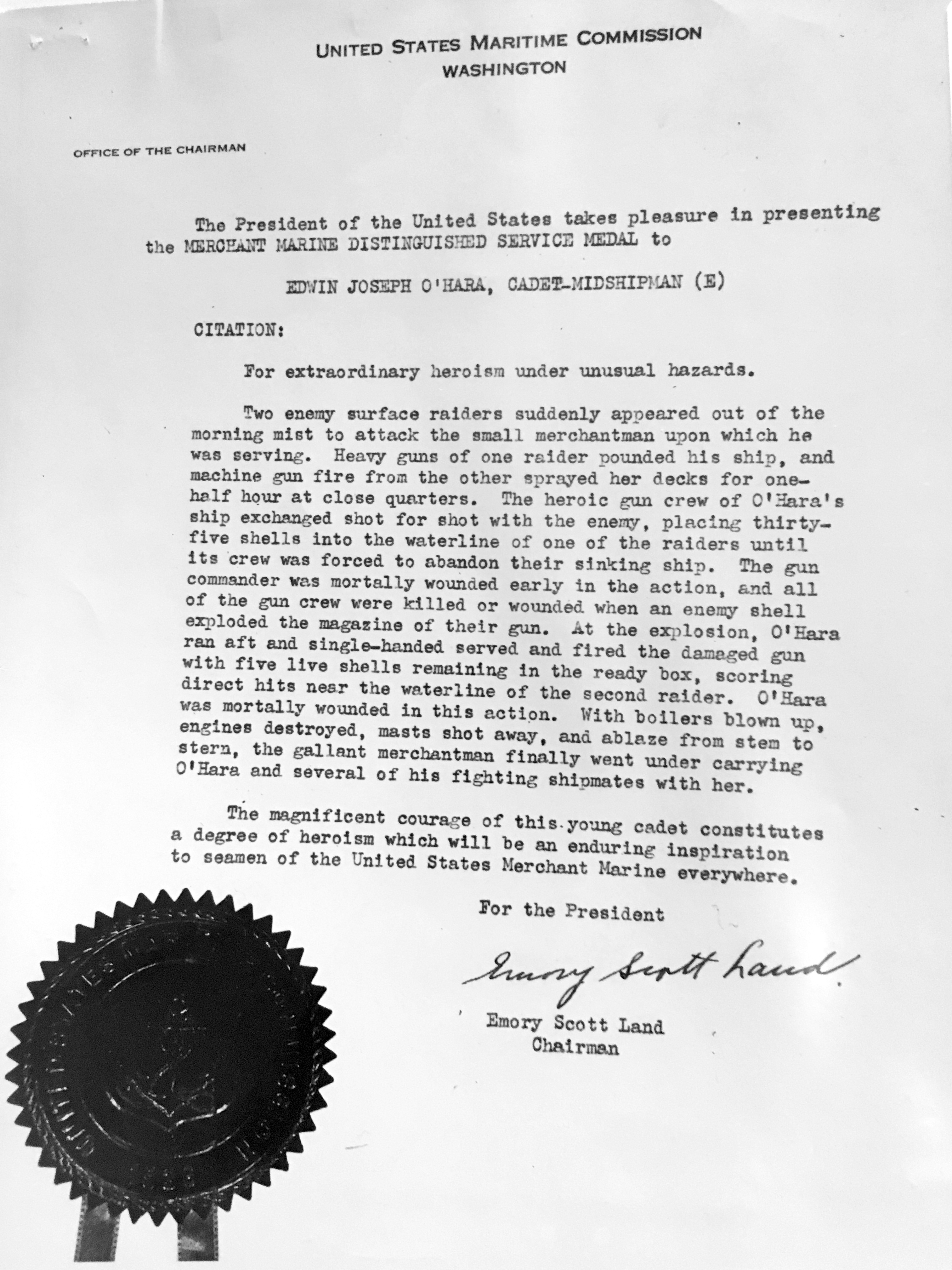
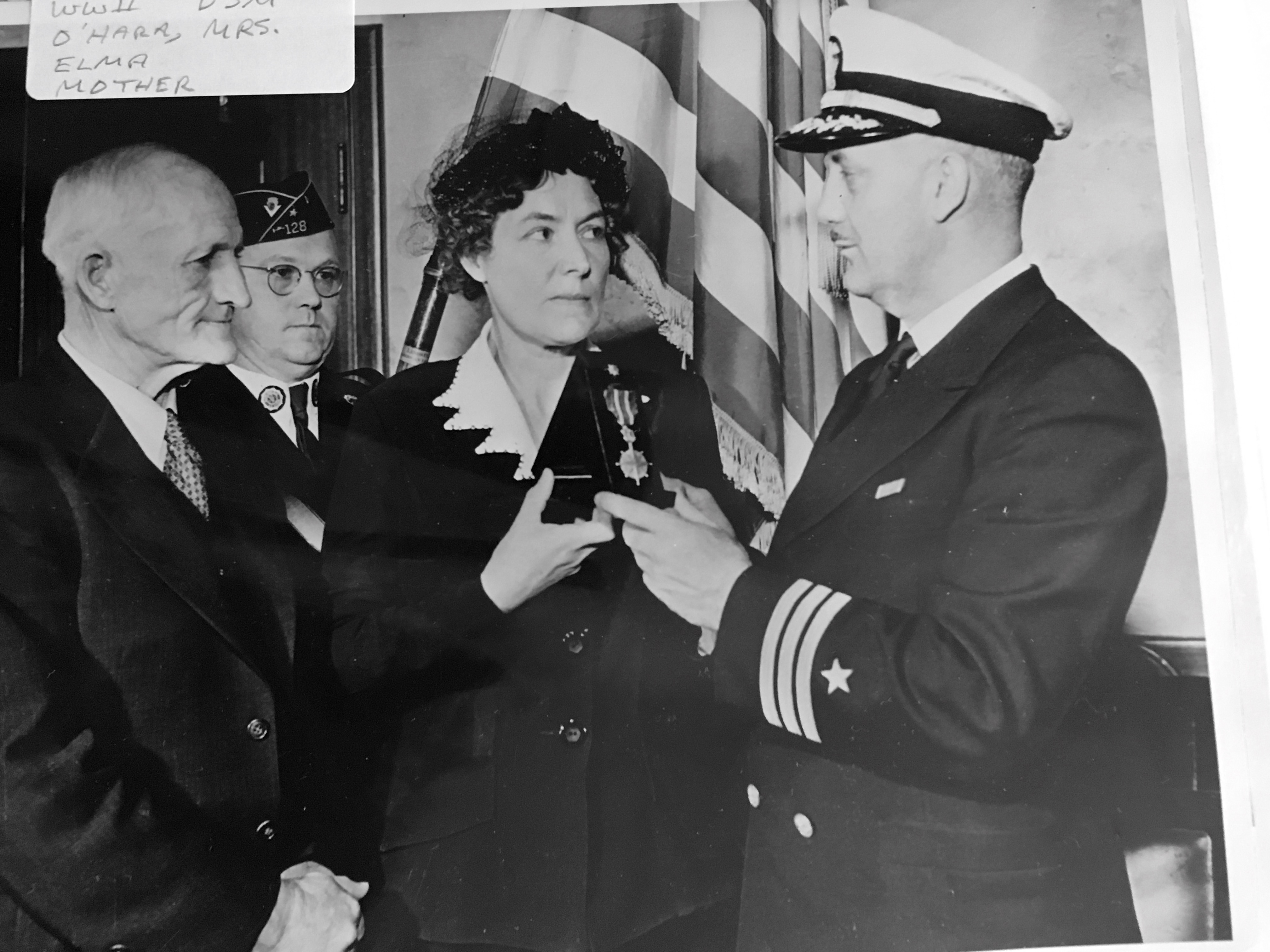
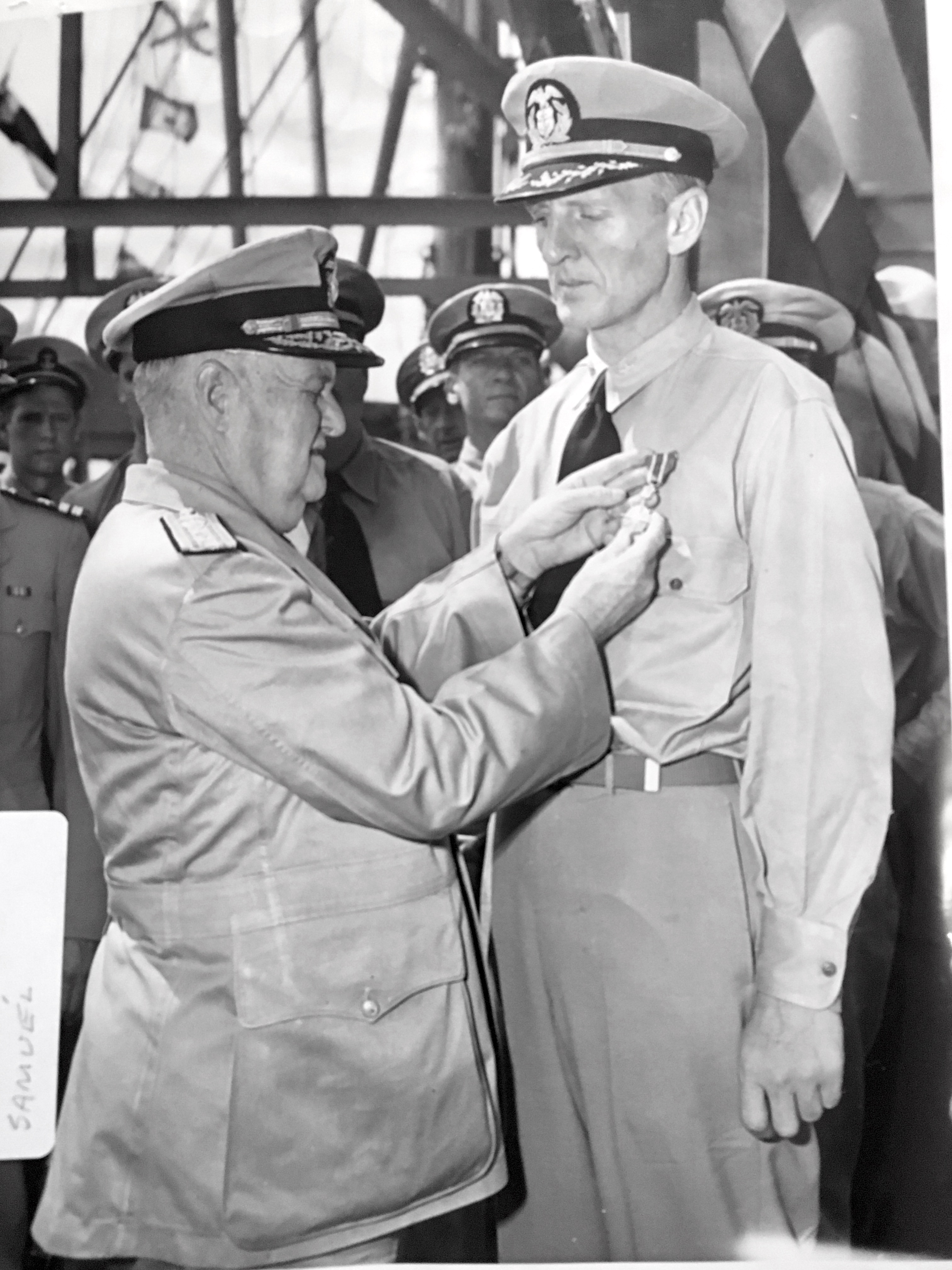
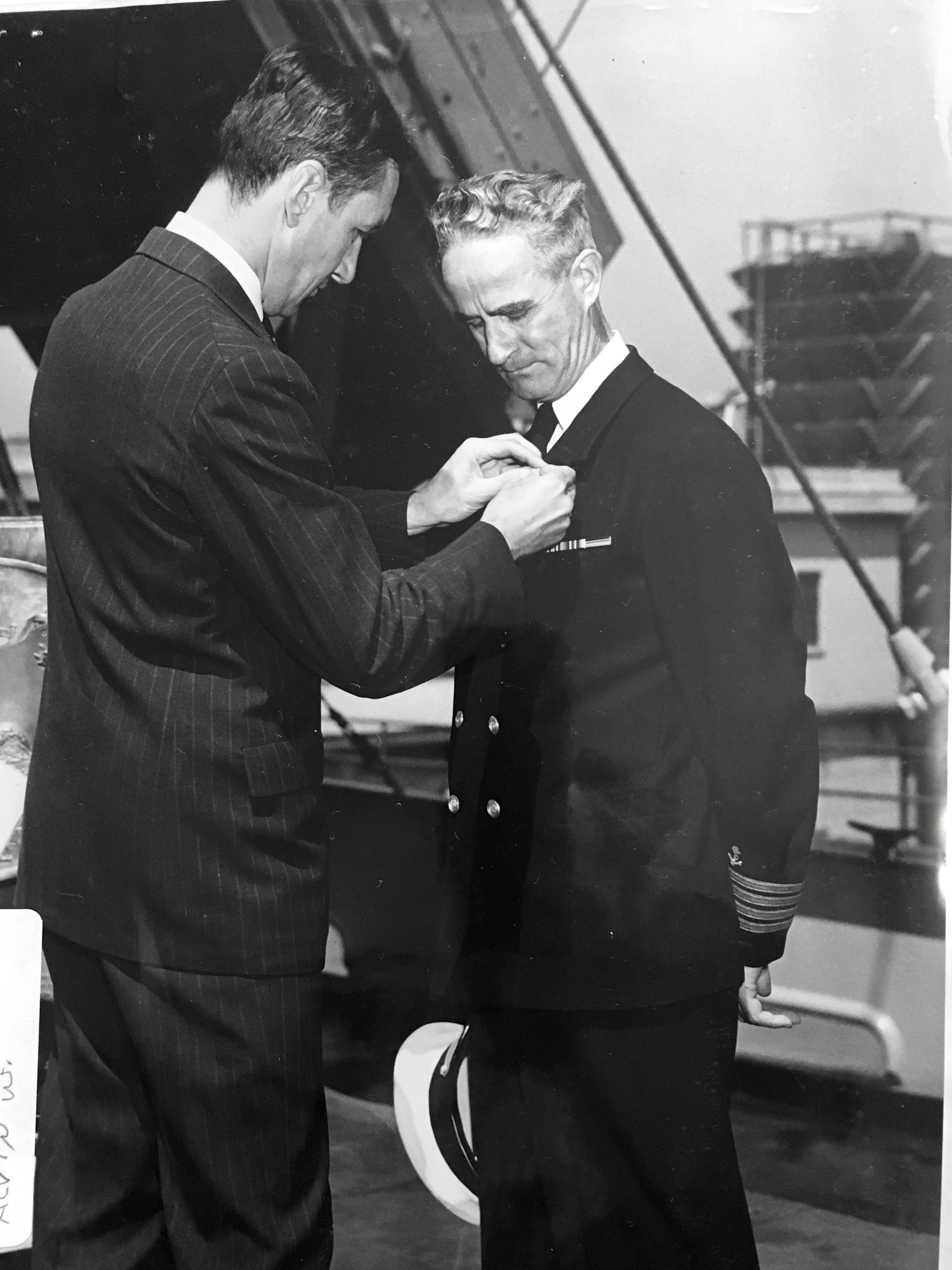
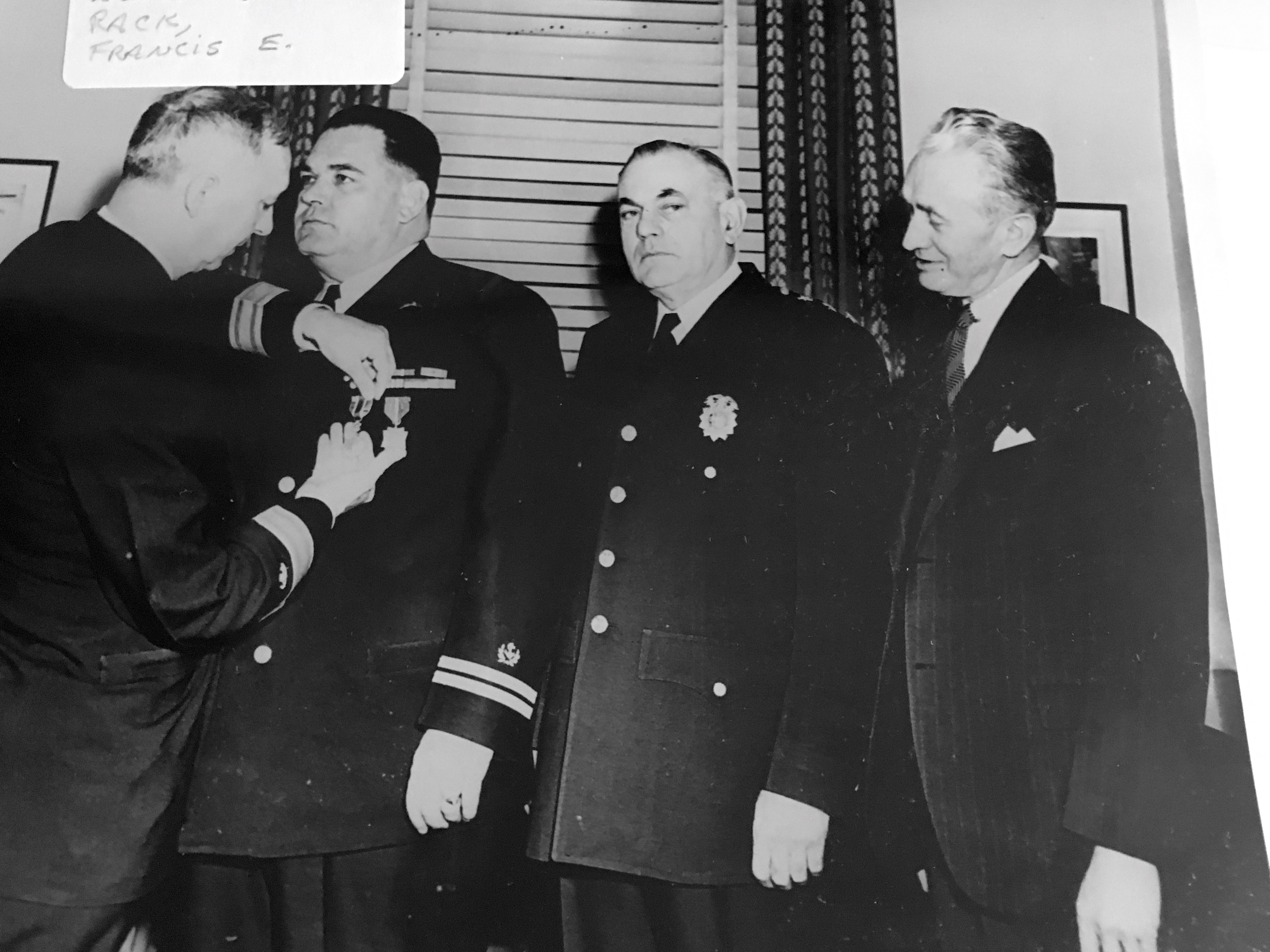
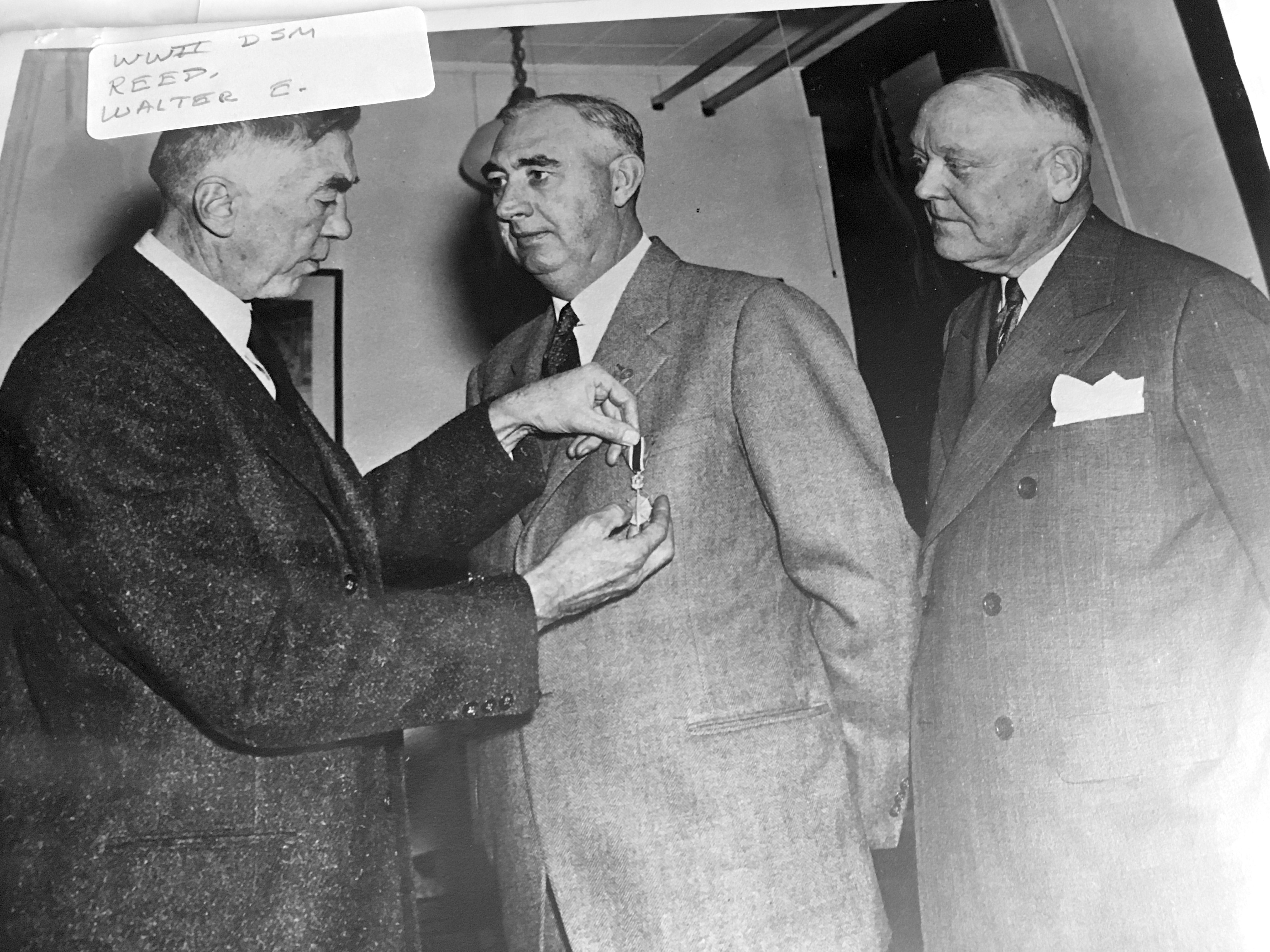
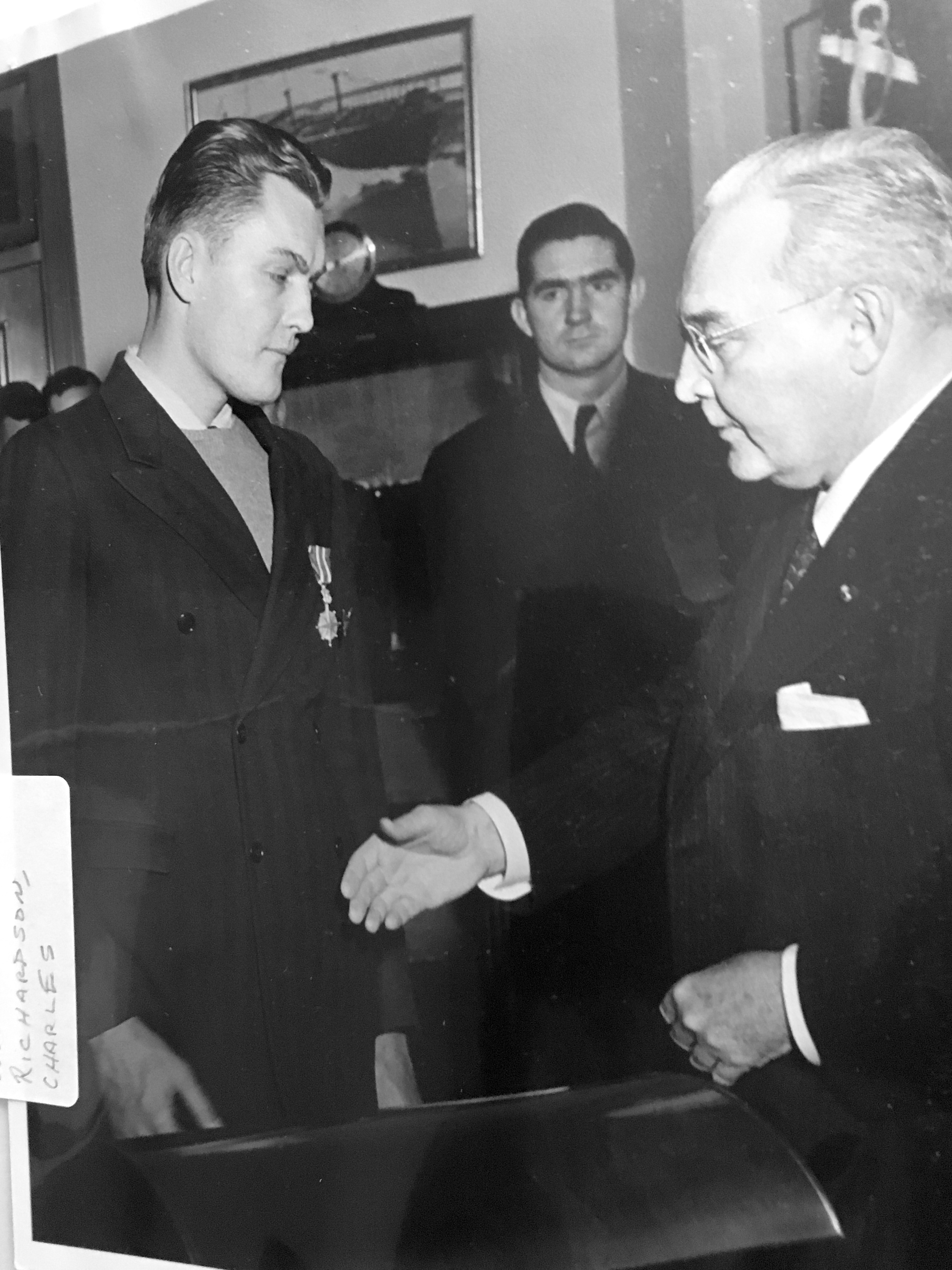
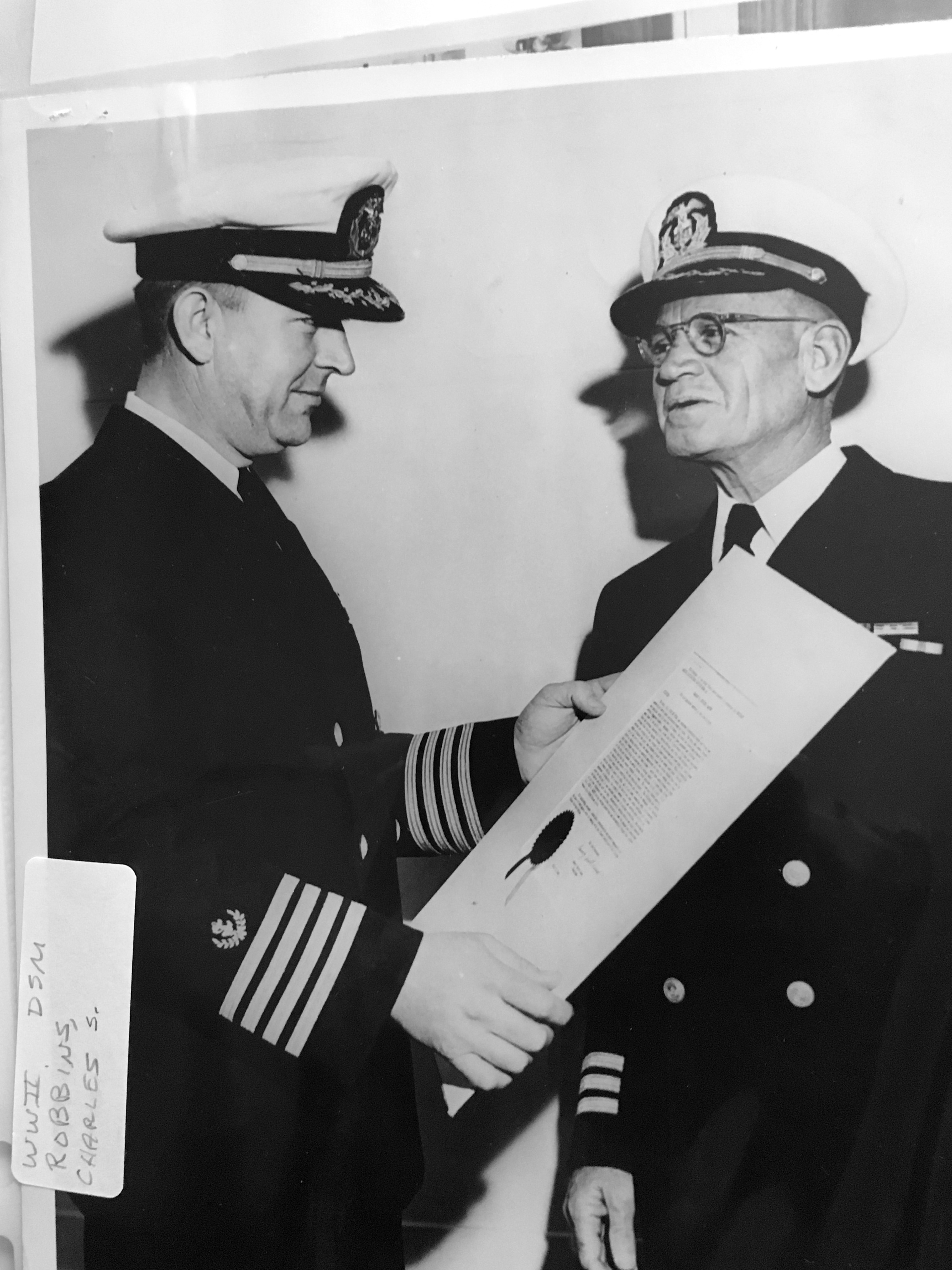
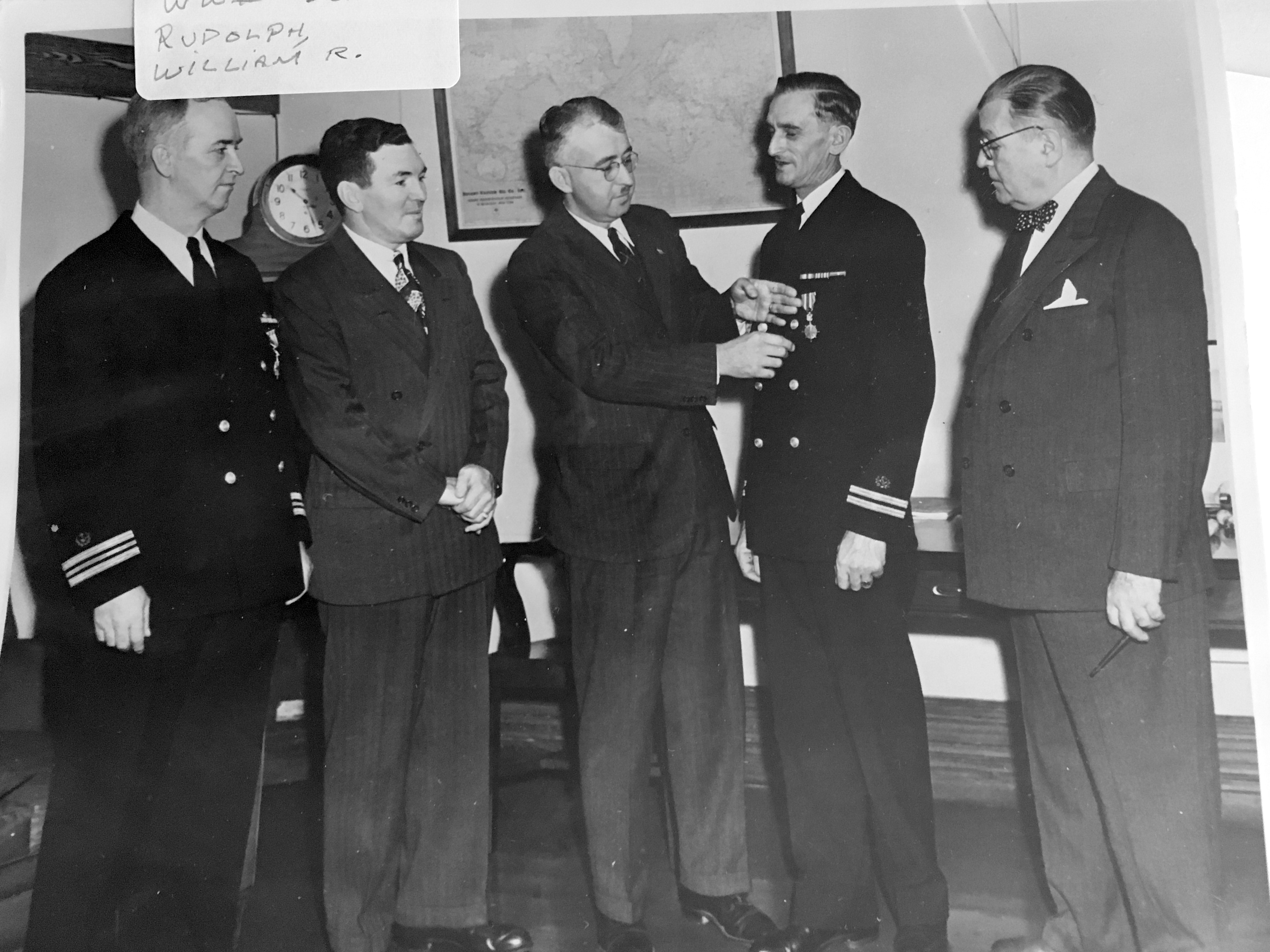

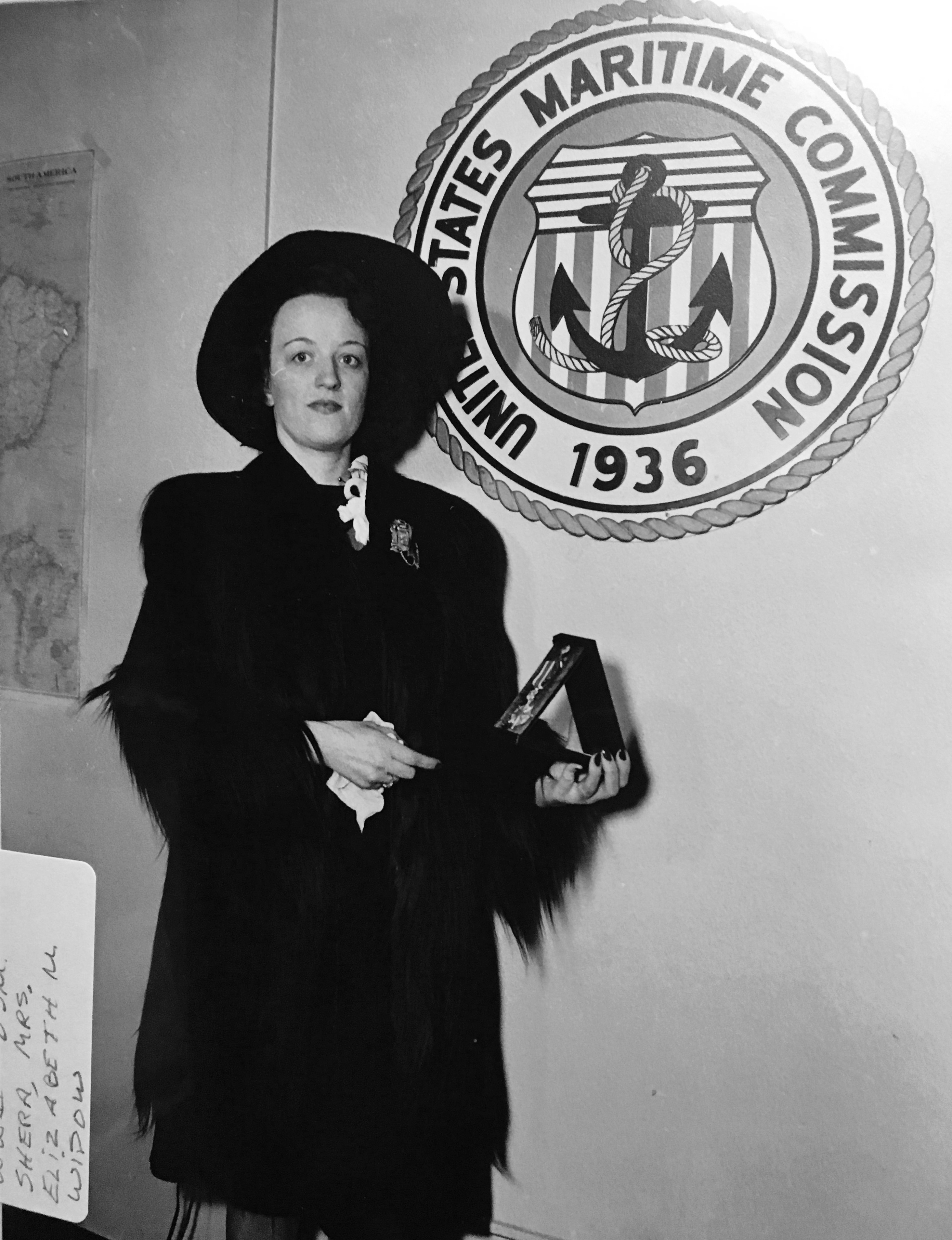
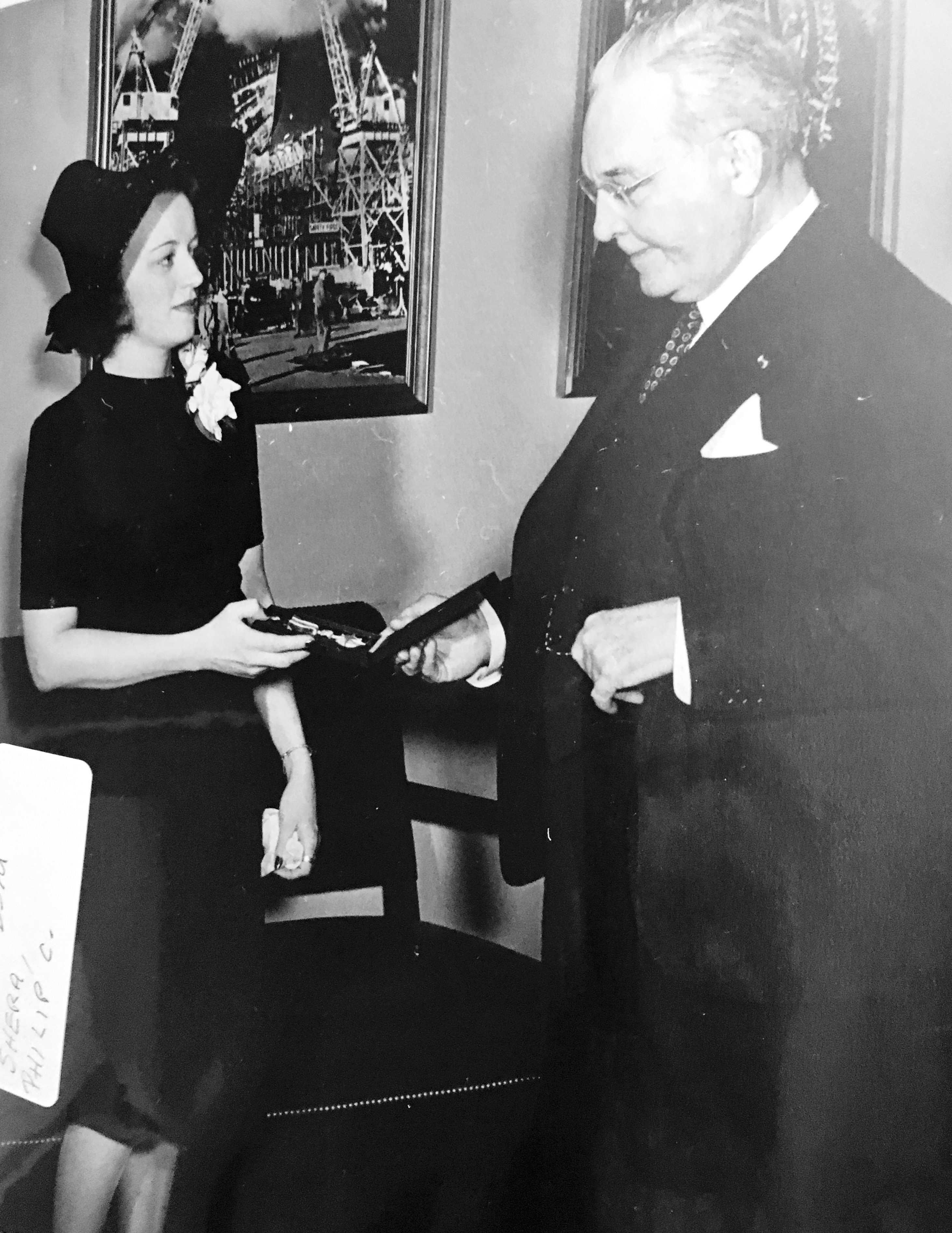
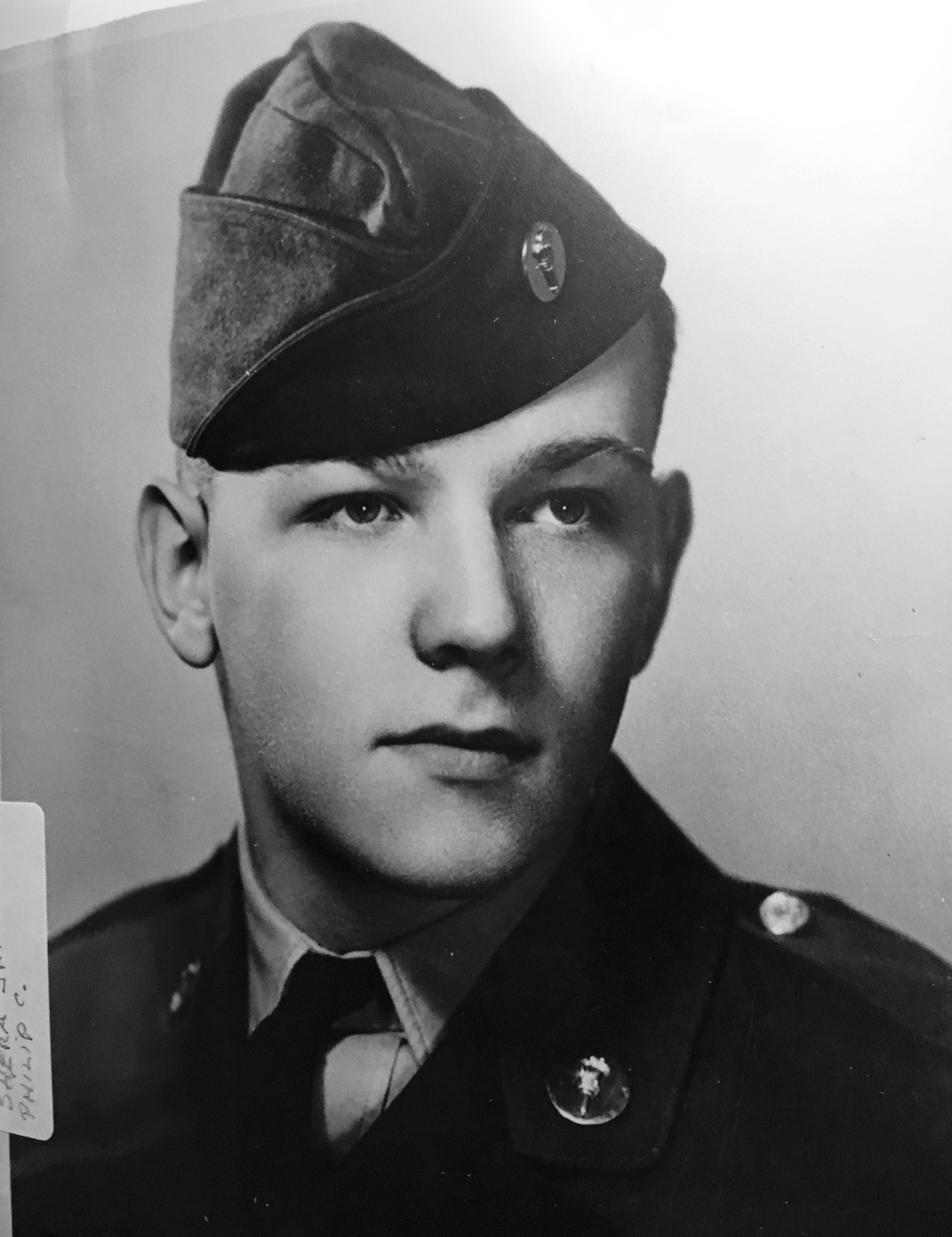

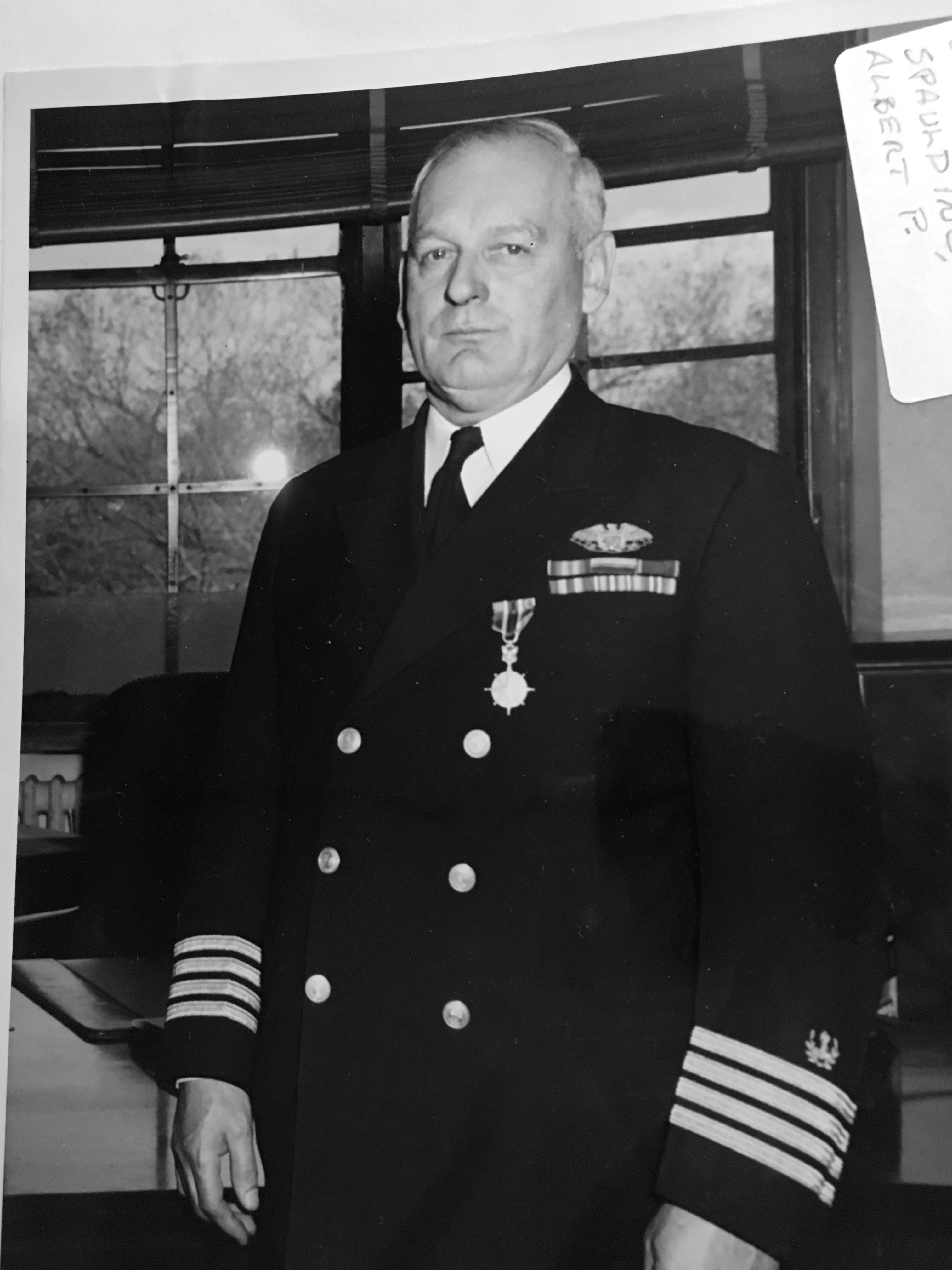
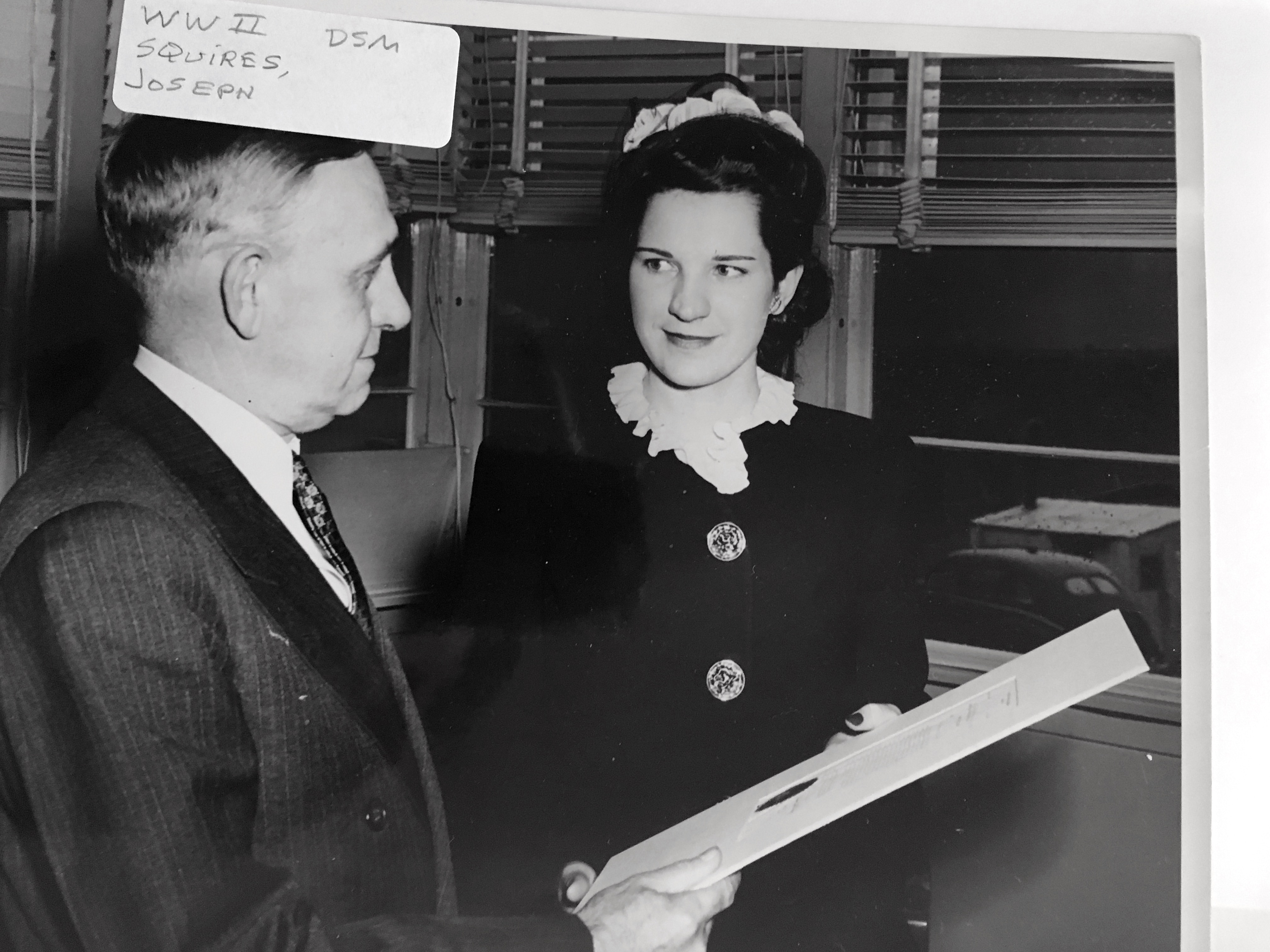
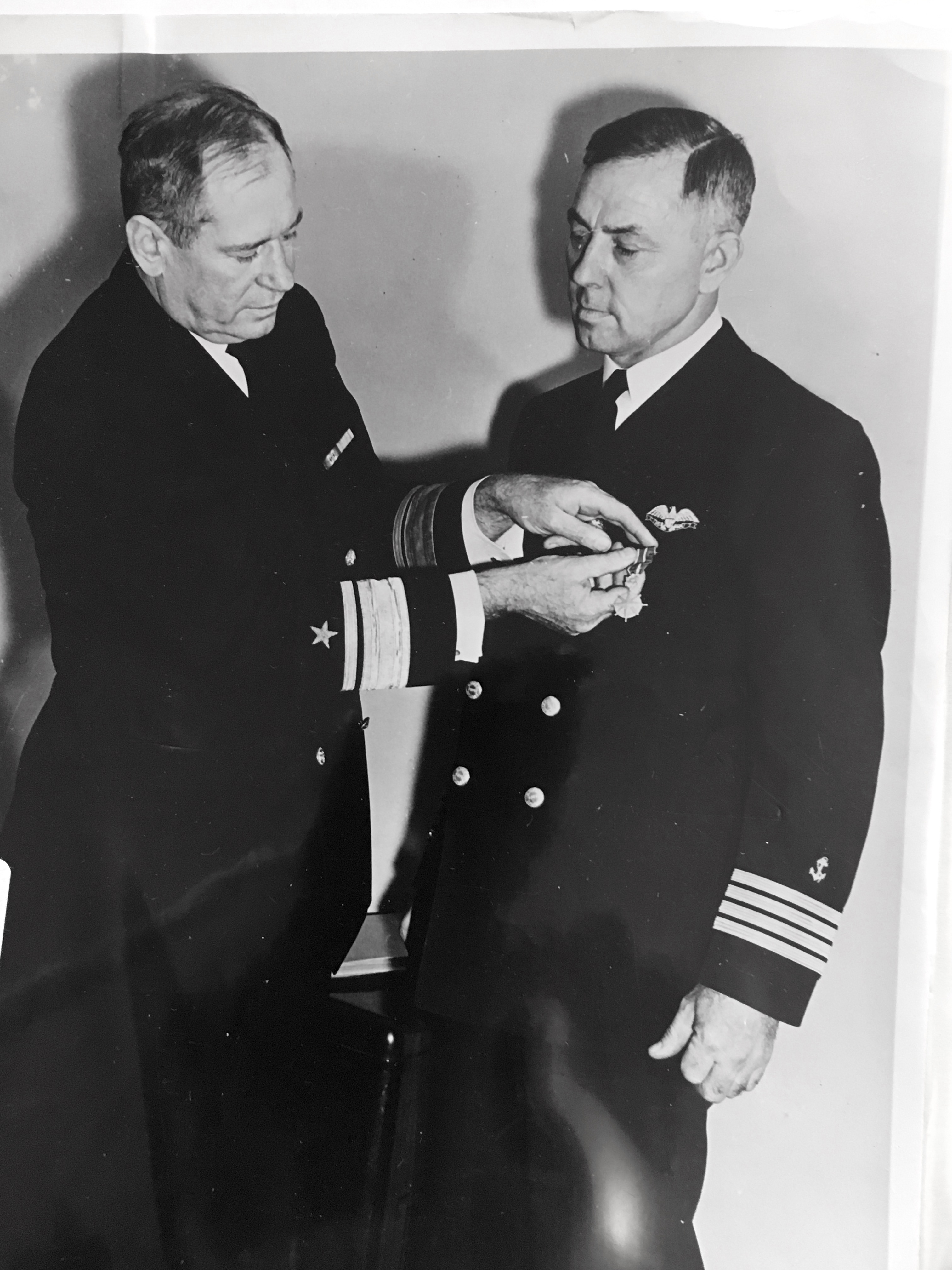
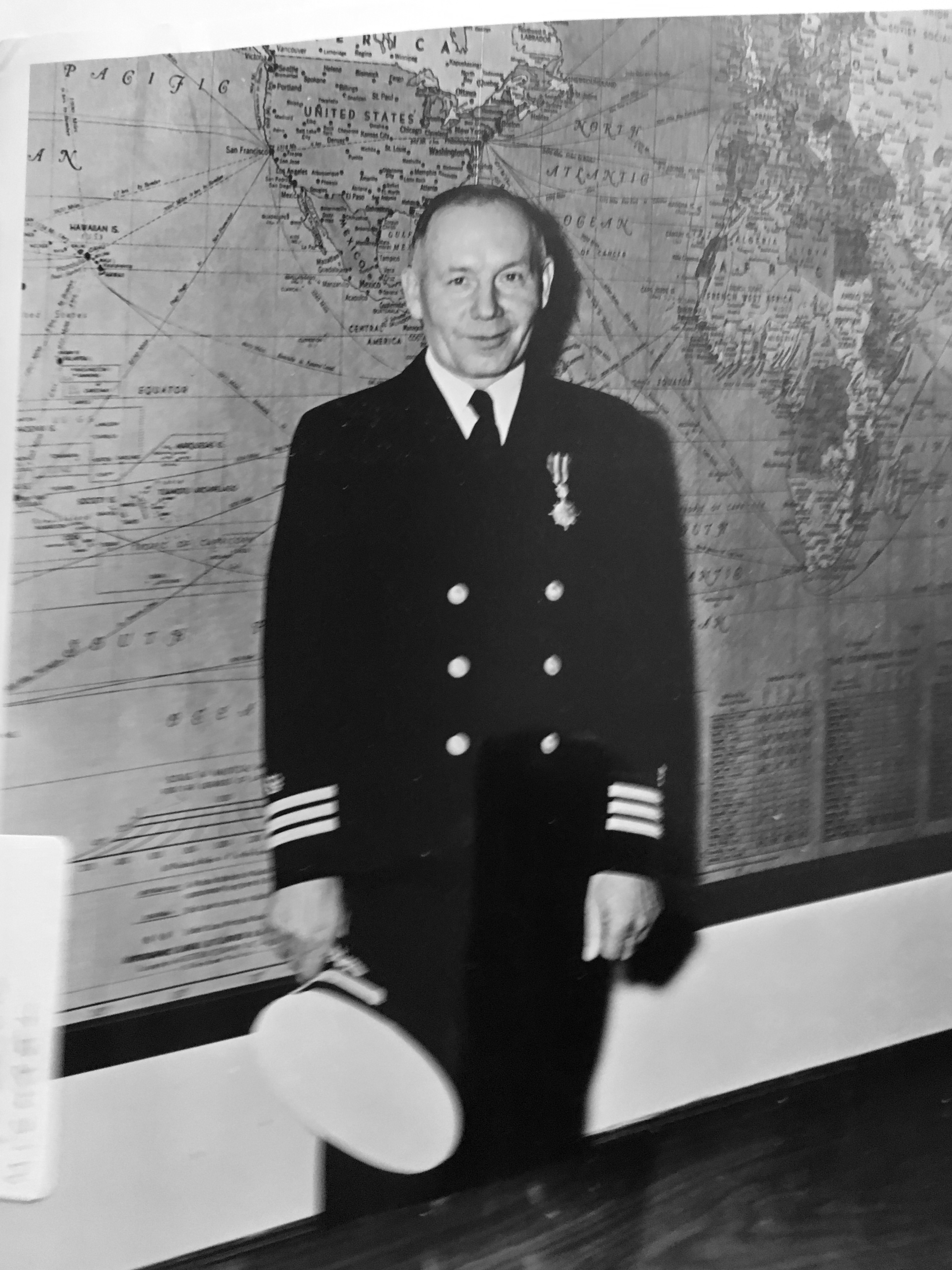
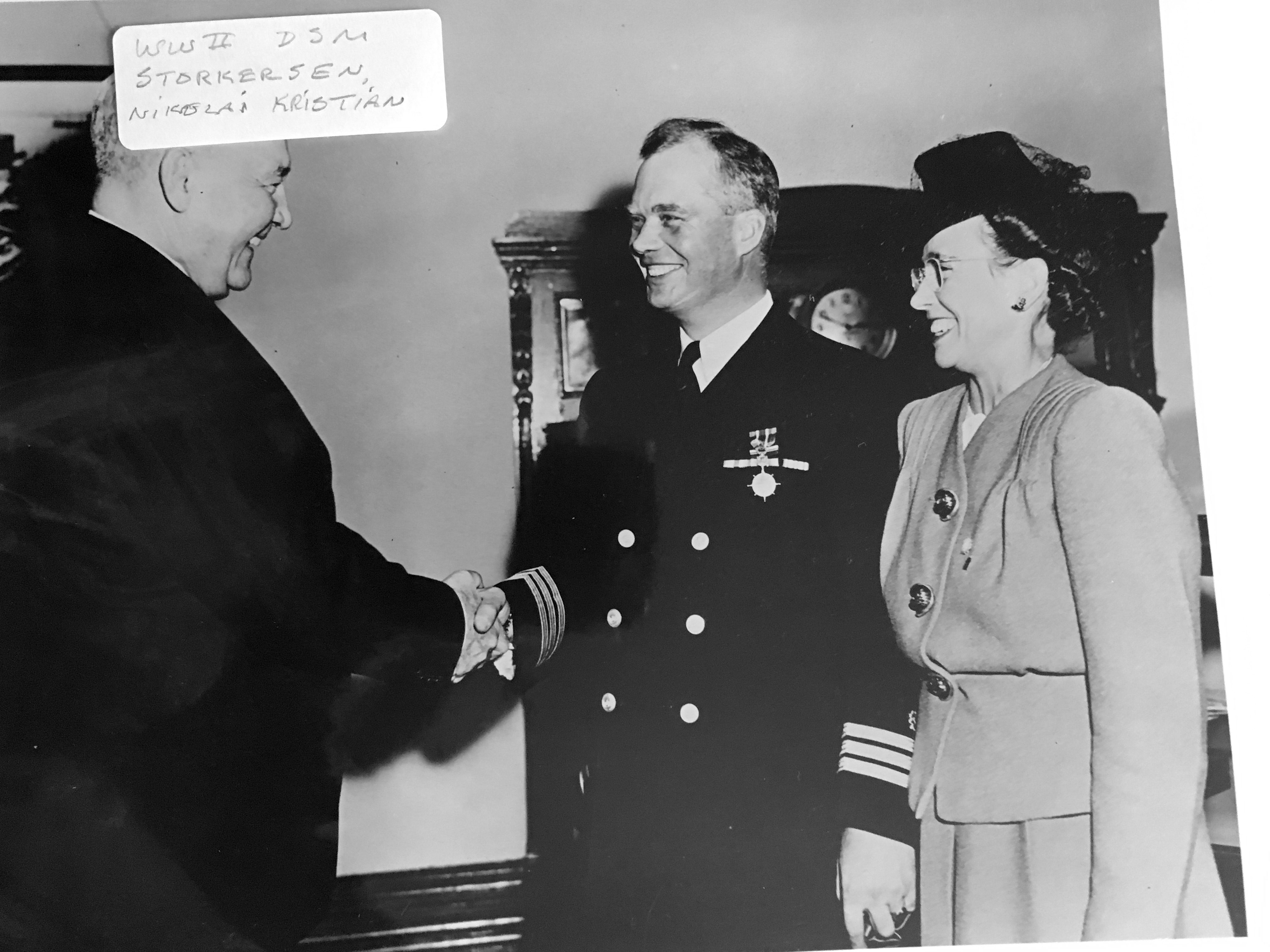
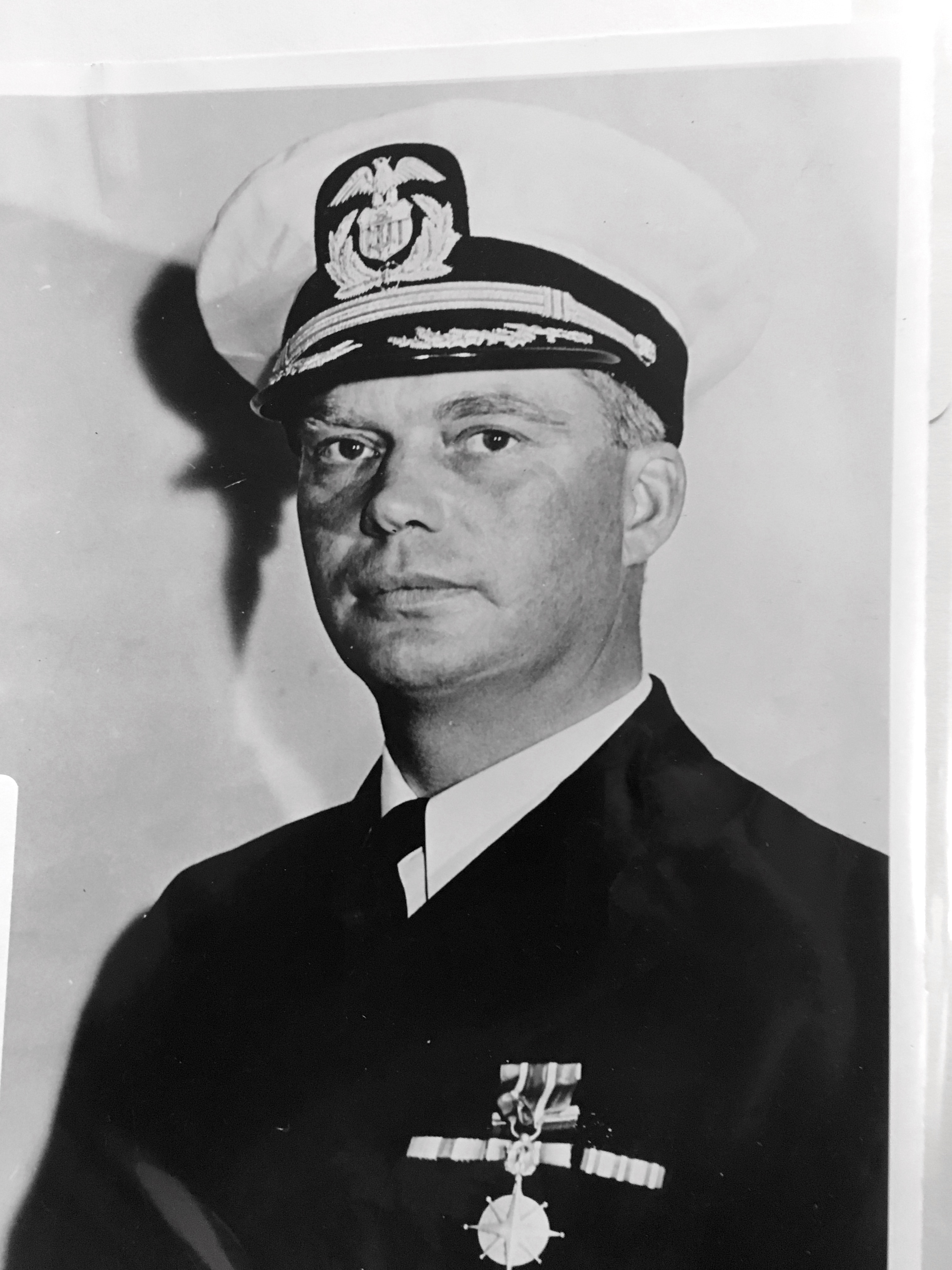
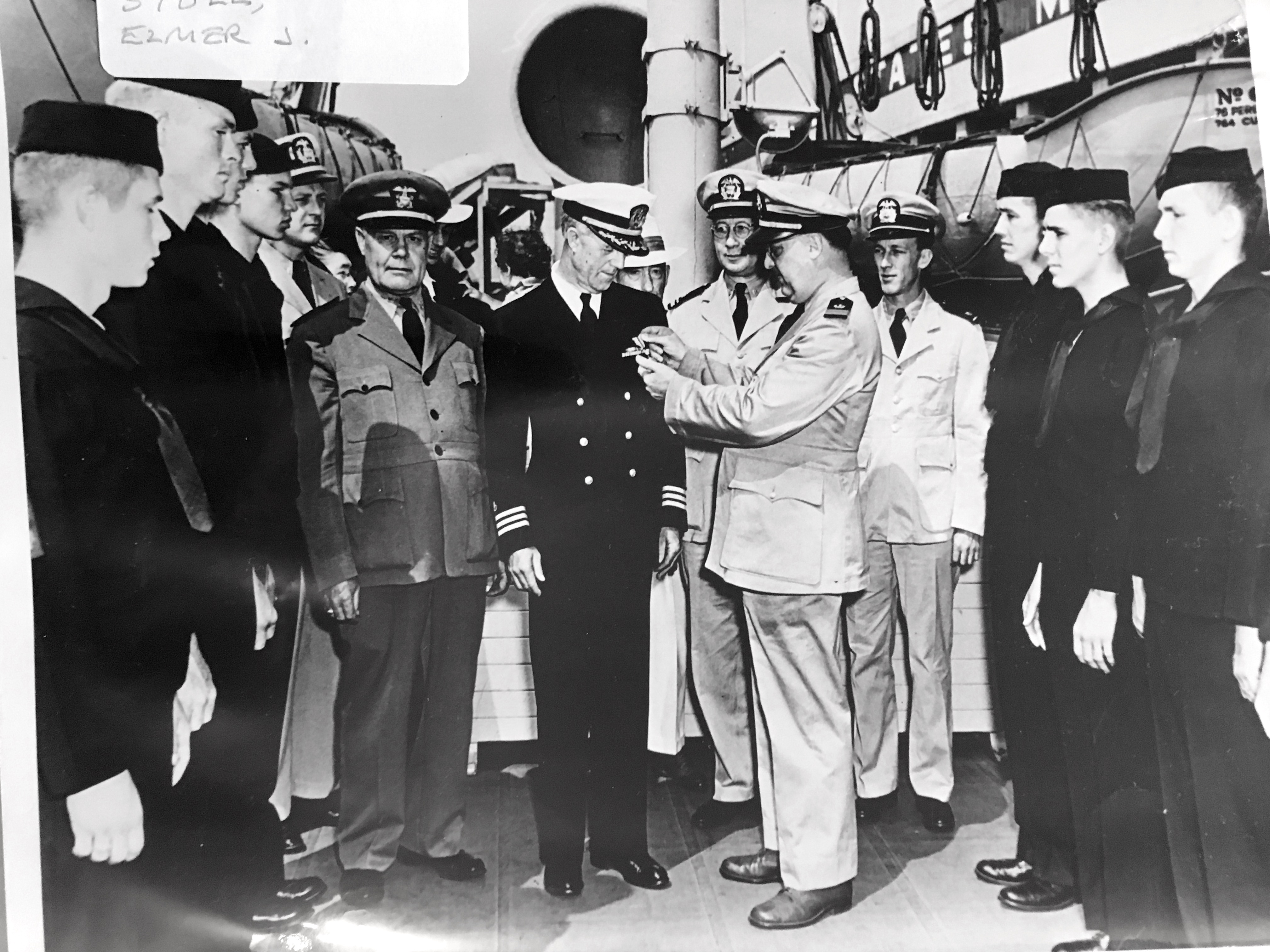
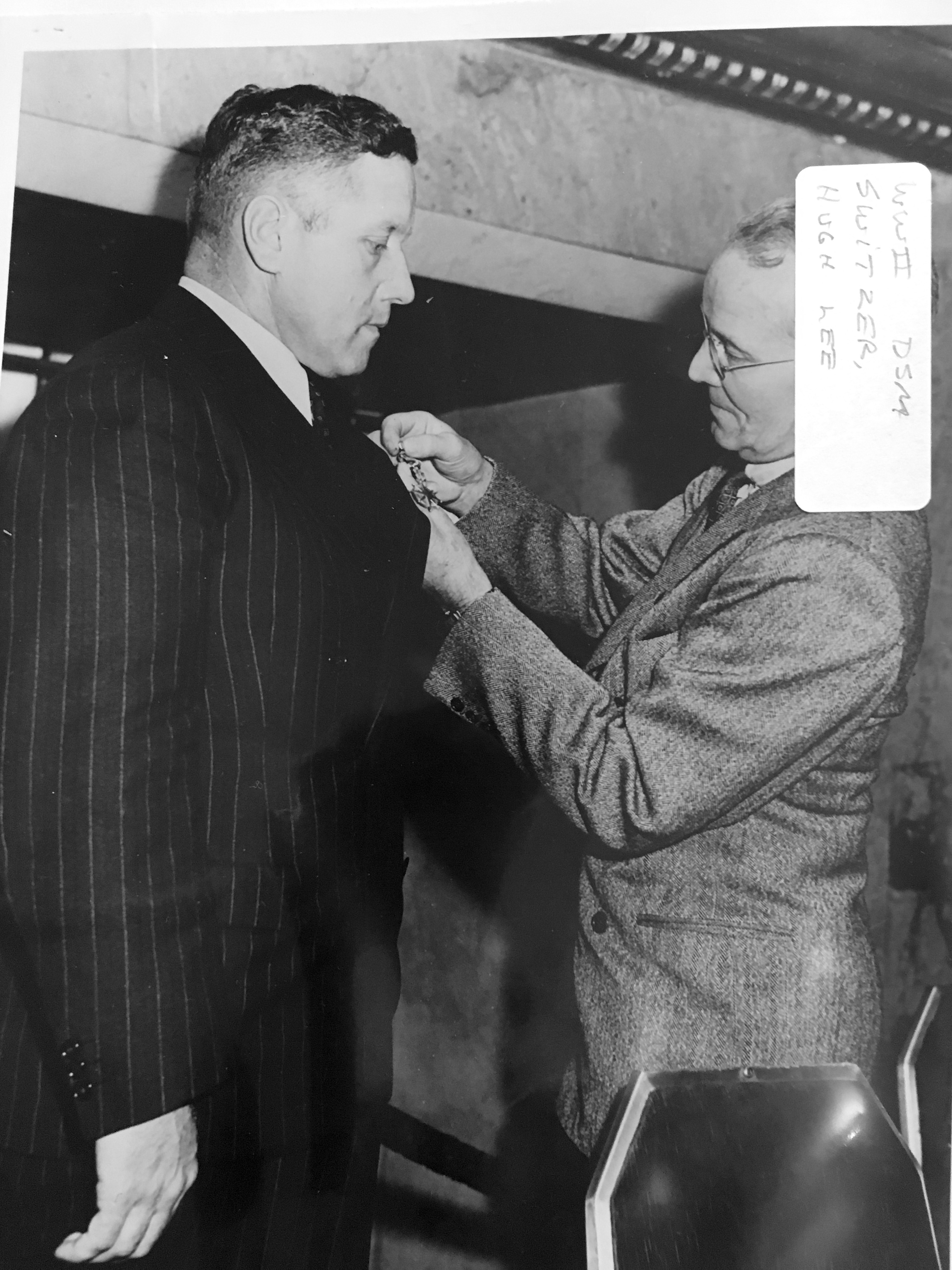
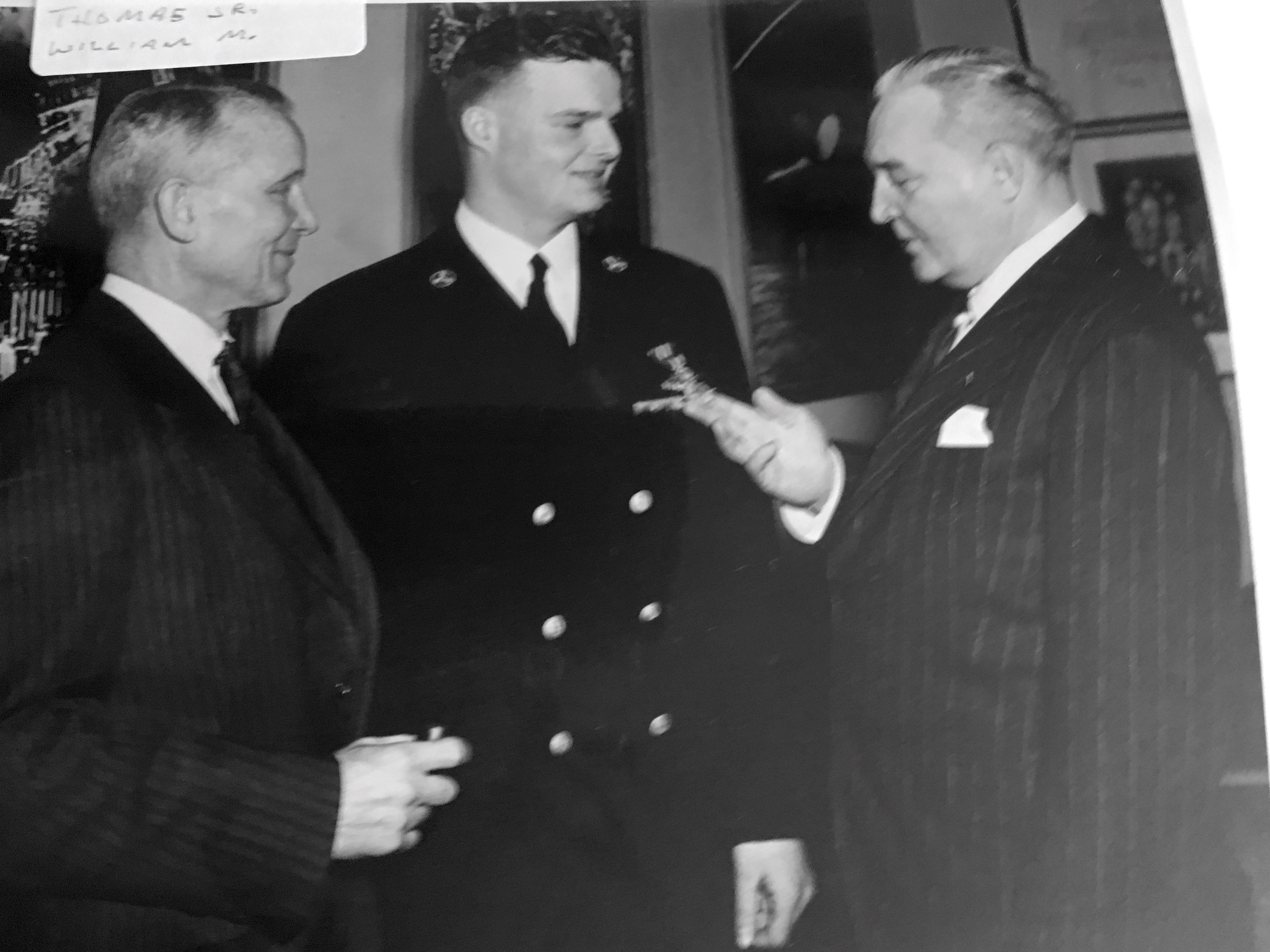
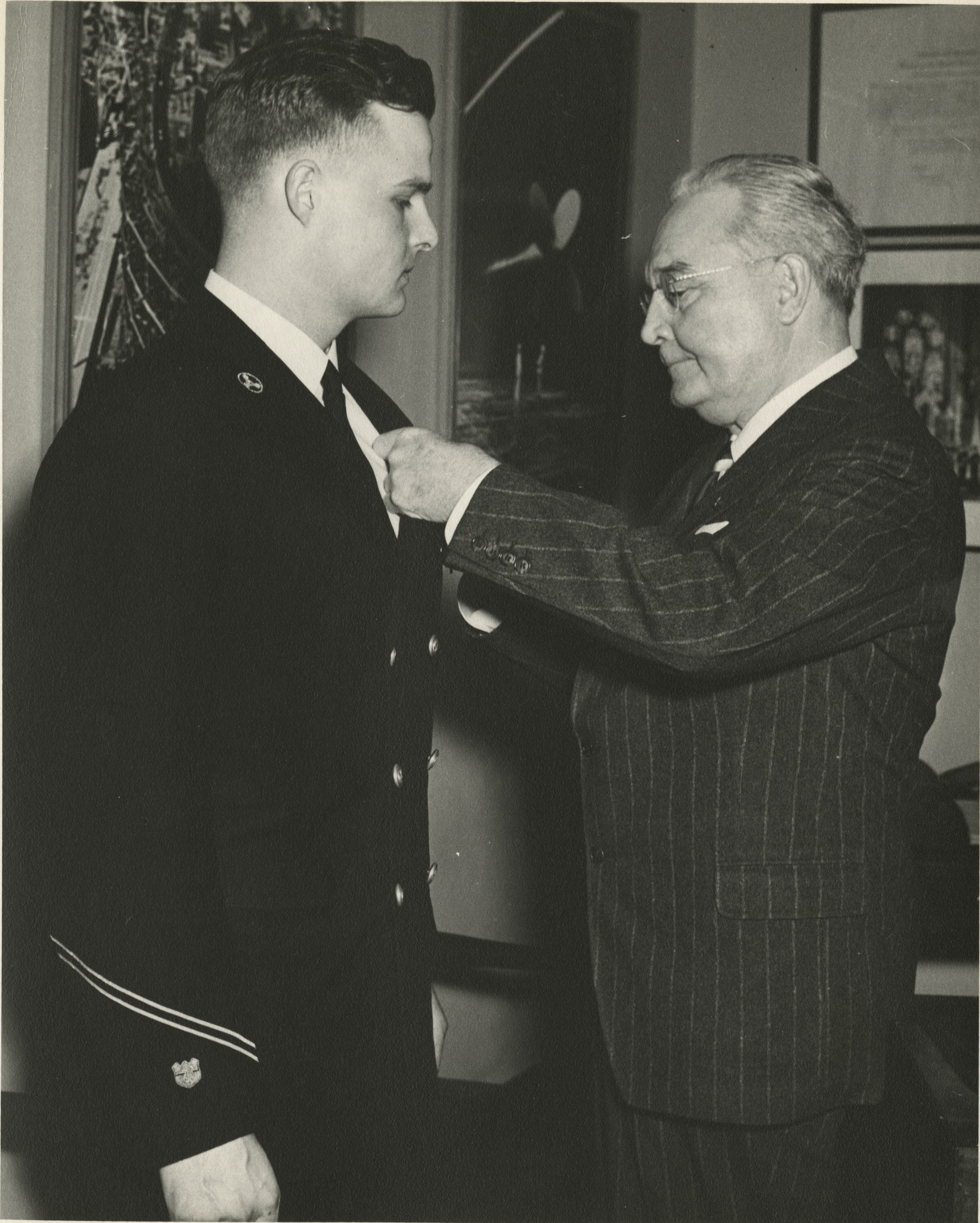
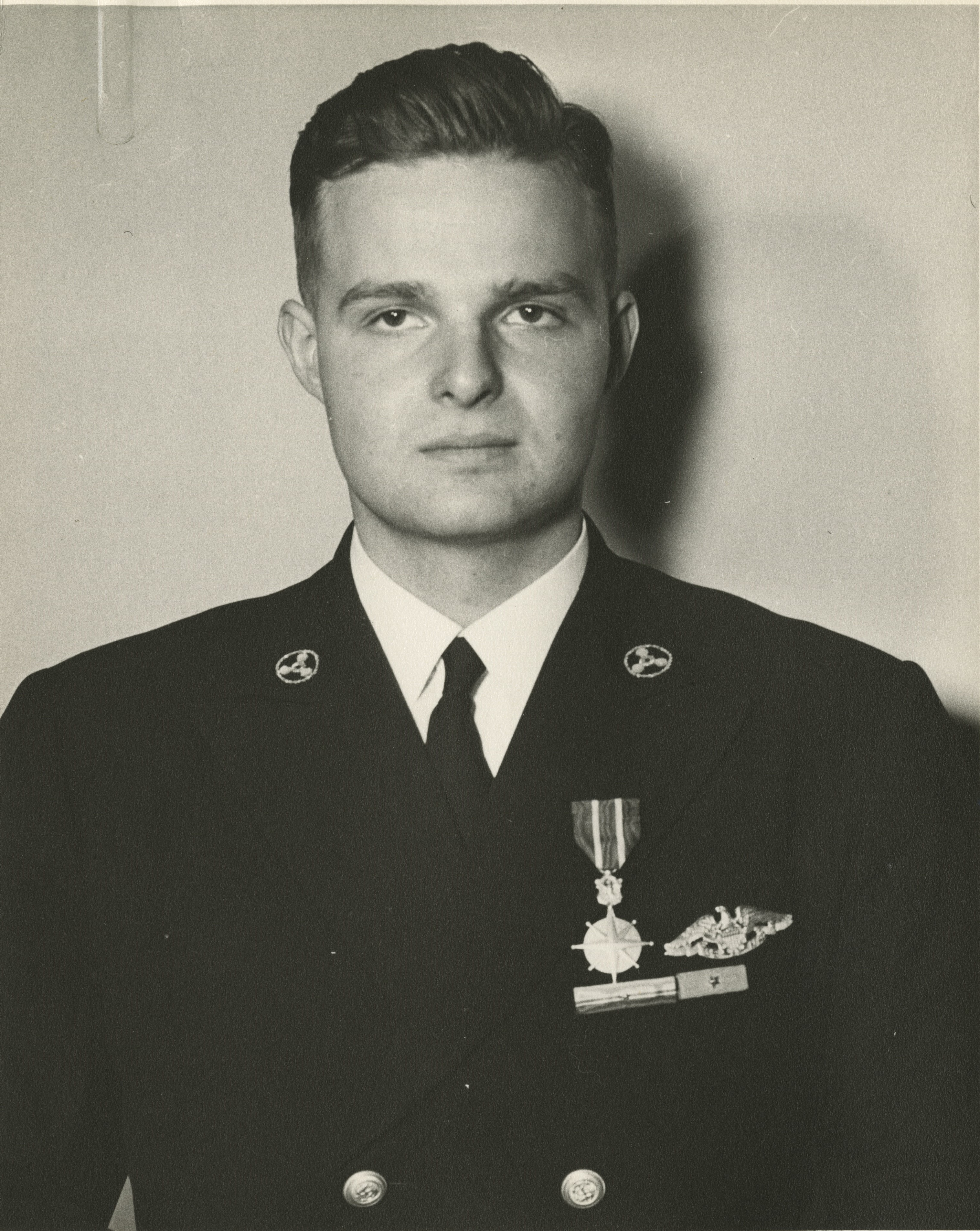
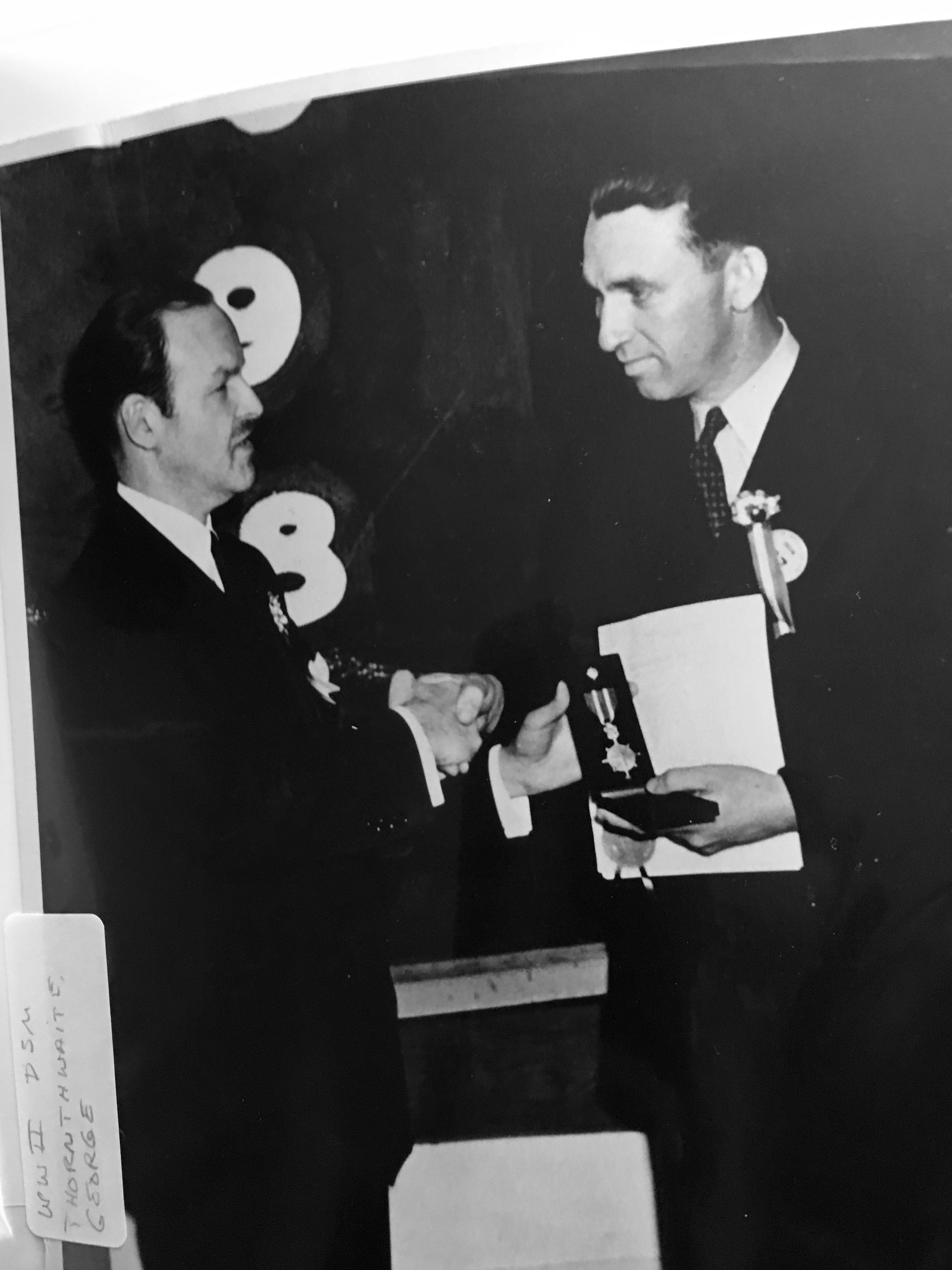
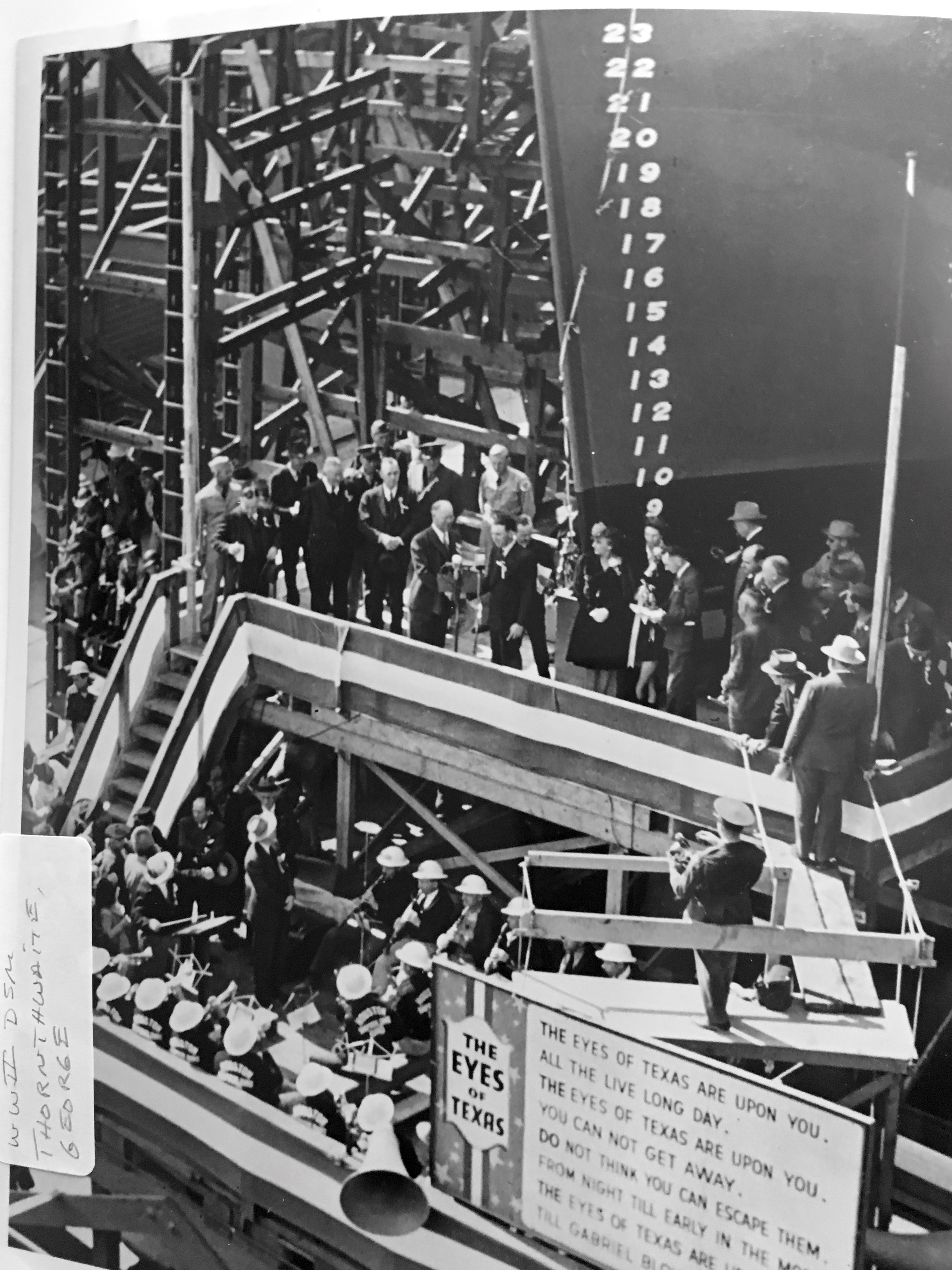
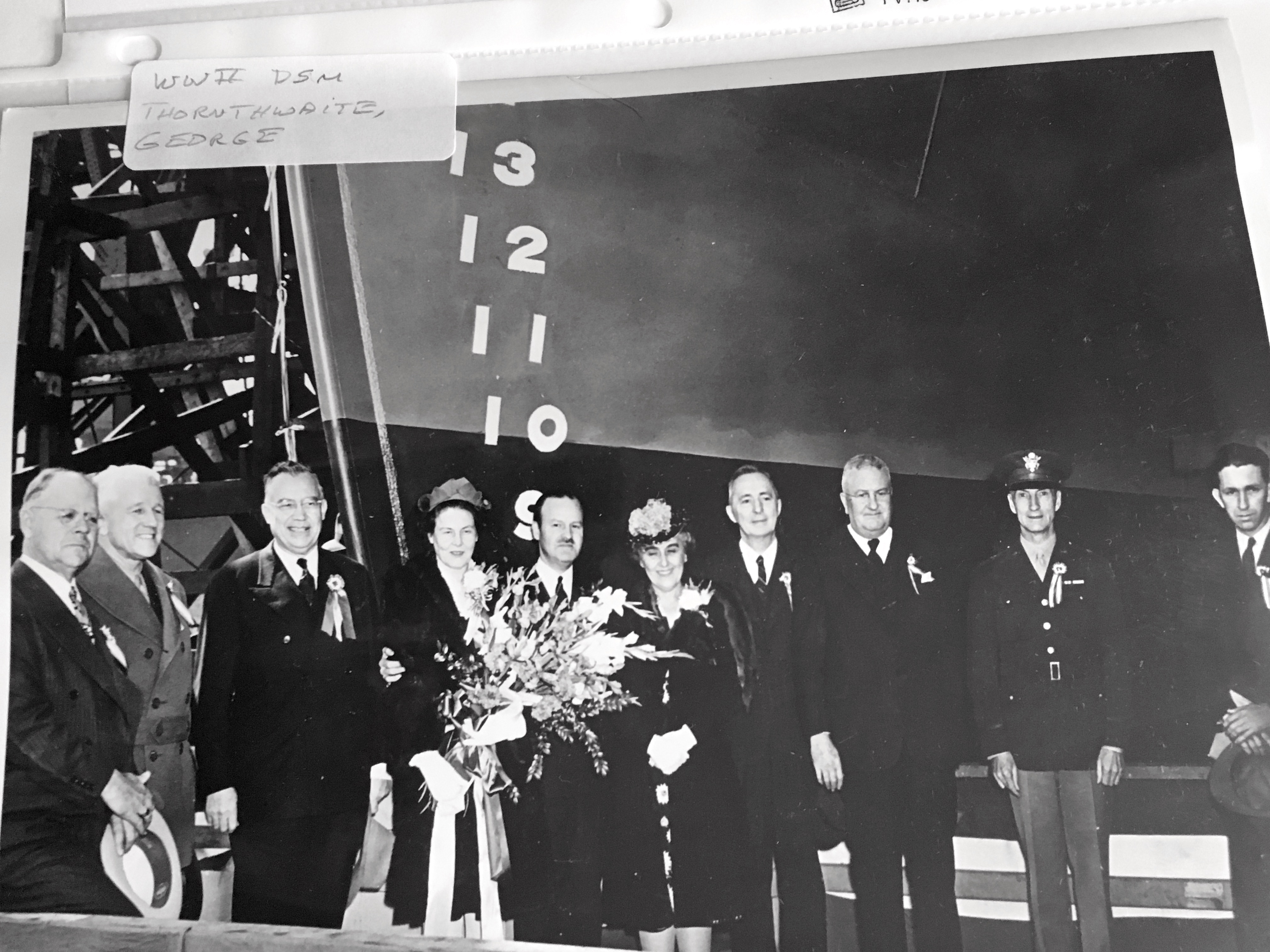
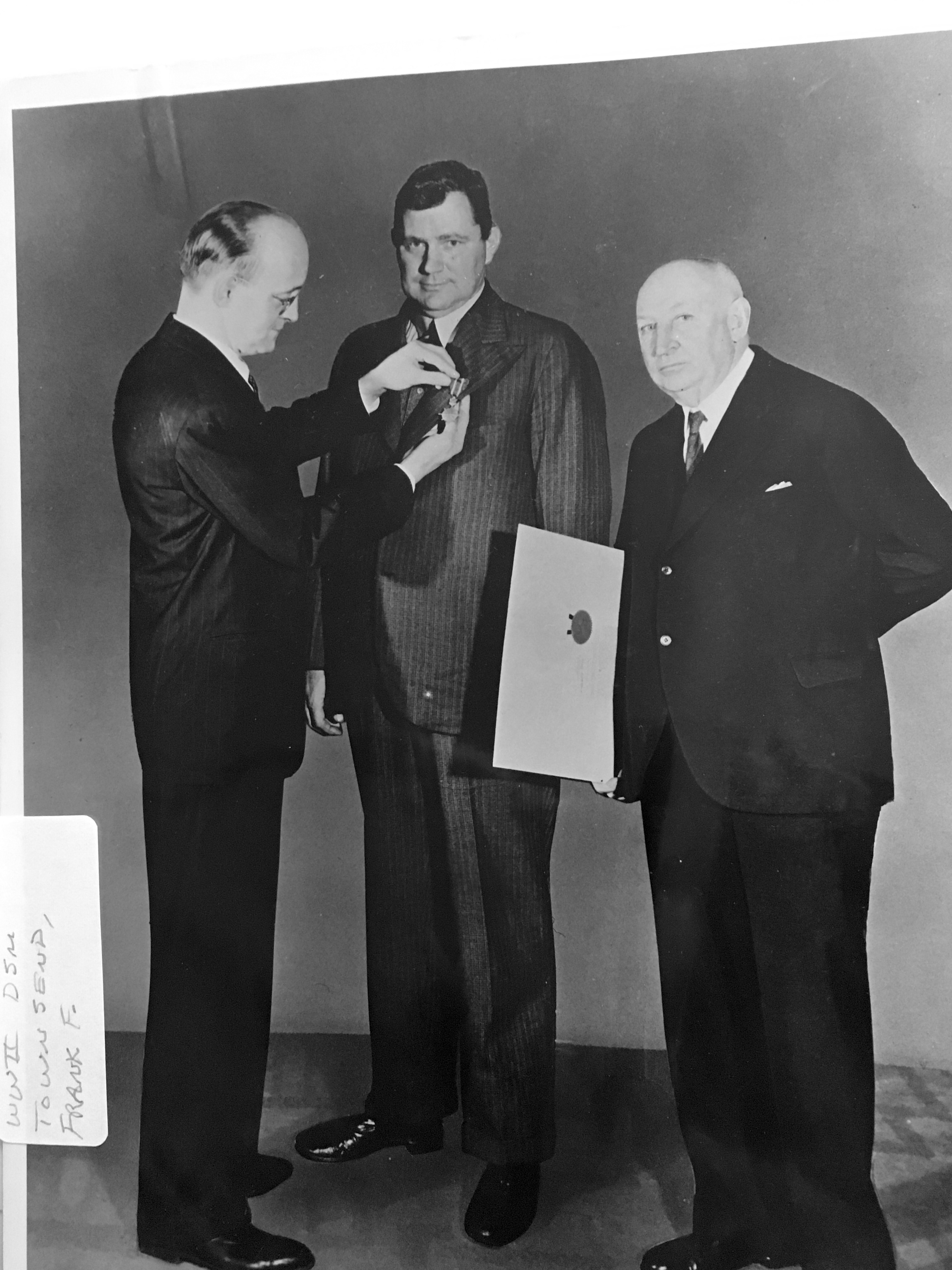
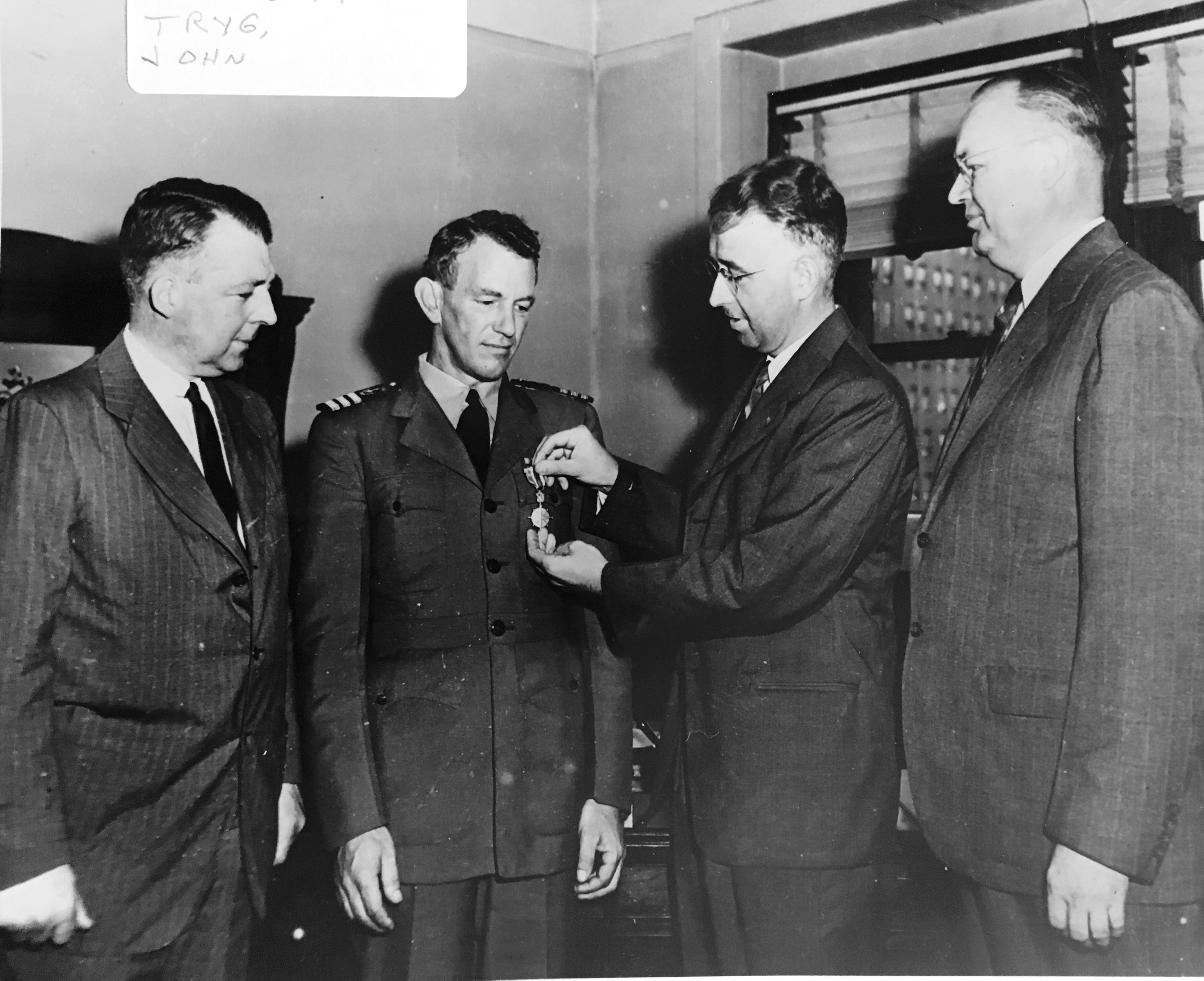
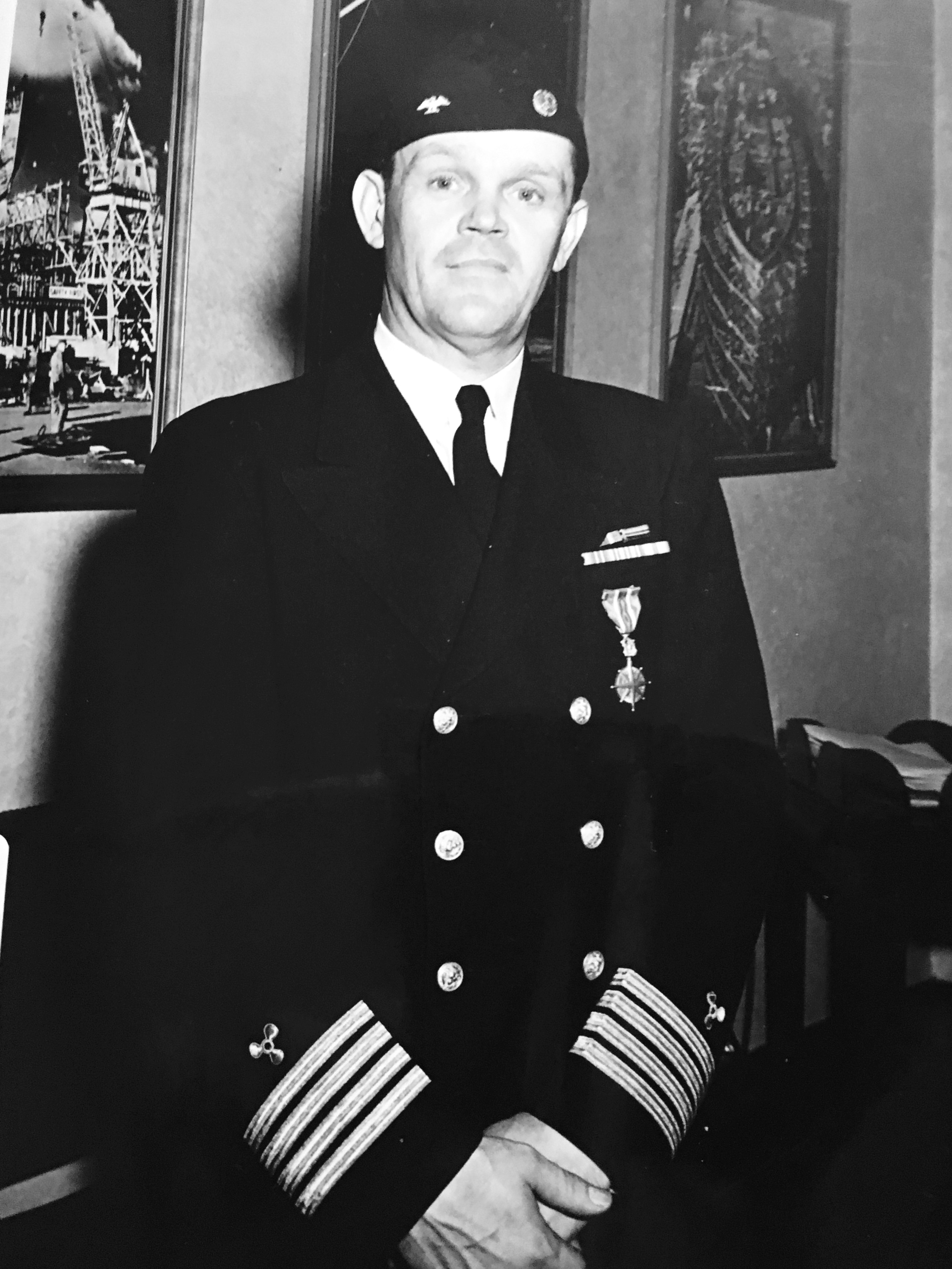
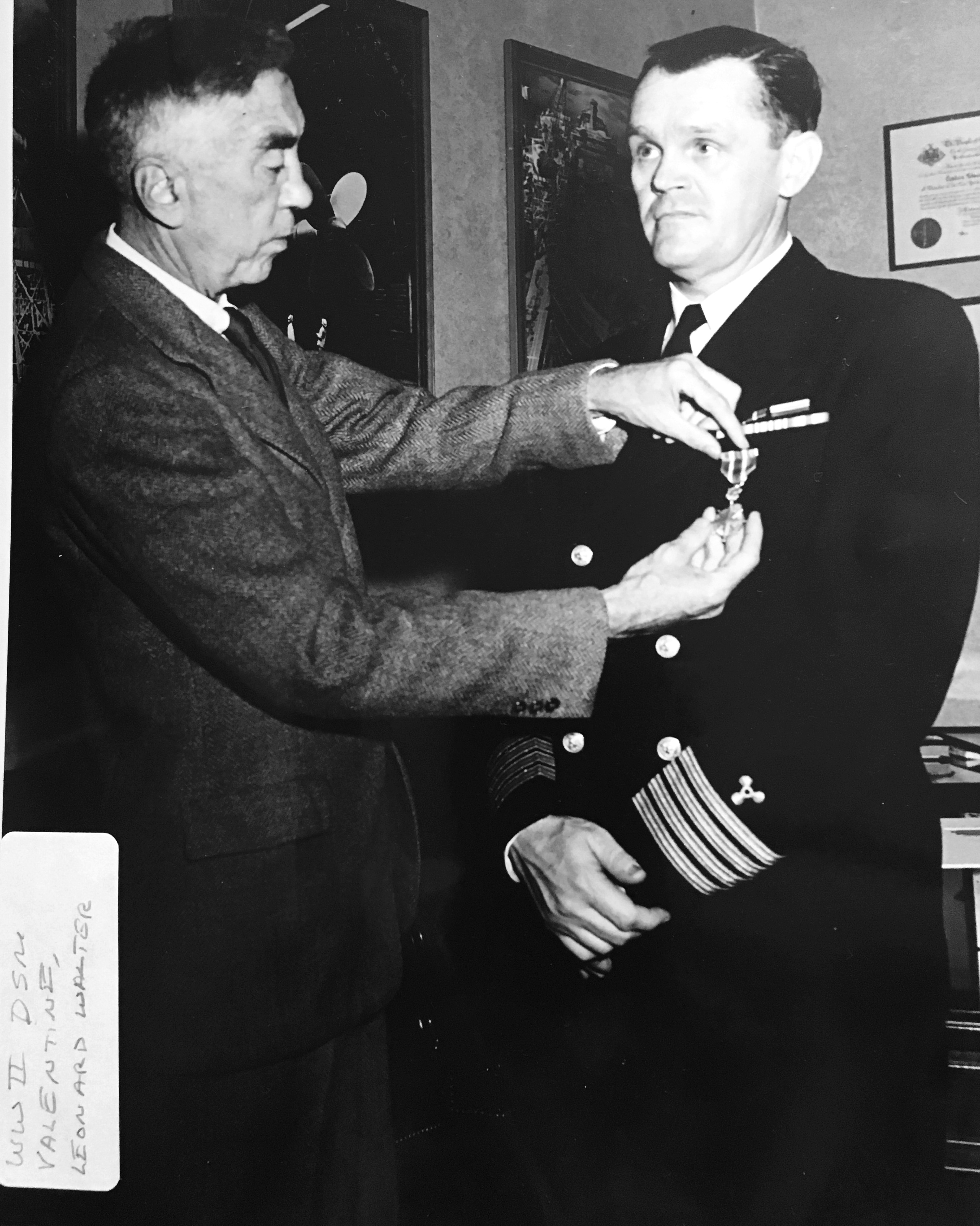
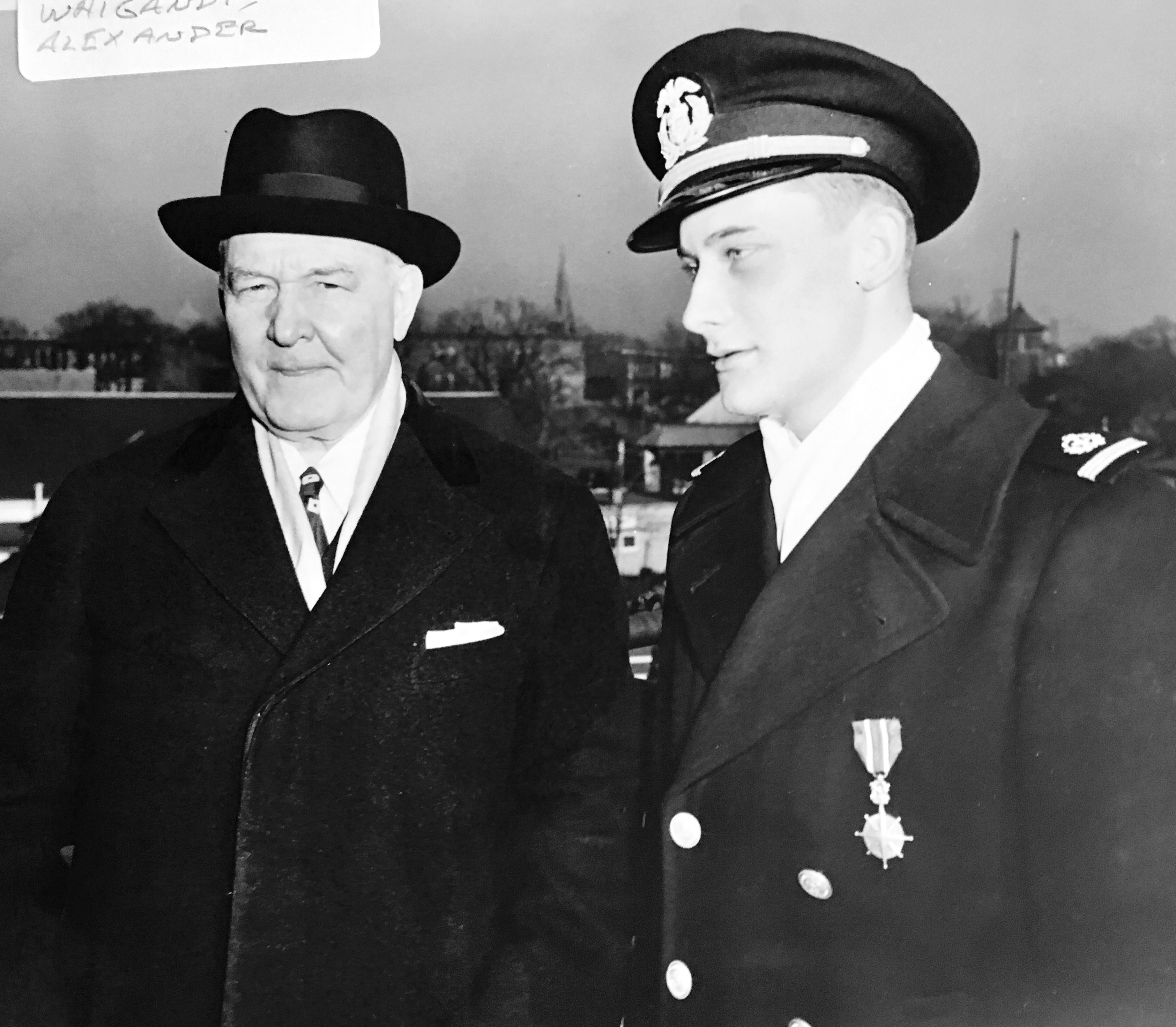
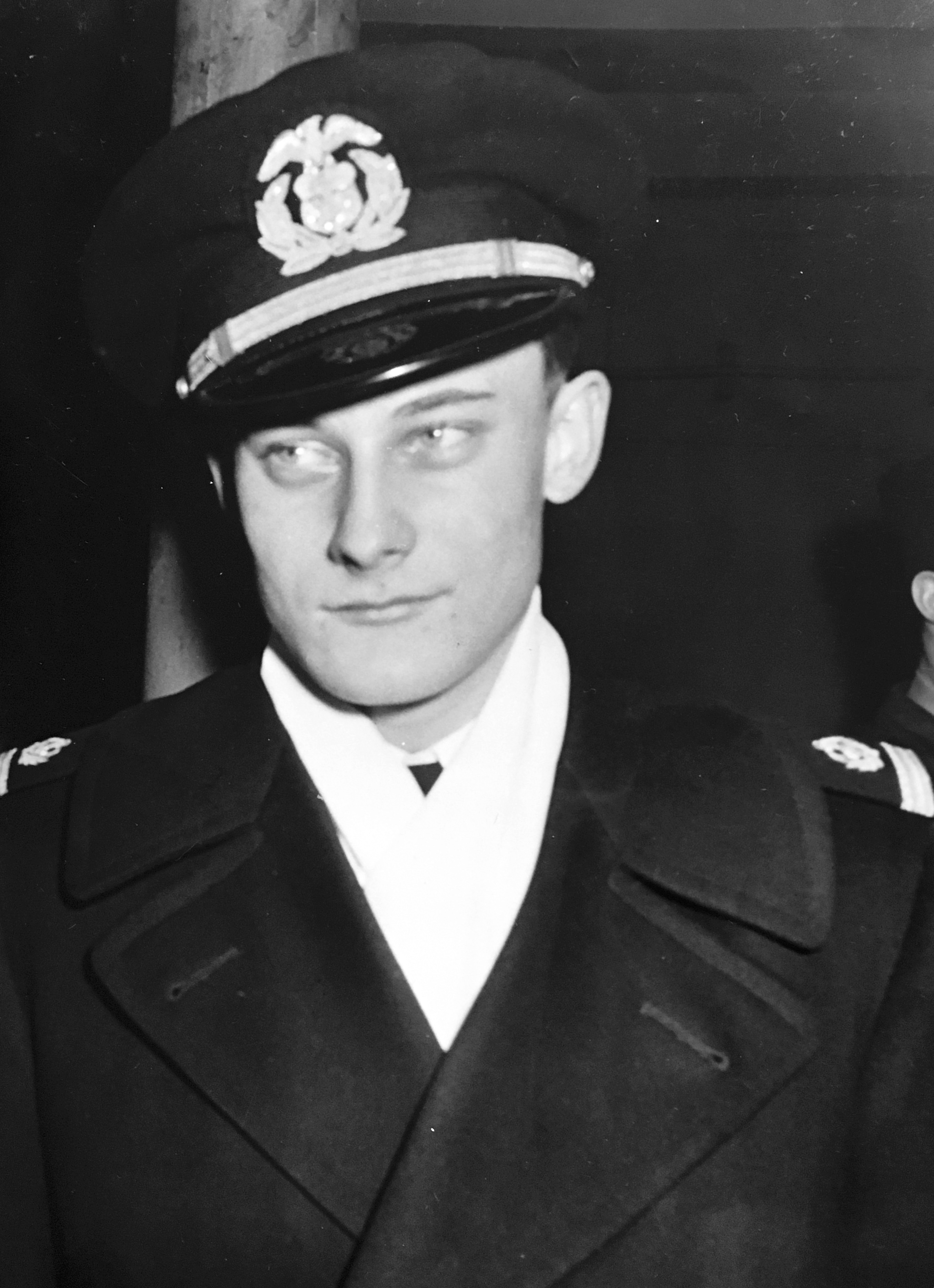
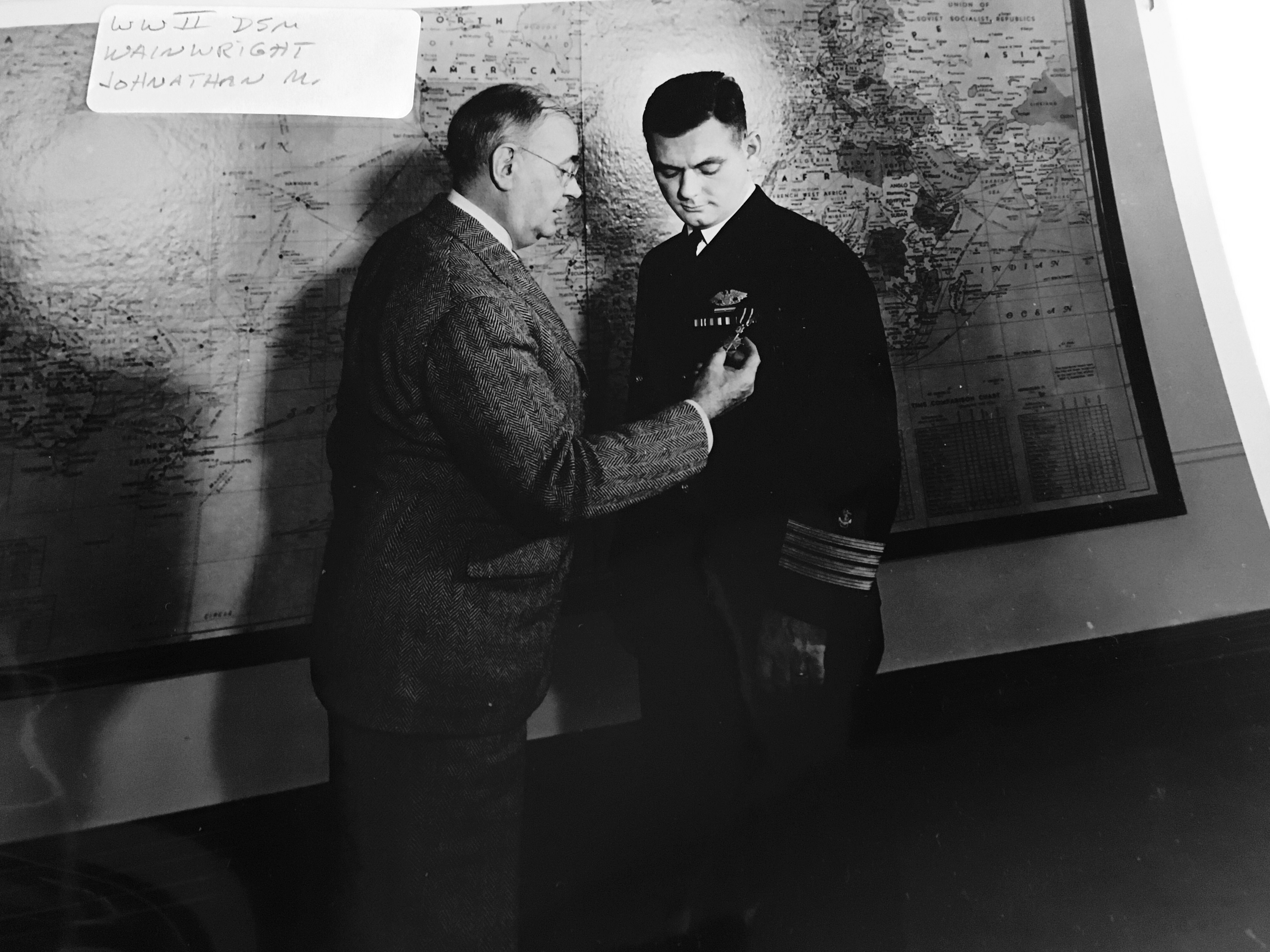
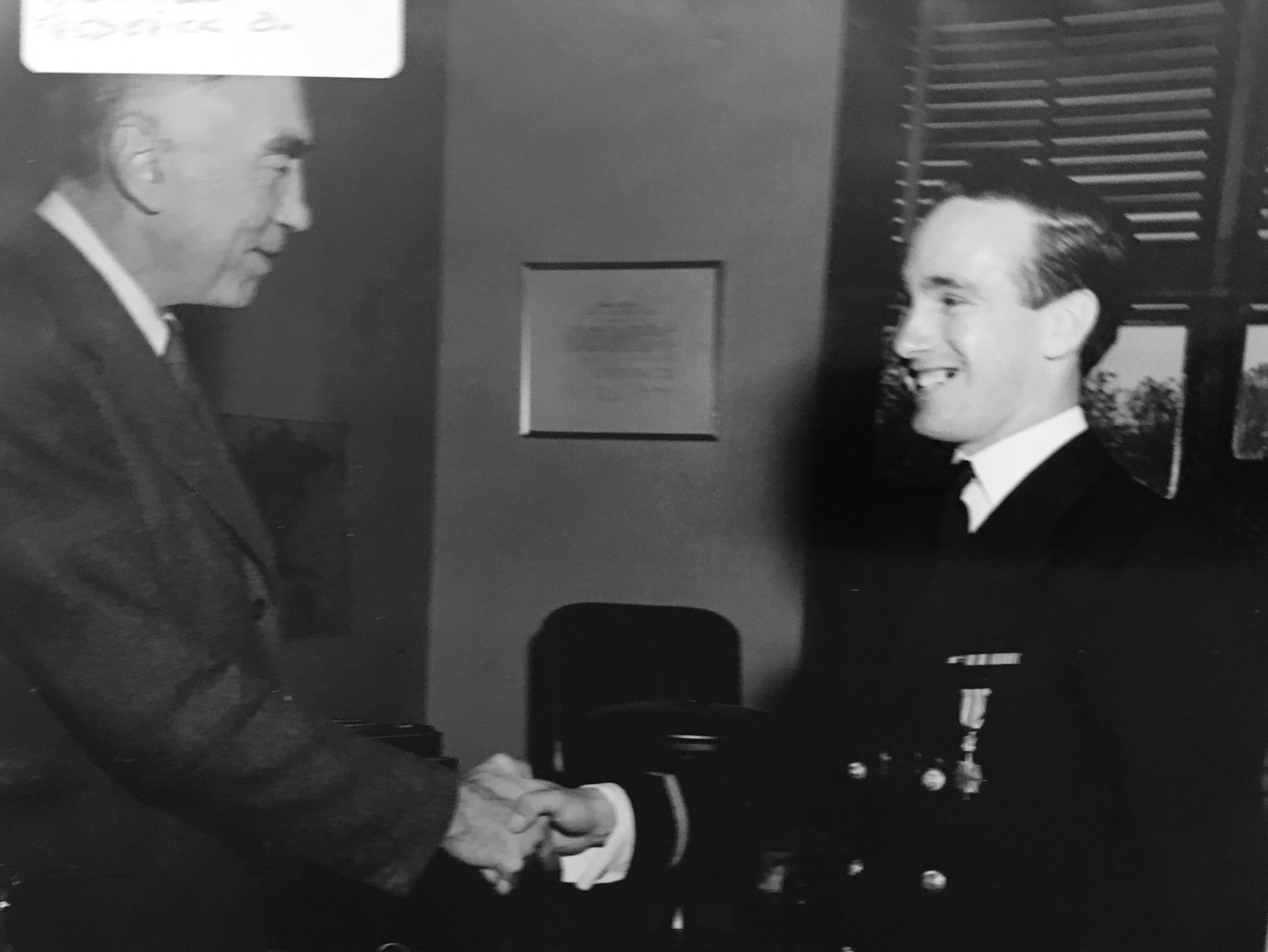
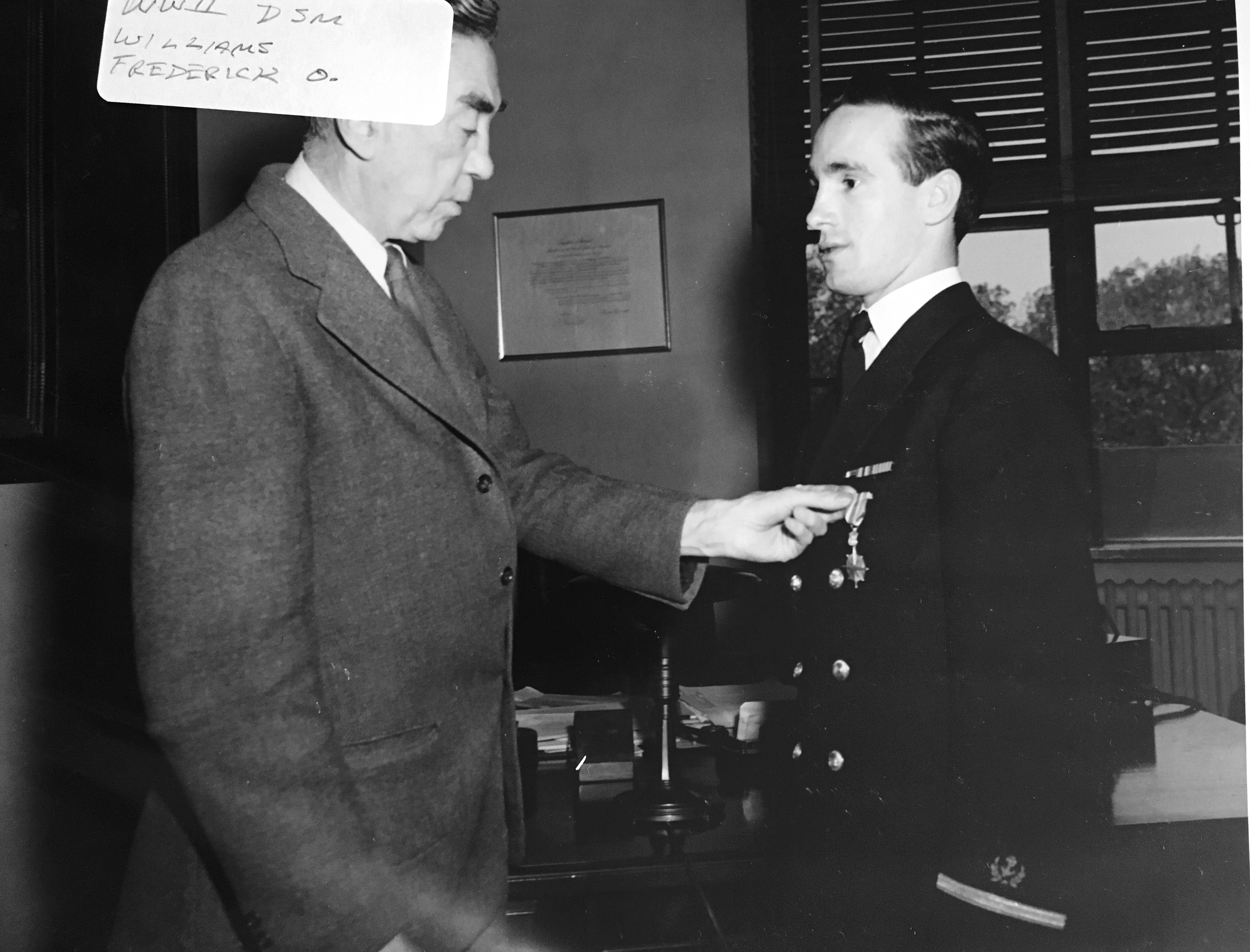
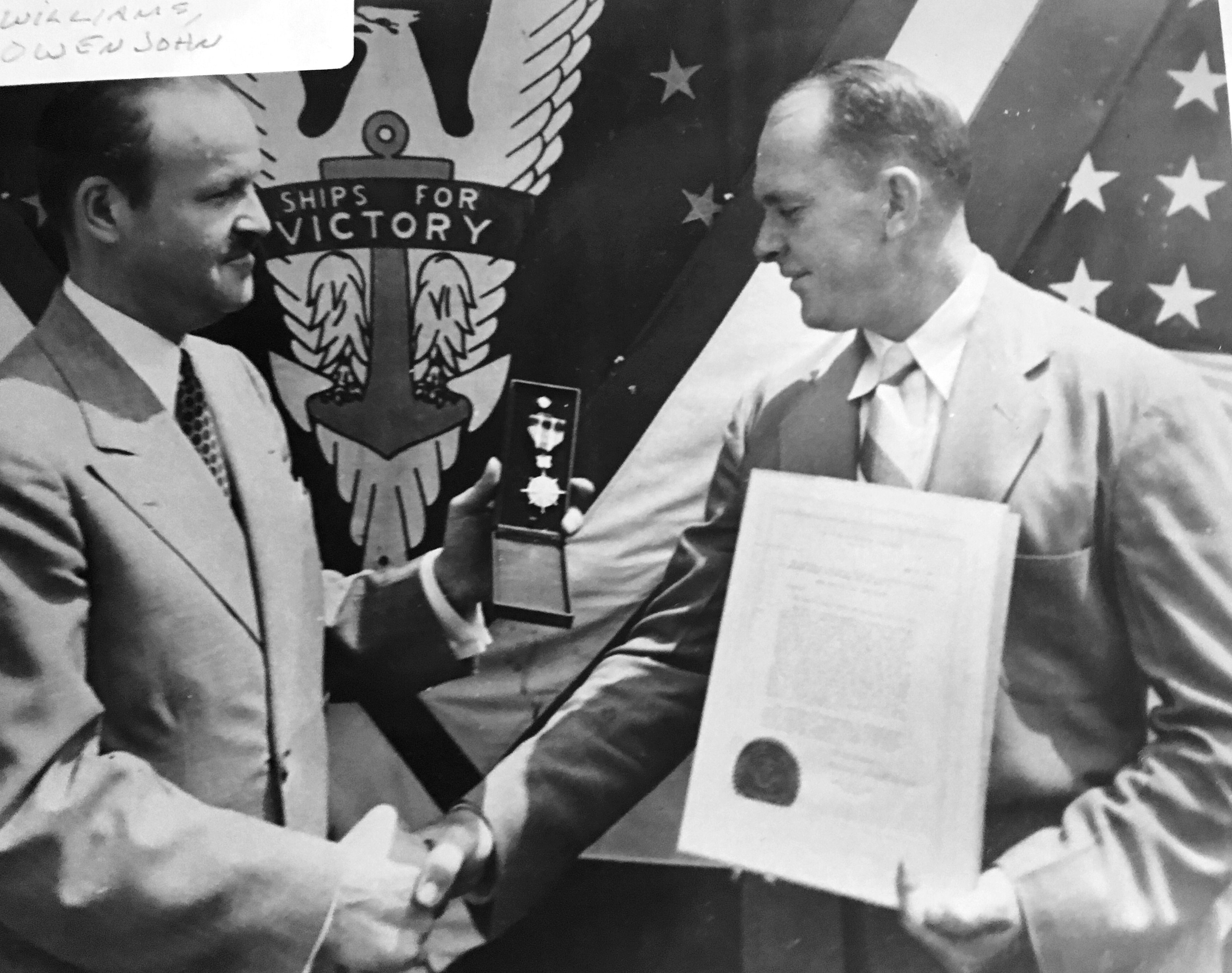
The American Merchant Marine Museum has in its collections press photographs of wartime recipients of the Merchant Marine Distinguished Service Medal. Some photos show stalwart widows, and others a smiling Admiral E. S. Land.
These photographs are rough – I had originally taken them to create a list of recipients. Then I discovered after a quick count that the 100 photographs represented only 79 of all those awarded the medal. Since these are not online or available anywhere, here you go.
adams, james bryon
baird, dael porter
baker, george
baker, george
baretich, bruno
birdsall, charles
blakefield, robert
breen, maurice
brown, hugh parks
browne, paul hoffman & maynard, kenneth
cameron james c. & lapoint, john j. & eklund, ragnar & alm, gustave franke
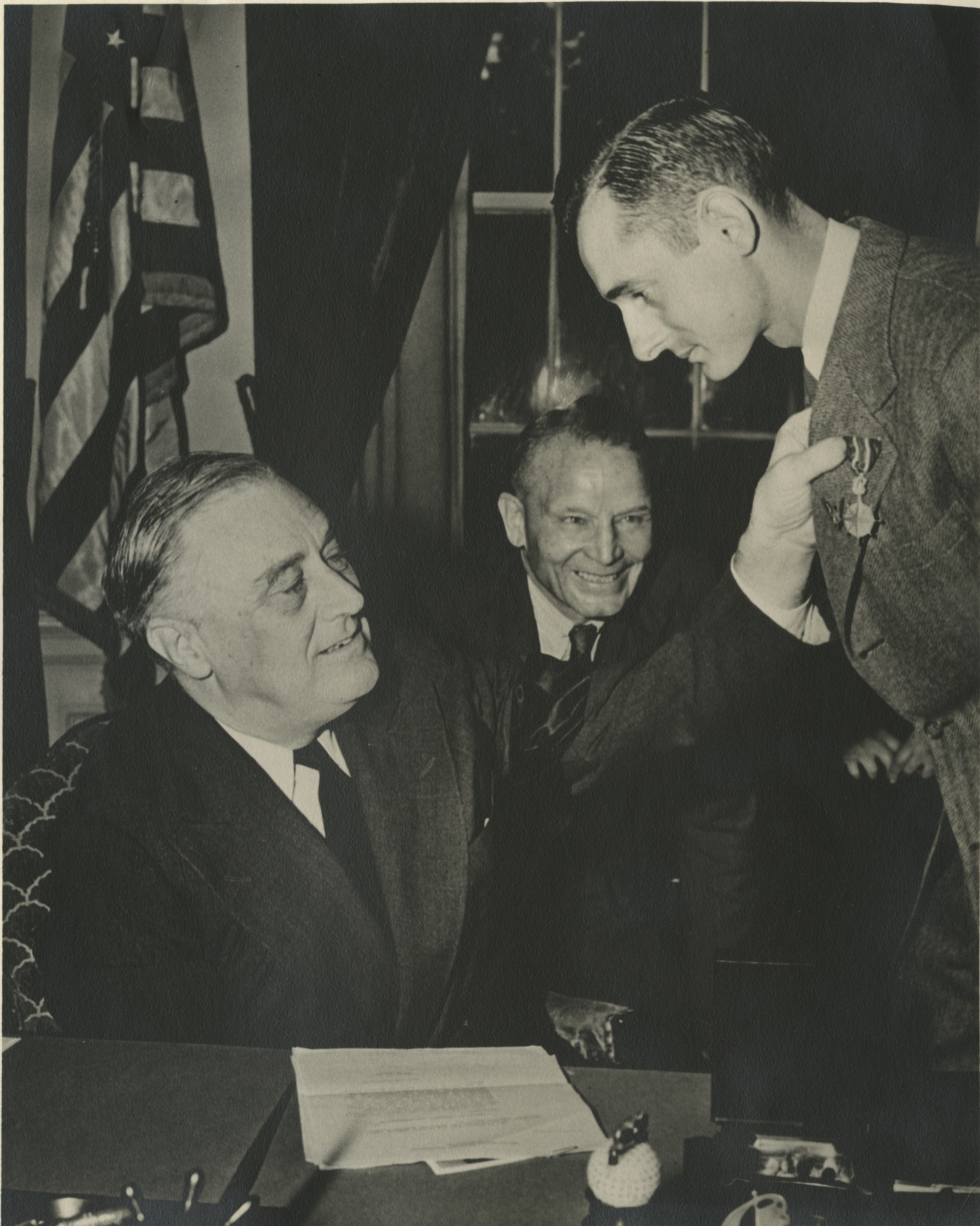
In 1942 Franklin Franklin D. Roosevelt honored Edwin Fox Cheney, Jr. for his selfless act of bravery with the award of the first Merchant Marine Distinguished Service Medal in the Oval Office at the White House. The ceremony was a pronounced display of the President’s high regard for the American Merchant Marine, and his decorating Mr. Cheney emphasized the importance of all merchant seaman for America’s war effort – be they masters or ordinary seamen. President Roosevelt gave a prescient speech in his weekly radiogram several days later on Columbus Day:
[We] have had to enlist many thousands of men for our merchant marine. These men are serving magnificently. They are risking their lives every hour so that guns and tanks and planes and ammunition and food may be carried to the heroic defenders of Stalingrad and to all the United Nations’ forces all over the world.
A few days ago I awarded the first Maritime Distinguished Service Medal to a young man- Edward F. Cheney of Yeadon, Pennsylvania—who had shown great gallantry in rescuing his comrades from the oily waters of the sea after their ship had been torpedoed. There will be many more such acts of bravery. (Fireside Chat. October 12, 1942)
From that first decoration to the close of hostilities, an estimated 154 Merchant Marine Distinguished Service Medals were awarded to members of the American Merchant Marine. After this medal came a small constellation of others, and in their wake, Congress debated the wisdom of giving civilians medals in wartime. The argument was whether or not a Federal medal would prompt merchant seamen to seek veteran’s status in the years after the war. No matter what they were, these medals were small tokens of the great esteem many had for those that kept the lifelines between the United States and the rest of the world intact. These lifelines cost the lives of close to 8,700 seamen.
Since the American Merchant Marine was not the military with field commanders directing troops, but rather a collection of ships manned by civilians plying trade routes either in convoys or alone, the award of medals was done by committee. A managing operator or shipmate would send a narrative of an individual’s heroism to the War Shipping Administration Merchant Marine Medal Awards Committee, and the group would decide the case’s merits. And, just because an individual had the backing of a powerful steamship company would not guarantee a medal – the most recent being a surgeon whose story captured the imagination of the American public and who was awarded a medal through activism on the part of the American Merchant Marine Veterans Association – his medal was awarded in 2019.
Below please find a map I generated from data I scrapped from various sources to determine where the actions that merited an individual’s award of a Merchant Marine Distinguished Service Medal (MM DSM) took place. Zoom in and click the drop pin to see the individual details, including managing operator, ship, and whether or not the individual’s photograph is in the American Merchant Marine Museum MM DSM collection of photographs. If an individual is listed twice, this is due to the citation having the individual being awarded a single medal for two actions.
To create the roll of honor, I gathered together data from several sources. My names and dates combine data from a spreadsheet from the American Merchant Marine Museum, citation texts from USMM.org, and Captain Arthur A. Moore’s A Careless Word: A Needless Sinking. I was able to pinpoint the coordinates using uboat.net, hints from USMM.org, Capt. Moore’s book, and wrecksite.eu – some are missing, however. Managing operators were fun to find; these were had by looking through MARAD’s ship database.
None of this would have been possible without the assistance of Dr. Joshua Smith, Interim Director of the American Merchant Marine Museum.
Shipping Routes, pre-“Victory in Europe,” 1945.
The map and data illustrate the global nature of the Second World War and how merchant seamen fought, died, and were heroes on every front: from the icy Arctic, off the mouth of the Mississippi, and to islands whose names most of us cannot pronounce. Seeing the number of names below and their photographs – that’s truly moving.
Merchant Marine Distinguished Service Medal Roll of Honor, Second World War
In a brief analysis of the data, statistically, there are far more Liberty ships than tankers as sites of gallantry overall; however, at war’s beginning, tanker crews were most cited – these men rose to the occasion within sight of the U.S. coastline. Their trials were at the height of the “Happy Time” when U-Boats patrolled U.S. waters with impunity, and sometimes – the rumor goes – even sent launches ashore to see a show. After September 1942, as the U.S. became further involved overseas, Liberties and troopships became more numerous as places of bravery – tankers were finally behind a protective screen.
To see the entire spreadsheet, it is available here.
Most of the MM DSM citations may be found here. All extant U.S. Maritime Commission citations and Office of War Information Releases are here.
Note: My table may be prone to and has mistakes since my data is based on the research of others – even MARAD’s operator information is spotty – please contact me with attributable and documented corrections.