gallant ship plaques

Off the main gallery space at the American Merchant Marine Museum is a small room easily mistaken for a chapel. This is understandable since upon entering, the visitor finds a Deco stained-glass window above an altar-like desk arrayed with newspaper clippings under a vitrine. The room is called, “Gallant Ship Room,” and like a chapel, it is a place of quiet reflection.

In the “Gallant Ship Room” rest eighteen brass plaques. Inscribed on each is the motto “Unit Citation For” followed by a ship name and a short paragraph. Mounted above two of the plaques are large 19-inch bronze medallions. Most of these plaques are awards that graced the wheelhouses of ships that earned a curious citation called the “Gallant Ship citation” and others were granted to sunken ships. These citations relay the bravery and often superhuman efforts of an entire ship’s crew facing and overcoming seemingly insurmountable adversity: be it a relentless enemy attack or the capricious ocean.


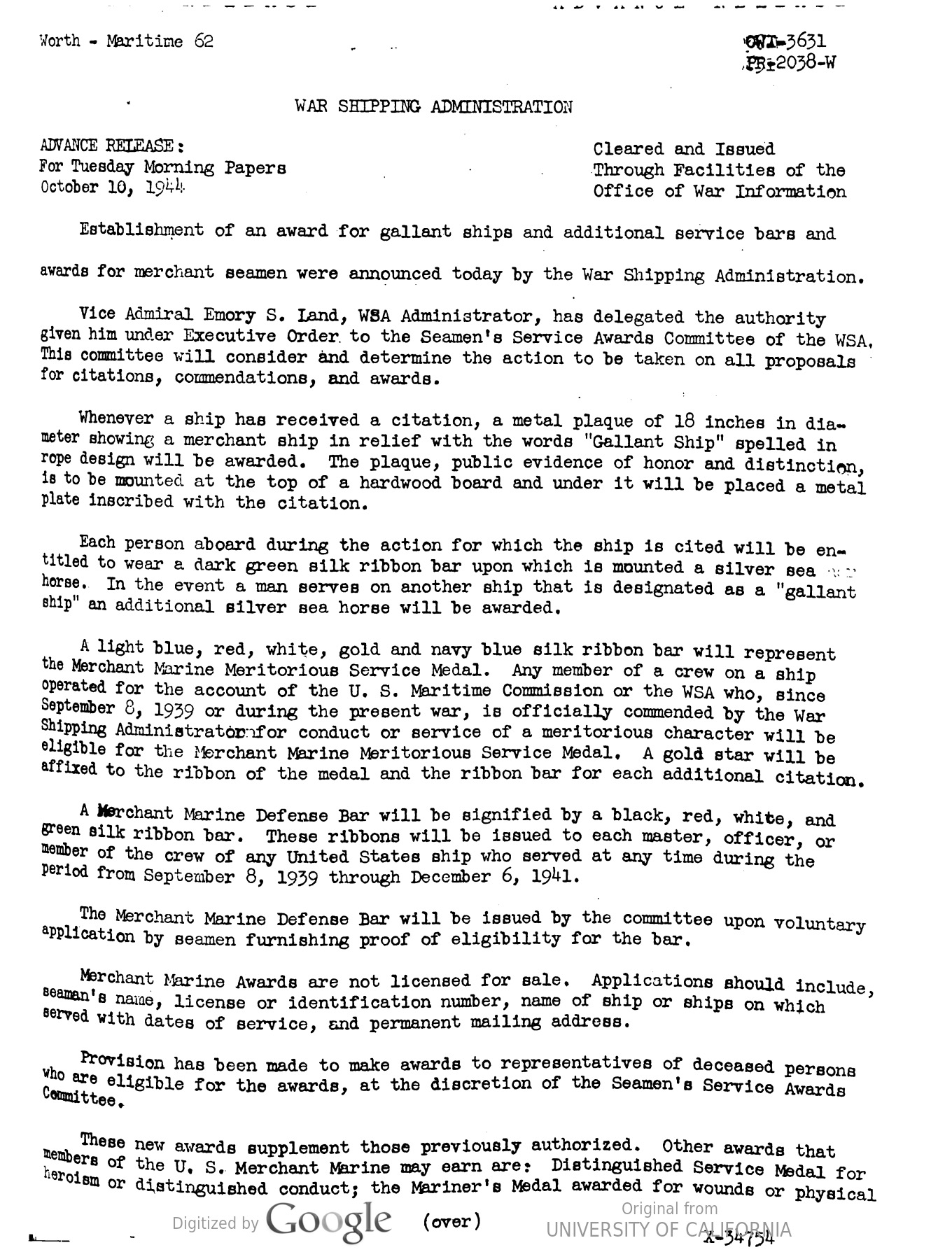
A couple of months after the two and half-year anniversary of United States’ involvement in the Second World War – with no end to the war in sight – President Franklin D. Roosevelt issued Executive Order 9472 on August 29, 1944. The Order established a series of decorations and awards for the United States Merchant Marine; among them was the Gallant Ship citation. It is significant the award came before all others in the proclamation as it indicated the President understood the collaborative nature of a merchant seaman’s work and his wish to honor the ship’s complement.

EO 9472 in Federal Register. Vol. 9, No. 174, August 31, 1944, p. 10613.

Immediately thereafter, the Seaman’s Service Awards Committee received petitions from various managing operators on behalf of ships and crews which exemplified the spirit of the law. The first award came on April 17, 1945 to the SS Samuel Parker. This ship’s award was significant since it provided a touchstone for the “fighting Merchant Marine.” Other ships soon followed and to the shipping companies, the War Shipping Administration issued wood plaques with a bronze medallion and brass plaque with the text of the citation affixed. If the ships were in service, the awards were placed in the wheelhouse for all to see; with the War Shipping Administration keeping replicas of the citation plaques for the historical record. In time, the depository eventually changed to the United States Merchant Marine Academy at Kings Point, followed by the American Merchant Marine Museum.

Following permutations of administrative re-organizations resulting in today’s Maritime Administration, the law governing the award followed suit. The Secretary of Transportation now has the latitude to award the Gallant Ship citation; this is usually done following the suggestion of the Maritime Administrator :

46 USC § 51902: Gallant Ship Award, 2019

To date, the United States has honored forty-three ships with the title “Gallant Ship.”

kings point

U.S. Merchant Marine Academy at Kings Point Regiment of Midshipmen

Kings Point is a compact campus founded in 1943 on Long Island, New York. It is devoted to training future maritime leaders of the United States Merchant Marine. The Academy has about one thousand students altogether comprising of the Regiment of Midshipmen. These pages offer some primary source material for the study of the Regiment, and its culture and history.


When asked about how he heard about the U. S. Merchant Marine Academy, a Cadet replied:

“I was an ordinary seaman with the U. S. Lines, and the director of unlicensed personnel told me about the Cadet Corps and he encouraged me to join the Corps.  I always thought Cadets were sissies, but I learned different when I joined.”

Regimental Culture & History


Albums, Collections & Photographs


Matters Uniform


Publications


col.: AMMM

Miscellany


The bane of midshipmen from the 1950s through the early 1970s.

USMMA Regiment Awards & Decorations

Over the past – close to – 90 years of its existence in various guises, the present United States Merchant Marine Academy Regiment of Midshipmen has awarded its members or been awarded by various outside entities any number of awards and decorations. These pages focus on the the more tangible ribbons and medals.

Main Pages

☆ ☆ ☆

Individual Awards & Decorations

awards & decorations

Throughout the history of the American Merchant Marine, awards and decorations were not unknown to seamen, but their blanket award specific to the Merchant Marine in particular as begun by the Federal government during the Second World War was novel. When considering Federal awards and decorations for the American Merchant Marine, their classification often falls along the lines of placement in a “Pyramid of Honor” – that is, a hierarchy of military decorations awarded for combat valor and meritorious service. This was done not only under the auspices of the War Shipping Administration, but continued by post-war authors making sense of the awards. At the pinnacle of the United States armed services’ pyramid is the Medal of Honor, followed by various Distinguished Service crosses particular to the armed service in question, Distinguished Service medals, valor and service awards, and finally the Purple Heart at the base.  Something of the same was true for the American merchant seaman. Although ostensibly having their own system of precedence and hierarchy, it is far more useful to consider Merchant Marine awards and decorations in the context of their establishment.

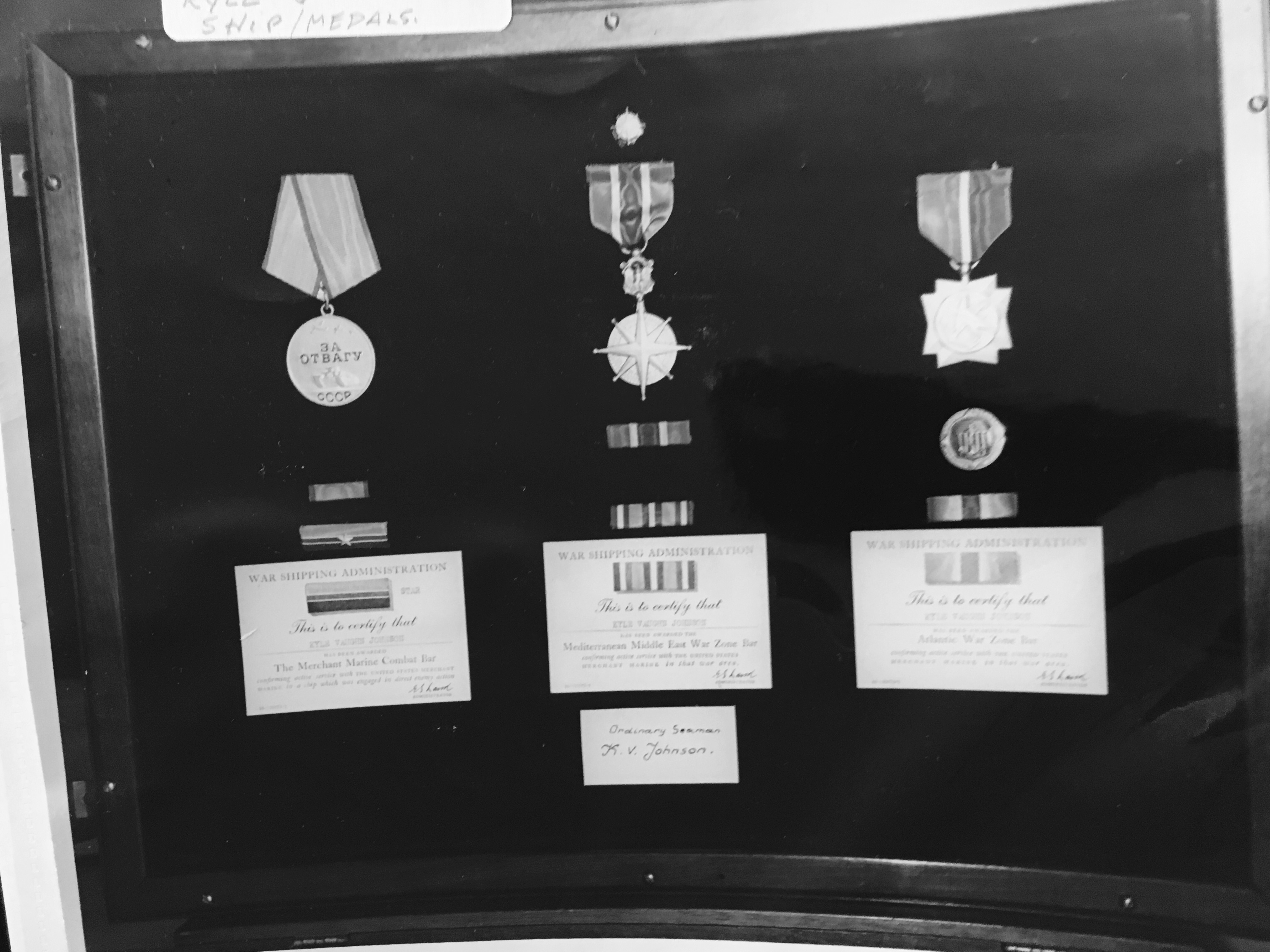
Postwar, the rôle of the American Merchant Mariner in the Second World War and as an auxiliary to the military was either relatively forgotten or taken for granted by the United States. Other nations, notably France and Russia, awarded Americans with medals thanking them for their service to their nations.

The following pages display and analyze some of the arrays of awards and decorations that were and are available to American Merchant Mariners, midshipmen at the United States Merchant Marine Academy, and commissioned officers with the United States Maritime Service at Kings Point.


Awards & Decorations

Studies & Essays

Collections & Objects

branch distinction

As follows is a table of Branch Distinction colors found on officer shoulder boards and cuffs of Royal Navy uniforms per 1918 regulations, Merchant Navy livery as standardized by the British Board of Trade in 1918, U.S. Navy officer uniforms per 1919 U.S.N. uniform regulations, U.S. Army Transport Service regulations in effect from 1933-44, and United States Lines Steamship Co. rate detail from a 1937 passenger list brochure.


References

United States Lines SS Co. SS Washington Passenger List (Westbound) June 1937. United States Lines, New York, 1937


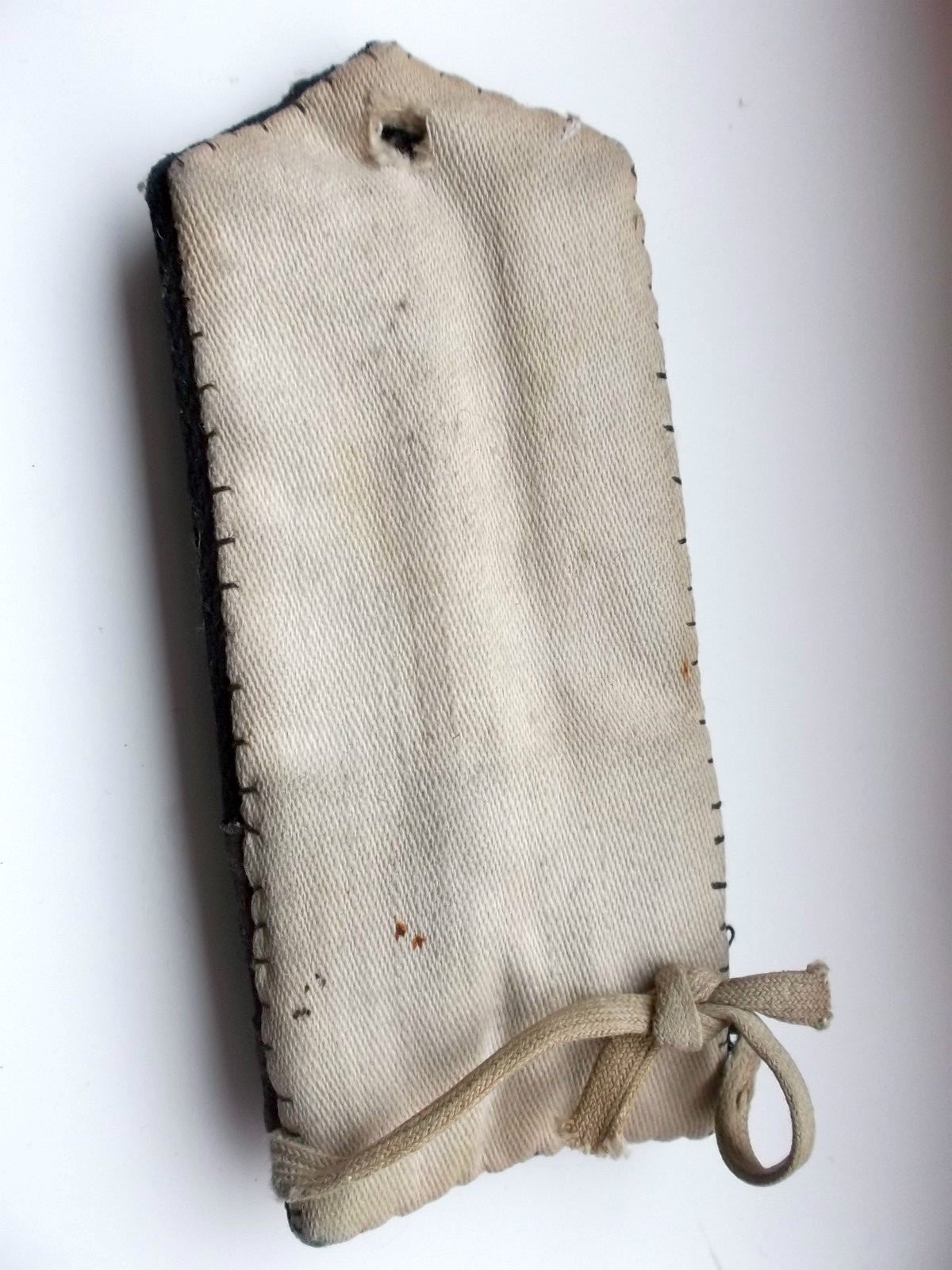
Although not fully detailed in the United States Lines chart, epaulets – or shoulder boards – followed the same design. Of interest is the fact that USL shoulder boards did not use the same button as the uniform coat.


Shoulder board, Royal South African Navy


Col.: Anon


References for the Collector

U.S. Maritime Service Commissioned and Warrant Officer hat
Winter hat; navy blue wool with wicker frame, ½-in. wide. gold bullion chinstrap and two 22½-ligne gilt cap screws.  (note: if strap is ¼-in., hat would be that of a warrant officer).
Circa Second World War.

It is one thing to collect, and another to actually know what one is collecting. As follows is a reference bibliography of use to collectors of Second World War period maritime insignia; I owe a great debt of gratitude to Herbert “Sarge” Booker for sharing with me his archive of The Crow’s Nest as well as placing me in contact with Rudy Barsuto, Steve Soto, and Dave Collar. Each of these individuals has proven an excellent correspondent in matters of maritime insignia.

Some of the references below deserve a bit of an introduction.  The Crow’s Nest is mainly a pictorial review in zine format shared among aficionados of maritime insignia and self-published by Sarge; in its various issues are India ink drawings done by Sarge complemented with photographs of various insignia and charts from uniform manuals; it is an interesting zine the likes of which I have never seen before (and perhaps never again).  Of particular interest are the self-published monographs by Steve Soto and Rudy Basurto; they synthesize and order collections.  In regard to Insignia by Mr. Basurto, it is a singular work that presents civilian insignia – it is a bit loose on time period, but most of the illustrations are from around the Second World War; Sarge was the artist, designer, and typesetter of study – he insisted I make this work available on this site.

Works that may be downloaded or purchased online have their titles in bold.

Rudy Basurto & Herbert Hillary “Sarge” Booker, 2nd
Insignia of America’s Little Known Seafarers, 2nd Ed. Privately Printed, nd.
Insignia of America’s Little Known Seafarers, 3rd Ed. (edited and revised by Steve Soto and Cynthia Soto).  Privately Printed, 2008.
N.B. May be purchased by contacting Mr. Soto.

Herbert Hillary “Sarge” Booker, 2nd
The Crow’s Nest #1 (Summer 1992).
The Crow’s Nest #2 (Autumn 1992).
The Crow’s Nest #3 (Winter 1992).
The Crow’s Nest #4 (New Year’s Special Issue – 1993).
The Crow’s Nest #5 (Summer 1993).
The Crow’s Nest #6 (Mid-Summer 1993).
The Crow’s Nest #7 (Autumn 1993).
The Crow’s Nest #8 (Special 1993 Encyclopedia Edition).
The Crow’s Nest #9 (Fall 1993).
The Crow’s Nest #10 (1994 New Year’s Special).
The Crow’s Nest #11 (Spring 1994).
The Crow’s Nest #11 (Spring 1994 – The Issue That Never Was).
The Crow’s Nest #12 (Summer 1994).
The Crow’s Nest #13 (Fall 1994).
Speciality and Distinguishing Marks: U.S. Coast Guard, U.S. Maritime Service, U.S. Navy, and U.S. Public Health Service, 3rd Revision.  Privately Printed, 1996.

Dave Collar
“Insignia of the Army Transportation Service in World War II.” ASMIC: The Trading Post October-December 1994: 29-43.
“Insignia of the United States Maritime Service, World War II.” ASMIC: The Trading Post April-June 1995.
“Insignia of the United States Shipping Board.” ASMIC: The Trading Post  October-December 1996.

William K. Emerson
“Section XIII. The Army’s Navy: Chapter Thirty-Six.  Army Transport Service and Harbor Boat Service” in Encyclopedia of United States Army Insignia and Uniforms. Norman, Oklahoma:  University of Oklahoma Press, 1996. 331-352.

Steve Soto & Cynthia Soto
A collector’s guide to the History, Uniforms and Memorabilia of the U.S. Merchant Marine and Army Transport Service during World War II. Privately Printed, 1996 (revised 2008).
N.B. May be purchased by contacting Mr. Soto.

Joseph J. Tonelli
Visor hats of the United States Armed Forces: 1930-1950
. Atglen, Pennsylvania:  Schiffer Publications, 2003.
US Military Cap Insignia. Website with Joe’s (always growing) collection.

Jeff Warner
“U.S. Merchant Marine” in U.S. Navy Uniforms in World War II Series; Weapons, Equipment, and Insignia: Submarine Service, PT Boats, Coast Guard, other Sea Services. Atglen, Pennsylvania:  Schiffer Publications, 2008.

Insignia Houses

Where have all the insignia manufacturers of the American Merchant Marine managing operators gone? Long passed are the days of enamel flags on high-pressure caps, and so too is true for their makers. Through complex mergers and acquisitions, tools that once struck these diminutive flags found their way to the scrap heap or in the hands of other insignia houses.

GEMSCO of New York under the Elkies family once manufactured a majority of American Merchant Marine steamship company cap flags. The company was established in 1881 and later incorporated as Gordon, Elkies Military Supply Company, Inc. on 31 July 1934 with the State of New York, and in less than a month’s time re-registered as GEMSCO, Inc. on 8 August 1934 – although an abbreviation for the original company’s name, it was implied that it was an abbreviation for the trademark “General Embroidery & Military Supply Co., Inc.” which hid the company’s Eastern European roots. GEMSCO was a one-stop shop for all embroidered and metal insignia items. In time, as was a common practice among insignia houses, GEMSCO subcontracted out most of their production. Enamel flags went to The Reynolds Co. of East Providence, Rhode Island.

The period of mass cap flag manufacture was relatively short-lived in the United States – they had their heyday from the mid-1930s through the late 1940s. Until the 1930s, enamel work was not common for maritime insignia in the United States, but was widespread throughout the British shipping industry. The 1930s saw a shift in insignia styles, first with the Chapman-run United States Lines copying White Star Line’s uniform motifs, and then Dollar and Matson. Eventually, most shipping companies had an enamel flag on their employees’ caps – it was almost requisite for doing business as a serious company; along with the stock certificates with a steamship, a house flag, and buttons with said flag. This insignia innovation continued through the Second World War with GEMSCO providing the bulk of blue water shipping’s cap flags.

Style and economics brought an end to cap flags. Once an item worn by all, many mariners opted to wear their Government-issue cap eagles over cap flags while others switched to cheaper embroidered cap badges. GEMSCO provided the latter first from looms in New York, and then New Jersey. Notable exceptions were Ibrantsen, American Export, and United States Lines which continued to issue them through the 1950s and 1960s. With the collapse of the American Merchant Marine industry in the late 1960s, the market for maritime insignia items was no longer profitable, and their specialized manufacture ceased. In the case of GEMSCO, the company realigned its business during the 1970s with Denmark Military Equipment (D.M.E.) eventually buying Reynolds in the 1980s. Denmark operated Reynolds as the Topper Division of D.M.E. for about a decade, at the tail end of which they closed the East Providence location and subsequently, the tooling for cap flags disappeared – unfortunately, I am unaware as to the range of tools lost during the closure. GEMSCO went bankrupt in 1992 and went into re-organization; it decided to pursue contracts in the law enforcement market. Enamel cap flags are now created from old tools for collectors.

Below is a list of current insignia houses, from where their tools came, and the original owner. If the tools have since been discarded, I have indicated as such. After the list, I have provided vendors (Sources) who offer original or restrikes of the cap flags – and what flags they have in stock (current November 2022). As of 2022, Armour Insignia is the holder of most tools.


Argonaut Line (Armour restrike)

Tool Repositories

Armour Insignia (Nevada)

ex-Town & Country which acquired the stock of:
ex-Robbins

  • Mallory
  • Mowinckel

ex-Denmark Military Equipment [as Topper DME] (New York) which acquired the stock of:
ex-The Reynolds Co. (Lincoln/East Providence, Rhode Island) subcontractor for GEMSCO (New York):

  • Alcoa
  • American Export
  • American Export Isbrandtsen
  • American President
  • American Republic
  • American-Hawaiian
  • Argonaut
  • Black Diamond
  • Brovig
  • Central Gulf
  • Everett Orient
  • Farrell
  • Grace
  • Gulf & South American
  • Isbrandtsen
  • Joklar
  • Kerr
  • Knoch
  • Luckenbach
  • Matson
  • Moore-McCormack
  • Olsen & Uglestad
  • Panama Railroad
  • Rasmussen
  • Socony
  • Standard
  • States Marine
  • United Fruit
  • United States Lines

ex-GEMSCO:

  • U.S. Army Floating Plant & Dredges

ex-International Insignia which acquired the stock of Krew
ex-Krew:

  • The Great Lakes Dock & Dredge

ex-Blackintron:

  • Southern Pacific (Golden Gate Ferries)

ex-Blackintron which acquired the stock of Braxmar
ex-Charles G. Braxmar Co. (New York):

  • Hudson River Steam Navigation
  • New York Queens Ferry (NYQ)
  • Yonkers Ferry

☆ ☆ ☆

International Insignia (Providence, Rhode Island)

ex-Krew:

  • Hy-Line

☆ ☆ ☆

VH Blackinton (North Attleborough, Massachusetts)

current:

  • Cleveland Cliffs

ex-Charles G. Braxmar Co. (New York):

  • Clyde
  • J. H. Brown & Co.
  • Walter Runciman & Co. / Moor Line

ex-GEMSCO (New York) scrapped 1970s:

  • American Mail
  • Anchor
  • B&Y
  • Central American
  • Cunard
  • Dollar Line (Steward)
  • Dow Chemical
  • ET (Eastern Transport Co.)
  • Essberger
  • Munson
  • New York & Cuba
  • Nobco
  • Oceanic & Oriental
  • P&O
  • Panama Pacific & Bull
  • Standard
  • United States Lines
  • Ward
  • Waterman

Sources

When they’re gone, they’re gone… Below find dealers of Period – original cap flags – and only active dealer offering re-strikes.

Period

Joshua Segal of Lost Legions Militaria in Alexandria, Virginia (https://www.ebay.com/str/lostlegionsmilitaria) is the only known source of GEMSCO-manufactured United States Lines cap flags from the 1930s and early 1940s. His stock comes from the 1992 Army-Navy store close-out and liquidation sale.

☆ ☆ ☆

Stephen E. Lipski, based in New Jersey, is another merchant on eBay (https://www.ebay.com/sch/reatra05/m.html) who has some stock of original GEMSCO-manufactured cap badges. His stock comes from an Army-Navy store close-out about three decades ago. He offers:

  • American Export Lines
  • American President Lines
  • American-Hawaiian Steamship Company
  • Matson Lines
  • Panama Railroad Steamship Line

☆ ☆ ☆

For over a decade, Robert Steinberg of Pinback Paradise (https://www.ebay.com/str/pinbackparadise) in Medford, New Jersey has been offering the same two cap flags:

  • American President Lines
  • American-Hawaiian Steamship Company

His stock came from the buy-out of the stock of another dealer two decades ago.

Restrikes

Armour Insignia in Henderson, Nevada (http://armourinsignia.com/) has restrikes available of the following (November 2022):

  • American Export Line
  • American-Hawaiian Steamship Company
  • American President Lines
  • American-Export Isbrandtsen Lines
  • Argonaut
  • Grace Line
  • Great Lakes Dock & Dredge
  • Hudson River Steam Navigation
  • Isbrandtsen
  • Moore-McCormack Lines
  • New York Queens Ferry
  • Olsen & Uglestad
  • Southern Pacific Steamship Lines (via Blackinton)
  • Yonkers Ferry

Armour Insignia GEMSCO re-strikes are easy to differentiate from period cap badges – the planchets are a bit thicker and have no hallmark; from 1942 onward, GEMSCO hallmarked most of their badges.
mm dsm recipient photographs

Roll of Honor | Recipient Photos | OWI Recipient Citations | MM DSM | Leonard Conley | MM DSM Design | MM DSM Price Guide

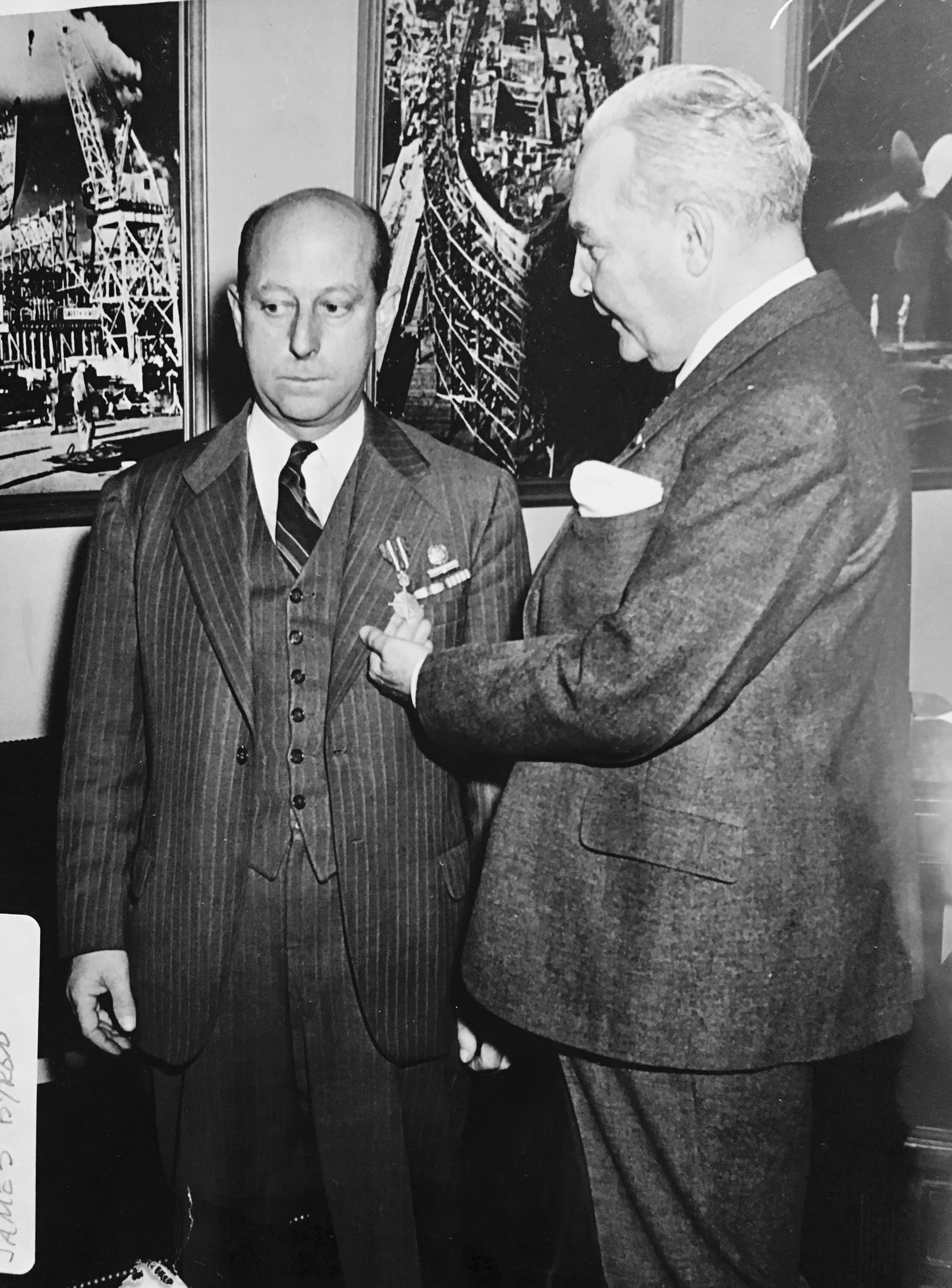
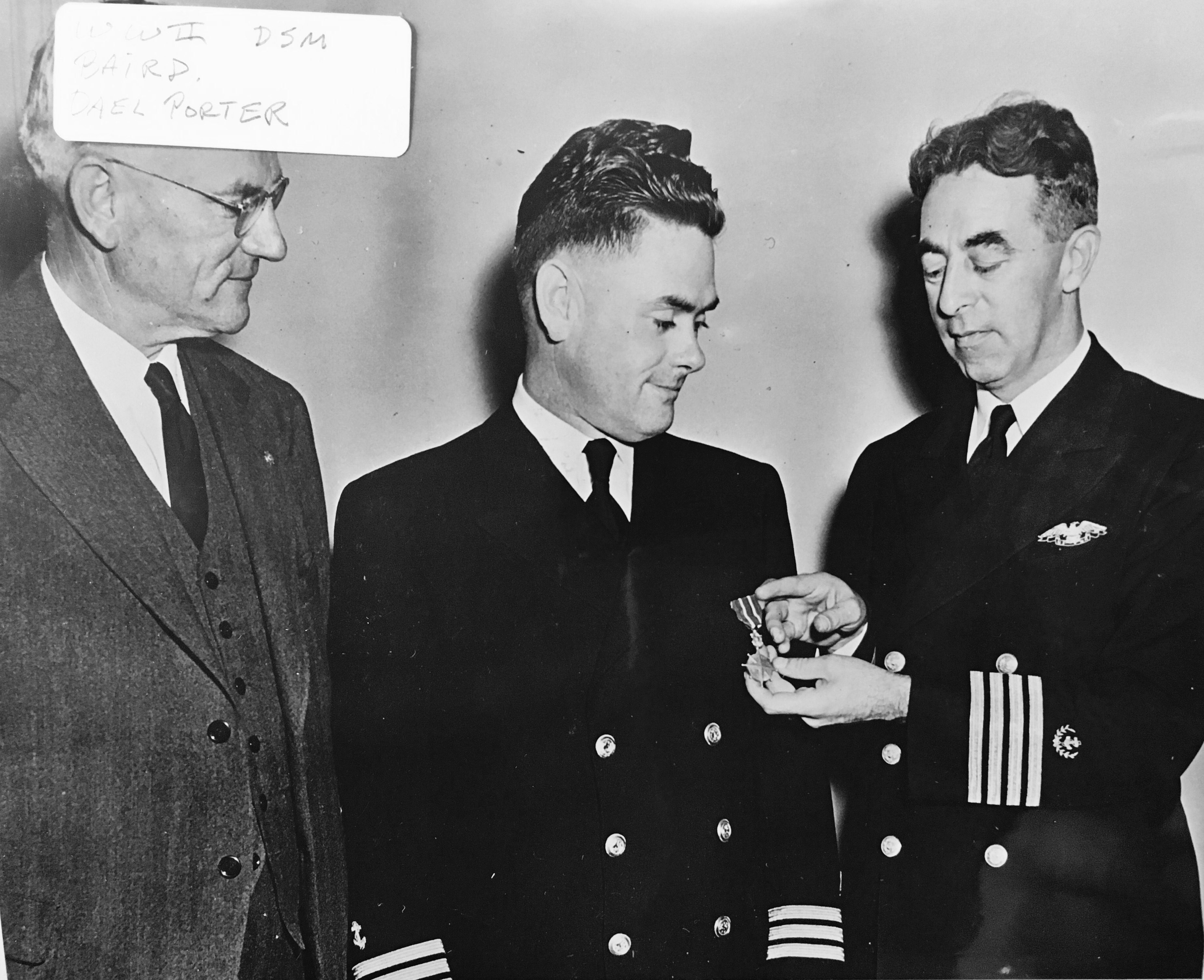
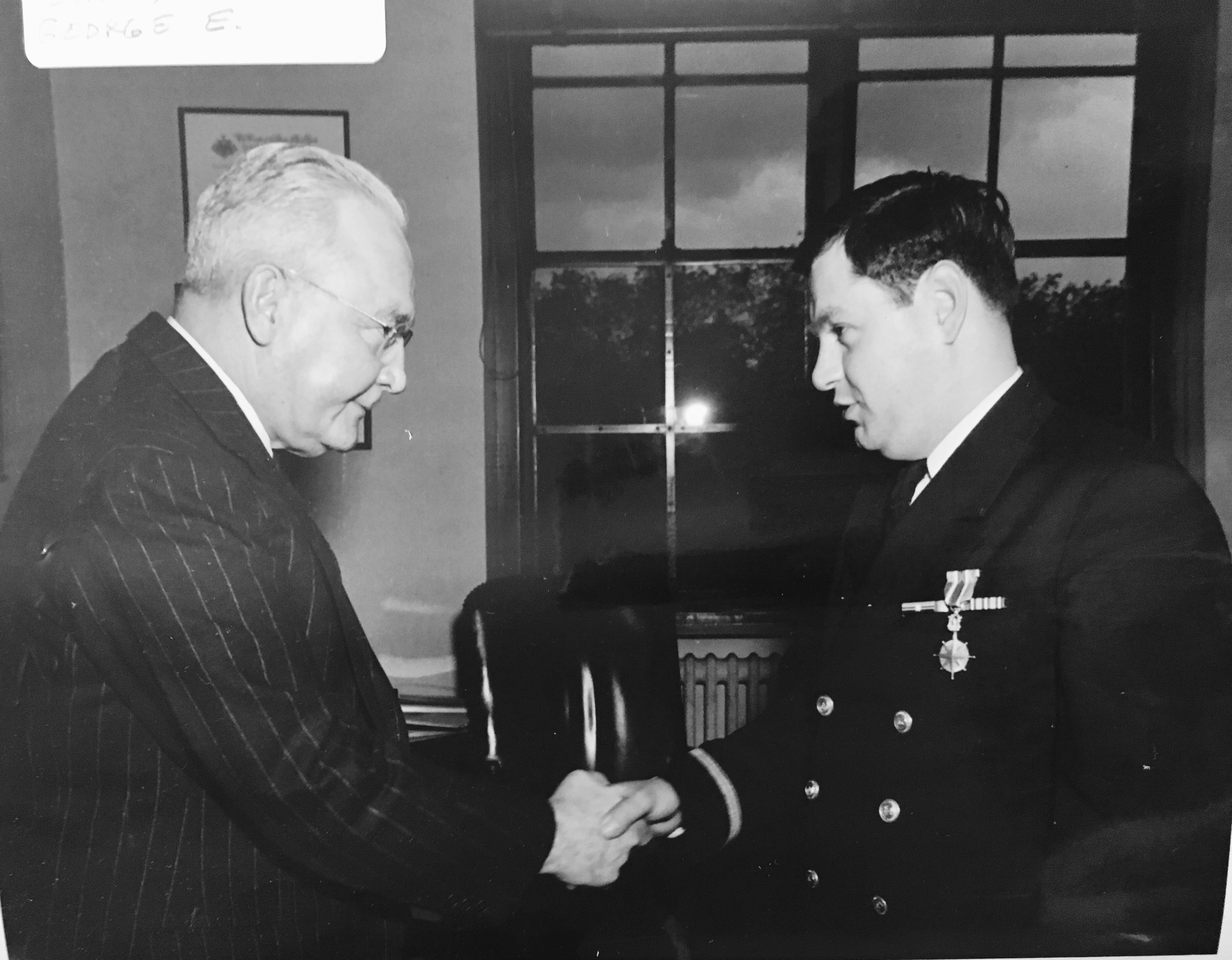
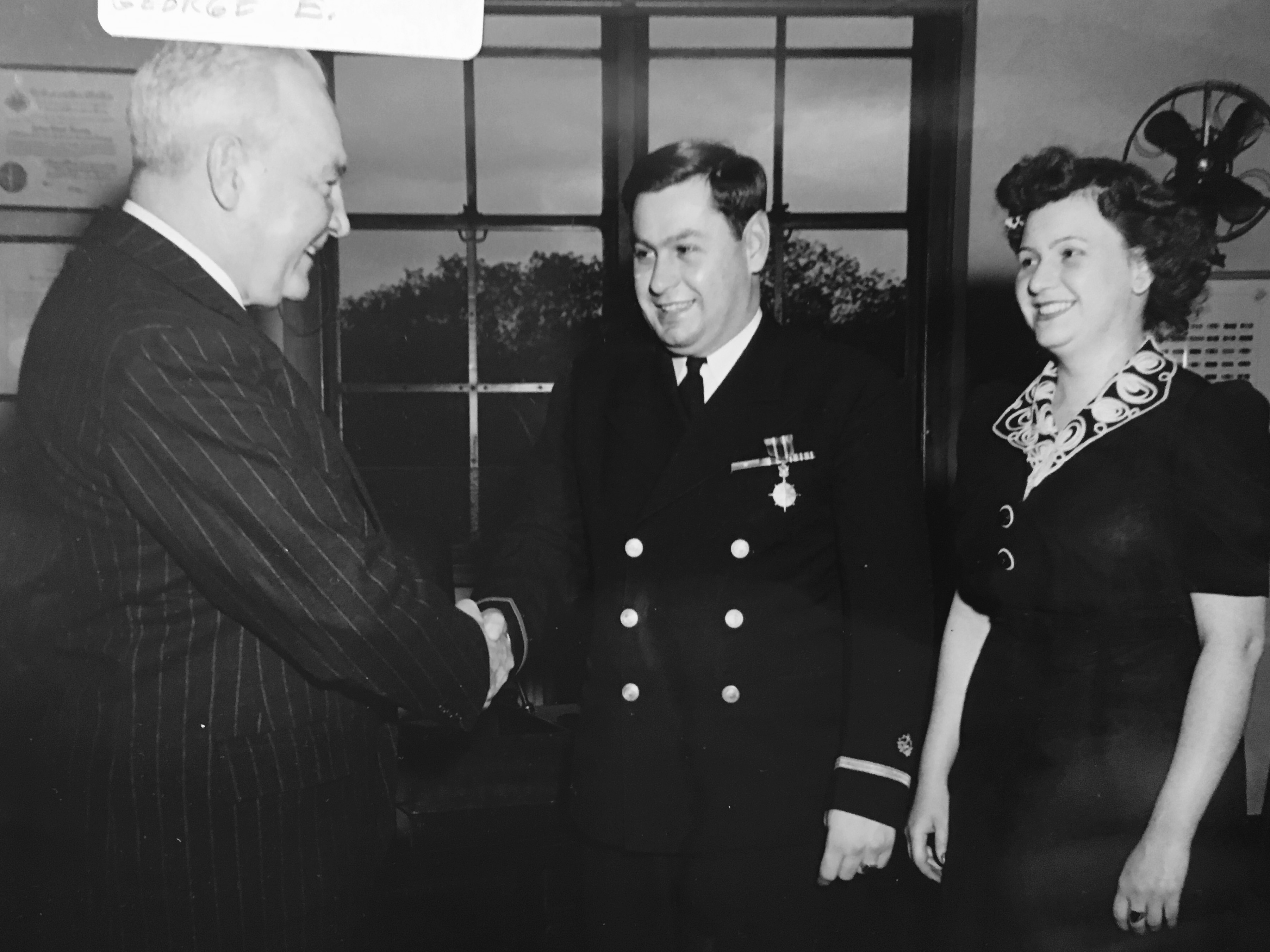
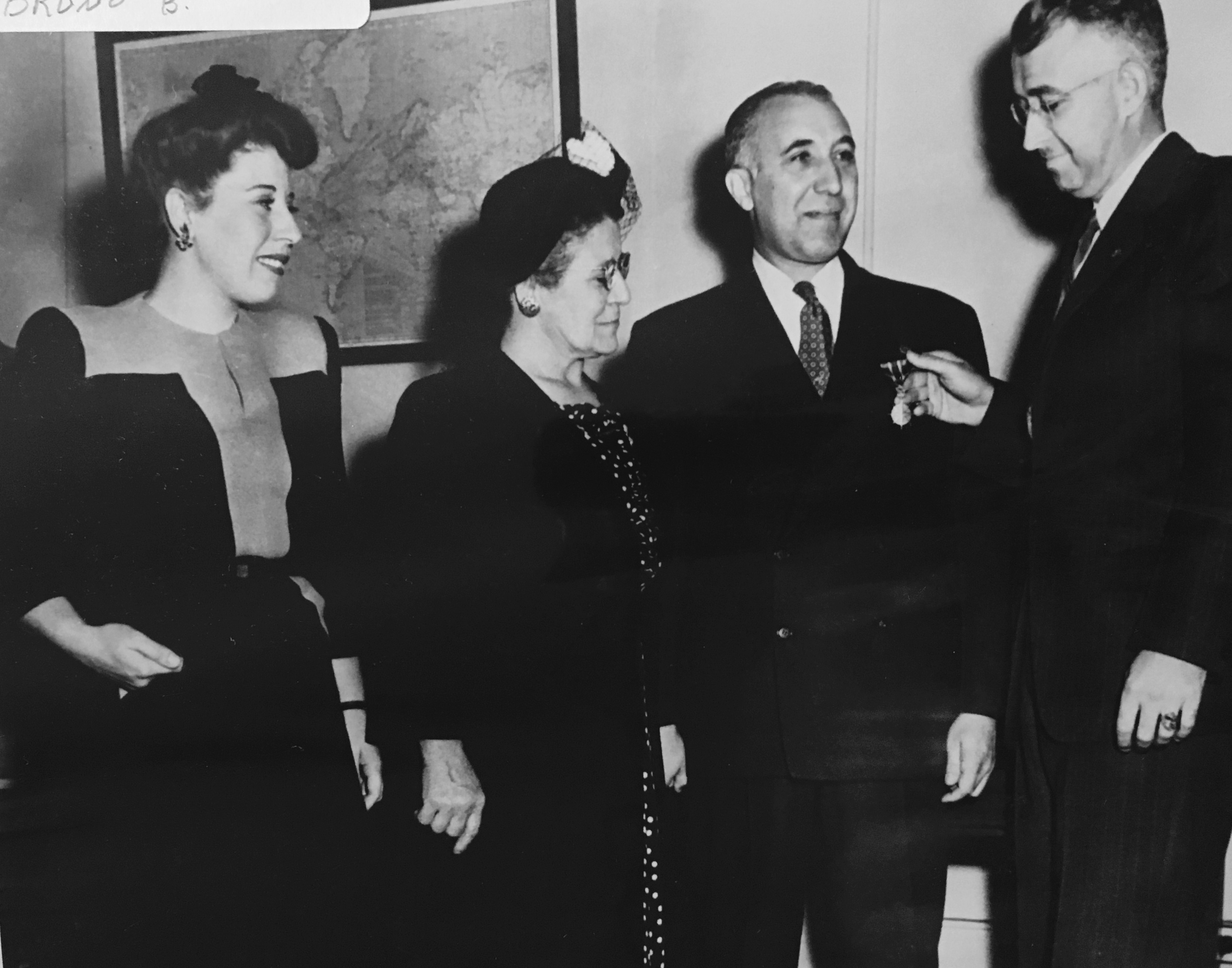
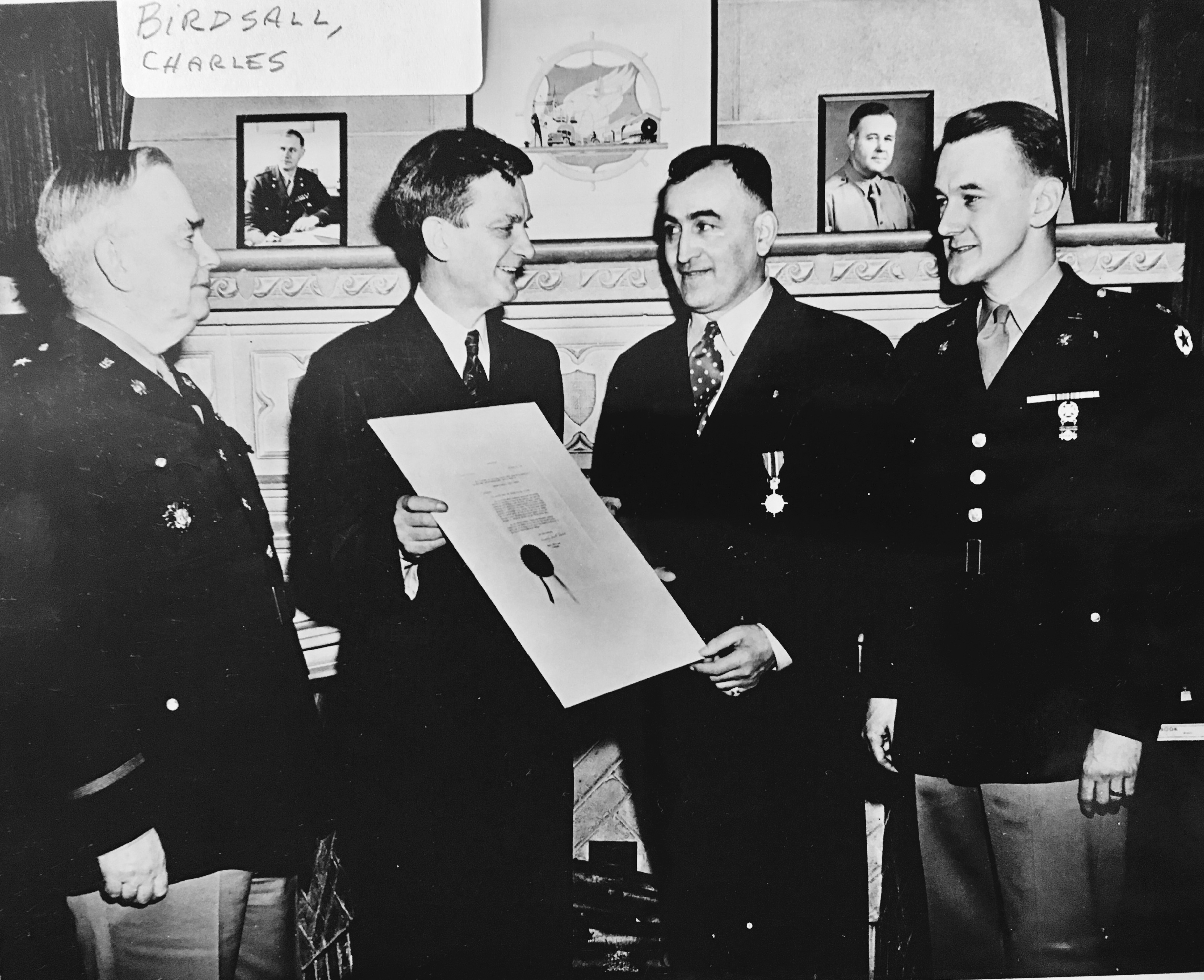
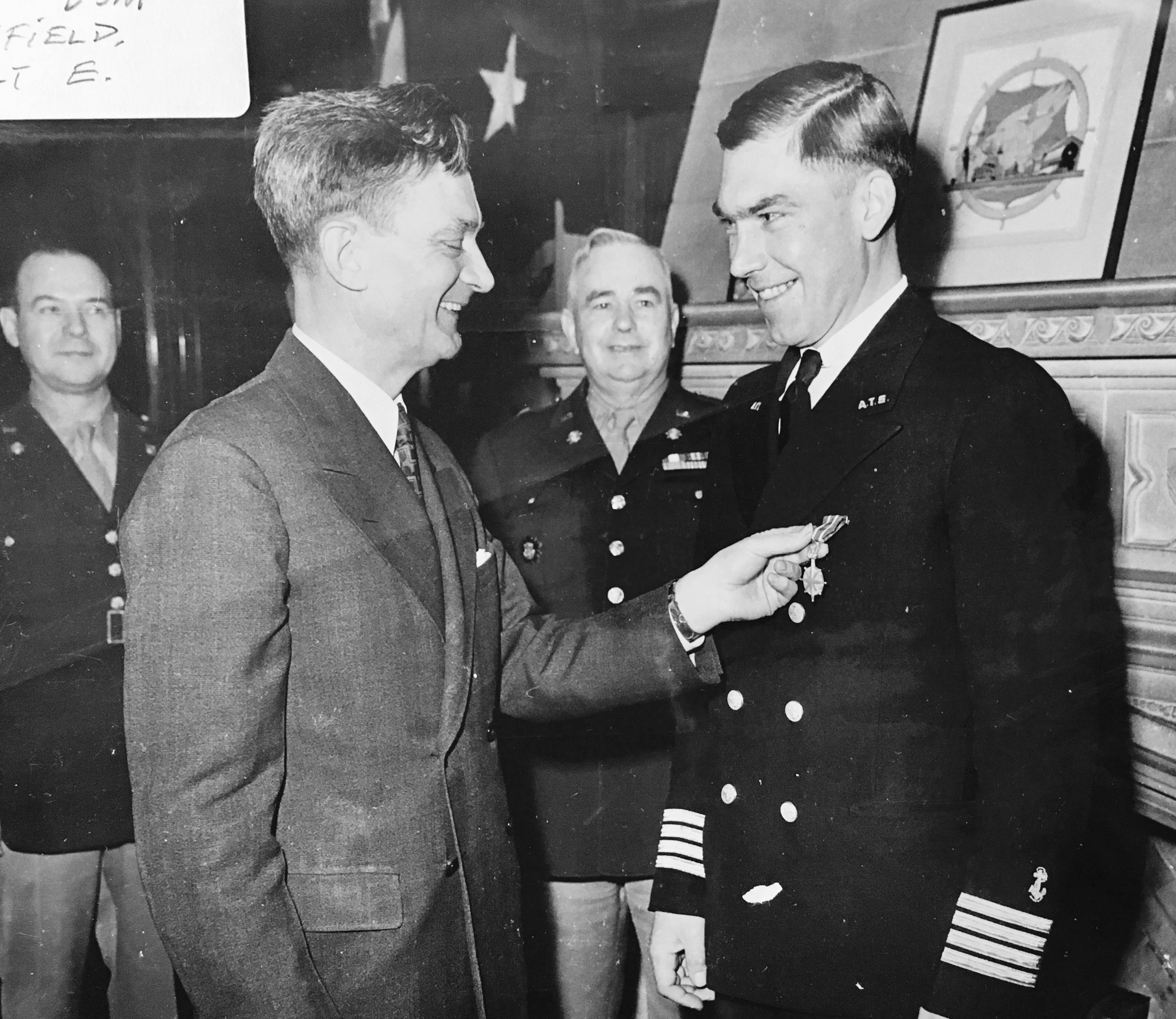
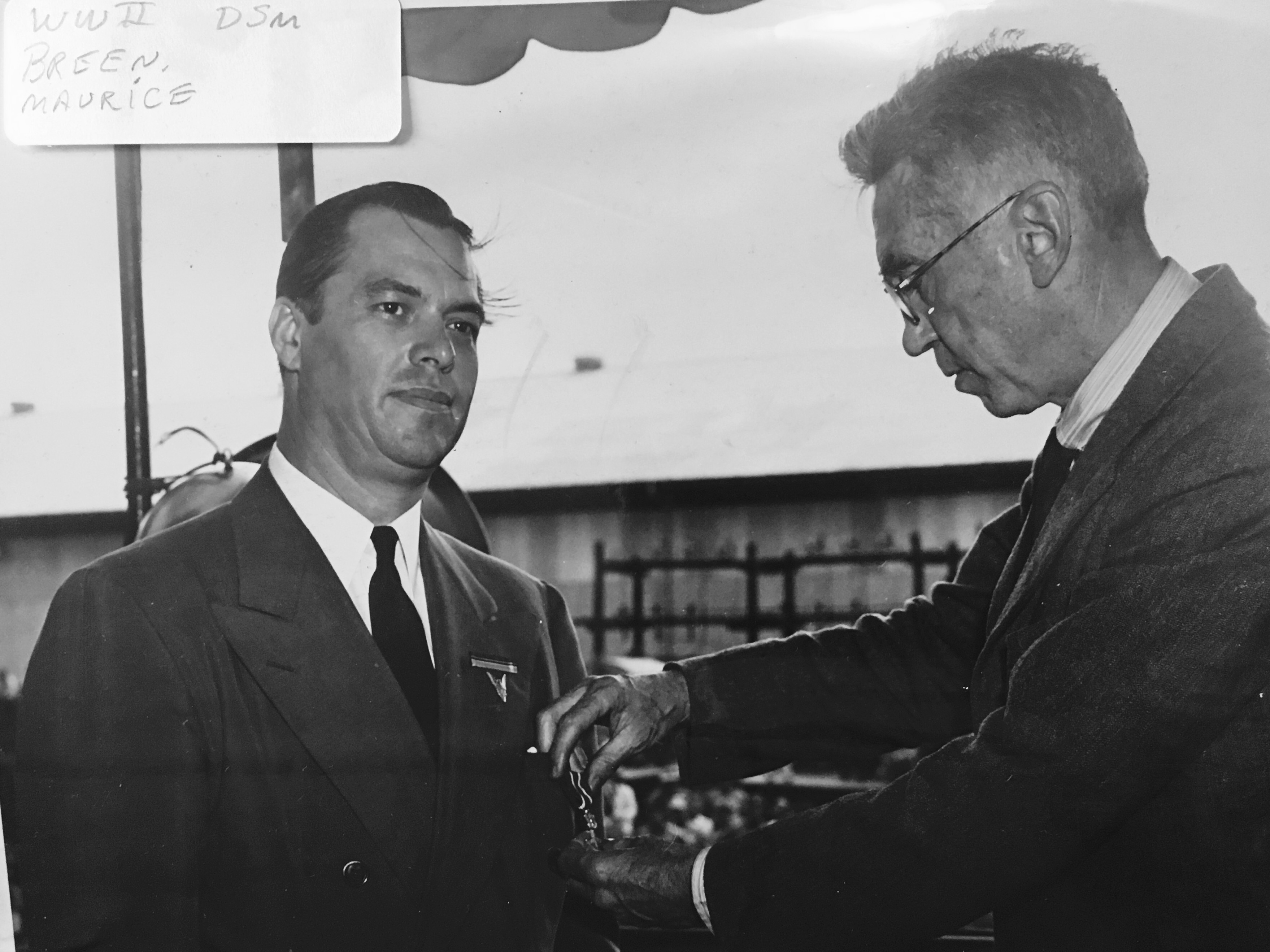
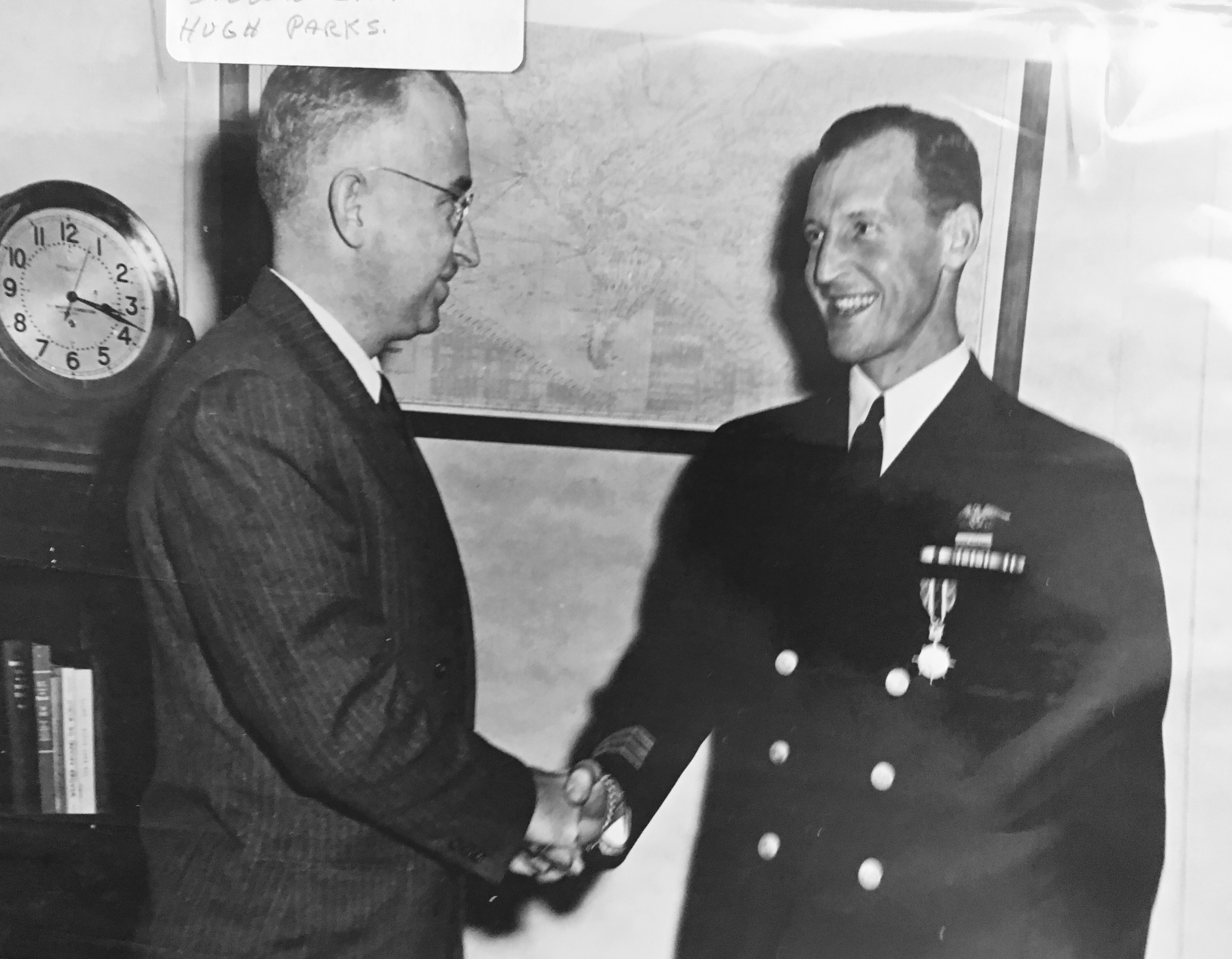
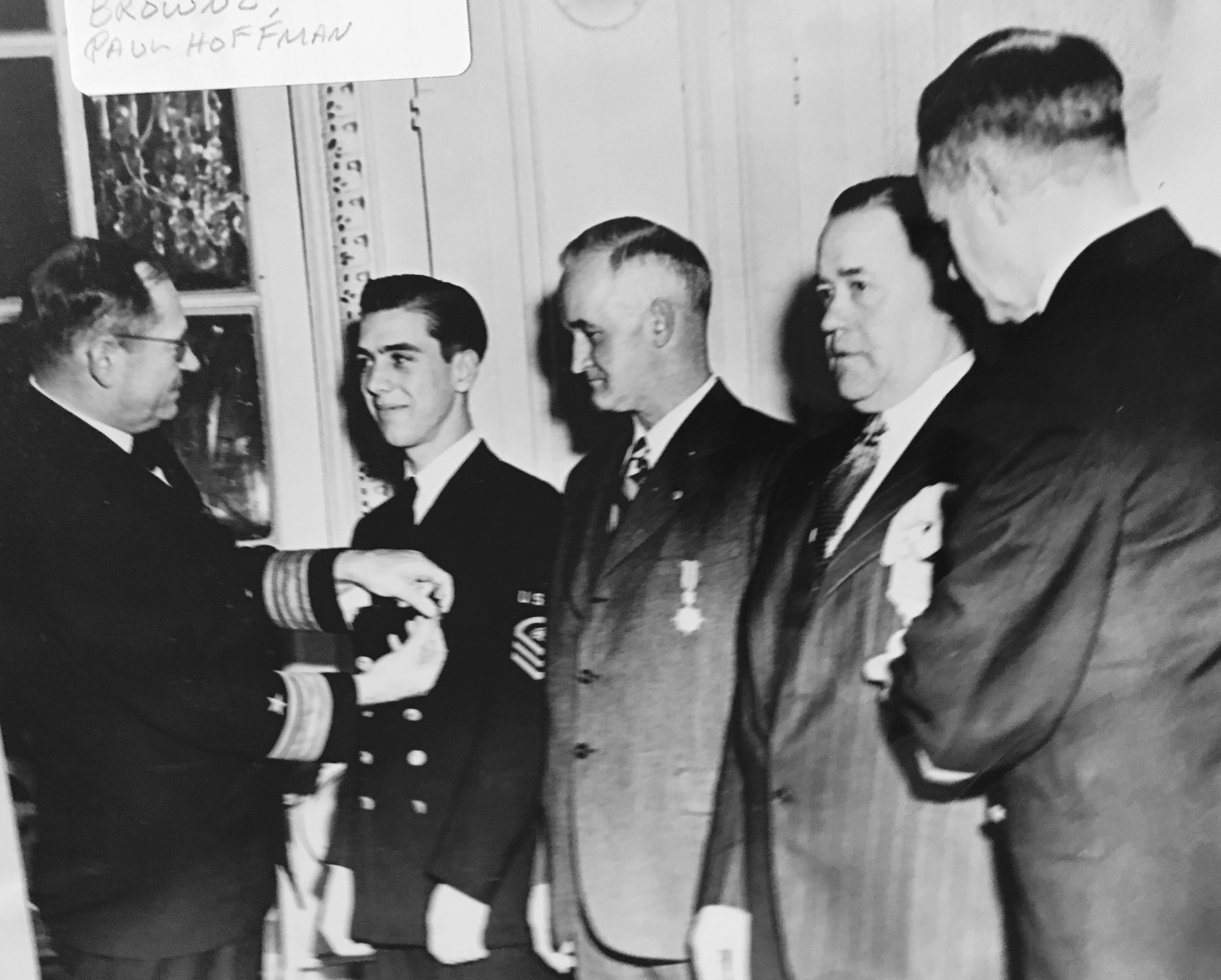
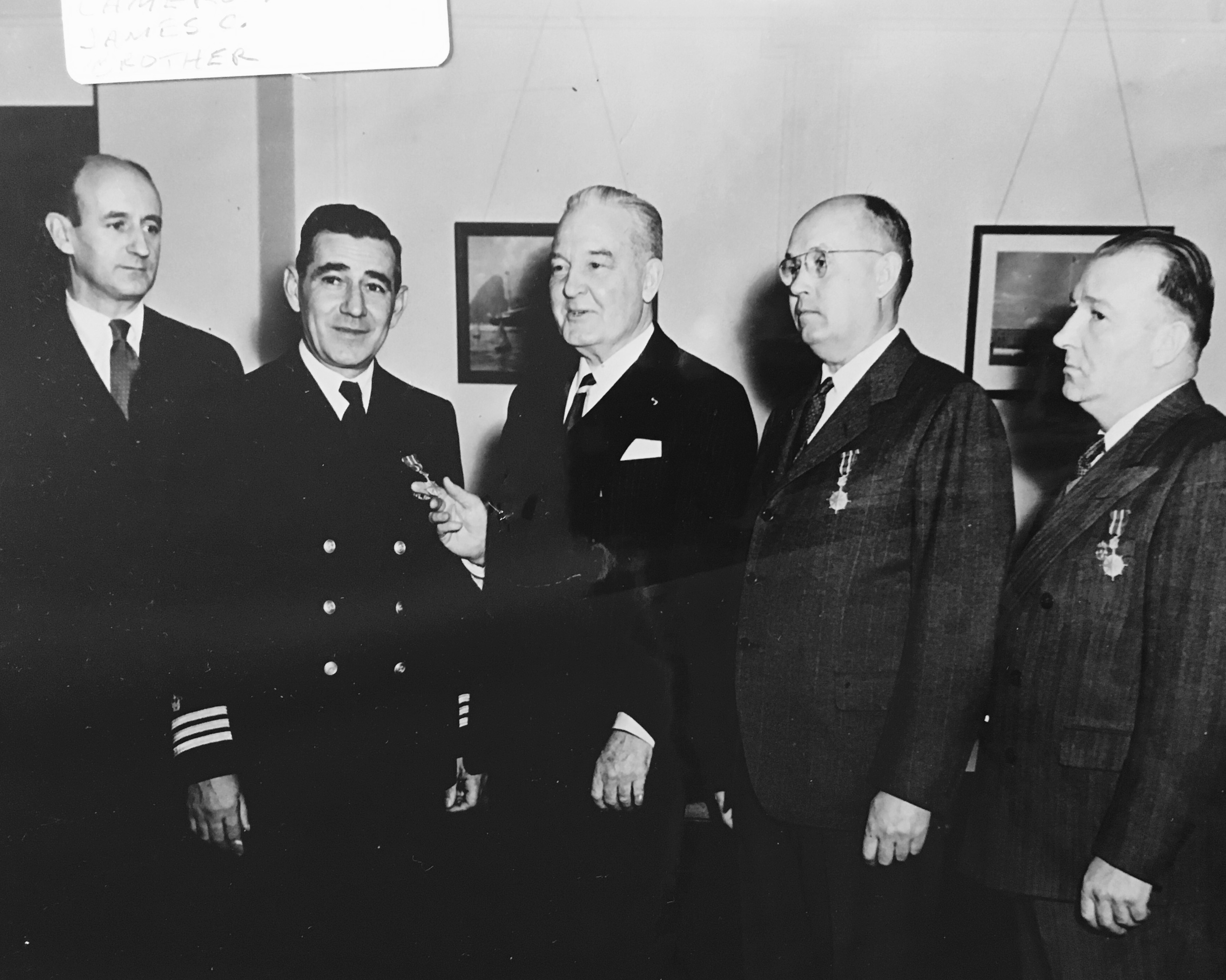
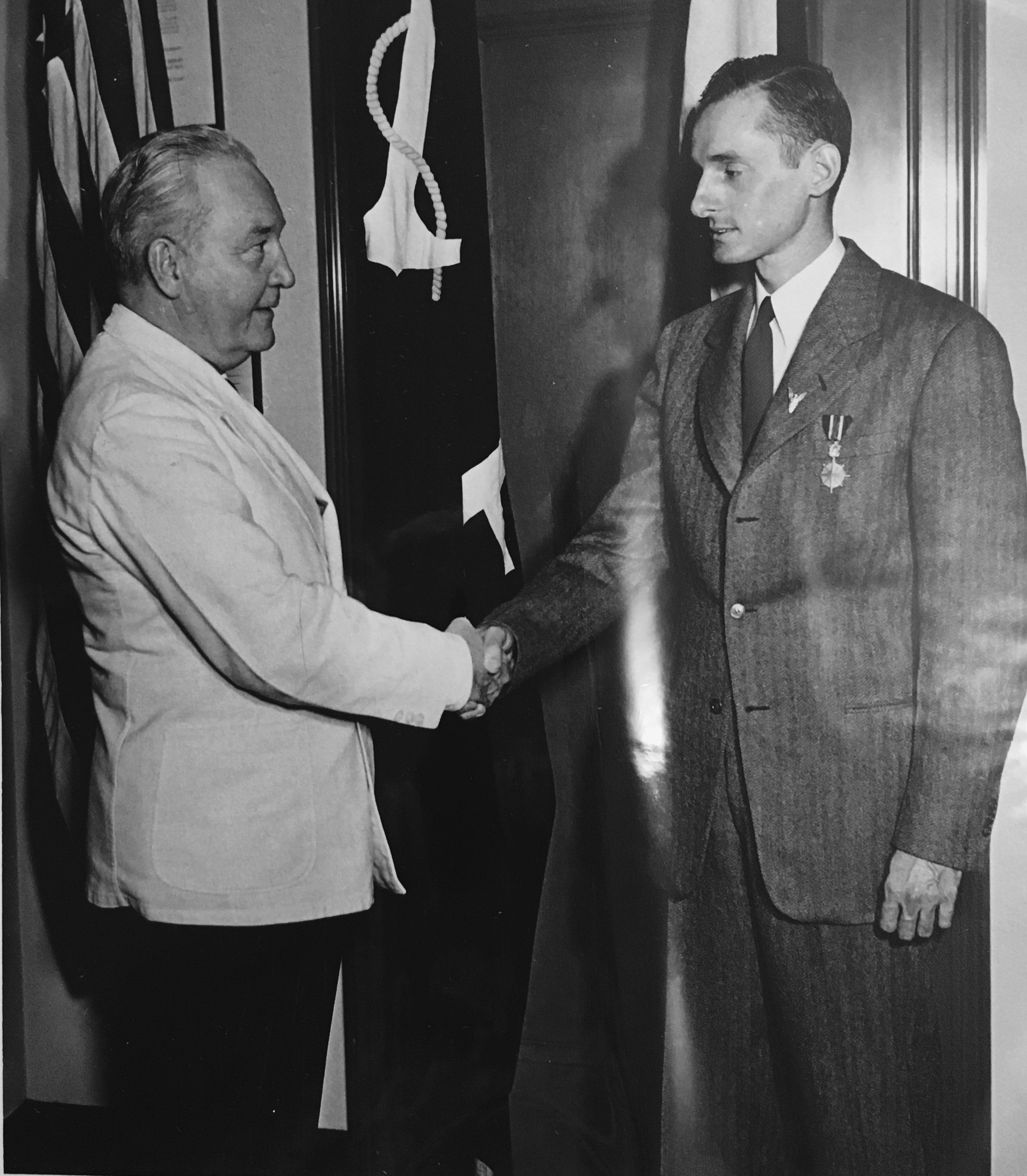
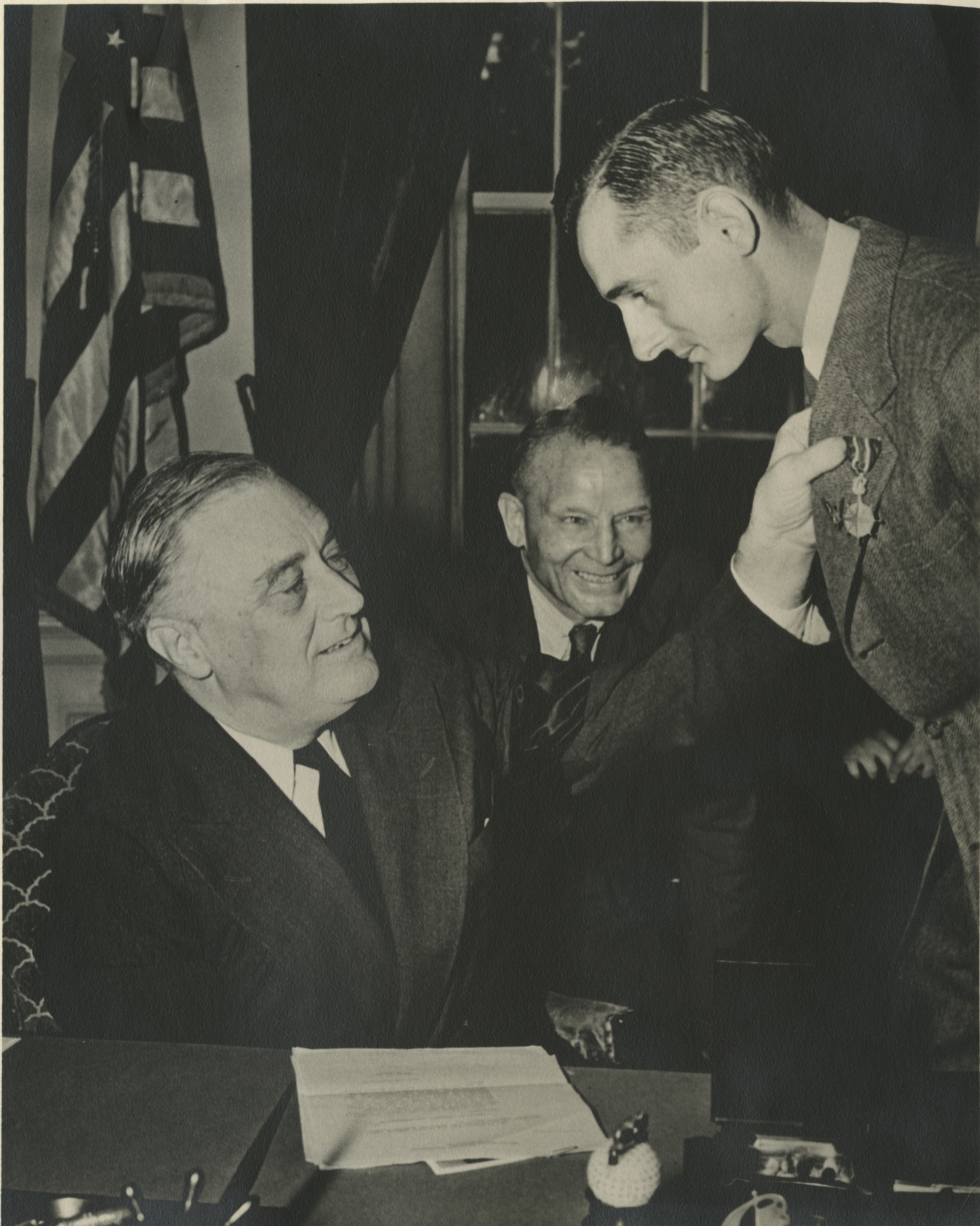
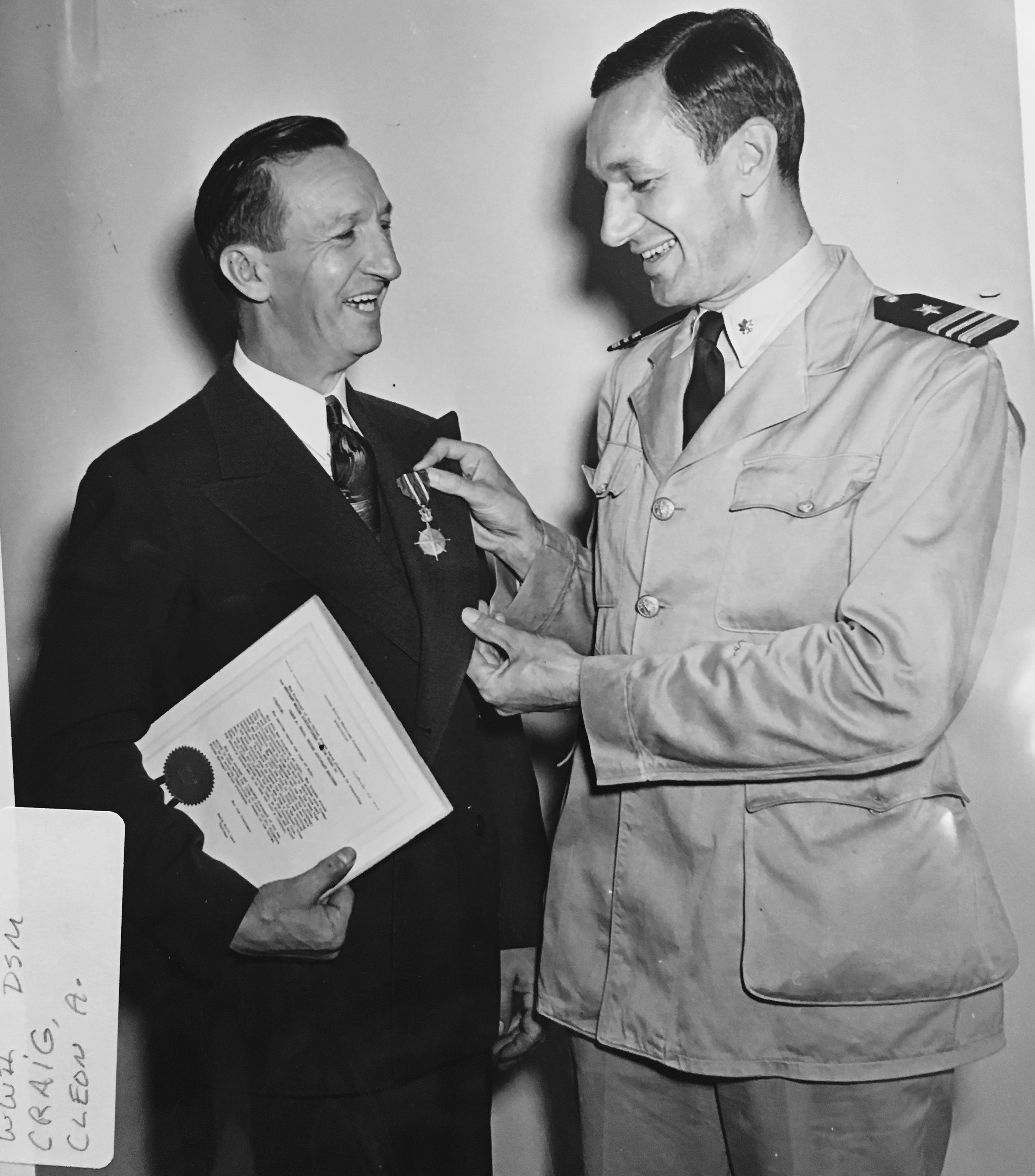
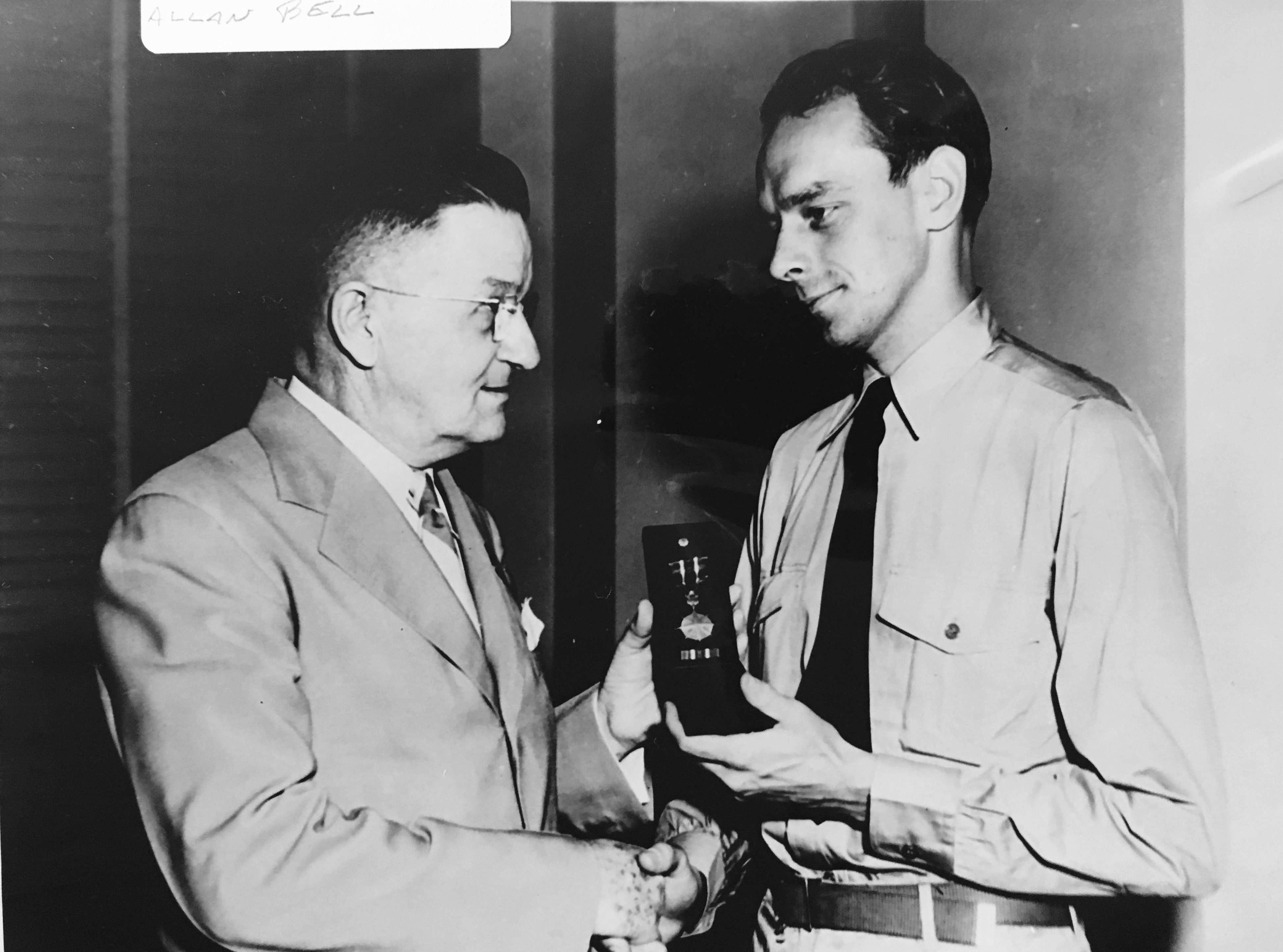
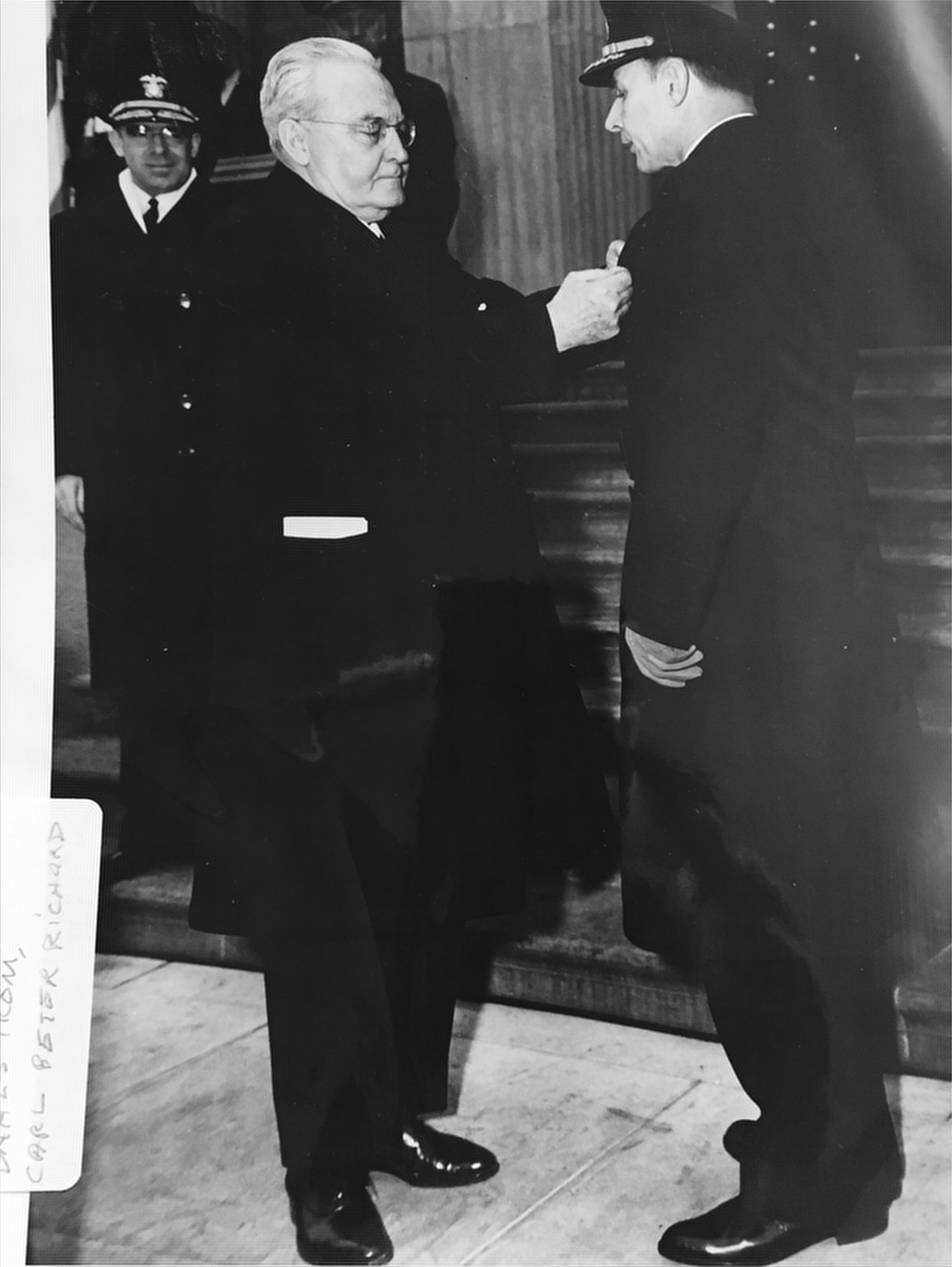
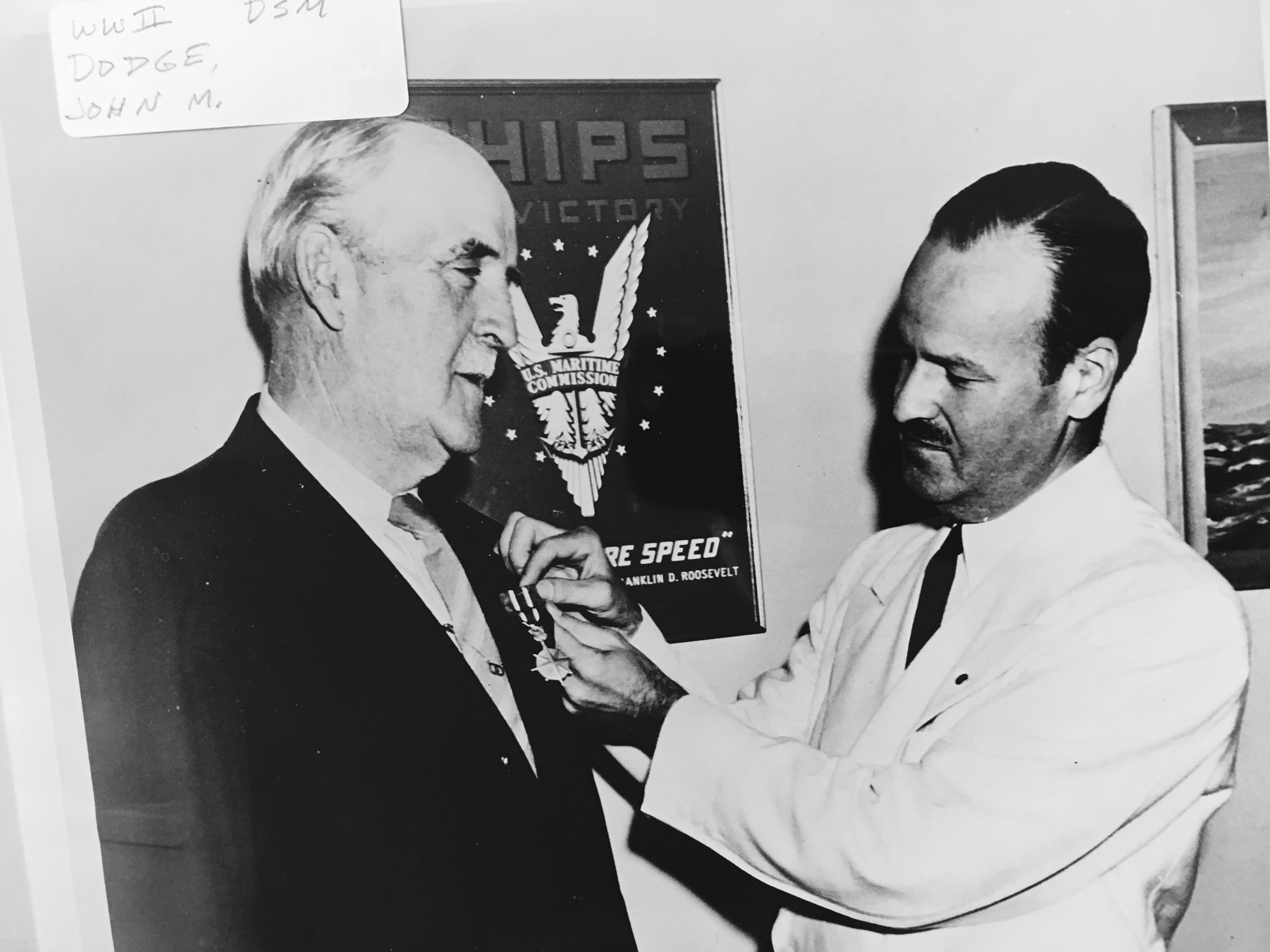
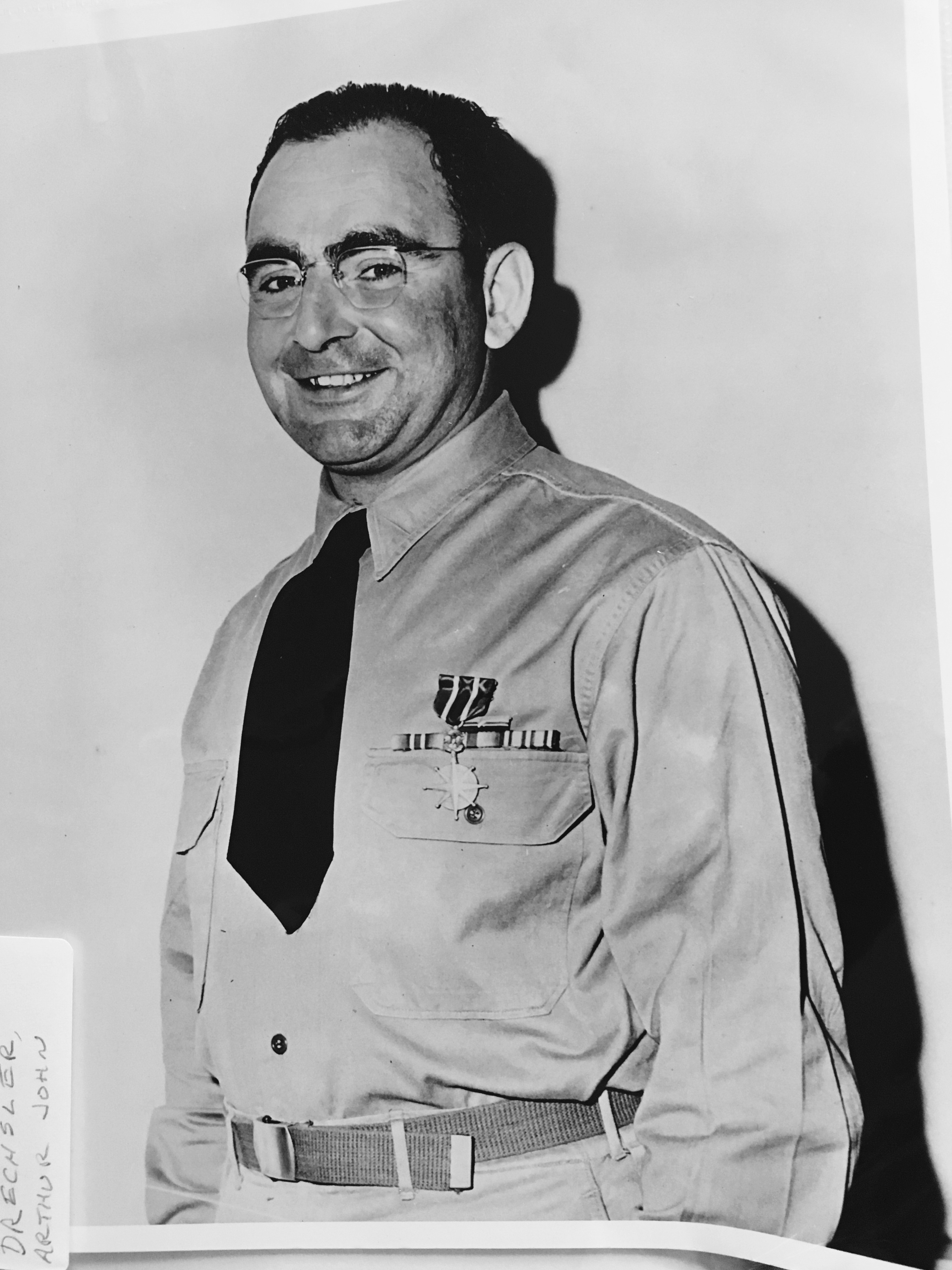
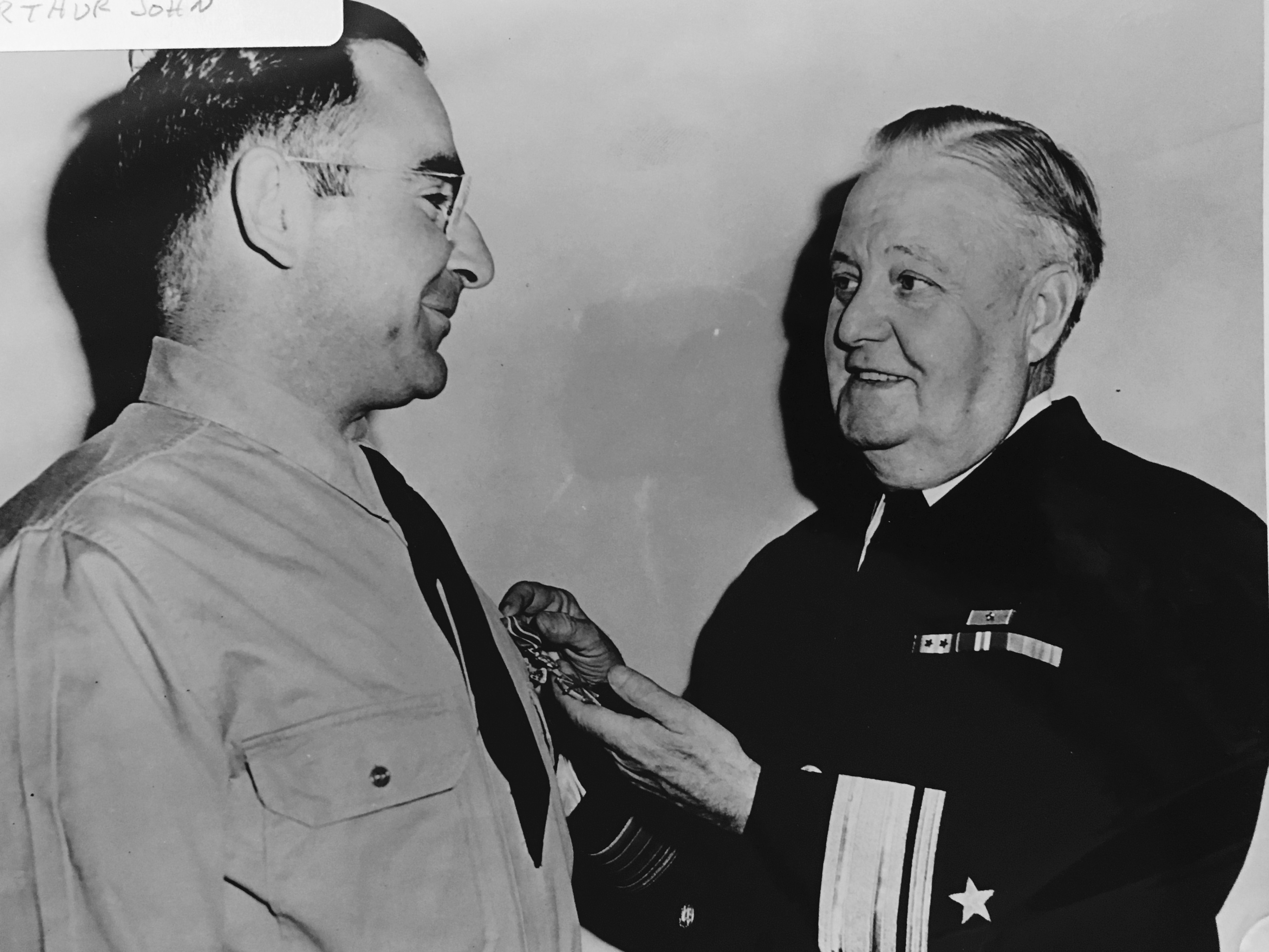
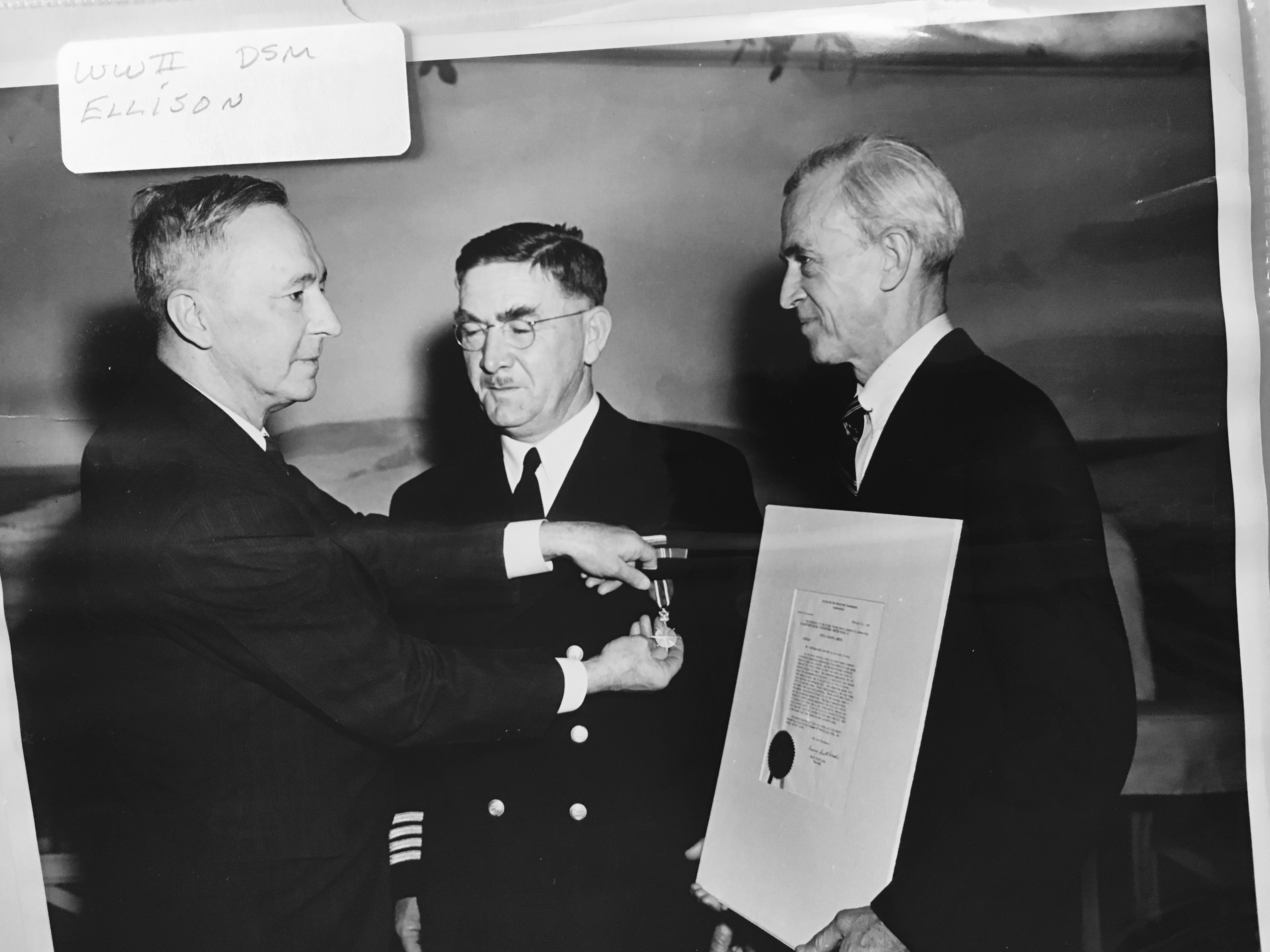
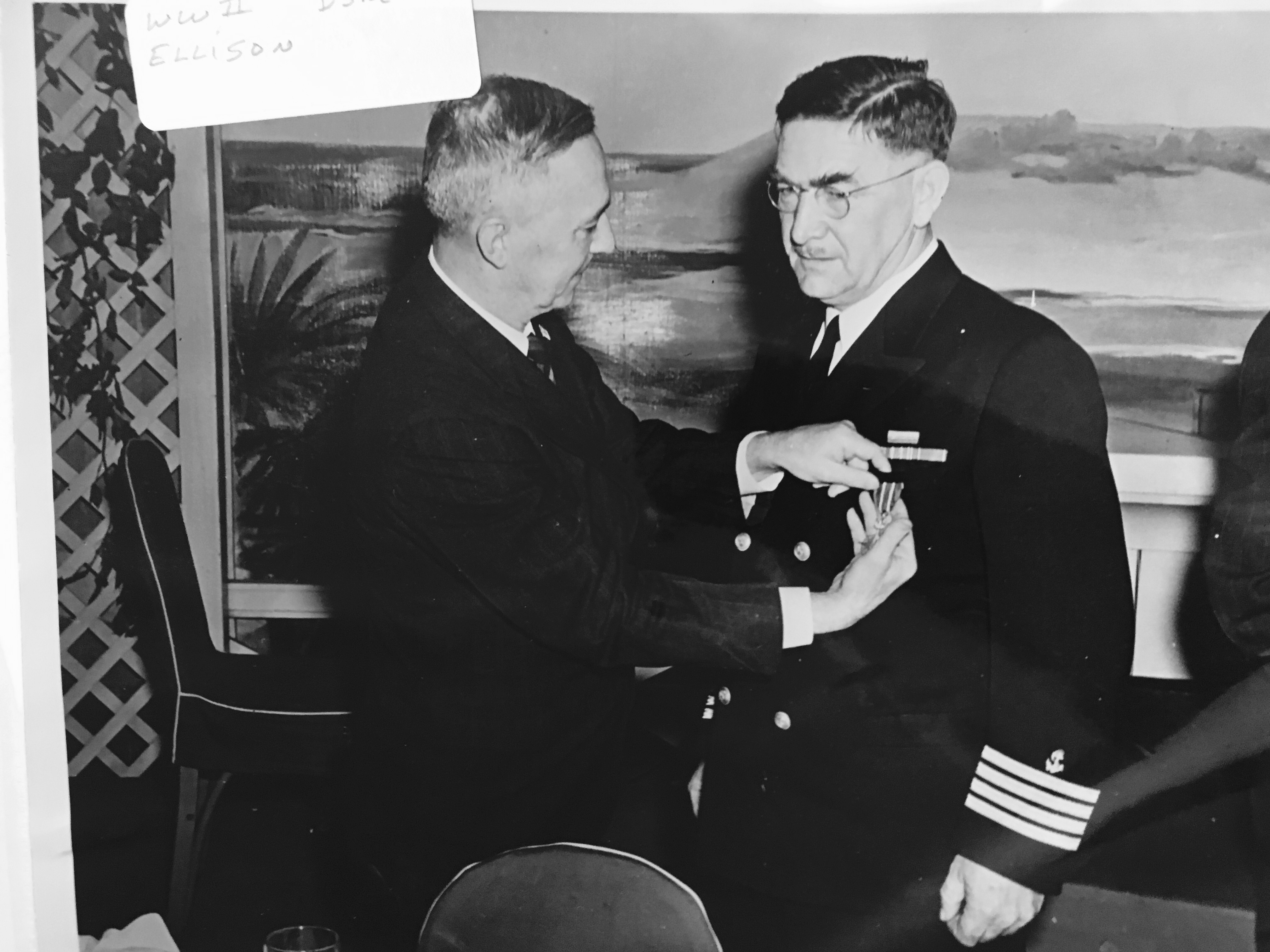
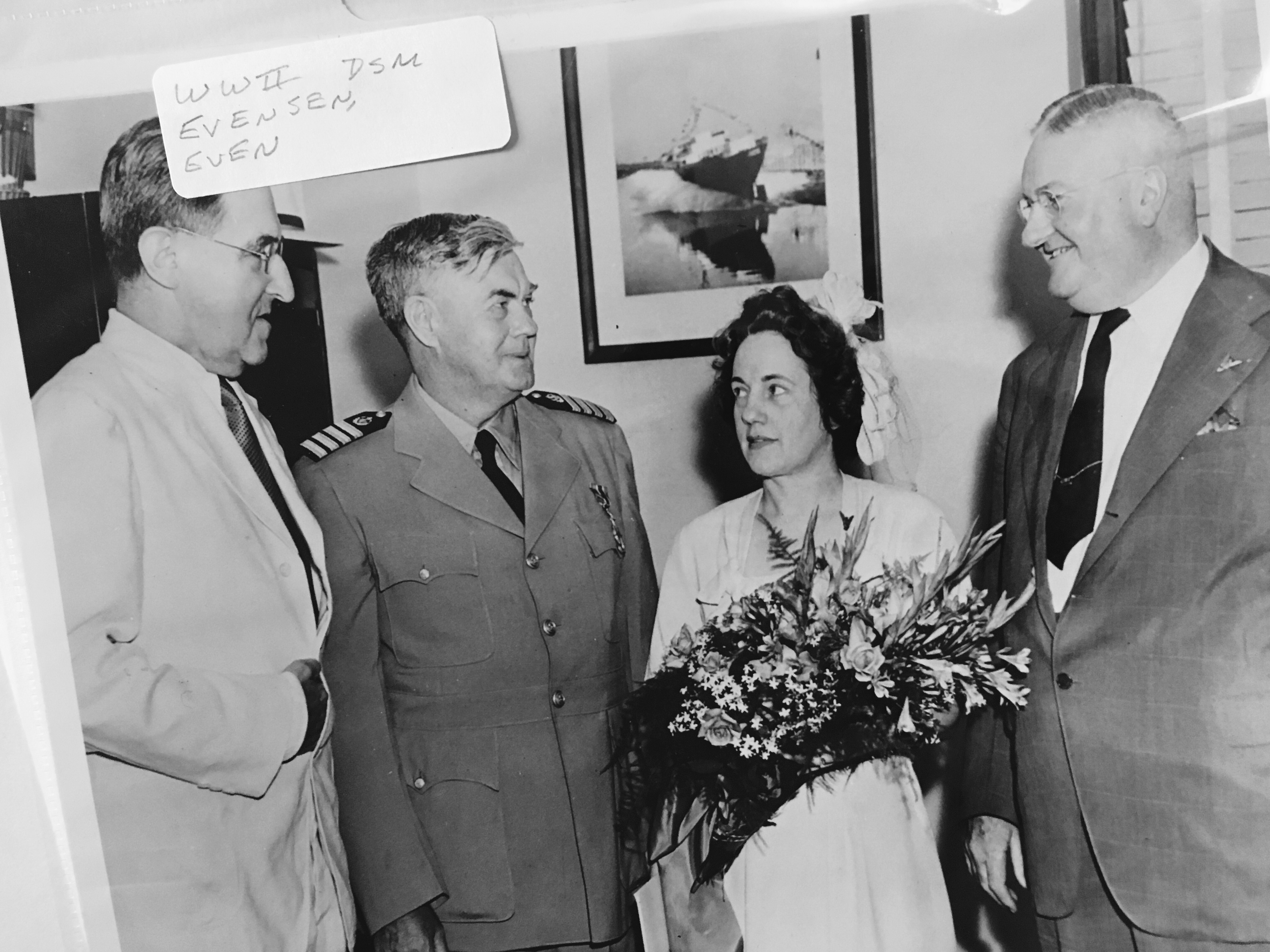
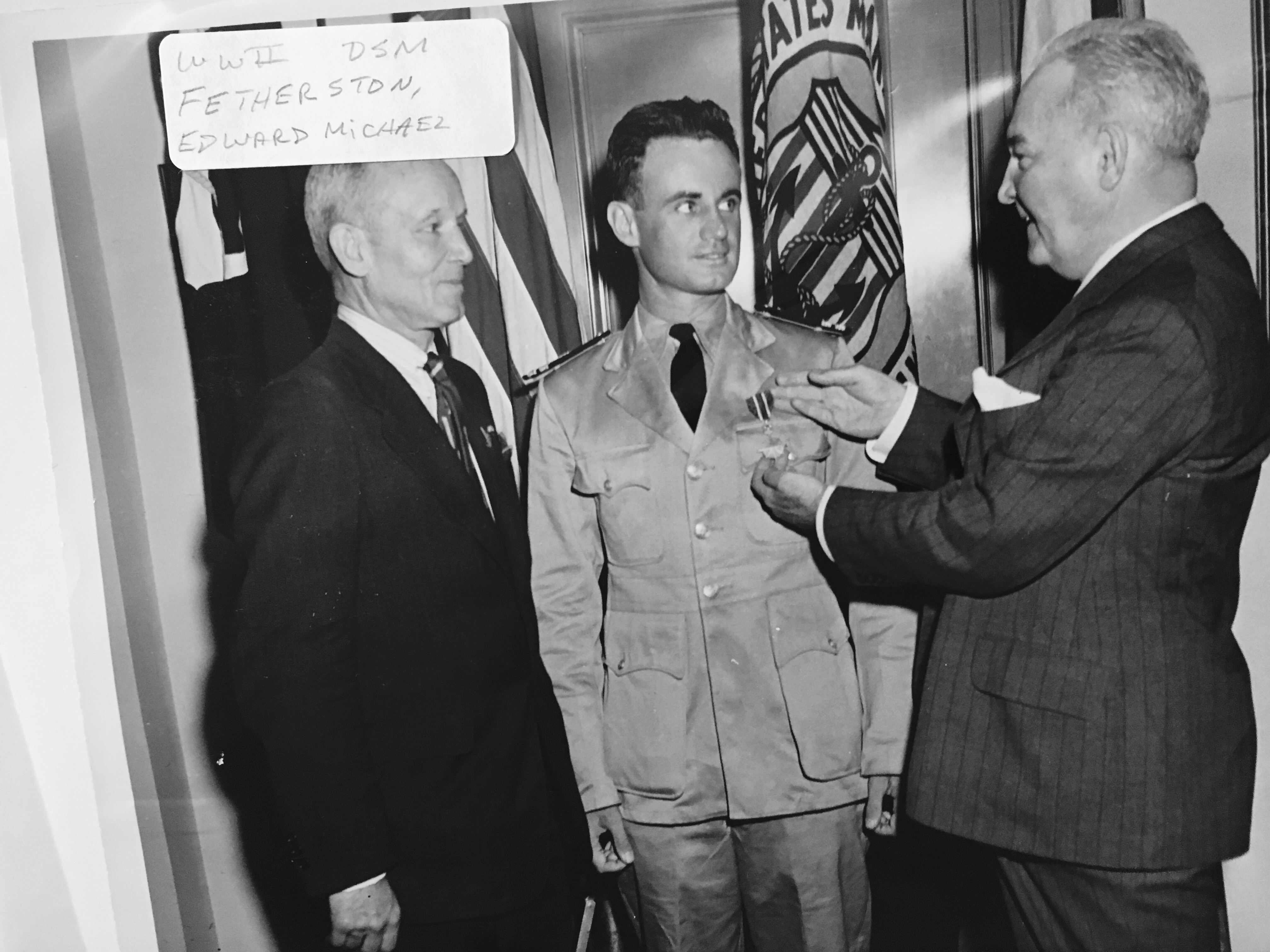
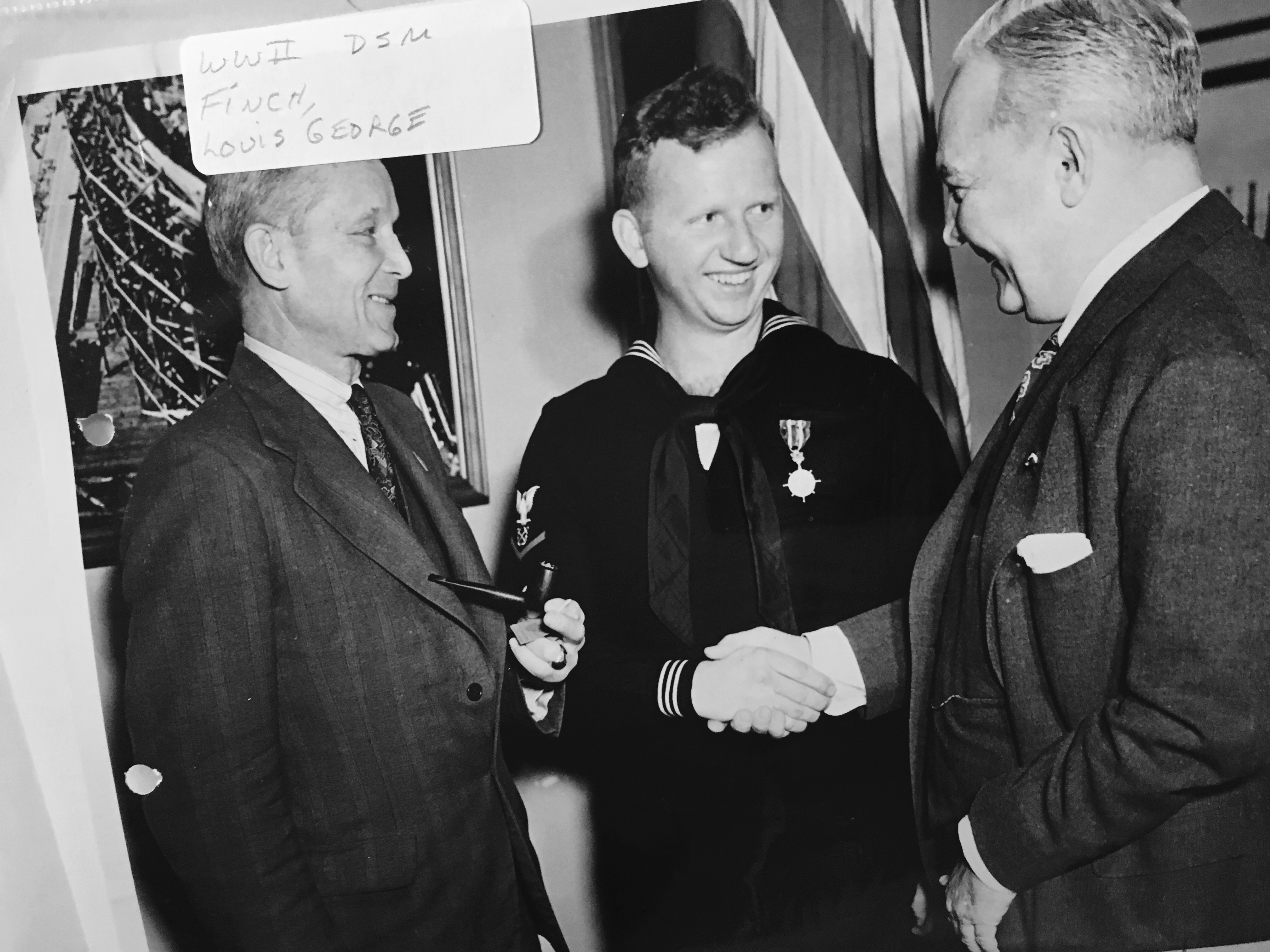
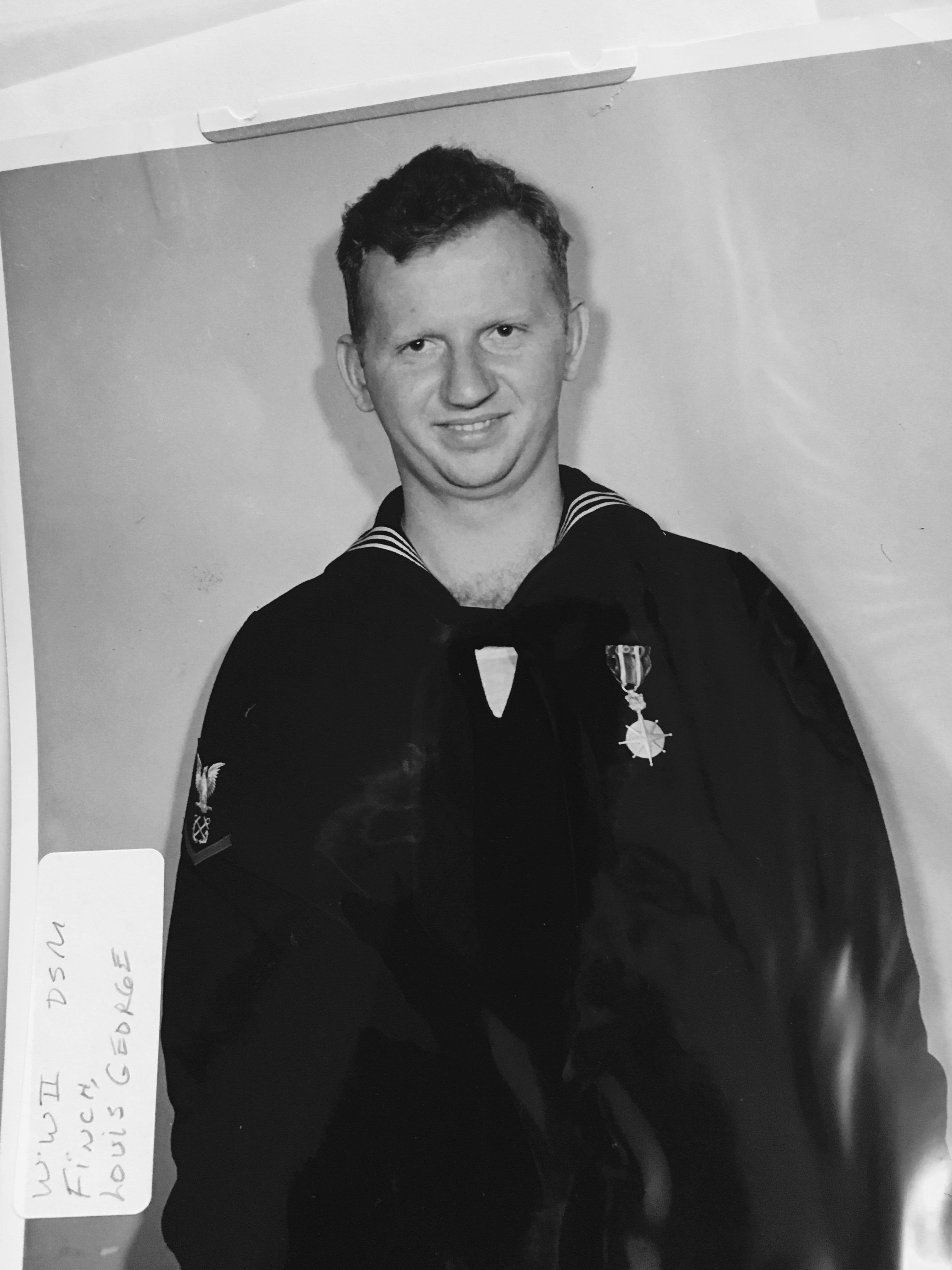
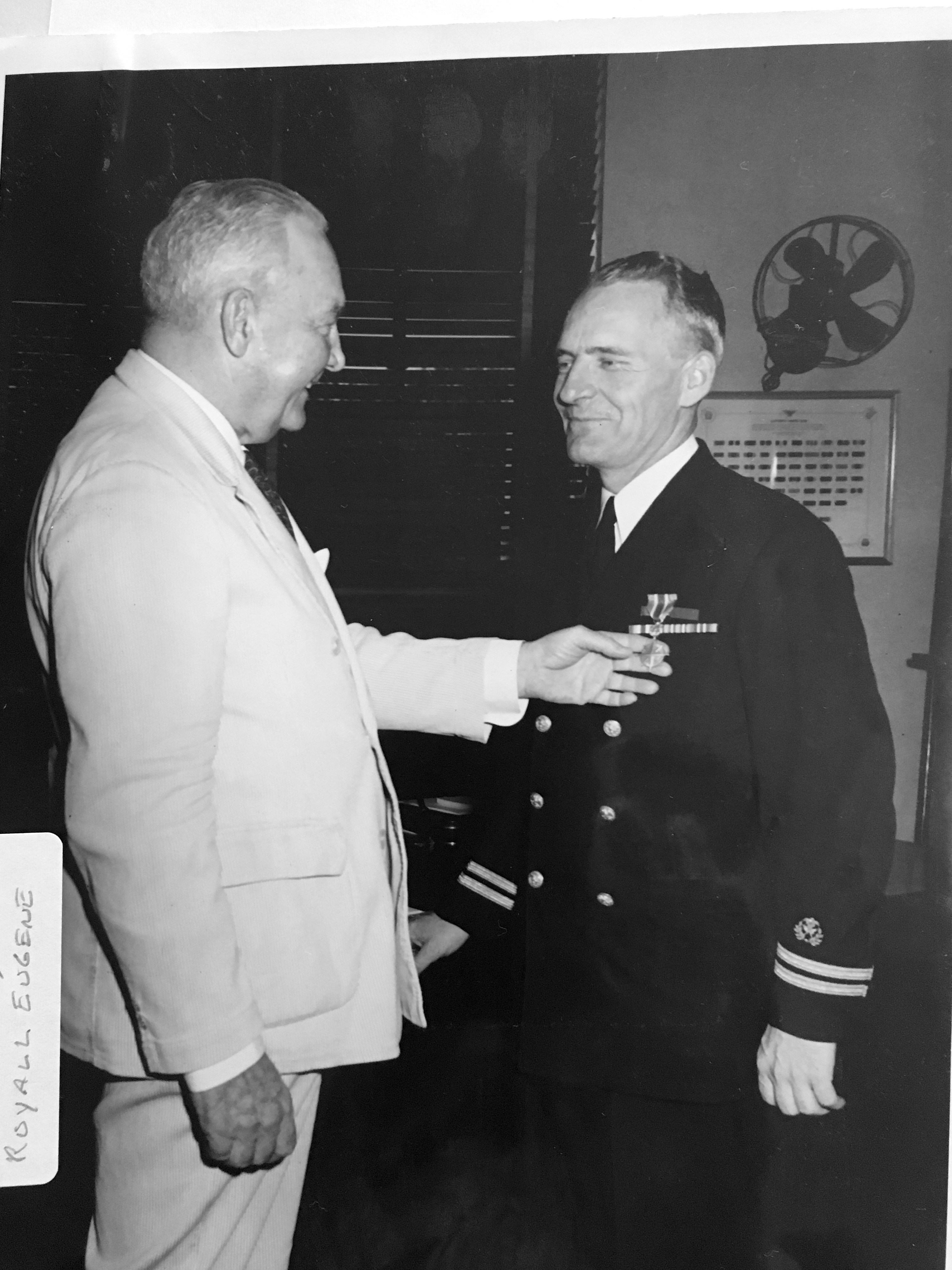
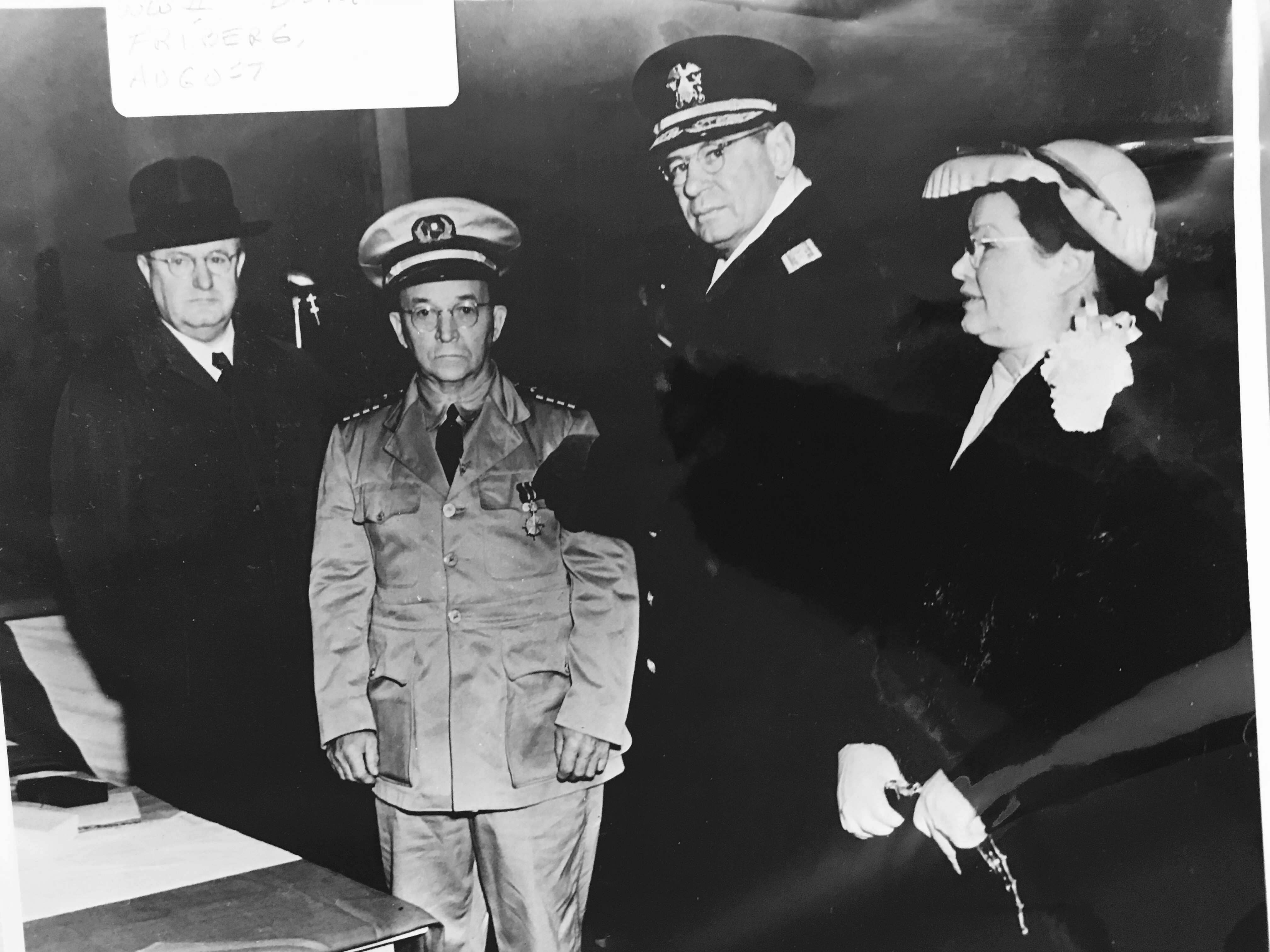
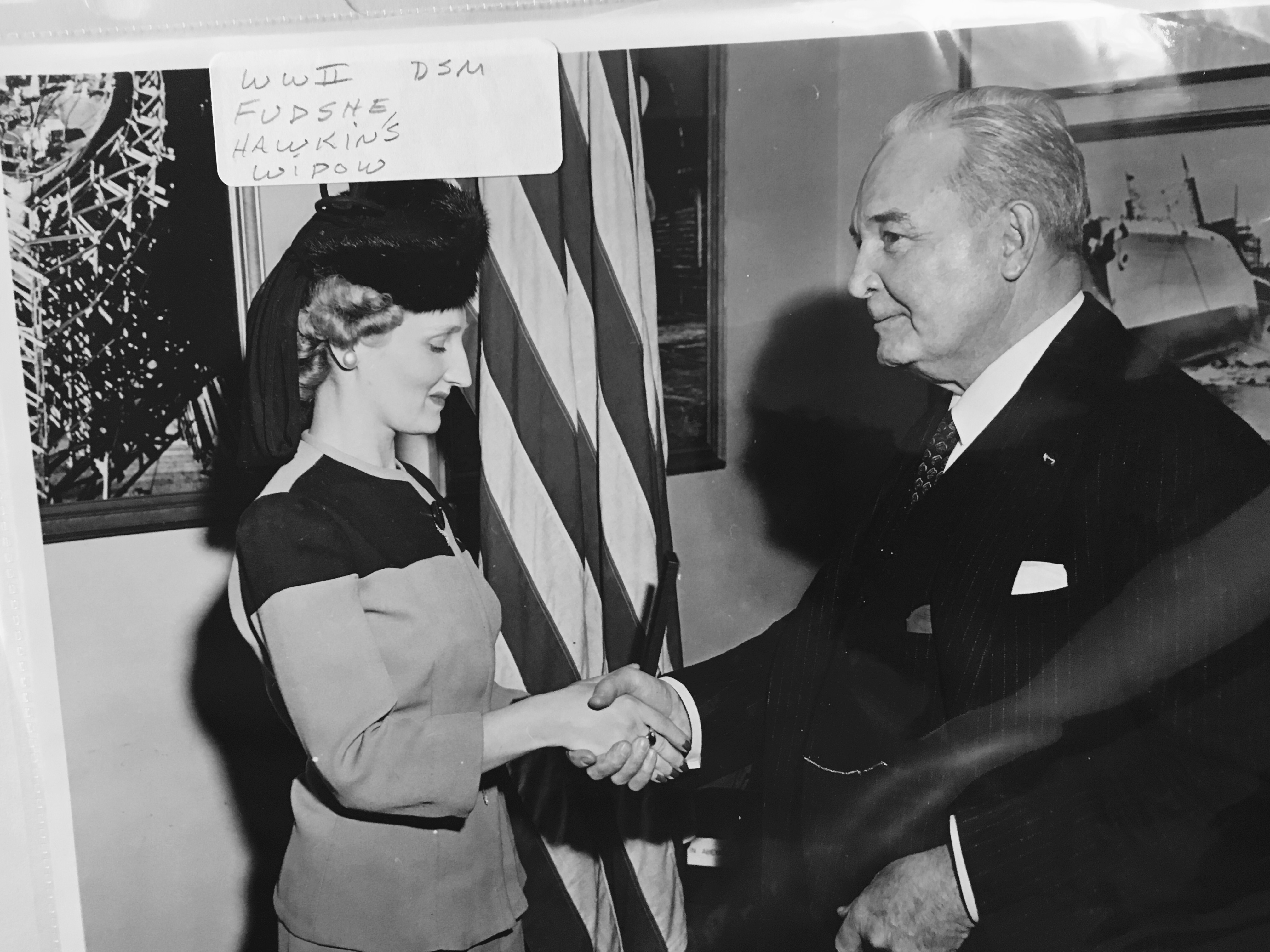
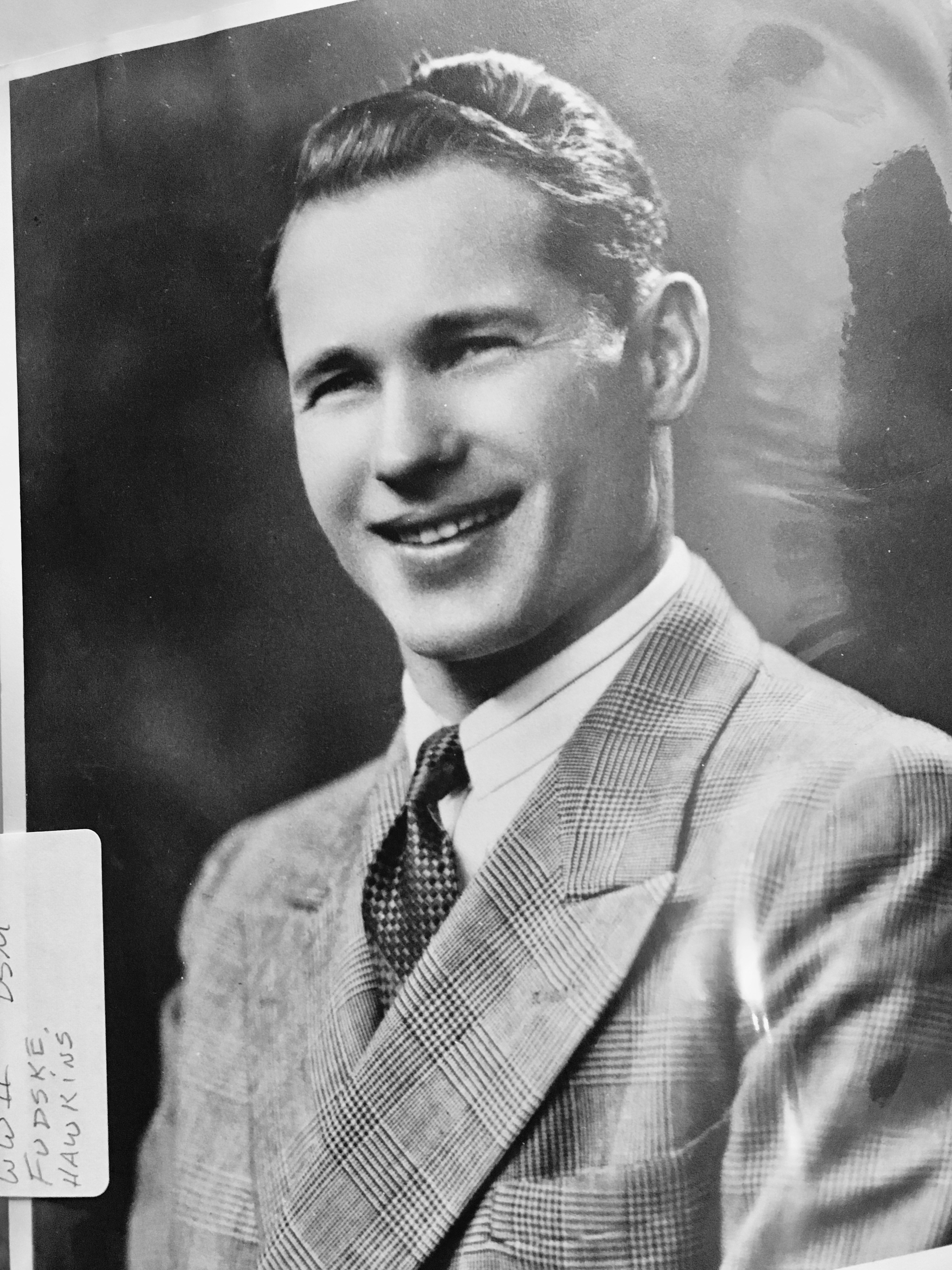
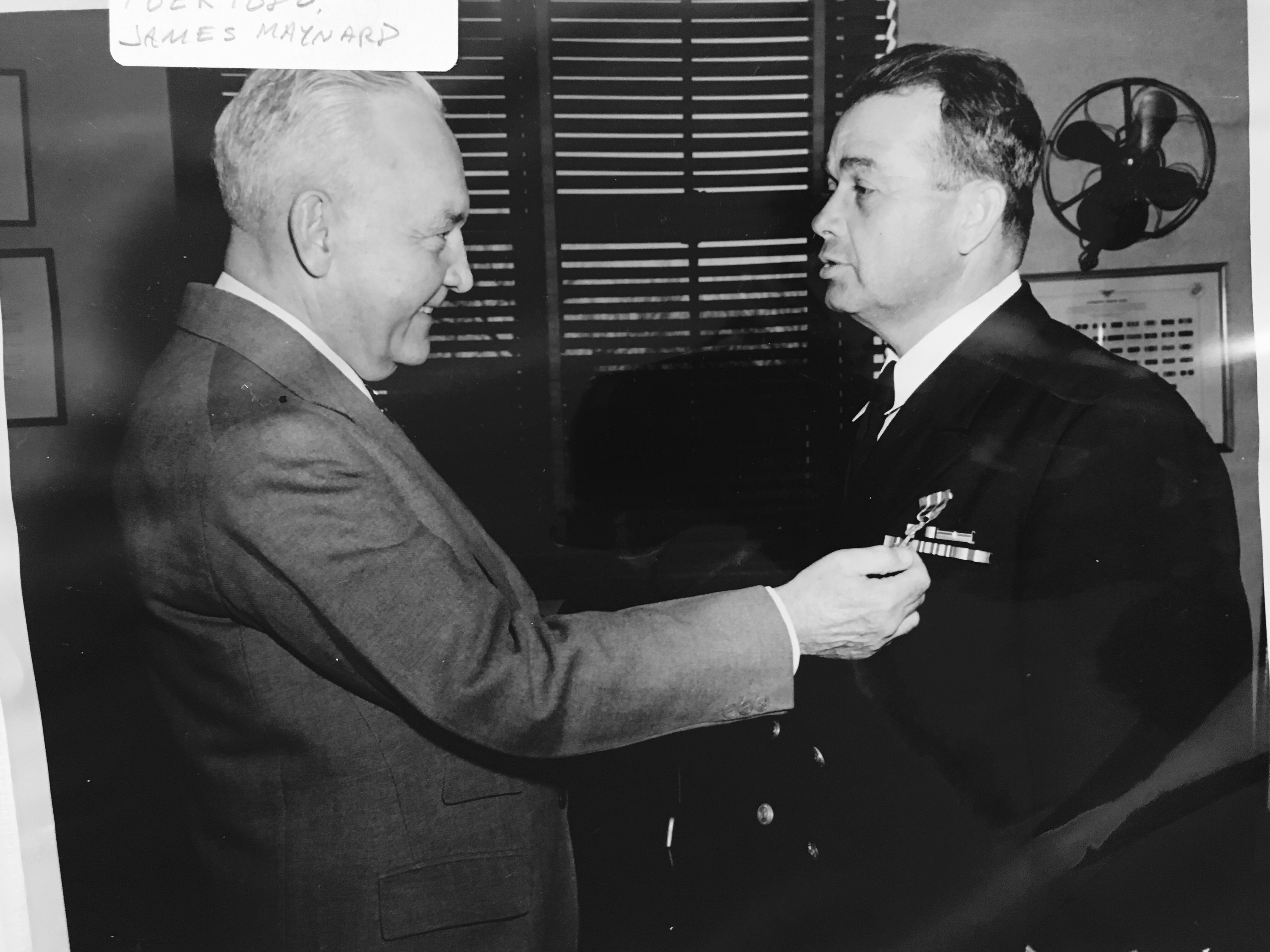
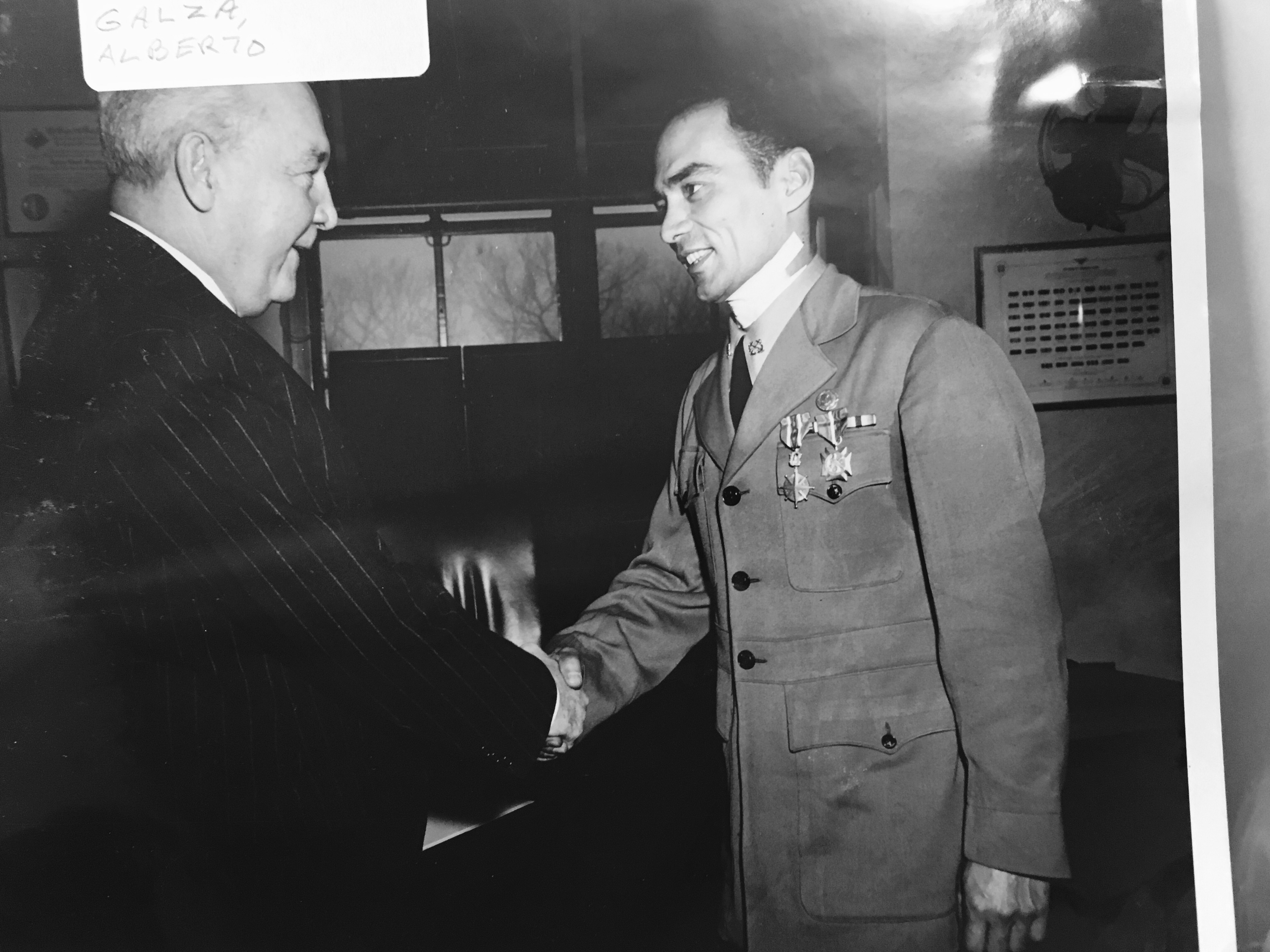
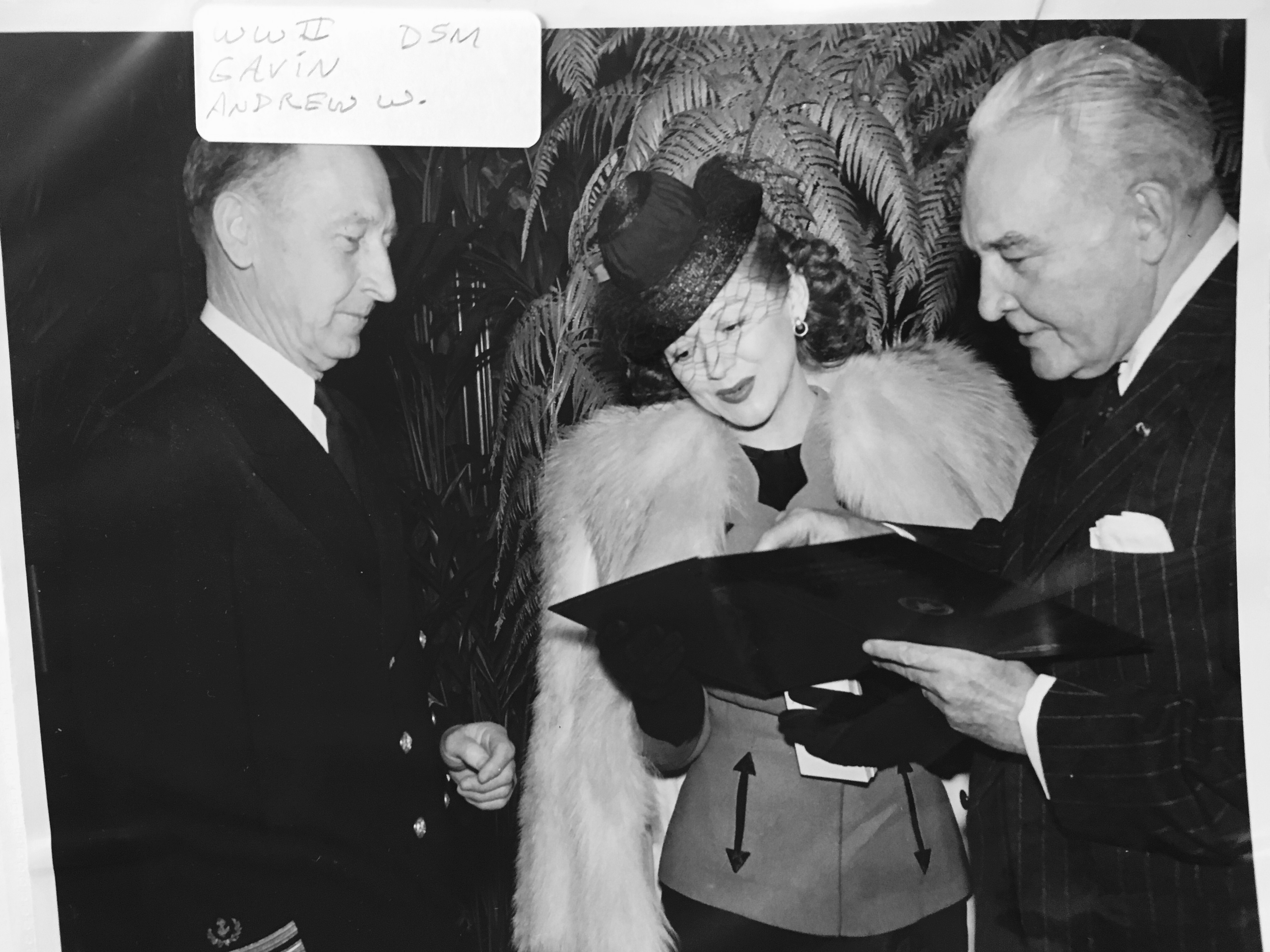
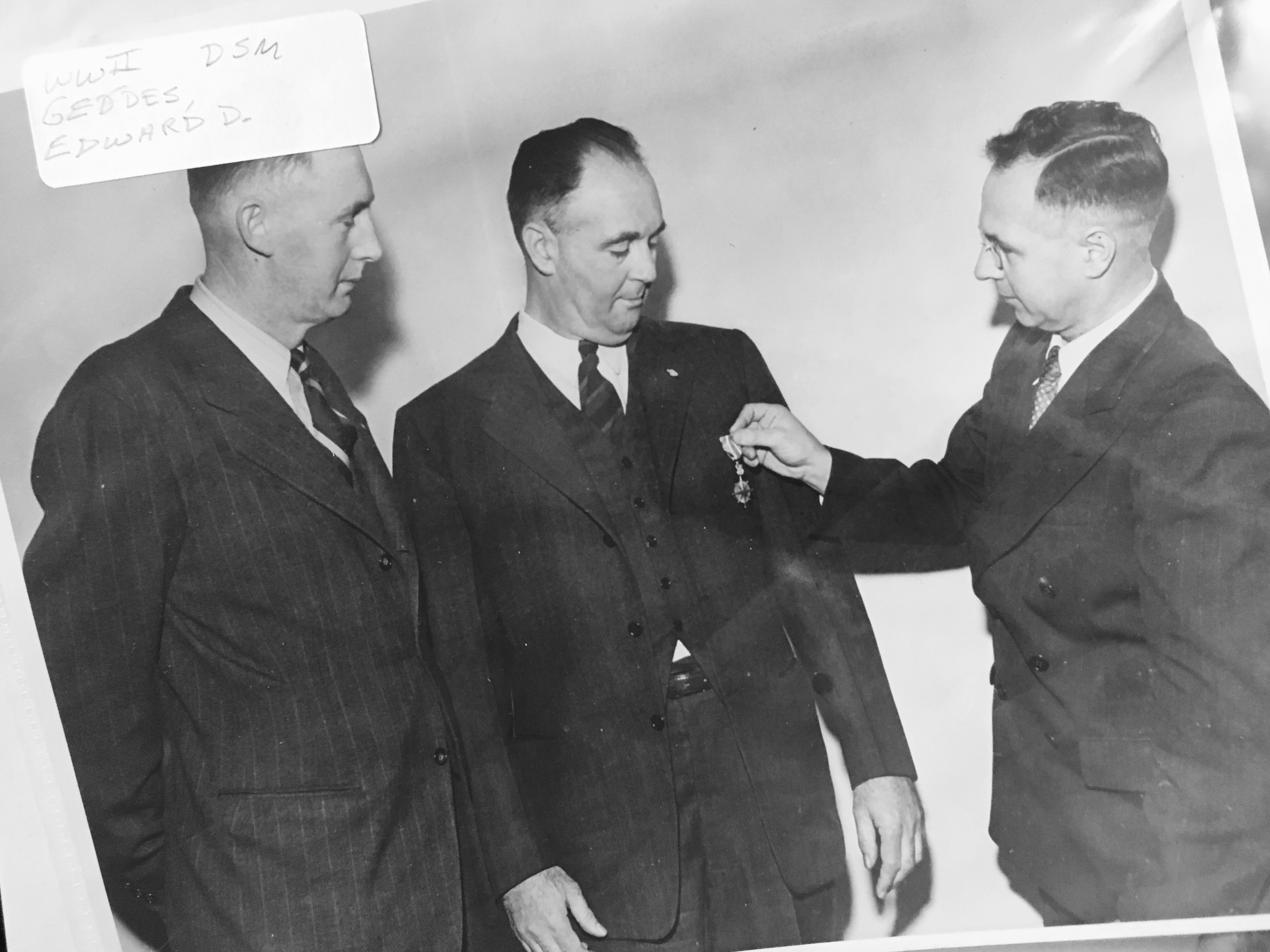
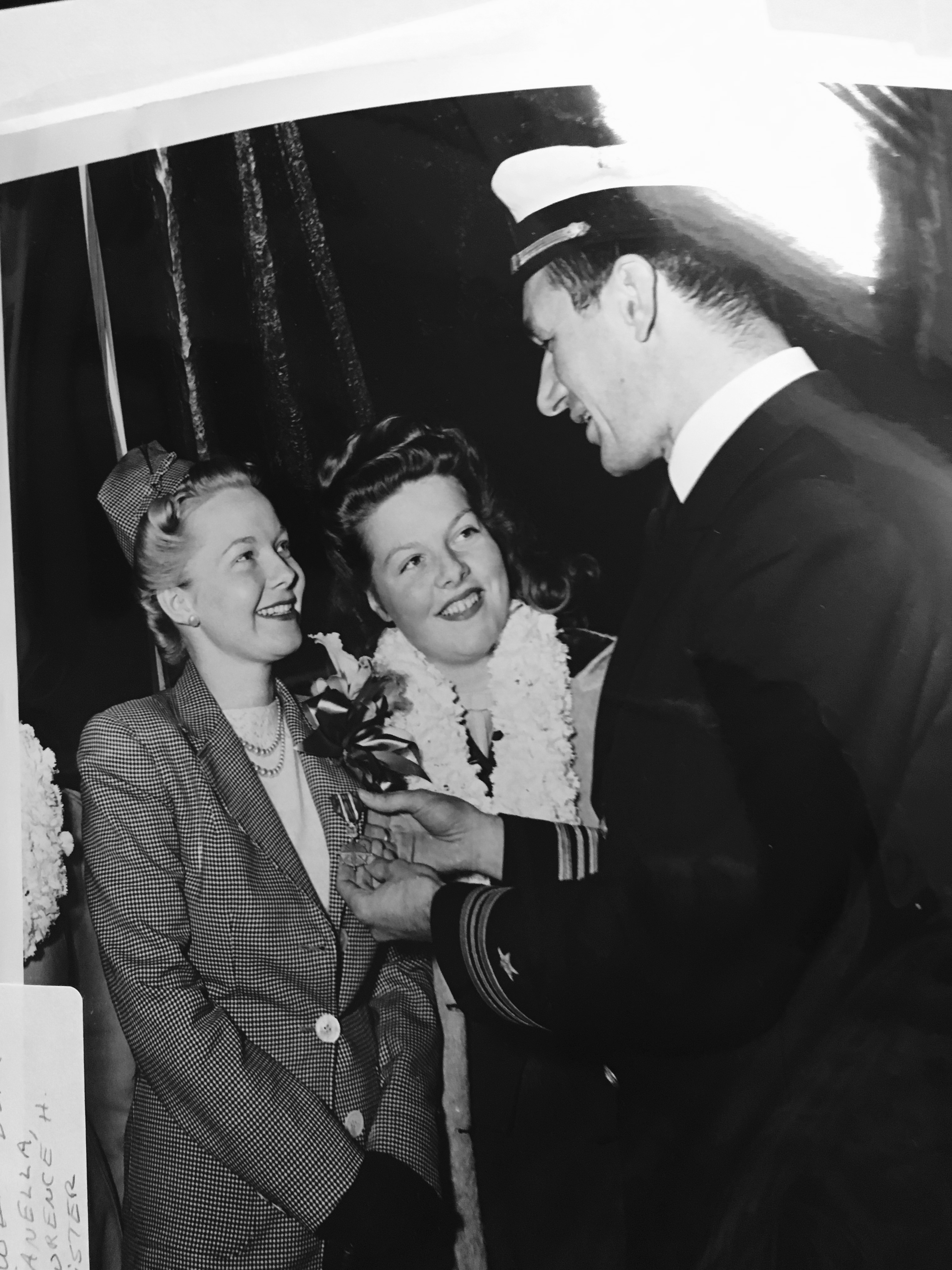
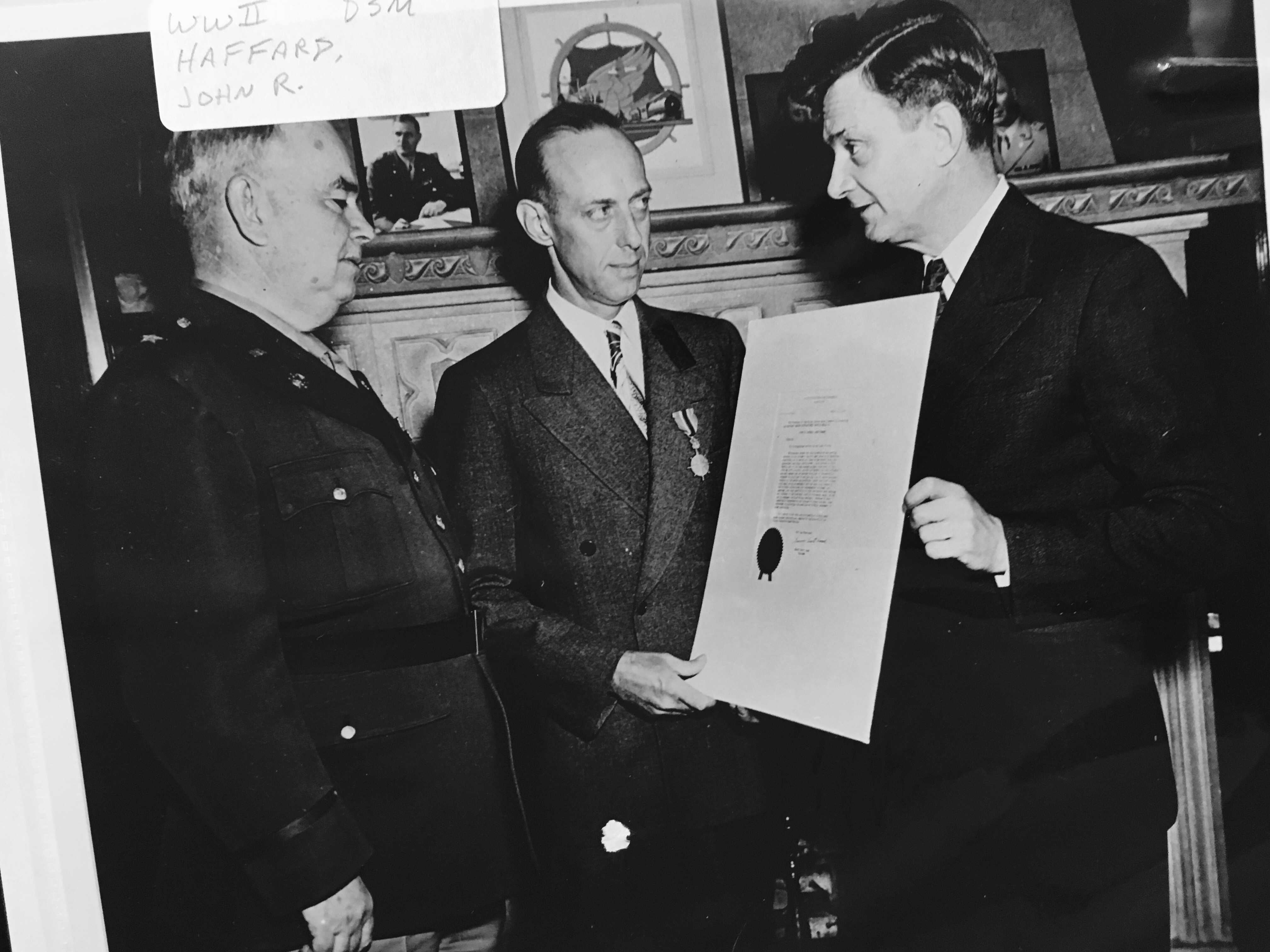
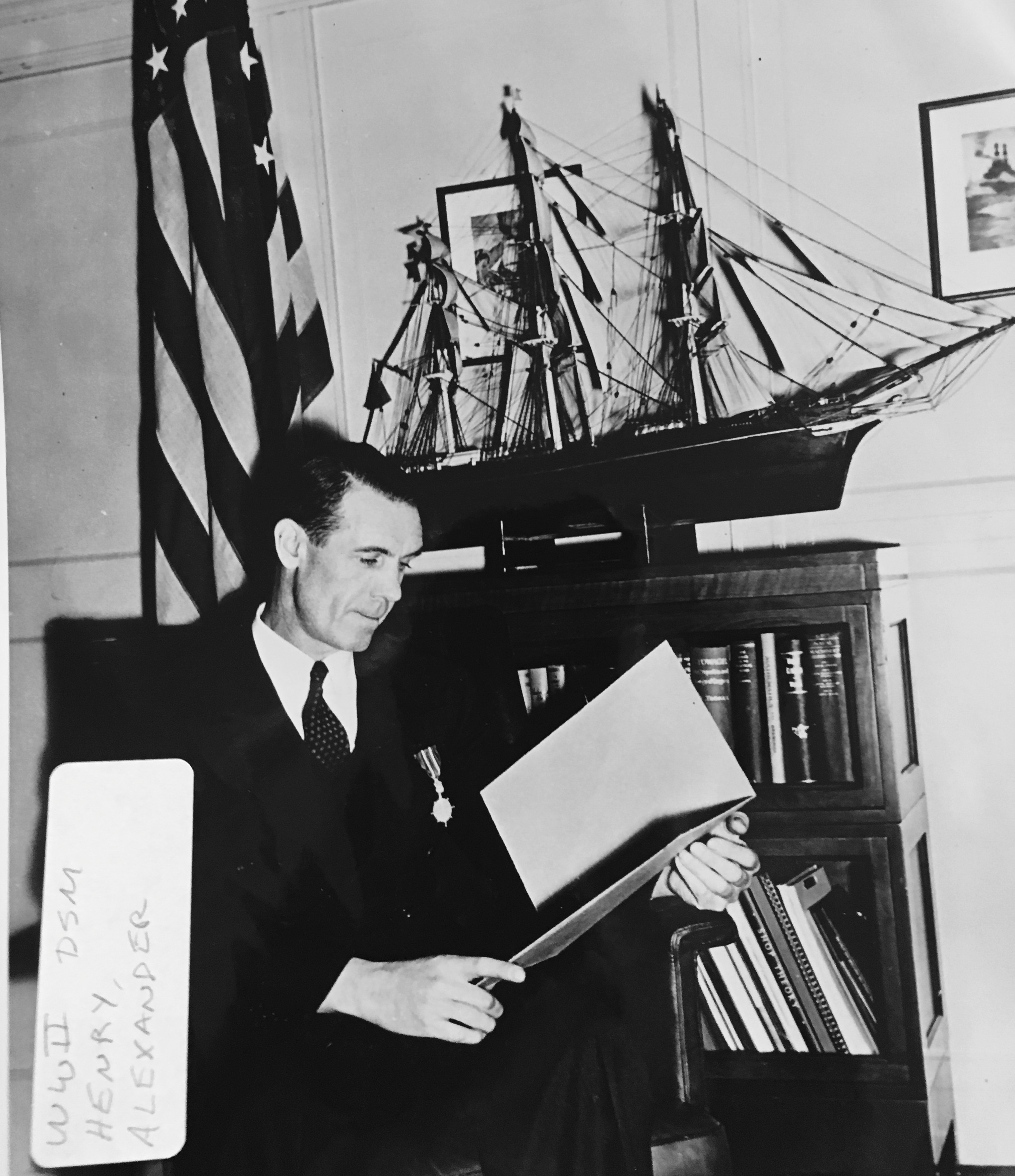
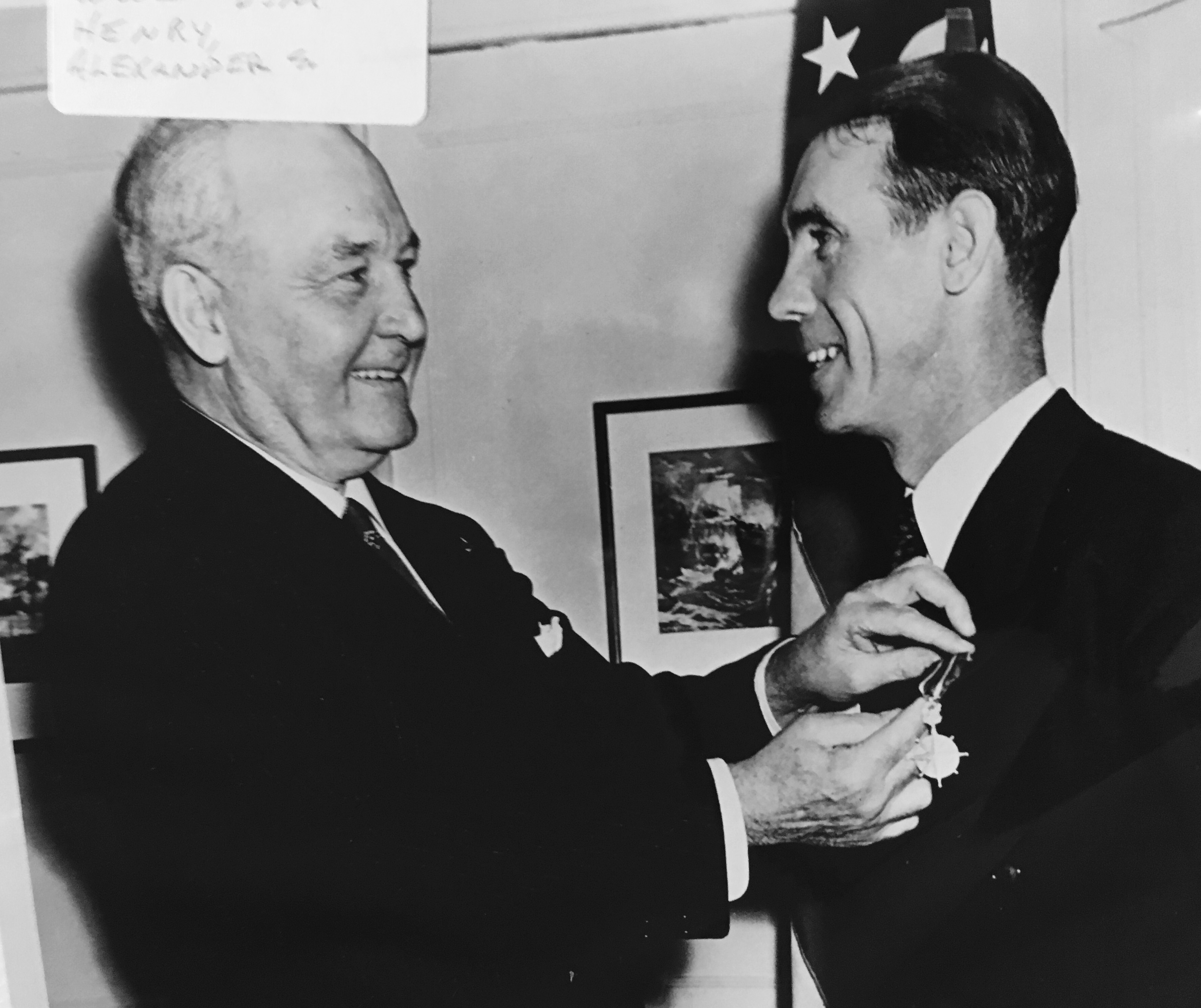
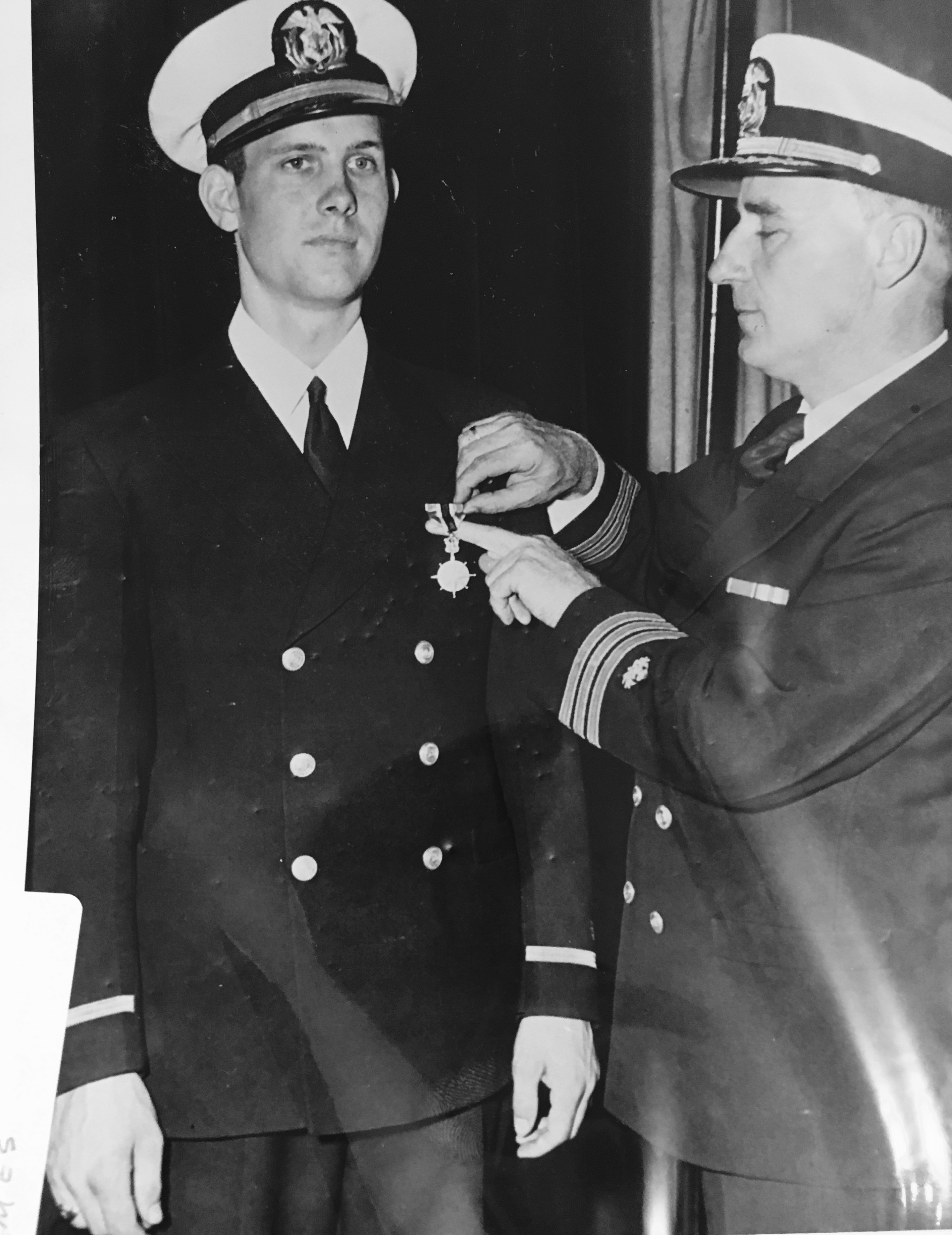
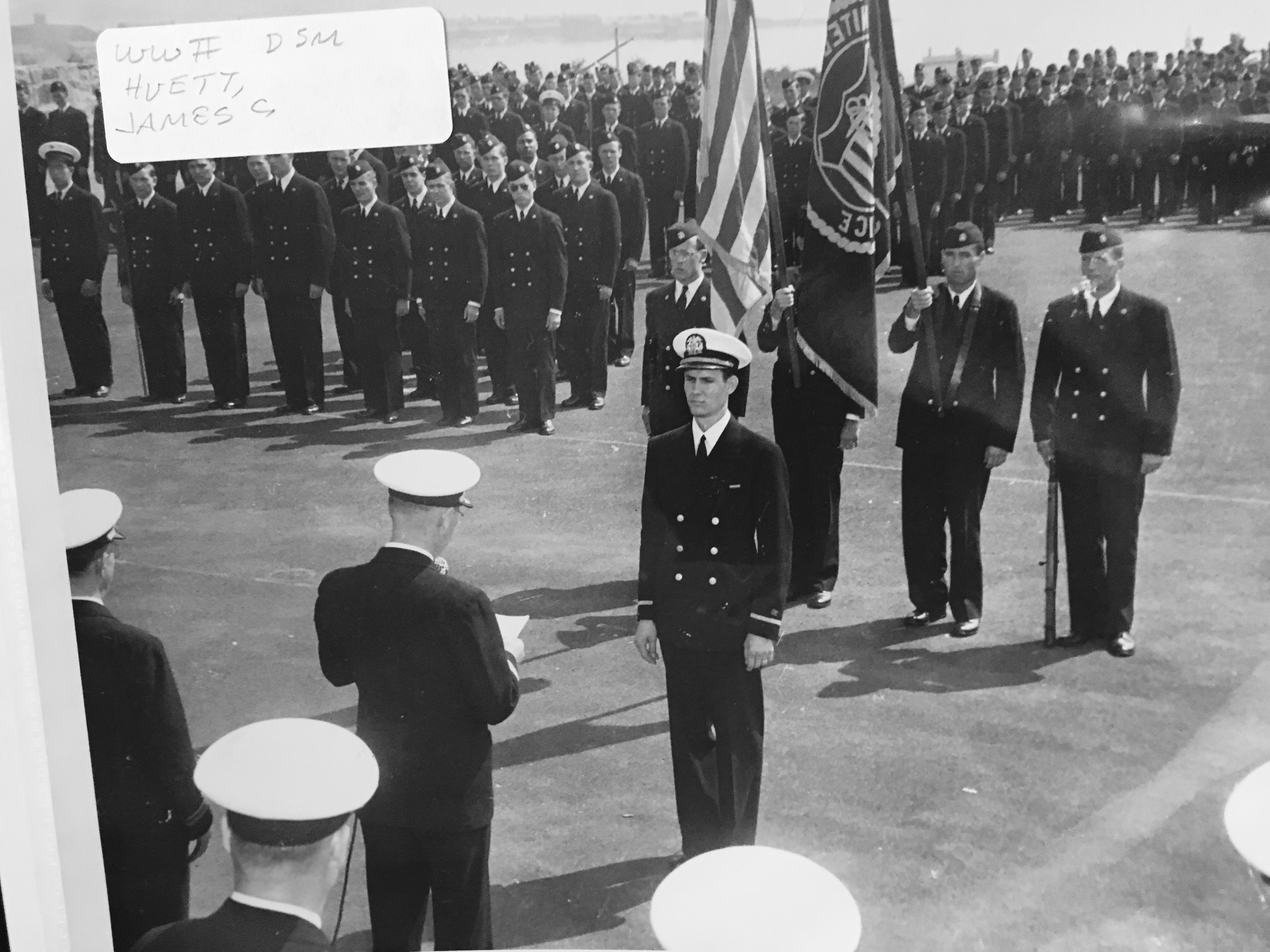
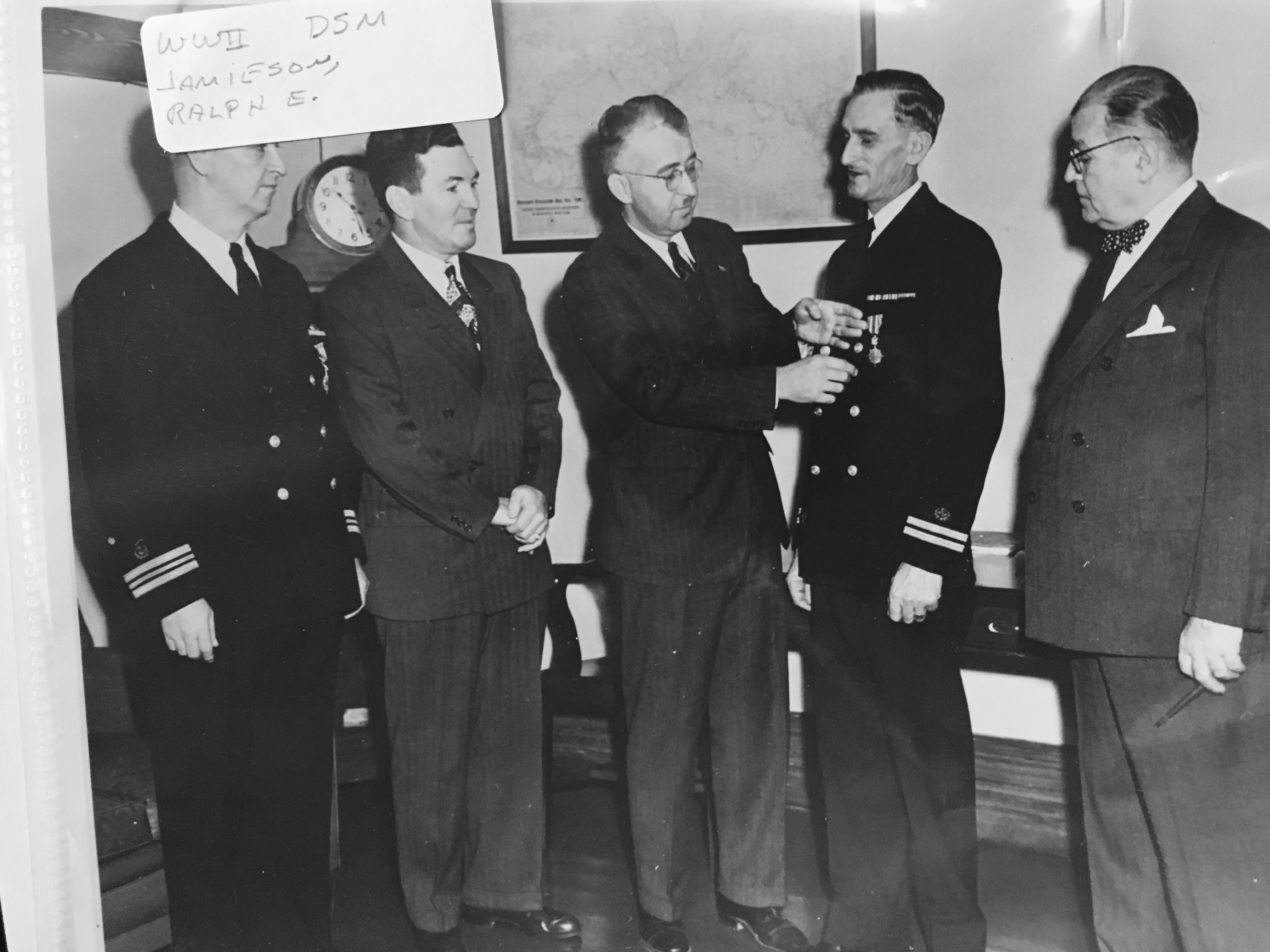
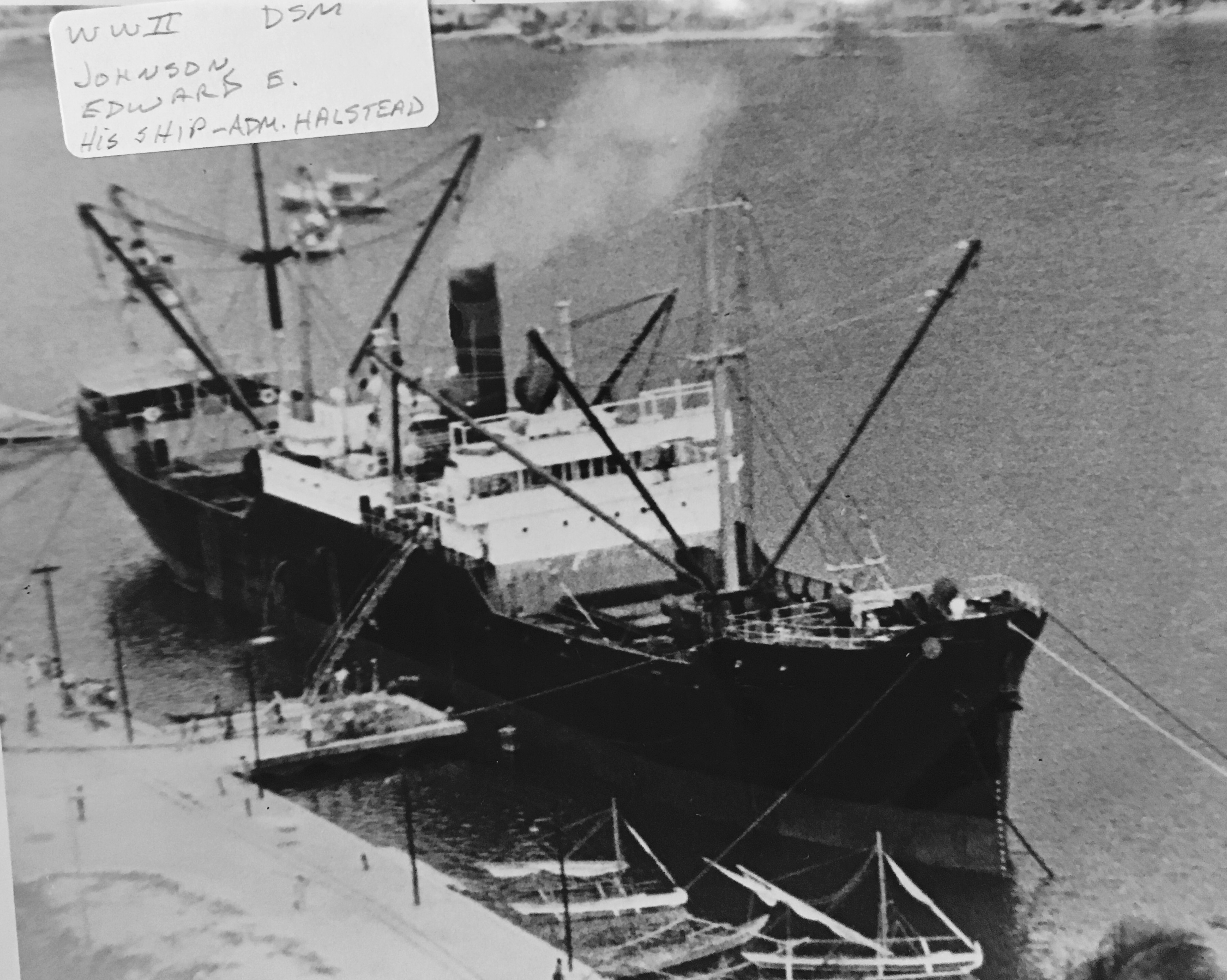
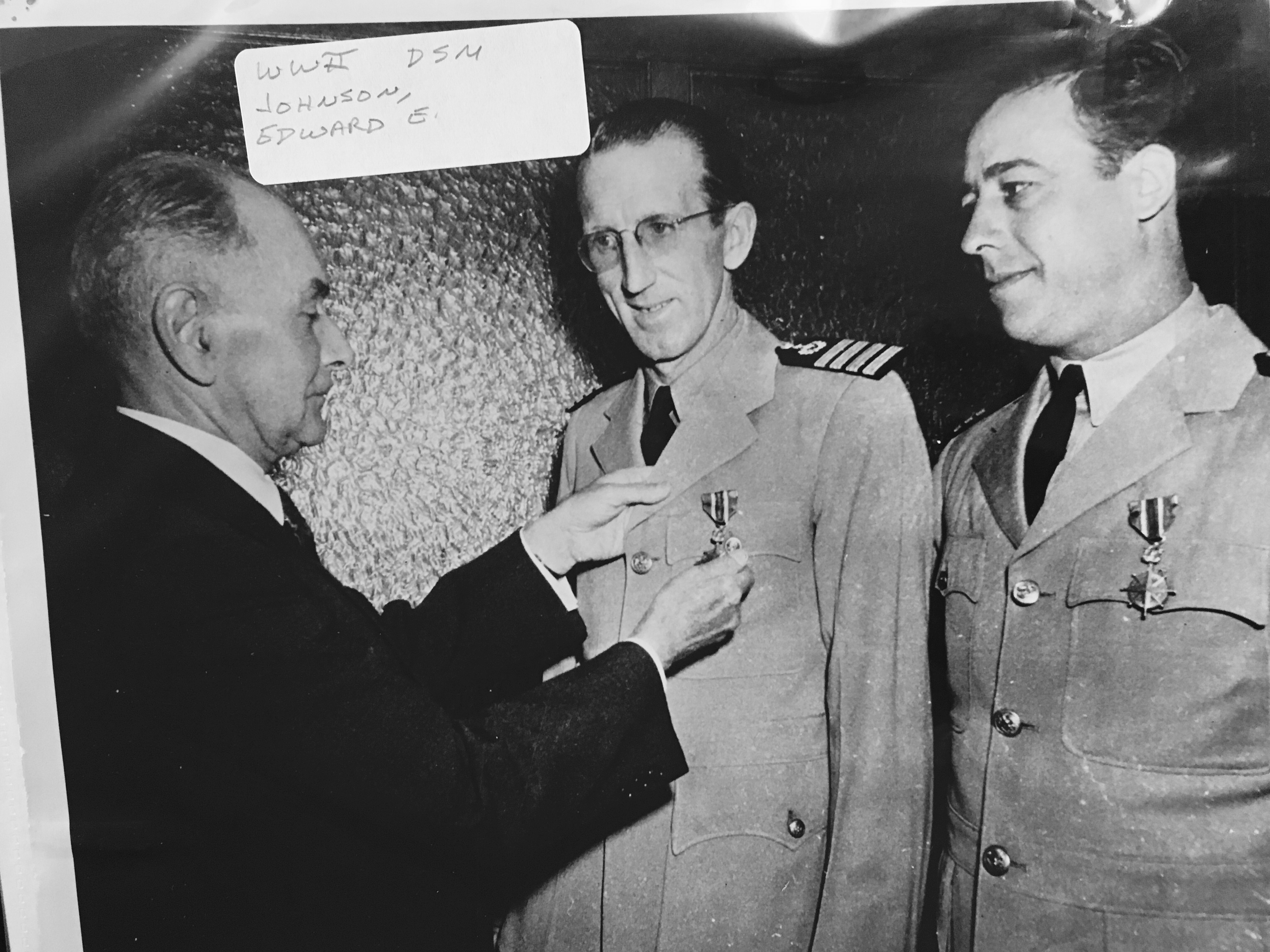
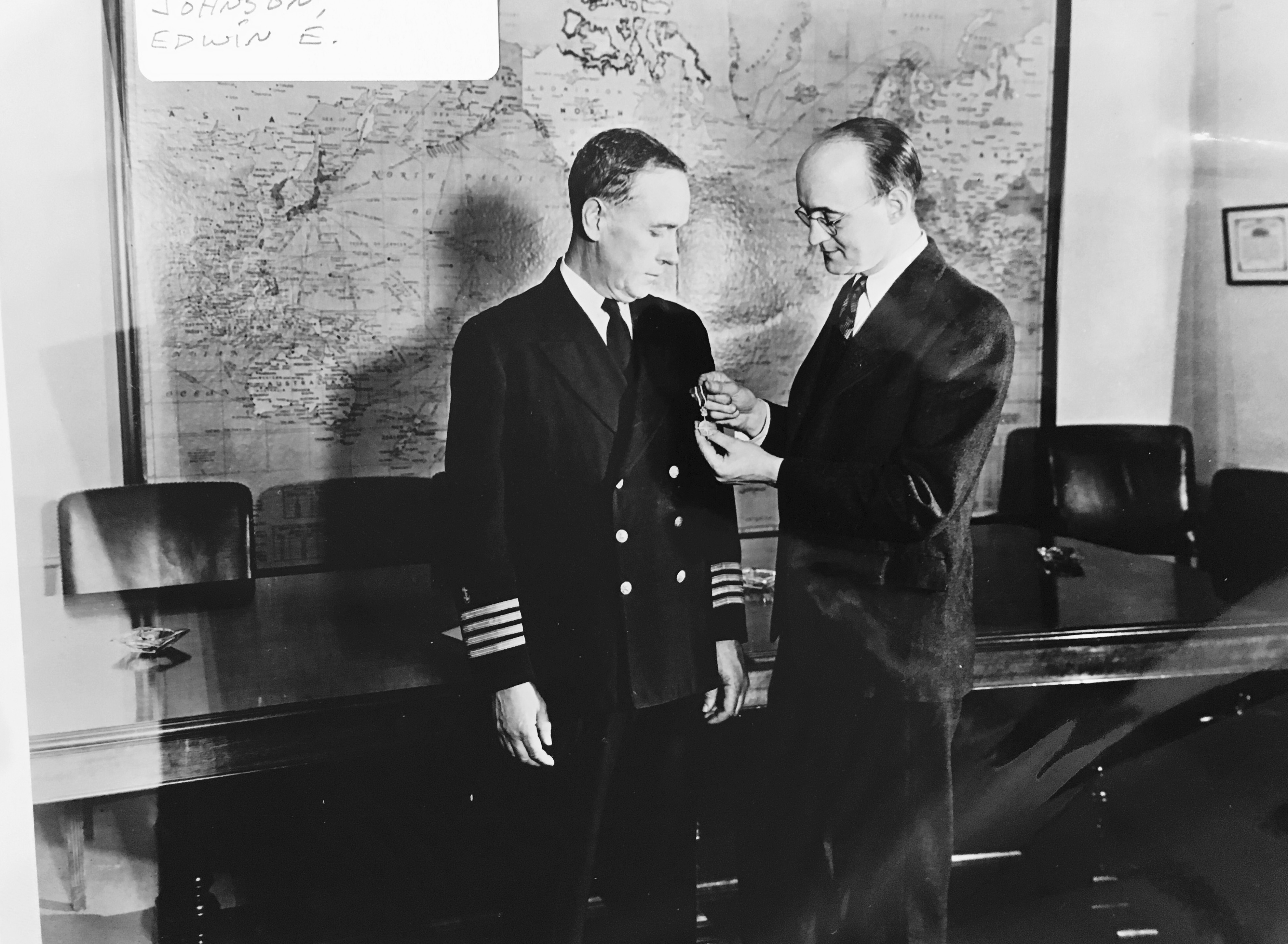
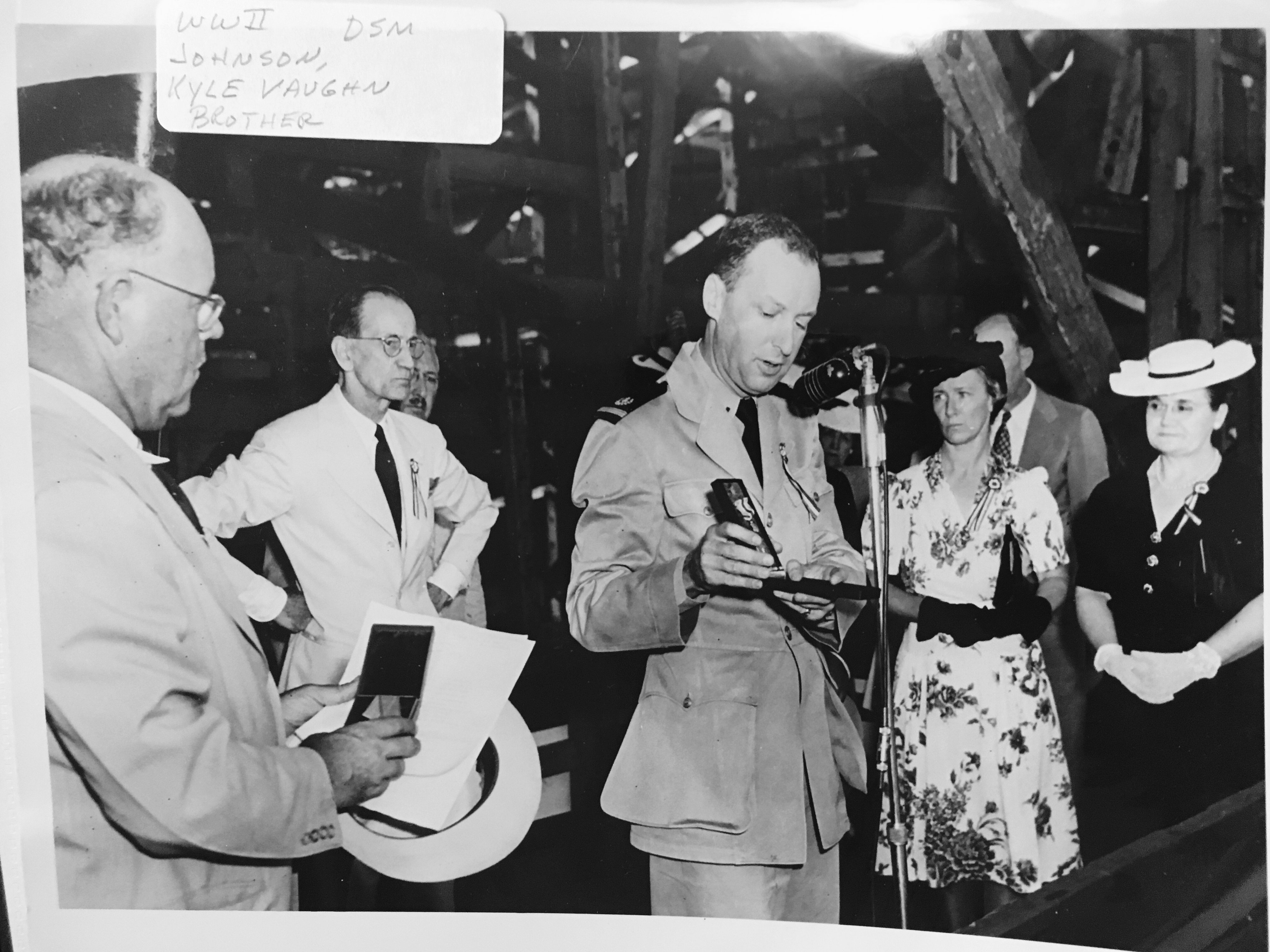
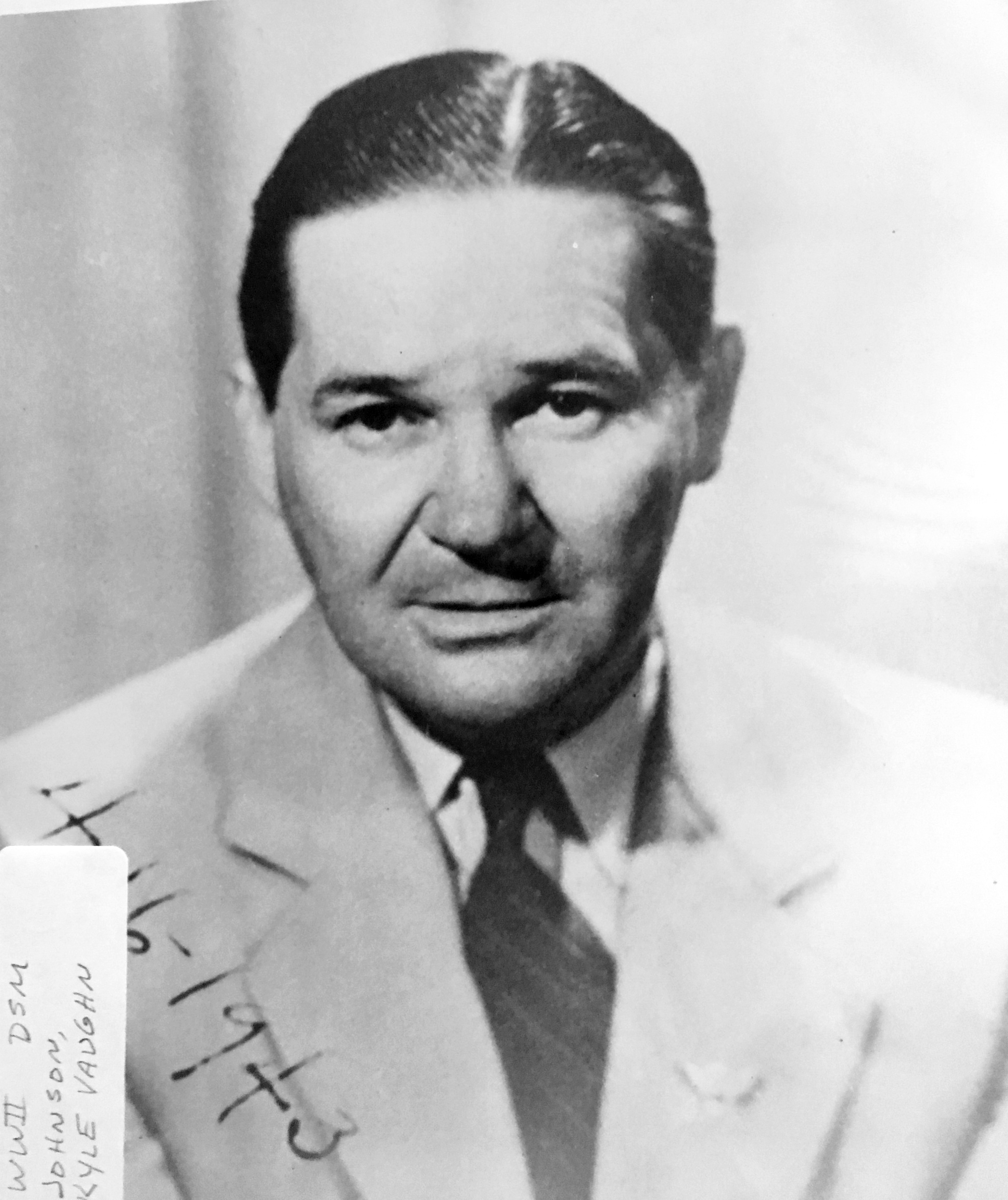
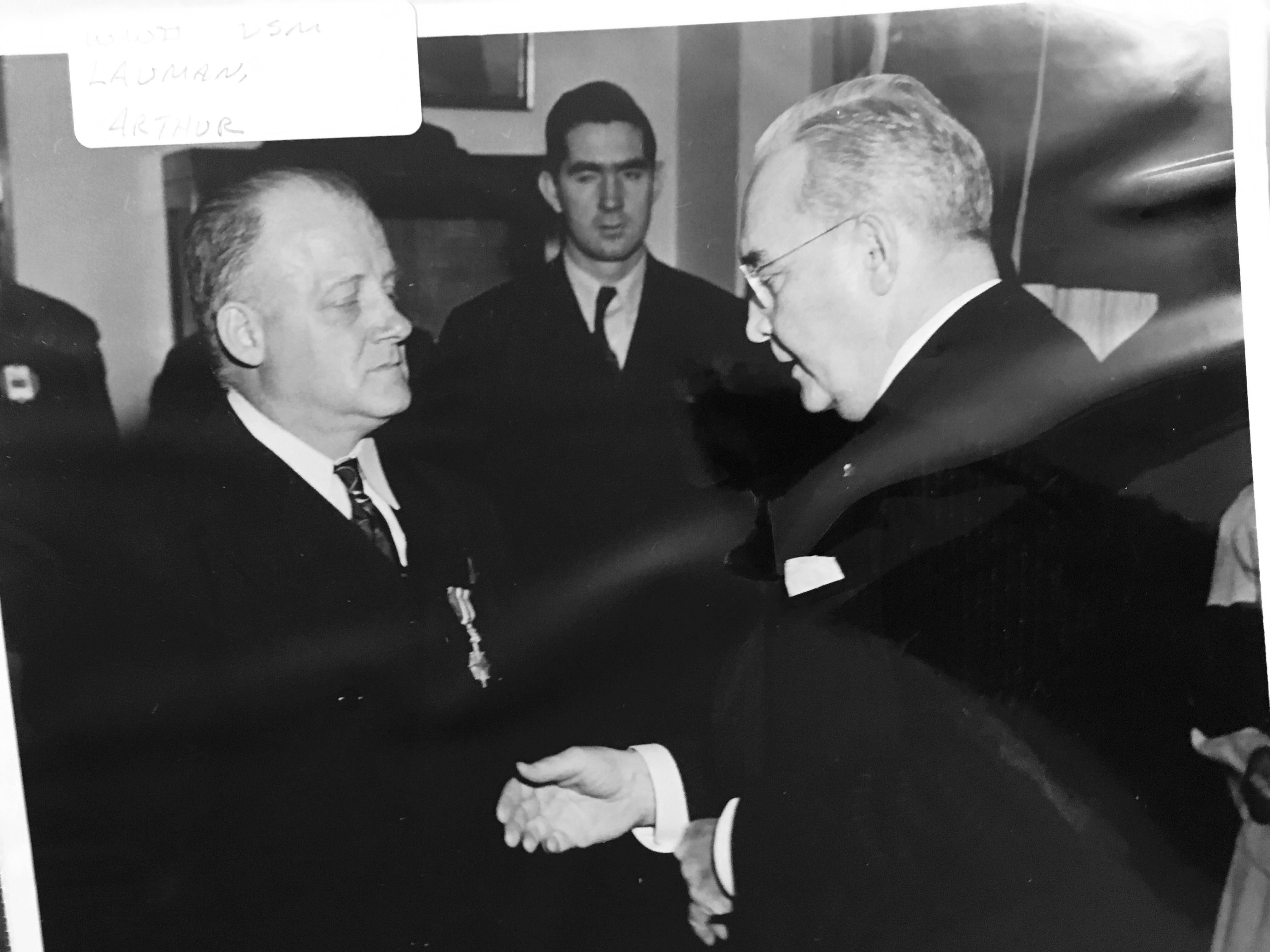
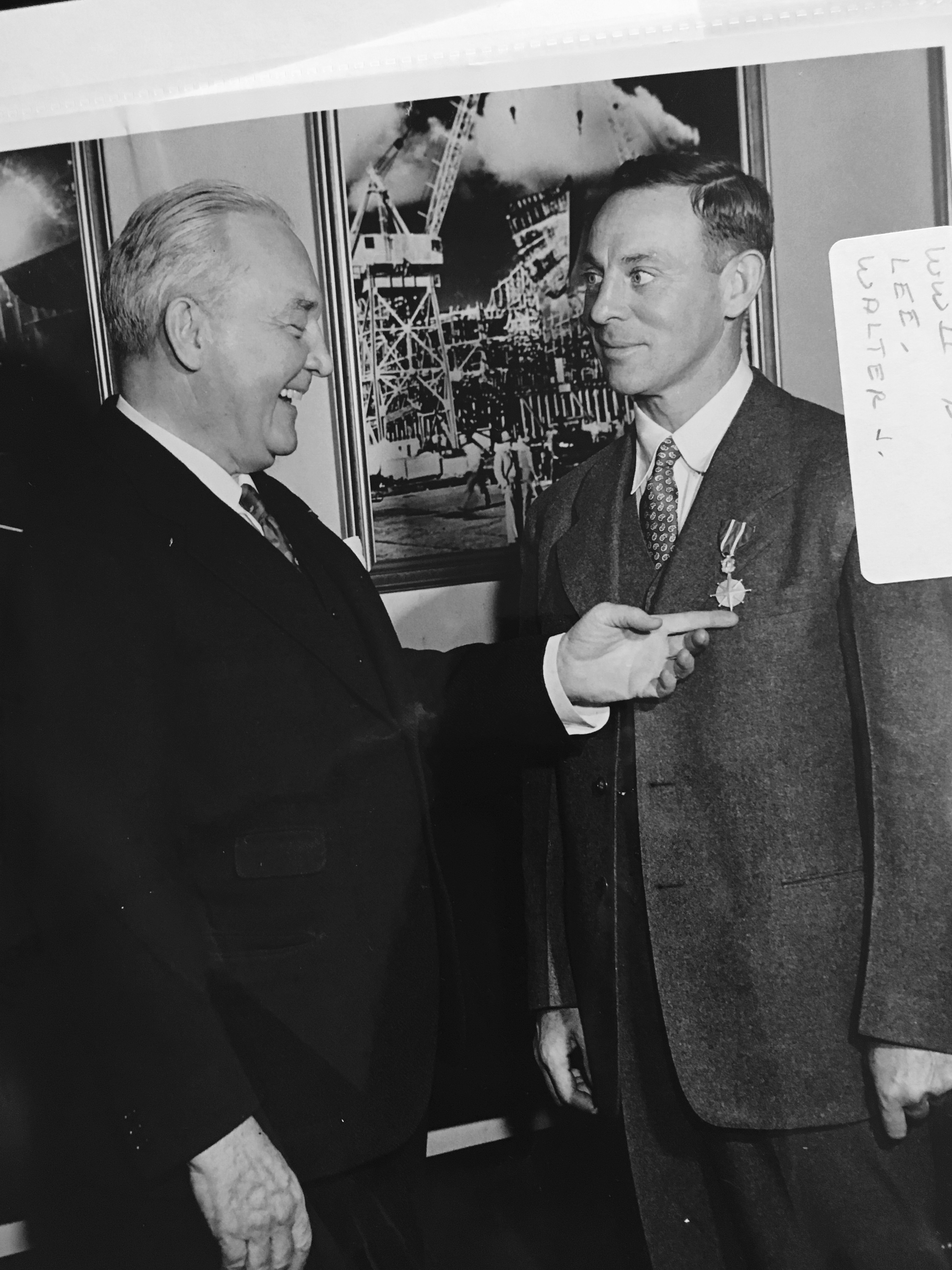
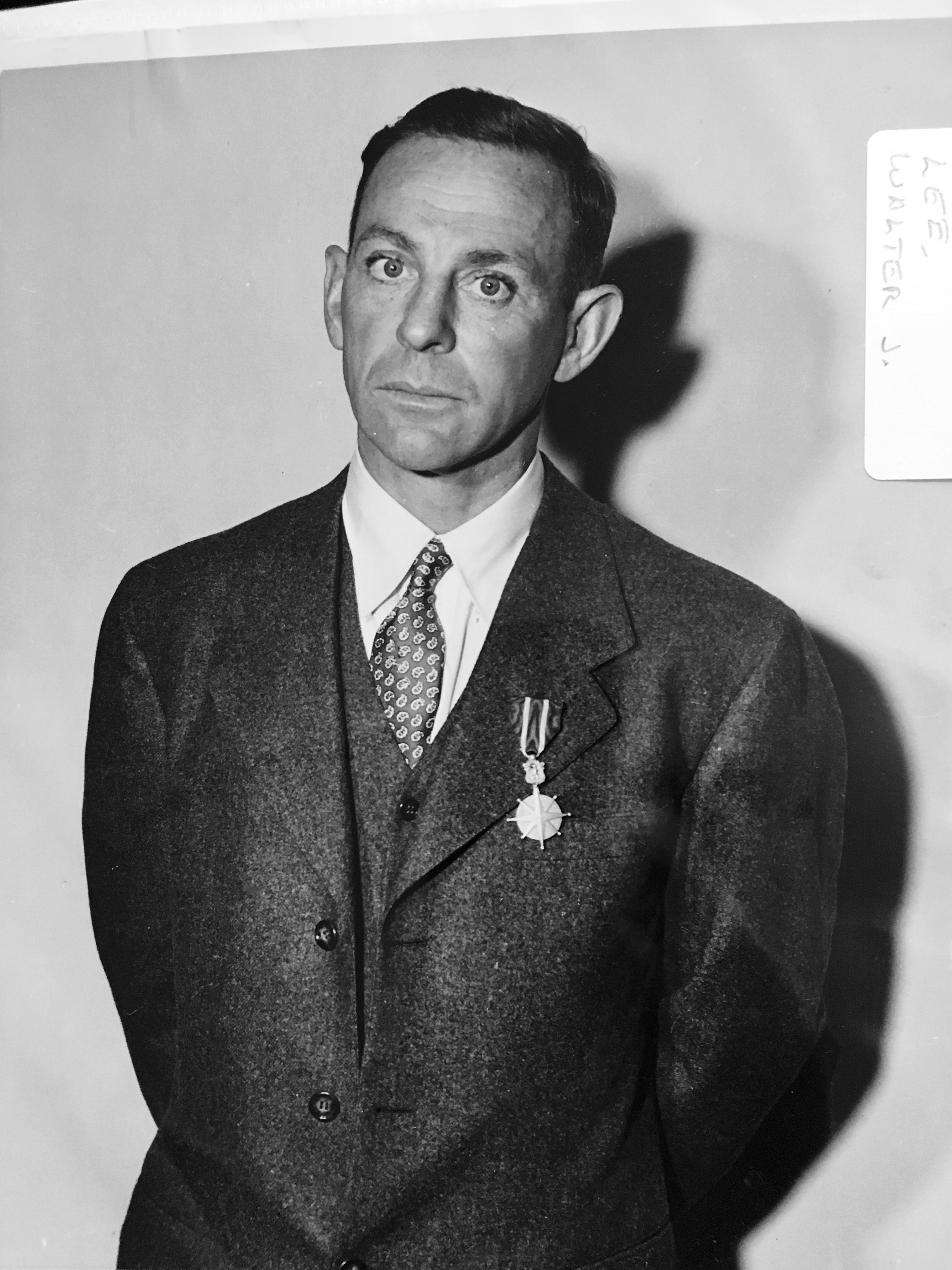
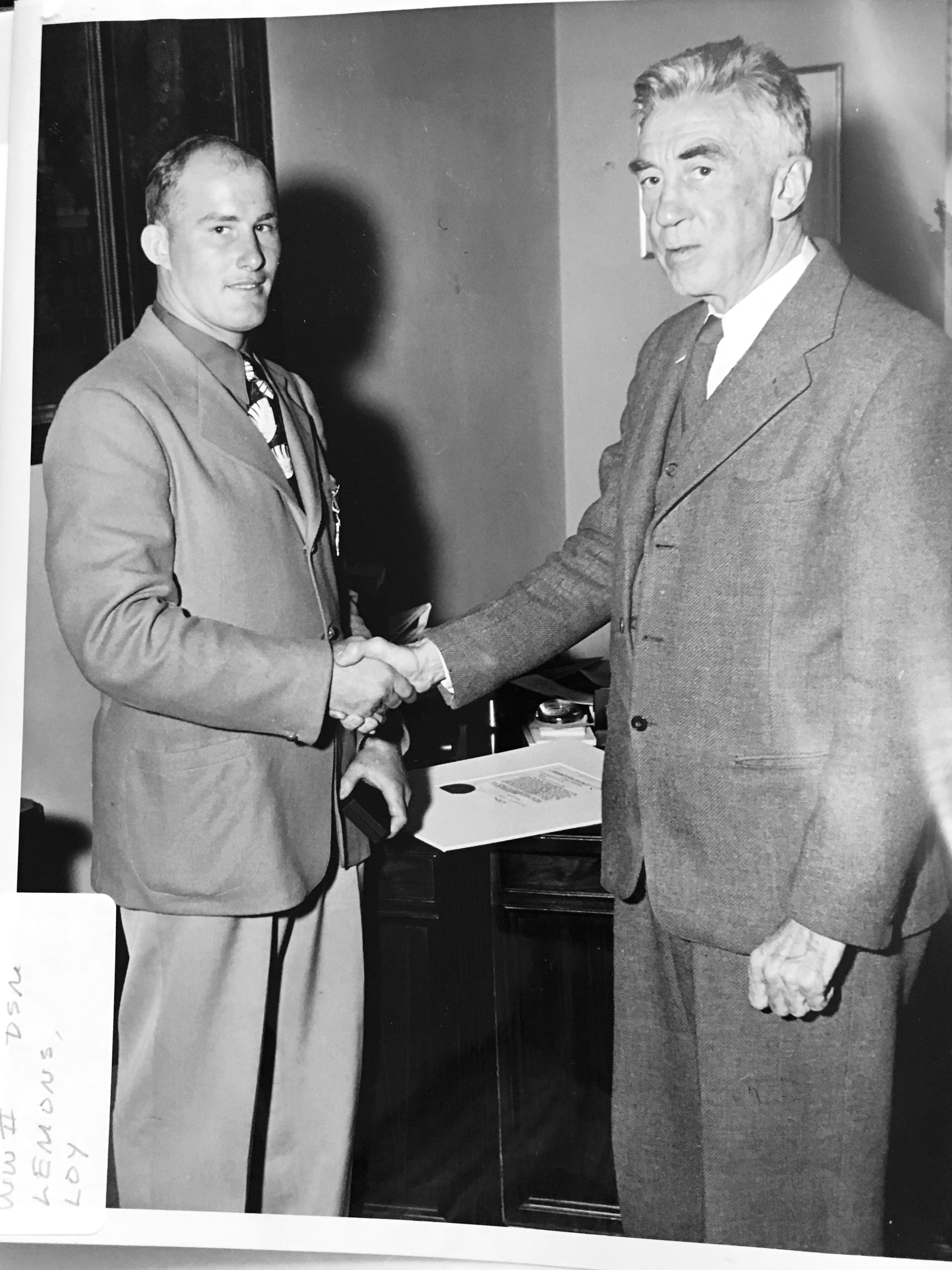
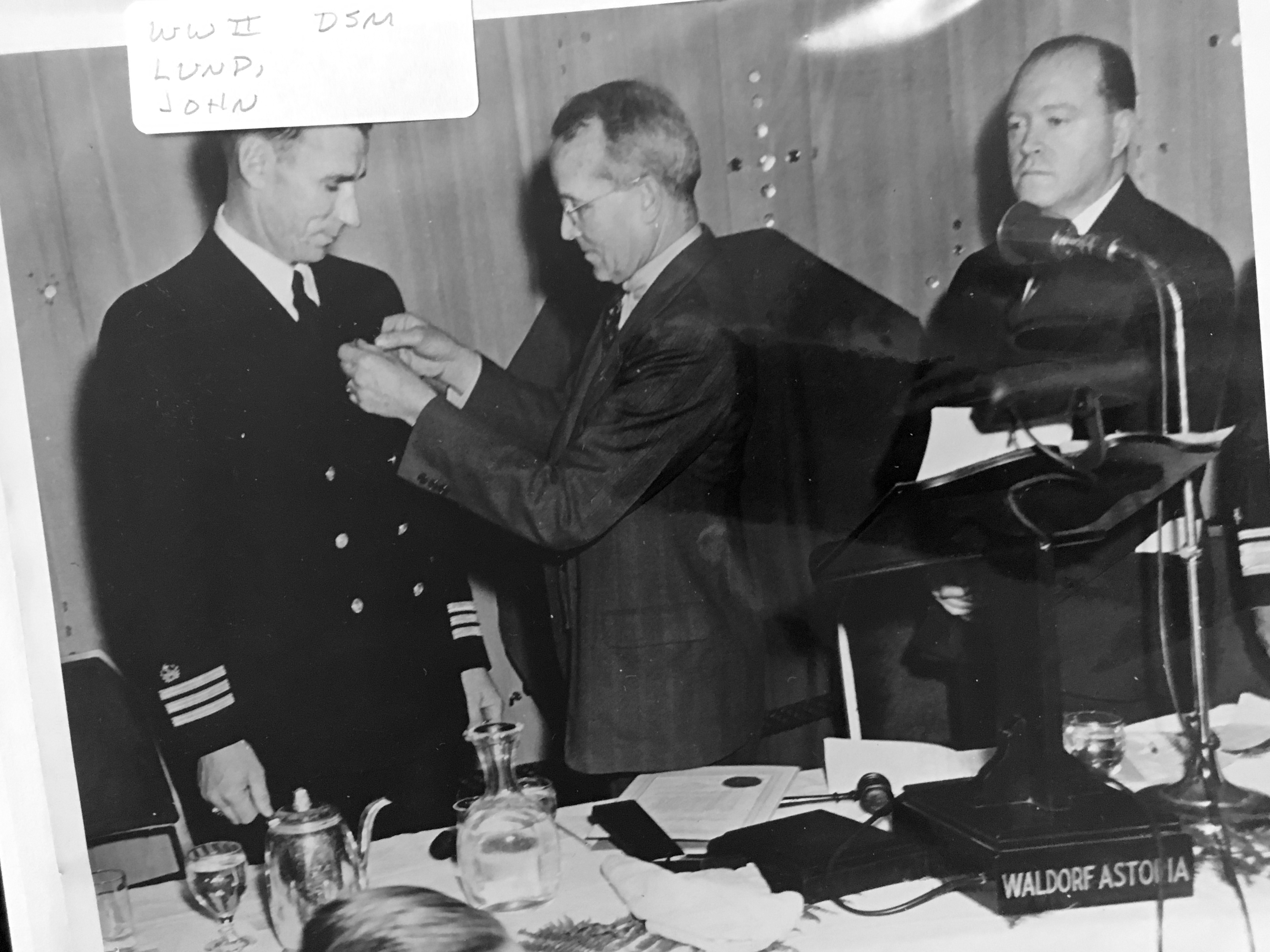
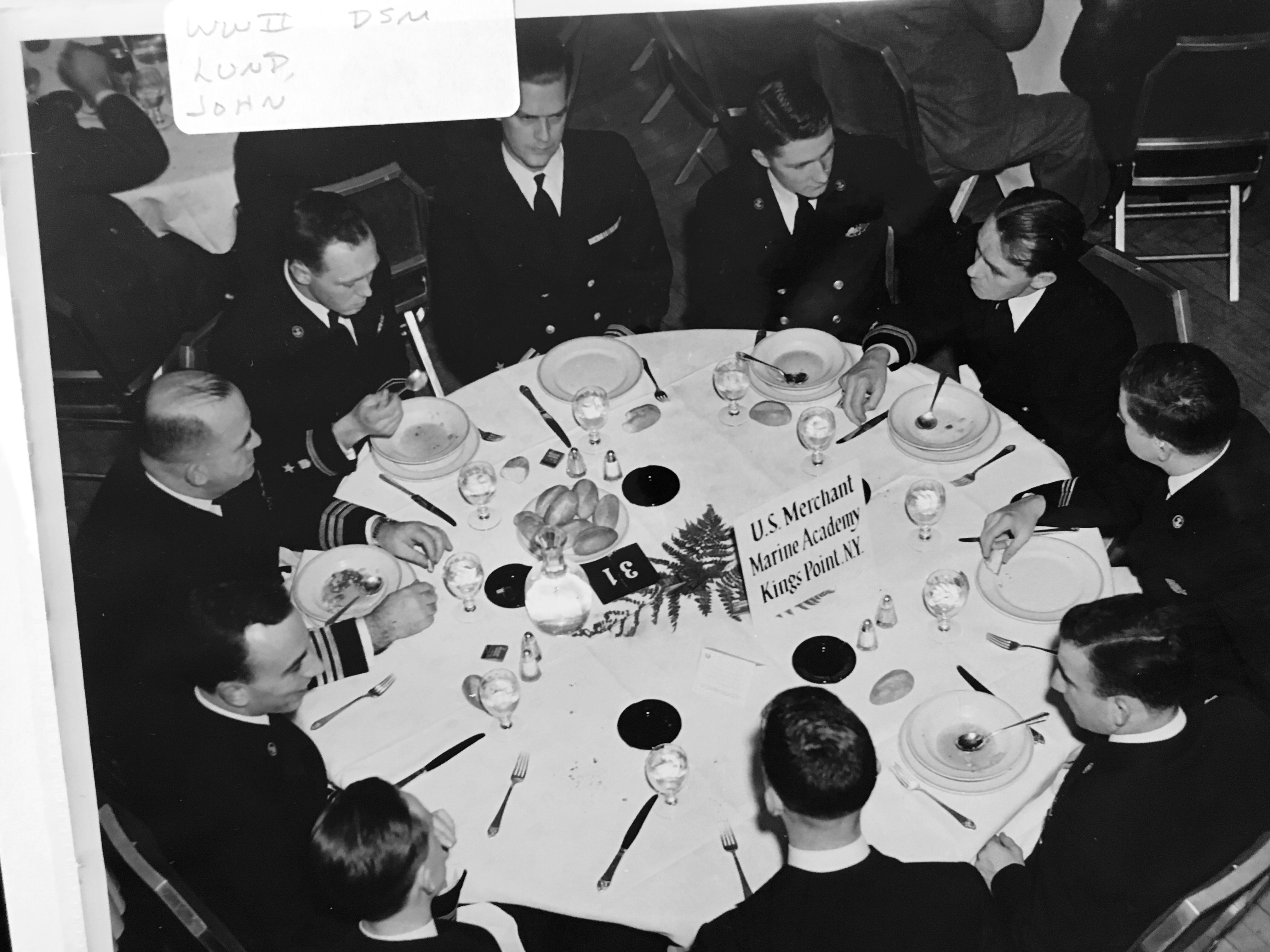
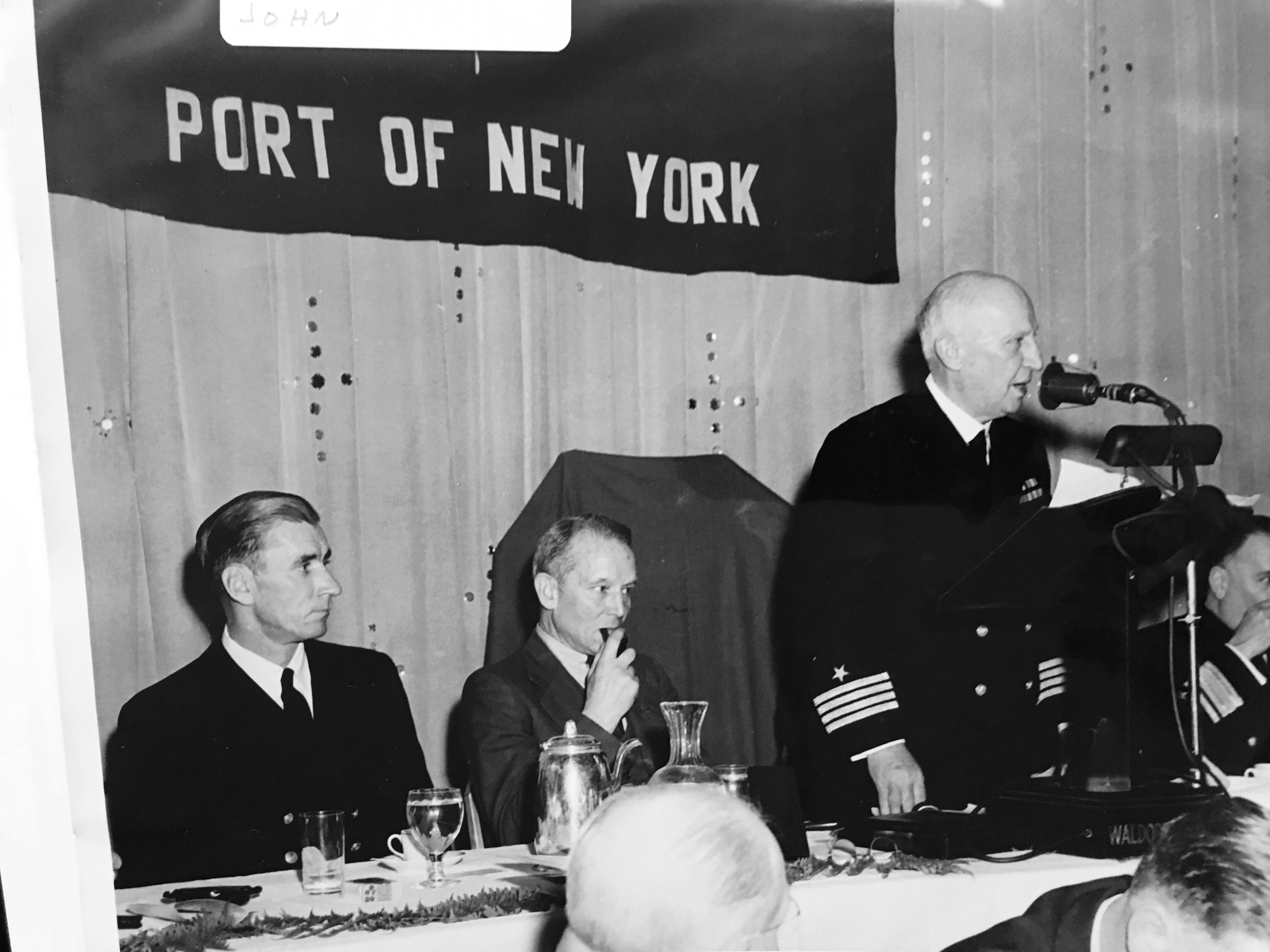
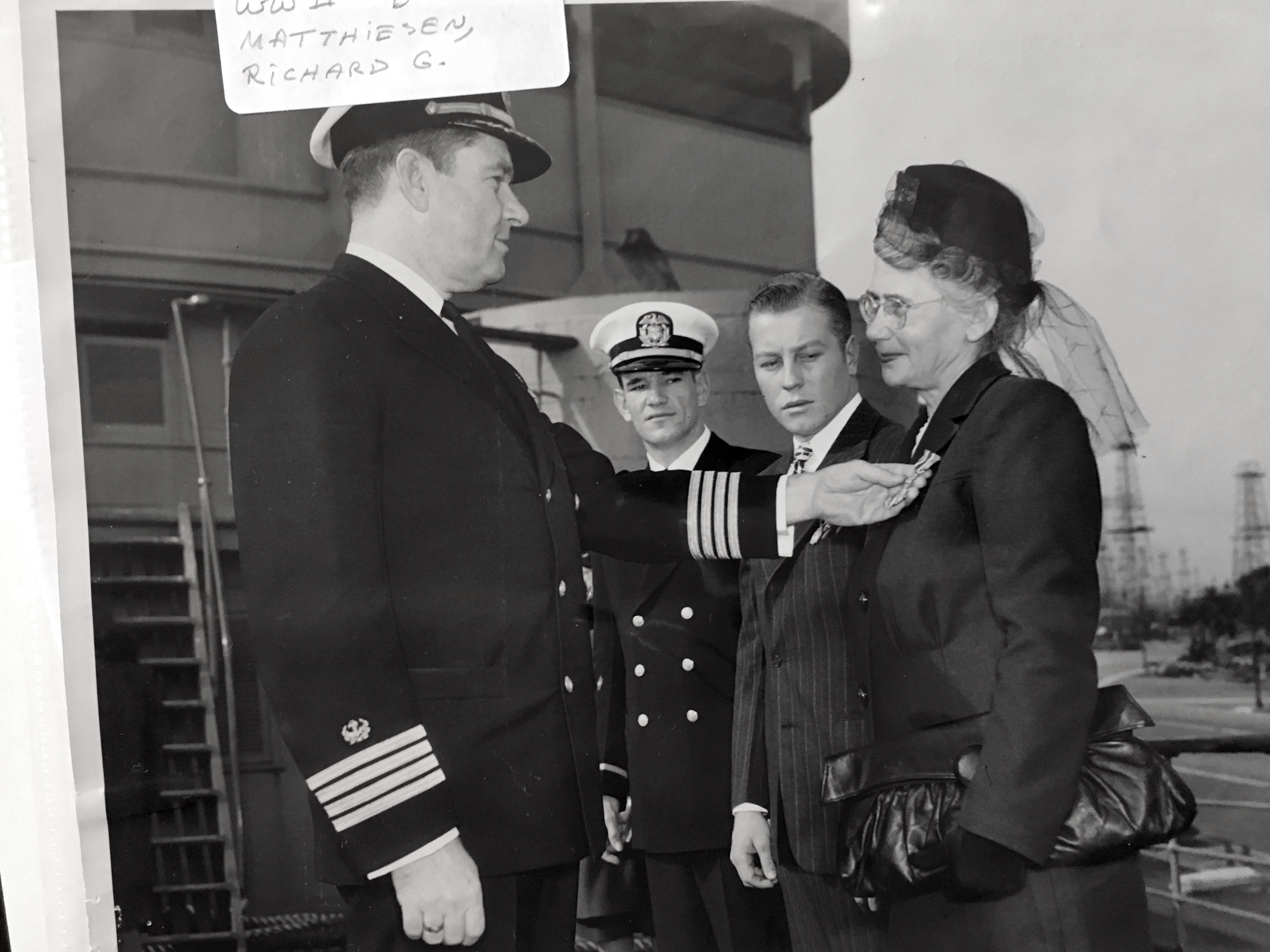
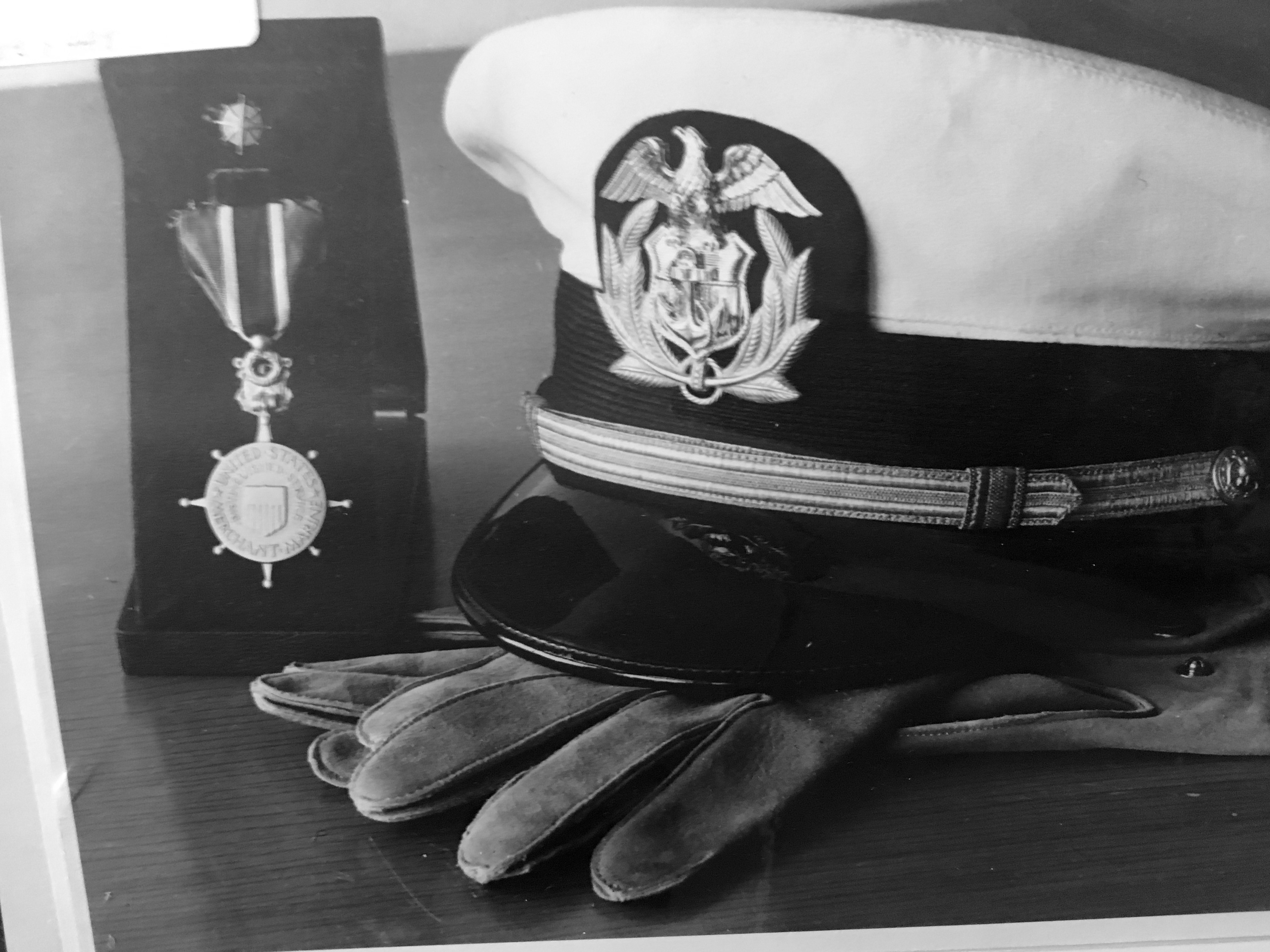
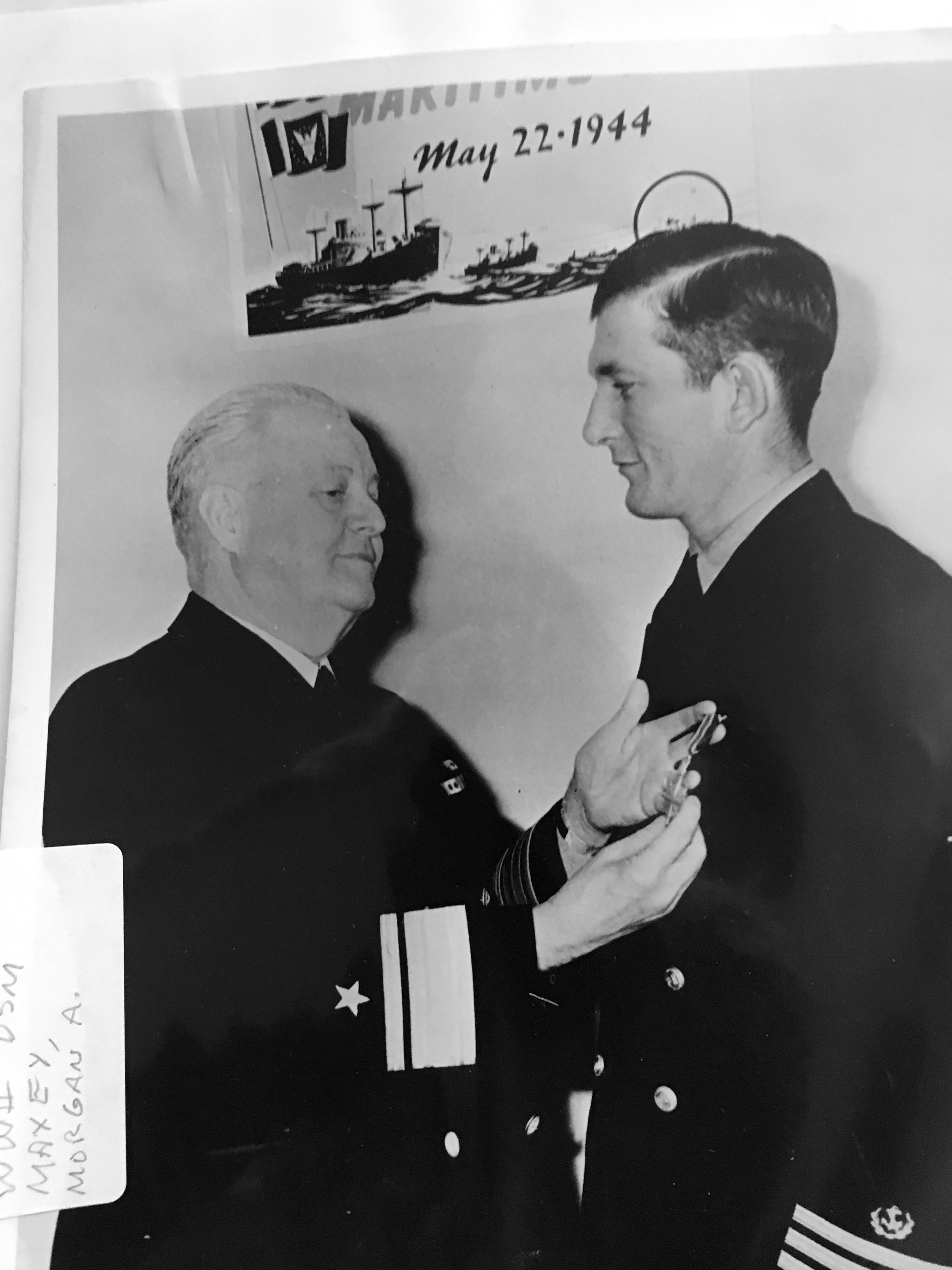
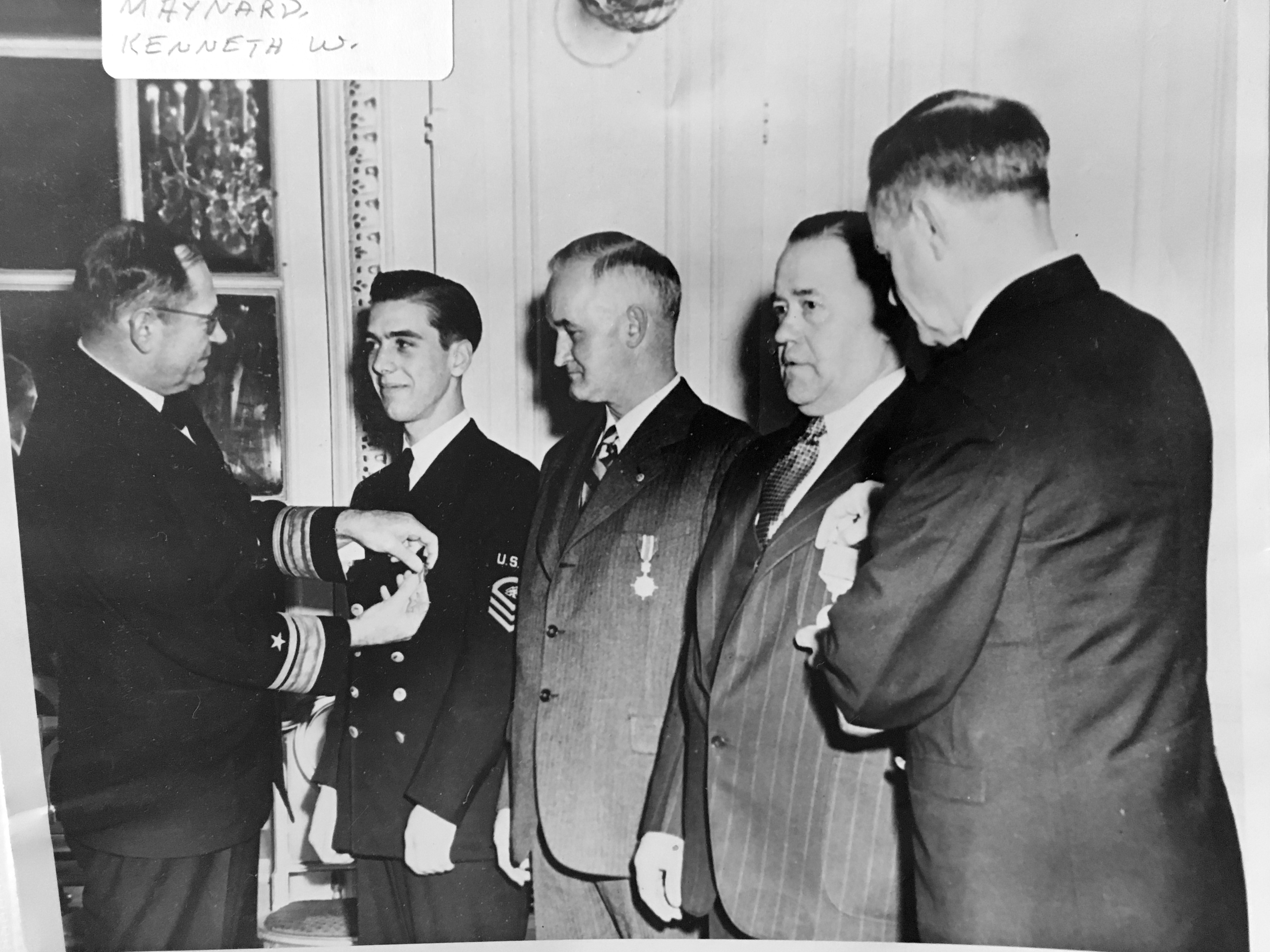
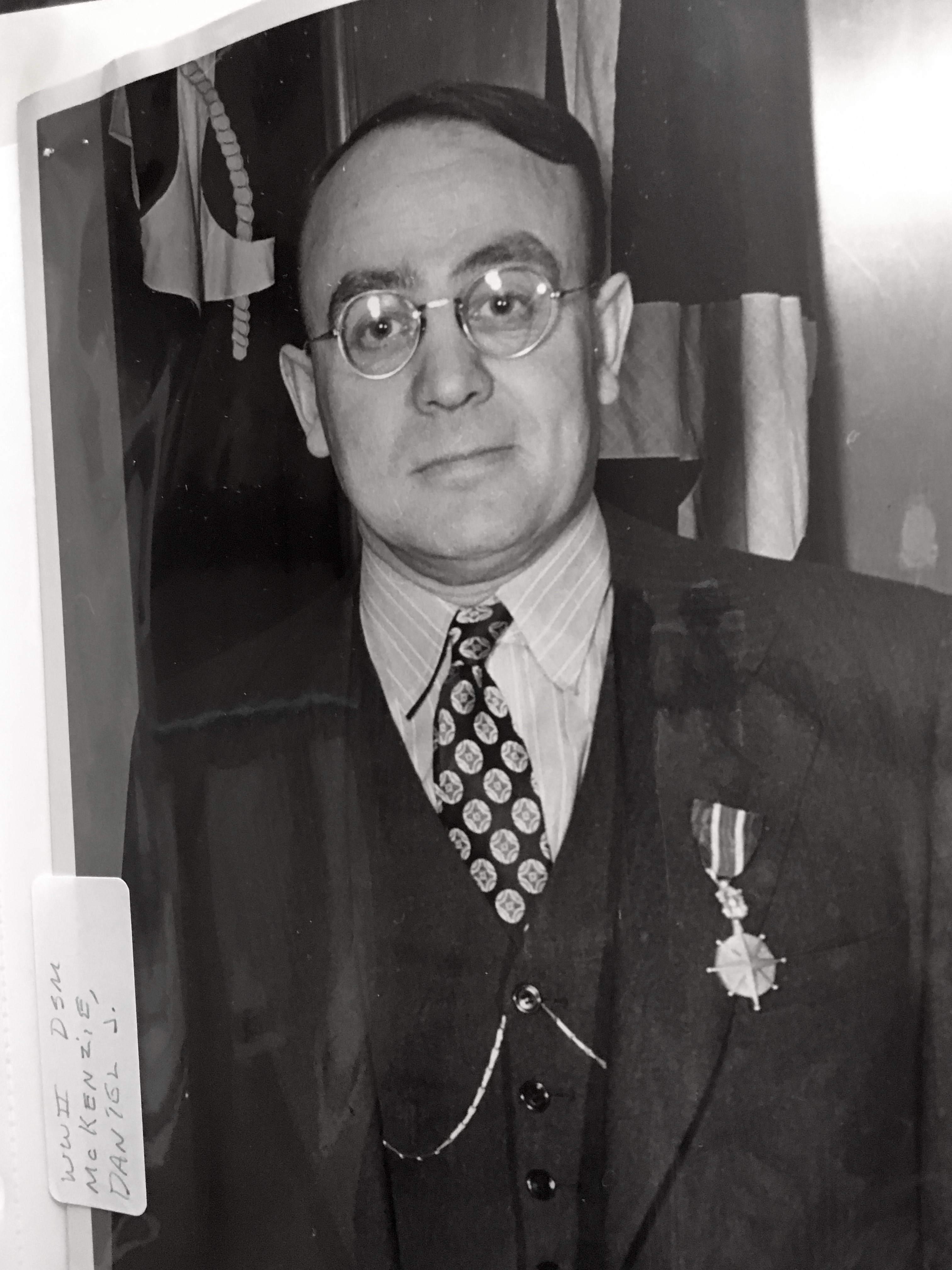
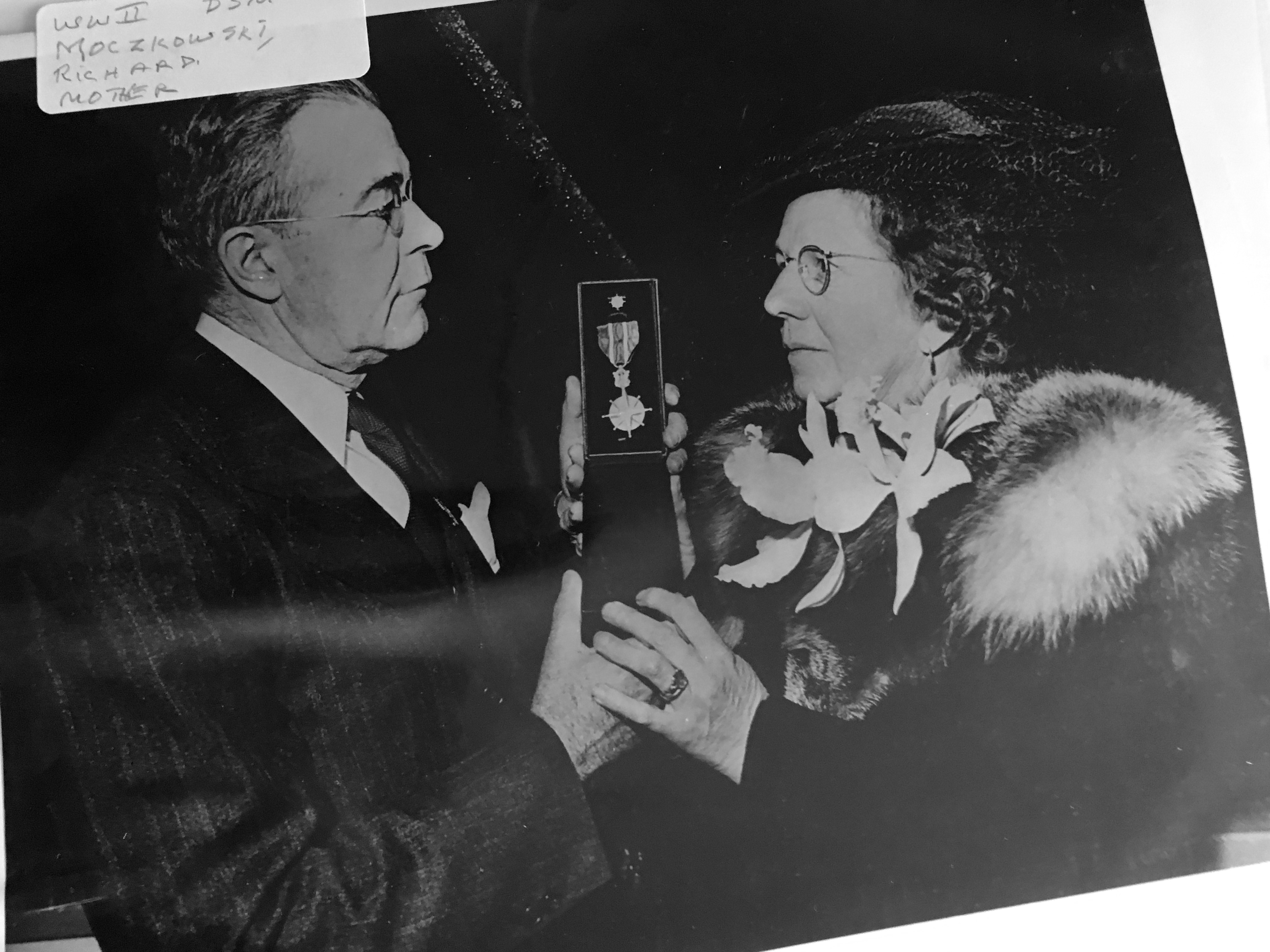
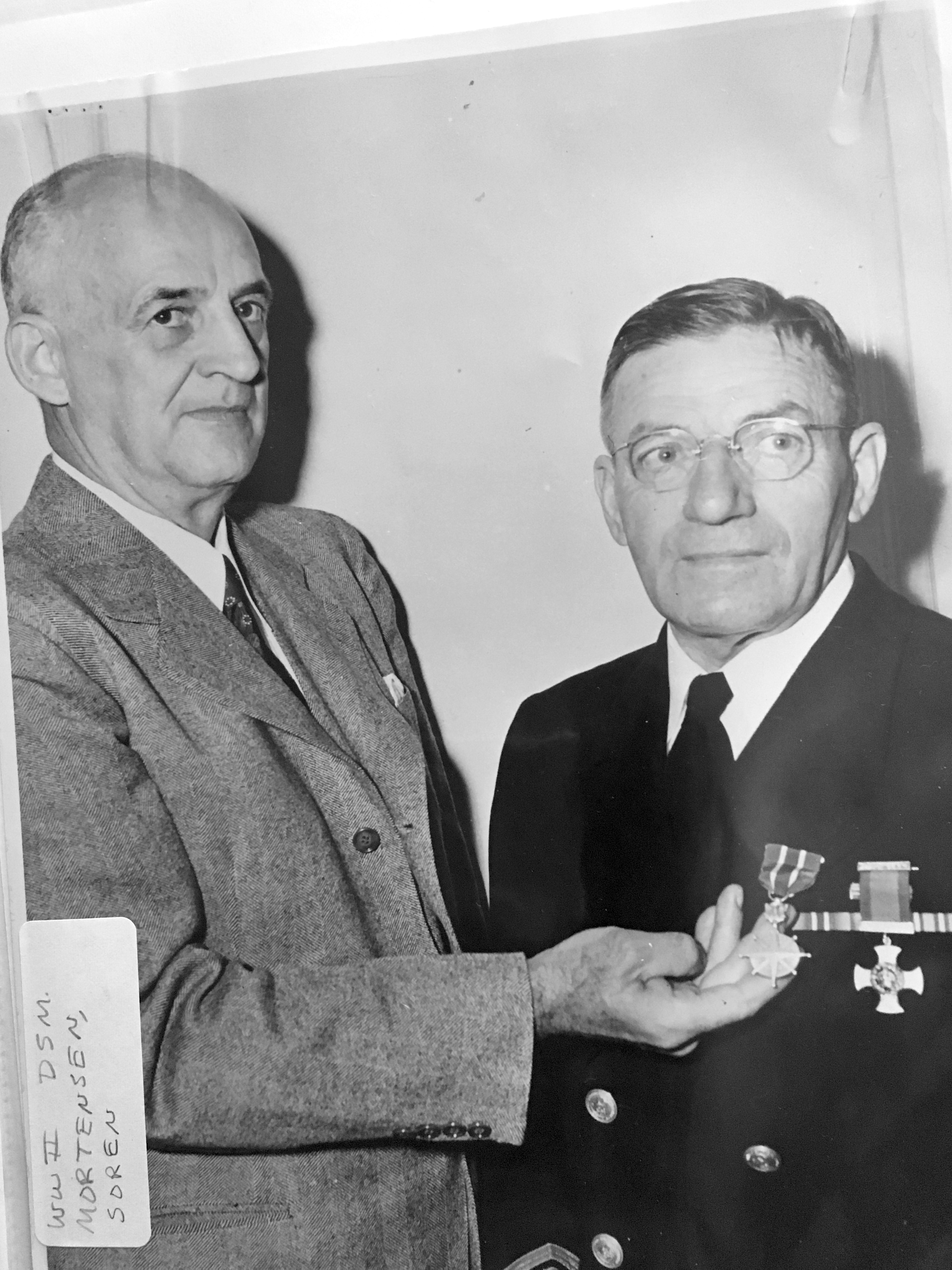
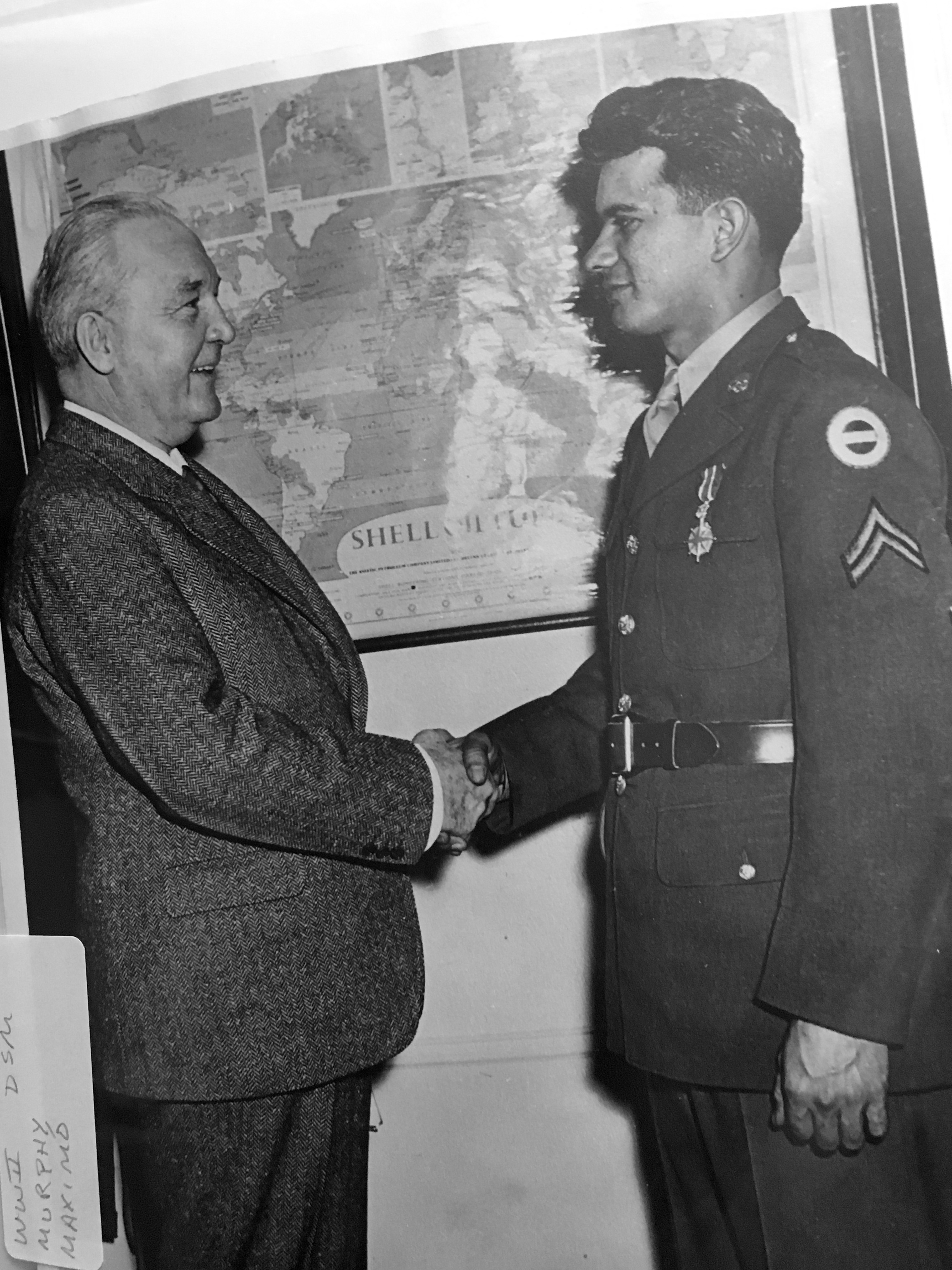
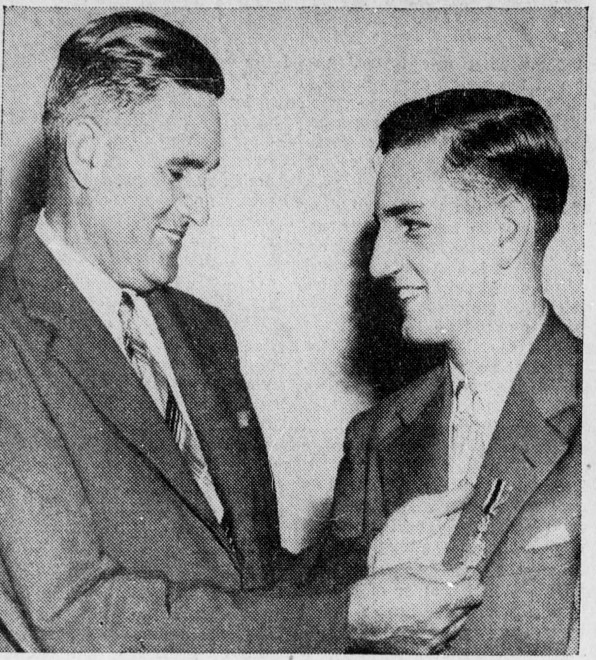
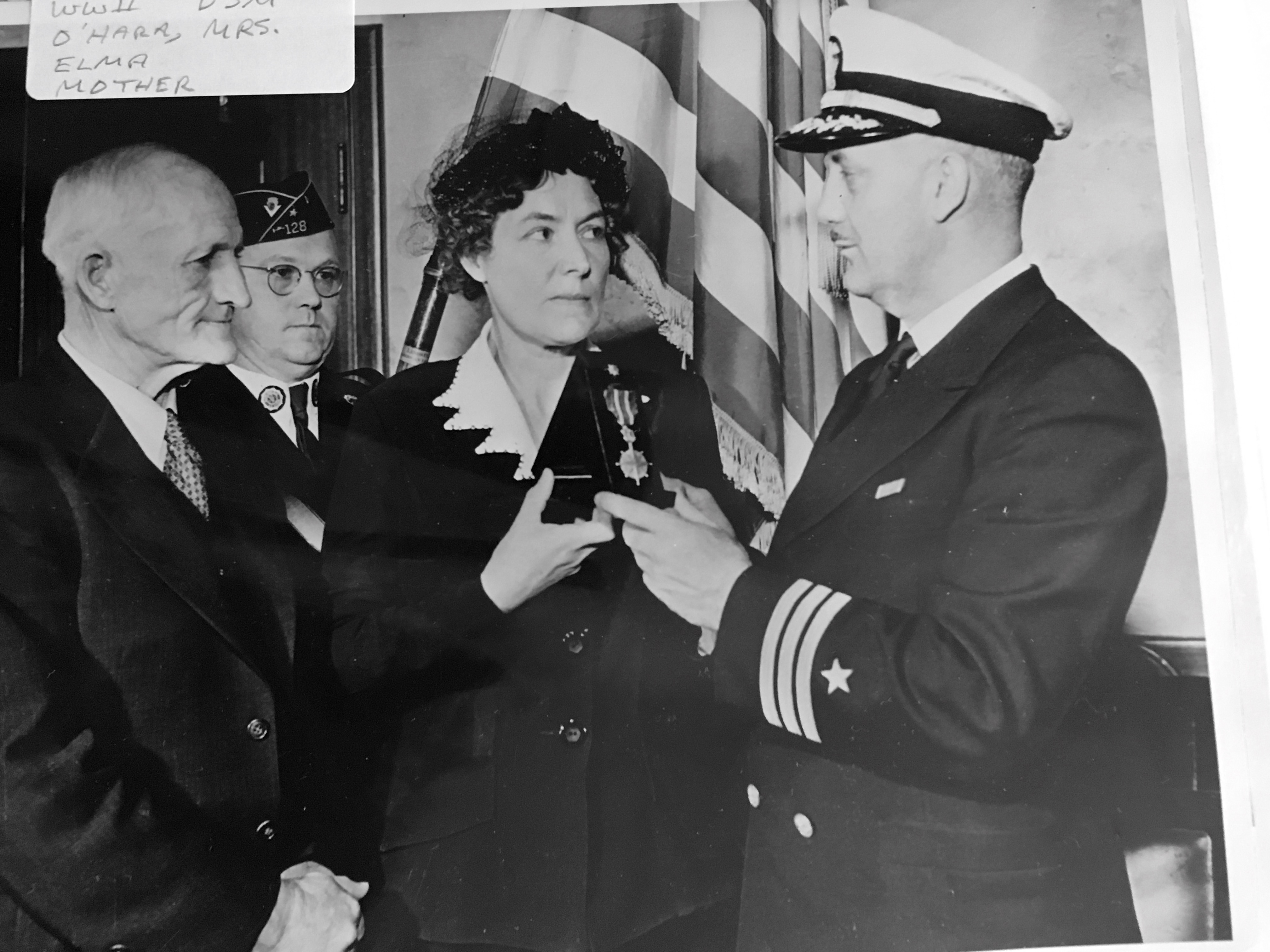
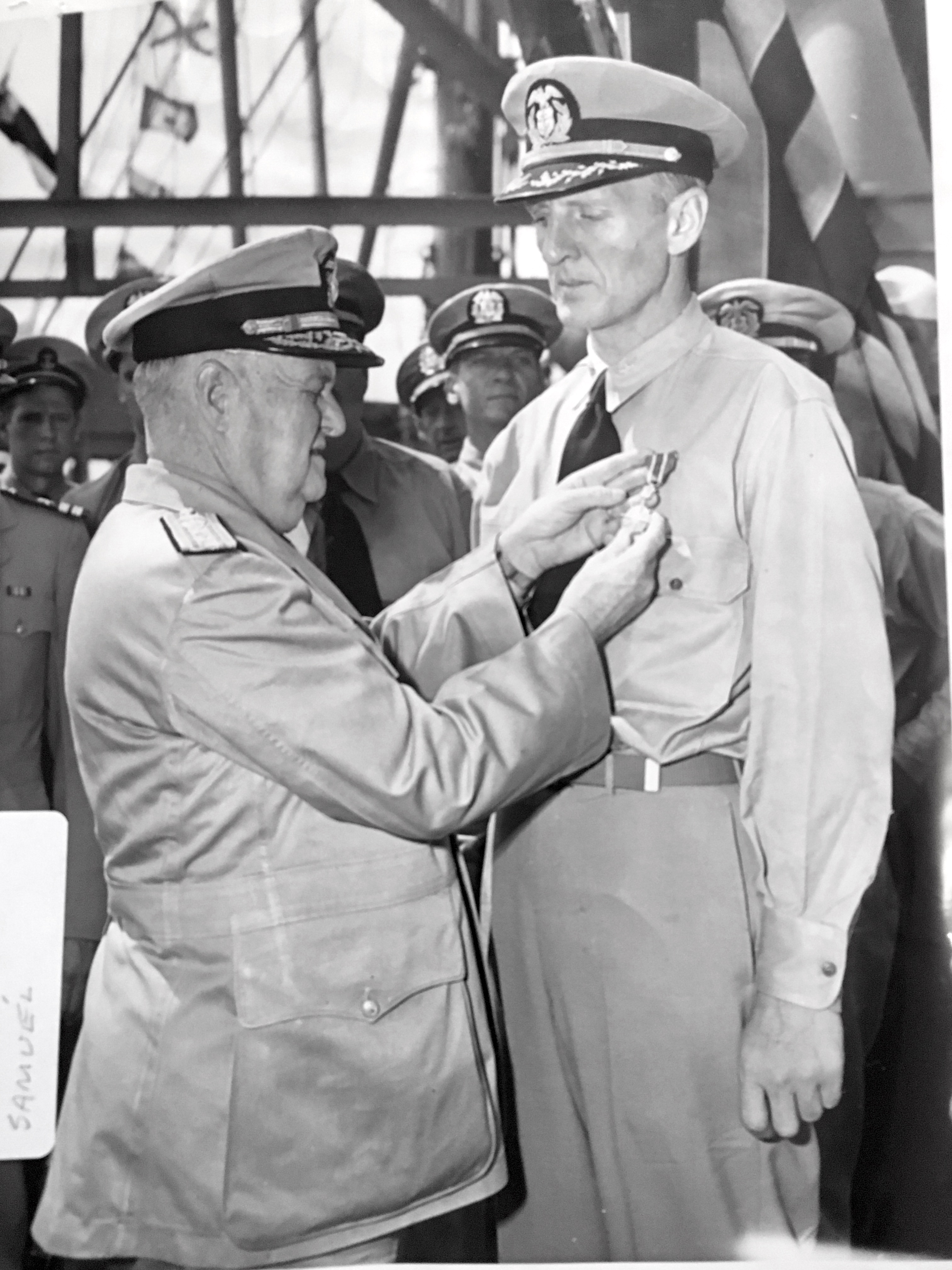
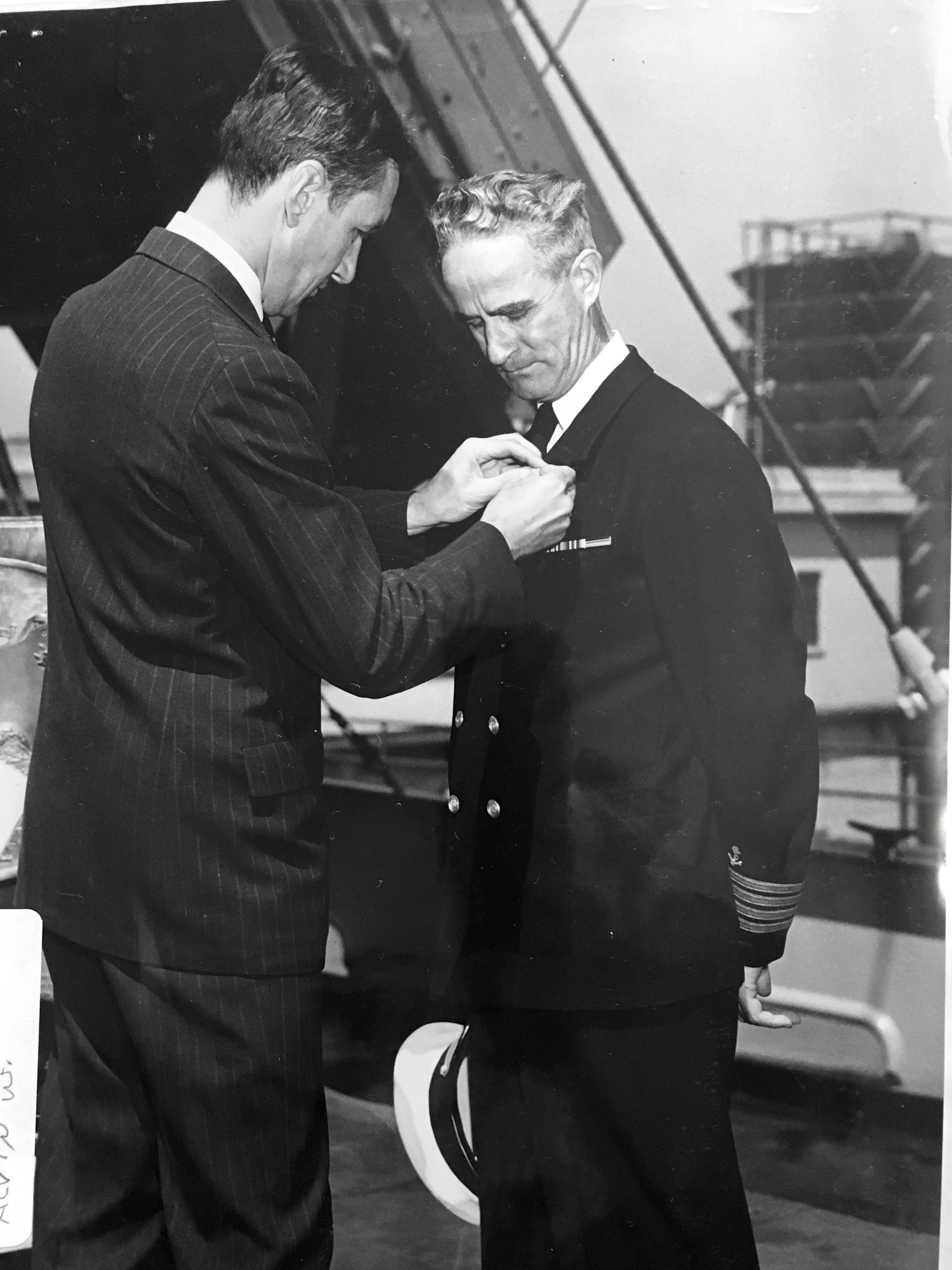
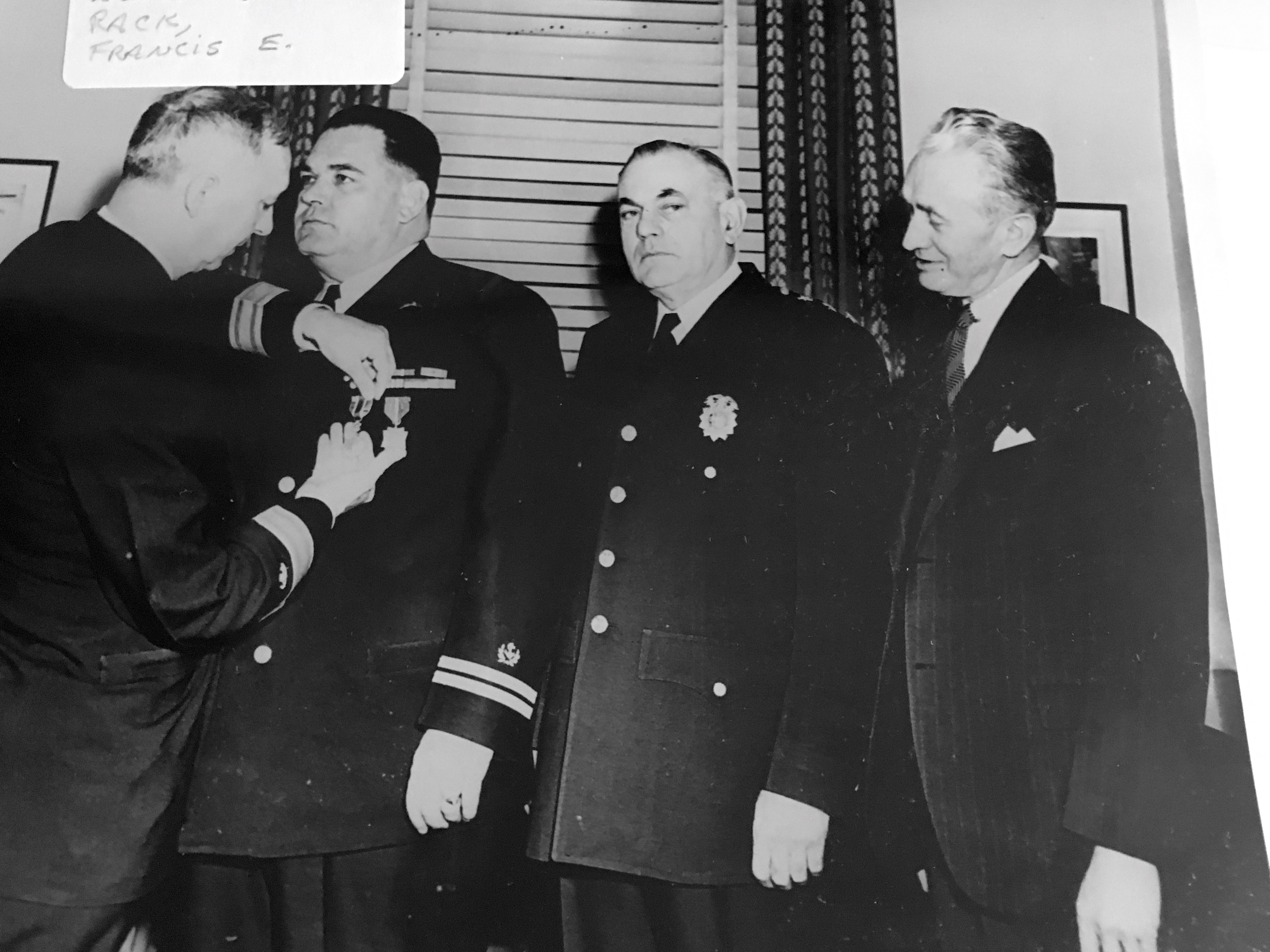
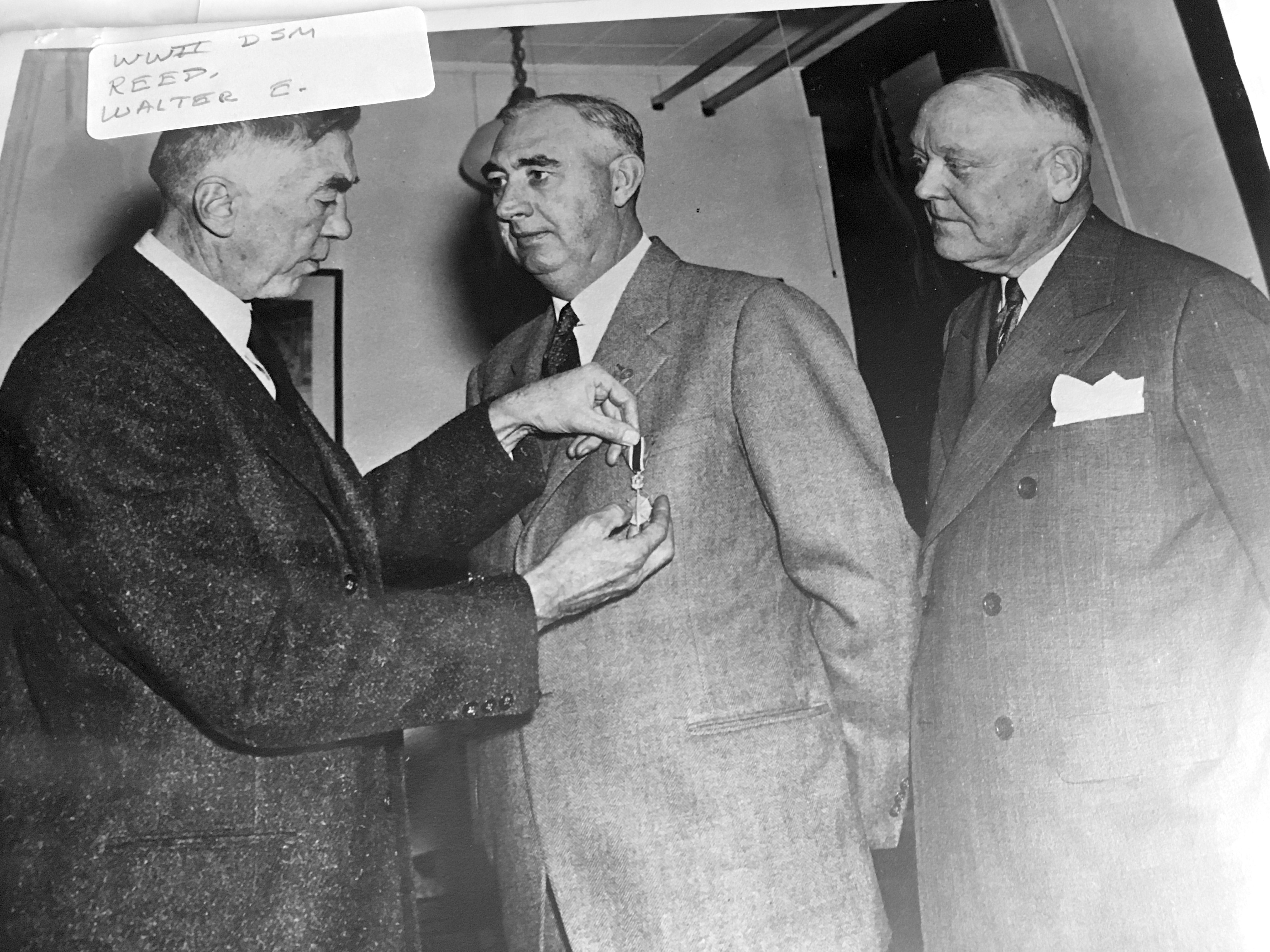
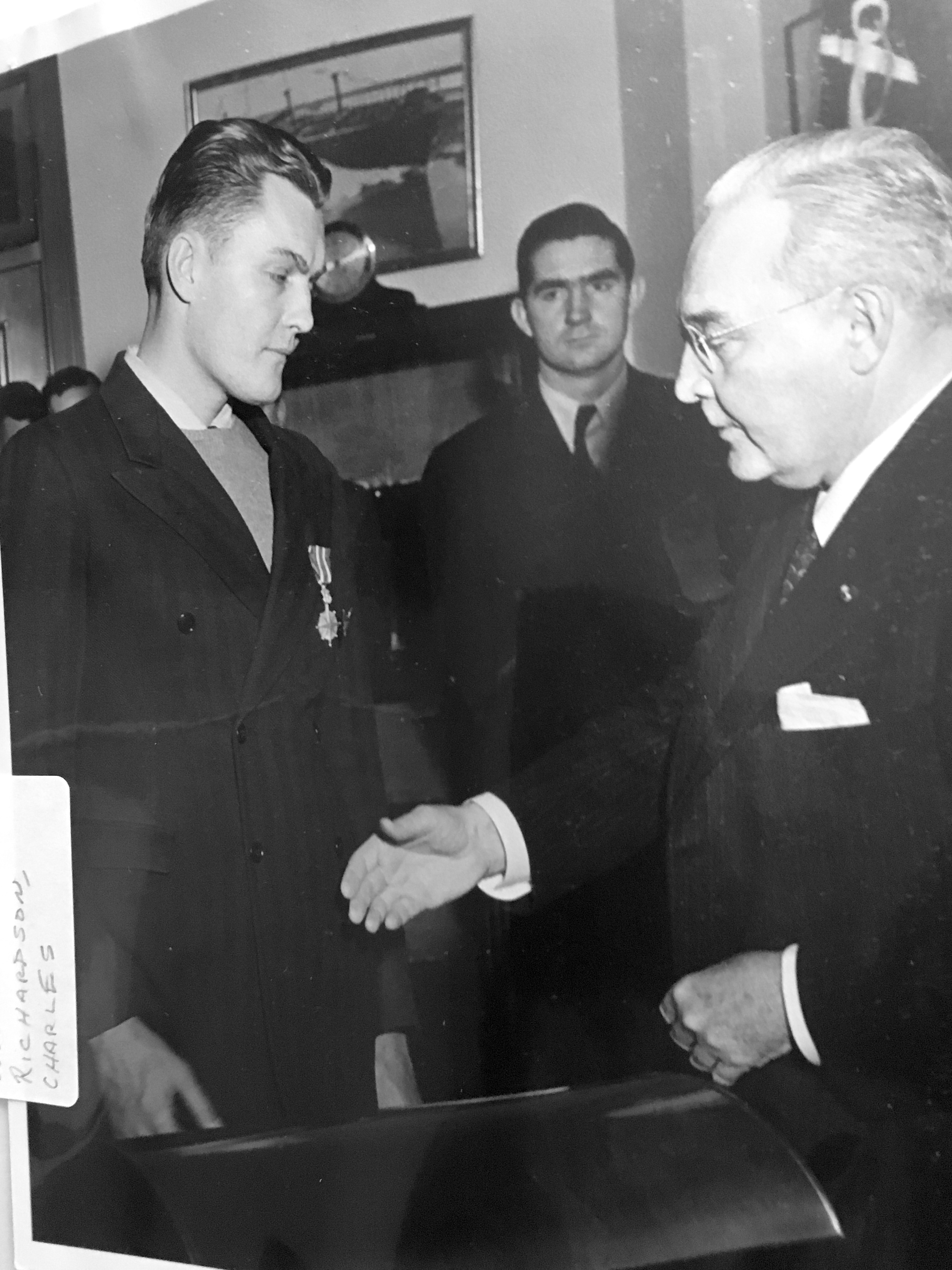
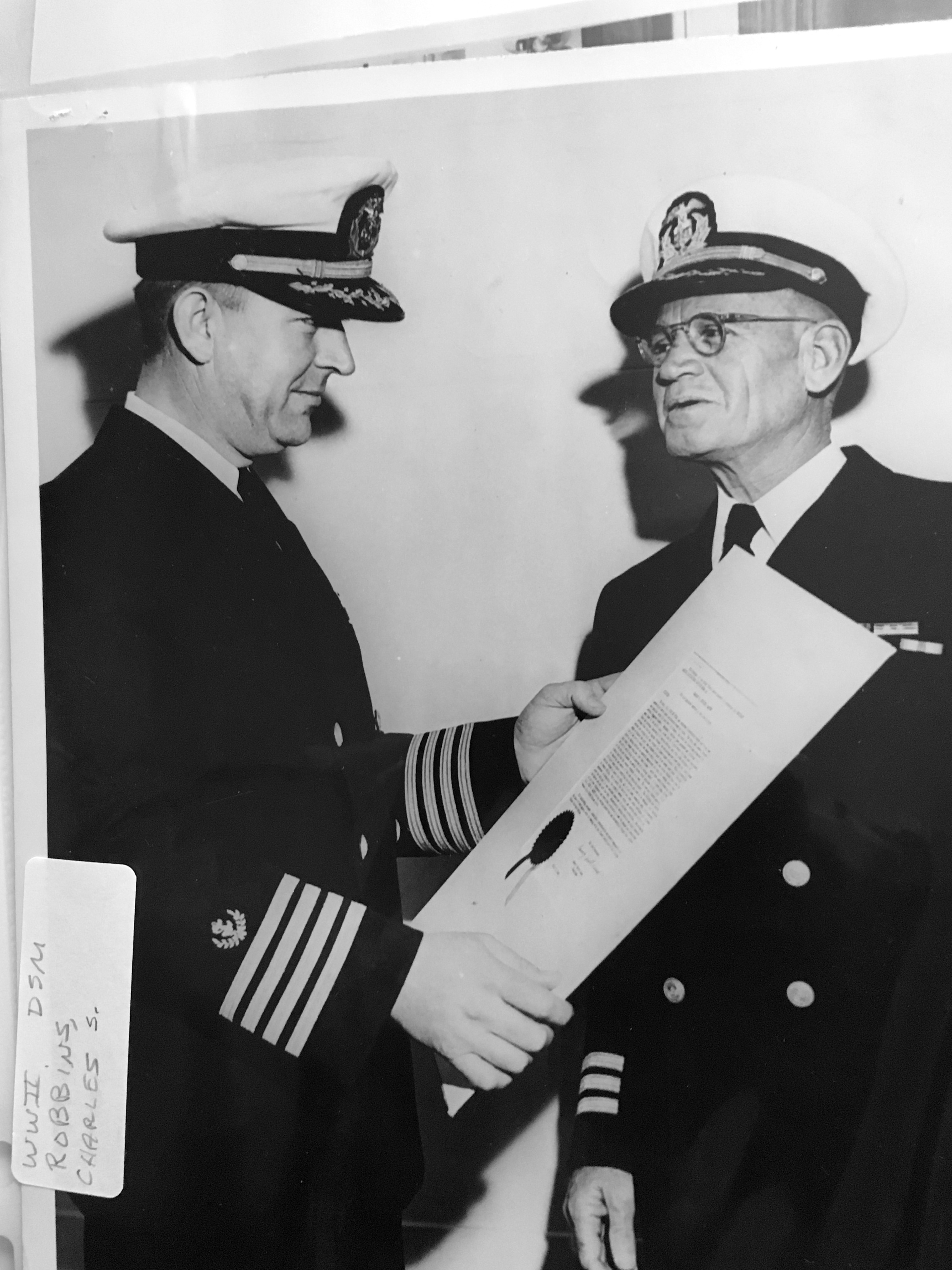
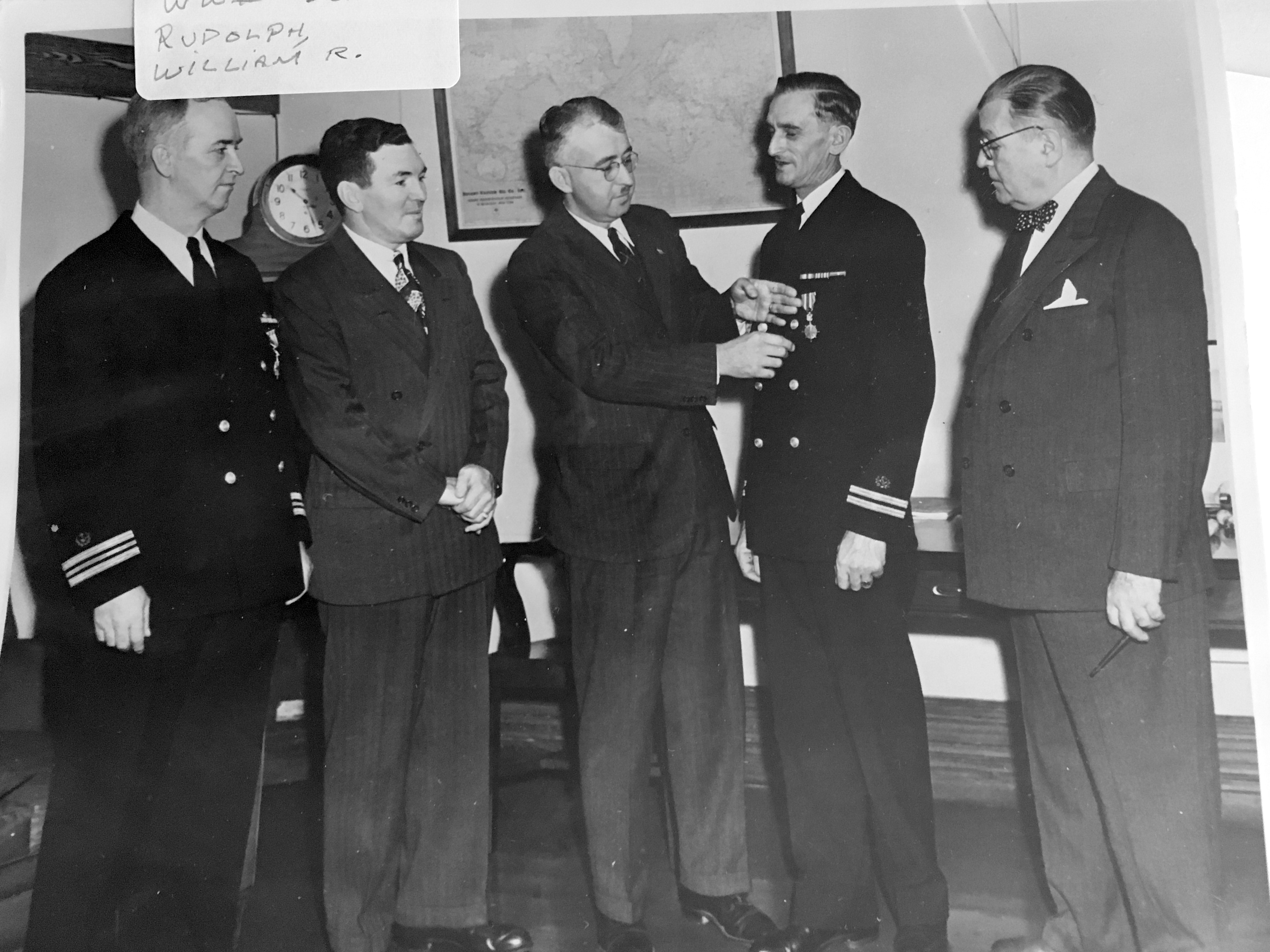

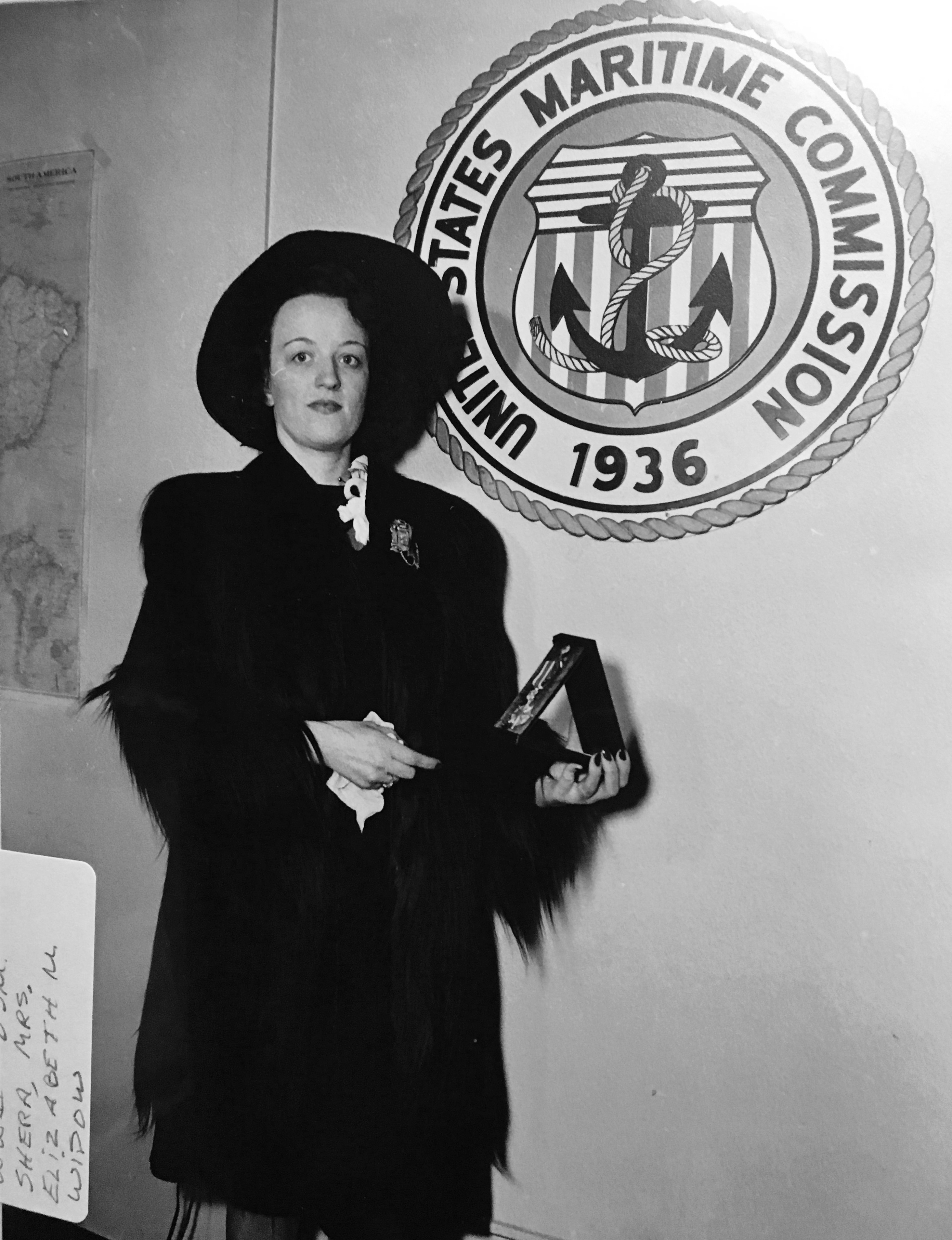
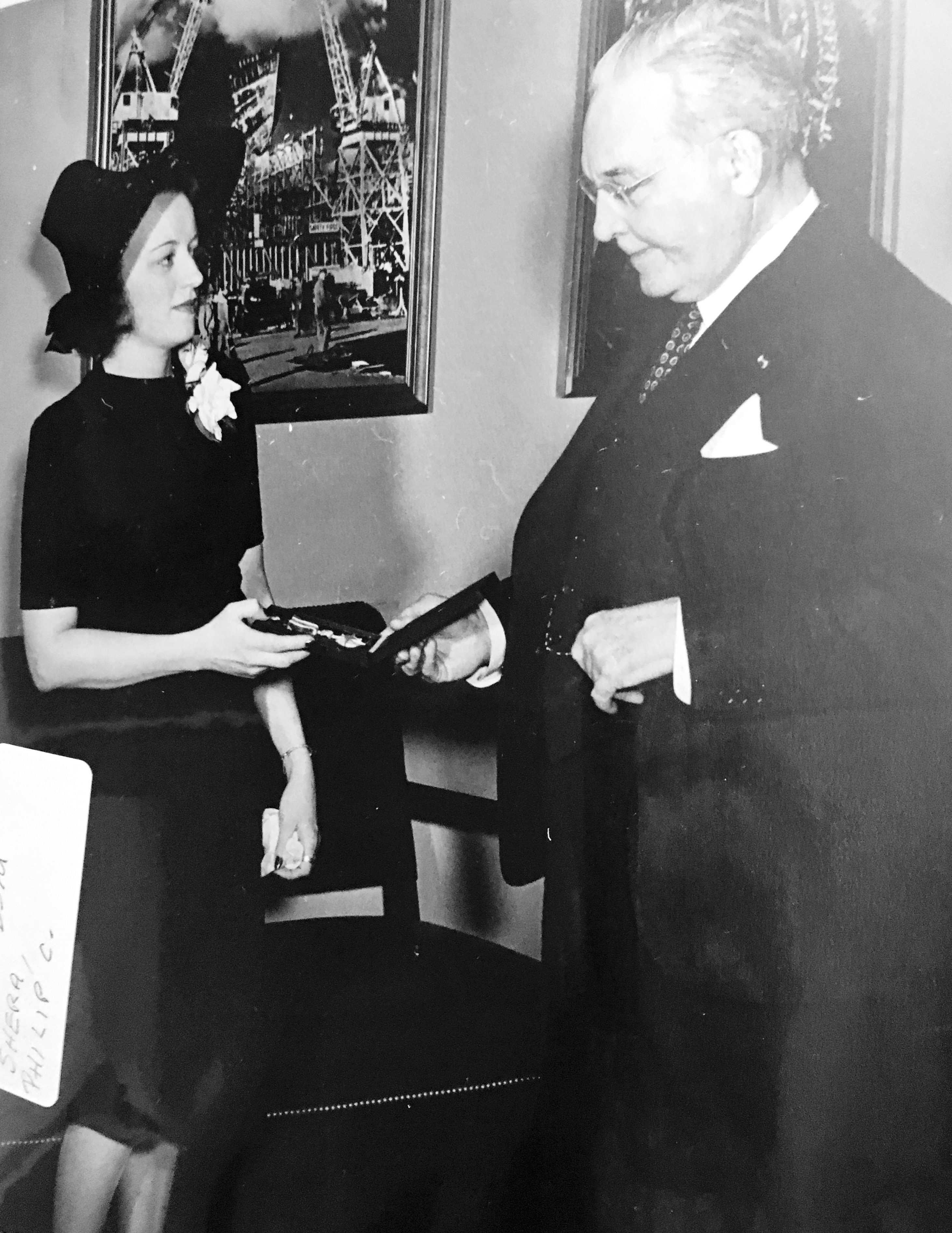
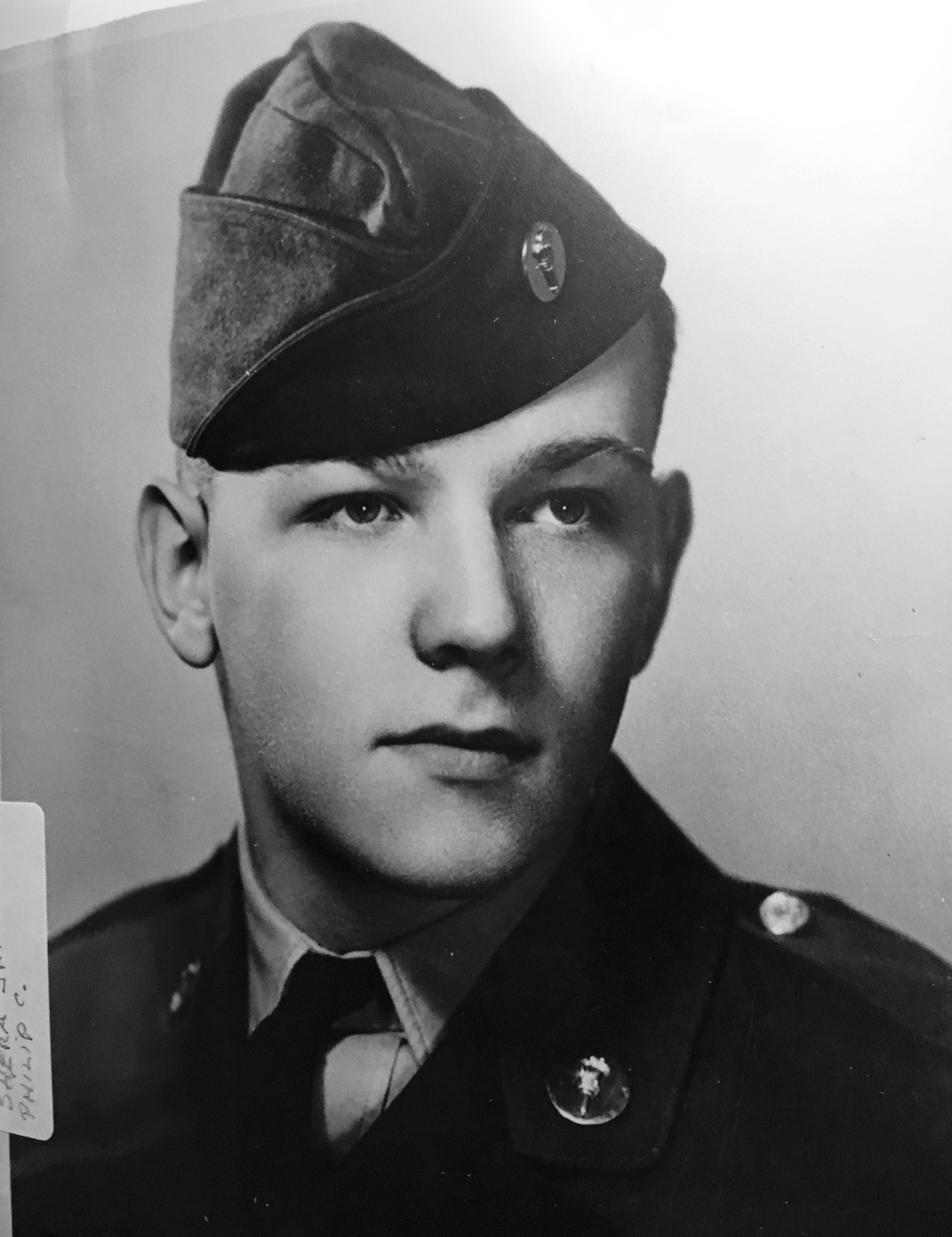

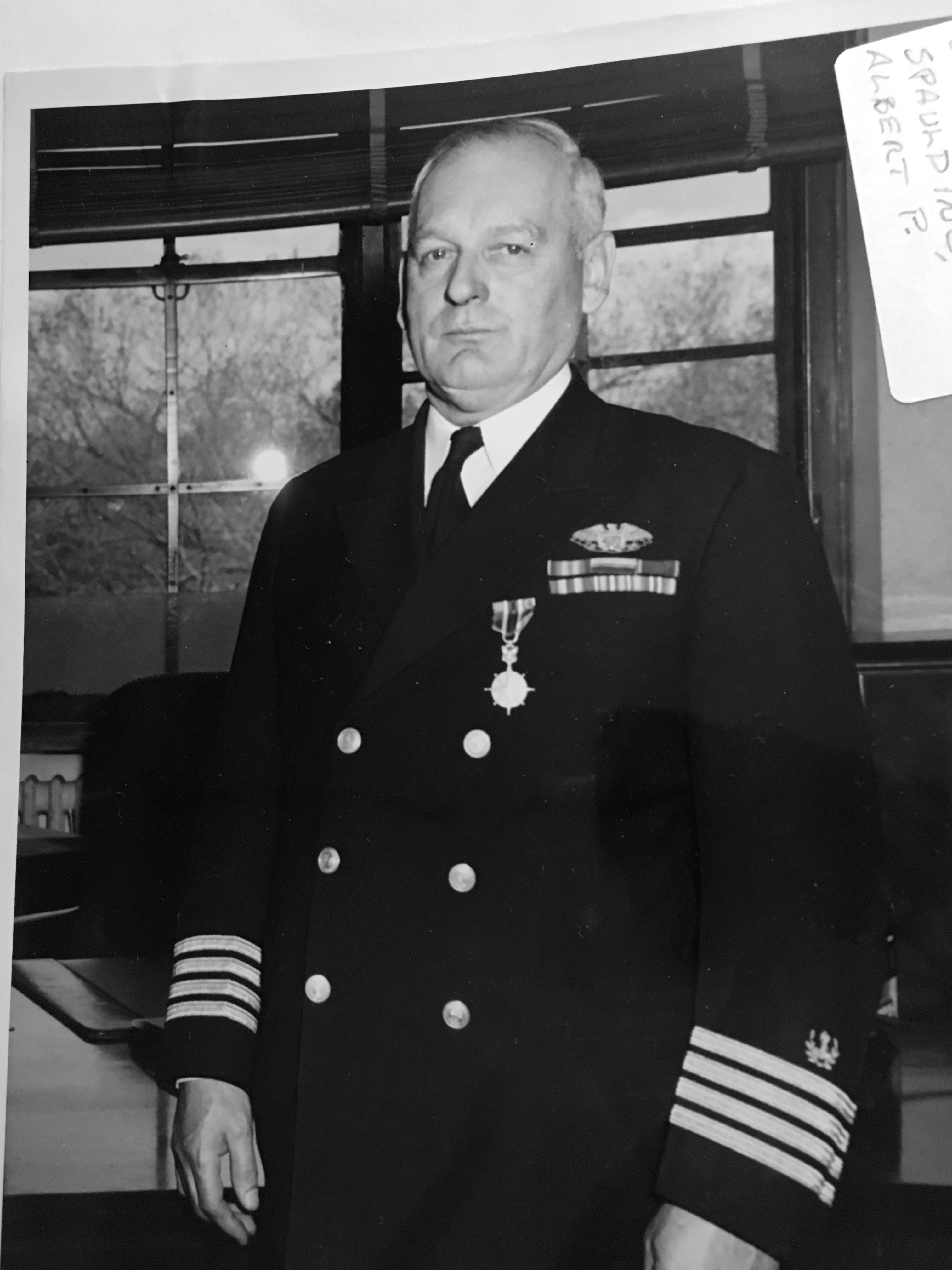
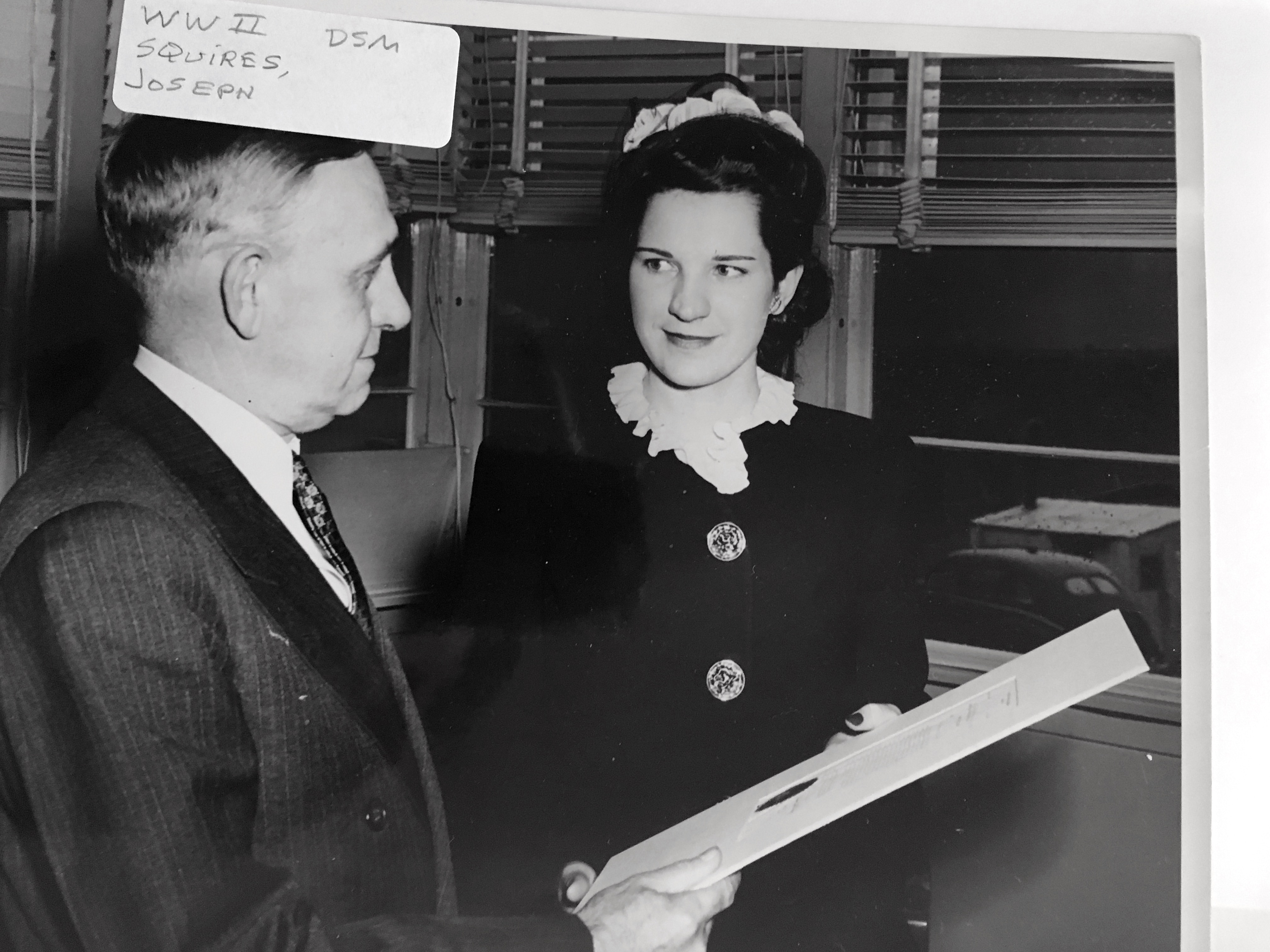
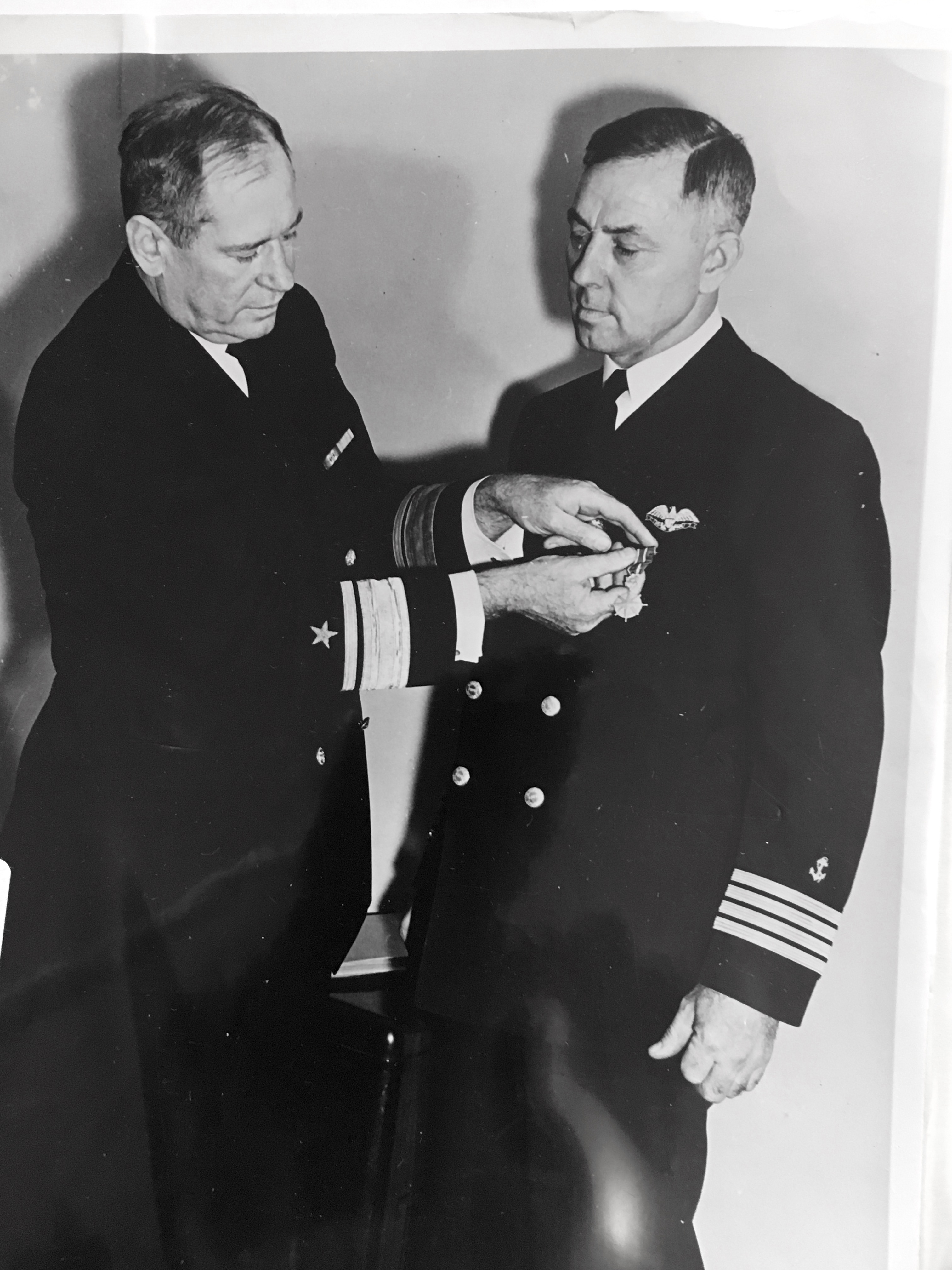
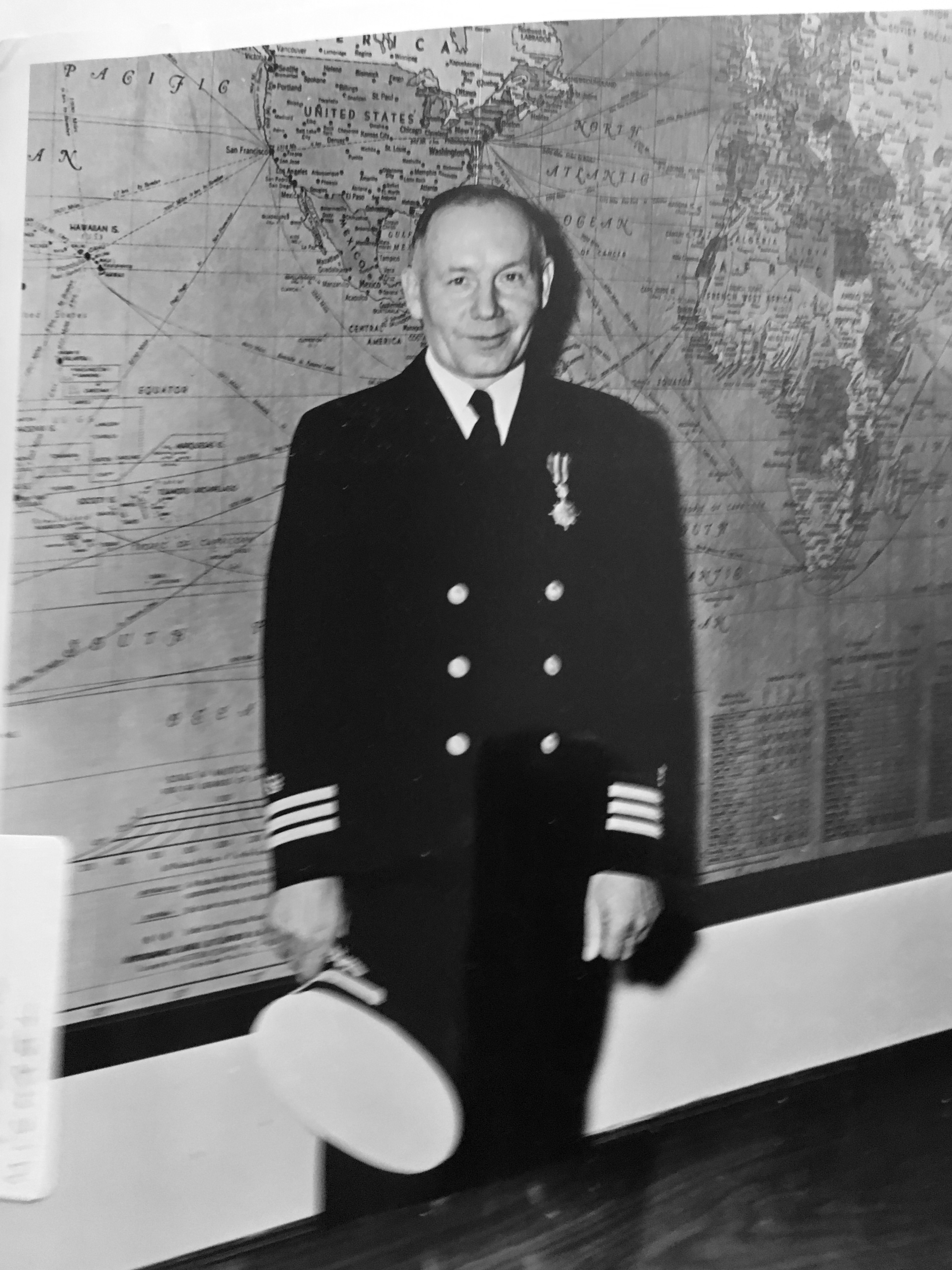
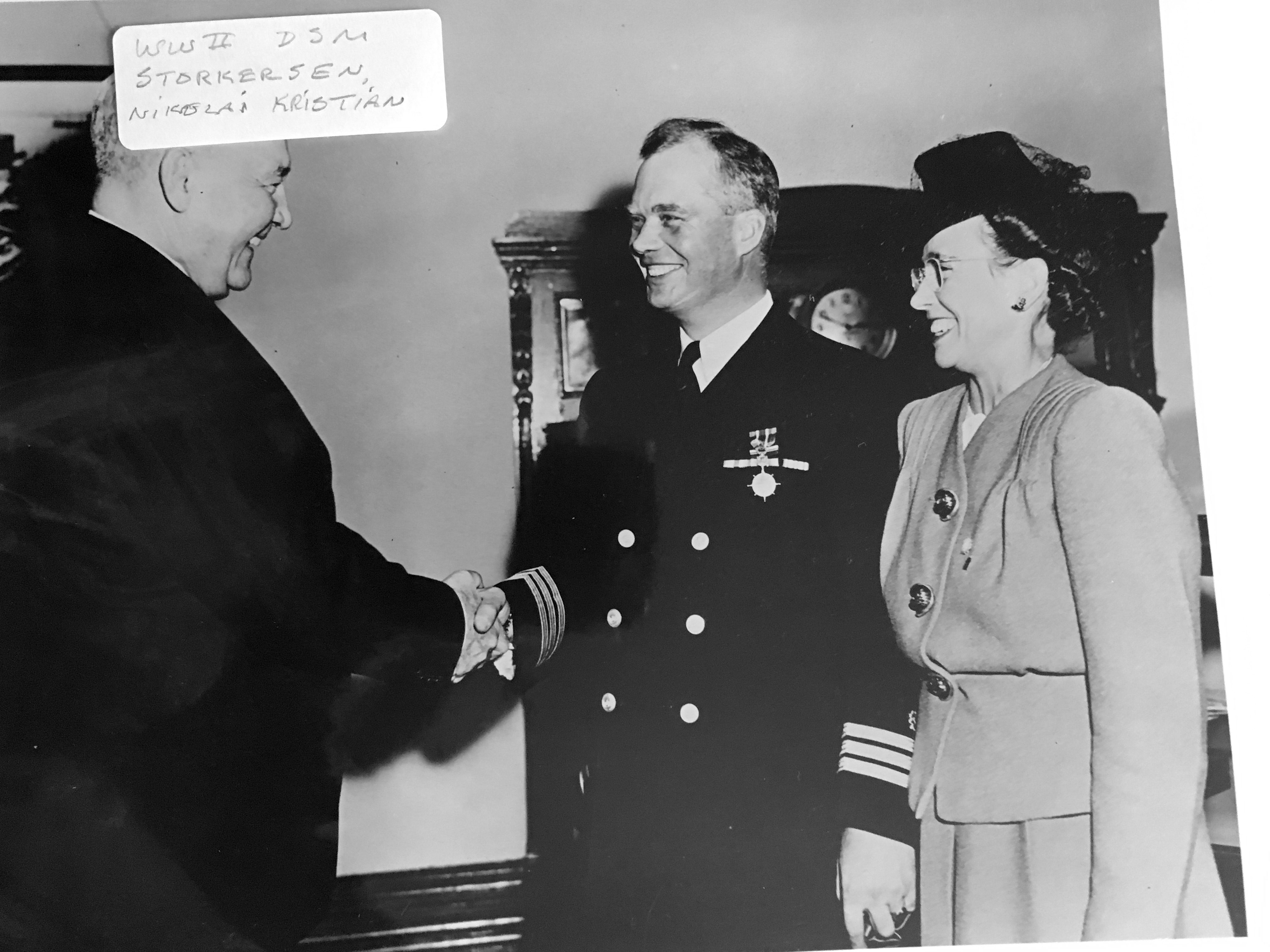
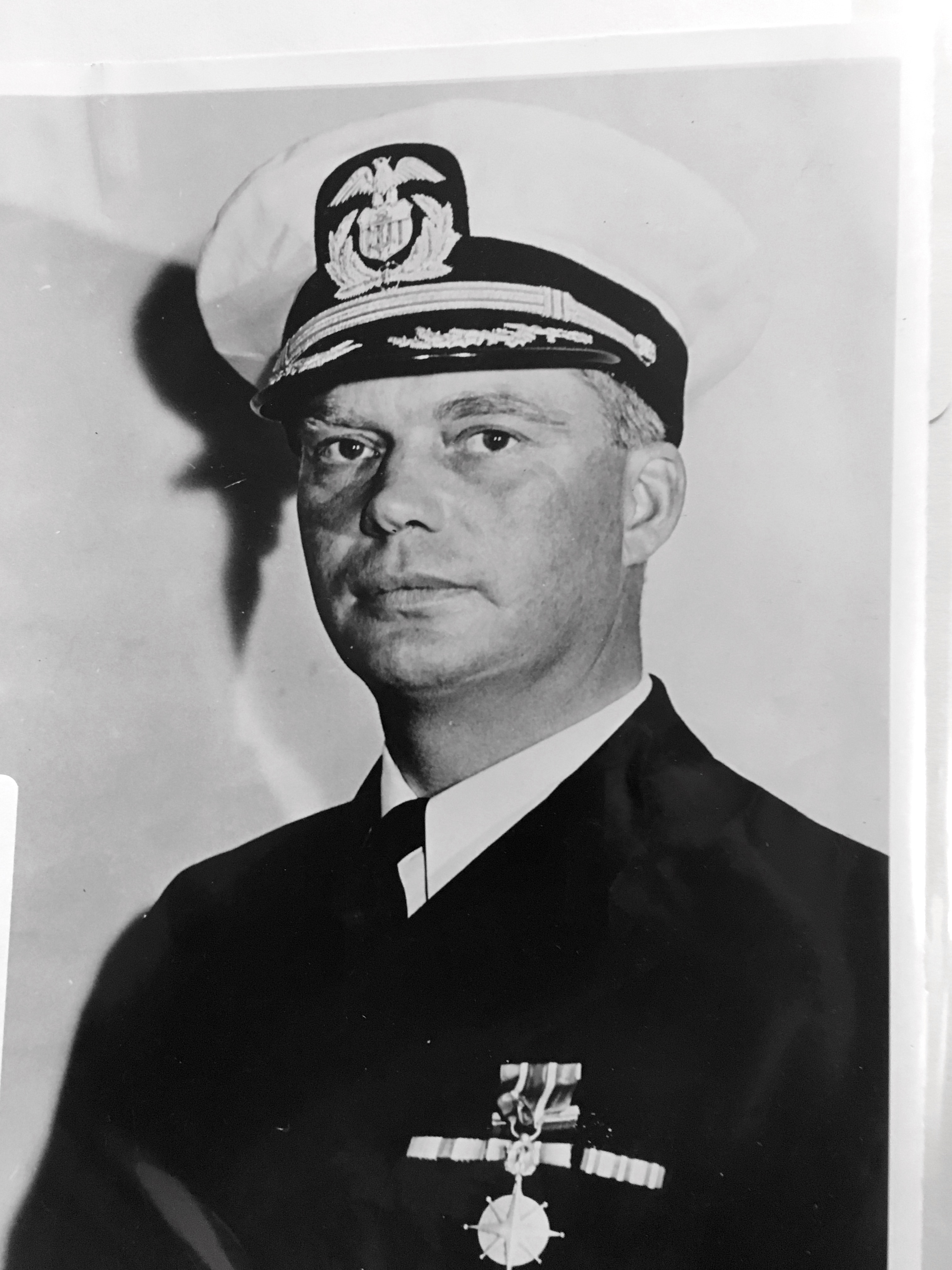
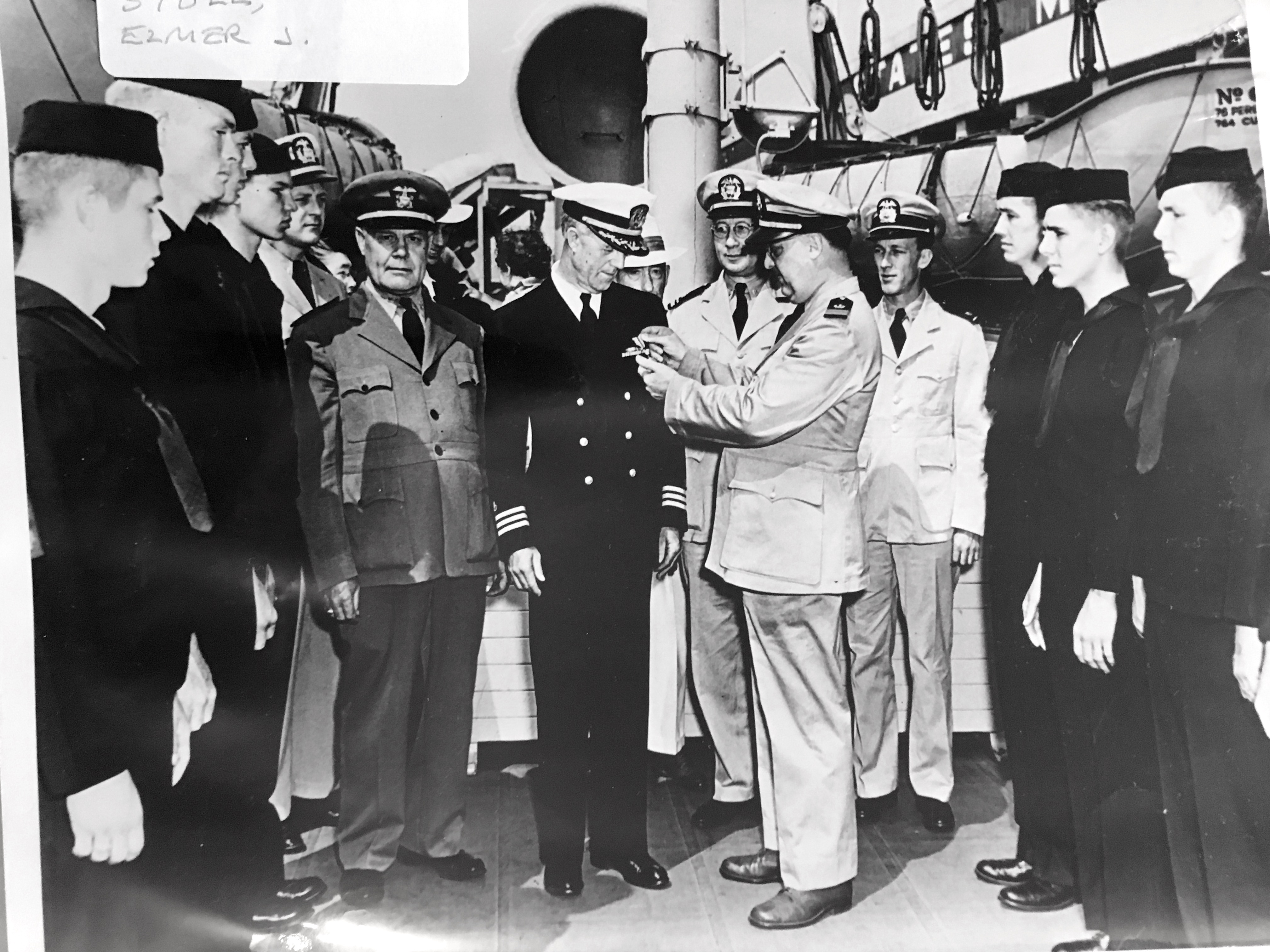
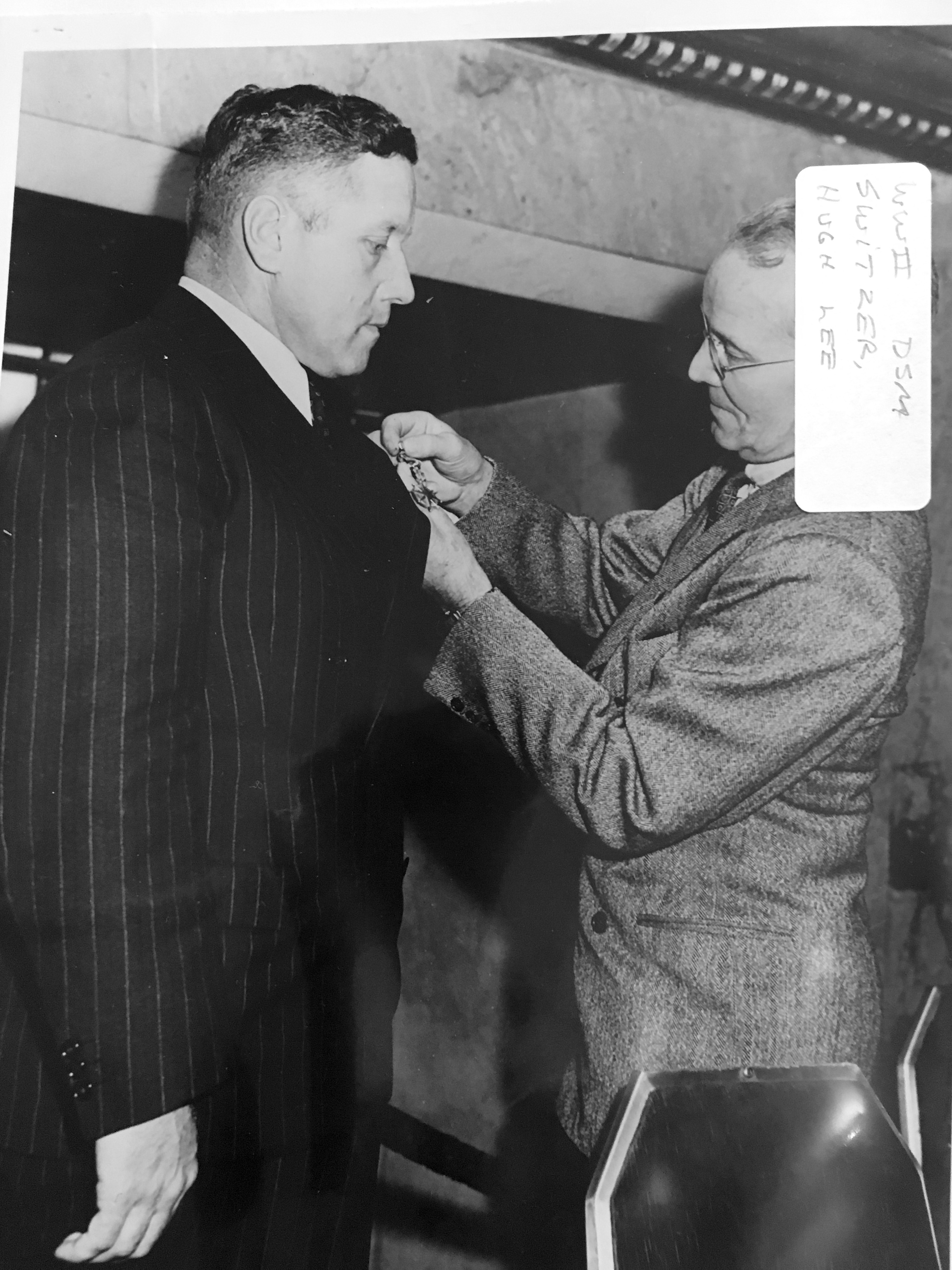
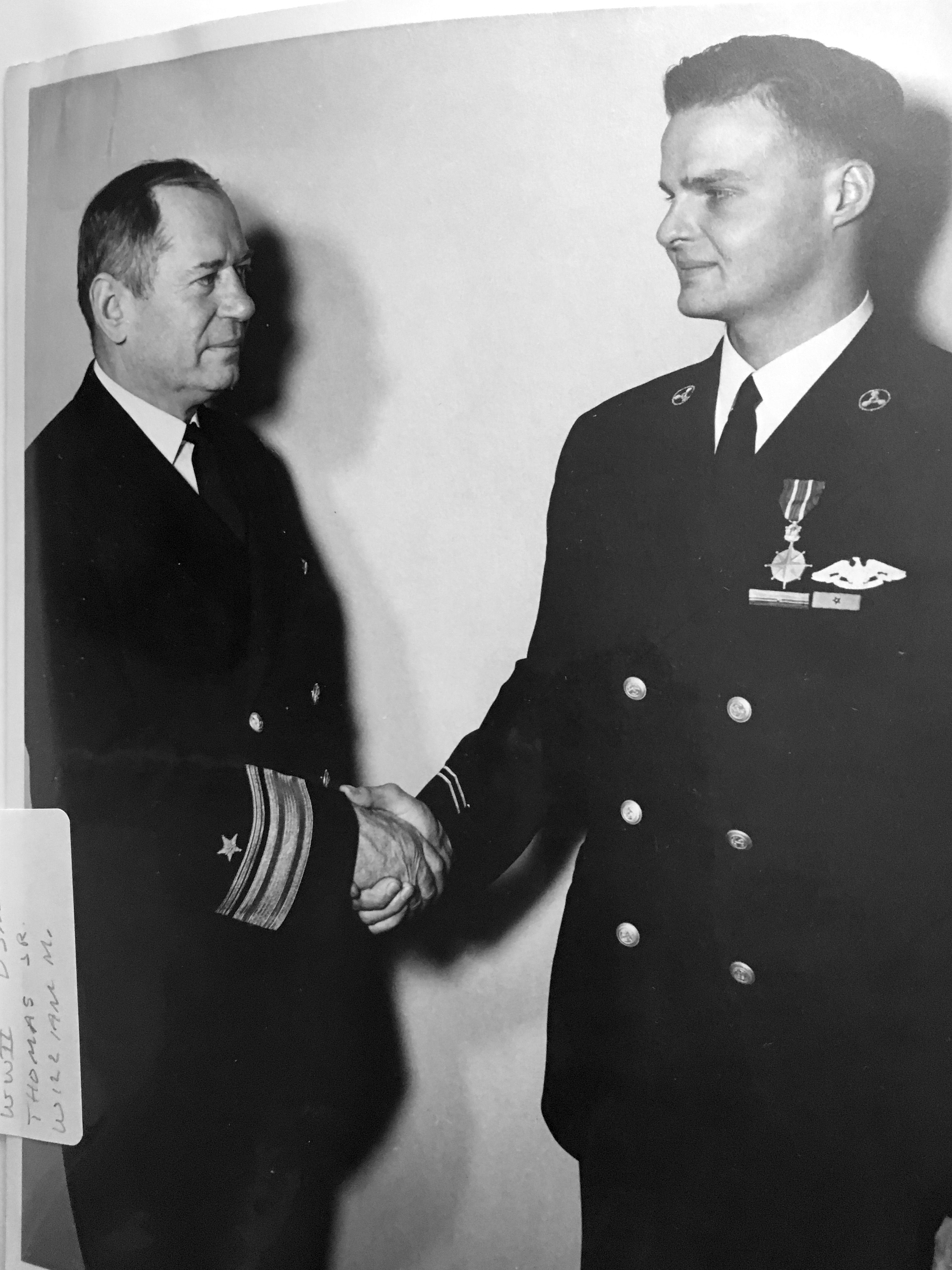
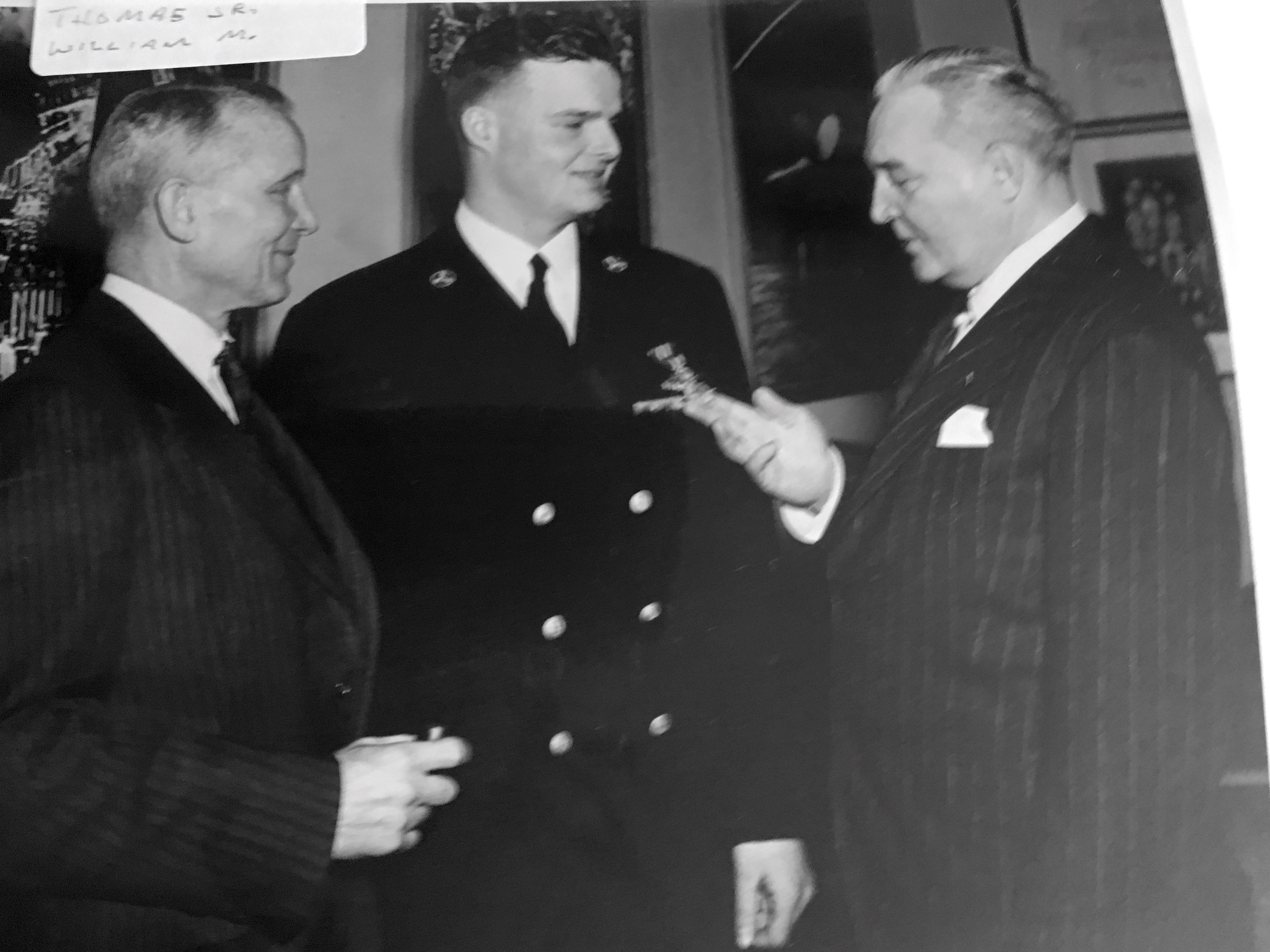
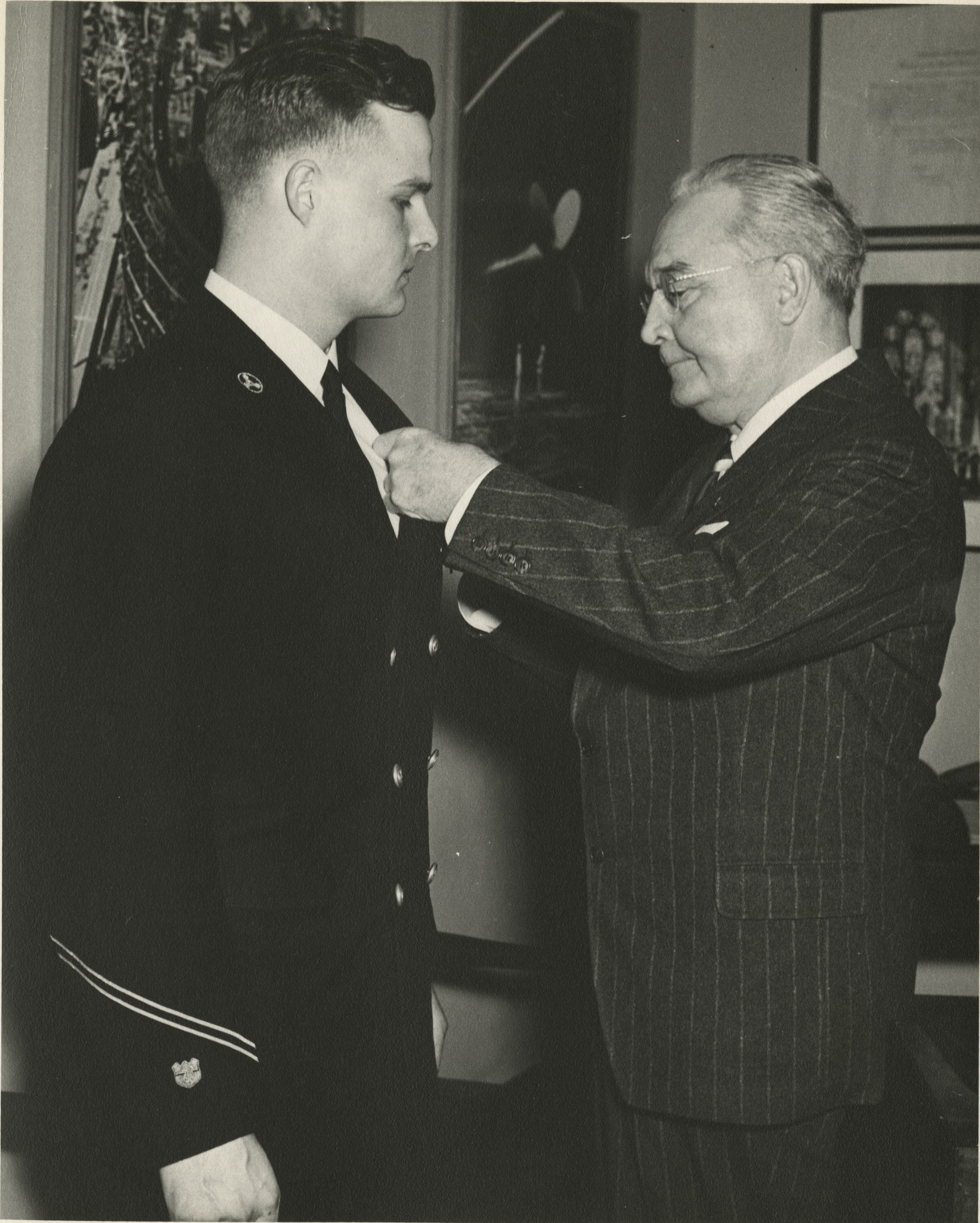
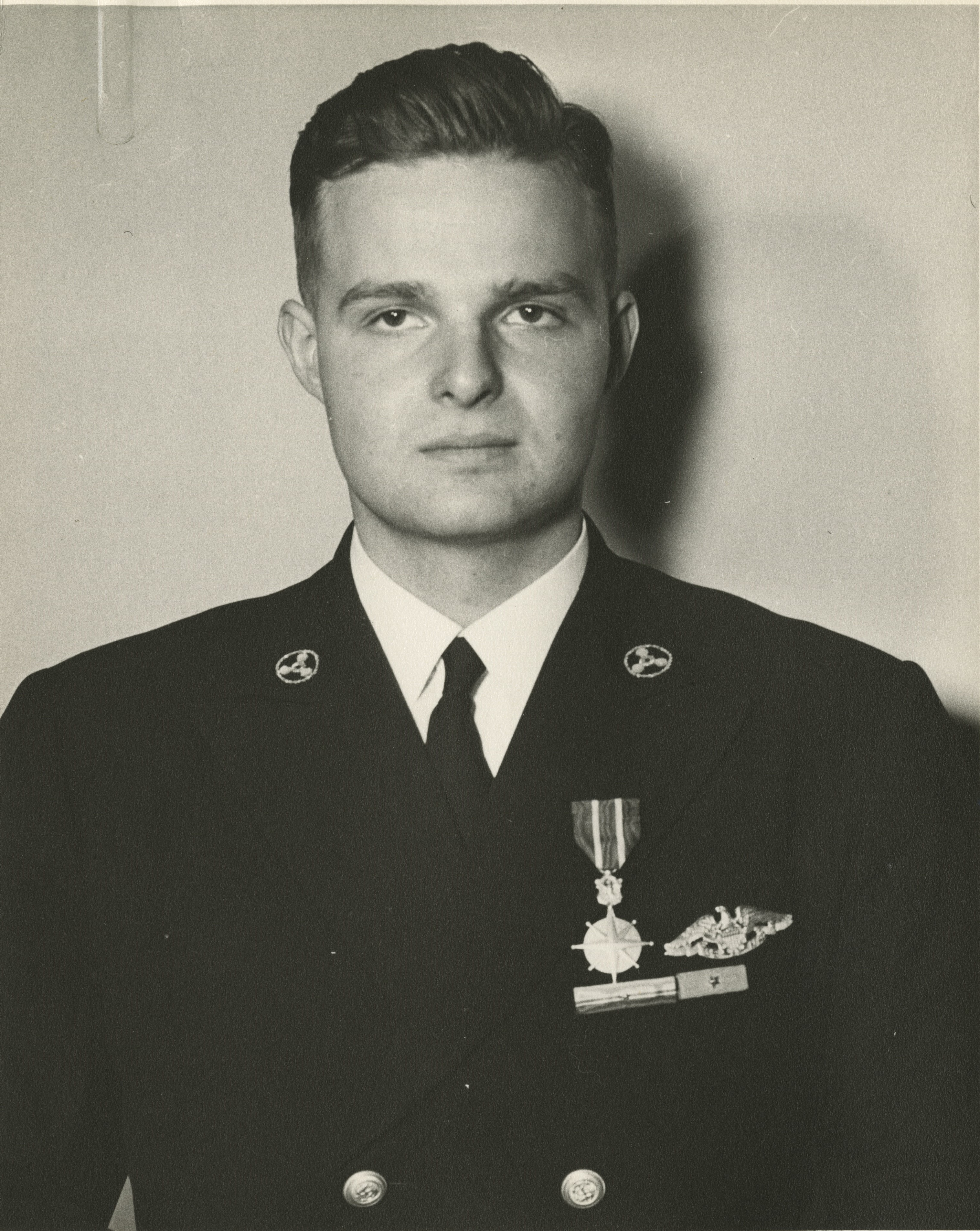
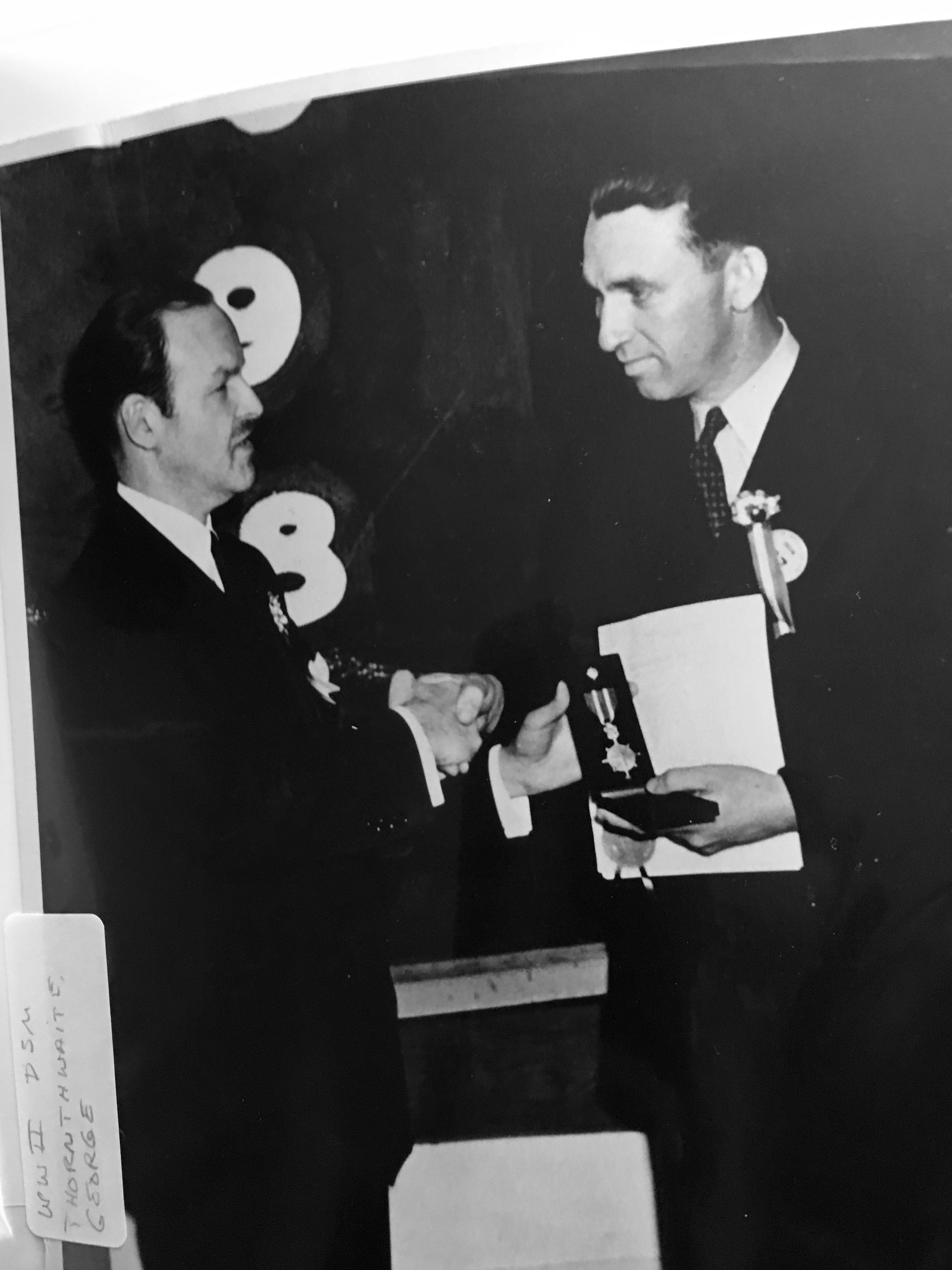
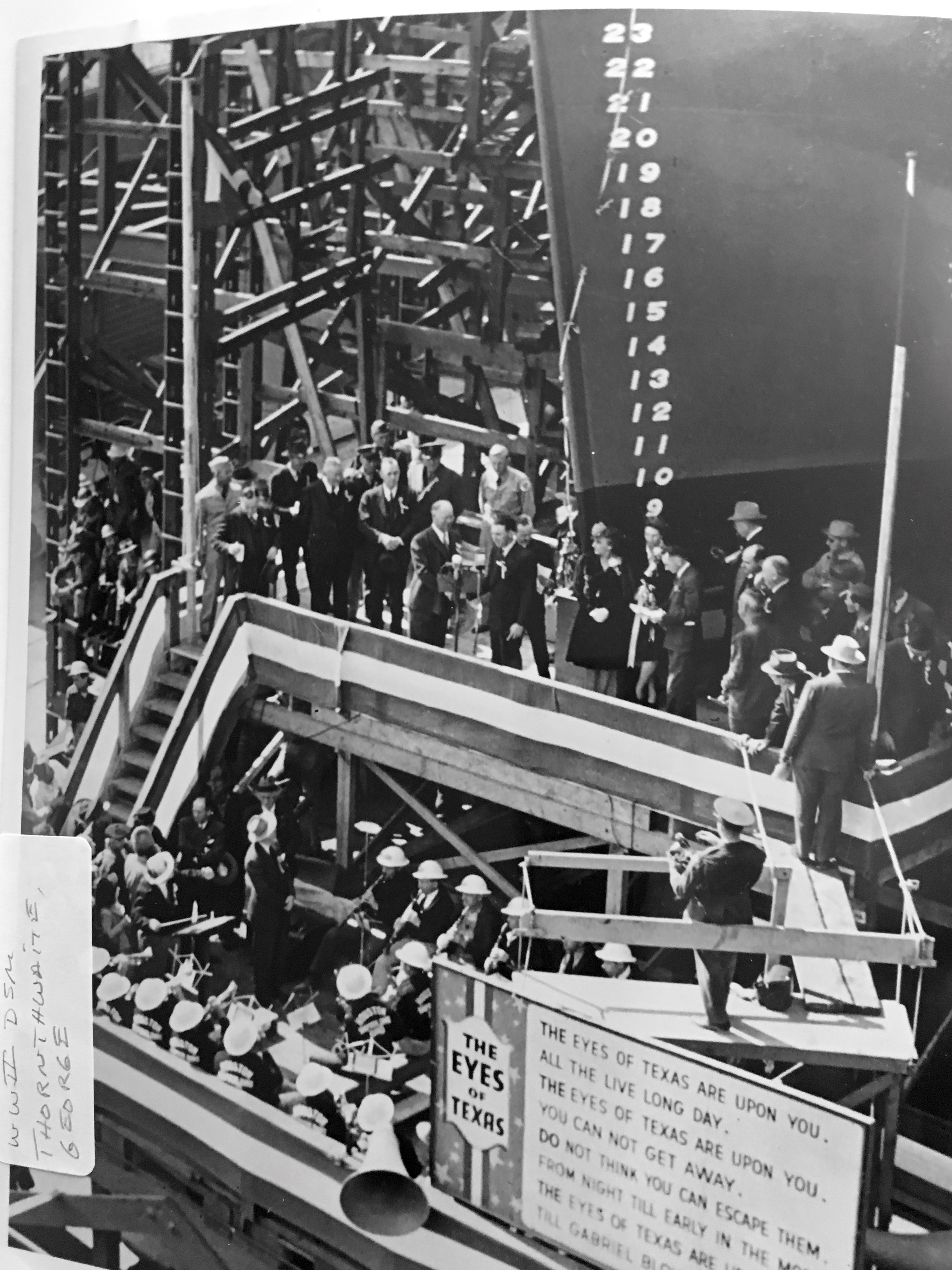
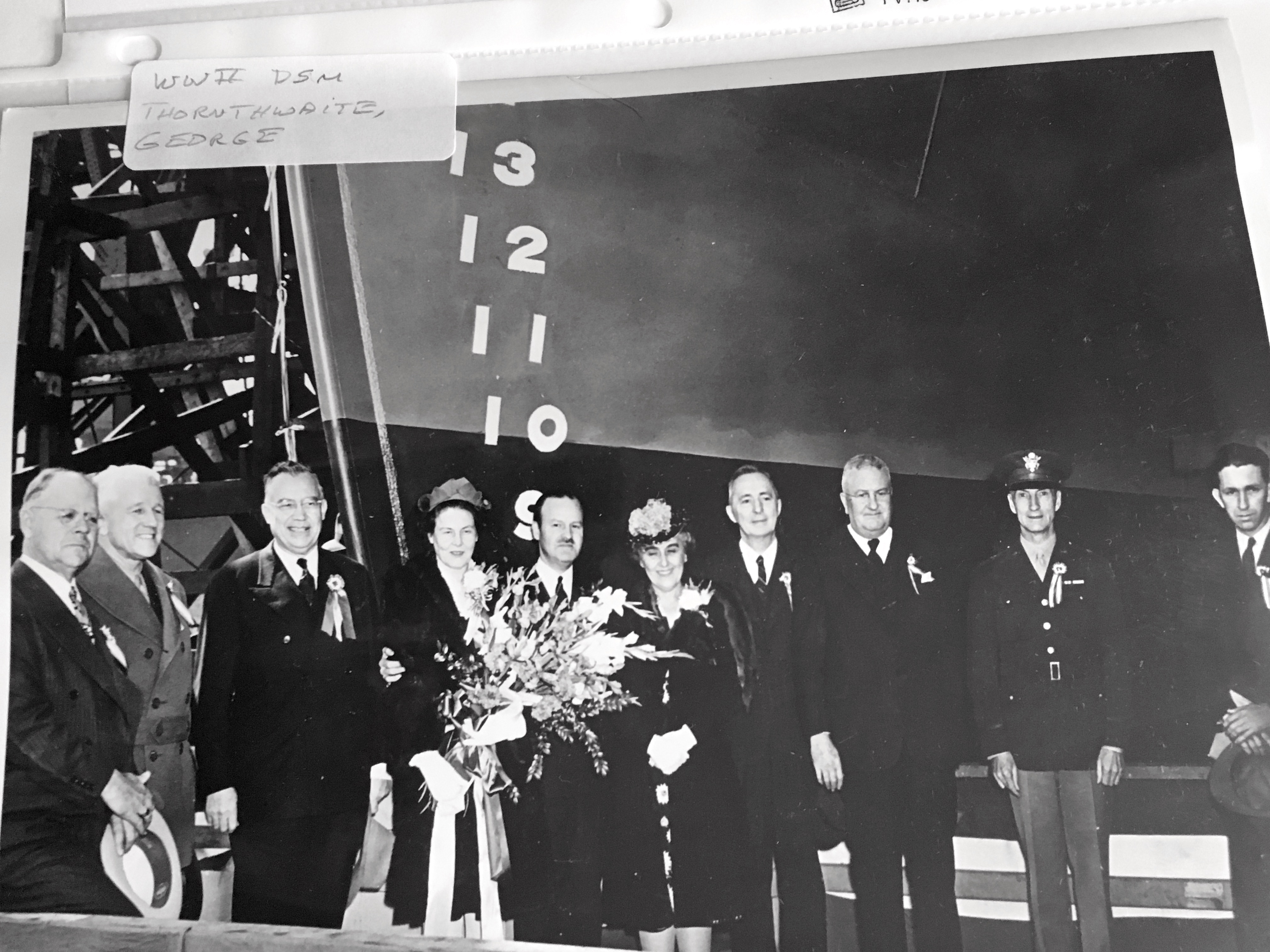
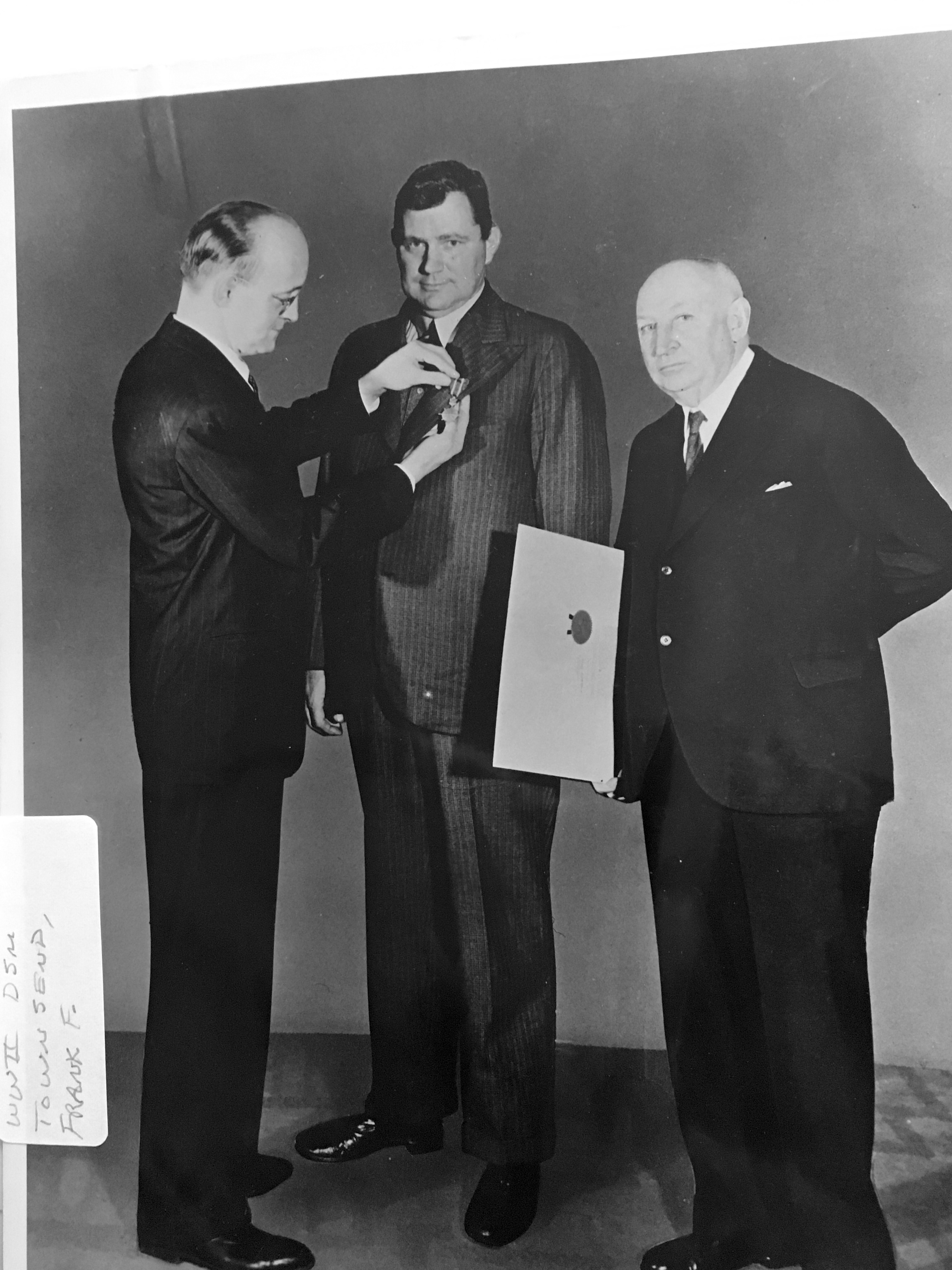
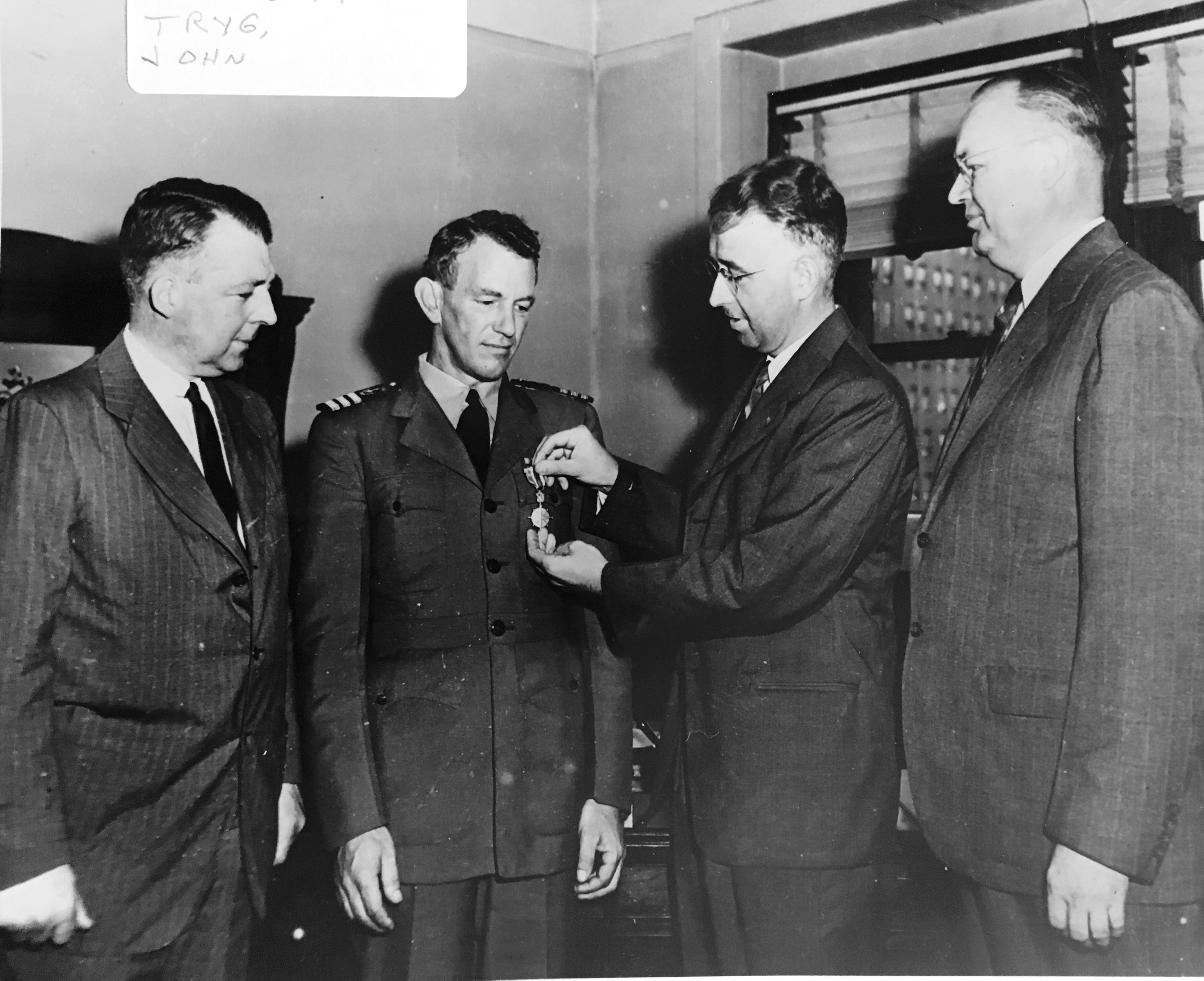
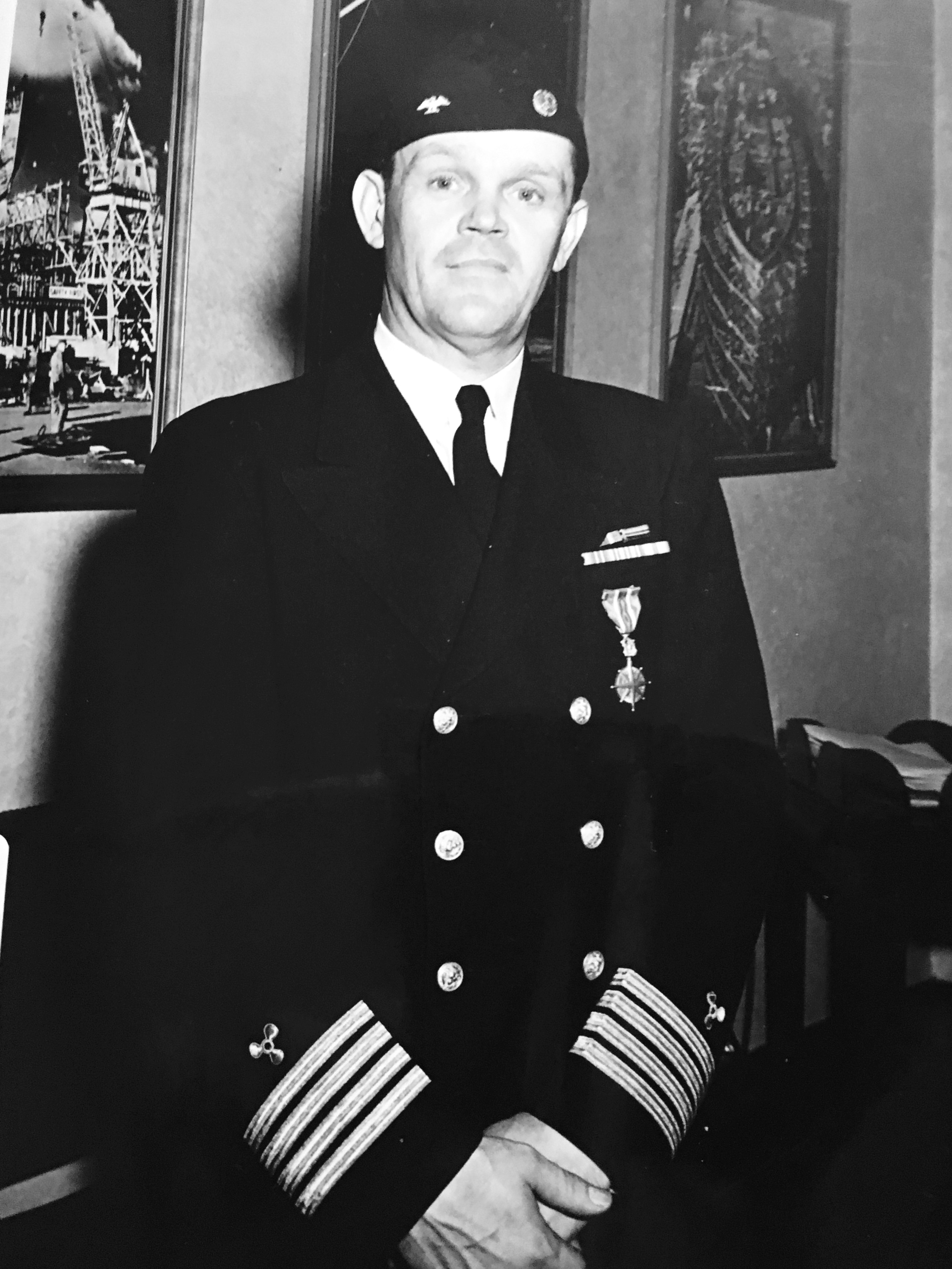
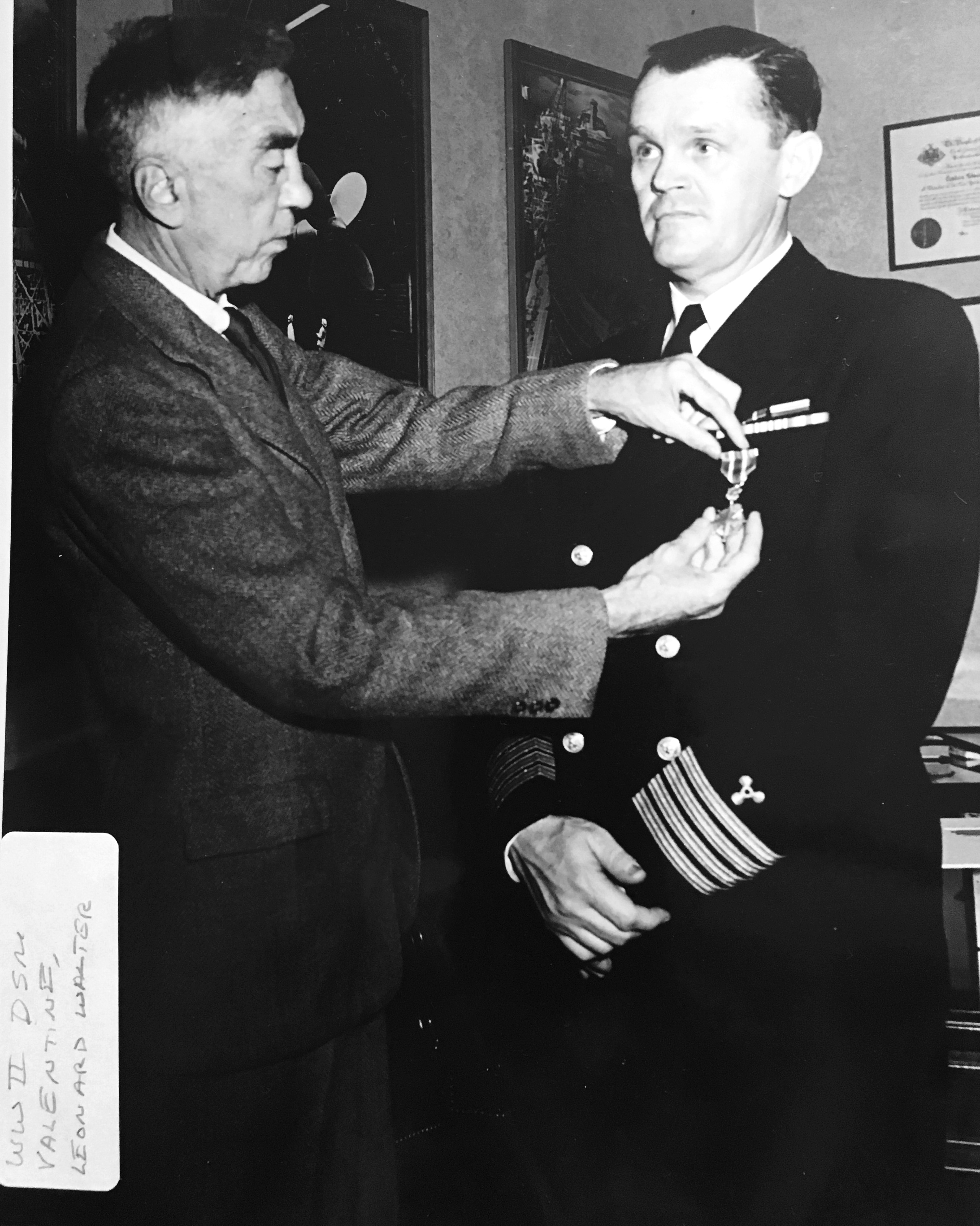
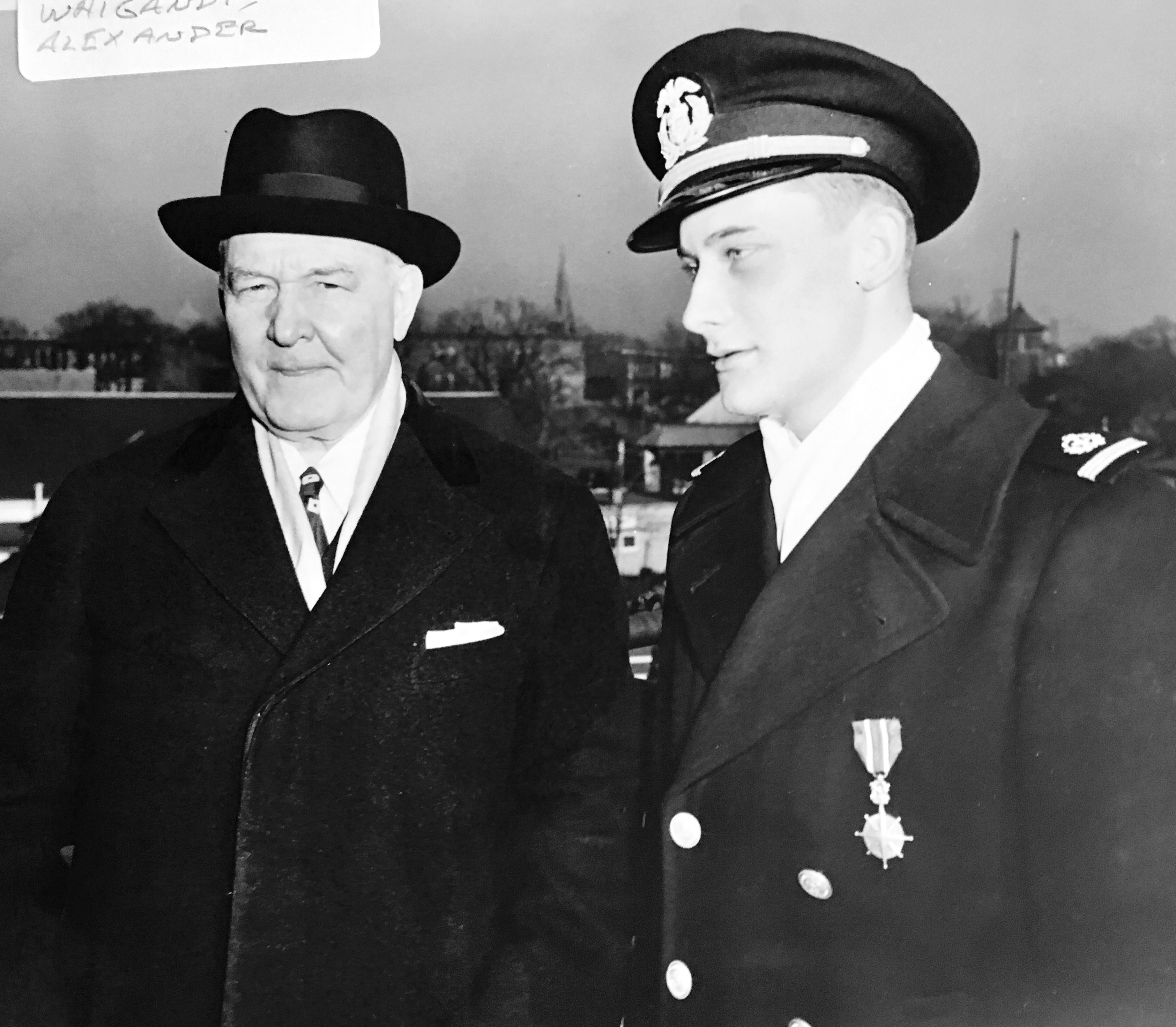
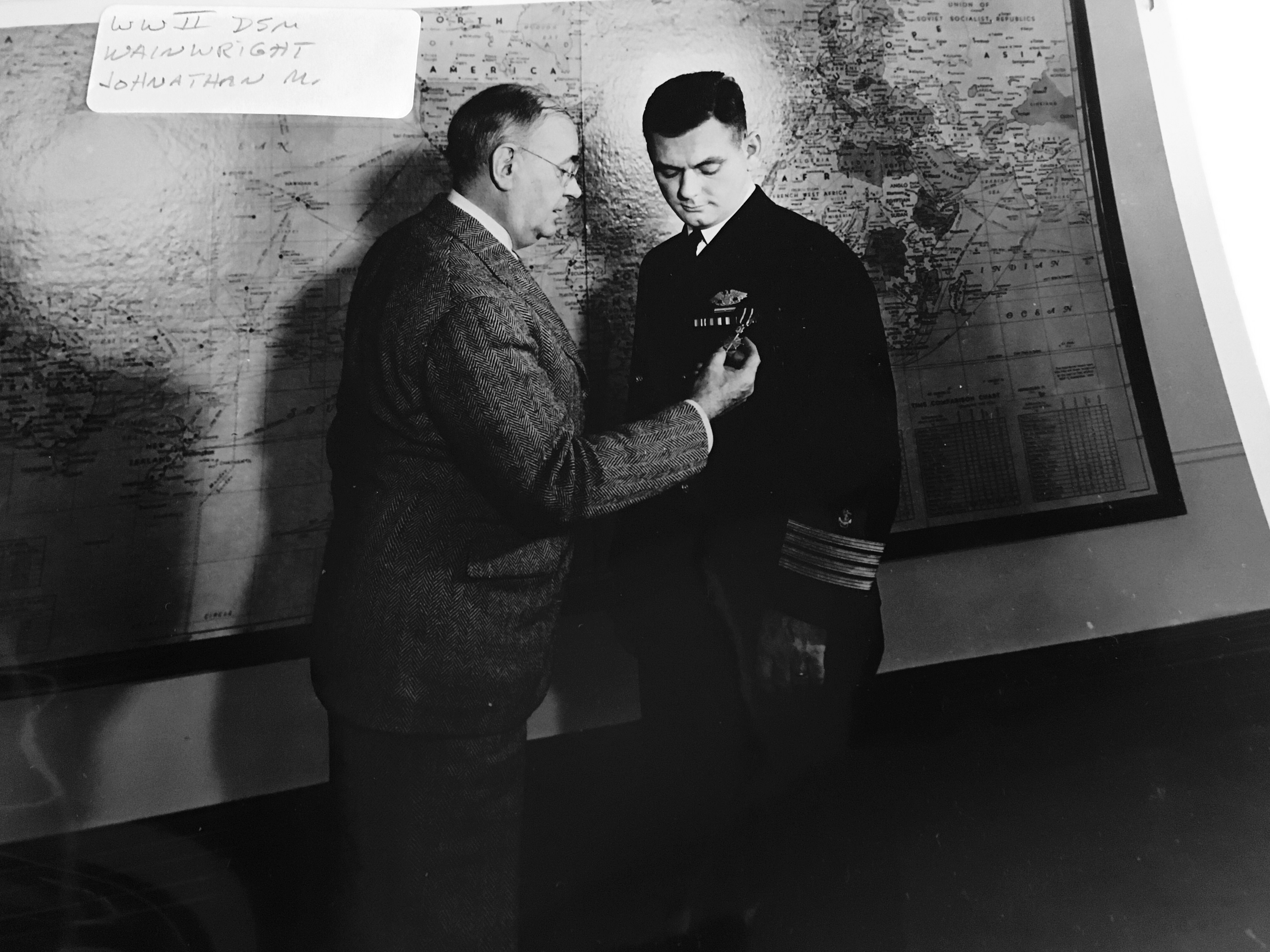
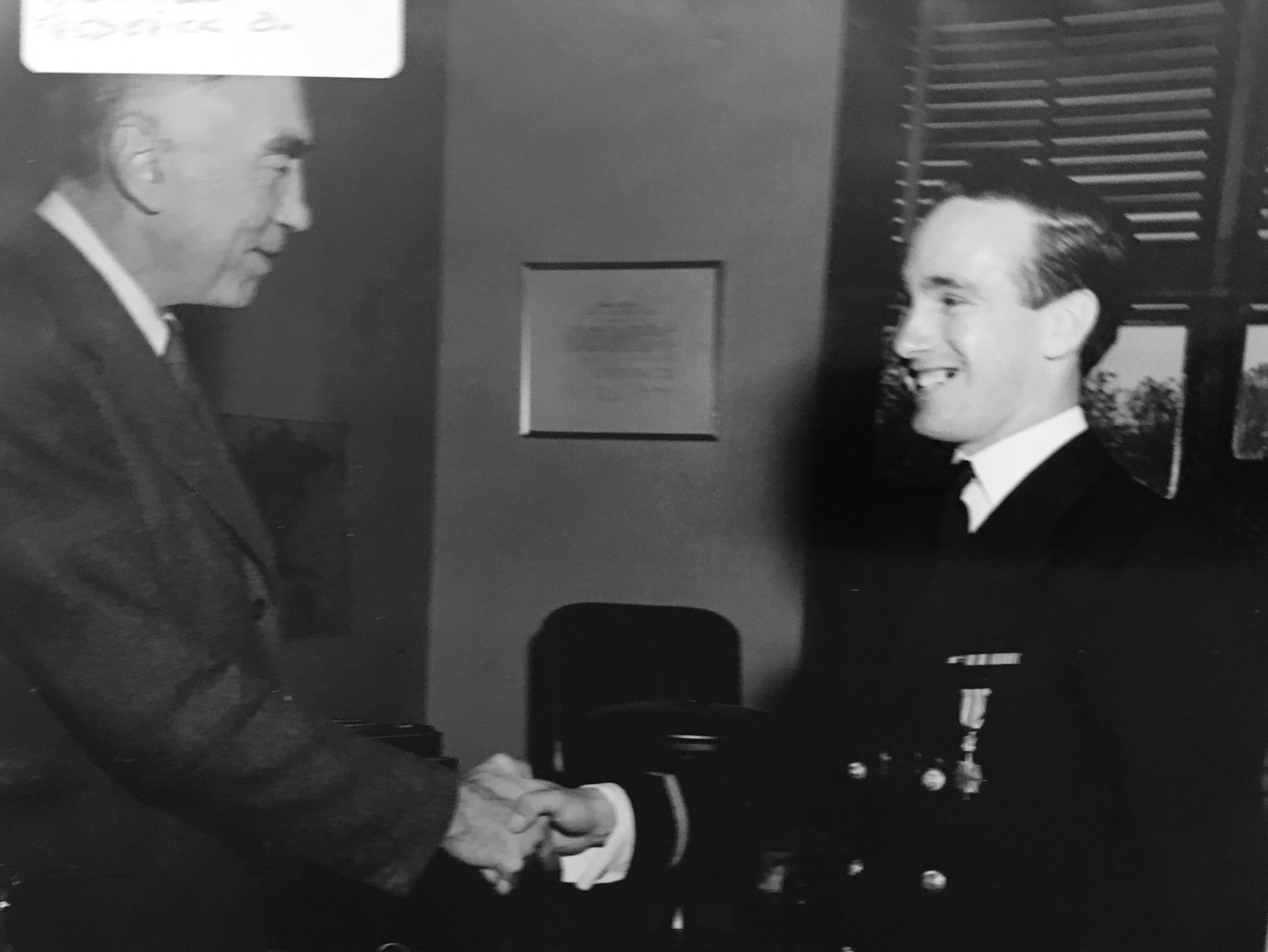
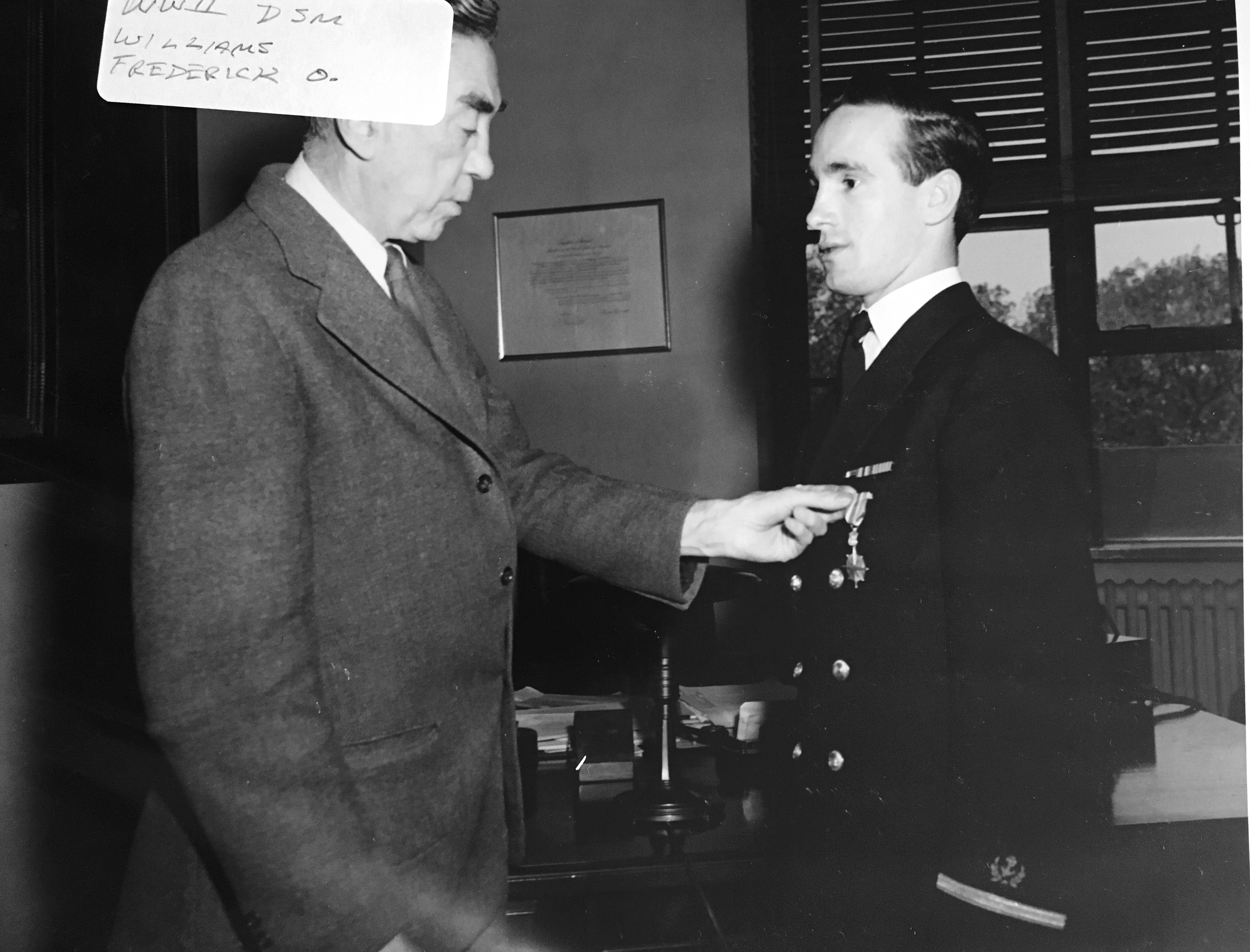
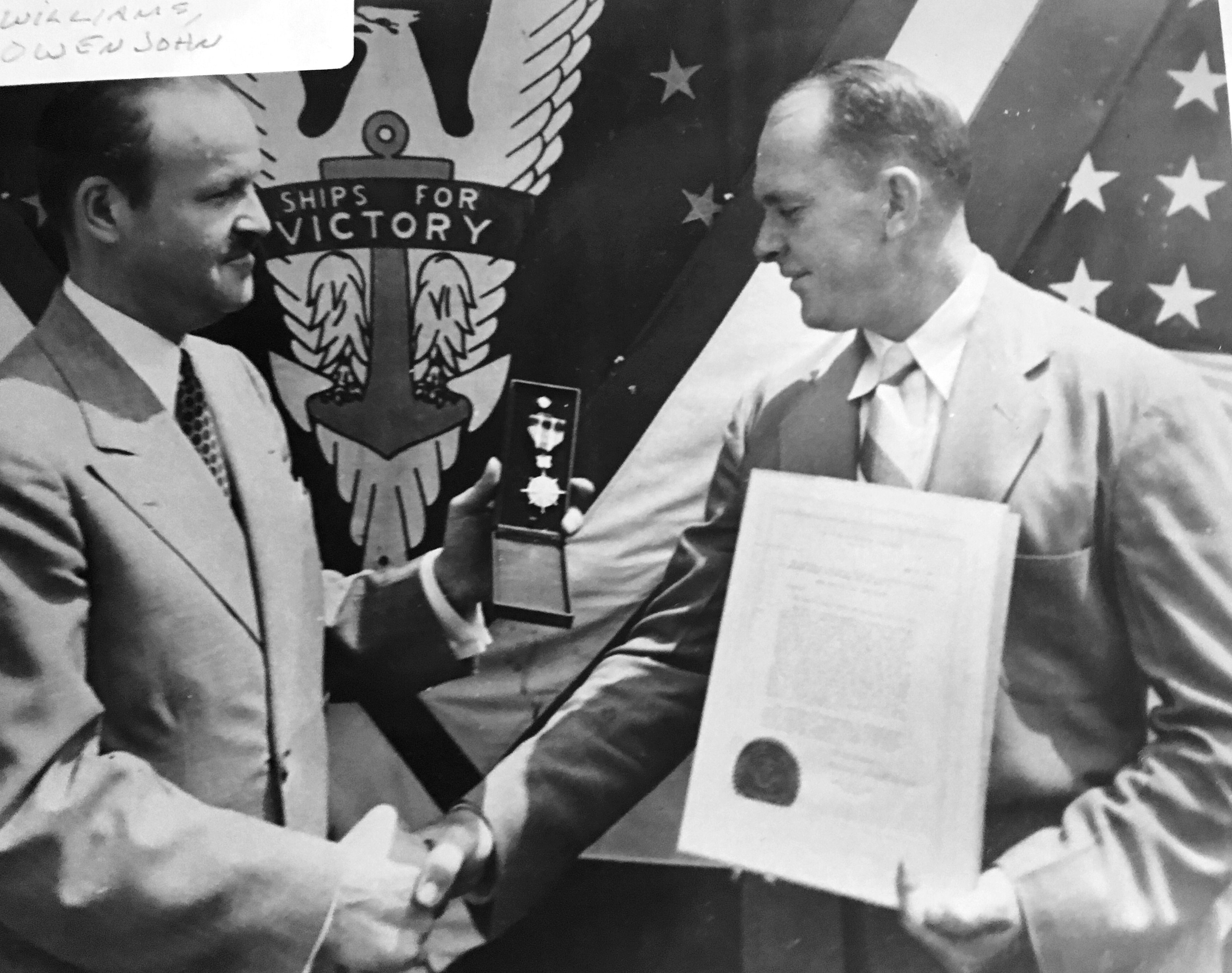
The American Merchant Marine Museum has in its collections press photographs of wartime recipients of the Merchant Marine Distinguished Service Medal. Some photos show stalwart widows, and others a smiling Admiral E. S. Land.
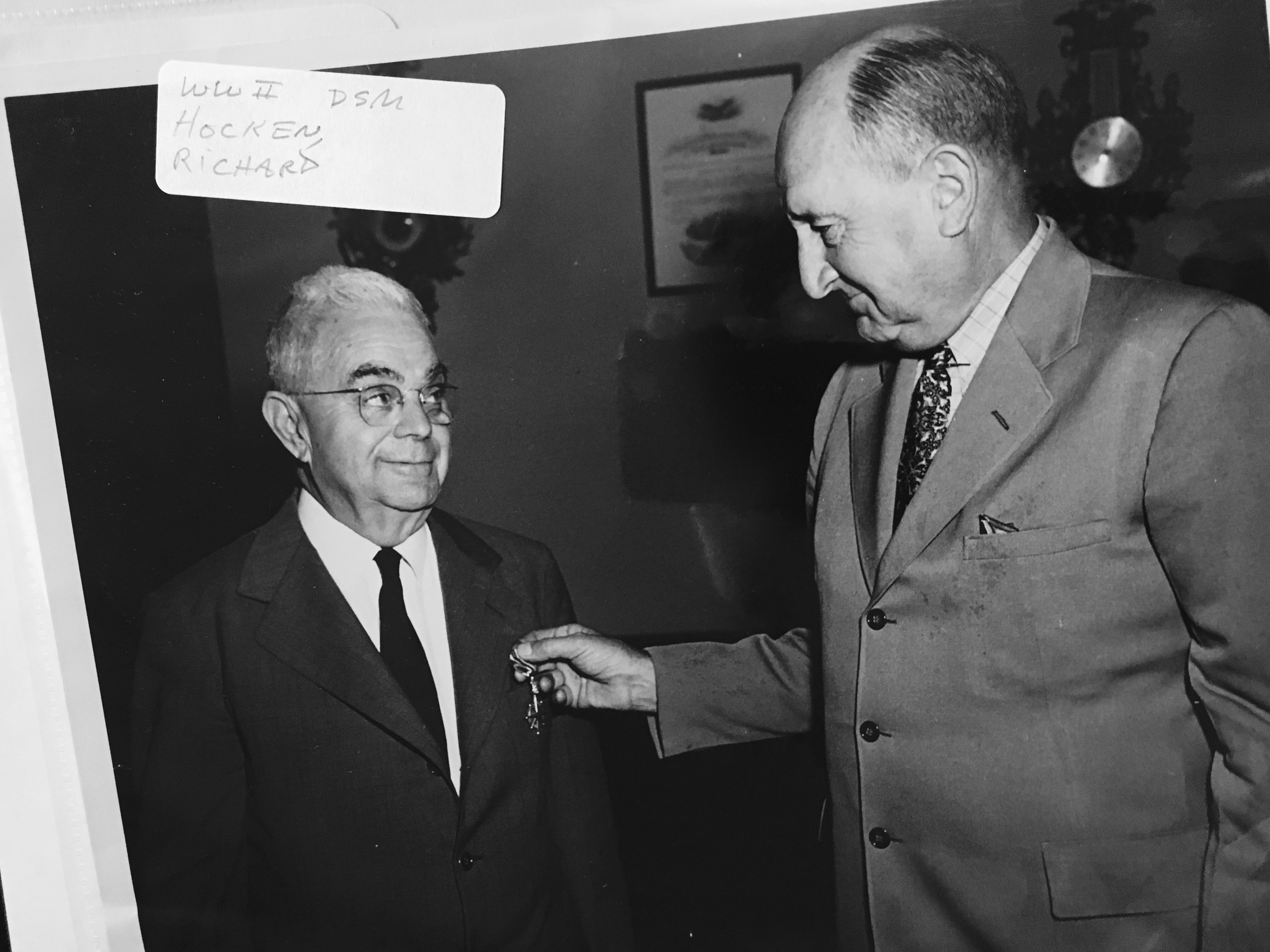
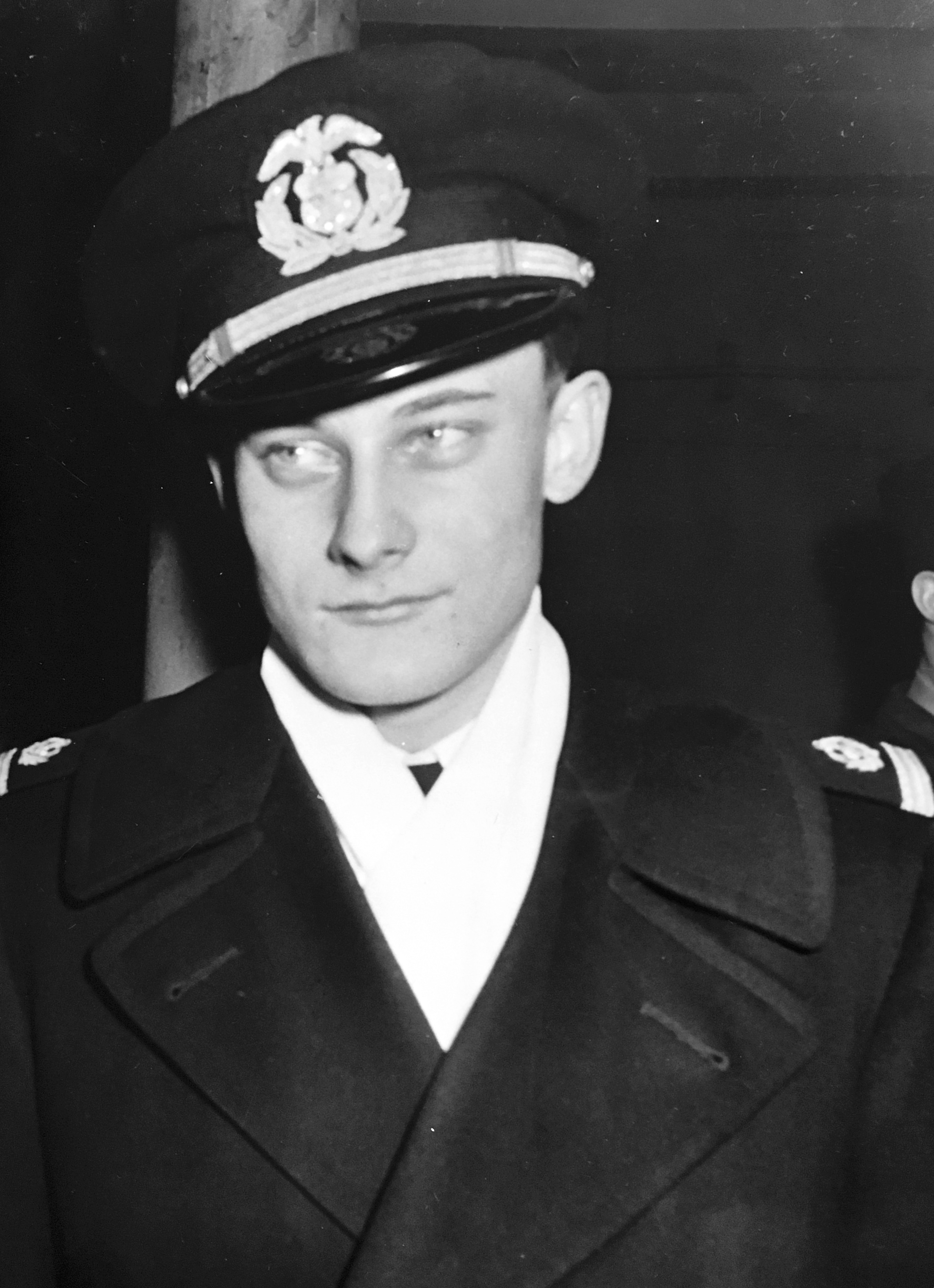
These photographs are rough – I had originally taken them to create a list of recipients. Then I discovered after a quick count that the 100 photographs represented only 79 of all those awarded the medal. Since these are not online or available anywhere, here you go.


Col.: AMMM

mm dsm roll of honor

Roll of Honor | Recipient Photos | OWI Recipient Citations | MM DSM | Leonard Conley | MM DSM Design | MM DSM Price Guide

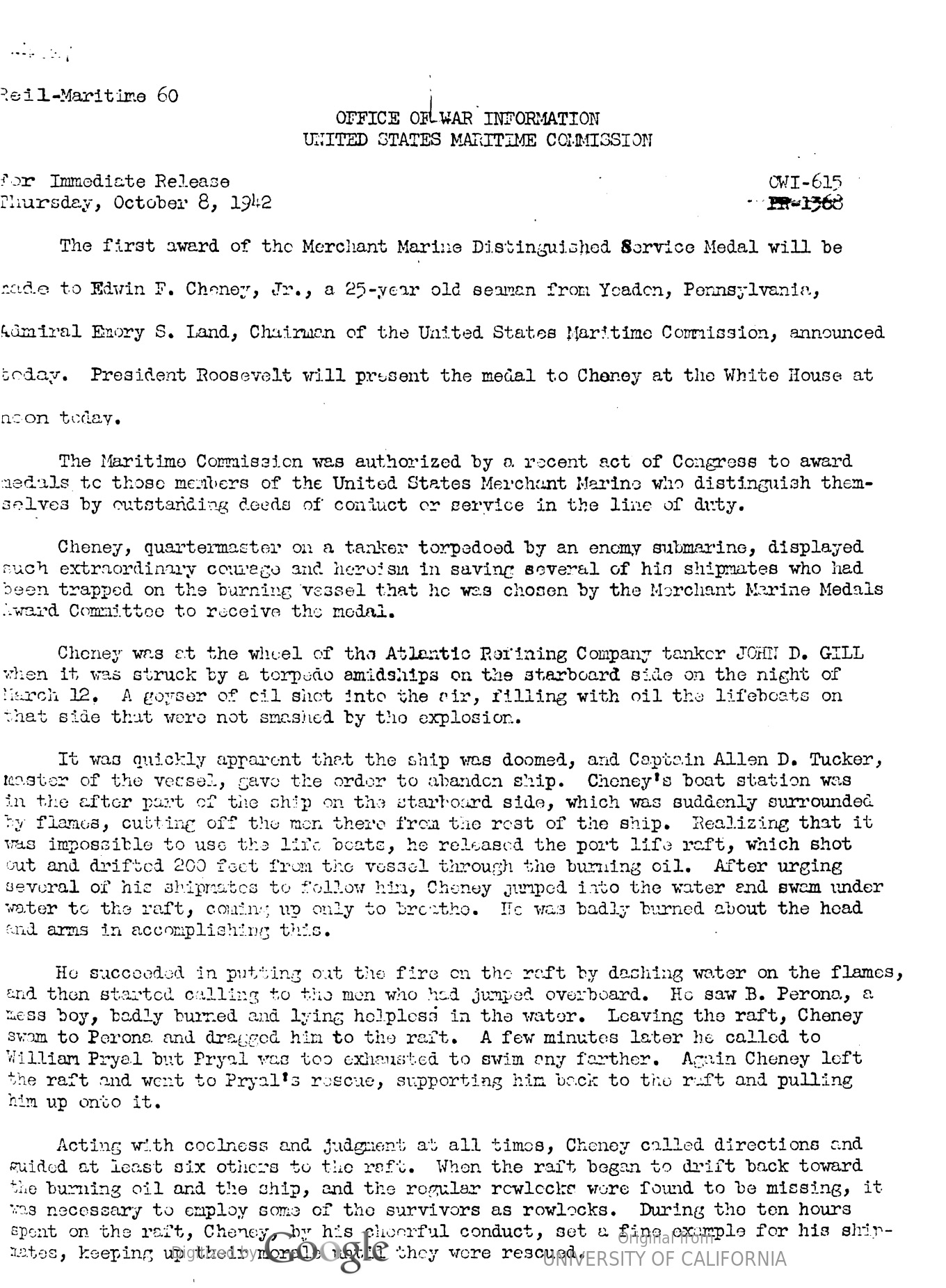
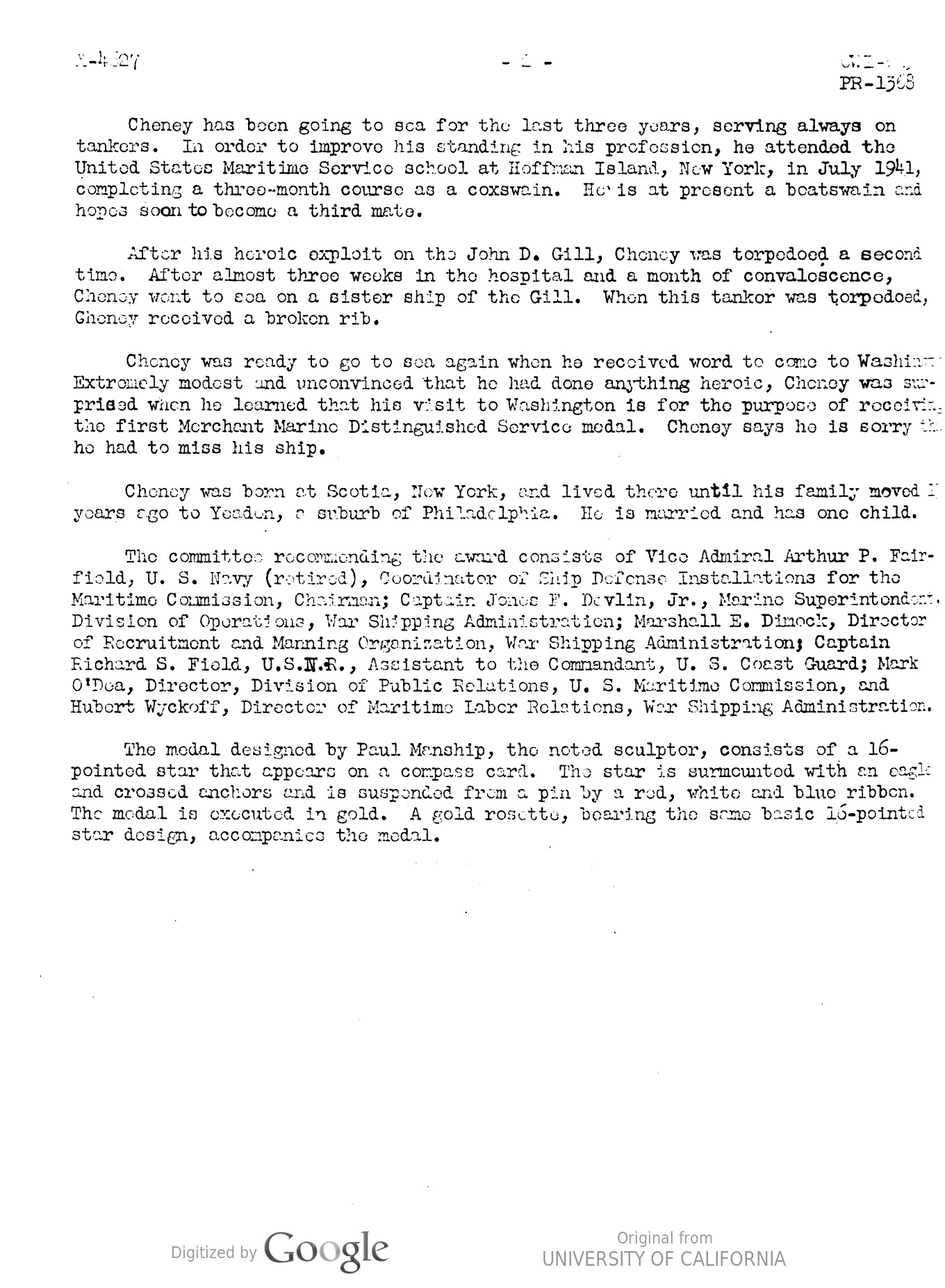
In 1942 Franklin Franklin D. Roosevelt honored Edwin Fox Cheney, Jr. for his selfless act of bravery with the award of the first Merchant Marine Distinguished Service Medal in the Oval Office at the White House. The ceremony was a pronounced display of the President’s high regard for the American Merchant Marine, and his decorating Mr. Cheney emphasized the importance of all merchant seaman for America’s war effort – be they masters or ordinary seamen. President Roosevelt gave a prescient speech in his weekly radiogram several days later on Columbus Day:

[We] have had to enlist many thousands of men for our merchant marine. These men are serving magnificently. They are risking their lives every hour so that guns and tanks and planes and ammunition and food may be carried to the heroic defenders of Stalingrad and to all the United Nations’ forces all over the world.

A few days ago I awarded the first Maritime Distinguished Service Medal to a young man- Edward F. Cheney of Yeadon, Pennsylvania—who had shown great gallantry in rescuing his comrades from the oily waters of the sea after their ship had been torpedoed. There will be many more such acts of bravery. (Fireside Chat. October 12, 1942)

From that first decoration to the close of hostilities, an estimated 154 Merchant Marine Distinguished Service Medals were awarded to members of the American Merchant Marine. After this medal came a small constellation of others, and in their wake, Congress debated the wisdom of giving civilians medals in wartime. The argument was whether or not a Federal medal would prompt merchant seamen to seek veteran’s status in the years after the war. No matter what they were, these medals were small tokens of the great esteem many had for those that kept the lifelines between the United States and the rest of the world intact. These lifelines cost the lives of close to 8,700 seamen.

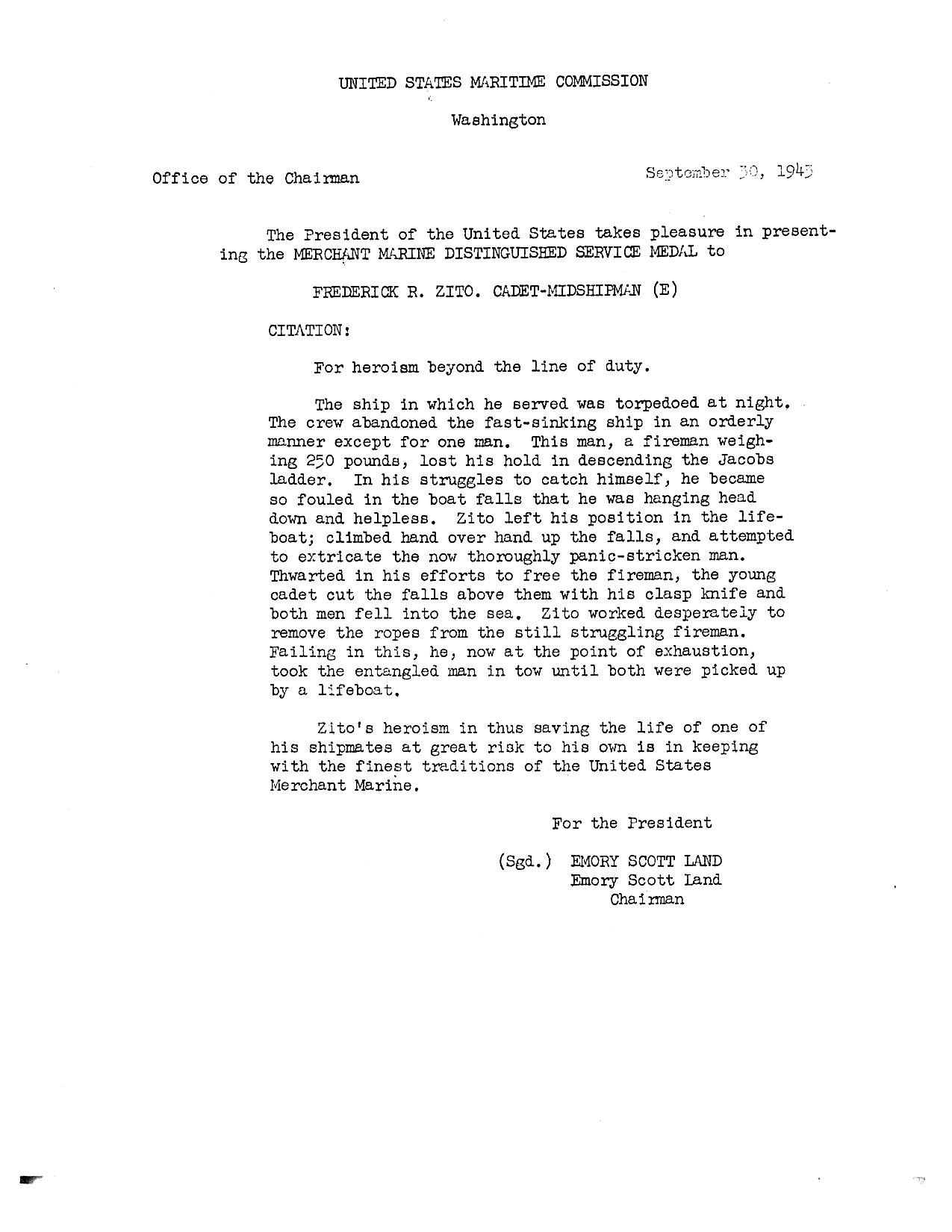
Since the American Merchant Marine was not the military with field commanders directing troops, but rather a collection of ships manned by civilians plying trade routes either in convoys or alone, the award of medals was done by committee. A managing operator or shipmate would send a narrative of an individual’s heroism to the War Shipping Administration Merchant Marine Medal Awards Committee, and the group would decide the case’s merits.  And, just because an individual had the backing of a powerful steamship company would not guarantee a medal – the most recent being a surgeon whose story captured the imagination of the American public and who was awarded a medal through activism on the part of the American Merchant Marine Veterans Association – his medal was awarded in 2019.

Below please find a map I generated from data I scrapped from various sources to determine where the actions that merited an individual’s award of a Merchant Marine Distinguished Service Medal (MM DSM) took place.  Zoom in and click the drop pin to see the individual details, including managing operator, ship, and whether or not the individual’s photograph is in the American Merchant Marine Museum MM DSM collection of photographs. If an individual is listed twice, this is due to the citation having the individual being awarded a single medal for two actions.

To create the roll of honor, I gathered together data from several sources. My names and dates combine data from a spreadsheet from the American Merchant Marine Museum, citation texts from USMM.org, and Captain Arthur A. Moore’s A Careless Word: A Needless Sinking. I was able to pinpoint the coordinates using uboat.net, hints from USMM.org, Capt. Moore’s book, and wrecksite.eu – some are missing, however. Managing operators were fun to find; these were had by looking through MARAD’s ship database.

None of this would have been possible without the assistance of Dr. Joshua Smith, Interim Director of the American Merchant Marine Museum.


Shipping Routes, pre-“Victory in Europe,” 1945.

The map and data illustrate the global nature of the Second World War and how merchant seamen fought, died, and were heroes on every front: from the icy Arctic, off the mouth of the Mississippi, and to islands whose names most of us cannot pronounce. Seeing the number of names below and their photographs – that’s truly moving.


Merchant Marine Distinguished Service Medal Roll of Honor, Second World War

In a brief analysis of the data, statistically, there are far more Liberty ships than tankers as sites of gallantry overall; however, at war’s beginning, tanker crews were most cited – these men rose to the occasion within sight of the U.S. coastline. Their trials were at the height of the “Happy Time” when U-Boats patrolled U.S. waters with impunity, and sometimes – the rumor goes – even sent launches ashore to see a show.  After September 1942, as the U.S. became further involved overseas, Liberties and troopships became more numerous as places of bravery – tankers were finally behind a protective screen.

To see the entire spreadsheet, it is available here.

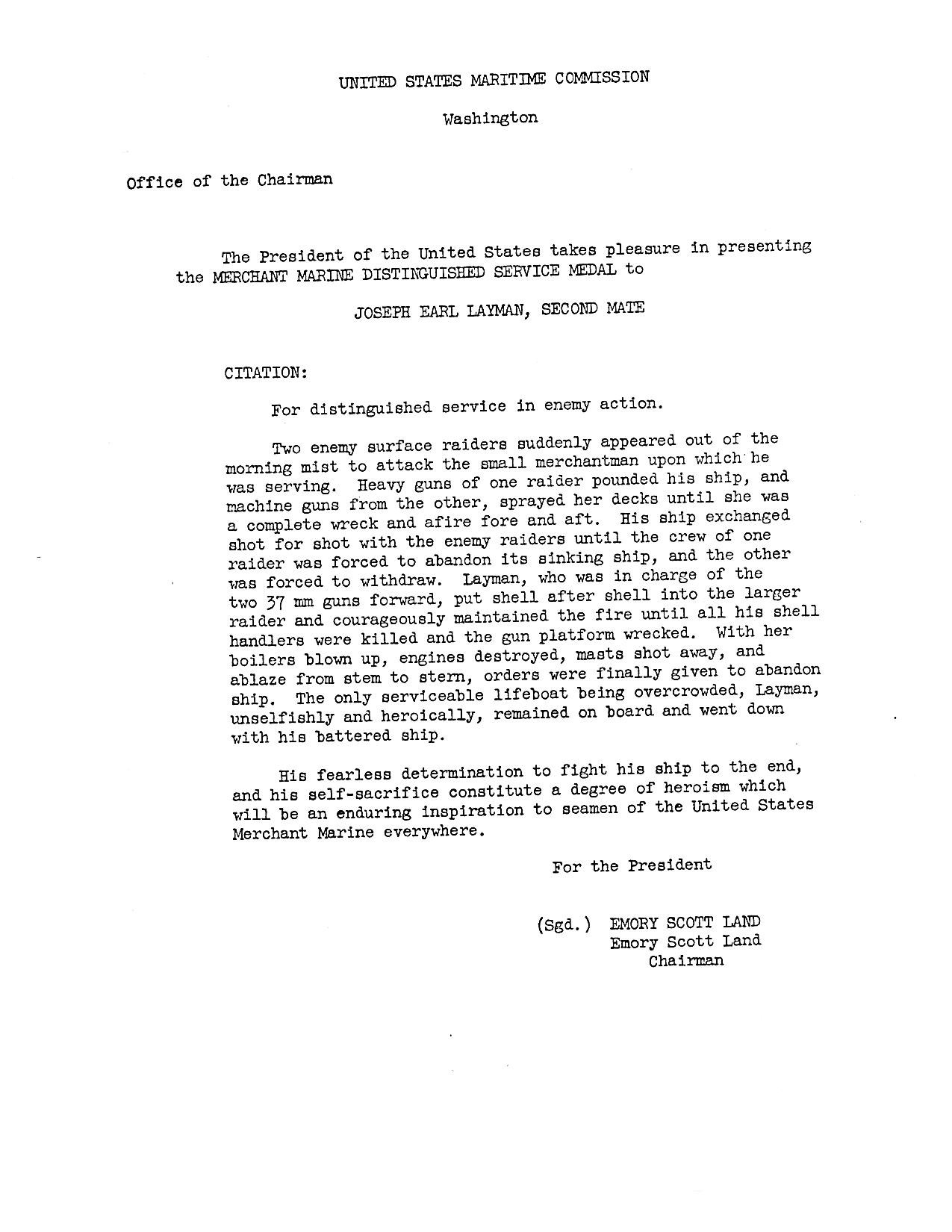
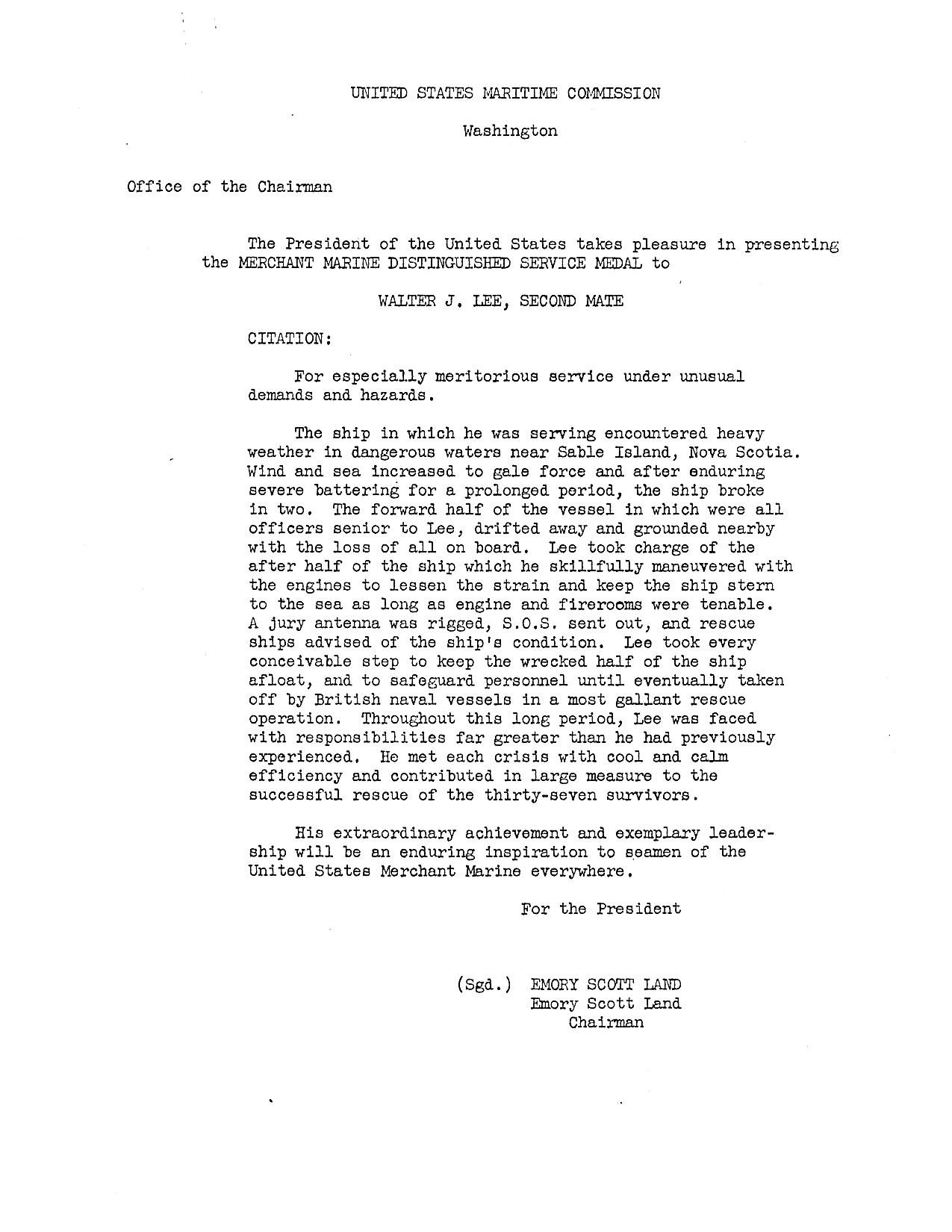
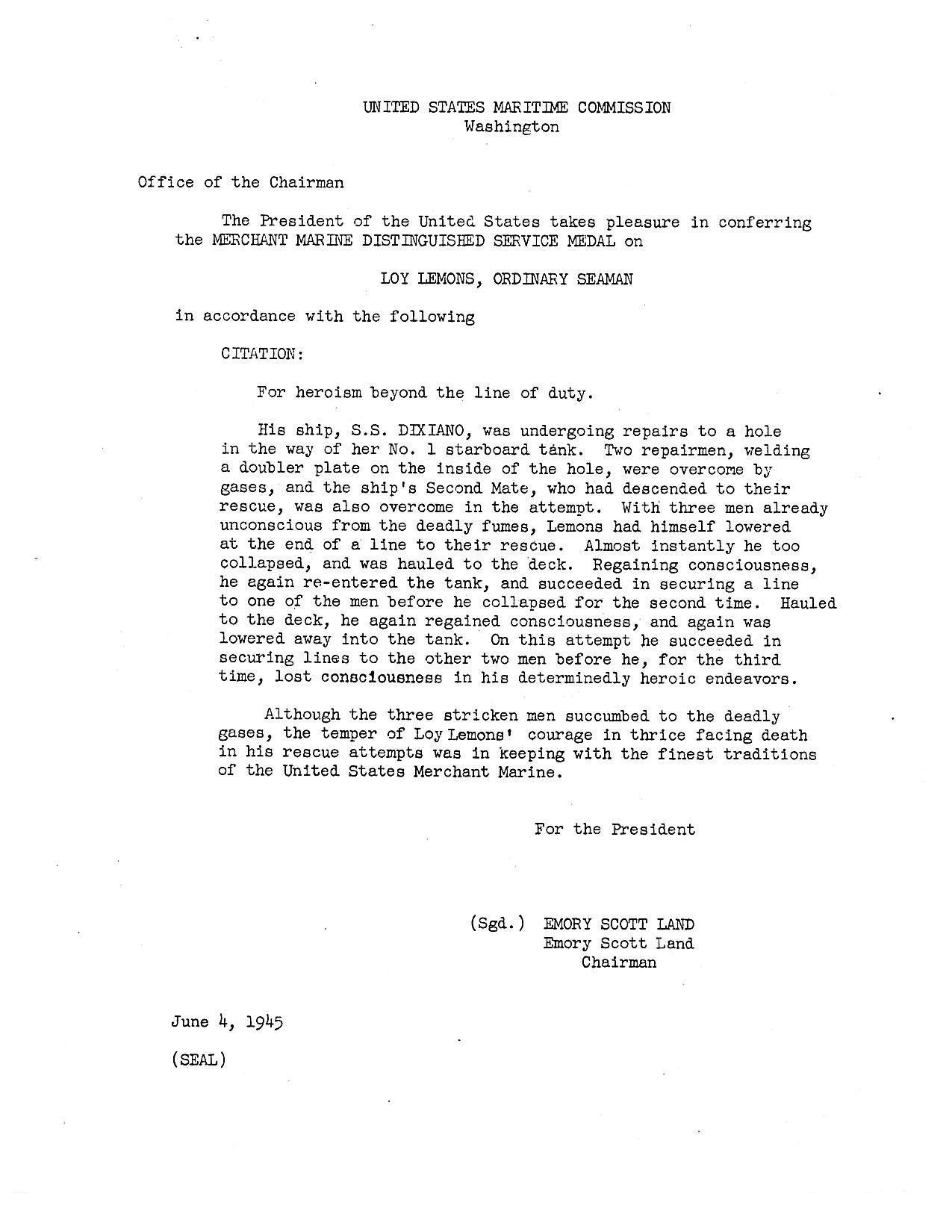
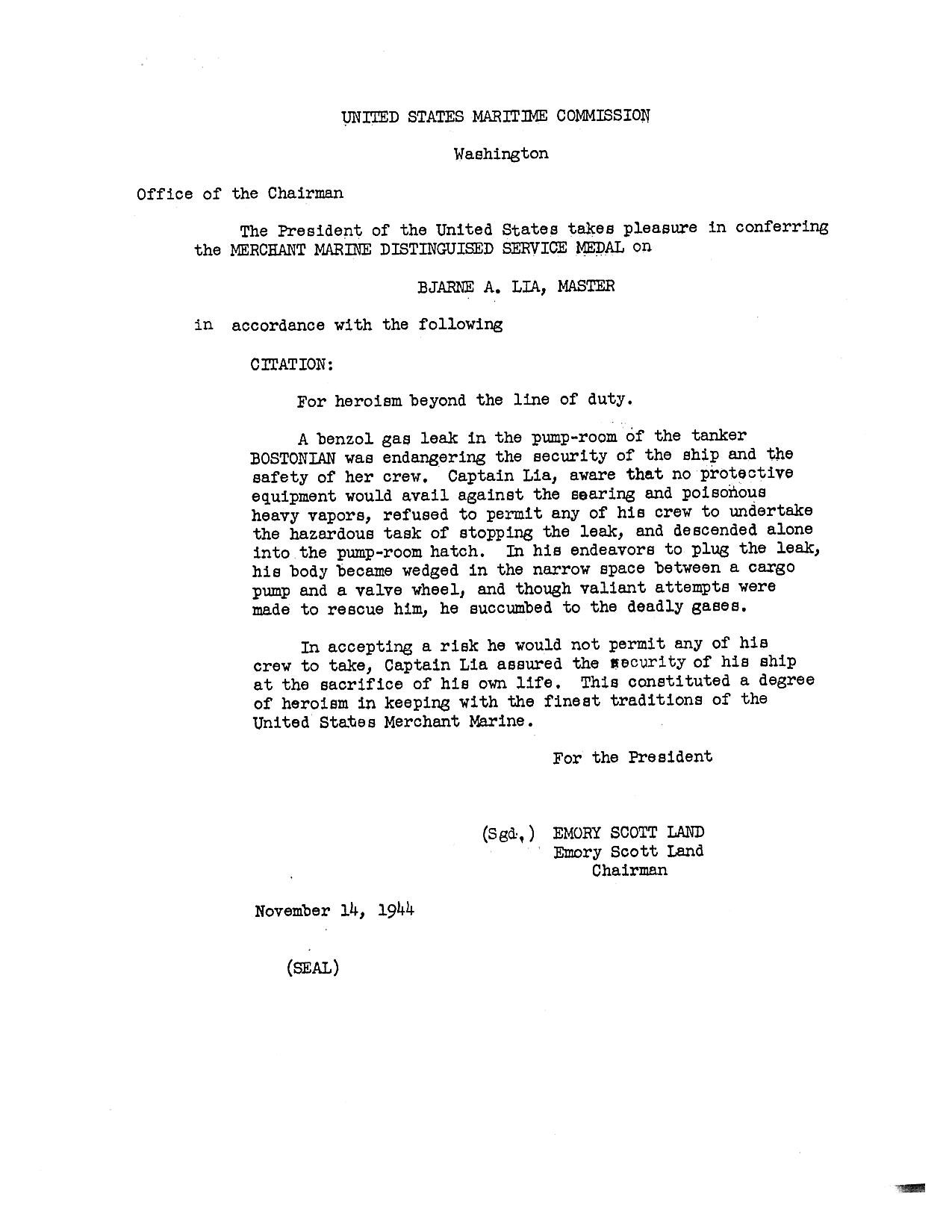
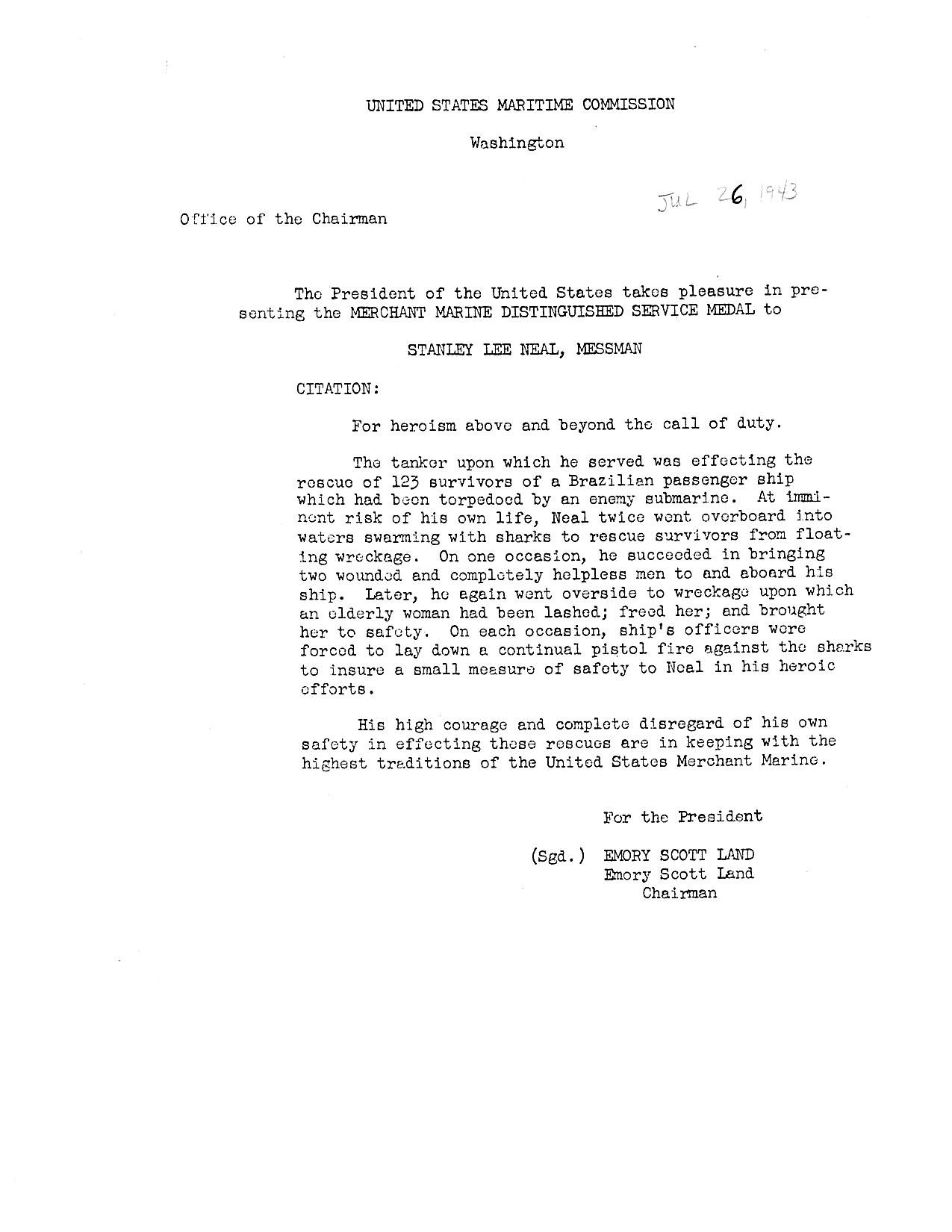
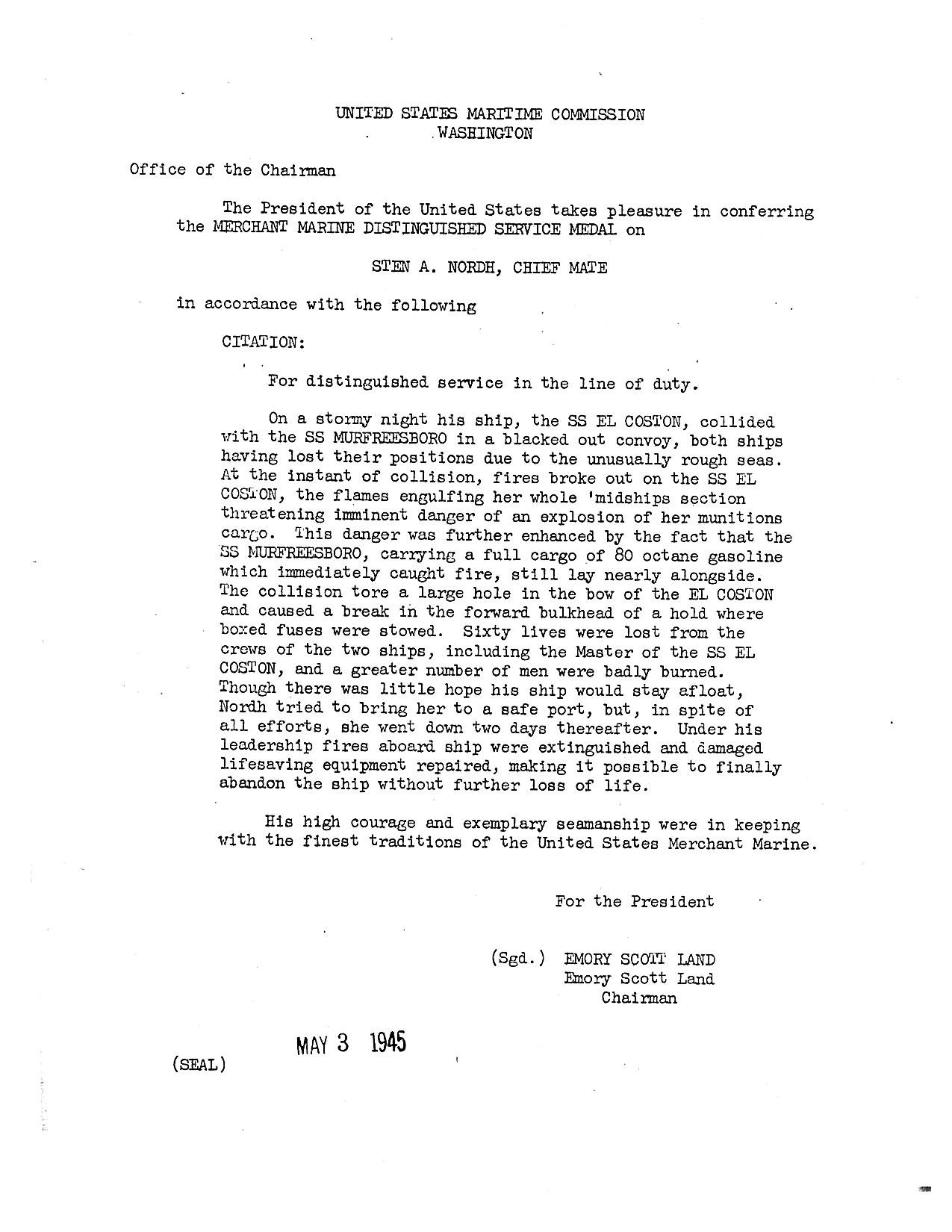
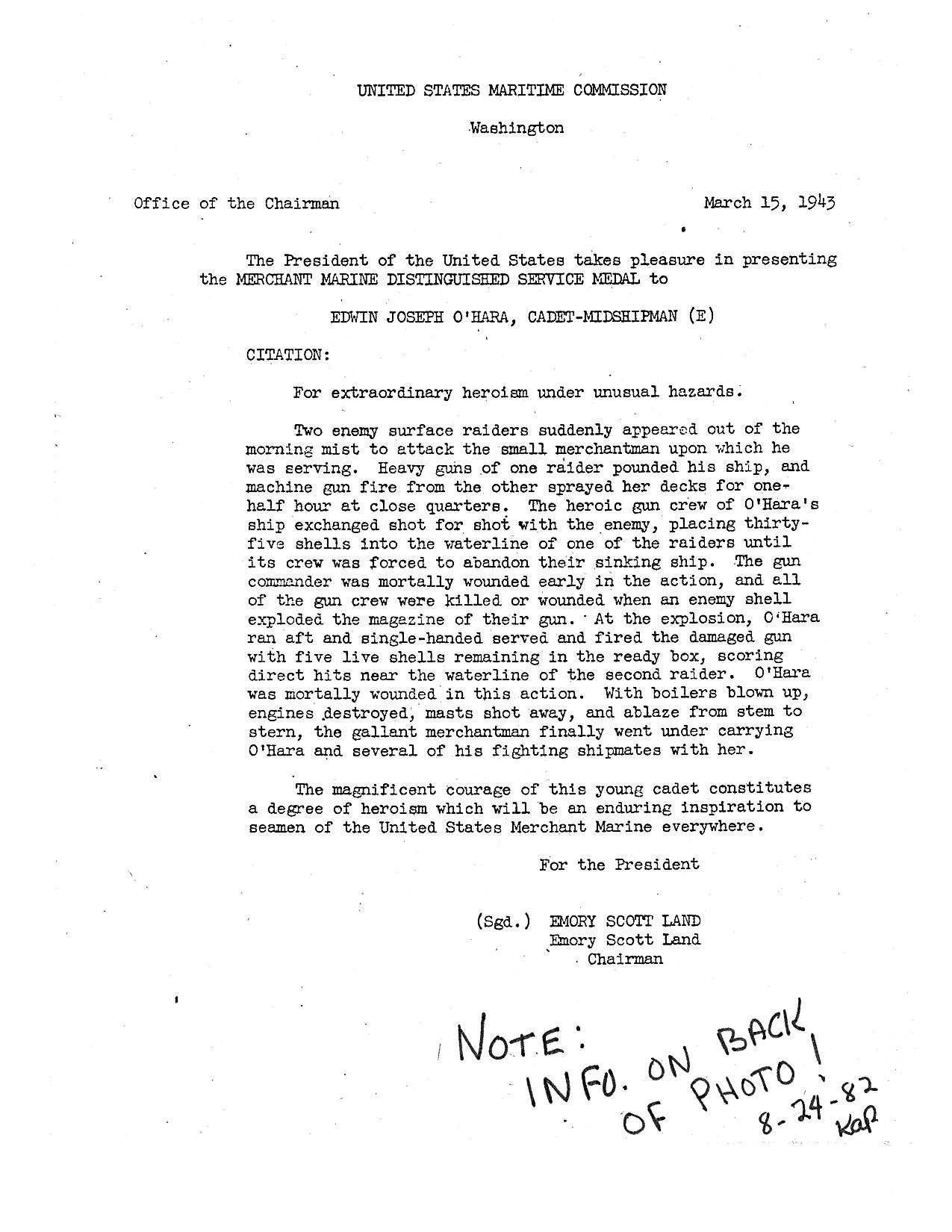
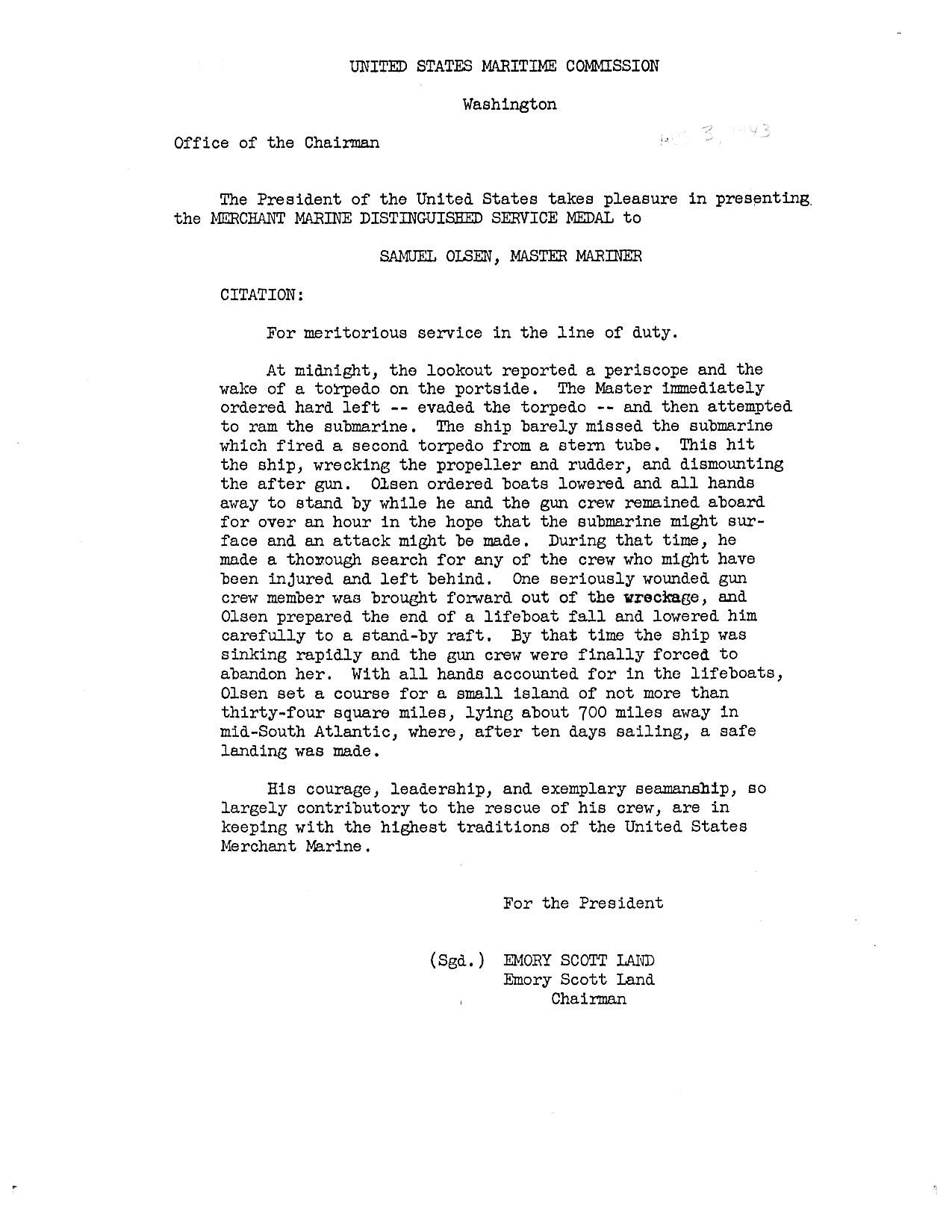
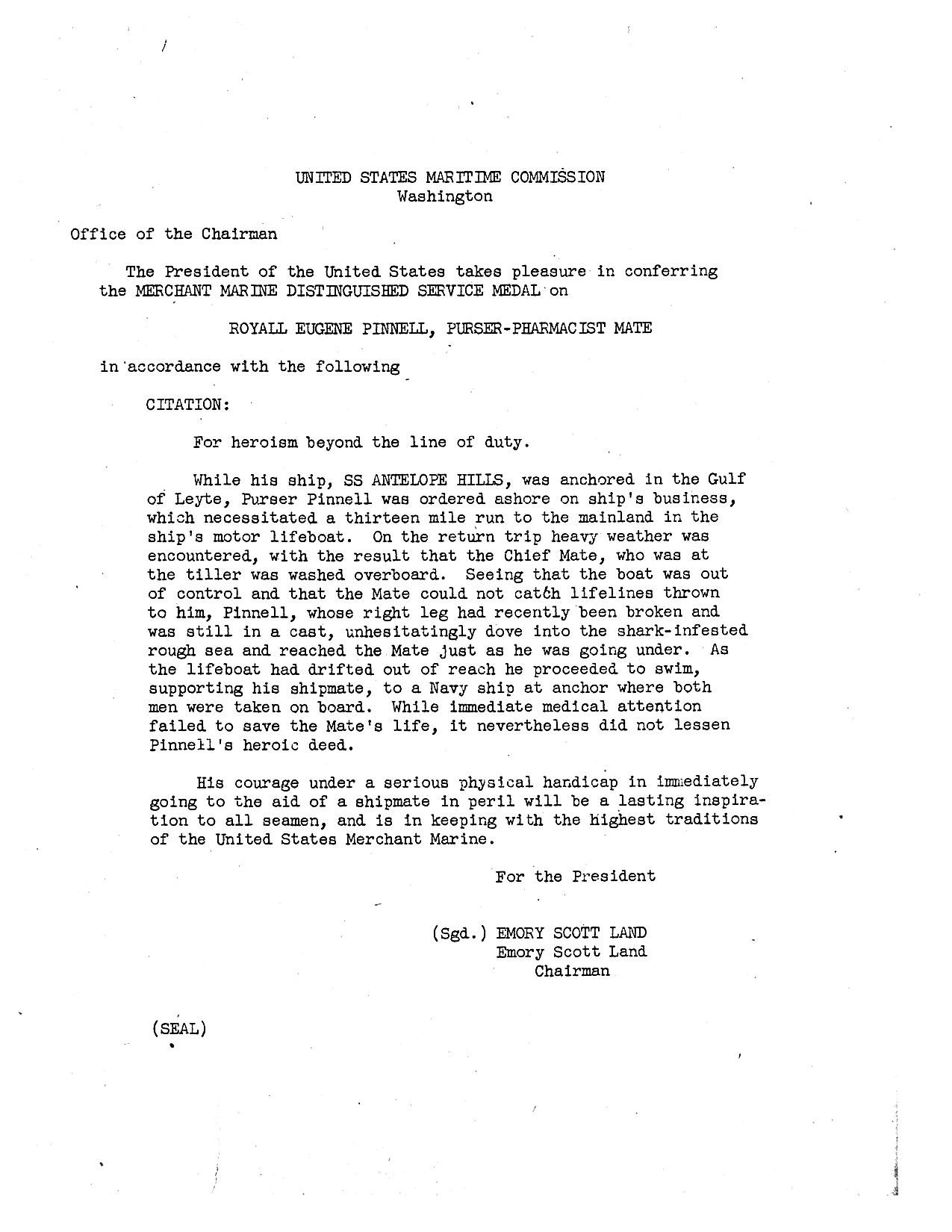
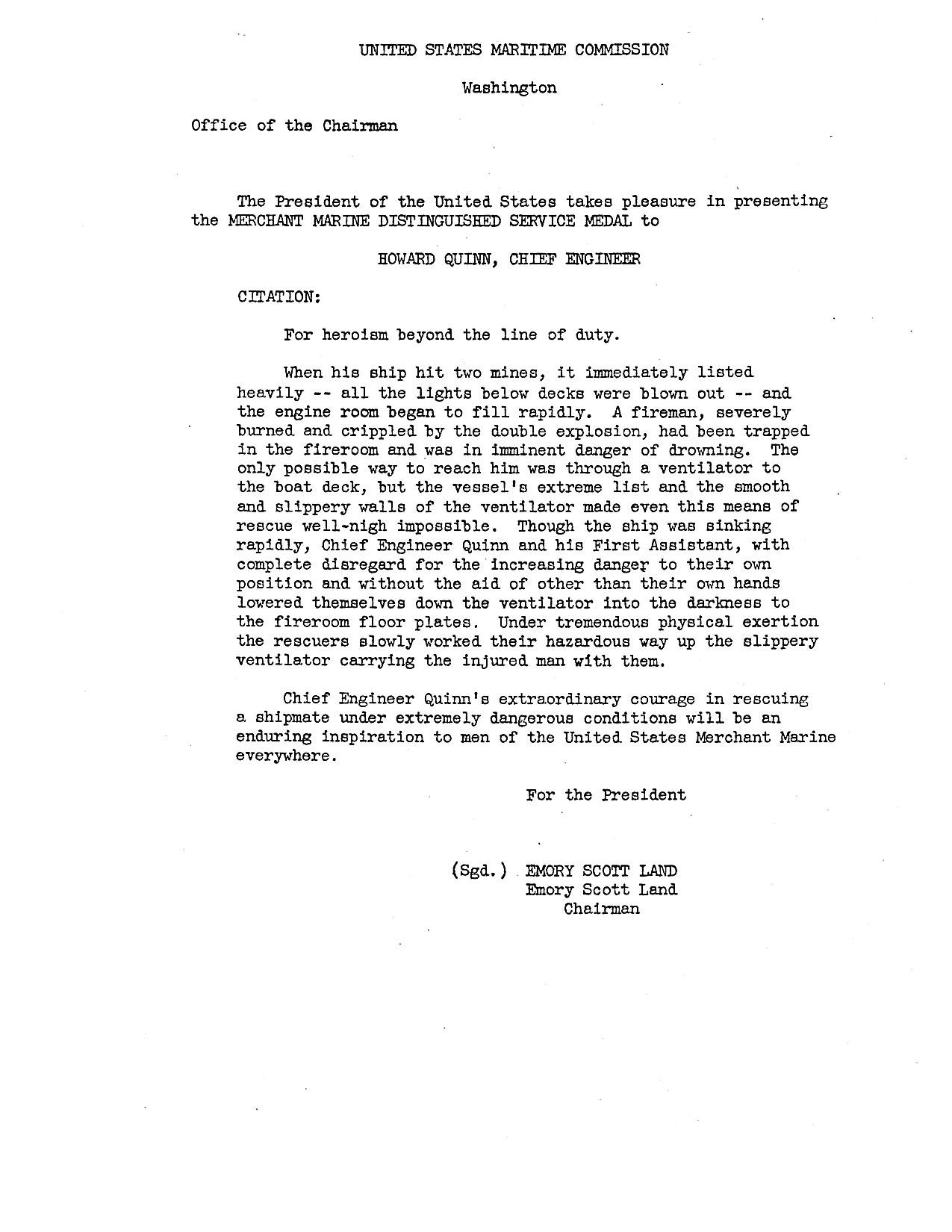
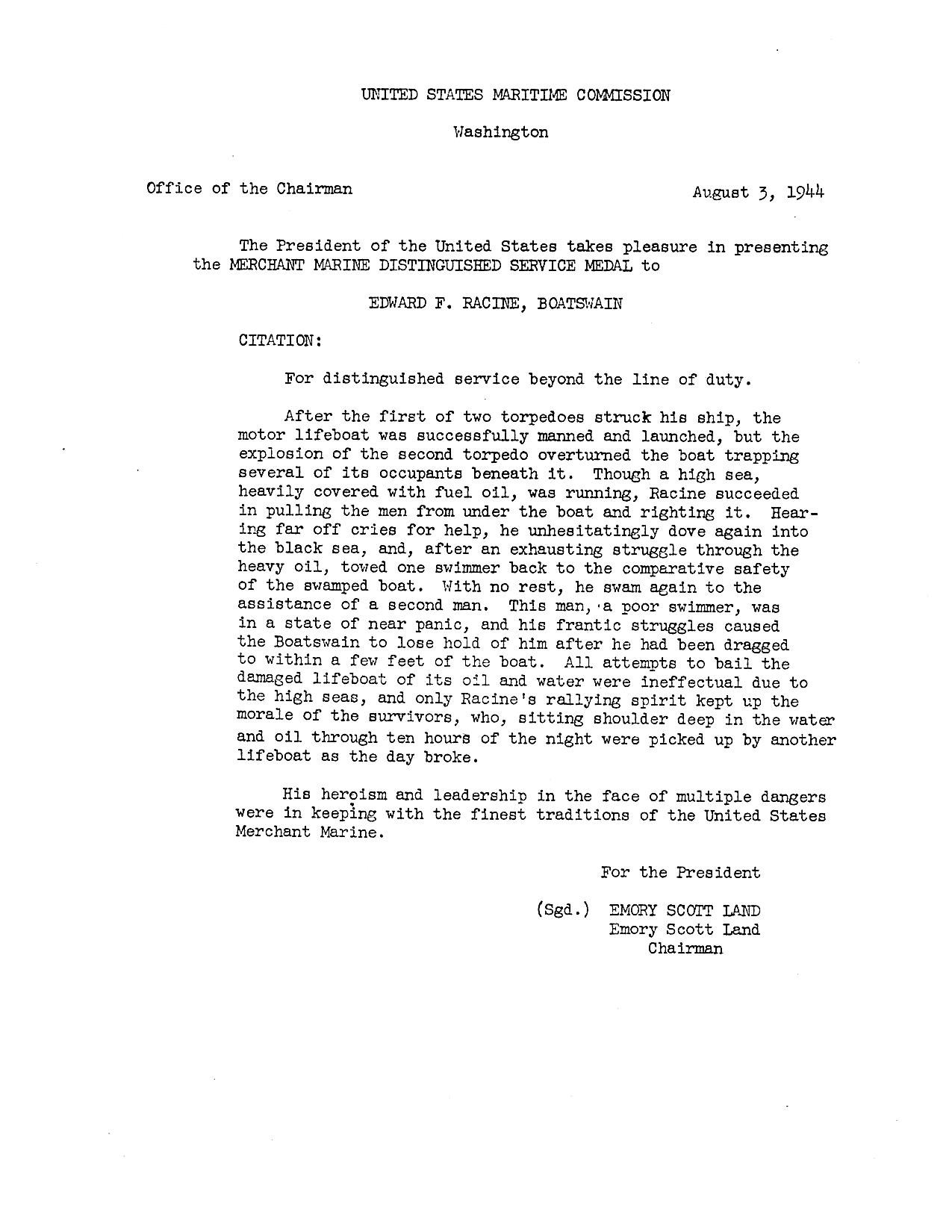
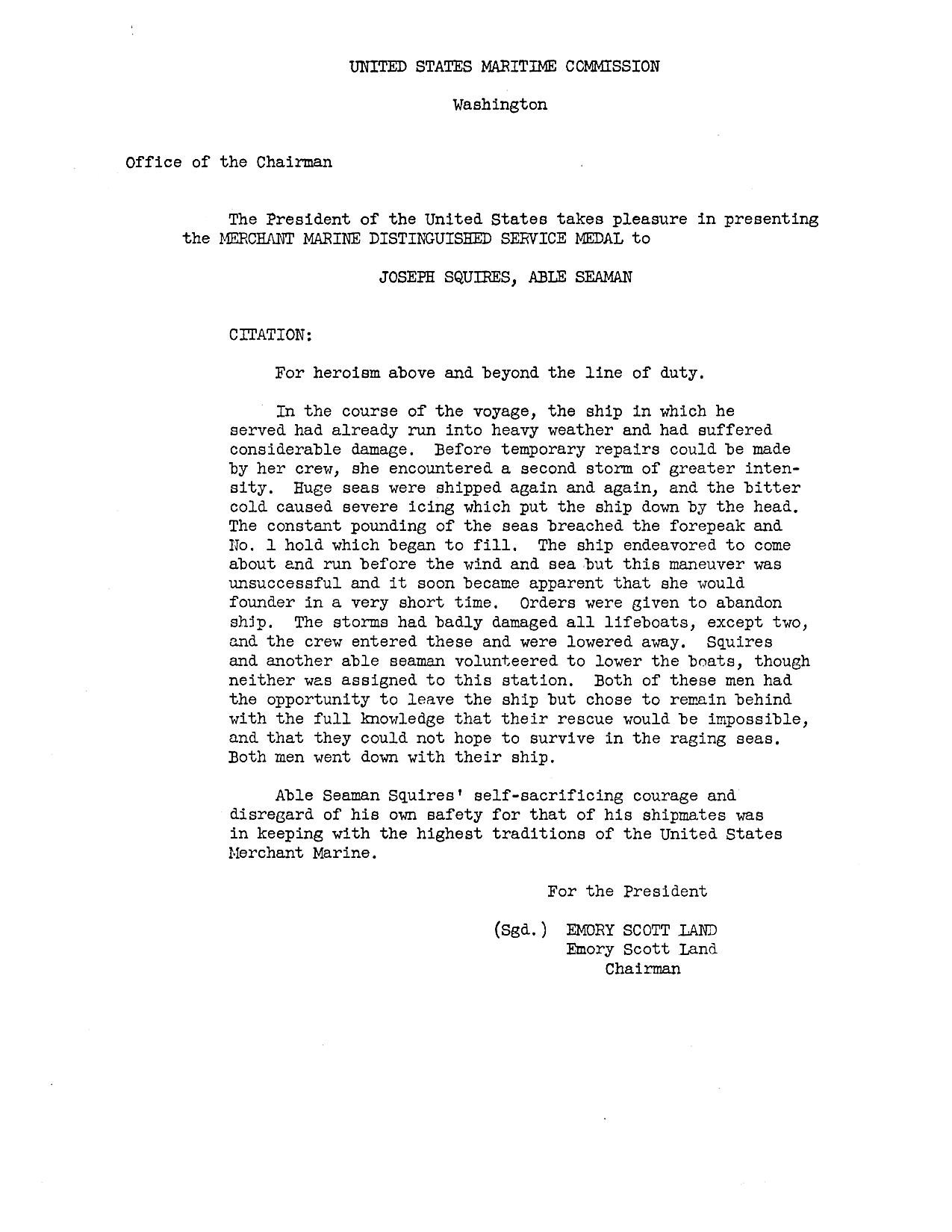
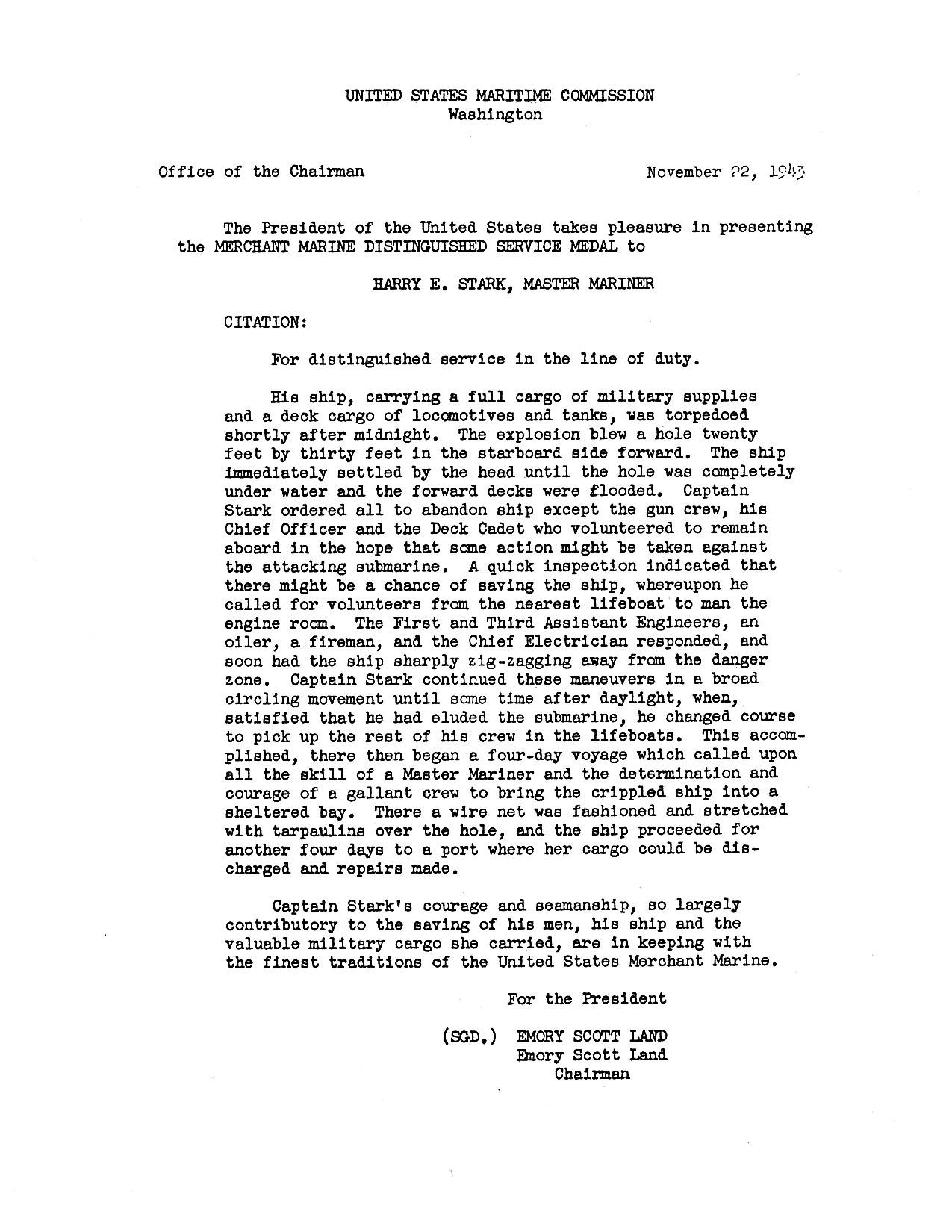
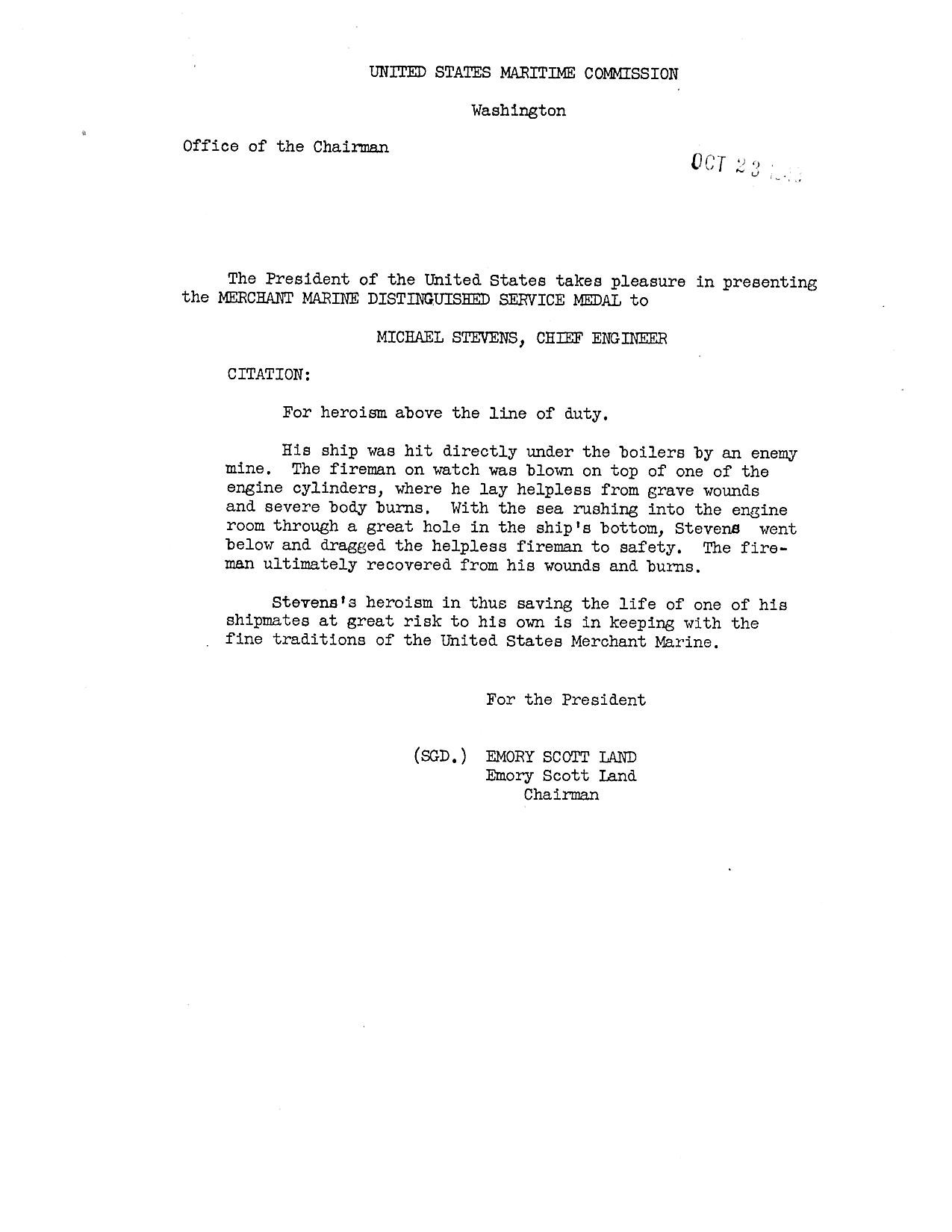
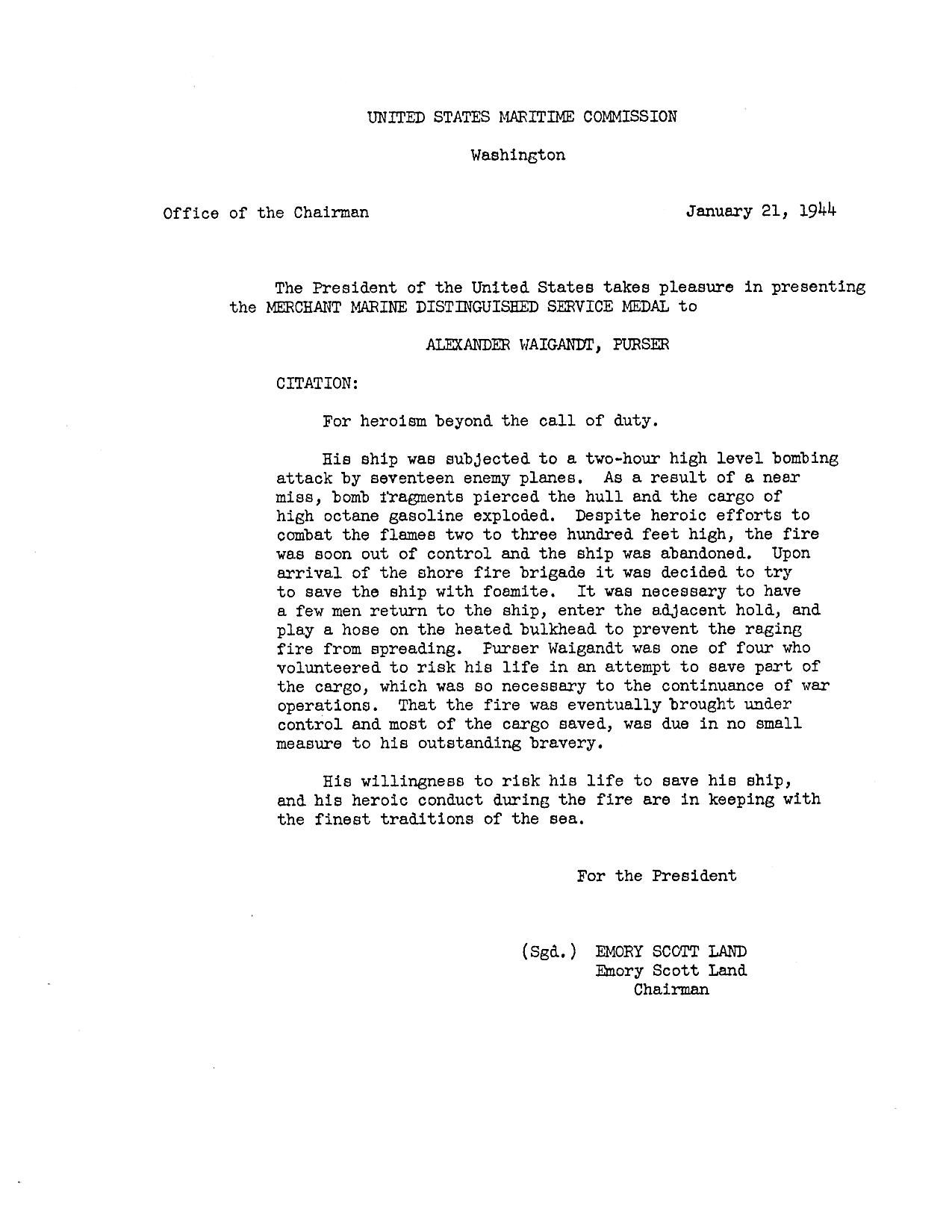
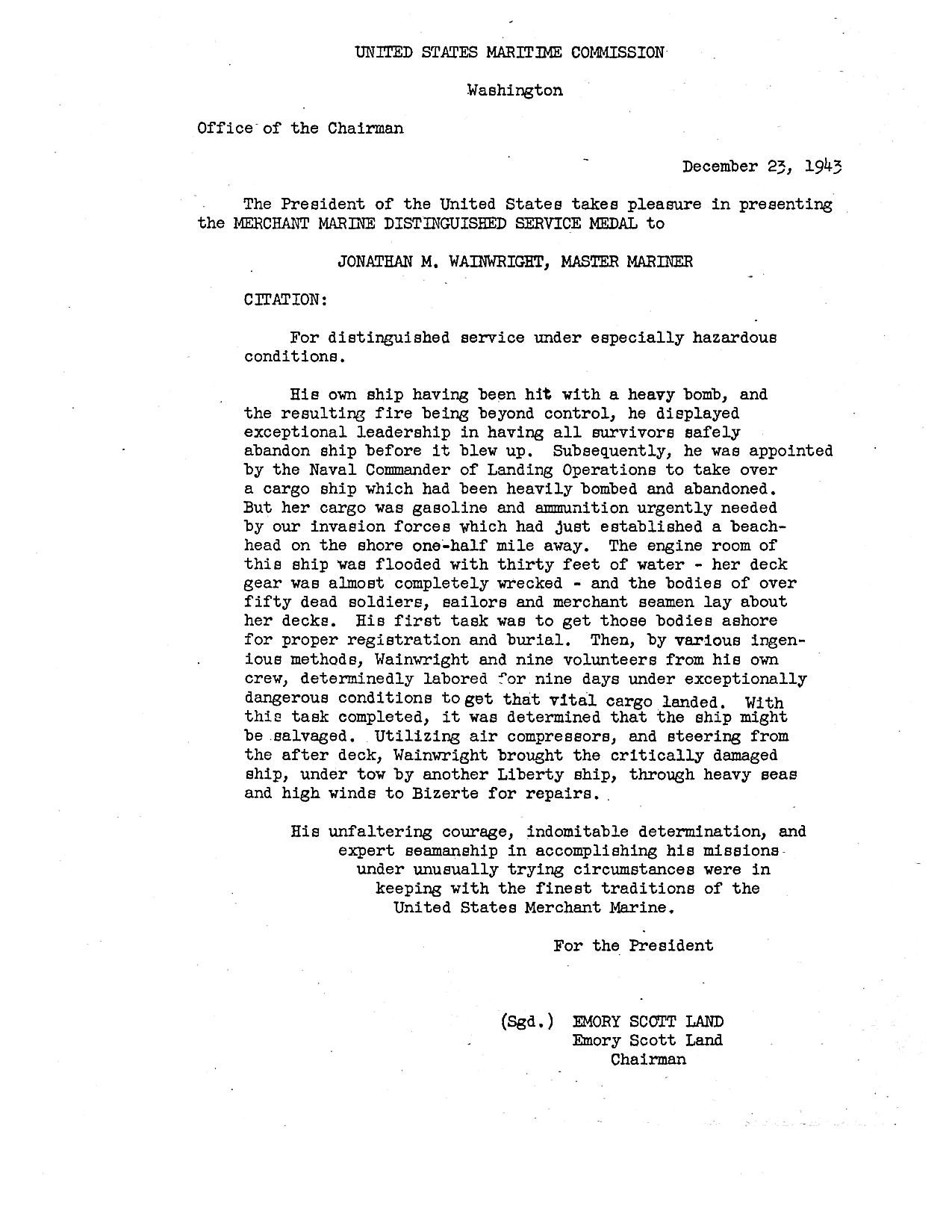
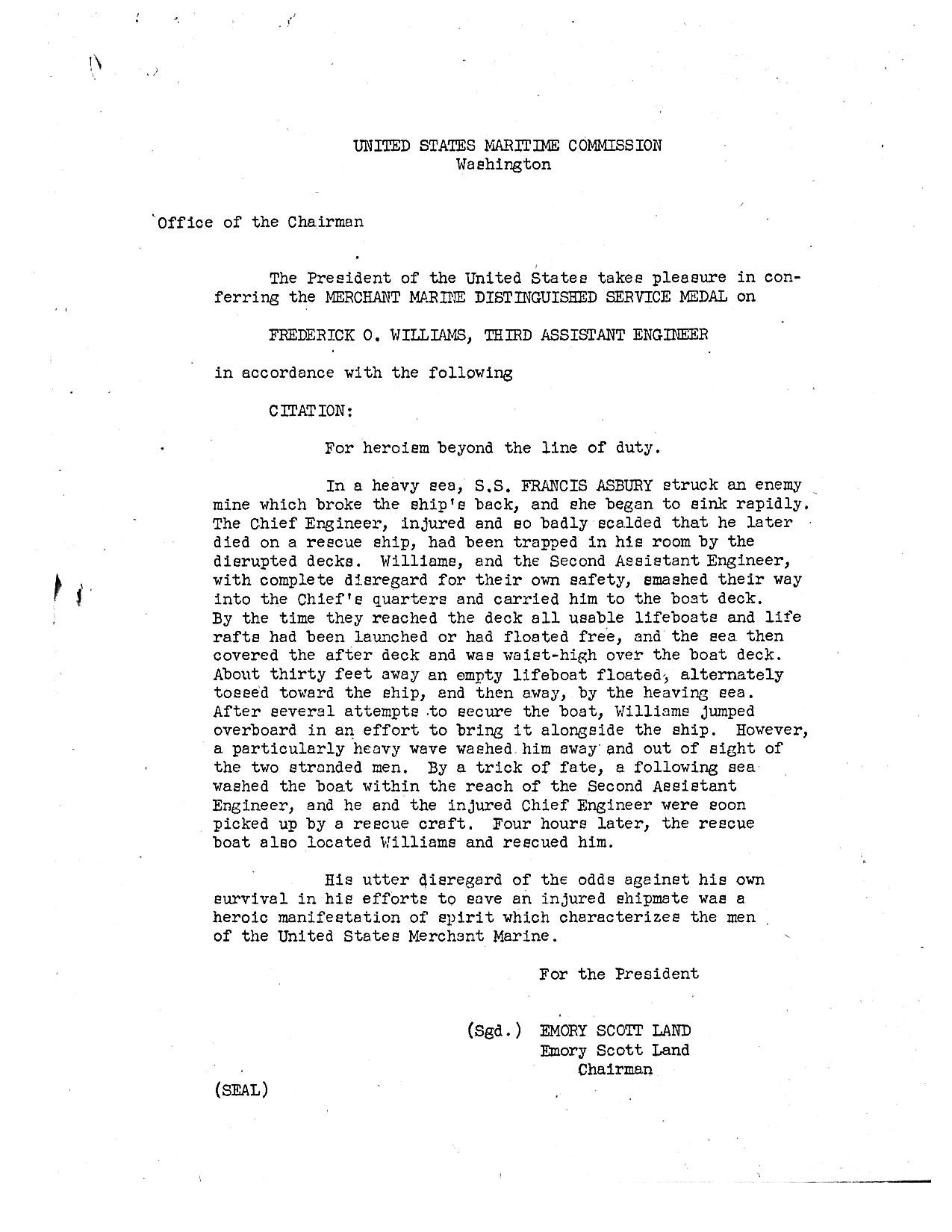
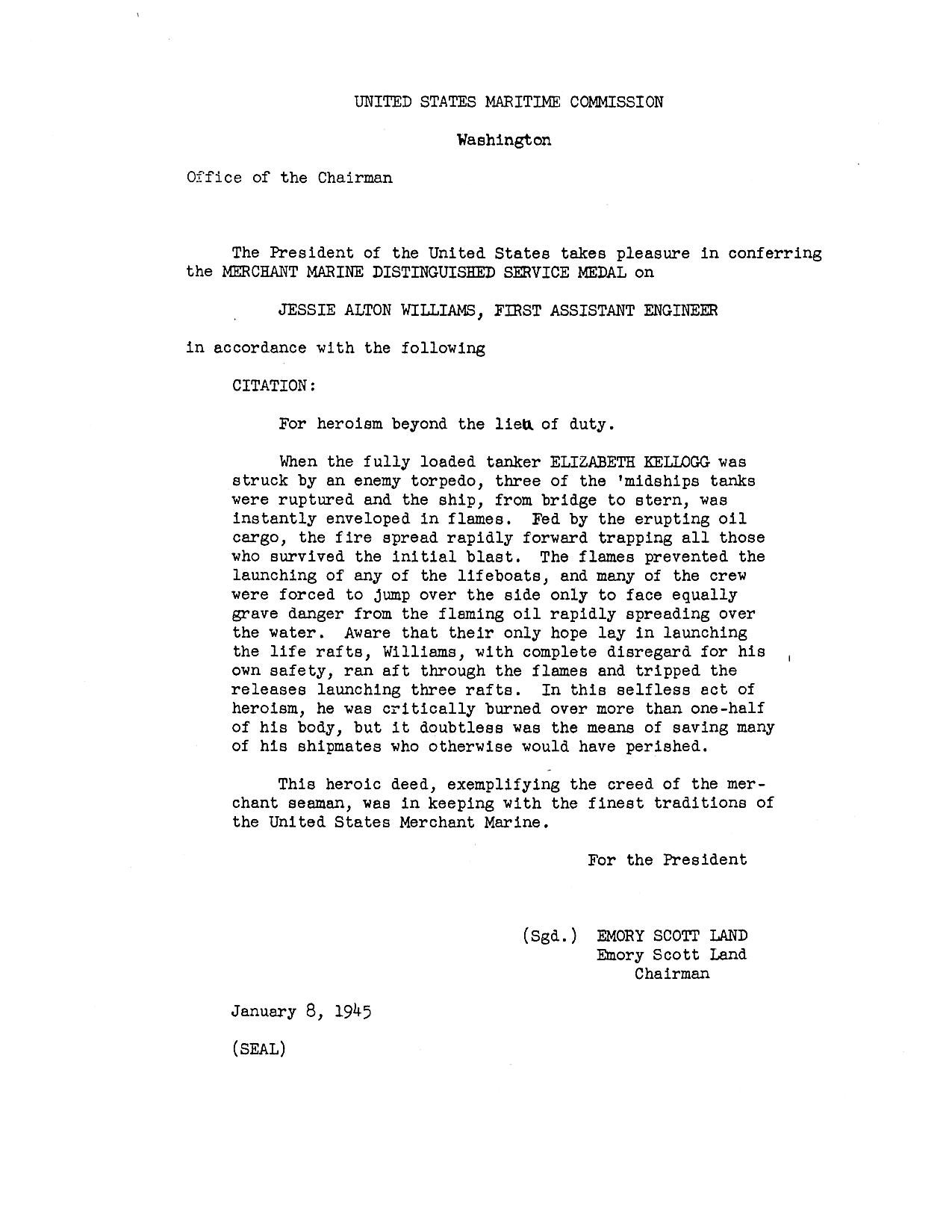
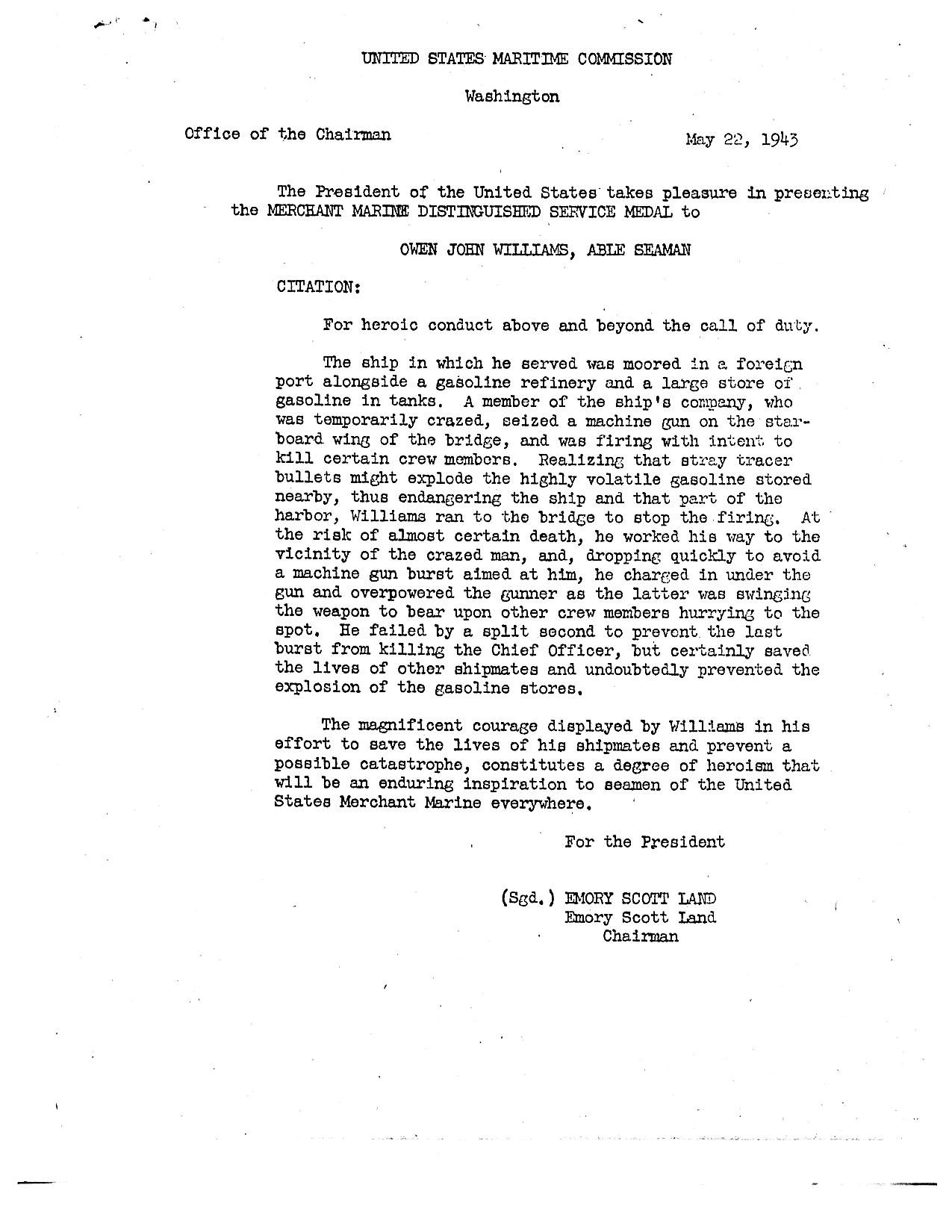
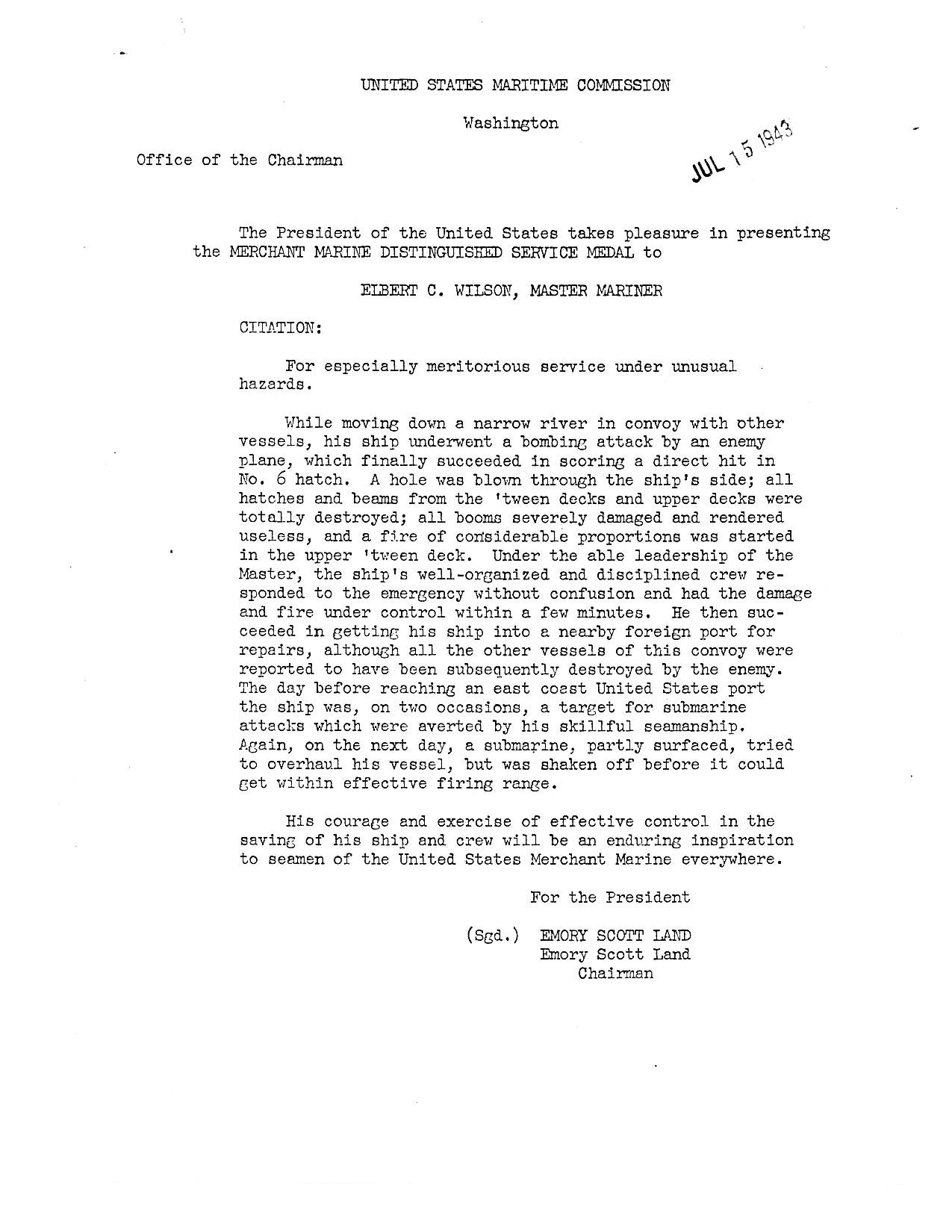
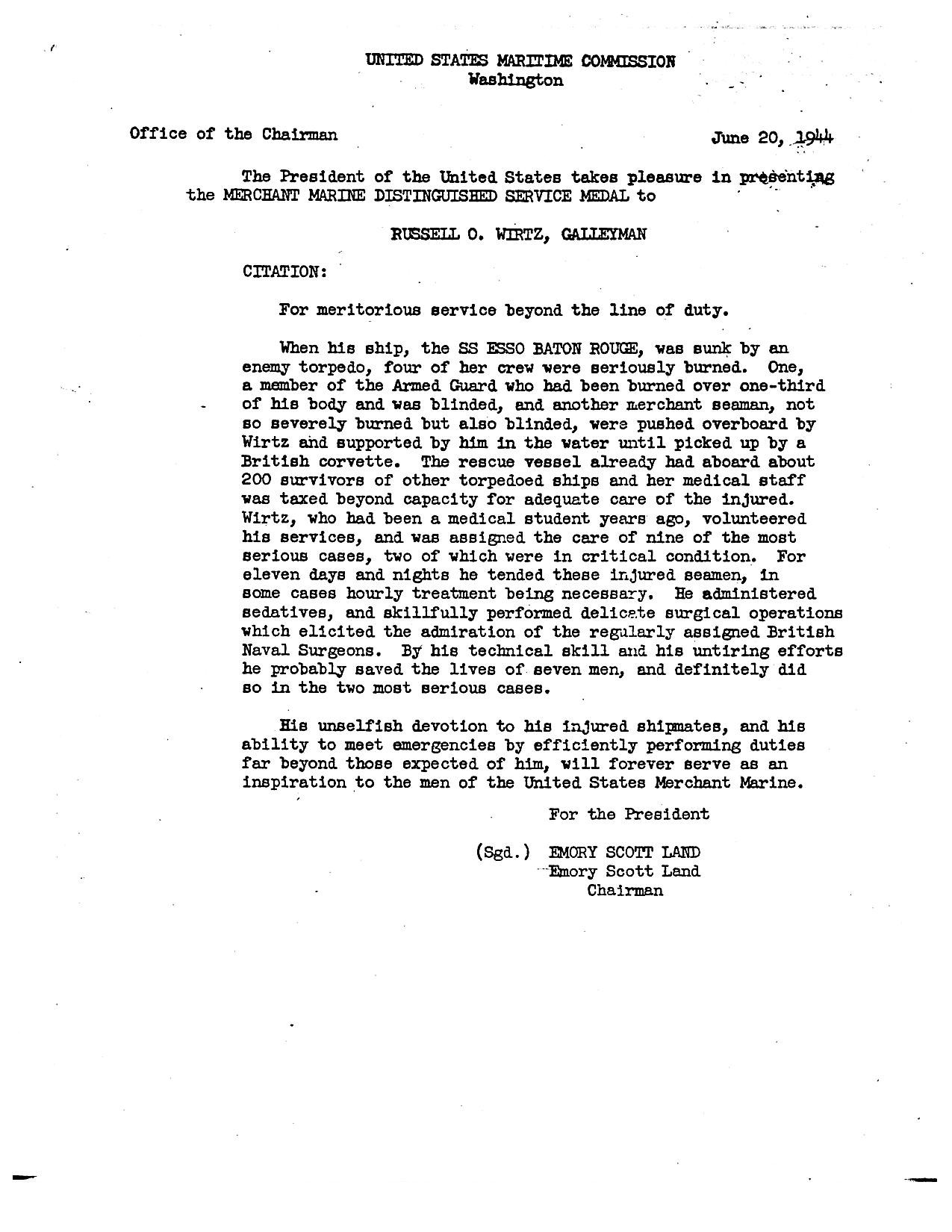
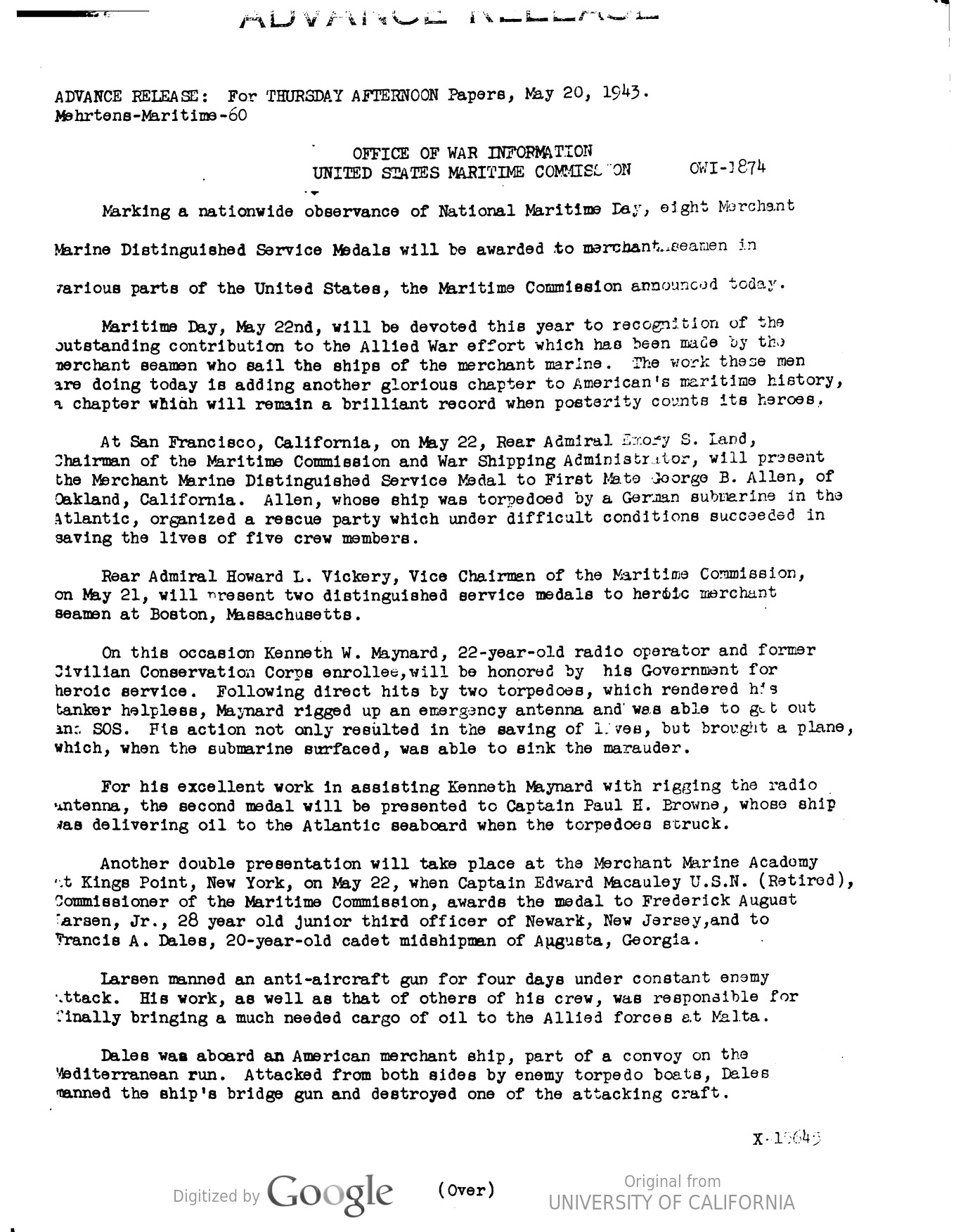
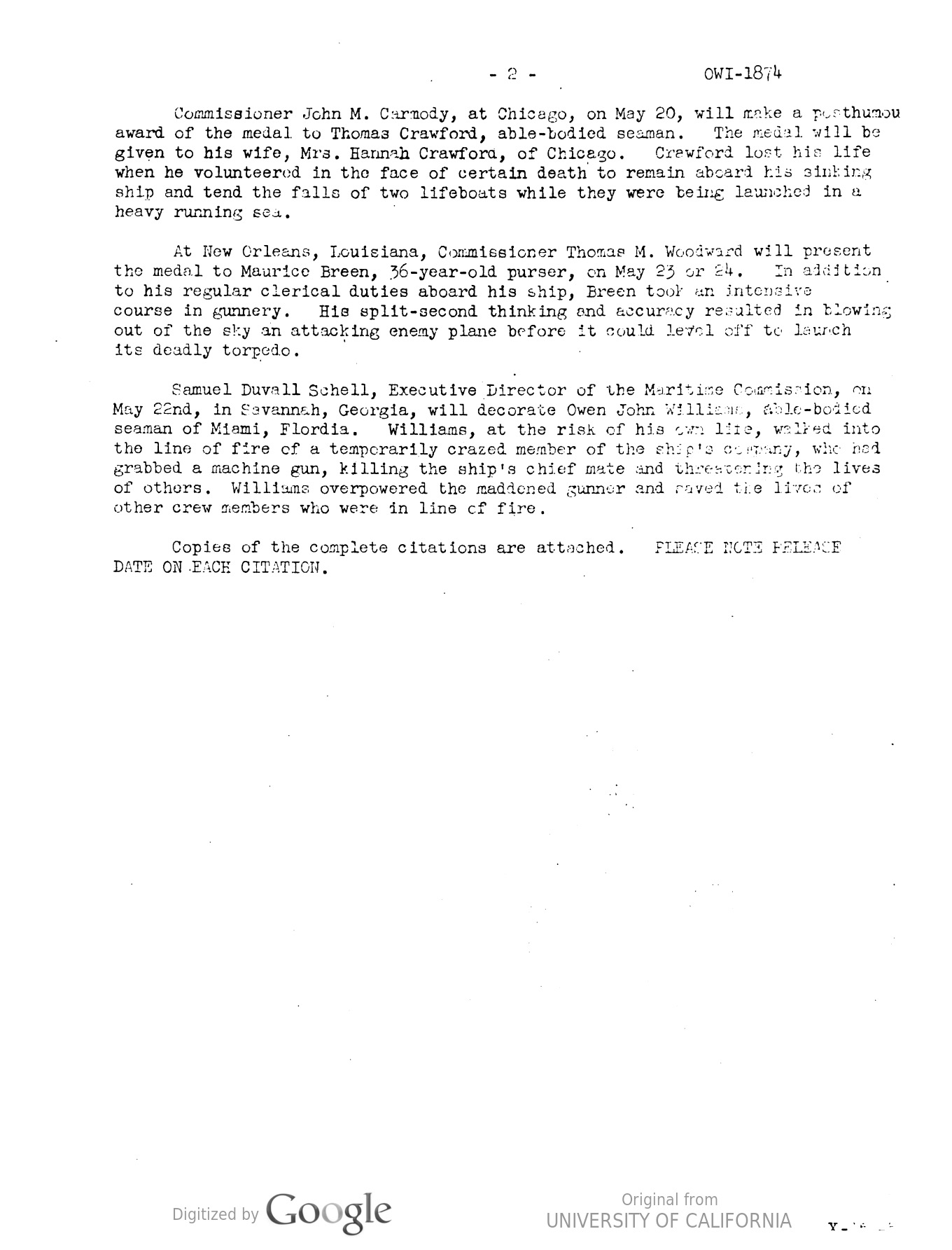
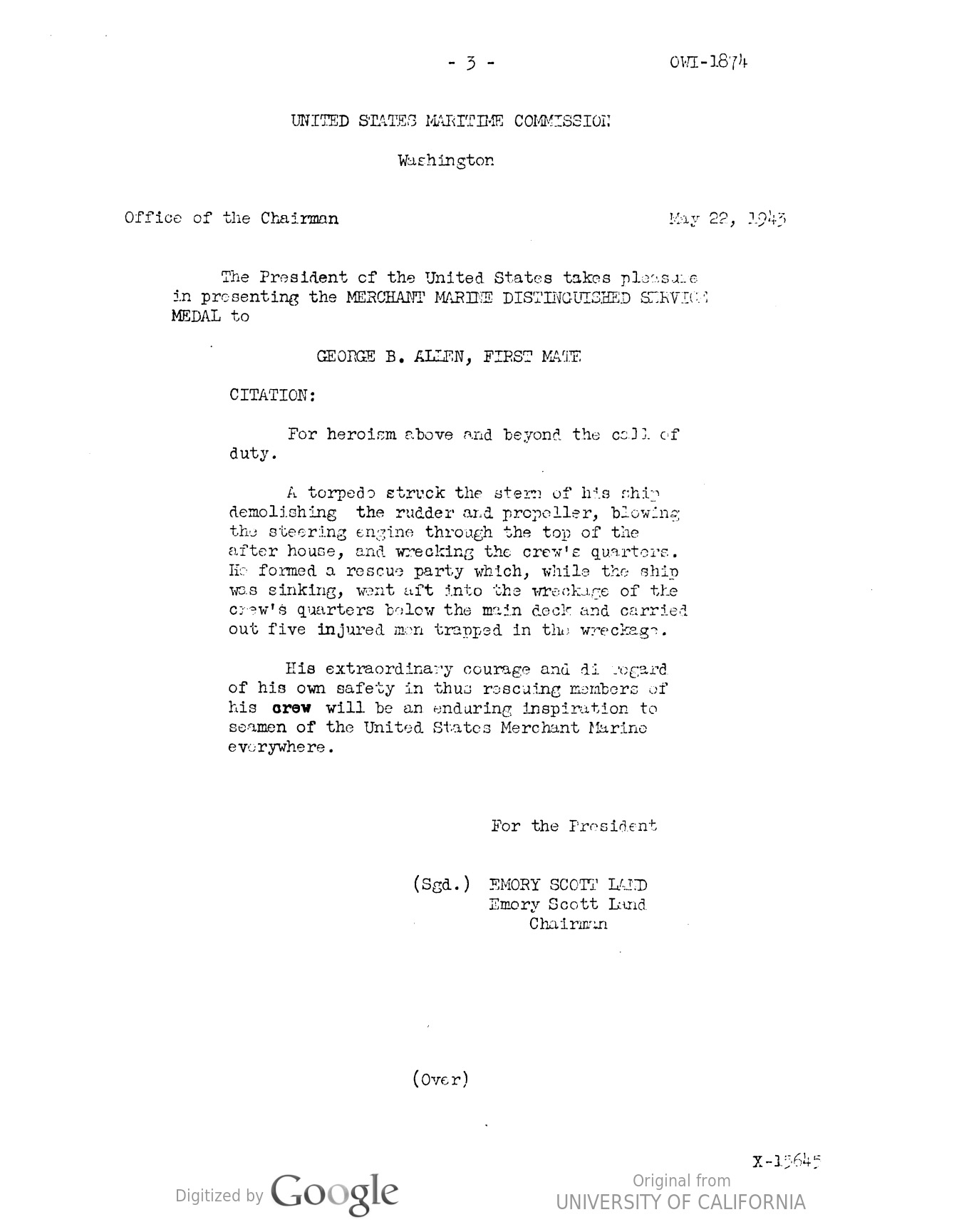
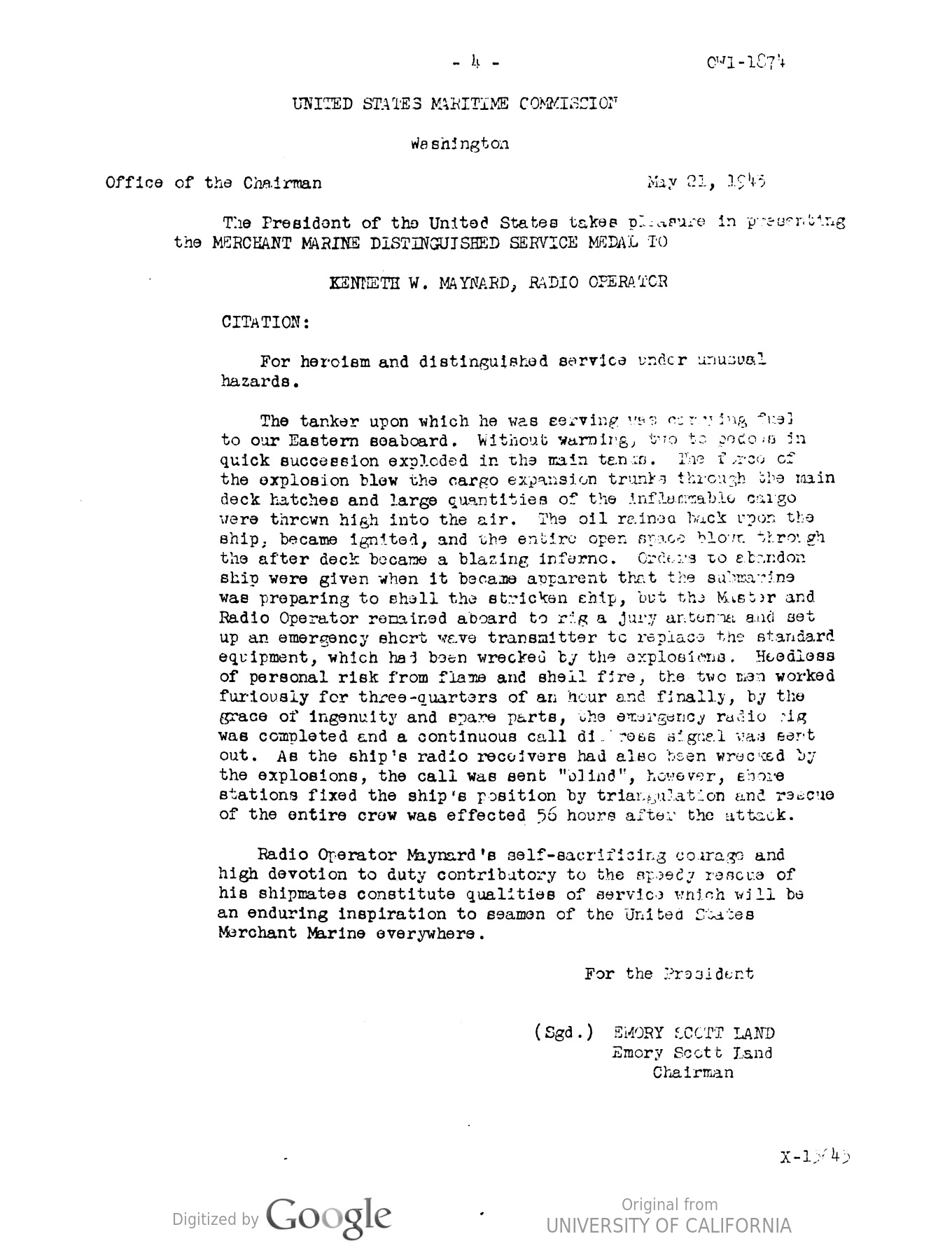
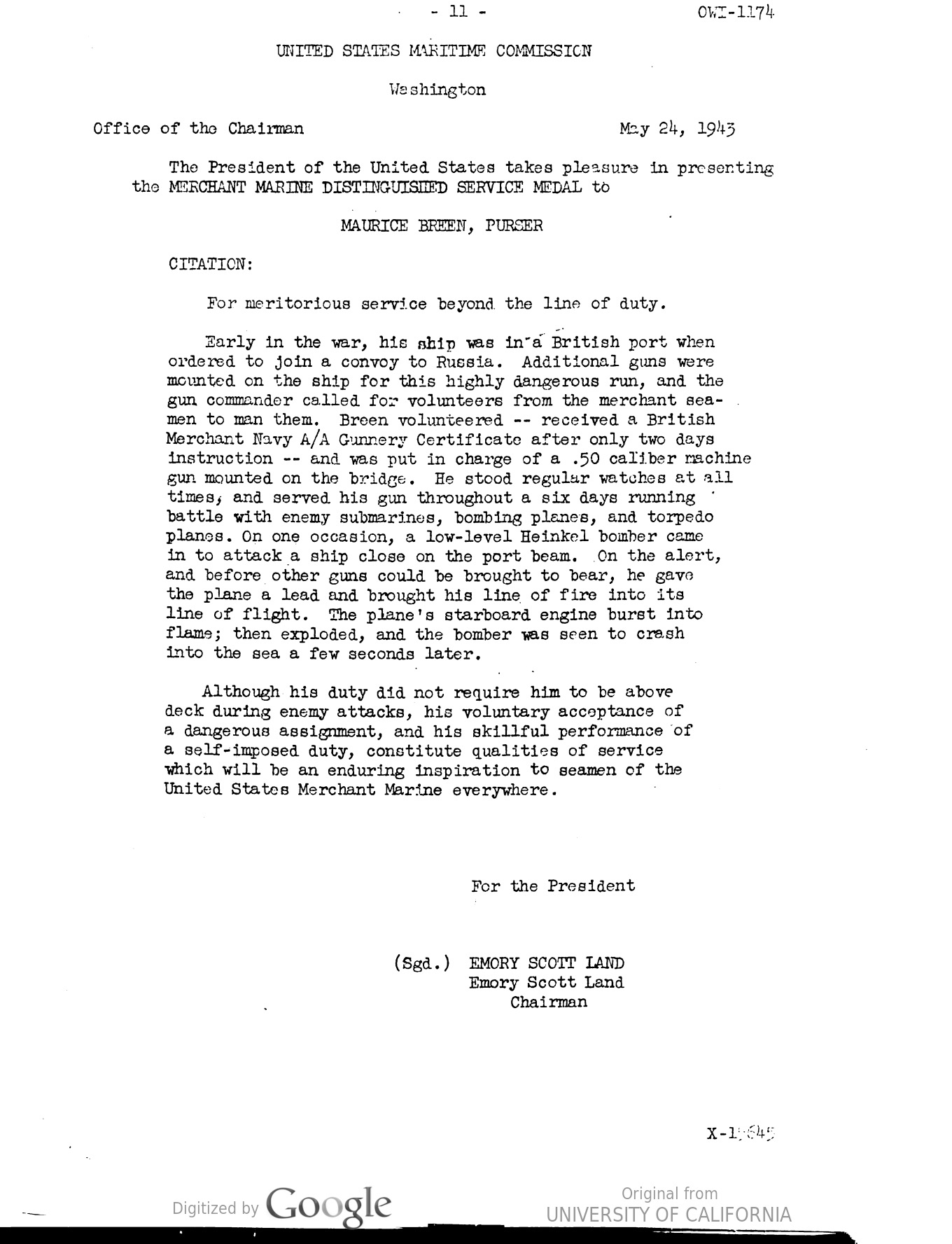
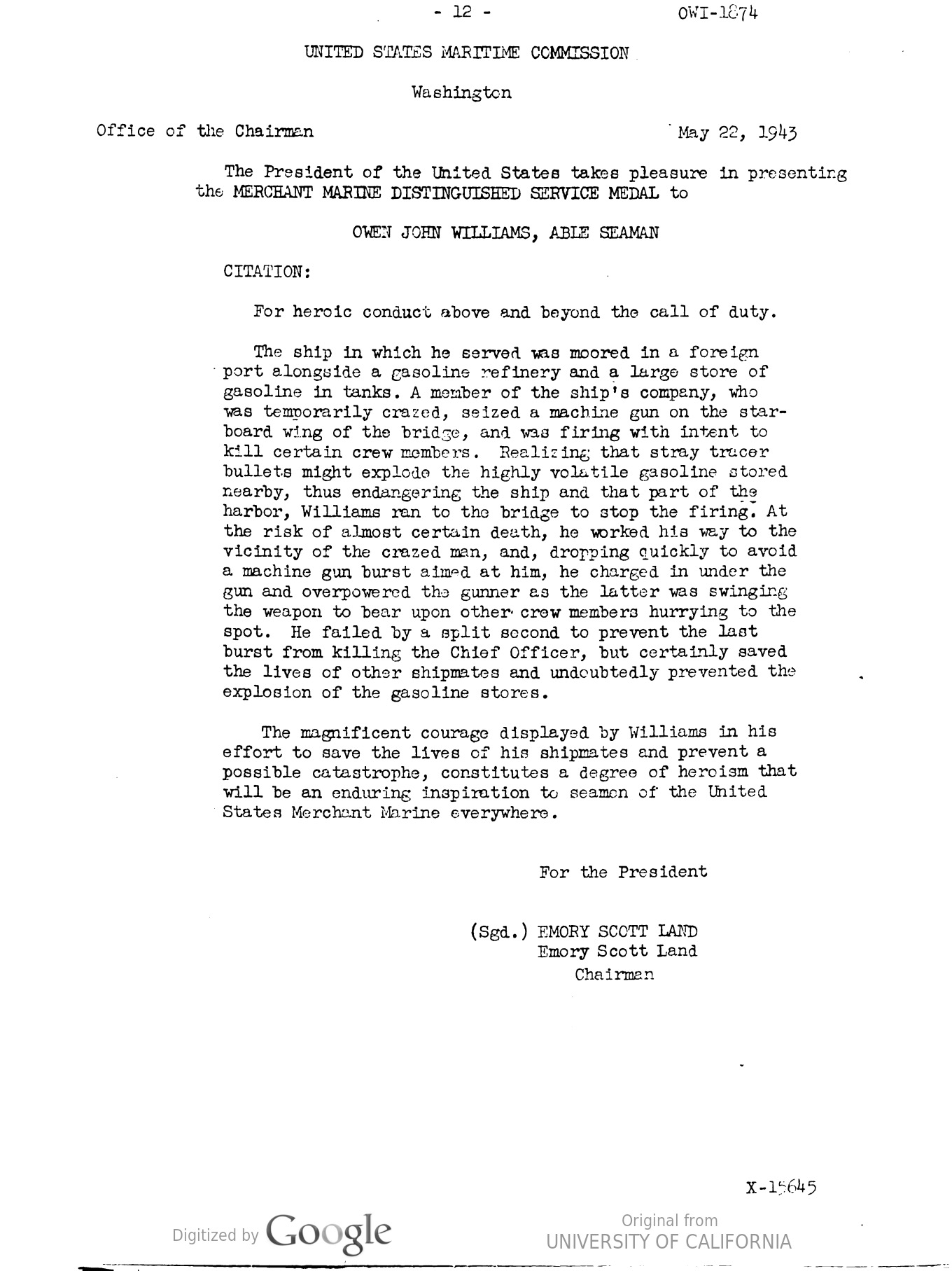
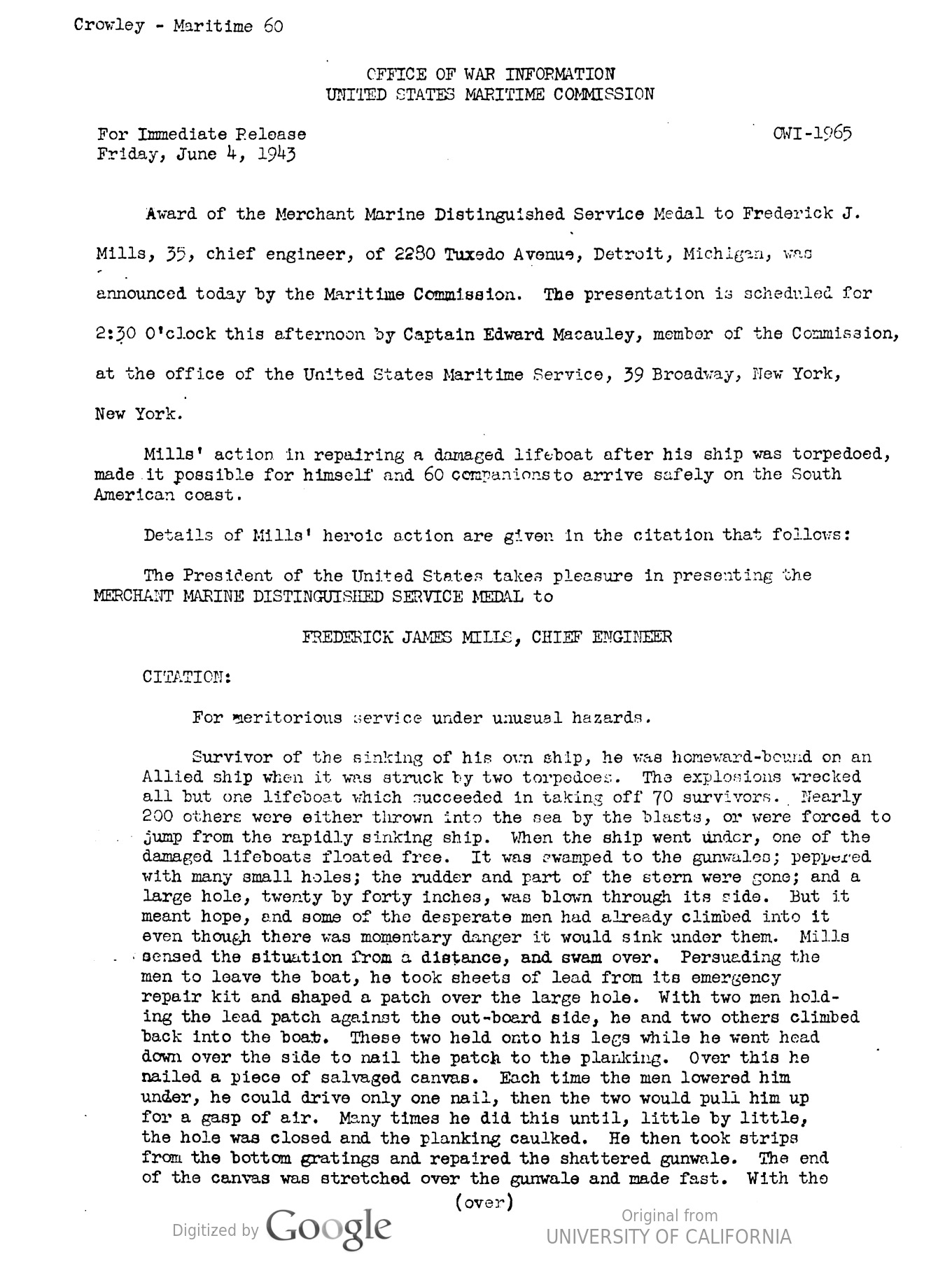
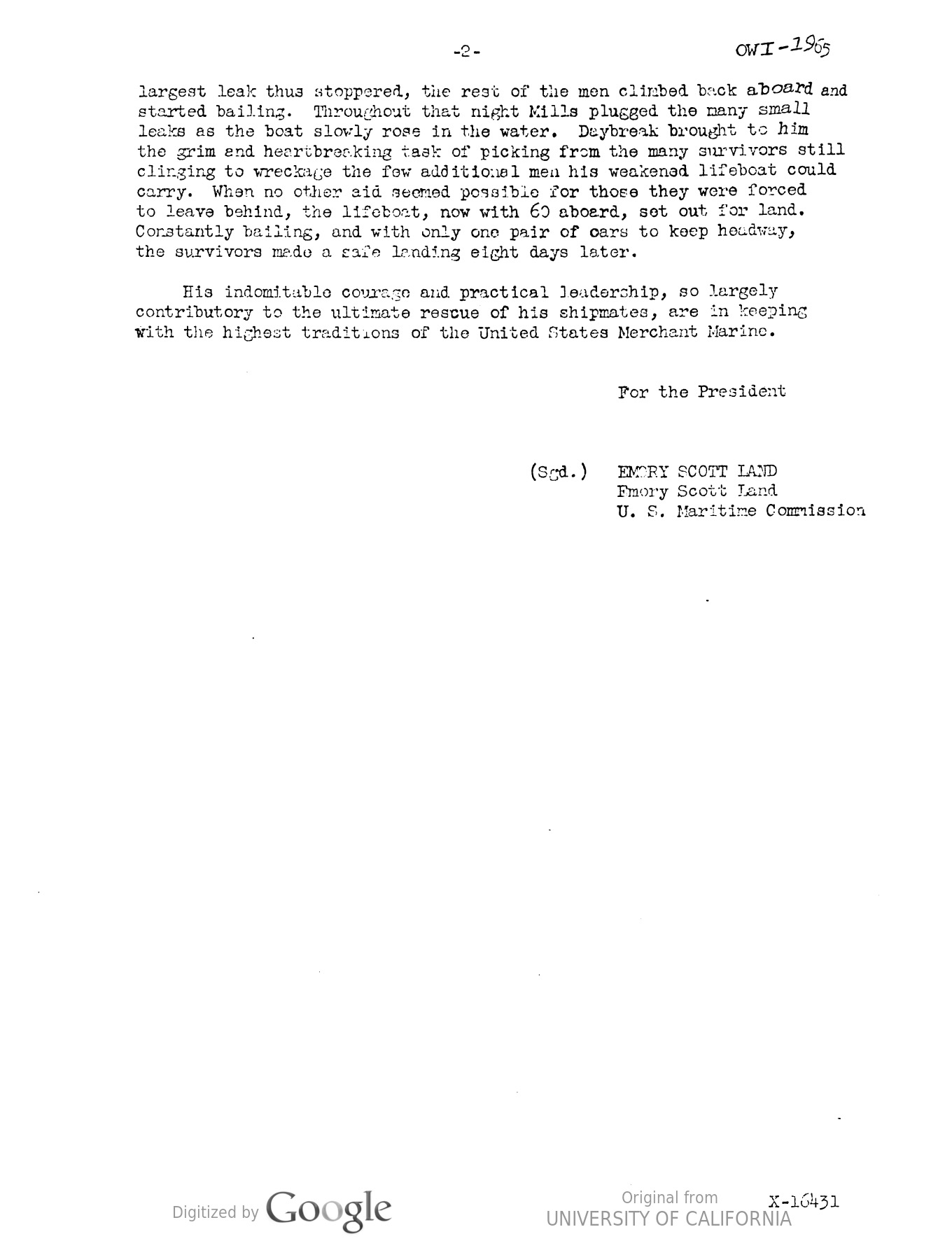
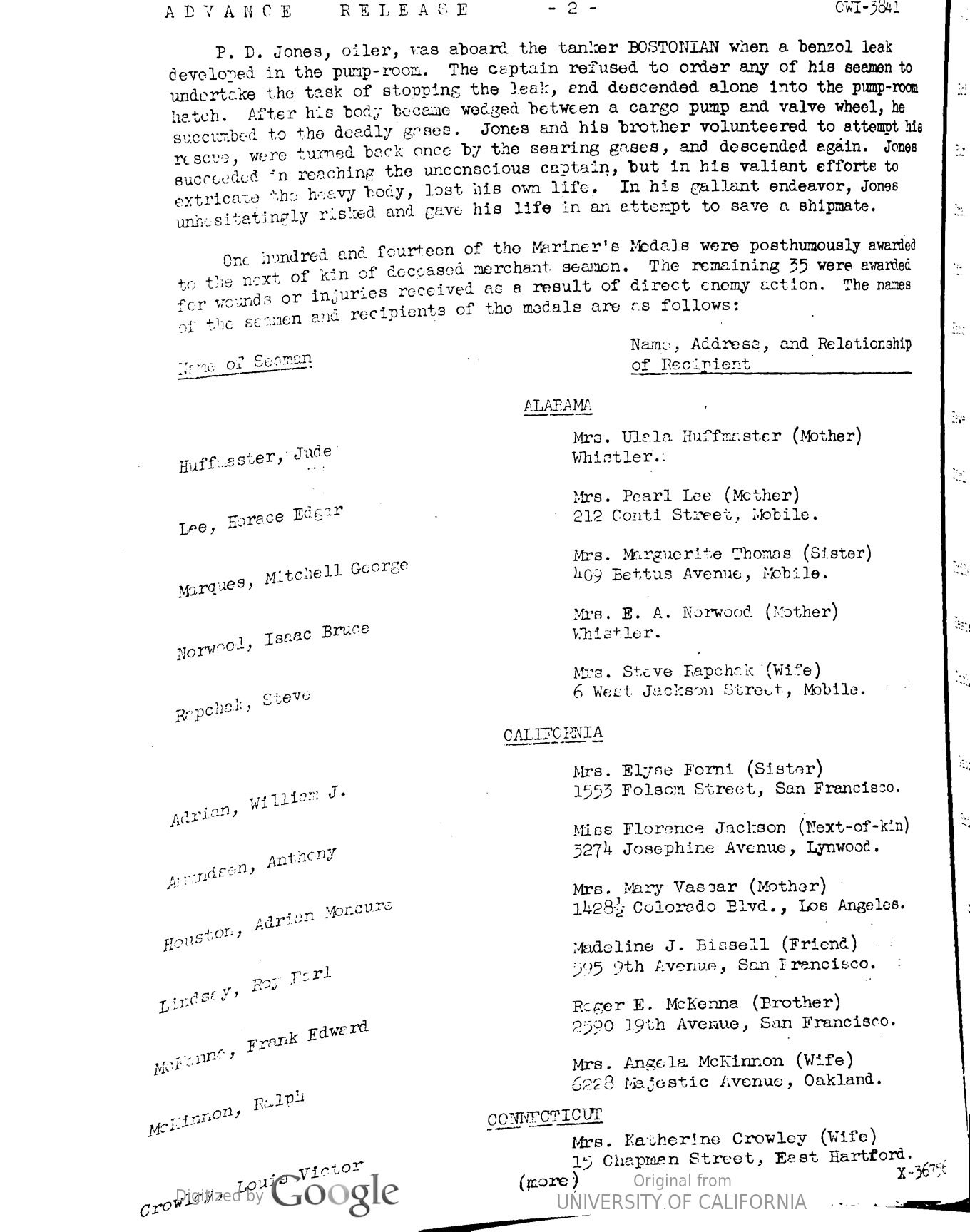
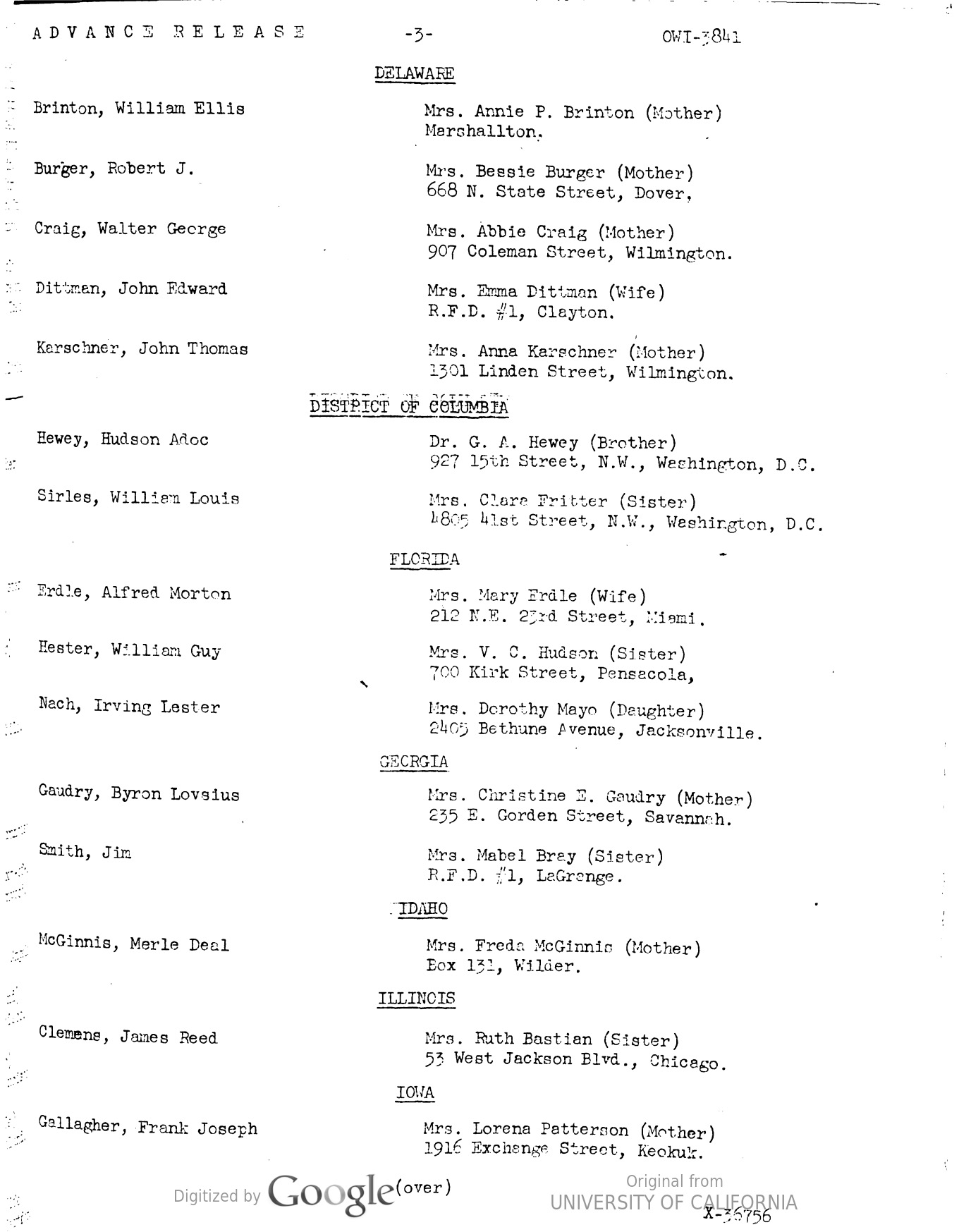
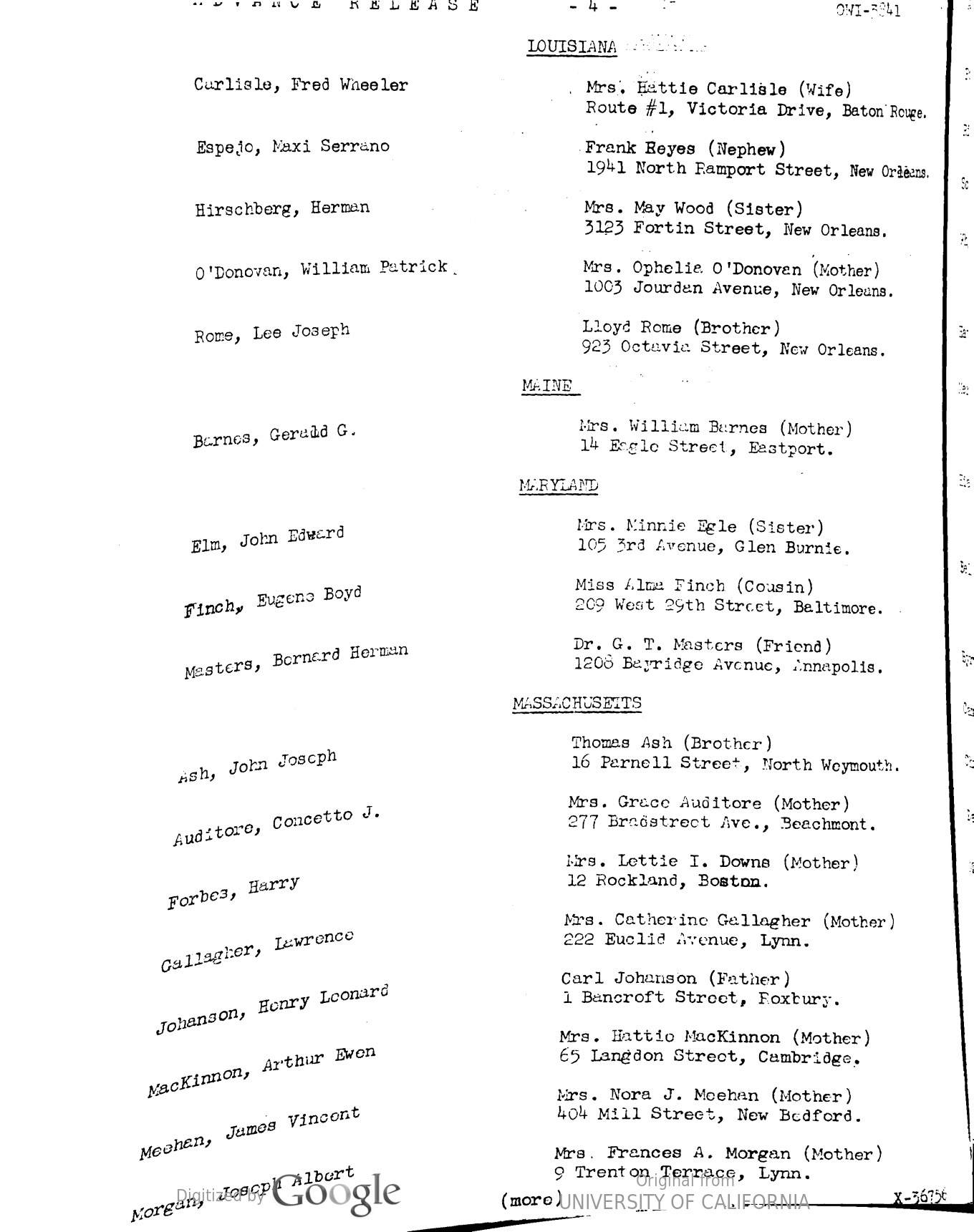
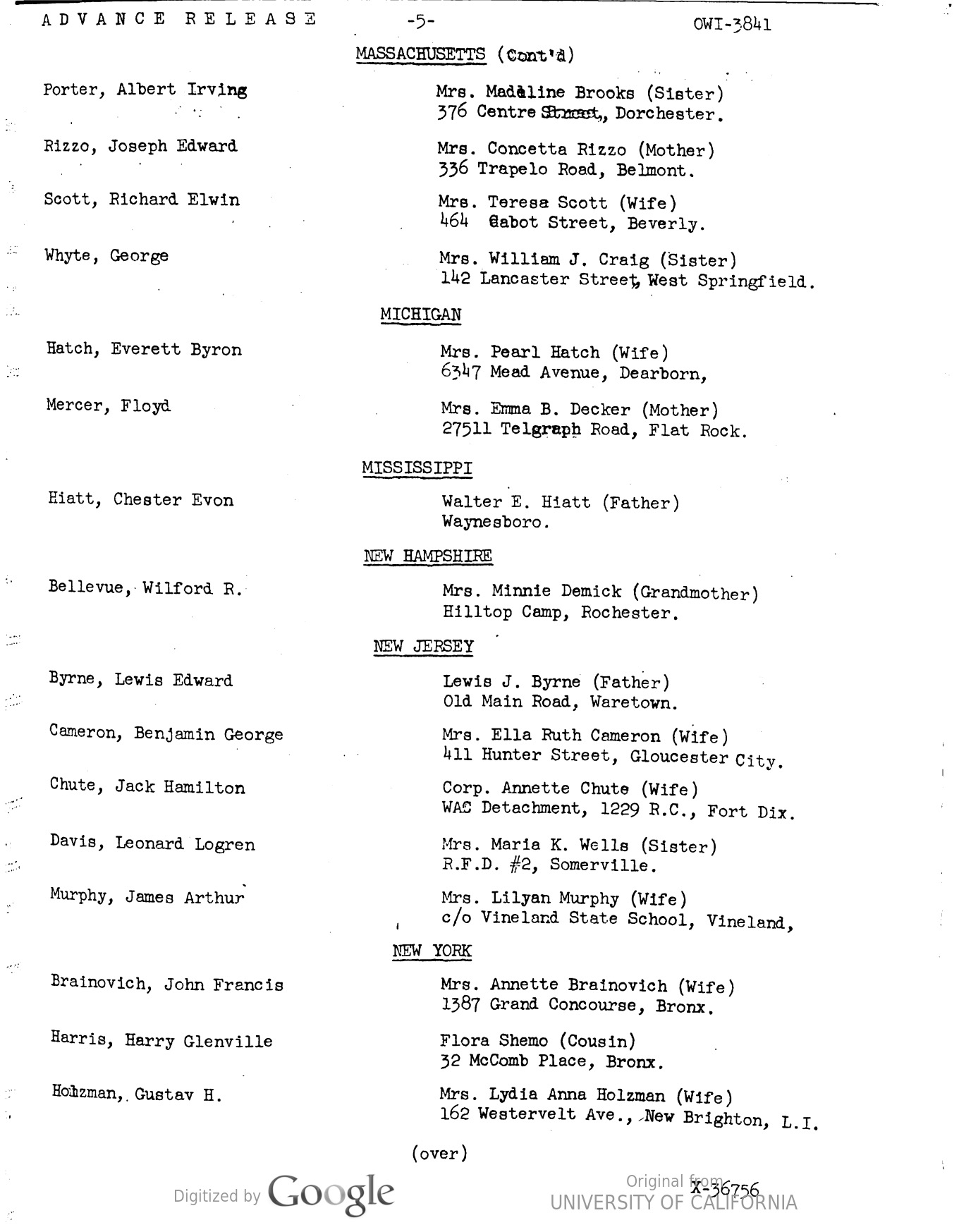
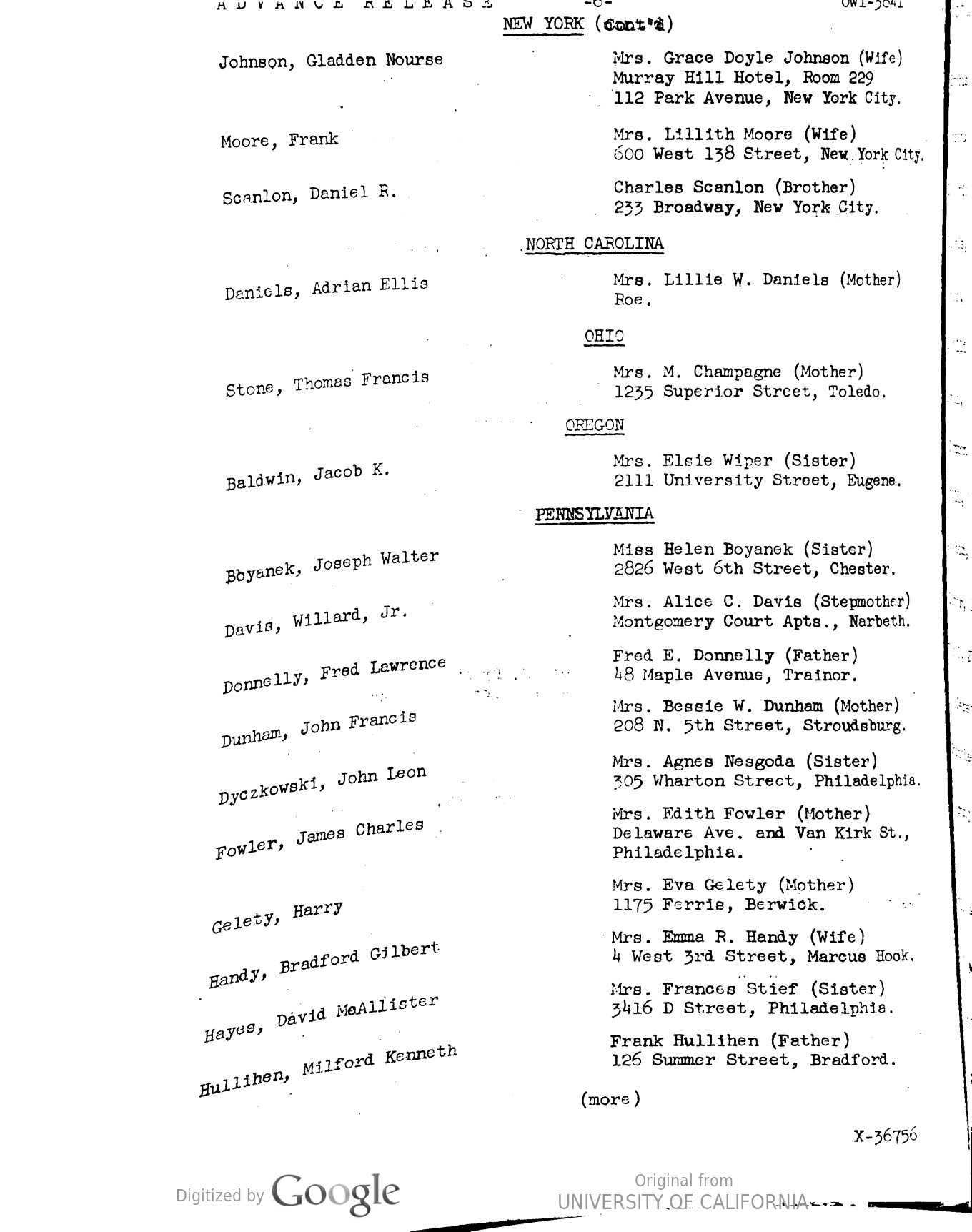
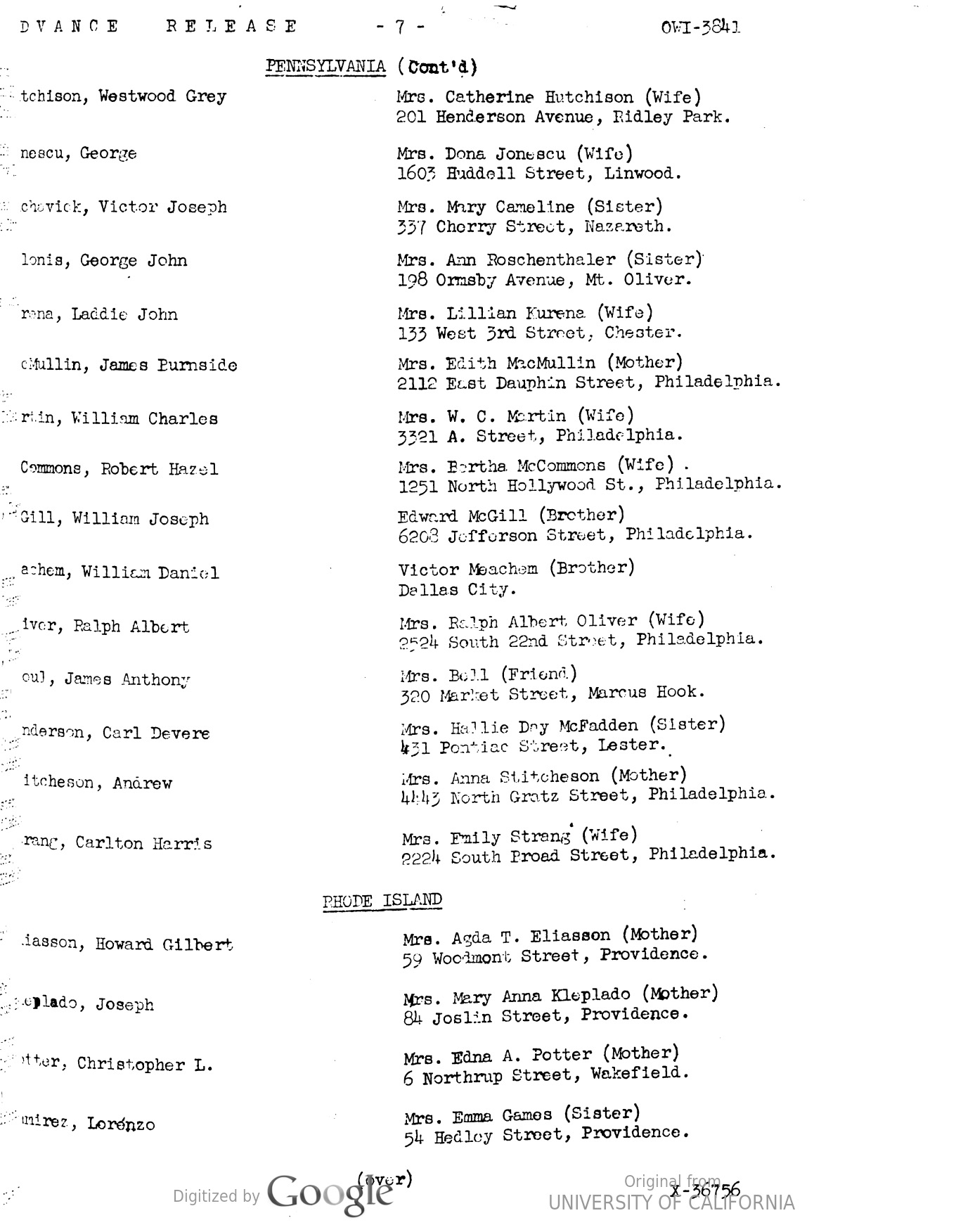
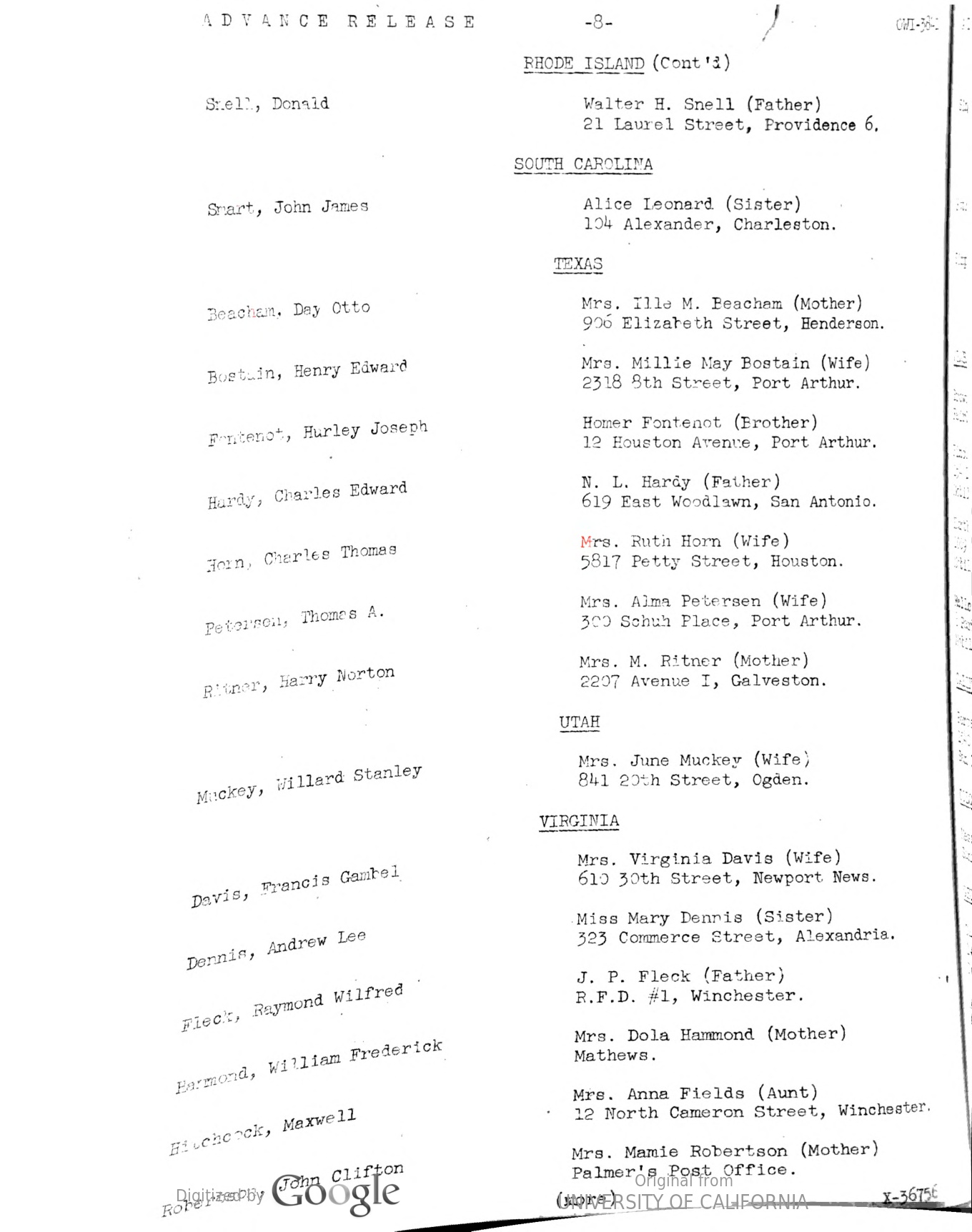
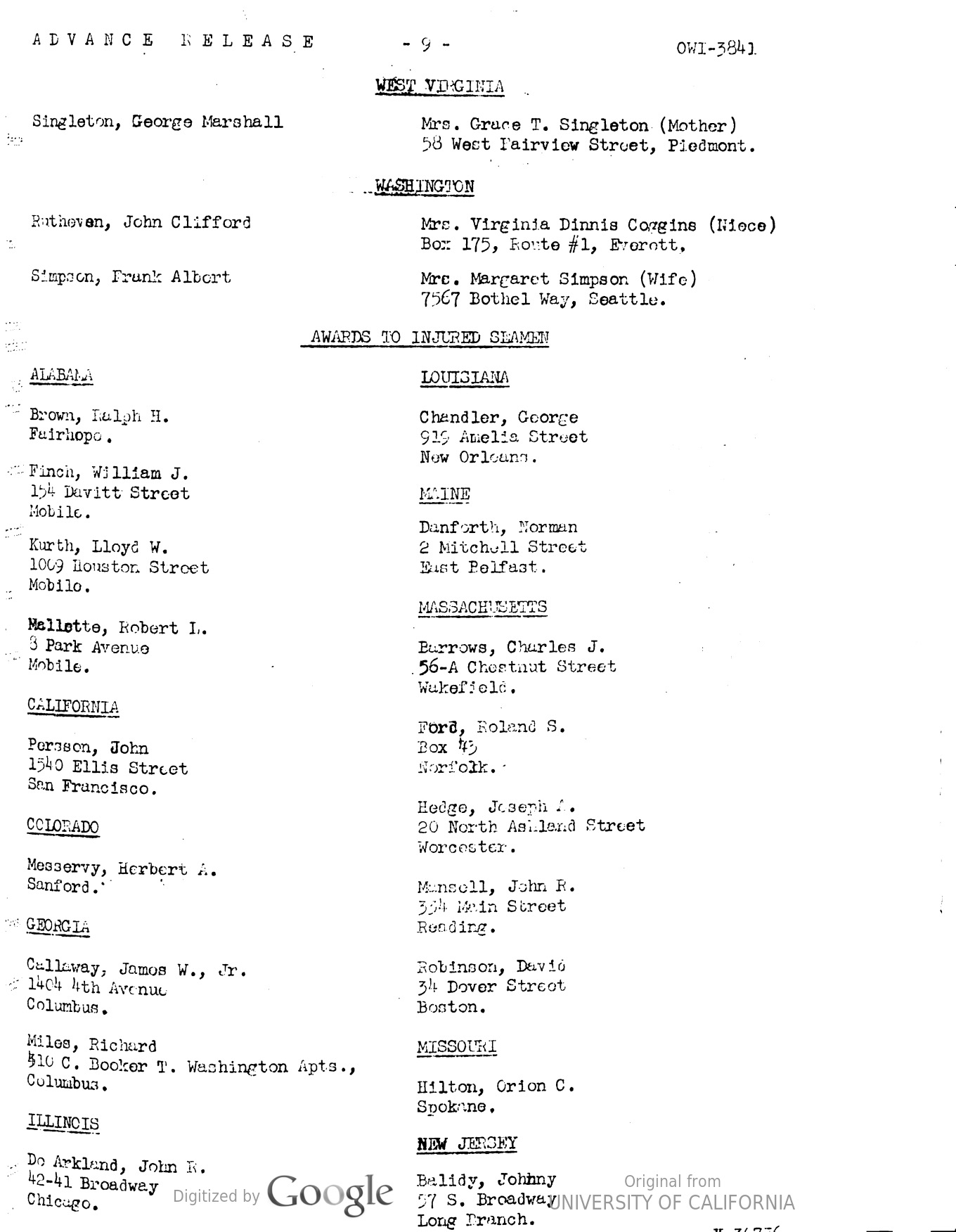
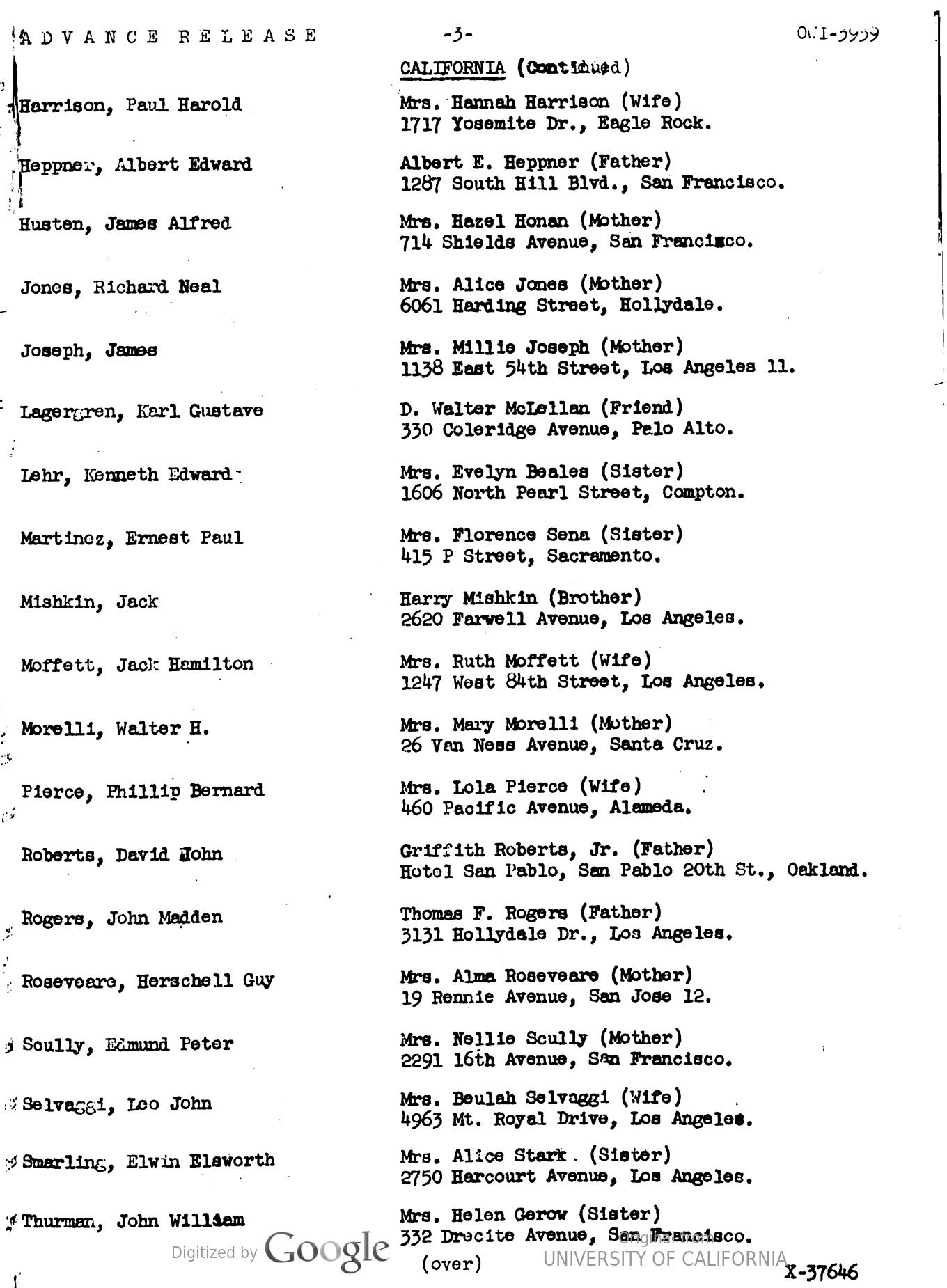
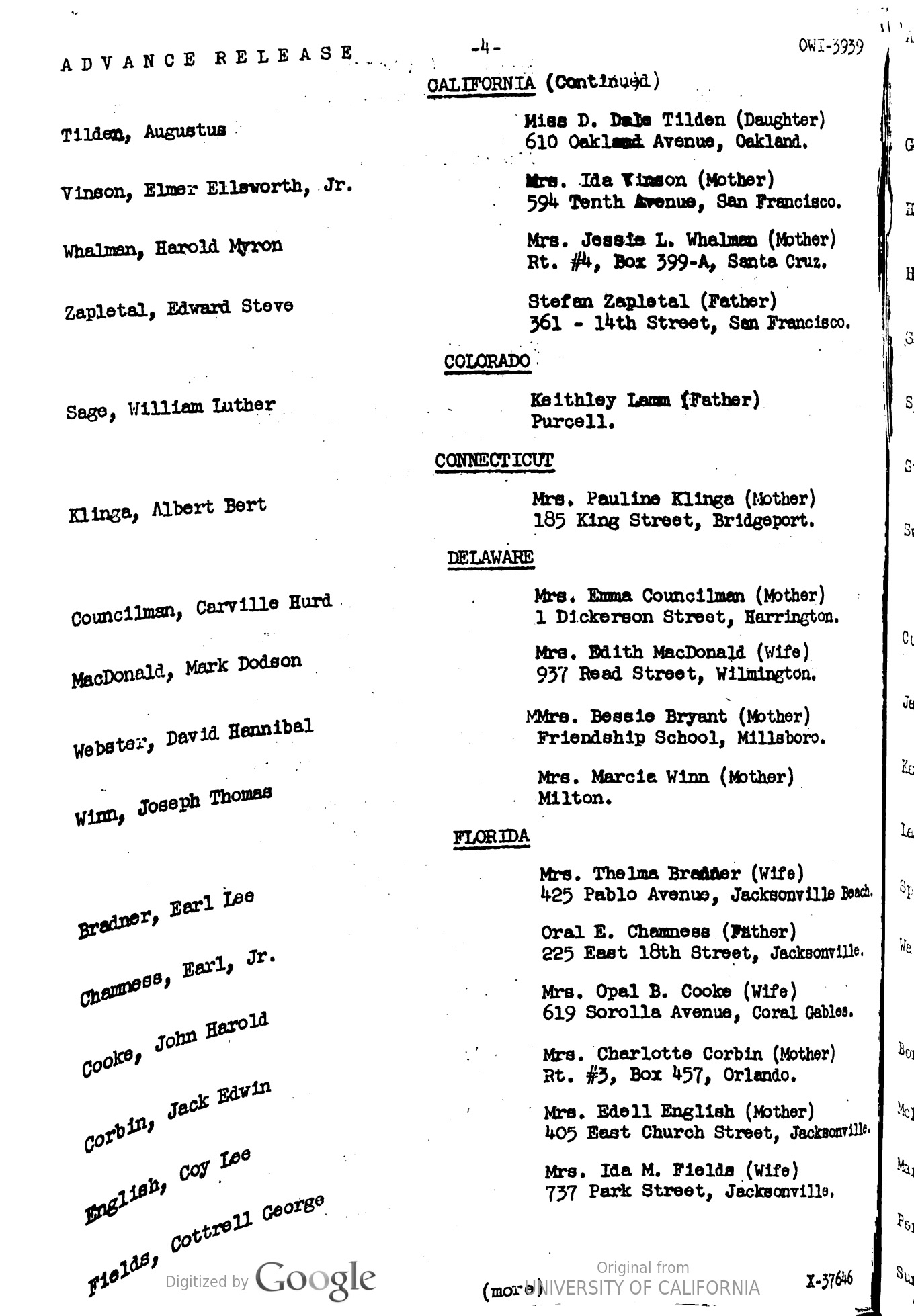
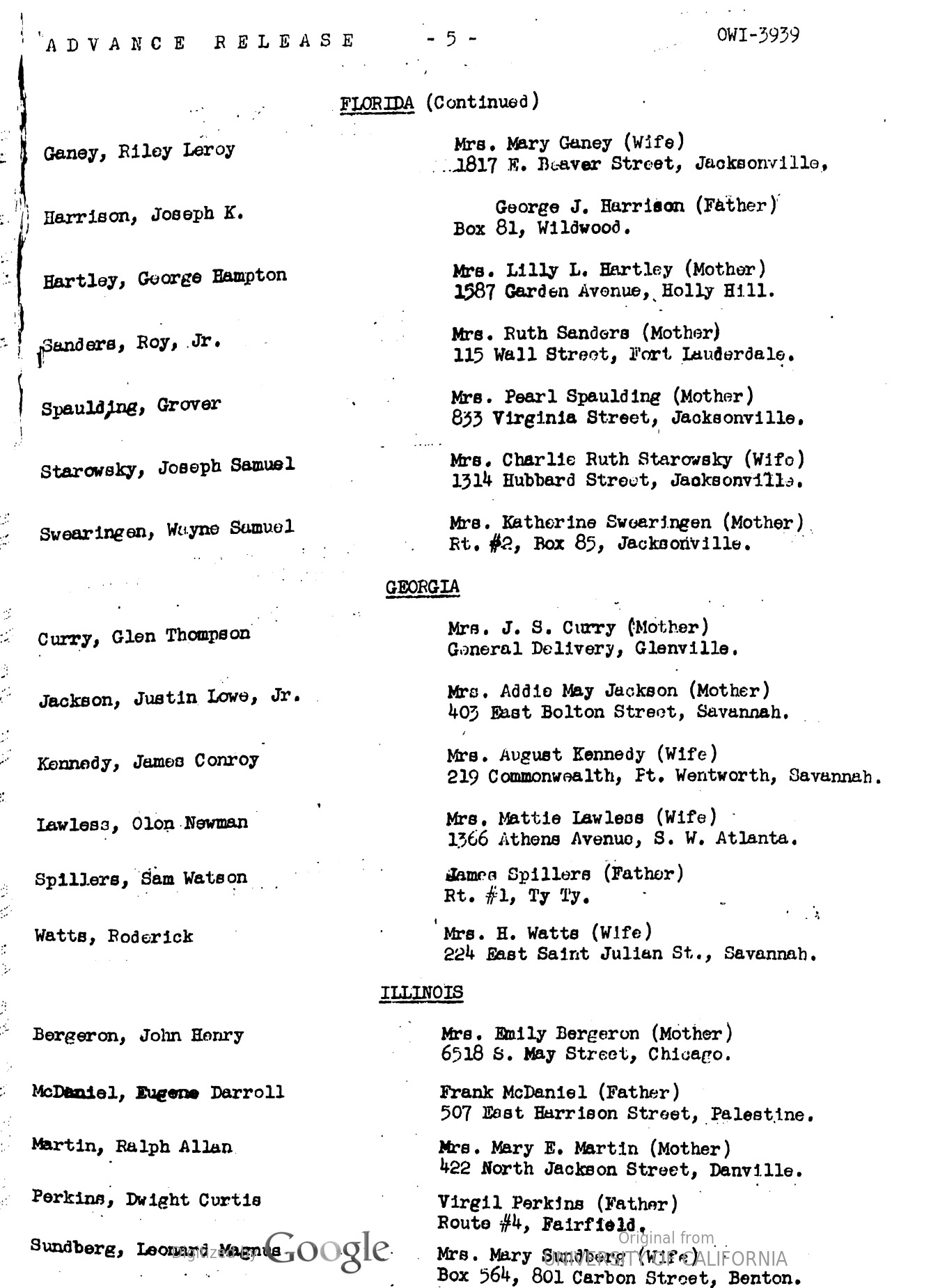
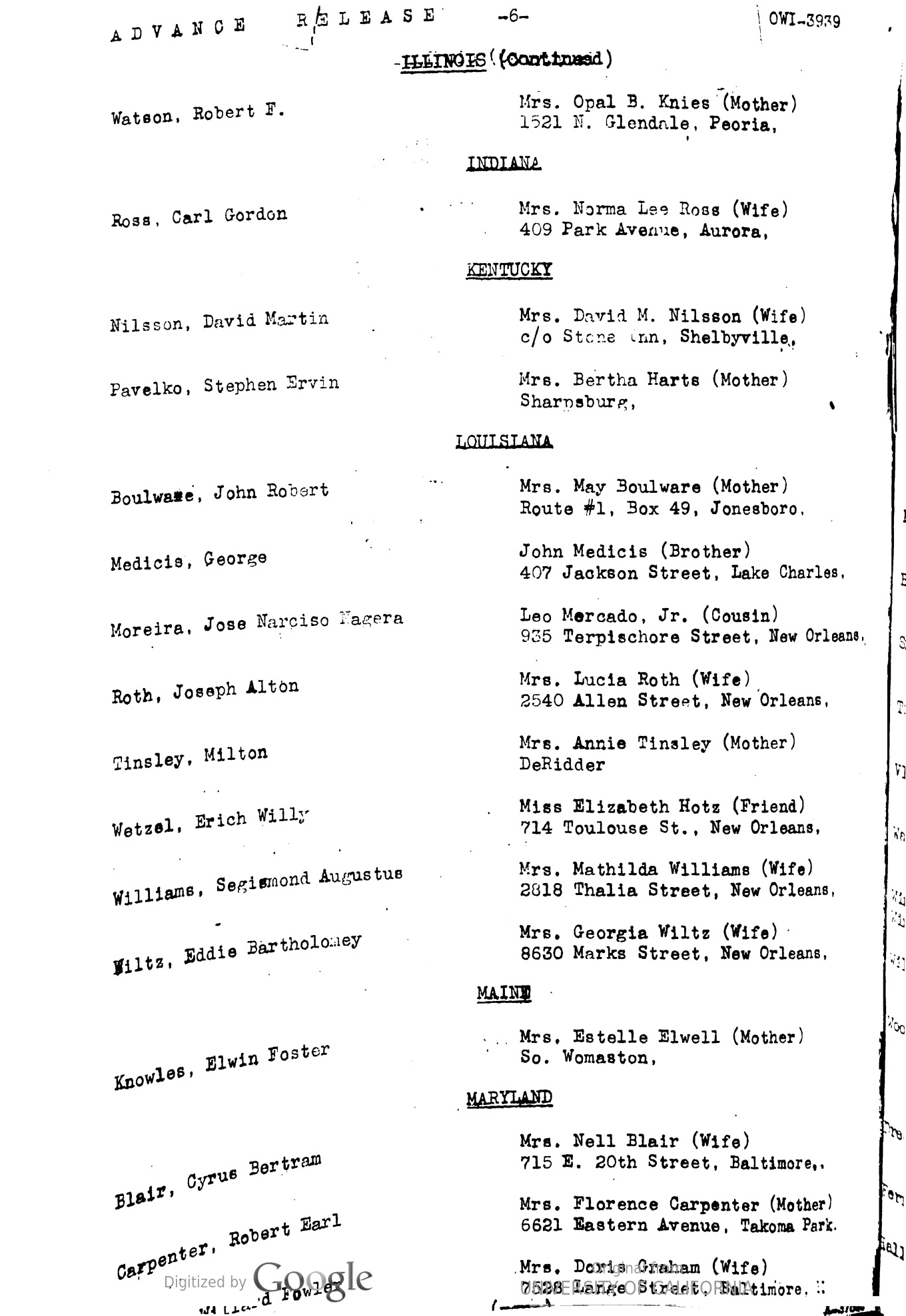
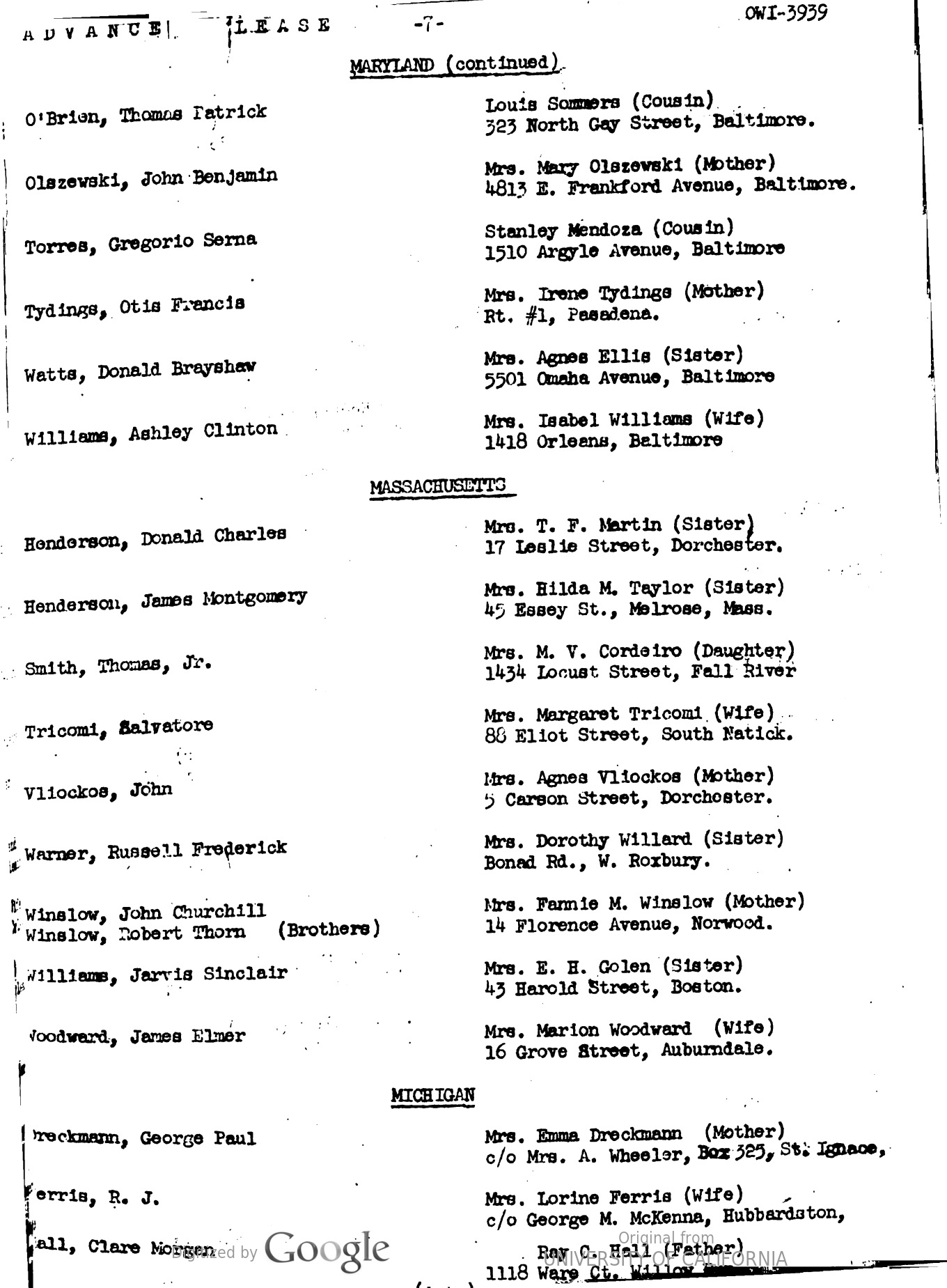
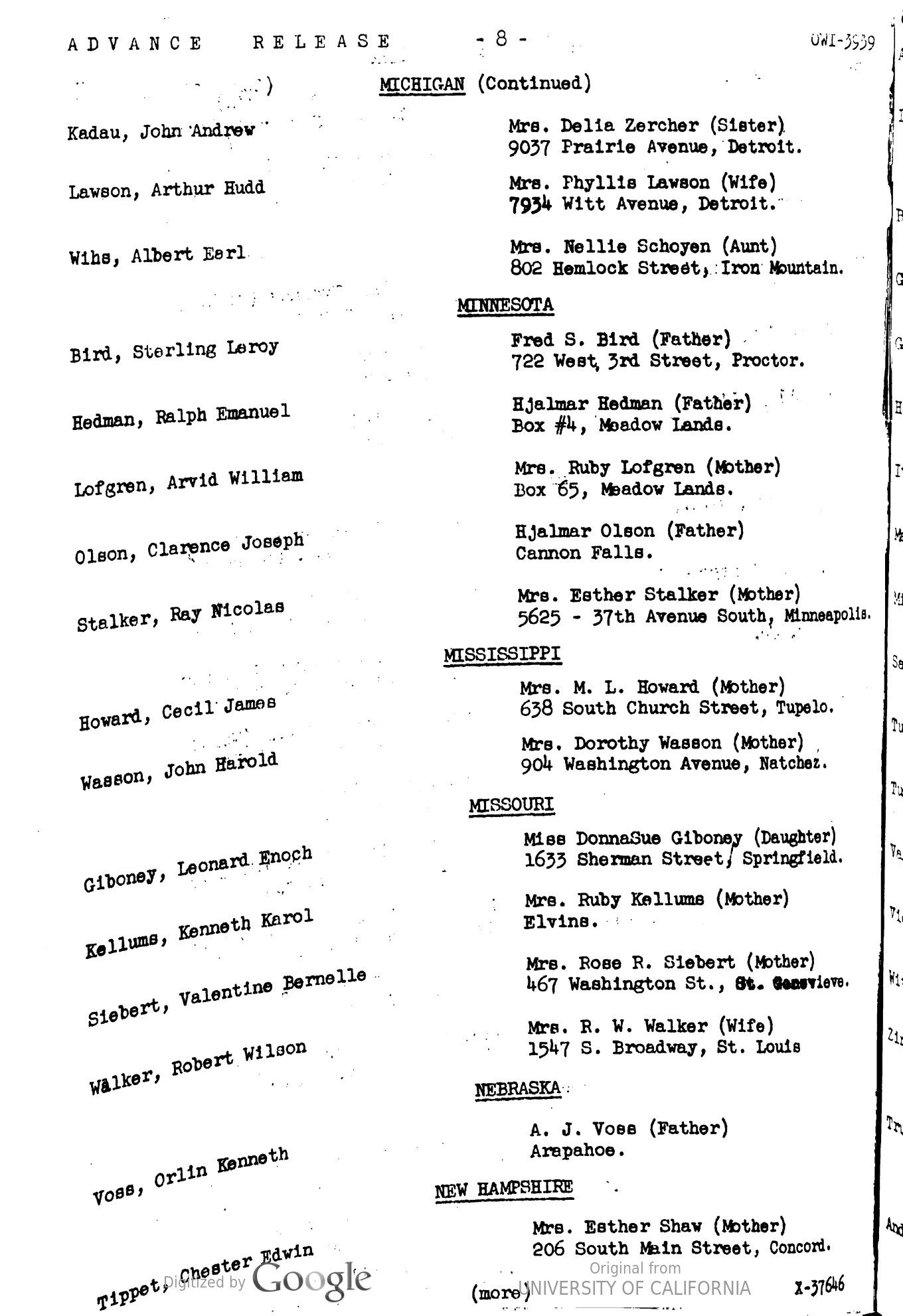
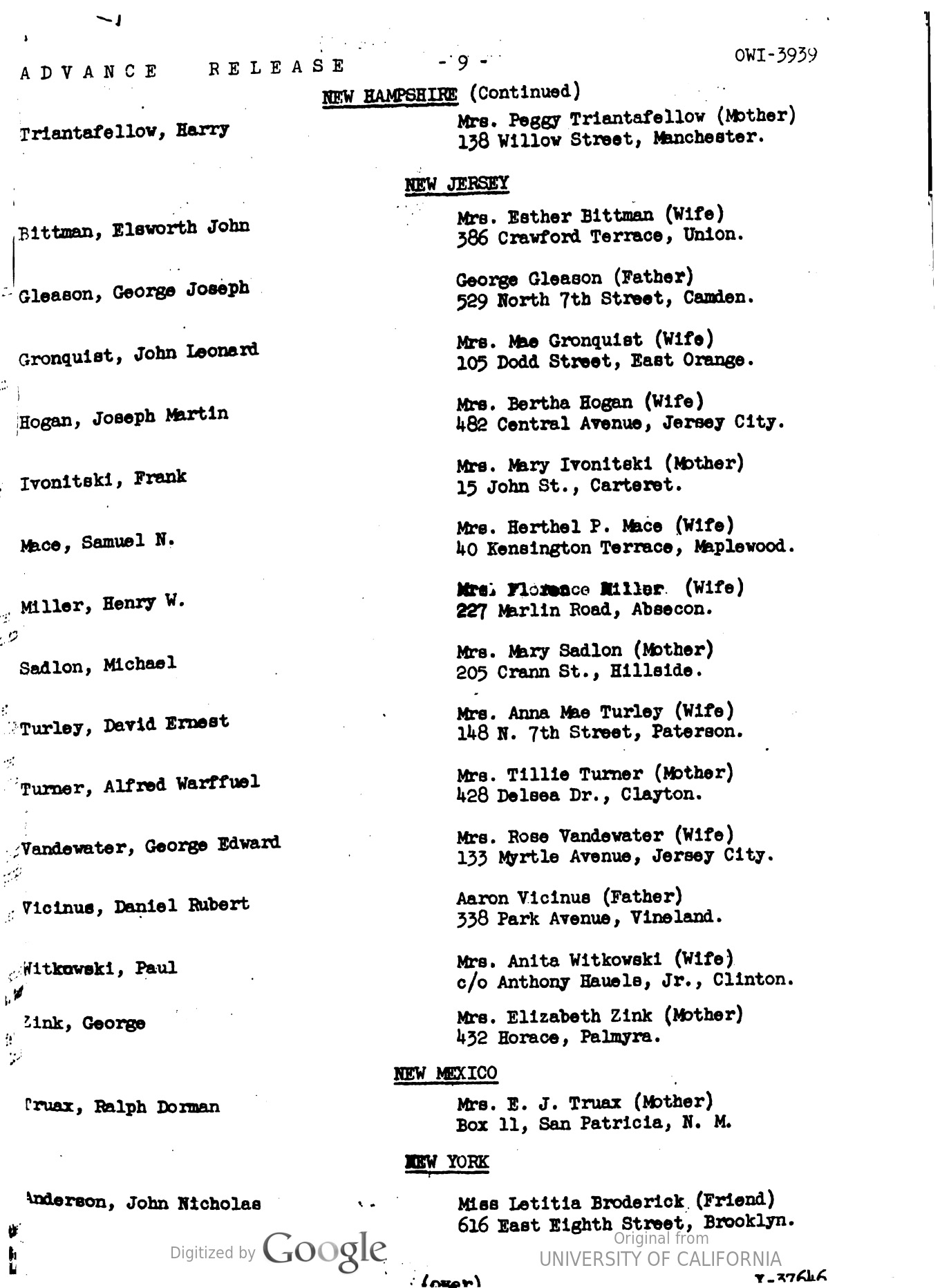
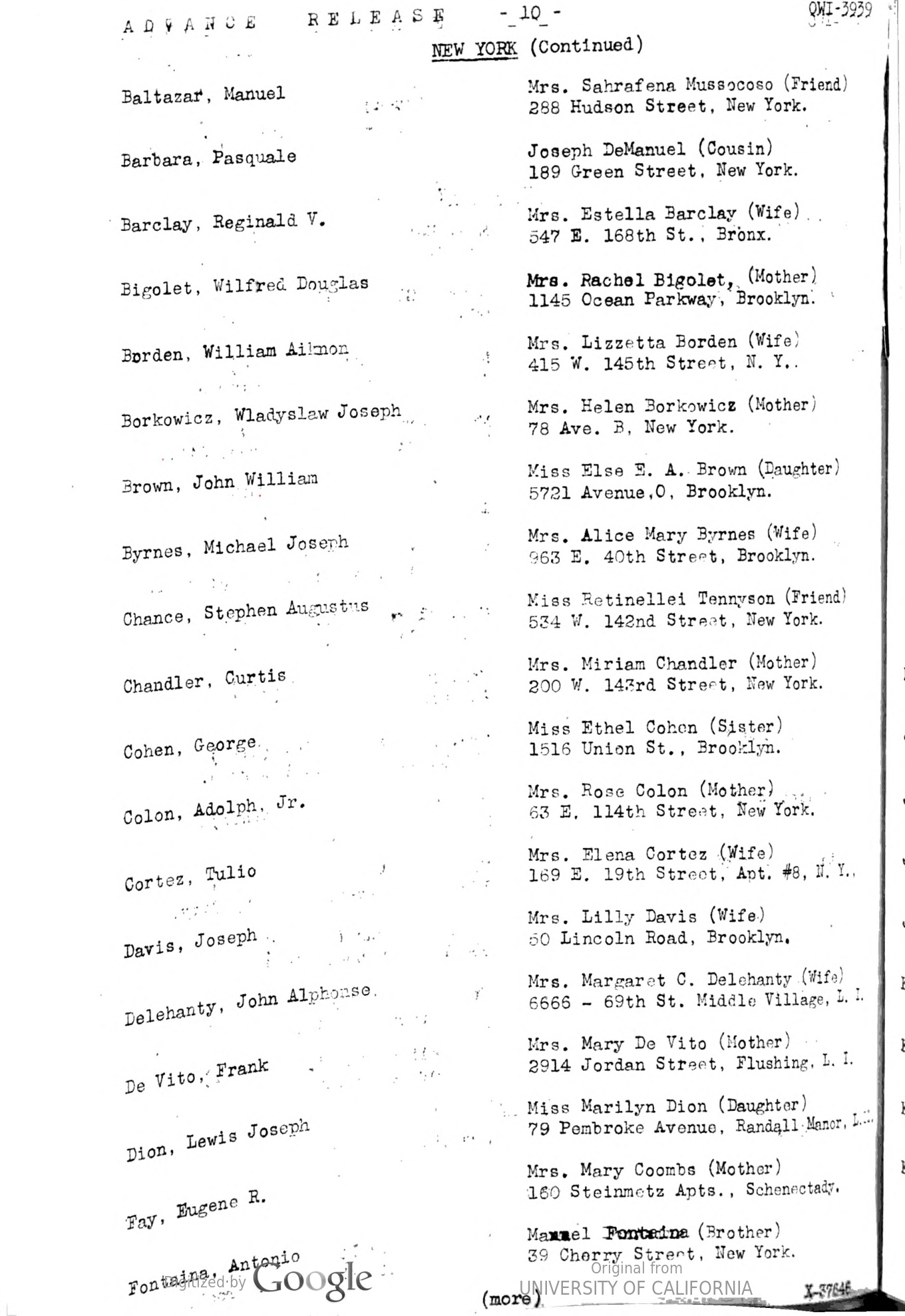
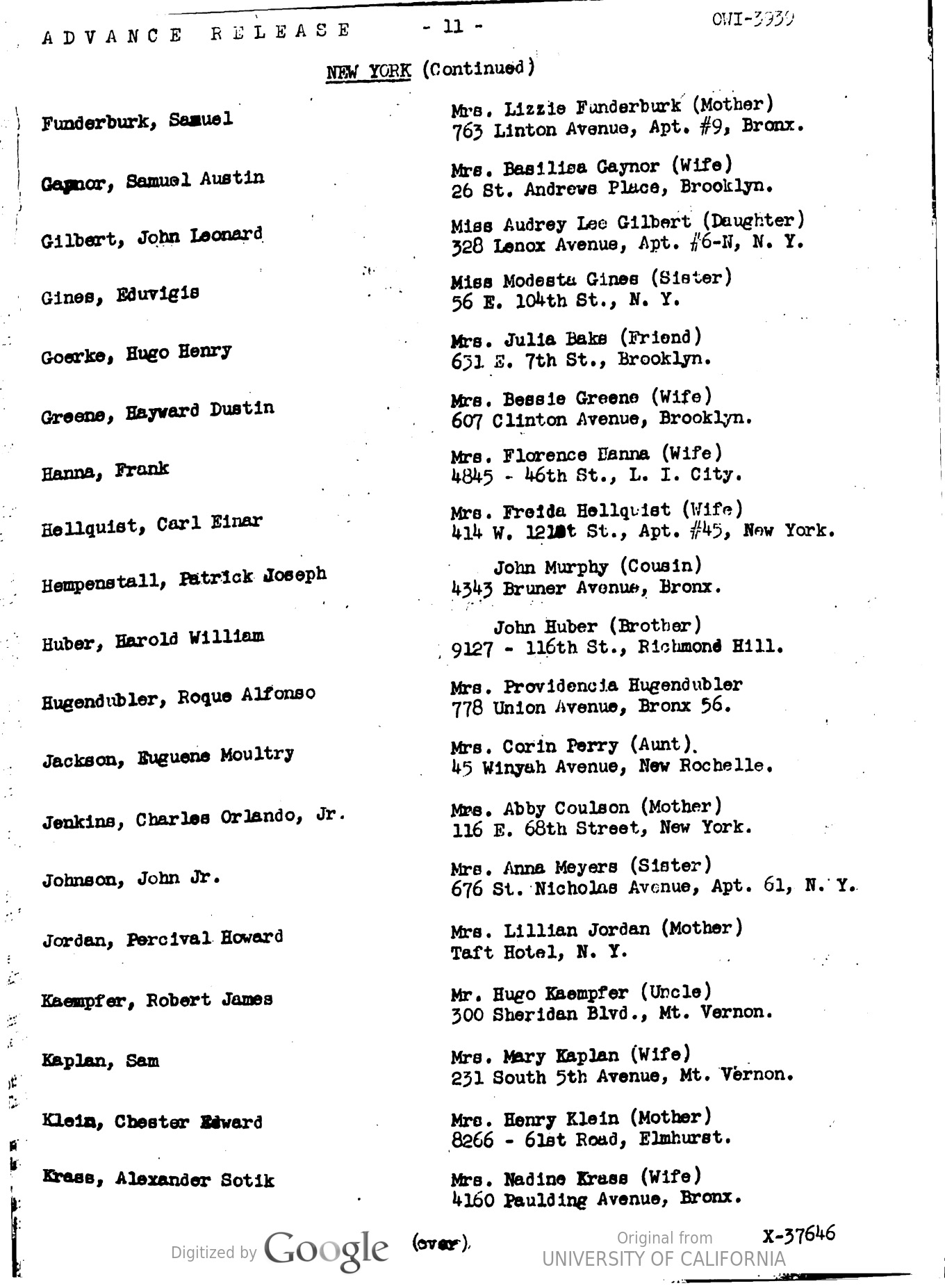
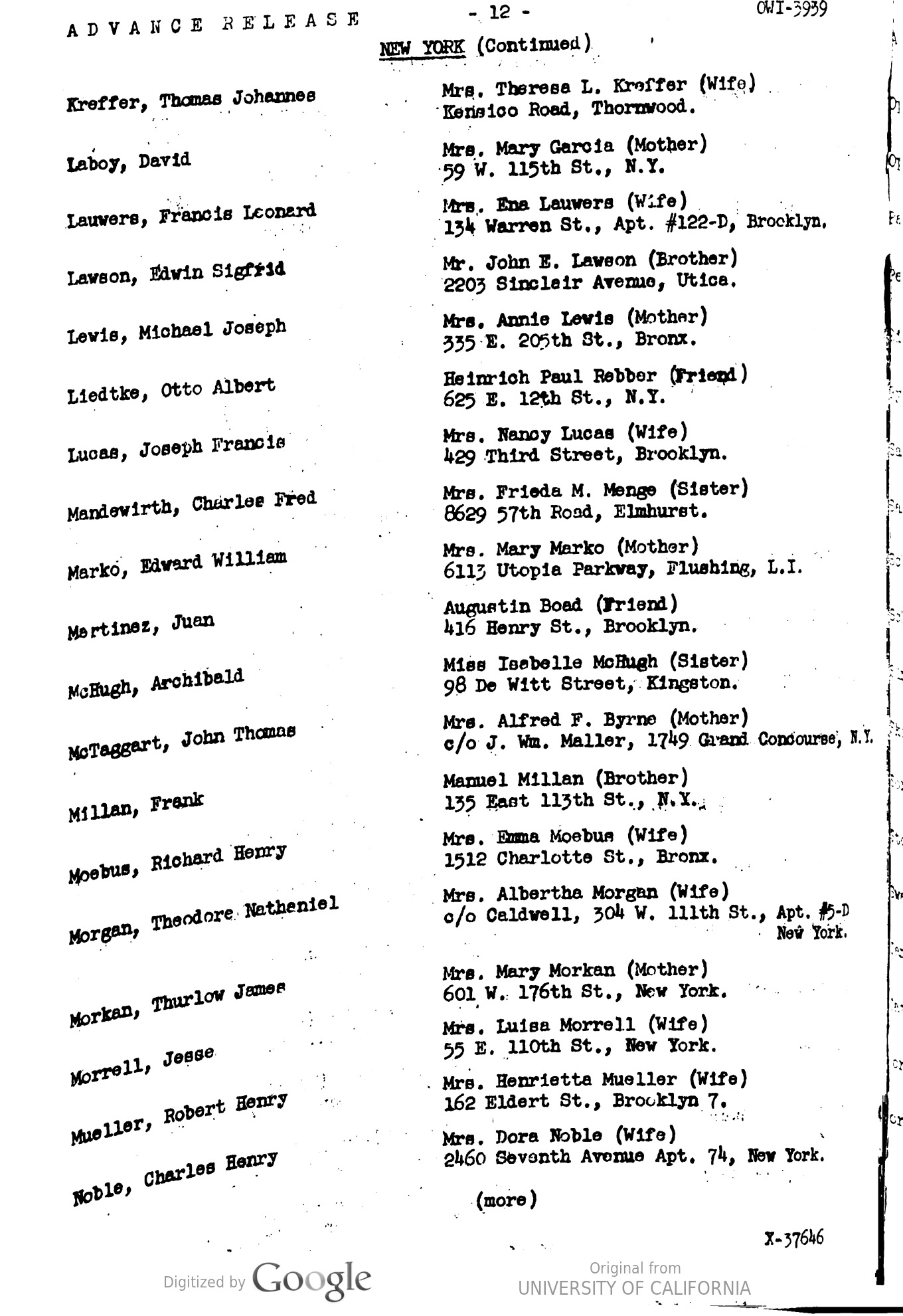
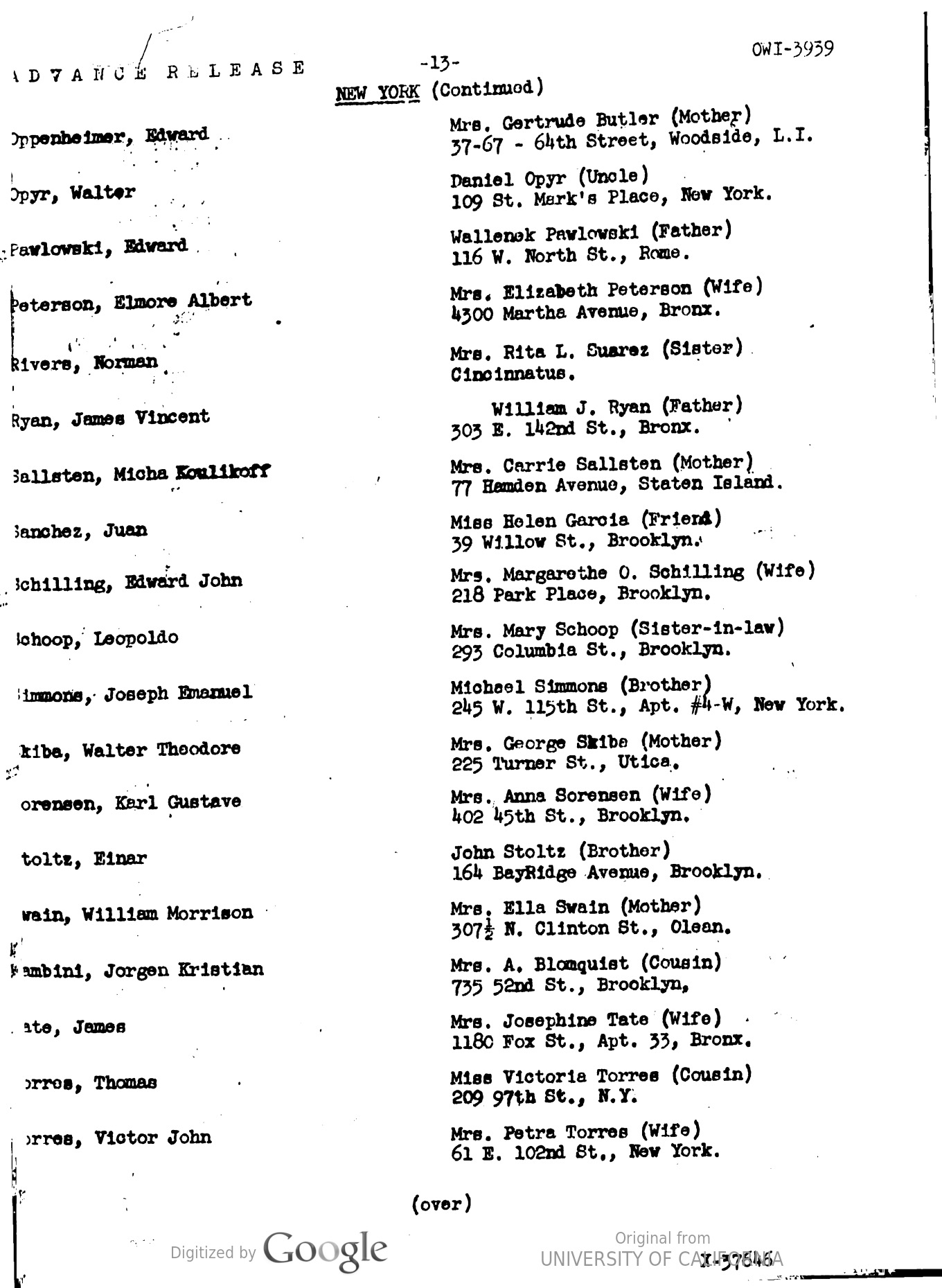
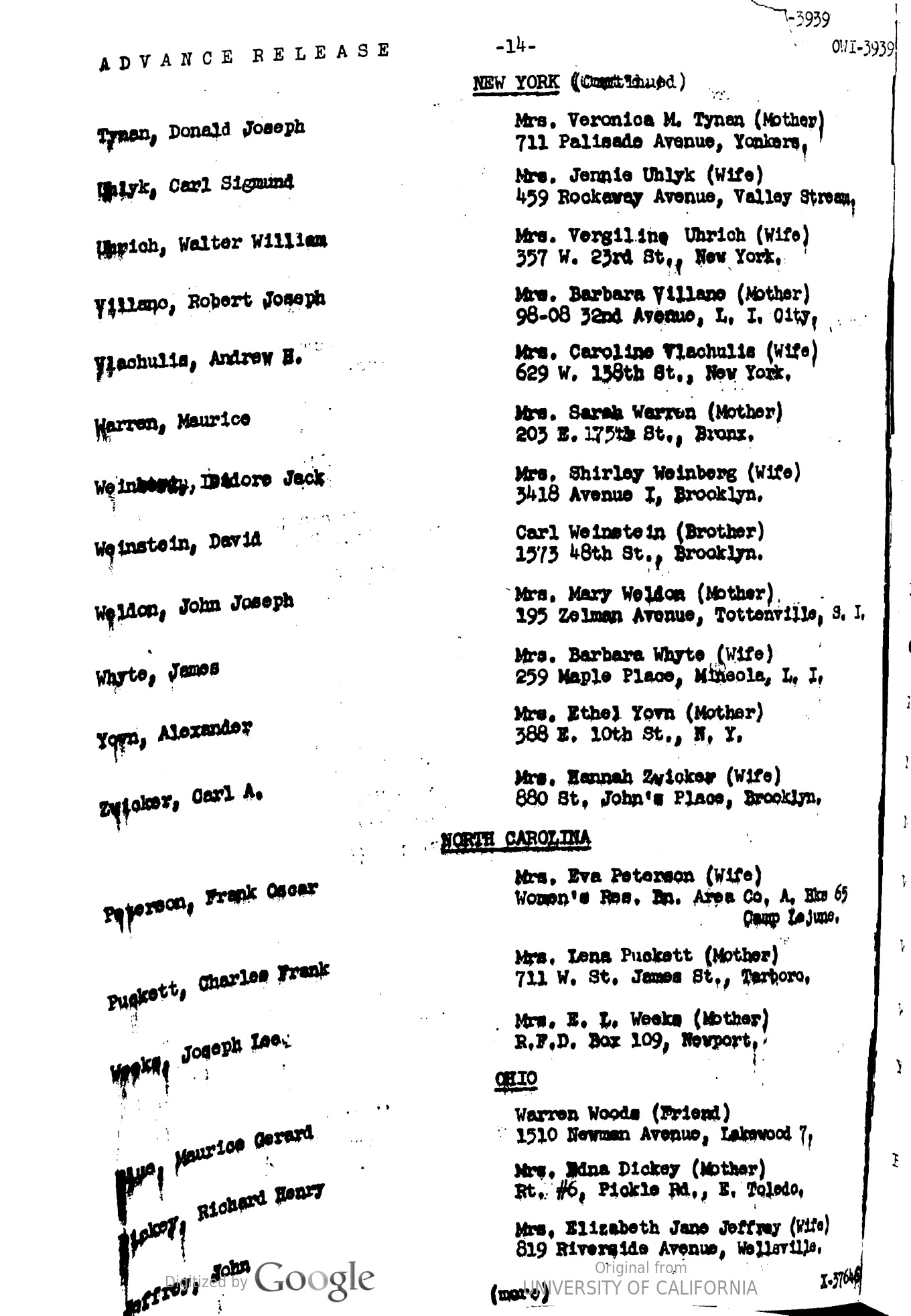
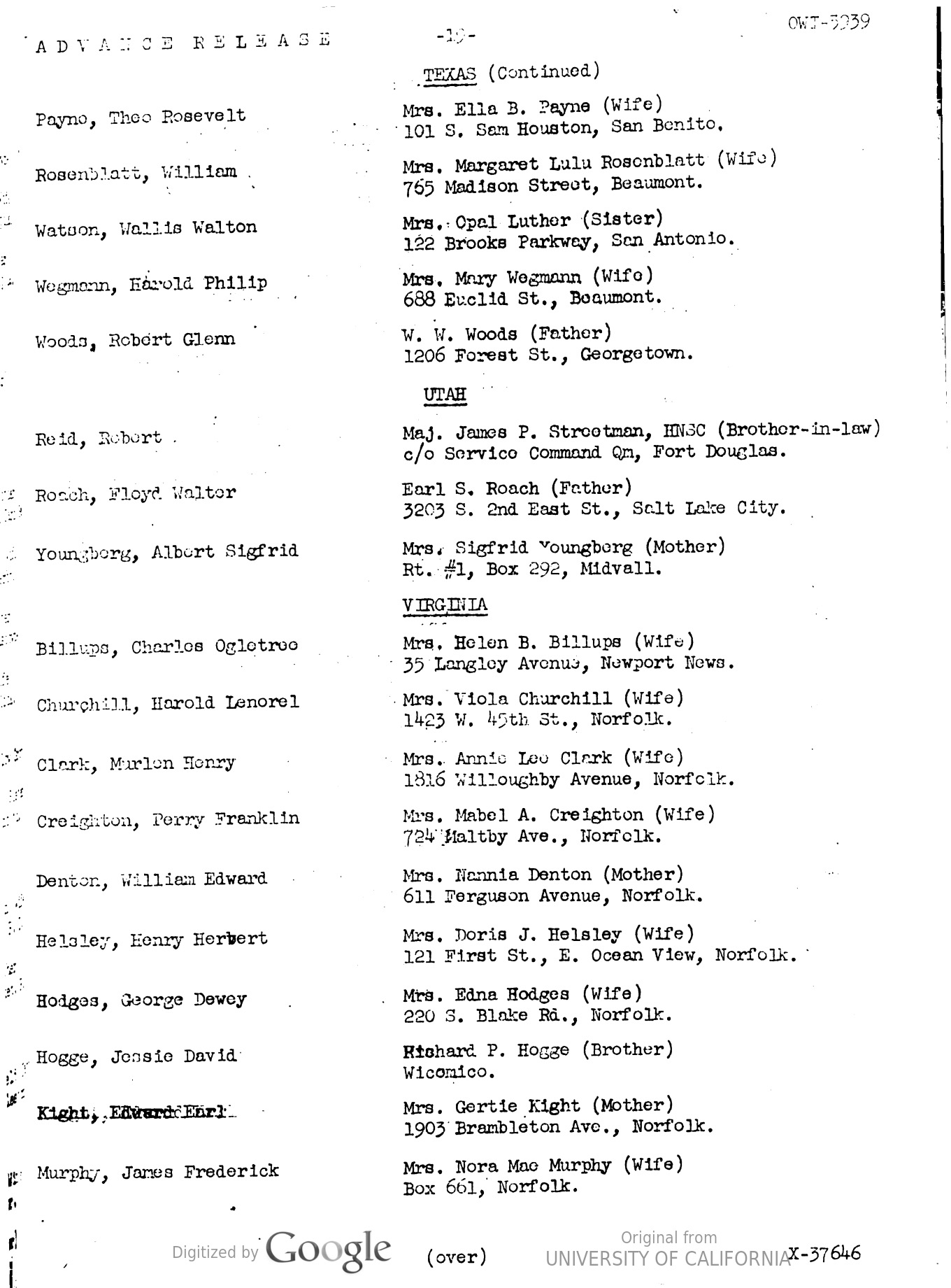
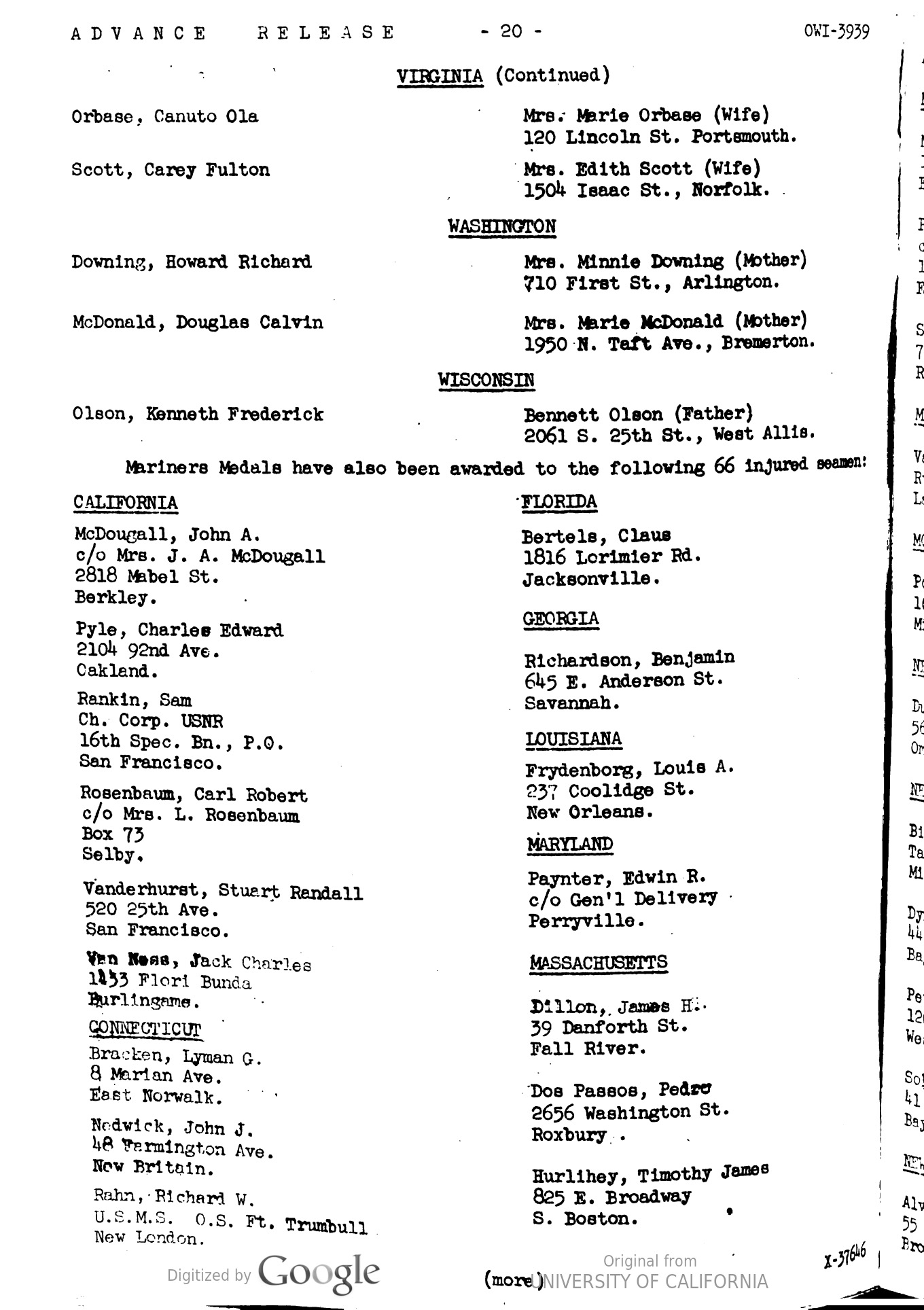
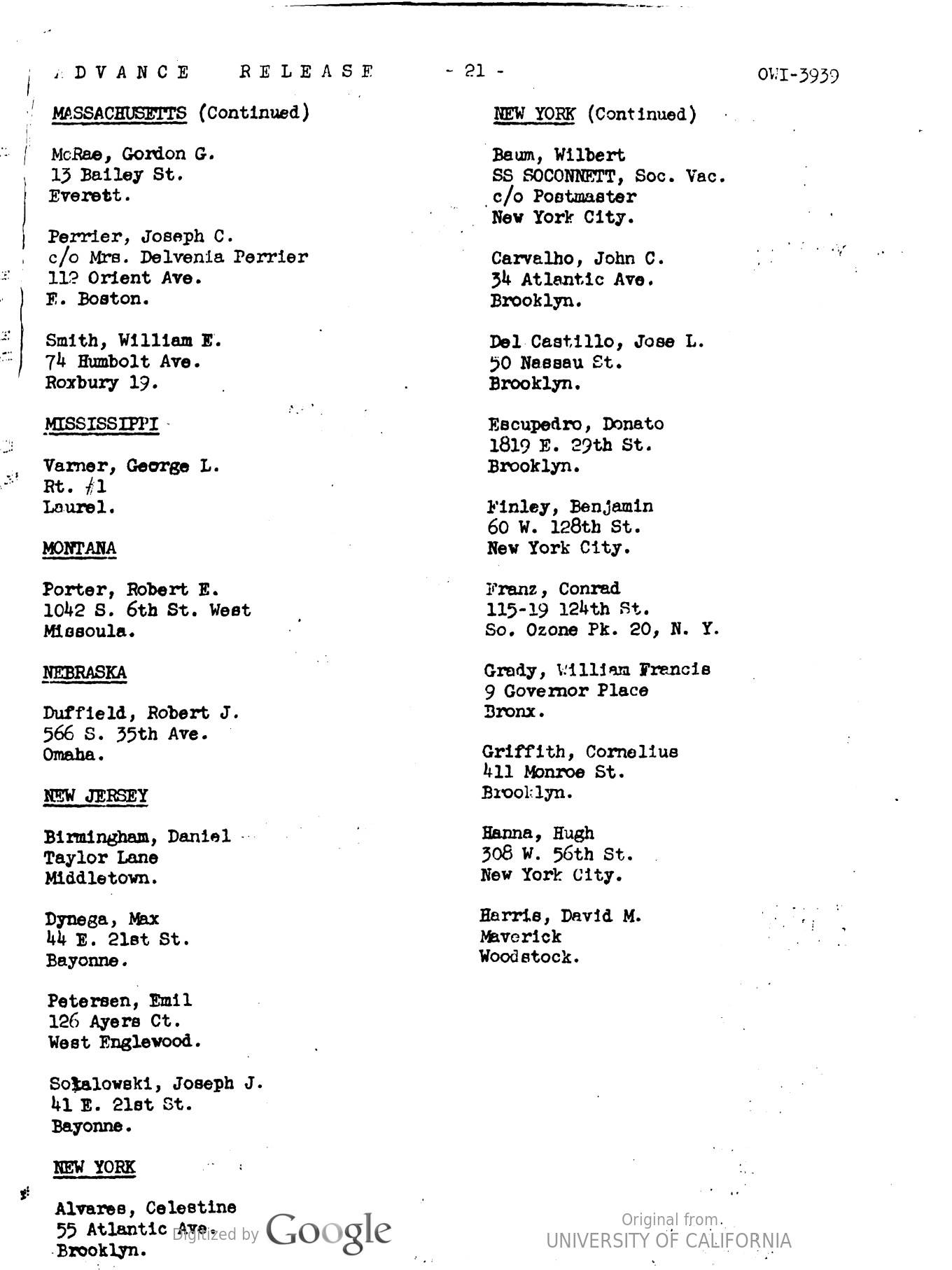
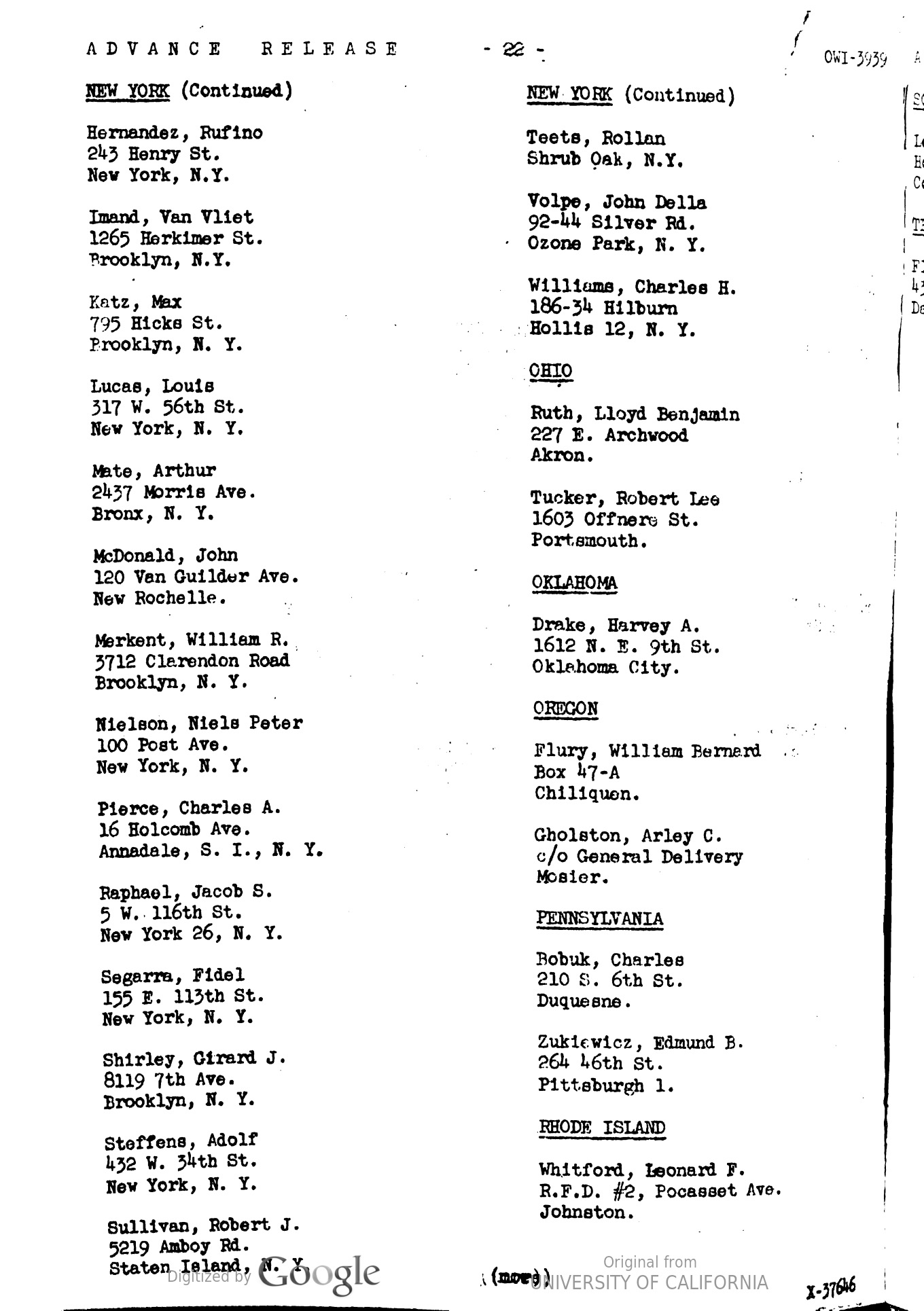
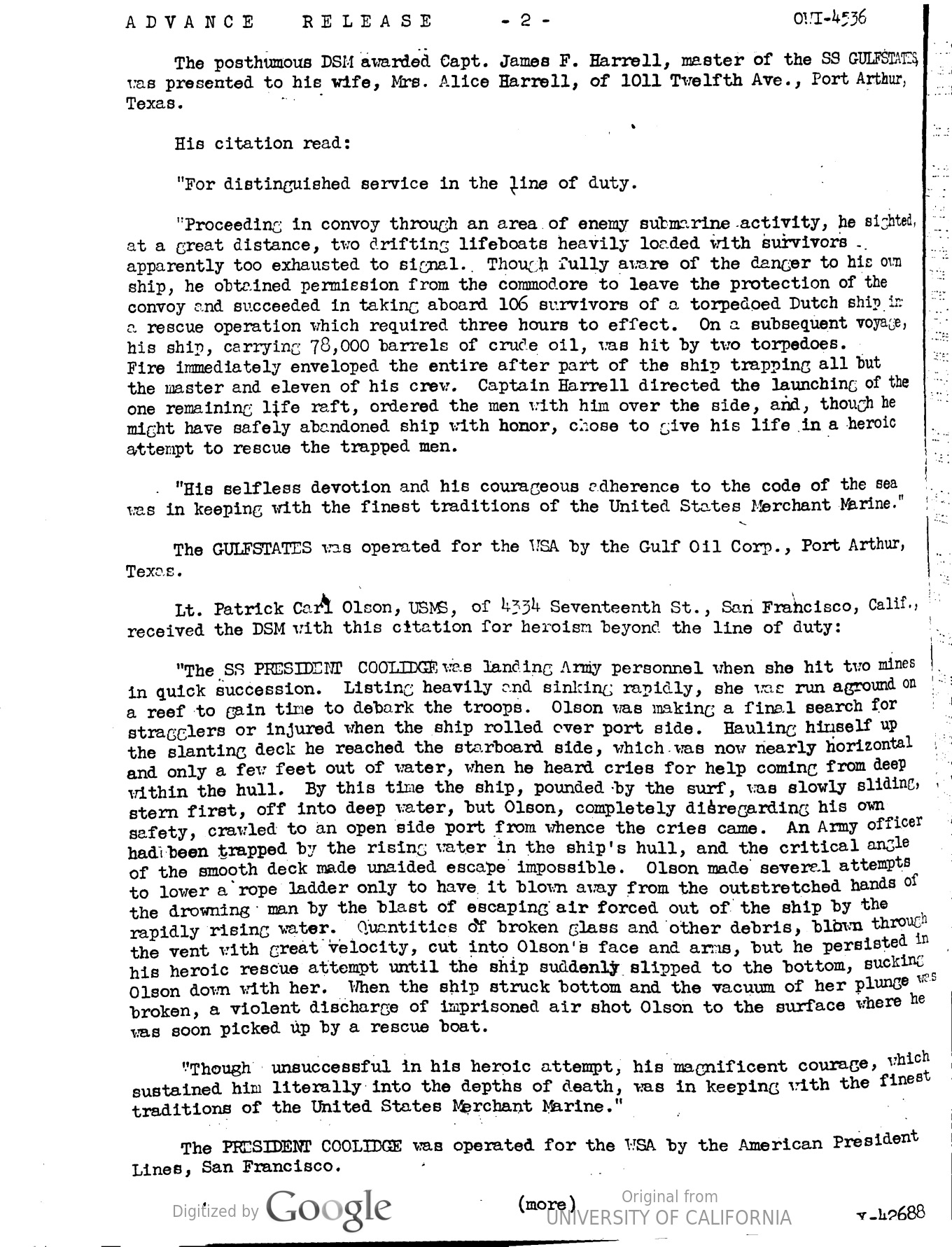
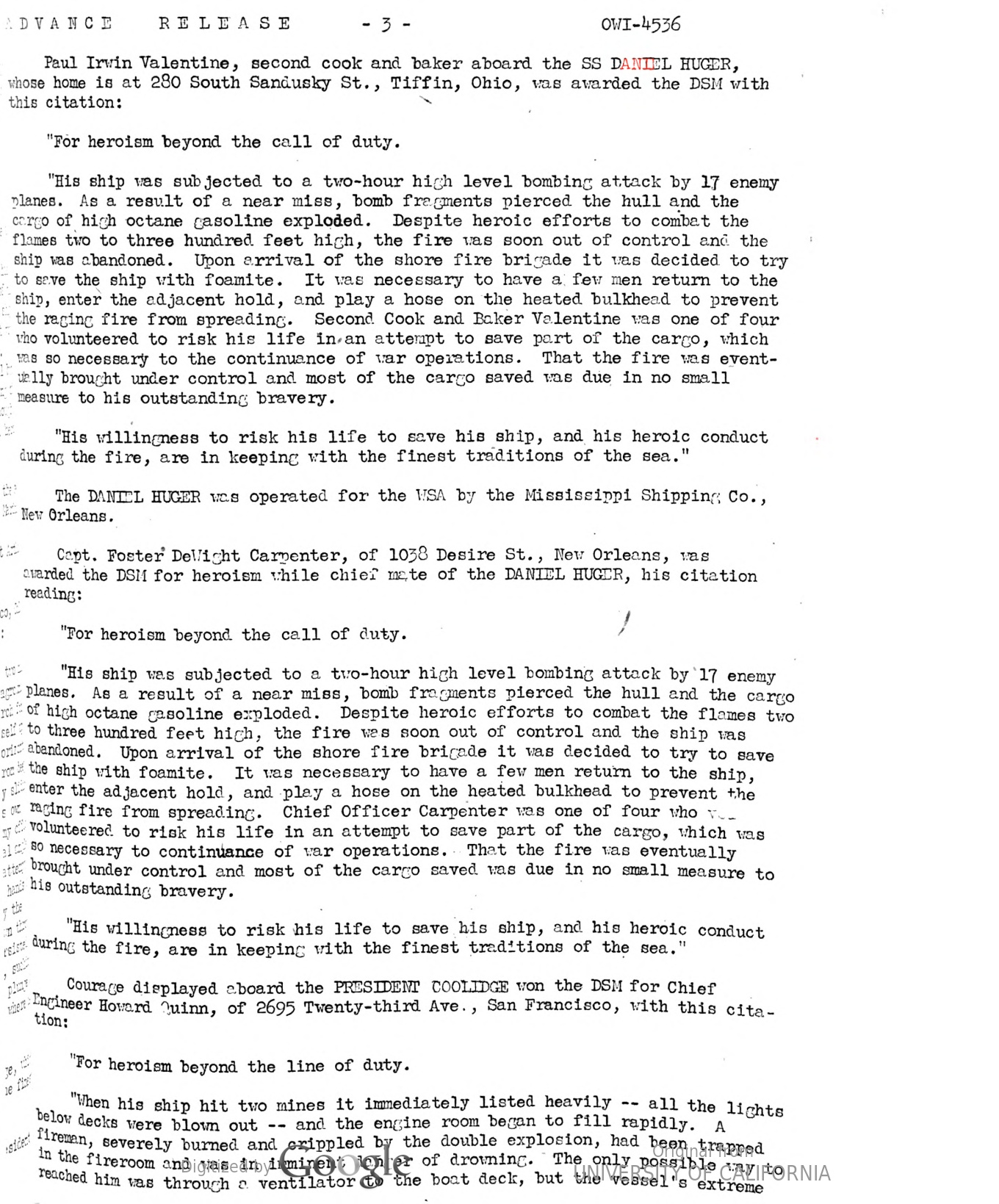
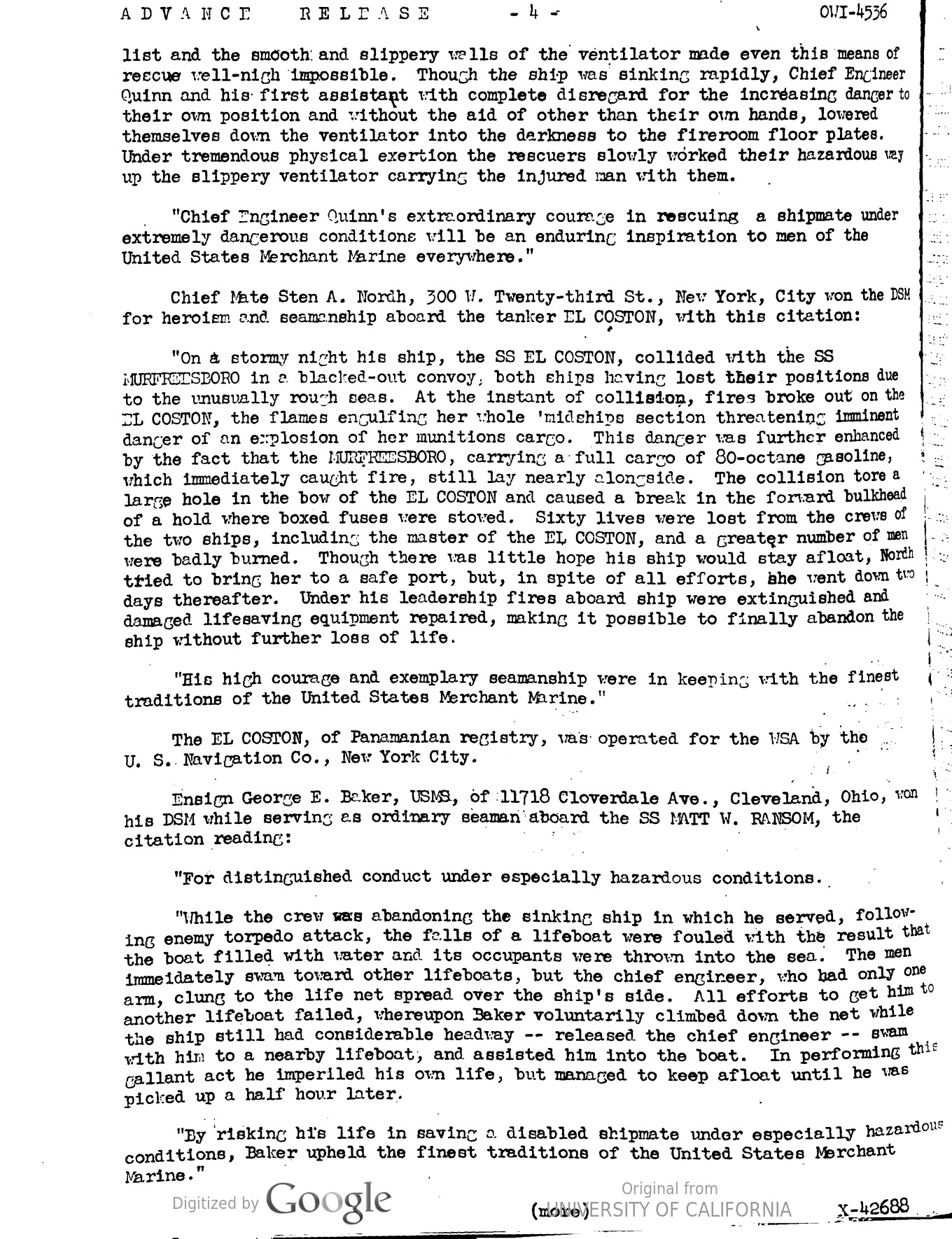
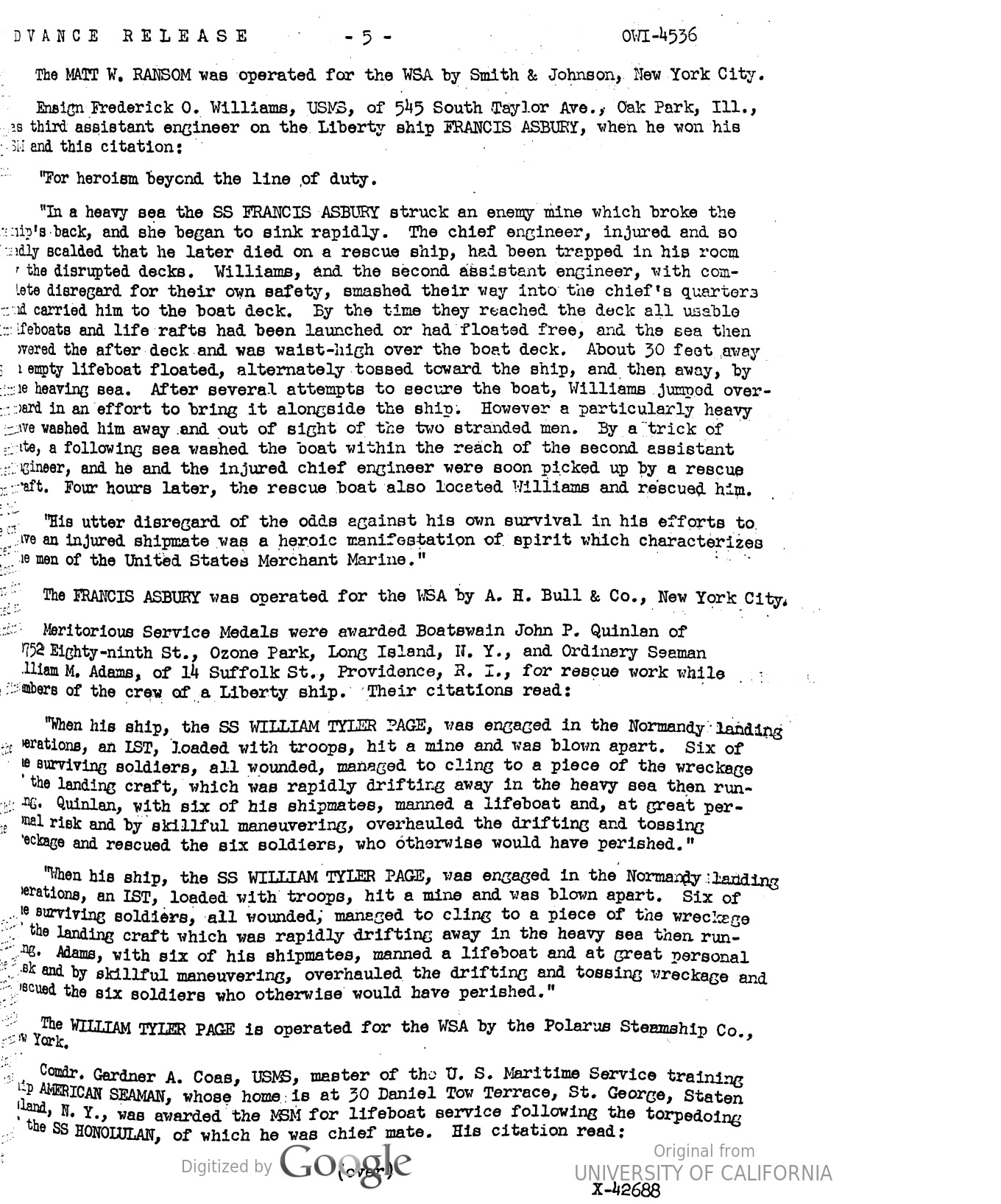
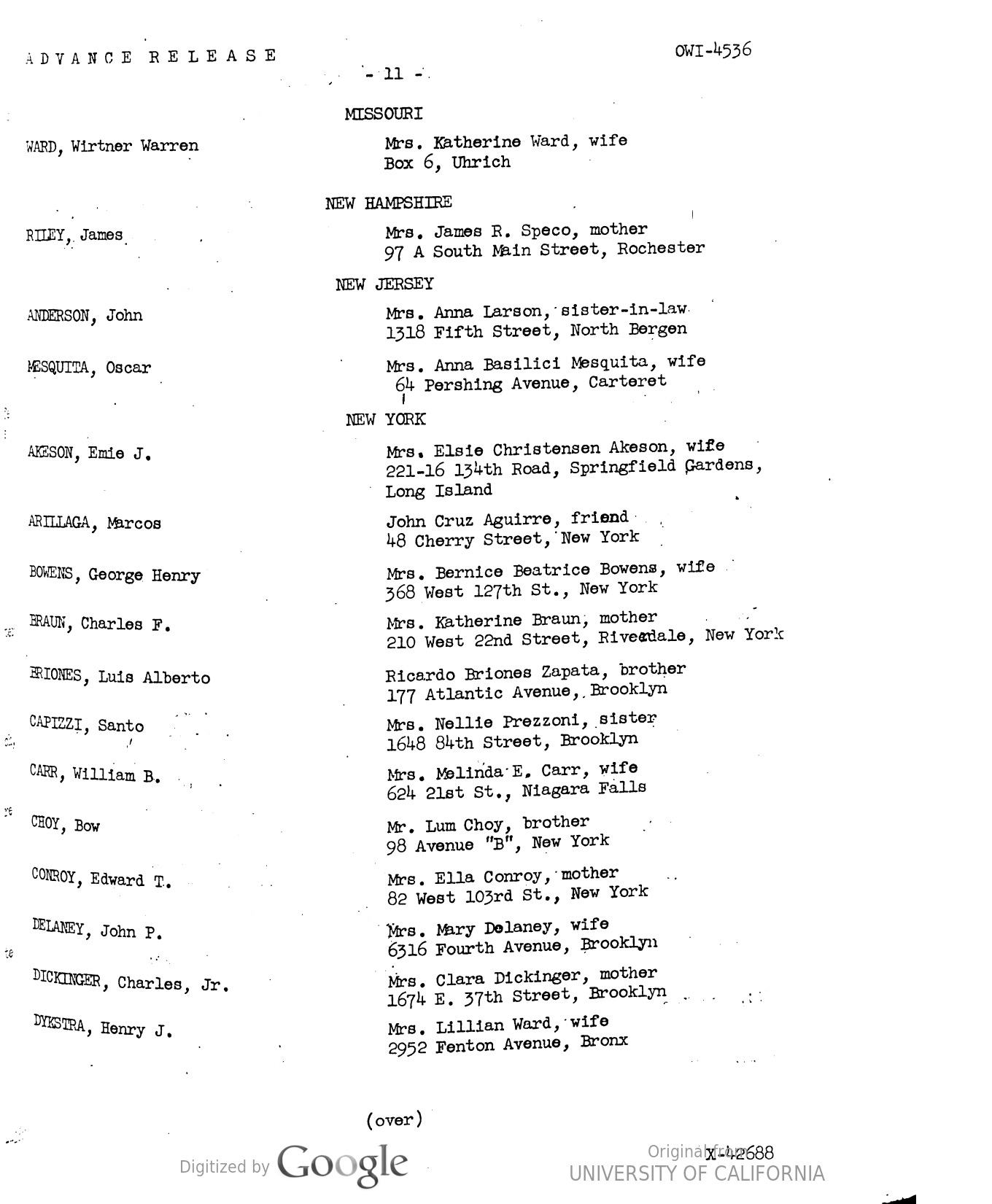
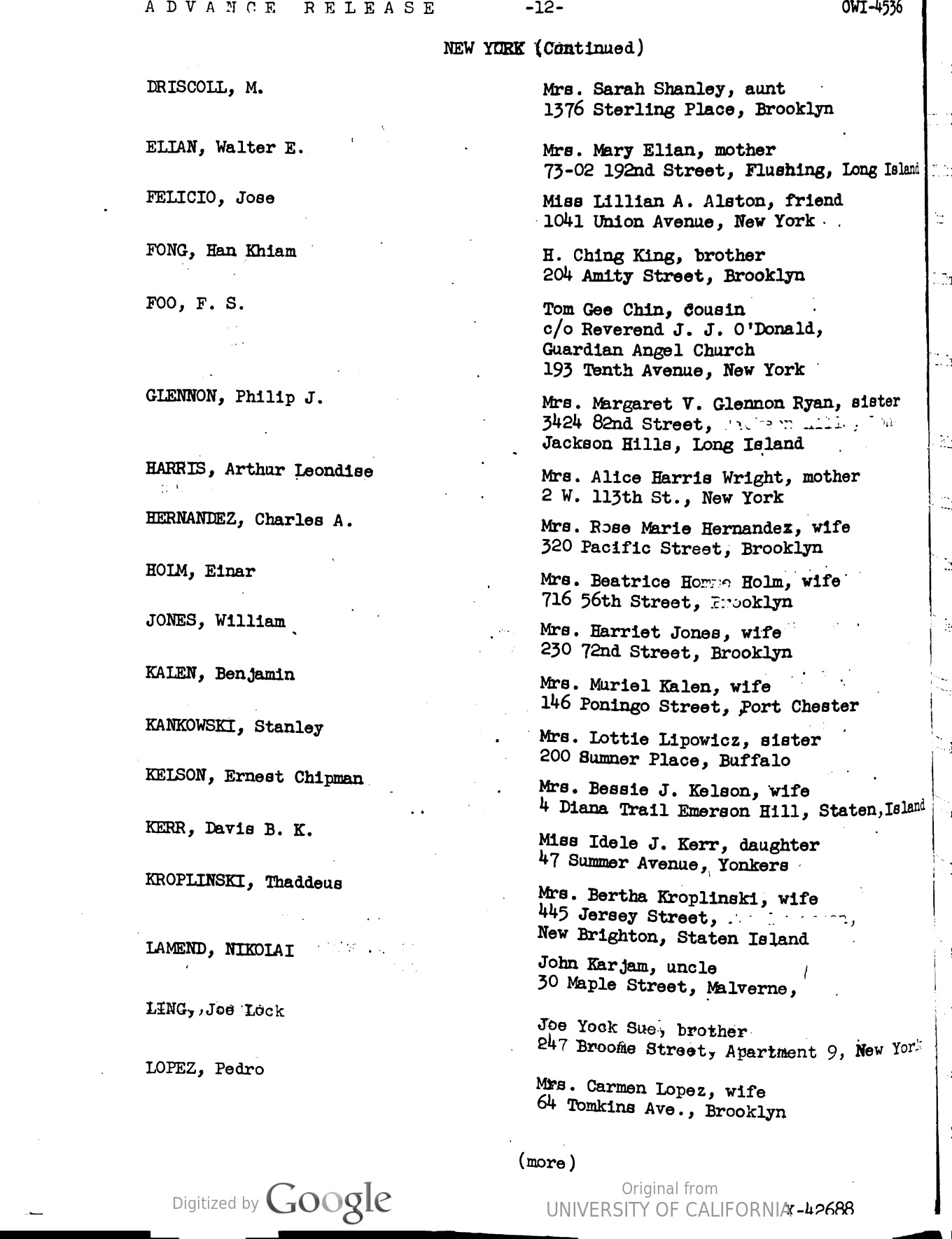
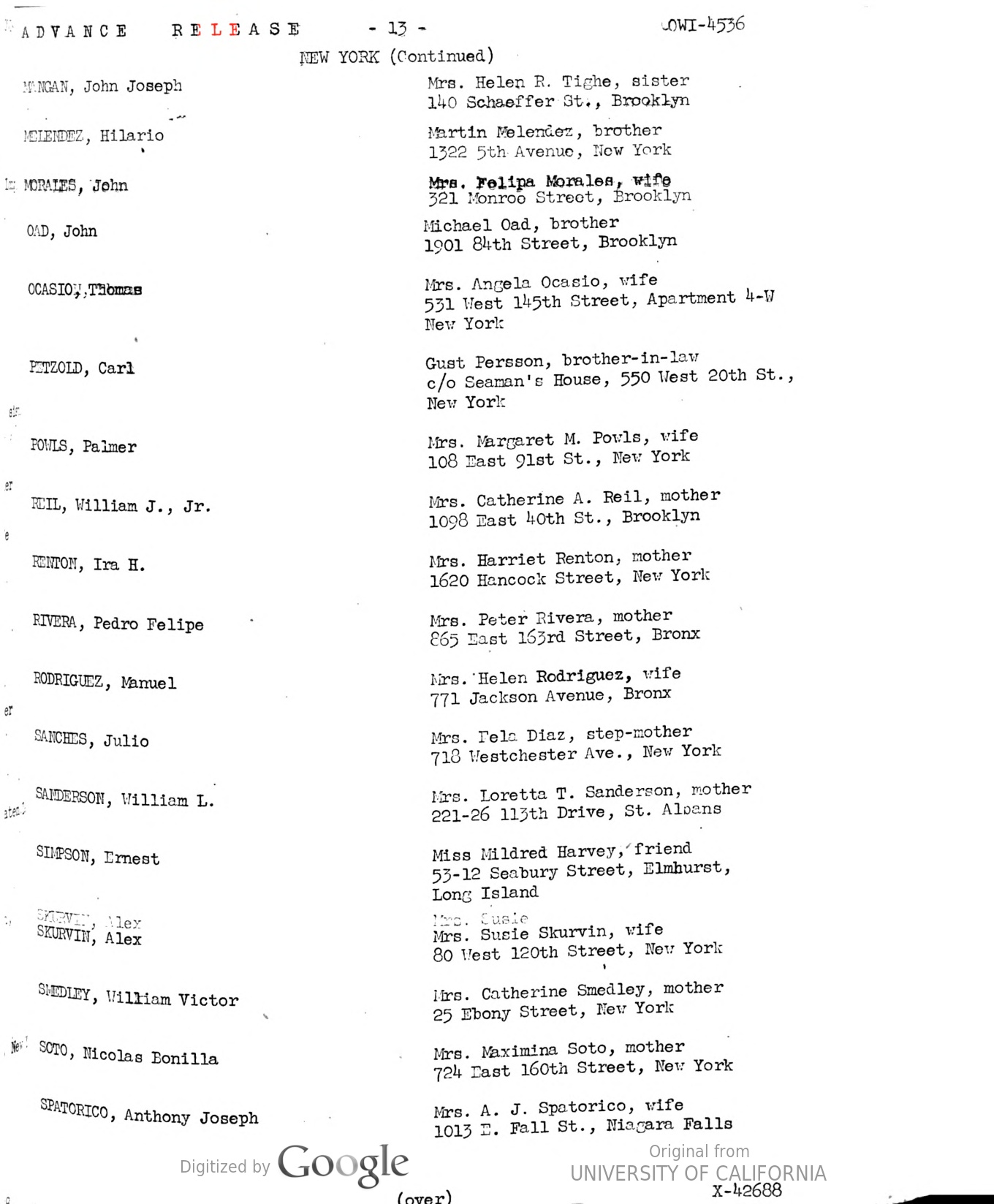
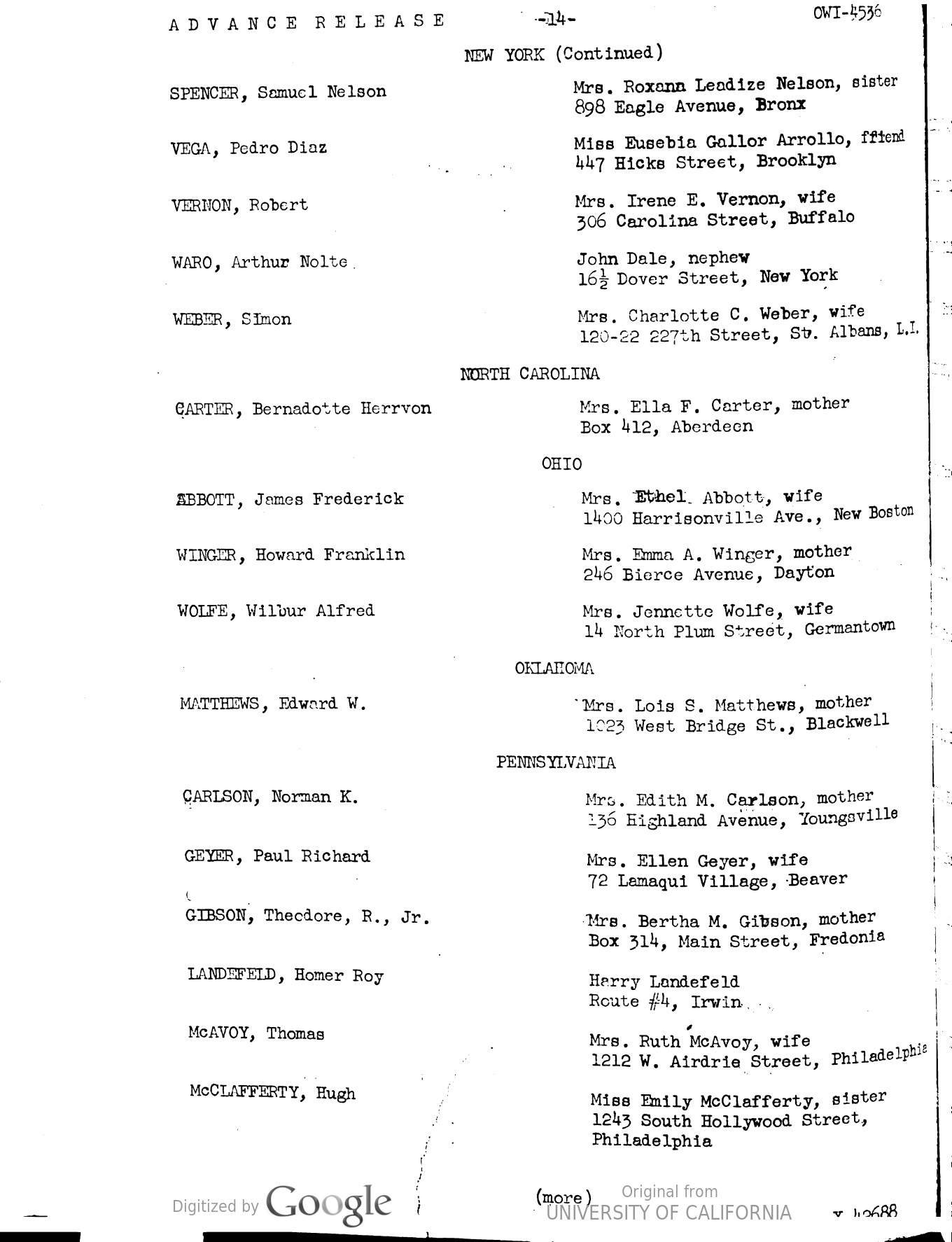
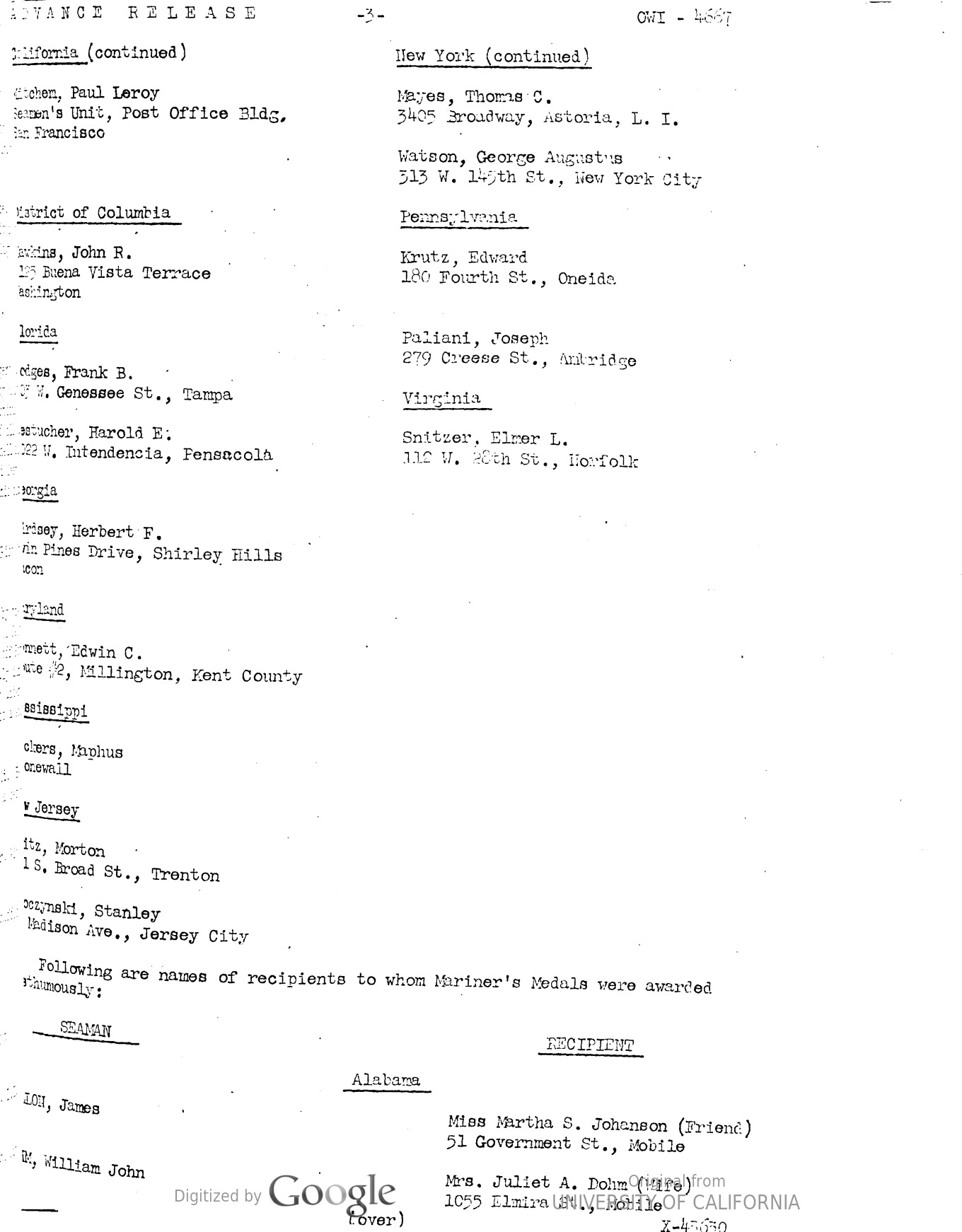
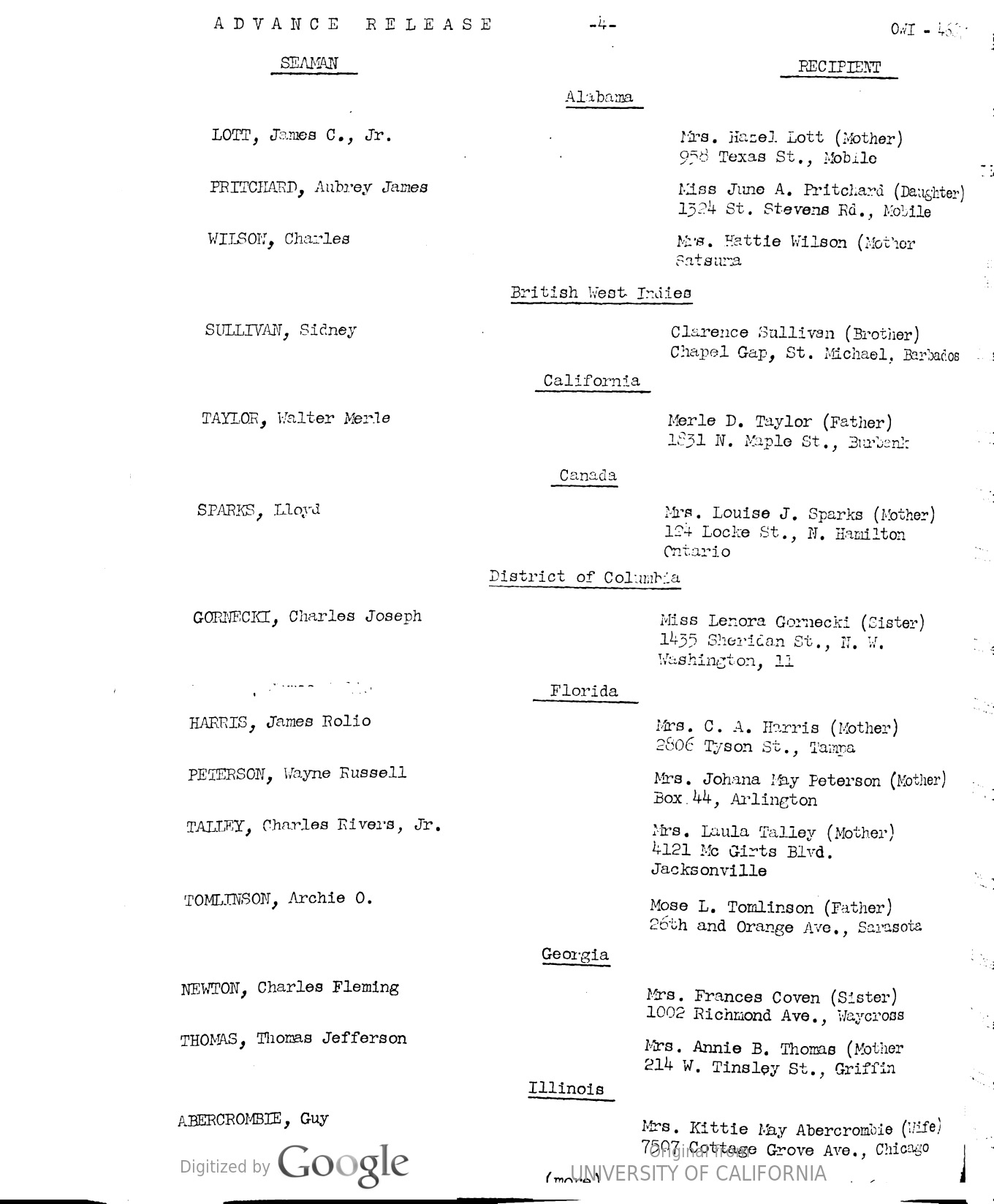
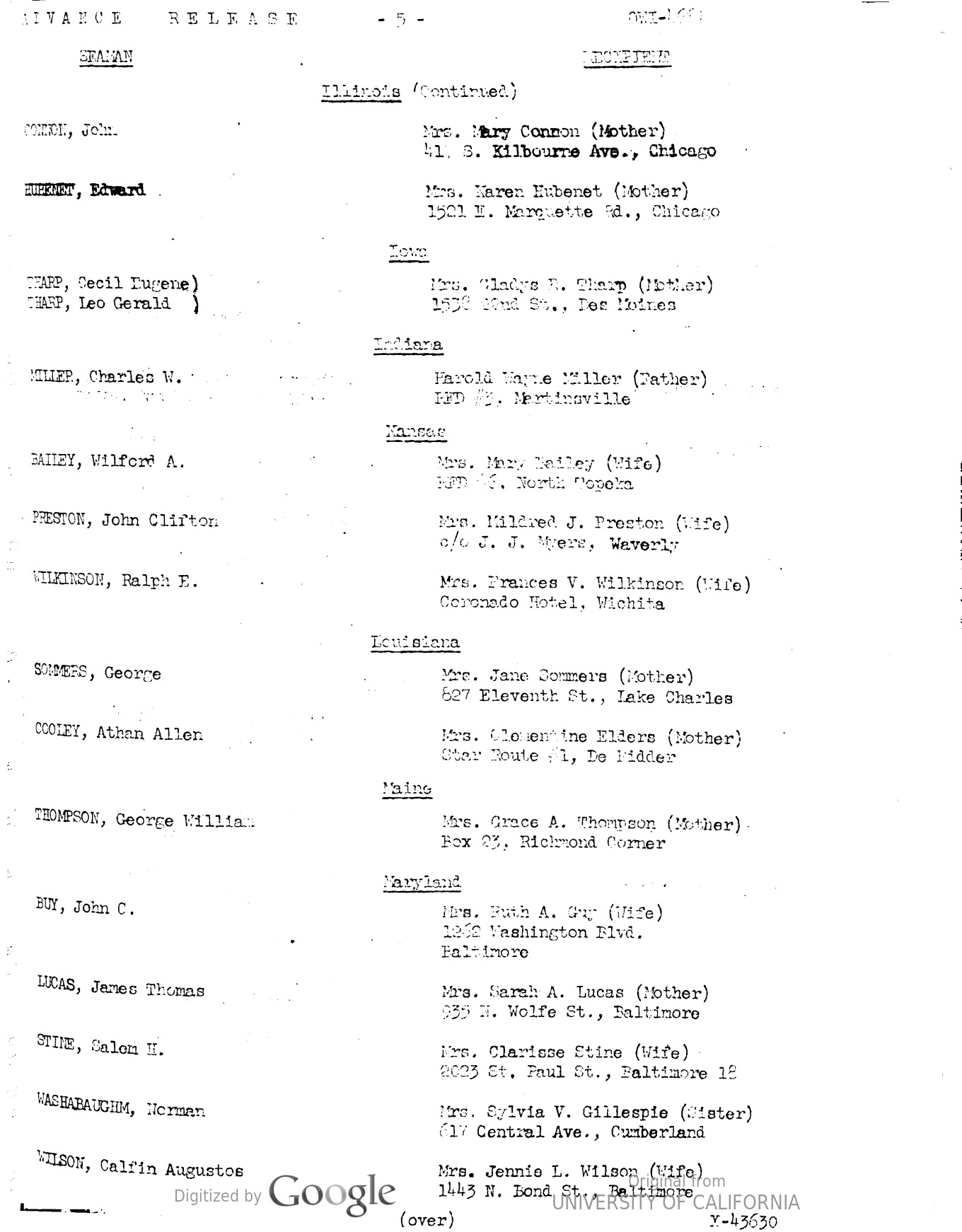
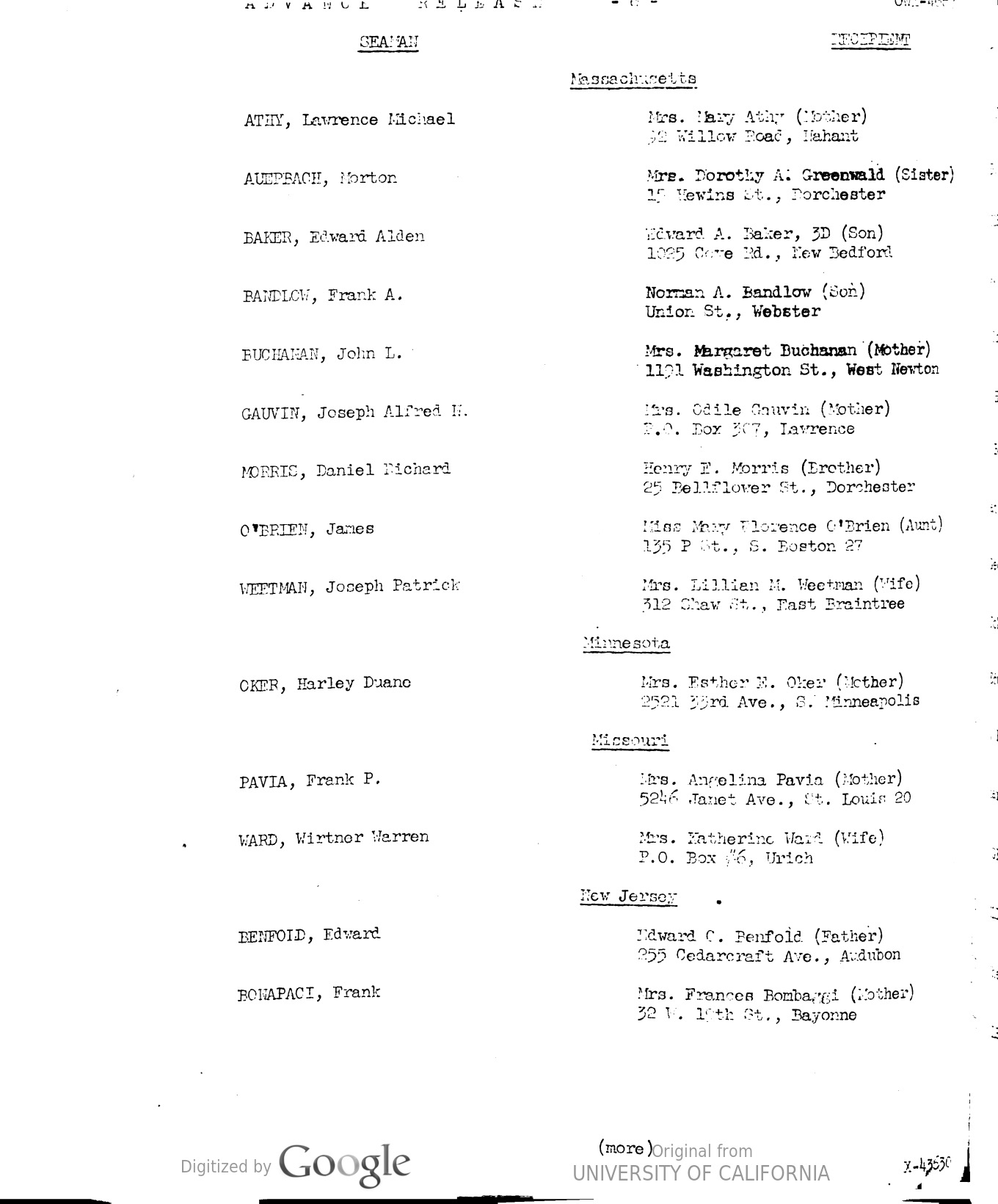
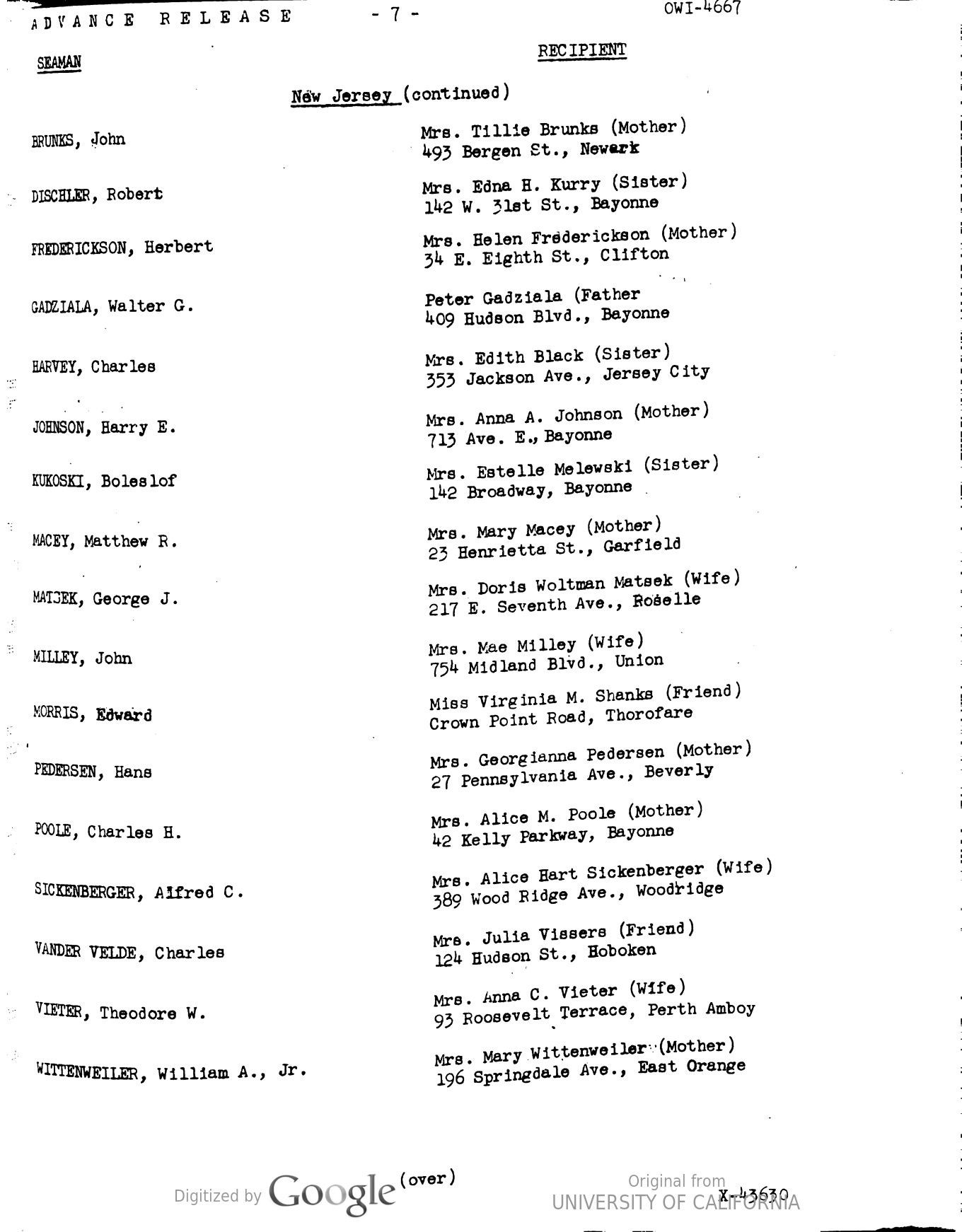
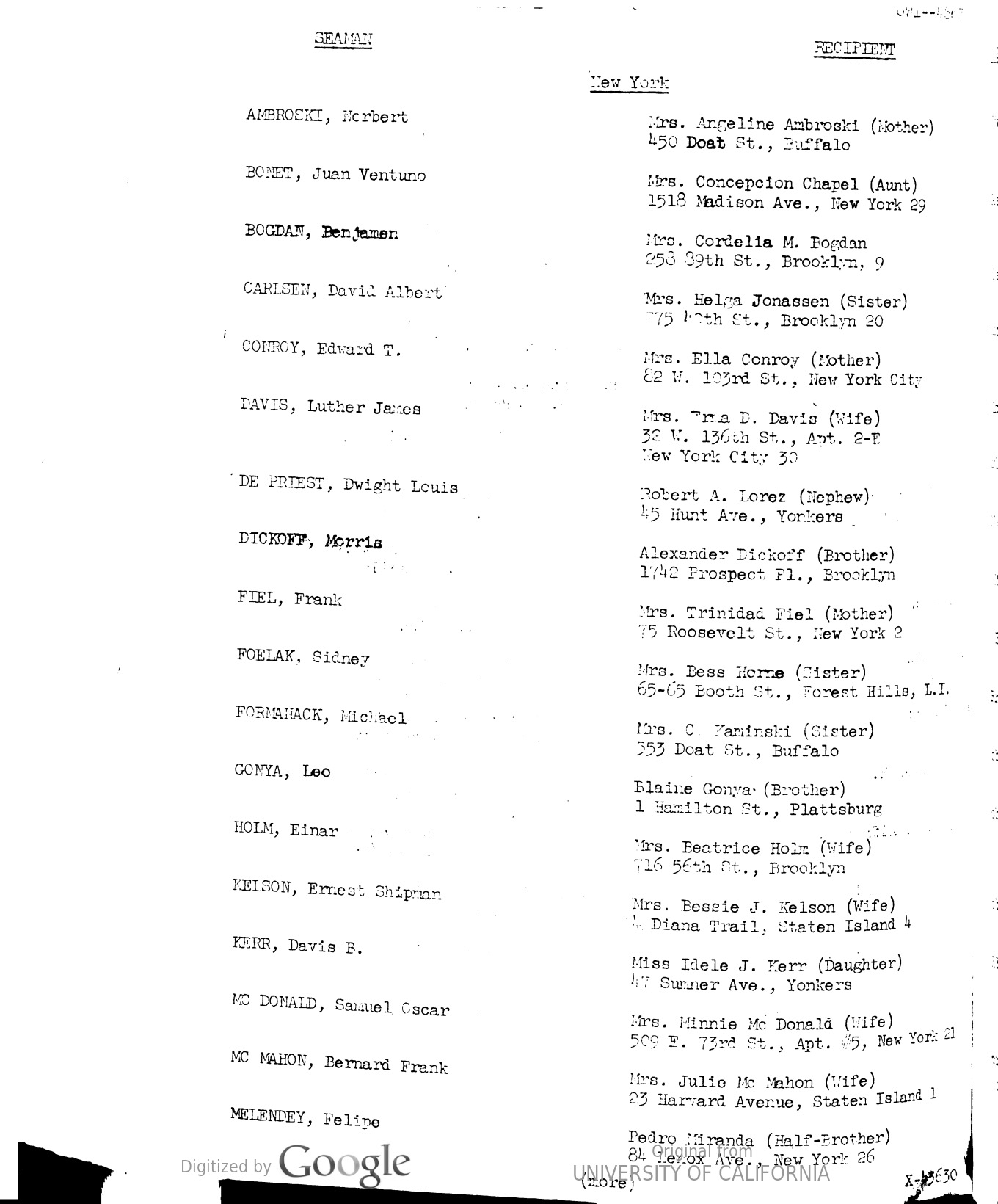
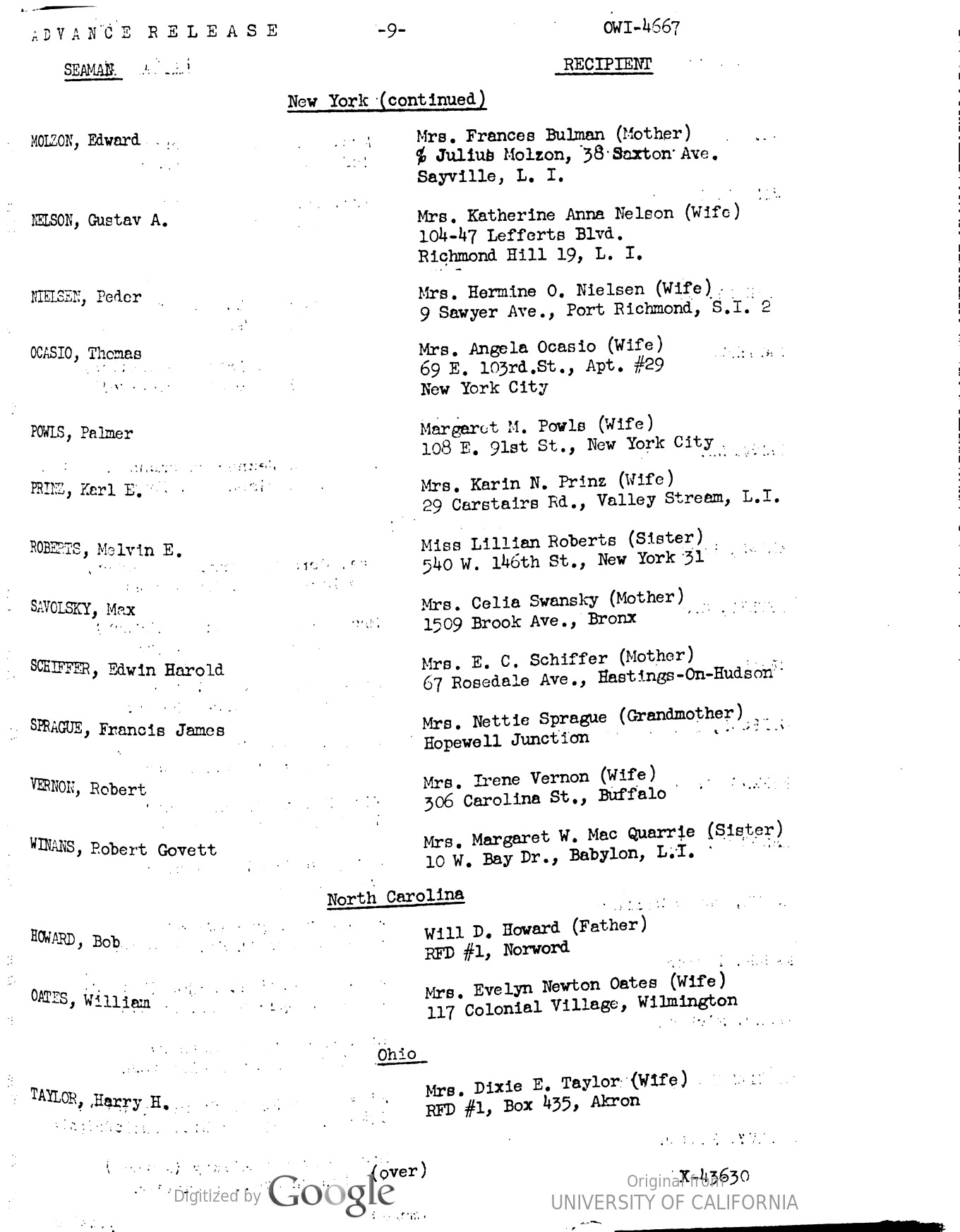
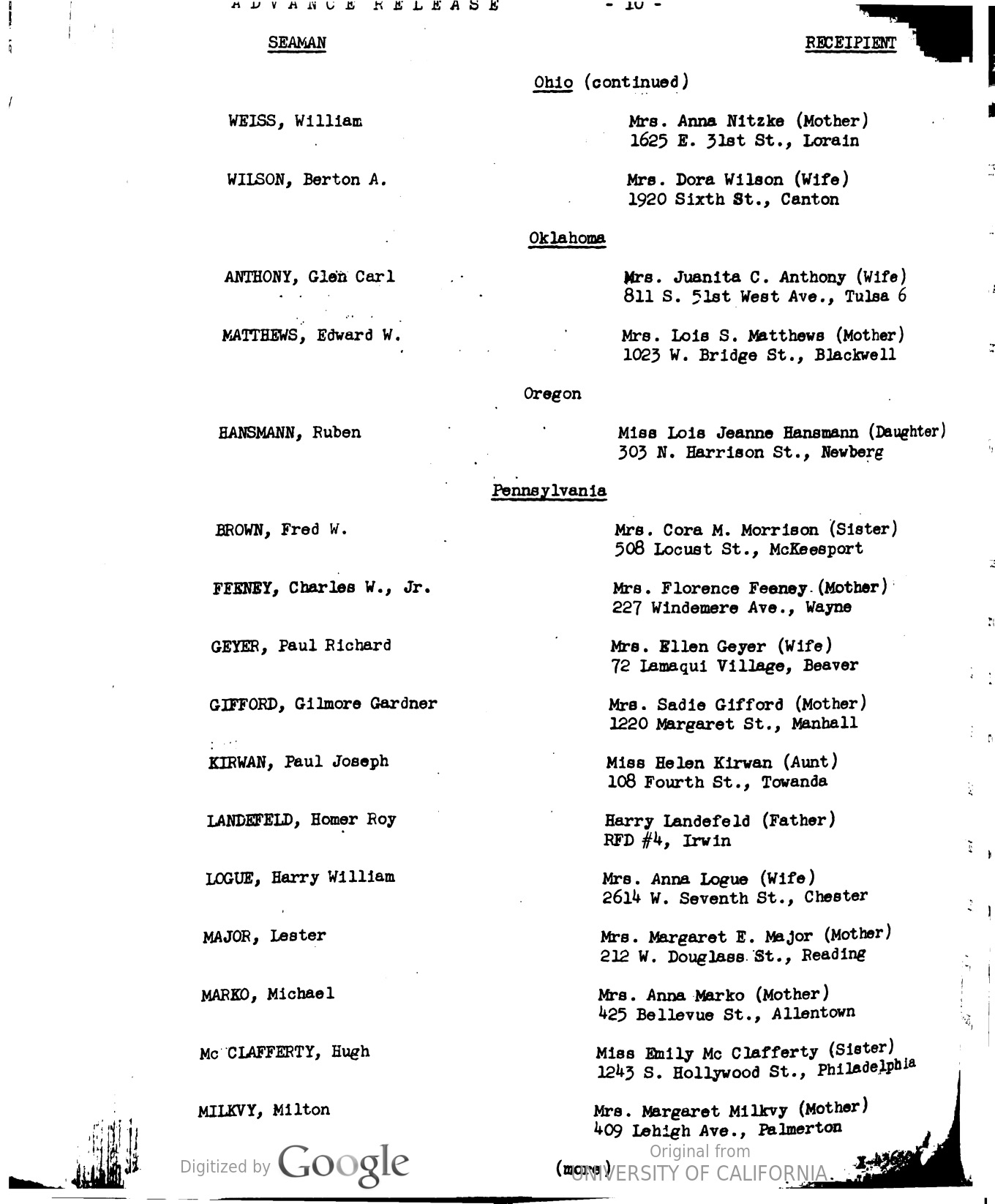
Most of the MM DSM citations may be found here. All extant U.S. Maritime Commission citations and Office of War Information Releases are here.


Note: My table may be prone to and has mistakes since my data is based on the research of others – even MARAD’s operator information is spotty – please contact me with attributable and documented corrections.

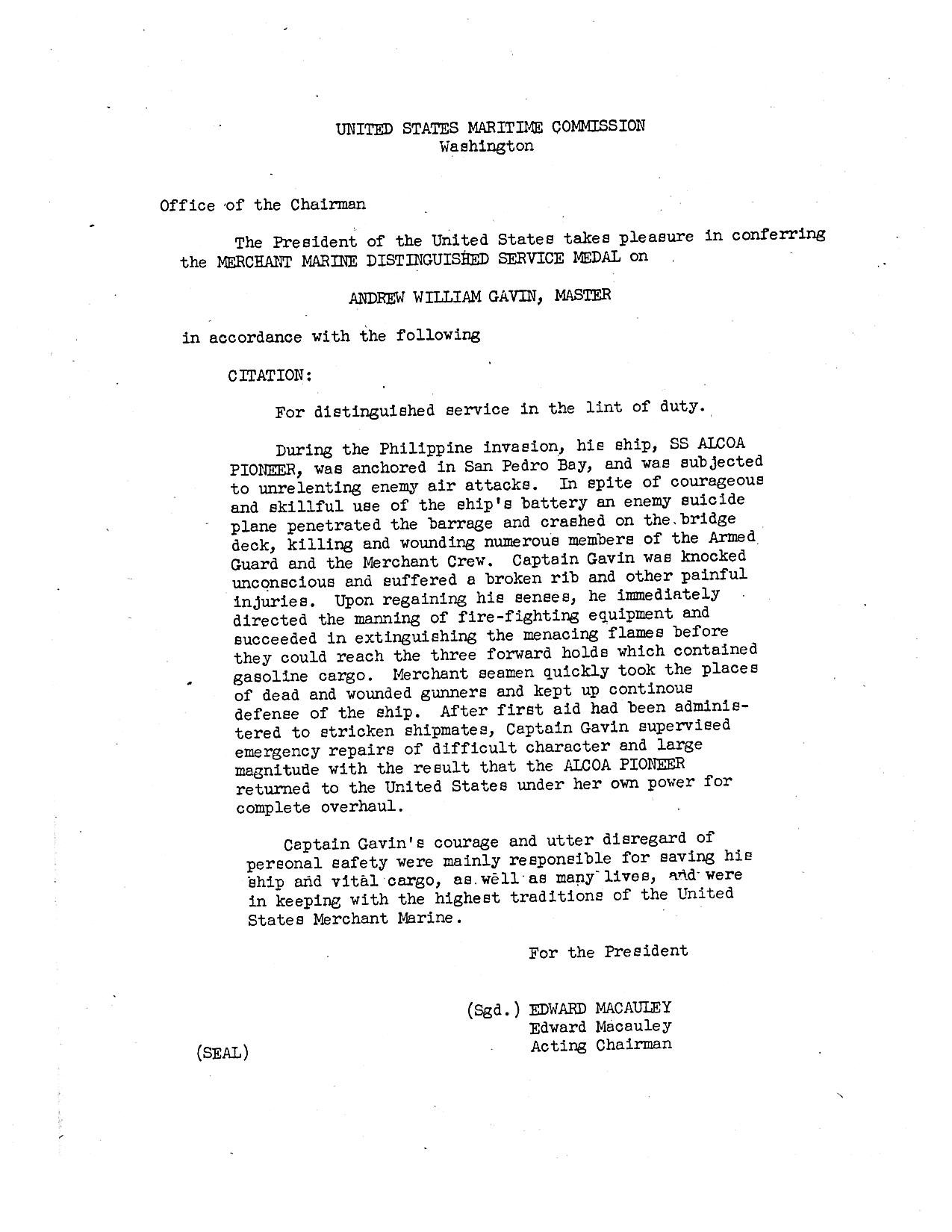
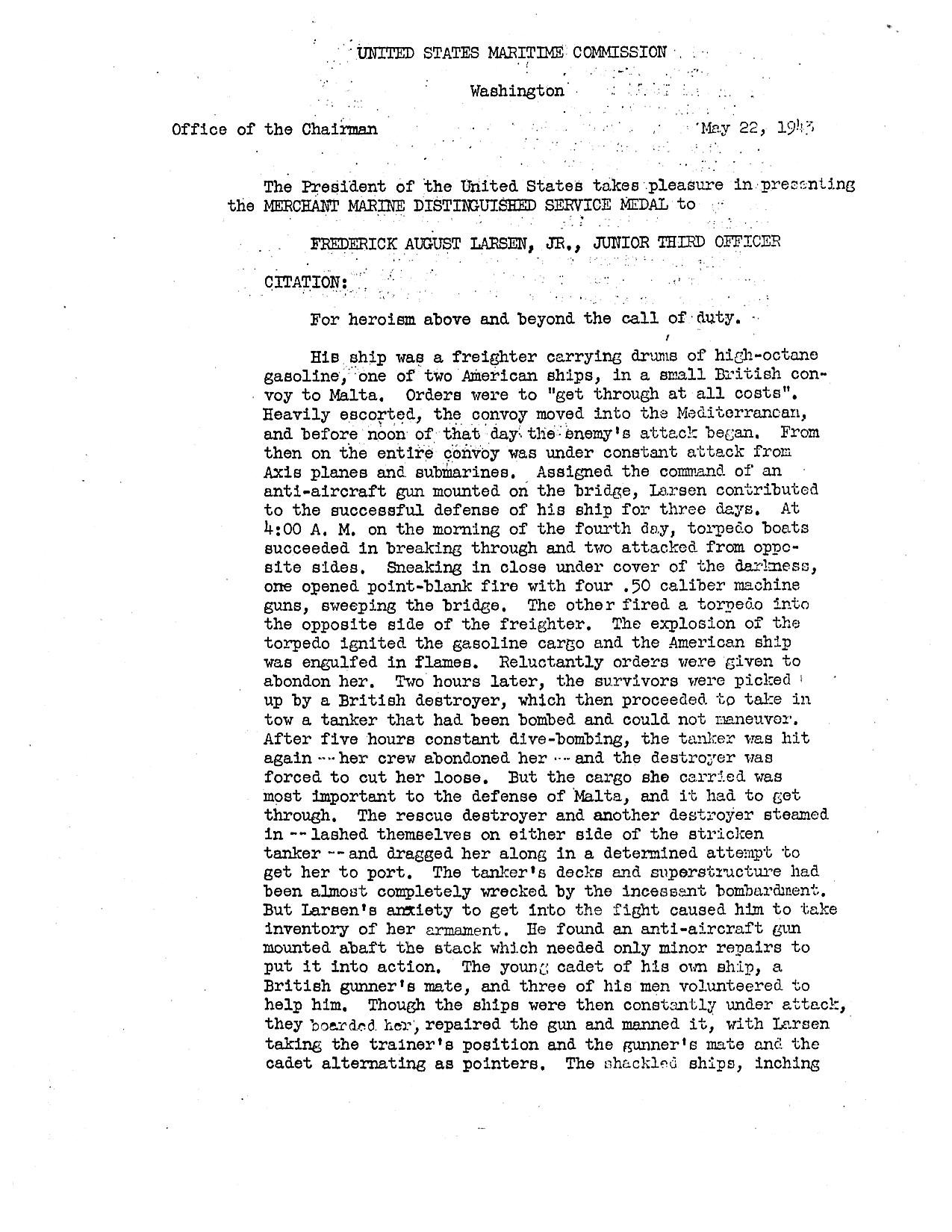
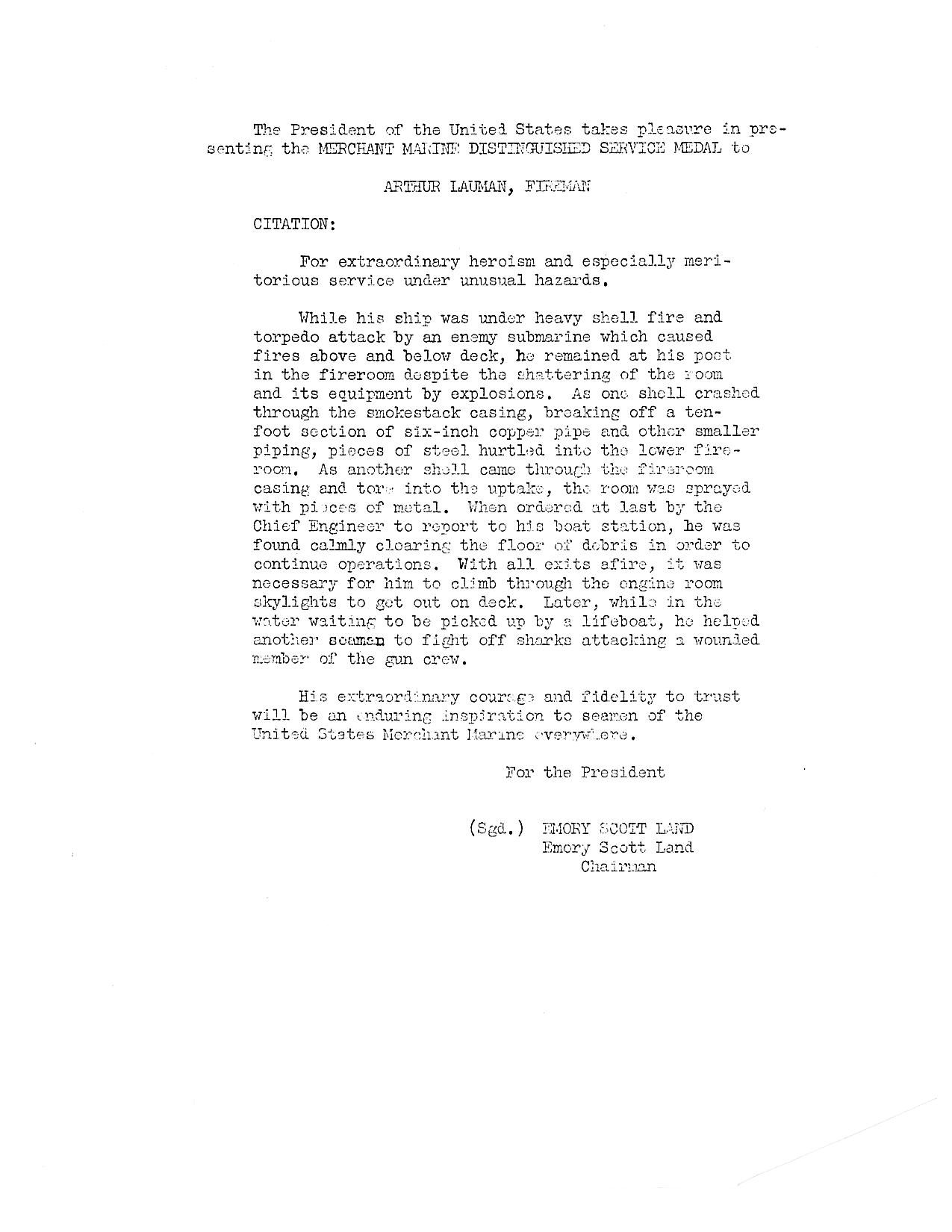
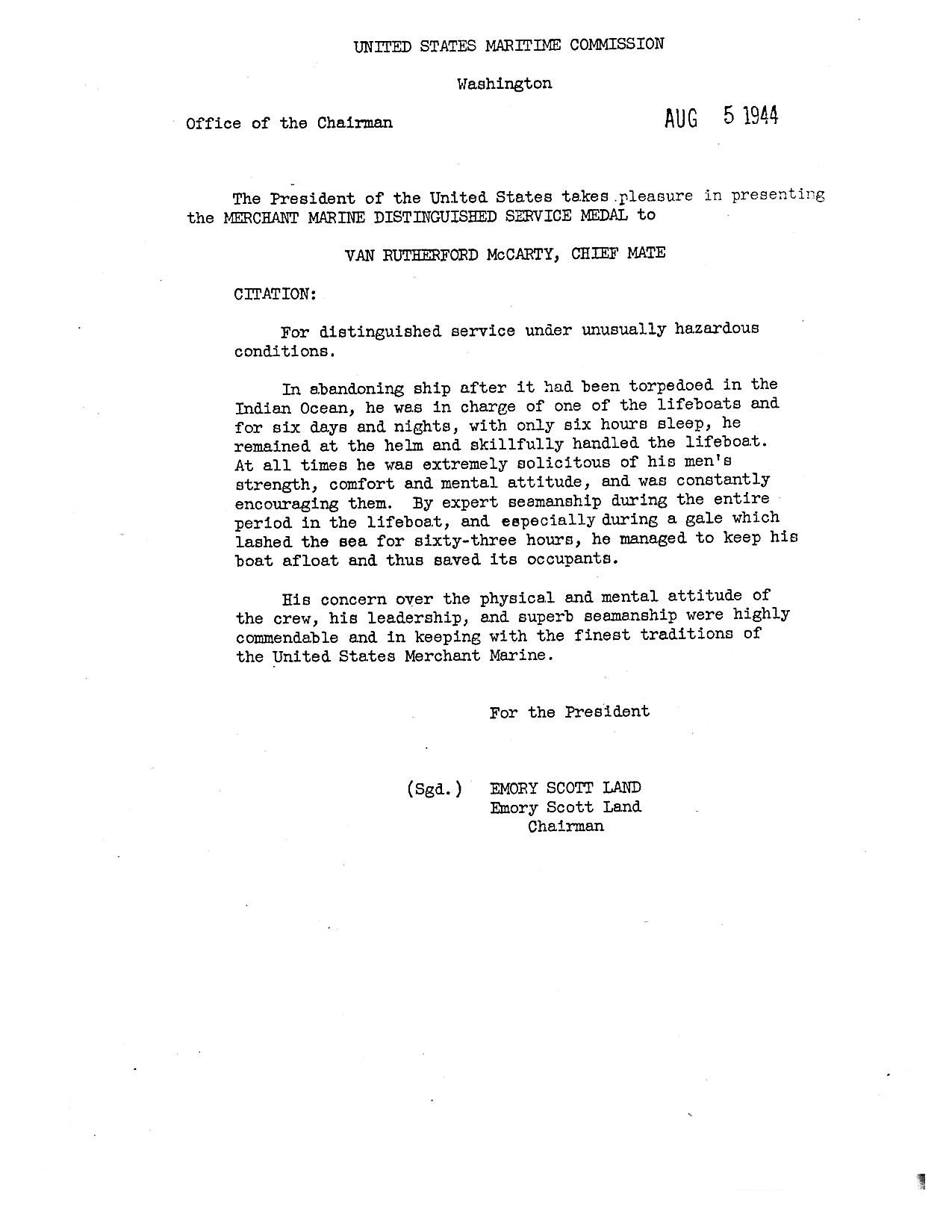
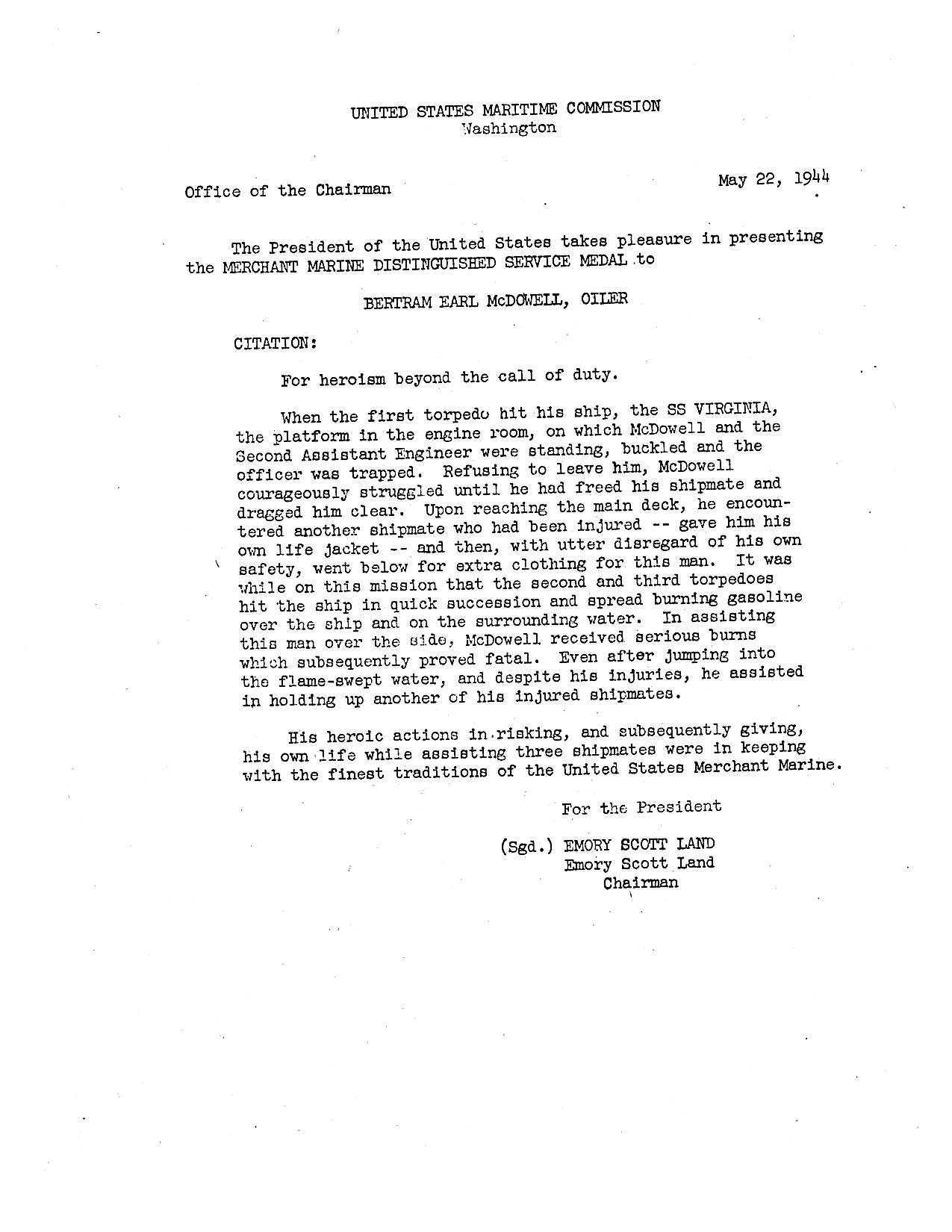
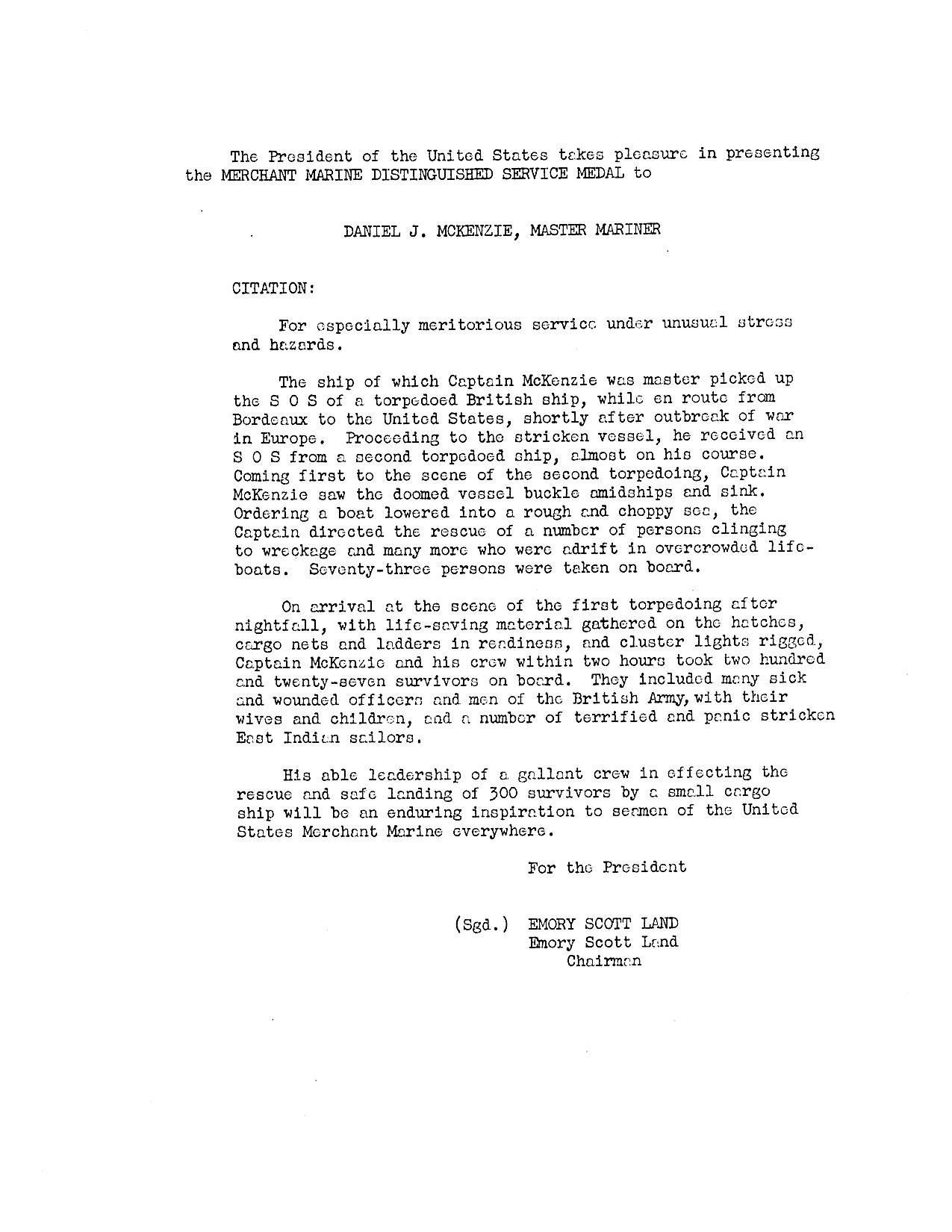
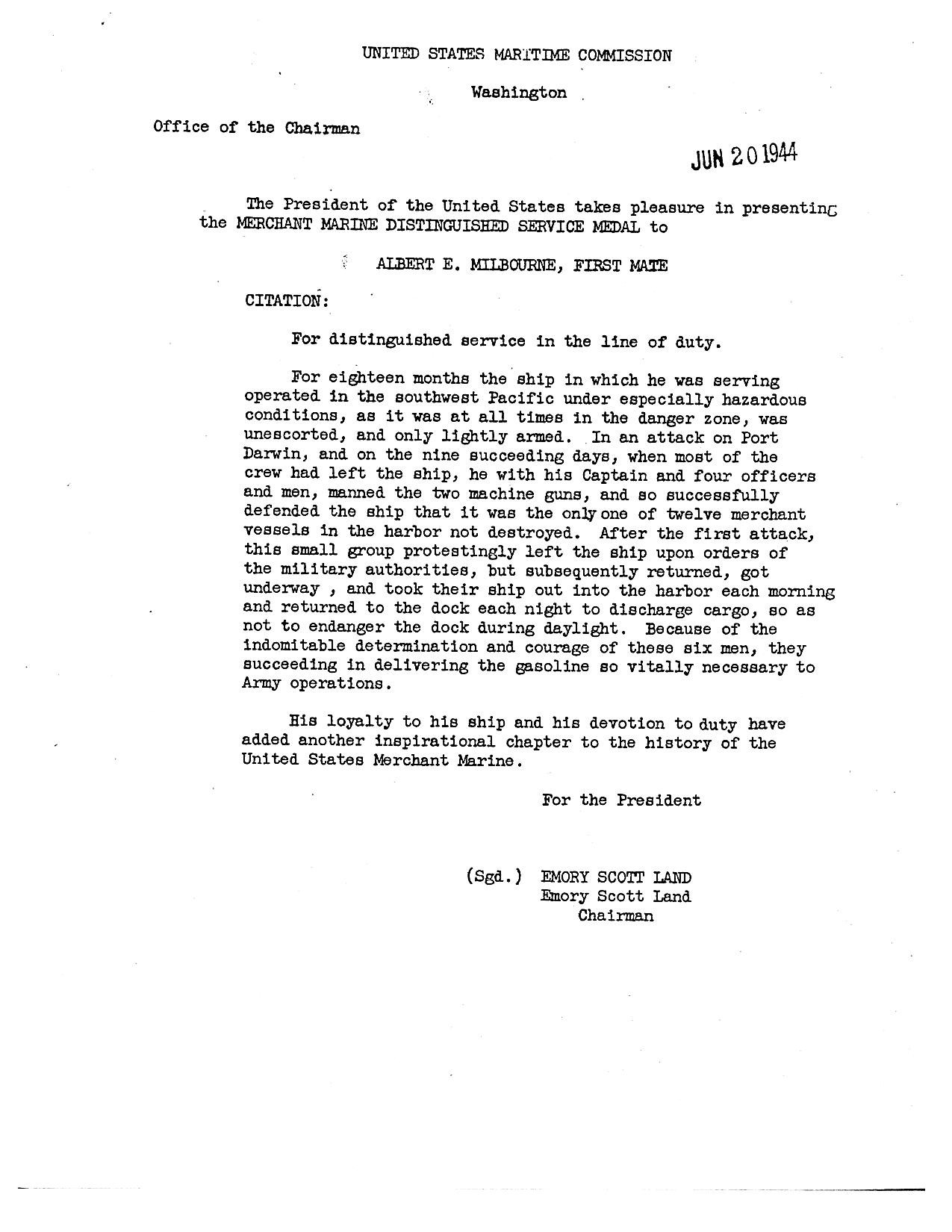
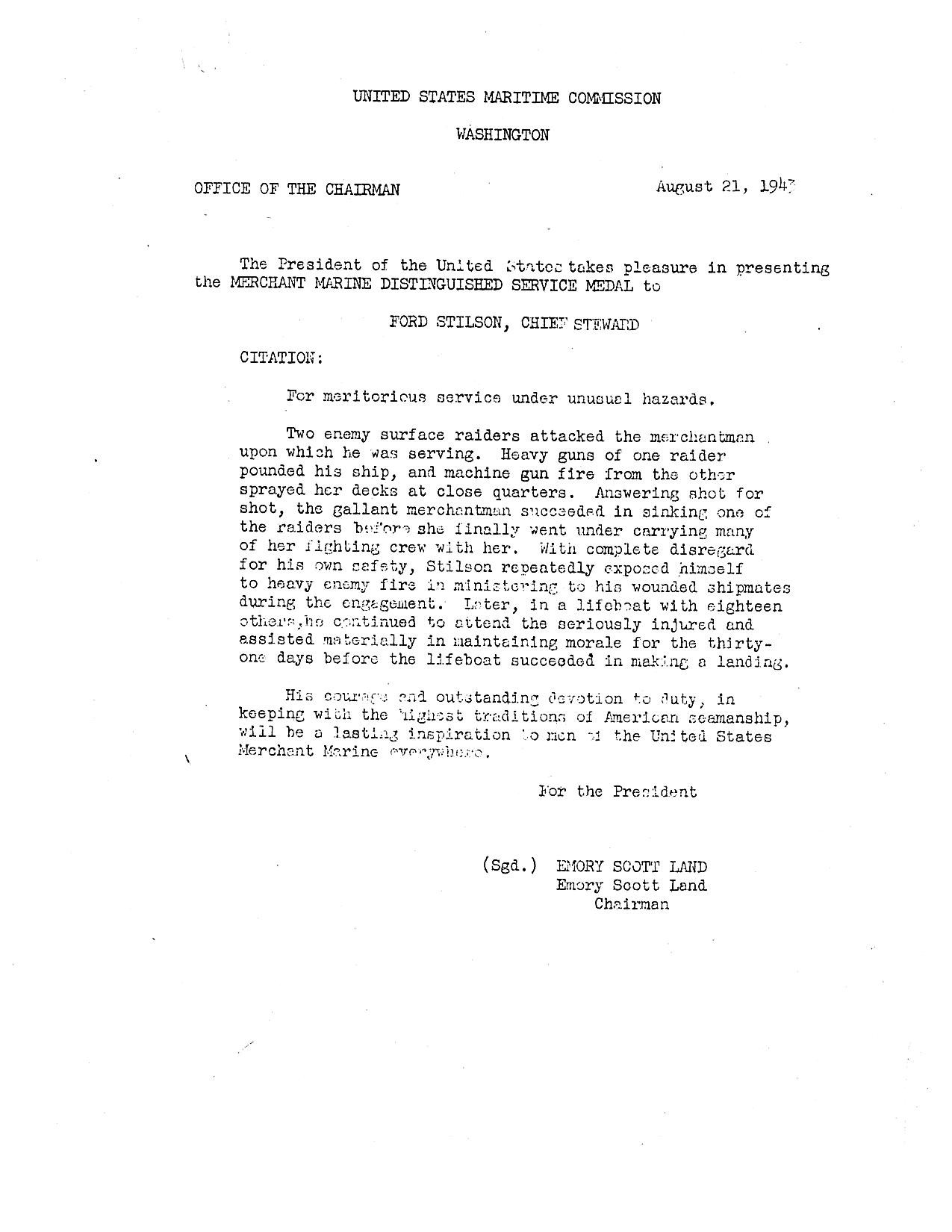
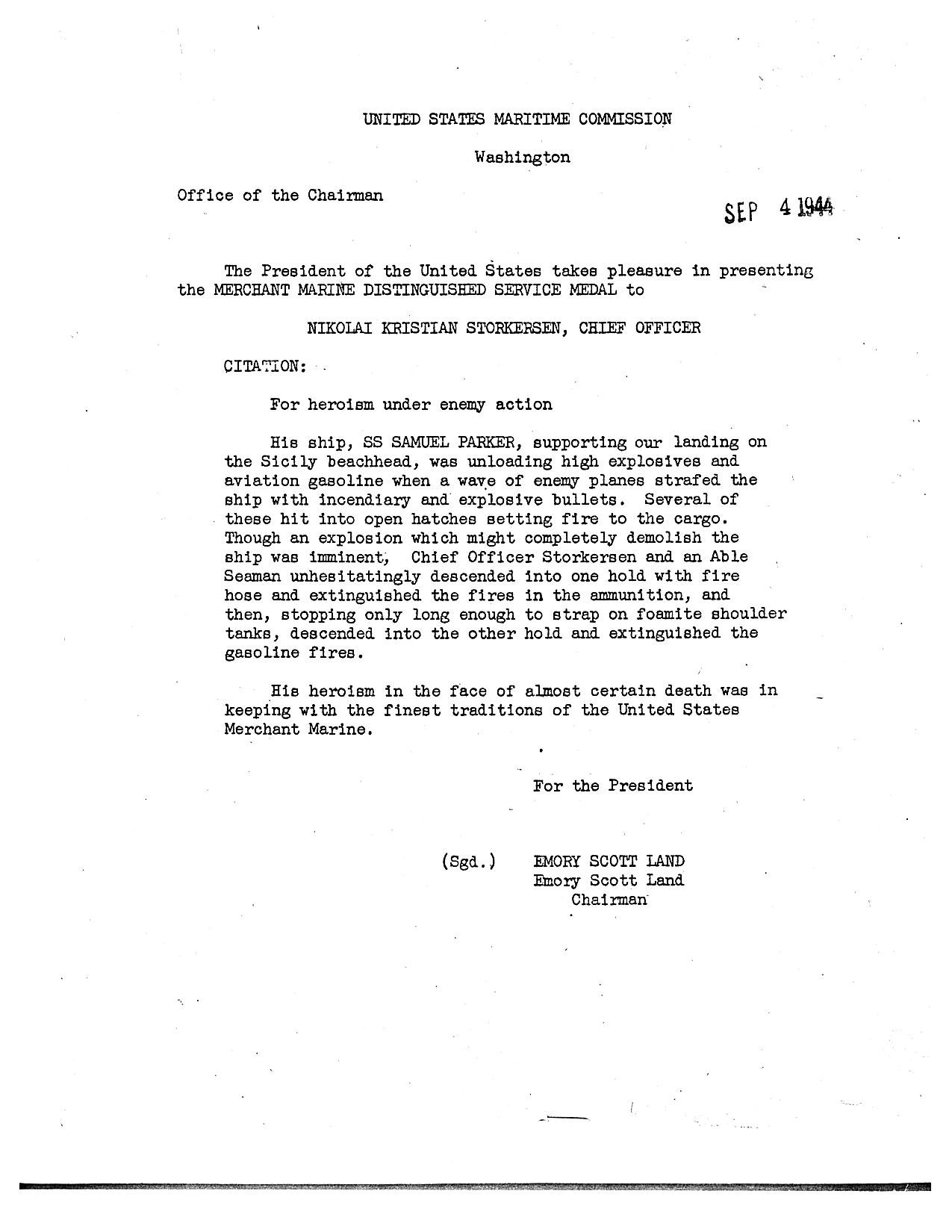
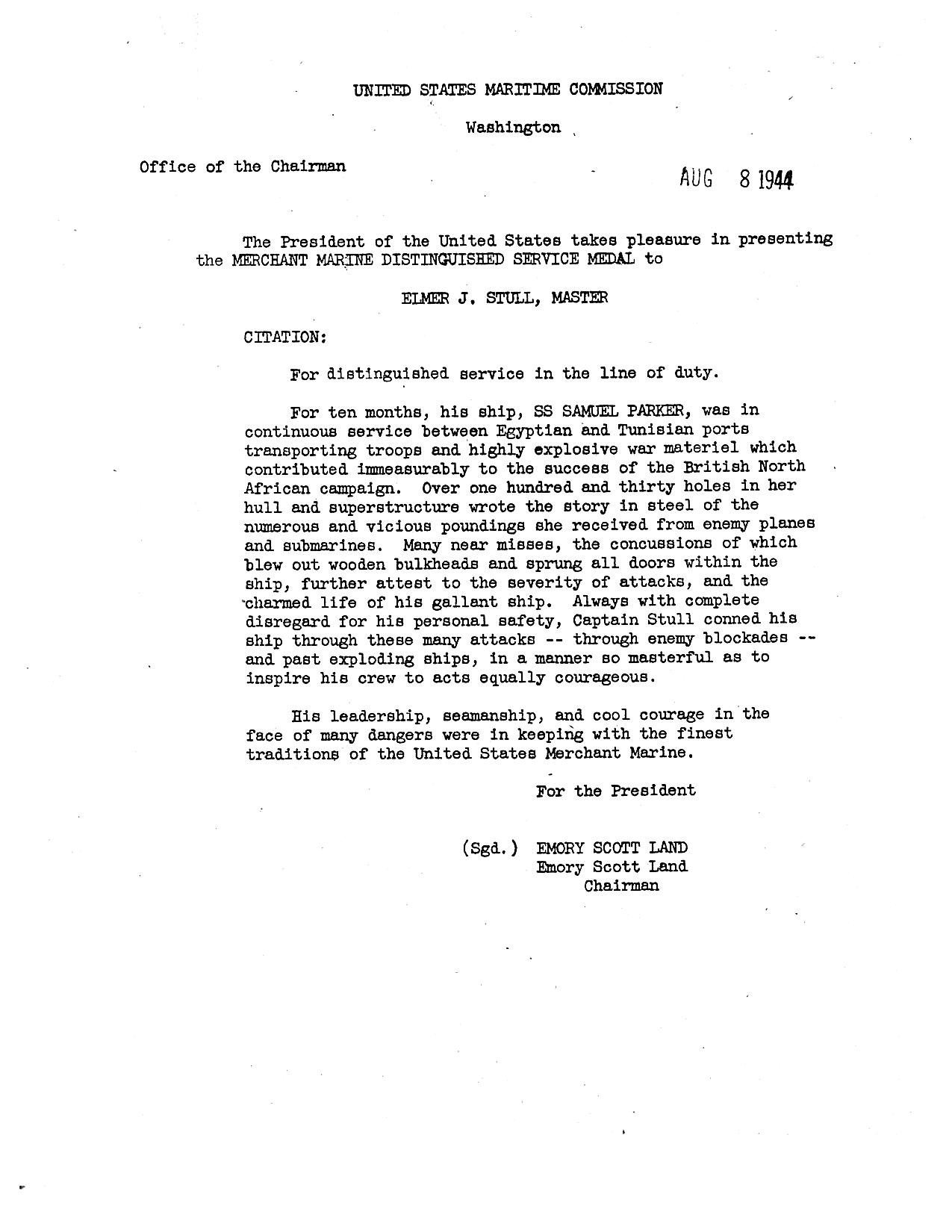
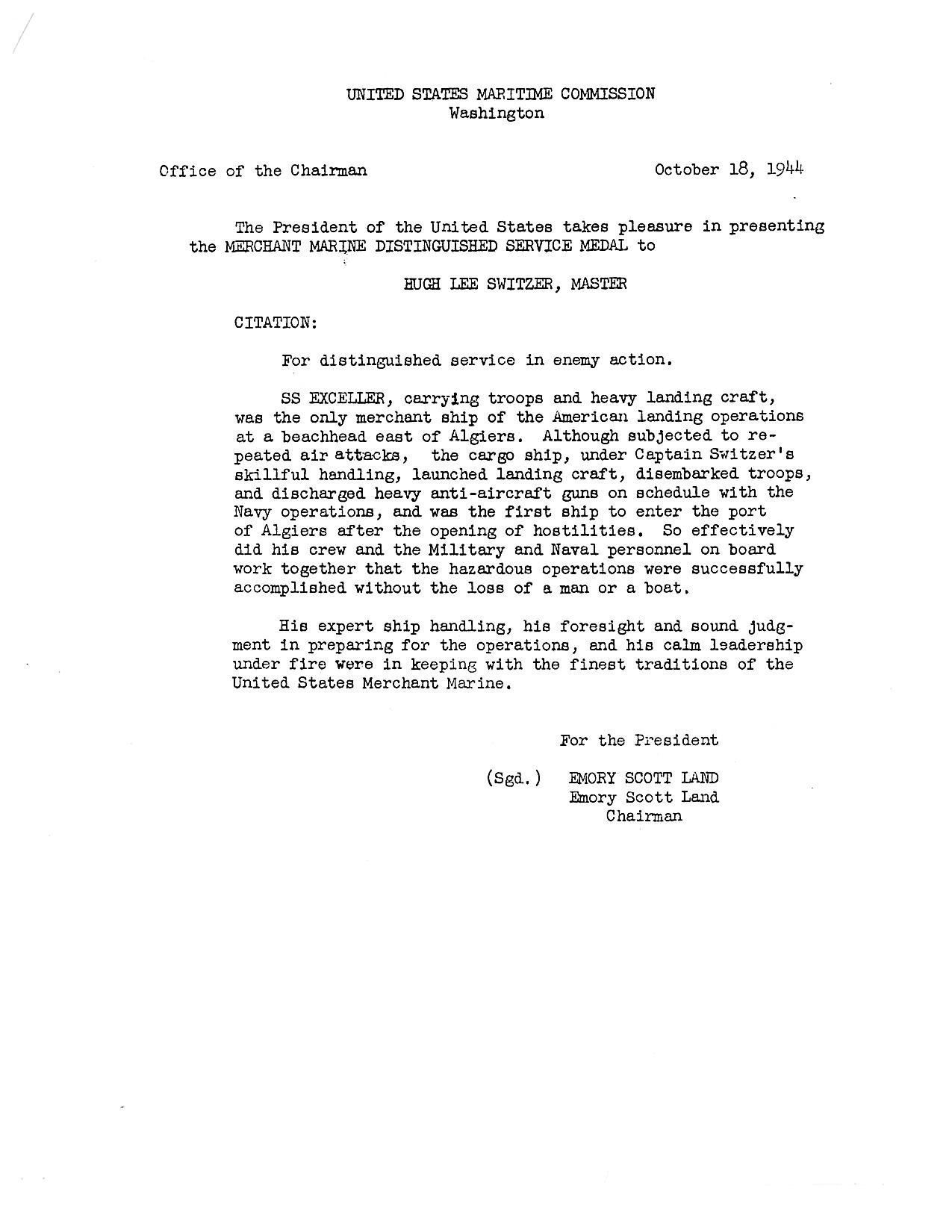
mm dsm citations

Roll of Honor | Recipient Photos | OWI Recipient Citations | MM DSM | Leonard Conley | MM DSM Design | MM DSM Price Guide

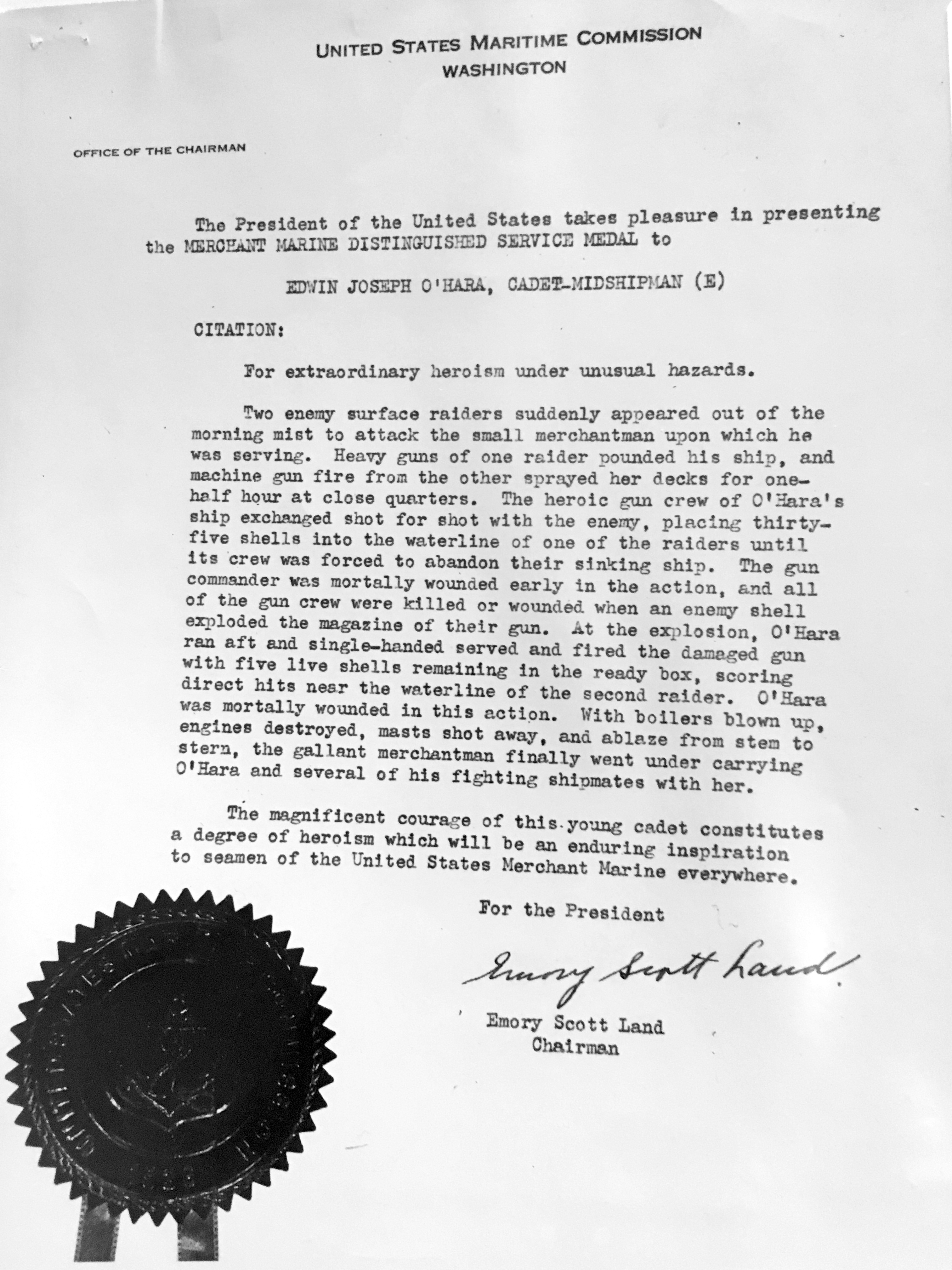
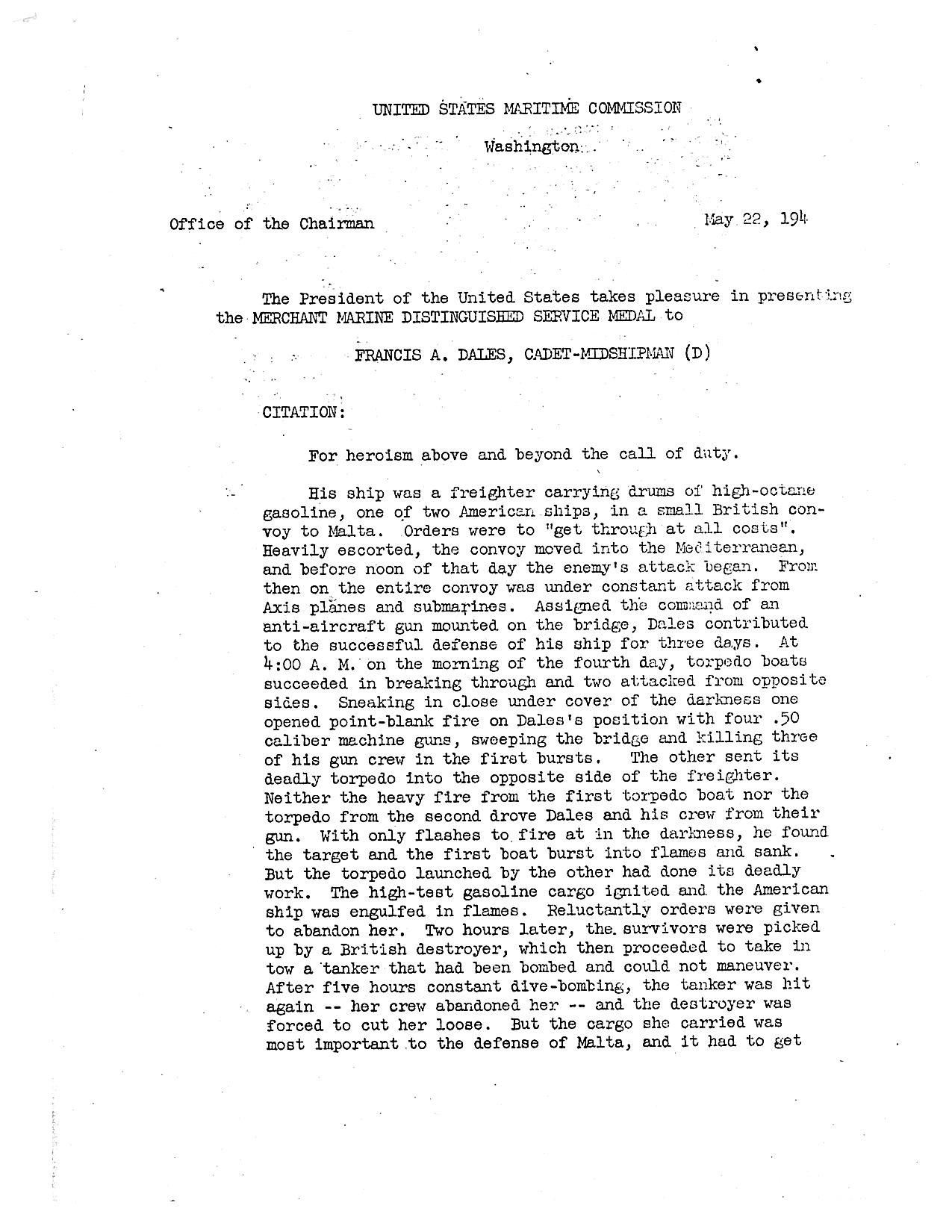
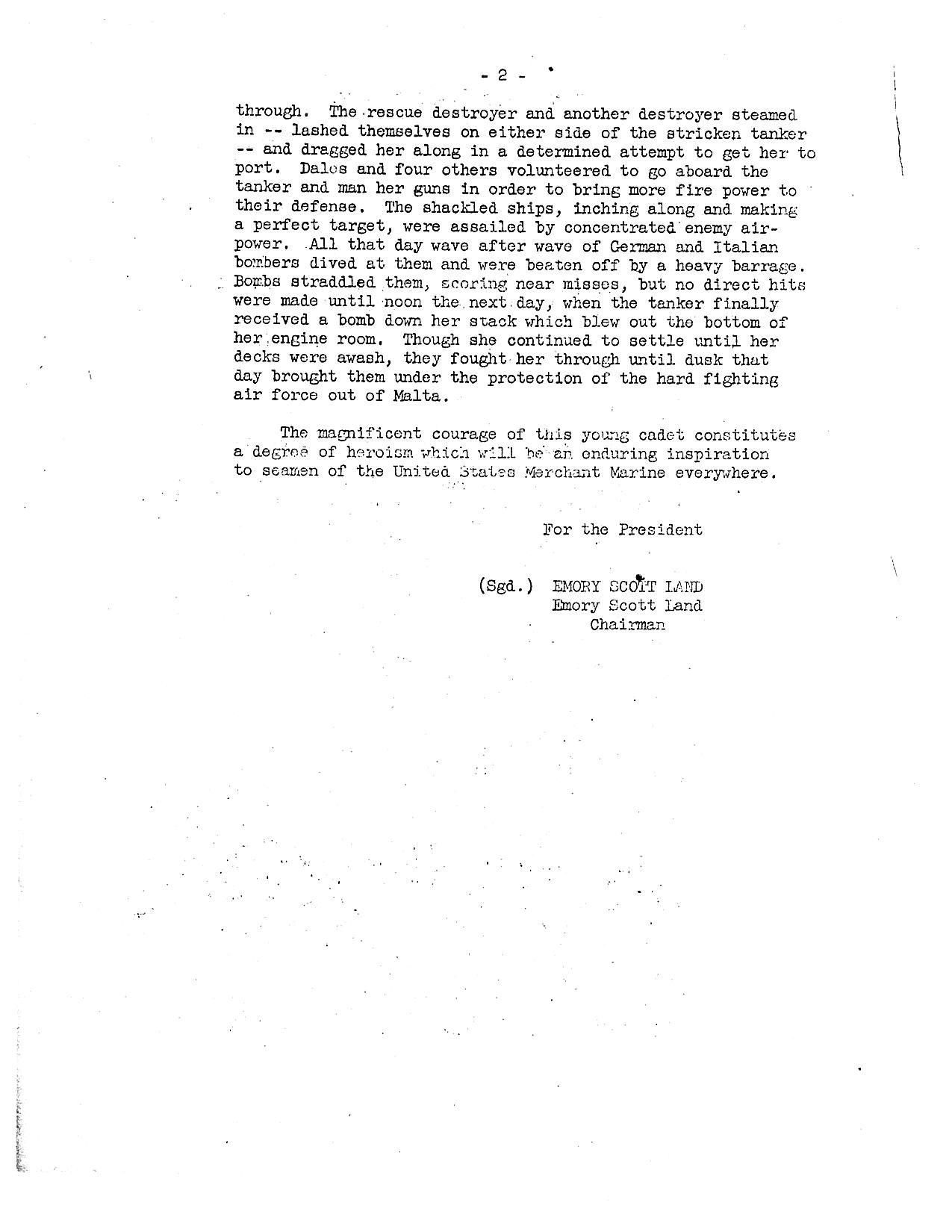
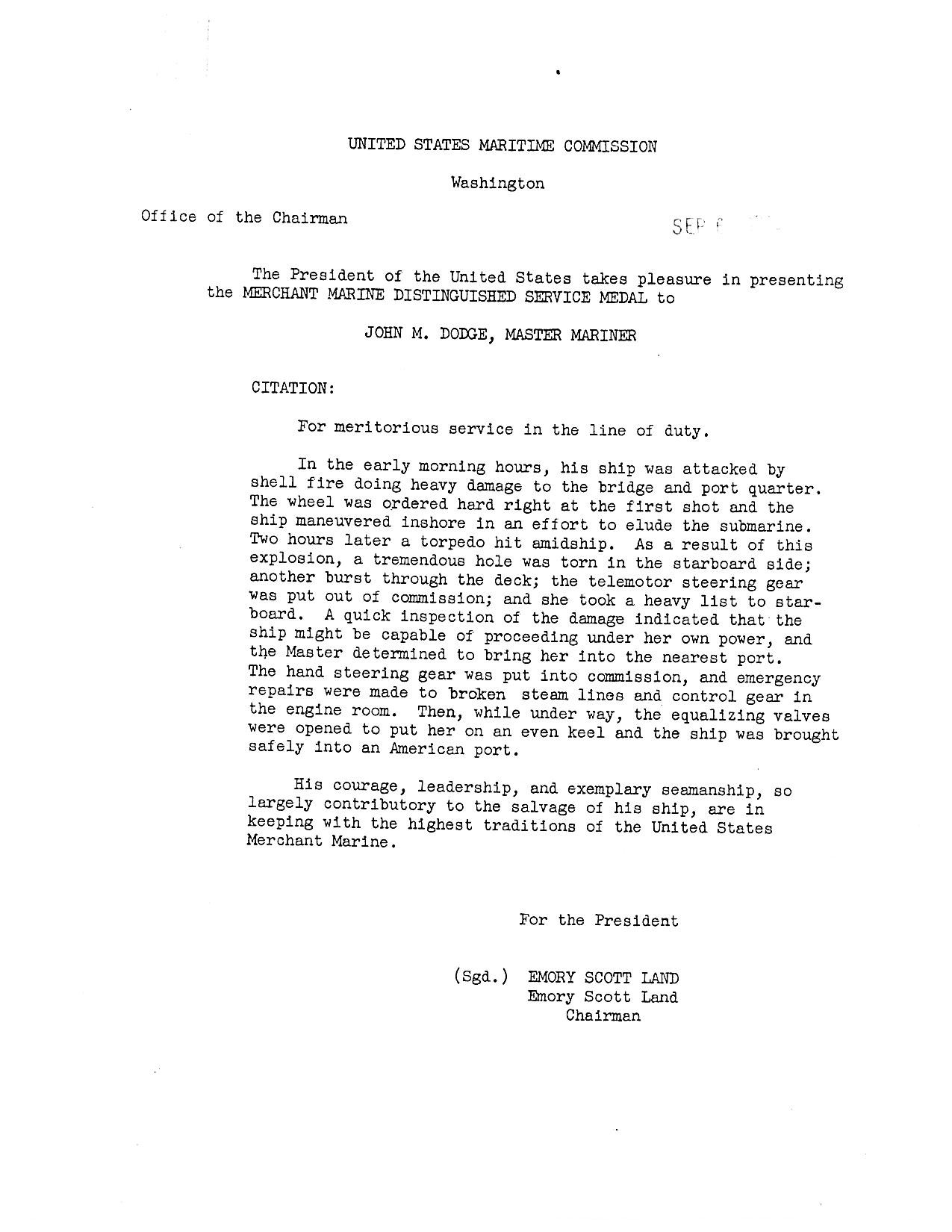
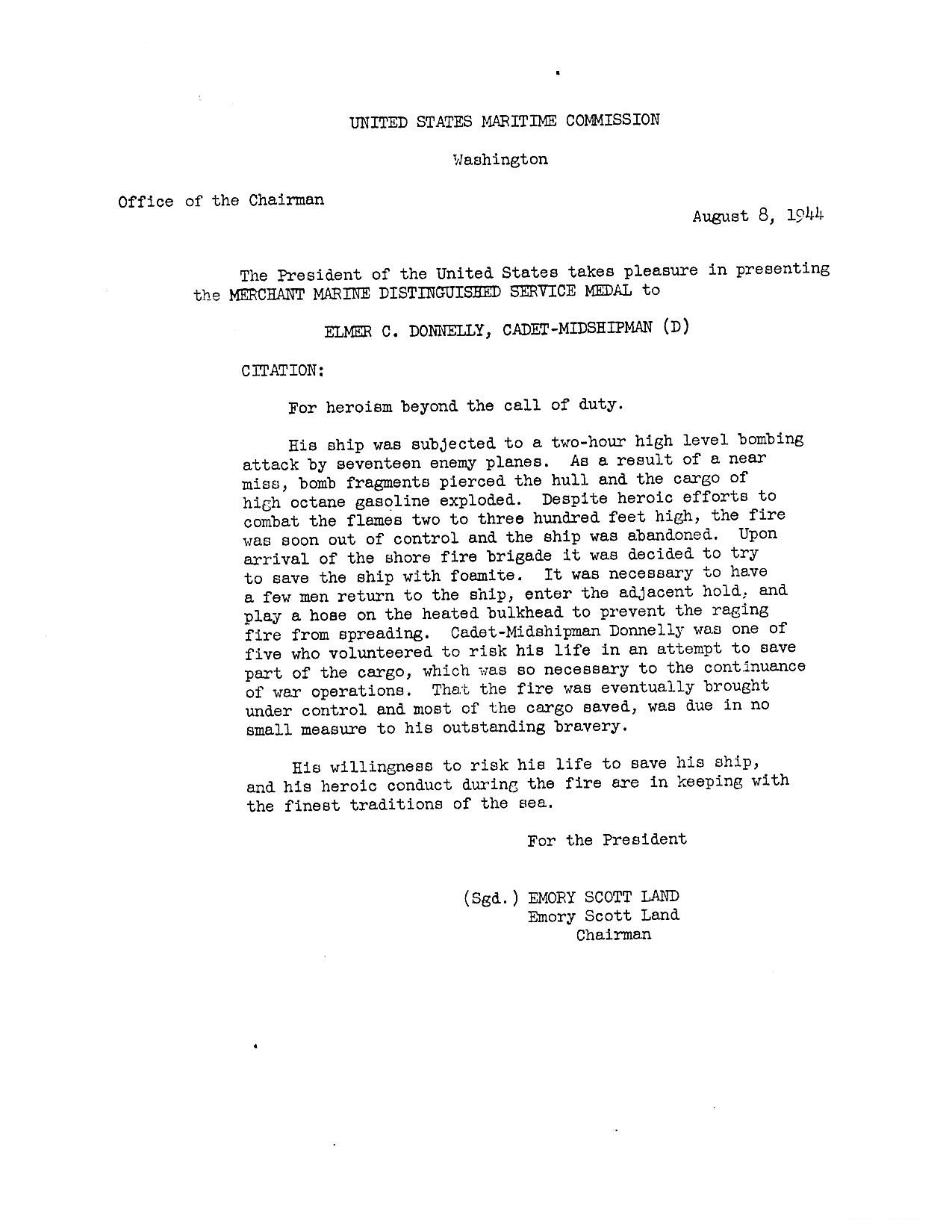
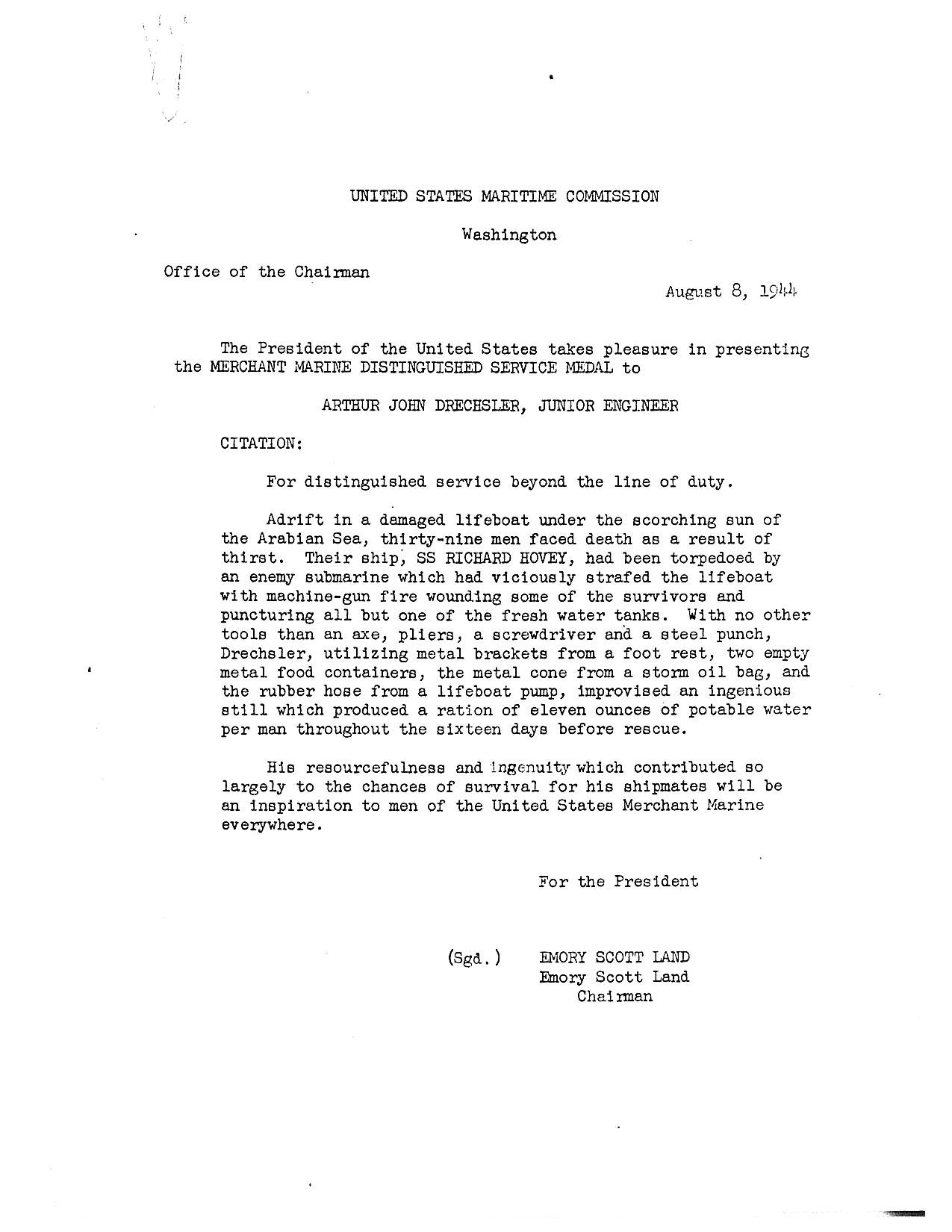
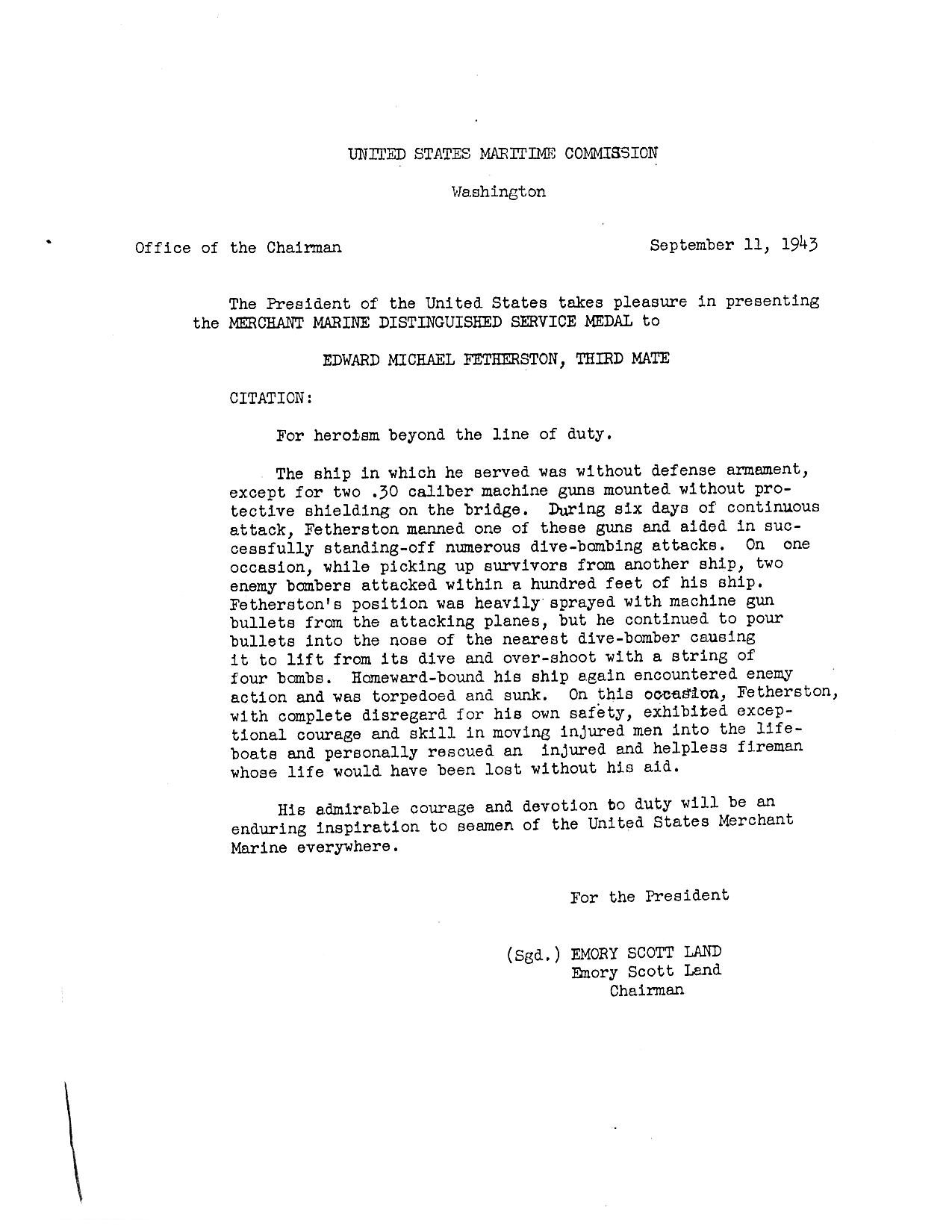
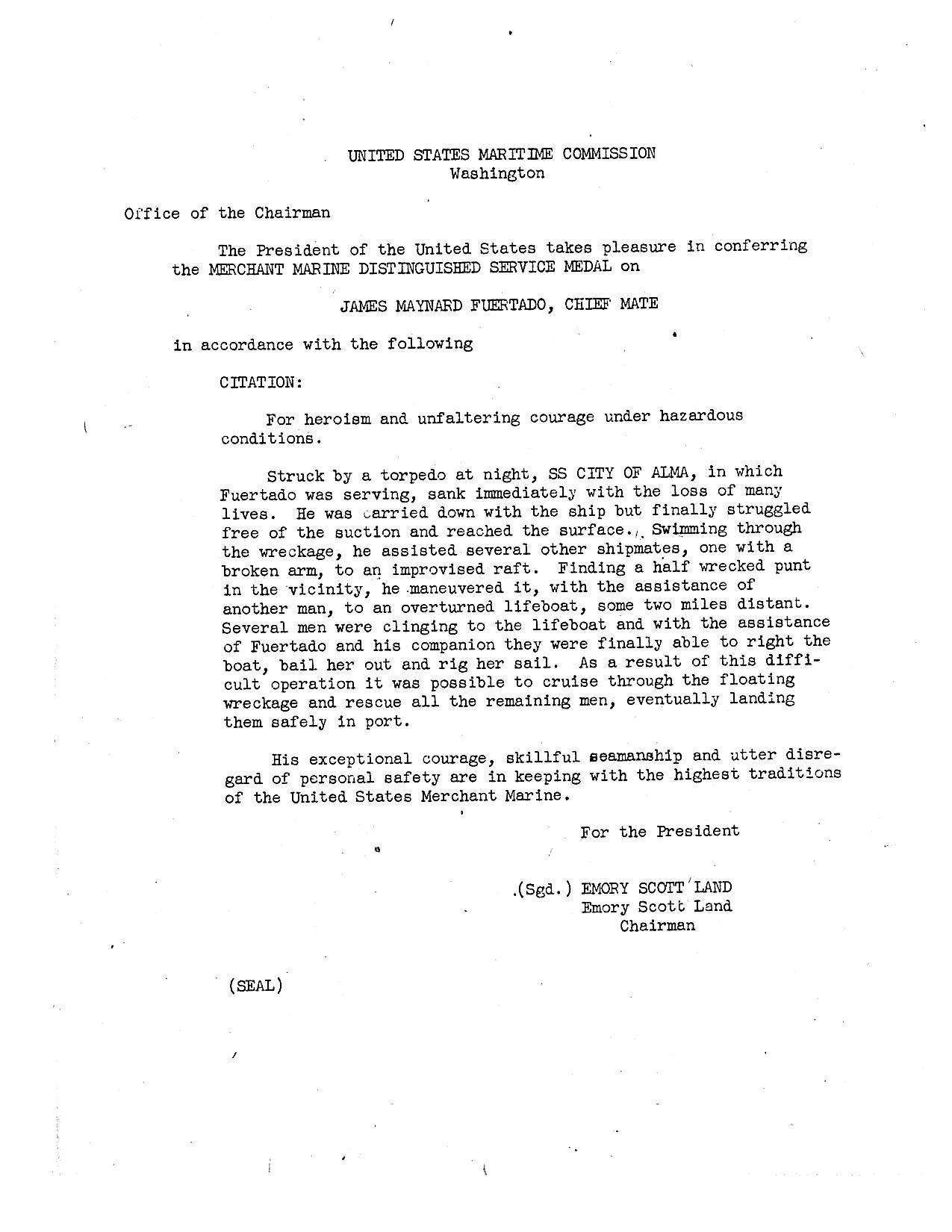
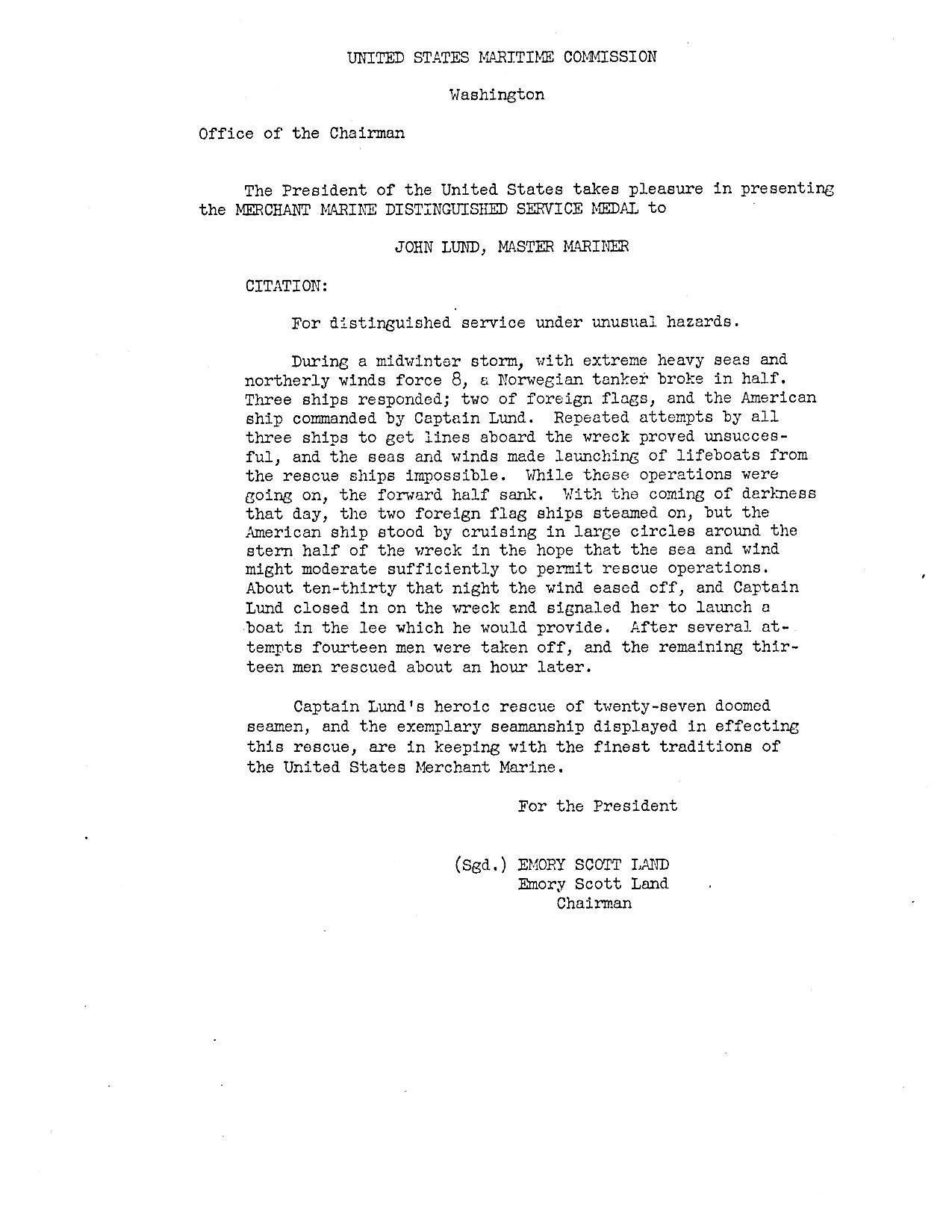
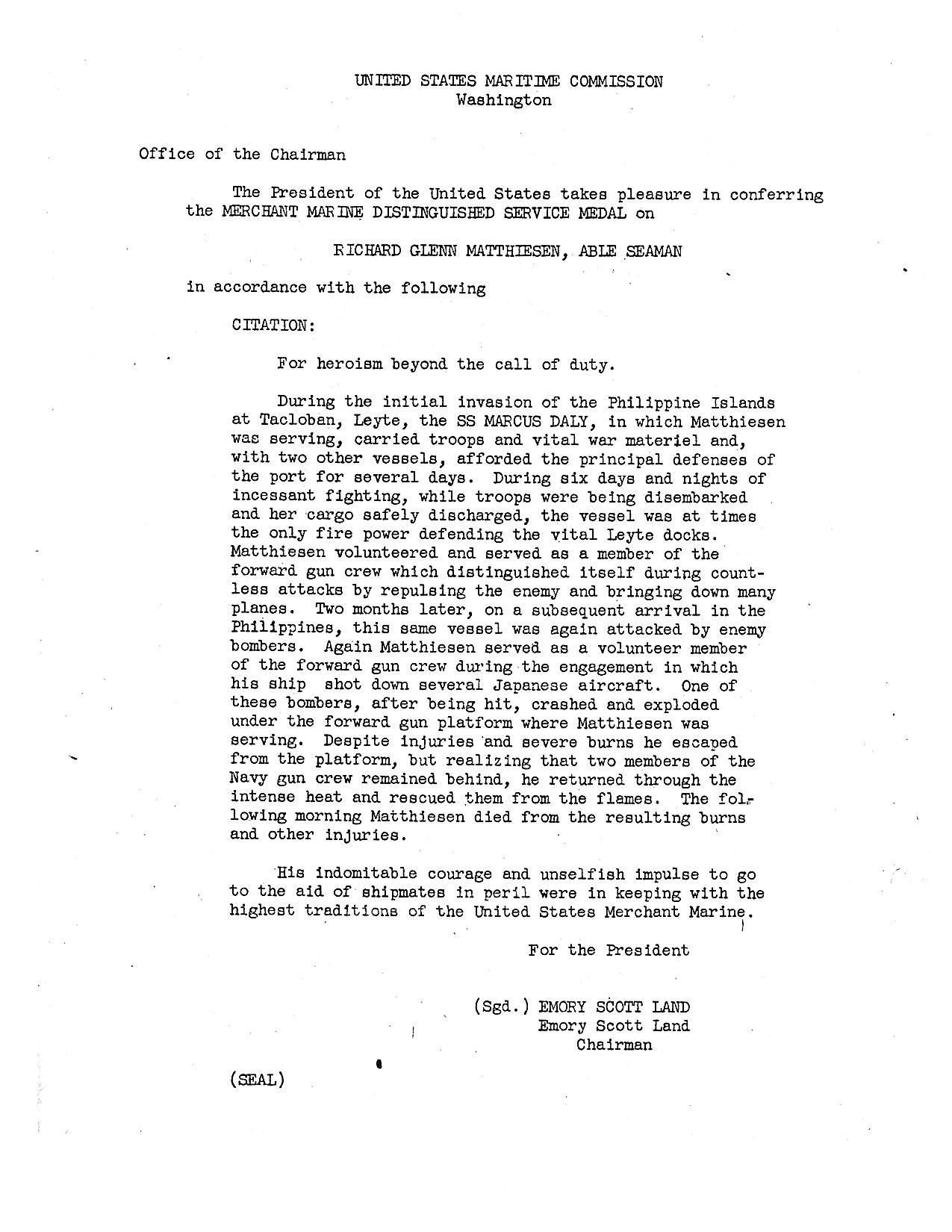
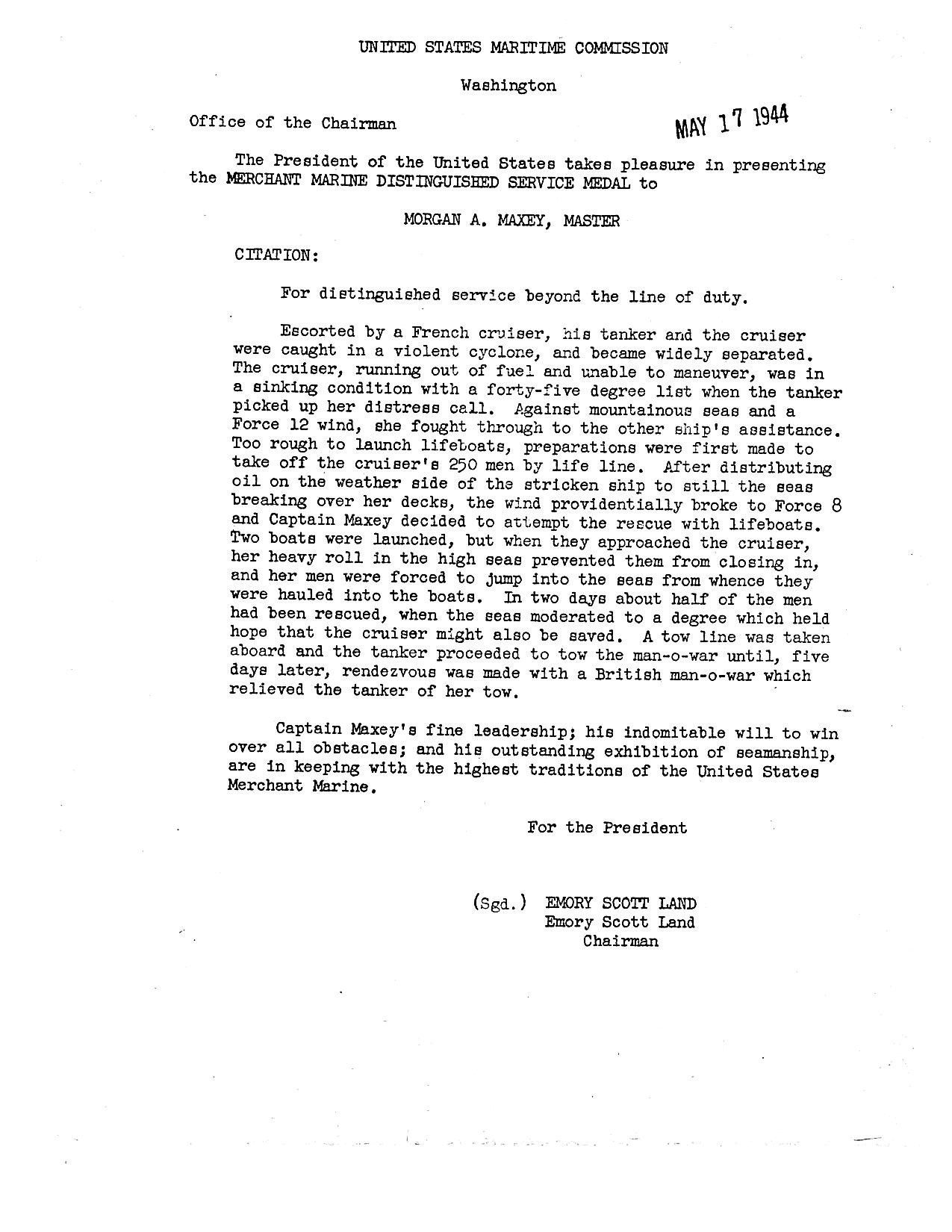
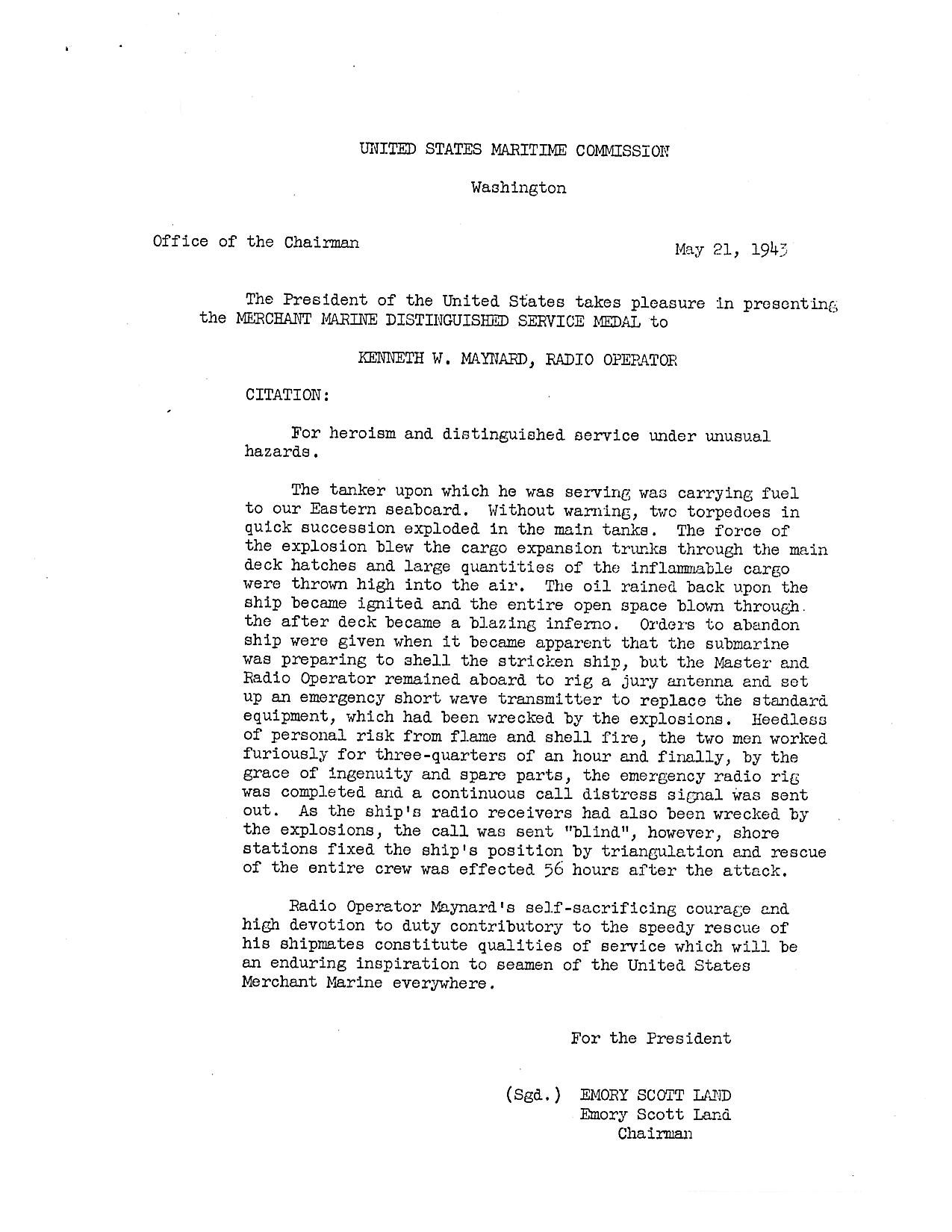
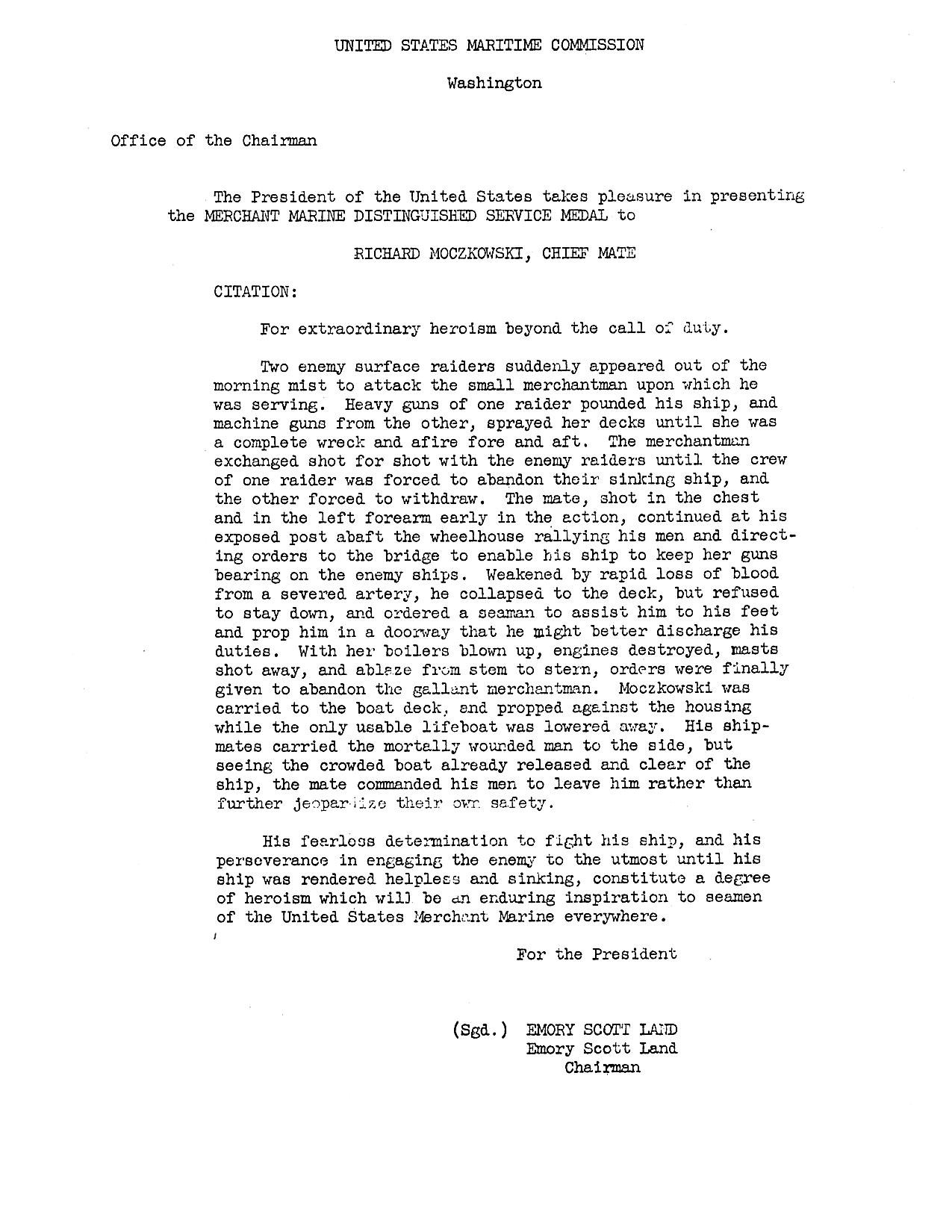
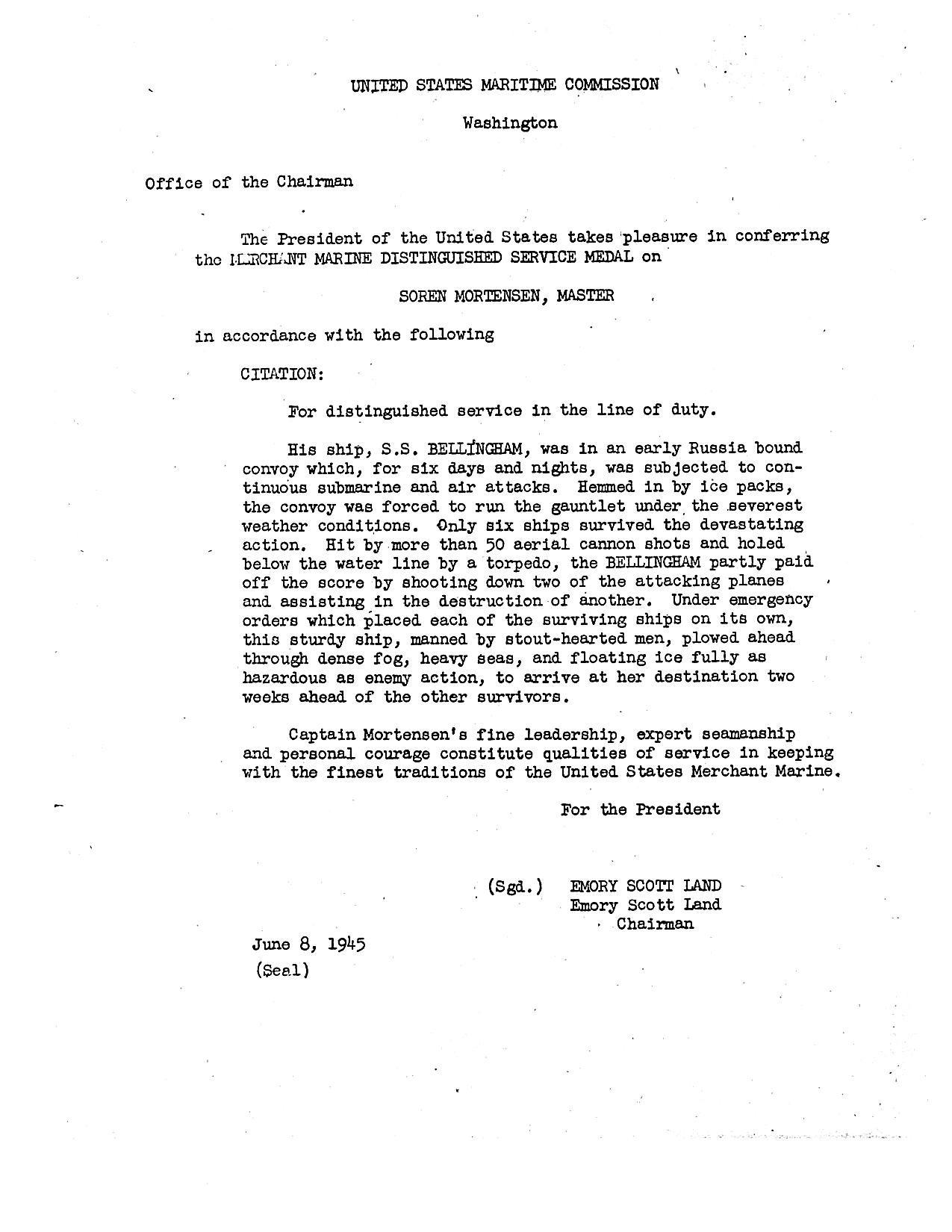
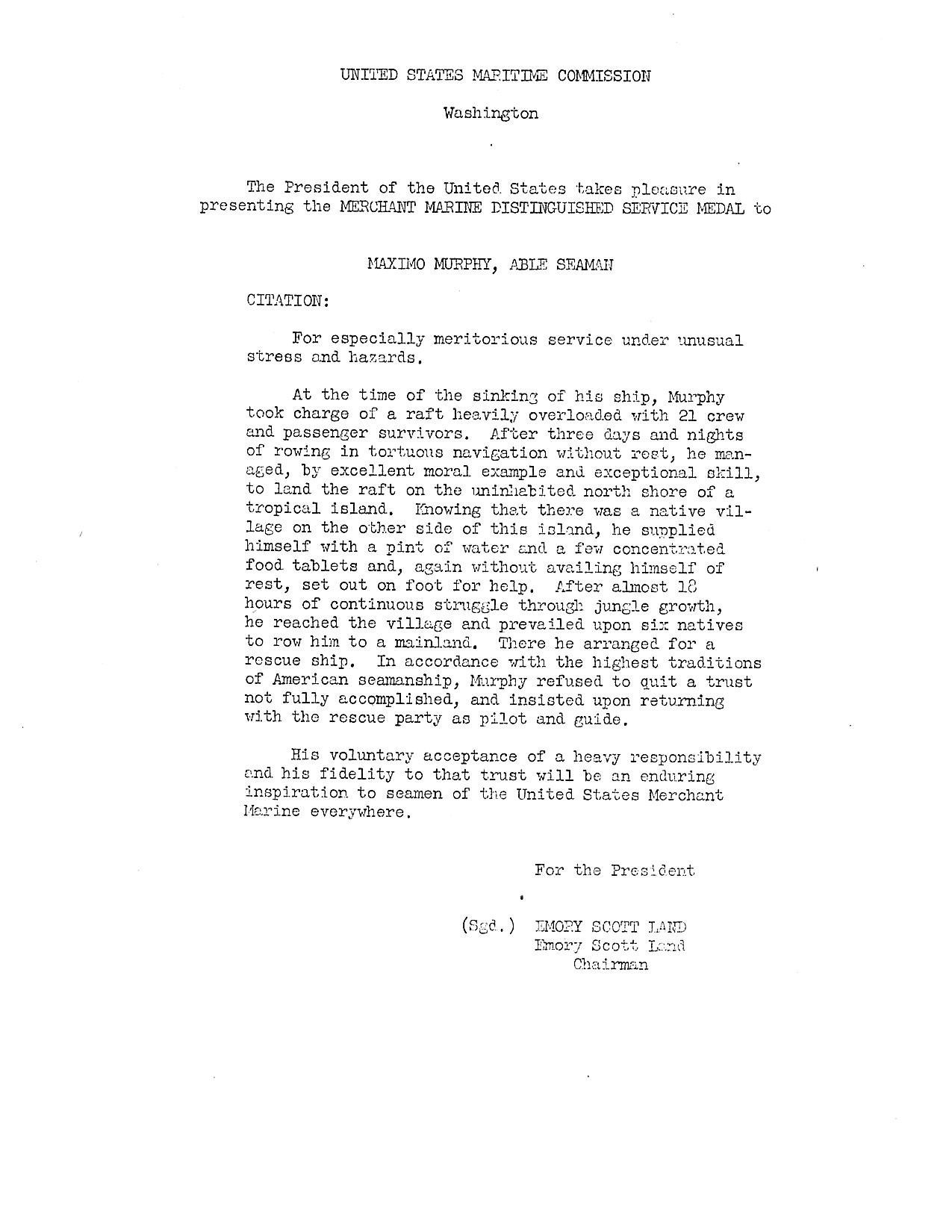
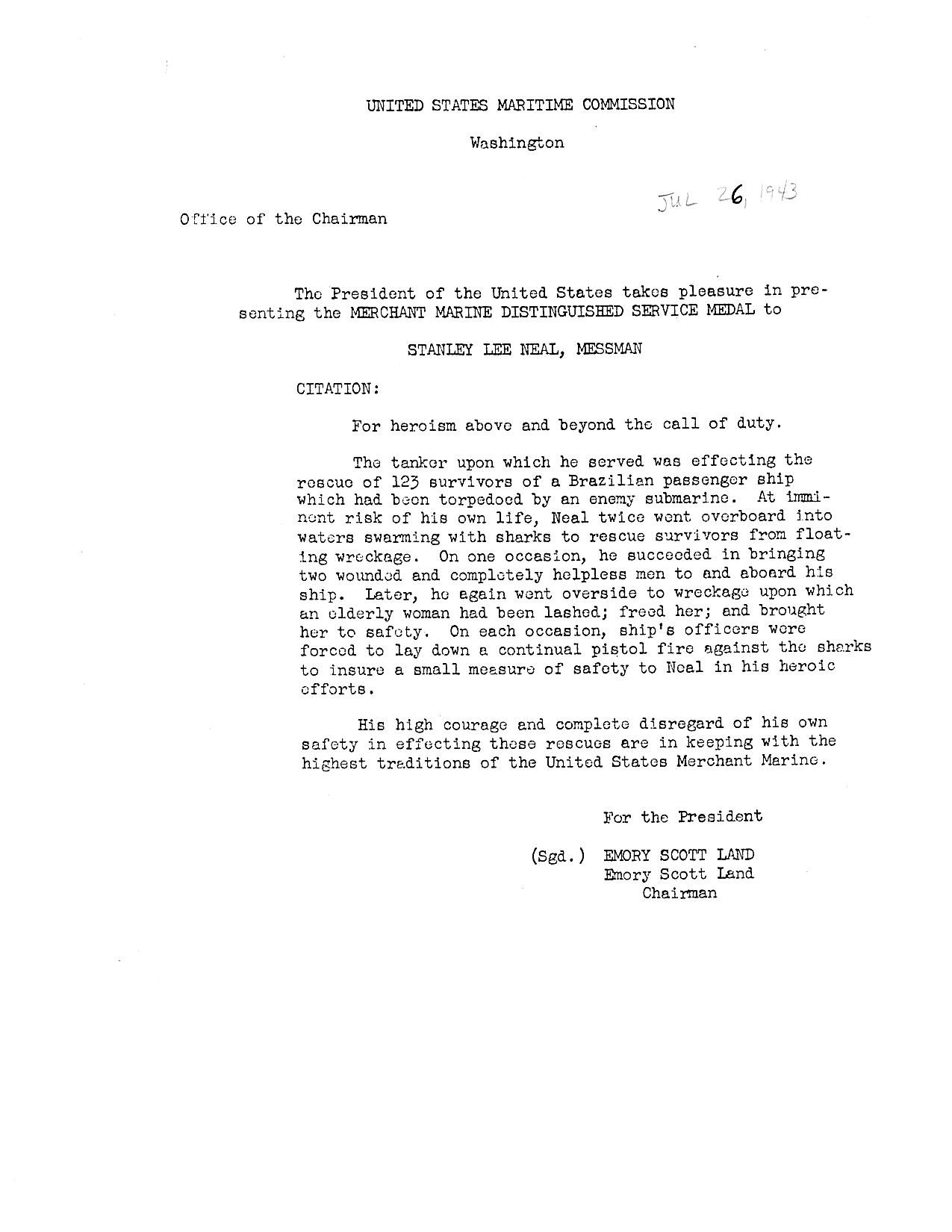
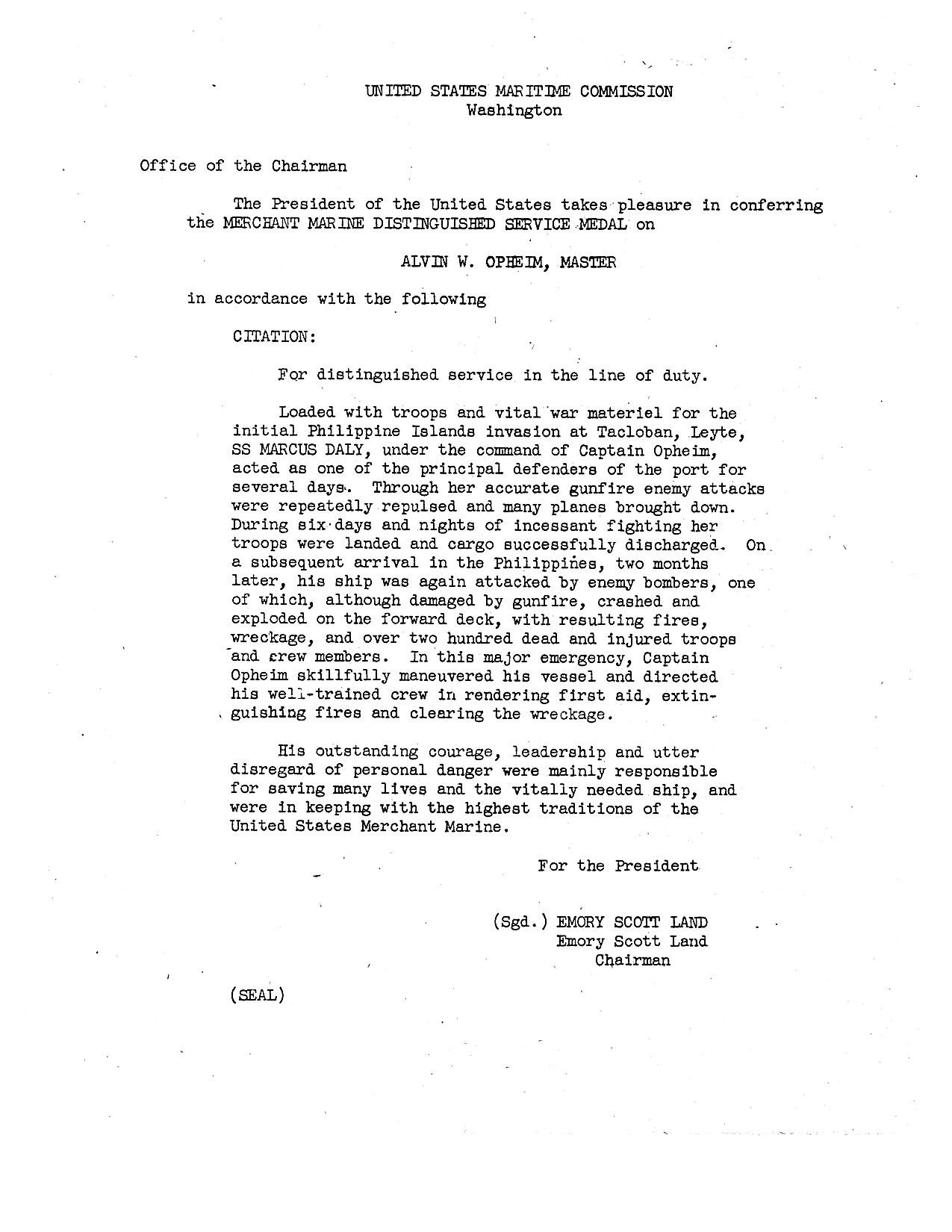
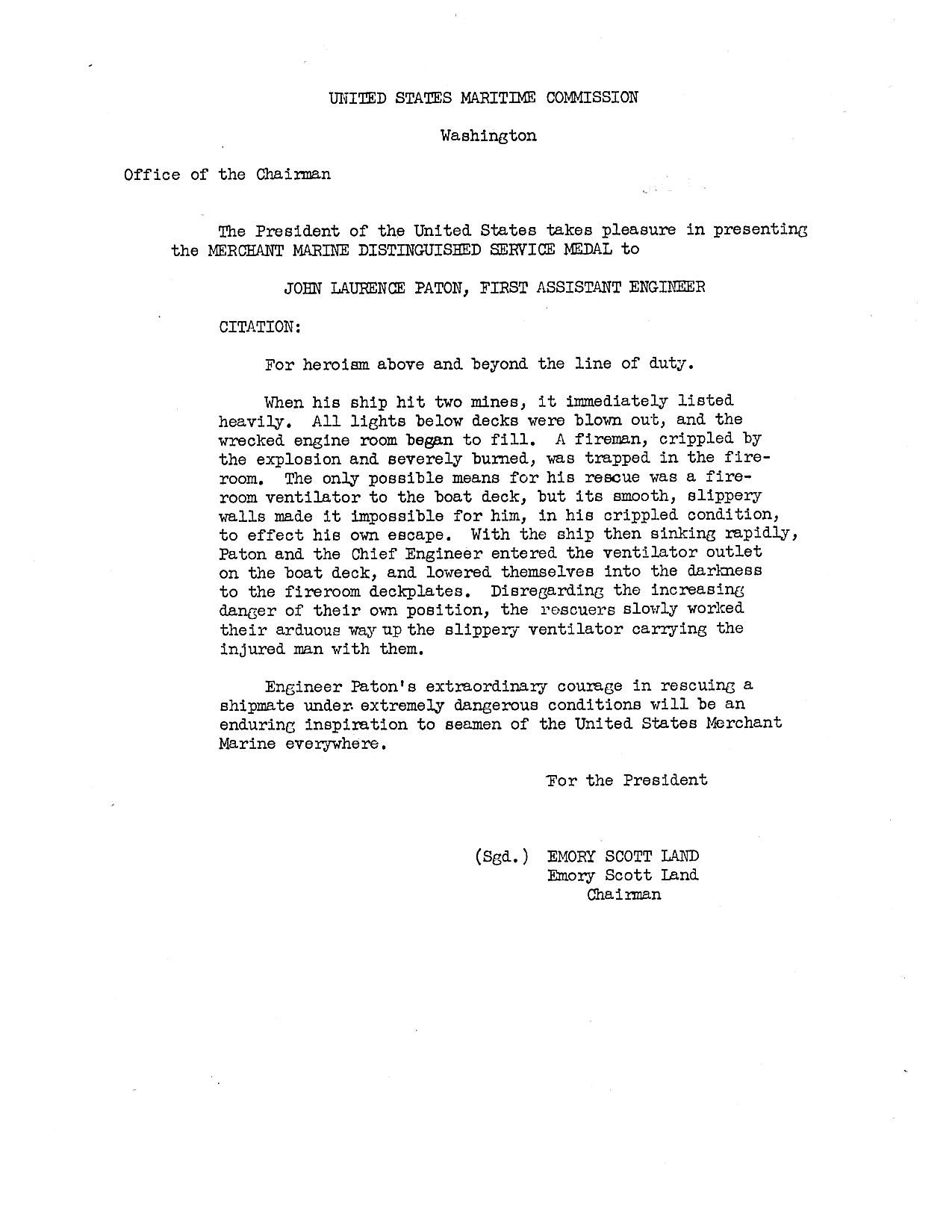
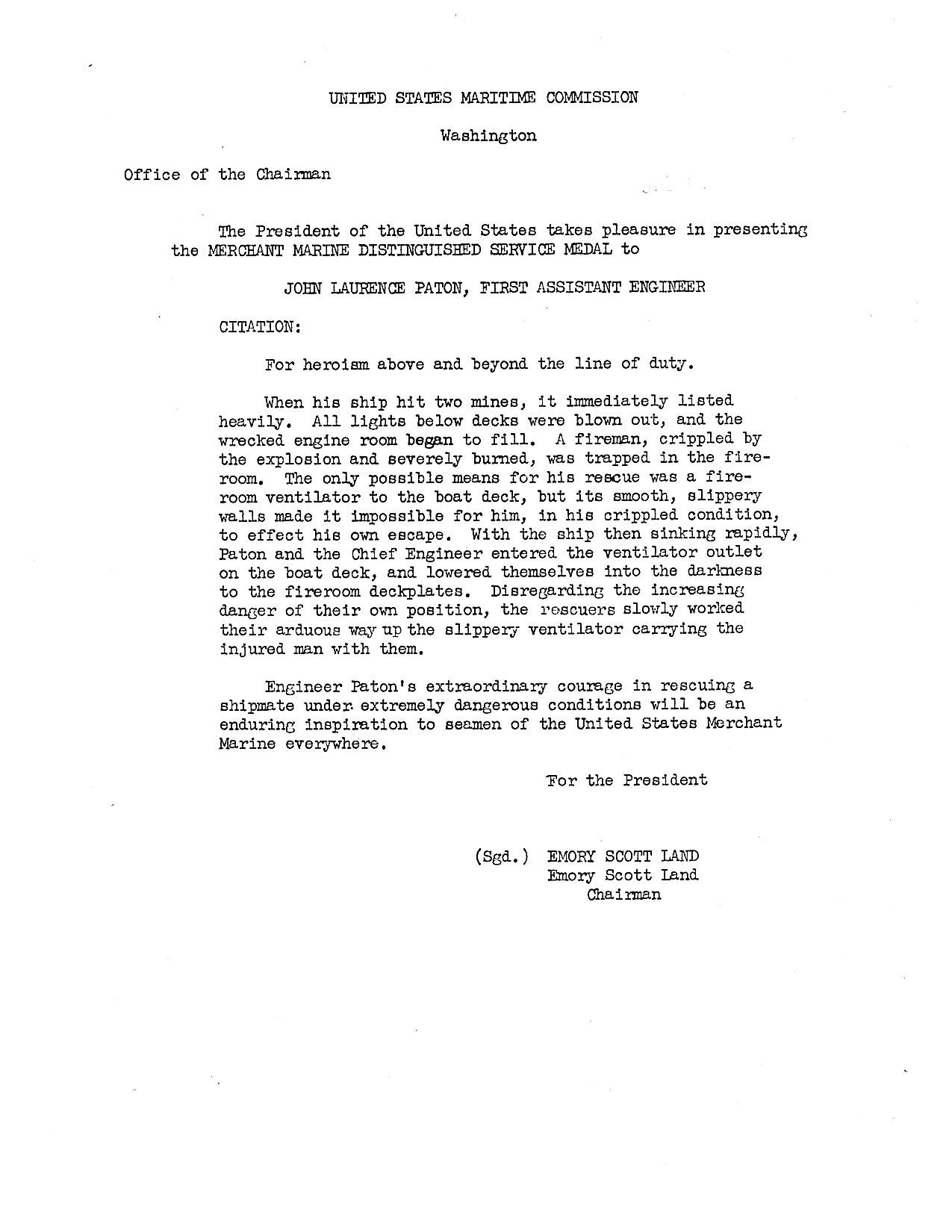
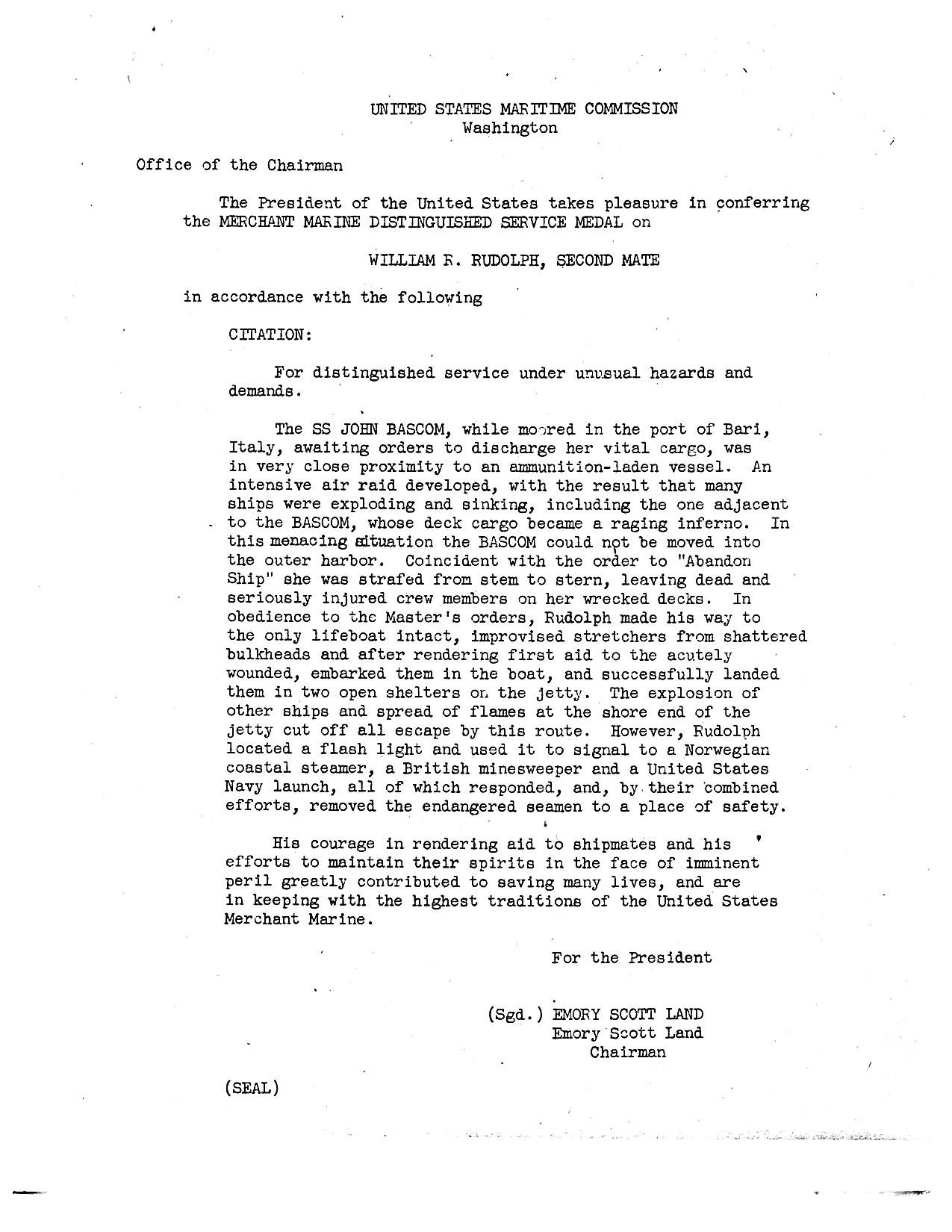
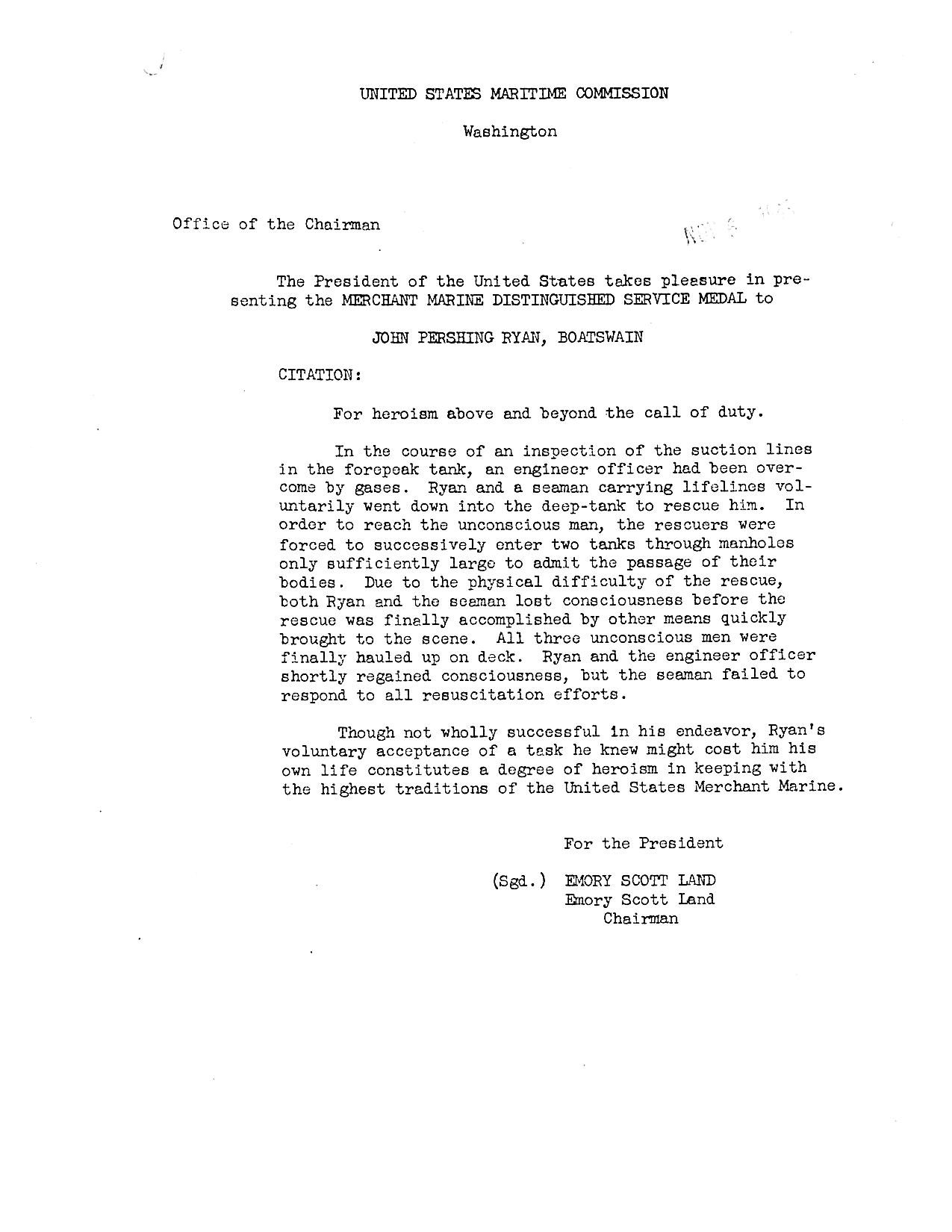
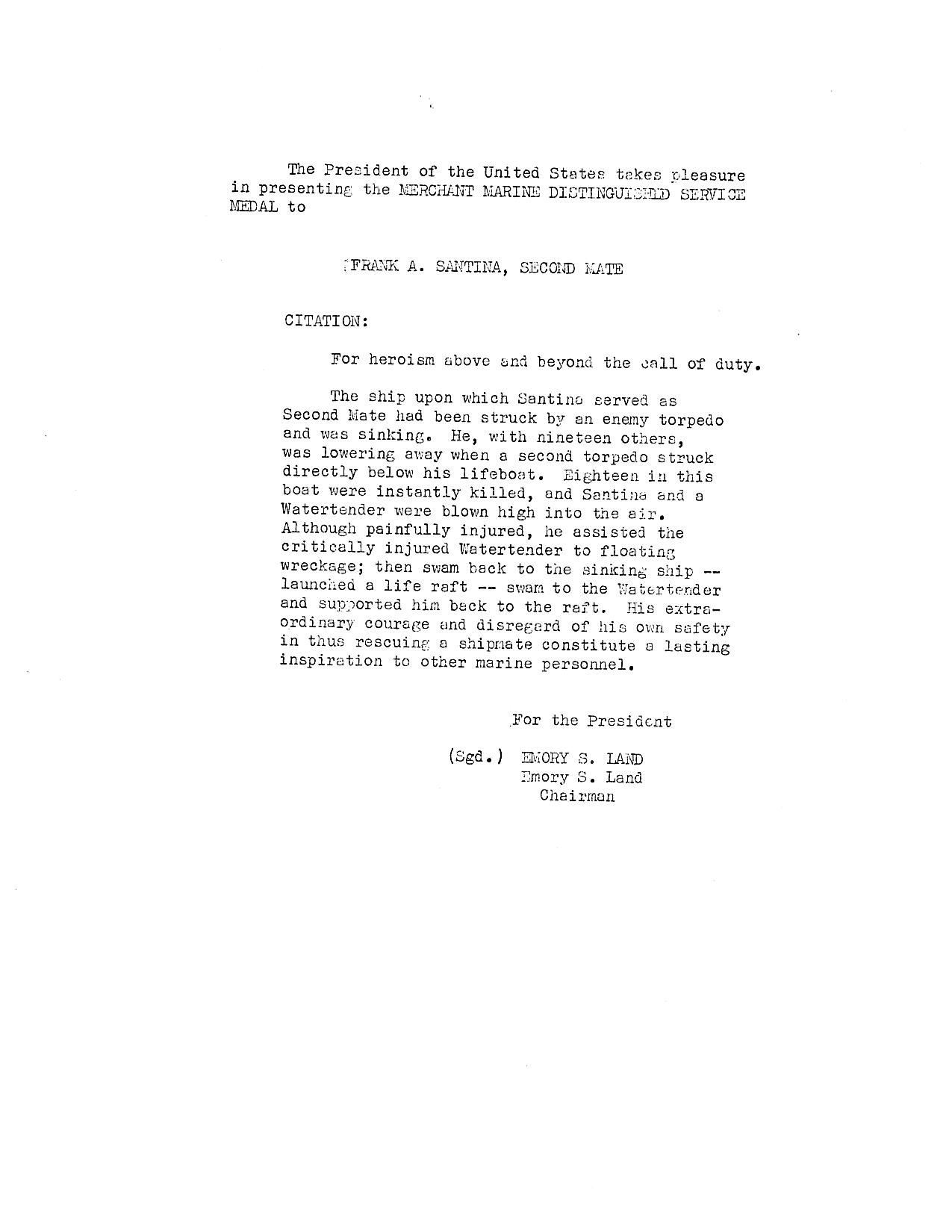
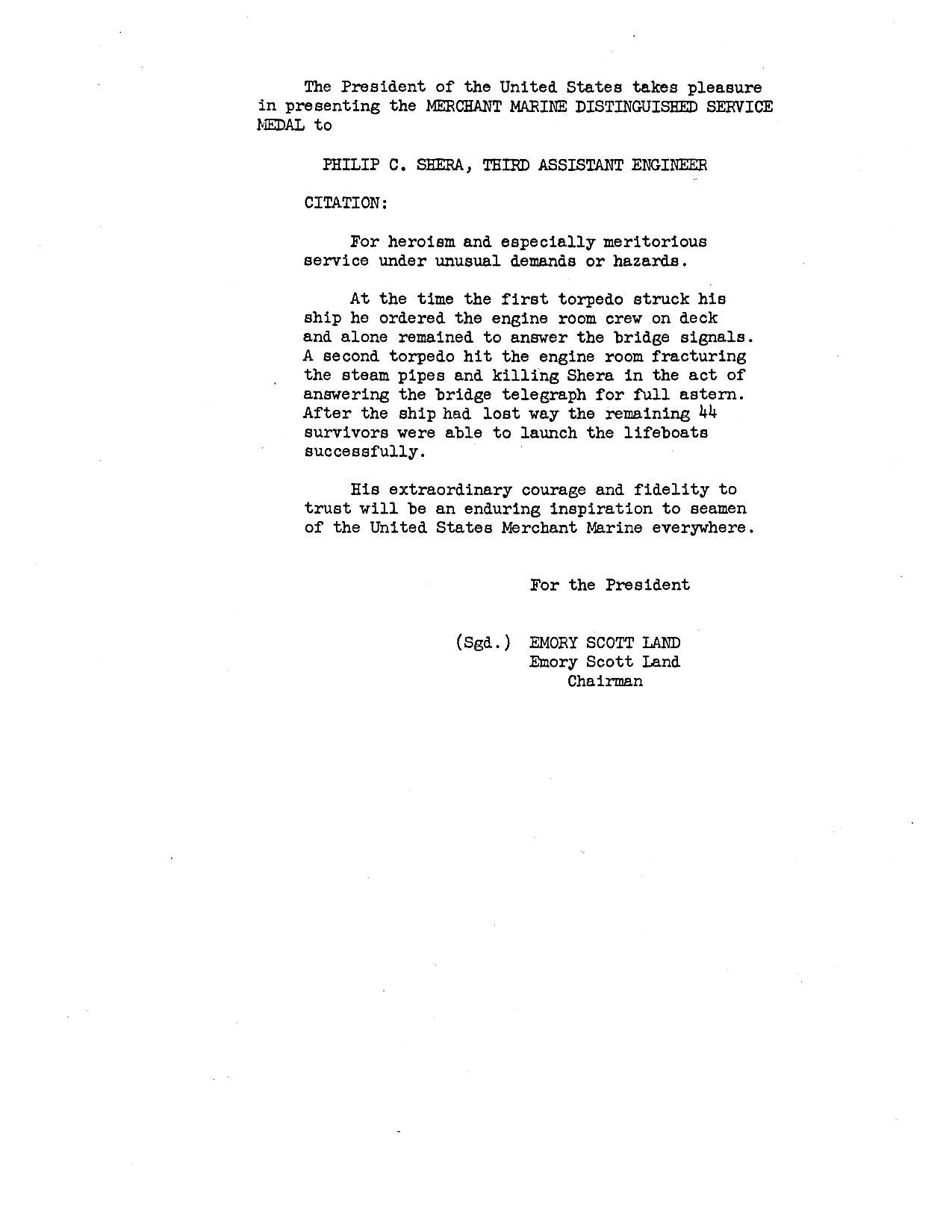
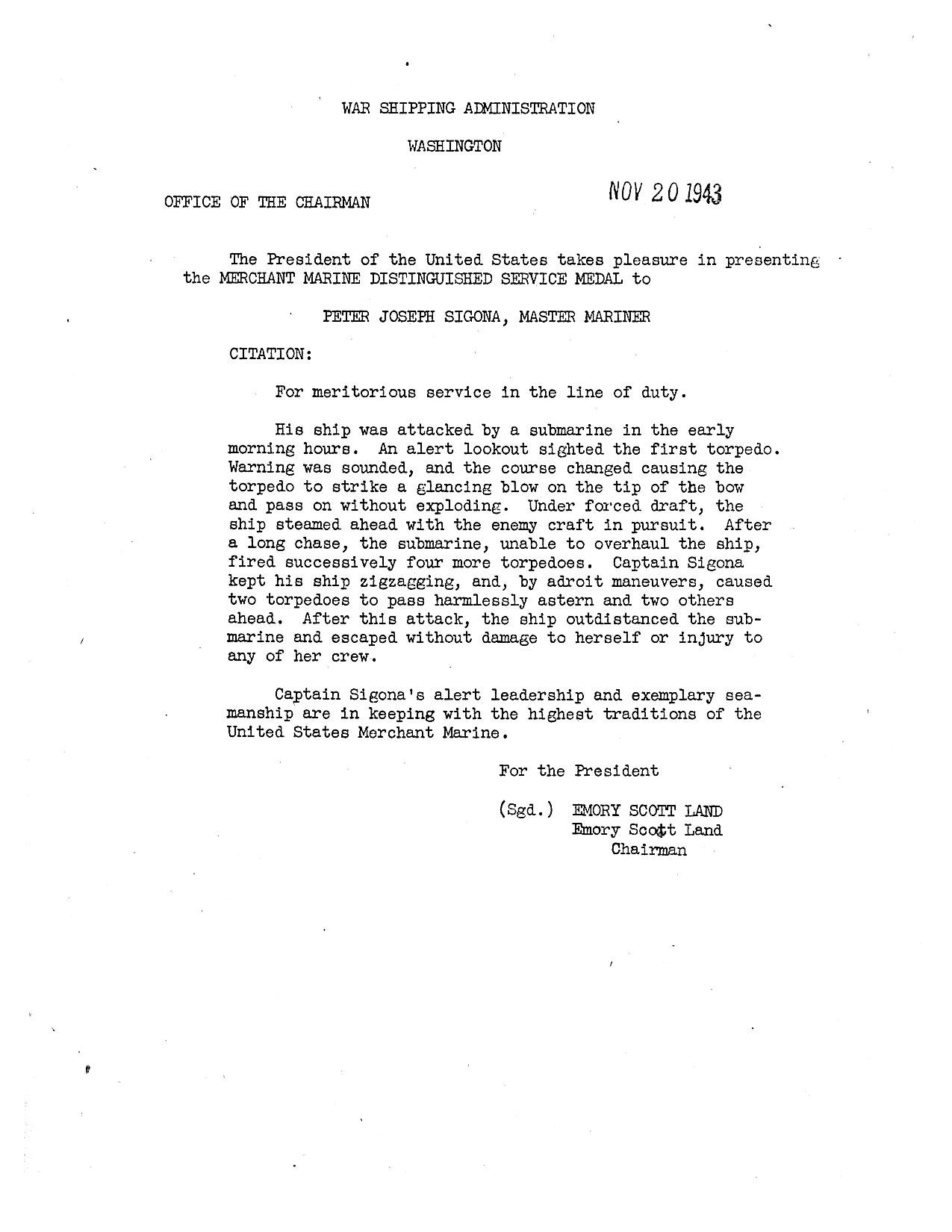
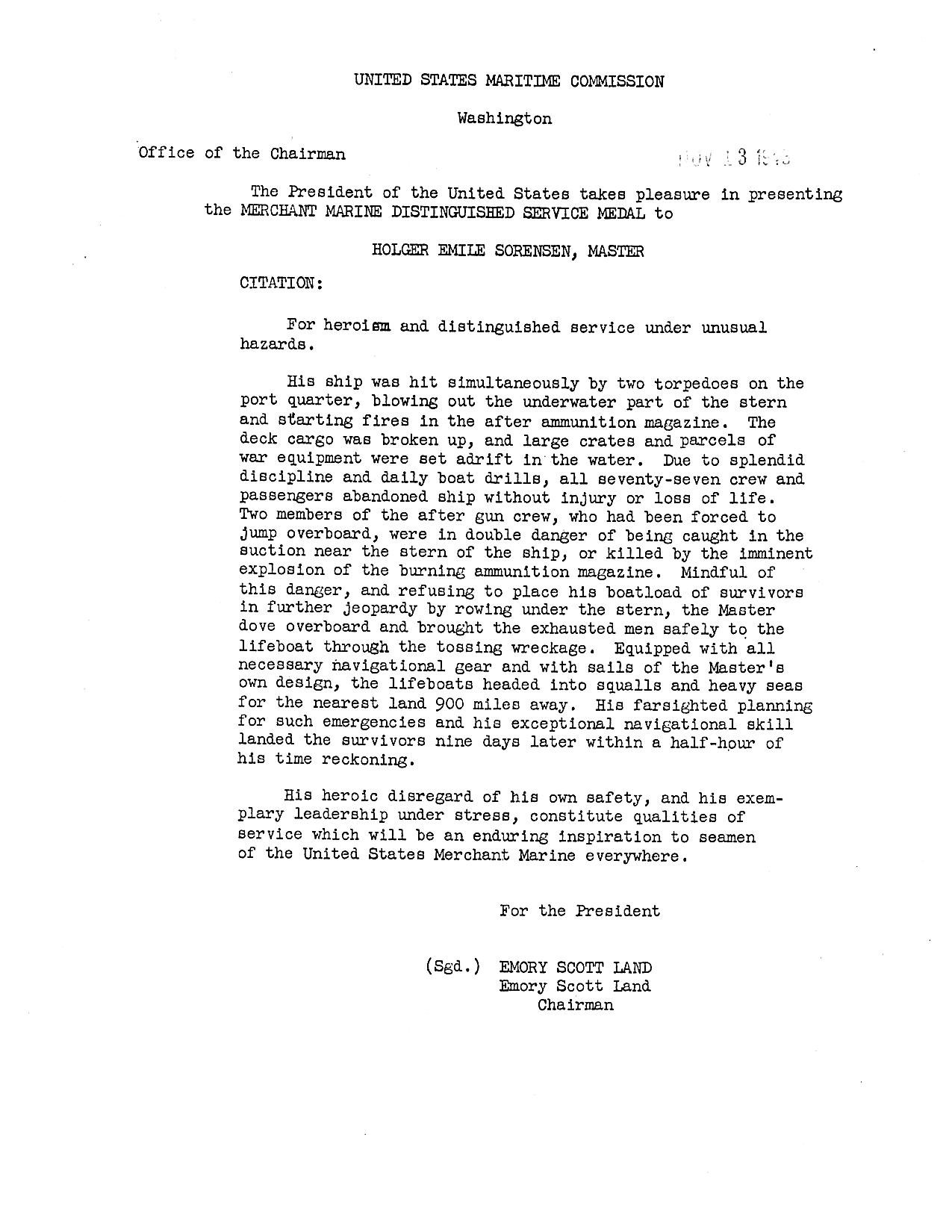
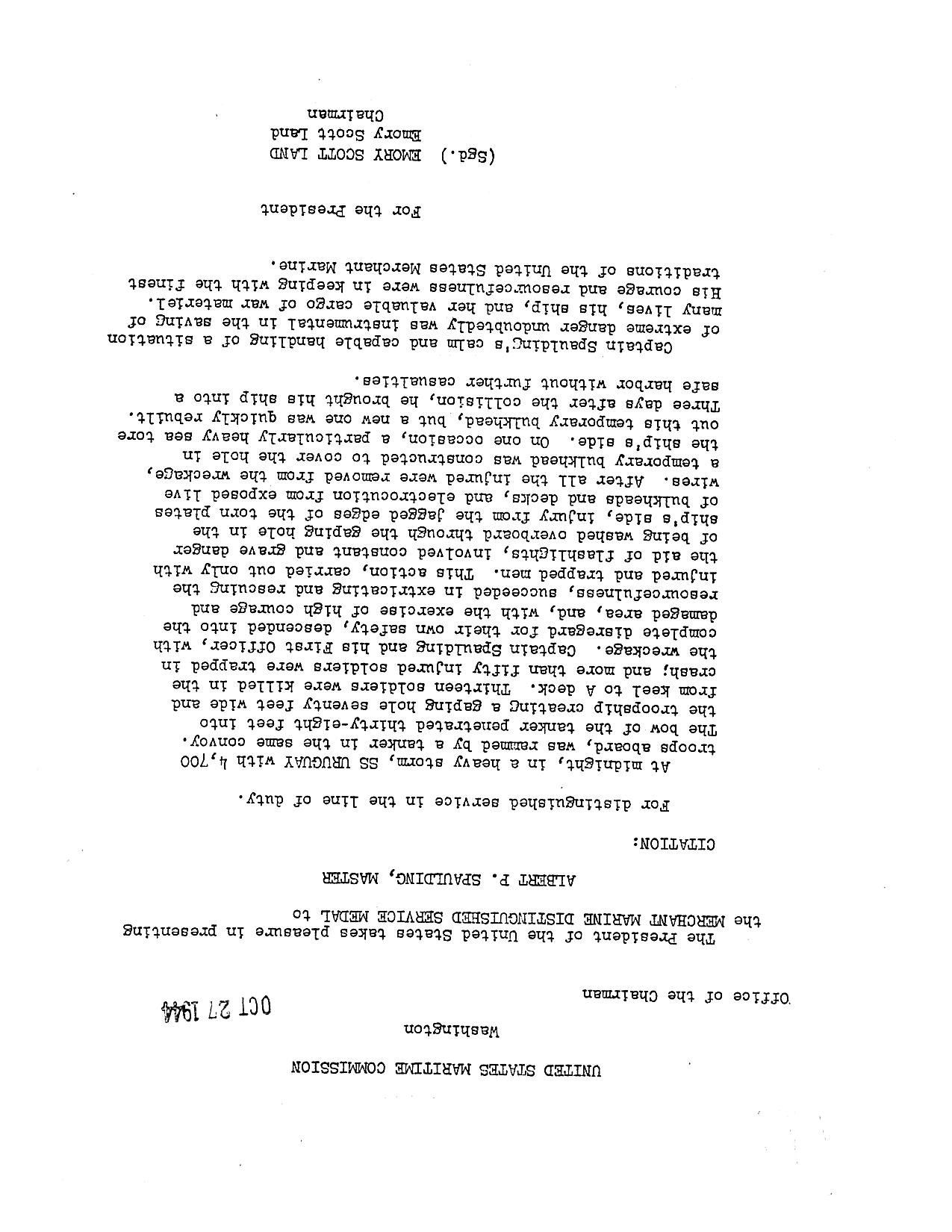
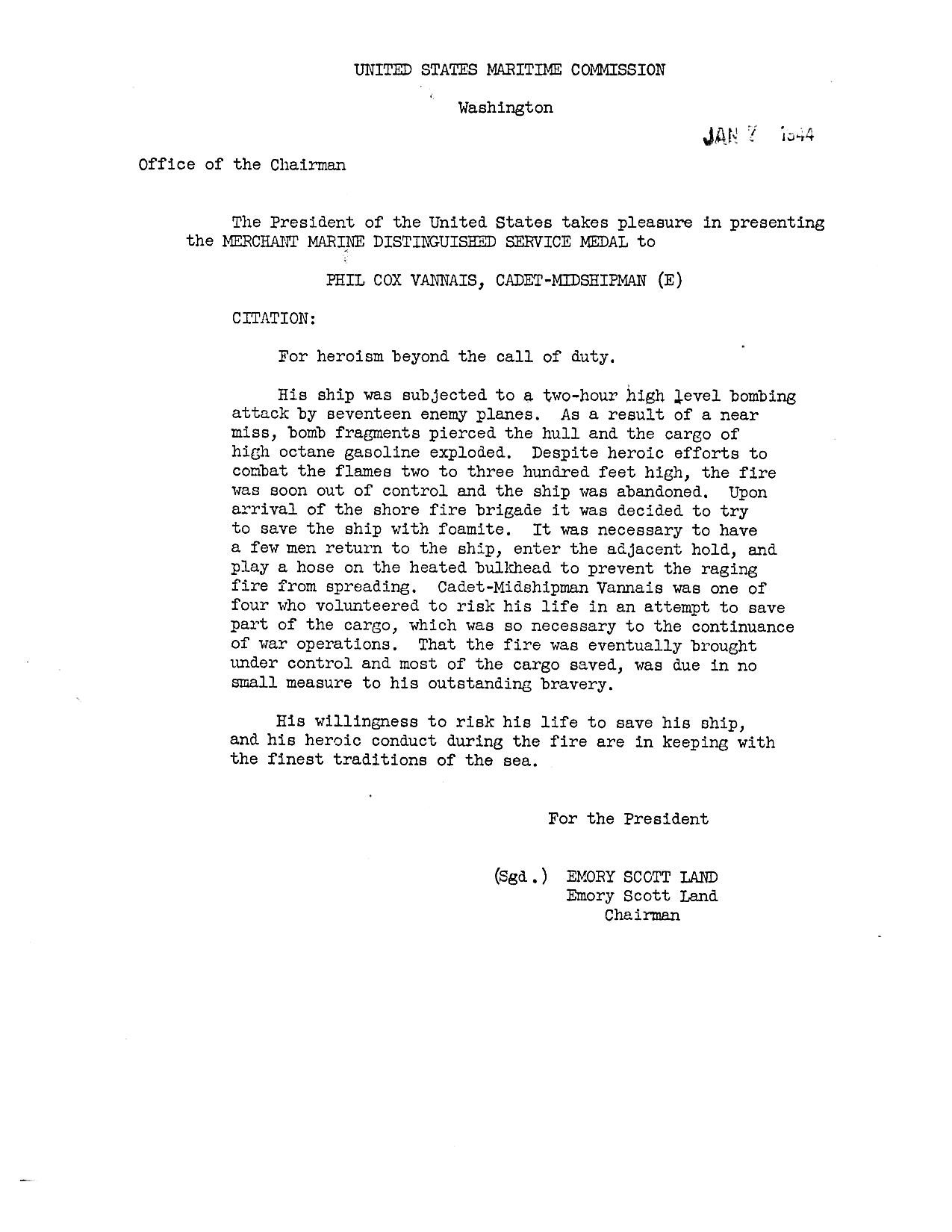
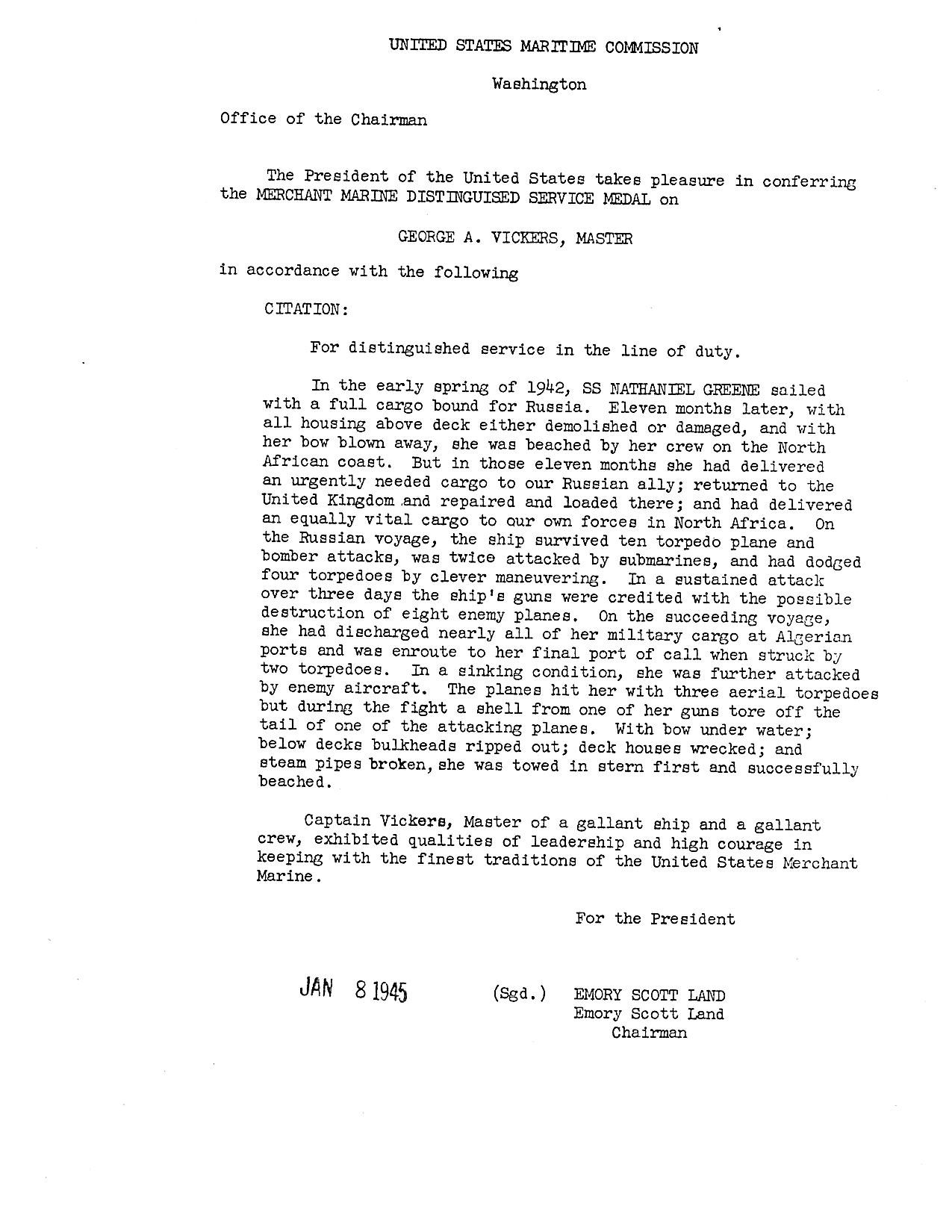
C I T A T I O N S  from the files of the U.S. Maritime Commission at the American Merchant Marine Museum


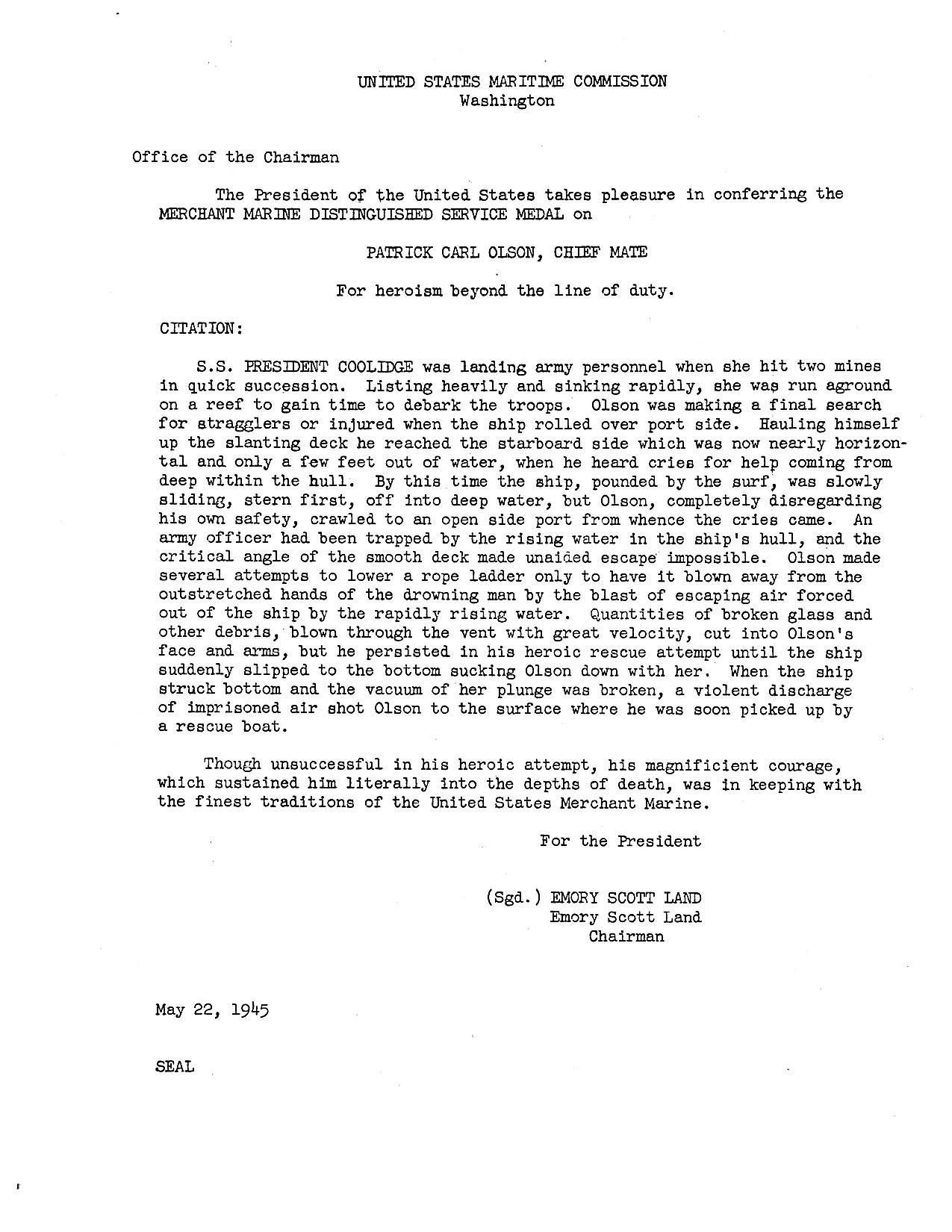
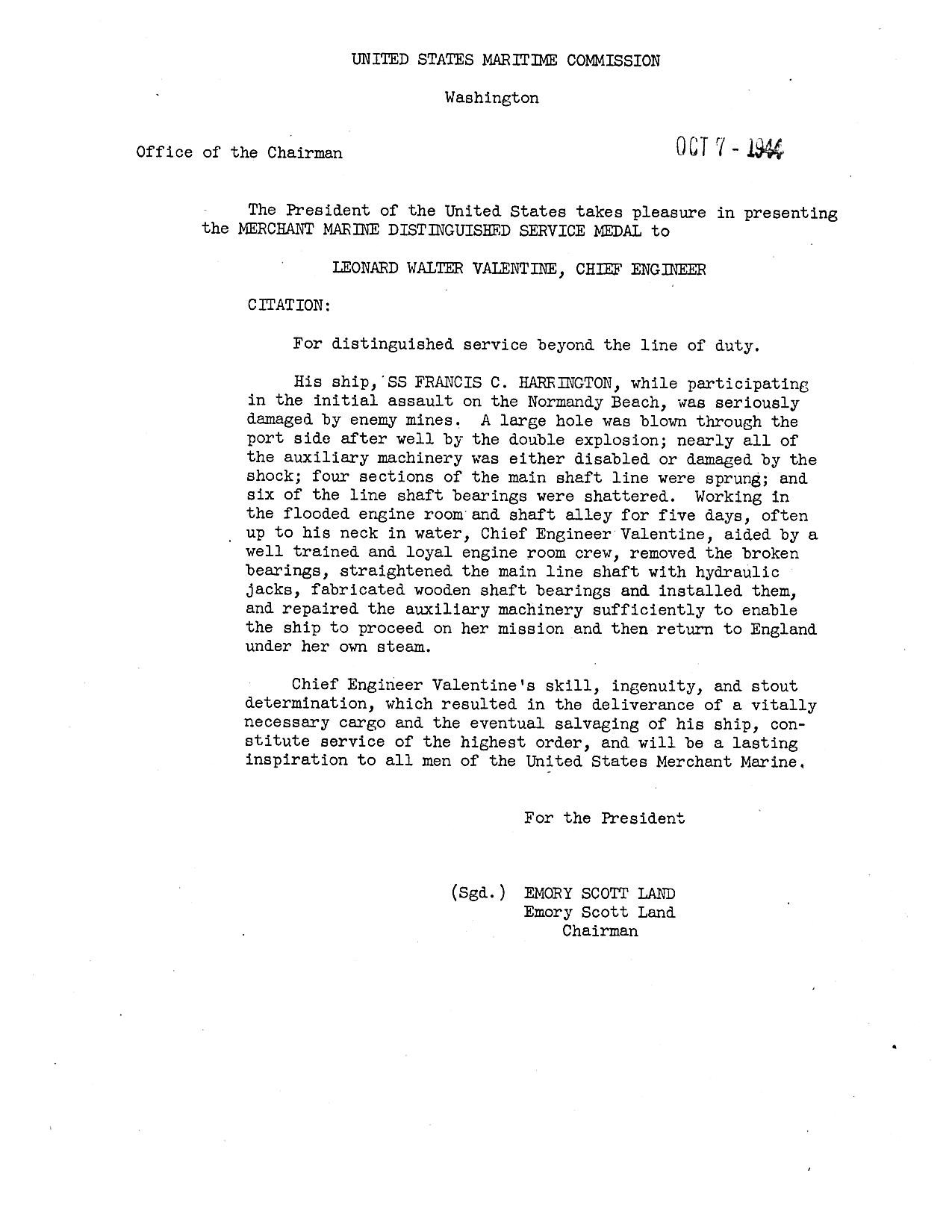
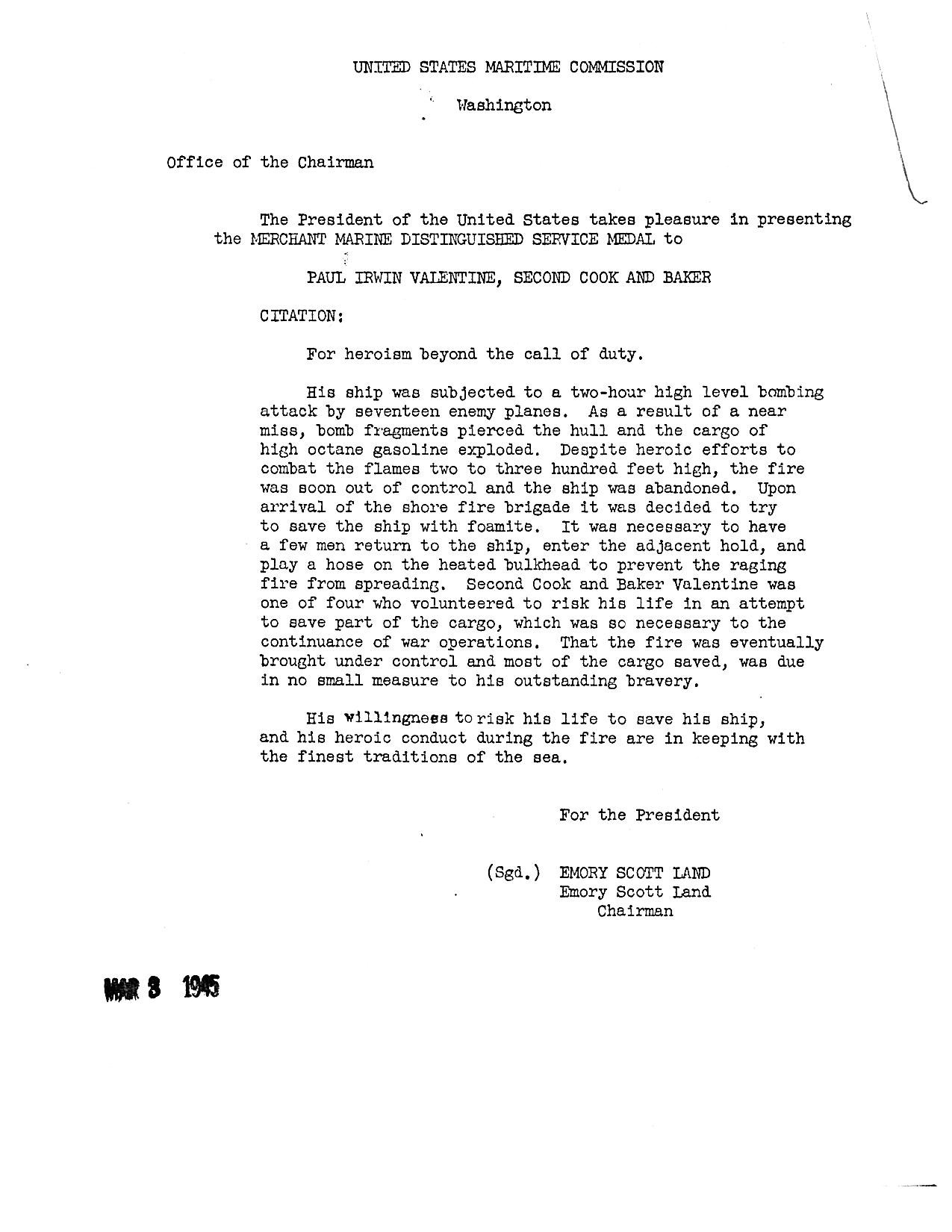
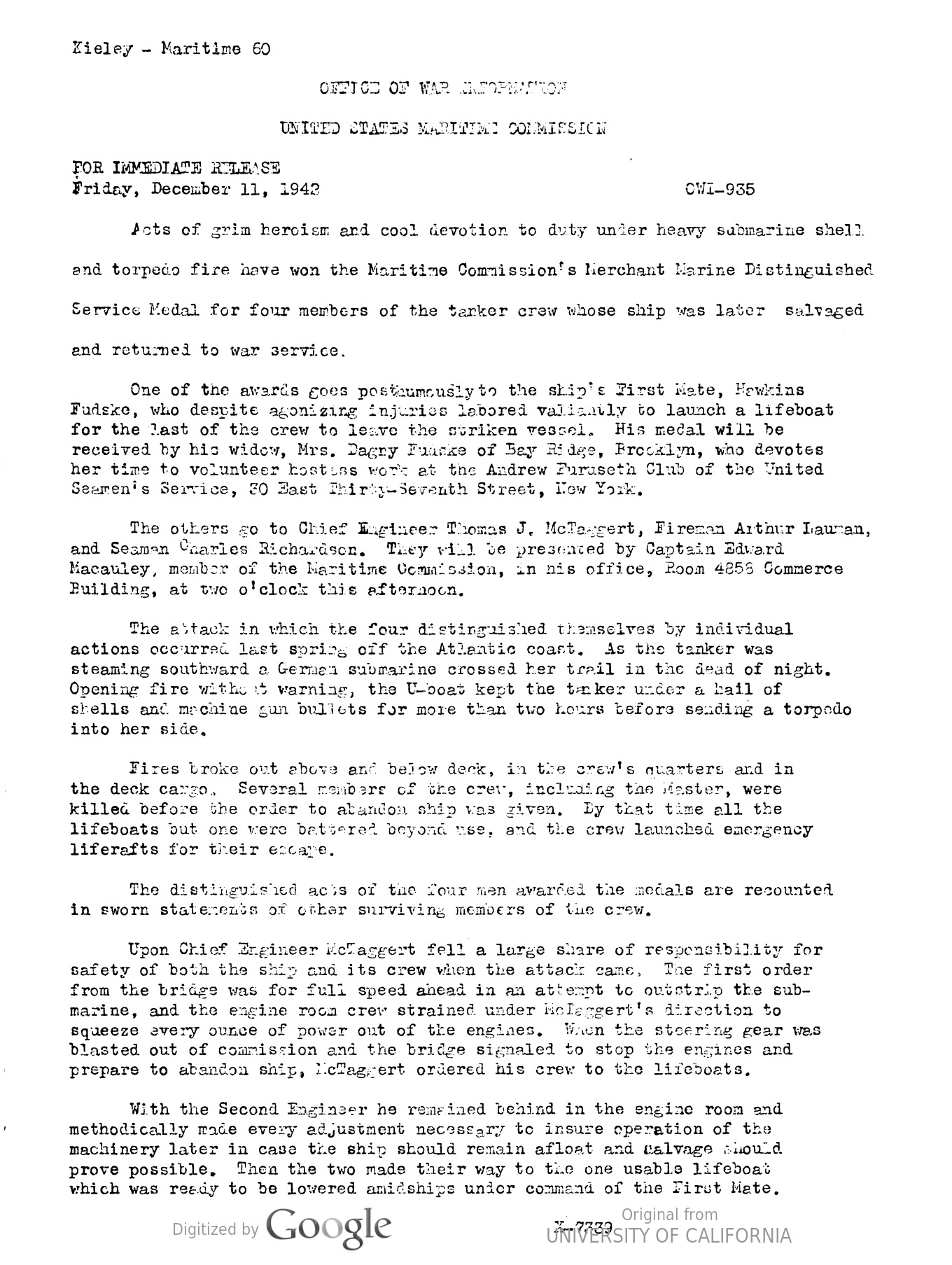
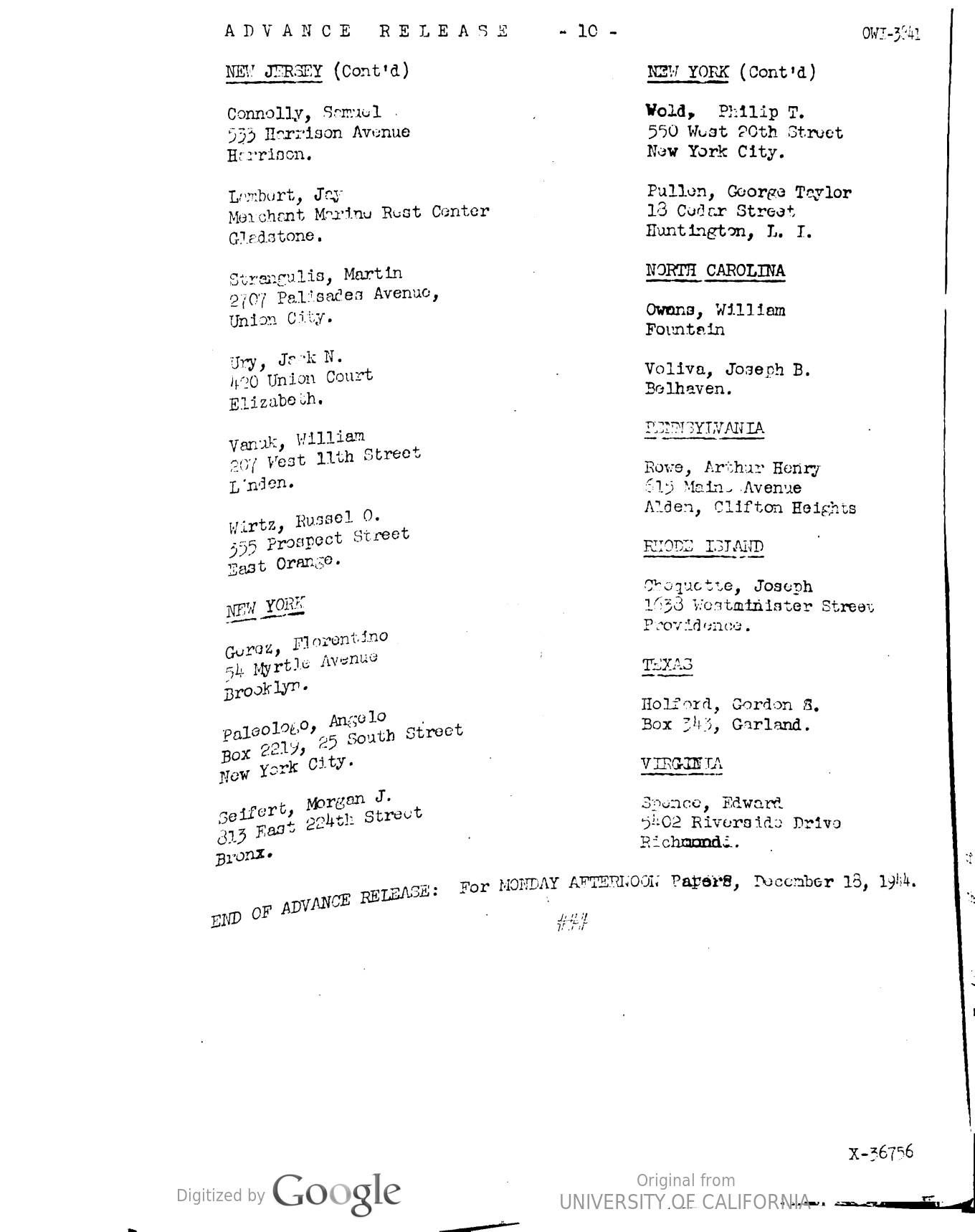
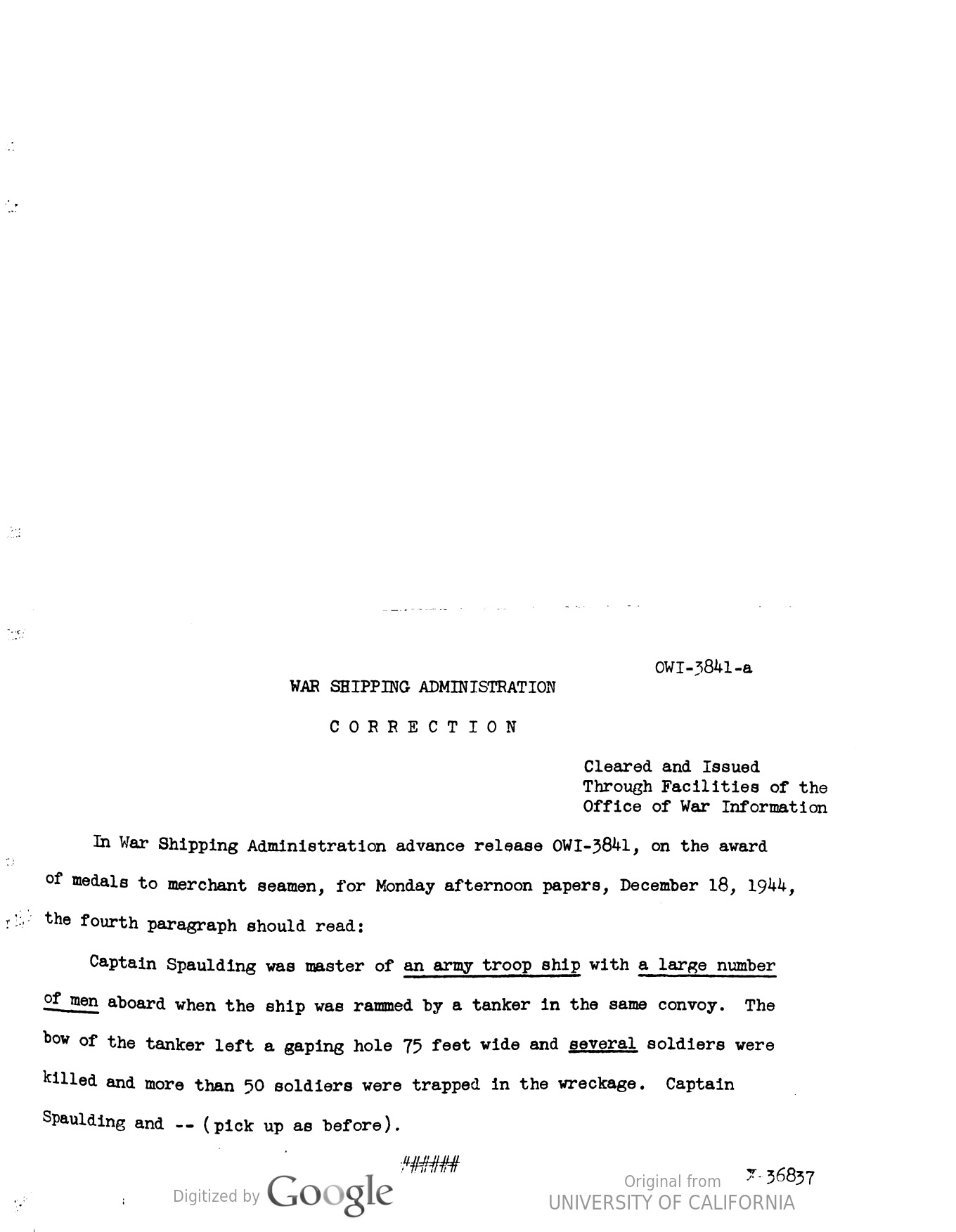
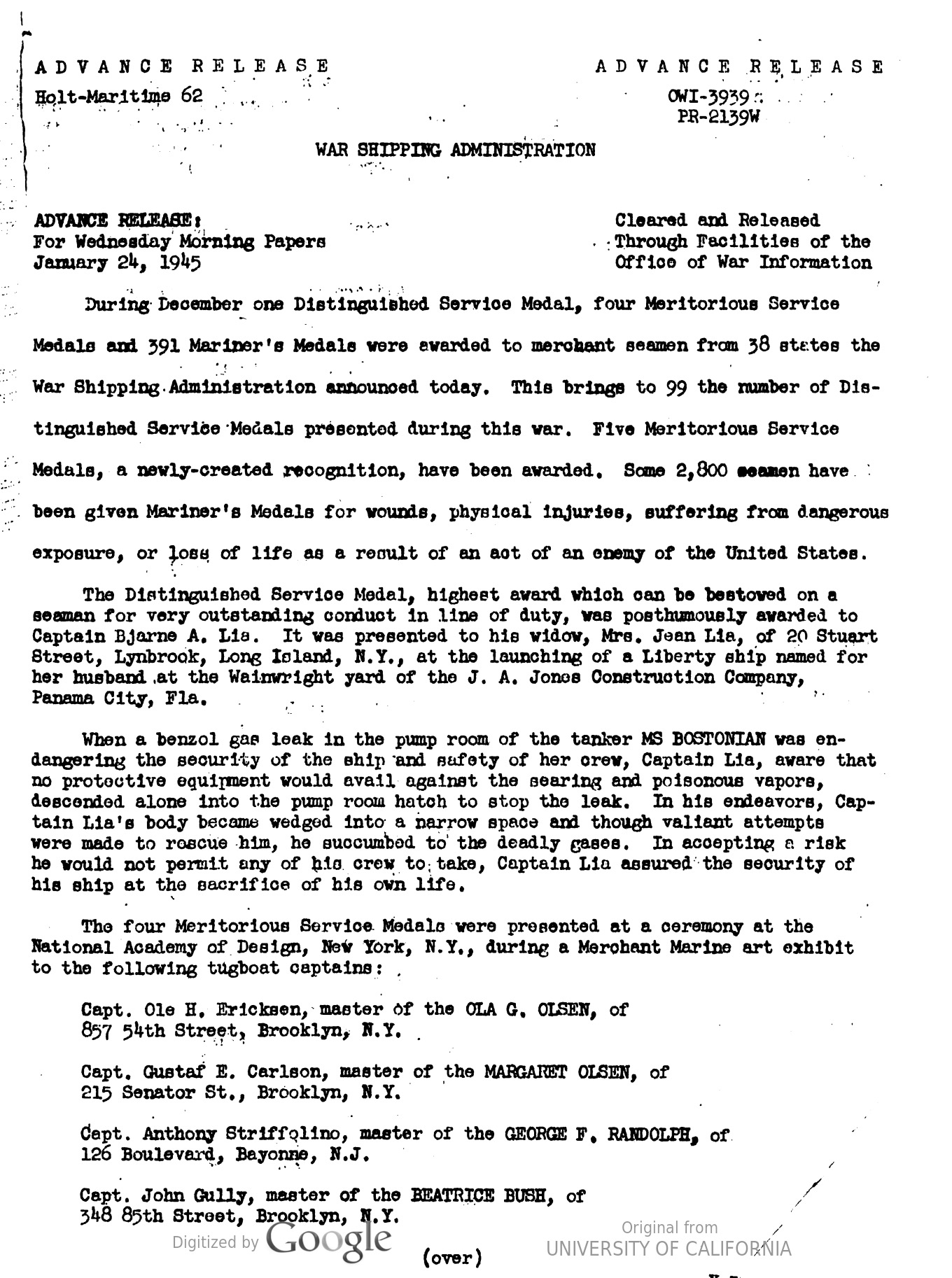
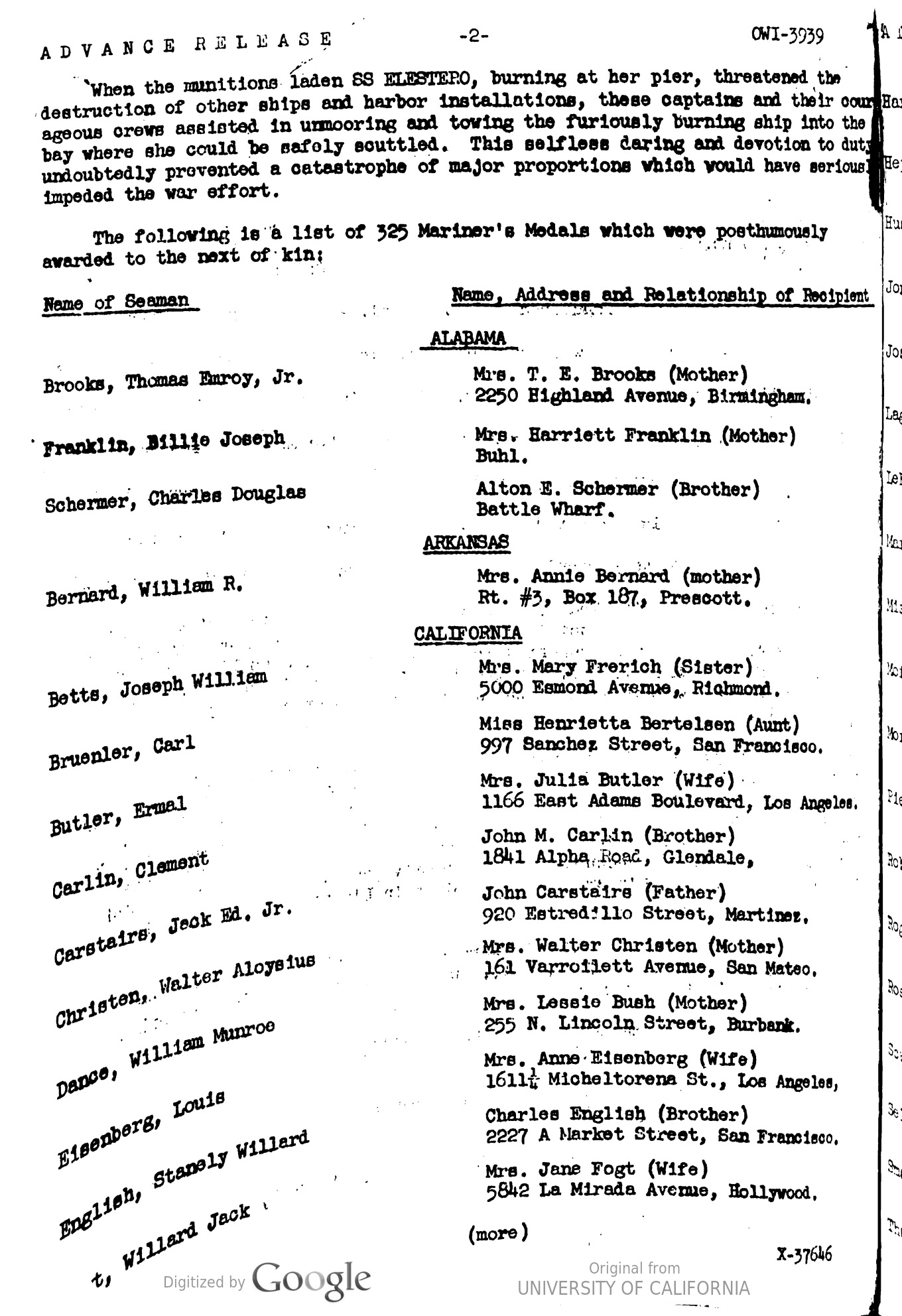
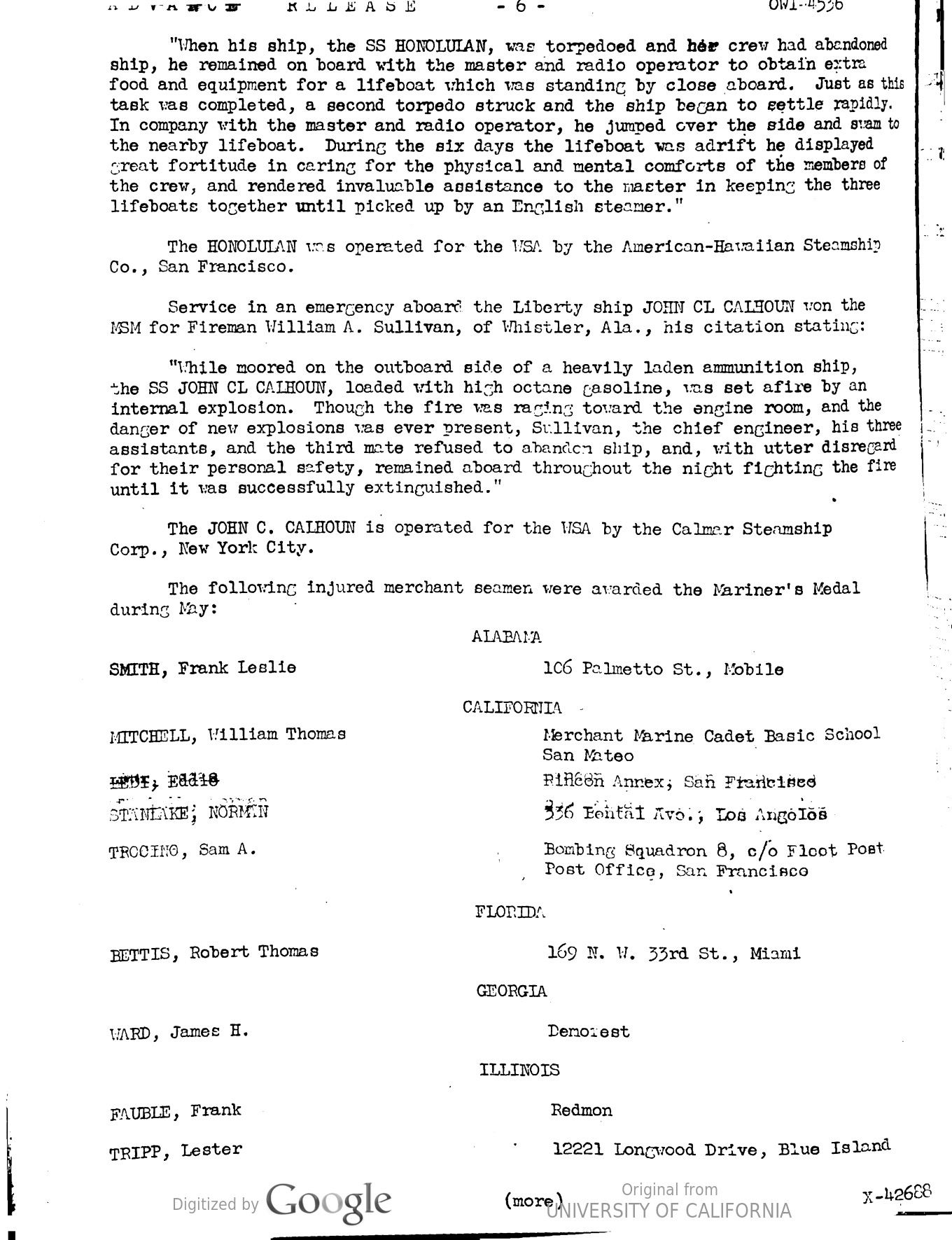
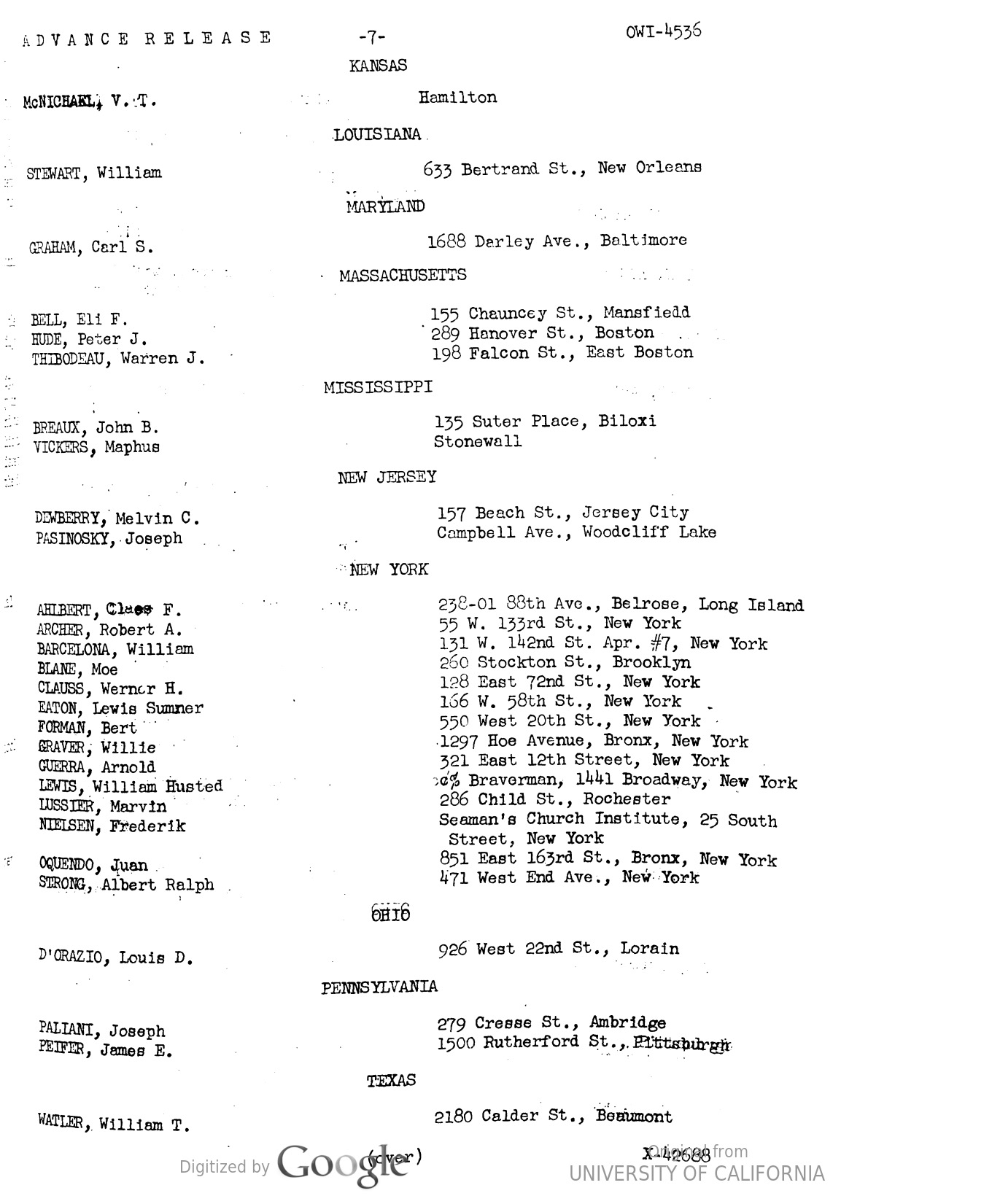
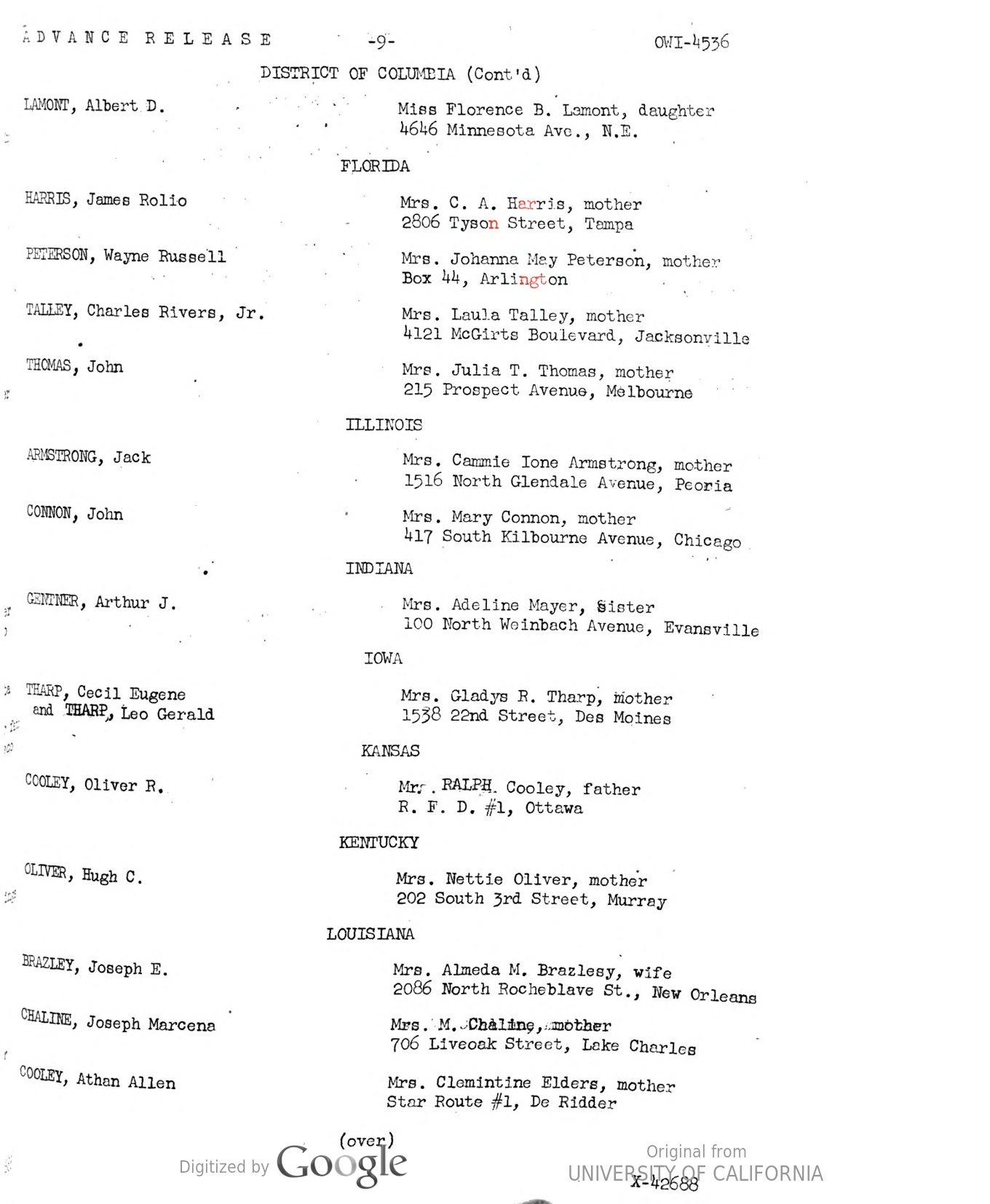
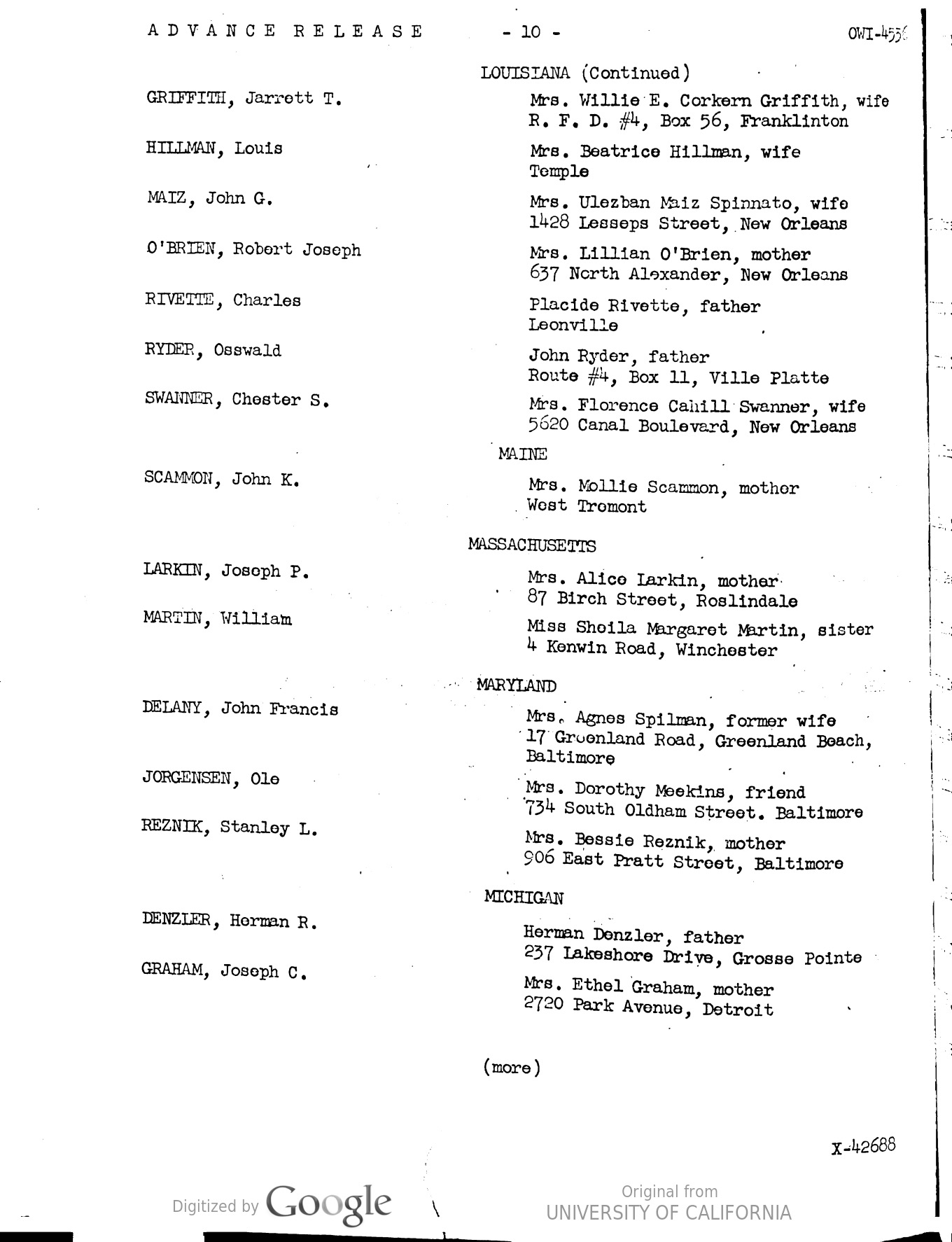
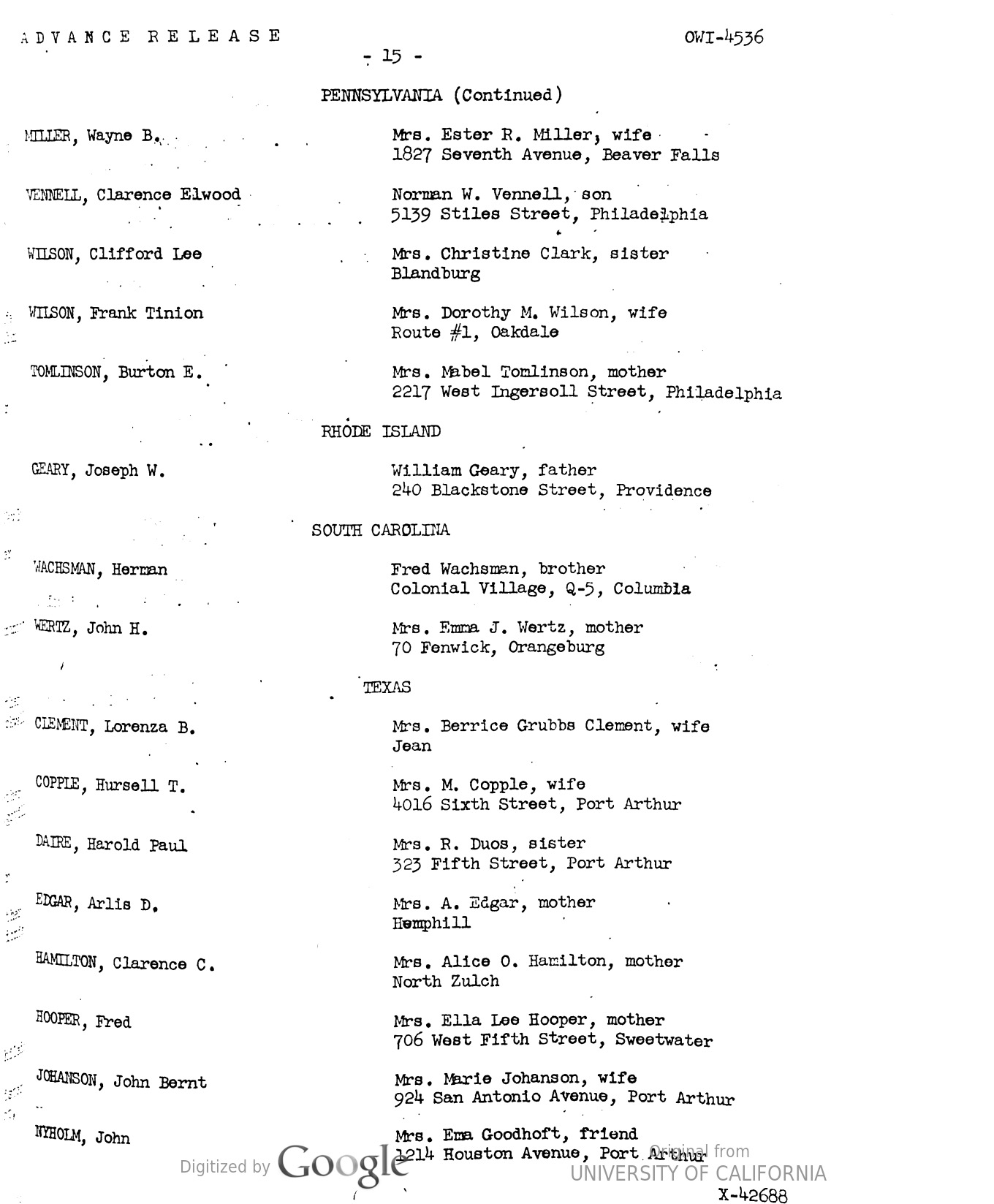
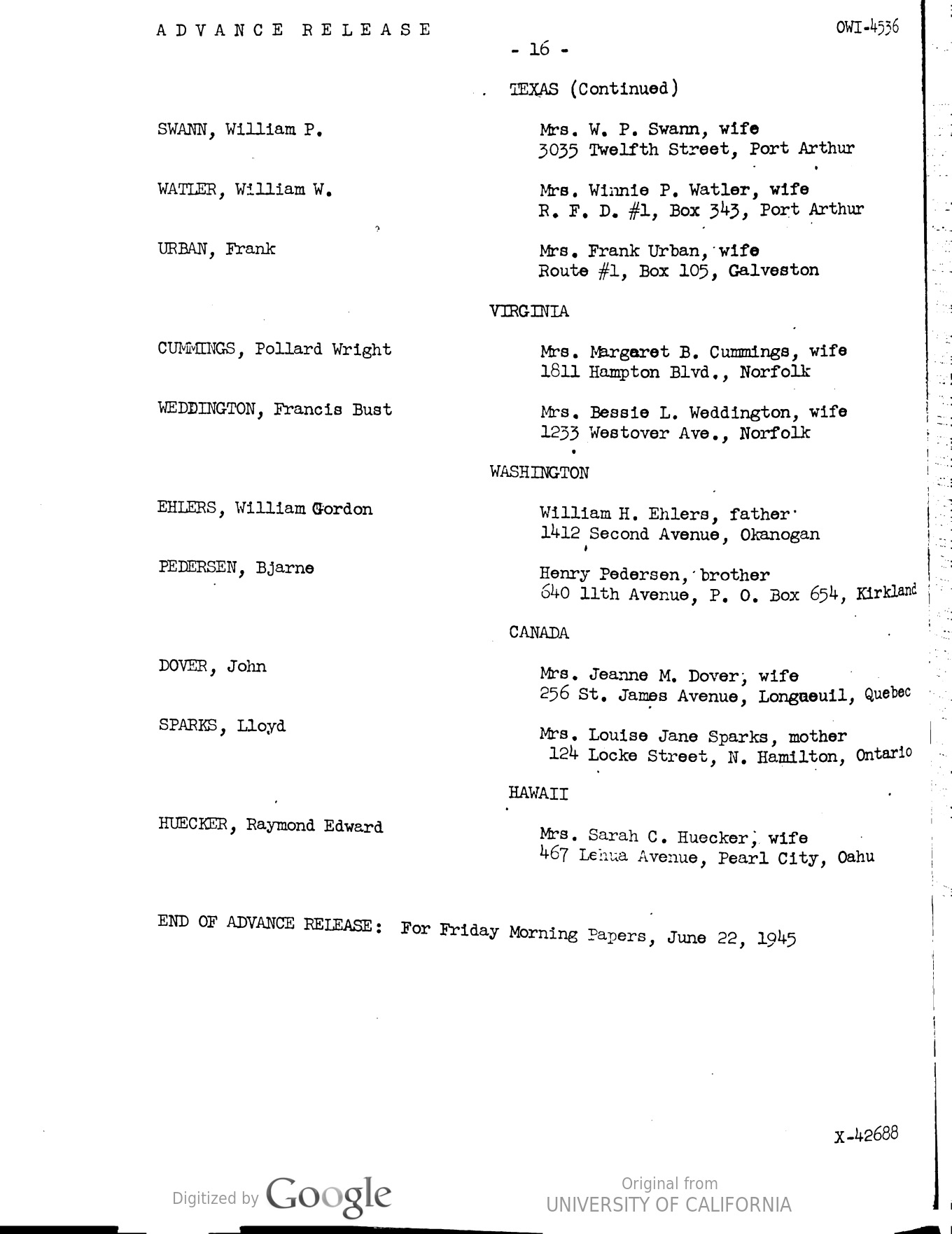
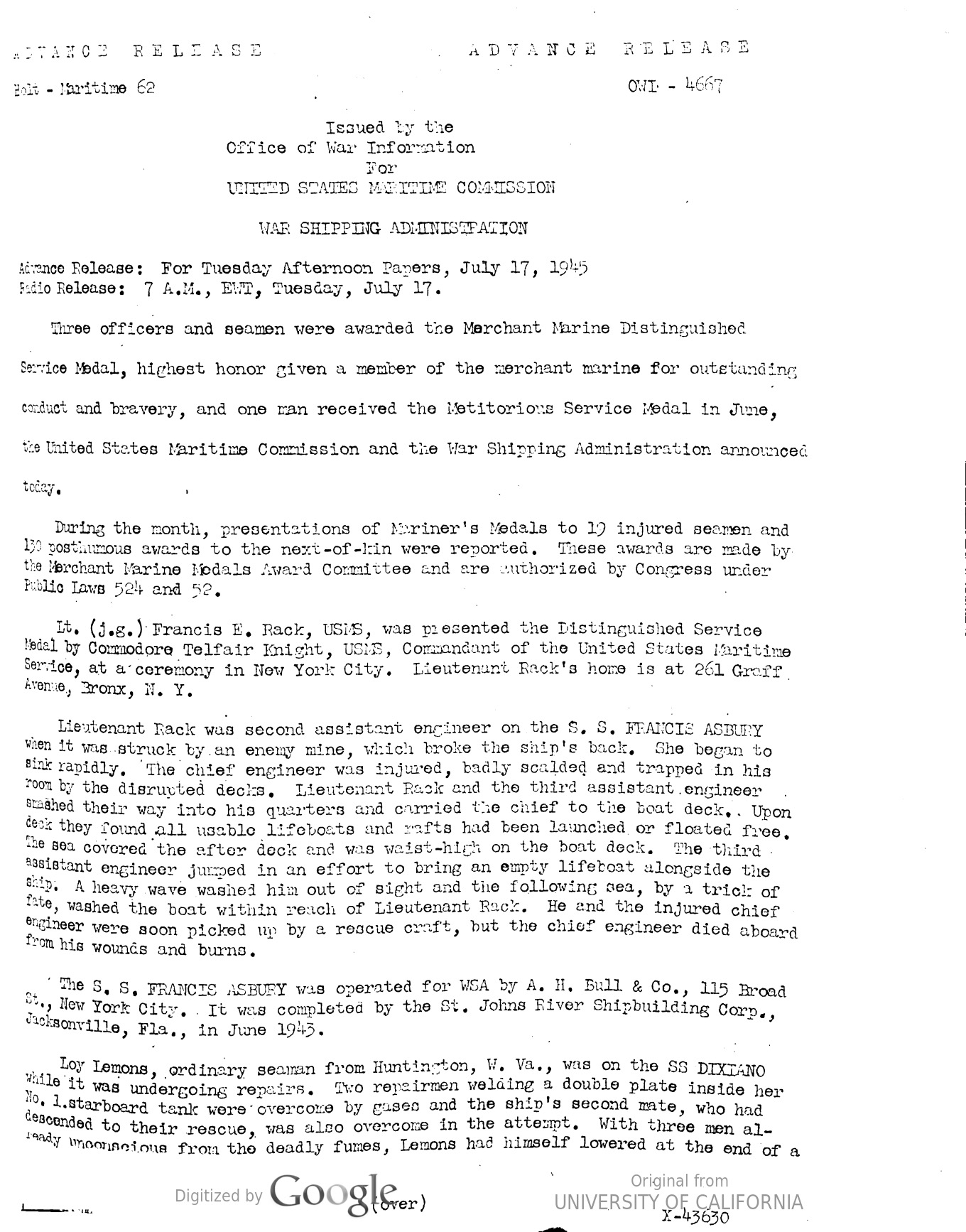
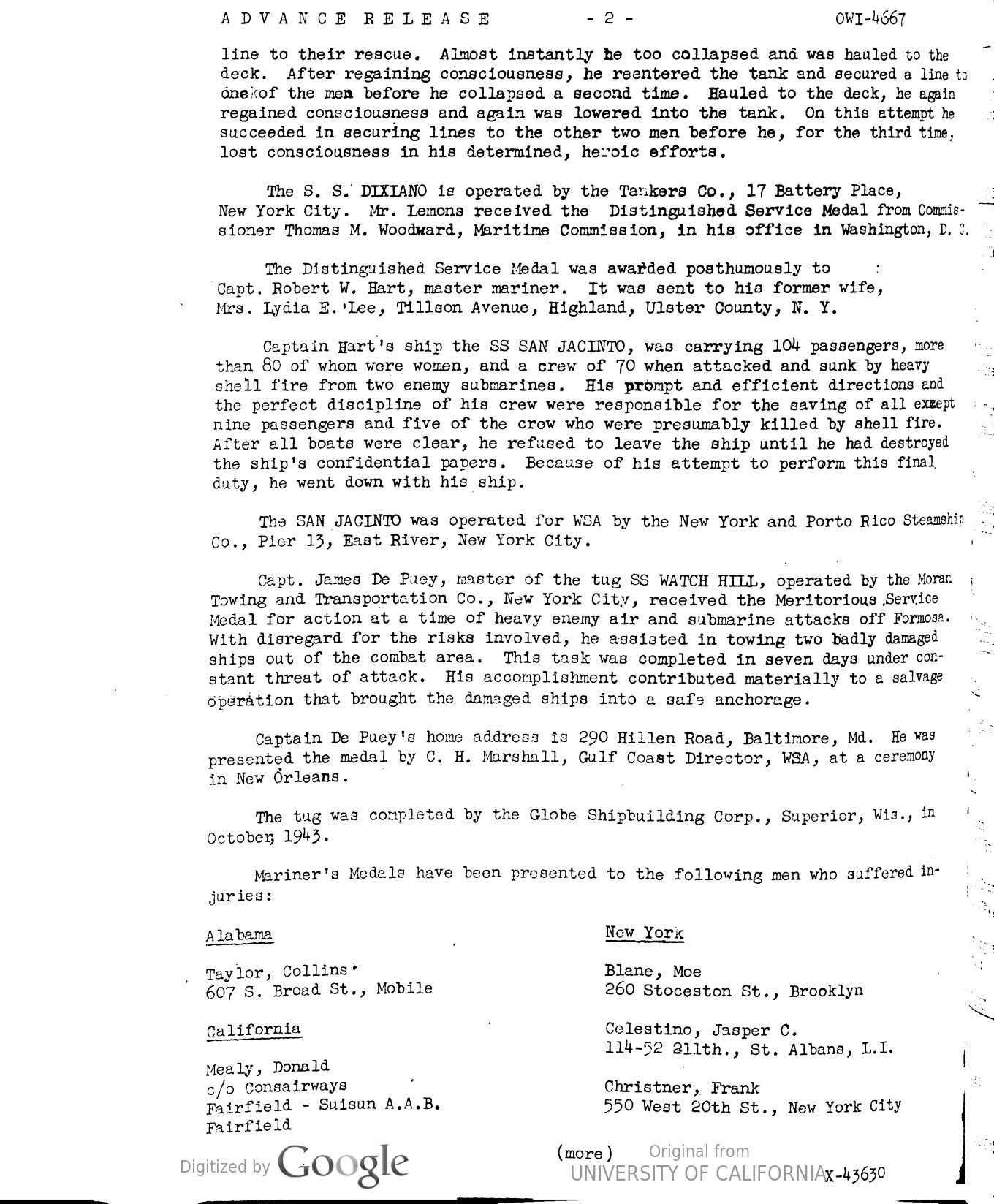
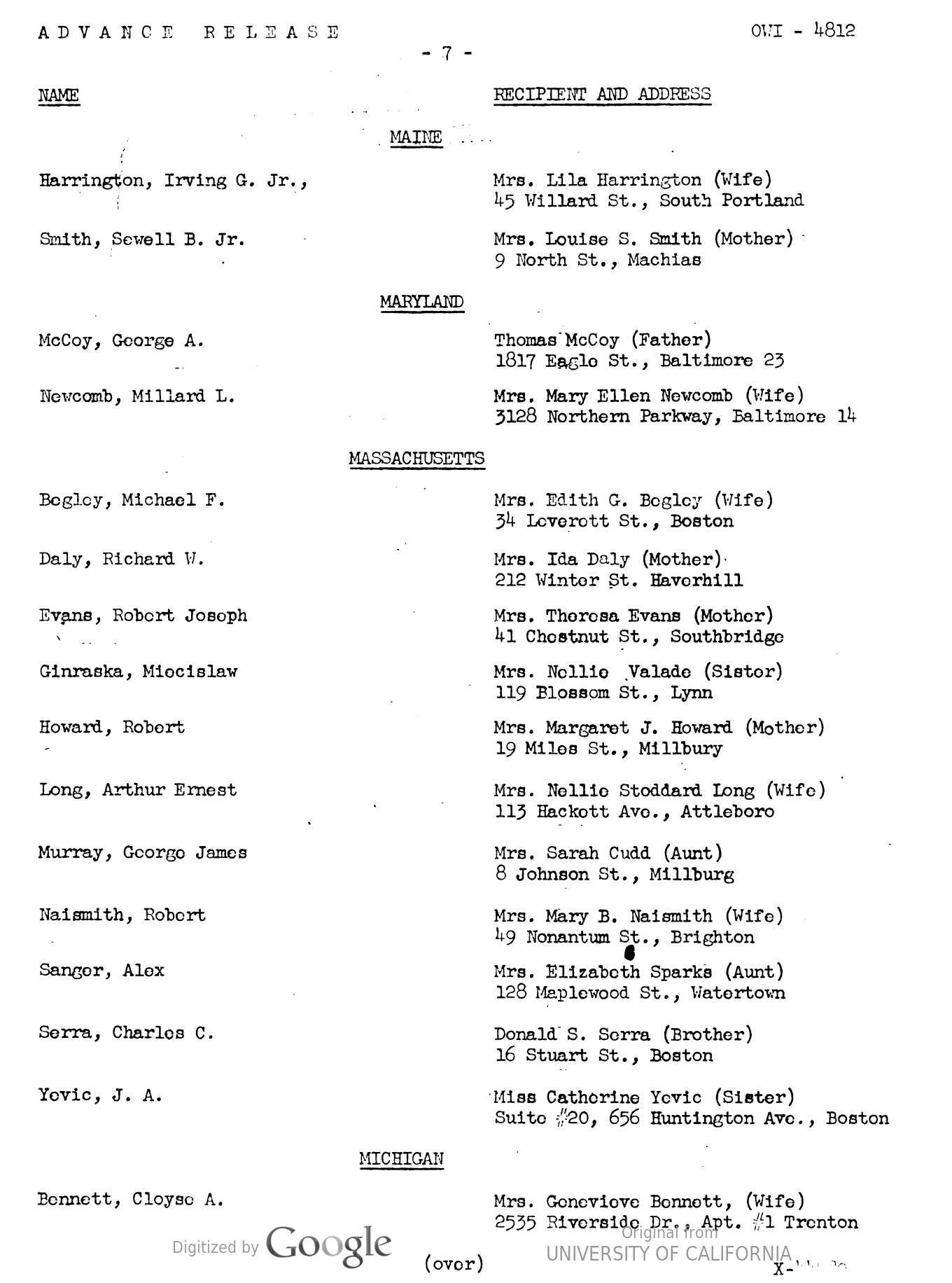
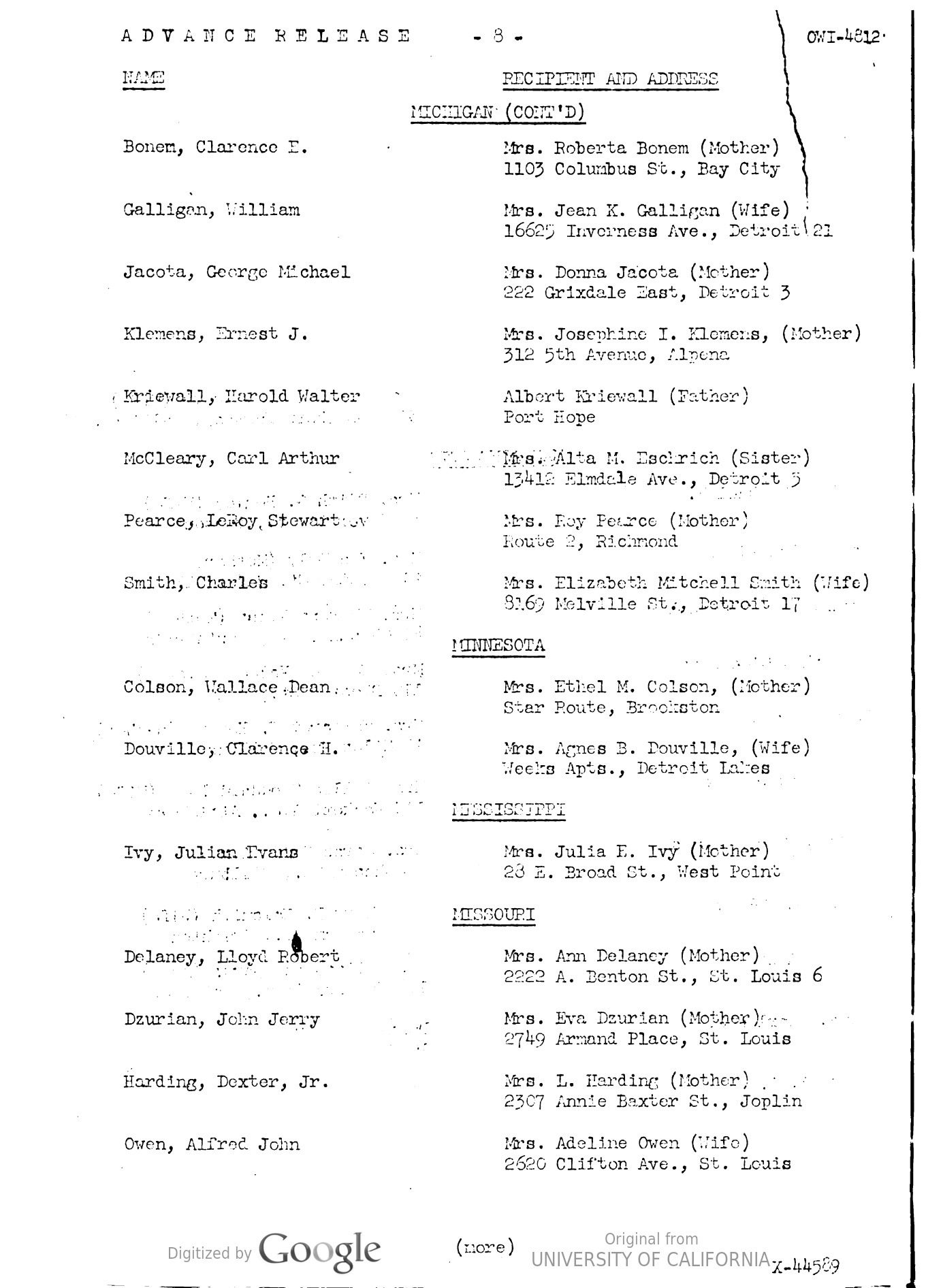
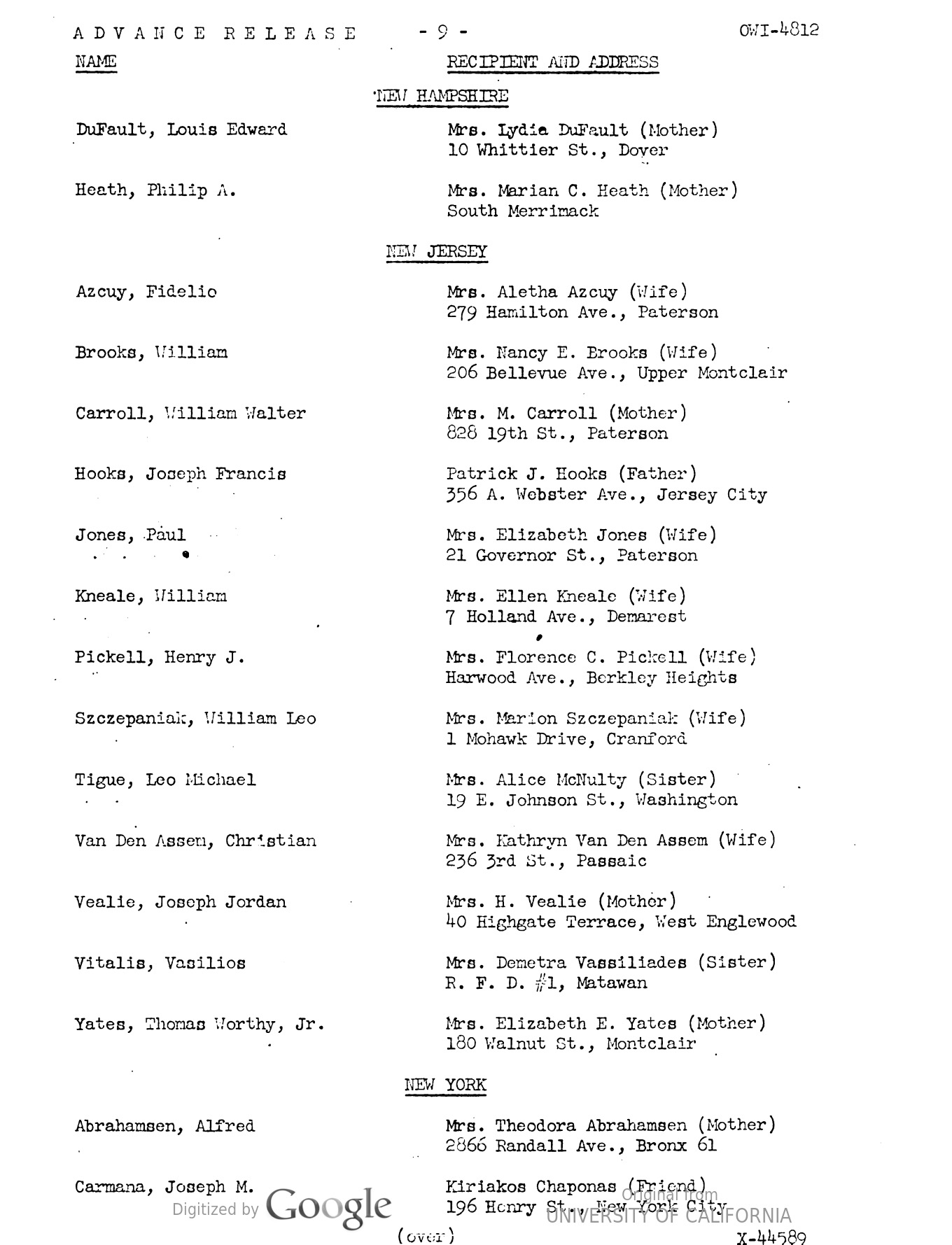
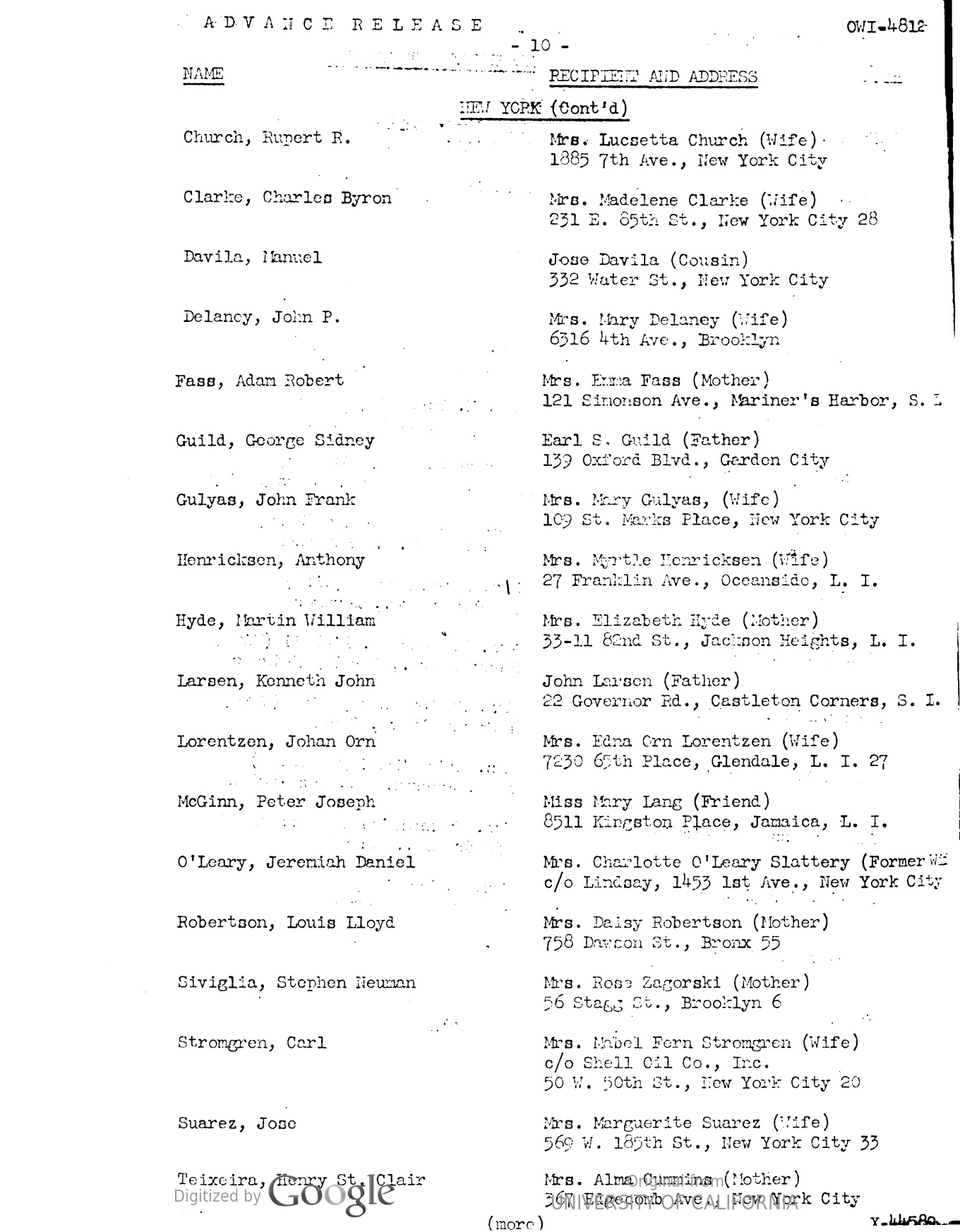
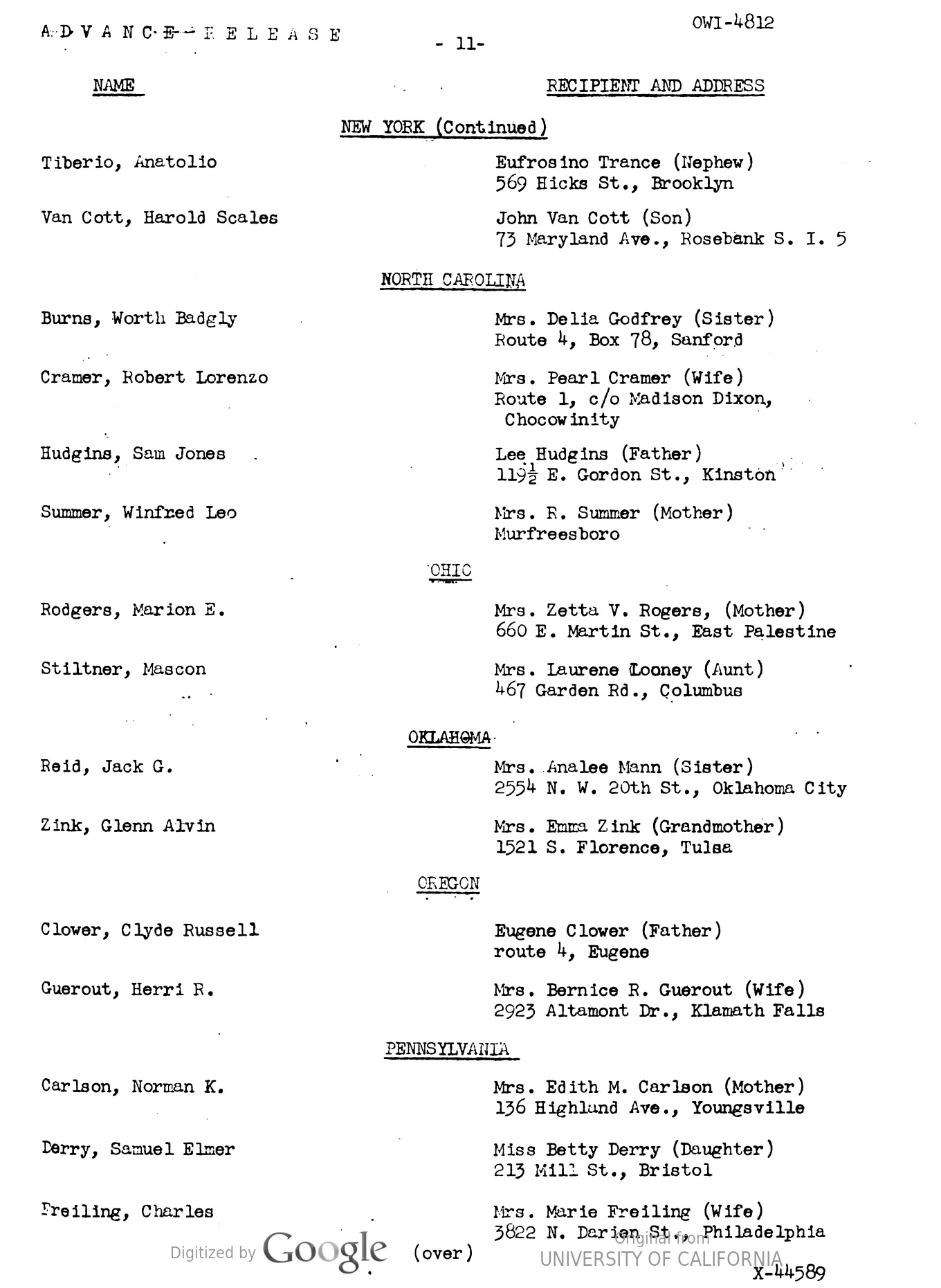
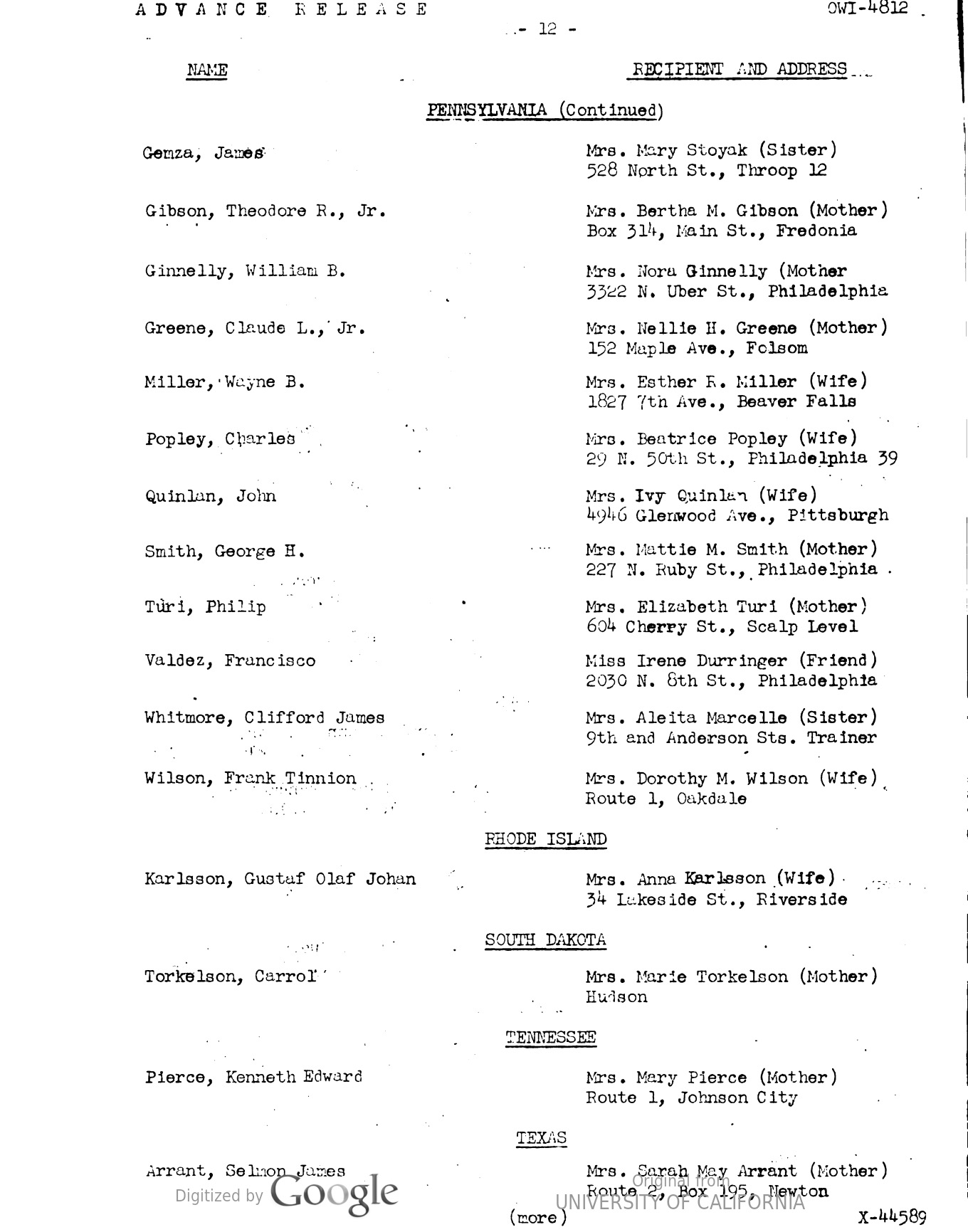
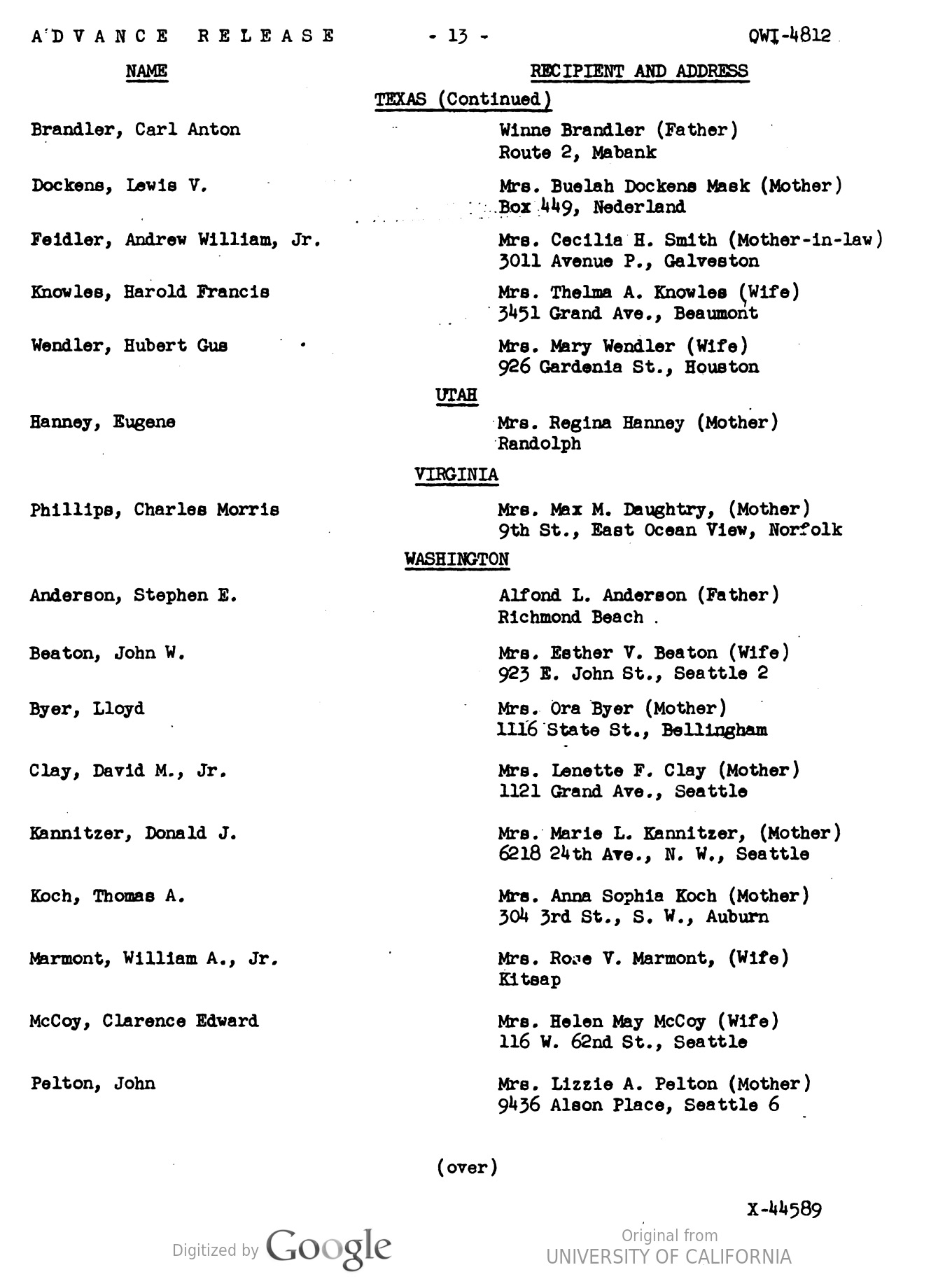
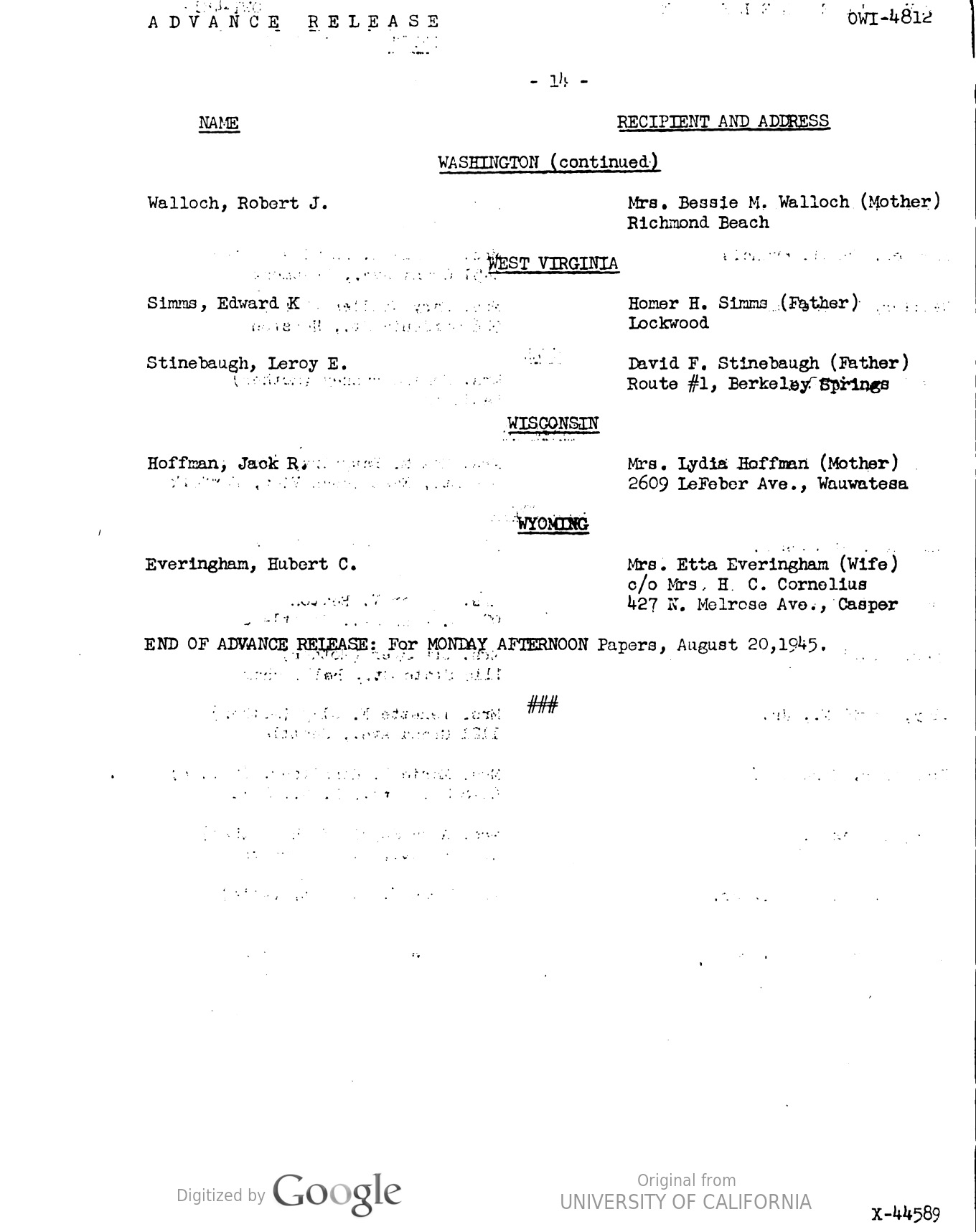
P R E S S  R E L E A S E S  &  C I T A T I O N S  from the Office of War Information

NameFile [name]-page
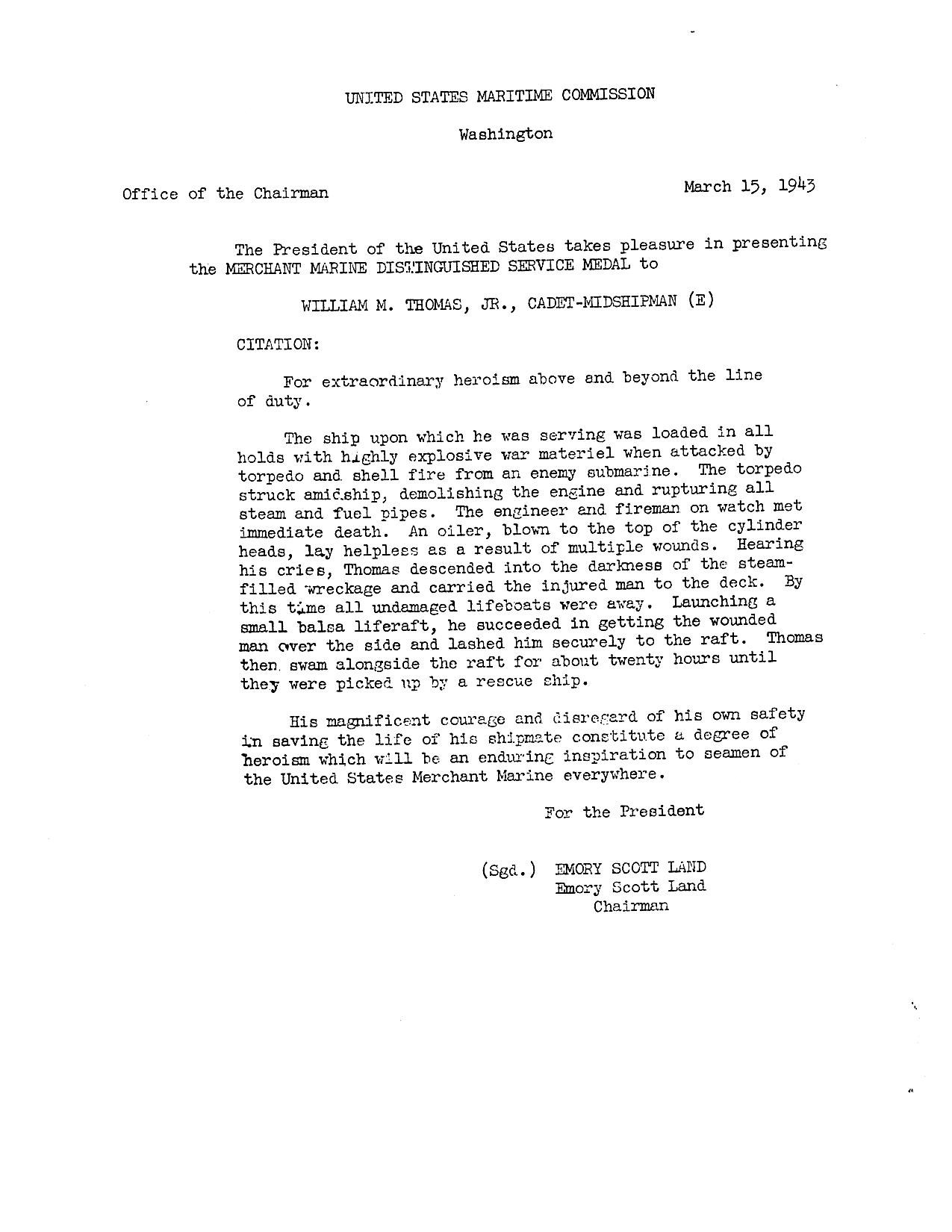
Cheney, Edwin Fox, Jr.owi-615-01
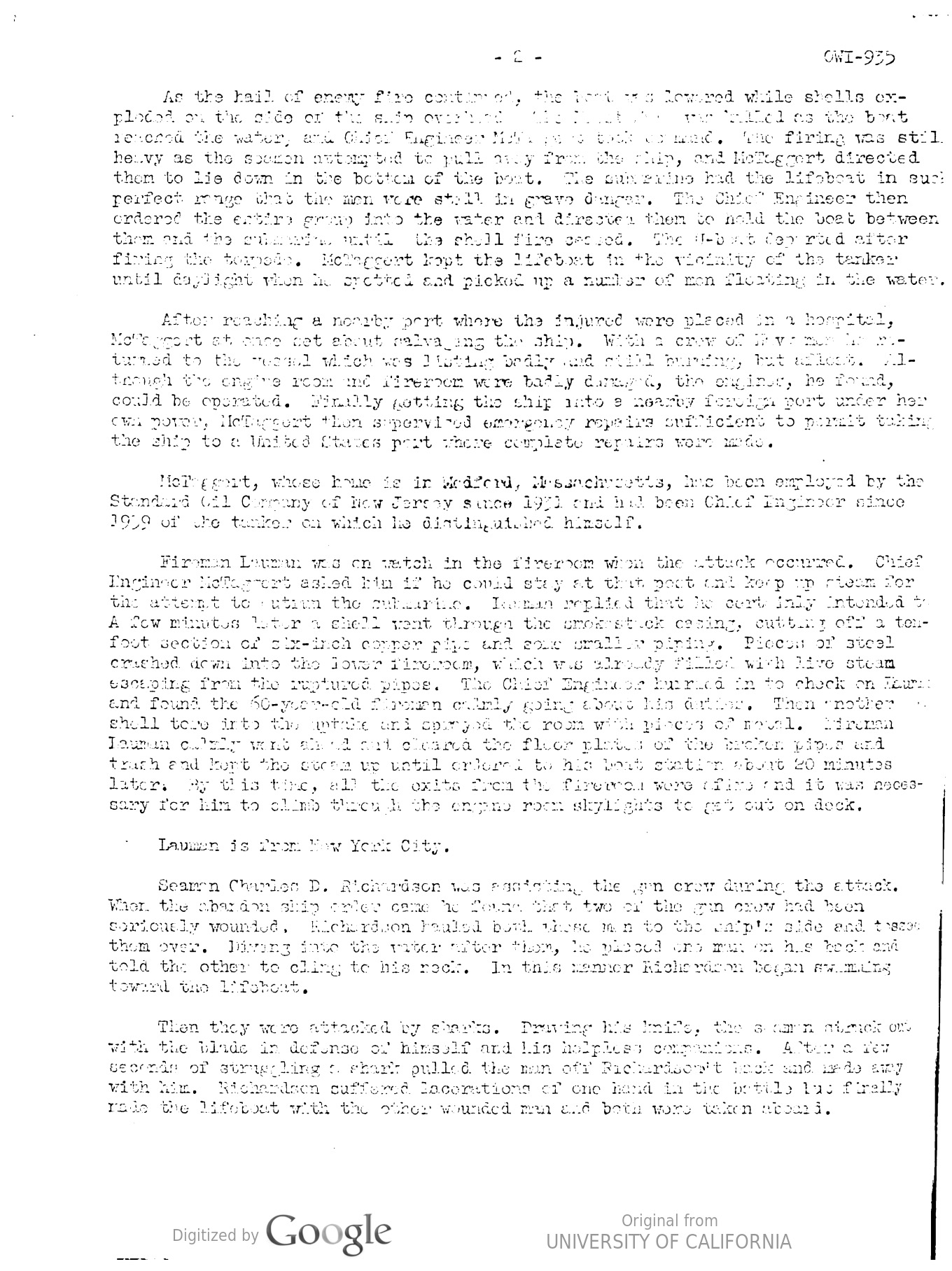
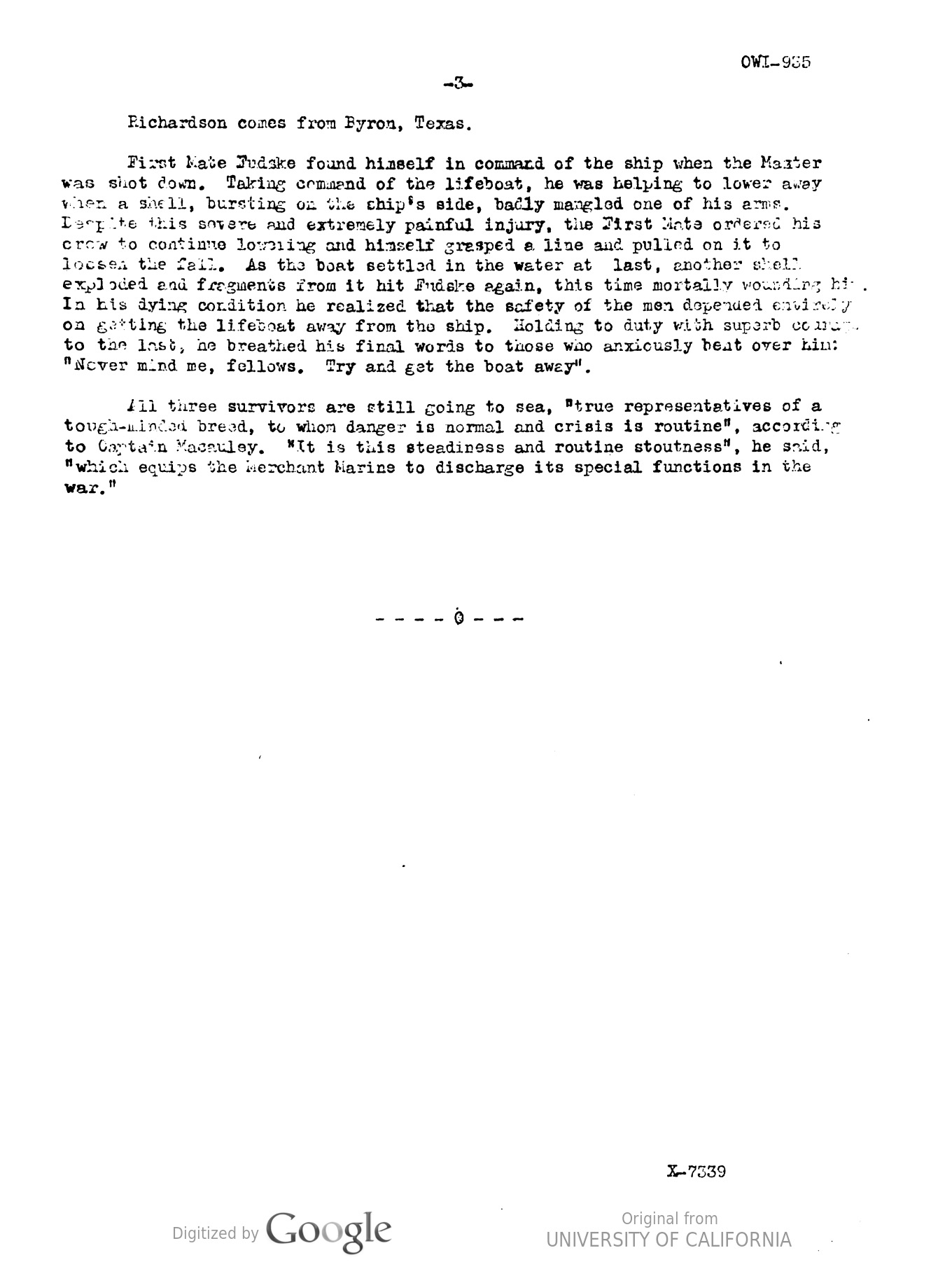
Fudske, Hawkinsowi-935-01
McTaggart, Thomas J.owi-935-01
Lauman, Arthurowi-935-01
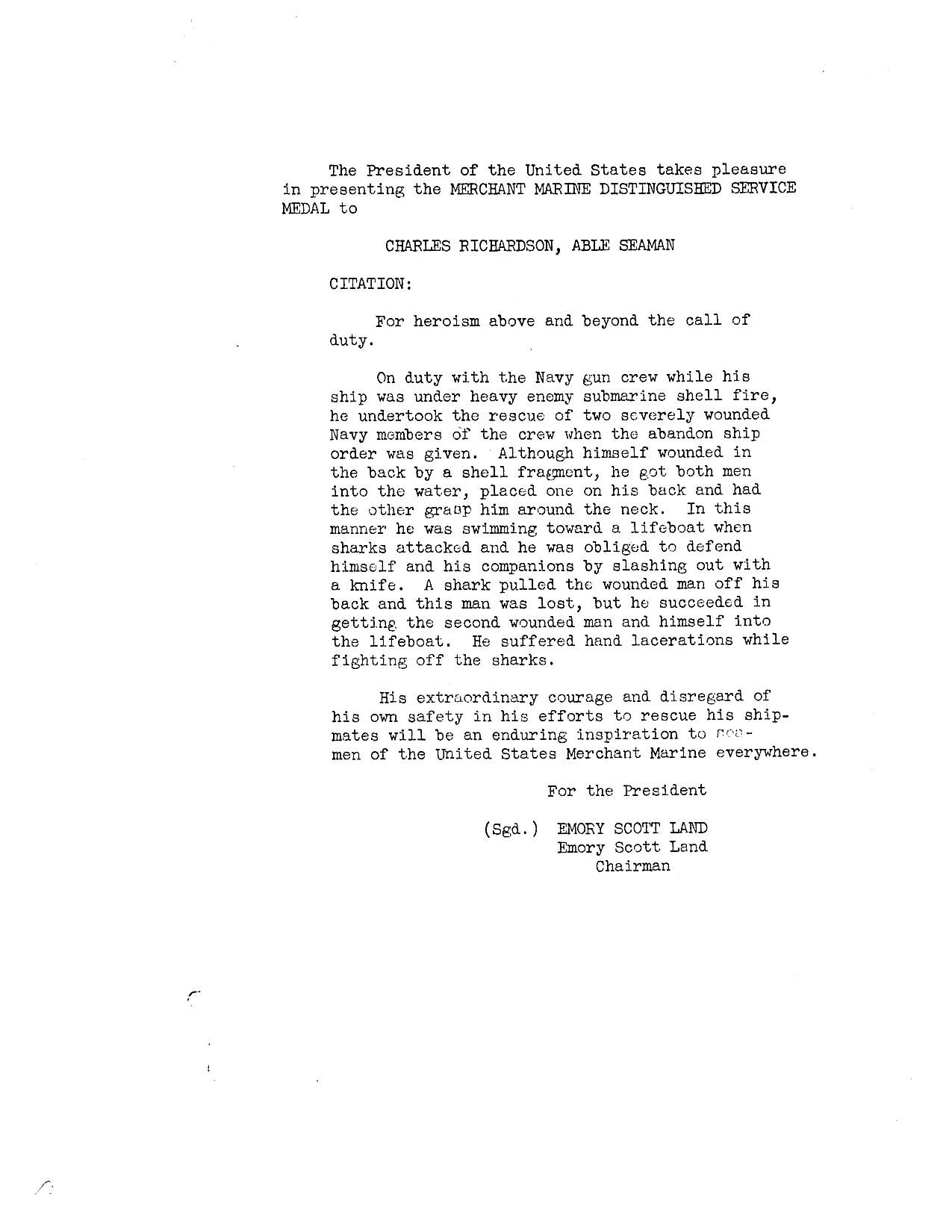
Richardson, Charles D.owi-935-01
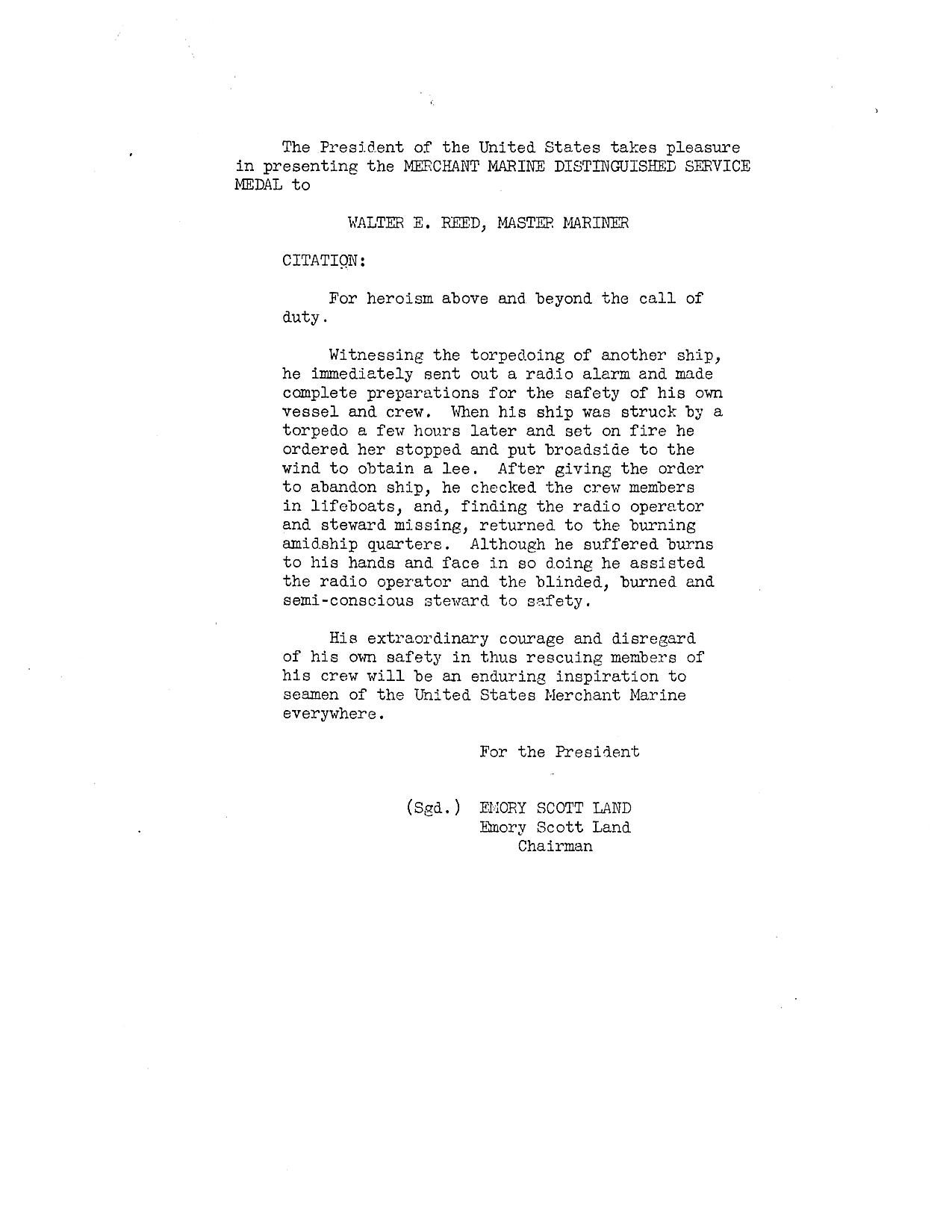
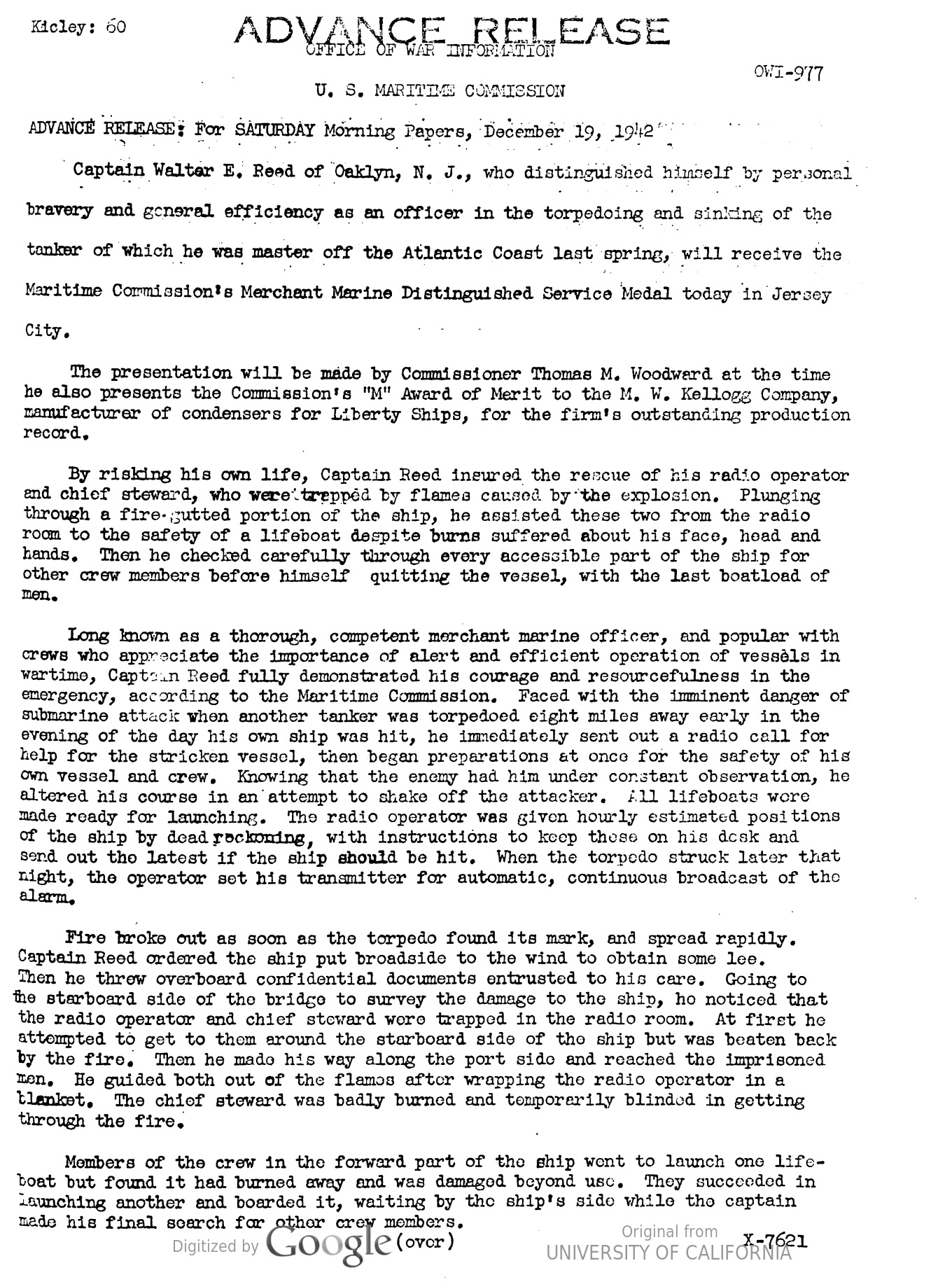
Reed, Walter E.owi-977-01
Friberg, Augustowi-1068-01
Murphy, Maximoowi-1266-01
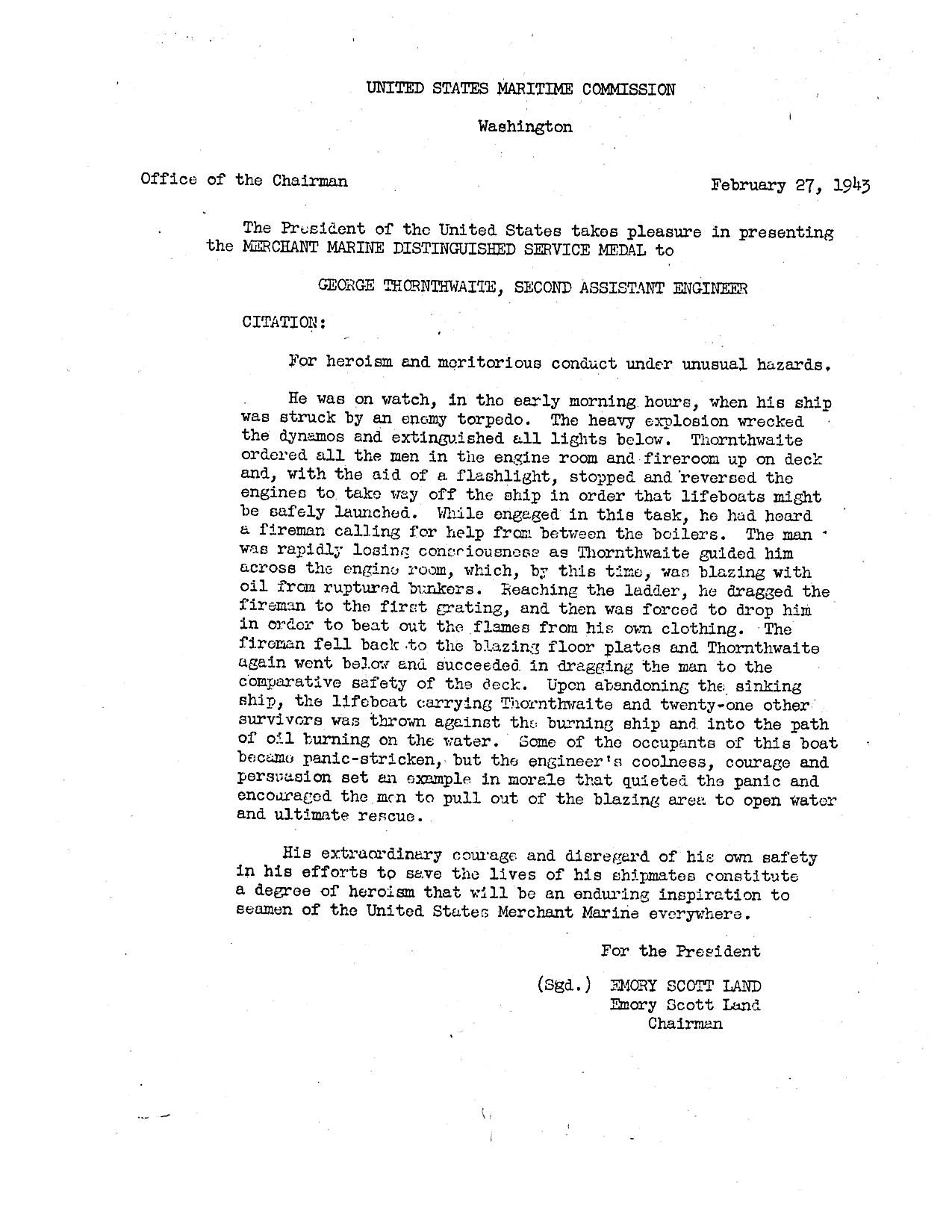
Thornthwaite, Georgeowi-1333-01
O’Hara, Edwin Josephowi-1443-01
Thomas, William Morris, Jr.owi-1443-01
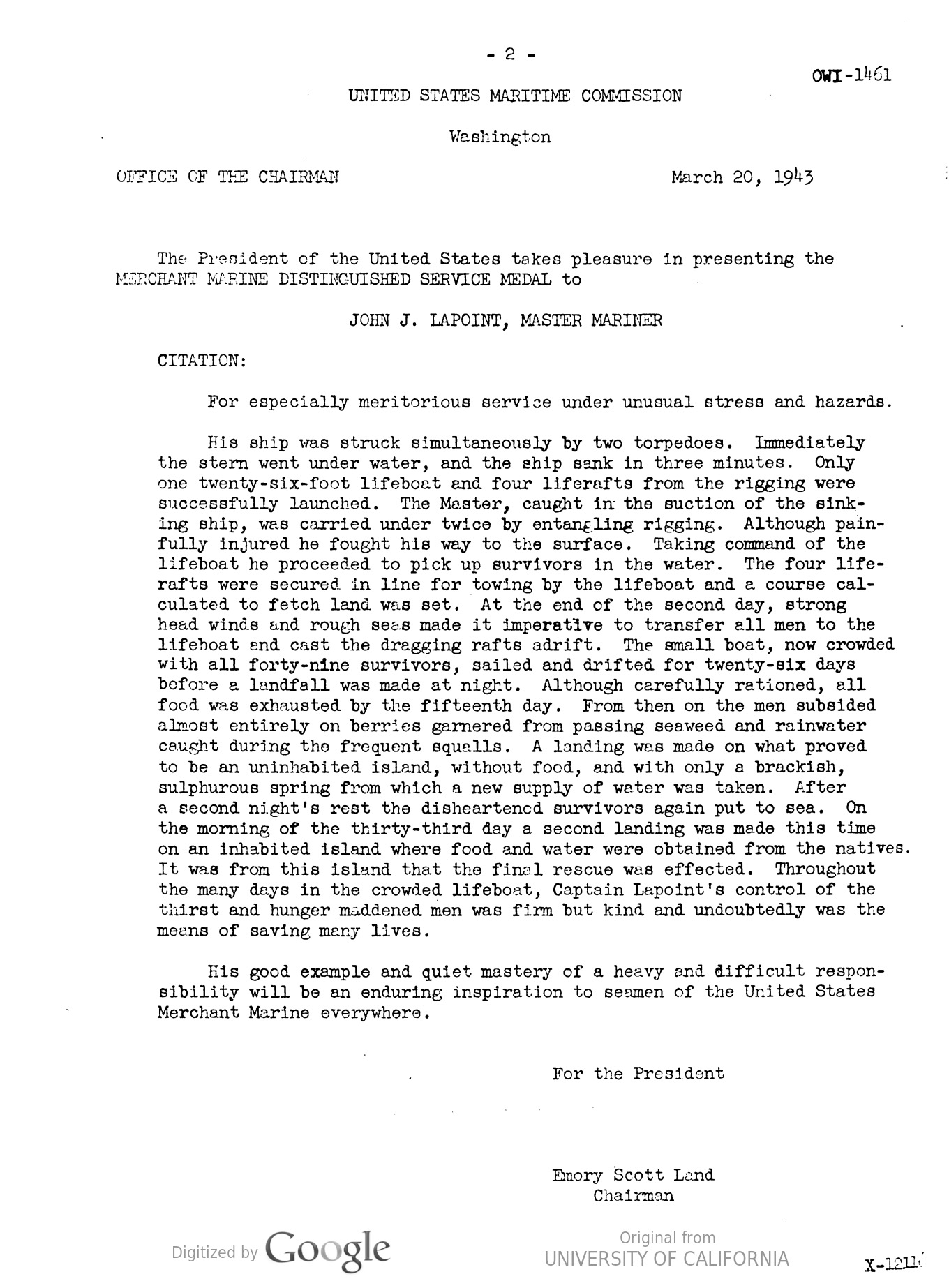
LaPoint, John J.owi-1461-02
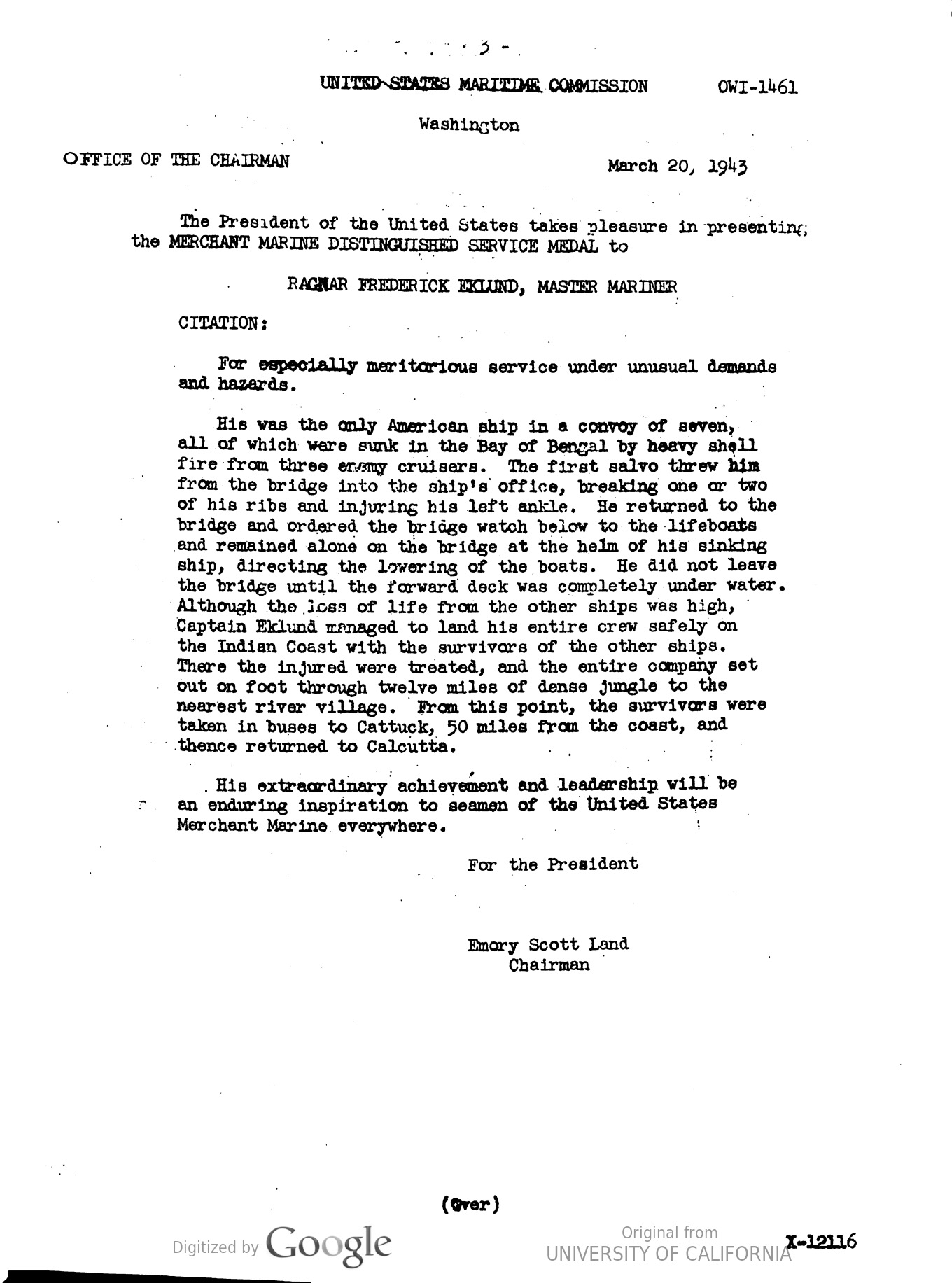
Eklund, Ragnar Frederickowi-1461-03
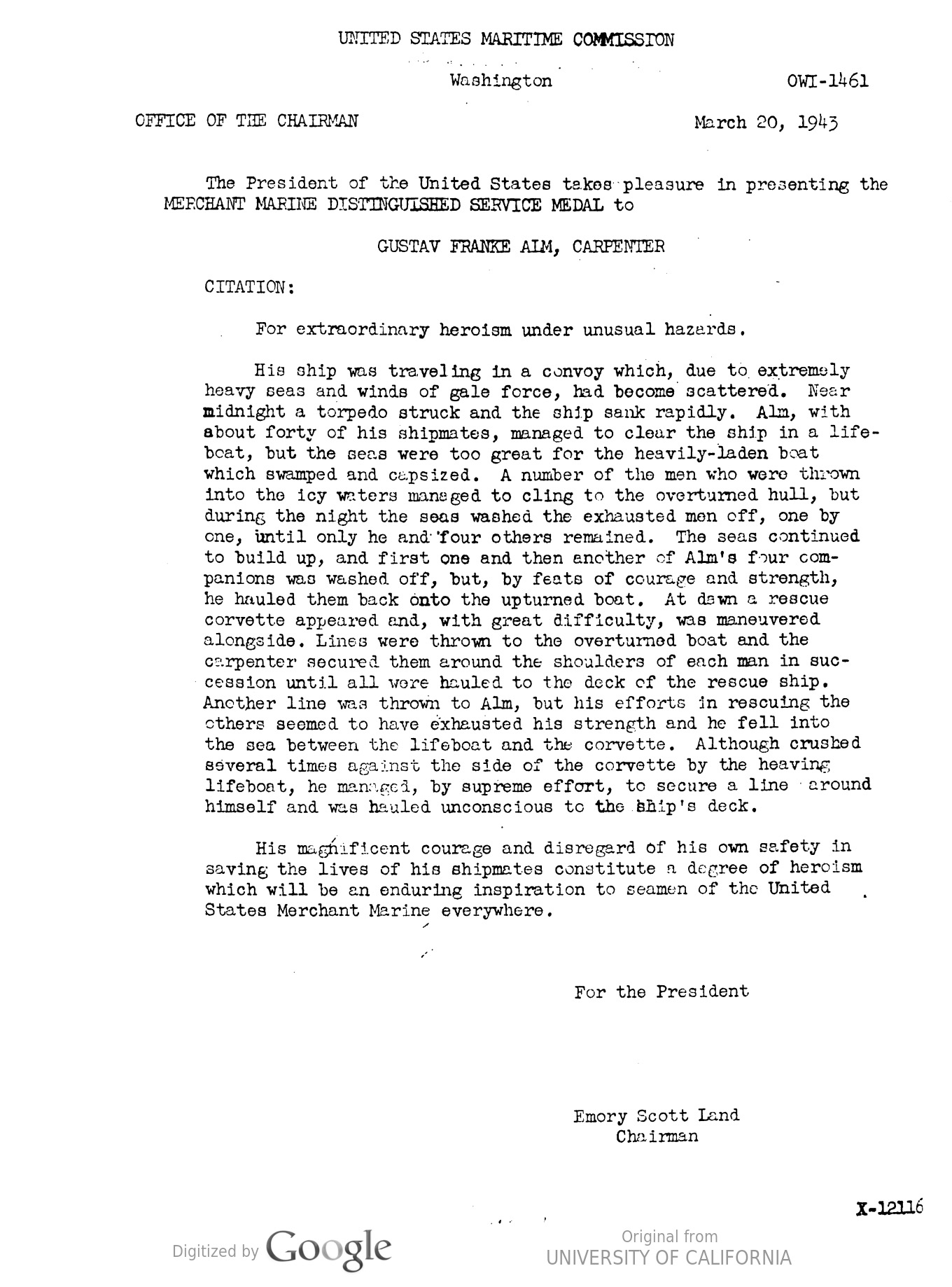
Alm, Gustav Frankeowi-1461-04
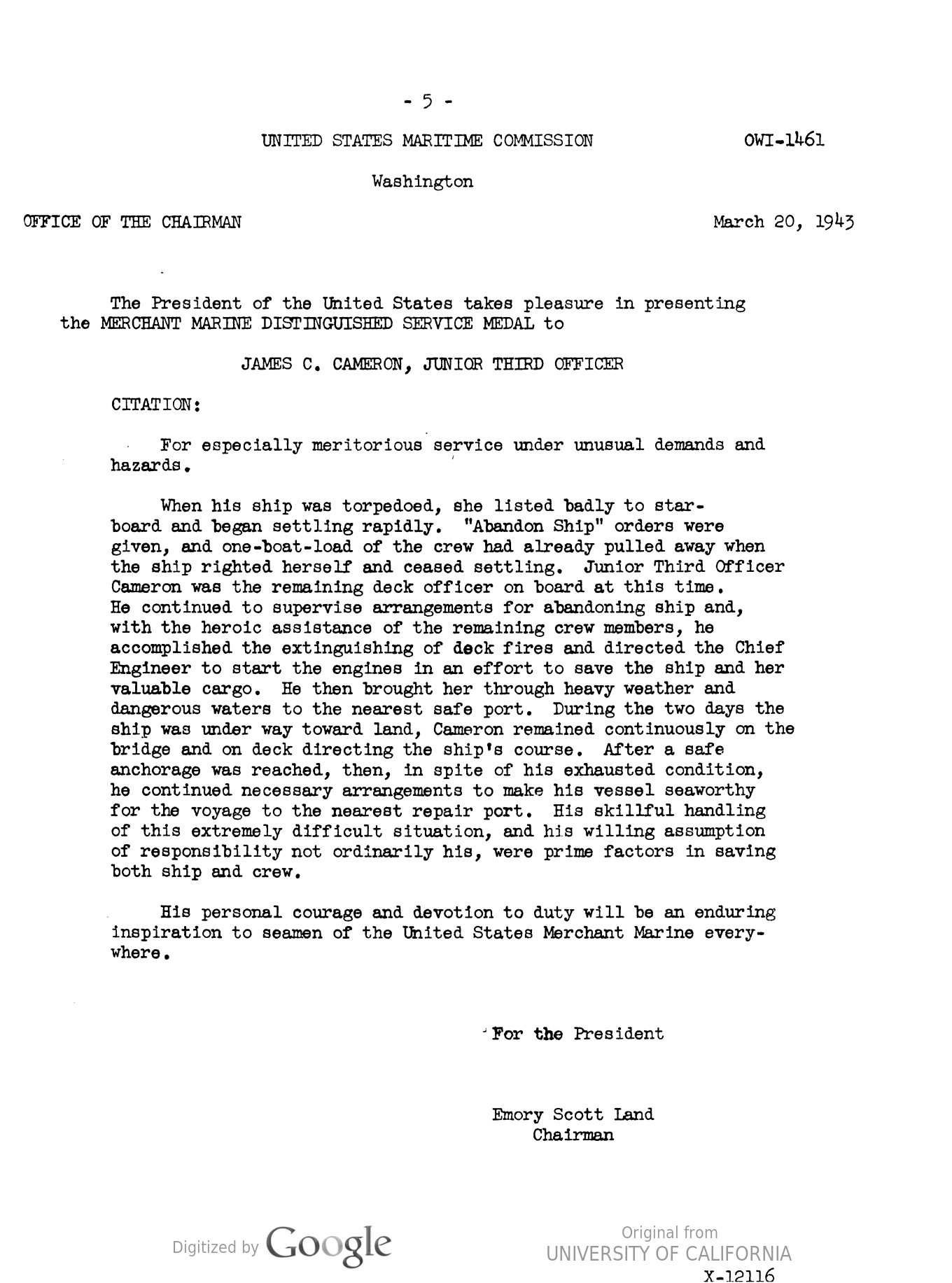
Cameron, James C.owi-1461-05
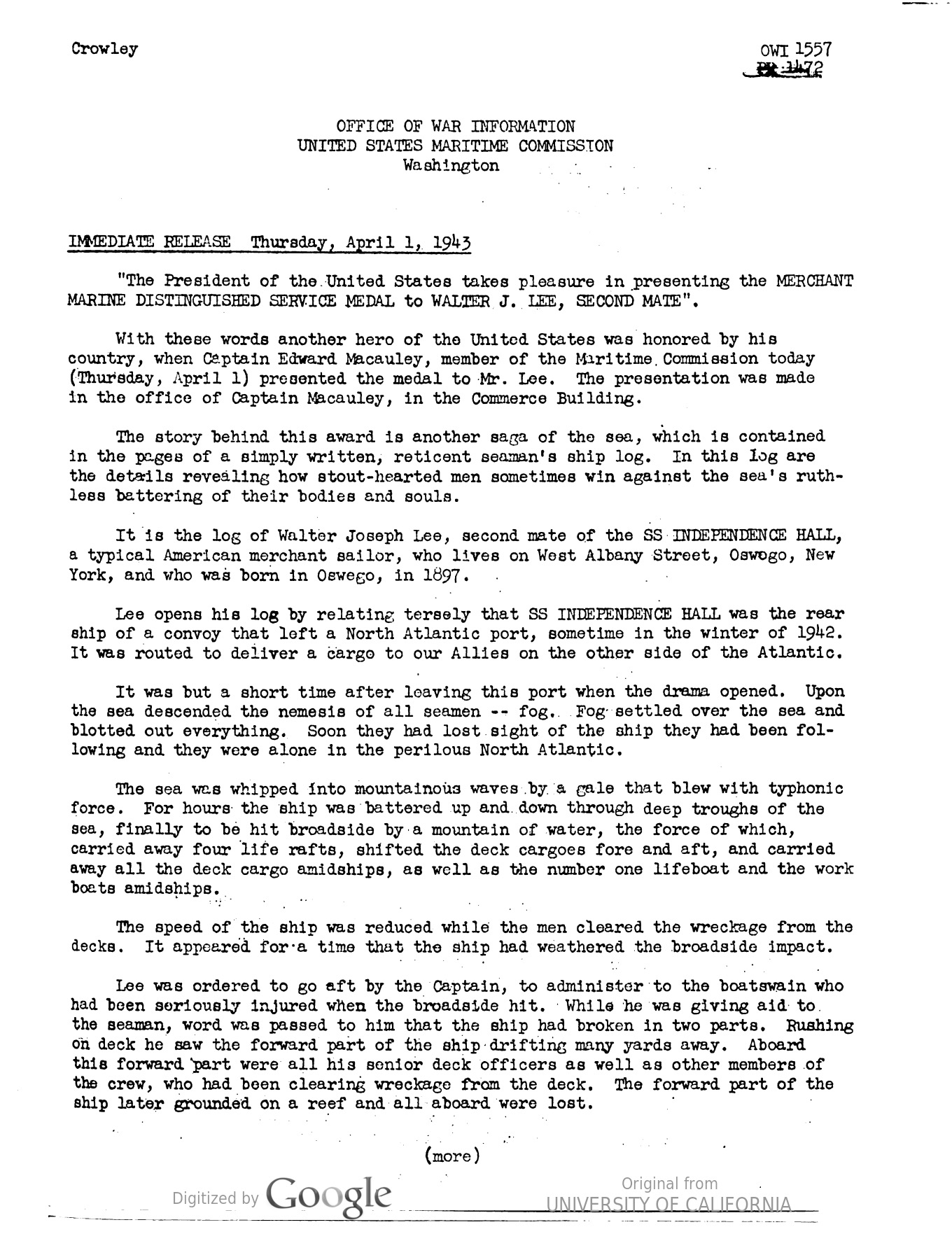
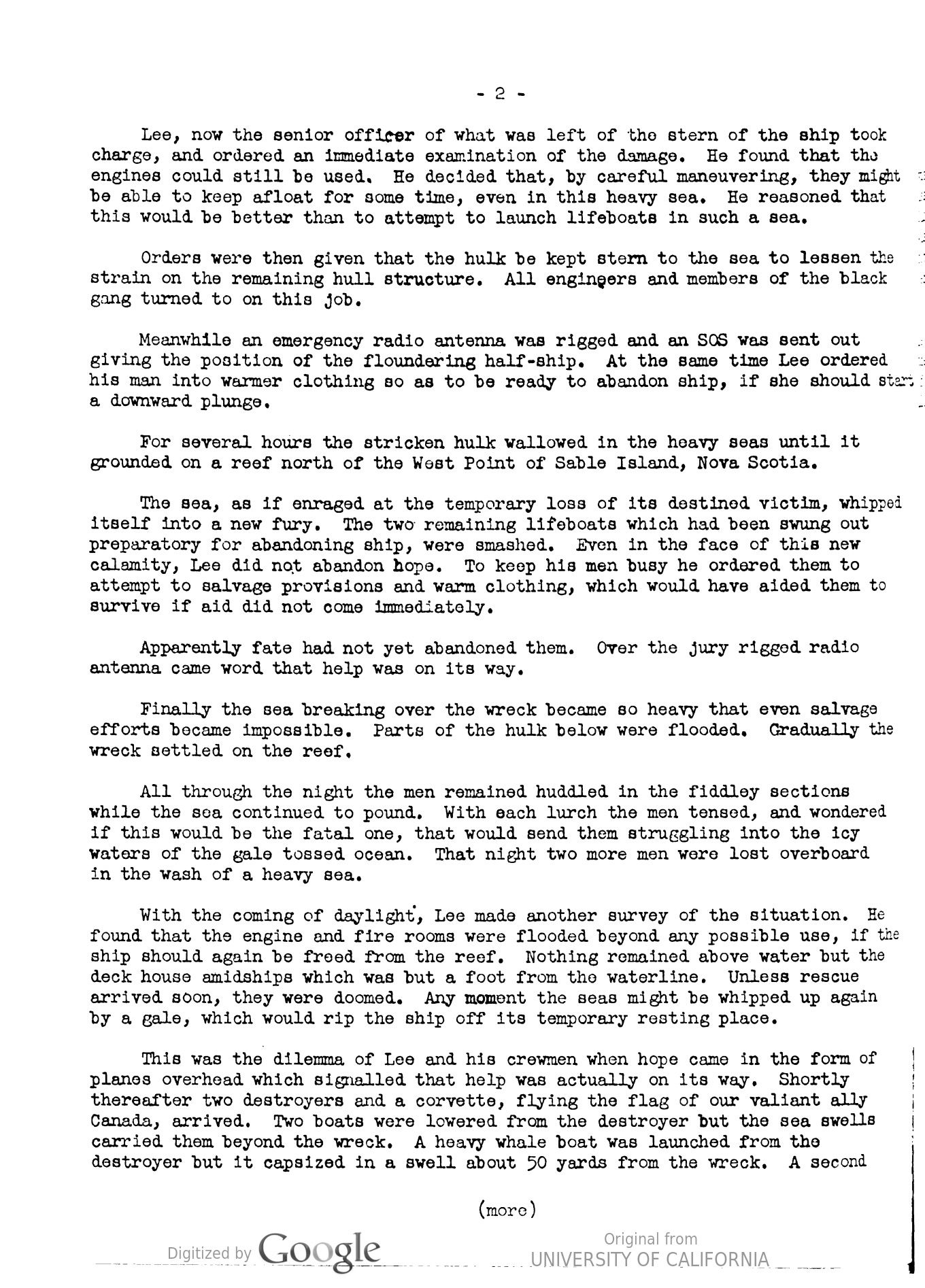
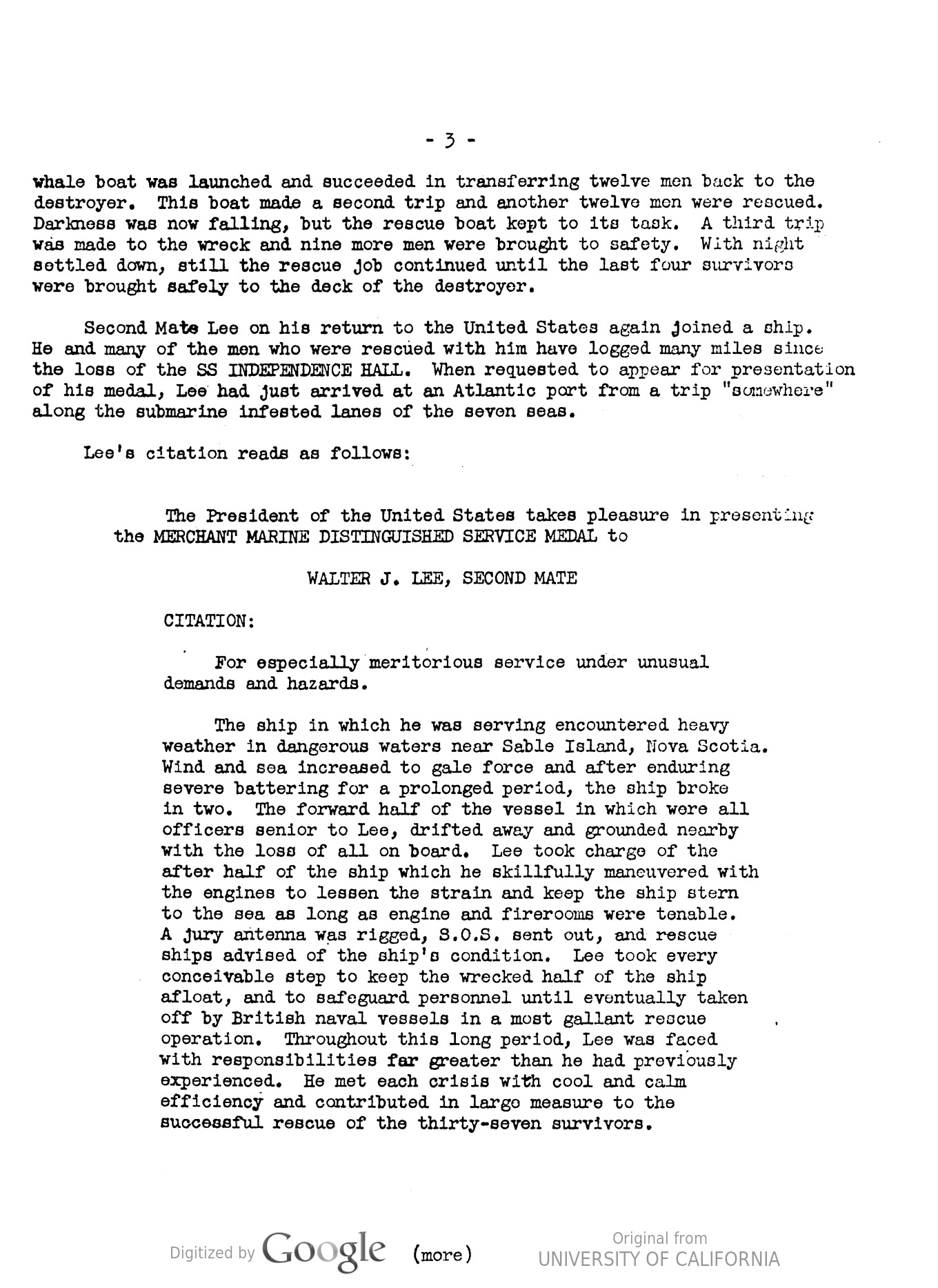
Lee, Walter Josephowi-1557-03
Larsen, Frederick August, Jr.owi-1874-01
Allen, George B.owi-1874-03
Maynard, Kenneth W.owi-1874-04
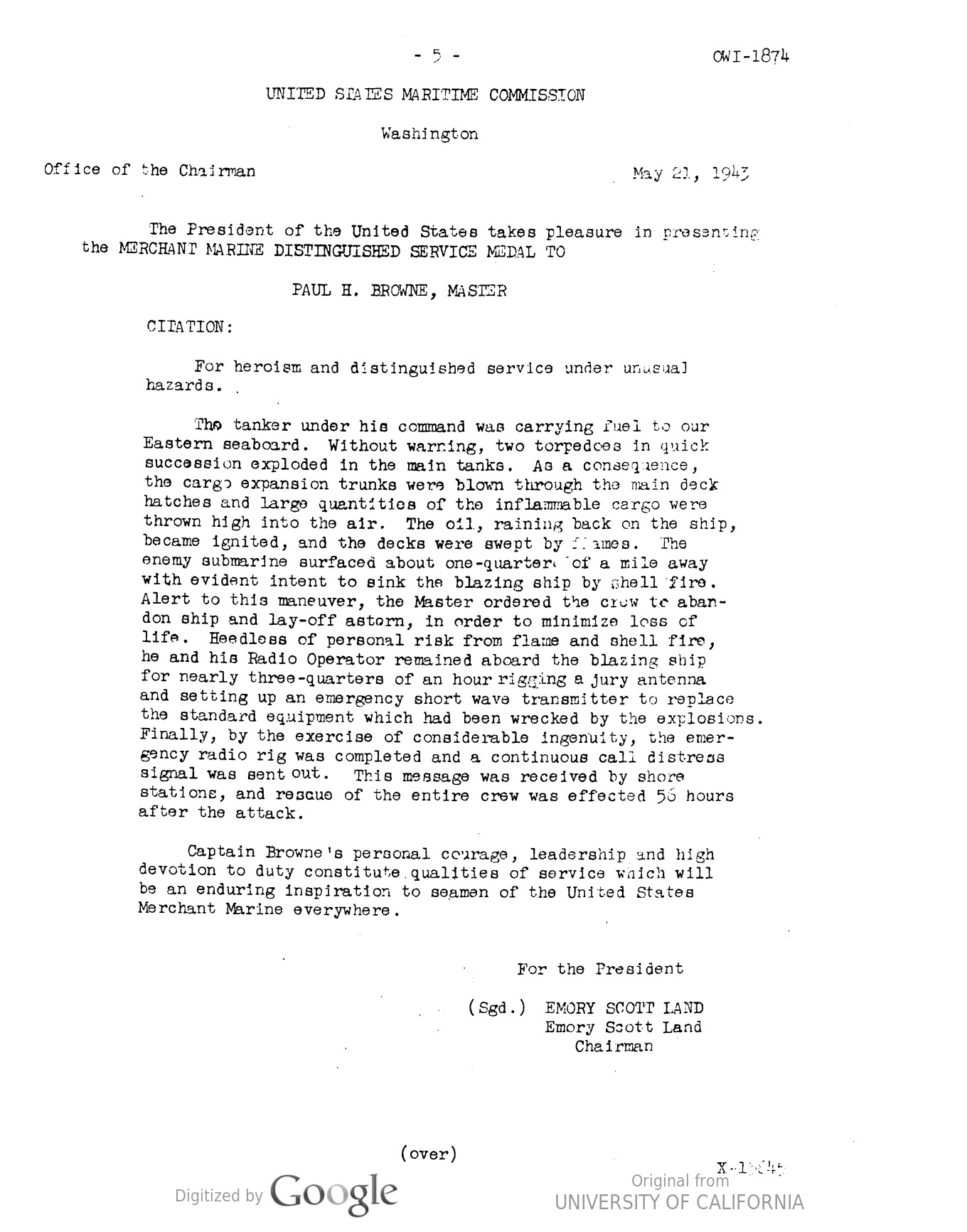
Browne, Paul Hoffmanowi-1874-05
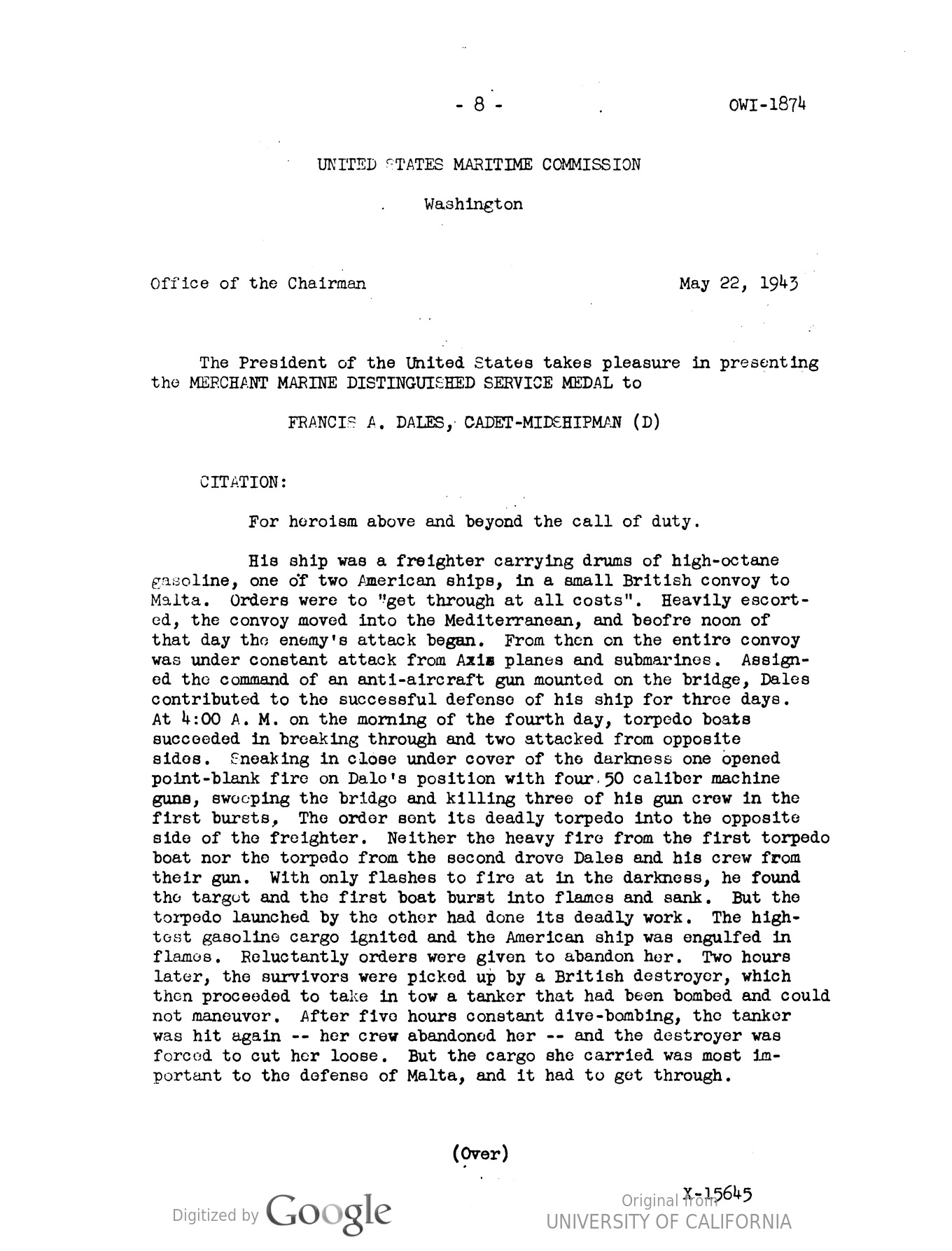
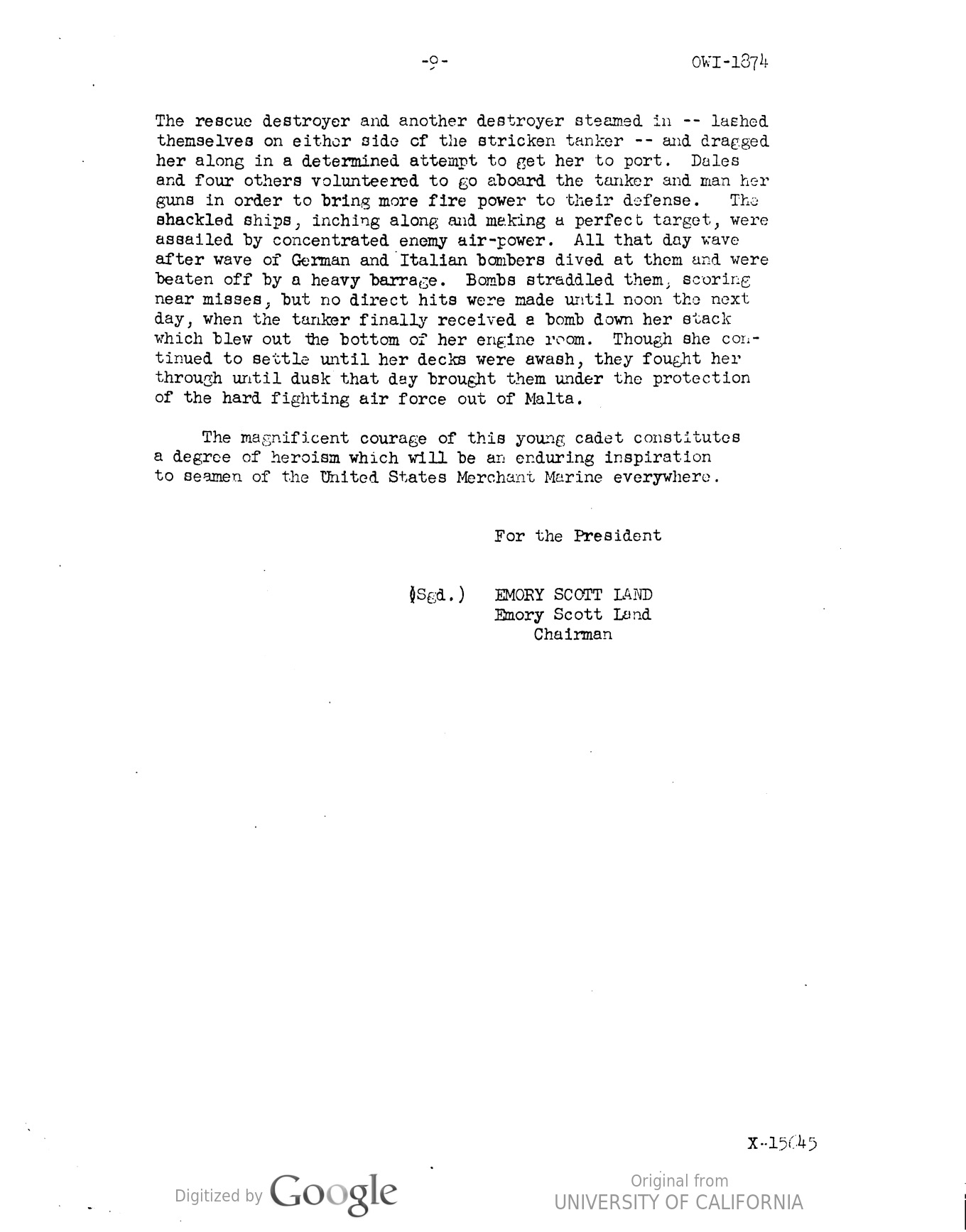
Dales, Francis Alonzo “Lonnie”owi-1874-08
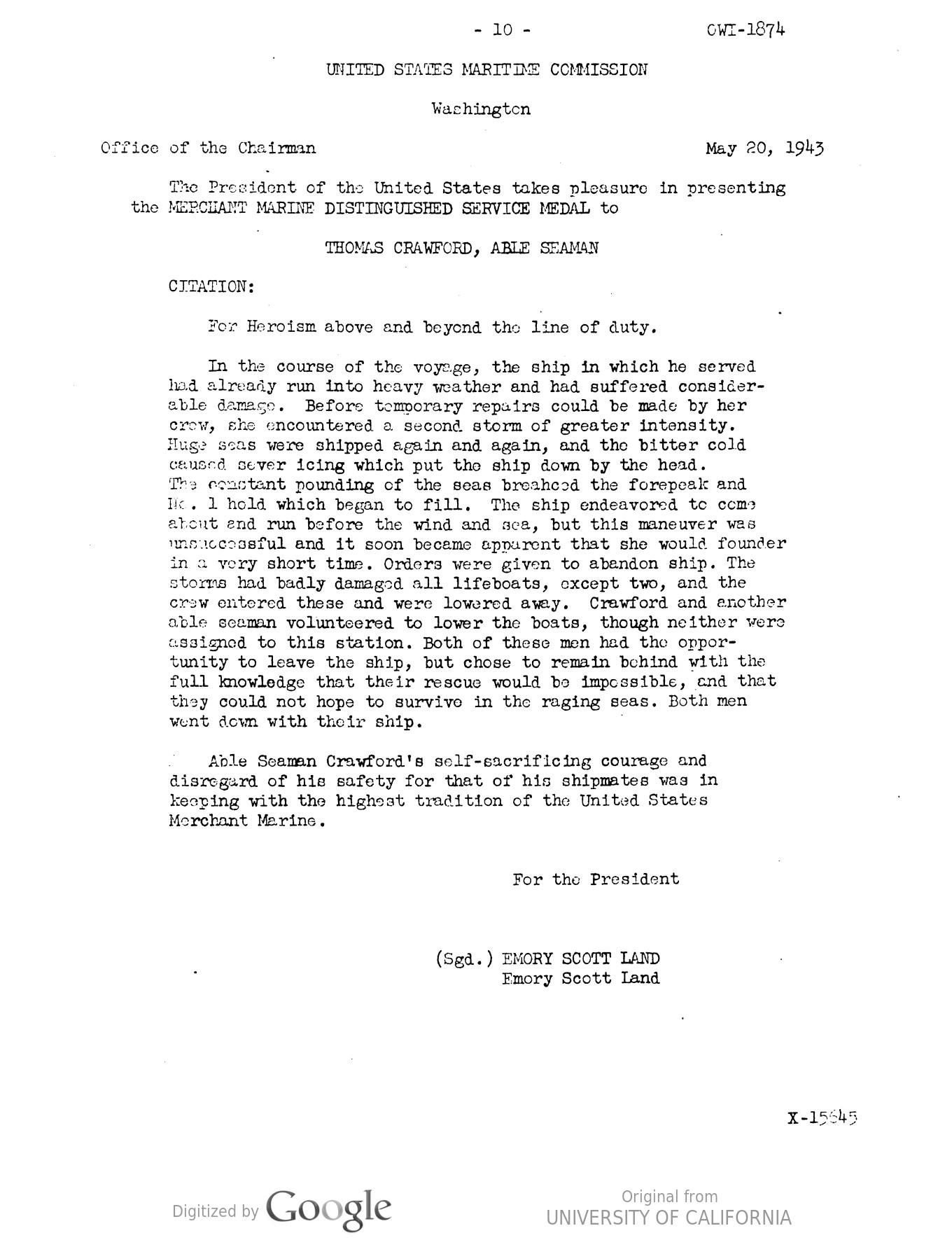
Crawford, Thomasowi-1874-10
Breen, Mauriceowi-1874-11
Williams, Owen Johnowi-1874-12
Mills, Frederick Jamesowi-1965-01
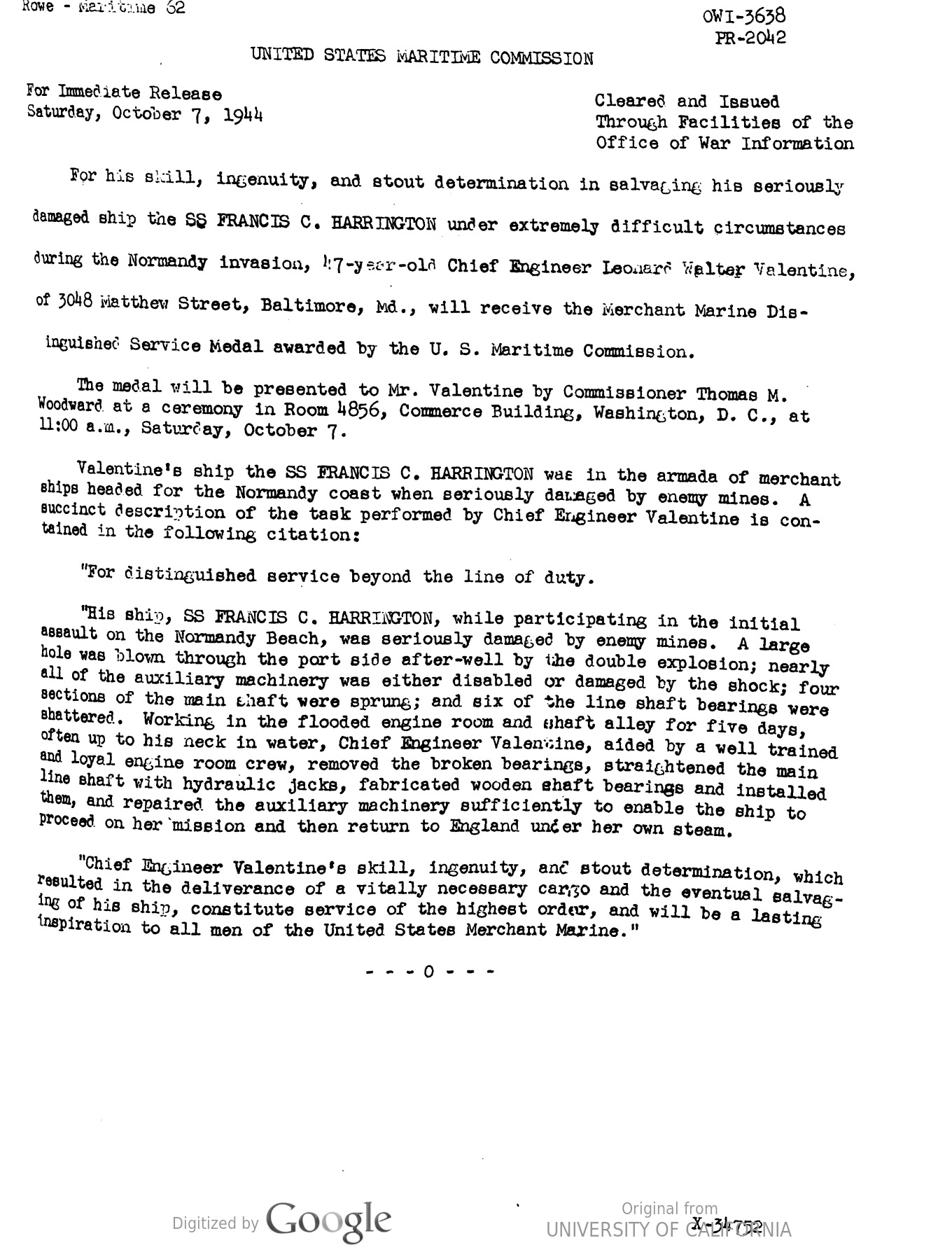
Valentine, Leonard Walterowi-3638-01
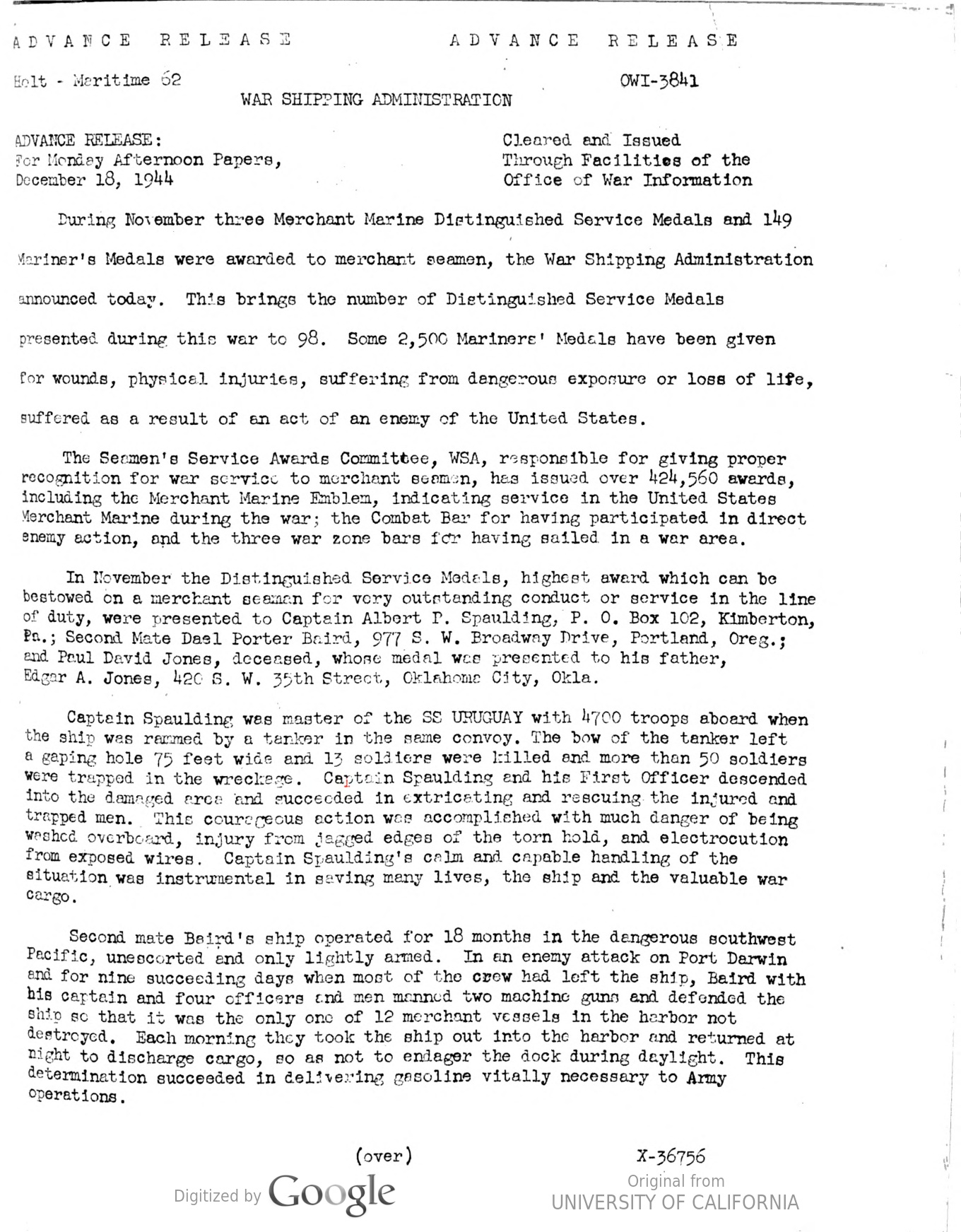
Baird, Dale Porterowi-3841-01
Jones, Paul Davidowi-3841-01
Spaulding, Albert P.owi-3841-01
Lia, Bjarne A.owi-3939-01
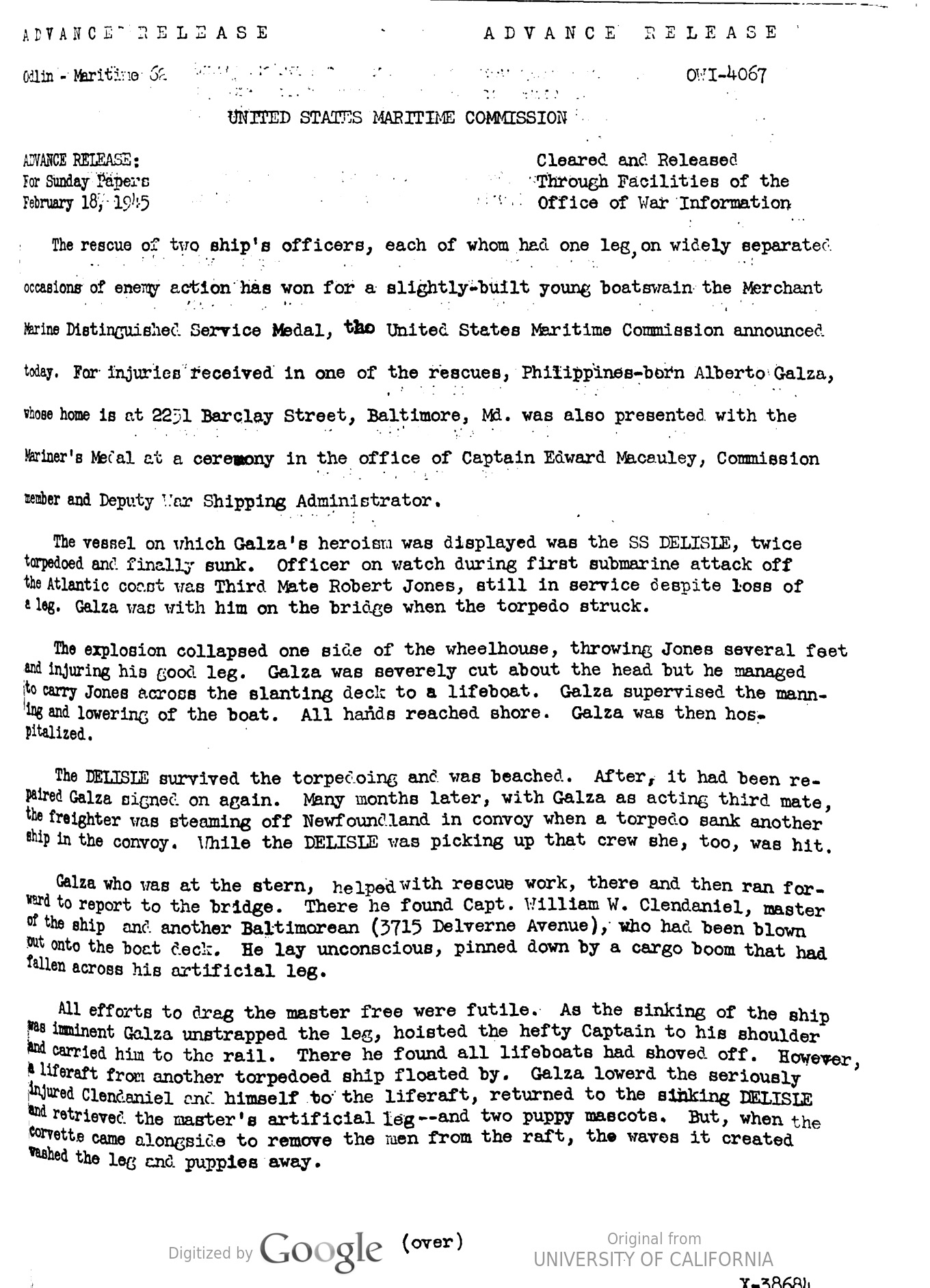
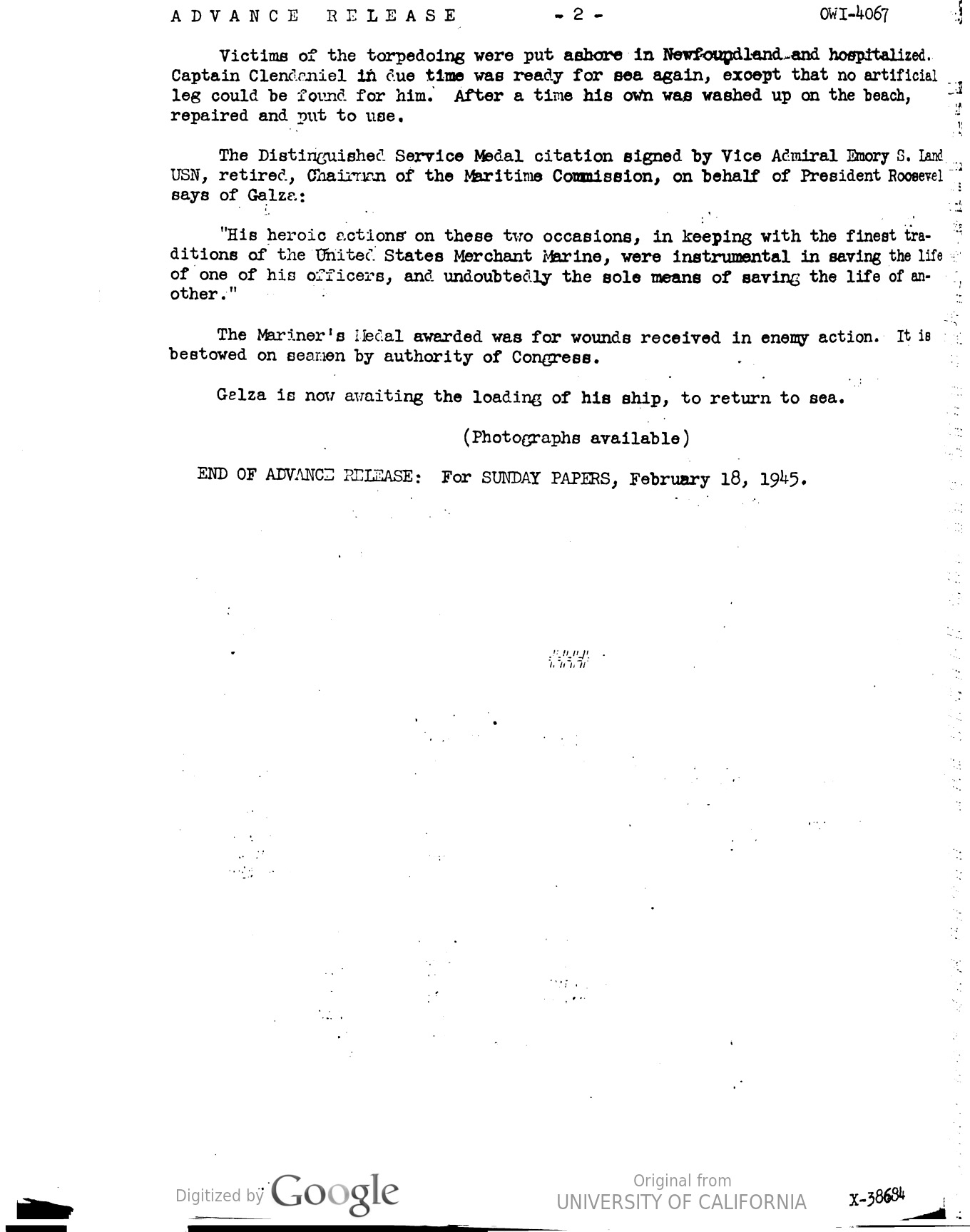
Galza, Albertoowi-4067-01
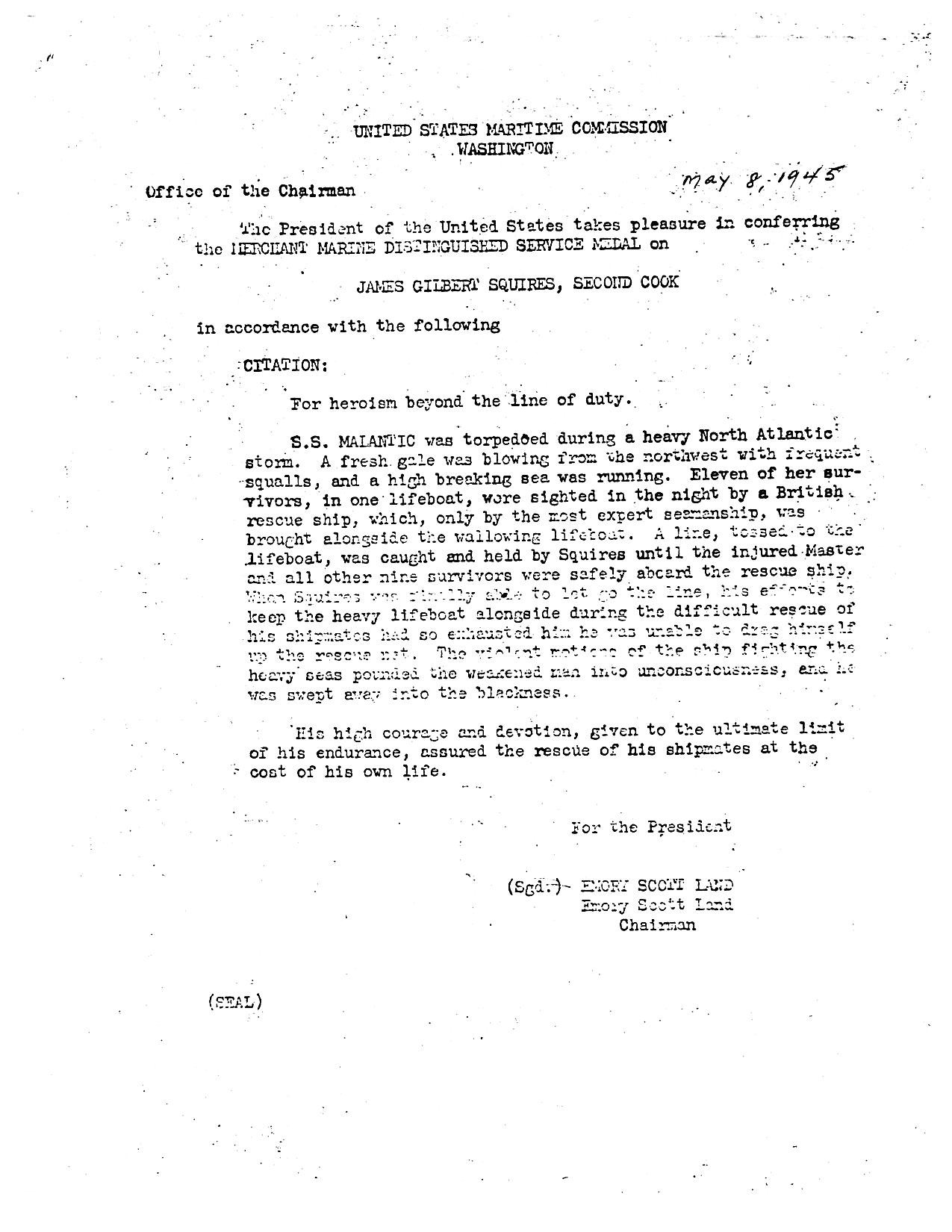
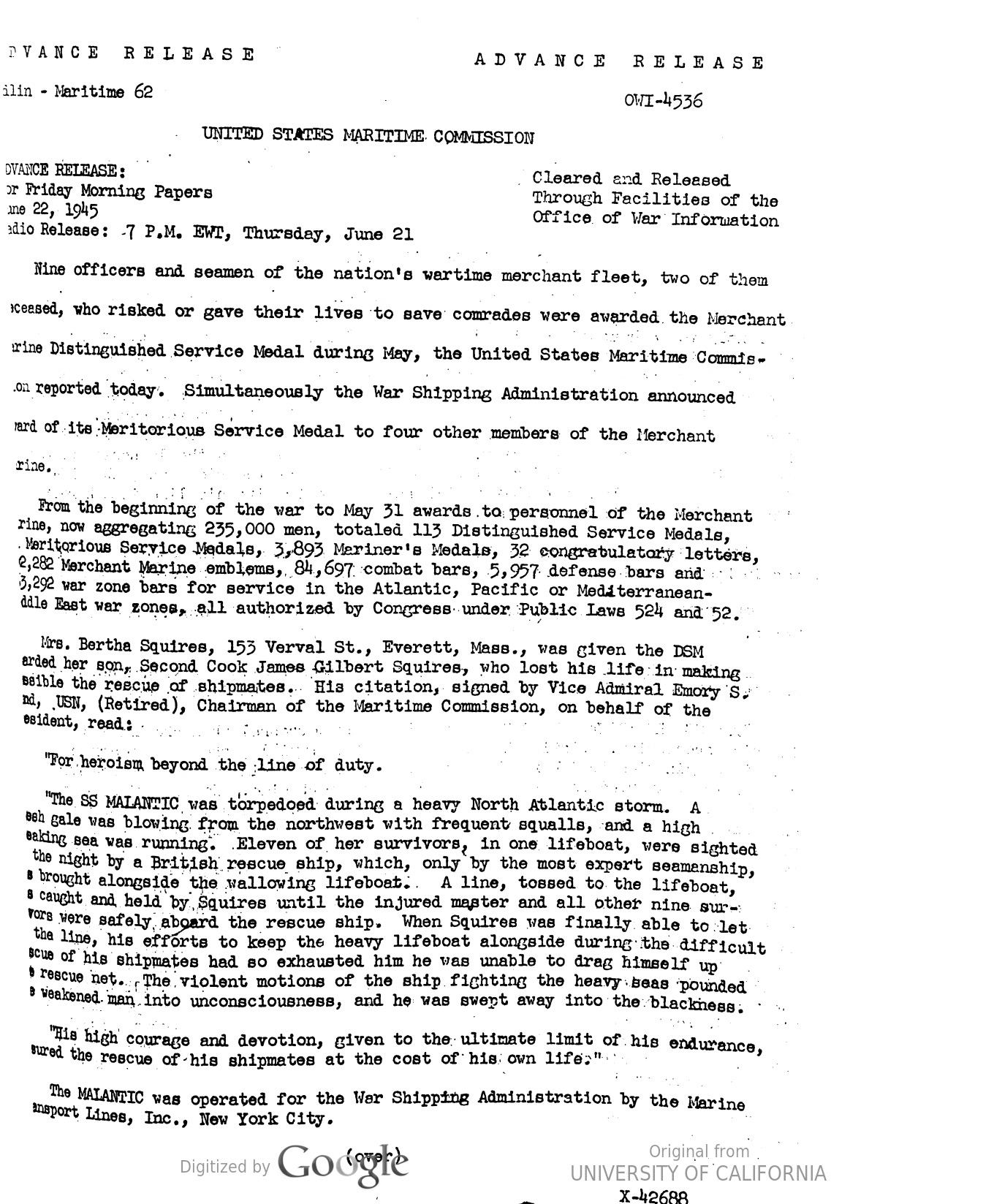
Squires, James Gilbertowi-4536-01
Olson, Patrick Carlowi-4536-02
Harrell, James F.owi-4536-02
Carpenter, Foster DeWightowi-4536-03
Quinn, Howardowi-4536-03
Valentine, Paul Irwinowi-4536-03
Baker, George E.owi-4536-04
Nordh, Sten A.owi-4536-04
Williams, Frederick O.owi-4536-05
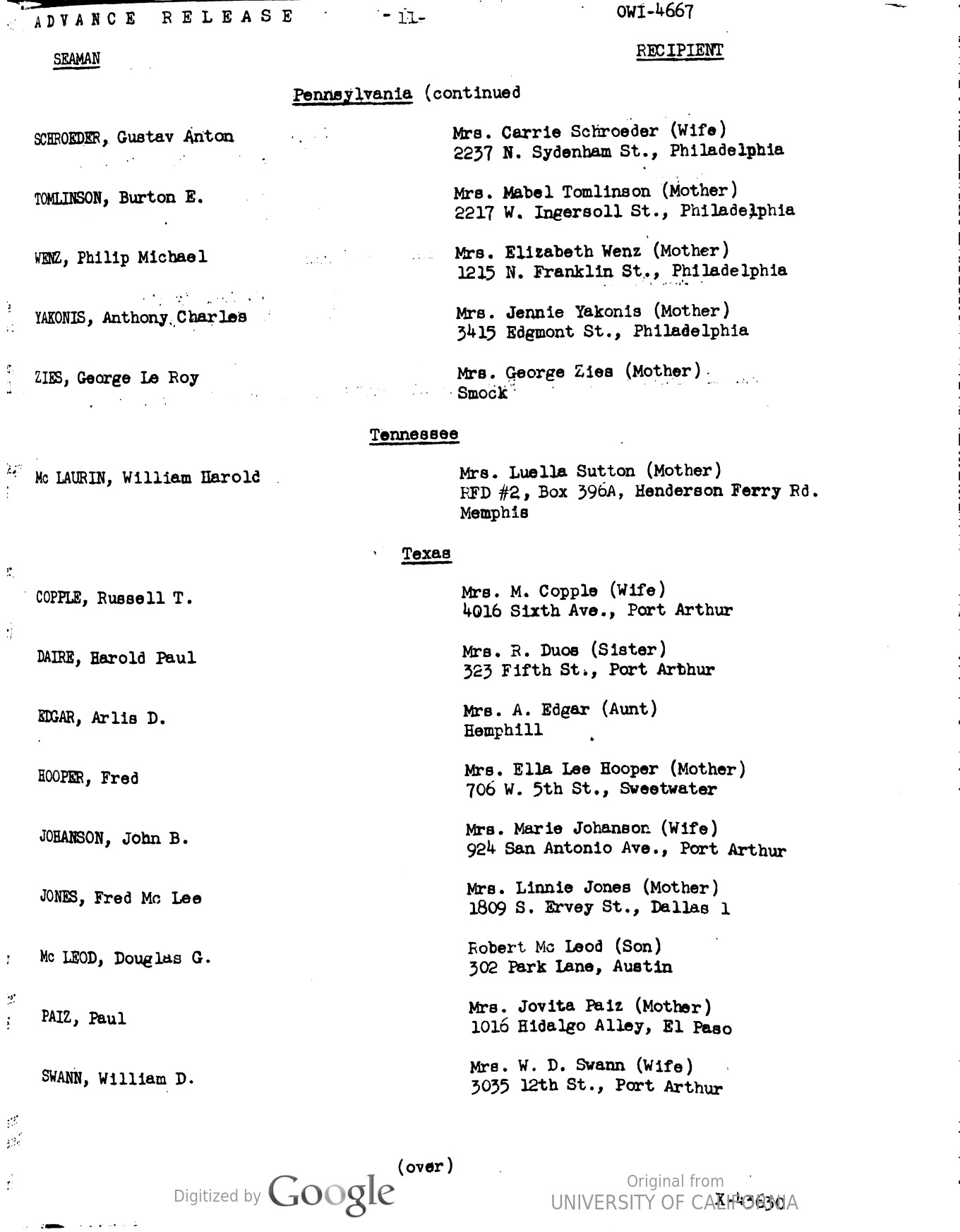
Lemons, Loyowi-4667-01
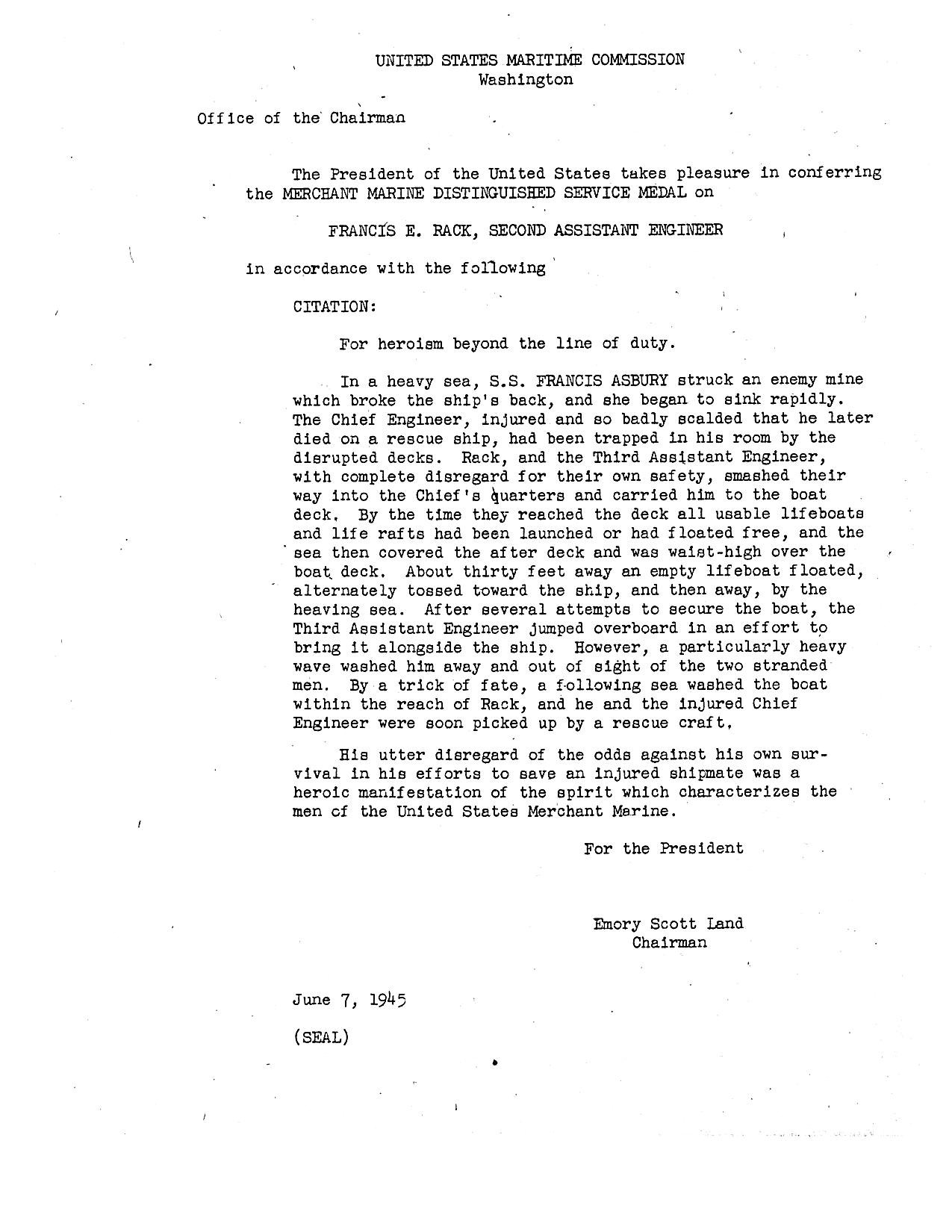
Rack, Francis E.owi-4667-01
Hart, Robert W.owi-4667-02
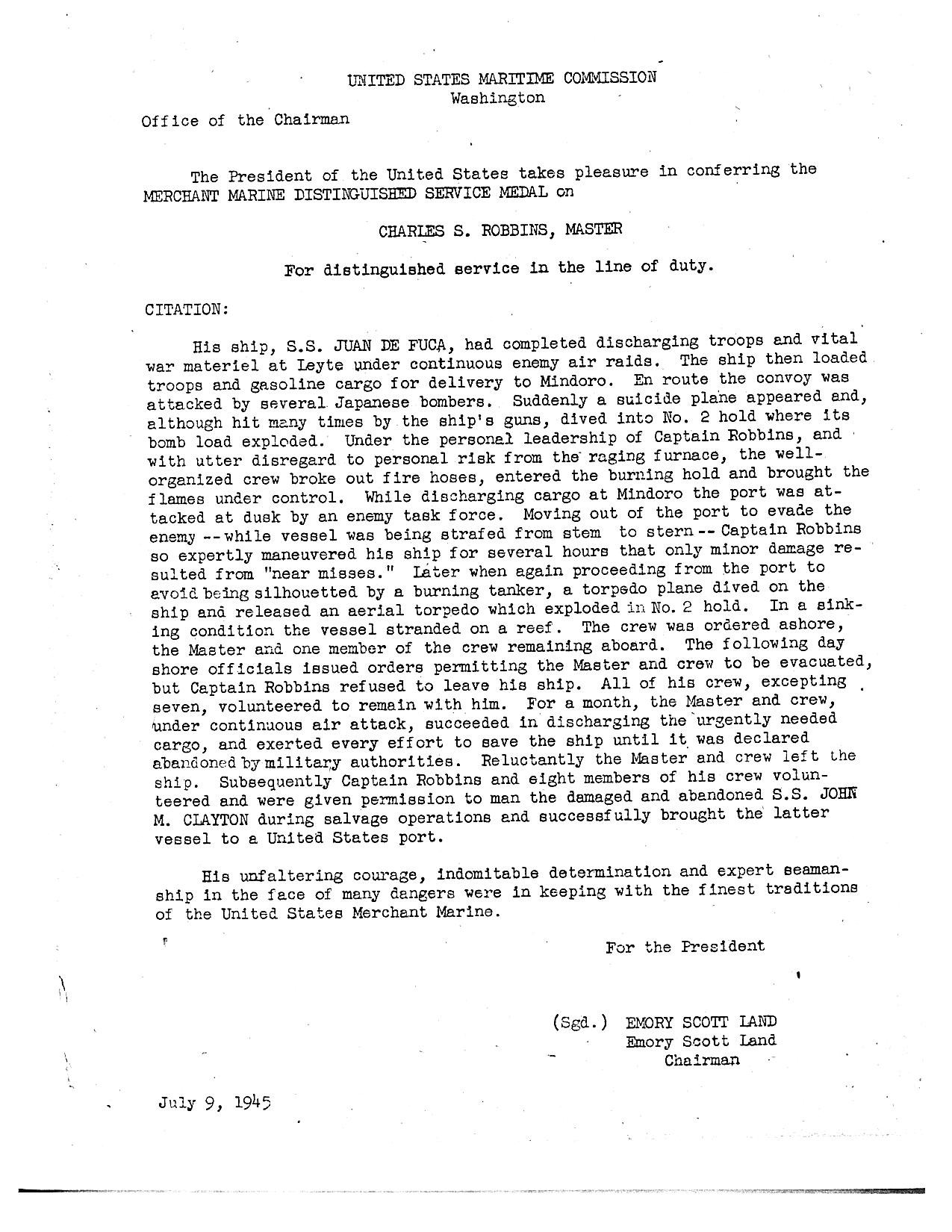
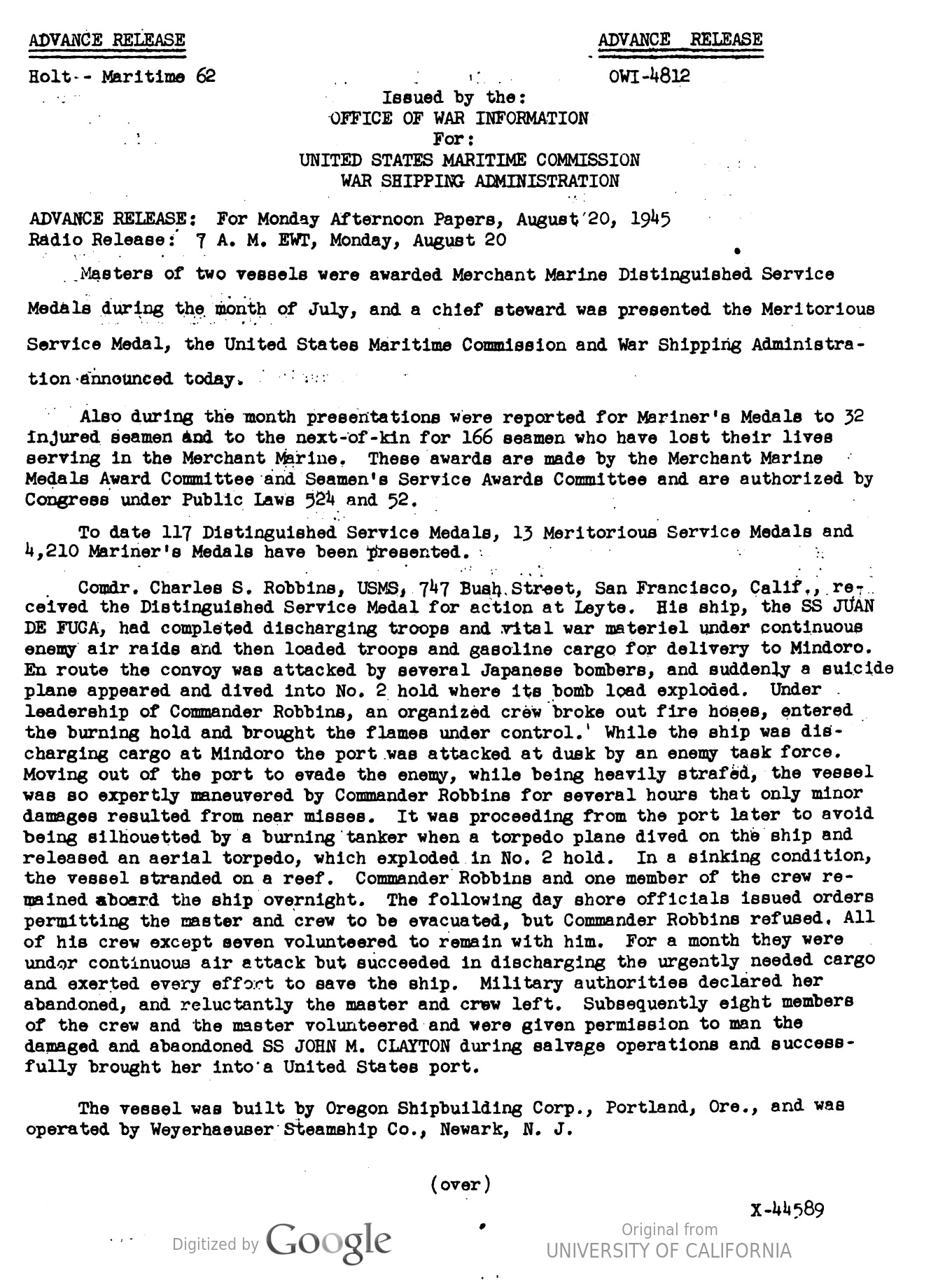
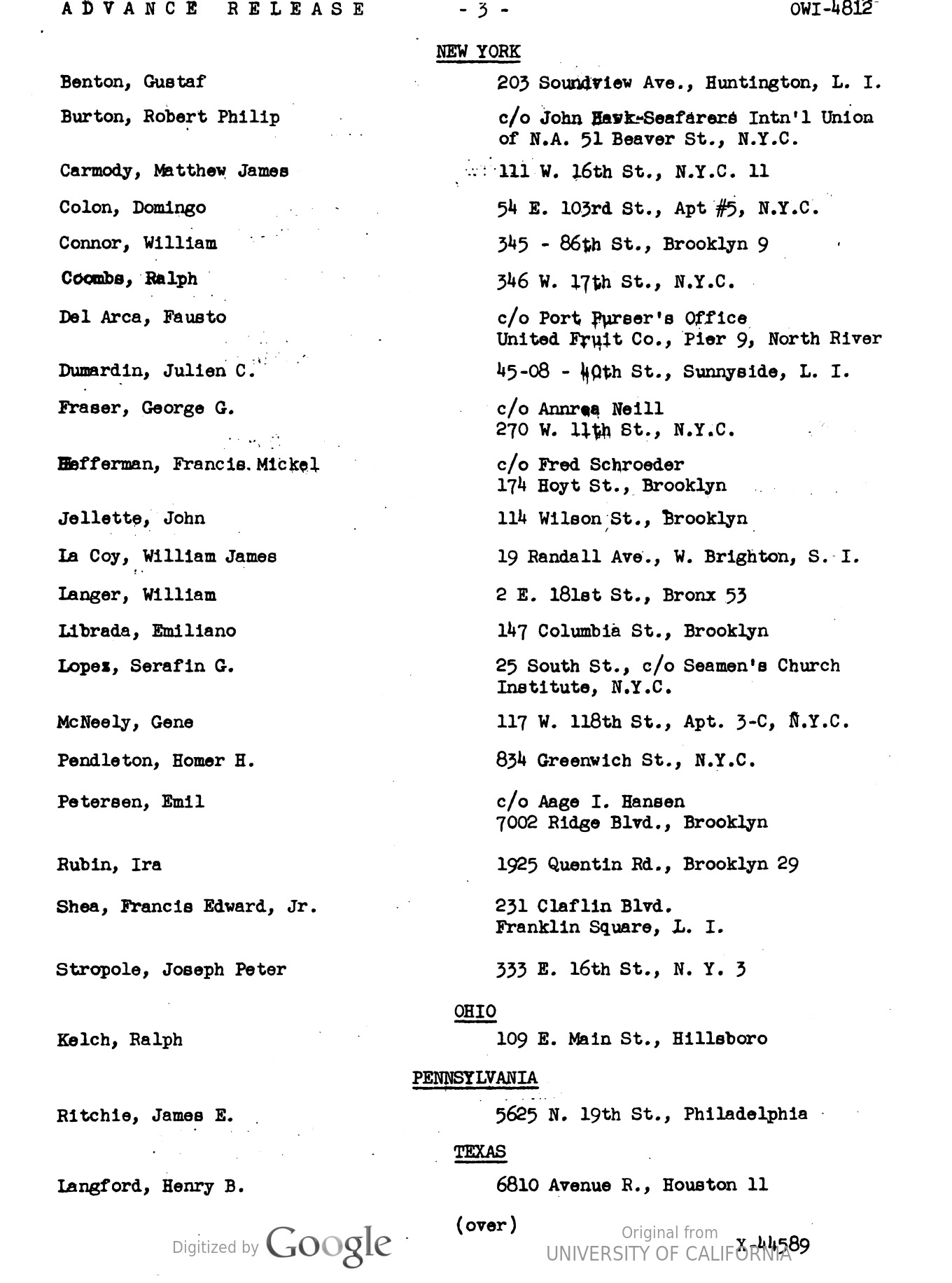
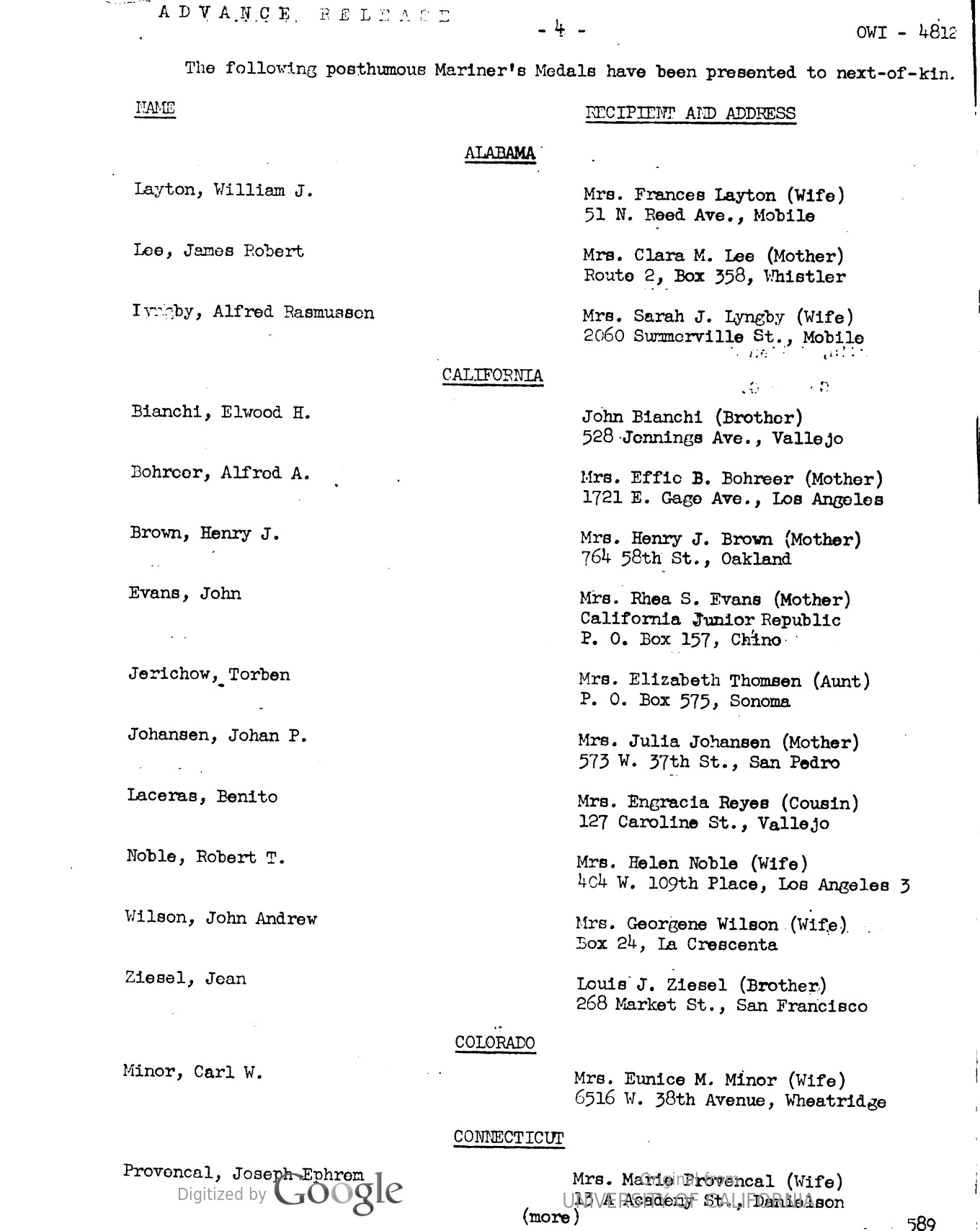
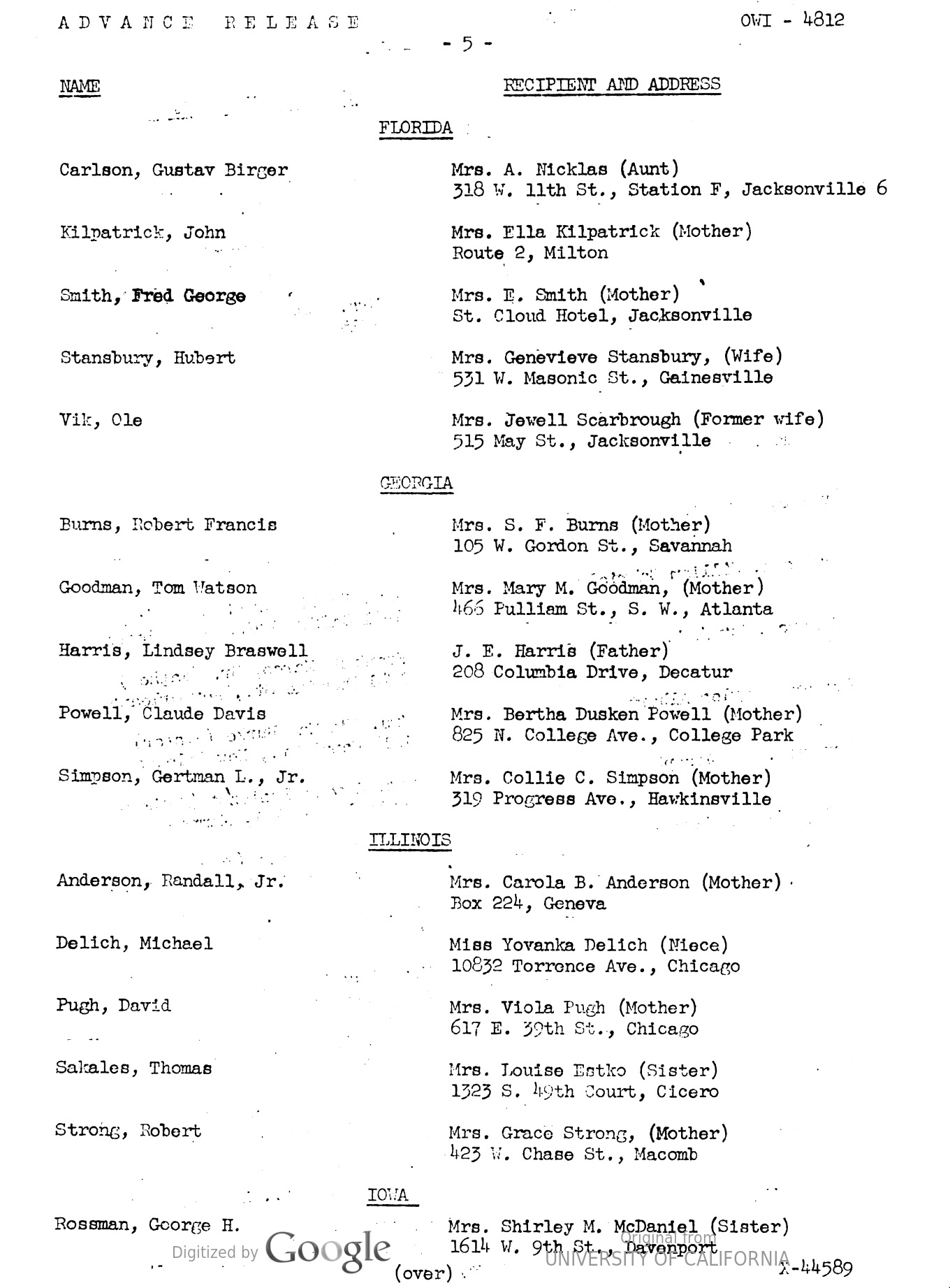
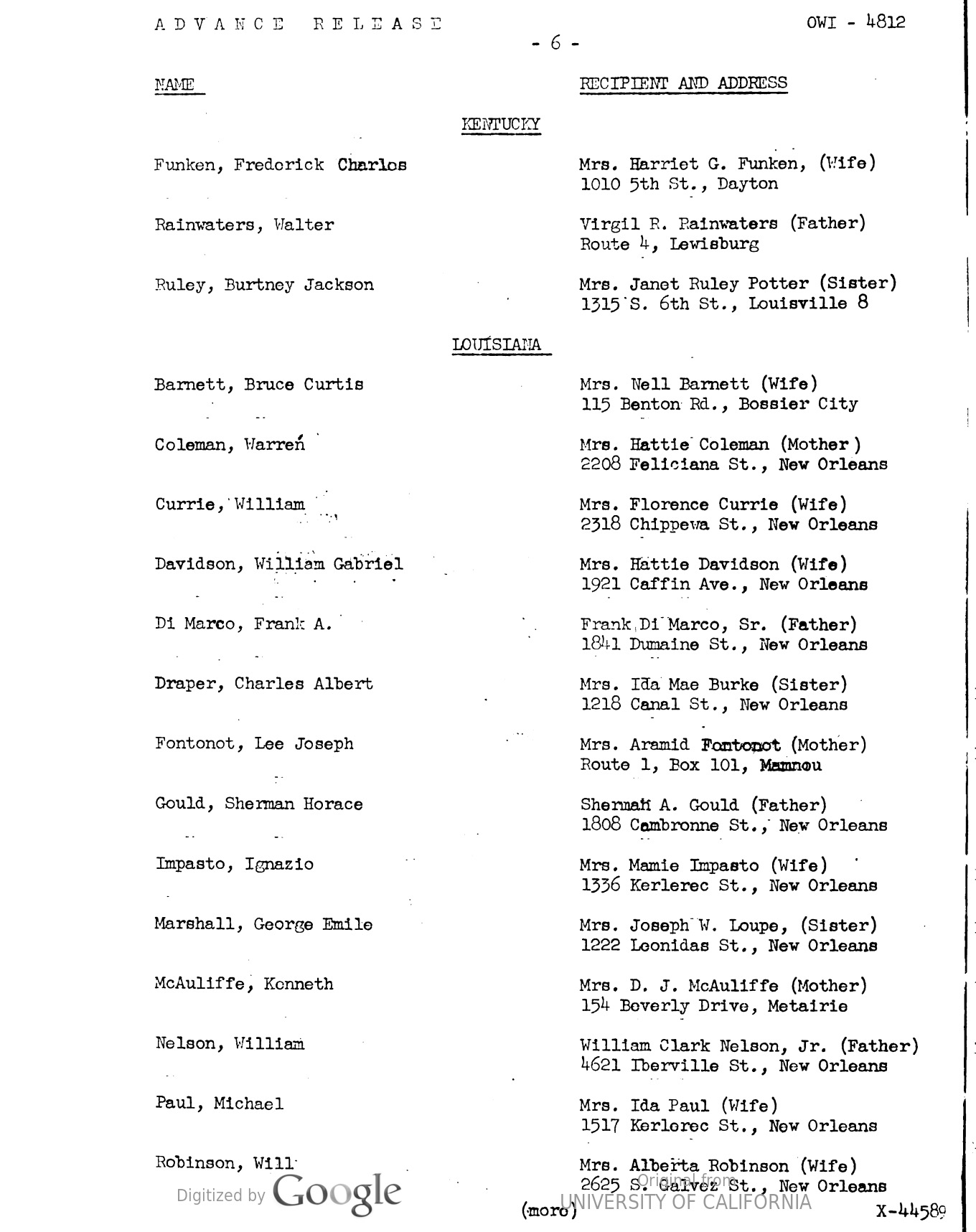
Robbins, Charles S.owi-4812-01
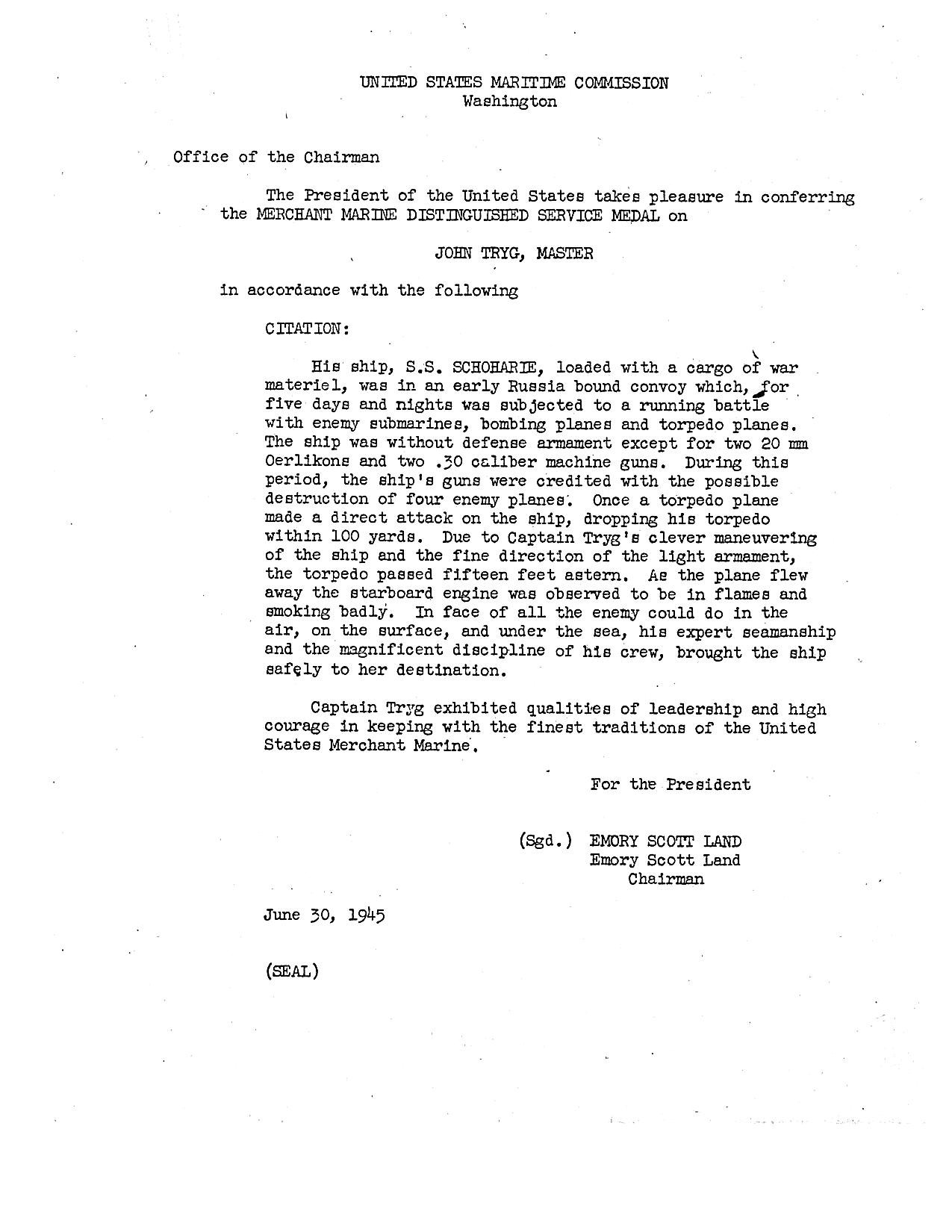
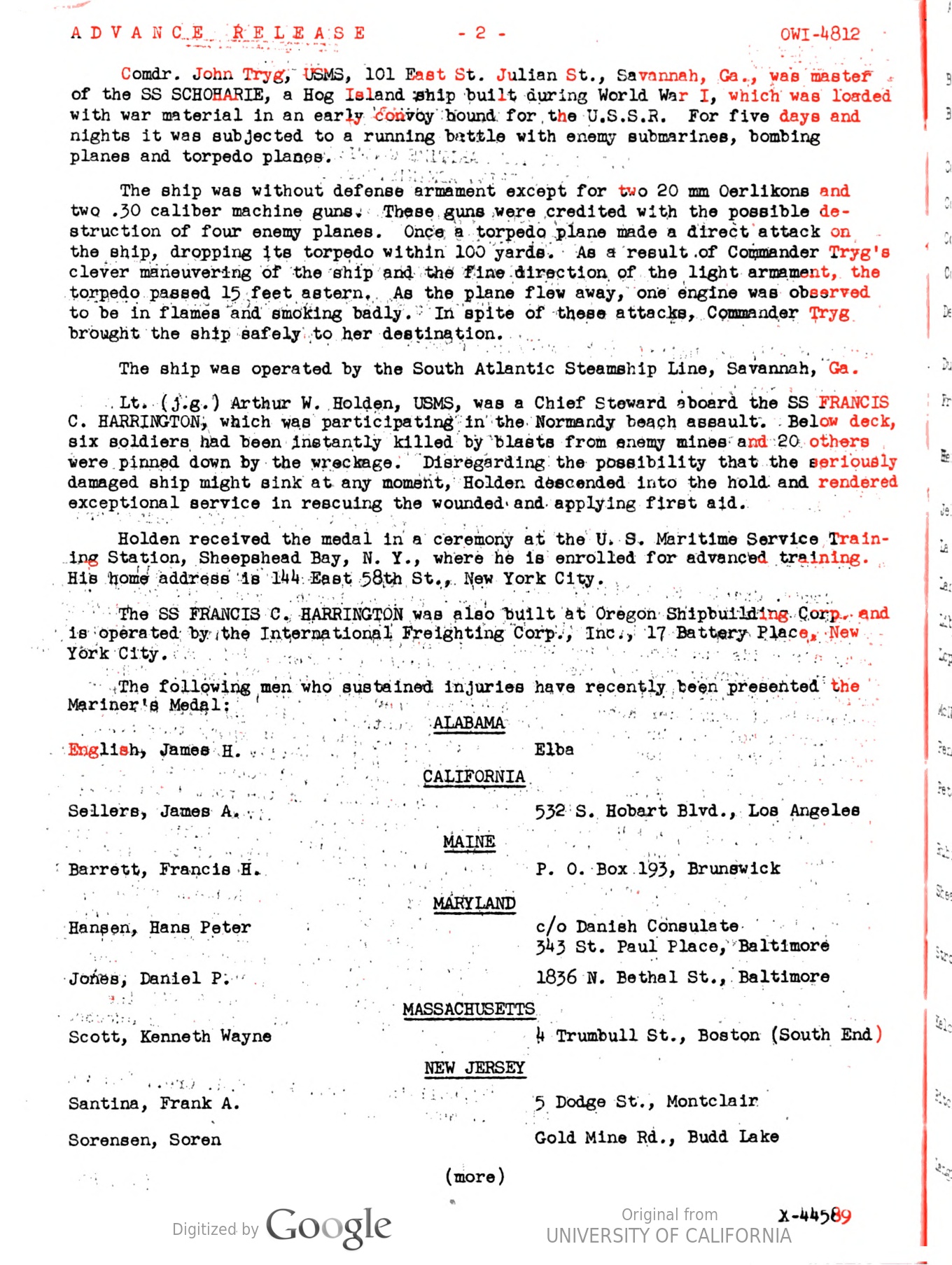
Tryg, Johnowi-4812-02